In a Vase on Monday – Coral Rocking the Equinox

wp-17584835050871569829228096260773

The official time for the Fall Equinox is 1:19 PM today. I am waiting for the axial shift to cool our temperatures. I can already tell the sun is lower in the sky and the shadows on the north side of our house are deepening. The sun angles in South Florida are so different from winter to summer it still throws me off. On a due north exposure, the garden goes from full sun in summer to full shade in winter. Selecting plants is a conundrum. I have gone to pots in these areas.

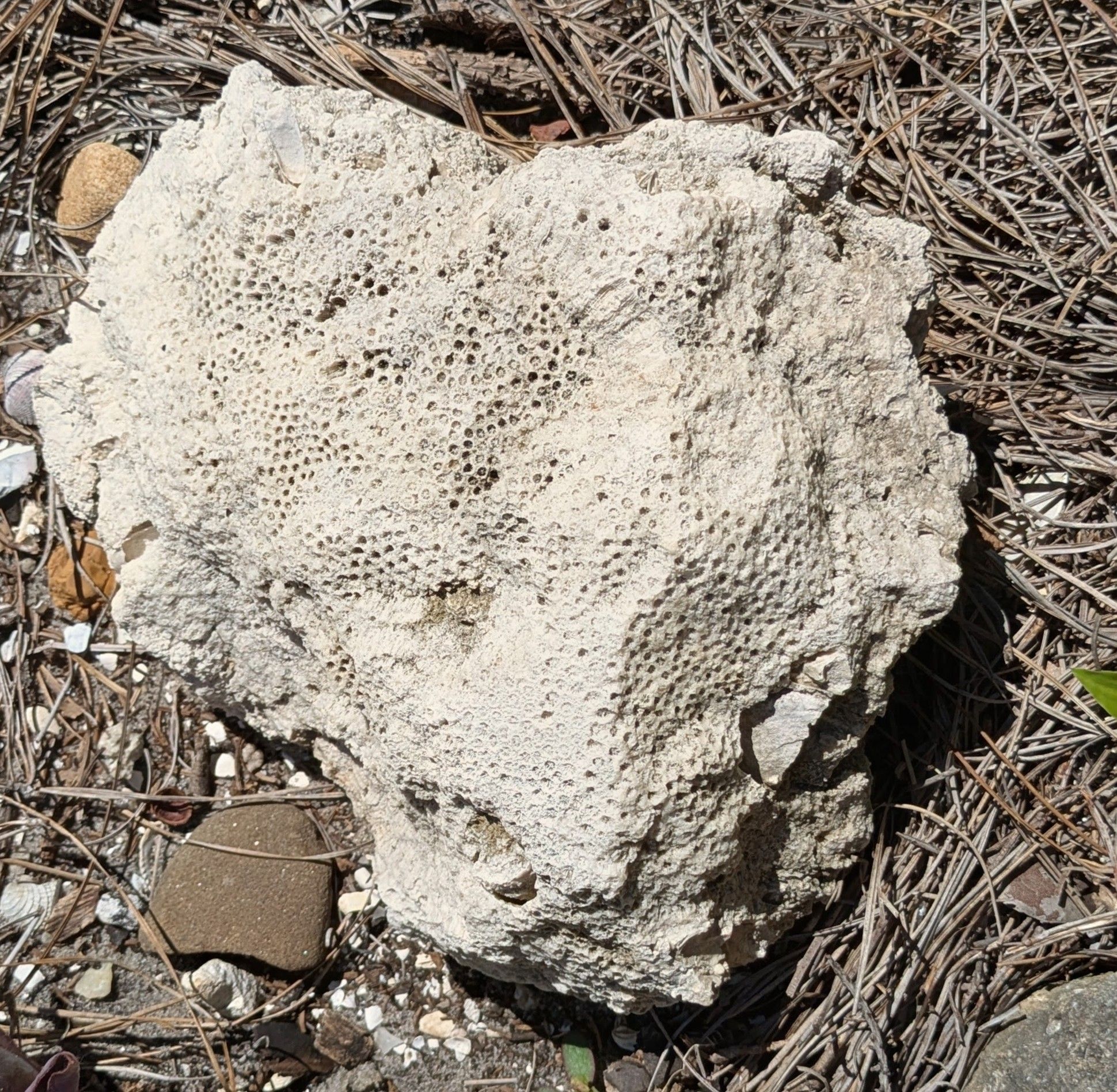
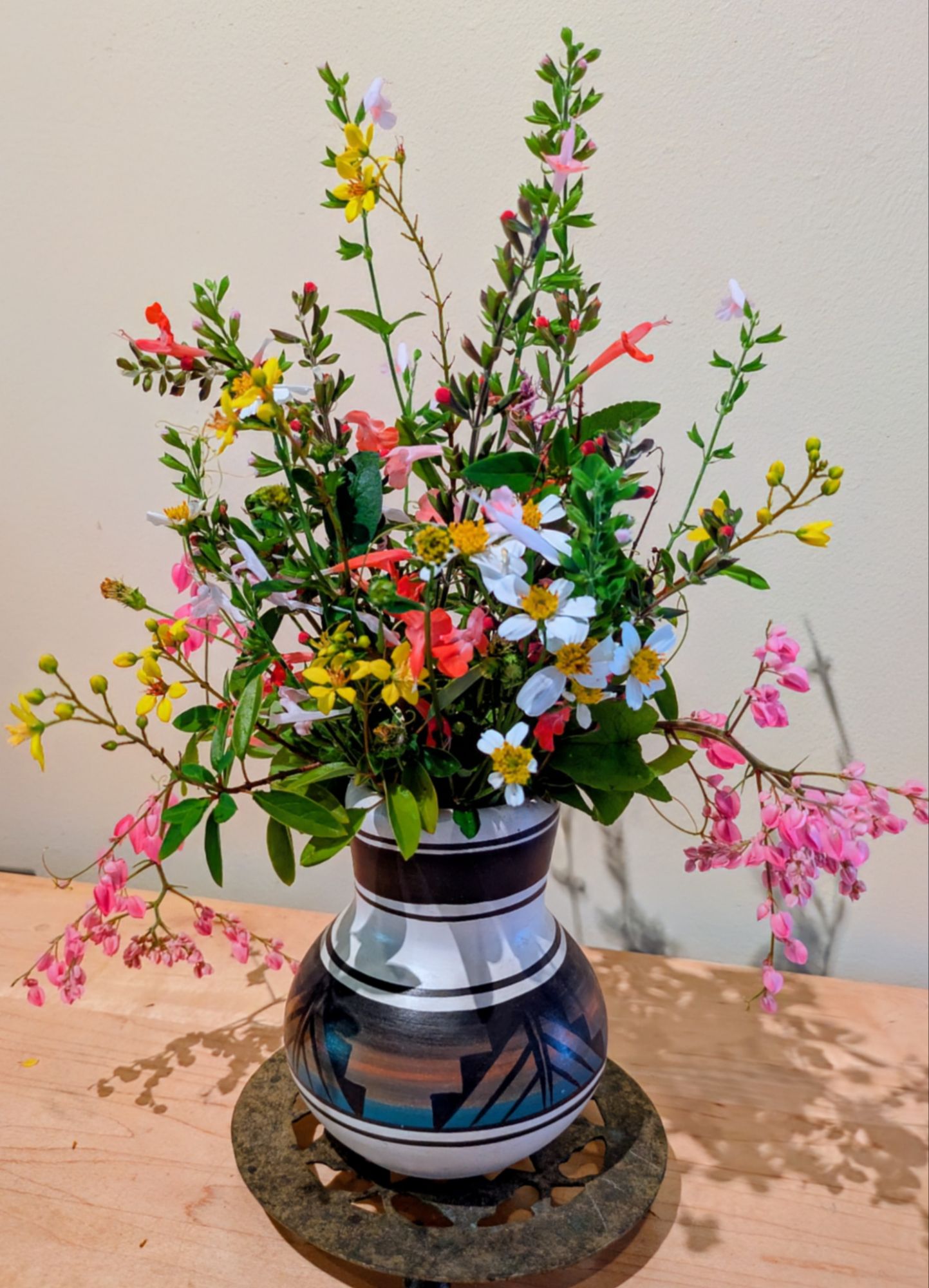
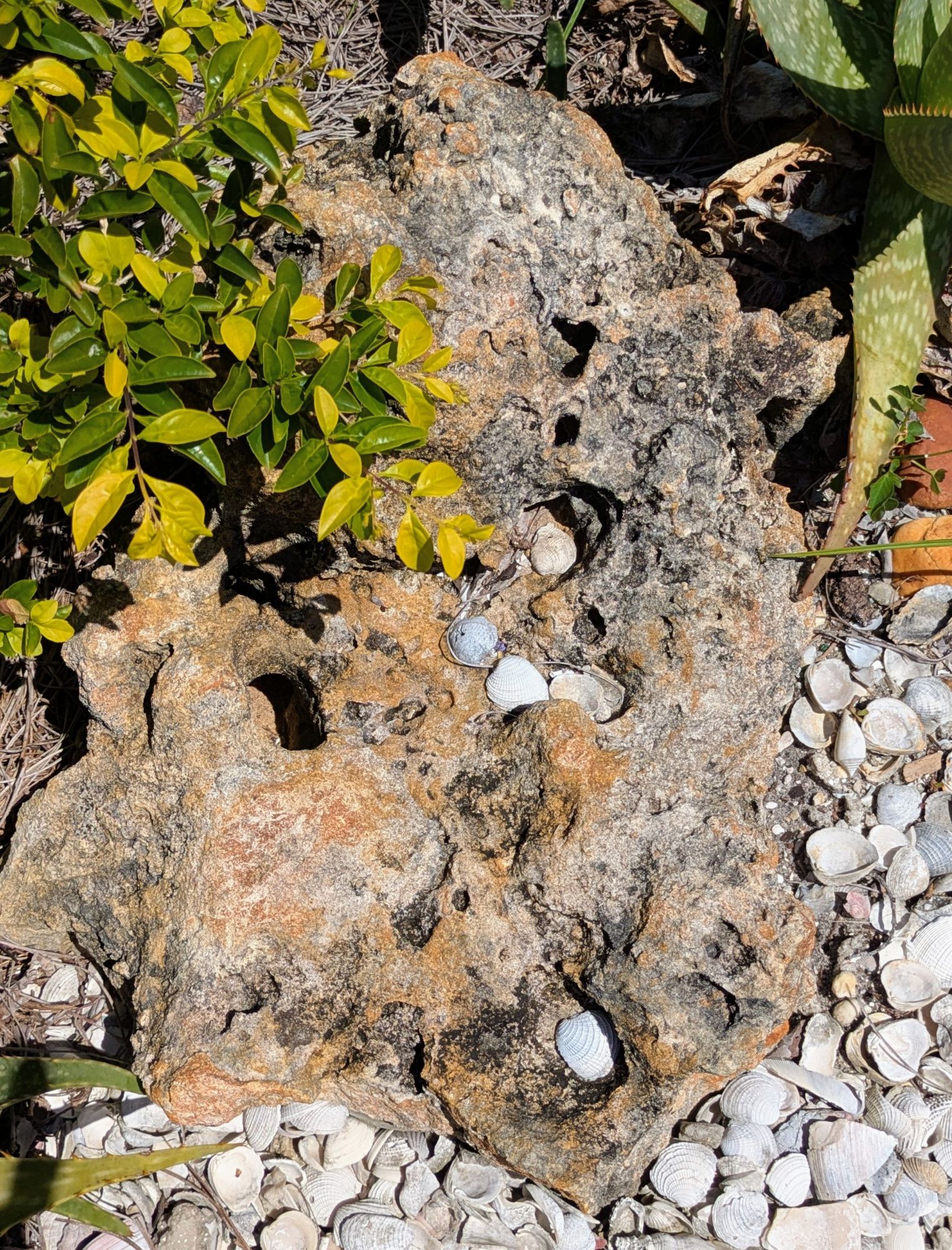
The garden is celebrating the equinox with coral flowers sprinkled through the beds. I also have coral rocks used as accents as I like local stone incorporated into gardens. Coral rocks are limestone boulders with deposits of shells and other sea life visible on the surface.

The flowers:
wp-17584850761112086762284363763593

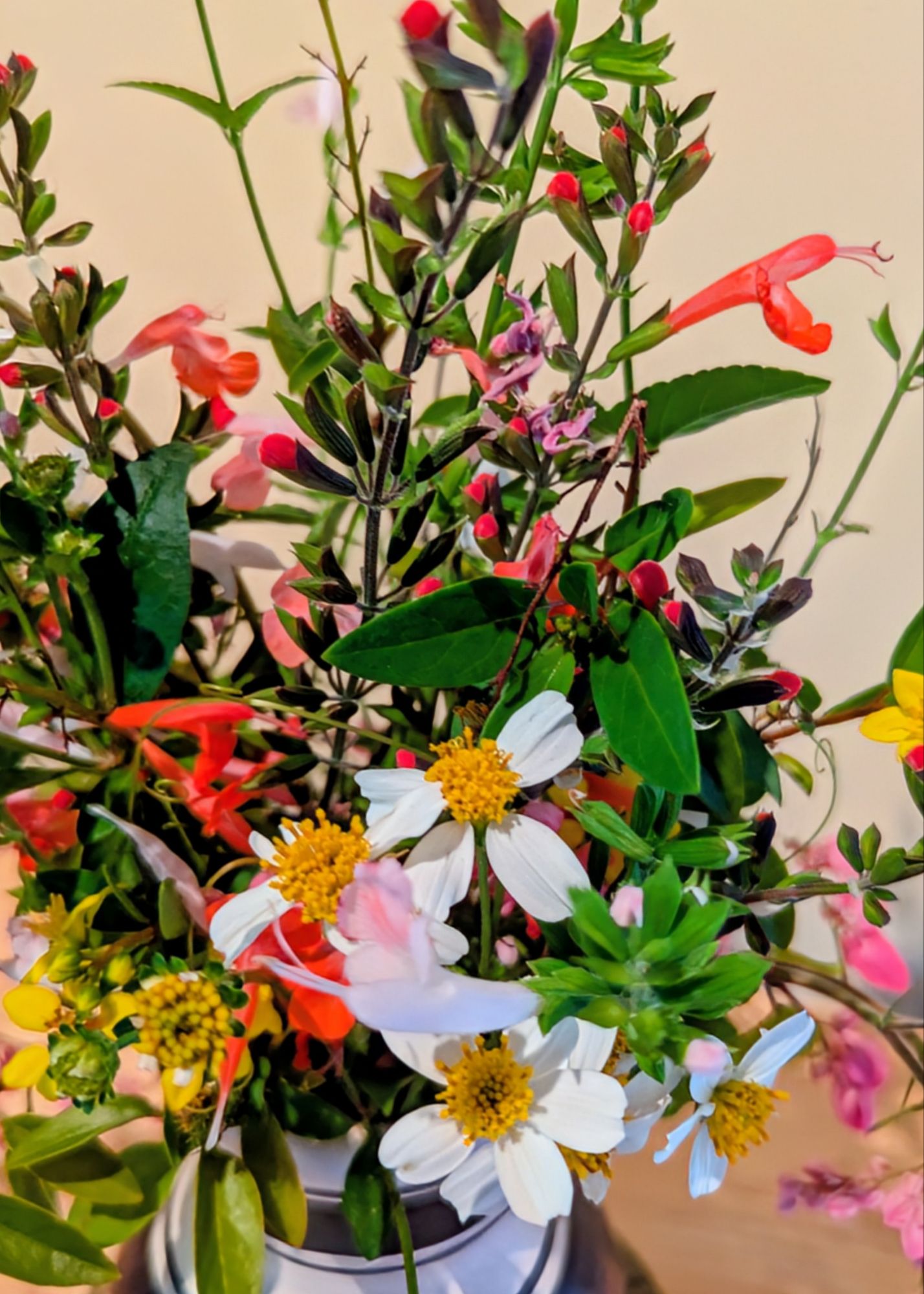
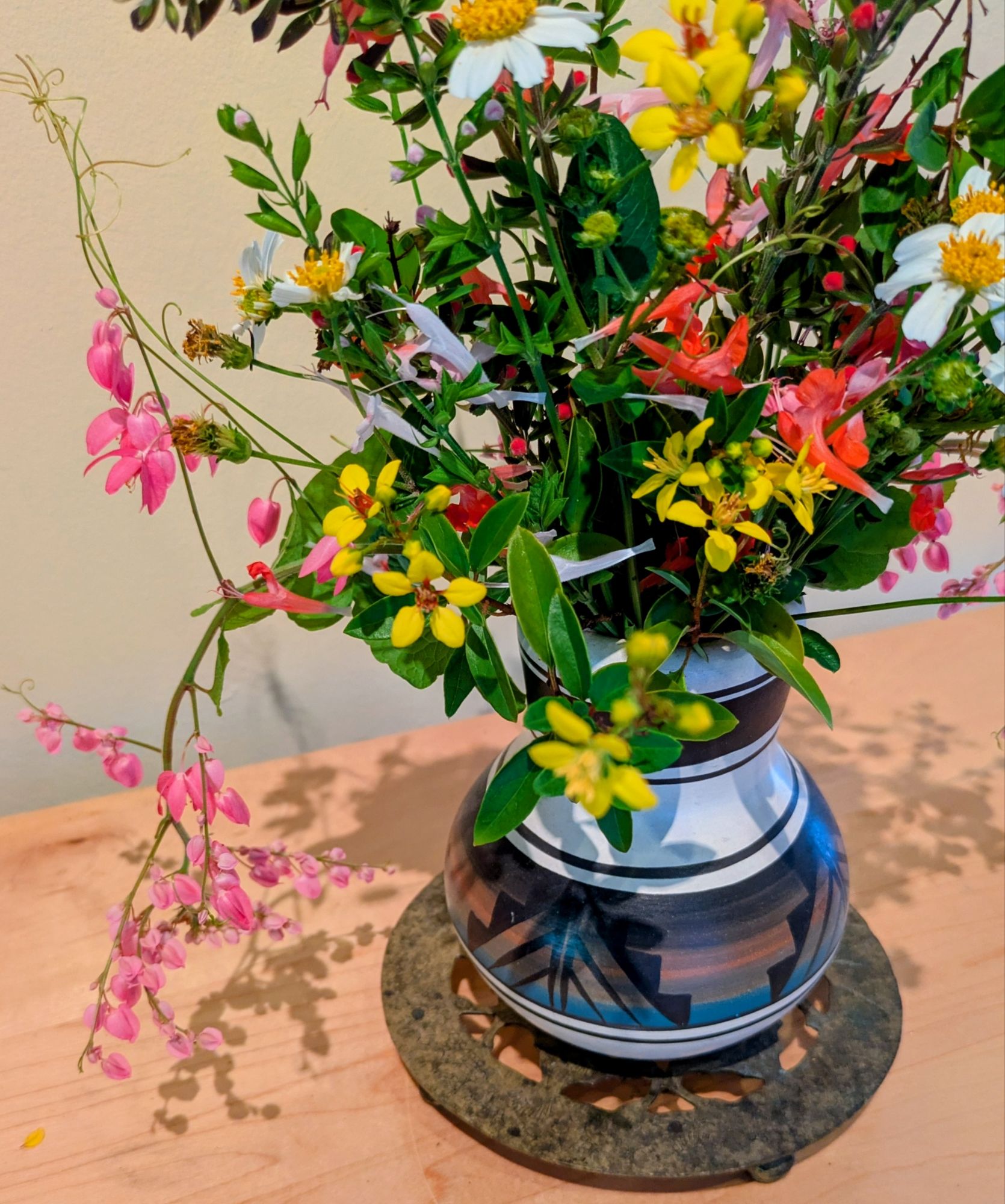
Tropical Red Salvia (Salvia coccinea) is showing up in shades of Coral this week. White daisies are Bidens alba.
wp-17584852220842837815512100775685

Yellow flowers are Thyrallis (Galpinia glauca). The inspiration plant, hanging over the side, is Coral Vine (Antigogon leptopus). The vase was made by the Ute people in the Southwestern US.

And here are the rocks.
wp-175848577173263638085941744222
wp-17584858289105756040229961439500

I enjoy my rock collection in the garden. I have some heirloom rocks from my Father the Geologist and other interesting stones rocking the garden with the coral.

Follow this link to visit Cathy’s blog RamblingintheGarden to see what she and other gardeners are rocking in their vases.

Rock on, gardeners. (I couldn’t resist)

In a Vase on Monday – Tropical Fantasy

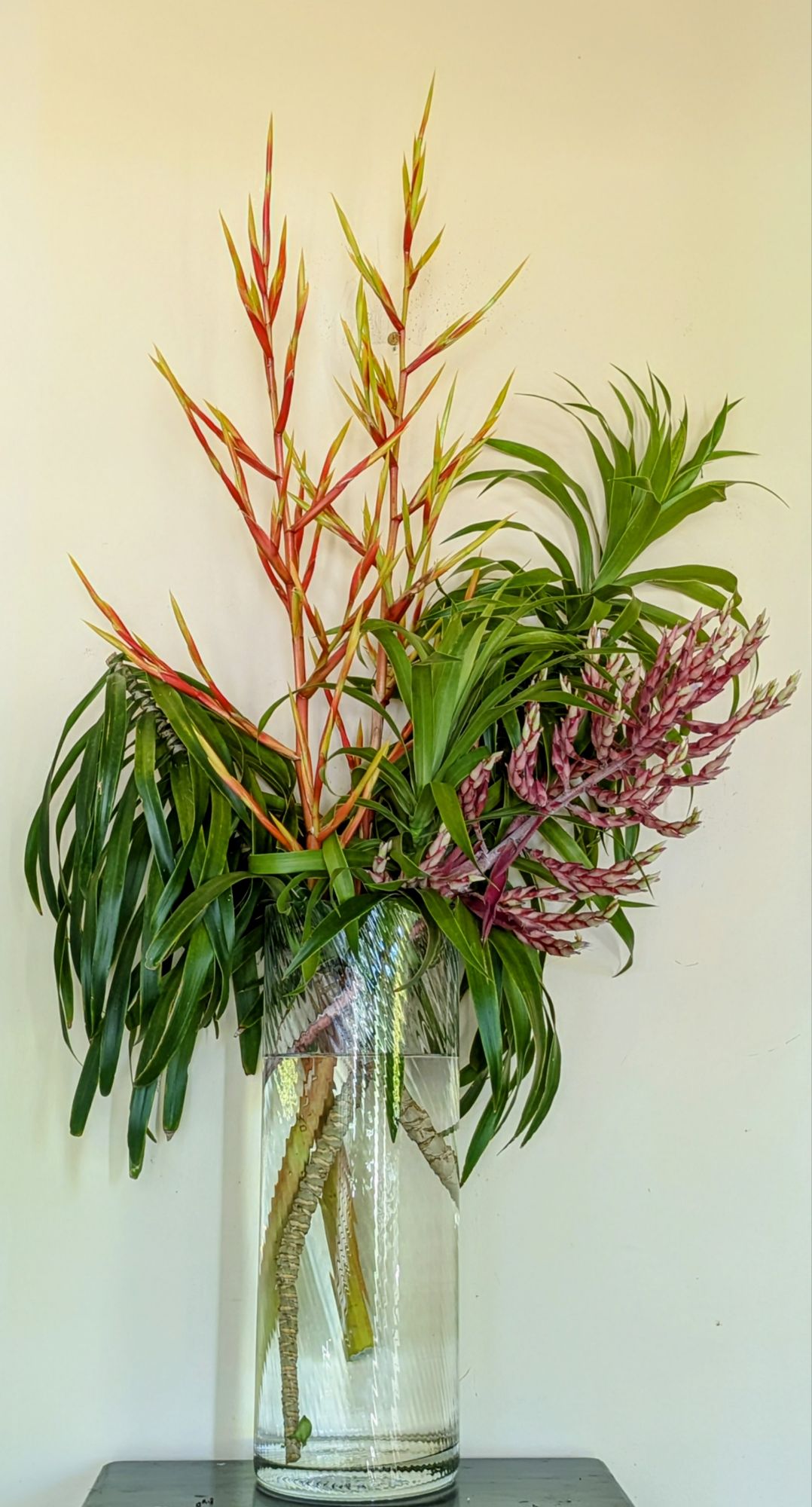
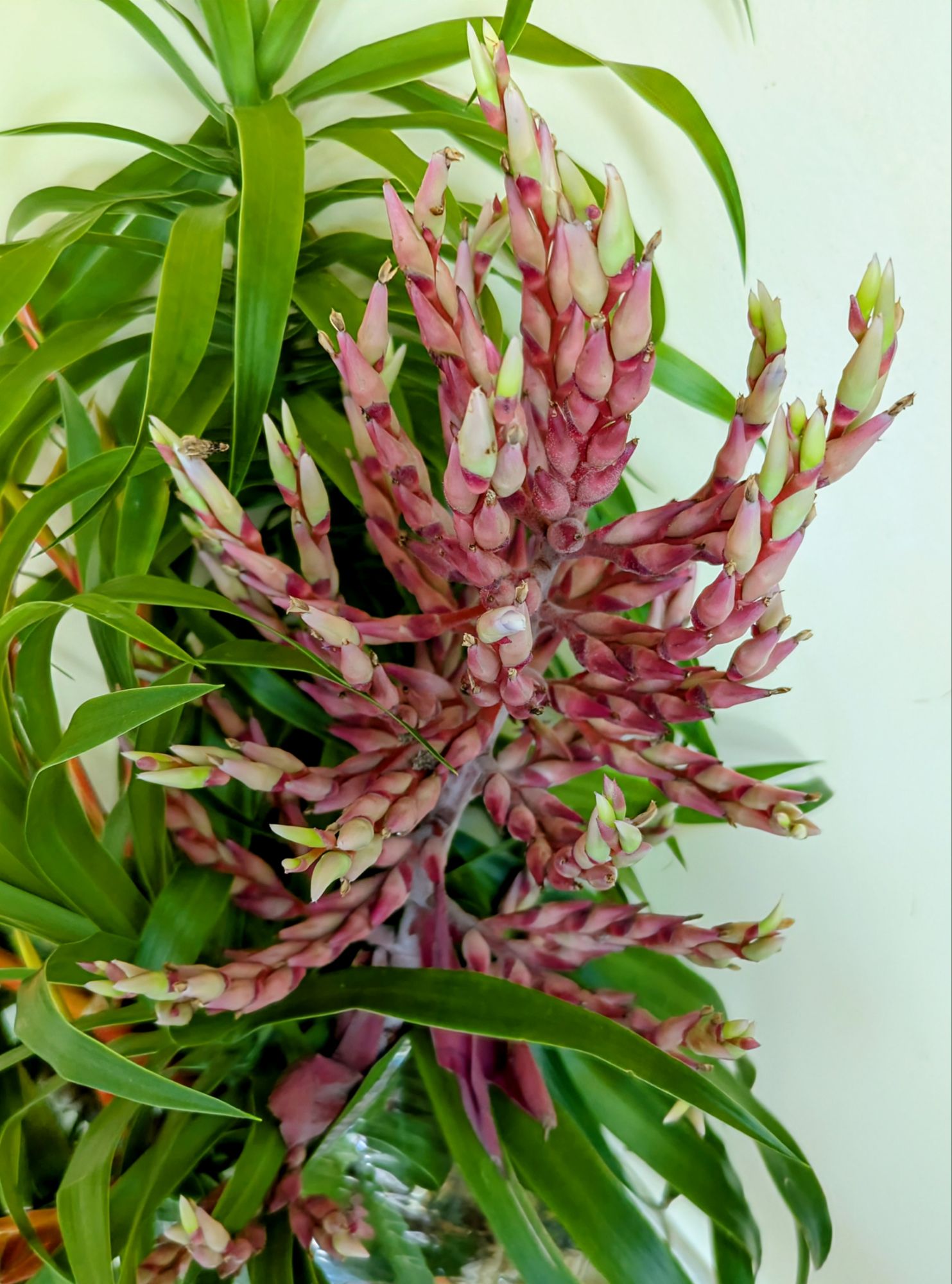
I recently acquired some fabric called Tropical Fantasy. It features animals lurking in palm trees and giant teapots. I believe this vase fits quite well into that theme. Many bromeliad flowers are the embodiment of a tropical fantasy. I get a head shaking moment every now and then in the garden and ask myself “is that a flower or what?”

Our rainy season is taking a long holiday from precipitation. Scorched is the new normal as temperatures have been over 90 (32C) for the past few weeks. The good news is the humidity dropped. The bad news is this is making the orchids very unhappy. I can’t get enough water on them and have had to pull some up to get them out of the sun. I can’t recall ever having crispy brown orchids.

The components:

wp-17542474627181799272758335123168

This is the appropriately named “Fantasia” Aechmea Bromeliad. The foliage is a sawtooth edged silvery grey with pink undertones, pretty fantastic.

wp-17542478038874848226265706371925

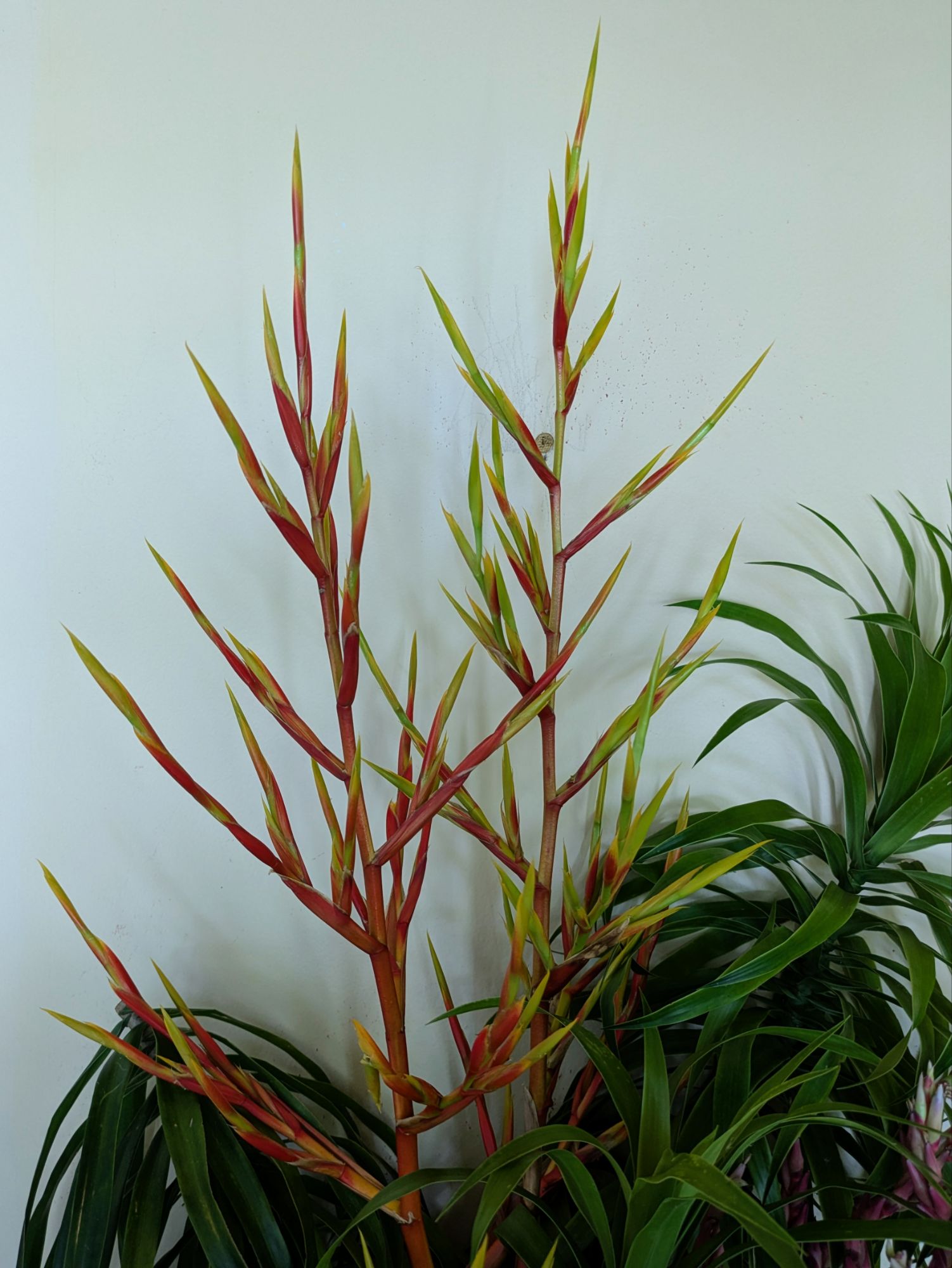
These flowers are from two different Aechmea blanchetiana bromeliads. Red stemmed flowers are from the raspberry cultivar and the yellow one is from lemon. The foliage is red or yellow tinged in these two varieties. The Blanchetiana comes in a number of colors, one called iced tea due to the foliage color. These are stunning in the sun. Foliage in the vase is prunings from Dracaena reflexa. These used to be called Pleomele, I think. The one in my garden is (or was!) about 15 feet tall. It was growing over the bottom of the roof so I trimmed it back.

That’s all from the slow simmer setting in South Florida. Thanks to Cathy for hosting our weekly vase adventure into other gardens and climates. To see more vases follow this link RamblingintheGarden.

In a Vase on Monday – Cherry Fizz

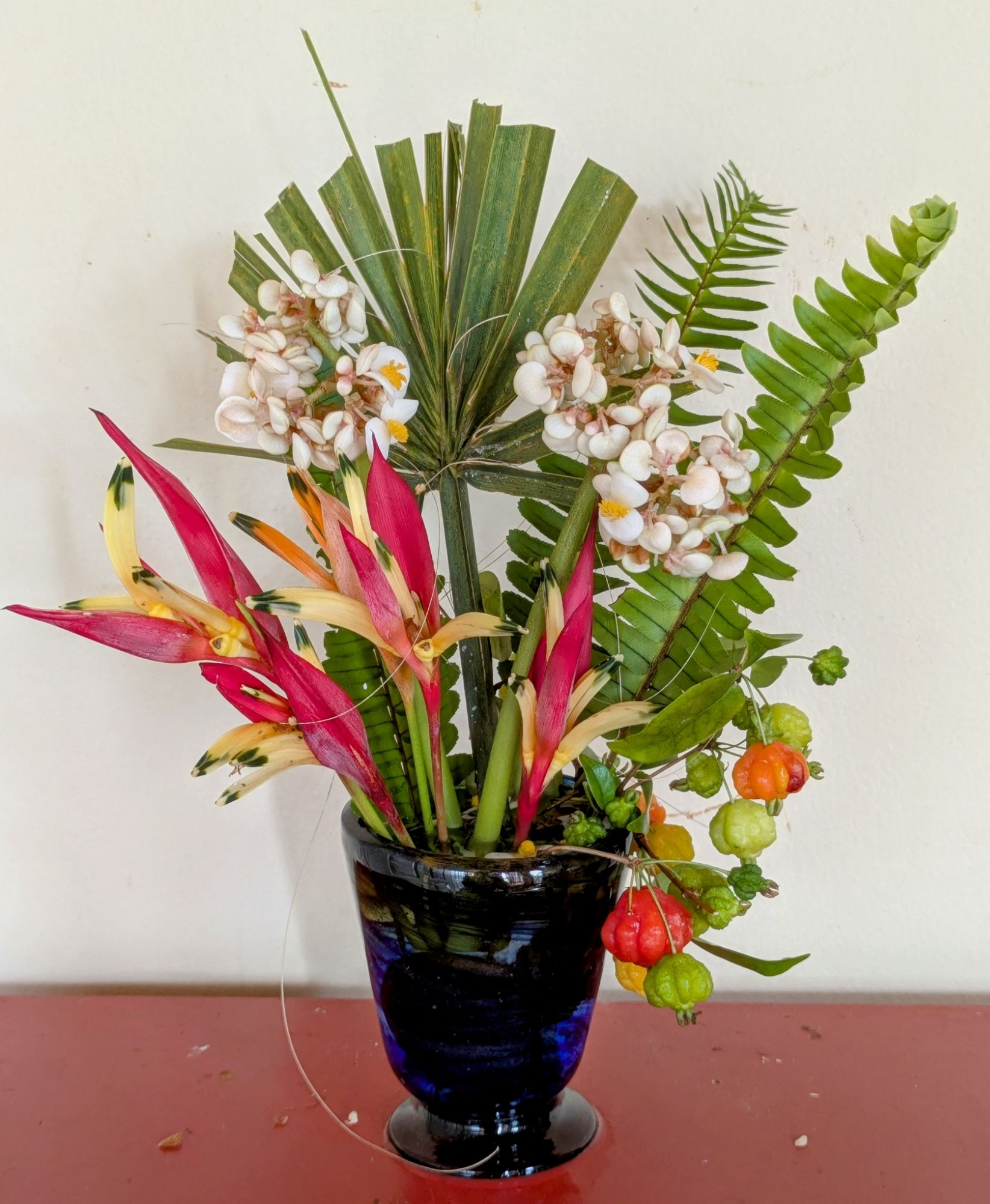
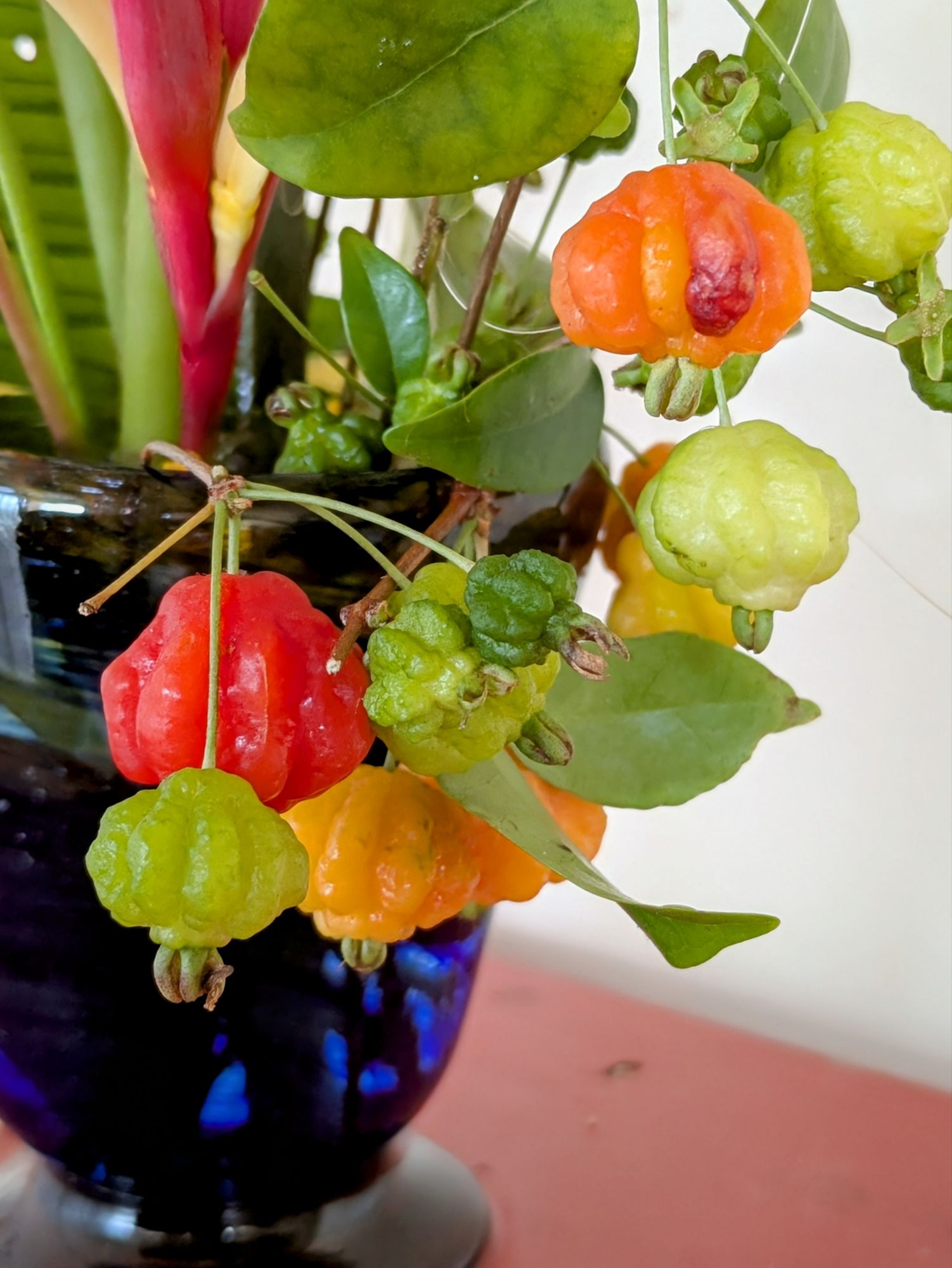
The title reflects the glassware and the fruit in the vase. The glass is some sort of footed cocktail glass, inherited from my in-laws, who collected such oddities. The cherries are Surinam Cherries, a sorry excuse for Bing Cherries from the tropics. The flavor can only be described as resinous, redolent of turpentine. I do like to cut them for vases and leave the rest for the natives and wildlife. Apparently, the flavor is something you have to grow up with to appreciate. I have not acquired a taste for these – directions on how to prepare them from locals is another turn off. “Store them in the fridge overnight to get the worms out” is what I was told. Not likely.

Surinam Cherries, in varying stages of ripeness. Red is ripe. The shrubs make an excellent privacy hedge and are indestructible. There is another tropical cherry from Barbados that is rumored to be more palatable. I’m sticking to growing mangoes and pineapples.

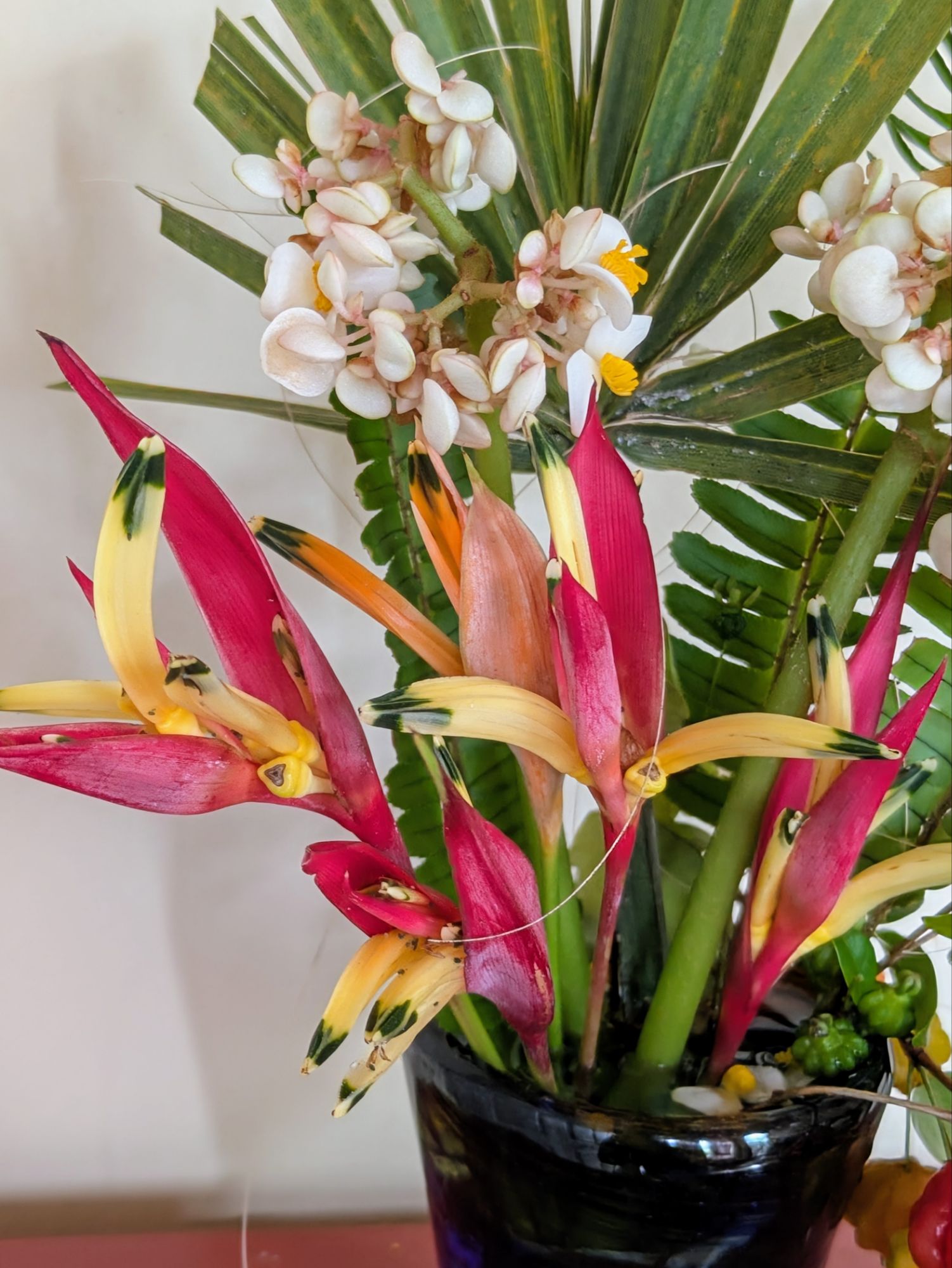
The fizz. In white, Lotusleaf Begonias (Begonia nelumbifolia). In red, yellow and orange, Parrotflowers (Heliconia psittacorum). Greens provided by Asian Sword Ferns and trimmed Saw Palmetto frond.

We finally got rain! The happy news from the garden. Spring showers have been few and far between in South Florida and thundershowers were very welcome.

To see more spring beginnings, visit Cathy at RamblingintheGarden for a vase tour.

Six on Saturday – Winter Color

I am joining SOS sharing my new winter flowers and vegetables. The cool season in Florida is the best time of year for gardening. Late in the year I plant vegetables and update annual flowers in my containers. I am trying some new flowers this winter. Gardening is a constant experiment for me.

To tour other winter gardens visit Jim at GardenRuminations.

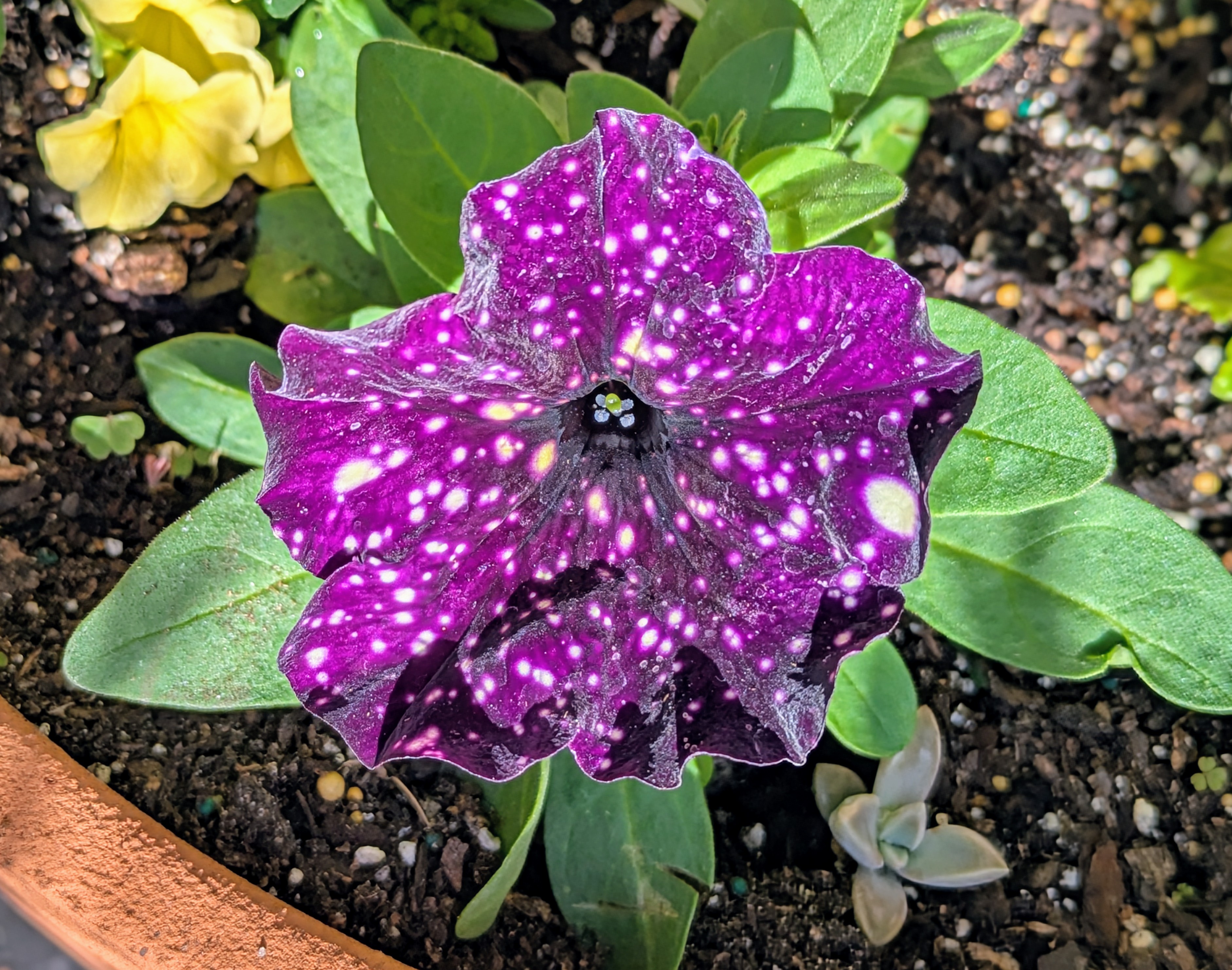
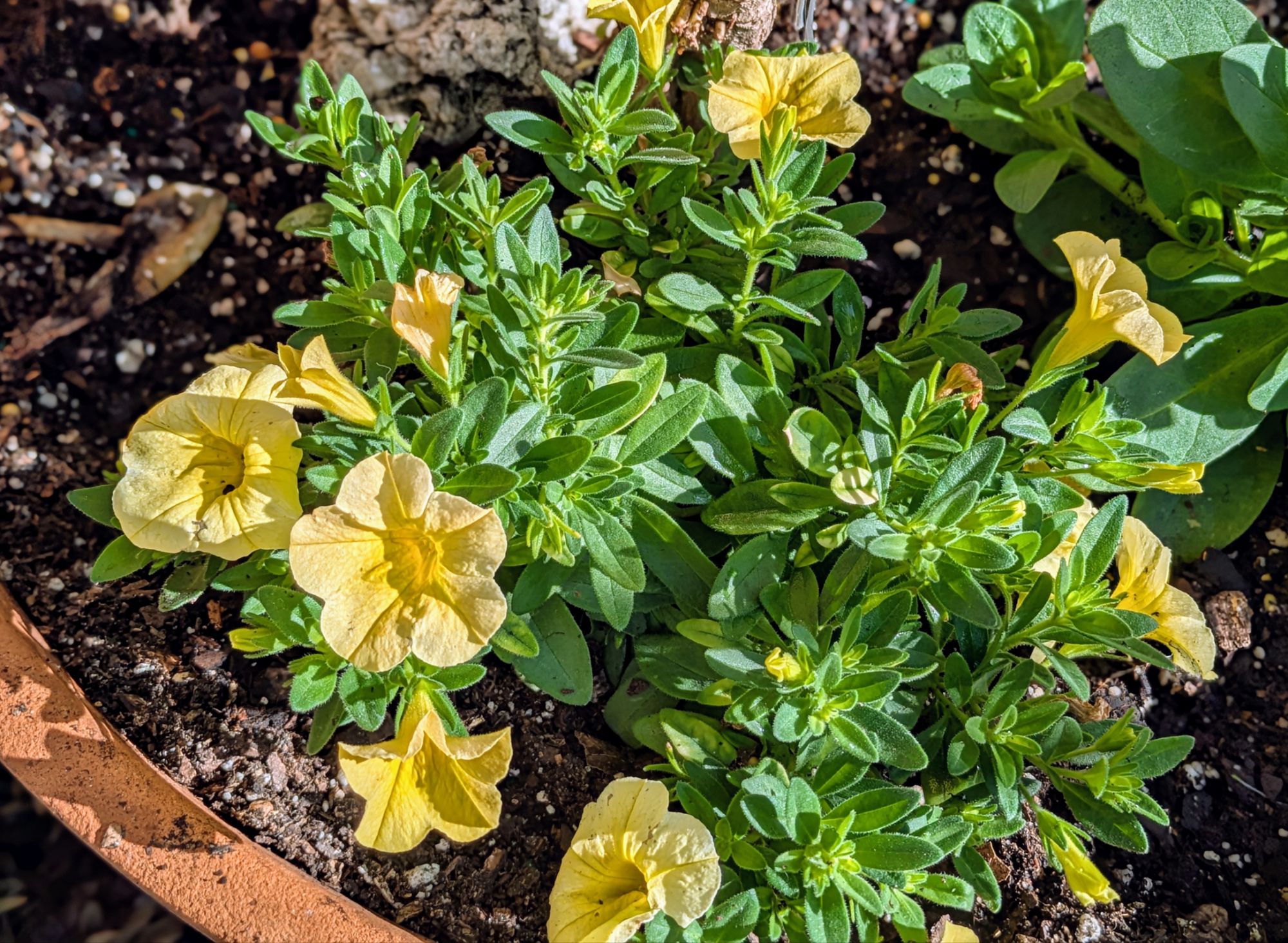
I think these are Splash Dance Violet Vogue petunias. I did not realize how many different types of the dark spotted petunias there are and recycled the tag. I also did not realize petunias are not toxic to dogs but Callibrachoa is. Sure enough, I left the Callibrachoa out of the dog reach and later observed him trying to take a bite out of the petunias! Details.

The new Callibrachoa the dog did not get to try. I have varying luck with these. They seem to look great for a short period of time and then poof! no more.

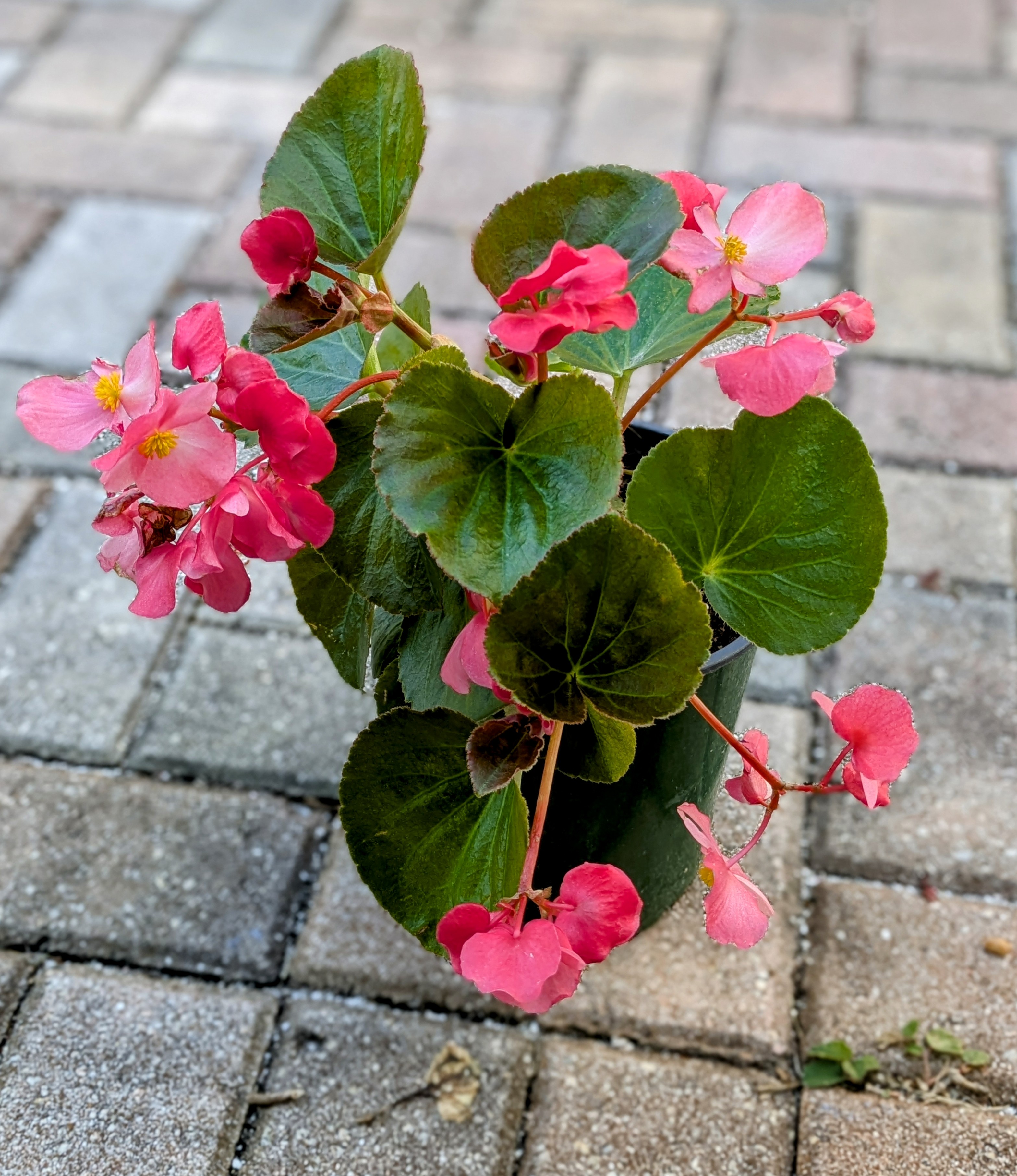
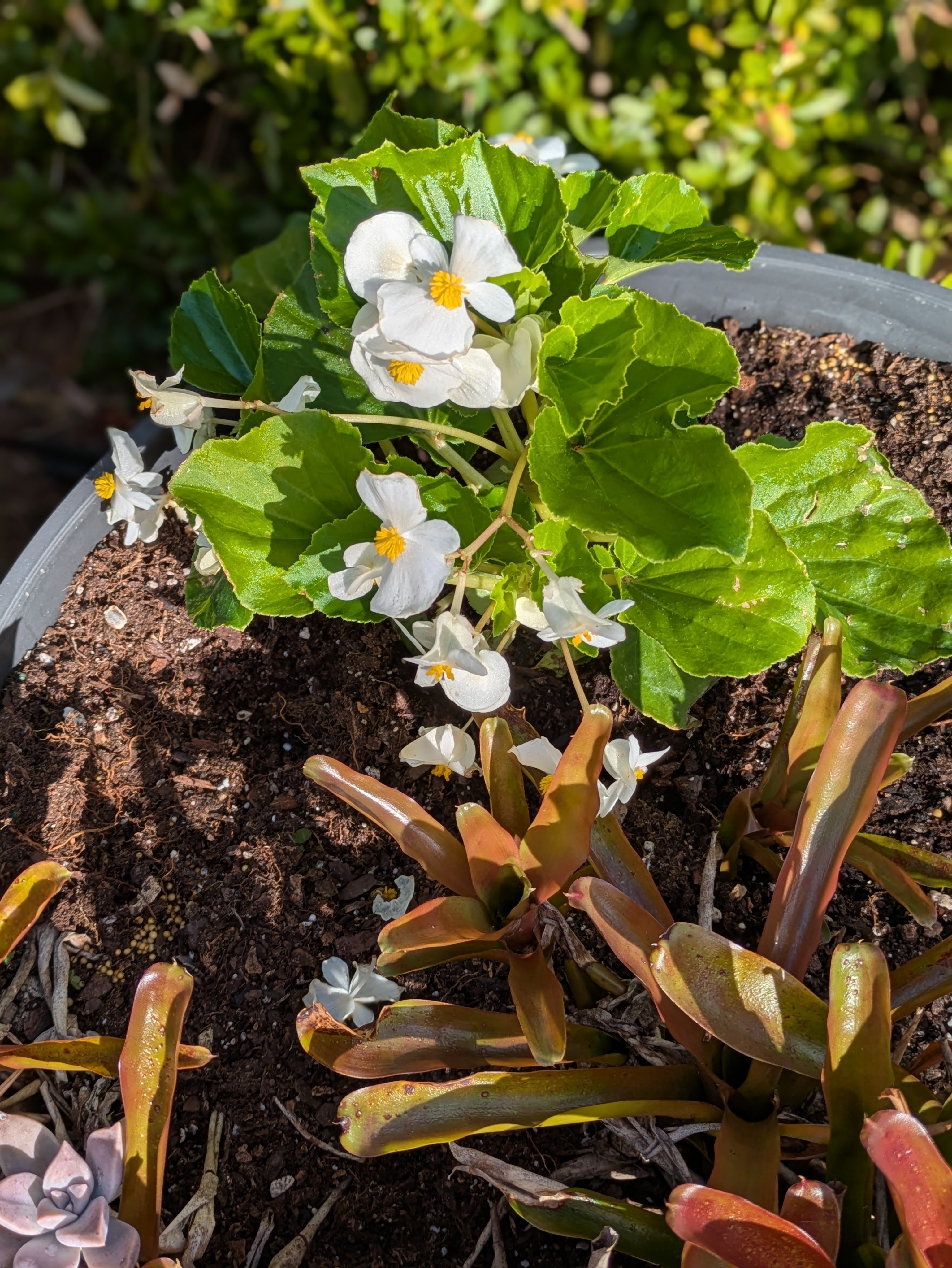
This is a new variety of Begonia called Big Pink (Begonia x benariensis). They are said to thrive in shade or sun and can grow up to 28″ tall, which seems unlikely. Has anyone tried them? Below is Big White with Fireball Neoregelia Bromeliads in a container.

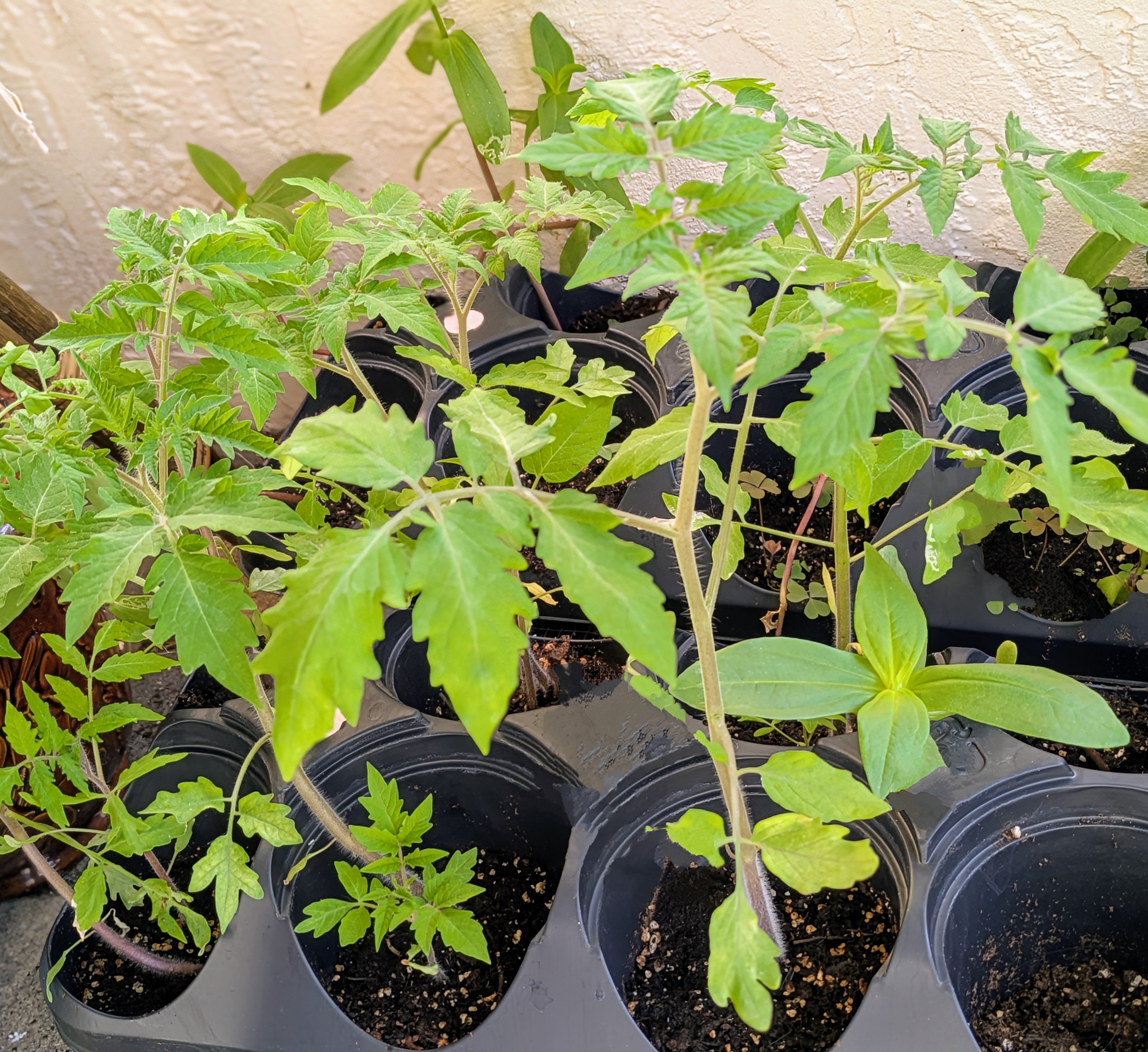
The Cherry Tomato and Zinnia seedlings (in bud!) are more than ready to be planted. I am waiting until tomorrow as warmer weather returns next week.

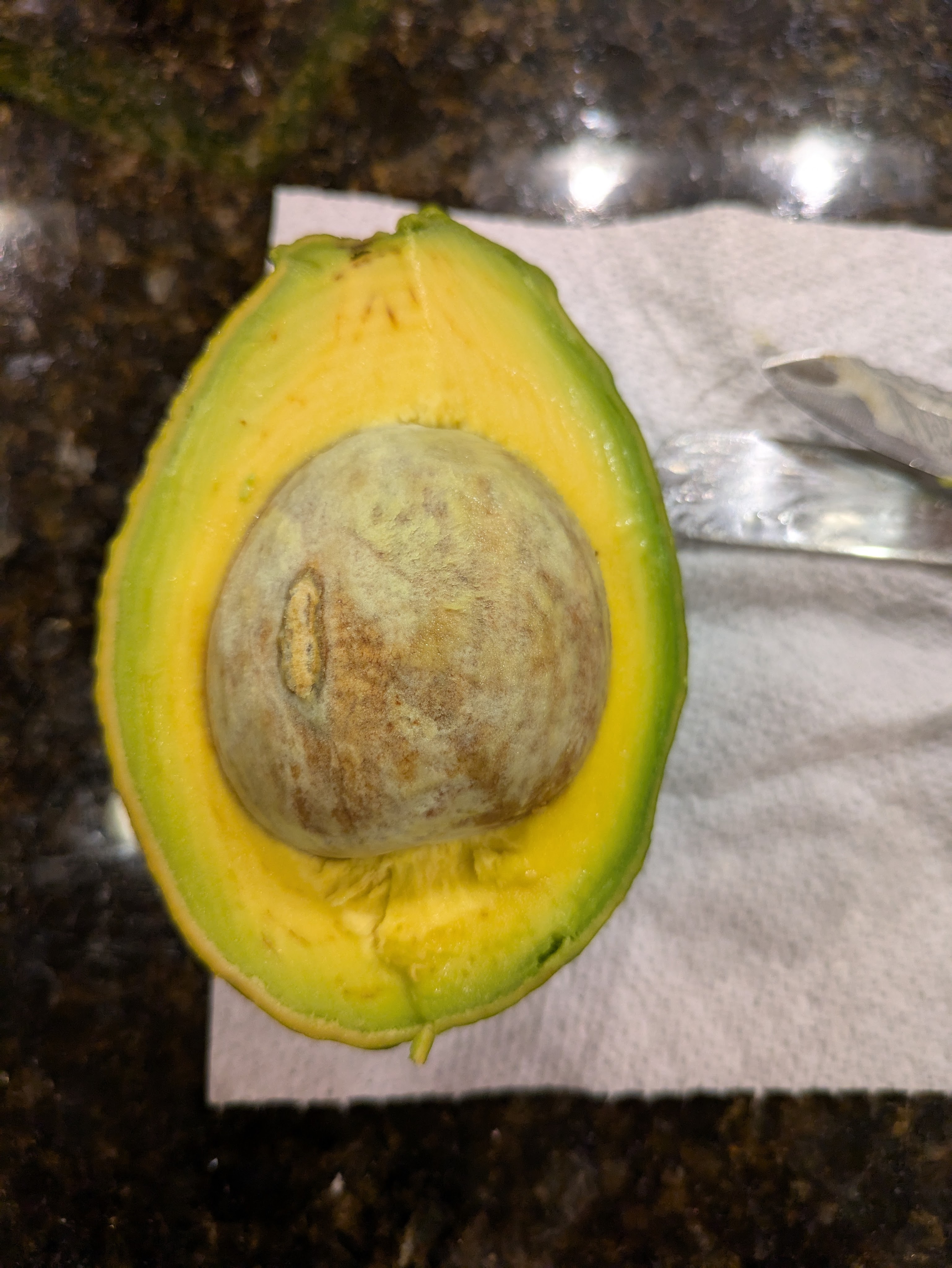
My first Cuban or Catalina Avocado was a bust. It fell off the tree before it was big enough, there is usually twice as much fruit around the seed. I gifted the seed to a friend – in ten years or so, she might have an avocado. I am hoping for some Christmas 2025.

I am getting back in the garden this sunny Saturday morning. It is 67 degrees F/19 C, good gardening weather.

Happy December to all!

Six on Saturday – June Things

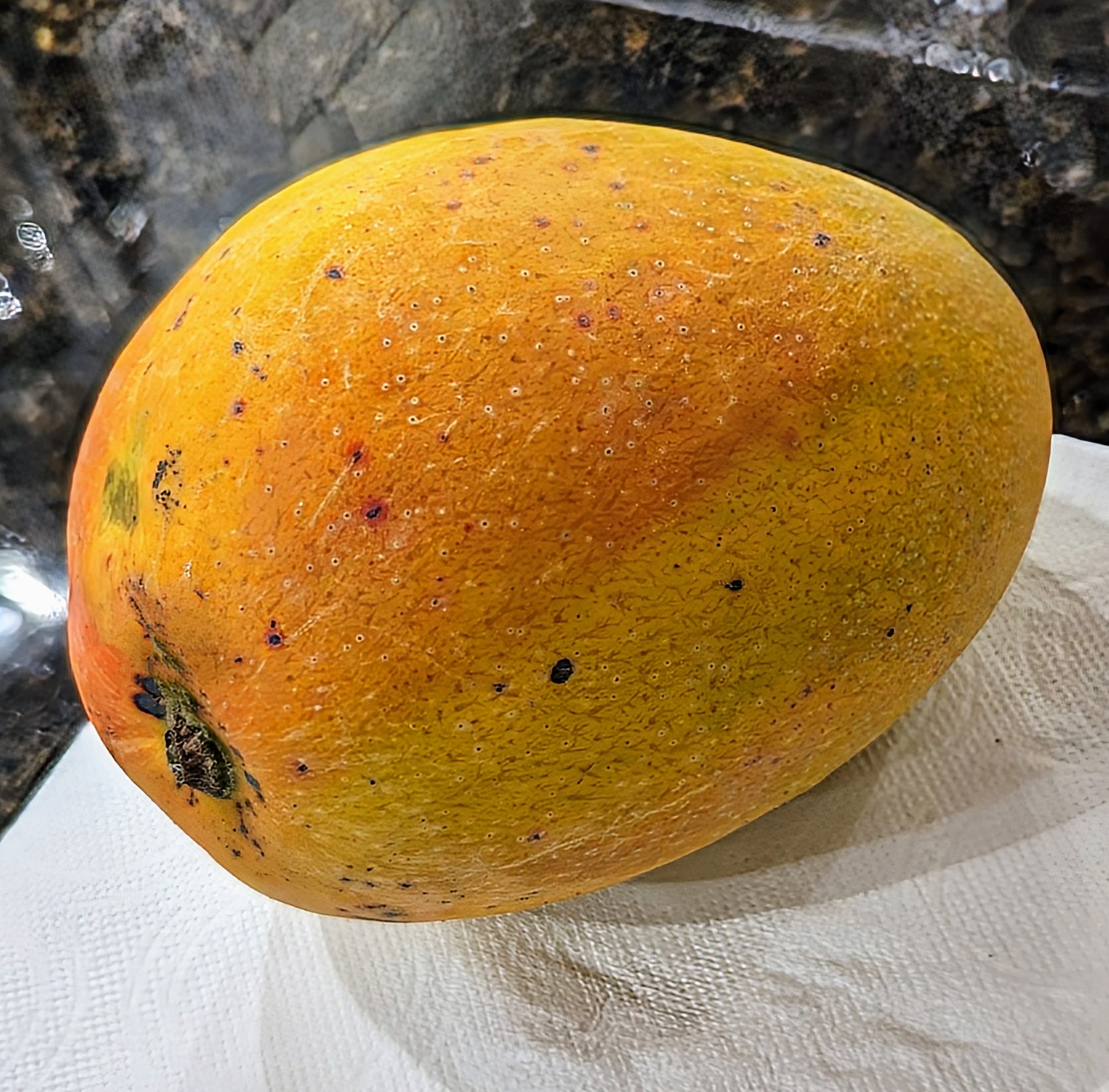
I looked back to last year and noted my first mango! was picked on June 2. We are a few days behind this year, but I am thrilled to introduce the first victim of my serrate knife – to be chopped, pureed and made into a Mango Key Lime pie this afternoon! This is a Glenn mango, flavor profile sweet and peachy with hints of citrus. Ha! just like wine speak, I think they taste coconutty.

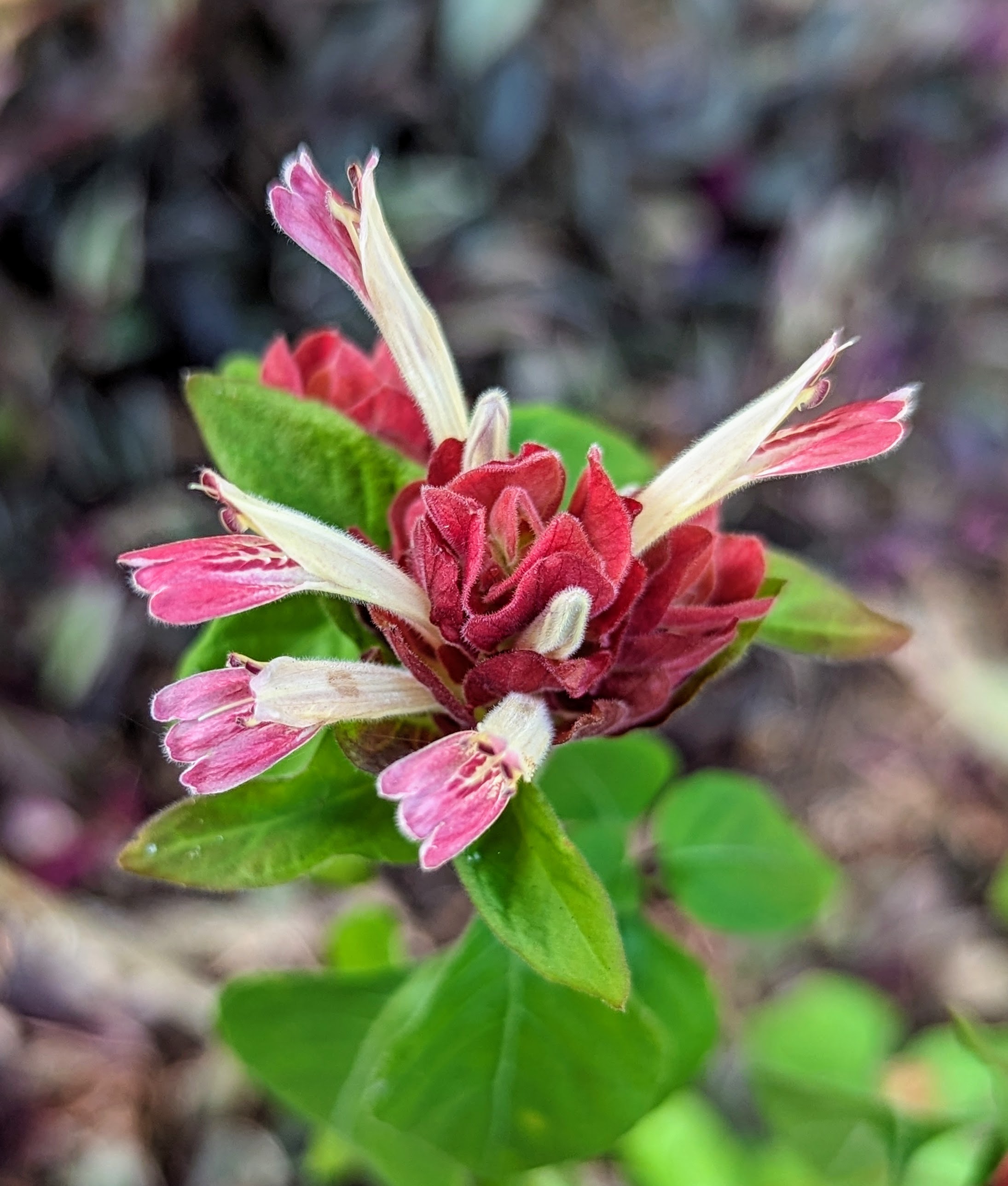
The indestructible Red Shrimp Plant (Justicia brandegeana) is starting back up. This is another amazing plant, dump it in sugar sand, forget about it, and it still keeps going.

Another great summer red (not wine again) is the Petunia exserta. These are sort of viney and meandering through the White Flame Salvia.

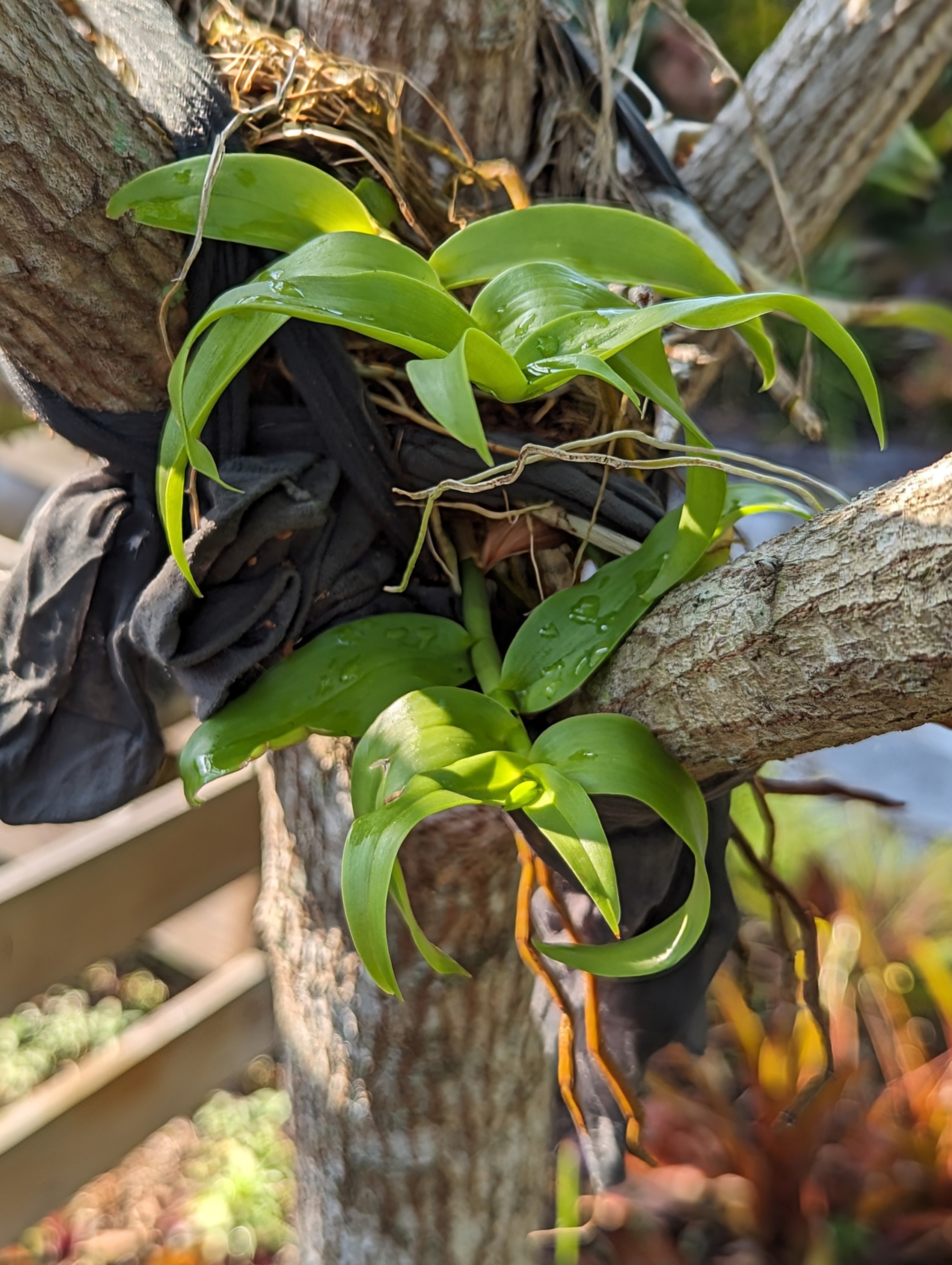
The orchids I placed in trees are establishing nicely and loving the humidity (unlike me). This is an unnamed Dendrobium in a Catalina (or Cuban) Avocado.

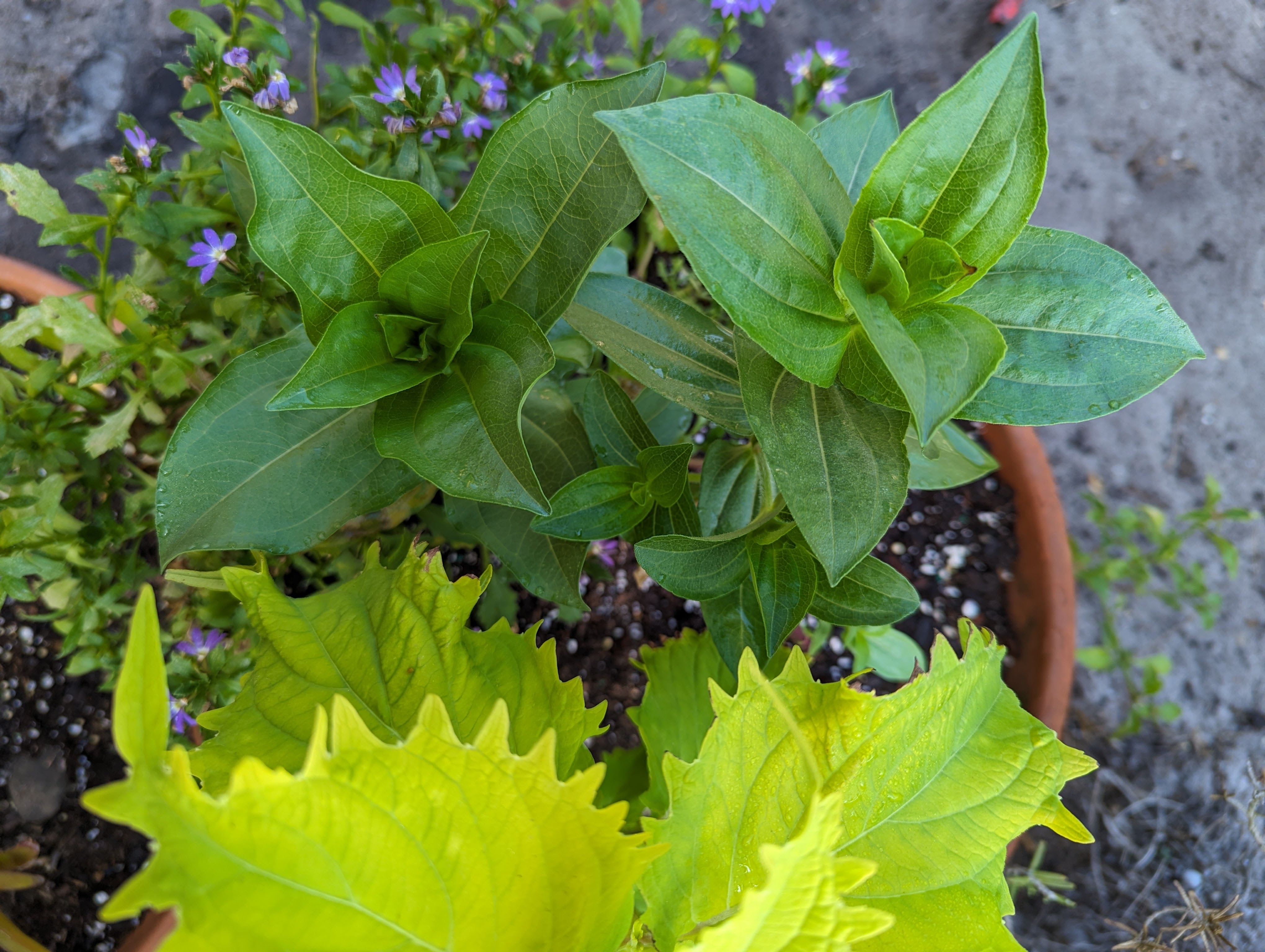
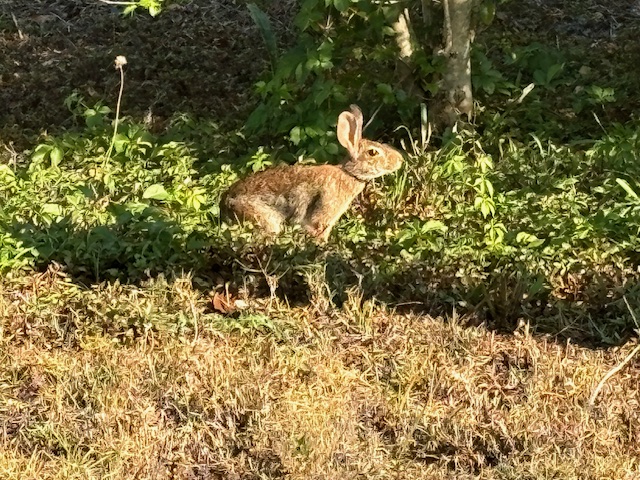
I tried a new mix of open pollinated Zinnia seeds for summer. These are called Zin Master Mix and I am more than curious about what I am going to get here. The plants are gorgeous (I thought they were going to die) I have a bunch of these plants and was planning to try some in the ground, but we have been overrun by Marsh Rabbits this year and they find the Zinnias to be an extreme delicacy. Another gardening dilemma. These rabbits are so confident they build nests inside the fence with a greyhound! These are in a big pot with a chartreuse Coleus and under planted with Blue Scaveola. No idea what color Zinnias are. Hope it works.

The Marsh Rabbit – looking for Zinnias in all the wrong places.

That is all from my garden this Saturday morning. To tour other SOS gardens, visit Jim’s blog, GardenRuminations and follow the links in the comments. I will be hopping into the kitchen to bake.

Heliconias for South Florida

Looking to add some tropical vibe to your garden? Look no further than one of my favorite tropical plants, Heliconias. Heliconias come in many different varieties, two of the most common and easiest types to grow in South Florida’s Zone 10 are Parrot flowers and Lobster claw Heliconias.

Meet the Lobster claw Heliconia (Heliconia rostrata). Featuring large, shiny banana-like foliage and thick stems that support large hanging bracts of red and yellow flowers it is difficult to picture a more tropical plant. They originated in rainforests of South and Central America as understory plants. It is written that the flowers evolved to this shape to attract tropical hummingbirds to pollinate them. In my garden, the hummingbirds aren’t around at the same time as the flowers, so I am guessing this is a phenomena that happens much further south.

While some Lobster claw Heliconia can grow to 15 feet tall, these are usually more tropical types in an actual rainforest. The plants grown in Zone 10 are usually smaller and can be damaged with an extraordinarily cold snap.

Lobsterclaw Heliconia are easily grown in a partial shade setting with ample moisture. They like rich, well drained soil and benefit from compost in the planting hole and mulch. I grow them in my garden on the north side of the house under the edge of the roof. They are very happy and provide cut flowers in the summer.

This is a smaller Lobsterclaw Heliconia in my garden. I enjoy cutting these for smaller vases.

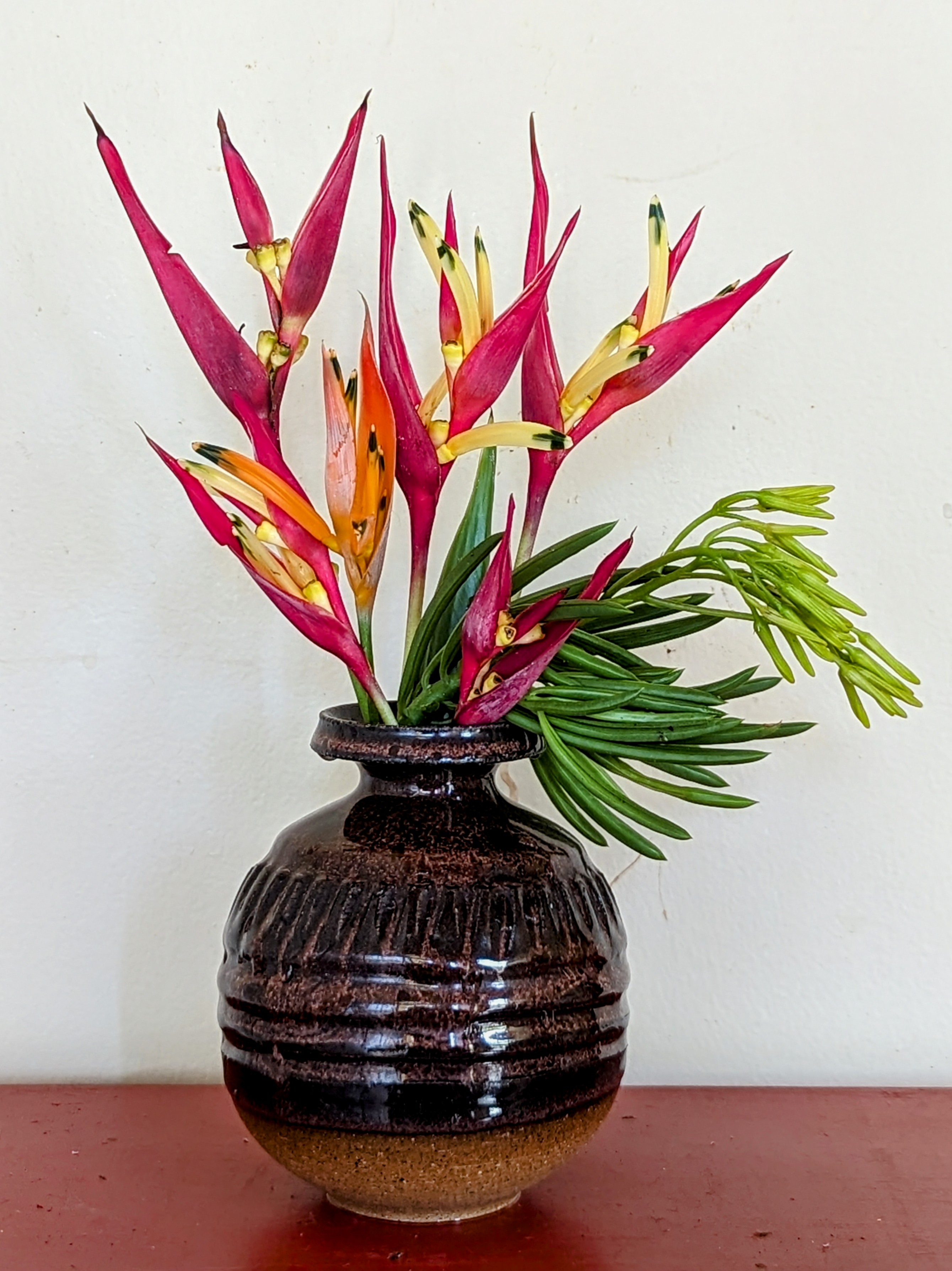
Here is a parrot for the garden. Heliconia psittacorum AKA the Parrot flower. I would characterize this as a tropical flowering perennial. They are leafy, grow about two feet tall, enjoy a moist, part shade environment and can spread like mad if happy. I have had these produce flowers almost every month of the year. I believe they slow down with extremes in weather (drought, heat, cold). Below is the “Lady Di” Parrot flower.

This is another long lasting cut flower. I have a few in a vase by my front door.

Six on Saturday – New for Spring

Spring plant shopping is irresistible for most gardeners. Buying a few new things for containers, resupplying herbs and shopping around my own garden for new finds was on the SOS agenda for the week. Here is what I found around the garden this Saturday morning.

The updated herb container on my front porch. I have been looking for thyme this winter and finally found some English thyme. I can’t recall having English, but it probably won’t last the summer. The pink Dianthus won’t either, but I will enjoy them while they last and hopefully the rosemary in the back of the container will take over, if we don’t eat it all first.

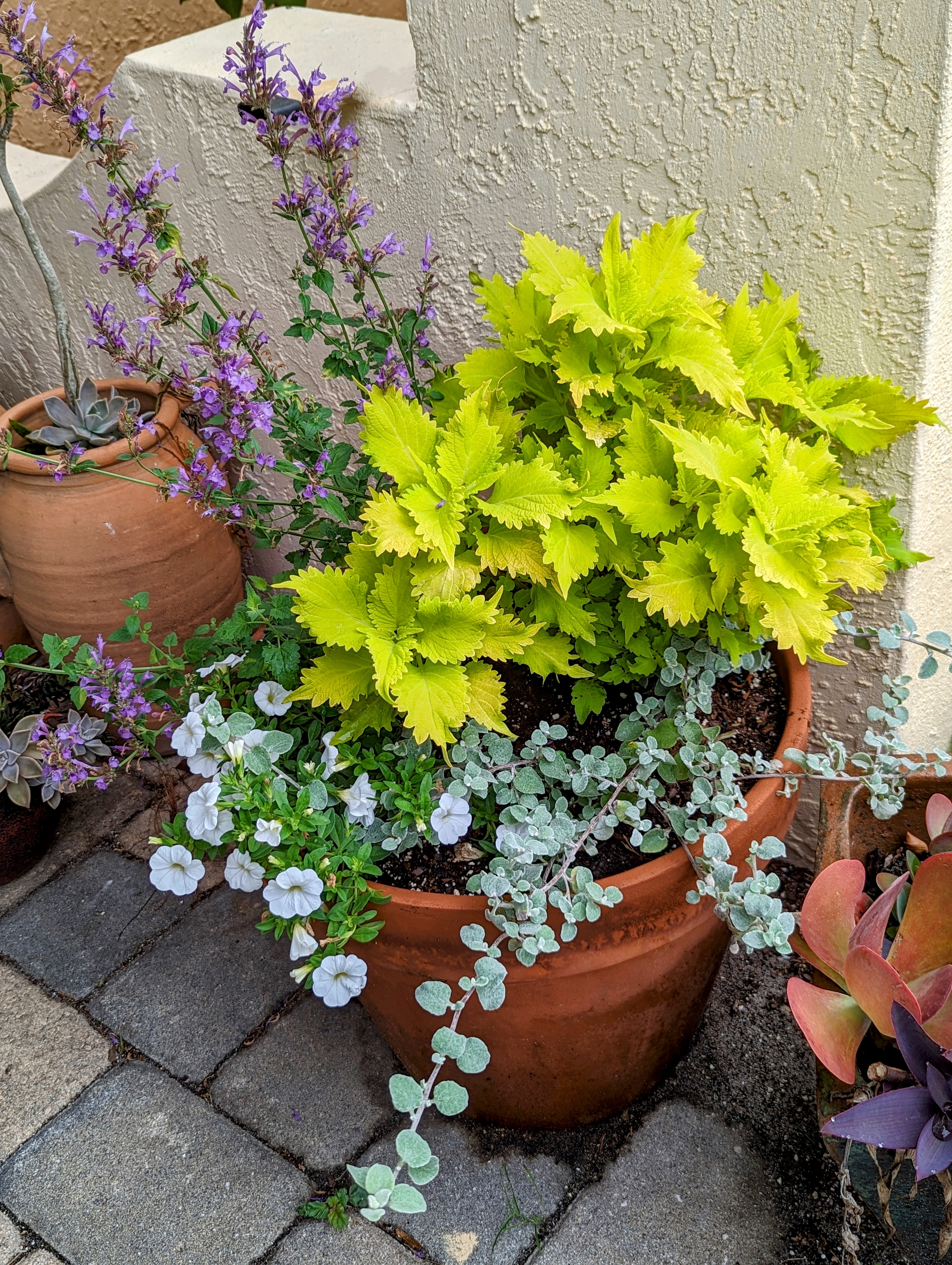
A new mixed container. This is purple agastache, white calibracoa, silver helichrysum, and chartreuse coleus (or whatever they call it nowadays) I am not sure which is the thriller or filler – the agastache or coleus.

One of the orchids from last week is just opening.

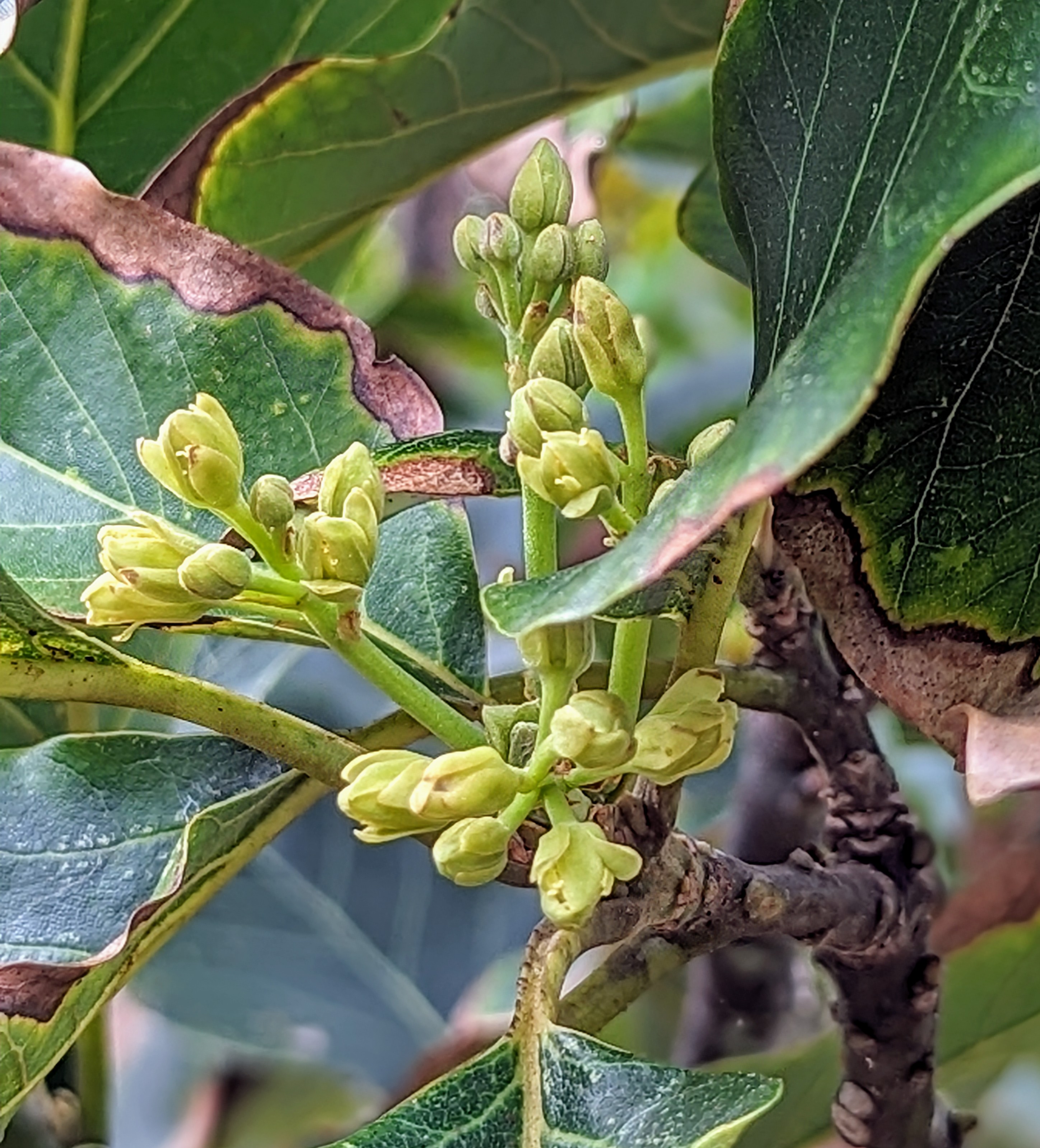
At long last, flowers on the Catalina Avocado! Seven years in the garden.

I haven’t seen these in a while. Flowers on the Aechmea ‘burgundy’ Bromeliad. I can never figure out what inspires bromeliads to flower.

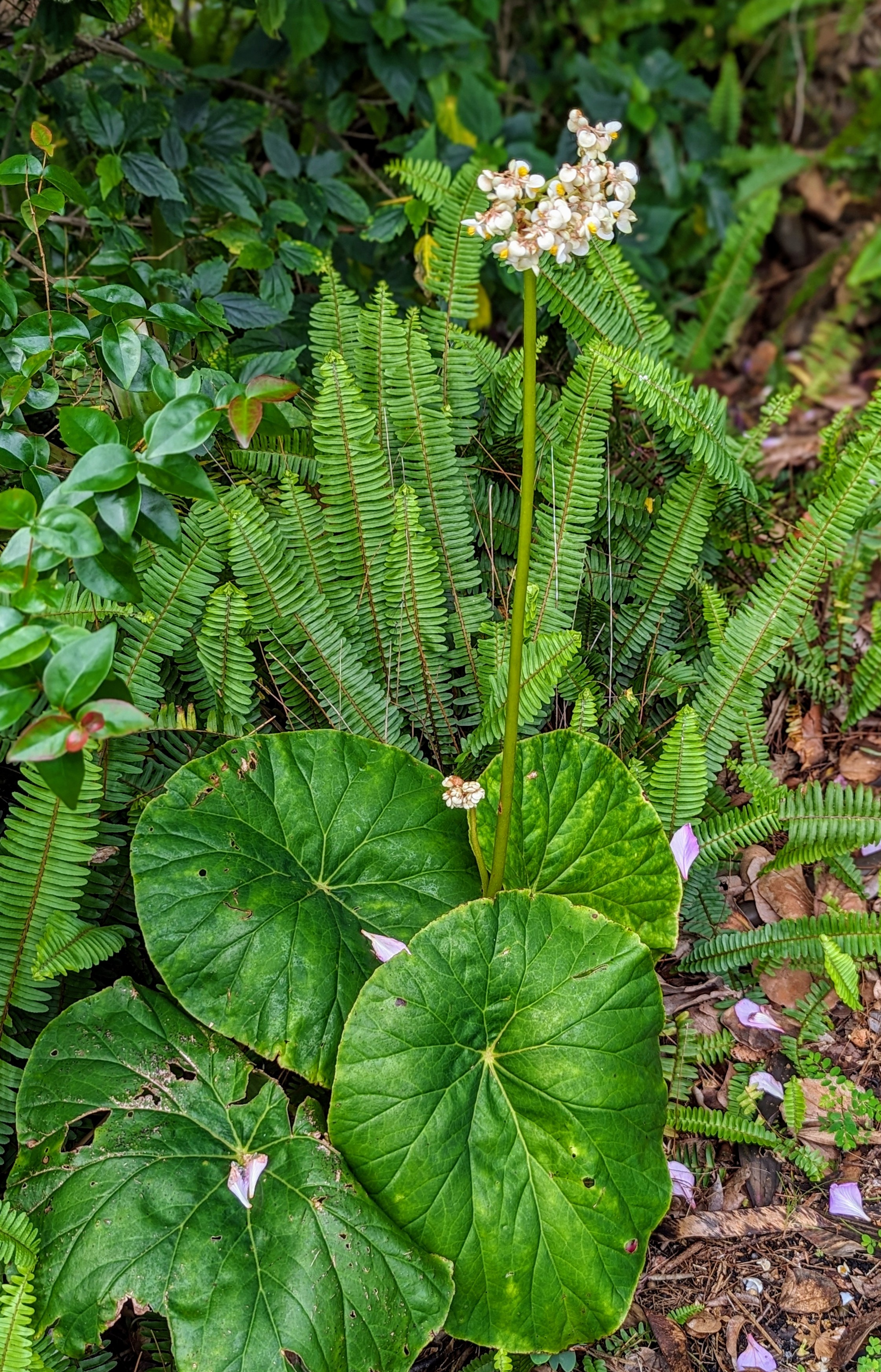
The big Begonia nelumbiifolia in flower. The flower spikes are about three feet tall. This is an impressive Begonia and forms tubers like potatoes.

That is it from my garden this Saturday. For more spring tours or maybe a fall tour from the Southern Hemisphere – visit Jim’s blog, gardenruminations and follow the links in the comments section.

Happy Spring!!

Six on Saturday – Spring Promise

My Saturday morning garden stroll revealed that spring comes early in South Florida. The scents and sights are promising tropical fruits and flowers later this year. To participate in the blog phenomena Six on Saturday and tour gardens around the world, visit Jim’s blog and follow the links in the comments.

A new arrival in the mail greeted me yesterday – a nice rooted cutting of ‘Gardenmeister’ Fuchsia. This will have to be a sort of a reverse house plant. Outside in winter and indoors for summer. Summer heat and humidity will kill this outside. Should be an interesting experiment.

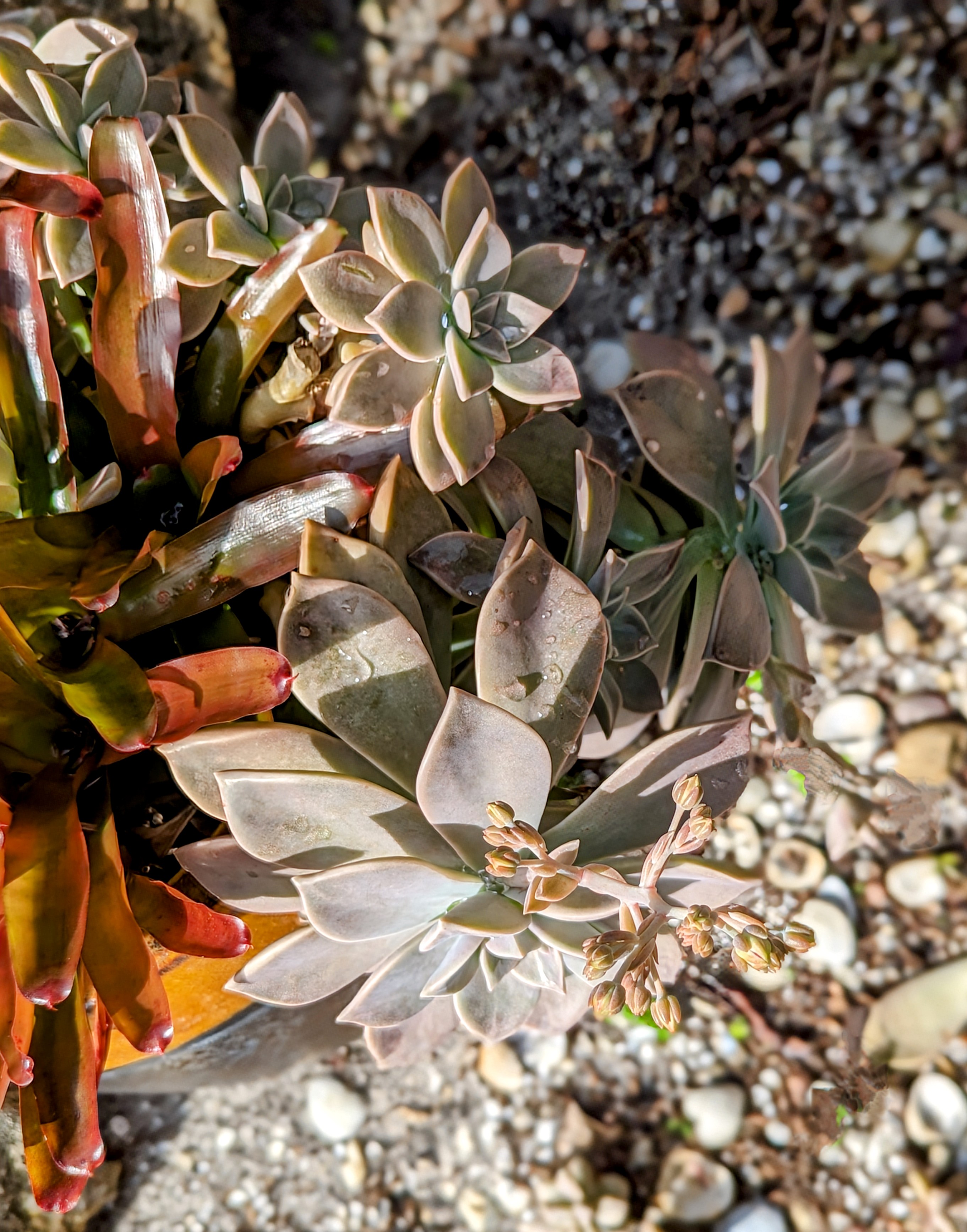
Buds on the Graptosedum.

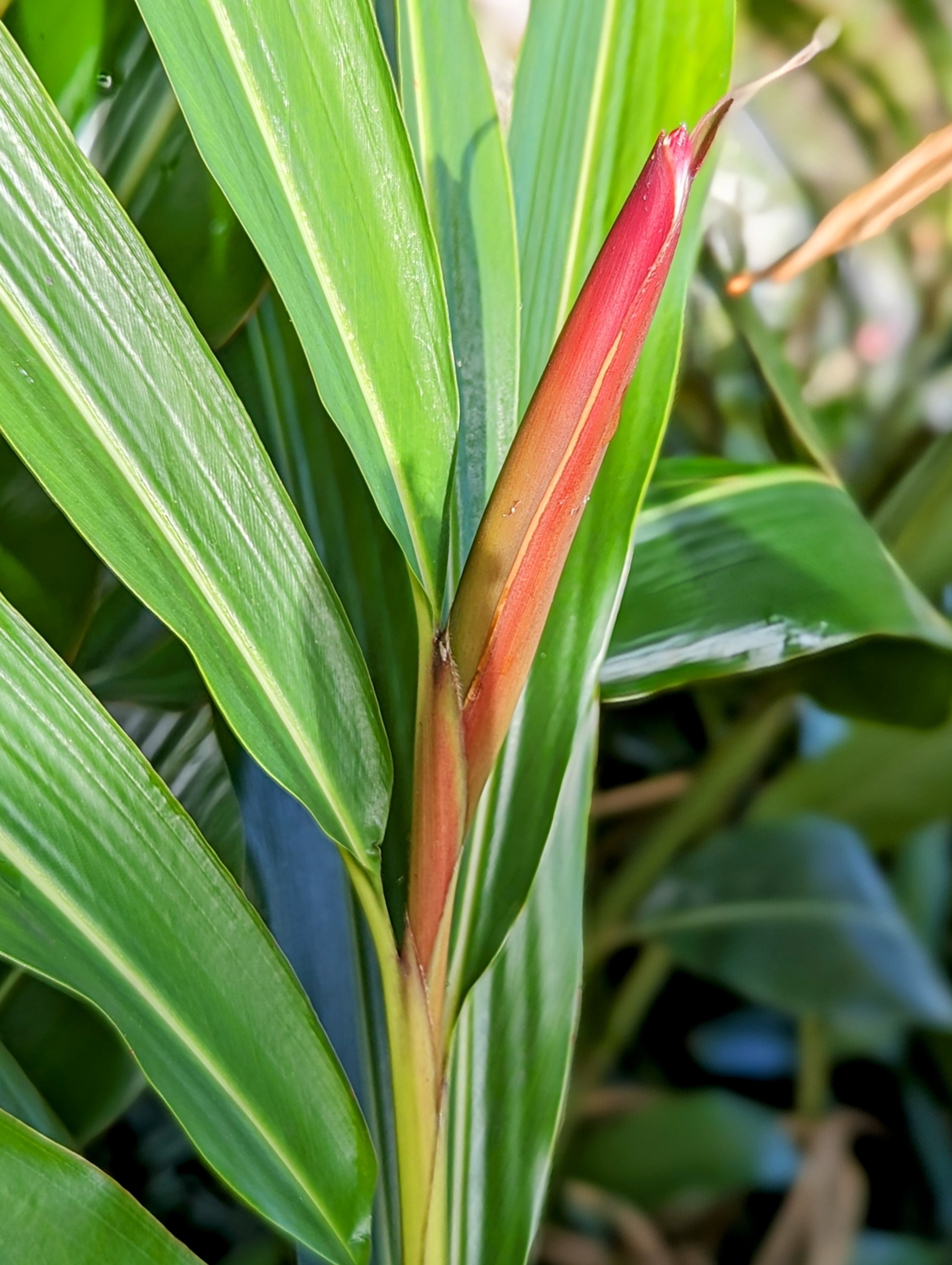
Buds on the Shell Ginger (Alpinia zerumbet). I am hoping for flowers next week. This is the only ginger I have any luck with. It is over five feet tall.

The back garden smells wonderful. The scent is from the Rangpur lime tree flowering more prolifically than it ever has.

Thai dessert mangos (Nam Doc Mai) setting lots of fruit.

That’s all from South Florida. I hope everyone is seeing signs of spring.

South Florida Garden Gems – Crotons

Easy, Year Round Color for Your Garden

Seeking an addition to your garden that provides constant color? Look no further than the Croton (Codiaem variegatum). Crotons are accent shrubs, featuring foliage wildly varigated in splashes of red, green, yellow and orange. They can be so colorful it becomes overwhelming to plant more than a few of them together. These shrubs are available in an array of sizes and colors to suit your taste and your space. Here are a few of my favorites.

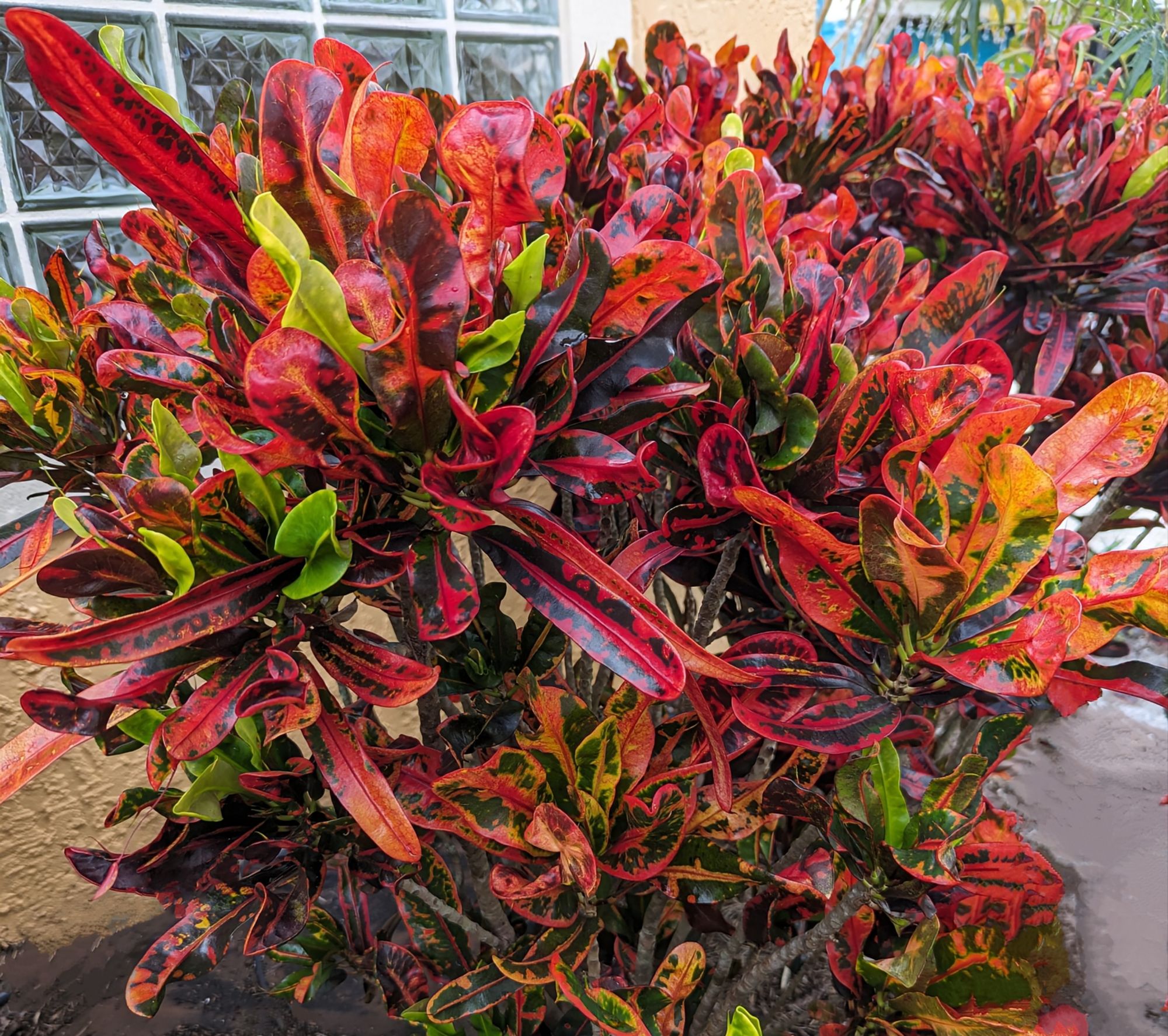
Above is a Mammey Croton. These are great for smaller spaces, staying 3-4 feet tall.

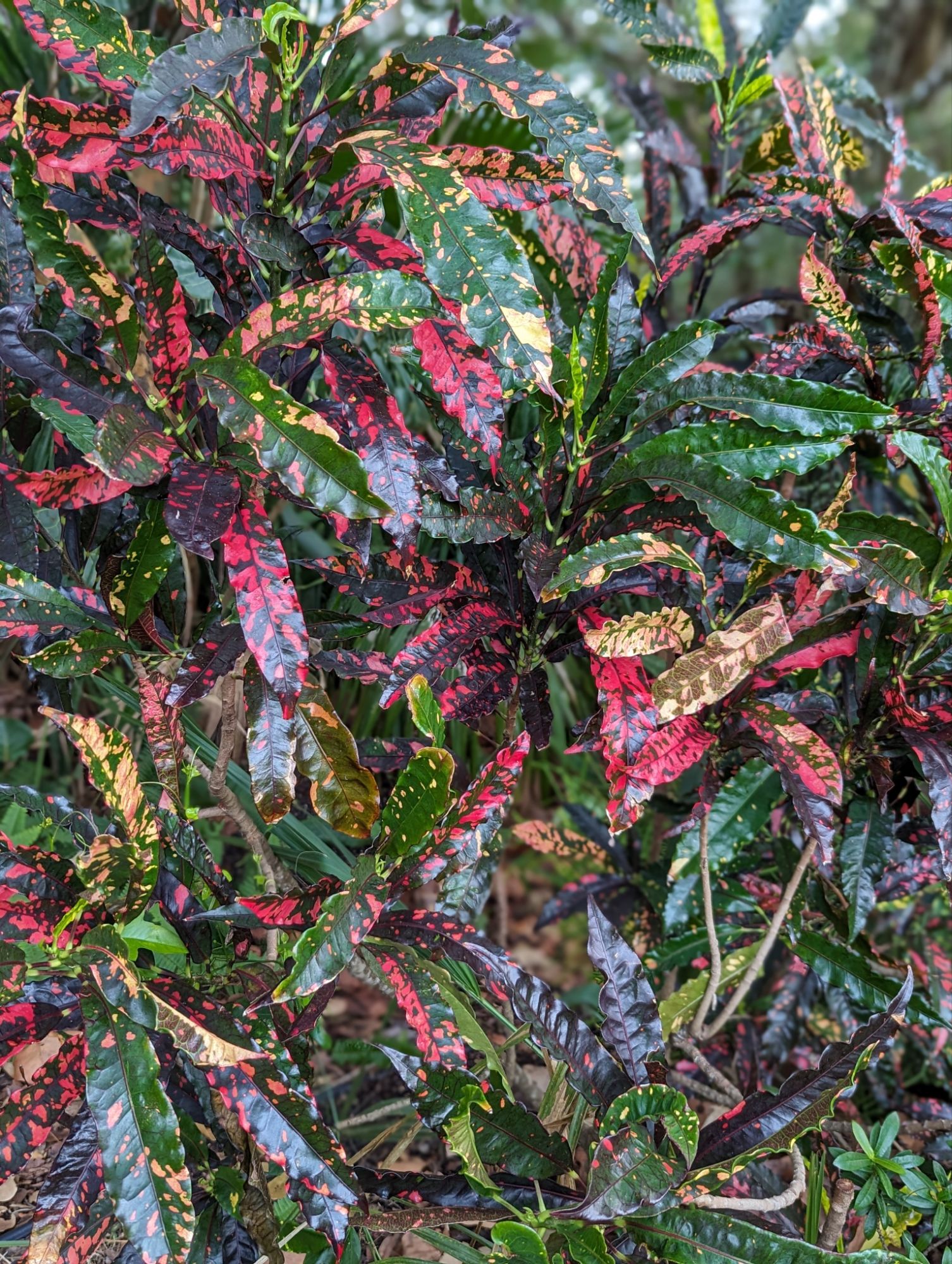
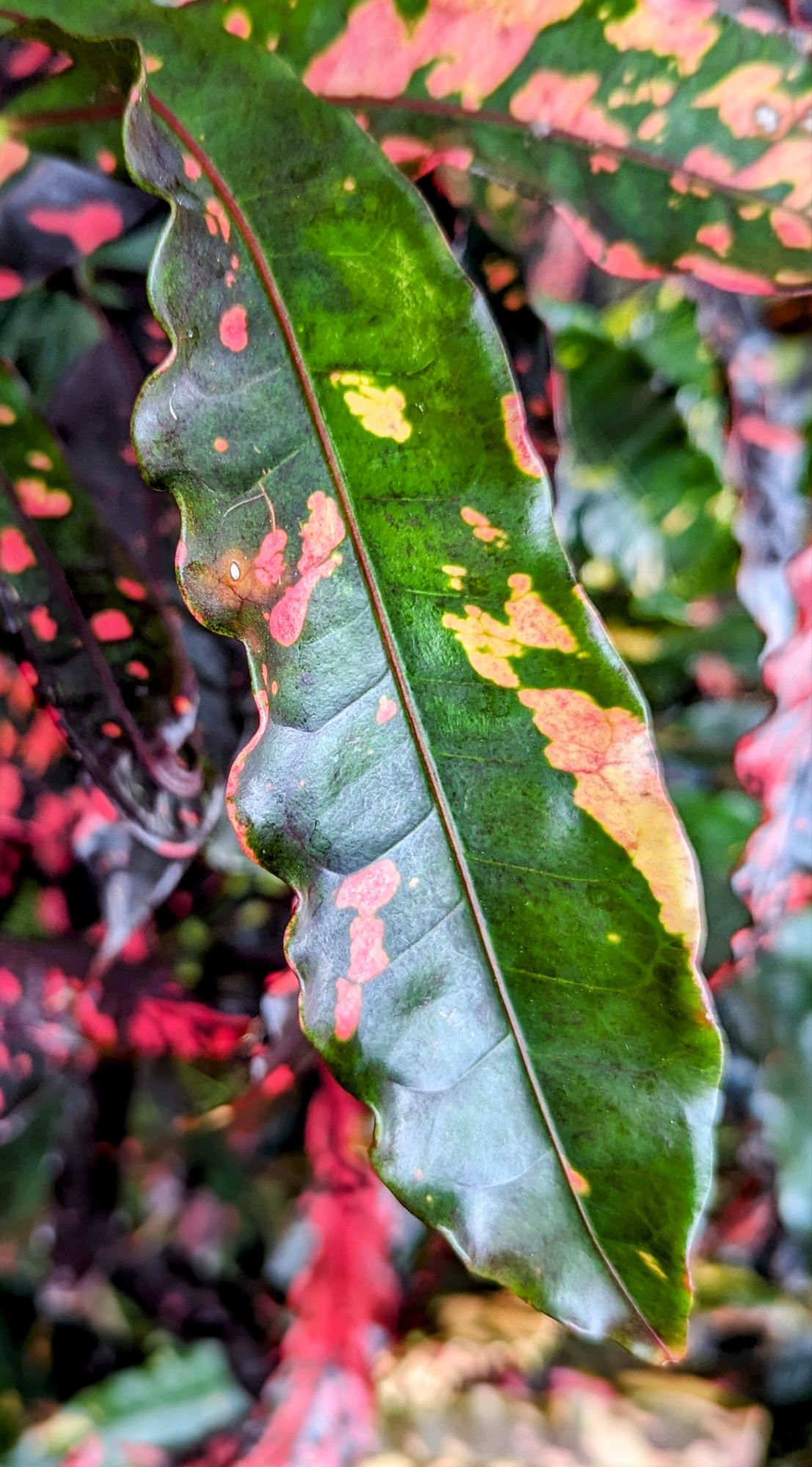
Meet the Pie Crust Croton, planted in honor of my husband, the pie baker. The one in my garden is 5-6 feet tall. The name for this shrub was inspired by the edge of the leaves – like pie crust!

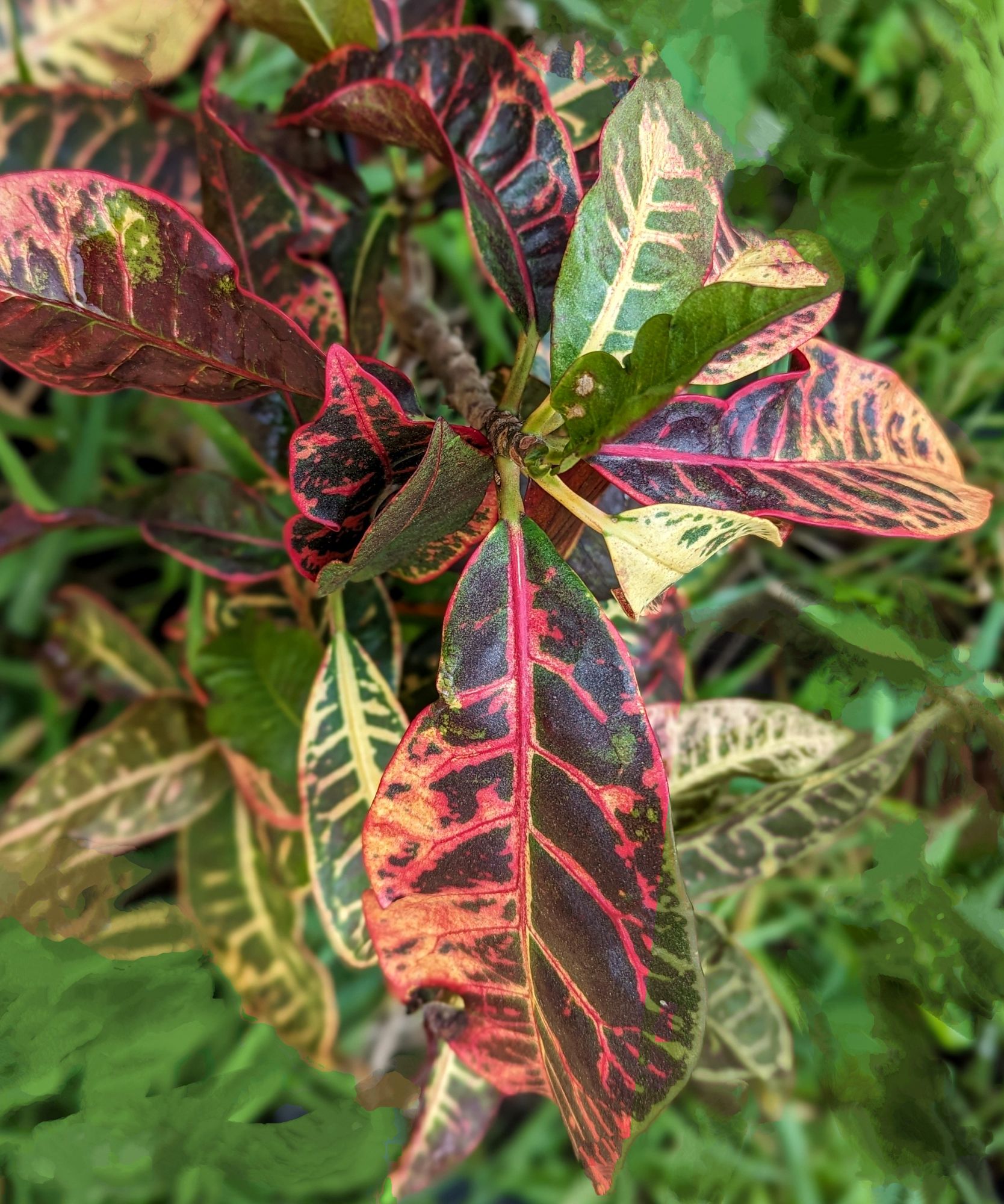
Below is a favorite Croton of Treasure Coast gardeners. Petra Croton. Petras get big, about 10 feet tall and 6 feet wide. They need some room.

Placing and Growing Crotons

Crotons are originally from the South Pacific and not considered cold hardy. This means they will suffer cold damage from freezing temperatures. Mine dropped their foliage at 38 degrees last year, but came back. North of Ft. Pierce and inland these shrubs need to be protected if cold weather threatens. Plants can be grown in a container, covered or placed out of the wind.  These shrubs should be placed in a part sun to shade location, dappled light is ideal. The foliage on some varieties can burn if placed in full sun (Mammy Croton and some others will tolerate full sun). Also worthy of noting, the Croton is somewhat toxic if eaten, so if anyone (pet or human) has plant eating tendencies place the Croton out of reach.

Plant combinations to consider with Crotons

Given their cool, colorful vibe I like to use these with other tropical looking plants – Boston Ferns, Split Leaf Philodendrons, Bromeliads and Ground Orchids are good companions and like the same type of growing conditions.

Crotons are easy to grow if placed properly, watered and fertilized regularly. The only problem I have encountered growing these is scale insects and sometimes aphids find them really tasty. The solution to this is insecticidal soap and diligence.

Add a few Crotons to your garden for a dollop of tropical fun. I am currently searching for a Sloppy Painter Croton to add to my collection.

Six on Saturday – Winter Treats

Since it has been an unusually rainy winter I have been baking a lot of winter treats. Now that the weather has (sort of) cleared up I am finding treats in the garden. I’m joining fellow SOS’s sharing my garden treats this Saturday, to see other treasures, visit Jim’s blog and follow the links.

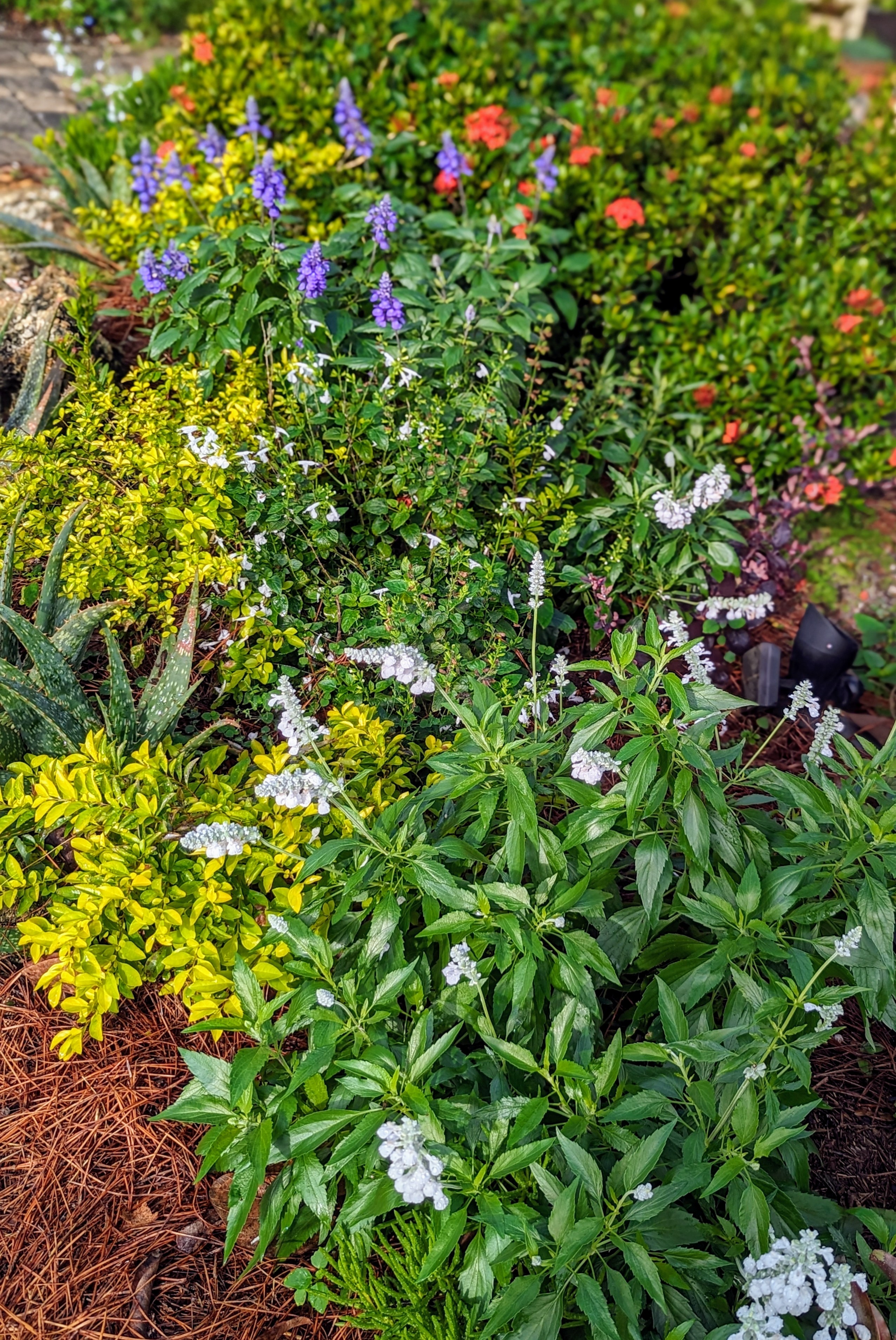
The salvias have been relishing the rain and are showing their appreciation. This bed has ‘White Flame’ Salvia, Golden Dewdrop Duranta (Duranta repens), Soap Aloe (Aloe saponaria), ‘Mystic Spires’ Salvia, and Dwarf Red Ixora (Ixora ‘Maui Red’) in background. These salvias are short lived perennials here.

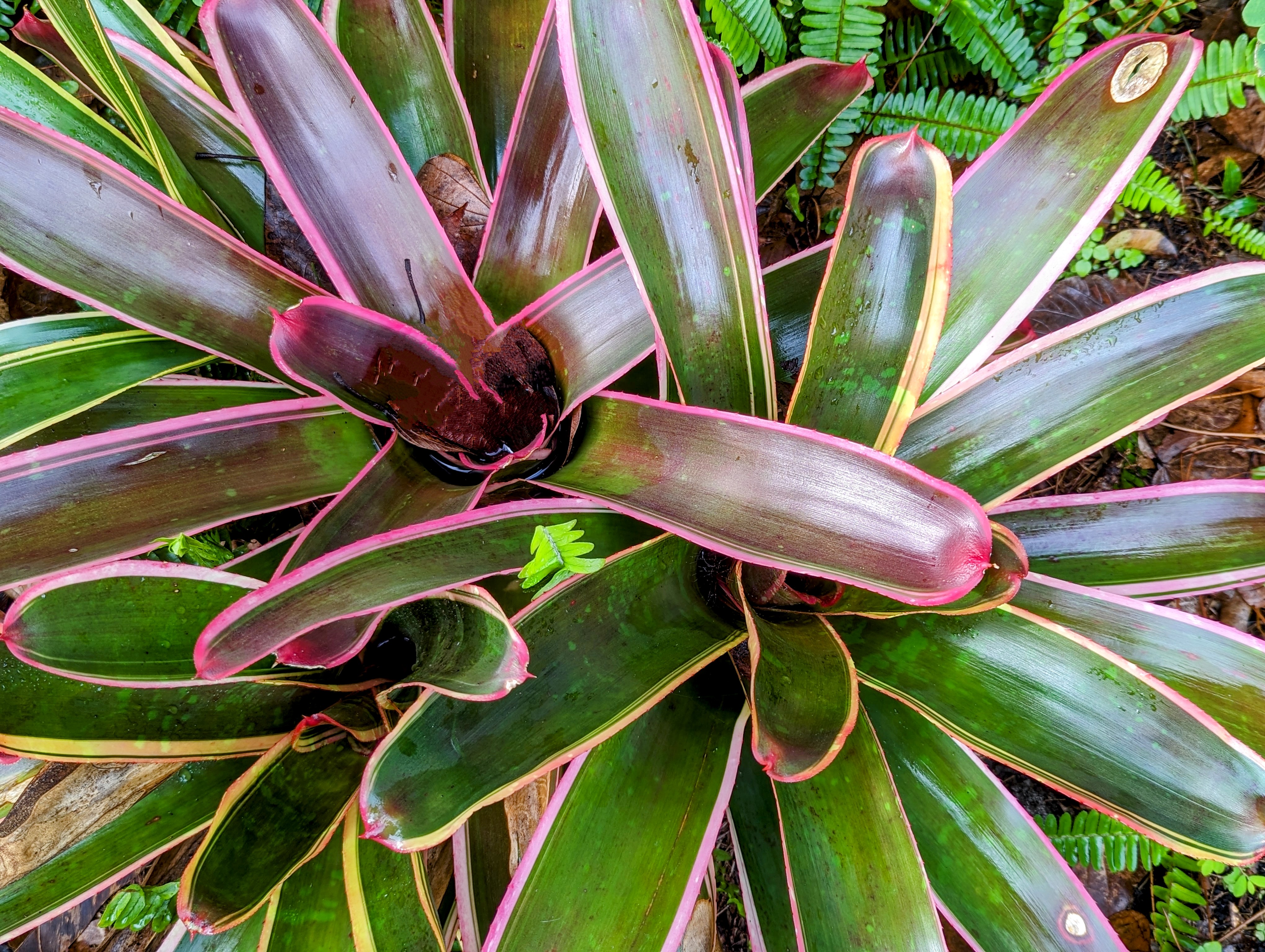
An unnamed Neoregelia Bromeliad variety showing winter color. These are green and white in summer.

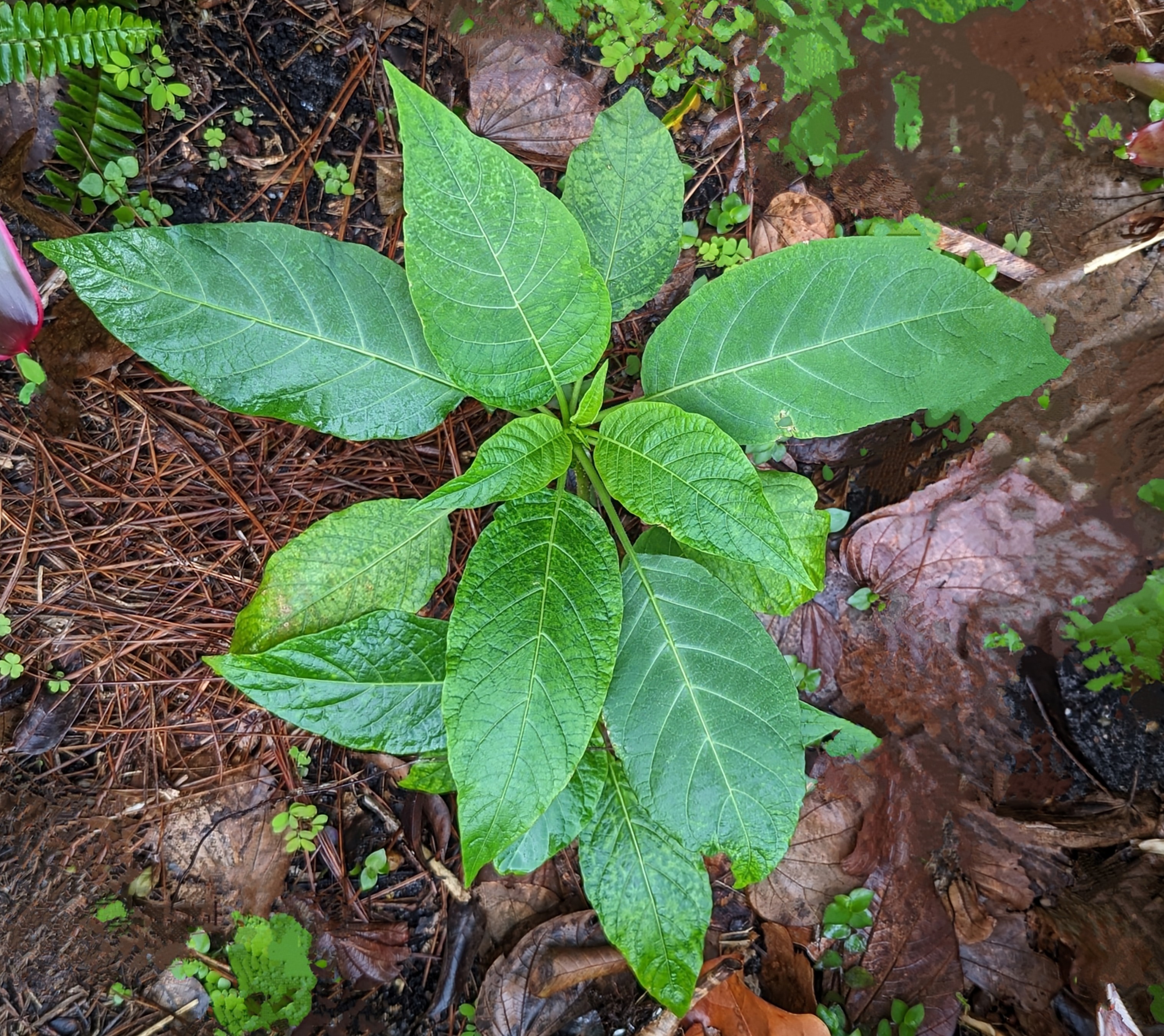
New to me and the garden – ‘Apricot Queen’ Angel Trumpet. This is a rooted cutting I planted in December. It is taking very well and has already produced a side shoot. I have never seen an Angel Trumpet in my neighborhood, so I am wondering about this one and keeping my fingers crossed.

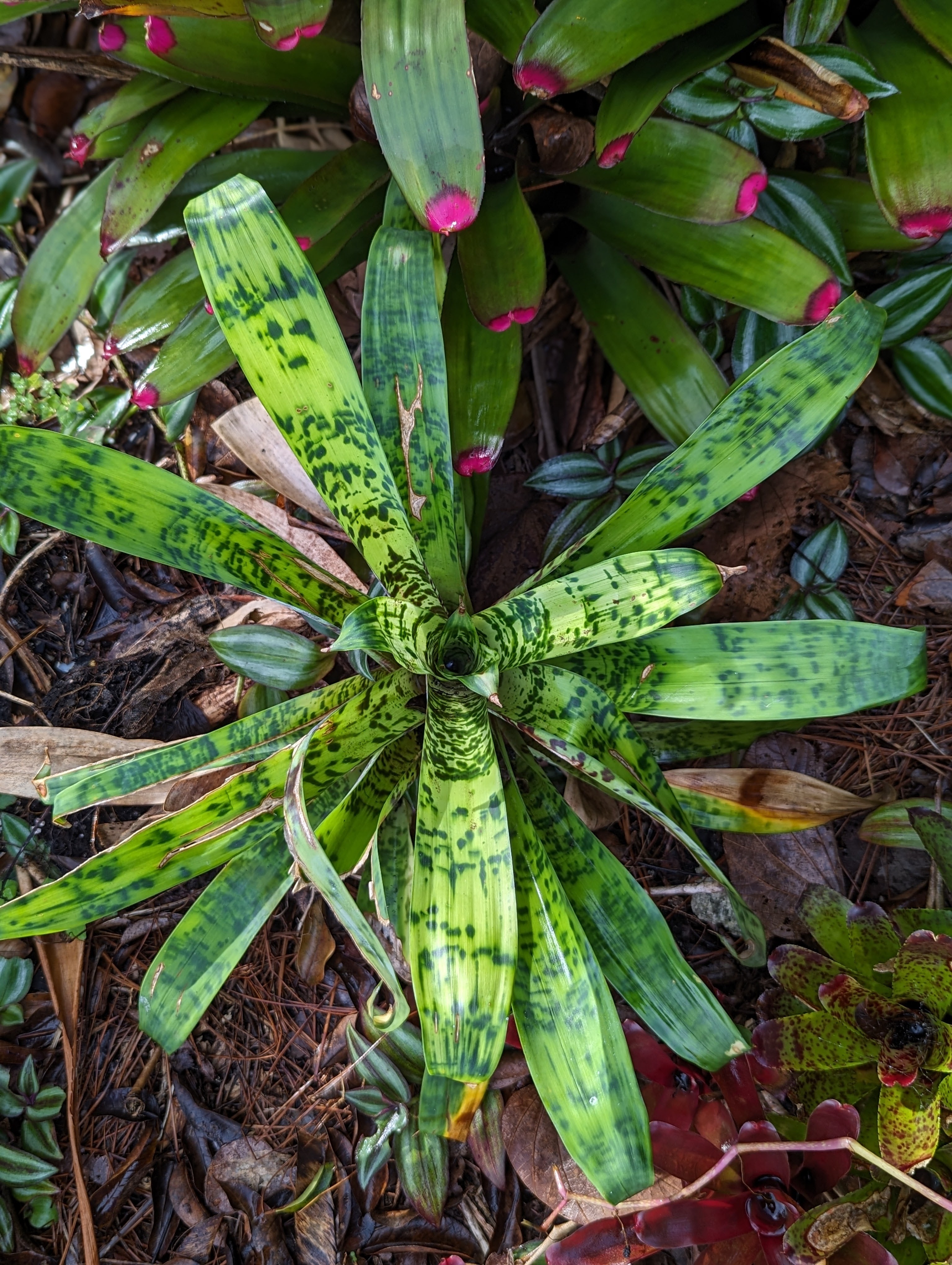
Another treat unearthed when clearing out the garden. A Vriesea ospinae ‘Gruberii’ Bromeliad. Something has been trying to eat the leaves (notice the shredding). It is a rare animal that can eat these.

The tomatoes are finally making some progress. I planted all the cherry varieties as I have no luck with big tomatoes. Oddly, these are the biggest cherry tomatoes I have ever seen. Kind of wondering about the seeds!

The first sign of recovery on what I suppose was a tactical error. This is Miss Alice Bougainvillea. Apparently, she resents being cut back hard and left out in the cold. Usually, the Bougs are indestructible. Alice has been naked for at least a month and I was fearing her prognosis. I’m planning on buying some special Bougainvillea fertilizer now that the leaves are reappearing.

That’s all from my garden. Wishing everyone Happy Gardening, armchair or otherwise.