Six on Saturday – Chicken Gizzards?

My garden tour this Saturday morning revealed a few new things in the garden. I have been shopping online. It seems safe to say not everything that will grow here has been tried here. Famous last words. Spring brings new things to all gardens. To tour more gardens and see what’s springing elsewhere from many different places, follow this link to Jim’s blog and check out the comments.

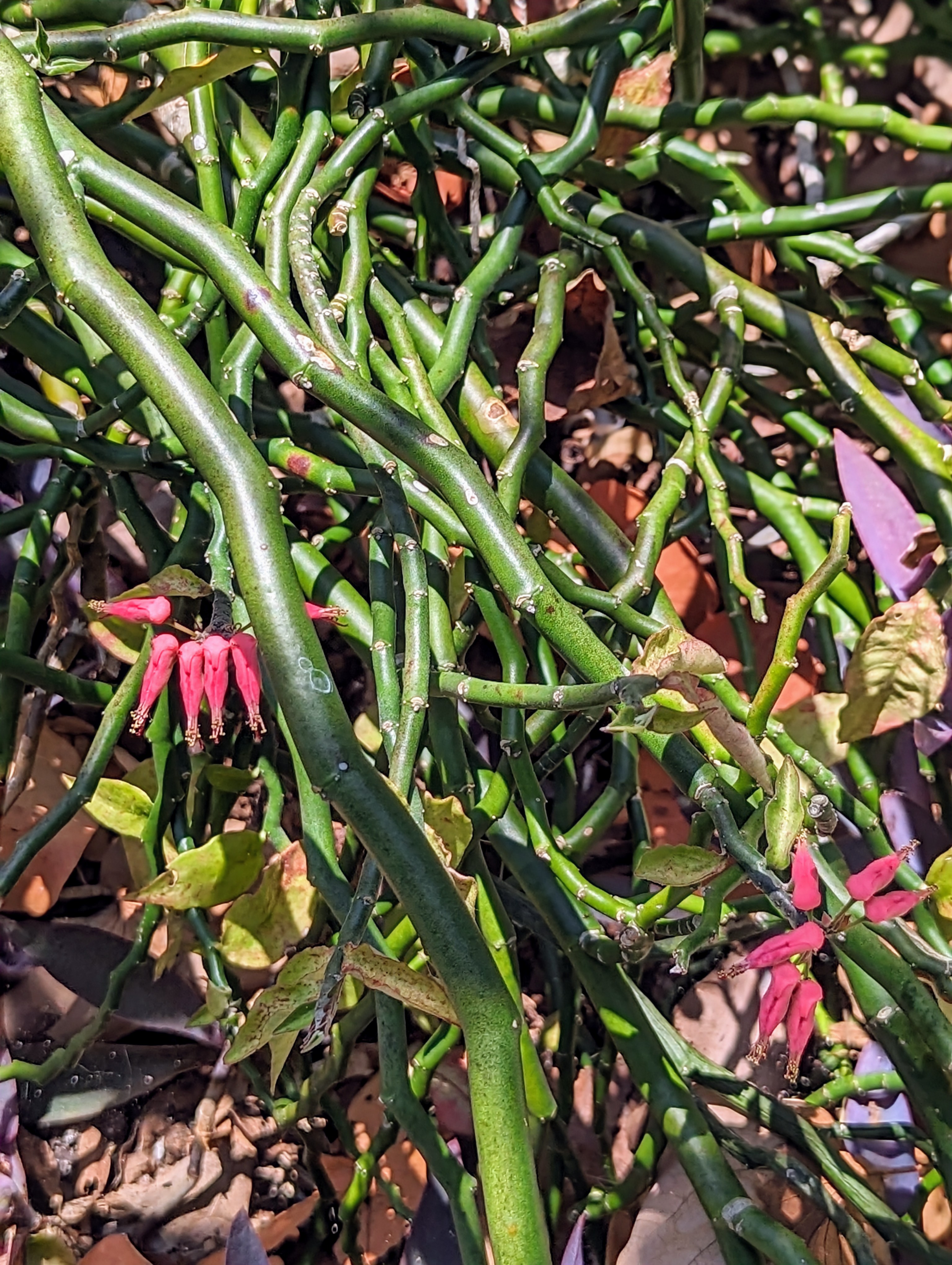
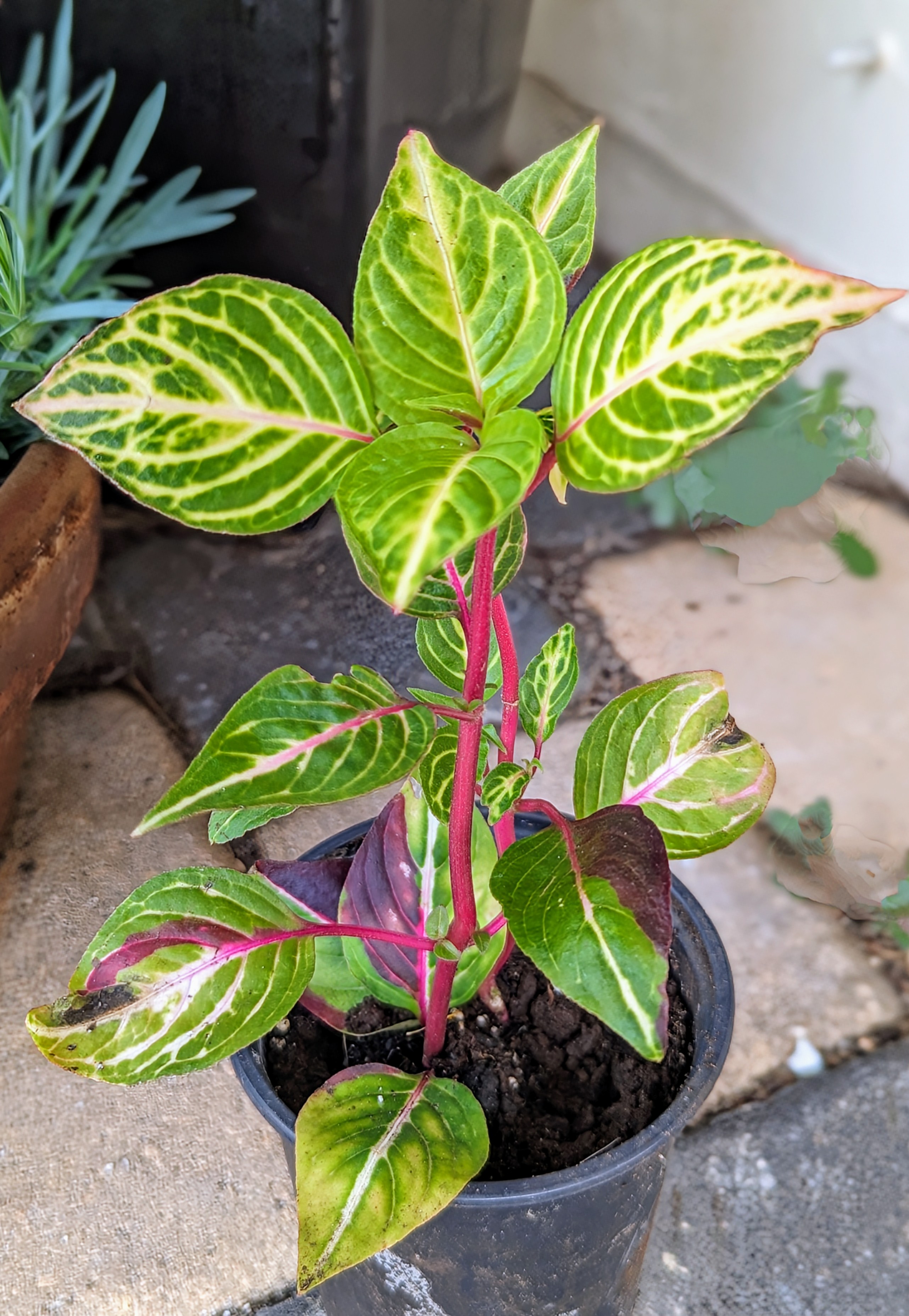
One new thing is the Chicken Gizzard plant (Iresine herbstii) There are a few mysteries about this plant. First, why is it called Chicken Gizzard? Second, where to plant it? The pundits disagree on whether it will grow outside here and say full sun. Full sun in Ohio (the plant was grown there) is one thing, in South Florida it’s a whole different thing. A dilemma to be solved.

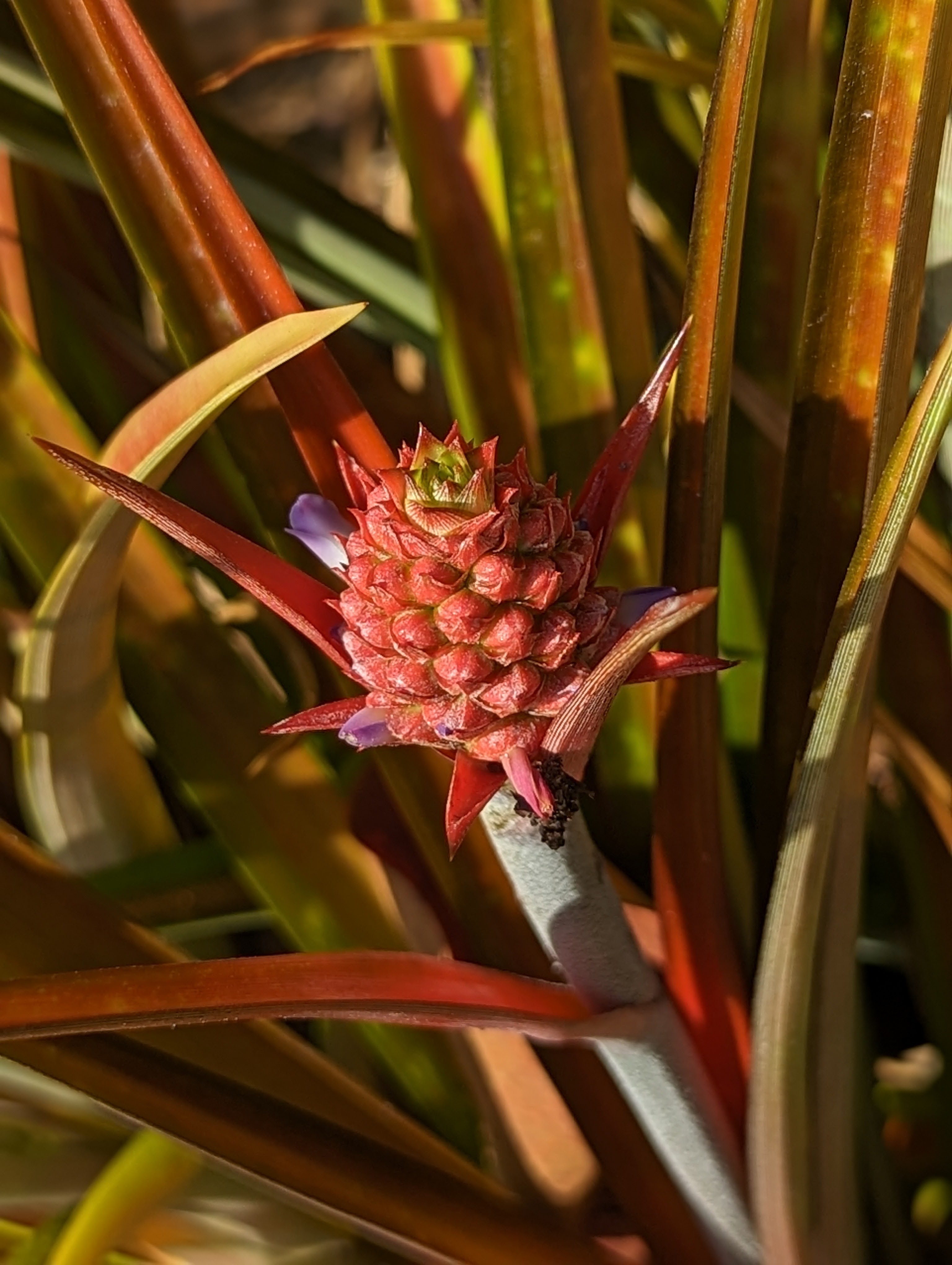
The miniature pineapples are flowering.

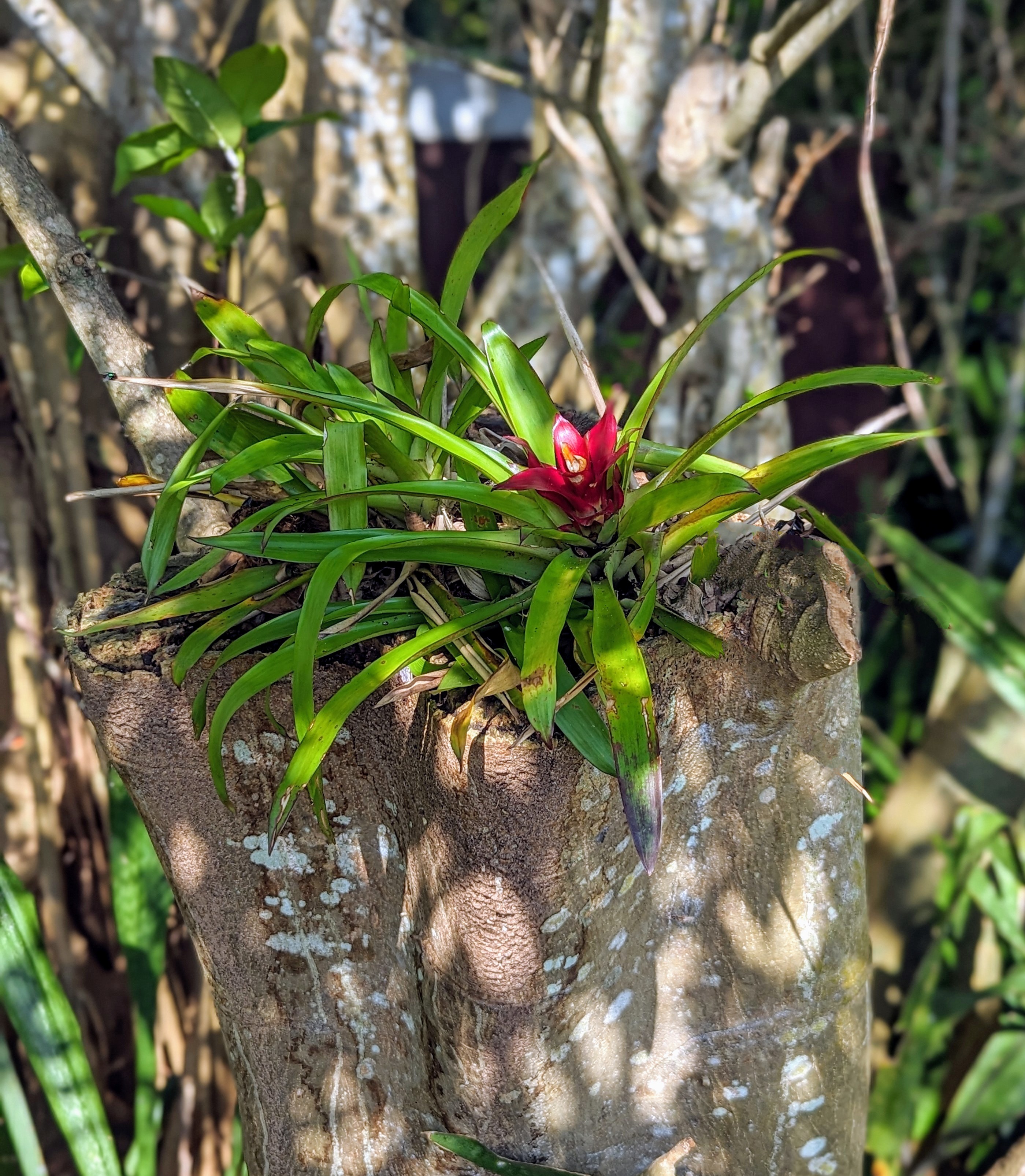
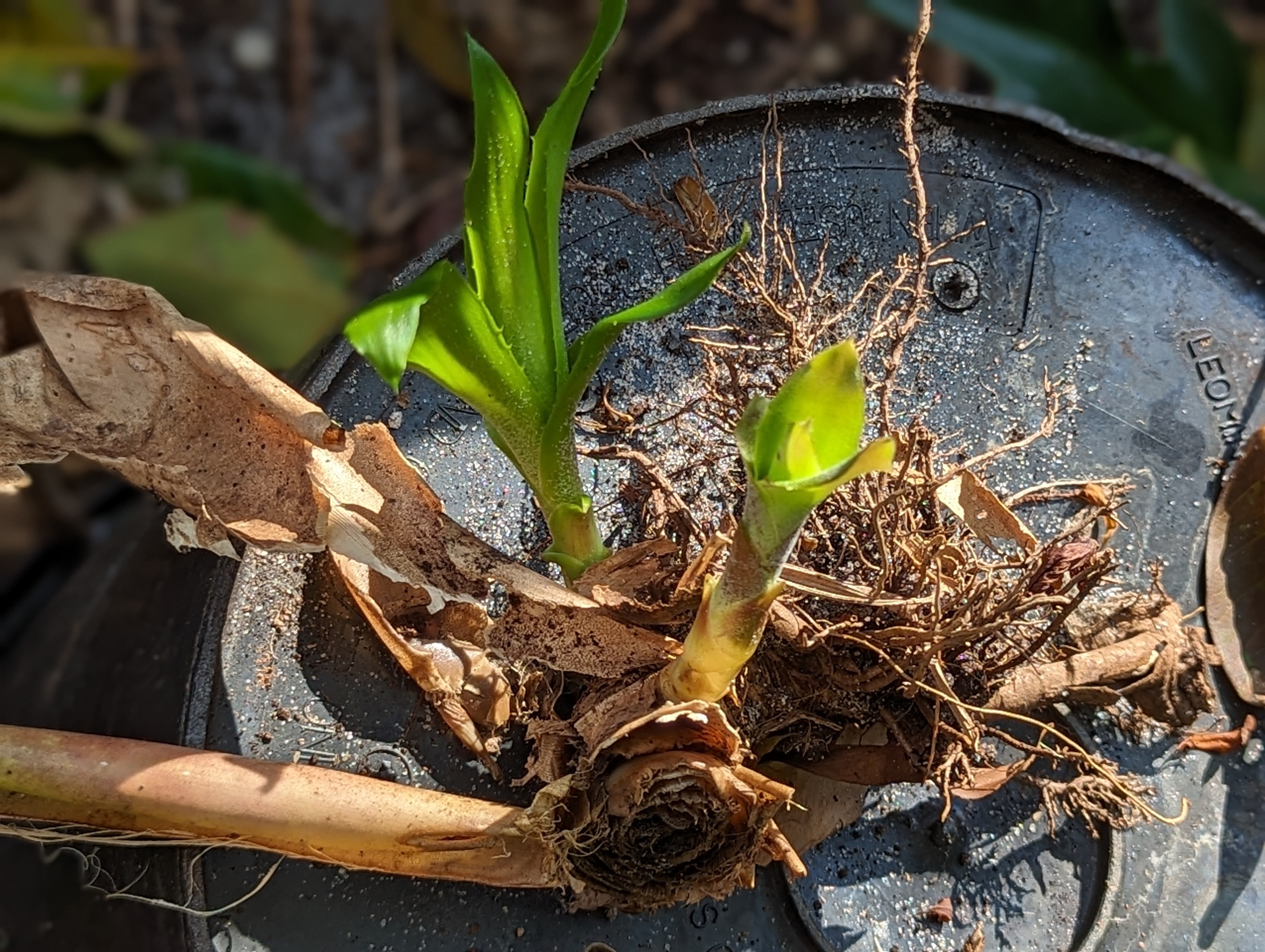
An example of how tough bromeliads are. I was clearing some bromeliads, cutting this pup off early this week, left it on top of the bucket, not feeling decisive about where to replant it, then forgot about it. It just kept on growing. This is a silvery purple brom with pink flowers. I may remember the name…

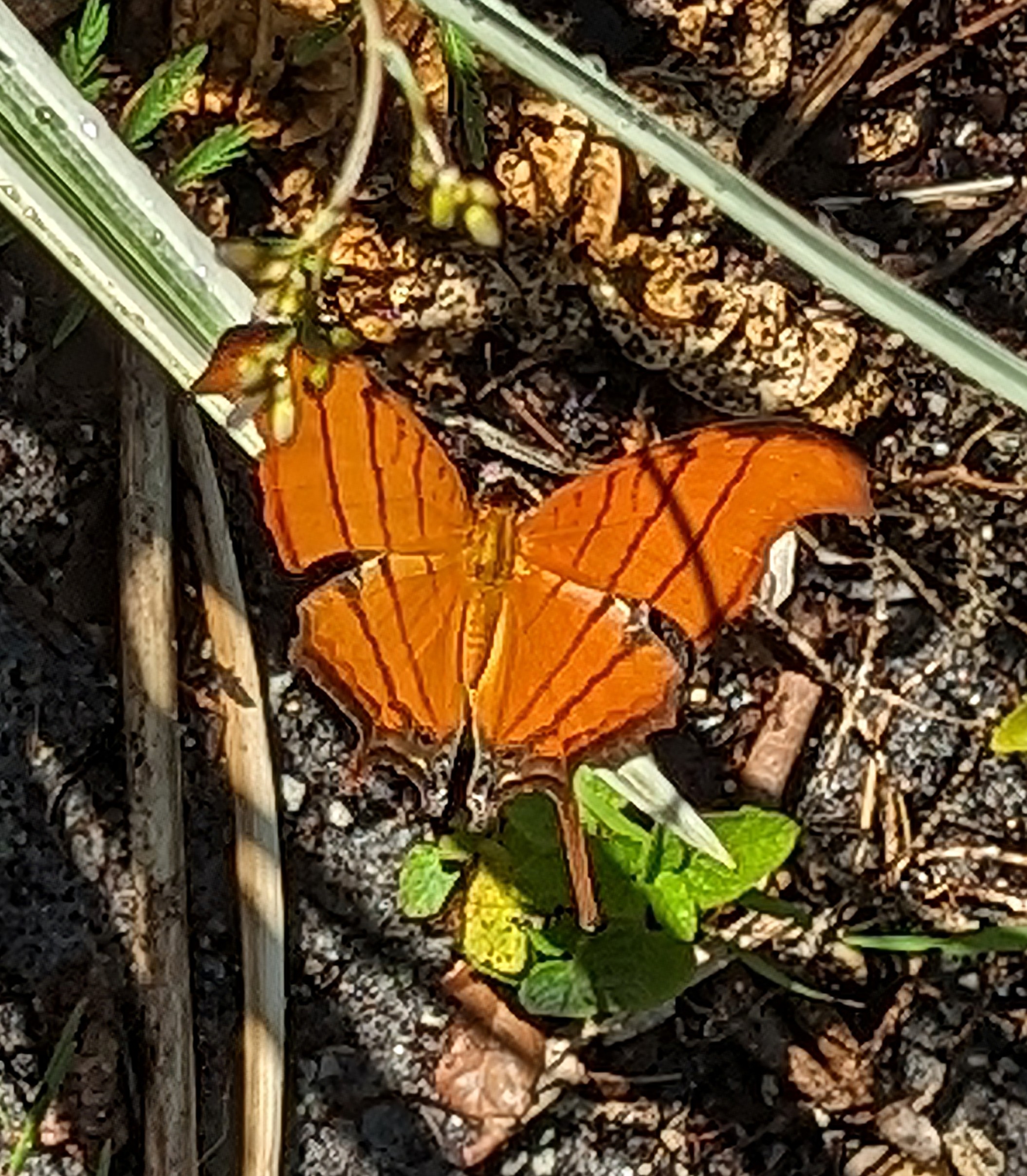
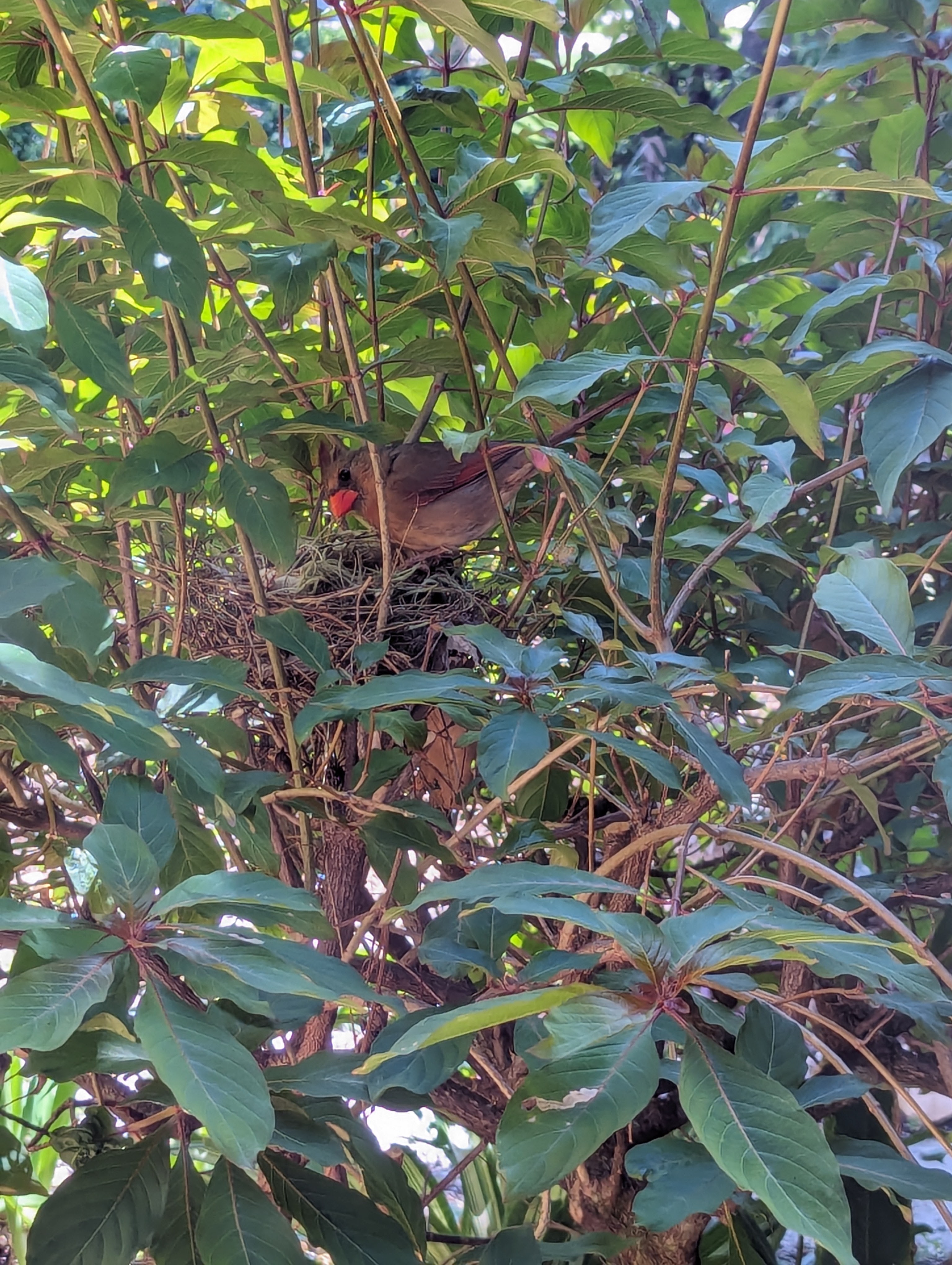
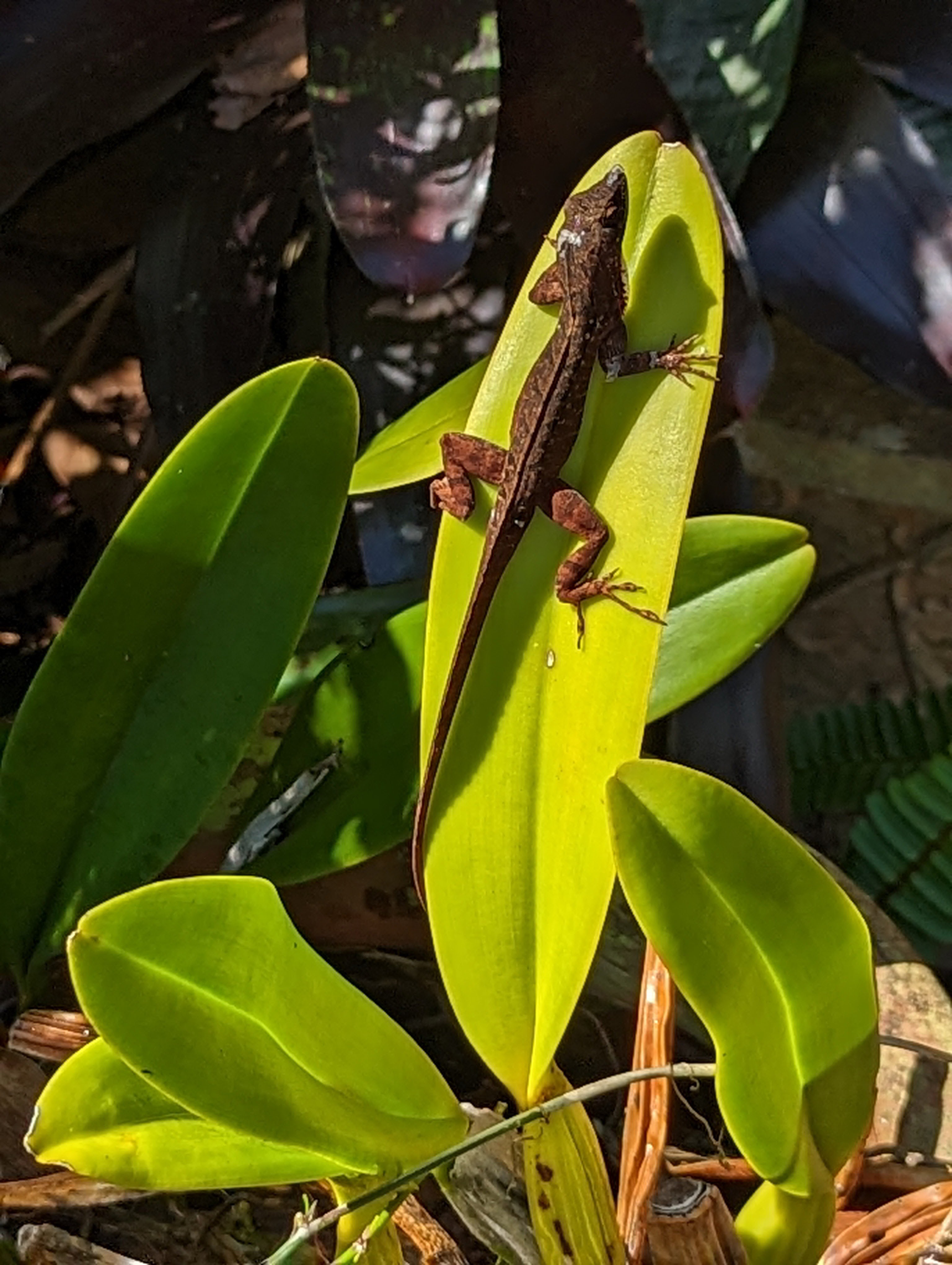
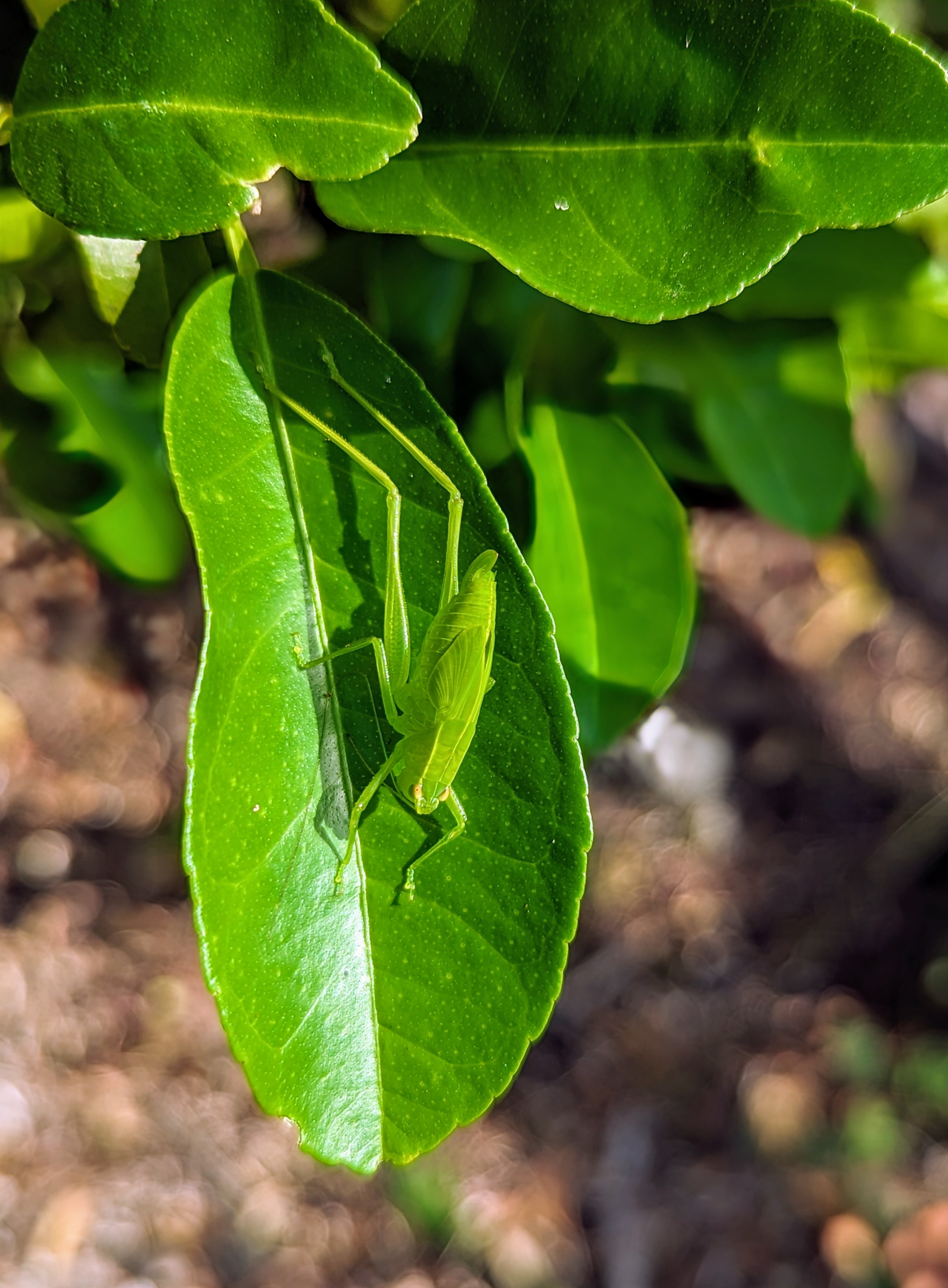
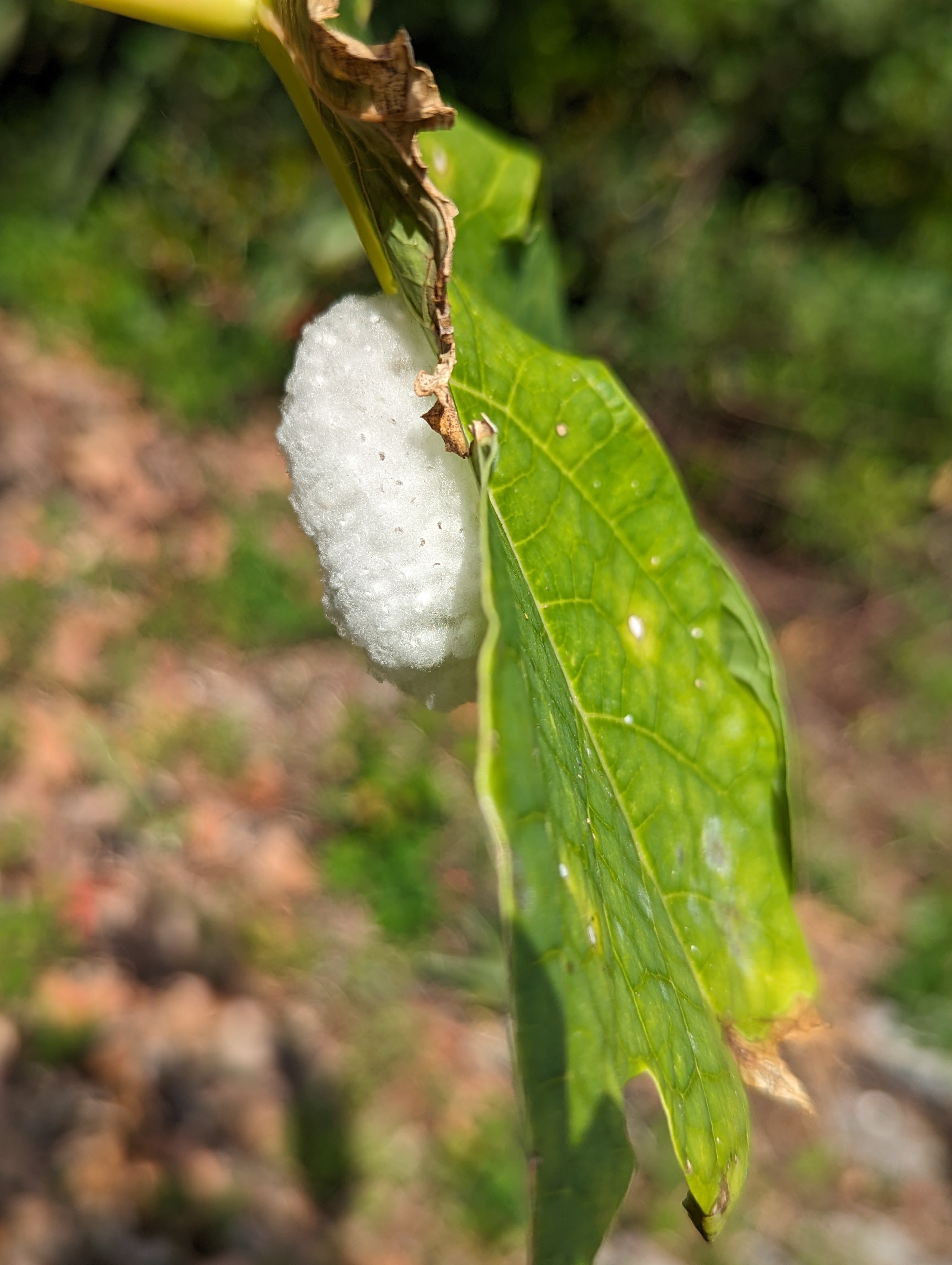
I hope this is a praying mantis and not an evil plague.

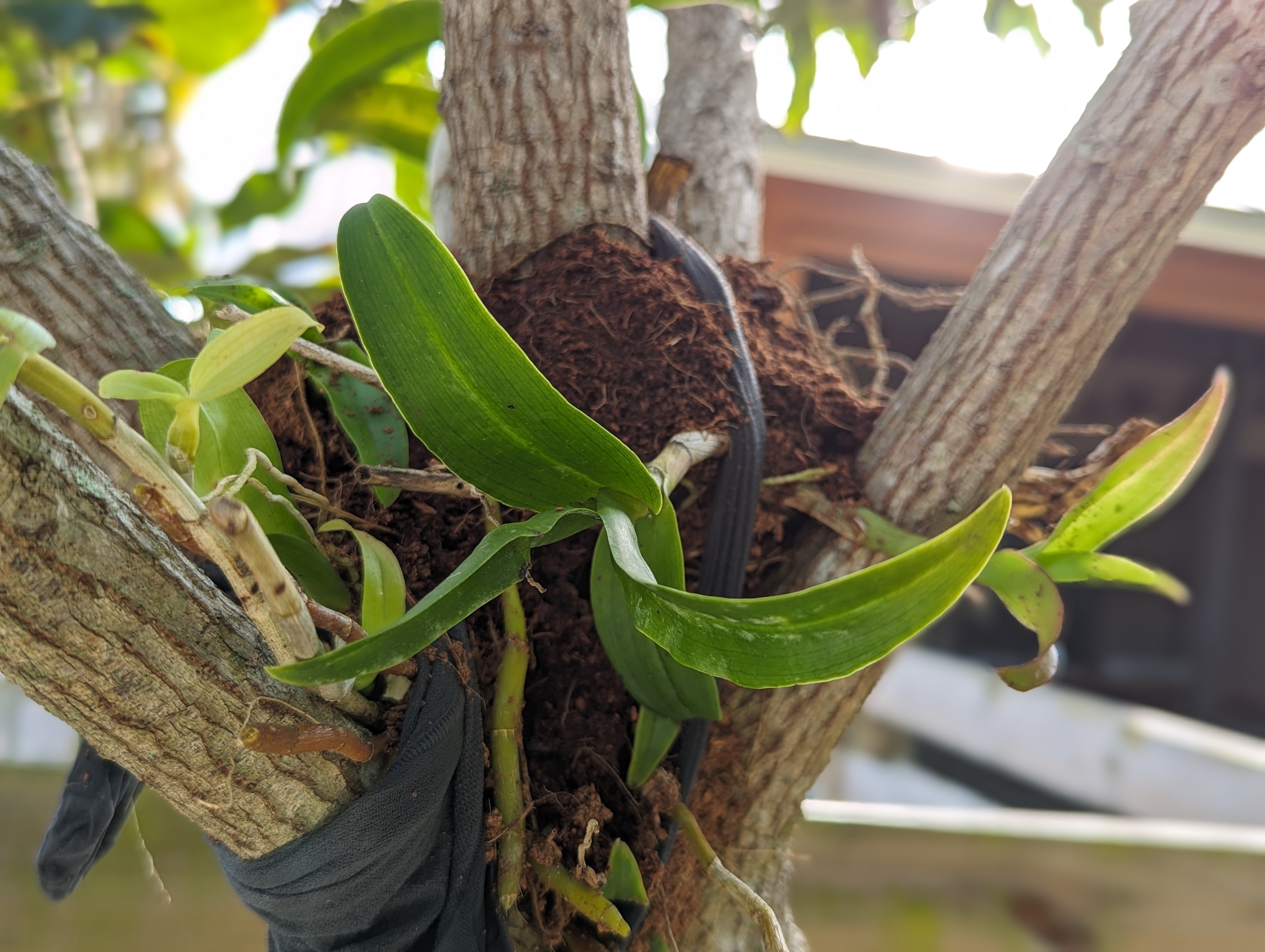
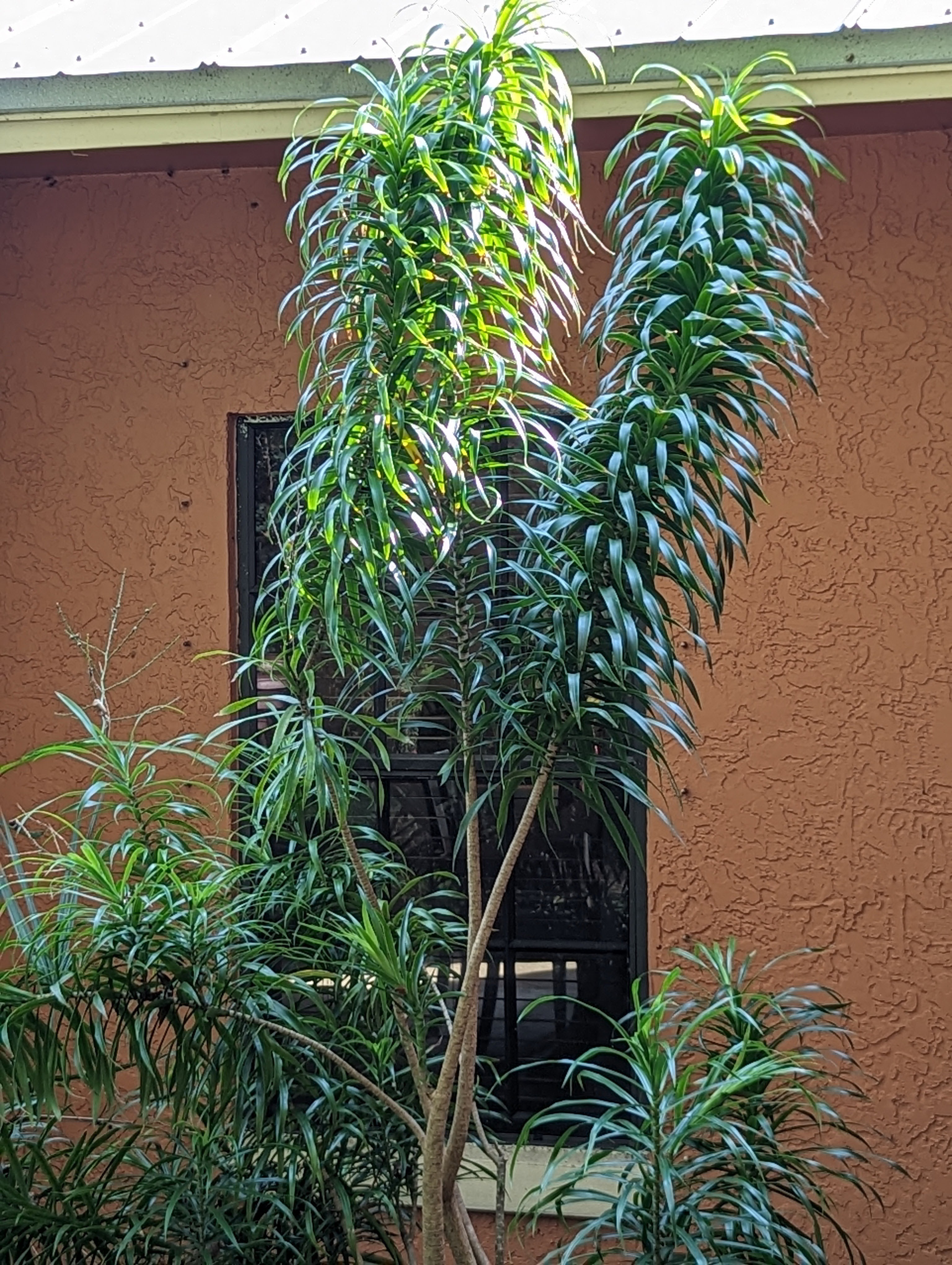
A Dracaena reflexa I am pruning to a multi trunk tree. It is at least 10 feet tall.

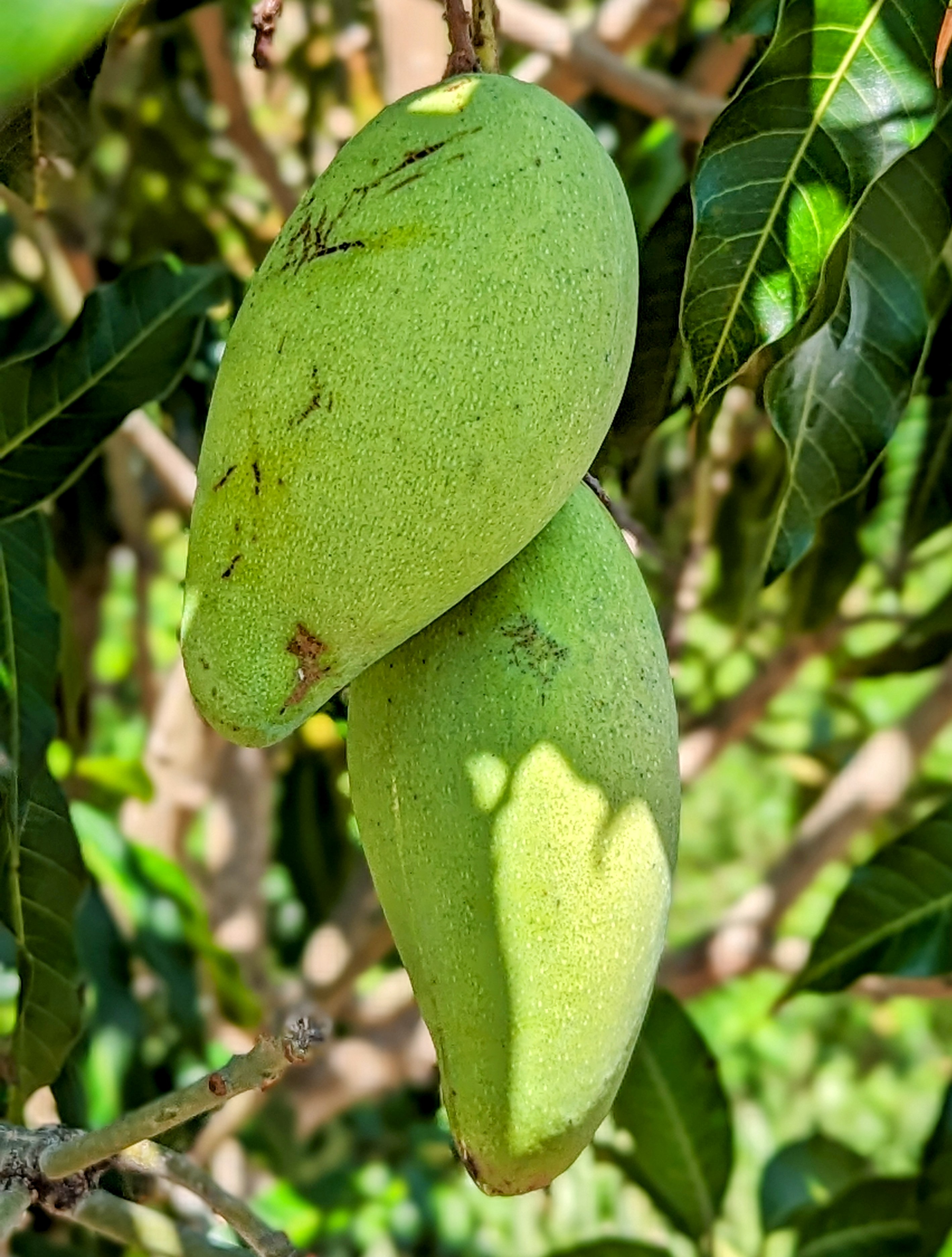
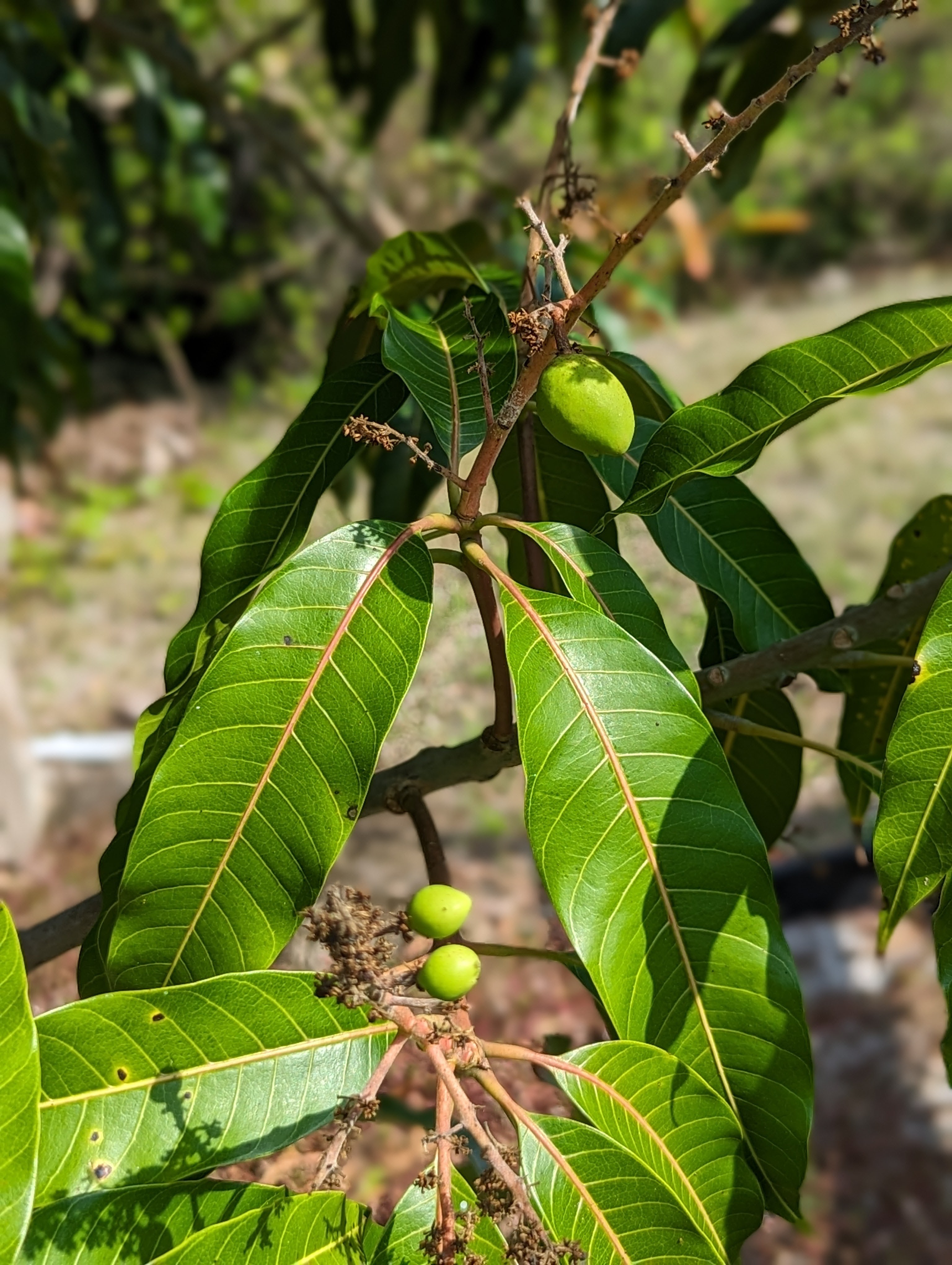
Mangoes are looking more like mangoes!

That is all from South Florida. Our crazy warm weather continues – it is forecast to be nearly 90F/32C here today. I am heading back out to plant that bromeliad pup before it gets too hot.

Happy Gardening.

In a Vase on Monday – Tropical Spring Roll

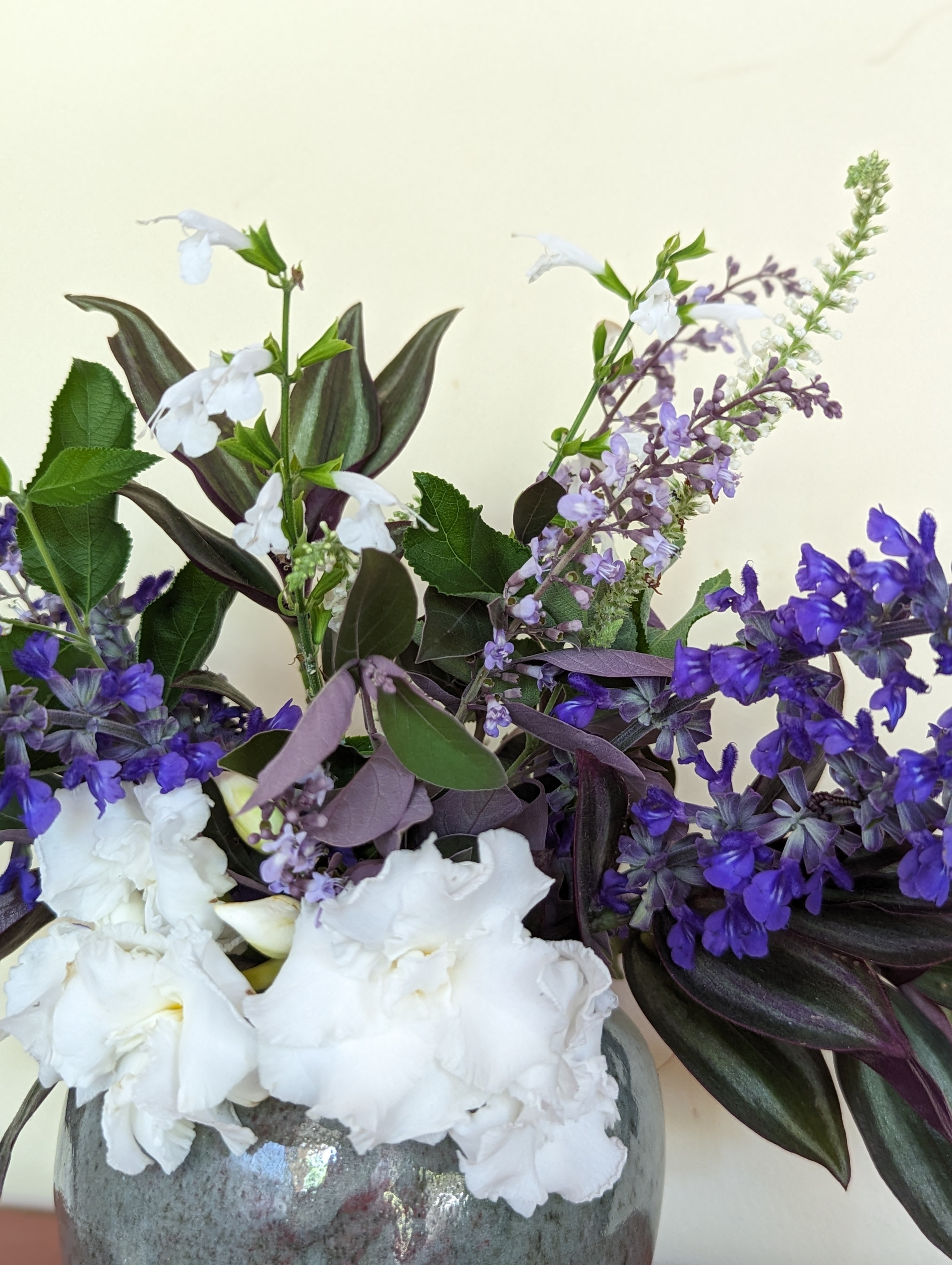
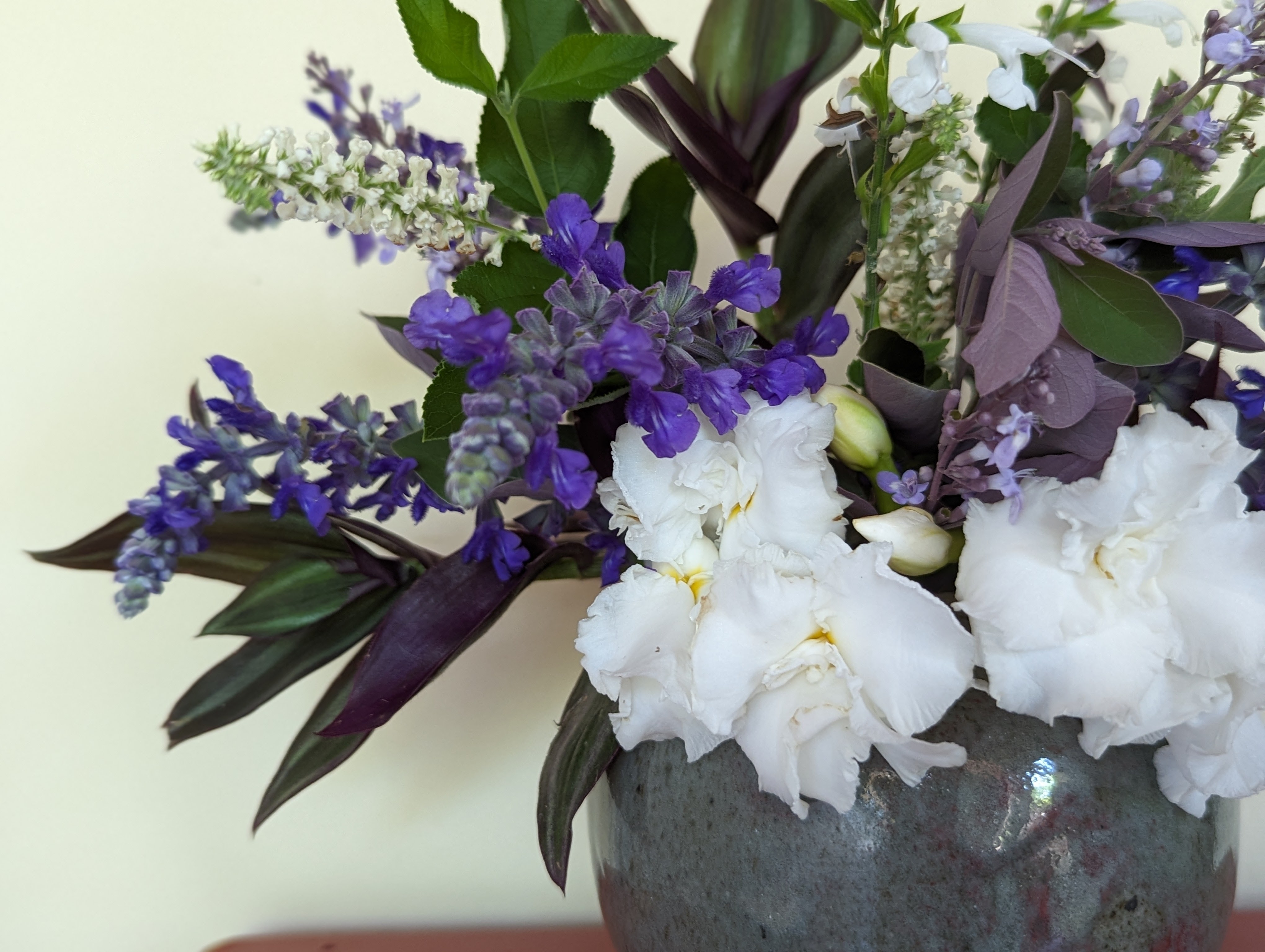
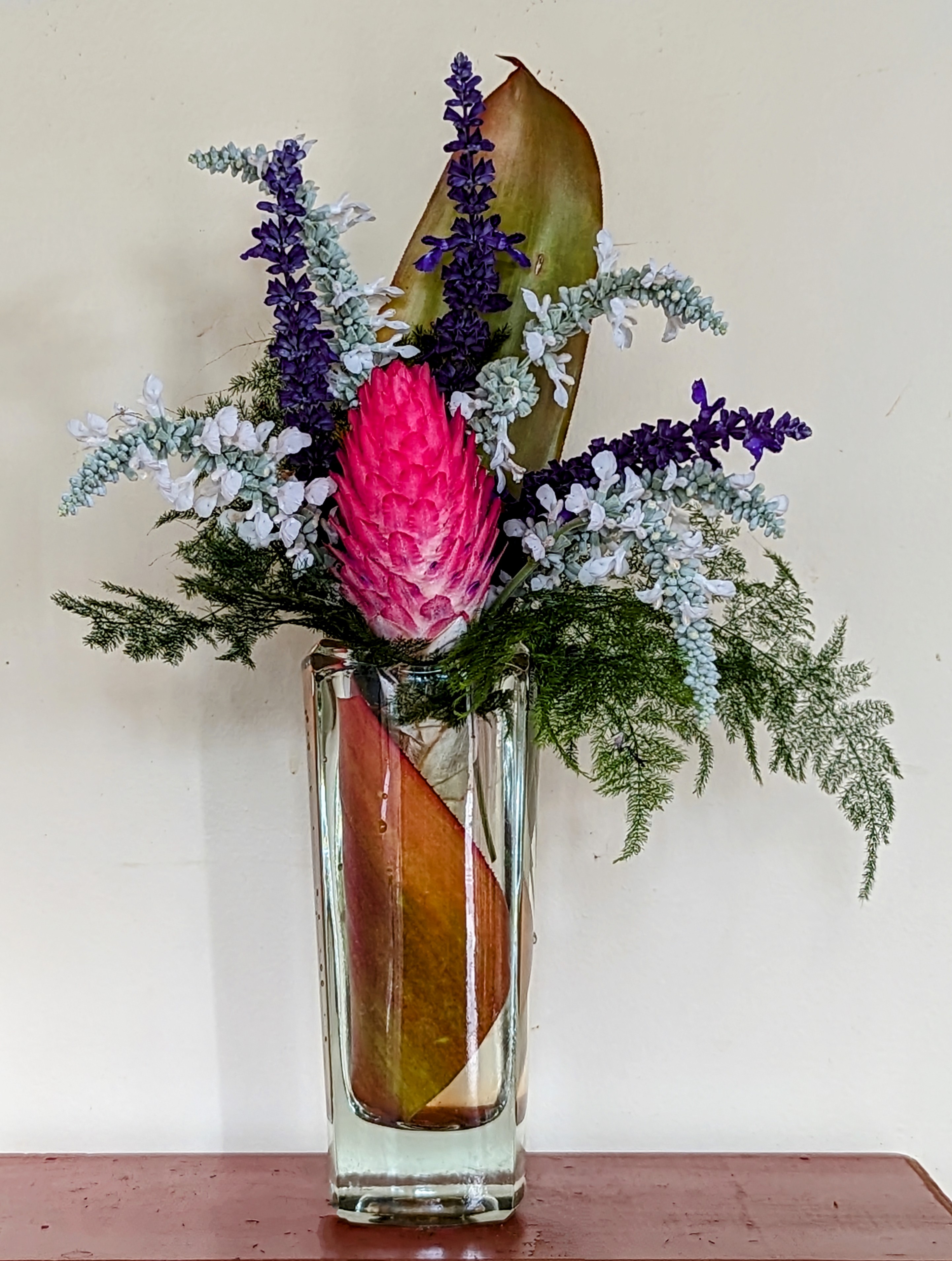
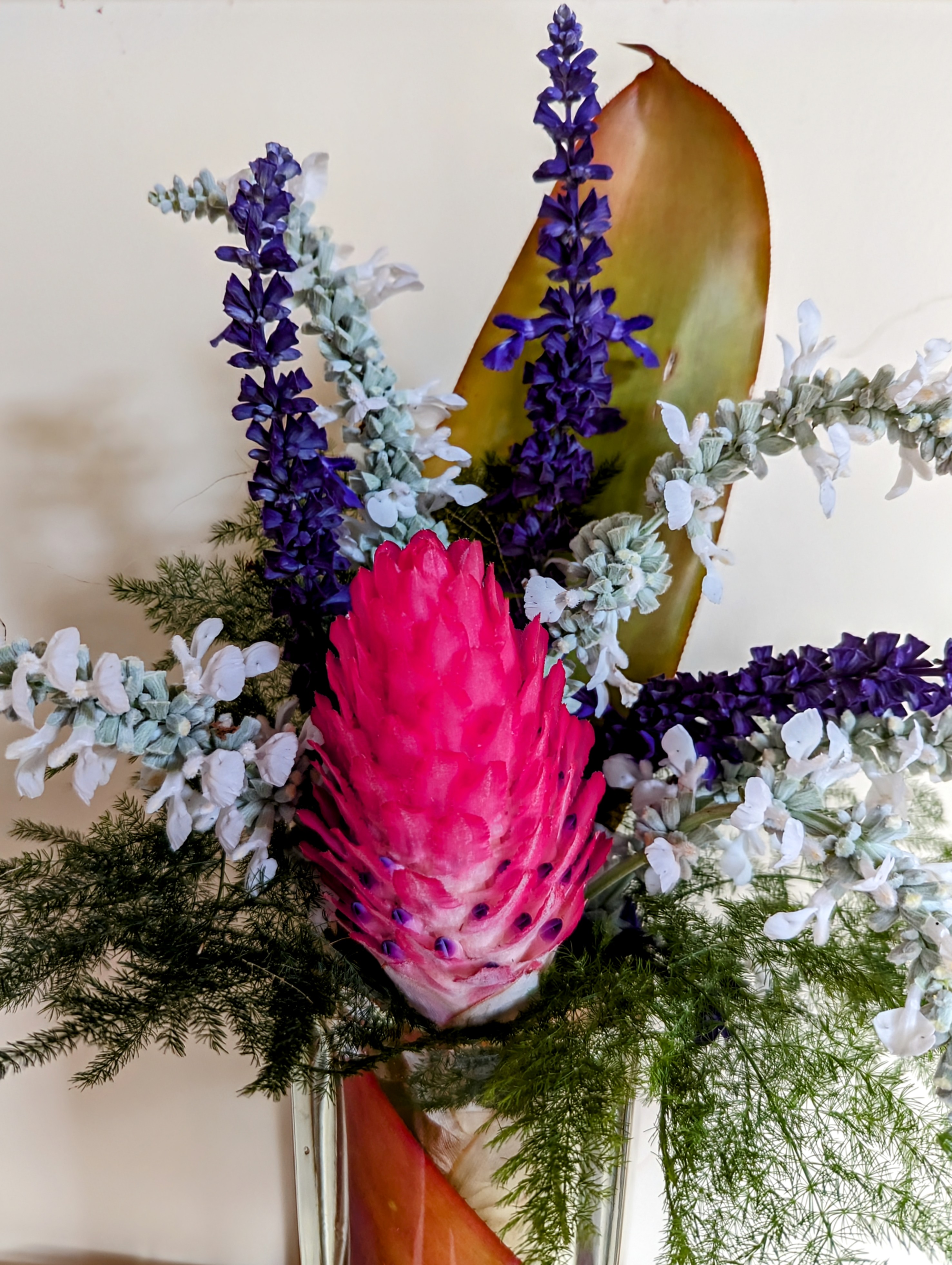
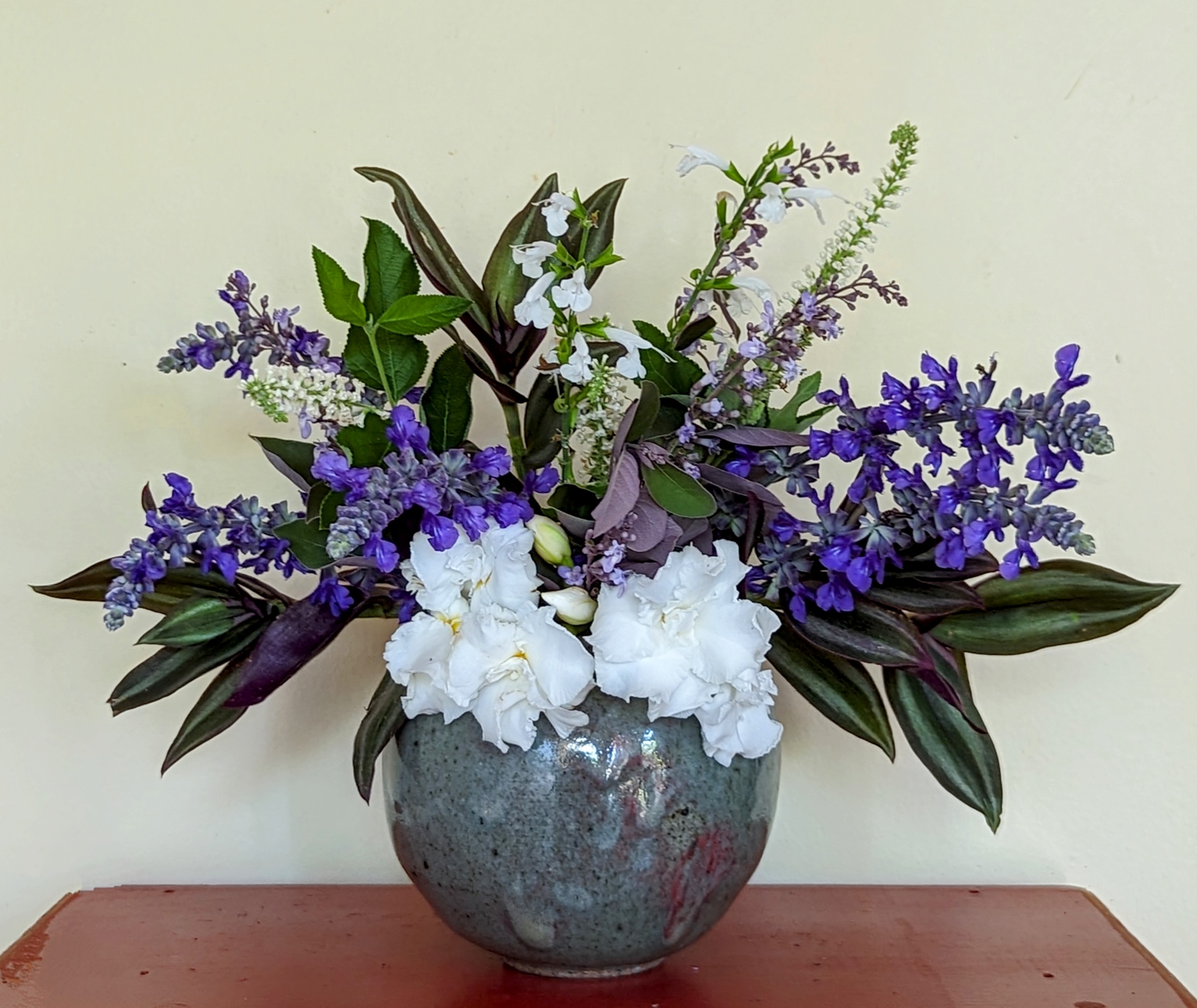
My spring roll is filled with different ingredients than one found in a Thai restaurant. A bromeliad leaf is wrapped around delicious contents from the garden. The names of some of the contents could be considered food – asparagus (fern), sage (salvia) – but I think we would be hard pressed to chew through the roll. It could possibly be considered high fiber/low carb for oh, say rodents or a passing iguana. My plan is to admire the flowers.

The ingredients:

My salvias are having a great year. Here they are again, Mystic Blue and White Flame. The pink flower is known as the tulip of the Treasure Coast. They don’t really remind me of tulips, but I get it. They are actually bromeliads, Billbergia pyramidalis. Green foliage is Asparagus fern and the wrapping leaf is from Blanchetiana Bromeliad (Aechmea blanchetiana). I love the green/mahogany coloration of the Blanchetiana leaves in winter, they are chartreuse in summer.
The weather here has finally turned in favor of gardening. My tomatoes are ripening and spring is in the air. On the down side, the moles ate all the bulbs and tubers, making me realize I should stop wasting money on these lovelies. I also accidentally grew some rabbit tobacco I thought was Chinese Forget Me Nots, oh well. Rabbit tobacco is a weed and a rite of passage in my youth. Boys would smoke it pretending like it was cigarettes! I am told it was harsh, but I never tried it.

Thanks to Cathy for hosting this weekly meme. Follow this link to see more vases.

Six on Saturday – Moths and Tropicals

It is Saturday again and I am sharing what is happening in my garden with the SOS gang that meets weekly at Jim’s blog. Follow the link to find other garden tours in the comments section.

My garden revealed some interesting moth related events this Saturday. Some moths I am happy to see, others. Not so much. The tropical plants seem to be revving up for the coming spring season. It’s good to see some different flowers coming along.

This is the result of a Sphinx moth laying eggs on a papaya leaf. These moths produce caterpillars called papaya hornworms, a relative of tomato hornworms and just as destructive. A caterpillar was born and started chowing on the foliage, then a braconid wasp happened by and laid eggs inside the caterpillar. The wasp larvae proceeds to eat the caterpillar. These wasps are beneficial and I am happy to see them in the garden as I get to have papayas instead of the caterpillars.

I posted a photo of Miss Alice Bougainvillea a couple of weeks ago looking puny. She got worse and I could not figure out what was going on. Any little bit of foliage was promptly eaten, but I couldn’t see any bugs. A little research revealed there is something called Bougainvillea loopers, caterpillars from another moth that are the culprit. It seems these moths fly at night and lay their eggs on unsuspecting plants. And they like light. I had an uplight on the vine to show if off at night. Oops. One dose of Neem spray, removal of the offending light fixture and some fertilizer with iron and Miss Alice is looking much happier.

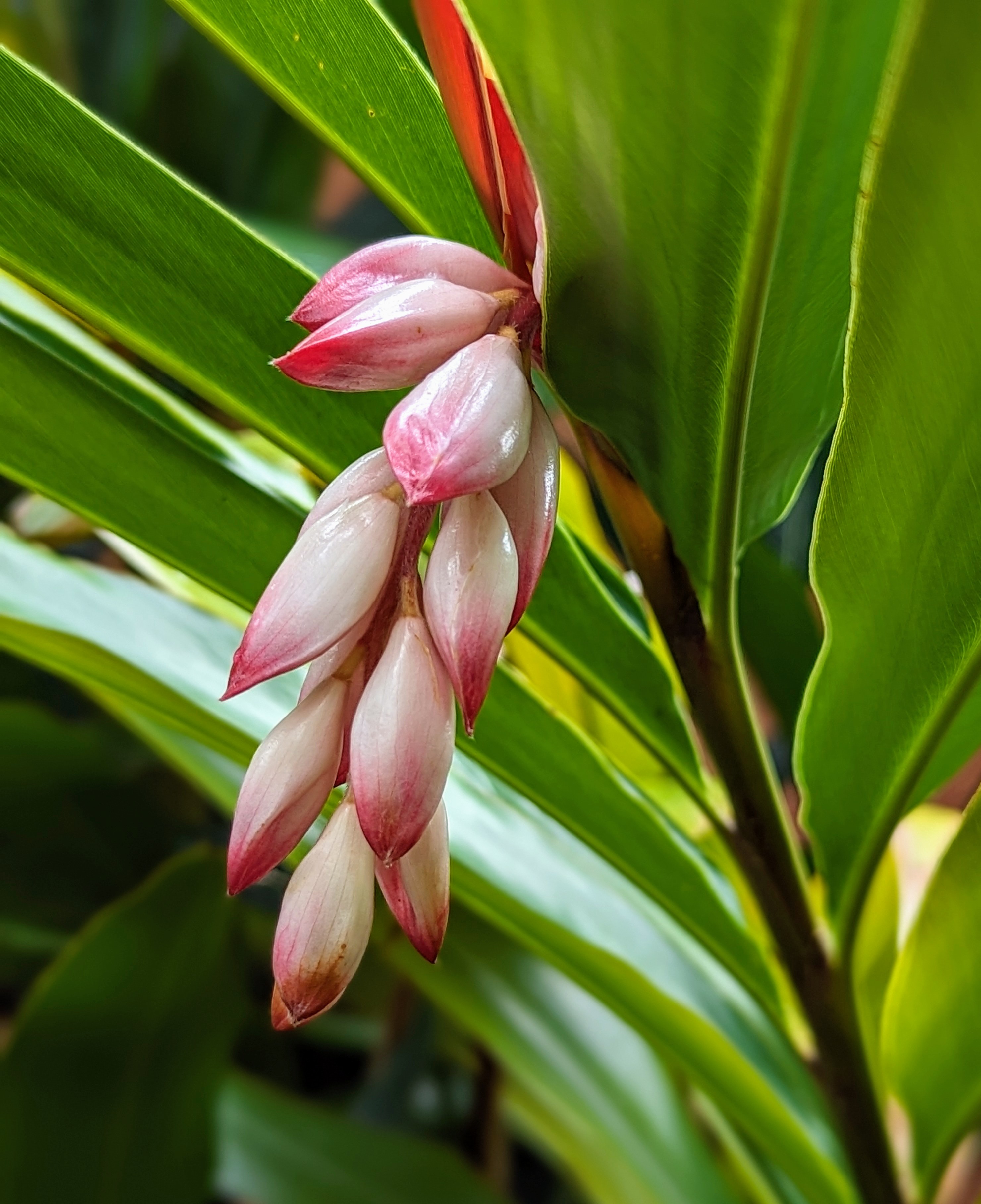
A few tropical flowers are coming out. The Shell Ginger (Alpinia zerumbet) is not quite in full bloom. I usually have these in February, so they are a little late.

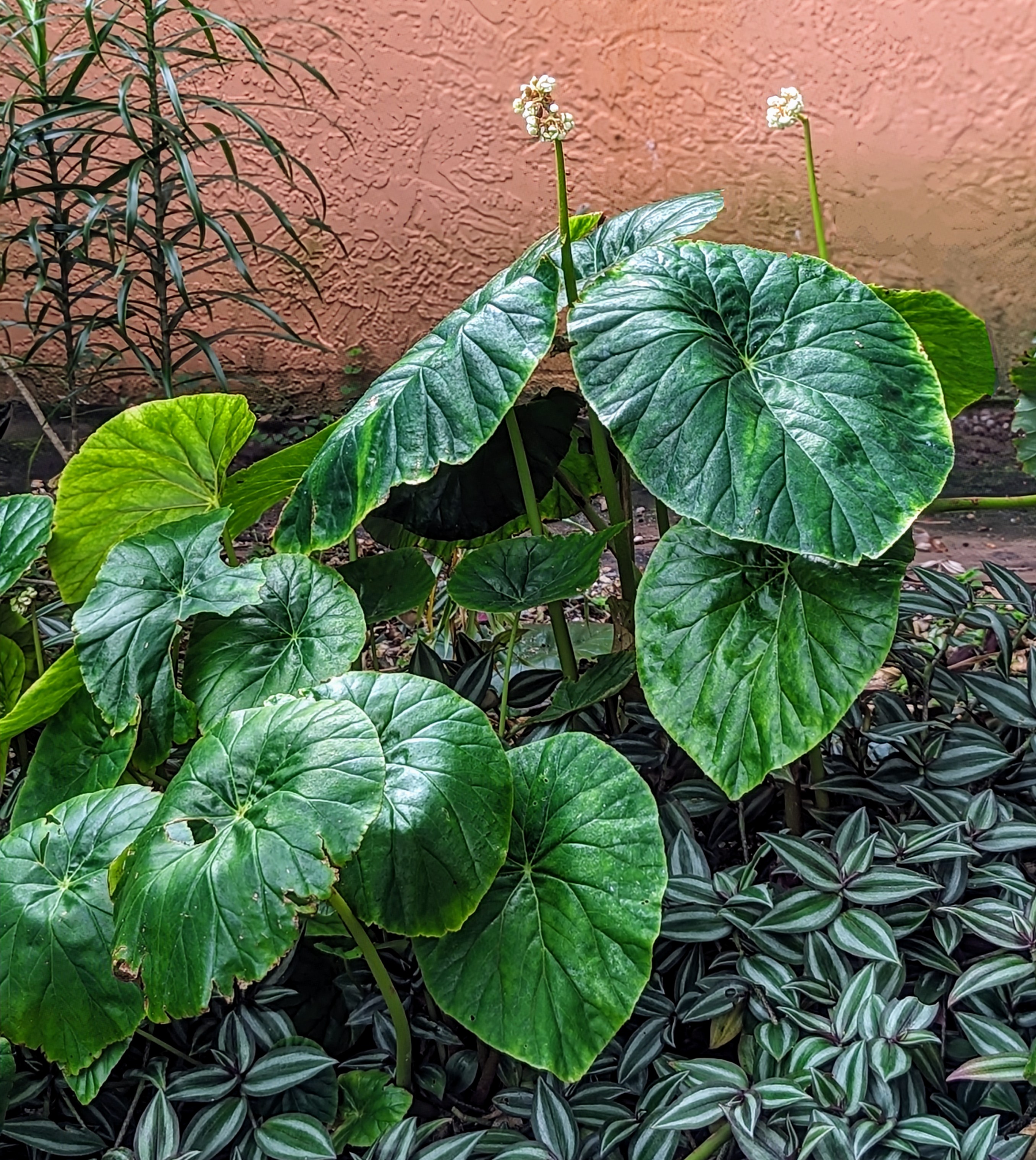
Lotusleaf Begonia (Begonia nelumbifolia) is starting to flower again. These can get 2 or 3 feet tall and I love them for their tropical texture. They reportedly grow in roadside ditches in Mexico, so they are pretty tough.

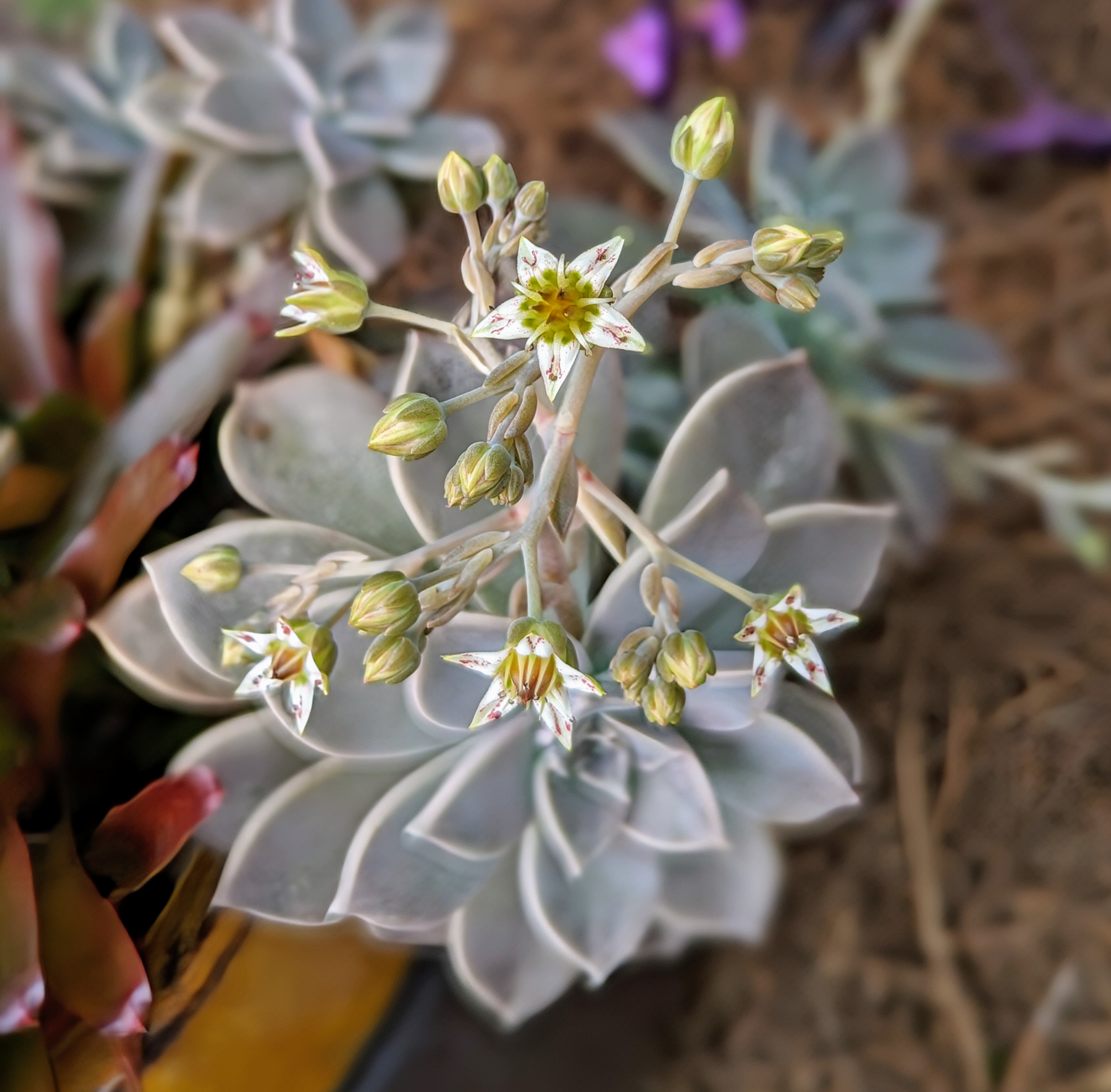
Succulents are also flowering. This is the mystery graptosedum.

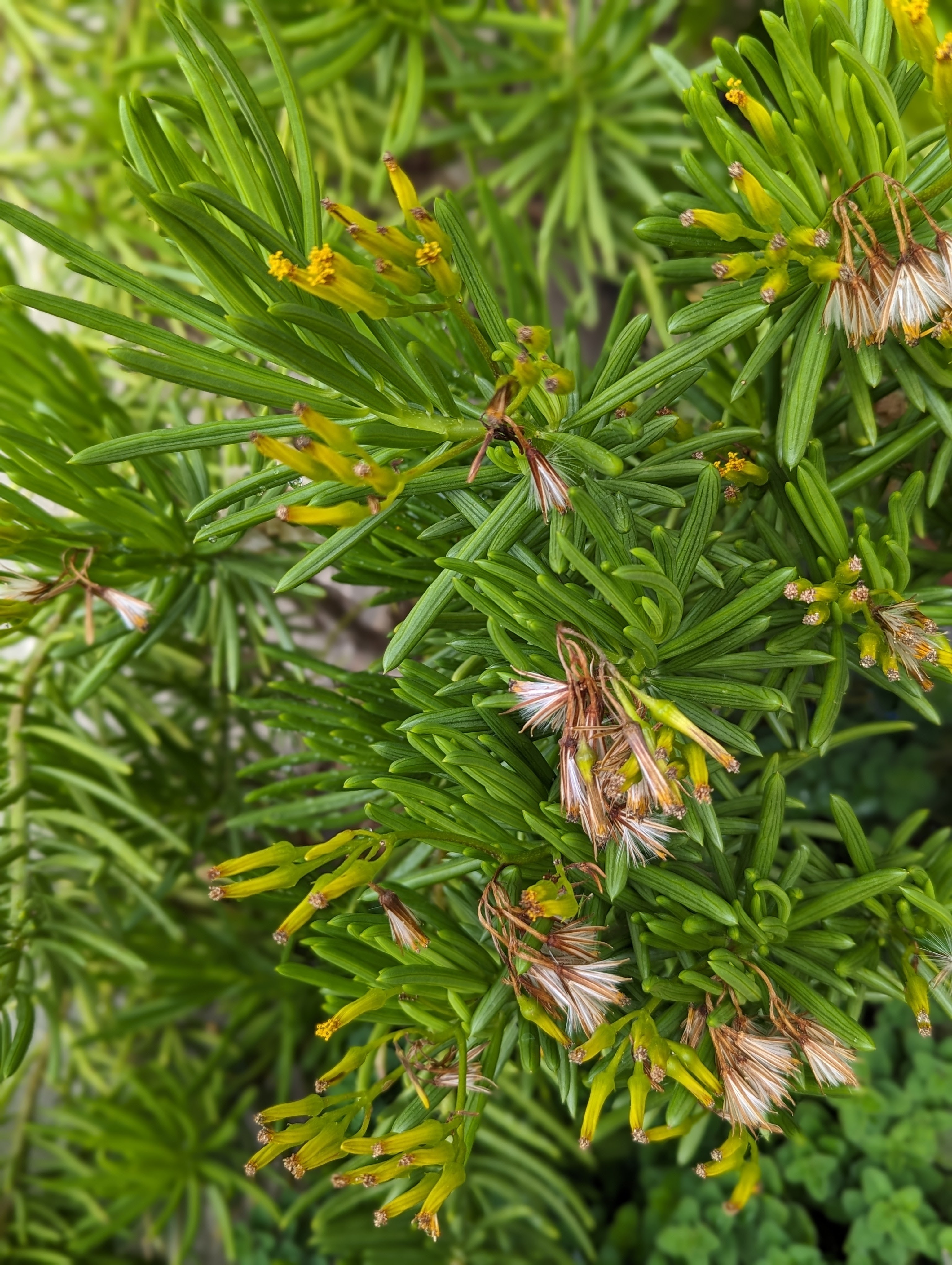
This is Senecio barbertonicus, it has all kinds of weird common names. The flowers in this photo represent the full spectrum – buds to a little bit of yellow to sort of dandelions. I have propagated several of these and have been planting them in the garden – this is not recommended by the succulent continuum as they might get too much rain. So far, so good is all I can say and they don’t miss irrigation at all. Our well died about two years ago and I have been going irrigation free since. The St Augustine lawn is gone and I have been concentrating on drought tolerant plants.

That is all from South Florida this Saturday. Happy Early Spring!

Six on Saturday – Spring Promise

My Saturday morning garden stroll revealed that spring comes early in South Florida. The scents and sights are promising tropical fruits and flowers later this year. To participate in the blog phenomena Six on Saturday and tour gardens around the world, visit Jim’s blog and follow the links in the comments.

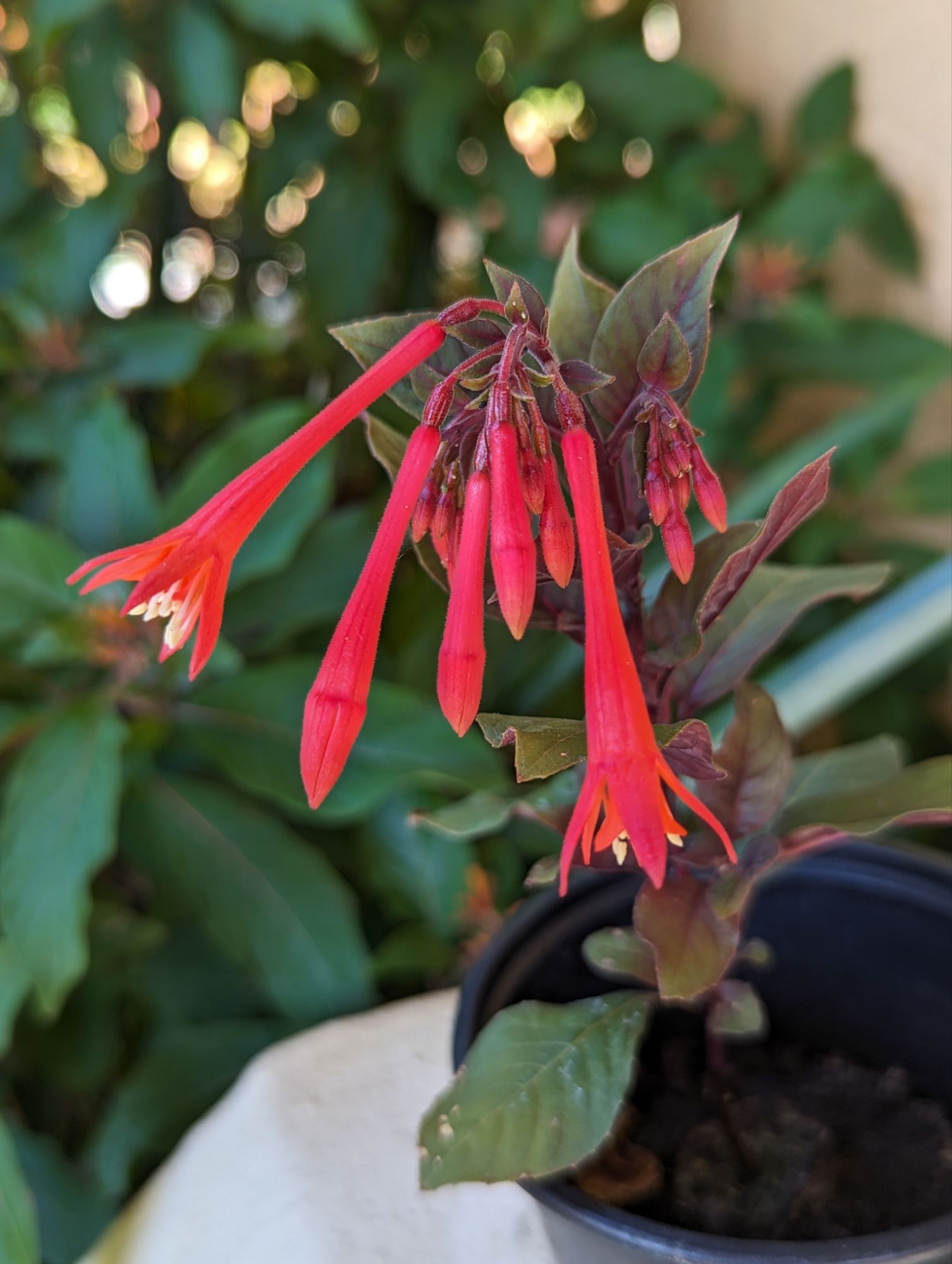
A new arrival in the mail greeted me yesterday – a nice rooted cutting of ‘Gardenmeister’ Fuchsia. This will have to be a sort of a reverse house plant. Outside in winter and indoors for summer. Summer heat and humidity will kill this outside. Should be an interesting experiment.

Buds on the Graptosedum.

Buds on the Shell Ginger (Alpinia zerumbet). I am hoping for flowers next week. This is the only ginger I have any luck with. It is over five feet tall.

The back garden smells wonderful. The scent is from the Rangpur lime tree flowering more prolifically than it ever has.

Thai dessert mangos (Nam Doc Mai) setting lots of fruit.

That’s all from South Florida. I hope everyone is seeing signs of spring.

In a Vase on Monday – Wintry Whites

Sometimes I like a little reminder of winter, something that doesn’t involve actually being cold. With temperatures hovering around 80F/26C and the air conditioning running it is not very wintry in my garden. I decided to concentrate on frosty white flowers in a vase for this Monday.

It has been very pleasant outside this week, so I have been clearing things out and moving things around. I planted a couple of packages of seed ahead of a predicted day long deluge (Sunday) hoping to get some different cutting flowers going (Bupleurum and White Finch Orlaya). I decided to plant these in a bed instead of pots as I have this magnificent vegetable bed I prepared a couple of years ago lying fallow since it became infested with nematodes almost immediately after completion. The reseeding salvia is very happy there so I’m hoping for more flowers. Upon returning to the house I read the packages – both said they need to be chilled for two weeks prior to planting. Oops. I hope the deluge helps.

The vase is a thrift store find. Flowers in frosty tones:

White Flame Salvia is cascading over the edges. The purple stemmed fuzzy flowers are Red Velvet Aerva.

White daisies are Bidens alba. Varigated foliage is ‘Bossa Nova’ Neoregelia Bromeliad. The airy grasses are dried seedheads from Muhly Grass (Muhlbergia capillaris).

That’s all from not so wintry South Florida this Monday. Visit our hostess, Cathy, at her blog to see vases from other gardeners around the world.

In a Vase on Monday – Valentine’s Putto

Putto sounds a bit like an Italian curse for a Valentine’s vase. I decided I needed a putto for a proper holiday vase, found one after searching around the house and read up on them. Here is the scoop, naked winged male babies in art are Cupid if they have arrows, cherubs if they have religious connotations and they are all putto in the singular and putti is plural.

So, I have figured out that the putto is presiding over the Valentine’s vase. He looks a bit contemplative. The vase is another old florist’s vase (I think they are multiplying) I wrapped this one with a Blanchetiana bromeliad leaf for another touch of color.

The rest of the players:

Surrounding the putto are the foliage and flowers of Genovese Basil, my favorite. I have this year round and eat a few leaves almost every day. It needed to be cut back, so the timing was ideal and the scent is wonderful. Red and yellow flowers are ‘Lady Di’ Heliconias (Heliconia pssitacorum); red bell shaped flowers are Firecracker Plants (Russelia equisetiformis).

The back of the vase has, in white, Sweet Begonia (Begonia odorata); Boston Fern (Nephrolepis exaltata) in green; the burgundy foliage is Aechmea ‘Burgundy’ Bromeliad, and the gray green leaf is a cut down palm frond from a seedling Sabal Palm.

Everyone around here celebrated a few days of dry, warm weather and I spent some time tidying and planting a few things in the garden. Ahh.

That is all from South Florida. To see more vases from gardeners around the world, visit Cathy’s blog http://ramblinginthegarden.wordpress.com

Six on Saturday – The Year of the Dragon

Welcome to The Year of the Dragon. Chinese New Year is today and what will the Dragon bring to my garden? Above, in celebration of this event I have shared a piece of art created by two local ladies who are responsible for the creation of https://www.facebook.com/tctrashart, A Facebook page dedicated to raising awareness and getting rid of garbage on the beach by creating and sharing art they make from their finds.

I went looking in my garden this morning to find six new possibilities for the Dragon. Fruits and flowers are budding and sprouting, it’s looking promising for the New Year! To tour other garden possibilities, visit the host of this weekly meme, Jim, at his blog.

The Rangpur lime is flowering and has set fruit for next winter. I managed to collect enough fruit and made a pie with the juice and zest this week. We ate it!

Rangpur limes are considered sour oranges as it is a mandarin/lemon cross. So – in Old Florida this would be considered a sour orange pie.

The Mexican papayas I planted from seed last year are now five feet tall and setting buds. Upper right side of photo. Papayas are not true to seed and are either male, female or hermaphrodite. I planted two trees, the other one is looking male, so I hope this one will be female or hermaphrodite.

Zinnias or sunflowers sprouting. I haven’t planted anything in this bed for a couple of years, it was infested with nematodes and has been “lying fallow” to get rid of the buggers. Fingers crossed.

Ice plants, they used to be called Delosperma cooperii in latin. I think the botanists have changed the name again. There are two schools of thought about these growing in South Florida – yes and no. I found some very low priced plants and am trying them. They are looking good so far, August will be the true test.

Alligator Lilies (Hymenocallis latifolia) waiting to find a new home. They are a very pretty native lily, but they are difficult to site in the garden. They are looking for moist, well drained dappled sun and they only make foliage if not in their preferred location. I move them around sometimes, contemplating their next location.

‘Burgundy’ Aechmea bromeliad showing new spring color. These have finally found their happy place. And I don’t want to move them as they are sharp.

That is all from my garden this Saturday. Happy New Year!

South Florida Garden Gems – Crotons

Easy, Year Round Color for Your Garden

Seeking an addition to your garden that provides constant color? Look no further than the Croton (Codiaem variegatum). Crotons are accent shrubs, featuring foliage wildly varigated in splashes of red, green, yellow and orange. They can be so colorful it becomes overwhelming to plant more than a few of them together. These shrubs are available in an array of sizes and colors to suit your taste and your space. Here are a few of my favorites.

Above is a Mammey Croton. These are great for smaller spaces, staying 3-4 feet tall.

Meet the Pie Crust Croton, planted in honor of my husband, the pie baker. The one in my garden is 5-6 feet tall. The name for this shrub was inspired by the edge of the leaves – like pie crust!

Below is a favorite Croton of Treasure Coast gardeners. Petra Croton. Petras get big, about 10 feet tall and 6 feet wide. They need some room.

Placing and Growing Crotons

Crotons are originally from the South Pacific and not considered cold hardy. This means they will suffer cold damage from freezing temperatures. Mine dropped their foliage at 38 degrees last year, but came back. North of Ft. Pierce and inland these shrubs need to be protected if cold weather threatens. Plants can be grown in a container, covered or placed out of the wind.  These shrubs should be placed in a part sun to shade location, dappled light is ideal. The foliage on some varieties can burn if placed in full sun (Mammy Croton and some others will tolerate full sun). Also worthy of noting, the Croton is somewhat toxic if eaten, so if anyone (pet or human) has plant eating tendencies place the Croton out of reach.

Plant combinations to consider with Crotons

Given their cool, colorful vibe I like to use these with other tropical looking plants – Boston Ferns, Split Leaf Philodendrons, Bromeliads and Ground Orchids are good companions and like the same type of growing conditions.

Crotons are easy to grow if placed properly, watered and fertilized regularly. The only problem I have encountered growing these is scale insects and sometimes aphids find them really tasty. The solution to this is insecticidal soap and diligence.

Add a few Crotons to your garden for a dollop of tropical fun. I am currently searching for a Sloppy Painter Croton to add to my collection.

Six on Saturday – Winter Treats

Since it has been an unusually rainy winter I have been baking a lot of winter treats. Now that the weather has (sort of) cleared up I am finding treats in the garden. I’m joining fellow SOS’s sharing my garden treats this Saturday, to see other treasures, visit Jim’s blog and follow the links.

The salvias have been relishing the rain and are showing their appreciation. This bed has ‘White Flame’ Salvia, Golden Dewdrop Duranta (Duranta repens), Soap Aloe (Aloe saponaria), ‘Mystic Spires’ Salvia, and Dwarf Red Ixora (Ixora ‘Maui Red’) in background. These salvias are short lived perennials here.

An unnamed Neoregelia Bromeliad variety showing winter color. These are green and white in summer.

New to me and the garden – ‘Apricot Queen’ Angel Trumpet. This is a rooted cutting I planted in December. It is taking very well and has already produced a side shoot. I have never seen an Angel Trumpet in my neighborhood, so I am wondering about this one and keeping my fingers crossed.

Another treat unearthed when clearing out the garden. A Vriesea ospinae ‘Gruberii’ Bromeliad. Something has been trying to eat the leaves (notice the shredding). It is a rare animal that can eat these.

The tomatoes are finally making some progress. I planted all the cherry varieties as I have no luck with big tomatoes. Oddly, these are the biggest cherry tomatoes I have ever seen. Kind of wondering about the seeds!

The first sign of recovery on what I suppose was a tactical error. This is Miss Alice Bougainvillea. Apparently, she resents being cut back hard and left out in the cold. Usually, the Bougs are indestructible. Alice has been naked for at least a month and I was fearing her prognosis. I’m planning on buying some special Bougainvillea fertilizer now that the leaves are reappearing.

That’s all from my garden. Wishing everyone Happy Gardening, armchair or otherwise.

Six on Saturday – Sun!

It’s a great Saturday morning in South Florida. The drearies have been conquered for the moment and the sun is shining. The flowers perked up and I am finding new blooms in the garden to share this Saturday. Visit Jim’s blog to join Six on Saturday tours of gardens around the world.

Here’s a mad flower from Bromeliadland. This is a Quesnelia testudo. I am not sure of the common name. These do well in my garden and are reliable winter color.

Another mad bromeliad in flower. This is a native Tillandsia, a relative of Spanish Moss, the flowers are brown. This is called Ball Moss (Tillandsia recurvata). It is growing on the trunk of a Bougainvillea.

I finally snagged a Rangpur lime before the vampire rats sucked the juice out. I need a few more for pie.

The mango trees are setting buds. This does not bode well, I think. They usually flower in March and we get fruit in June.

Heliconia psittacorum “Lady Di” expressed her appreciation for all the rain.

Google identified this as Golden Stonecrop (Sedum adolphi Firestorm). This has been in a pot for a few years and has not flowered before.

A question ?? Does anyone know if this is a Dahlia? I planted some tubers of a Dwarf Dahlia in October in this spot and this is coming up. I have found that Dahlias have a mind of their own when deciding to grow.

Thanks for the input and thanks to Jim for hosting.

That’s all from my garden this Saturday. Happy Gardening!!