In a Vase on Monday – Shrimp and Serendipity

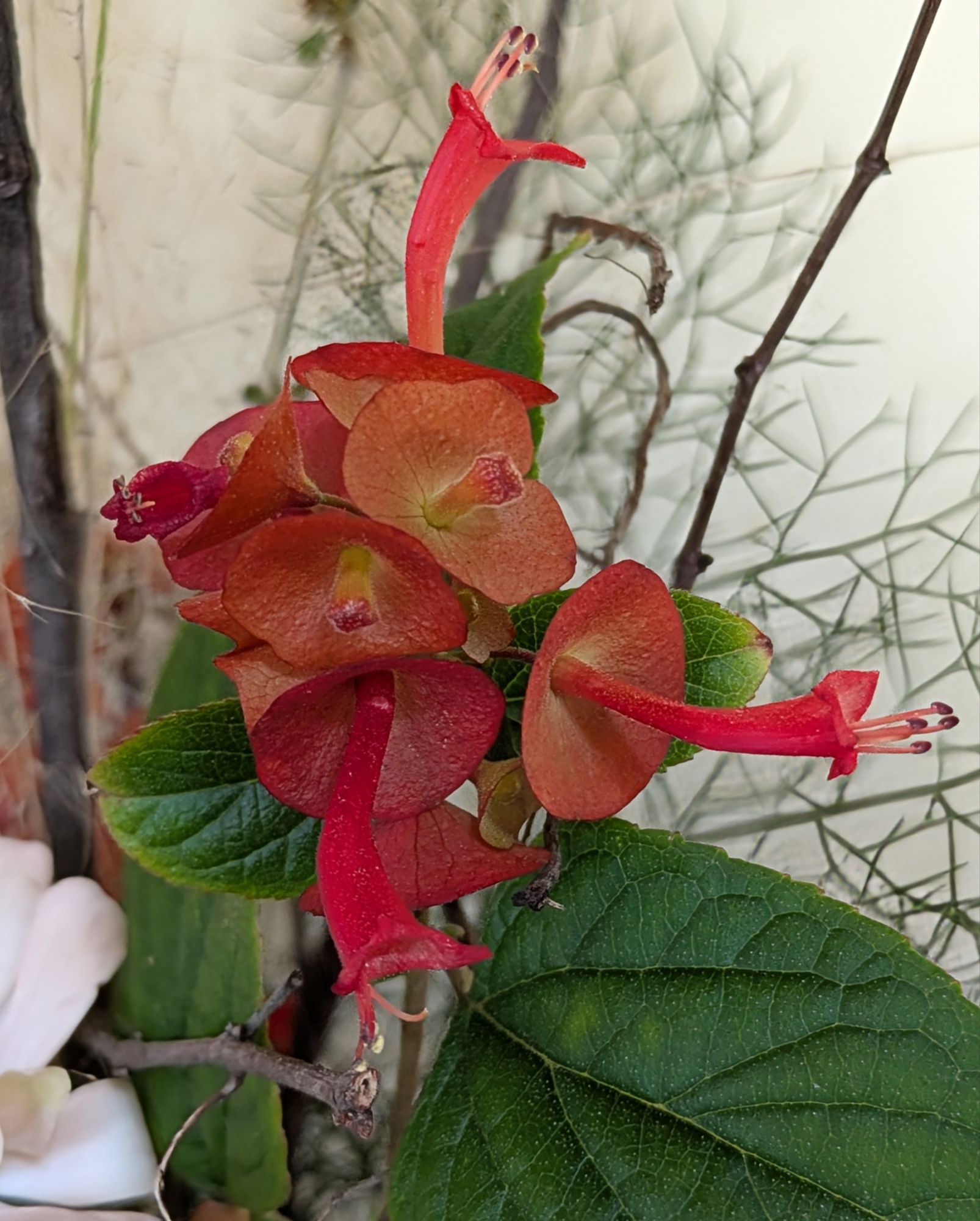
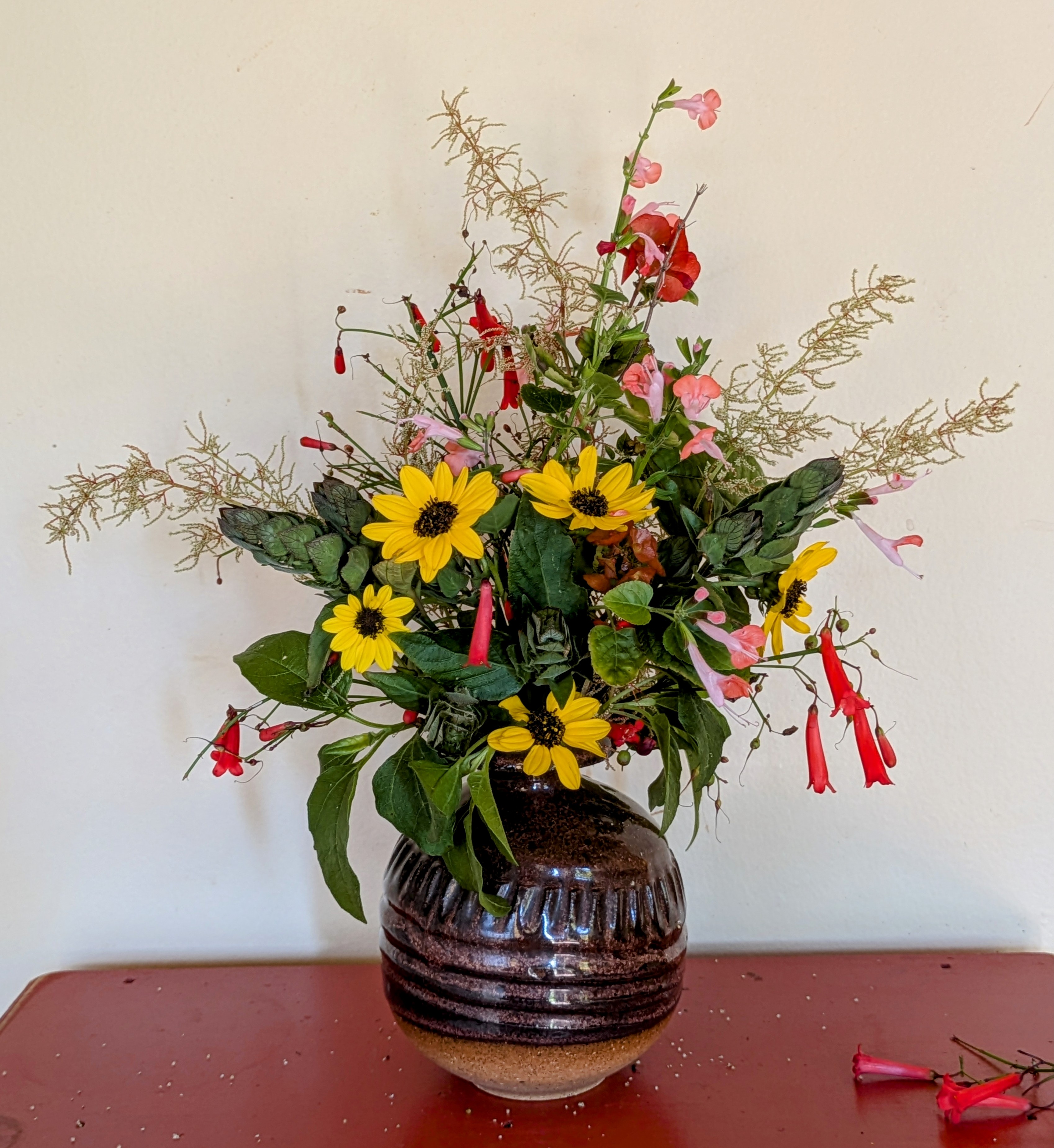
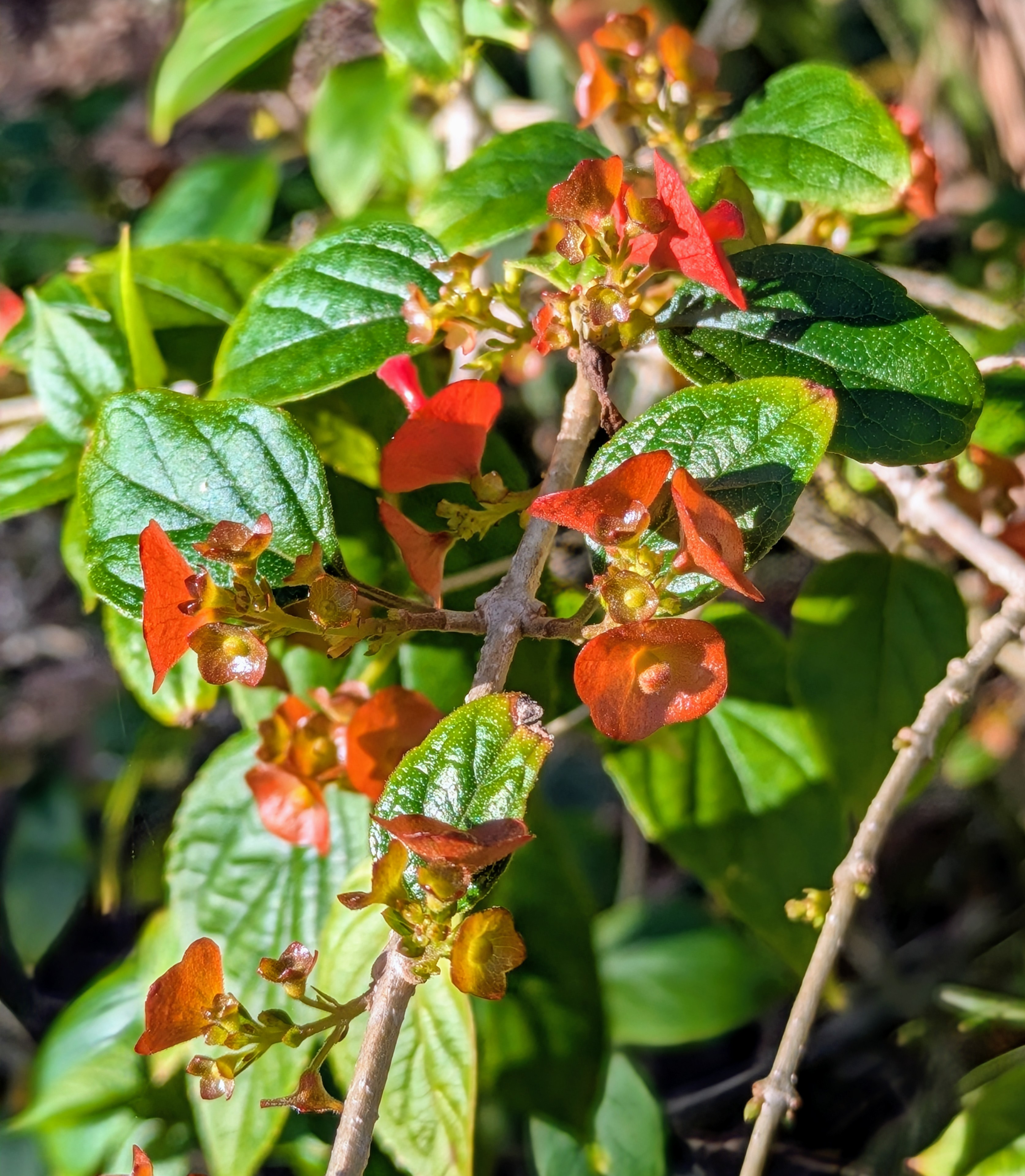
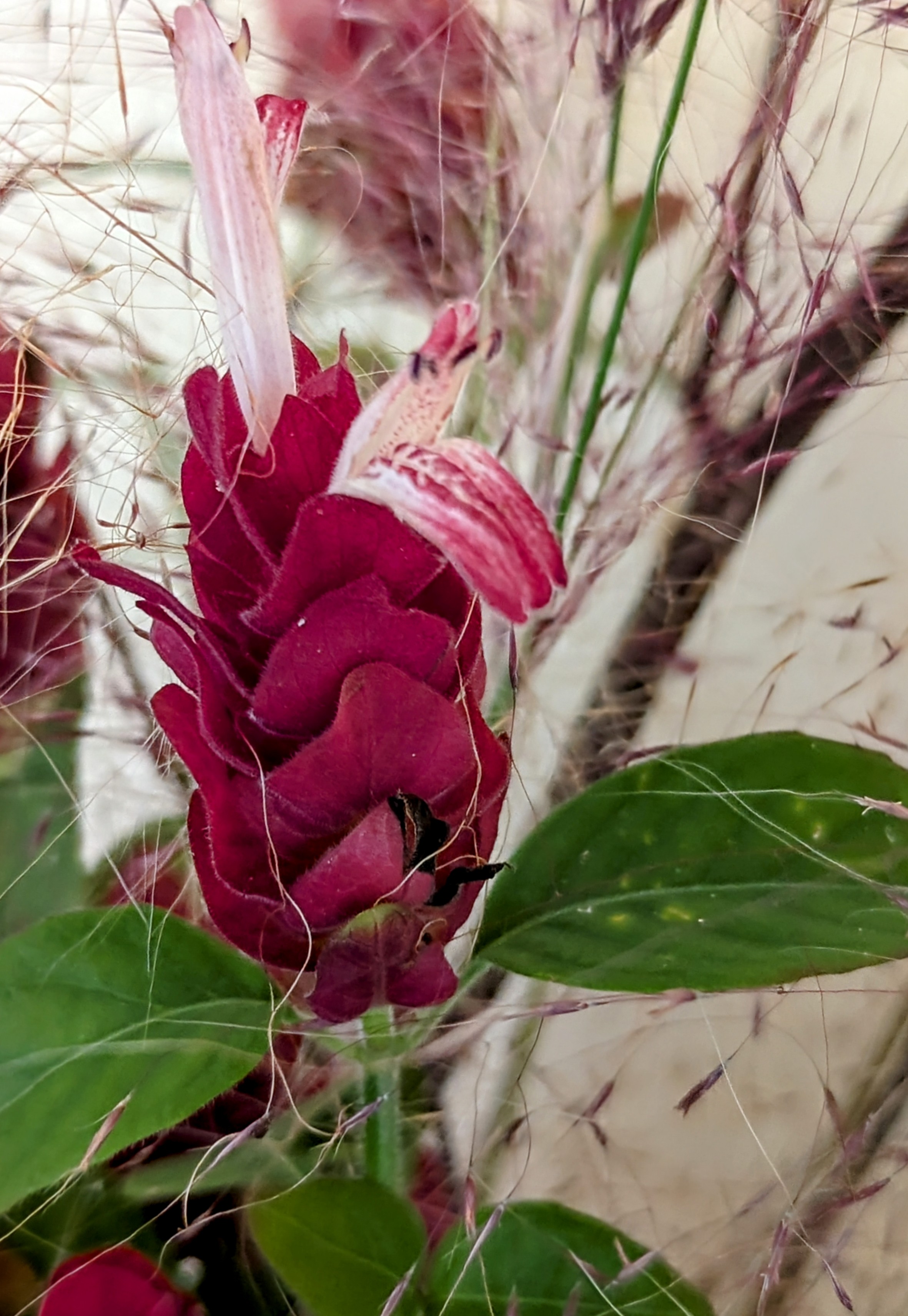
My garden never fails to surprise me. This week it was a beautiful display of deep red flowers from a Red Shrimp Plant. This plant is one of those I forget completely about until it flowers and then wish I had more. I have this thought every year and have yet to propagate any. Maybe it is time.

A few more serendipitous finds allowed me to complete the vase.

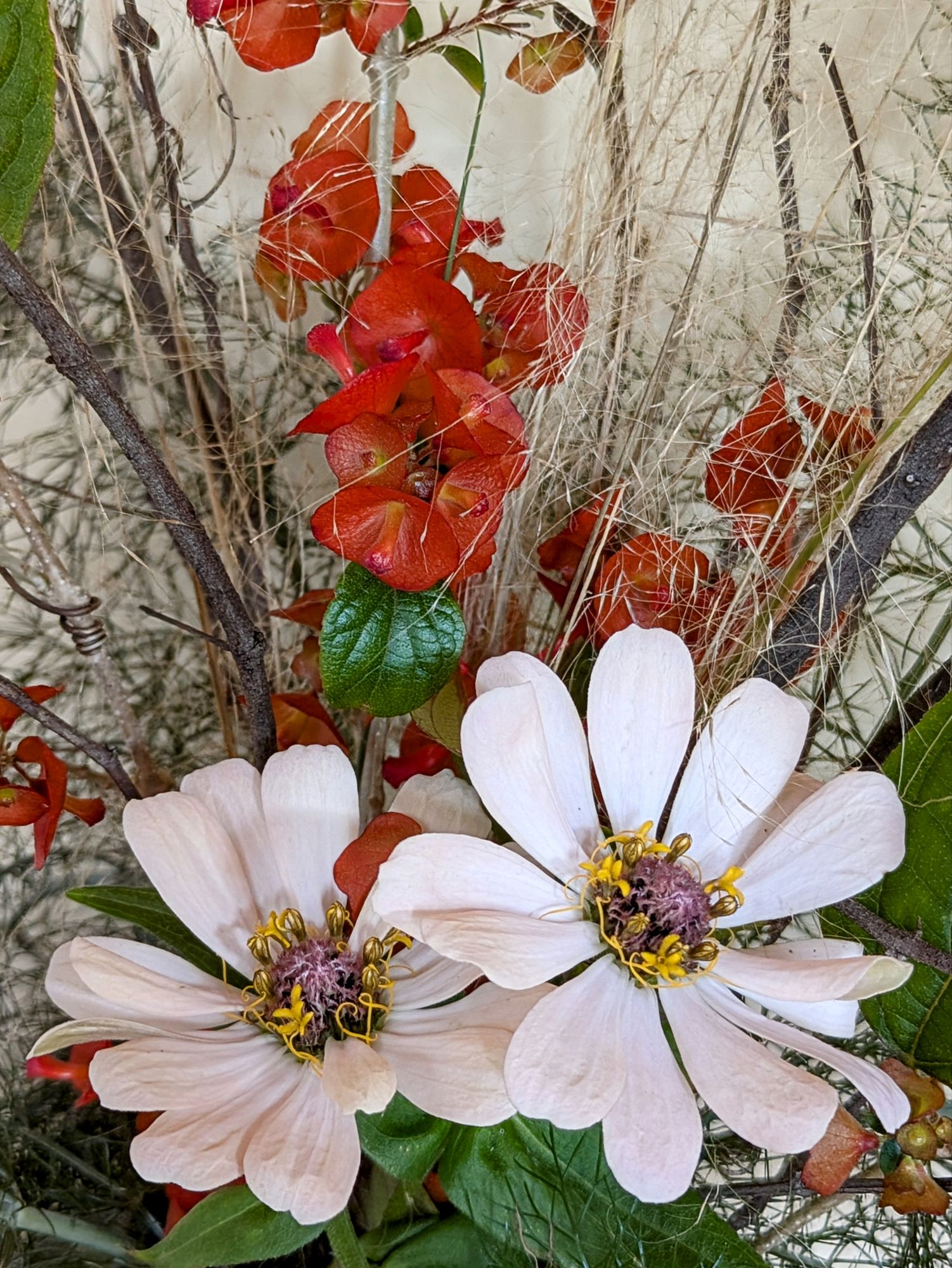
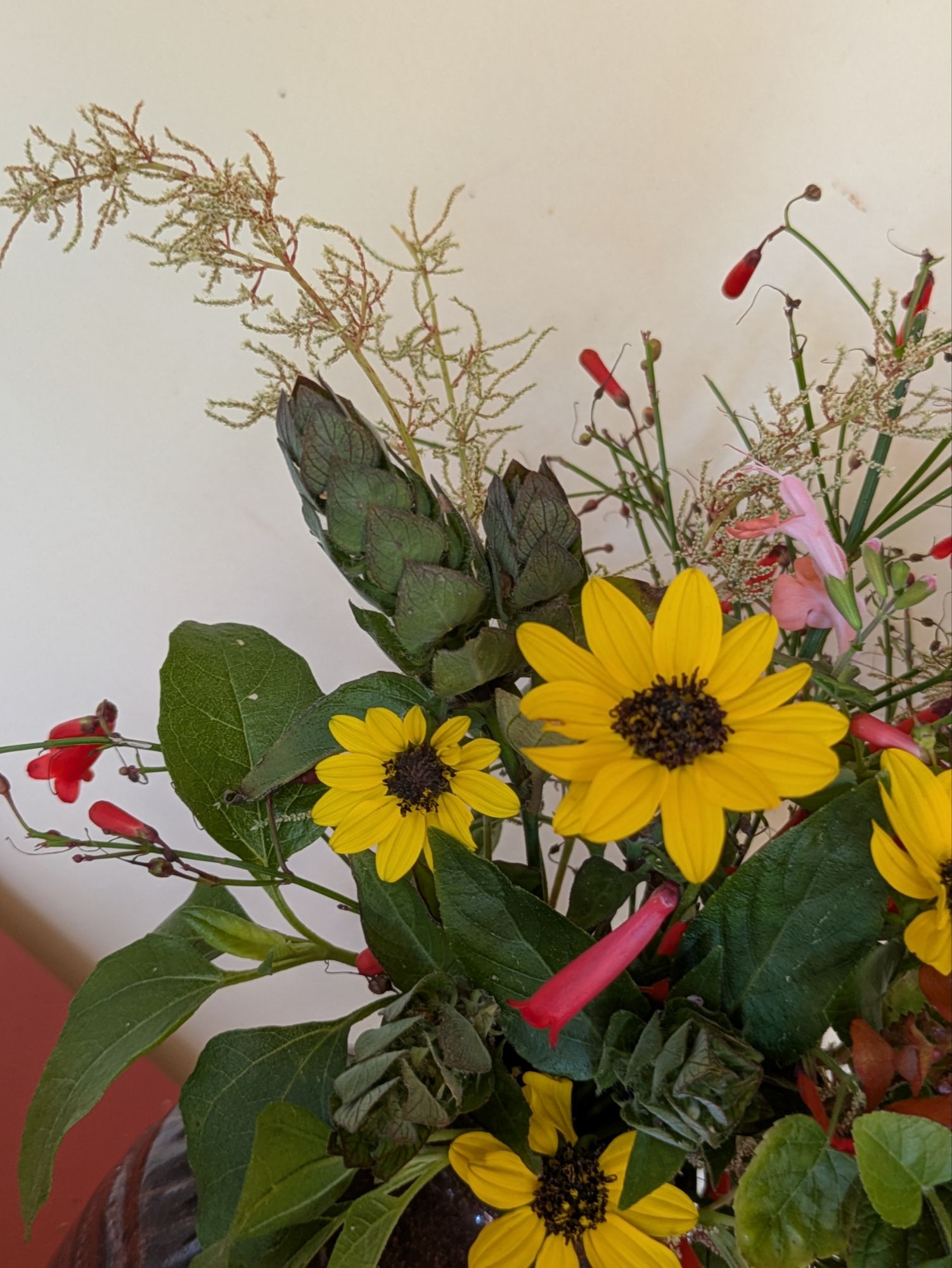
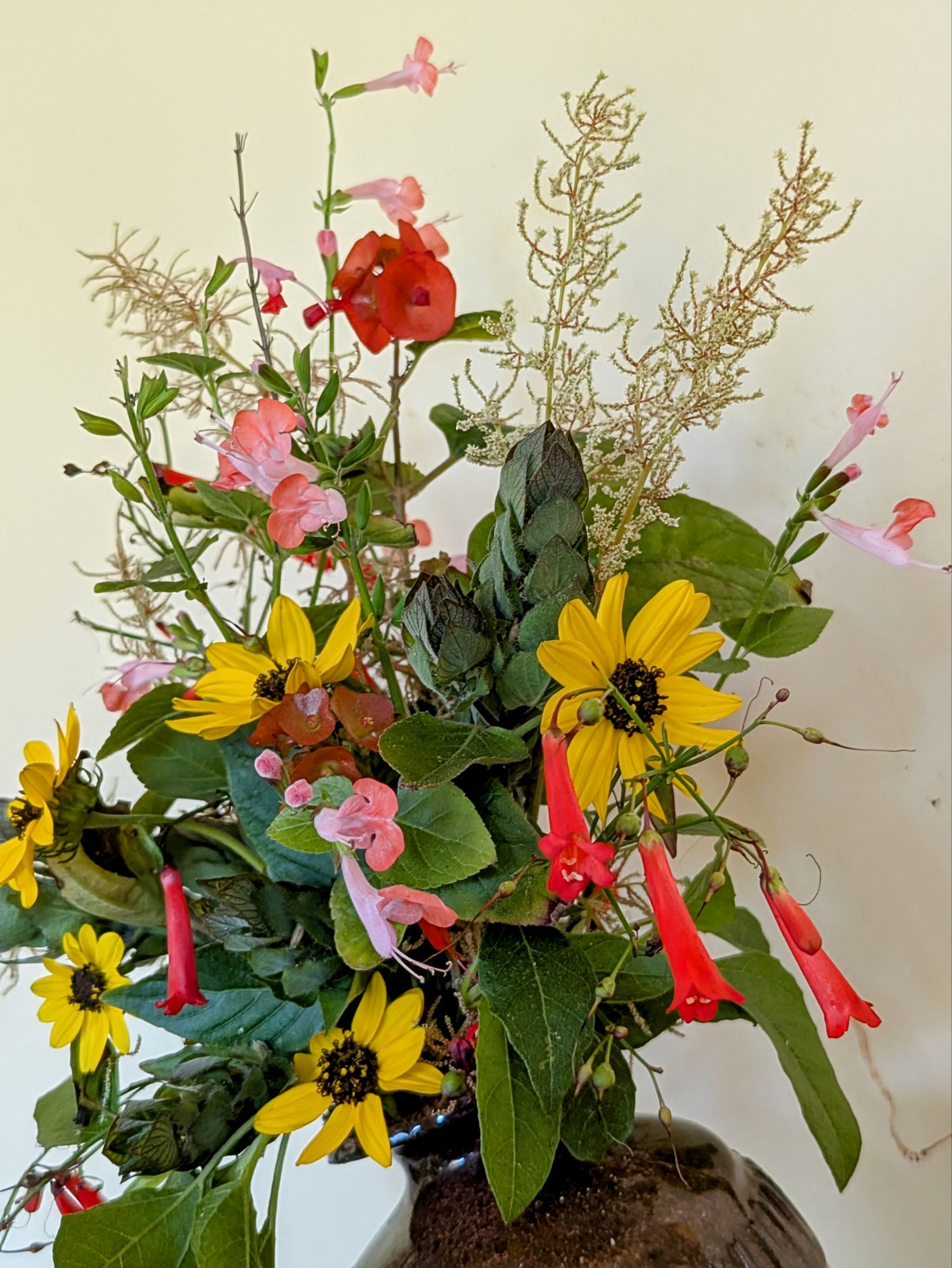
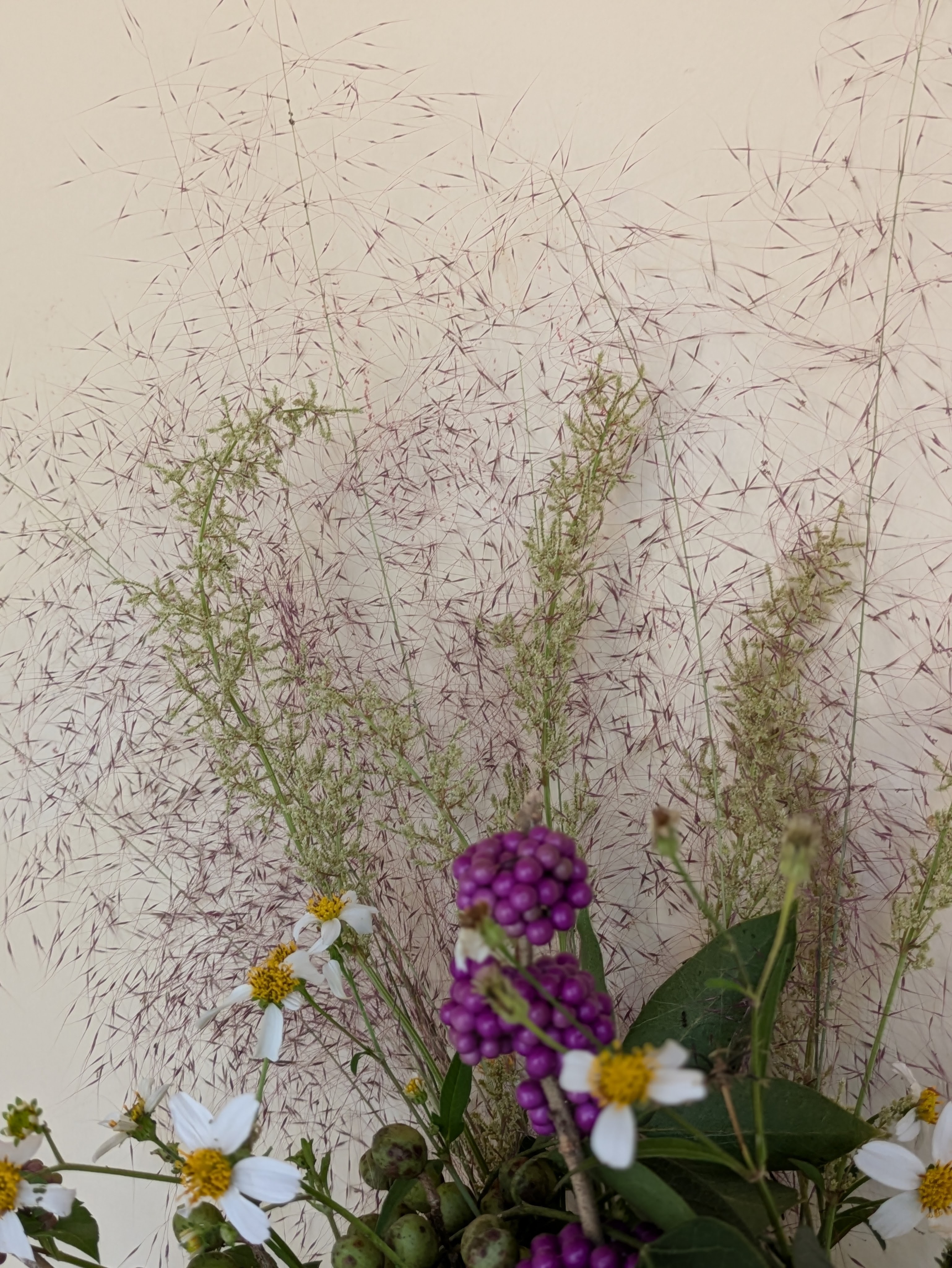
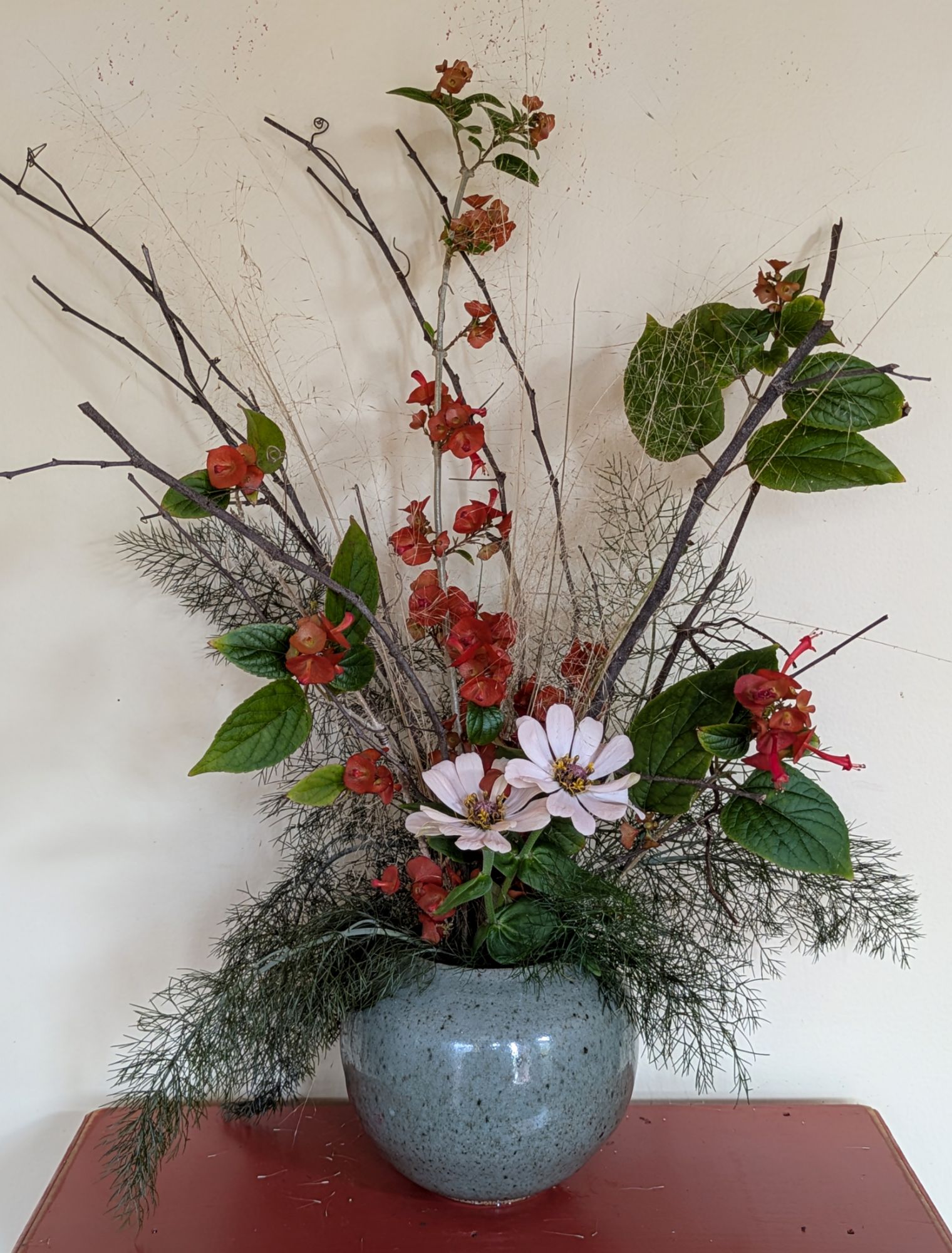
The Red Shrimp Plant (Justicia brandegeana) in all its glory. The fluffy grasses behind are Muhly Grass (Muhlenbergia capillaris). The Muhly Grass has reseeded here and there in the garden. I would have never planted it where it landed, but have come to enjoy the randomness of the placement. It also has the benefit of thriving in the driest, sandiest part of the garden.

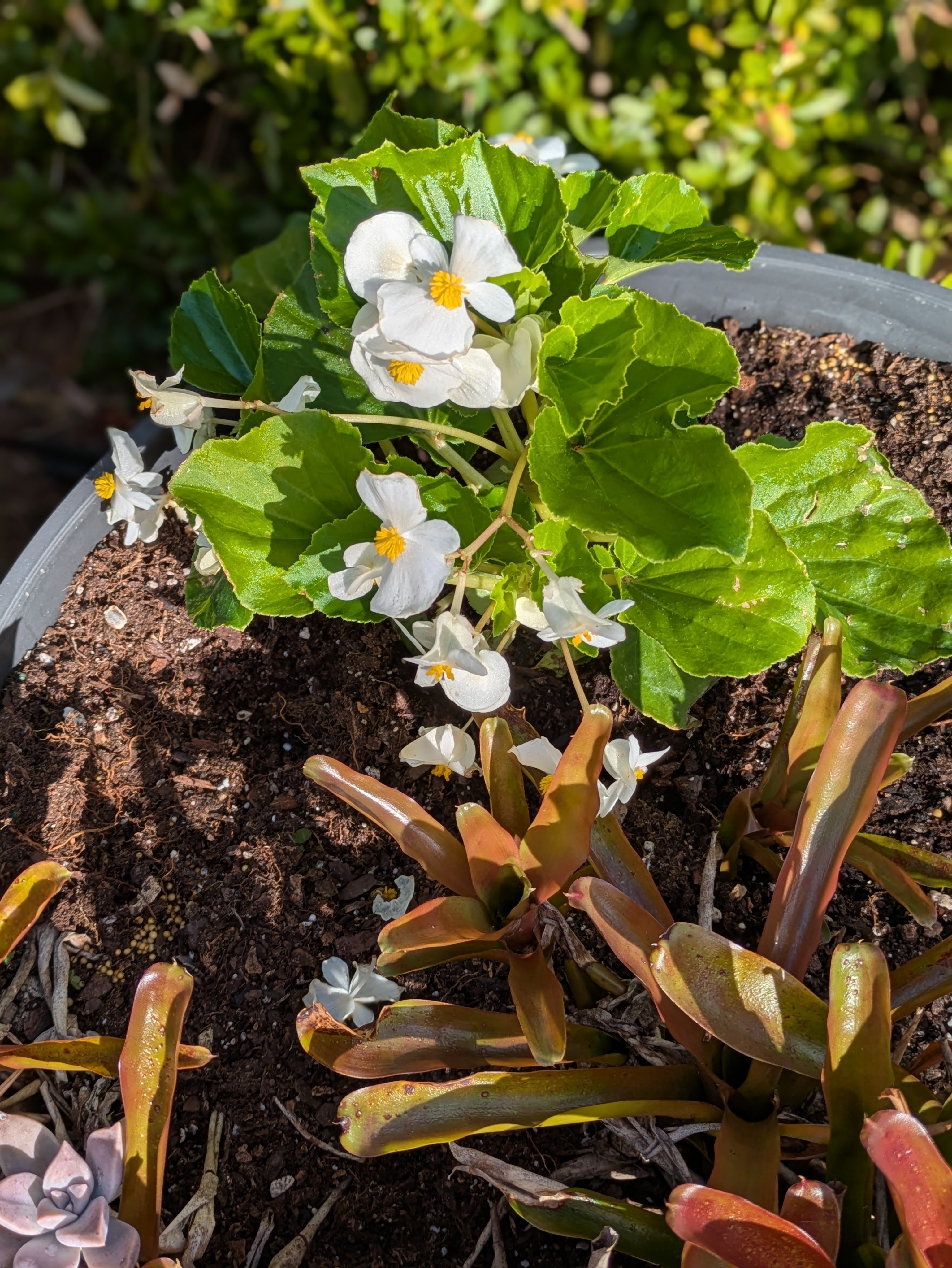
White Vinca (Vinca rosea) comes up in the oddest places. I have never planted any, yet here it is. Again thriving in the driest part of the garden. The sticks in the vase are from some native grape vines I cut down long ago and never quite made it into a bag to be taken to the curb. I like sticks in a vase and never realized it works better if they are good and dead. These were nice and crispy and easily trimmed into a shape that complemented the vase.

The vase is a stoneware ‘pineapple’ found on a long ago Hawaiian vacation.

Now I am hoping to find a serendipitous dinner prepared in the freezer! It’s possible.

Thanks to Cathy at RamblingintheGarden for hosting. Follow the link to see more vases.

In a Vase on Monday – A Tropical Thank You

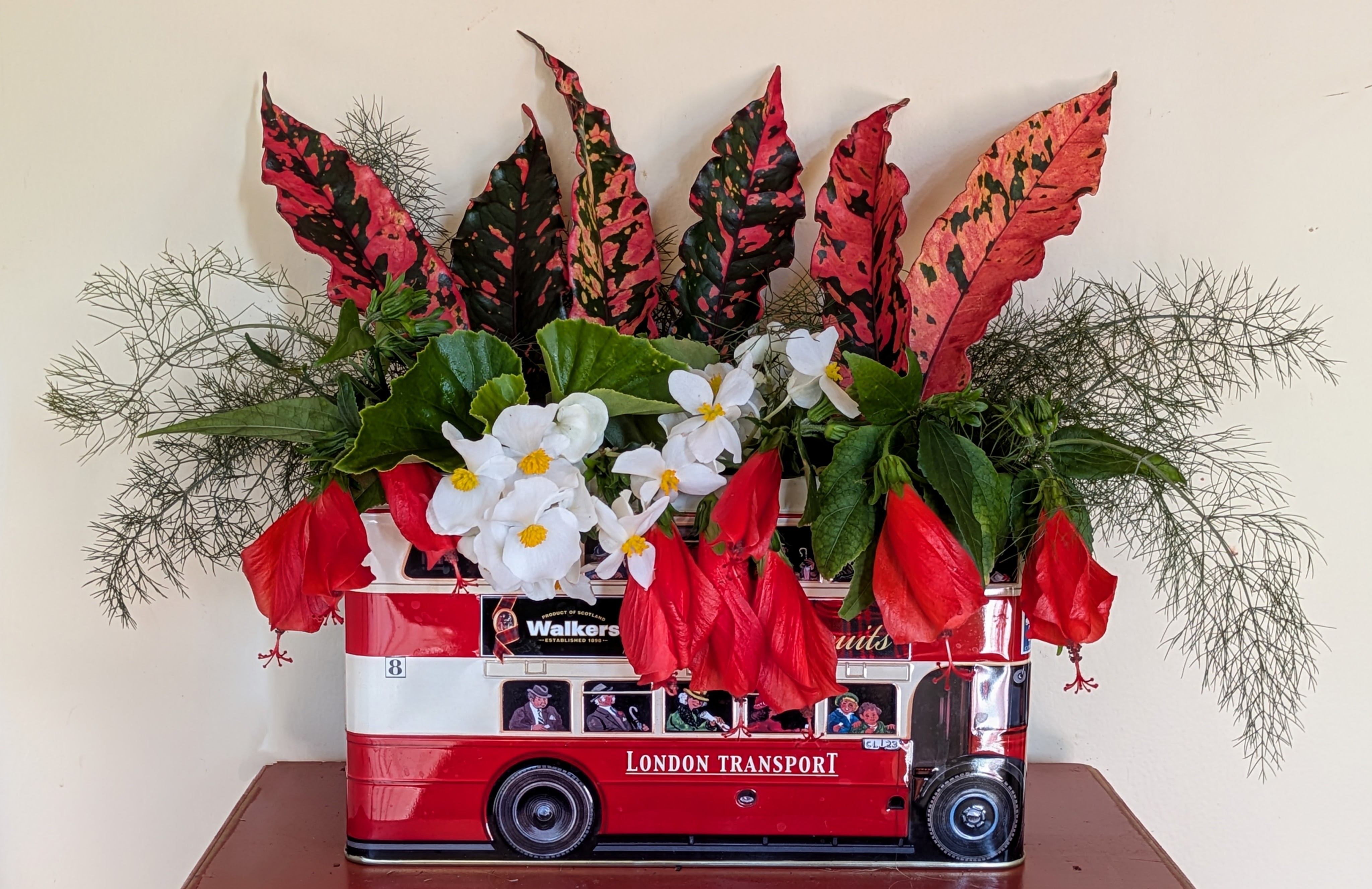
In celebration of In a Vase on Monday’s Eleventh!! Anniversary. I would like to extend a warm, tropical, virtual Thank You card to Cathy at RamblingintheGarden for hosting this lovely garden meme for all these years. I enjoy the weekly chat with gardeners around the world and have learned quite a bit about what grows where and beautiful new plant possibilities for my garden. It may seem counterintuitive; but I have found many plants that grow in summer in the UK do well in my South Florida garden in winter and I love making vases with them! Follow the link to see more vases celebrating eleven years of IAVOM.

The Close Ups:

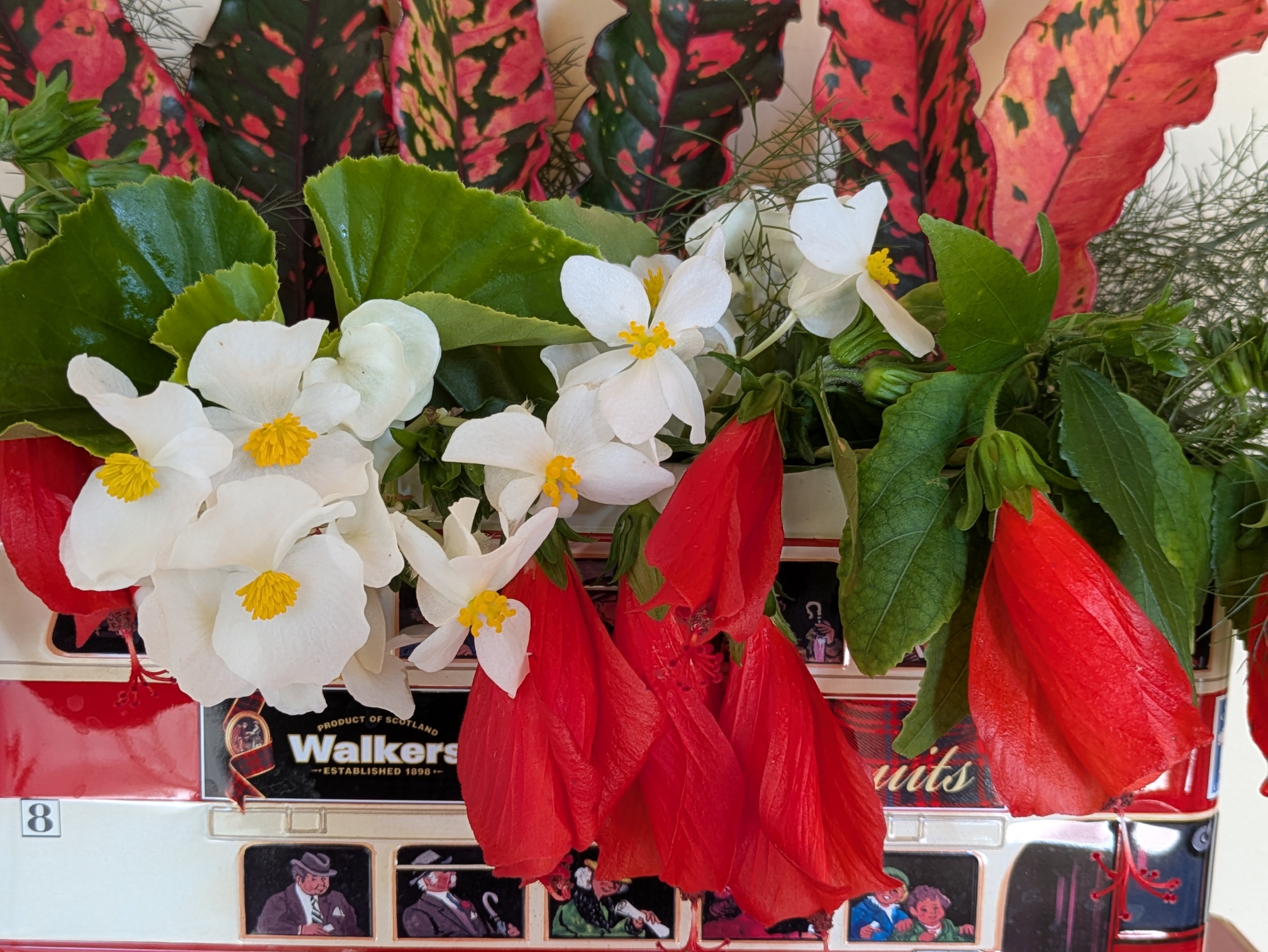
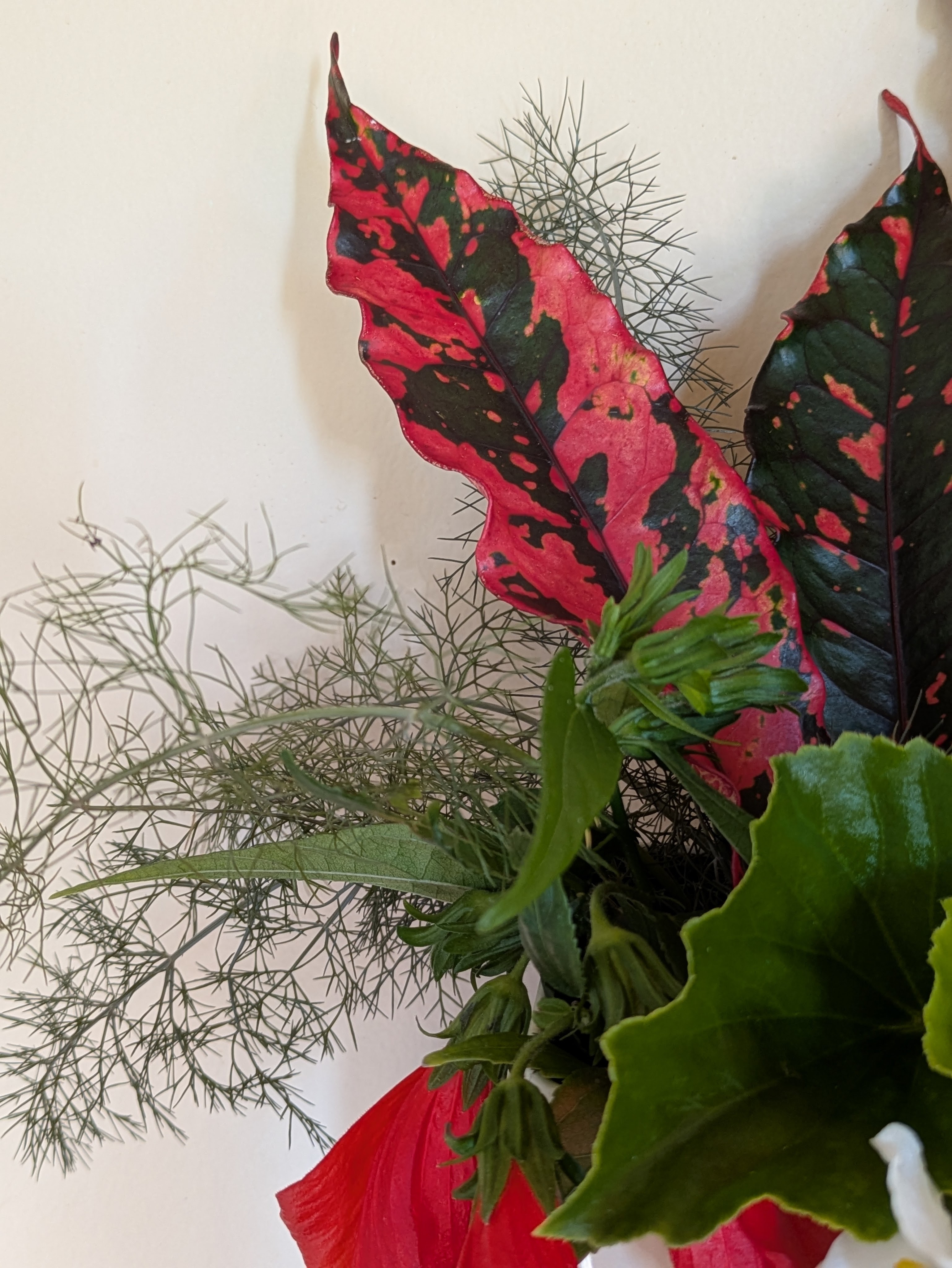
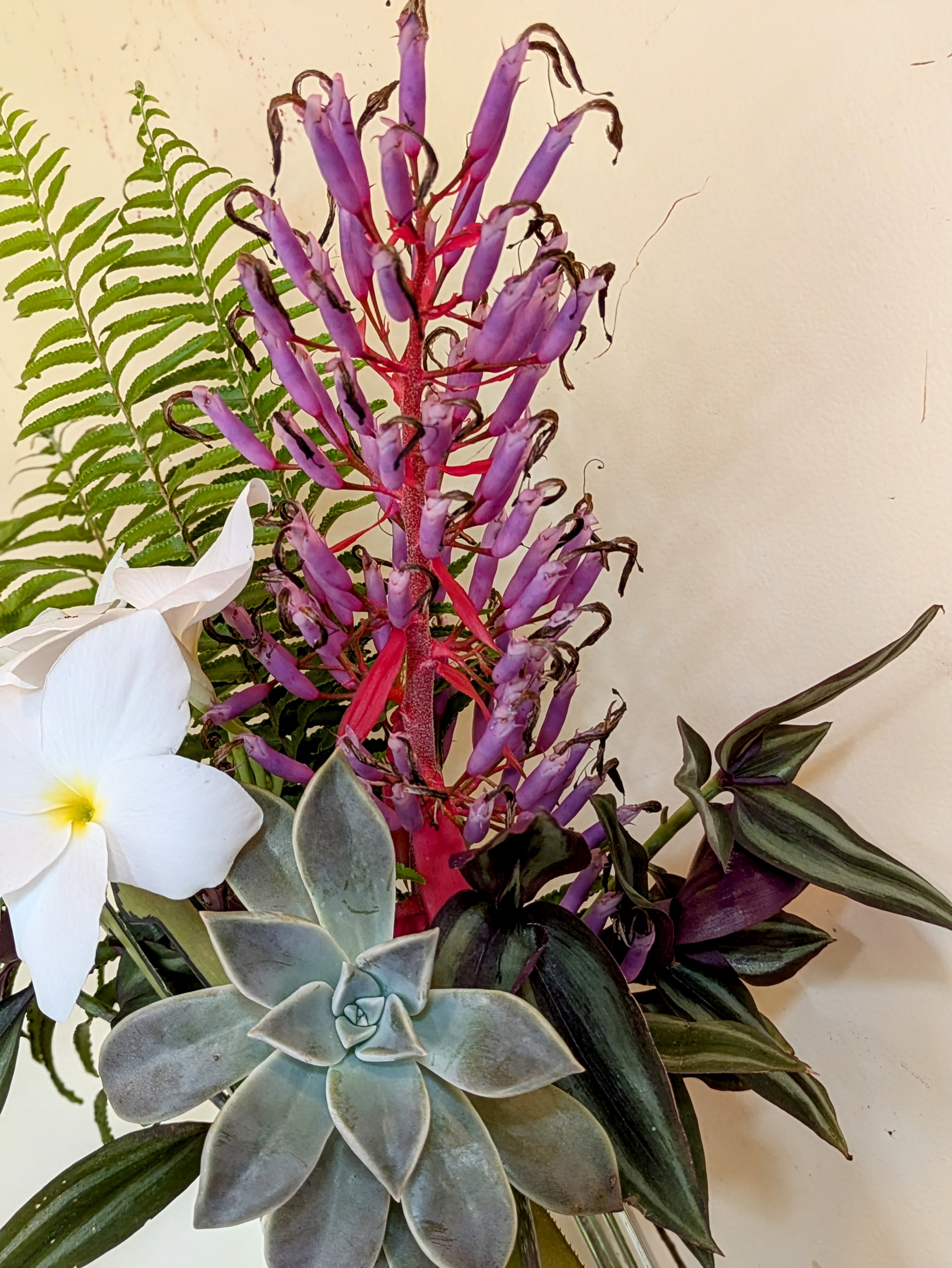
The Eleven is made from Blanchetiana Bromeliad (Aechmea blanchetiana) foliage that I drew an eleven on with a Sharpie and trimmed off the excess. Certainly a first in my house, drawing on foliage. Grey rosette is Graptosedum succulent; purple and silver striped foliage is Wandering Jew (Transcandentia zebrina); white flowers are Bridal Bouquet Frangipani (Plumeria pudica).

Purple and pink flower is a “Candy’ Portea Bromeliad. Ferns are native Boston Fern (Nepholepis exaltata).

Thanks again to Cathy and Cheers to all from South Florida.

In a Vase on Monday – Unreal

Well, here it is, my floral comment on the election results. The will of the American people seems unreal to me. Unfortunately, like the components in this vase, they are disturbingly real. Not that I find succulents and bromeliads disturbing; but they do look so different from other flowers they don’t seem real. The rest of it – I suppose the best way to look at it is time will tell.

The vase is black for obvious reasons. The components are succulents including, in grey, Graptosedum; above the Graptosedum, in green and apricot, flowers from Soap Aloe (Aloe saponaria); green foliage is from Senecio barbertonicus. I may end up with several new plants.

Bromeliad flowers top the vase. The red and blue (symbolism?) flower is from Aechmea miniata, an odd bloom this late in the year, the brownish one is the same flower drying or dying, depending on how you look at it. Orange and yellow spikes are bits of Aechmea blanchetiana – the entire flower on this is at least four feet tall, so I cut some pieces of the flower. Round leaves in the back are from Flapjack Kalanchoe.

Thanks to Cathy at RamblingintheGarden for hosting. I am looking forward to the anniversary challenge. Follow the link to see more vases.

In a Vase on Monday – Garden Limbo

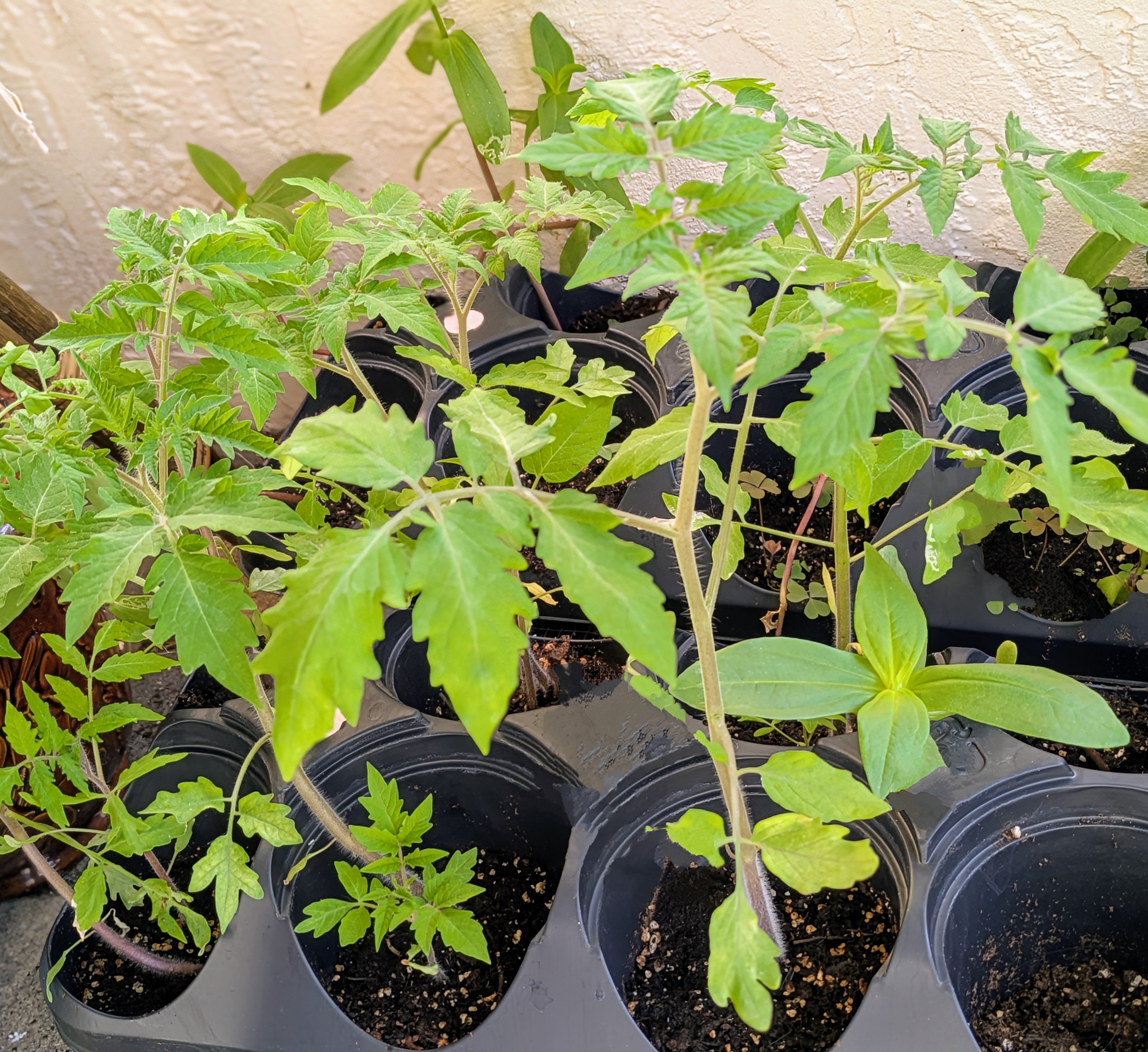
This time of year gives me an odd sort of garden Limbo. If I still lived further north, the garden season would be mostly over. Here in South Florida, I am watching tomato and zinnia seedlings come up – soon to be transplanted into the winter garden. Planting tomatoes in November may never feel normal.

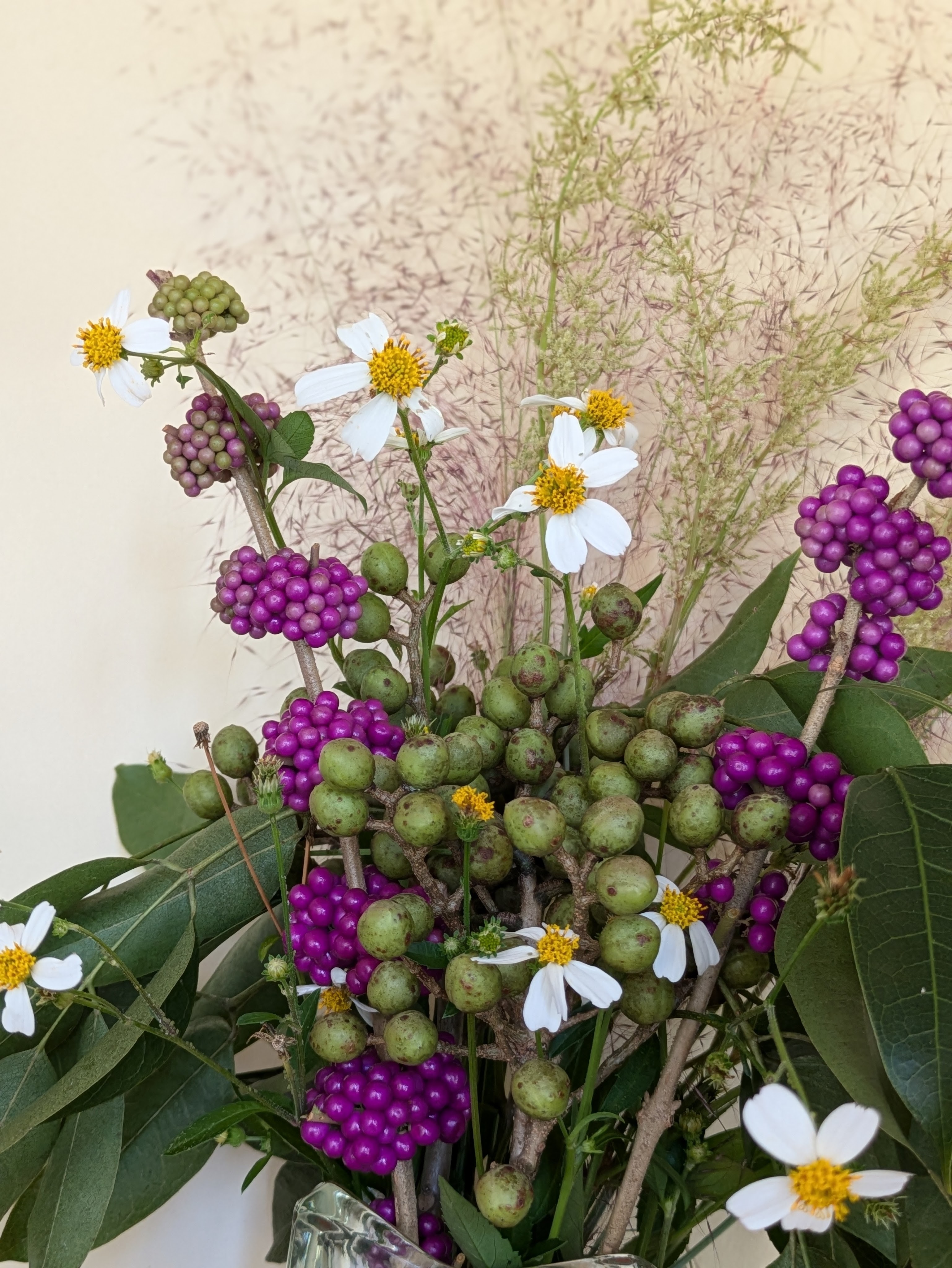
All of the plants in this vase are Florida natives. Two (Bidens and Juba) are in the garden due to Limbo being induced by not knowing what to do with them. I now cut and enjoy them. The balance I planted, the green fruit is from the Gumbo Limbo (Bursera simaruba) tree. Perhaps it is celebrating my garden Limbo?

Closer views:

Two of my favorite wispies are in flower right now. The pinks are Muhly Grass (Muhlenbergia capillaris) and the off white is Juba Bush (Iresine diffusa)

Green fruit is from the Gumbo Limbo tree (that word again?!); white flowers are Bidens alba; purple berries are from Beautyberry (Calliocarpa americana). The crystal vase was a gift from my dearly departed brother, it always makes me smile to remember him. Today is his birthday.

Thanks to Cathy at RamblingintheGarden for hosting. Follow the link to see more vases.

Six on Saturday – Fall Finds

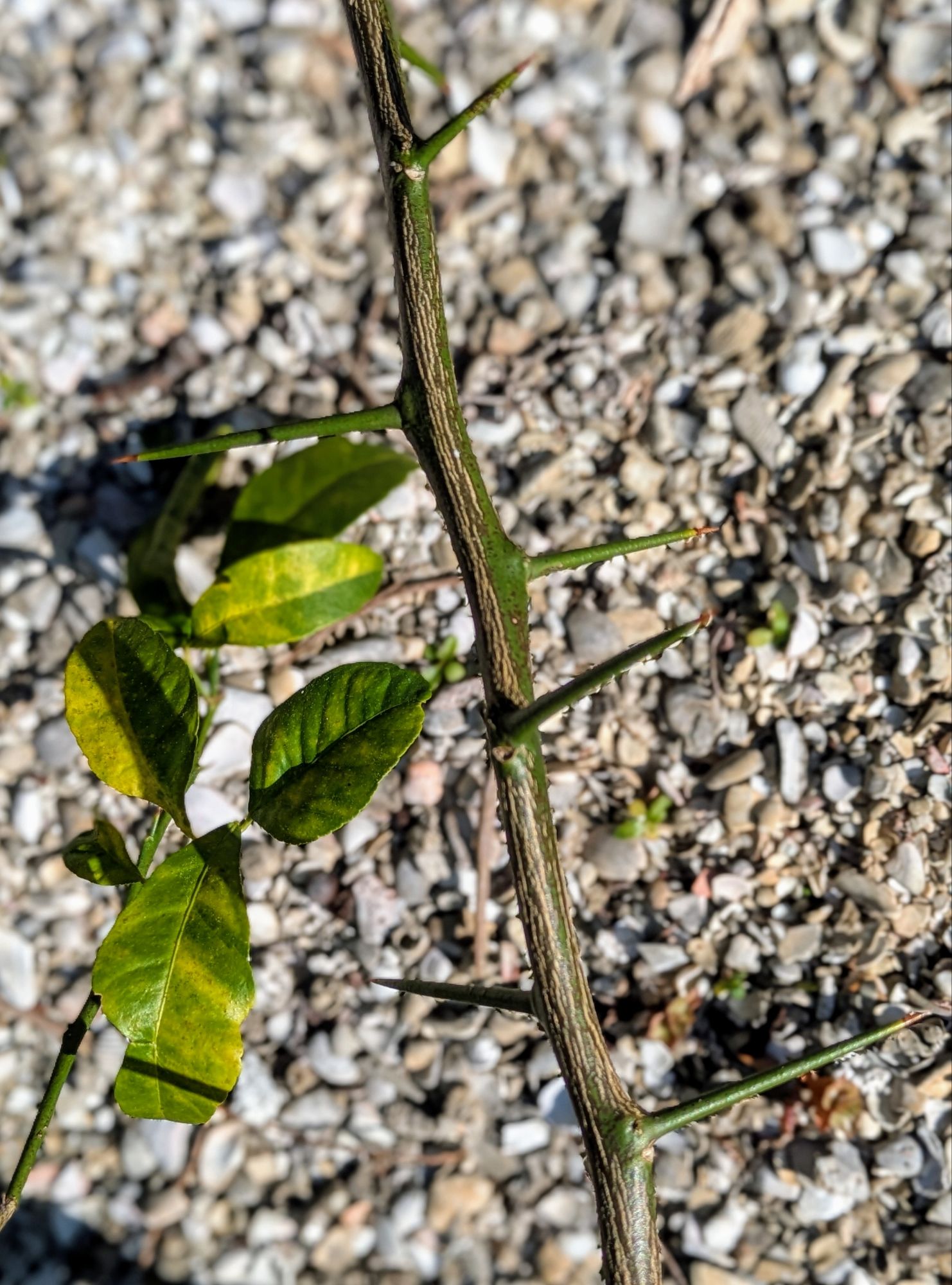
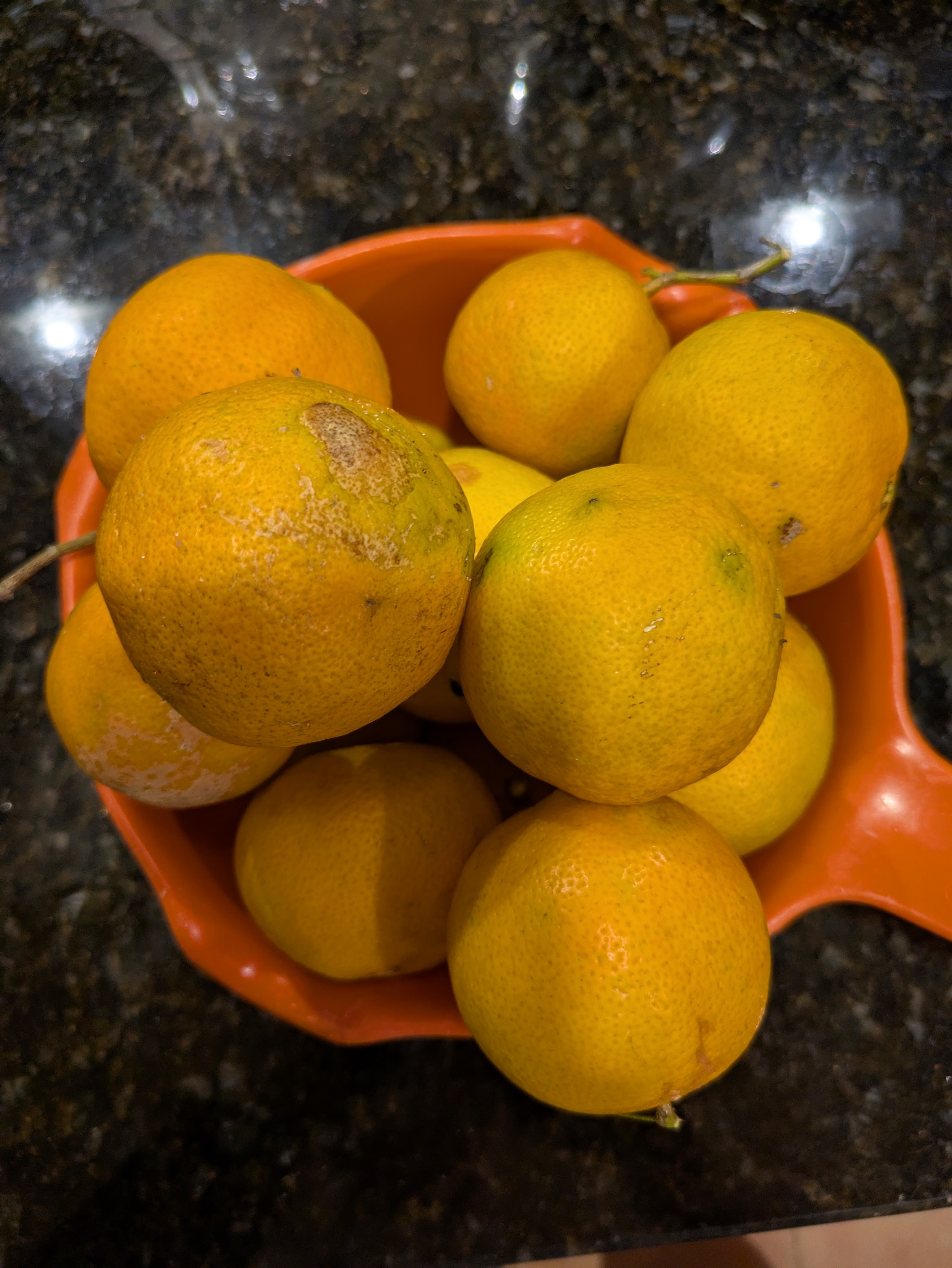
I am joining the SOS gang to share the discovery of my first ripe Rangpur lime this Saturday. I shall be heading to the grocery store soon to buy ingredients for a pie. Gardening is Good! Eventually I end up with a pastel orange “Key Lime” pie.

To see more SOS posts, follow this link Garden Ruminations to visit our host, Jim and travel the world of gardening through the comments section.

The Rangpur lime. This fruit is a cross between a lemon and a mandarin orange. Why it is called a lime I am not sure.

More unusual fruit. This is a Bitter Melon (Monmordica) These grow wild here and are very prolific. Some call them Stinkweed due to the smell of the foliage. They are considered health food for some – I stick with the Rangpur pie.

Fruit of the Jatropha multifida, called physic nut. It is supposedly medicinal, but known to cause mild gastrointestinal distress, I am not sure why you would eat it.

Yellow Elder (Tecoma stans) starting its show.

Nodding Hibiscus (Malvaviscus arboreum) waking up.

Another fall find, the cone of a Cardboard Palm (Zamia furfuracea) – this one has been trimmed off and is nestled in trimmings from a Gumbo Limbo (Bursera simaruba). These are prolific reseeders and not a good thing to get loose in the garden.

That’s all from South Florida this morning. Off to find baking ingredients.

In a Vase on Monday – Fall Outside the Box

As I was searching the garden for flowers to cut, I started thinking outside the box. Well, I inhabit the area outside the box anyway and it dawned on me that there is fall color in South Florida. It is just not the typical seasonal color changes – it’s the flowers and berries! Such a relief after all these years of feeling deprived of fall color.

With a fresh perspective, I snipped a fall vase and plonked the flowers into a mason jar. Here are some closer views.

Yellow flowers are Beach Sunflowers (Helianthus debilis); orange tubular flowers and berries are Firebush (Hamelia patens); white flowers are ‘White Flame’ Salvia.

Red spike flowers are Tropical Red Salvia (Salvia coccinea); red and yellow flowers are Parrotflowers (Heliconia psittacorum ‘Lady Di’.

Feeling ever so autumnal now..
To find more vases for viewing visit Cathy at this link – RamblingintheGarden.

Six on Saturday – Changes

Fall brings changes to my garden. Cooler weather is the best! It seems odd to me that the more tropical plants (like Bromeliads) start to reproduce like mad and it is time to thin and move them around. I am not sure why I think they should like the rainy, steamy weather better. Maybe that is why I enjoy them so much.

To see more changes in SOS gardens follow this link GardenRuminations to Jim’s blog.

October inspires the ‘Candy’ Portea Bromeliads to flower. This is just the beginning. These get longer and have fat pink stems.

I am trying to decide if I love this or not. These Purple Queen (Transcandentia pallida) pop up in the Bromeliads and add a little color – or does it look unkempt? A dilemma.

A bit more typical fall scene, the Muhly Grass (Muhlenbergia capillaris) is starting to show off.

An unusual post hurricane occurrence. The Papaya tree knocked down by the wind is still alive. I think rabbits are eating the leaves. I am wondering if I can prop this up to make an easy to pick Papaya tree. The fruit is usually at least 8 or 10 feet off the ground.

The Juba Bush (Iresine diffusa). A native wildflower makes its seasonal appearance.

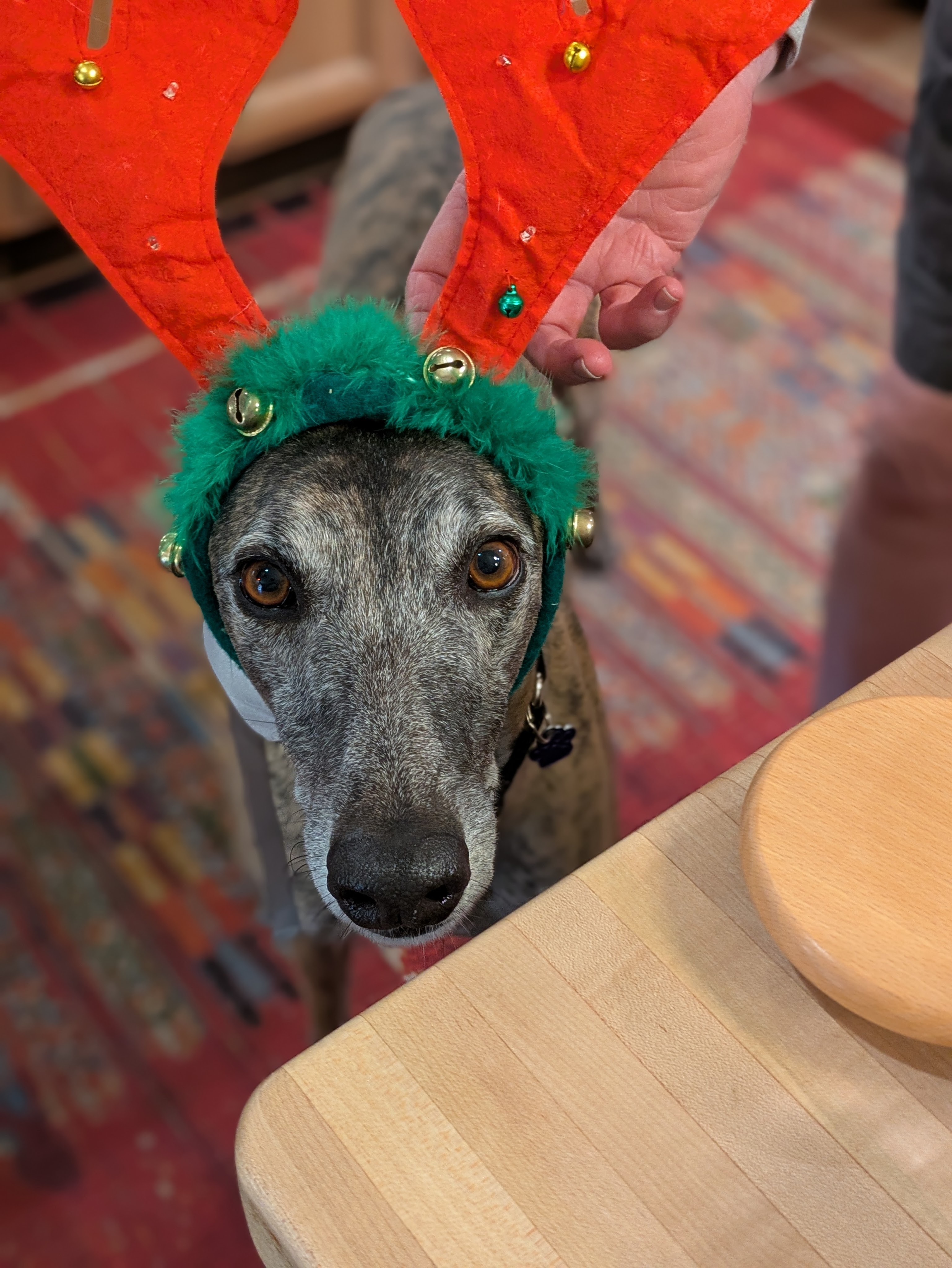
Another change in my garden I am sad to share. Fiona the Greyhound was lost to bone cancer this week. She was only seven and diagnosed in late August. I thought we would have more time with her. Here she is looking for bees to munch on in better days.

Six on Saturday – Milton was Here

It’s a sunny blue sky Saturday morning in South Florida. Two days ago, it was a totally different story. Late Wednesday afternoon, Hurricane Milton made his presence known by dropping several tornadoes a little too close to my house. If you have seen the Spanish Lakes damage images in the media, that is about 15 miles from my house. The tornadoes were spawned by an outer band of the storm as it was making its way towards landfall. Milton eventually passed about 100 miles north leaving only minor damage in the garden, frayed nerves, sore backs (We had put up our hurricane shutters in a rush) and 24 hours without power.

This garden update is for Gill, from Off the Edge Gardening blog, who always checks in after a storm in Florida. It warms my heart to get these checks. Thank you, Gill.

To visit more gardens on Saturday morning, that are entirely hurricane free, visit Jim at Garden Ruminations.

My first ever video – the outer band going through the garden THE VIDEO

My Papaya tree was smashed by a falling branch. I am going to cut it off and see what happens.

The solitary Avocado hung on through the storm. The foliage on this tree looks good so far.

Rangpur limes are still intact and ripening. A few were lost to the wind.

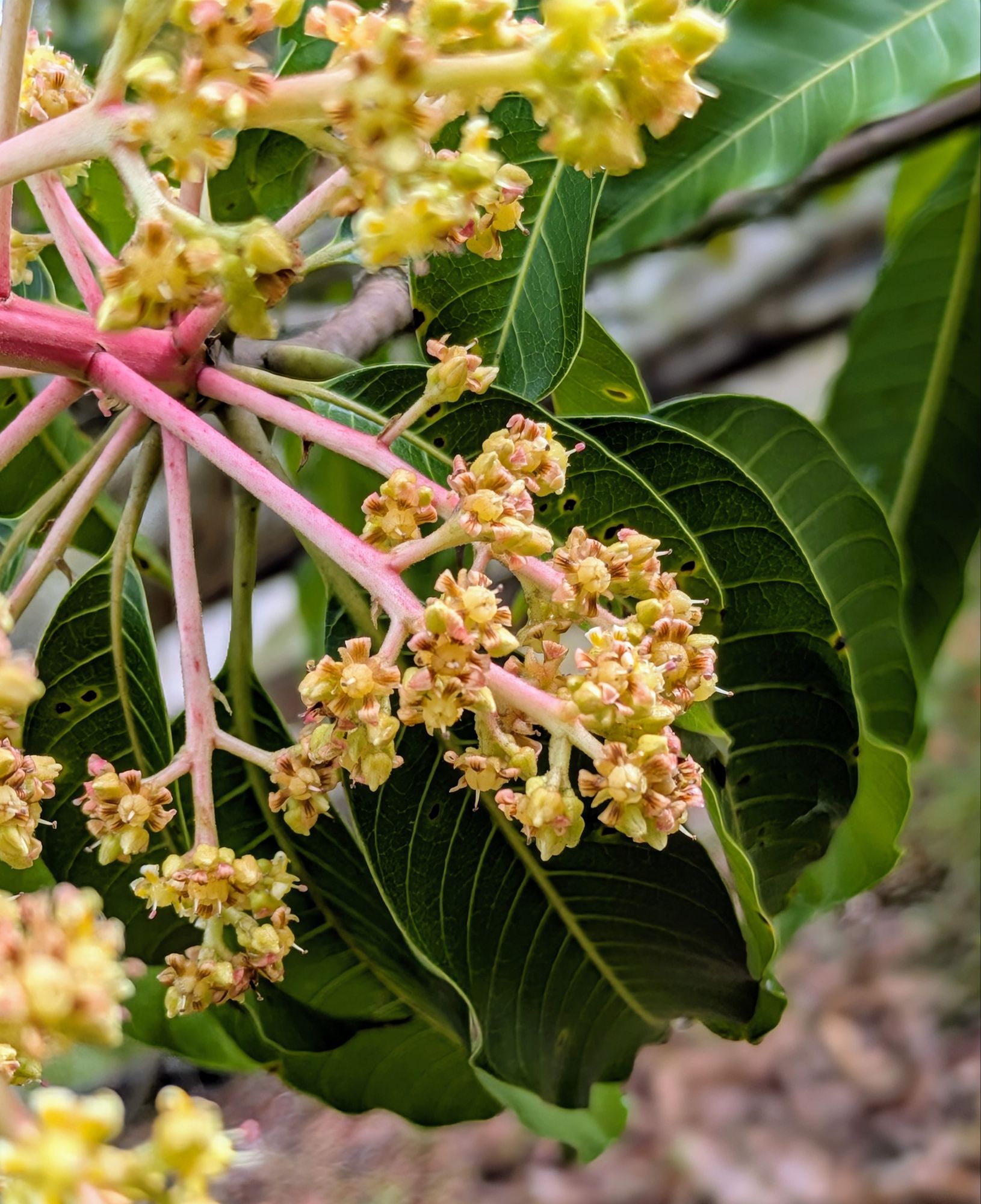
The Nam Doc Mai Mango had most of its interior leaves blown off.

Miss Alice Bougainvillea was blown off her support. She is reclining in the shrubbery and shall be righted soon. The support blew over with her – it’s hogwire that hooks over the brown post at the top of the wall.

Amazingly, within hours of the storm passing, the butterflies were back out. A little worse for wear, like us.

In a Vase on Monday – Swan Song

The pink flower in this vase is a Silver Urn Bromeliad (Aechmea fasciata). The tips go silver and the pale pink deepens to rose as the flowers fade. I like the coloration and have appreciated this flower for quite some time – it opened May 12th! I think I got my money’s worth. They never last very long in a vase, so this is its swan song.

Supporting players in this swan song.

In white, a few Tropical Gardenias (Tabernaemontana diviricata) are still in the garden; varigated foliage is Chicken Gizzard plant (Iresine herbstii). I am told the name originates from the tropical island these plants are from – they were eaten with chicken gizzards. Chartreuse foliage is from an incredibly prolific coleus.

The wispy accents are from another Caribbean tropical, Juba Bush (Iresine diffusa).

We are still dreaming of a fall cool down and thankfully were missed completely by Hurricane Helene.

To join in the IAVOM fun visit Cathy at this link RamblingintheGarden.

In a Vase on Monday – Sage Thoughts

If wisdom is being sought from my vase, it is time to look elsewhere. The sage here is Salvia, I noticed its wonderful sage herbal scent as I was cutting this bunch to fill a crystal pitcher. The crystal pitcher is a wedding gift. I would hazard a guess Tiffany’s would recommend its use to serve orange juice for Mimosas at a fancy brunch — not serving as a receptacle for a native bunch. The native wildflowers in my garden are flourishing from abundant rain in the past weeks. I picked all native wildflowers today.

Closer views:

Red and pink spikes are Tropical Red Salvia (Salvia coccinea) these reseed prolifically and are everywhere. Cutting the flowers saves me some seedling removal chores. The same goes for the white daisies, Bidens alba, incredibly prolific – the pollinators love them so much I almost hate to cut them.

The airy plant in the foreground is native Witchgrass (Dichantthelium spp). These are small grasses that pop up in the garden. They are reminiscent of Panicum. They are not too aggressive so I leave them be.

I’m dreaming of a cold front, realistically, we are a month out from that first delightfully cool day. One can dream. Pop over to Cathy’s blog to view some more vaseage…