In a Vase on Monday – Muhly & Juba Dance

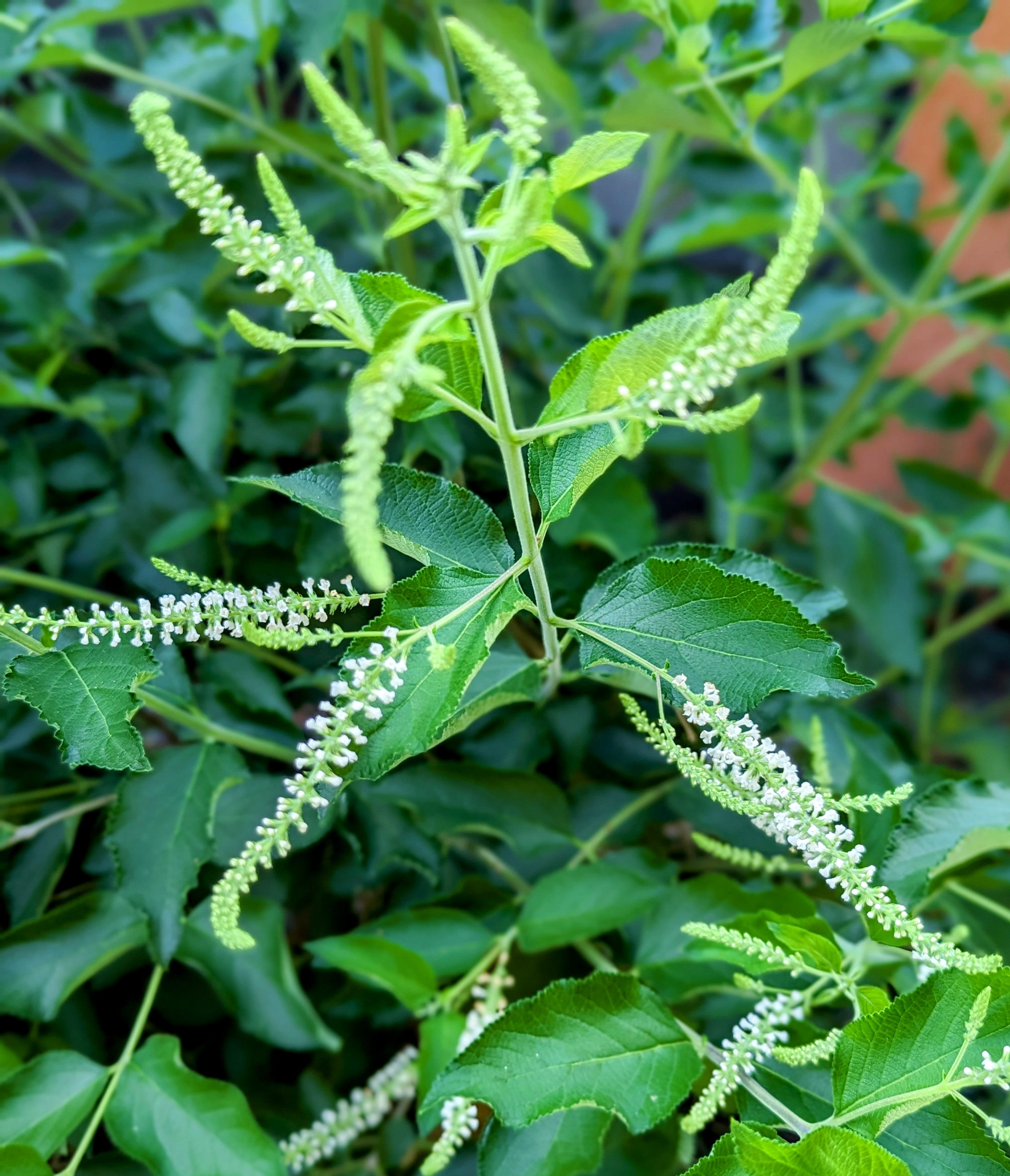
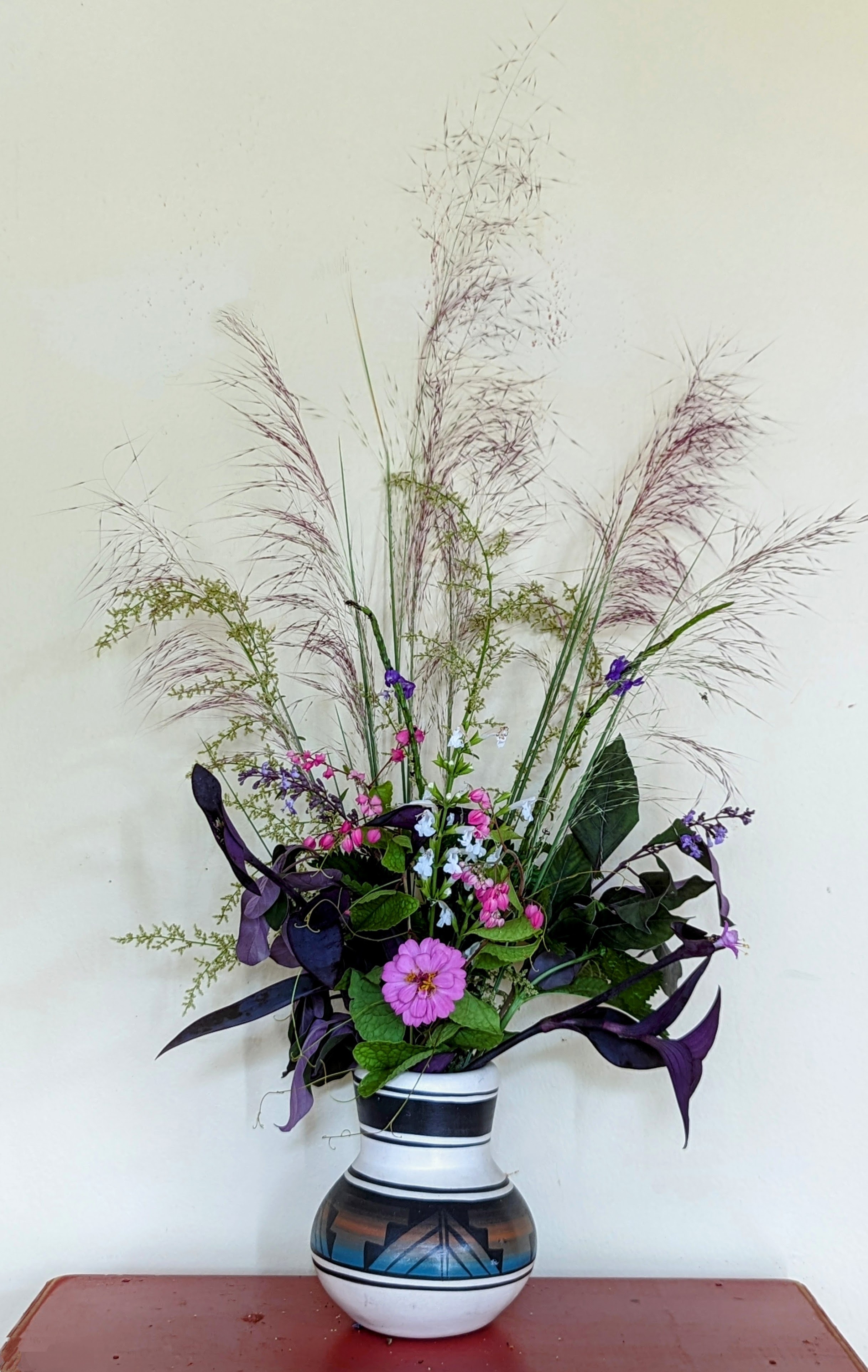
I love a little Muhly Grass (Muhlenbergia capillaris) in the fall. The mix of Juba Bush (Iresine diffusa) and Muhly swaying in the ocean breeze gives me gardening goosebumps. Our very rainy September gave all the wildflowers a boost and the garden is enjoying a late season extravaganza with very happy pollinators cruising the flowers. As these things go we are having a very dry October and now I am hoping for rain!

The Muhly and Juba:
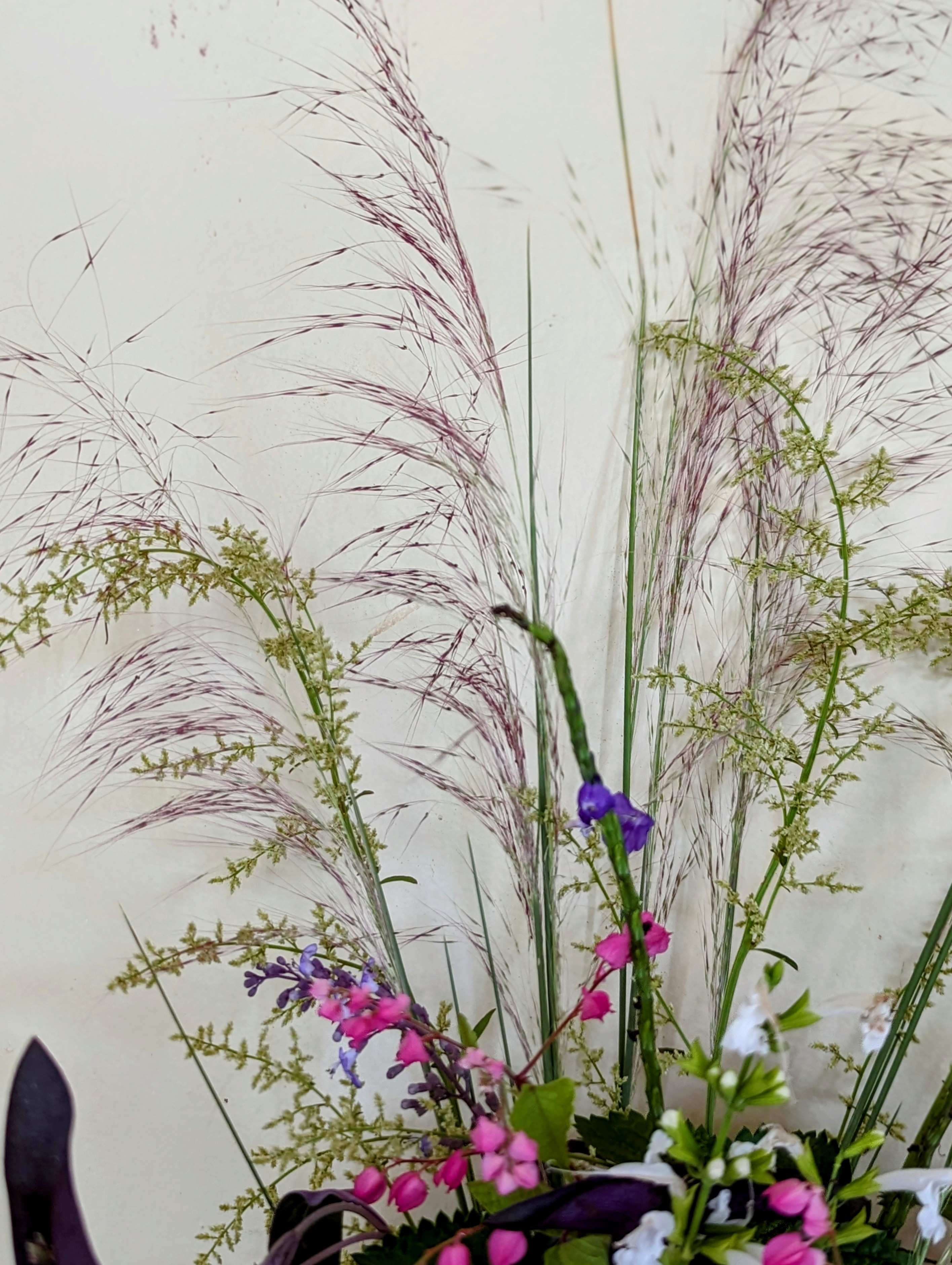
Muhly Grass is in pink in the background joined by off white Juba Bush. The word Juba is a dance move in the Caribbean that involves swaying hips. The Juba Bush is a native wildflower that appears and plants itself where happy. I have found it impossible to propagate, and am happy to find it when it decides to make an appearance. It is perennial and can grow 3 or 4 feet tall. I suppose birds are responsible for the Juba. Another gardening mystery to ponder. The Muhly has a similar modus operandi and I have some odd drifts in the garden.

Other flowers in the photo:

The deep blue flowers with coarse stems are Porterweed (Stachytarpheta jamaicaensis); the pale blue spikes with lavendar foliage are Vitex trifolia, some call this California Lilac. It is remarkably hardy. Darker purple foliage is Purple Queen (Transcandentia pallida) another great indestructible.

The lower level:
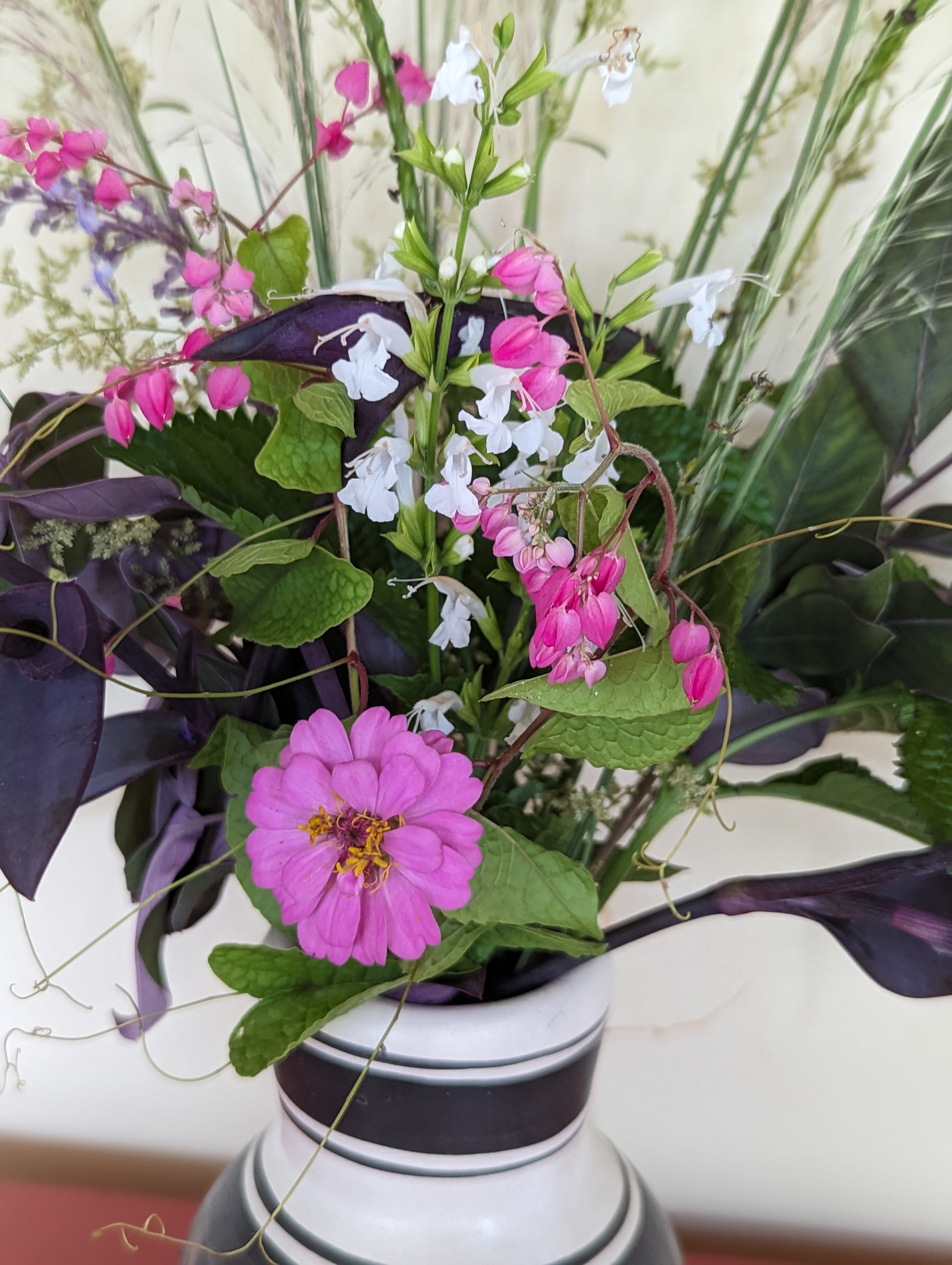
The lower levels in this vase are the wallflowers, the kind that don’t dance. Front and center is the last Purple Prince Zinnia of the season; viney pink flowers are from the Coral Love Vine (Antigonon leptopus); white spikes are Tropical Red Salvia (Salvia coccinea). The vase is a family heirloom made by the Ute Indian tribe.

I am hoping to dance a lot of weeds out of the garden this week. The rains provided nourishment for a tangle of Muscandines and Inch Plants. I am not sure we have ever had as much rain in late summer and was surprised by the volume of unwelcome growth in the garden. I have determined Muscandines are offensive!

Thanks to Cathy for hosting, visit her at ramblinginthegarden.wordpress.com to visit other gardens via vase.

Happy Gardening!!

Six on Saturday – New for Fall

The Fall Equinox has provided us with some blessed relief from the heat and humidity. A high of 83 degrees F (28 C) is very meaningful. My Saturday morning garden tour found some new things in the garden.

To see more SOS Equinox garden tours visit Jim at http://gardenruminiation.co.uk

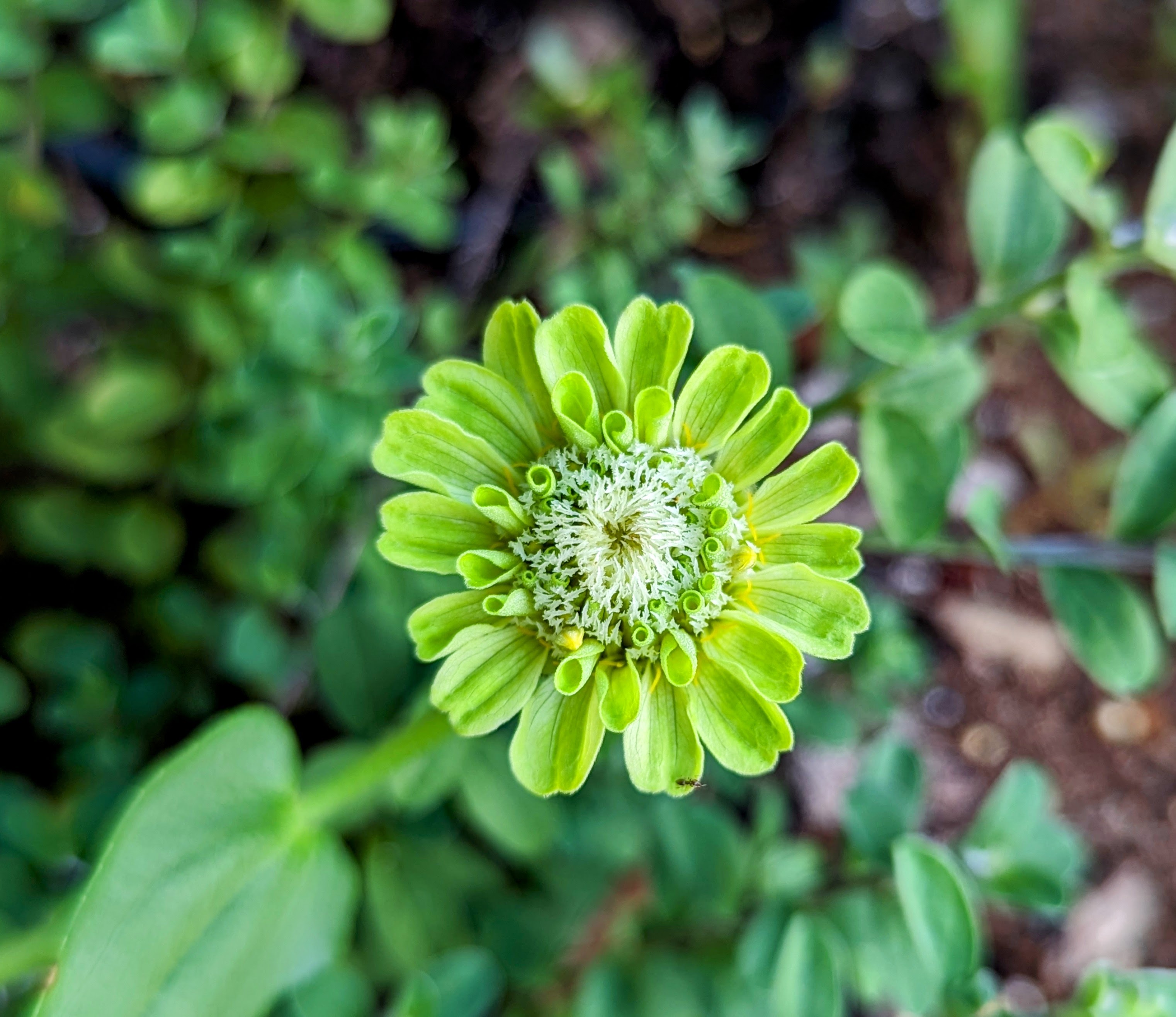
After seemingly waiting for a few months, I was finally rewarded with a decent Envy Zinnia.

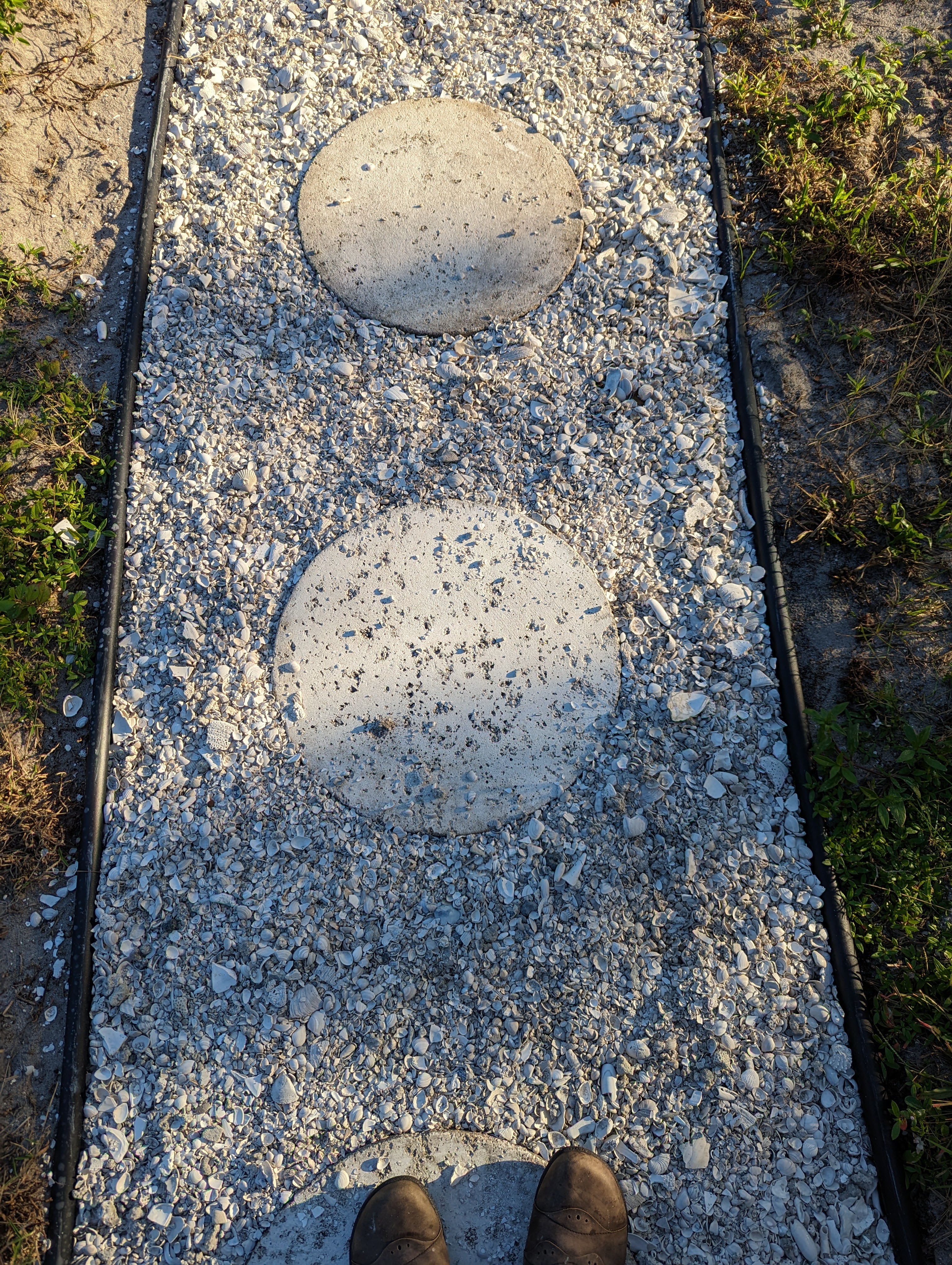
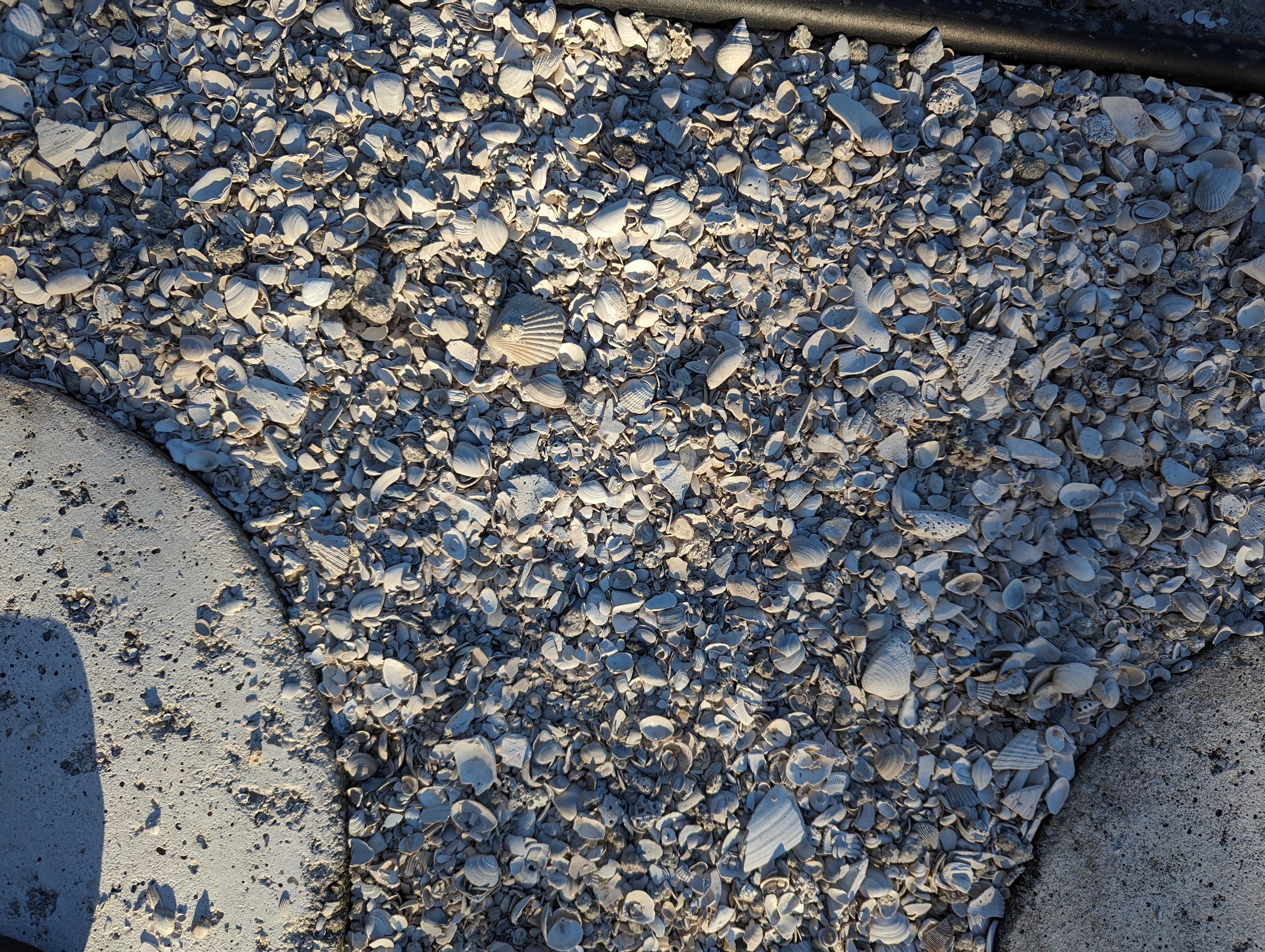
I like to use locally sourced materials in my garden, we added a new shell and salt finished stepping stone walkway and repaired our slightly washed out shell driveway this week. A closer view below:

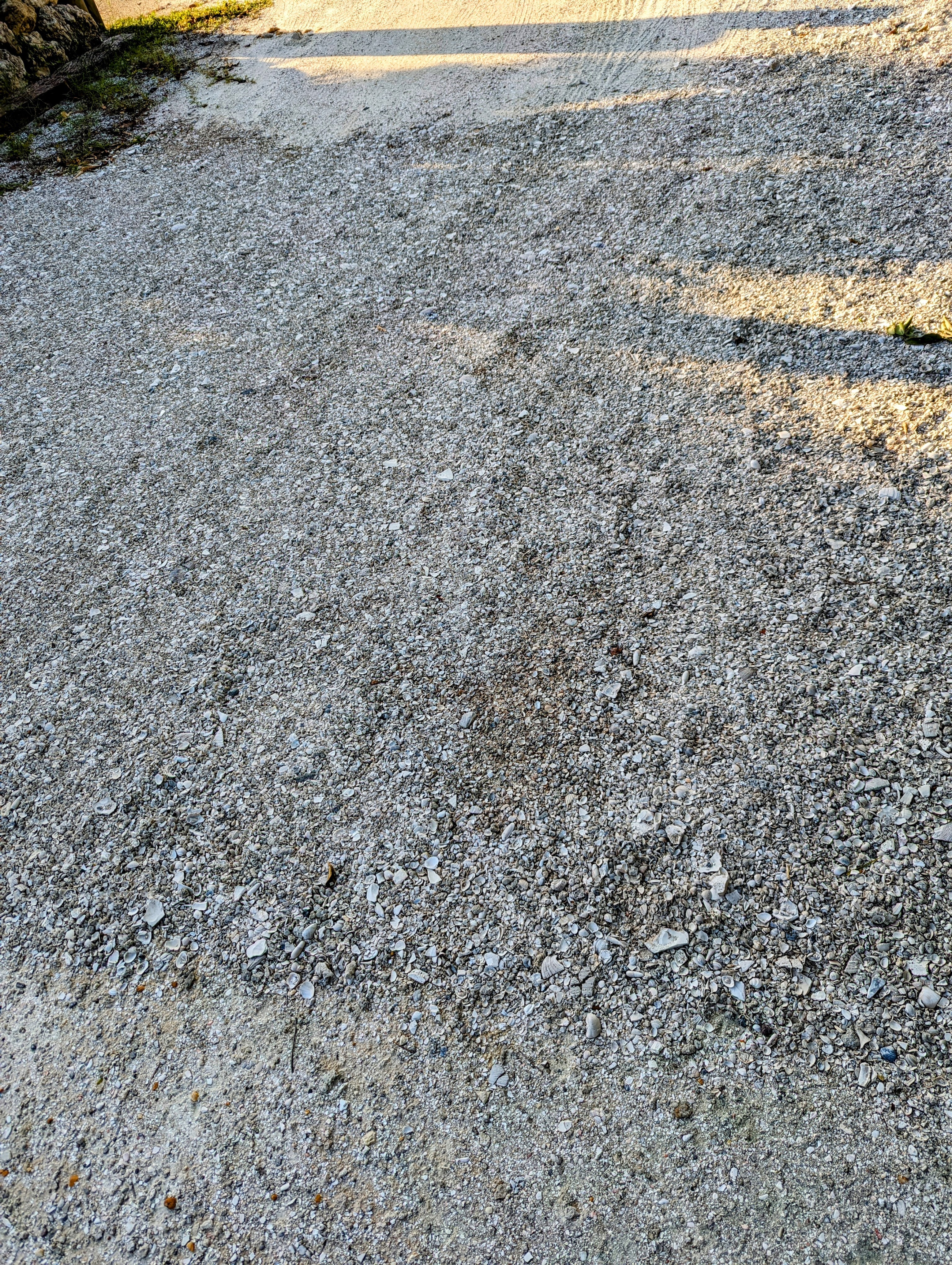
The driveway repair. I had the shell drive put in about 10 years ago. As it is used the shells get squashed into sand and begin to wash away, leaving me chasing my driveway down the street. The size of the new shells breaks up the force of the rain water keeping the shells in place. These break up and smooth into a more even surface as the driveway is used.

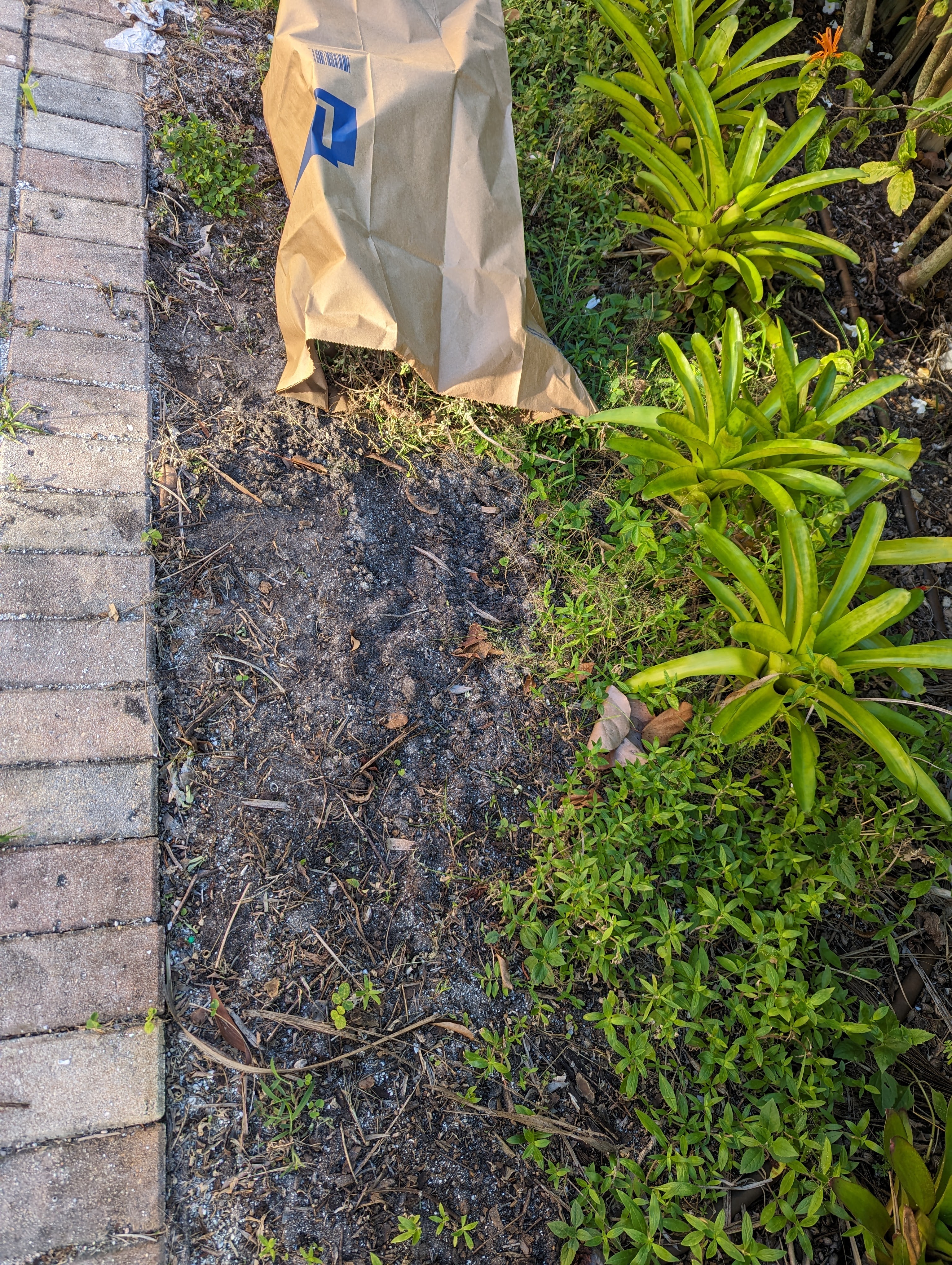
Much to my delight, I found I still had an active wholesale account with a grower! So I went a little crazy. This bed is prepped for the addition of New Gold Lantana and Ice Plant.

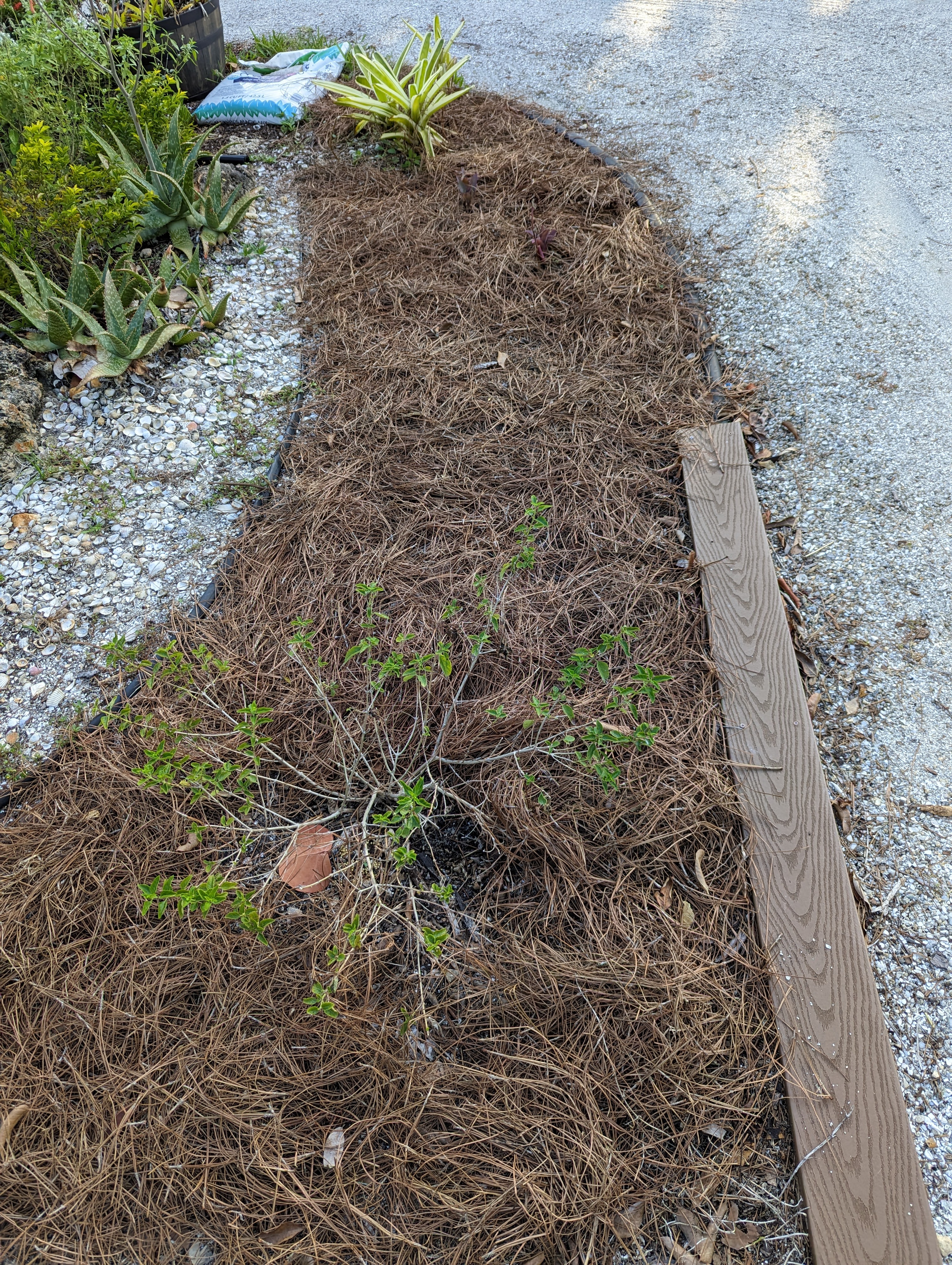
Another driveway erosion correction under construction. I found some Zone 10 recommended Dwarf Lirope called Samantha on the growers website. I will be installing the new plants as soon as possible as these arrive bare root. This paver parking pad has a small concrete edging holding it in place and needs some additional support from a planting to keep it stable. As you can see summer weeds are awful in Florida.

That’s all from South Florida. I will be pulling weeds in anticipation of new plants.

Happy Gardening!!
Funky Florida Flora – Bossa Nova Bromeliad

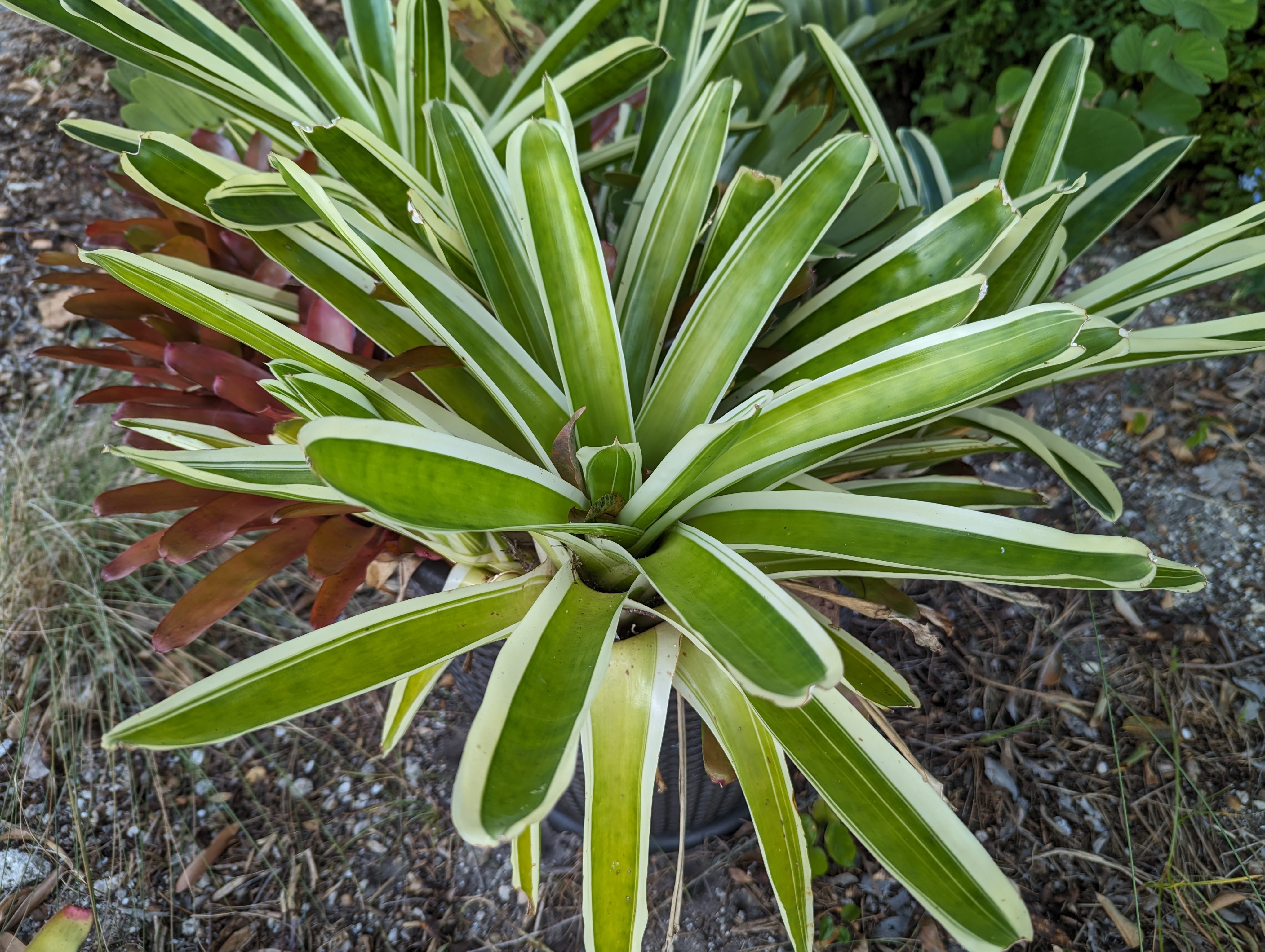
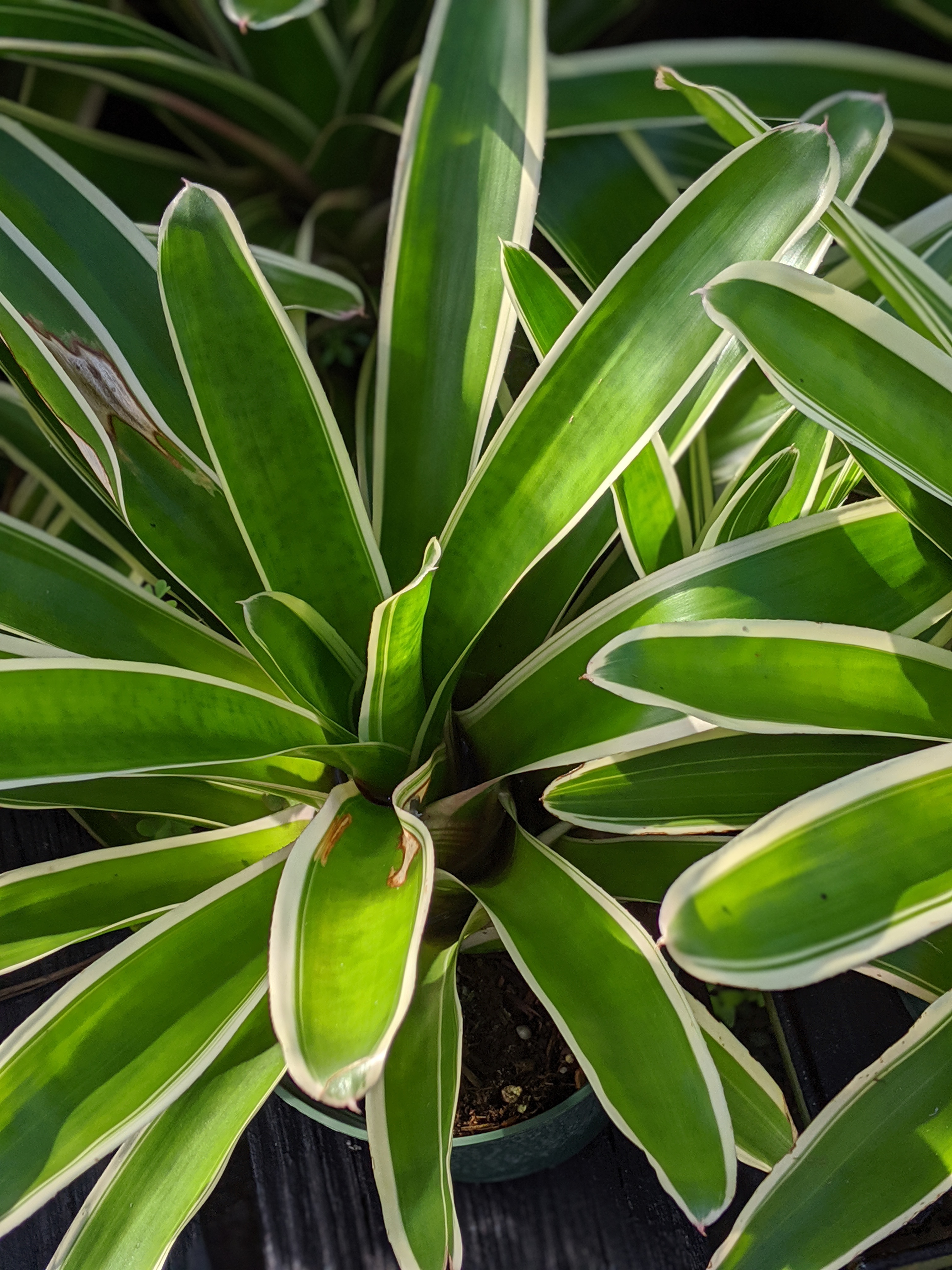
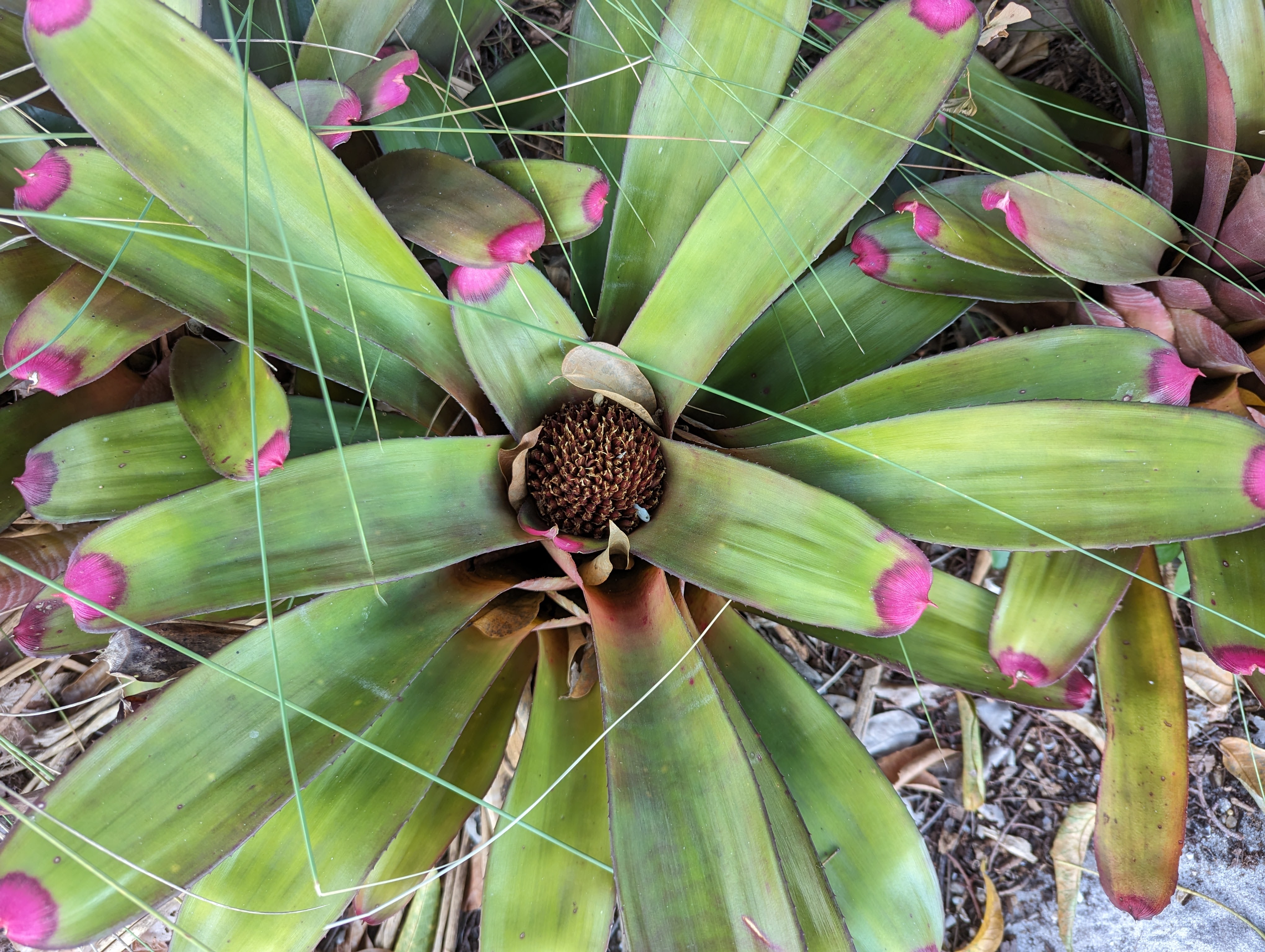
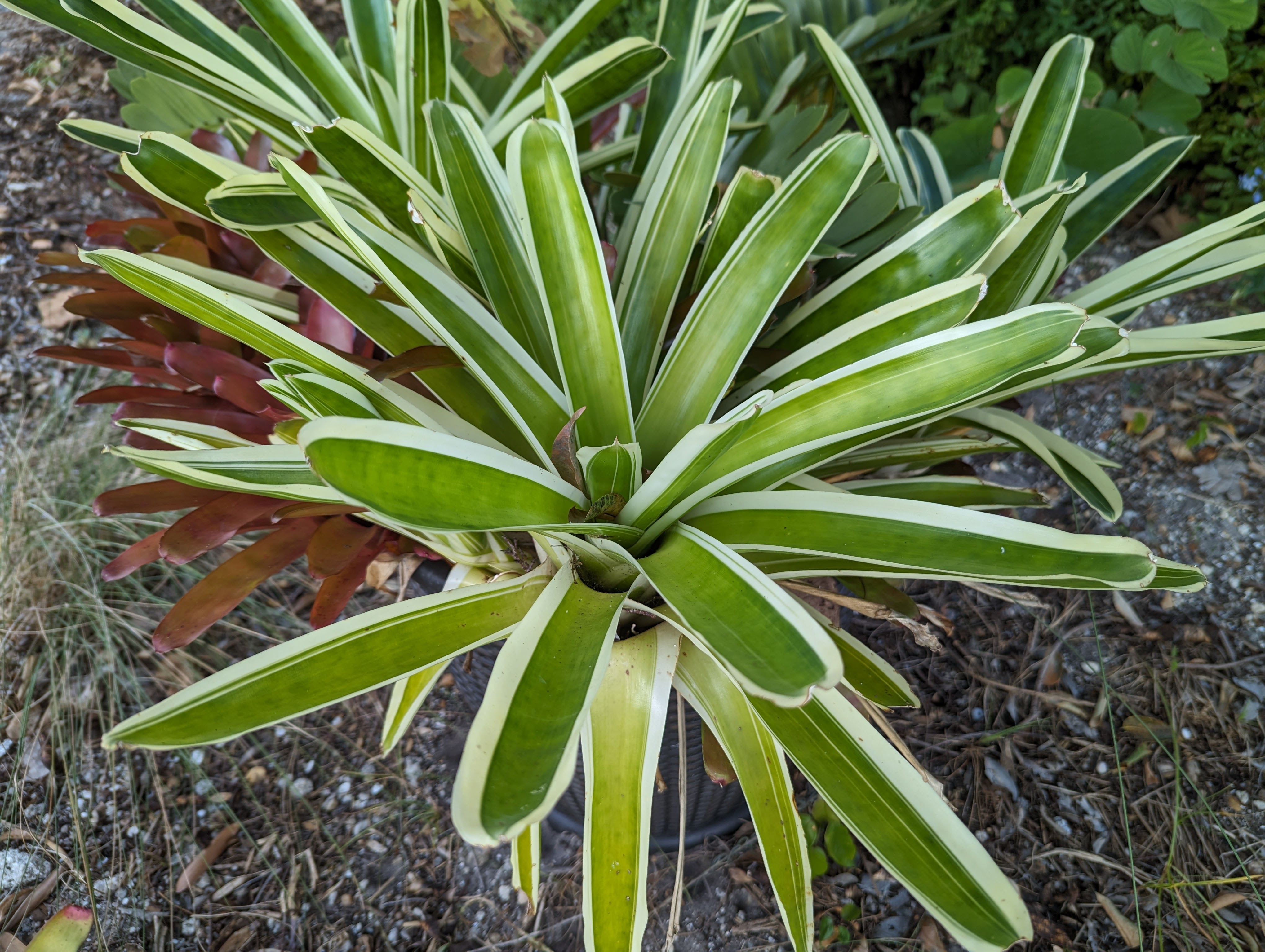
Meet “Bossa Nova” Bromeliad. Bossa nova means new music in Portuguese and is a style of music that originated in Brazil in the late 1950s, a mixture of jazz and samba. “The Girl from Ipanema” is probably the most famous bossa nova tune, and a prodigious ear worm producer.

True Brazilians, these plants were brought to America from Brazil in 1988. This one does make me dance, just a little. It will grow in a full sun southern exposure in an area with great amounts of reflected light and no irrigation, a bit of a miracle in my world. I had not realized until last year these would grow in full sun, they had been sulking for a few years in full shade and were moved into the light during the proper season – fast approaching, November through March is bromeliad relocation time!

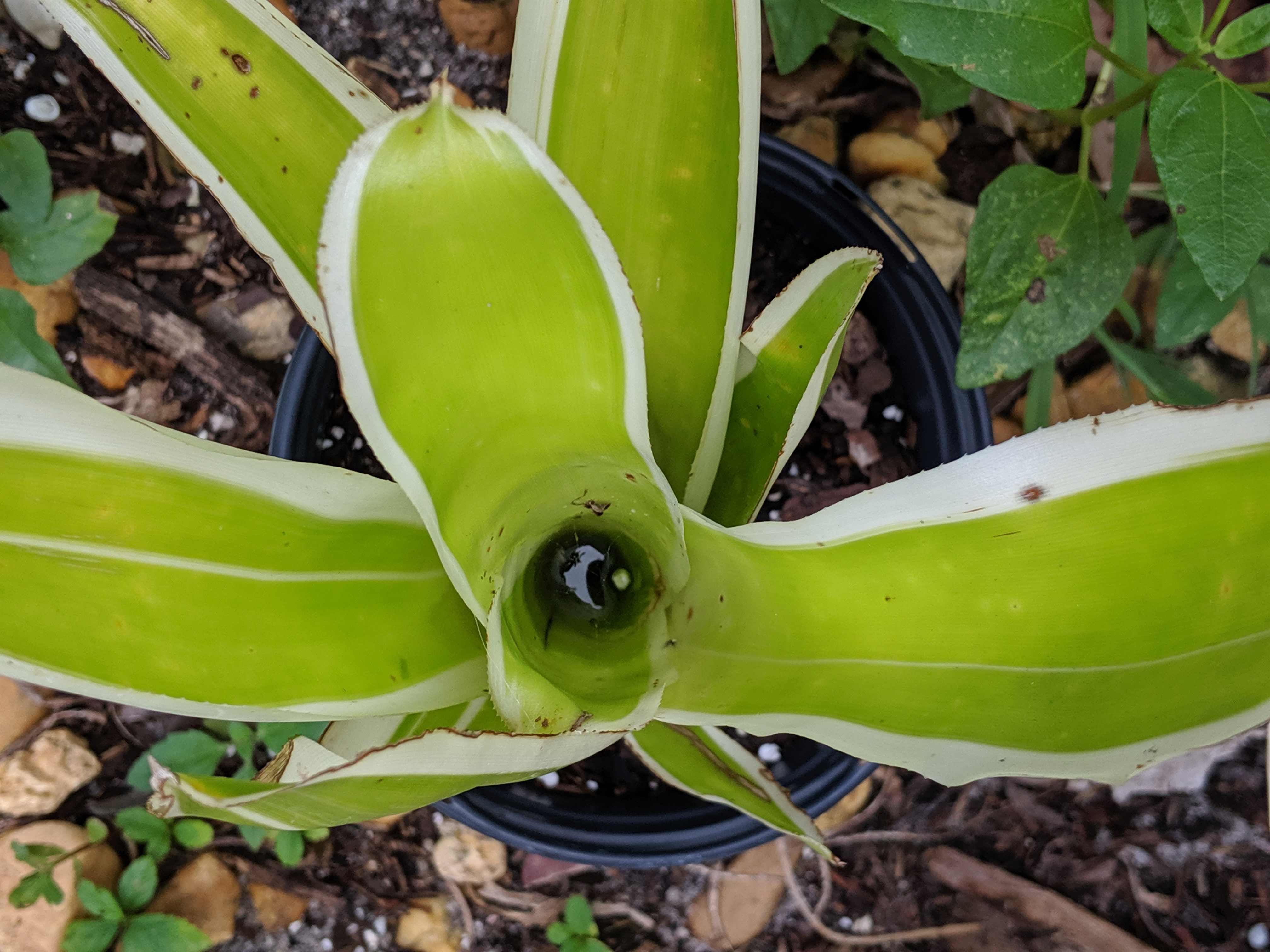
Botanically speaking these are Neoregelia “Bossa Nova”. A stoloniferous groundcover, they reach 12-18″ height and 24″ spread. Neoregelia bromeliads typically flower inside the cup and are planted for their foliage as the flowers are not particularly showy. It is reported to turn red around the cup before flowering. I have not noted this in my garden. Maybe this winter I will see some red coloration.

Sulking in the shade below:

Much happier in a sunnier place:

More funkiness to come! Happy Friday!

Six on Saturday – September Stars.

I took my Saturday morning stroll around the garden and picked some stars. After a remarkably wet summer, the rain spigot has been cut off. Boom, no more water from the sky. I hand watered a little, but it is not my favorite thing to do in hot weather. So, may I present the survivors who are thriving.

For a world wide SOS garden tour, visit Jim at http://gardenruminations.co.uk

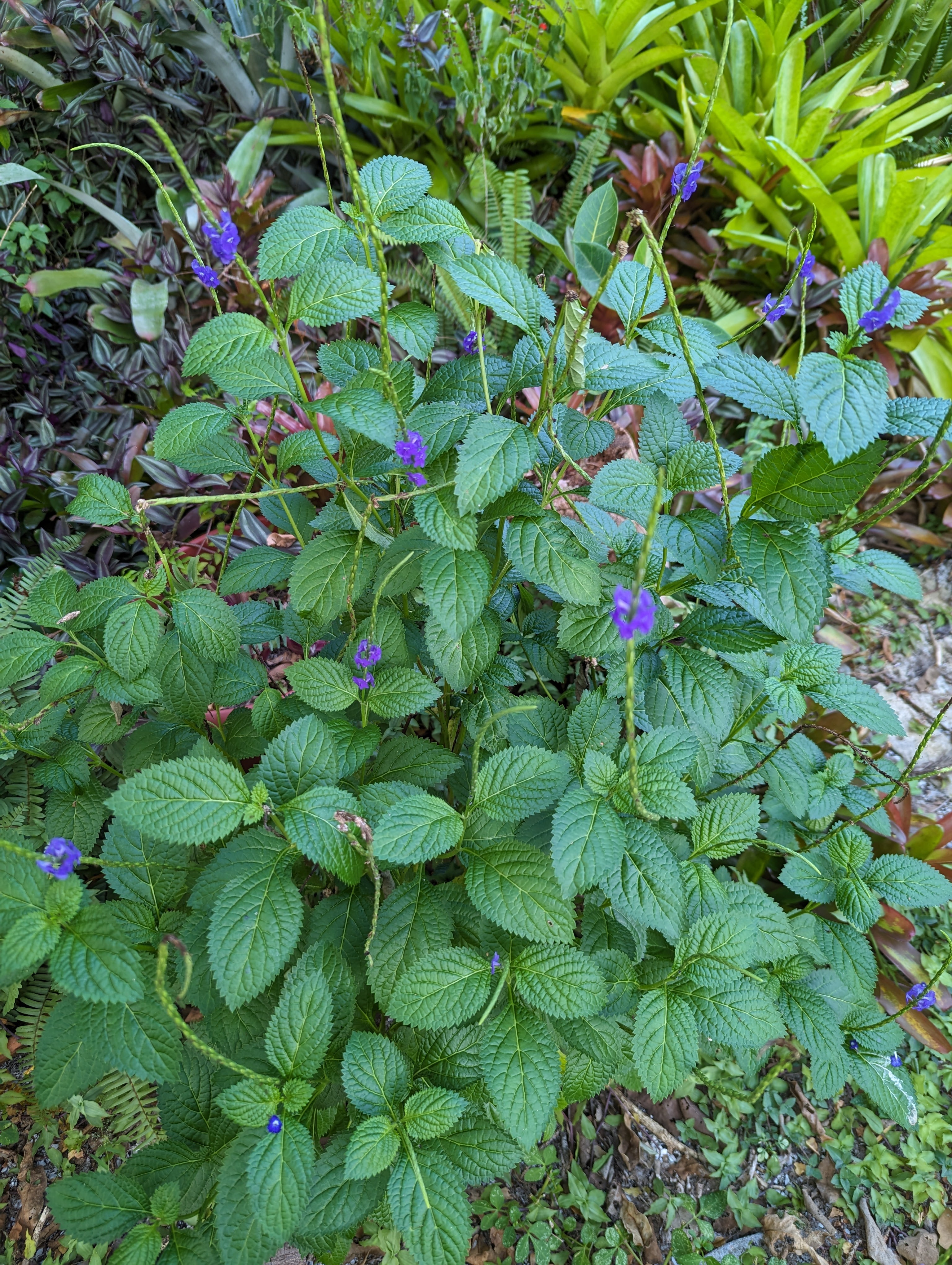
Blue Porterweed (Stachytarpeta jamaicensis). This one is living in a shell walkway and I forgot about watering this area. Amazing.

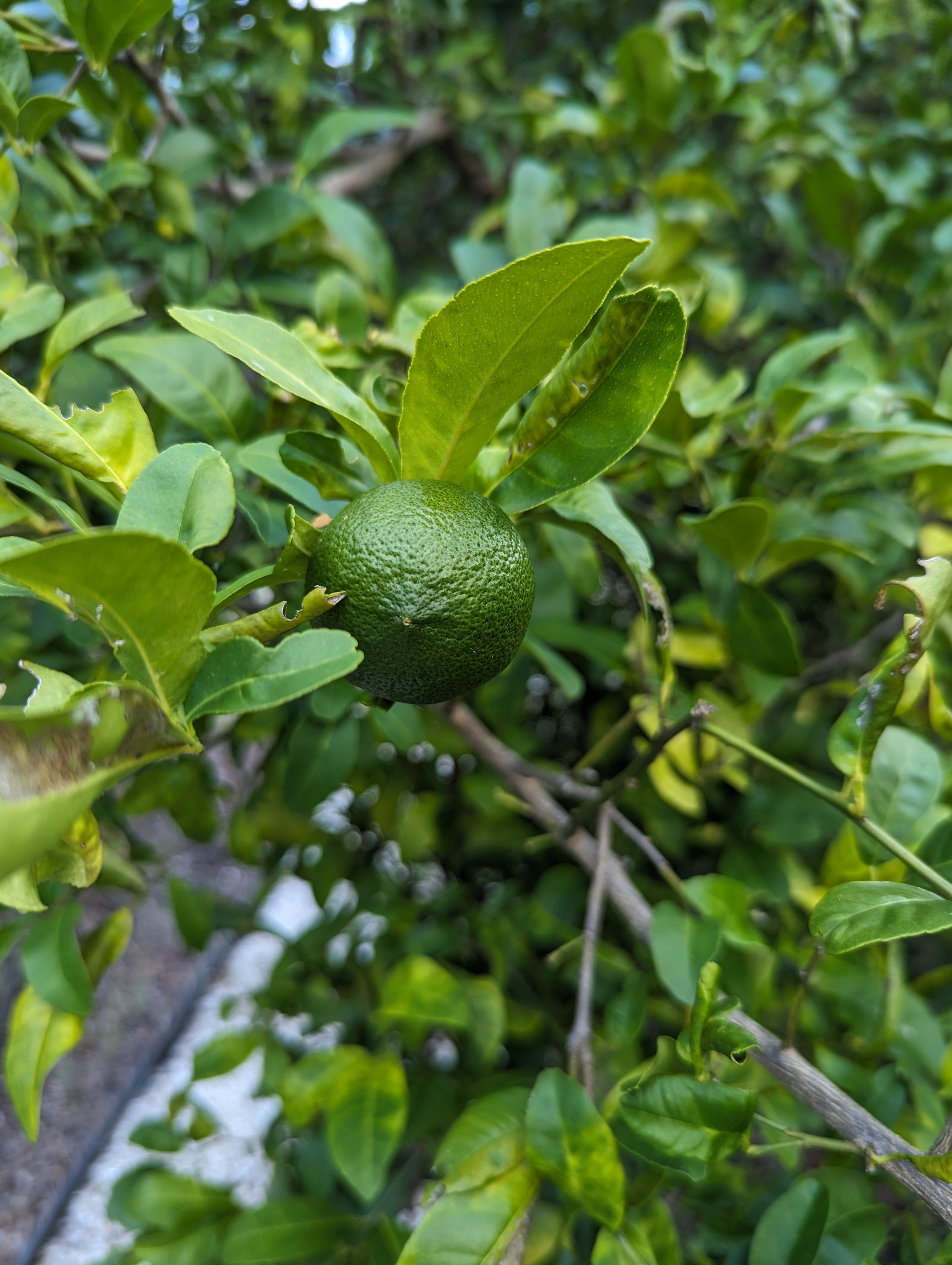
Rangpur limes are still hanging in there. All two of them.

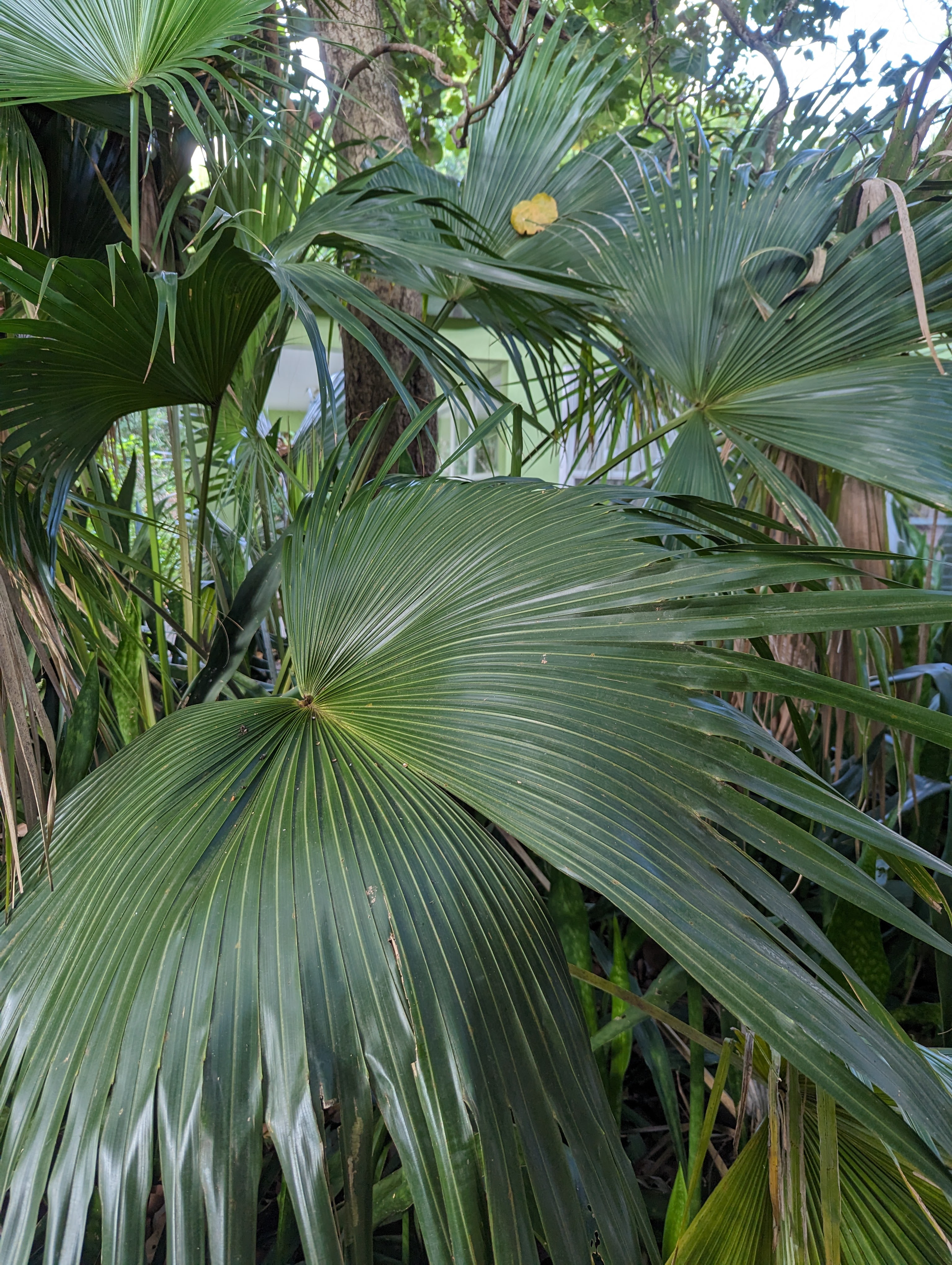
Providing a super tropical vibe is a seedling of a Chinese Fan Palm (Livingstonia chinensis). This seedling is about 8 feet tall. This is 10 or 15 years old. One thing I have learned about palms since living in Florida, they are slow growing for the most part.

The bromeliads, of course, are thriving, water or not. This is a Painted Fingernail Neoregelia coming into flower.

‘Bossa Nova’ Neoregelia putting out pups in a big pot. The mother plant is fading and will likely pass on over the winter.

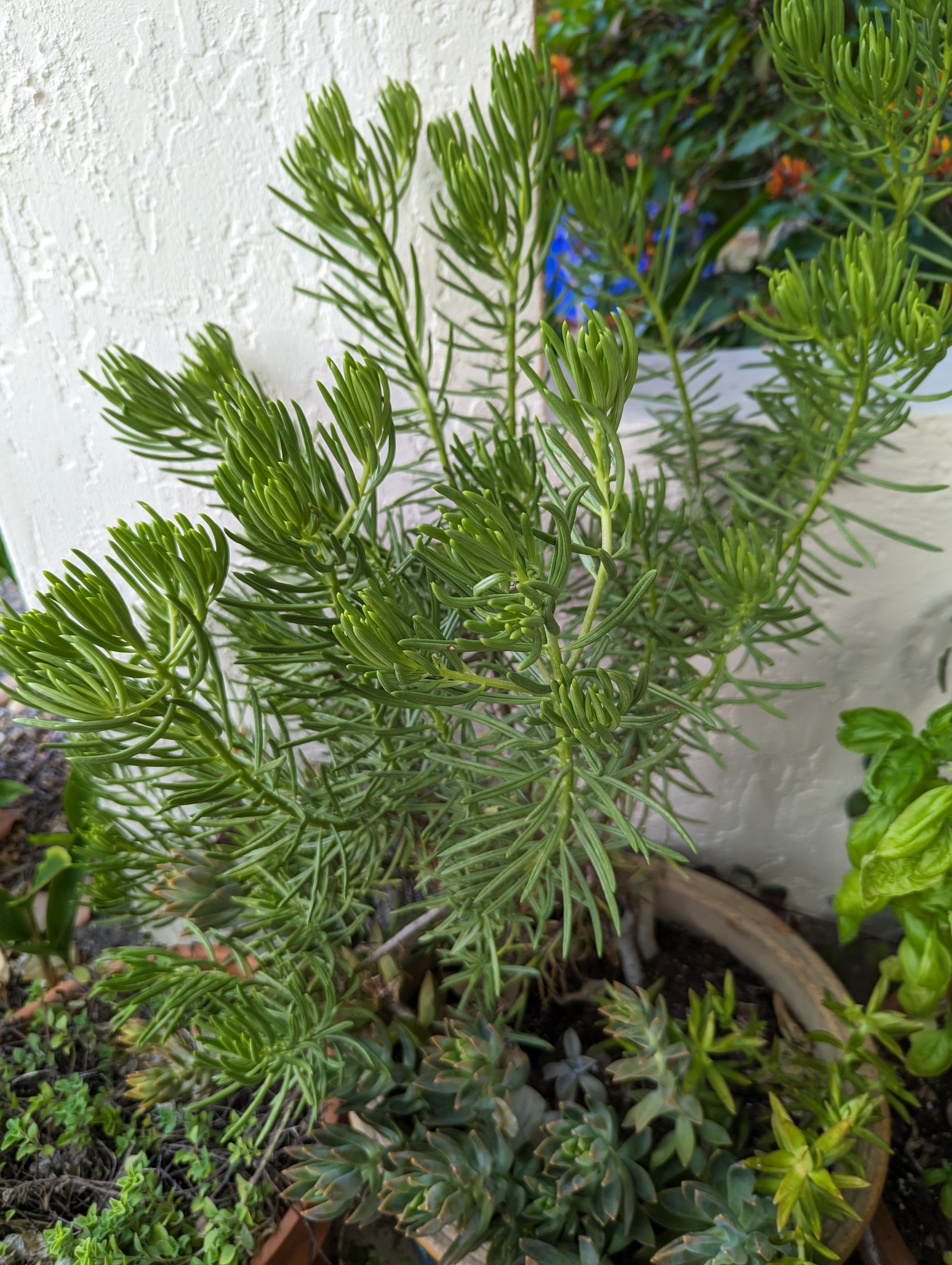
Several people asked about the Senecio last week. This is the mother plant, about 30 inches tall. These produce yellow aster-like flowers.

That’s all from South Florida this Saturday. Hoping for a little rain and no cyclones!

Happy Gardening!!
Six on Saturday – Autumnal Color Pops

The Saturday morning greyhound tour featured a refreshing breeze from the ocean. Visions of cooler weather danced in my head. The fall flowers are coming into season. In South Florida a gardener has to seek fall color and use their imagination.

To tour more SOS gardens, visit Jim at gardenruminations.co.uk

Lemon Blanchetiana Bromeliad (Aechmea blanchetiana) flowers are not something one normally associates with fall color. In my garden they are. Standing about four feet tall and flowering for months starting in late summer with toasty orange and rusty colors, it is a bold statement.

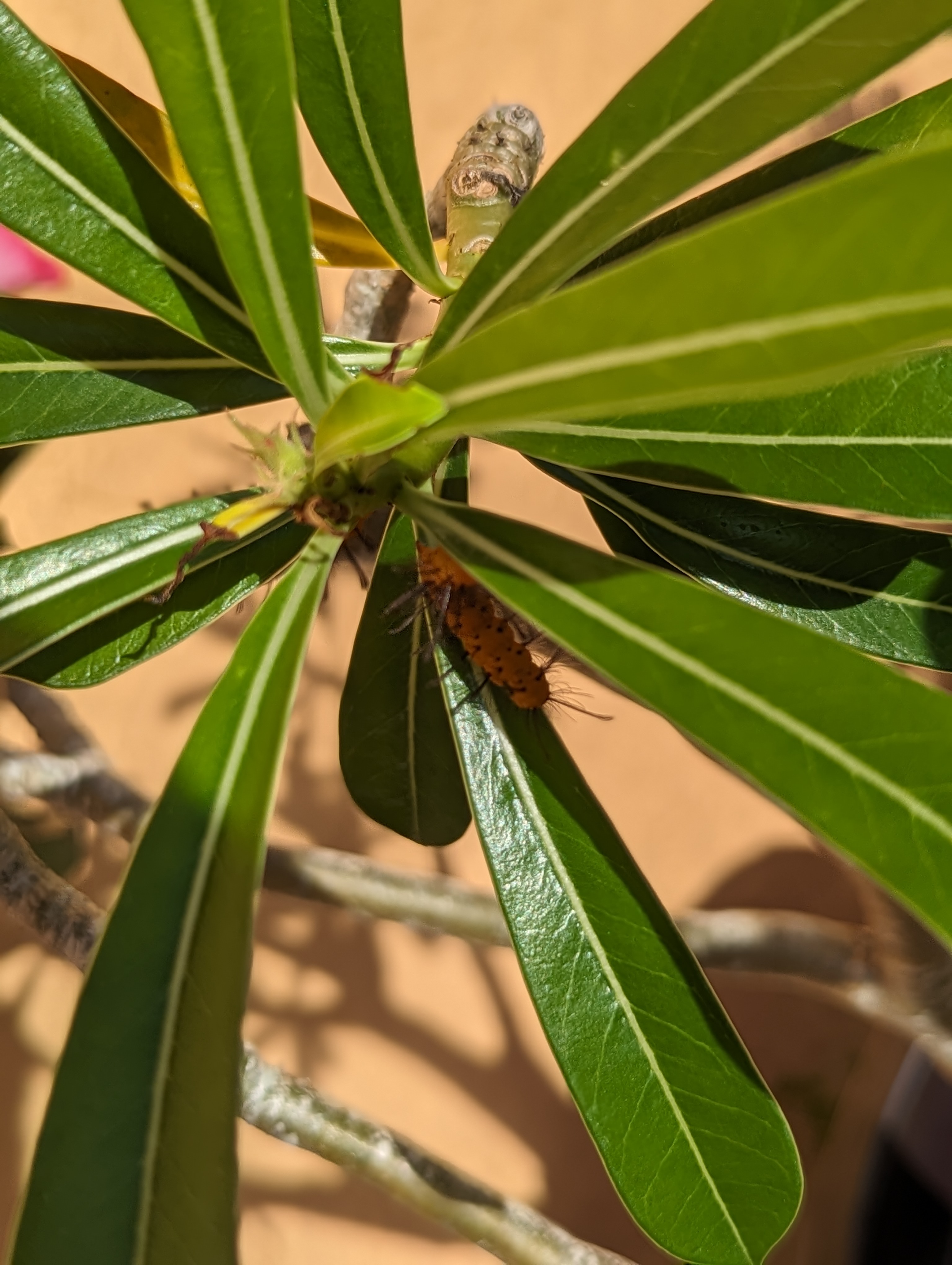
I had just been thinking about how marvelous the Desert Rose (Adenium obesum) looks…when I noticed the evil oleander caterpillar lurking in the foliage. This time of year they show up and eat all the foliage. I may throw them off, or not, they make an interesting black polka dotted moth.

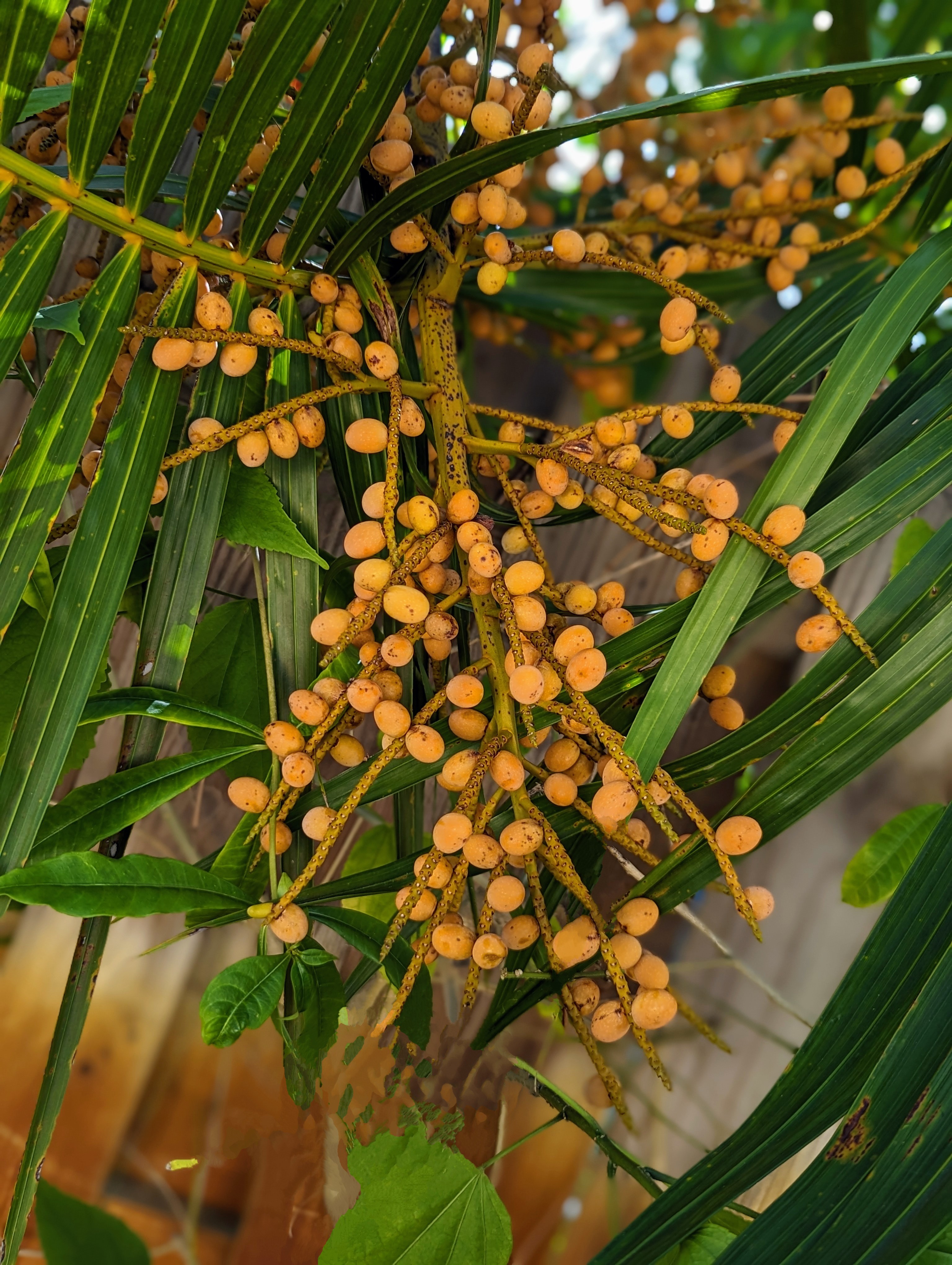
Fruit hanging over the fence from my neighbor’s Areca Palm (Dypsis lutescens). To me, Arecas are the trash plant of South Florida. Overused and jam packed as screening plants, they often develop fungus problems and die en masse. Not pretty, though I like the fruit.

The old reliable. A sunny South Florida native, the Beach Sunflower (Heliathus debilis). These smile through everything.

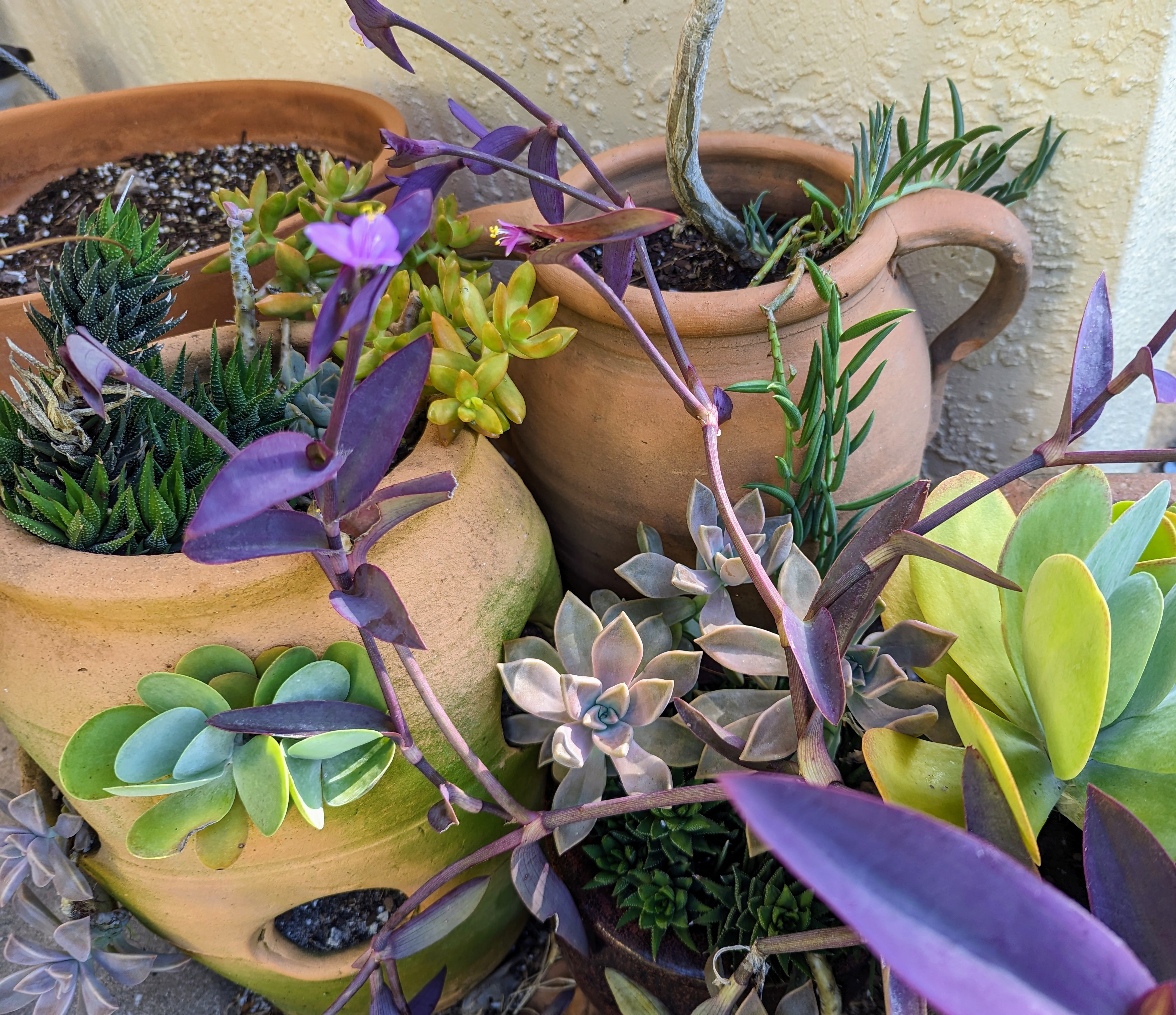
I have been enjoying the color mix of the succulent containers. Gardeners around here gift succulent cuttings, I don’t think I bought any of these. To the best of my knowledge, I have Flapjack Kalanchoes, grey Graptosedums, Green Haworthia, Jelly Bean Sedum, and Fish hook Senecio. I let the Purple Queen ramble through for a shot of color.

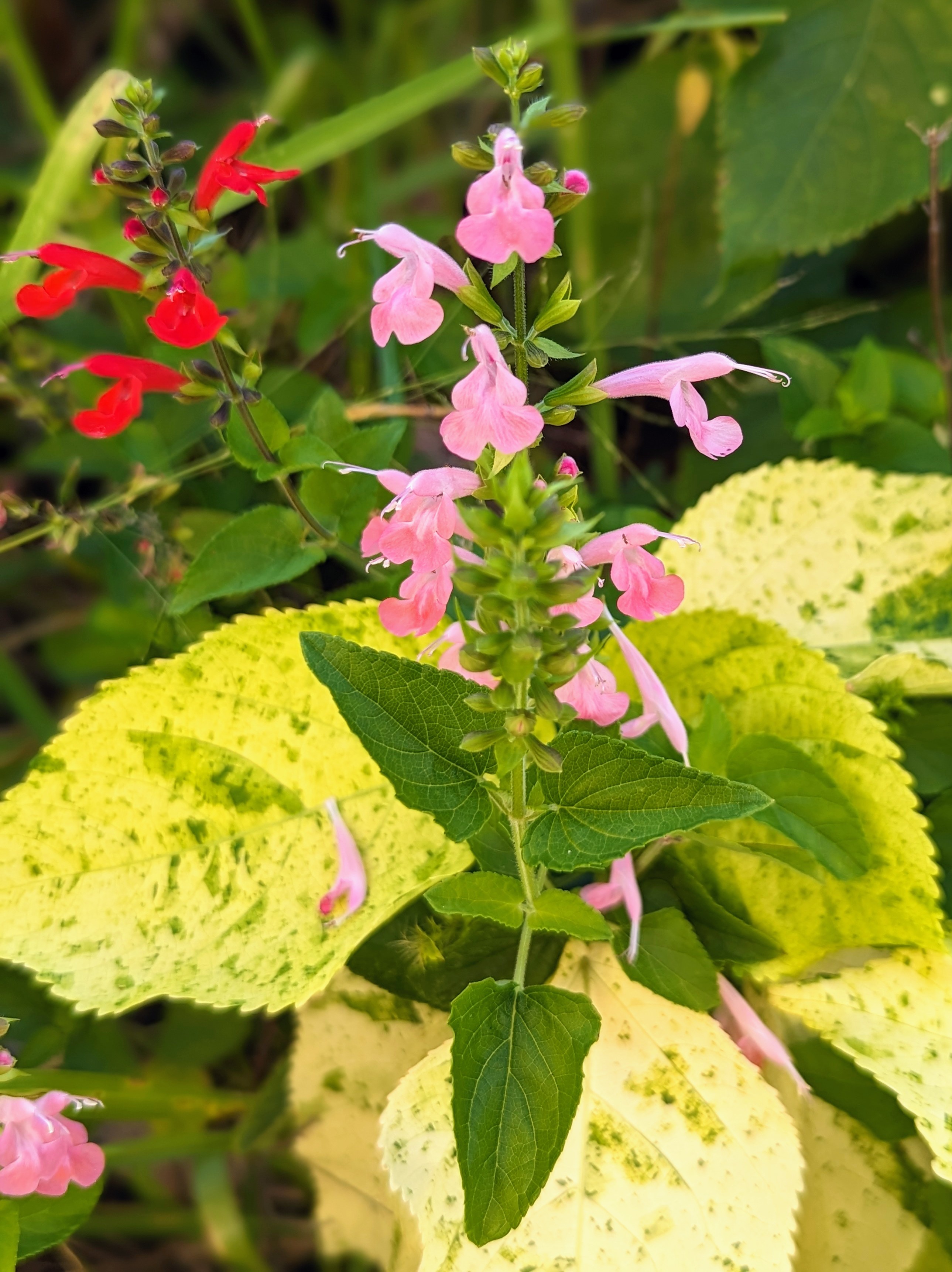
The intrepid Tropical Red Salvia (Salvia coccinea) in pink and red, peering through ‘Java White’ Copperleaf (Acalypha wilkesiana ‘Java White’)

That’s it for this Saturday. I will be seeking cool breezes and fall color a while longer.

In a Vase on Monday – Gee, Gardenias

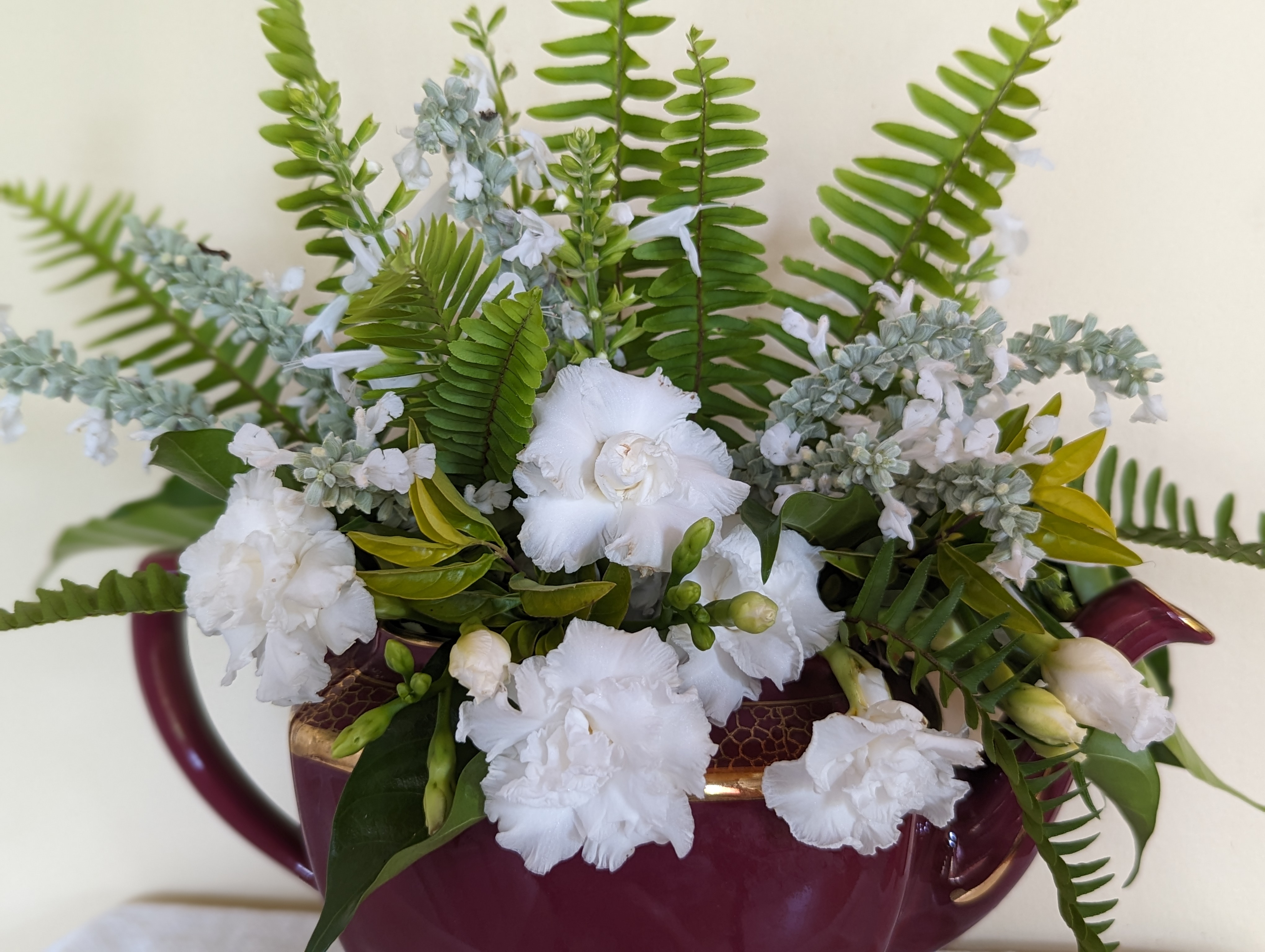
The Tropical Gardenias (Tabernaemontana diviricata) have been flowering madly. I have been waiting for an opportunity to cut them for a vase. The shrub is over ten feet tall, so blooms have to be on the low side. Several flowers were within reach on Sunday morning and I cut all of them.

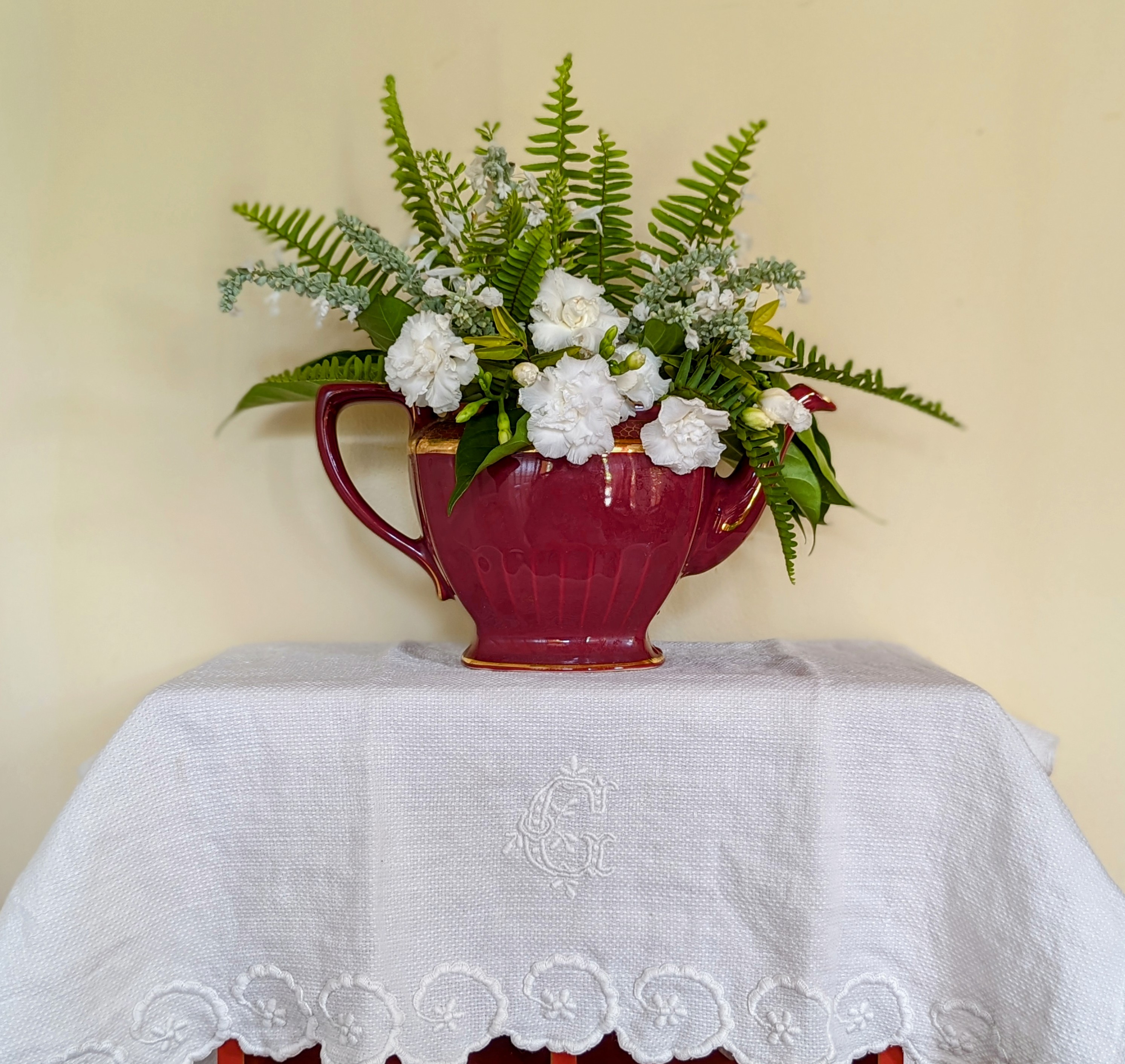
Last week, Susie’s heirloom teapot vase made me remember mine inspiring its use as a vase. This teapot was a wedding gift my parents received in 1950. It was used to brew iced tea as long as I can remember – the interior of the pot is stained tea colored. The white tea towel was unearthed in an old friend’s grandmother’s house. The grandmother was in her 90’s in the 1980’s and the towel belonged to her mother – who knows how old it is. I was gifted the towel as it matched my monogram. They certainly don’t make things like this anymore. The G.

The Tropical Gardenias are joined by two types of Salvia, ‘White Flame’ and Tropical Red; foliage is Asian Sword Ferns and a few sprigs of Golden Dewdrop (Duranta repens).

Happy Monday!! I’ll be sniffing my foyer enjoying the fragrance of Gardenias..

Thanks to Cathy at http://ramblinginthegarden.wordpress.com for hosting. Follow the link to see more vases.

In a Vase on Monday – Simple Summer S’s

I have been enjoying my “S” plants this summer. I noticed how big the Salvia flowers have grown with all the rain as I walking the dog this morning. The resiliency of plants continually amazes me, last summer it was very dry – I had the same flowers, they were just half the size.

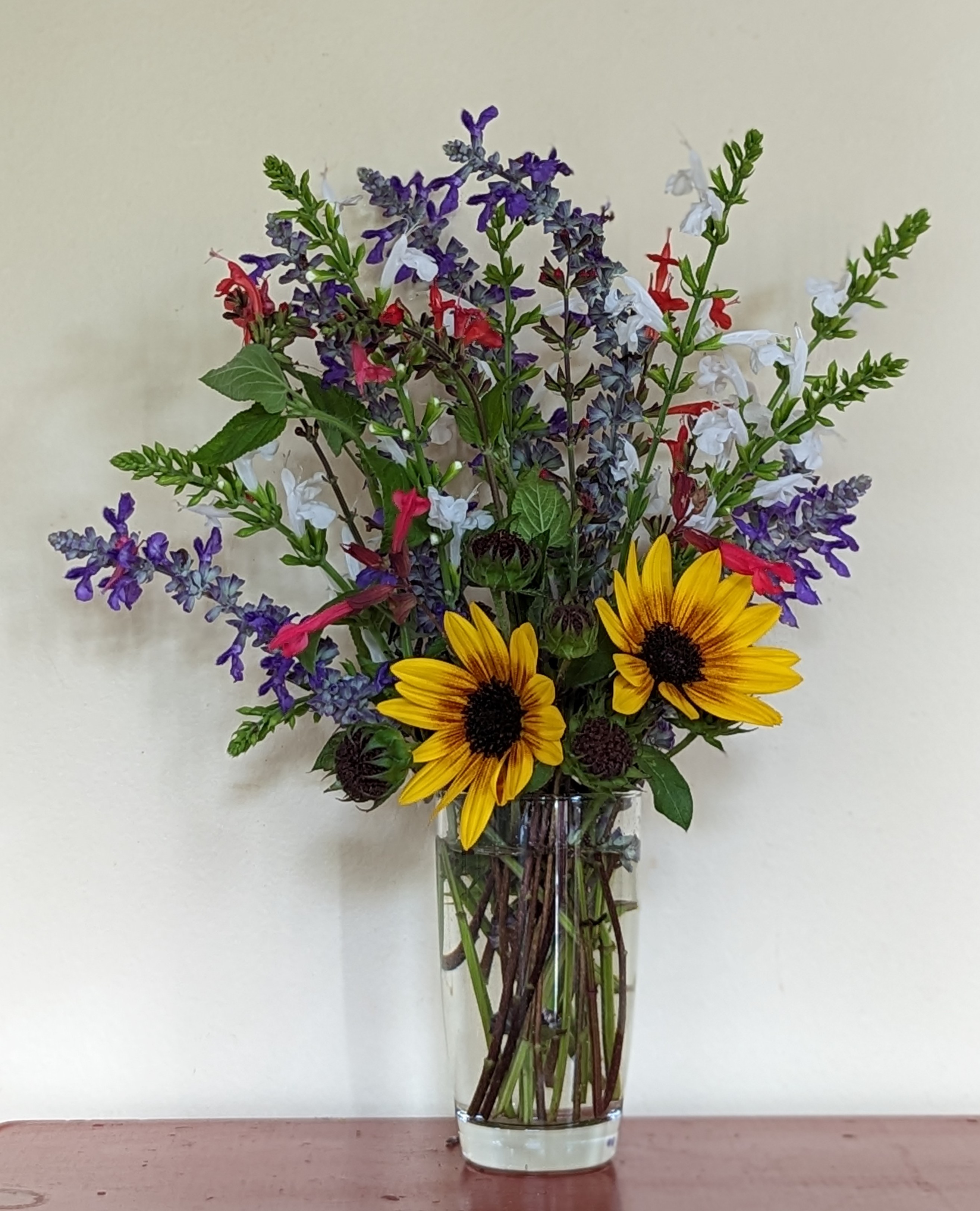
The Brown Eyed Girl Sunflowers are still blooming and have been since February. They are in a container in the sunniest part of the garden; seemingly not enjoying quite that much sun. They have grown over the side of the container into a shrub to get out the heat. The container features stems underplanted with groundcover bromeliads, a bit odd at this point, but I hate to disturb anything in July. Even the Lantana is taking a rest from flowering.

The vase reflects my simple scheme. The glass I drank my orange juice from was sitting on the counter when I came in with the flowers. It was rinsed and repurposed. I figured the flowers might enjoy a little OJ. I think this qualifies as a plonk.

Close ups:

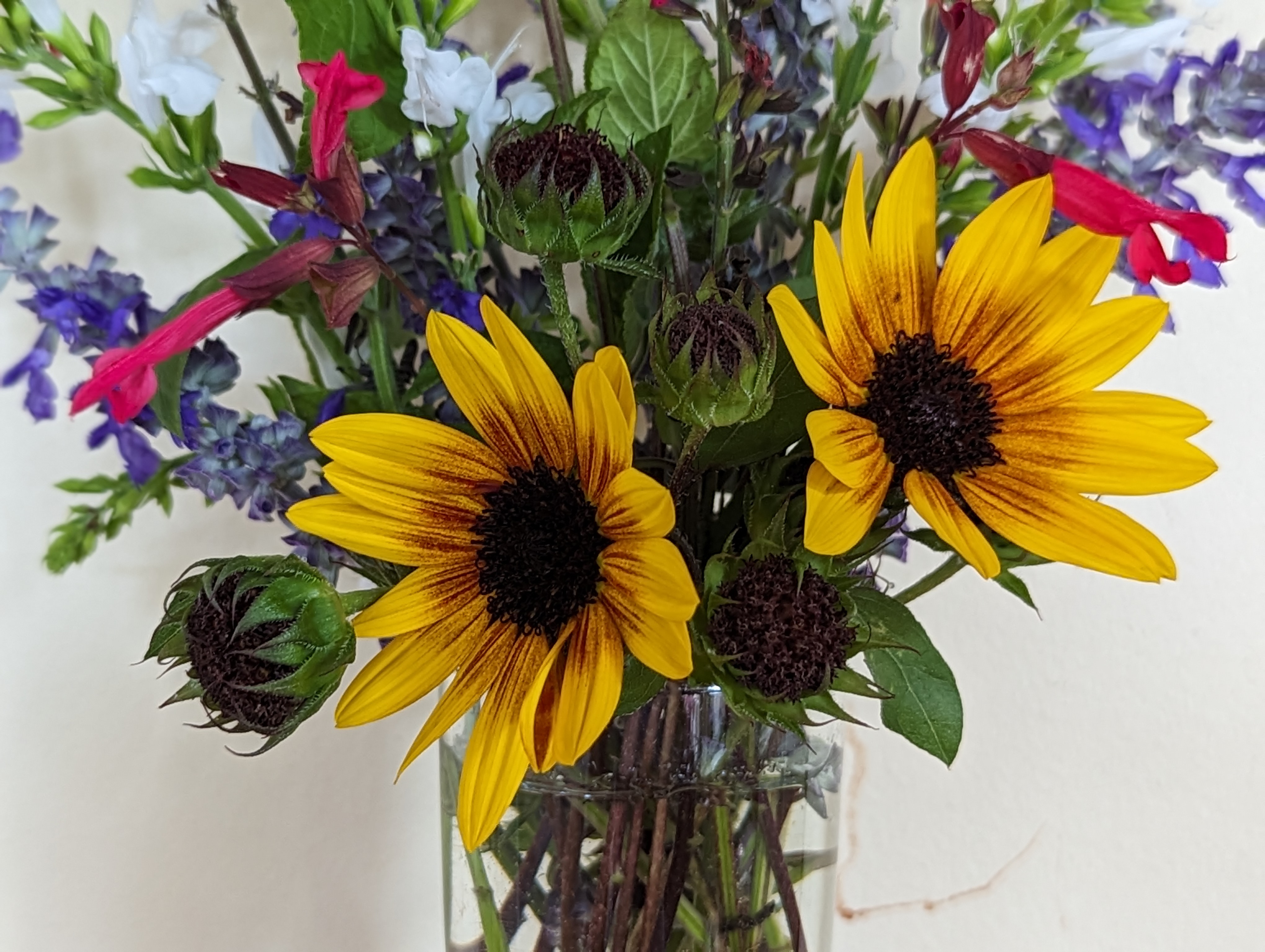
The Brown Eyed Girl Sunflowers and seedheads. I saw several vases with seedheads last week, loved them and went looking for a few for my vase.

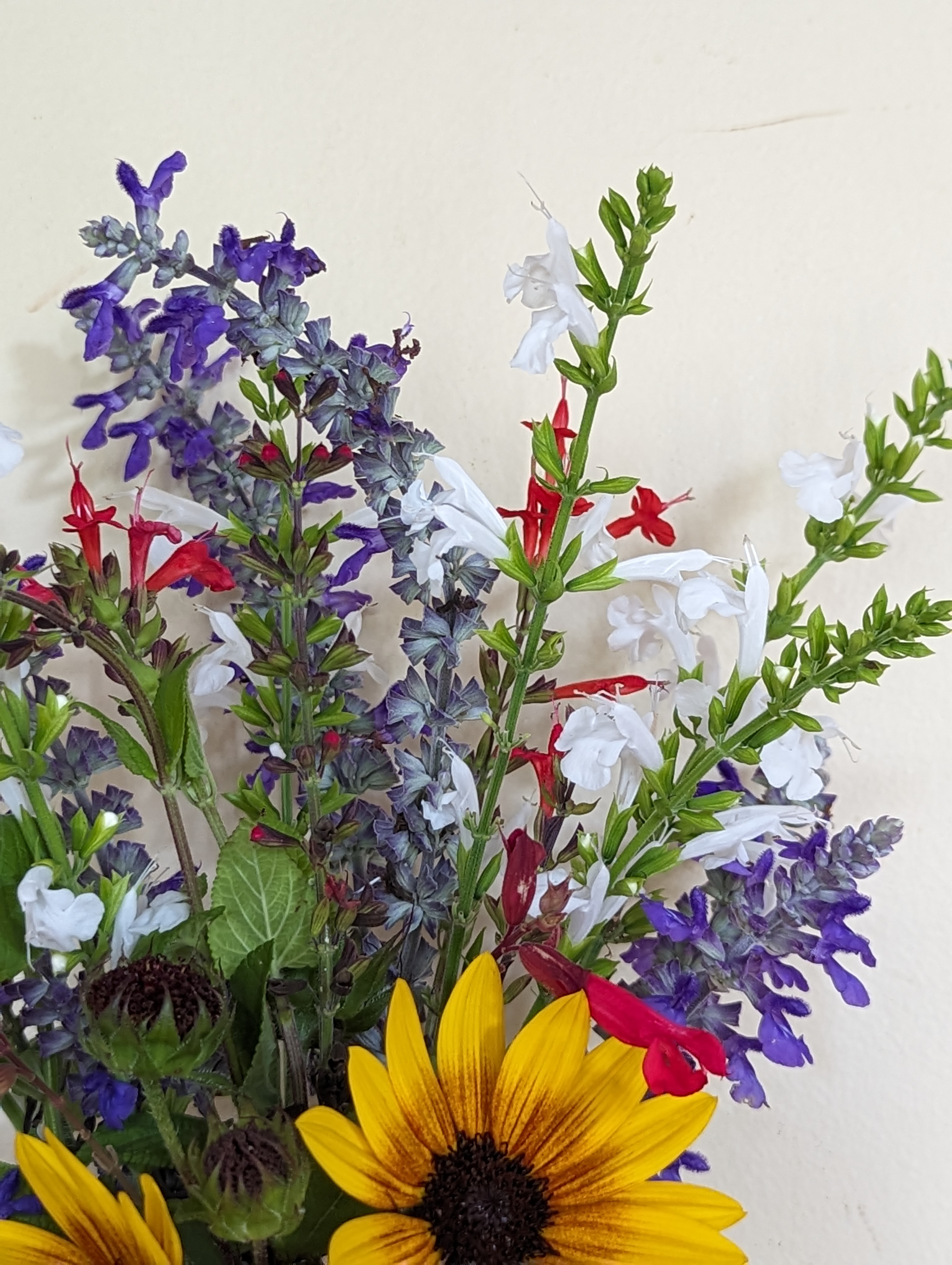
The Salvias: in red with long flowers, ‘Roman Red’, shorter red flowers are Tropical Red Salvia (Salvia coccinea). The ‘Roman Red’ is definitely not as hardy as the native Tropical Red, it has stopped flowering and appears to be shrinking. Oddly, the armadillos are attracted to it and dug both up, that may explain their unhappiness! In blue, “Mystic Spires’ Salvia; in white, Tropical Red Salvia that reseeded white.

I am thankful July is half over, it is the hottest month of the year in my garden. Adding insult to injury are the bugs this year. I am swarmed by no see ums after about 15 minutes outside and have to retreat. There will be loads of prunings and errant weeds in a few months.

Thanks to Cathy for hosting IAVOM. Visit her blog at ramblinginthegarden.wordpress.com

Happy Gardening!!

Six on Saturday – Caterpillar Condo

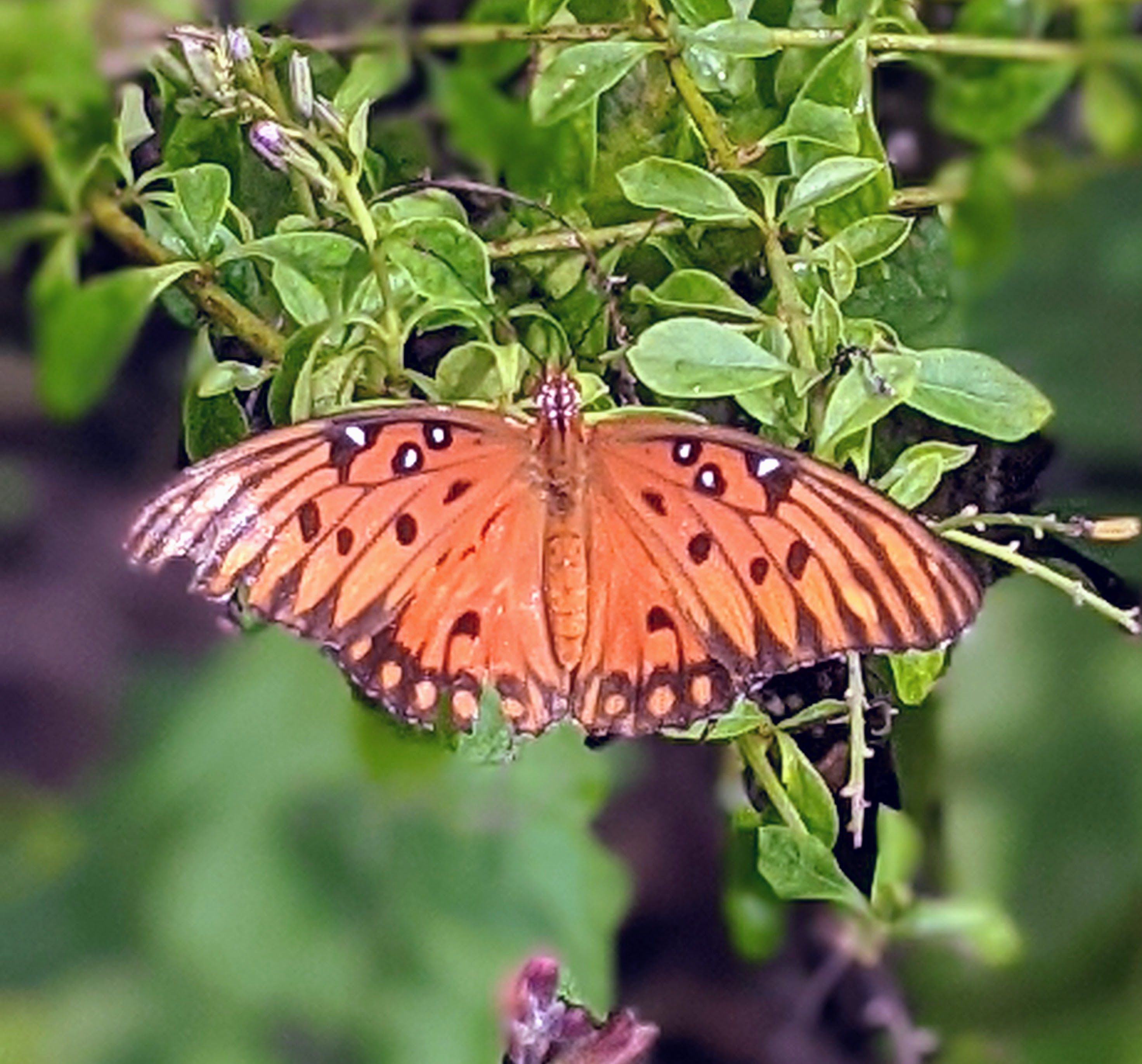
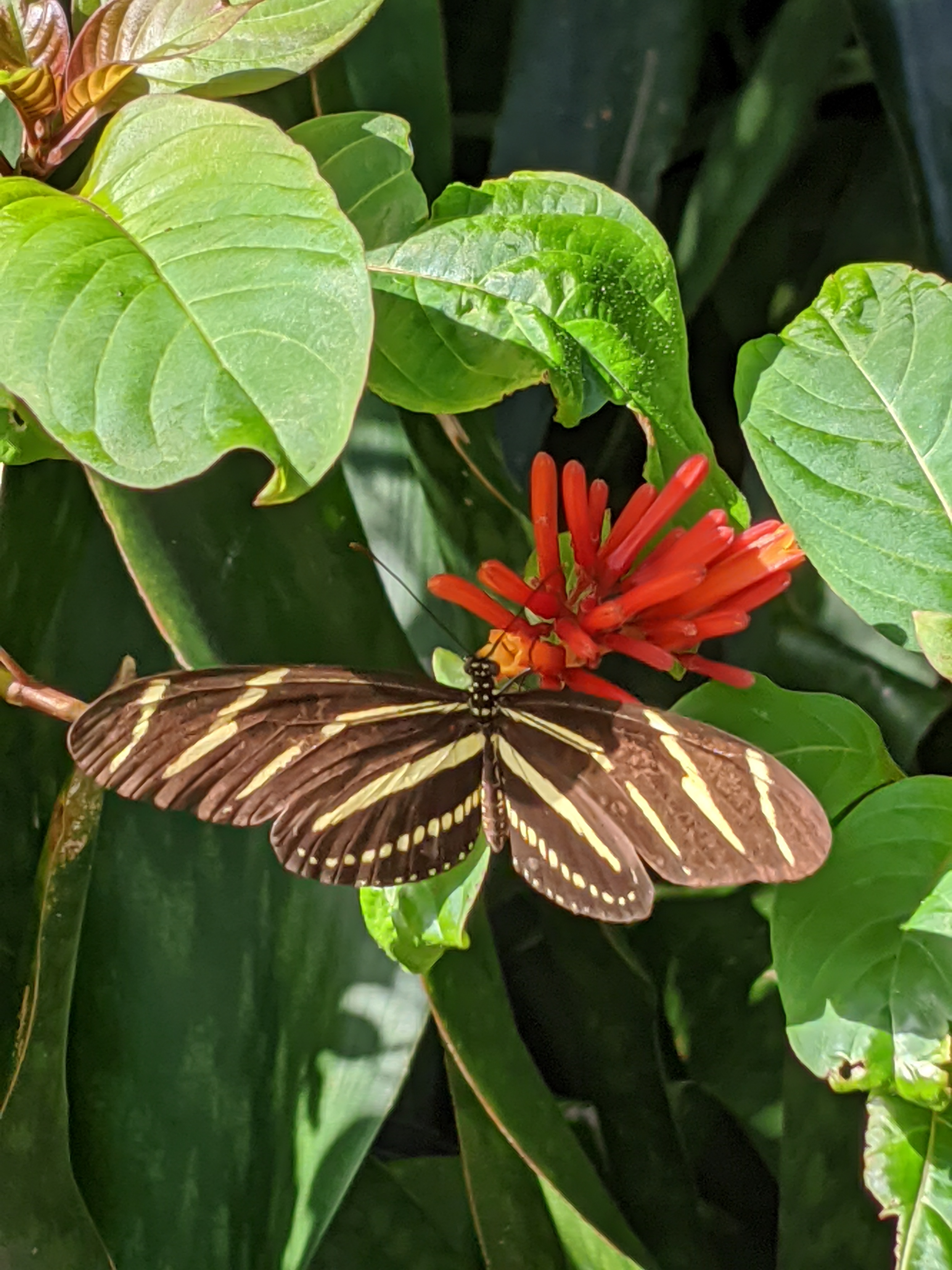
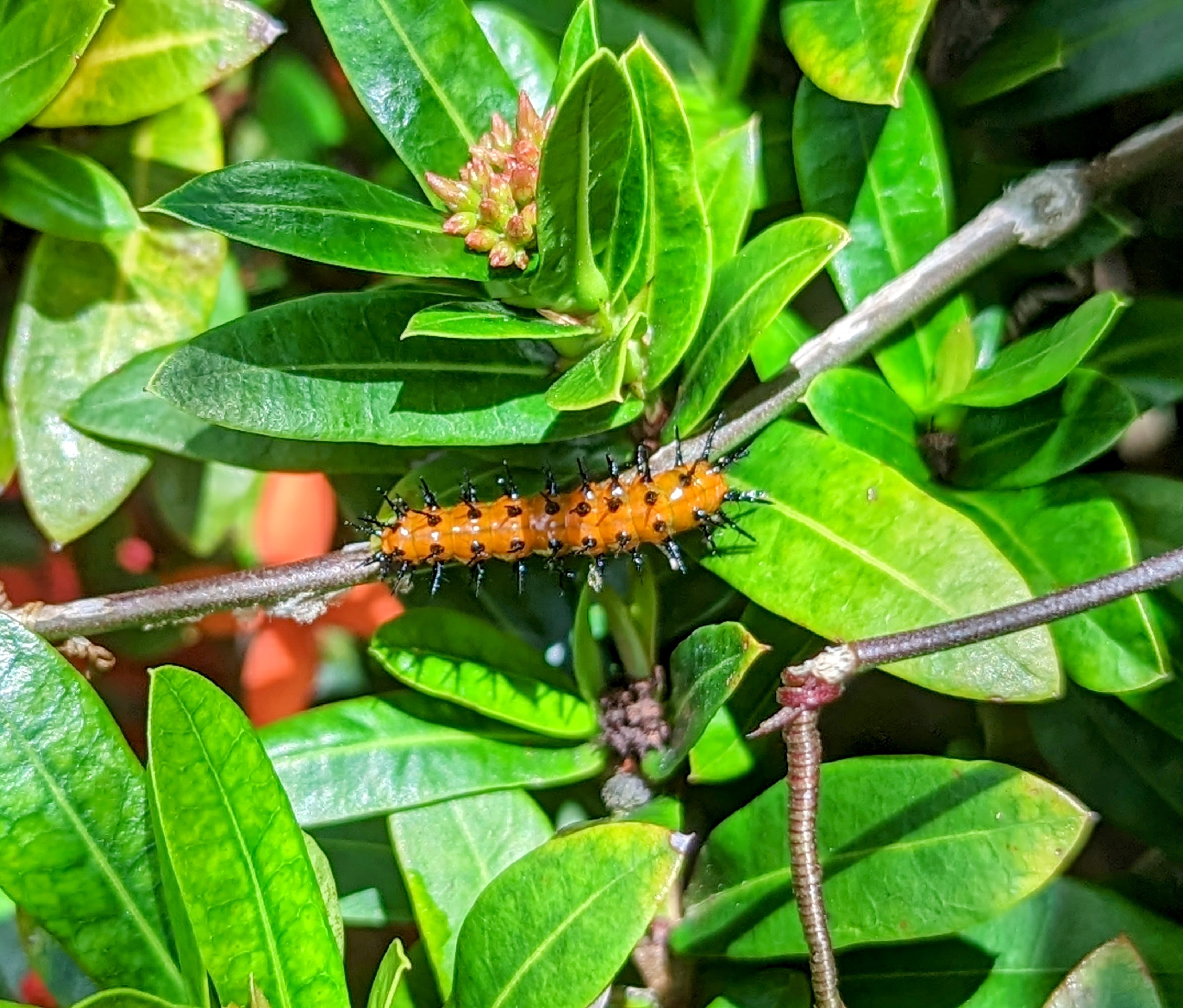
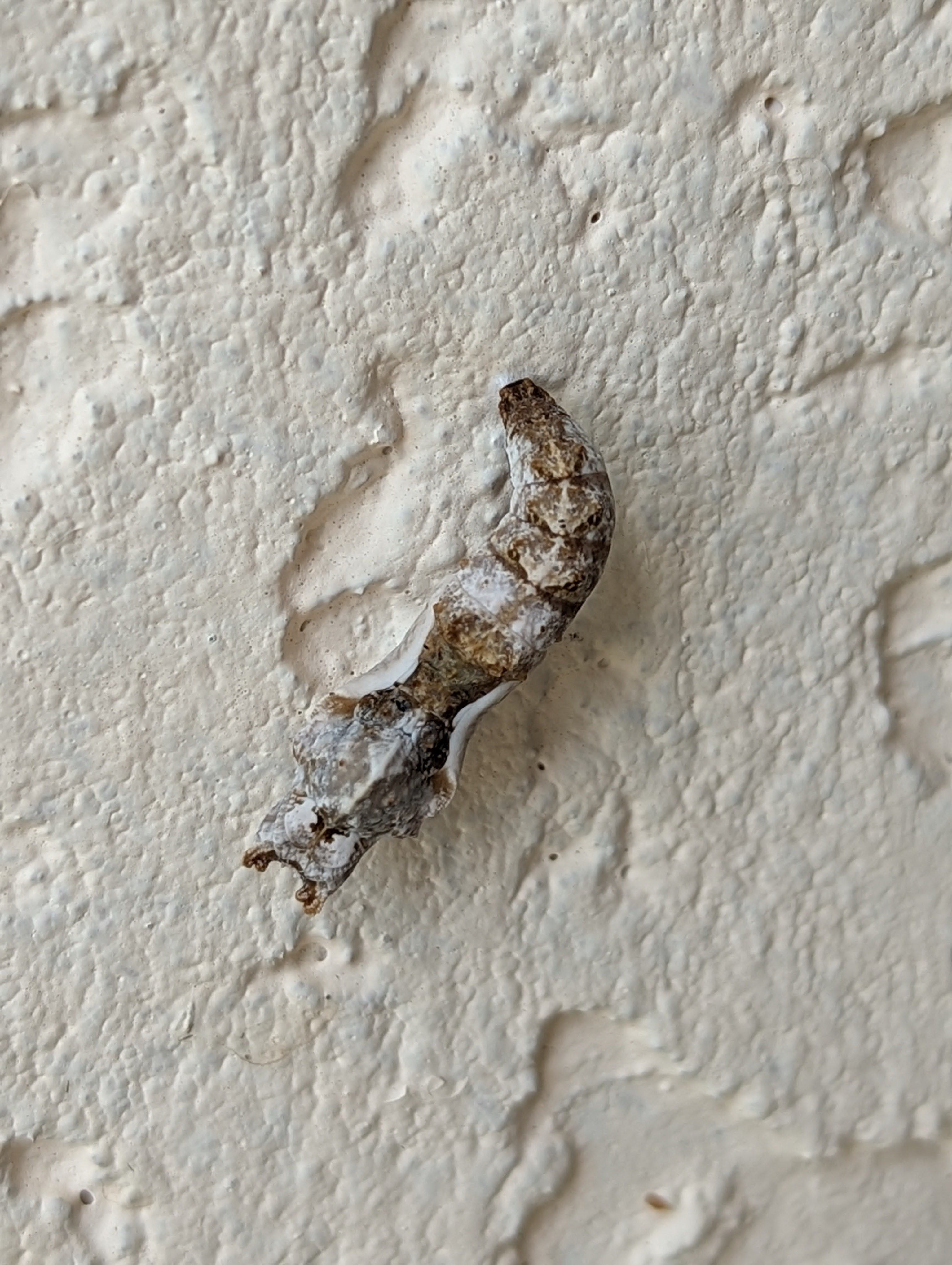
It’s time for the weekly world garden tour. My South Florida garden has a wealth of butterflies and tropical flowers loving the heat and humidity more than I do. I let some native passionflower vine (larval host plant for butterflies) ramble through a mixture of flowering nectar plants and I have some astounding butterfly action going on in the front garden. Pairs of Gulf fritillary butterflies circle each other and then land on the passionvine where the ladies lay eggs. Caterpillars from both species of butterflies (Gulf fritillary and Zebra Longwing) that host on the vine are currently in residence. The caterpillars moved off the vines and now there are chrysalis hanging on the front porch. I am watching day by day hoping to see new butterflies emerge.

The Gulf fritillary looking for nectar.

Zebra Longwing doing the same thing.

Gulf fritillary caterpillars on the passionvine. The passionvine is Florida native Passiflora suberosa. It is not a particularly attractive vine and bears small flowers and blueberry sized fruit. I did not plant this, it came up from the garden gods and I let it go to ramble through the Dwarf Red Ixora shrubs creating a caterpillar condo with a full service restaurant.

The much less colorful chrysalis of the Gulf fritillary.

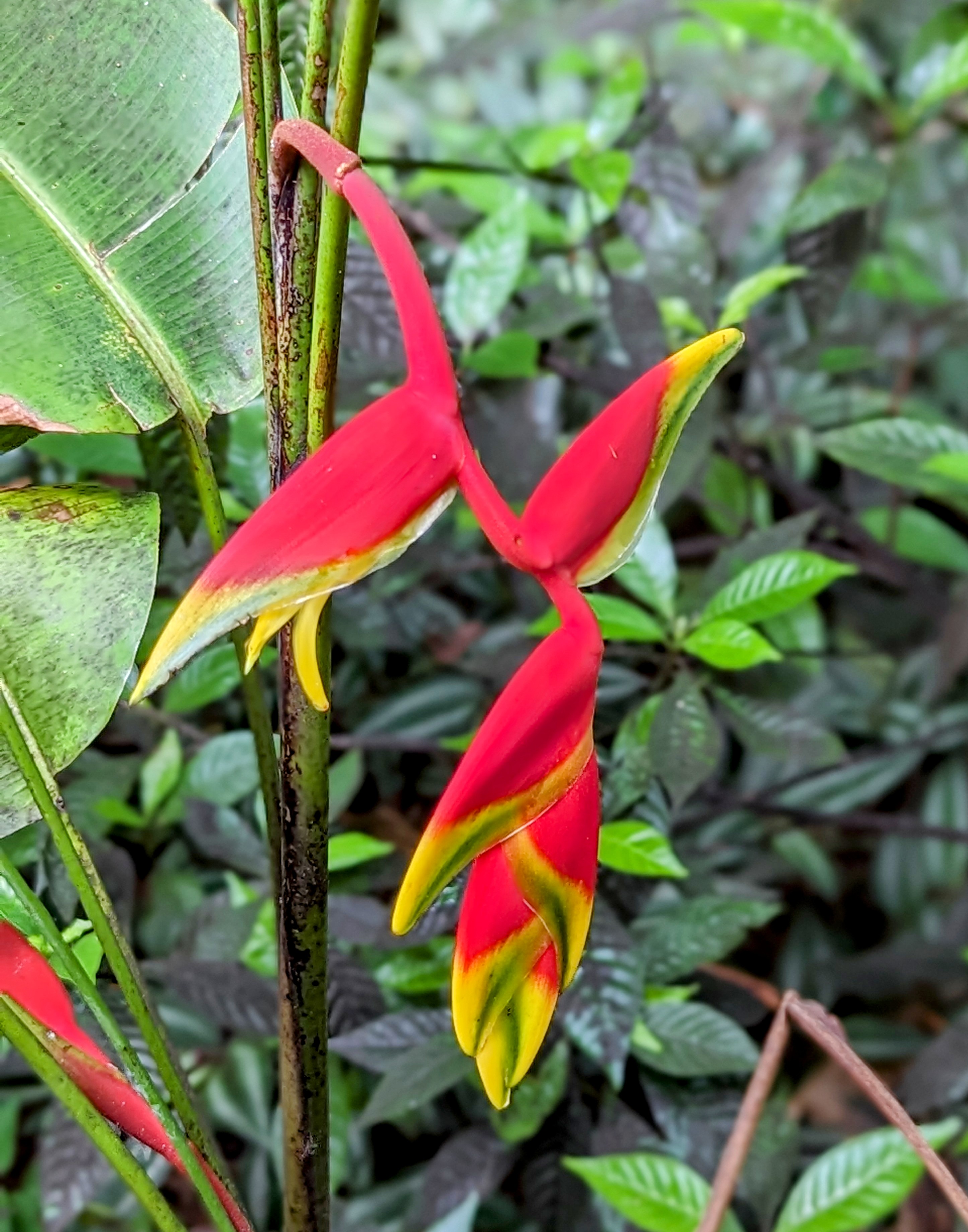
And we have to have some tropical flowers and fruit. The flowers today are Lobsterclaw Heliconia (Heliconia rostrata)

Fruit of the week – Papaya. This is the Papaya tree started from seed last fall. I planted the seedlings in the garden in May. They are almost three feet tall now and looking a little spindly. I have read it is possible to have fruit in nine months. At this point, the trees won’t be able to support it.

That is all from sultry South Florida this Saturday. To enjoy the world garden tour visit Jim at http://gardenruminations.co.uk

Happy Gardening!!
Six on Saturday – Fun Things

The weekly garden tour commences now. So many tropicals coming to life with the onset of the rainy season in South Florida. It has been stormy all week and the first named tropical storm of the year appeared in The Gulf of Mexico this week – Arlene. The storm is a long way from here and set to wind down into a tropical depression before making landfall in Cuba with a lot of rain. The first thing I spied when powering up the computer this morning was a Coastal Flood Watch; rainy season is definitely here.

To see more SOS garden tours, visit Jim at http://gardenruminations.co.uk

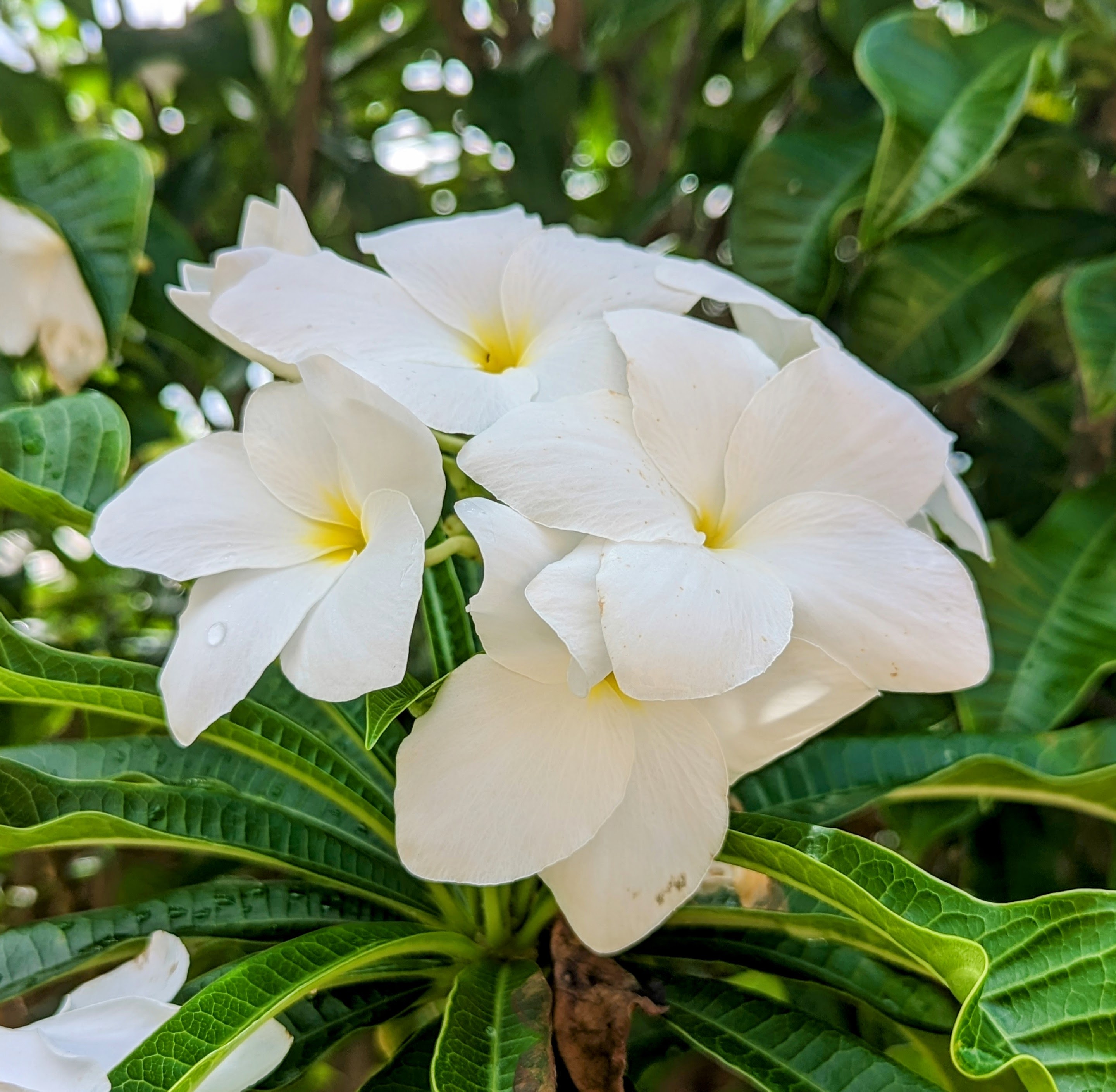
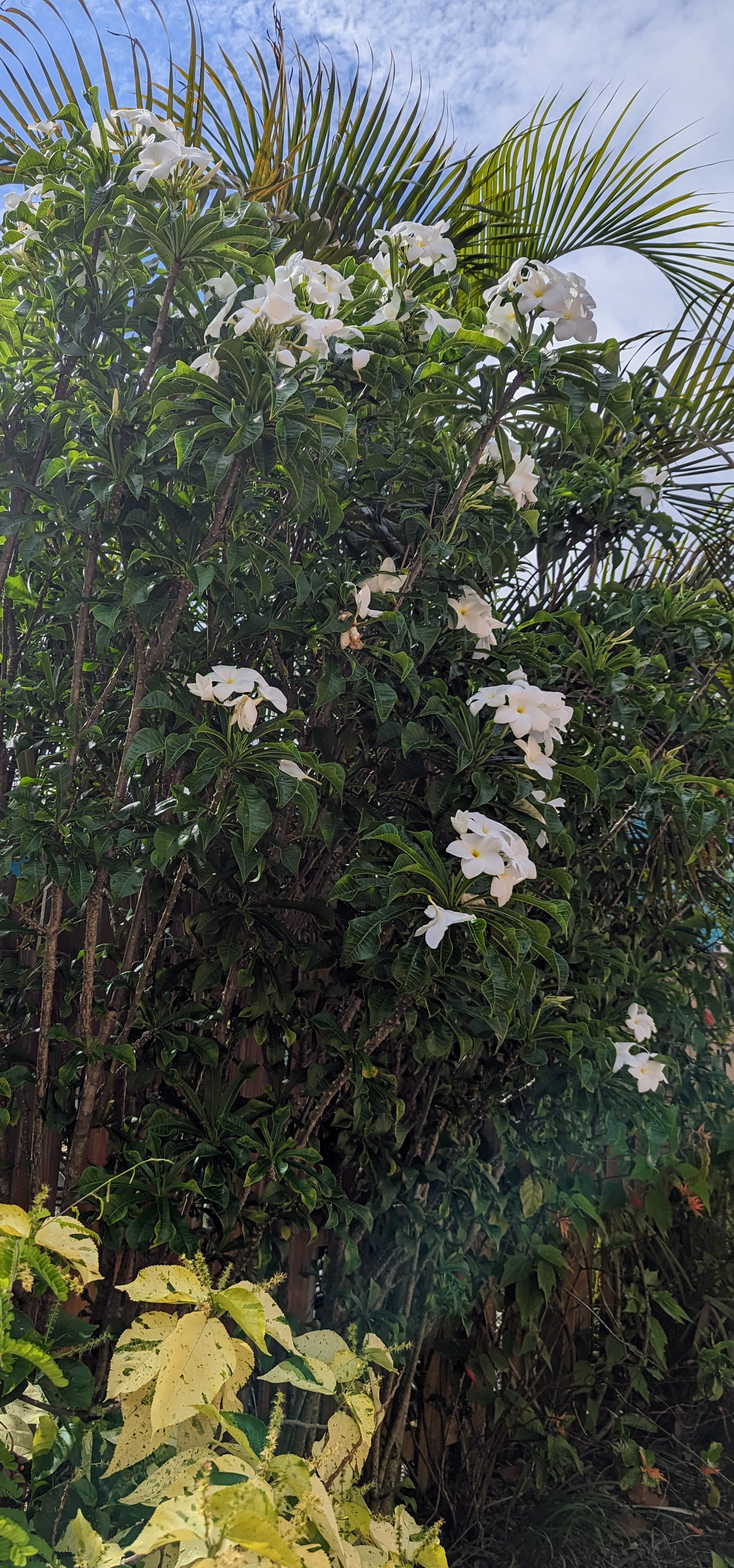
The Frangipani hedges are flowering. This is Bridal Bouquet Plumeria (Plumeria pudica). I have these in front of wood fences that aren’t so pretty. They are columnar plants about 8 feet tall and 2-3 feet wide. These are unusual as they are semi evergreen.

The Frangipani hedge with a Java White Copperleaf shrub accent.

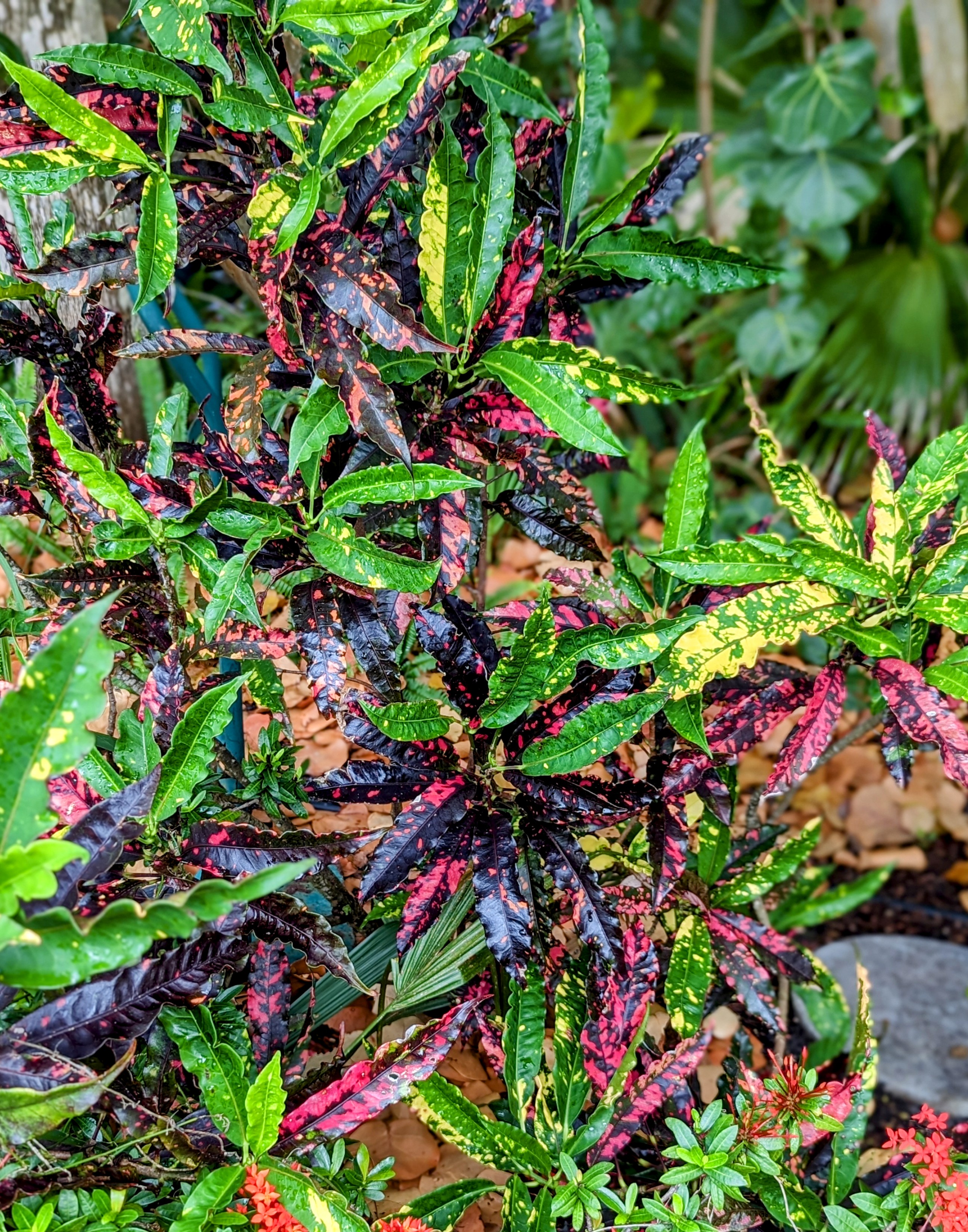
A psychedelic Aucuba? No, this is a Pie Crust Croton. Named as the edges of the leaves are crimped like – pie crust. New growth is yellow and will mature into a mostly red and black shrub later in the season.

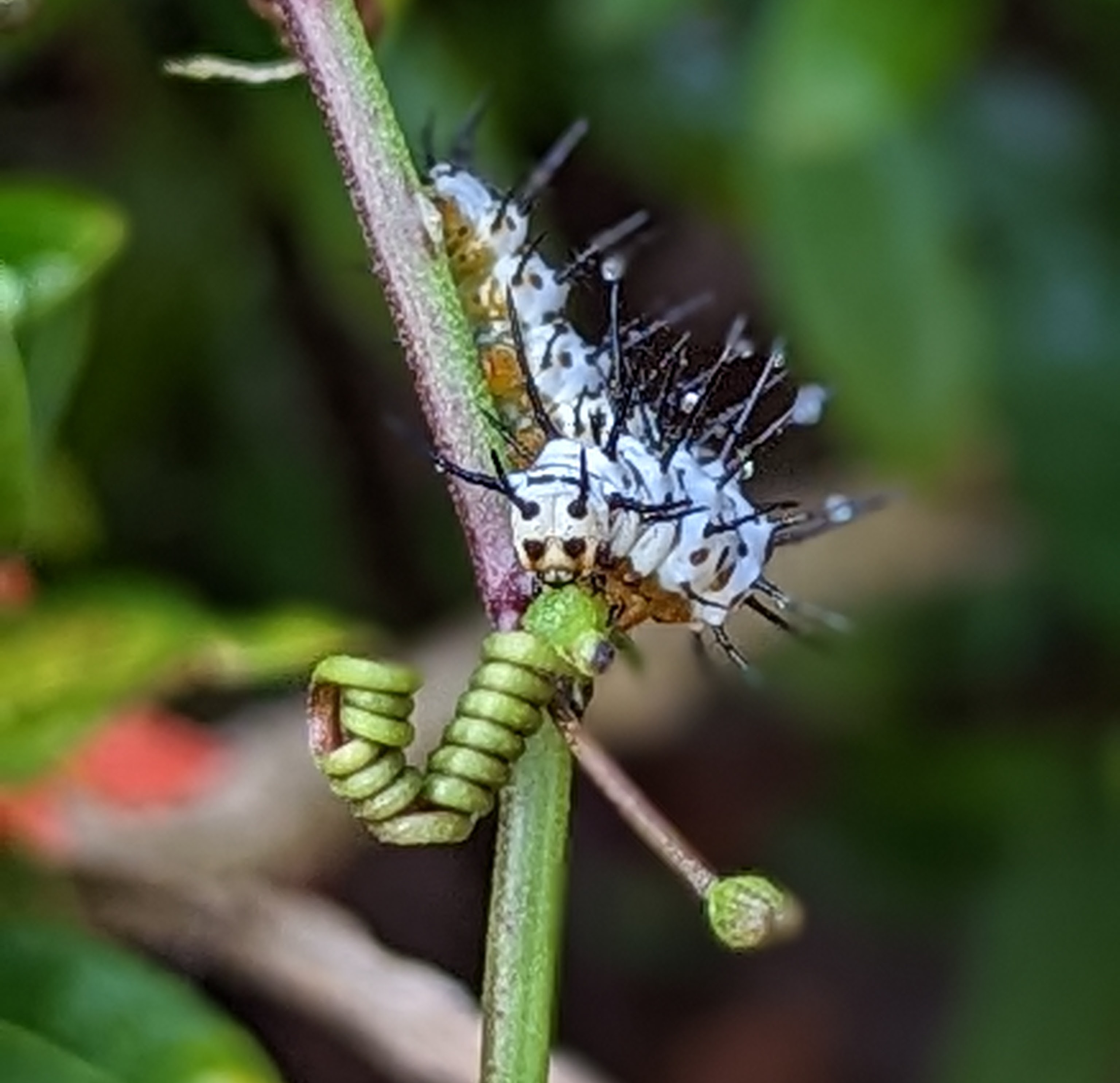
In the above image you can see a bit of an orange flowering shrub – this is a Dwarf Red Ixora, a butterfly nectar source. I let the larval host plant, Corkystem Passionflower, a vine, ramble through the shrubs for the Zebra Longwing butterflies to lay eggs on. This is the first caterpillar I have spotted this season, though the butterflies have been out in force.

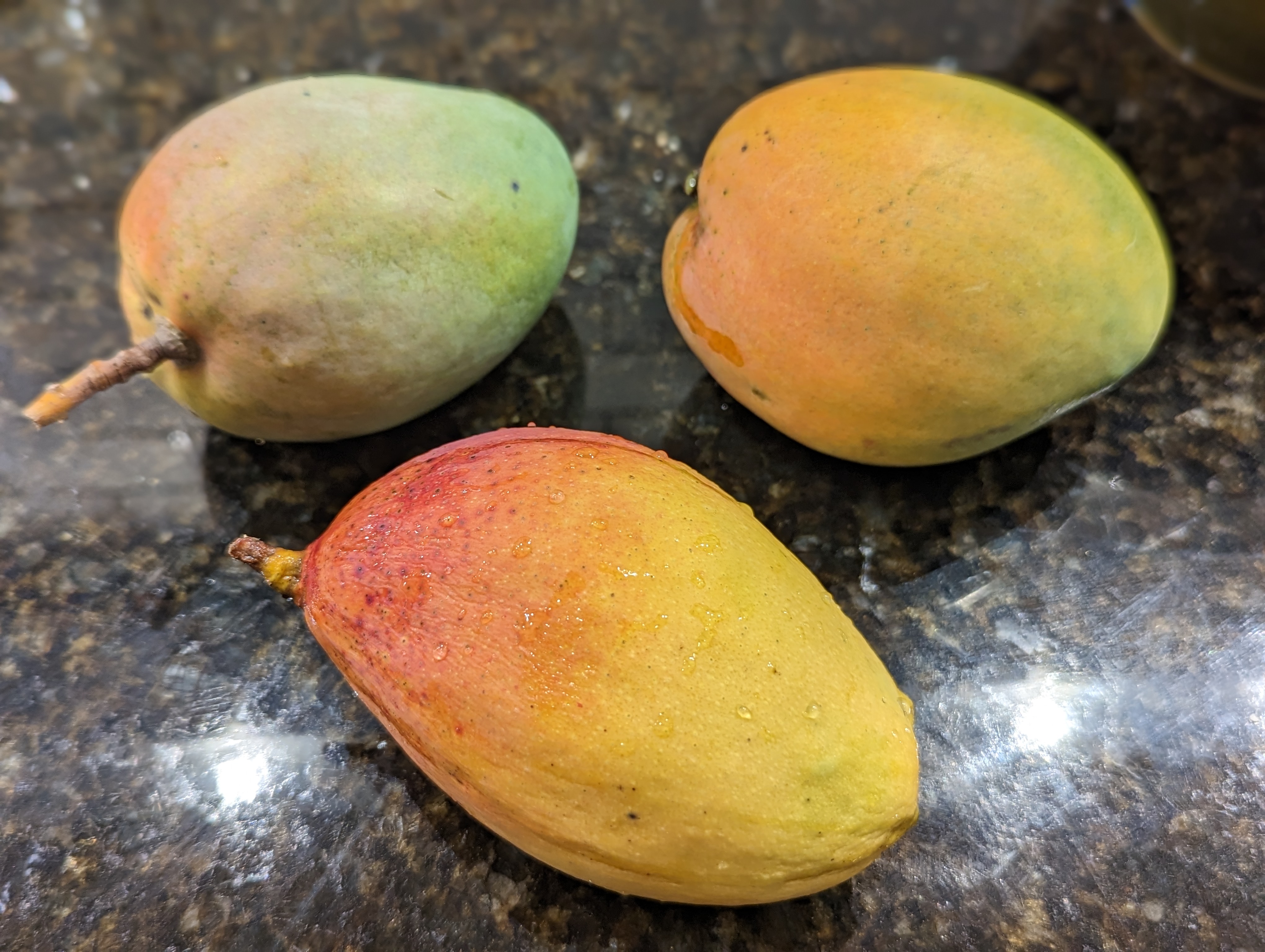
I am finally picking a few mangoes. They are delicious. The lower mango is a condo mango, Pickering. The others, Glenn Mango, a big tree. Condo mangoes are usually less than 6 feet tall.

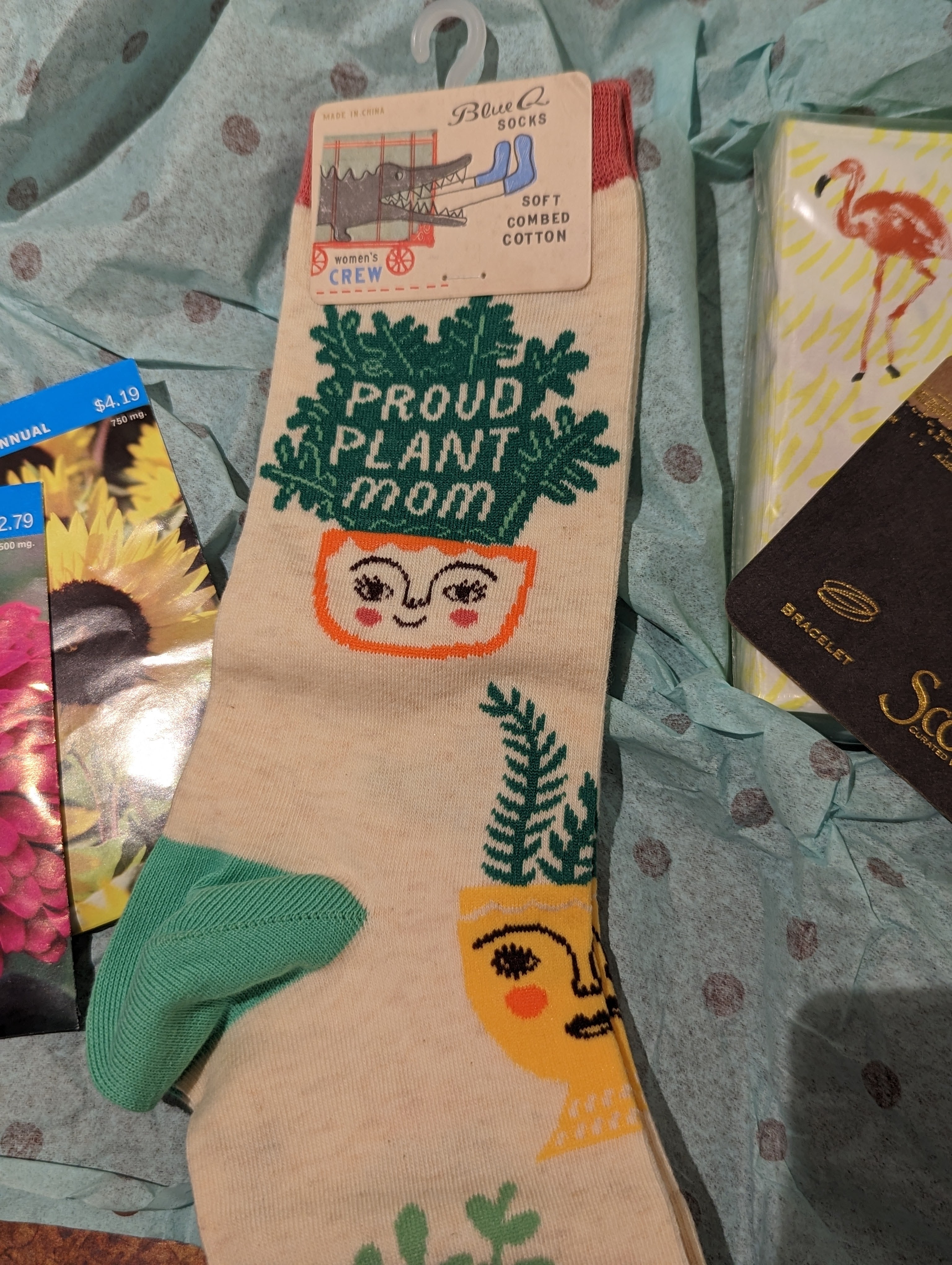
And just for fun, a gift from my friend Lu. Gardening socks!

That is all from the moist South Florida. Thanks to Jim for hosting and…

Happy Gardening!!
Six on Saturday – Spring Scents and Surprises

It’s Saturday morning and time to look around the garden for new things. I have been noticing pleasant fragrances upon stepping out on my porch in the morning and did a little detective work. Warmer weather and longer days bring the fragrant flowers into bloom. Nothing says tropical summer like the scent of Frangipani in the air.

This is a locally common Frangipani (Plumeria spp.) I have no idea what variety it is, but these are everywhere and likely shared as cuttings for decades. A friend gave me a cutting several years ago, it is now about four feet tall. They make a nice small tree, if you know how to prune them. I don’t, though it is big enough to give it a try this winter when dormancy reappears.

The first Tropical Gardenia (Tabernaemontana divaricata) of the season. These are not as fragrant as the Gardenia jasminoides, but leave a light scent at night. The Frangipani are also more noticeable at night.

I pruned the Sweet Almond Bush (Aloysia virgata) rather severely about a month ago. It is rewarding me with fresh, deep green leaves and a flush of fragrant flowers. This fragrance is more noticeable during daylight hours, so I have round the clock scents right now.

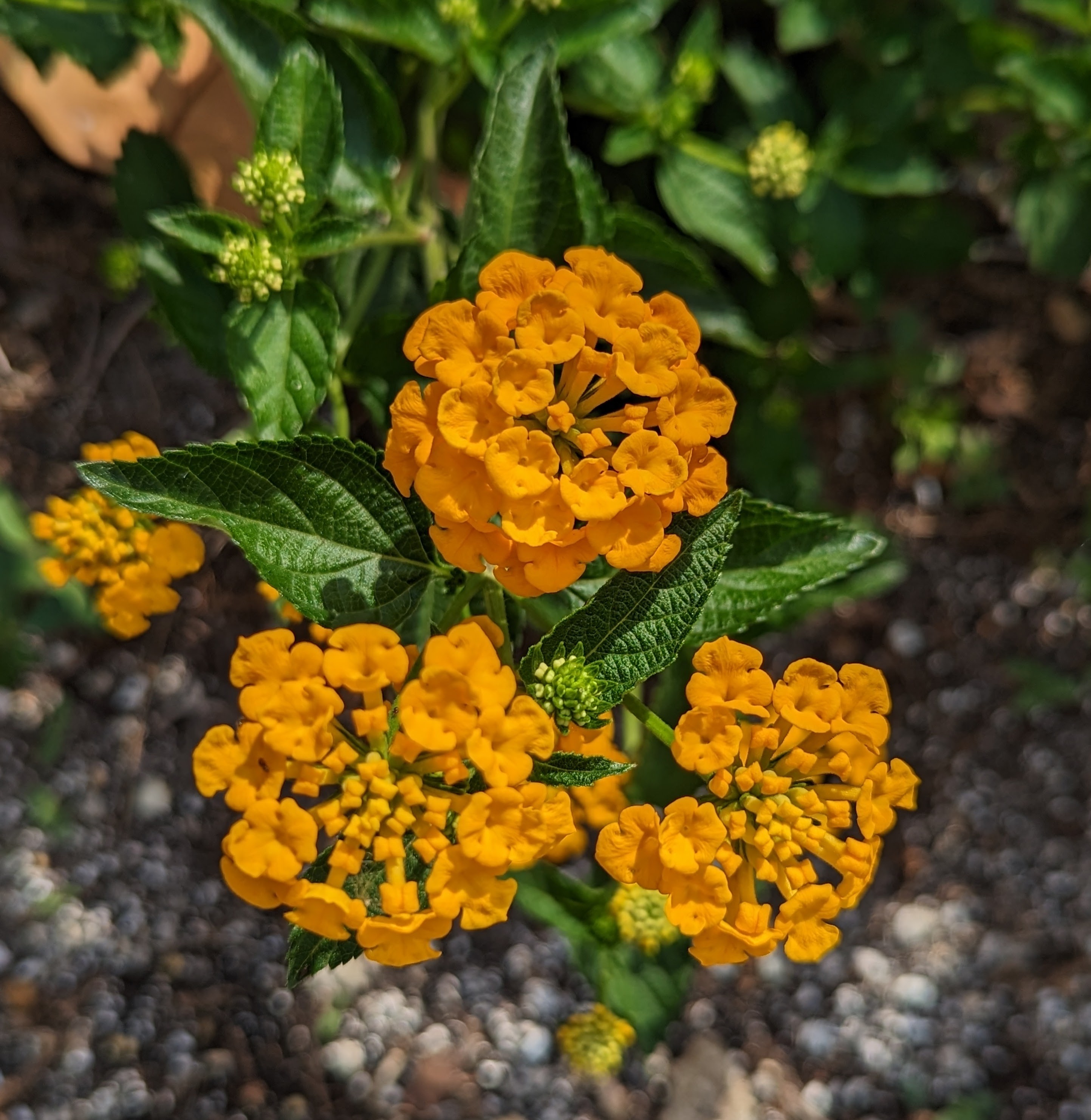
Now I am wobbling into things that smell weird. This is a New Gold Lantana. I have issues with this plant from working on the 1996 Olympics in Atlanta, where it was a theme plant. There were so many plants around town, I never wanted to see another one. I guess it took me 27 years to get over it. I bought two in pots last year as they are sterile and a great butterfly plant. They remained in their pots until a couple of weeks ago and look at them now.

Gallardias or Indian Blankets (Gallardia pulchella). Another wildflower that does well in hot Florida sand. Despite being considered native for years they have been ruled non native. These have jumped into the crushed shell walkways for some reason. Left in place and stepped on sometimes, they are thriving with no water and growing in the shell. Amazing. Do I care if they are native? Not one bit.

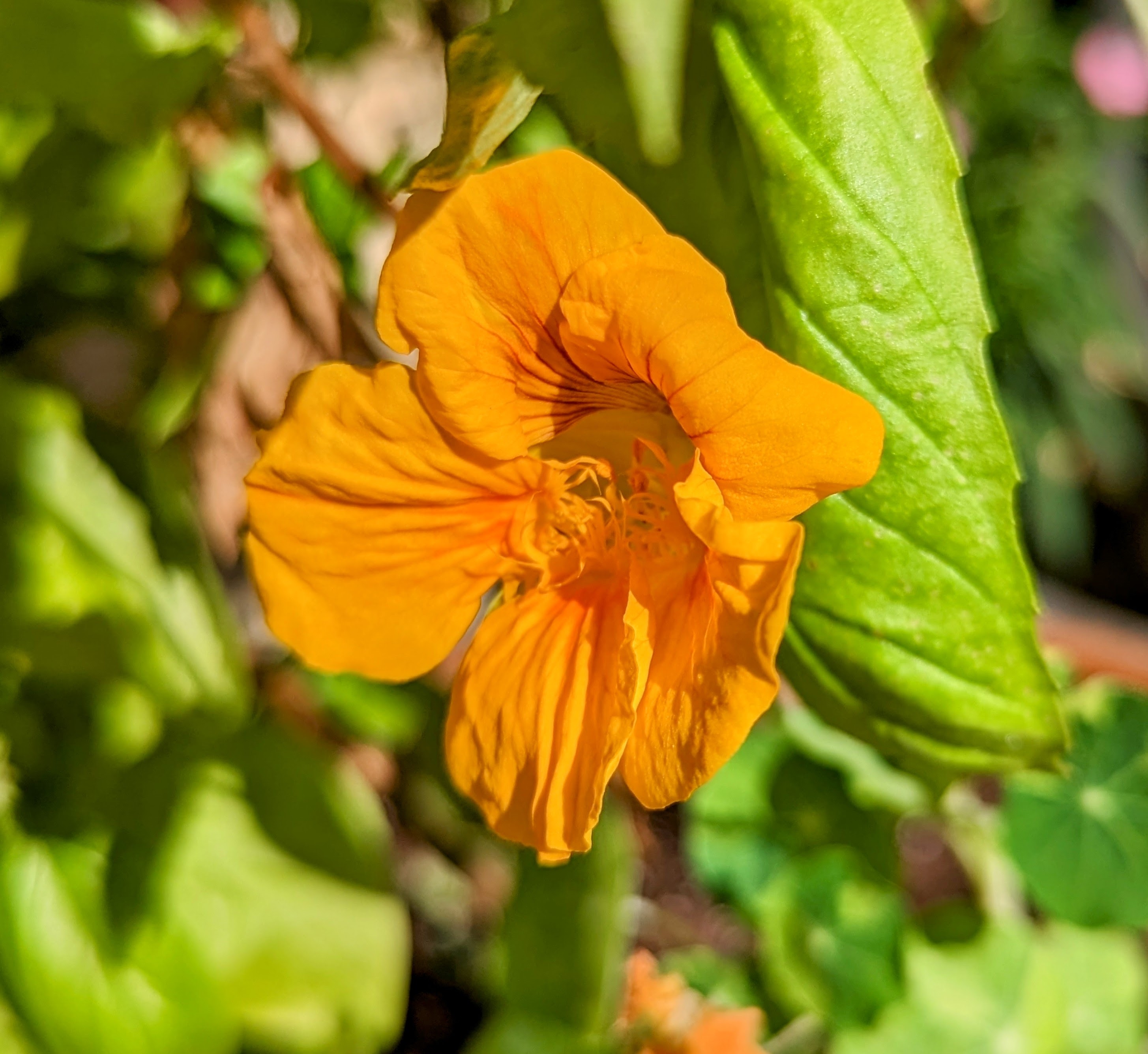
Presenting the ‘Alaska’ Nasturtium. I planted a package of these seeds a little late (February, I think. December 1 is the time here) The seeds in the beds came up, gasped and died. A few in pots grew up and flowered. My opinion on these is the varigated foliage looks a bit sickly instead of crisply attractive. Back to Jewel Mix Nasturtiums, here’s hoping I will remember in December.

Voila, my Six for this Saturday. To see more SOS posts follow this like to Jim’s blog –http://gardenruminations.co.uk

Happy Gardening!!