Yellow Butterfly Ginger – Hedychium flavum

Yellow Butterfly Ginger


This is the Yellow Butterfly Ginger as opposed to Ginger Lilies or White Butterfly Ginger. I can’t recall exactly where this came from. I had some Ginger Lilies a very old lady gave me in Atlanta, but I was afraid of importing those to South Florida for fear of being overrun. So, I left the Ginger Lilies in my garden in Atlanta, I think the new owner built a pizza oven over top of them. This particular lady who gifted me the Ginger Lilies identified the plant by the fact that the root looked like an old shoe.

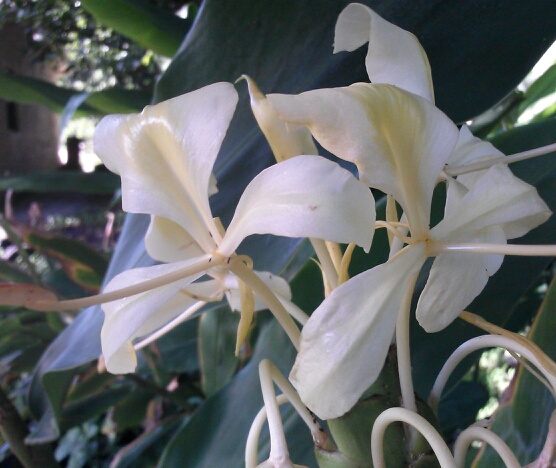
Back to Florida, this very fragrant plant started to bloom last week and to me it smells like a really intense Honeysuckle. Very pleasant. I had to search a bit to figure out what Ginger this is exactly. I finally decided it was Hedychium flavum based on the identifying feature of hairy leaves and yellow flowers. The flowers start out white with yellow centers, then the whole flower turns creamy yellow by the end of the day. I hadn’t realized the leaves were hairy until now.

The plant is about 4-5 feet tall and lives in the shade of a good sized Banyan Tree. Almost everything I have read about these says they require a moist site. I live on a gigantic sand dune so there is no really moist area here, this is the closest thing we have to moist and it is working fine so far. The Ginger has been in the garden for about a year and has probably doubled in size and was evergreen through the winter. The foliage is kind of grassy and makes a nice backdrop for Bromeliads or Ferns. The roots look like reddish culinary ginger, but I have not had the occasion to eat any – they do not remind me of old shoes at all.

Culinary Ginger is a Zingiber as opposed to a Hedychium. This can be grown from roots bought from the grocery store.  I have tried this and ended up with a plant about 18″ tall and enough ginger for my husband to use in a Pumpkin Pie. While I am a devoted herb grower, I find buying ginger at the grocery store is best.

Miniata Bromeliad-Aechmea miniata

Miniata Bromeliad flowers

Flowers

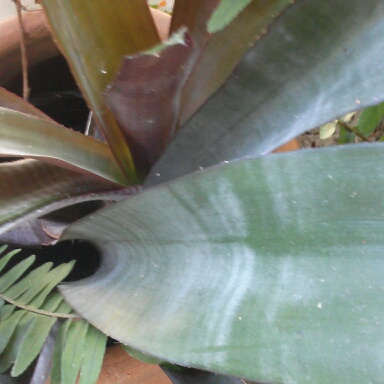
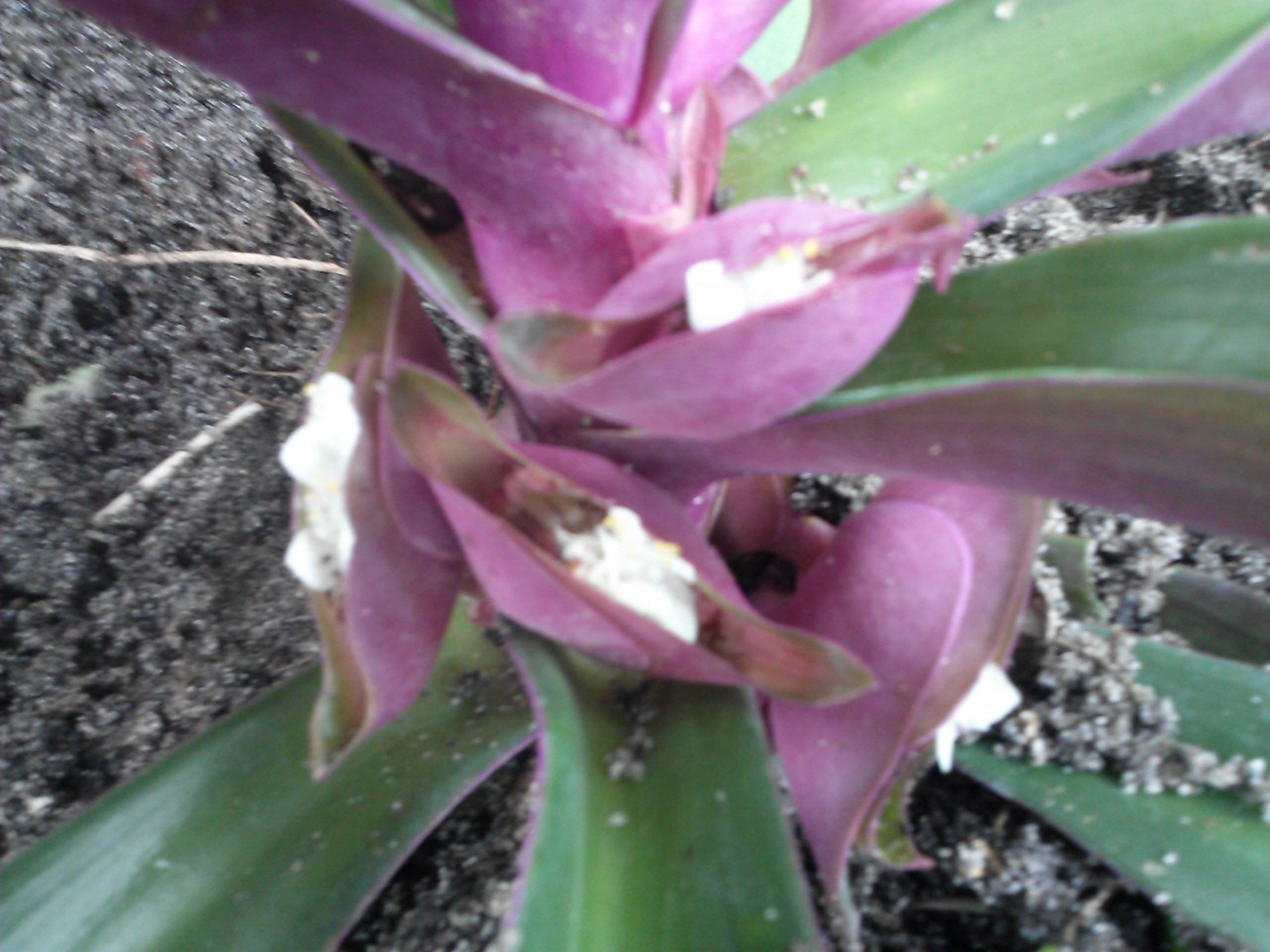
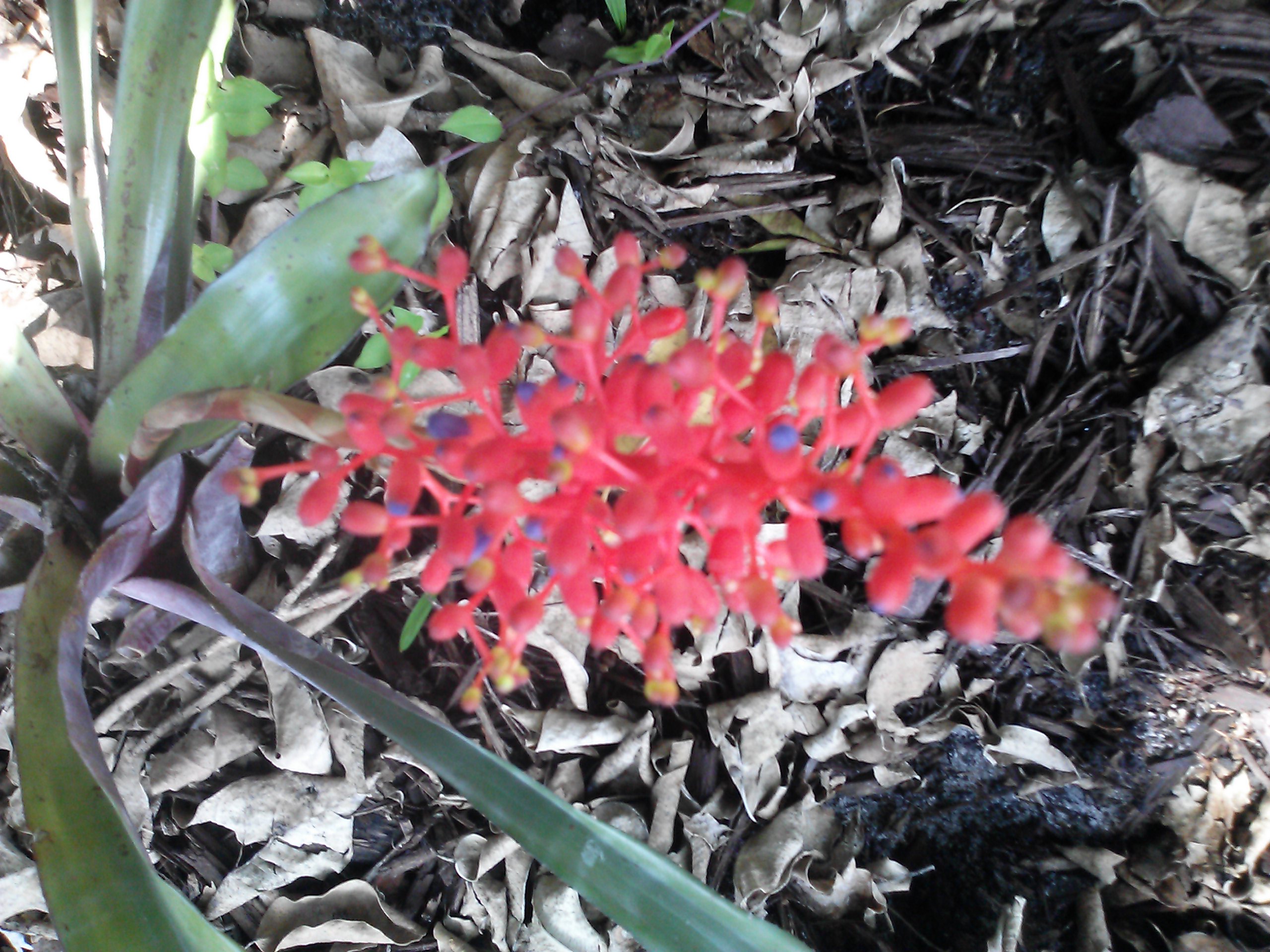
These are currently blooming in my garden and have been for a week or so. The flowers look a bit like a panicle of red hots with a few touches of periwinkle blue. In the realm of Bromeliads, these are terrestrial, which means they root in the soil, and they have tanks, botanically speaking, the leaves form a rosette creating a reservoir in the center of the plant that holds water and traps various insects and debris feeding the bromeliad. The image below is looking down into the tank. The foliage has a nice grey green variation and is attractive year round.

 Foliage and Tank

The tanks are a bit of a maintenance chore sometimes because they trap more junk than you would think. I have some tongs to fish debris out and then I usually put some BT granules in to discourage any mosquitoes from hatching out.

The plant itself ends up about 18 x 18″ , so it is a nice size for addition to a shady perennial bed. These have reliably reproduced one or two pups per year, so not really invasive, but they are living among friends now.

Happy Fourth of July


Happy Fourth from my garden in South Florida!

These plants are currently blooming in my garden:

Miniata Bromeliad

Miniata Bromeliad

The red is a Miniata Bromeliad-Aechmea miniata, this bromeliad is reported to bloom at any time of the year, in my garden it blooms in summer. A reliable perennial south of Orlando, the backs of the leaves are grey mottled and shiny green on top. Foliage is not too sharp for a bromeliad and they seem to double in quantity every year.

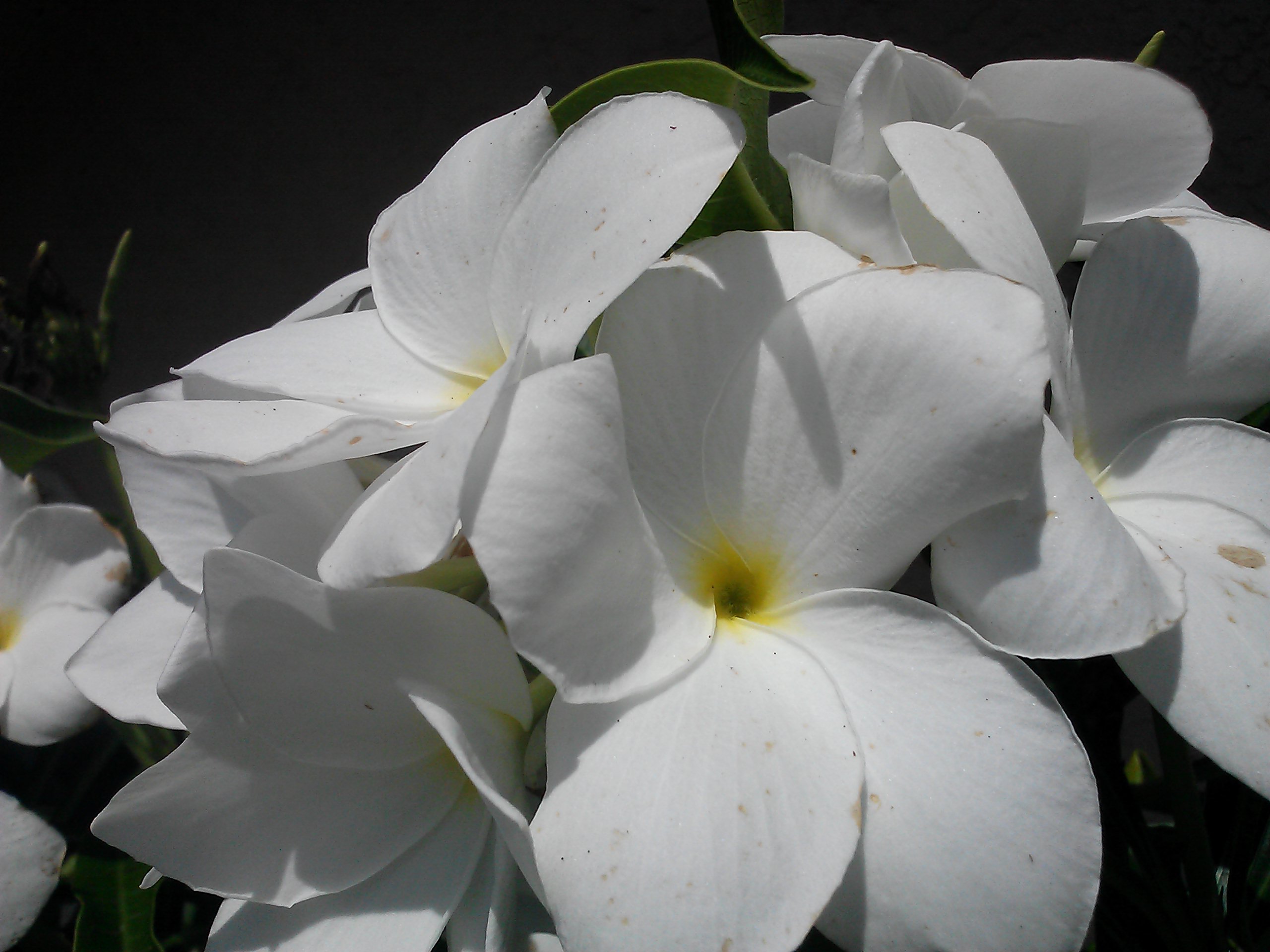
Bridal Bouquet Plumeria

Bridal Bouquet Plumeria

The white is Bridal Bouquet Plumeria-Plumeria pudica. An evergreen Plumeria that is not fragrant but flowers on and off through the rainy season. The name is apt, it would make a nice bridal bouquet.

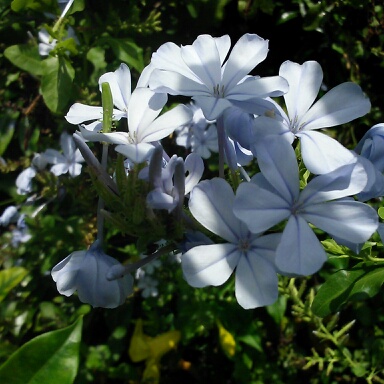
Blue Plumbago

Blue Plumbago

The blue is Plumbago – Plumbago auriculata. I think of this as the Mophead Hydrangea of the tropics. Reliable blue flowers primarily in the rainy season this is sort of a creeping shrub. And sort of indestructible, a good thing.

I hadn’t considered a patriotic planting for the Fourth, but I got one.

Martin the Bromeliad

Image

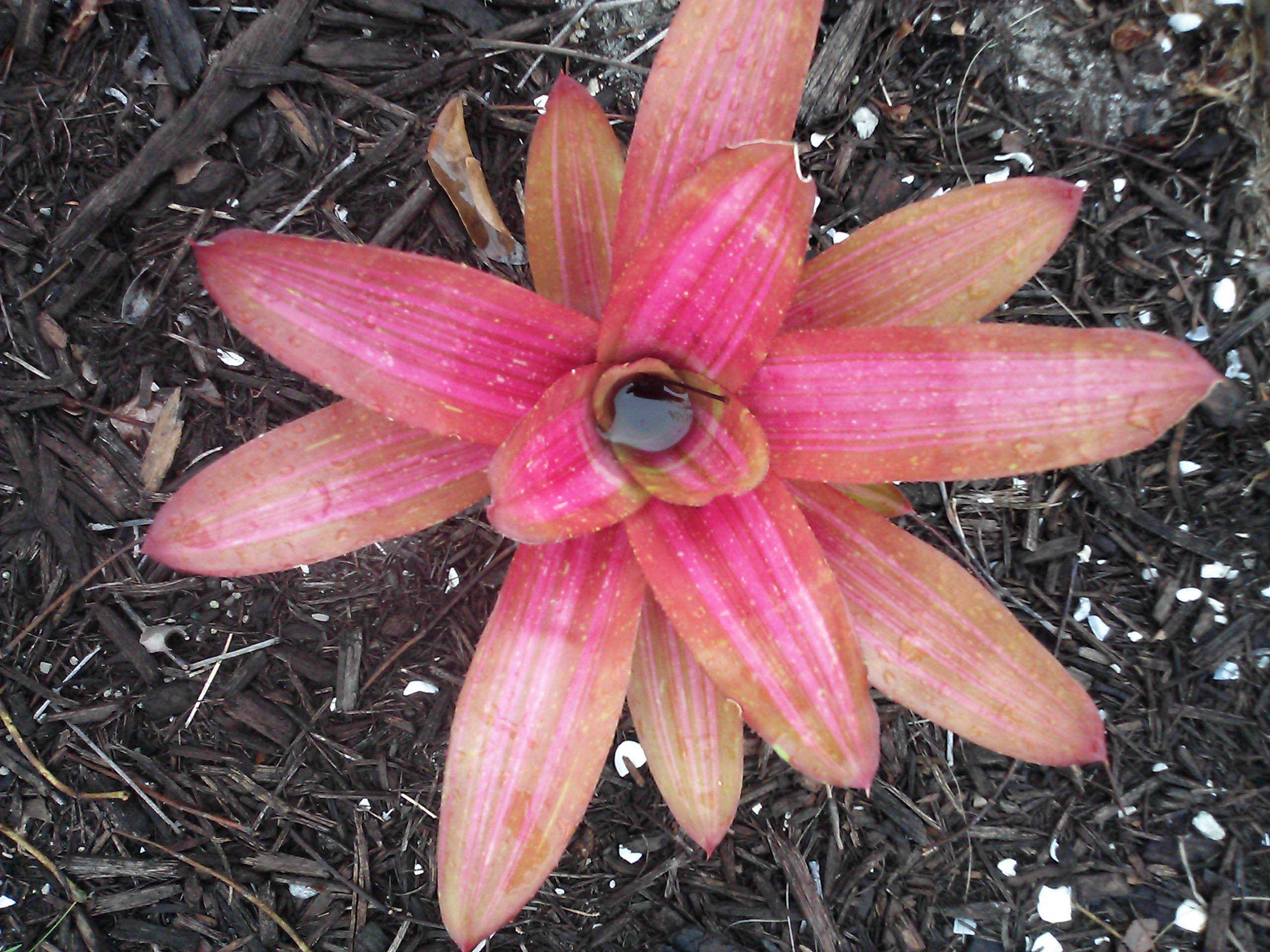
I am not prone to naming plants. However, I think this is kind of funny. I have had these little red Bromeliads for a while. The lady I bought them from did not know the name and said they would tolerate full sun. I have to admit I did not quite believe her, but I went ahead and planted them in the sun. Soon thereafter they started to reproduce, my stock has doubled and I think they have been out there for about six months. Well, they are flourishing and she was right.

Last week, I met the primo bromeliad gardener around here and she identified these as Martin Bromeliads.

No one is exactly sure who Martin is but I think he is living in my front yard.

Moses in A Cradle

Flowers of Oyster Plant

Flowers of Oyster Plant

I have always wondered why this plant was called Moses in A Cradle until I found this growing in the roots of my Banyan Tree this morning. The flowers do look like a cradle, I am not so sure about Moses or why he is involved. This is also called Boat Lily, which makes a bit more sense.  Yet another common name is Oyster Plant, Hmmm, maybe it looks like a purple oyster? Then there is the botanical name dilemma, I learned this as Rhoeo, now they seem to have decided it is a Transcandentia. Whatever. Plant taxonomy is not my forte.

The state of Florida lists this as a Category II Invasive. Which sounds scary, but if you do some research it seems this plant has the potential to do damage in certain environments but it hasn’t quite done it yet. The environment this flourishes in is a Tropical Hammock. I live on top of a gigantic Sand Dune, so I think I am safe from the Oyster Plant. As I am somewhat overrun with some invasive plants (the evil Brazilian Pepper and Mother in Law’s Tongues) I am leery of this one, but I think I will just keep an eye on it.

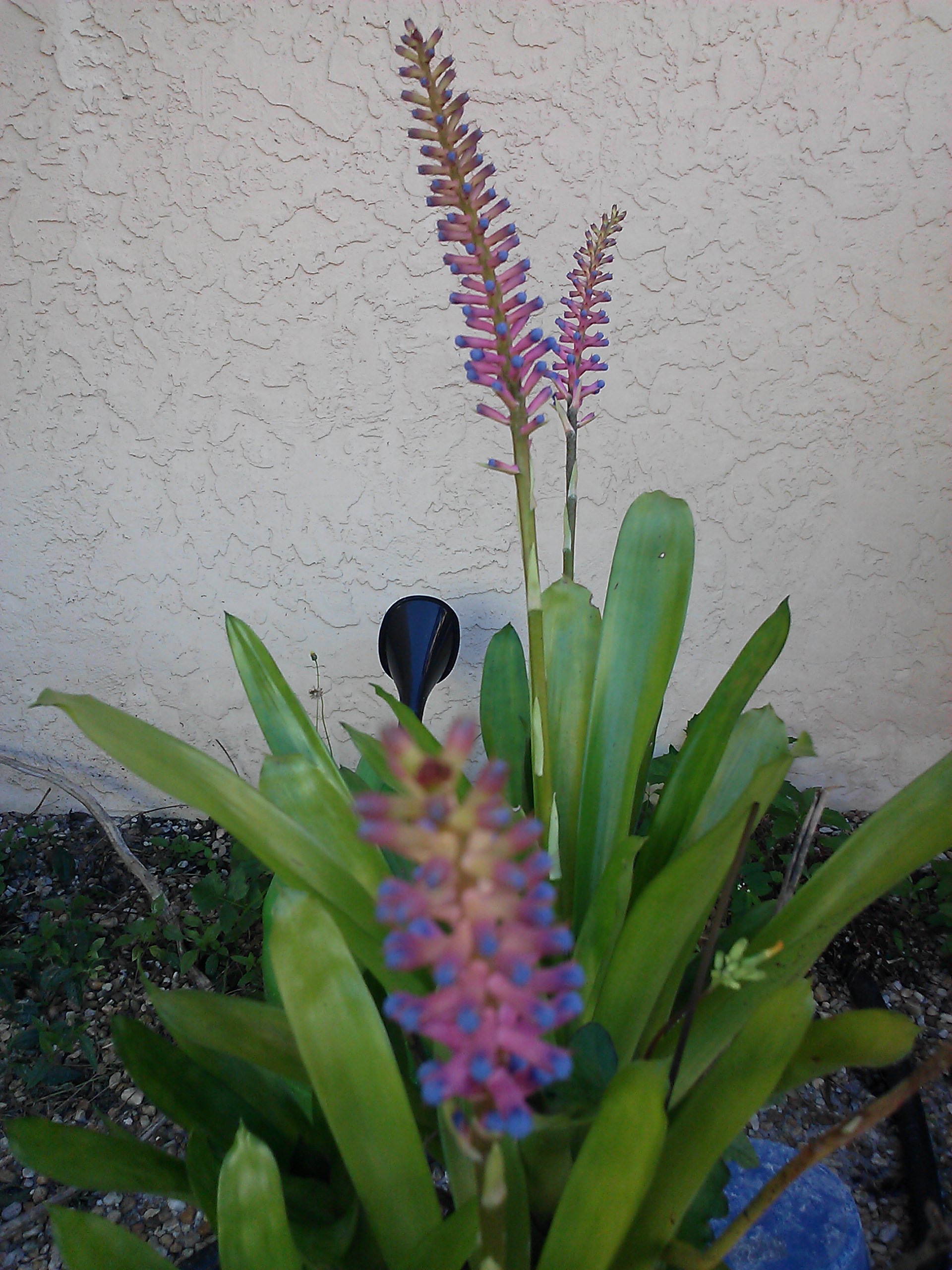
Matchstick Bromeliad- Aechmea gamosepala

Image

Here is the Matchstick Bromeliad, so named because the components of the flower resemble matches.

These low maintenance Bromeliads light up the garden in the winter.The Matchsticks in my garden bloom in December-January and possibly February. As is with many things, it depends on the weather as to what and when these do their thing. The foliage is on the yellow-green side and shiny, providing a good year round addition to the garden. Slowly, (for Florida take that with a grain of salt) these form masses of color for the winter. I have mine planted alongside Blue Daze Evolvulus and have enjoyed the combination. The Blue Daze generally bloom all winter but will slow down in a cold snap.
These bromeliads are native to Brazil, like many others. They enjoy some sun and humidity. Sort of like me.