Rose Apple – Syzygium jambos

Rose Apple Flowers

Rose Apple Flowers

This is a picture of my neighbors Rose Apple tree in bloom. The tree is about 25 by 25 feet and to the best of my knowledge was planted in the 1960 or 70’s. It has beautiful evergreen foliage reminiscent of Ficus Alii, long thin leaves. The flowers are followed by golf ball sized fruit that no one is very excited about eating. My husband is a famous pie baker and there are some recipes around so maybe we will try a pie later this year. Apparently there is a great deal of differentiation in the quality of fruit from seeds of these trees, meaning some fruit is better than another.

Native to the West Indies, I see these here and there in South Florida, but they are more common in South America and naturalized in parts of India. It is a common dooryard fruit in parts of Peru.

Beautiful when swaying in the wind; in my opinion, this tree could be planted for aesthetic value alone.

Update: We ate some fruit, I can only say it must be an acquired taste or something you have to grow up eating. Kind of perfumy tasting, the fruit is a fibrous shell around a pit. Larry refused to bake a pie after tasting the fruit.

Wild Poinsettias- Euphorbia cyathophora

The Mystery Weed

The Mystery Weed

I was working in my front yard last week and came upon this little plant with bright red flowers. Knowing I had not planted it and it sprang up unbidden from the depths of the sugar sand, I thought it might be a good thing. This plant resembles Snow on the Mountain and looks like a Euphorbia. (Poinsettias are Euphorbias)

My neighbor happened by and I asked her about it. She identified it as a Wild Poinsettia.

The research began, first I found out it is a Wild Poinsettia, sometimes called Fire on the Mountain versus Snow on the Mountain. And a relative of both Snow on the Mountain and Christmas Poinsettias. The next thing that came up was, Invasive! and it had been featured as weed of the month for the state of Florida.

Another foreign invader in our midst. It was too good to be true.

The Vegetable Garden

One of the many weird things about South Florida is Vegetable Gardens. Whereas,  anywhere north of, say Lake City, Florida, tomatoes are planted in late spring and enjoyed all summer. Here it is Halloween. It is just not really normal. The other odd thing is you stop gardening around the summer solstice; sometime around the end of June it becomes too hot to leave the Air Con. The humidity also starts growing the most fantastic mildews and bugs and biblical type events. I have been told it is possible to grow tomatoes year round but you have to put umbrellas over them in the summer. This seems a bit much. Why do that when the grocery store has air conditioning?

Last year I planted tomatoes the week of Christmas, just so I could remember when I had planted them. This year I planted them in January because there had been some cold snaps and I was waiting for the weather to clear. The vegetables are proceeding normally, I have green beans, broccoli and herbs as well. Looking forward to picking some vegetables soon.

I have no fear of a tomatoless life. Worst comes to worst there is always Publix or our local produce purveyor. Our local farm stand has an incredibly reliable source of good Roma Tomatoes, actually ripe and tasty, I eat them year round. There is another vegetable phenomenon that is peculiar to South Florida..there is no summer corn on the cob, but it is here every other season. Winter corn was a discovery I have been enjoying.

I have recently learned how to make fresh pasta. As a result of this we have been eating fresh corn, red onion, spinach, garlic and herbs all sautéed in bacon fat over pasta. OK, it is low sodium Bacon with a little Olive Oil so it won’t stick to the inside of my veins.

This week I bought a Lime tree, Everbearing is what the label said. This brings my fruit tree count to three, a Dwarf Thai Mango and a Meyer’s Lemon are already planted. We have had some lemons and they were great. Eventually I will have to learn how to make Mango Margaritas and use all homegrown fruit. The jury is still out on buying a banana or a Papaya tree. Not sure I would ever be able to eat all those bananas.

Spare Parts

I think all gardeners have this. A group of potted plants they bought for one reason or another and then set aside, for later. The later thing is the rub. My husband refers to this group of potted plants as my spare parts.
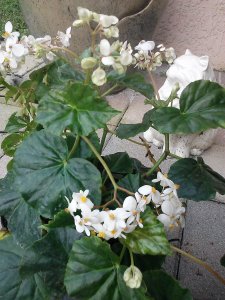
Spare Begonias

Spare Begonias

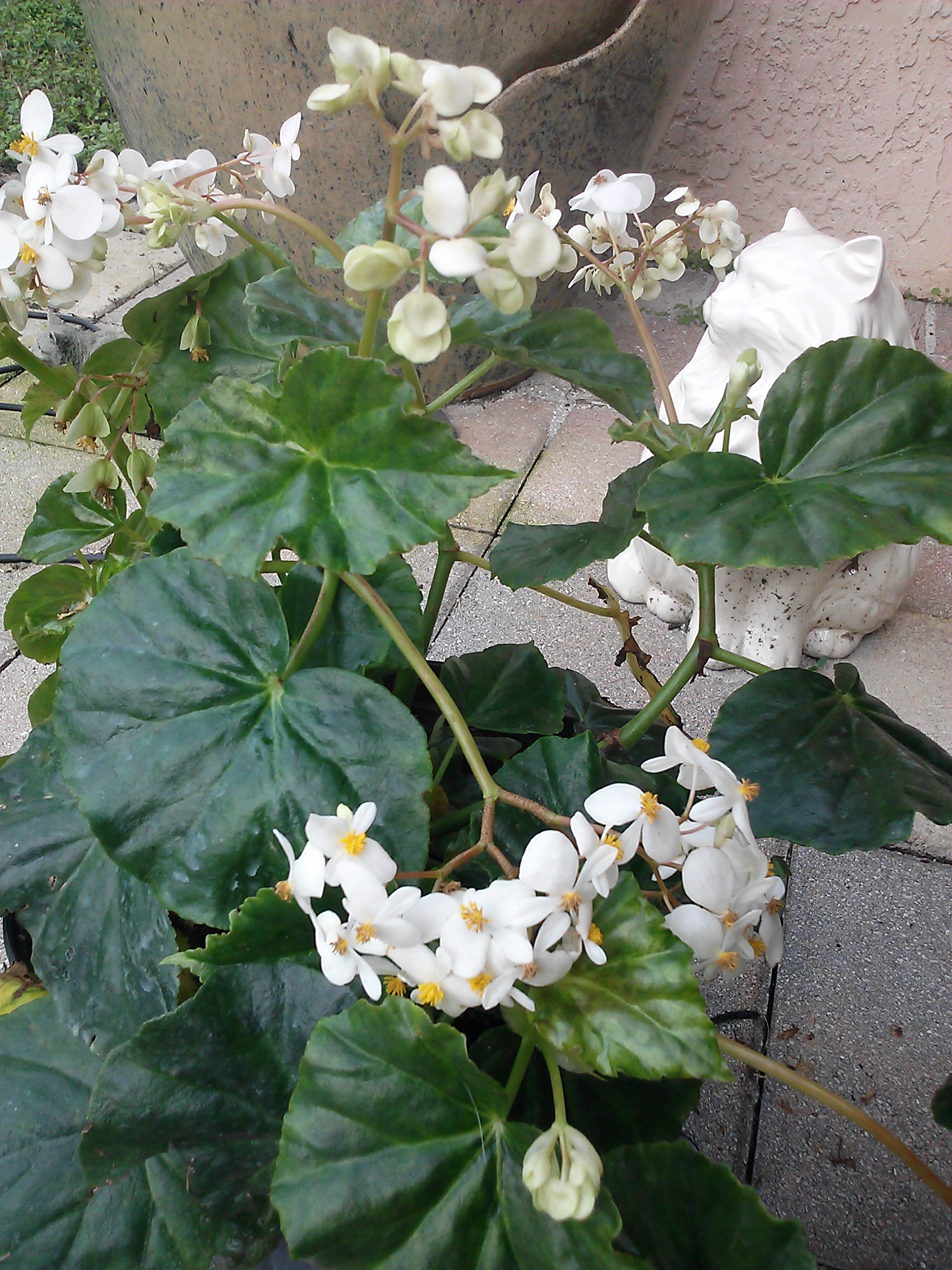
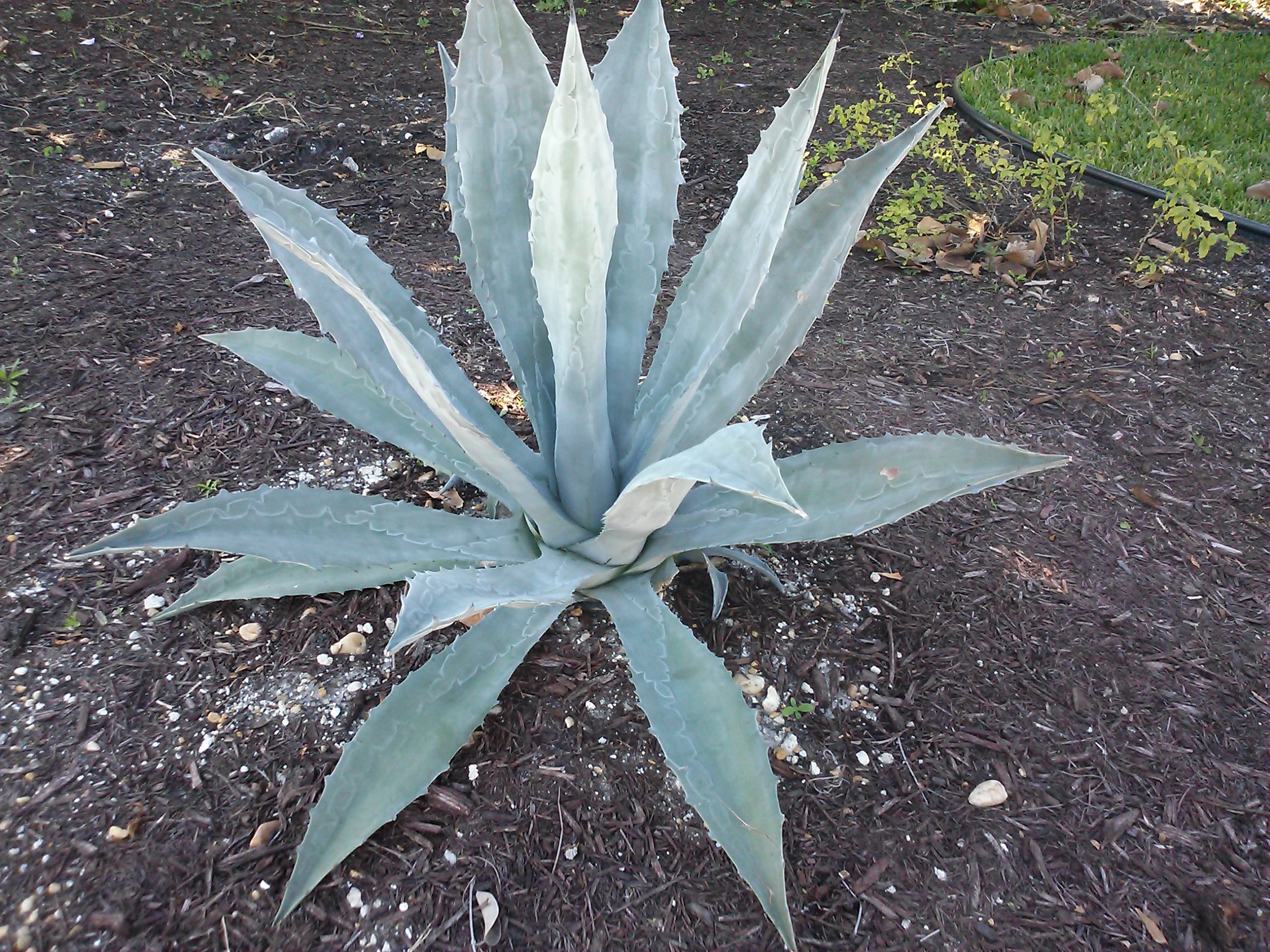
Currently I am hoarding Begonias. I found some Begonia odorata for a great price so I bought a couple. I have a few leftover Bronzeleaf Begonias so they are still around in a tray. I should also confess that there are three starts of Blue Agave in the side yard that have been sitting over there since this summer. Although, I have a good reason for thinking about those for a long time..they are very sharp and once in place they need to stay there. Also, in the realm of aesthetics Blue Agave is a bold statement. Not to be taken lightly.
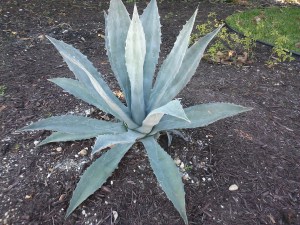
Blue Agave

Blue Agave

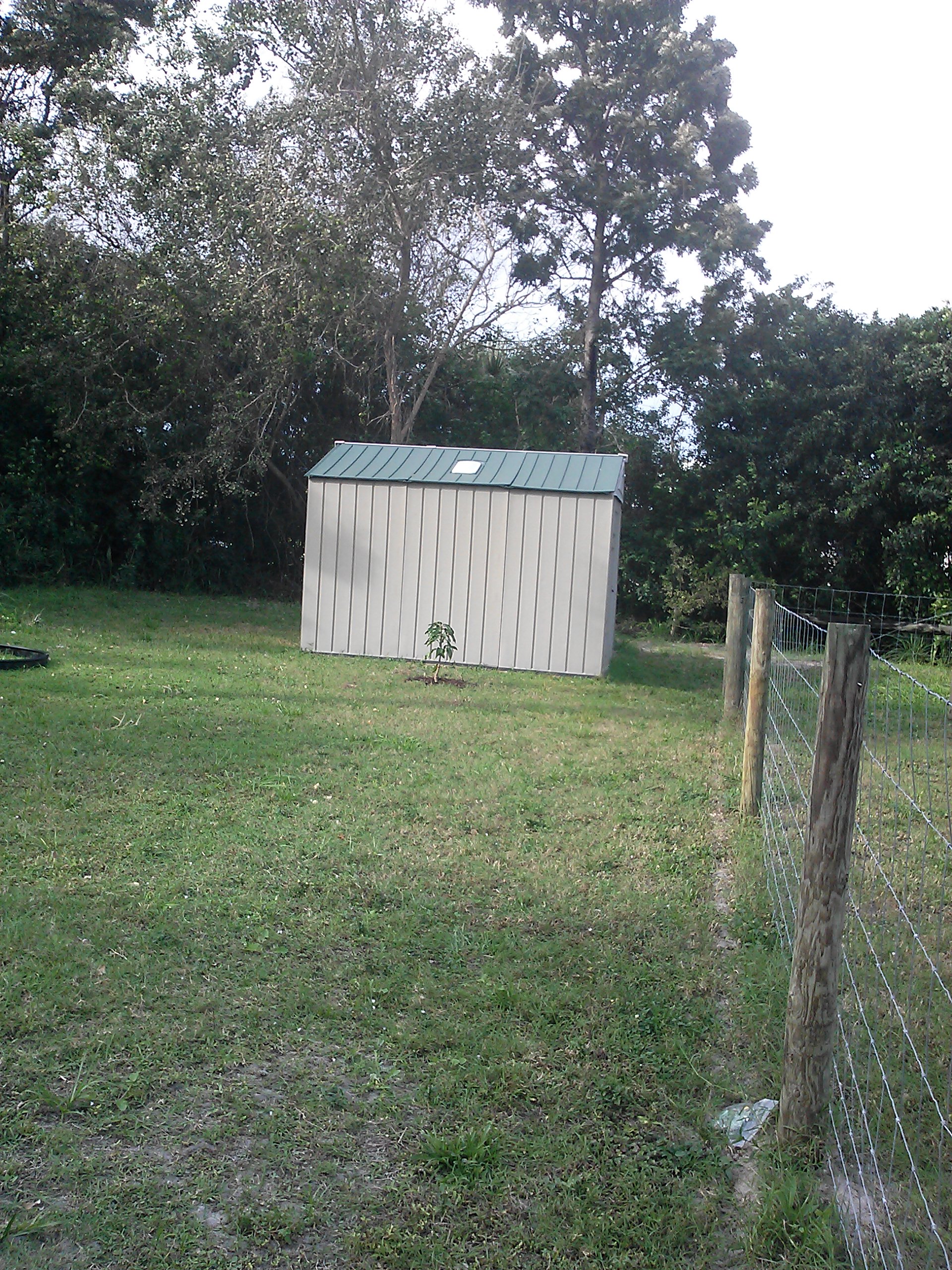
I bought some more expensive plants at Gardenfest in Vero but I have endeavored to actually install those. One being a Mango tree, OK, I want some Mangoes as soon as reasonably possible. That I planted, fertilized and have been watering. Not to mention it is an Evergreen tree that will screen my husbands ugly Tupperware Lawnmower shed. More fertilizer, please..
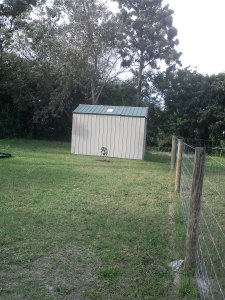
More Fertilizer, please

More Fertilizer, please

The second plant from Gardenfest was a leafless Bird of Paradise, really cool and I can’t wait to see it bloom. It is also in the ground – next to a Tibouchina. I am breathlessly waiting for all to grow up and bloom. That Bird of Paradise had roots that looked like Parsnips and there is one down the street – it took about two years for me to figure out what is was..for a while there I thought the lady who lived there was sticking silk Bird of Paradise into a Juncus, this plant is really cool.

The Begonias I am having a hard time getting around to planting. Begonia odorata is new to me, I am not sure why these are not more common as a Summer Annual up north. The ones that have been sitting on my back porch for a month (at least) are beautiful.

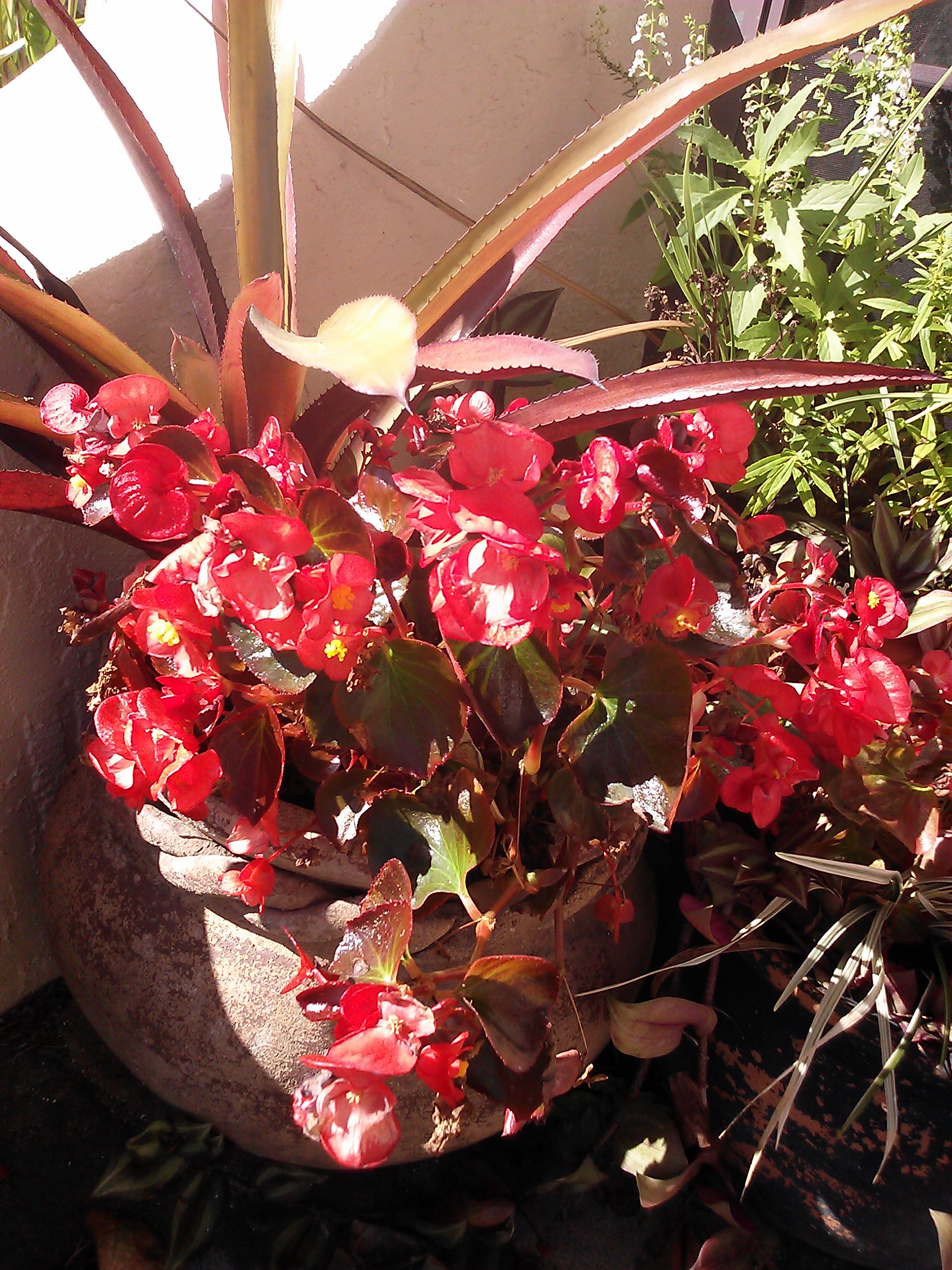
I am finding there is not enough variety in Annuals in South Florida, people are really hung up on Impatiens and Pentas, pretty boring stuff. I find the New Guinea Impatiens particularly distasteful and Impatiens is a fiesta of fungus. I love to have some containers with color around my doorways, I am slowly going over to Bromeliads and the Zebrina Wandering Jew. (both things I found growing in the yard and repurposed into pots with a few Bronzeleaf Begonias.)
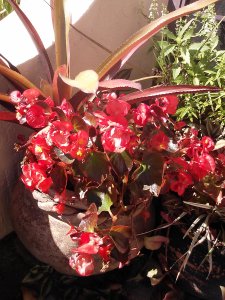
Begonias and Bromeliads

Begonias and Bromeliads

Matchstick Bromeliad- Aechmea gamosepala

Image

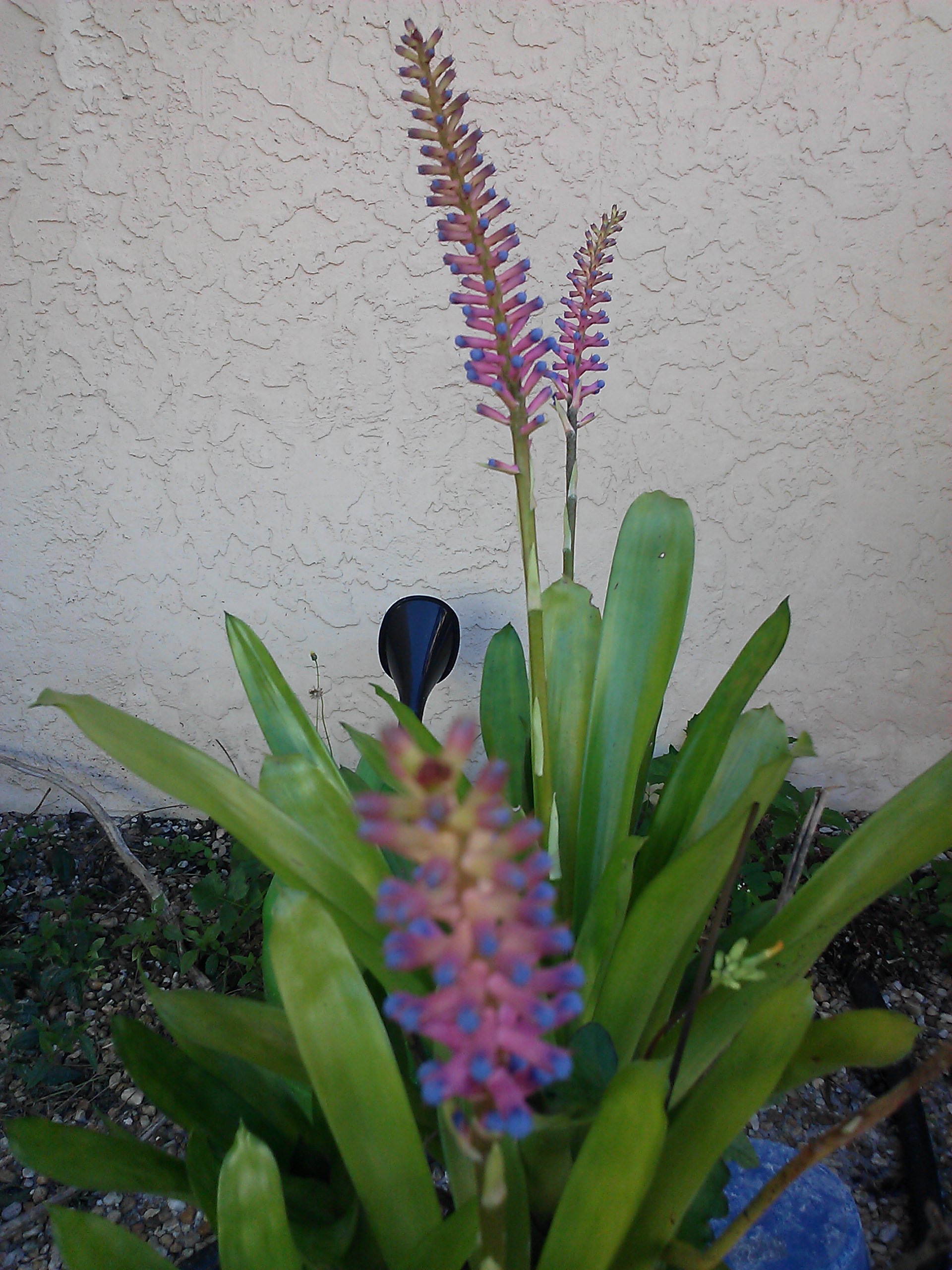
Here is the Matchstick Bromeliad, so named because the components of the flower resemble matches.

These low maintenance Bromeliads light up the garden in the winter.The Matchsticks in my garden bloom in December-January and possibly February. As is with many things, it depends on the weather as to what and when these do their thing. The foliage is on the yellow-green side and shiny, providing a good year round addition to the garden. Slowly, (for Florida take that with a grain of salt) these form masses of color for the winter. I have mine planted alongside Blue Daze Evolvulus and have enjoyed the combination. The Blue Daze generally bloom all winter but will slow down in a cold snap.
These bromeliads are native to Brazil, like many others. They enjoy some sun and humidity. Sort of like me.


Winter Starburst Clerodendrum – Clerodendrum quadriloculare

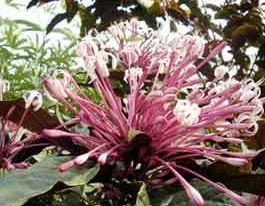
Lo and behold I discovered yet another source of color for the winter garden.  The Winter Starburst Clerodendrum is a large shrub to small tree (8-12’ ht.) sporting beautiful pink flowers in winter with the added bonus of foliage that is attractive throughout the year. Belonging to a group of plants sometimes called Glory Bower, this certainly lives up to that name. It is glorious when in full bloom.

The first one of these I saw stopped me in my car.. what is that and blooming in the middle of Winter? Fabulous.  After a bit of detective work I found out what it is. I have seen a few scary examples of Clerodendrums around my neighborhood. Gone wild and not in a good way. I think one needs to be prepared to do some maintenance pruning or pay the price. On the other hand, you could say you were going for the cottage garden look. Problem solved with little or no work.

There are many different types of Clerodendrum – most native to tropical south Asia;  the plant types range from vines to perennials, shrubs up to small trees.  These plants have some invasive tendencies so be careful who you invite into the garden. This one grows in partial shade and prefers moist soil. Clerodendrum is a good addition to the butterfly garden.  Another similar variety that is not quite so big is ‘Pink Diamond’ Clerodendrum, this is also called Cashmere Bouquet for its fragrance (my grandmother used a soap by that name – the smell of the soap would not motivate me to use this plant!) ‘Pink Diamond’ grows 48” high and some have variegated foliage. An additional  identifying feature is the back of the leaves are purple year round, this is another good quality of this plant.

Christmas Palm – Veitchia merrillii

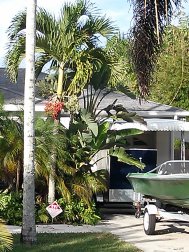
The Christmas Palm on Christmas Day.  This particular Palm I learned as the Adonidia. I think Christmas is a much better name; especially with the red mass of berries resembling ornaments during the holiday season.  These are also called Manila Palms as they are from the Philippines. Not an exceptionally cold tolerant plant they will grow in South Florida in coastal areas south of the magical State Highway 60 line. Many of these palms were lost during the unusually cold winter of 2010.

Christmas Palms can be used as single or multi trunk trees and grow to about 20 feet tall, this makes them excellent for residential use near buildings in the one to two story range. These are not a self cleaning Palm so fronds past their prime must be trimmed. They also add a tropical flair to pools and near spas, I have planted a multi trunk near my lanai to provide shade in the summer. And I am just waiting for some Christmas berries.href=”https://theshrubqueen.com/wp-content/uploads/2013/12/cam00183.jpg”>Image

Wild Coffee- Pschotria nervosa

Wild Coffee- Pschotria nervosa

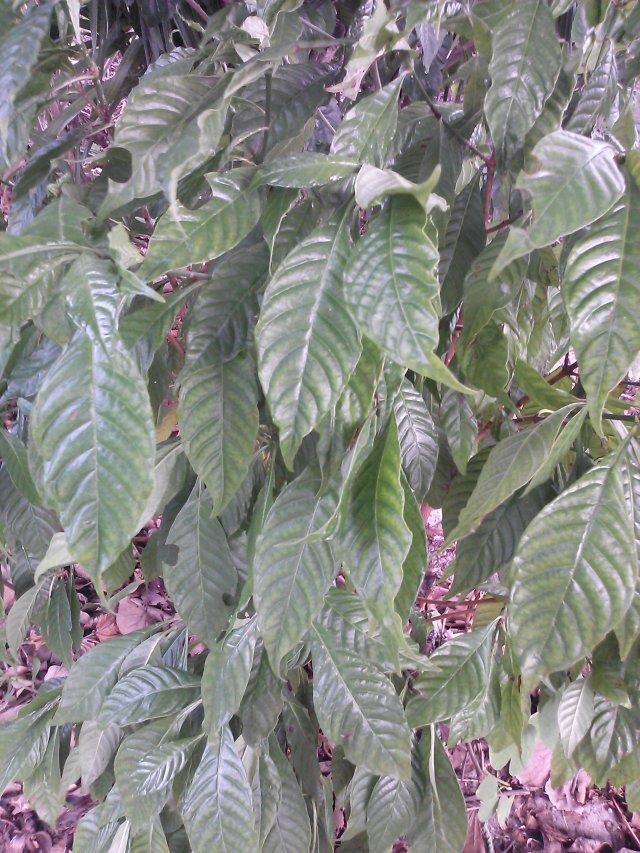
This Wild Coffee is in my neighbor’s yard. A native shrub well suited to high shade with attractive dark green foliage reminiscent of Gardenia without the flowers or insect problems.
A good butterfly plant with flowers and small (coffee-like!) berries.

Non Toxic Weed Killer

Non Toxic Weed Killer

Here it is. Dead Nut Grass. I love it. My mother called these “those awwfull sand burrs” Well, they are awful but this evil weed grows as far north as Minnesota and has higher reproductive powers than rabbits. I am not sure awwfulll sand burrs properly represents the dilemma.

These are correctly referred to as sedges, I think perhaps that gives a herbicide resistant coating to the leaves. My yard being as unmaintained as possible was infested with this plant. For the most part, I can ignore them – it looks sort of like grass if mowed. However, in the paver walkway, it is kind of offensive.

I read up on the weed killers for these things and if you have well water and domestic house pets or children or if you want to support plant life as we know it in the near future; the prescribed herbicides are not desirable. What kills the nut sedge/grass/ sand burrs also kills every else and for a long time after, do you really want this chemical in the groundwater. Really? Ever?

So, I decided to try the non toxic version. Which, oddly enough, kills the evil sand burr/sedge and does not kill your dog, child or render your front yard infertile for generations. I found the recipe here and there online and one of my Greyhounds seems to find it tasty (?) OK, he is a dog. Maybe this is dog salad dressing or something, just stay away from those mustard relative weeds..Dogs love them and they irritate the dog colon. Not pretty, you end up at the Emergency Vet getting Sub-Q fluids. A whole ‘nother post. Charles, the large spotted Greyhound, is OK. Even though he ate the non-toxic weed killer.

A combination of dish soap, vinegar and rubbing alcohol works. Truly meaningful, I am not sure I would use this stuff on my beds or lawn, but walkways, etc. YES!