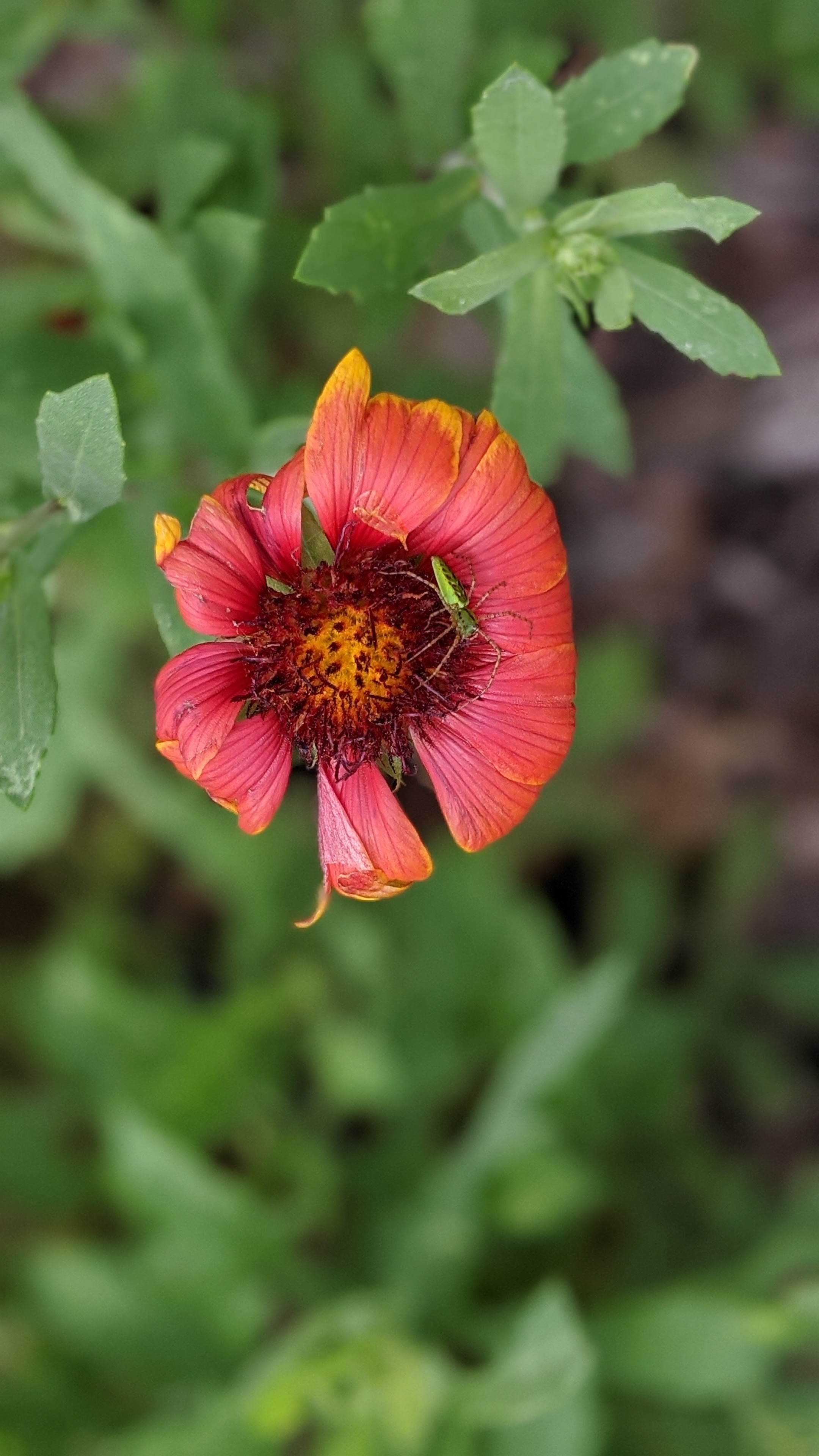
Six on Saturday – Post Hurricane

Maybe I should say Hurricane Post. It is inevitable when a hurricane hits Florida I hear from a lot of people who are wondering if we are okay. Which is great, I am glad people think of me. This particular hurricane, Helene, hit the opposite coast of Florida with devastating results and is still continuing to wreak havoc two days later. In my garden, about 8 dried palm fronds came down. The storm passed about 2 or 300 miles to our west, the wind field was huge and we were barely on the edge of it. There was a fairly consistent 25 mph wind Thursday and Friday with a few downpours from the outer bands of the storm, but that was about it. The garden is intact and well watered.

On to Six, to see more SOS gardens, undoubtedly hurricane free, visit Jim at GardenRuminations

Turkeytangle Frogfruit:

Several people have asked to see this, so here it is. I removed our icky lawn (a term I use loosely) and replaced it with an evergreen wildflower called TTFF (Phyla nodiflora). These are a bit difficult to source, so I bought a blob online and propagated the cuttings. This is the “lawn” last year.
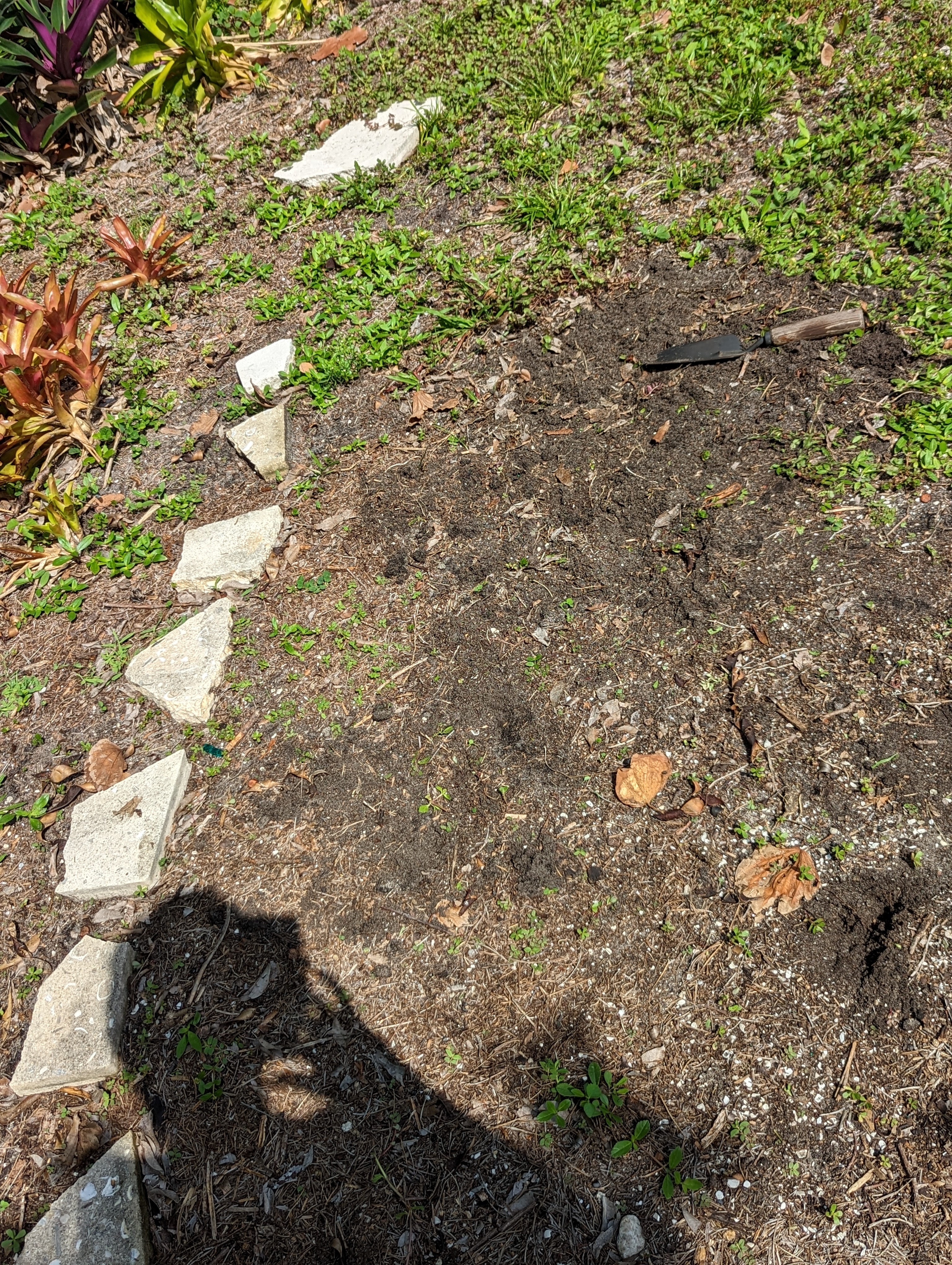
I cleared the area by hand and then installed rooted cuttings. Much trial and error, hand weeding and head scratching ensued. I read somewhere to install the cuttings in toilet paper tubes and tried it. This seemed like a reasonable plan – the raccoons thought it was so fun they pulled out all the tubes, and ate the cuttings. Replanted without tubes and that worked. My now curated evergreen weed, uh, wild flower lawn. I think this is more groundcover than lawn.
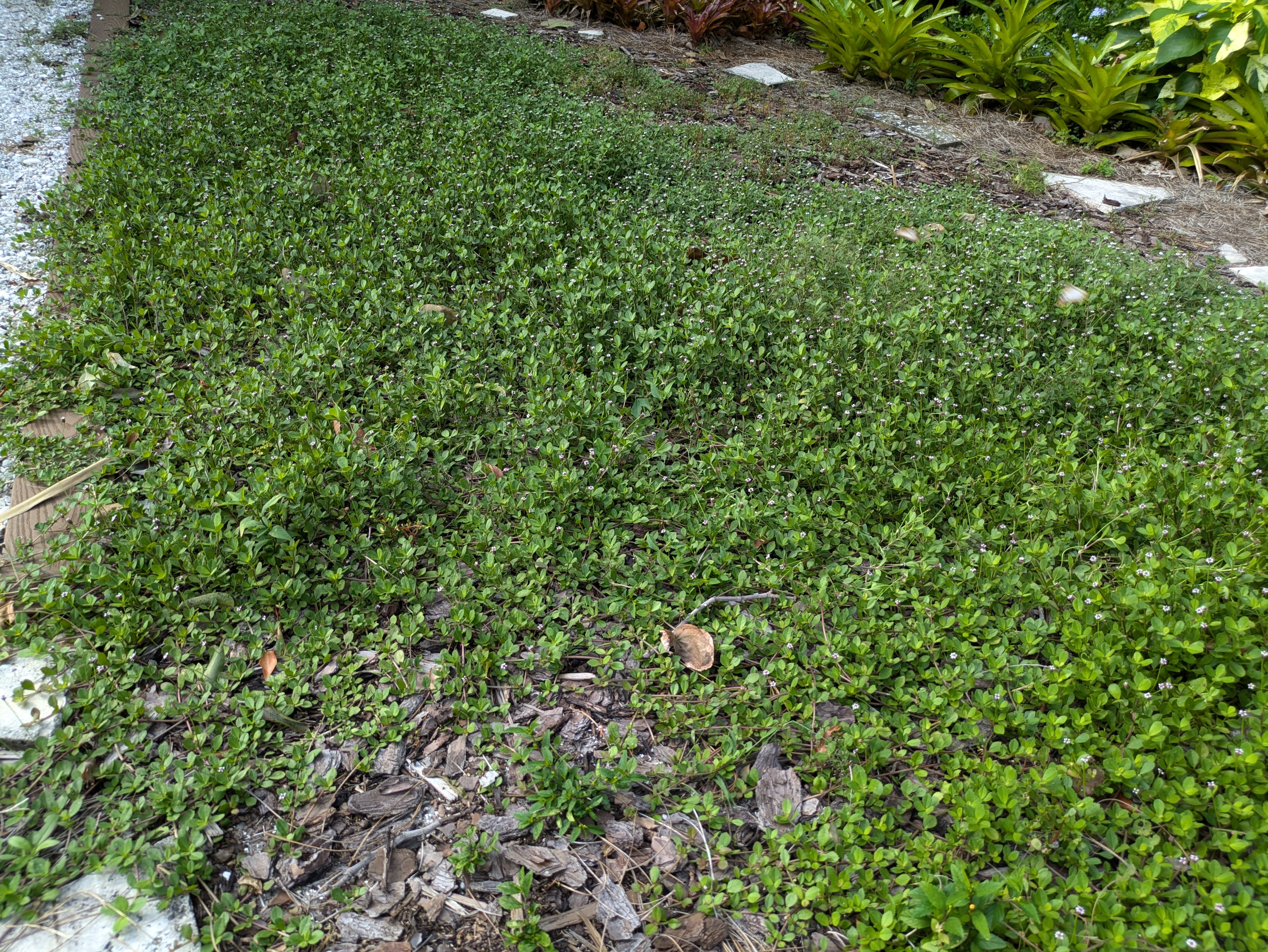
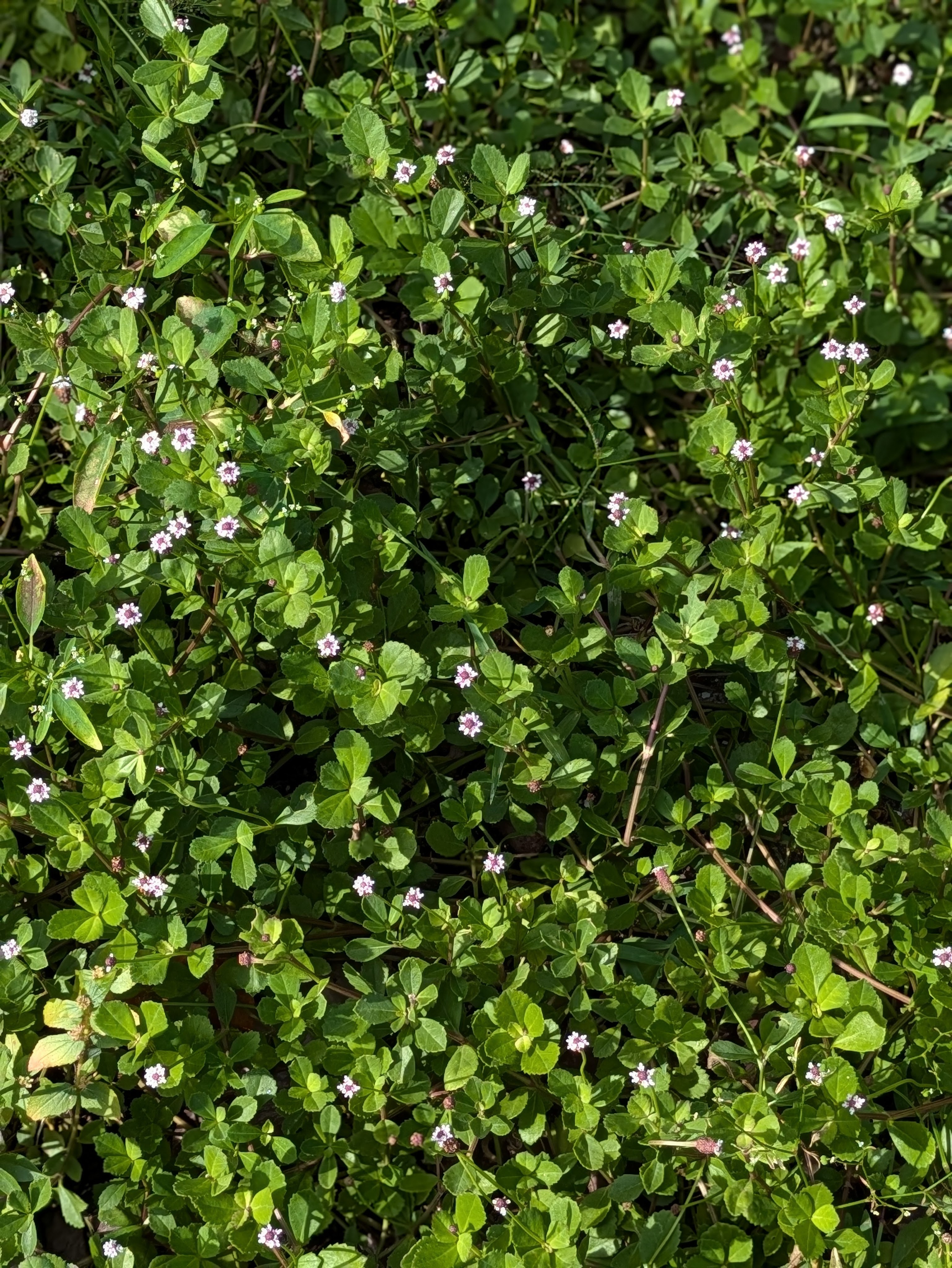
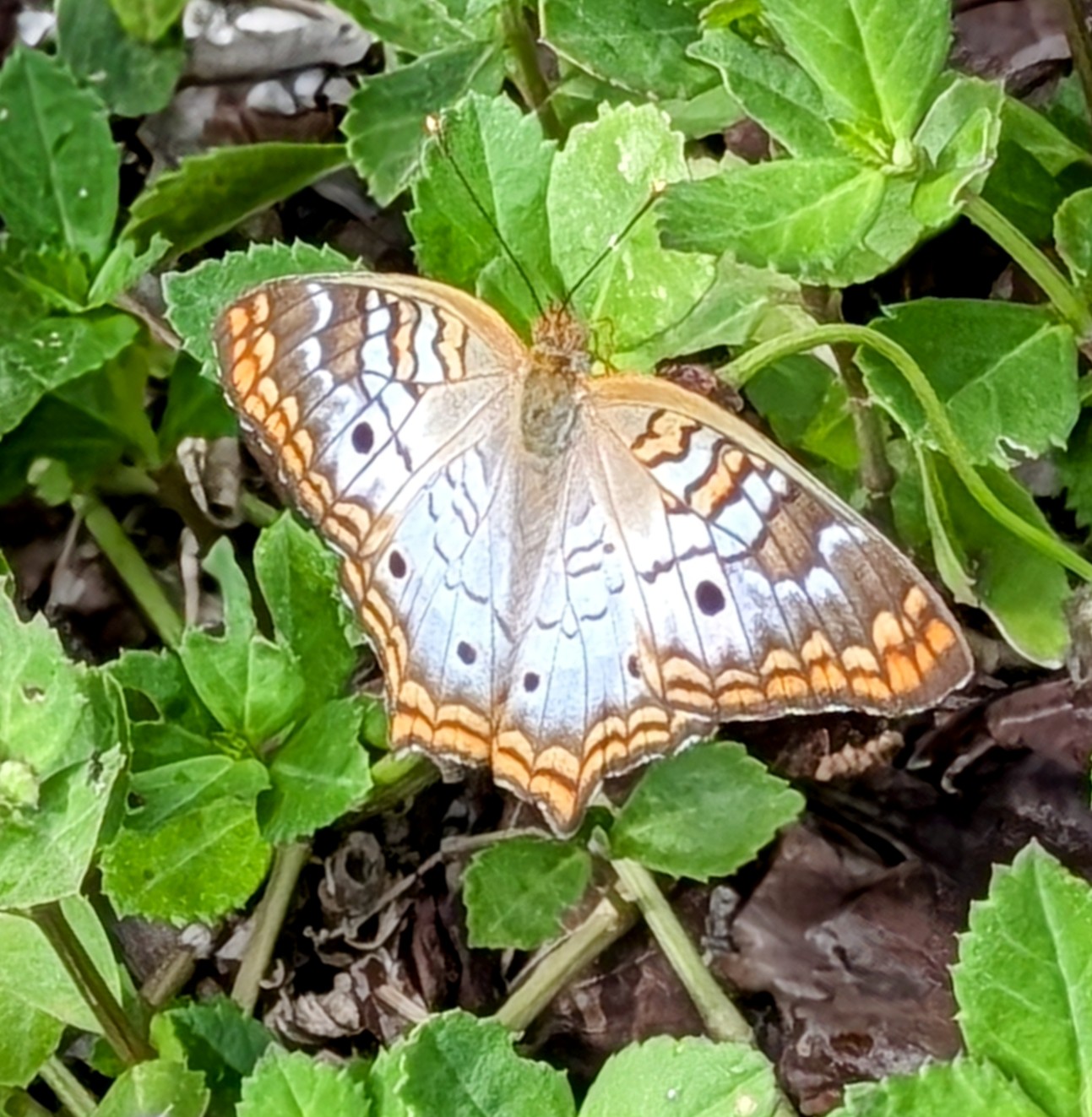
The curated weeds are still growing in and host three types of butterflies. I have only seen one type, White Peacocks, but there are usually 4 or 5 flying around the TTFF. A closer view.
The White Peacock.
Gardening season is not quite here in South Florida, but I do have a couple of interesting volunteers.
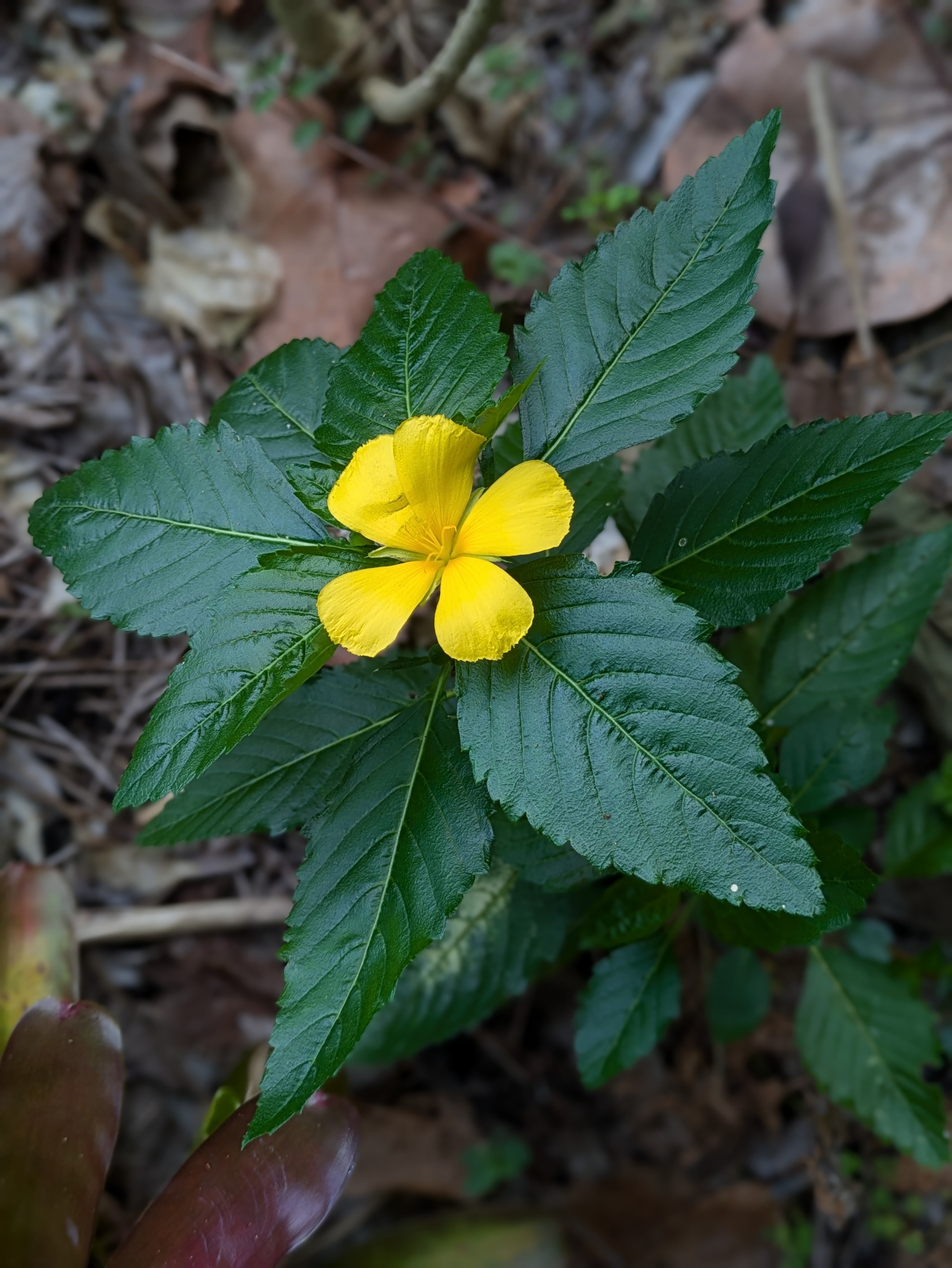
This is a Primrose (Ludwigia) of some sort. They just appear and I like them here and there.
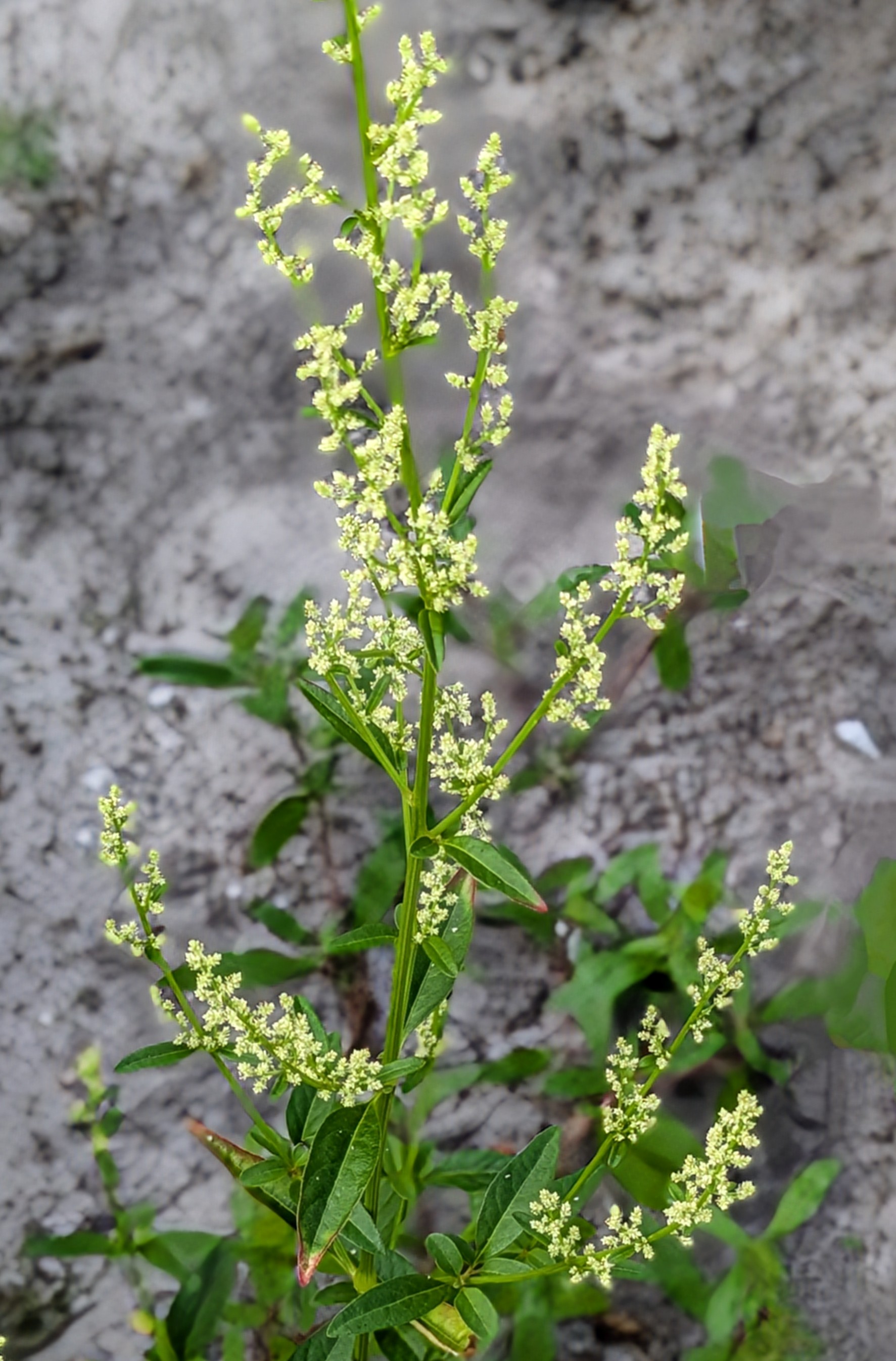
One of my favorite fall flowers, the Juba Bush (Iresine diffusa). Another plant that appears and cannot be grown where it doesn’t want to be. These are fragrant and dance in the wind. It amazes me that anything grows in the grey sand.

That is all from my garden this Saturday. Here is hoping Juracan (Caribbean God of Hurricanes) is done with us for the season.

In a Vase on Monday – Sage Thoughts

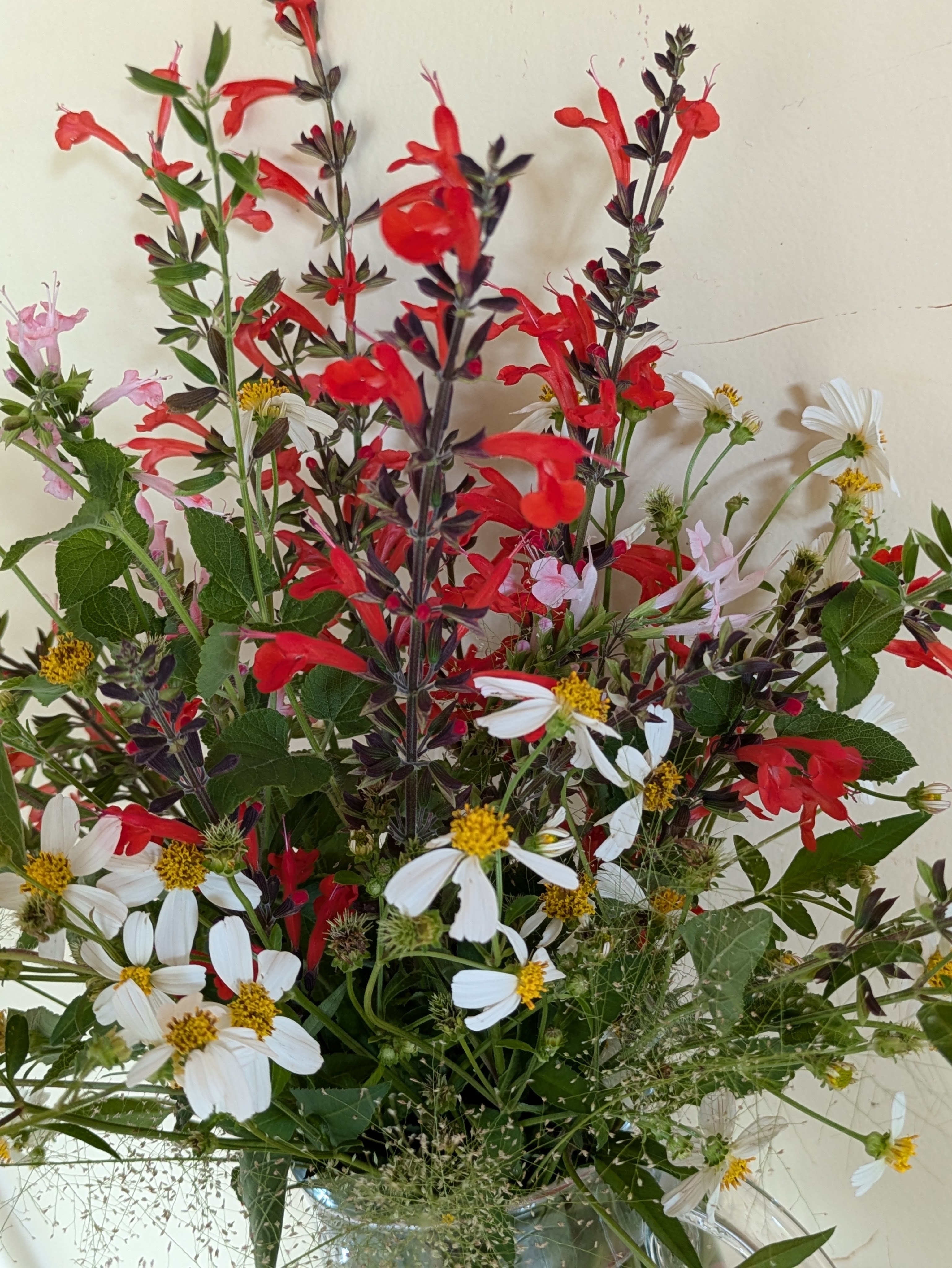
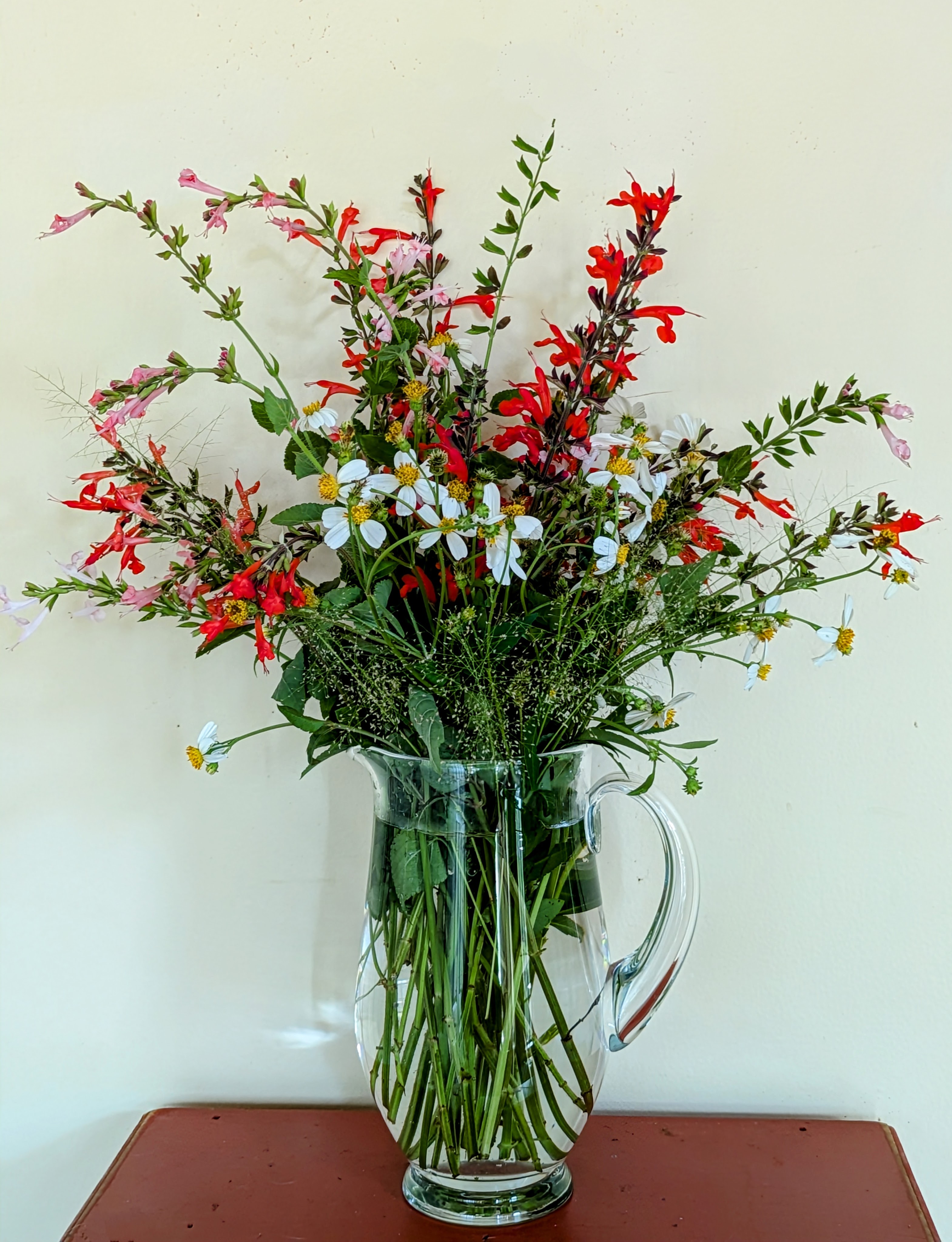
If wisdom is being sought from my vase, it is time to look elsewhere. The sage here is Salvia, I noticed its wonderful sage herbal scent as I was cutting this bunch to fill a crystal pitcher. The crystal pitcher is a wedding gift. I would hazard a guess Tiffany’s would recommend its use to serve orange juice for Mimosas at a fancy brunch — not serving as a receptacle for a native bunch. The native wildflowers in my garden are flourishing from abundant rain in the past weeks. I picked all native wildflowers today.

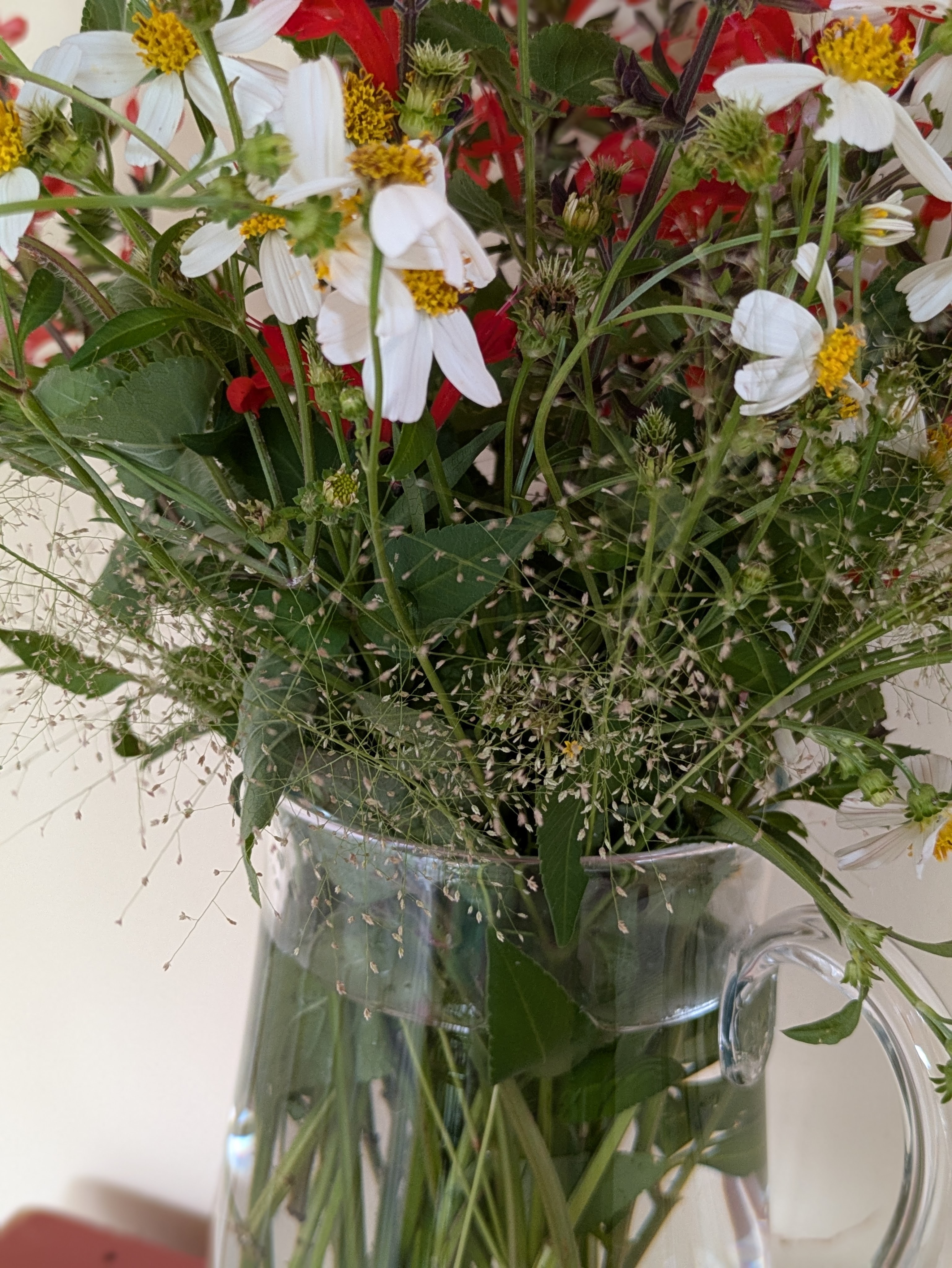
Closer views:

Red and pink spikes are Tropical Red Salvia (Salvia coccinea) these reseed prolifically and are everywhere. Cutting the flowers saves me some seedling removal chores. The same goes for the white daisies, Bidens alba, incredibly prolific – the pollinators love them so much I almost hate to cut them.

The airy plant in the foreground is native Witchgrass (Dichantthelium spp). These are small grasses that pop up in the garden. They are reminiscent of Panicum. They are not too aggressive so I leave them be.

I’m dreaming of a cold front, realistically, we are a month out from that first delightfully cool day. One can dream. Pop over to Cathy’s blog to view some more vaseage…

Six on Saturday – Indian Summer

I am joining the SOS crowd celebrating Indian Summer in South Florida. I did not realize it was possible to have Indian Summer in my garden, yet here we are. It is dry (not raining), humid and a high of 86 F (30 C) is predicted today. This weather brings on a mix of summer and fall colors. To visit gardeners around the world with less humidity – follow this link to Jim’s blog http://gardenruminations.co.uk

I finally saw and captured an image of the rare Atala butterfly that has been hosting on my Coontie cycads. This butterfly is listed as endangered due to loss of habitat. It is native to the Caribbean, the Bahamas and South Florida. I am at the northern end of its range.

I was excited to see some actual fall color. This is Virginia Creeper (Parthenocissus quinquefolia). I think this vine grows everywhere and some people actually buy it!

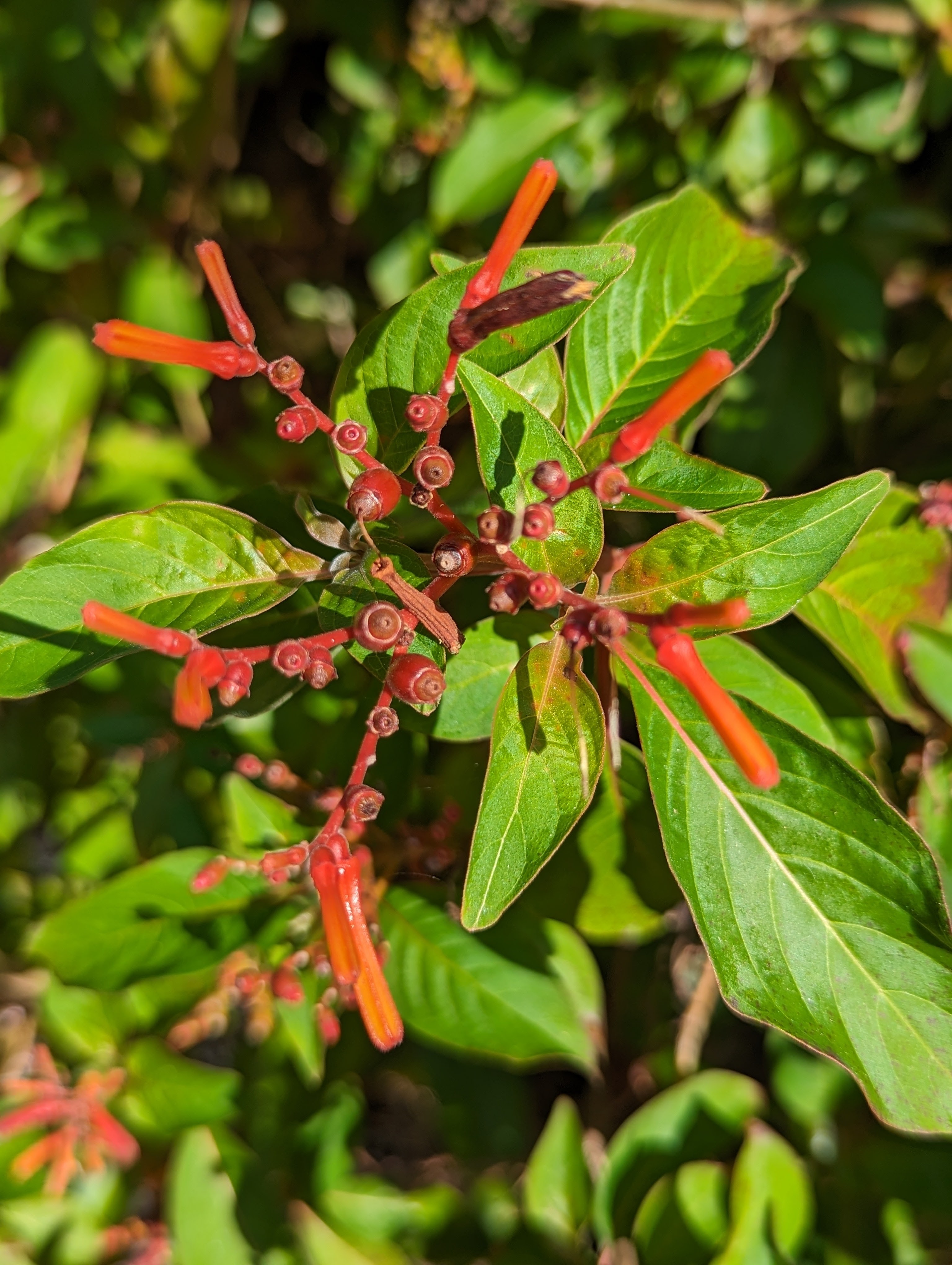
Fall berries do happen in my garden. These are on the native Firebush (Hamelia – now I am not sure of the last name!, the botanists have been at it again) These eventually turn into a juicy black fruit that the birds covet.

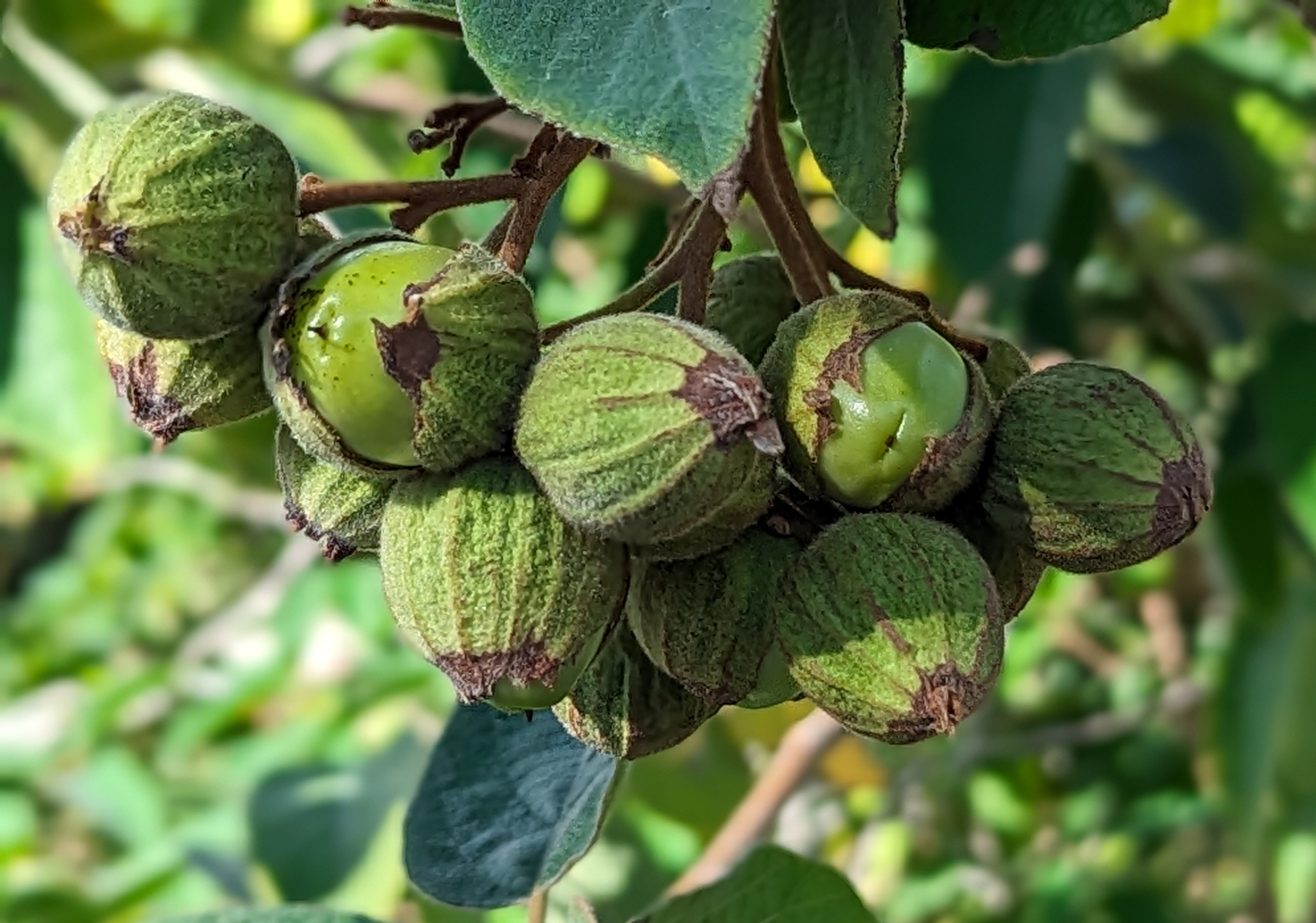
Fruit on the White Geiger tree (Cordia boissieri) I like these and use them in flower arrangements sometimes.

A native Portulaca pilosa, common name Kiss Me Quick. No idea why. I like these, but they are stubborn and will only grow where they want to grow.

Another November flowering plant, the Esperanza (Tecoma stans). These were once considered native and now they have been vilified as invasive?! It seems someone discovered a sea captain brought these from the Caribbean to Key West a few hundred years ago. I like them and have had no seeds germinating from the plant.

That’s all for this Saturday. I’m hoping for some precipitation and cooler days.

Happy Gardening!!

Six on Saturday – Clear Sunny Days

My garden tour this Saturday morning was punctuated with an overgrowth of weeds, some plants attaining a size I did not know was possible, fall fruits and wild flowers …and, at long last, clear blue sunny skies with low humidity. Ahh. To join other SOSers on garden tours around the world visit our host, Jim at this link http://gardenruminations.co.uk

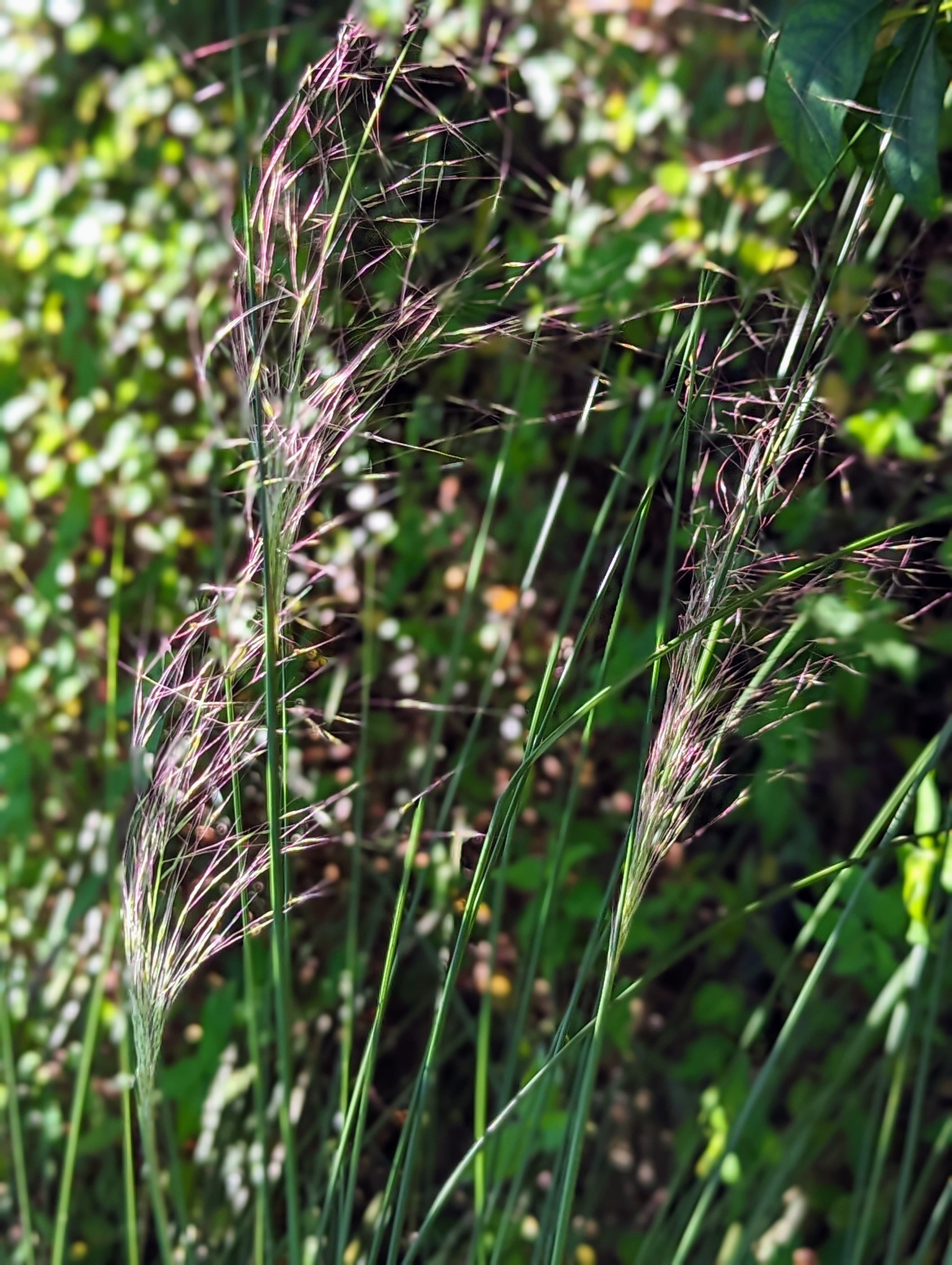
One of my fall favorites, Muhly Grass (Muhlenbergia capillaris) is just starting to flower. These usually bloom around the first week of September, so they are late this year. The flowering schedule for a lot of plants was off this year, some sooner than normal, some later.

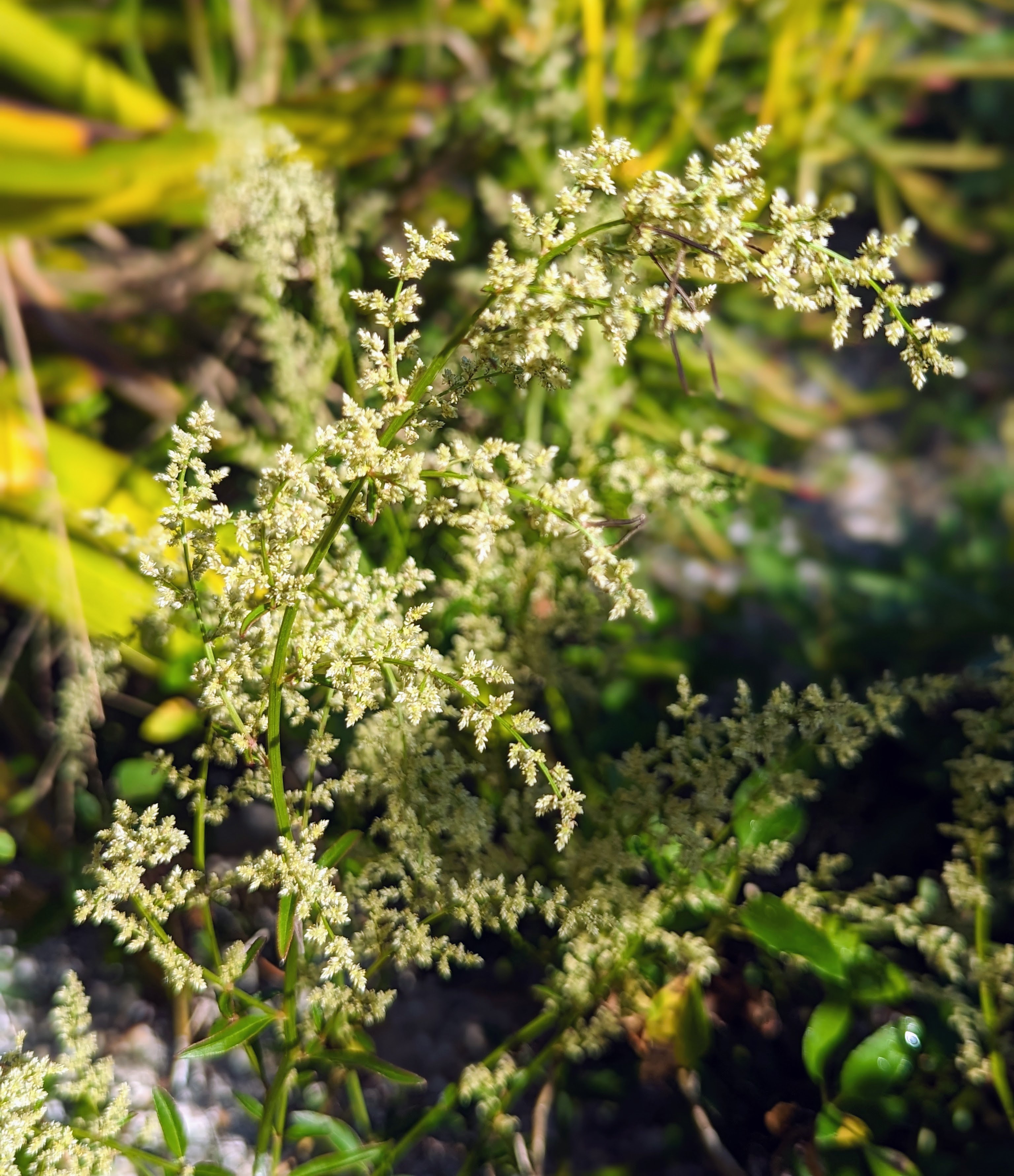
Another fall fav is the Juba Bush (Iresine diffusa). This wildflower is named after a Caribbean dance called the Juba because of the way they sway in the wind.

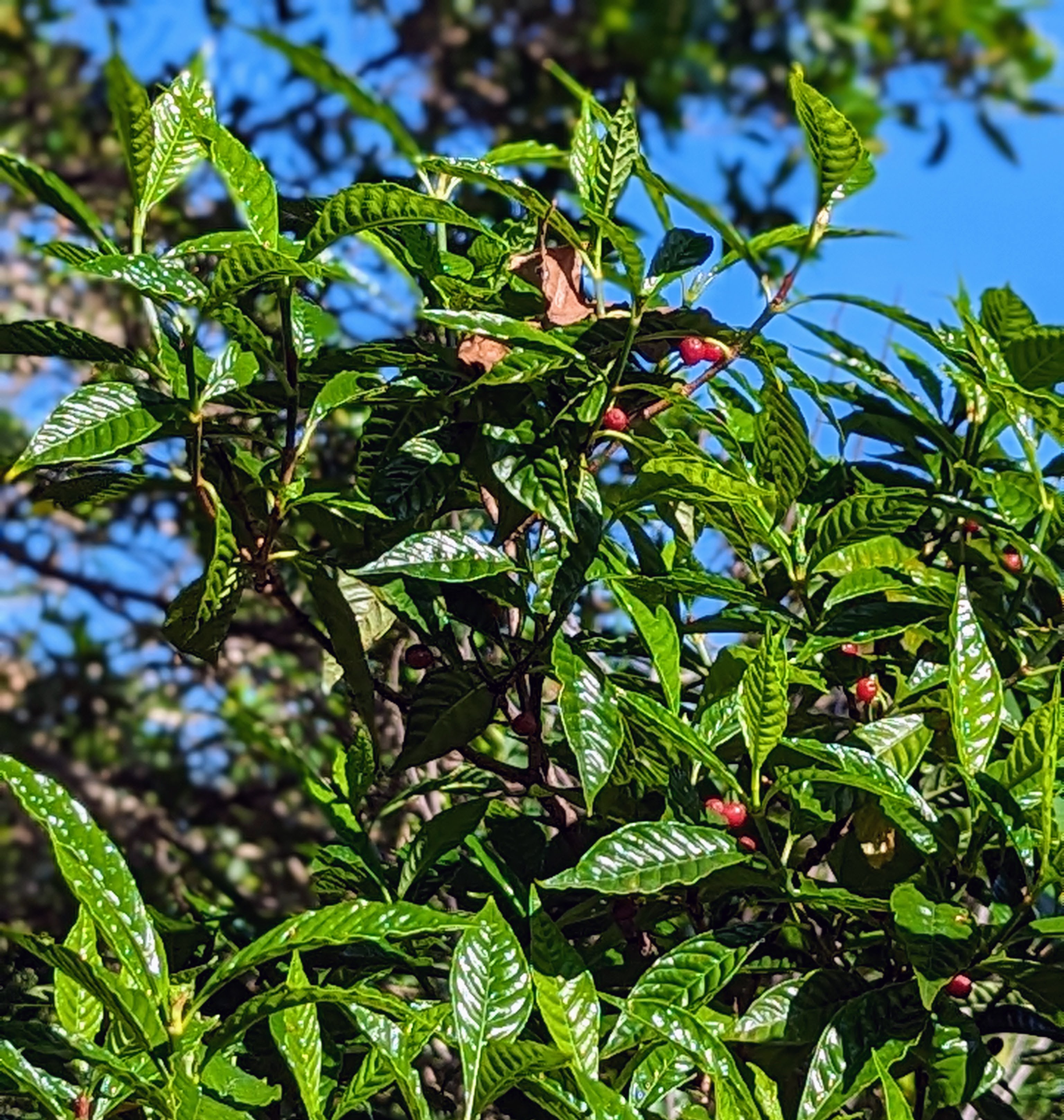
The birds are enjoying the berries in the garden. This is called Wild Coffee (Psychotria nervosa) – it is a Florida native shrub, great for butterflies and pollinators. The berries look like coffee, but do not have caffeine.

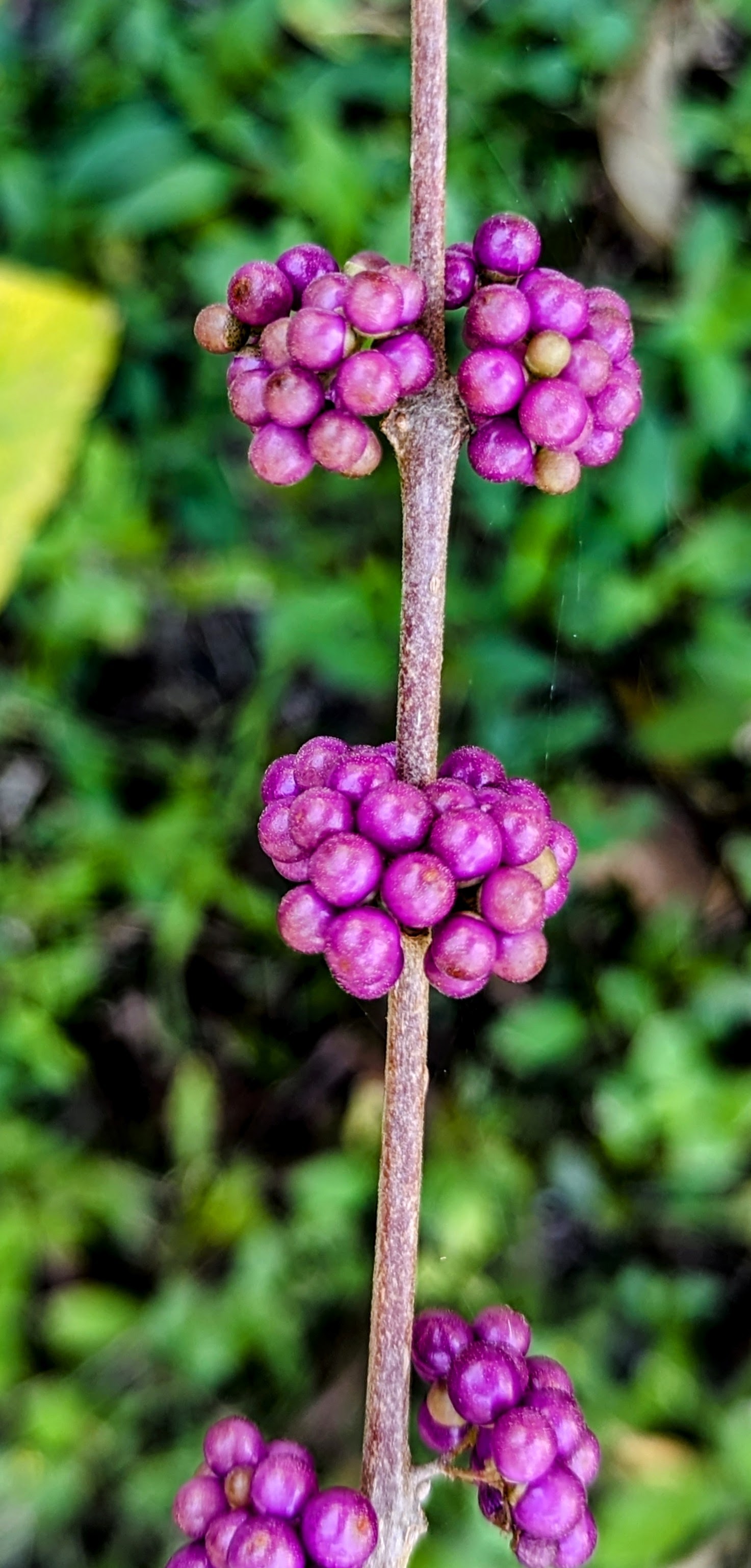
More late color in the garden. I usually have Beautyberry (Calliocarpa americana) by the first week of September and here it is finally showing some purple.

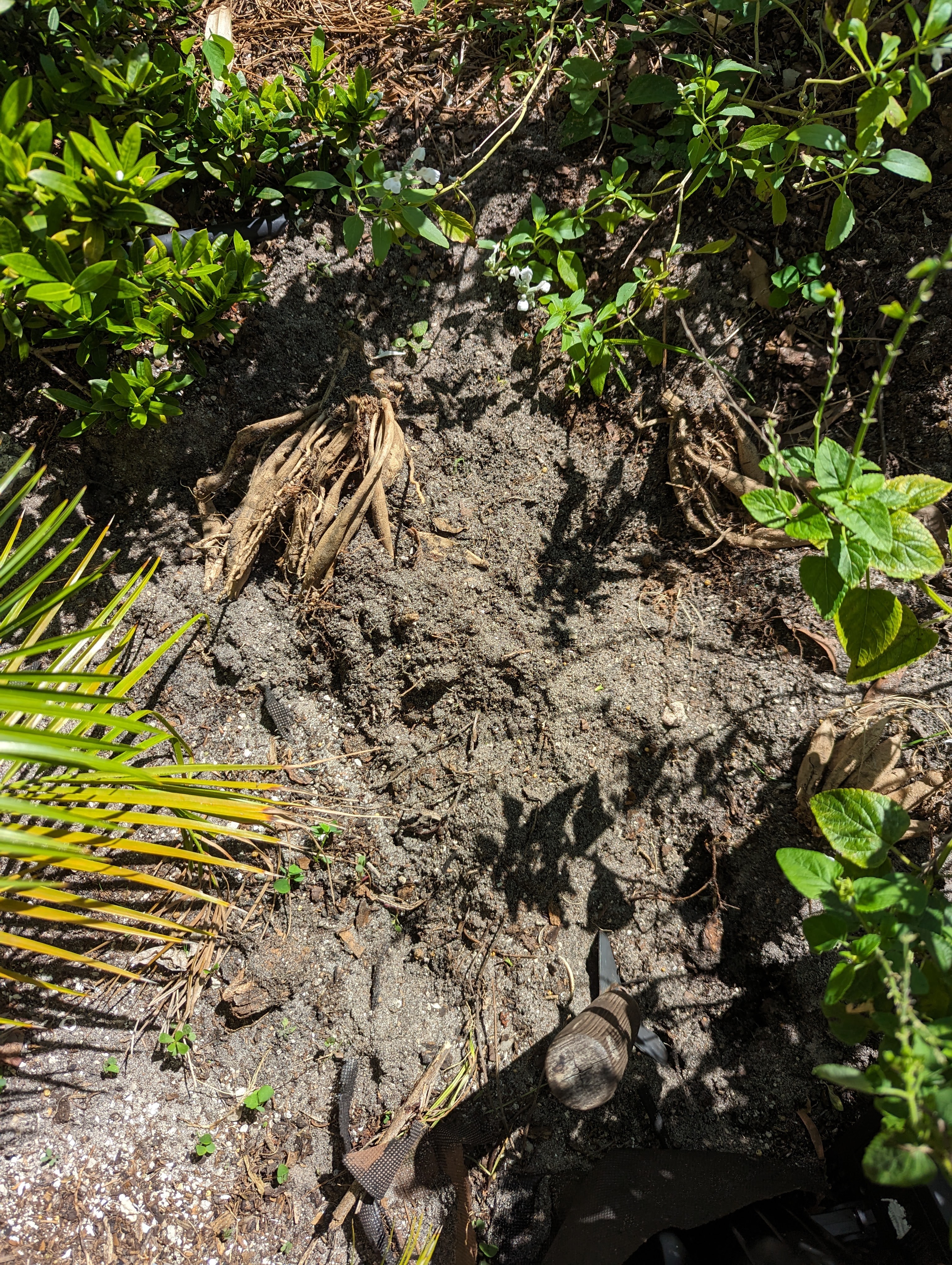
October is optimal Dahlia planting season in South Florida. For fun, I bought some end of season, cheap tubers, having had virtually no luck with Dahlias in the past. The tubers were wrapped in plastic and kept in the refrigerator for a couple of months and released into the garden this week. I planted the tubers and went out the following morning to find a varmint had dug them up, ate one, and left the others beside the holes they were planted in?! A gourmet, Dahlia intolerant varmint?

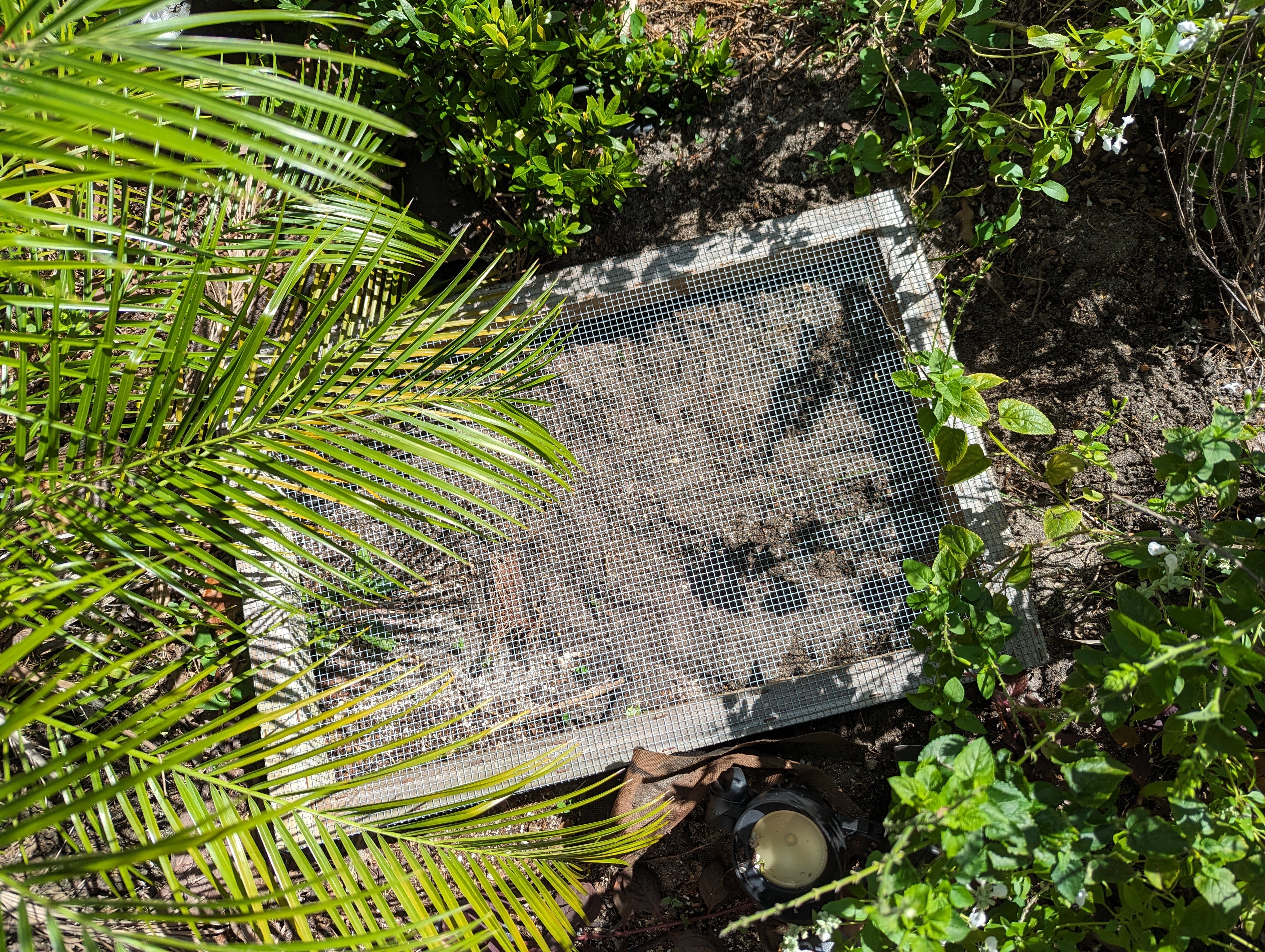
I replanted the tubers and added another found slung in front of bed (I am not sure if I forgot to plant it, or the varmints were at it again). Then, I covered the whole thing with a hardware cloth barrier. Take that, varmints!

The experiment continues. I found a bit of tuber on the front porch this morning. I am sure this time it was not me.

That is all from South Florida this sunny Saturday. The Dahlia adventure will be updated. I am now dithering about watering the tubers, though rot is unlikely in the sand.

Happy Gardening!!!

Six on Saturday – Rain Flowers

I noticed a few things on my Saturday morning garden tour. Slightly cooler weather, slight being the operative word. And an abundance of flowers in the garden from all the rain. A few of the non native salvias have succumbed to something, but most everything else is very happy.

To take a world tour with SOS gardeners, visit Jim at http://gardenruminations.co.uk

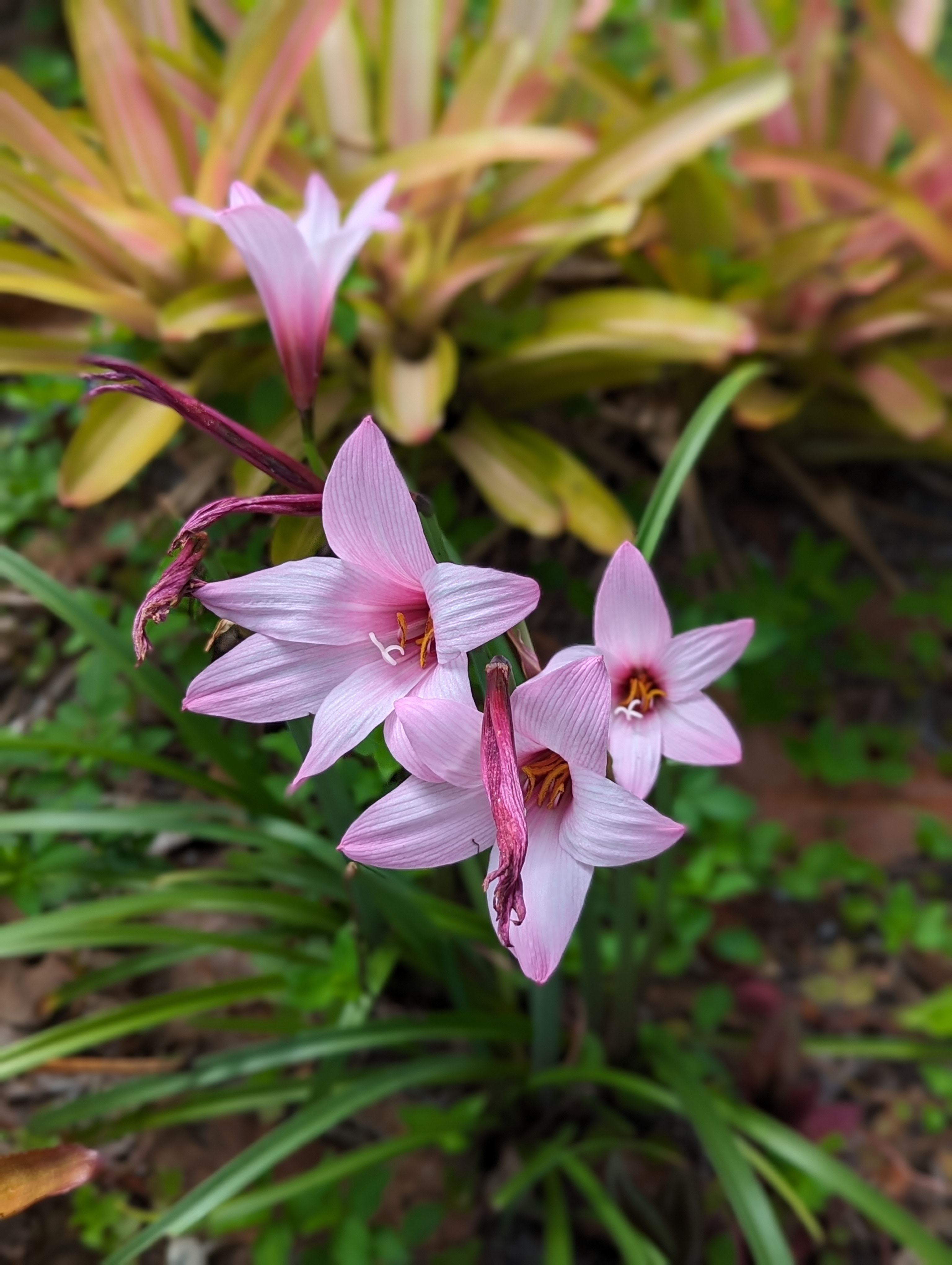
Rain lilies (Zephyranthes or Habranthus) are having their best year ever. I like the name Zephyranthes better, the other one sounds like a dinosaur. Why do the botanists have to change these names constantly?

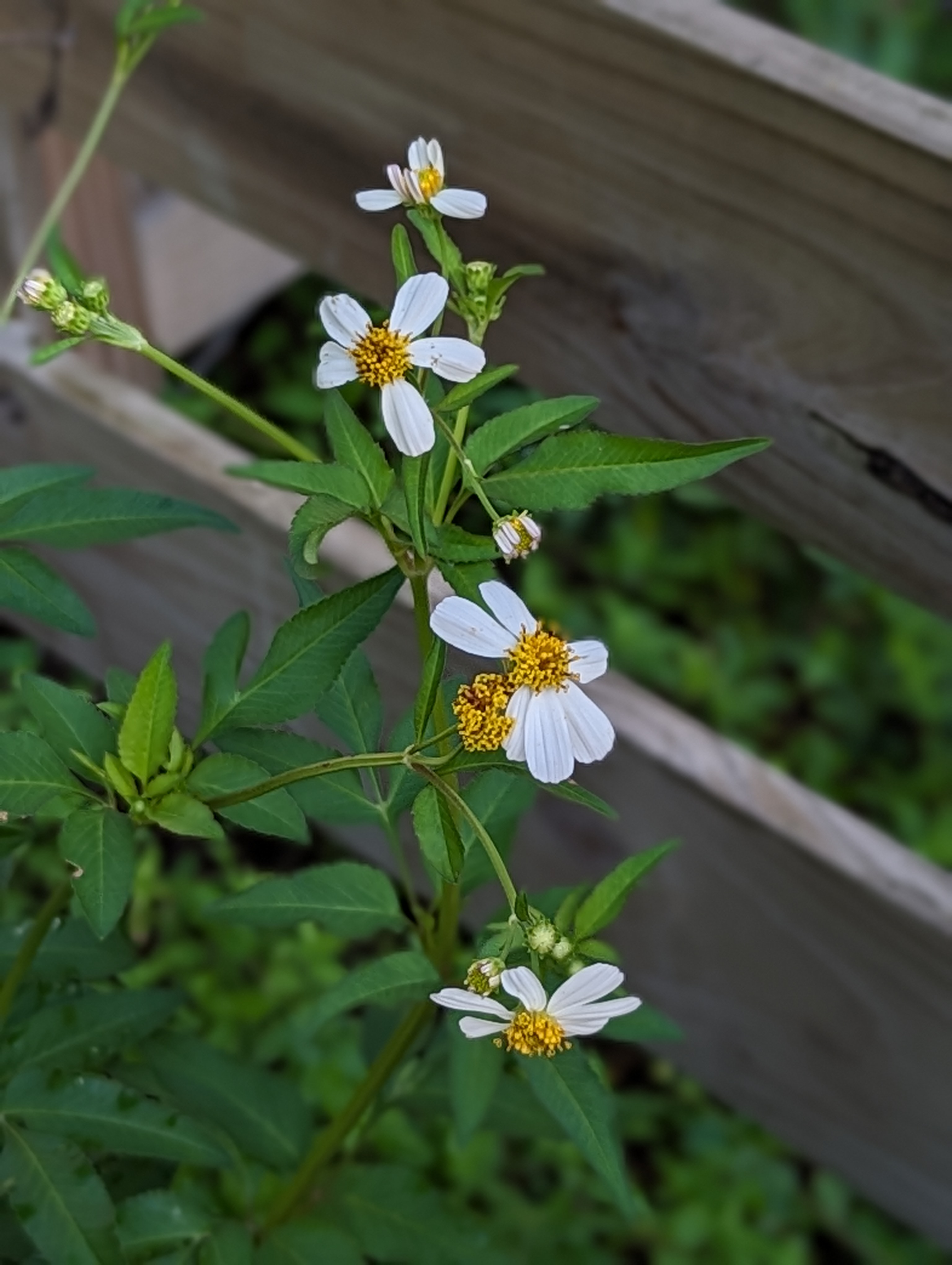
Meet Bidens alba, sometimes called Spanish Needles due to the sharp seeds. These are fortunately cute and last a long time as a cut flower. A Florida native wildflower – they are unfortunately prolific and require pulling lest they take over the garden.

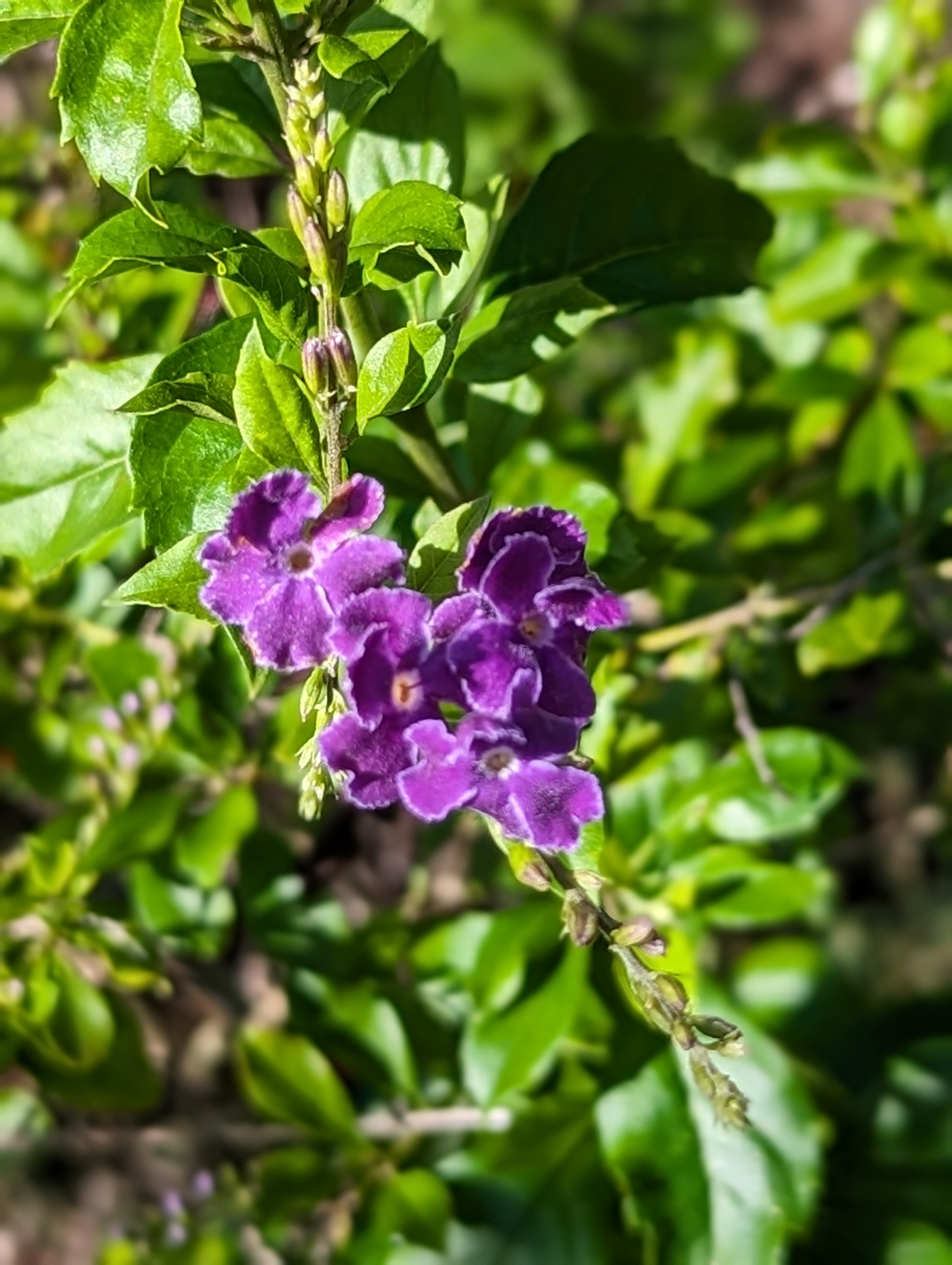
Another one of my butterfly plants, ‘Sapphire Showers’ Duranta (Duranta repens). This one is a tree form and not very happy about it. It keeps sprouting at the base. Its current form is blob.

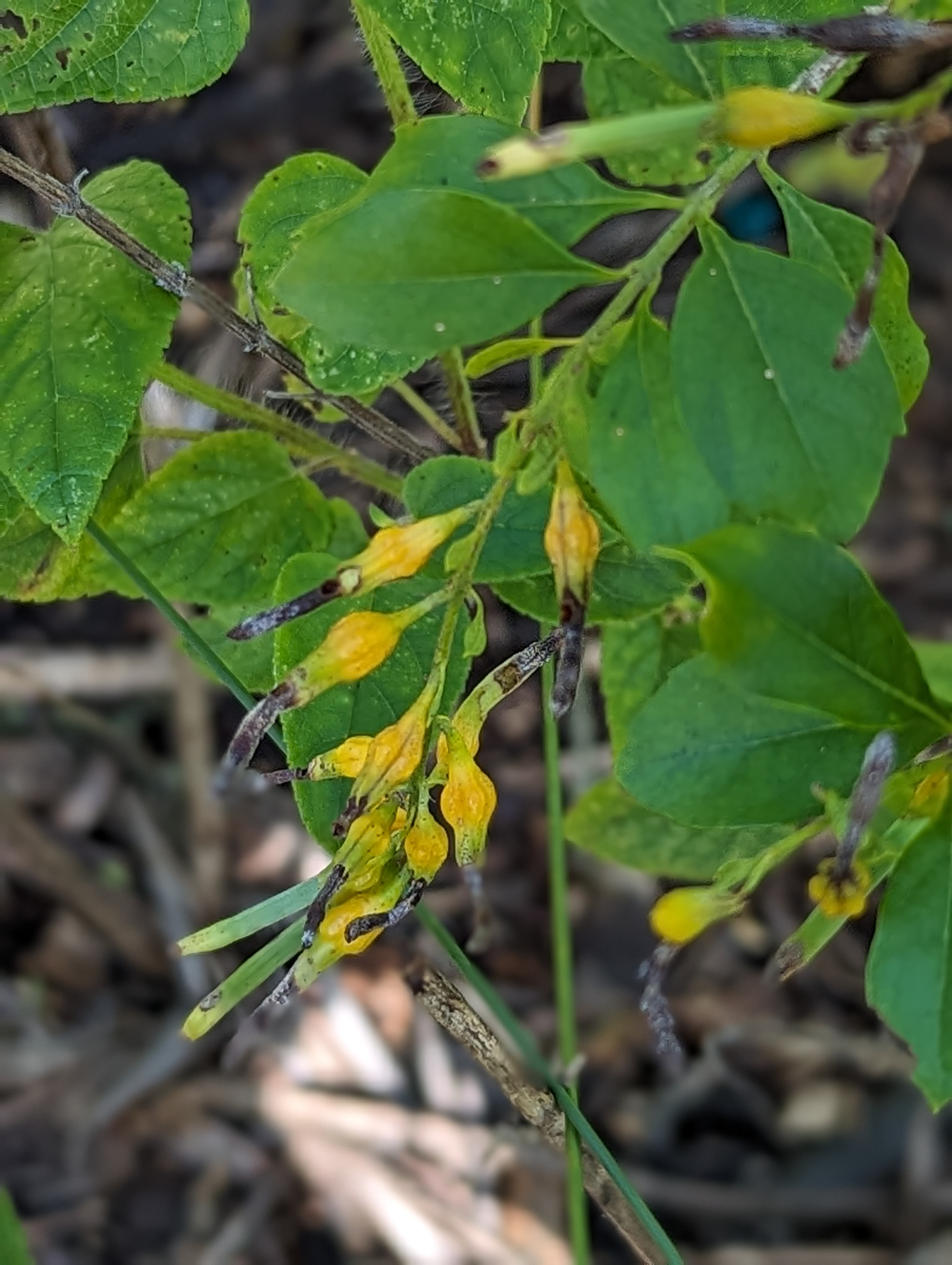
An all around good wildlife plant, this is the fruit forming on the ‘Sapphire Showers’ Duranta. These will be attractive yellow berries soon and the birds will enjoy them.

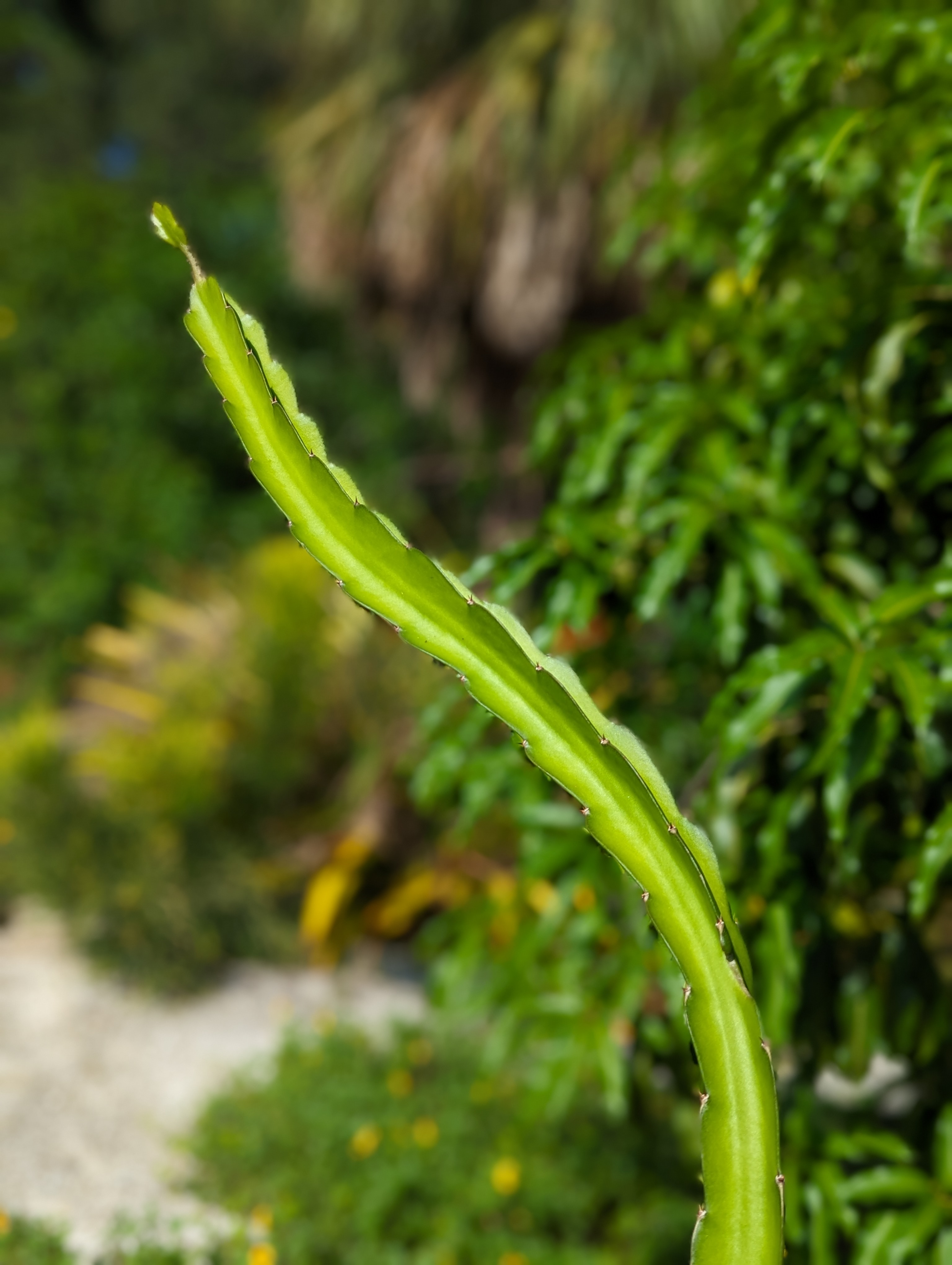
The Dragonfruit or Pitaya has put out a huge new shoot. I am not sure what to think of this as it has been sitting in the garden, doing nothing for years.

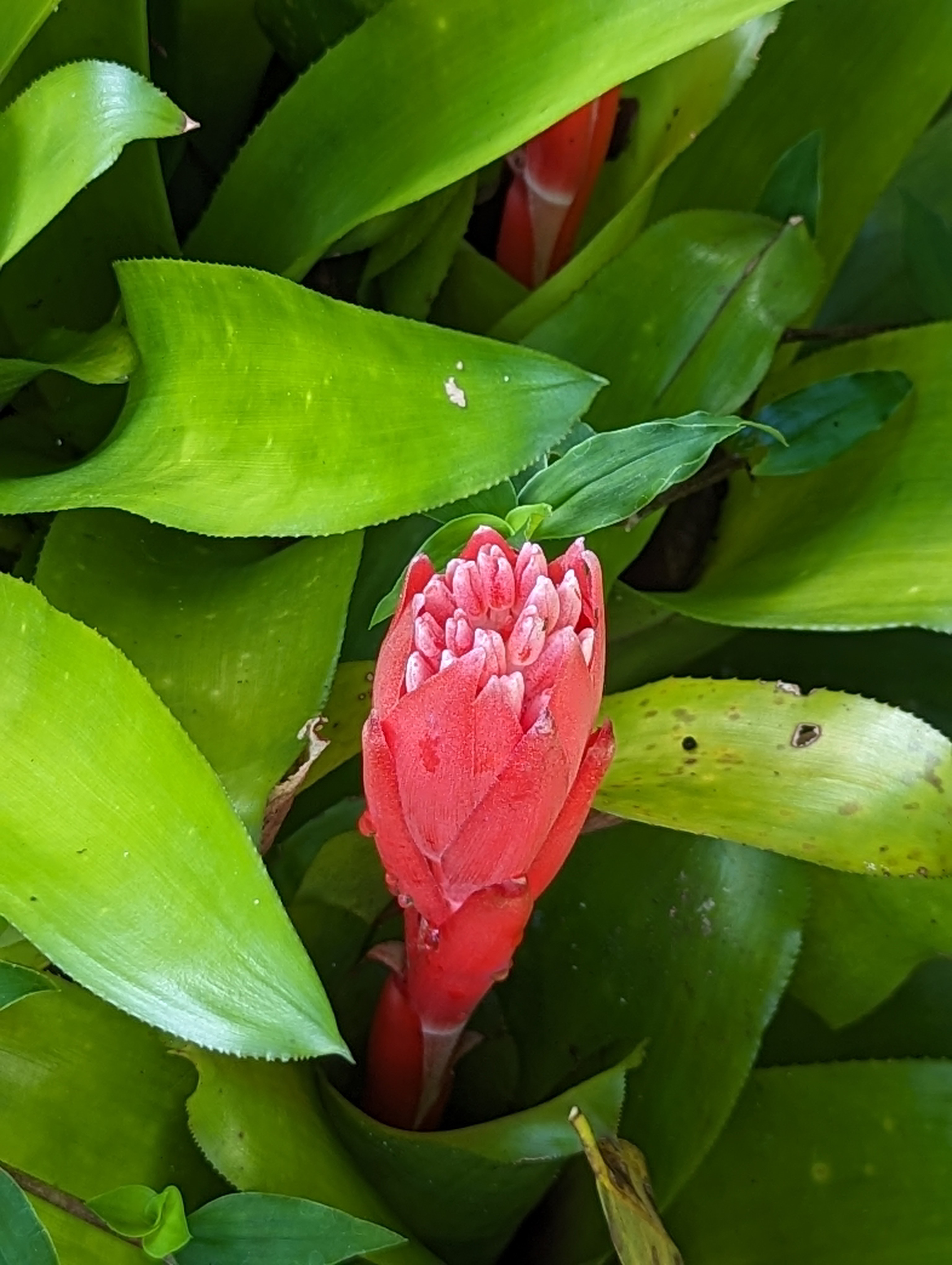
The garden announces the peak of hurricane season. These are called hurricane lilies, and other common names. They are a bromeliad, Billbergia pyramidalis. The peak date for hurricane activity is September 6 or thereabouts and these are usually in full bloom by then.
That is all from my garden. Eastern South Florida remains hot and rainy. The west coast is in drought. Go figure. I may try to beat the rain and pull some weeds.
Thanks to Jim for hosting. Happy Gardening.

Six on Saturday – Caterpillar Condo

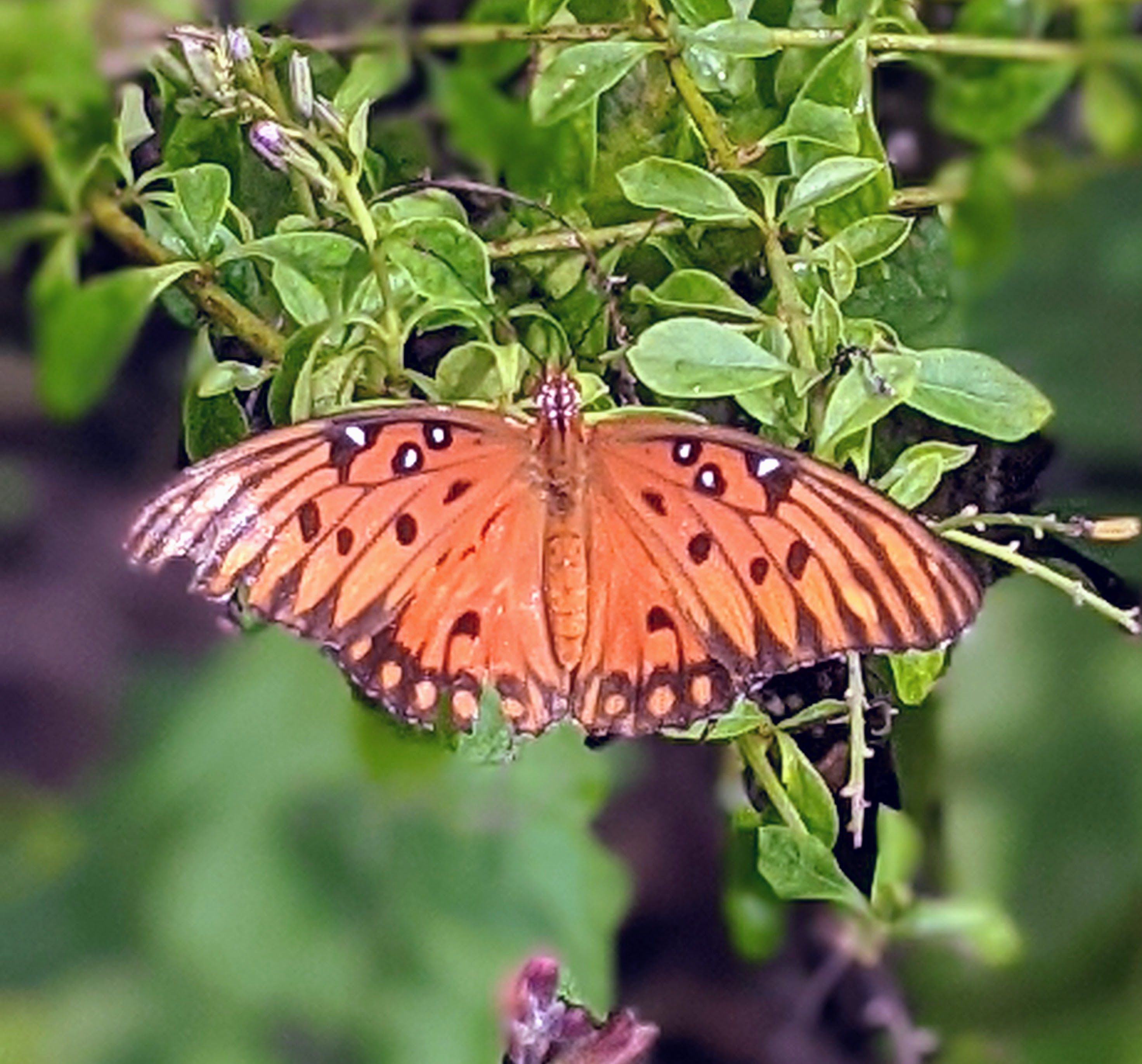
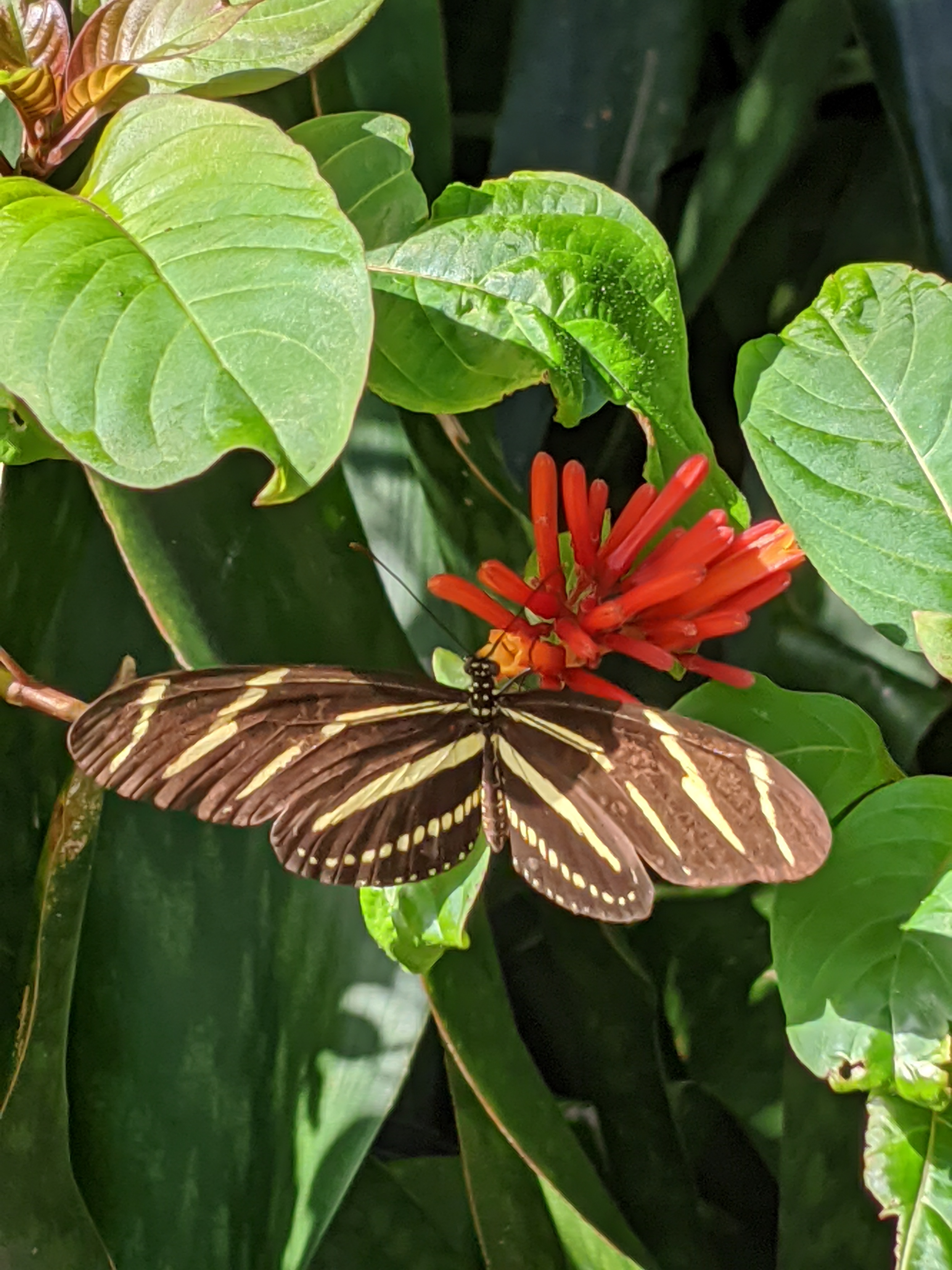
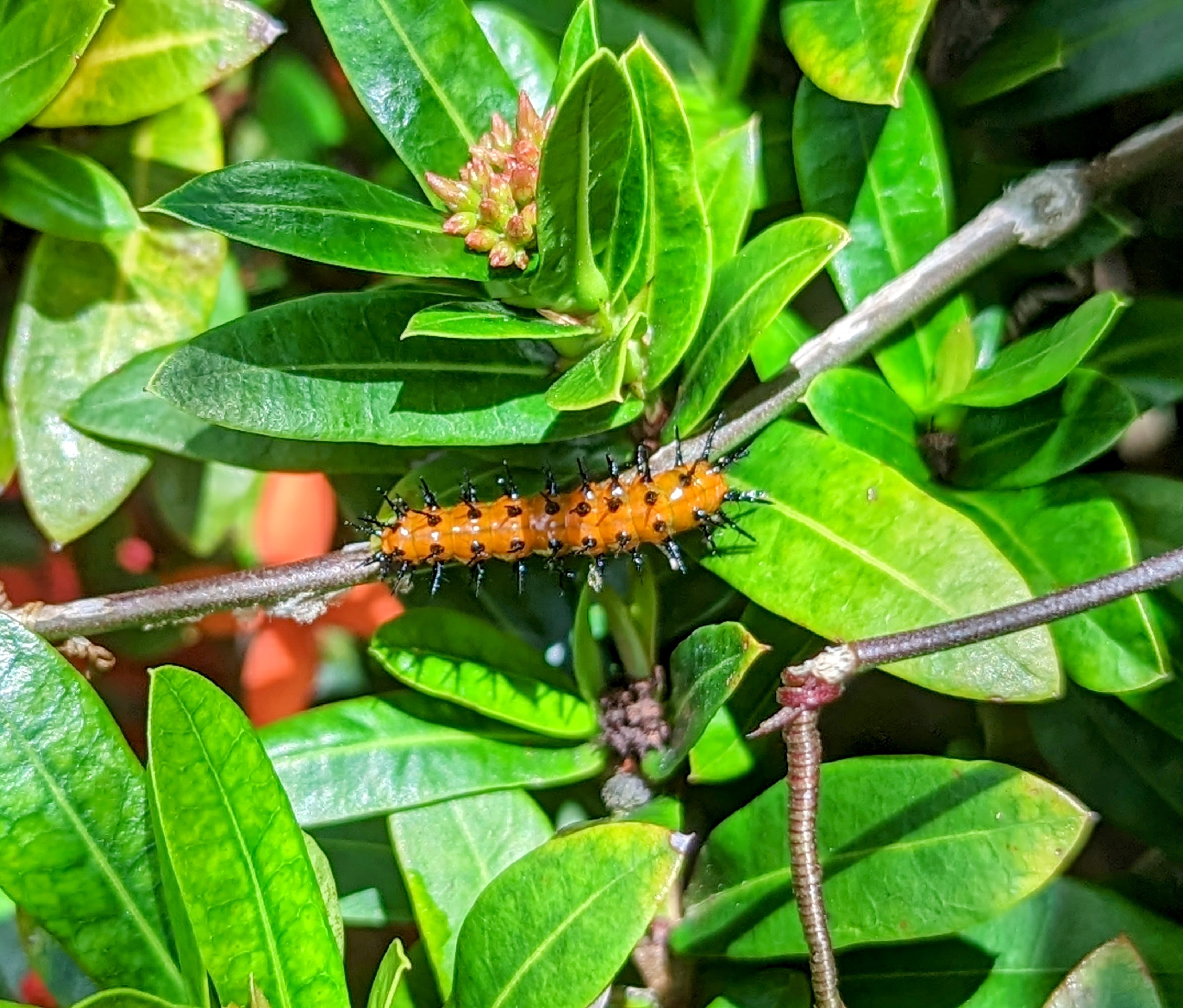
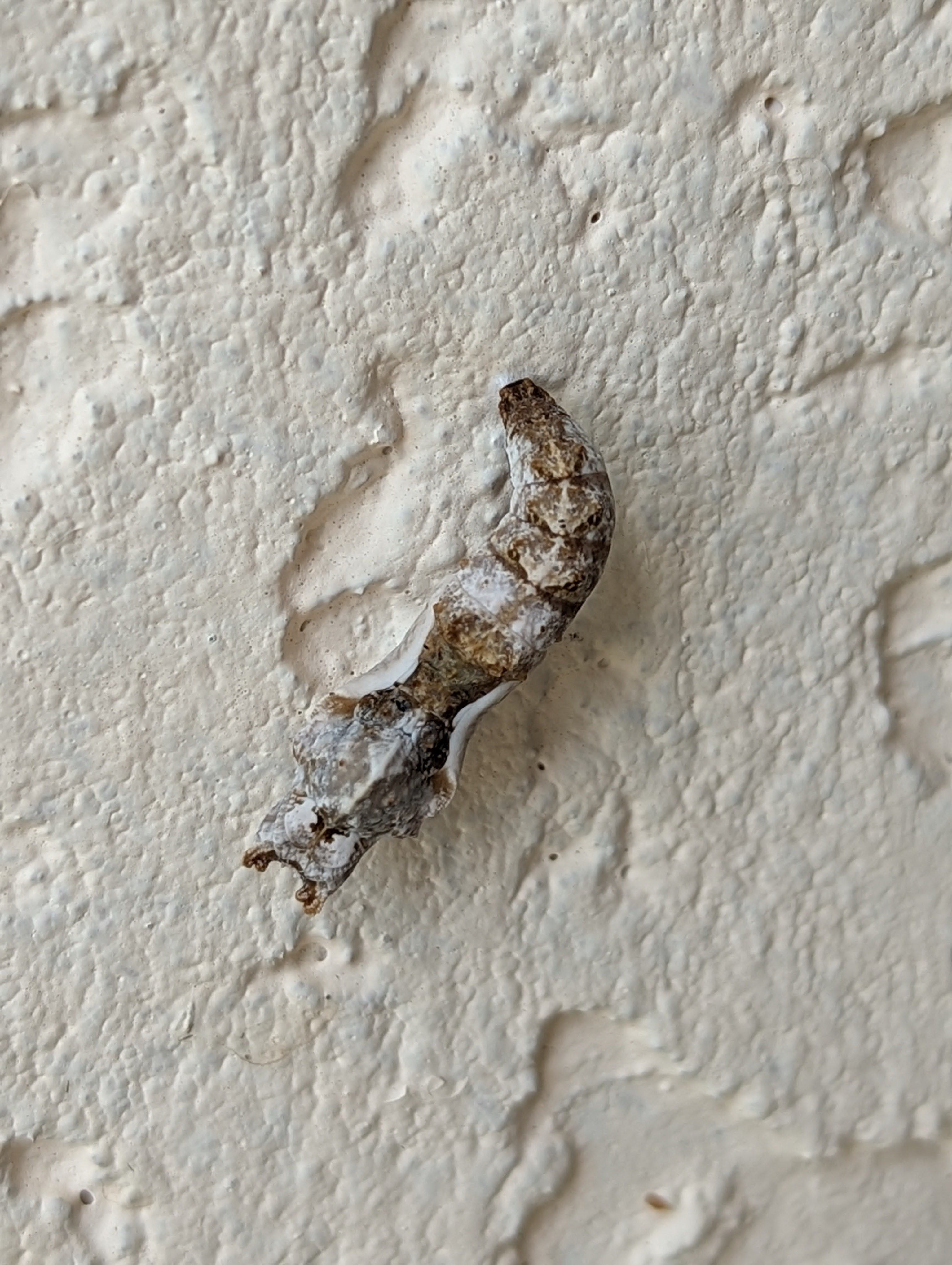
It’s time for the weekly world garden tour. My South Florida garden has a wealth of butterflies and tropical flowers loving the heat and humidity more than I do. I let some native passionflower vine (larval host plant for butterflies) ramble through a mixture of flowering nectar plants and I have some astounding butterfly action going on in the front garden. Pairs of Gulf fritillary butterflies circle each other and then land on the passionvine where the ladies lay eggs. Caterpillars from both species of butterflies (Gulf fritillary and Zebra Longwing) that host on the vine are currently in residence. The caterpillars moved off the vines and now there are chrysalis hanging on the front porch. I am watching day by day hoping to see new butterflies emerge.

The Gulf fritillary looking for nectar.

Zebra Longwing doing the same thing.

Gulf fritillary caterpillars on the passionvine. The passionvine is Florida native Passiflora suberosa. It is not a particularly attractive vine and bears small flowers and blueberry sized fruit. I did not plant this, it came up from the garden gods and I let it go to ramble through the Dwarf Red Ixora shrubs creating a caterpillar condo with a full service restaurant.

The much less colorful chrysalis of the Gulf fritillary.

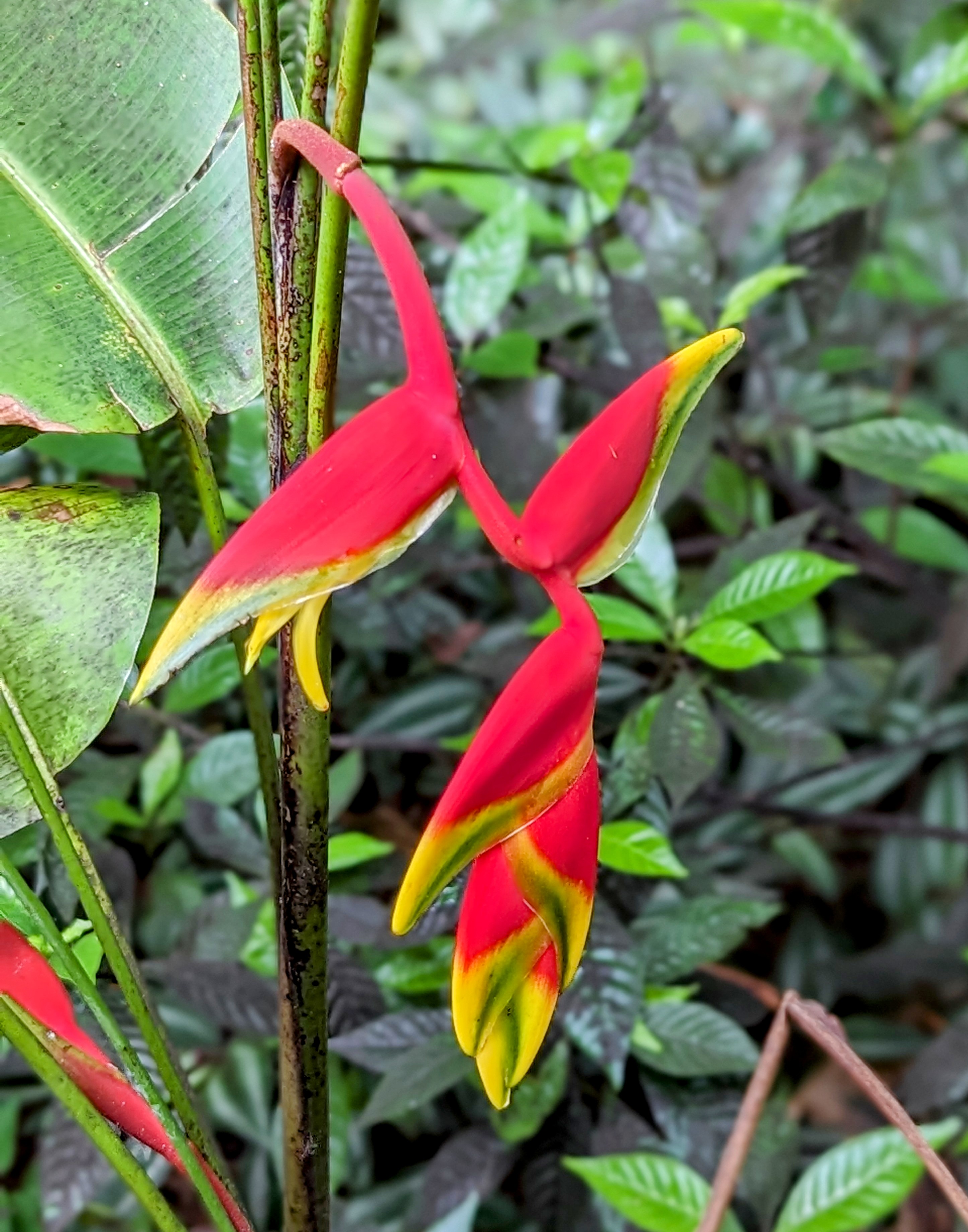
And we have to have some tropical flowers and fruit. The flowers today are Lobsterclaw Heliconia (Heliconia rostrata)

Fruit of the week – Papaya. This is the Papaya tree started from seed last fall. I planted the seedlings in the garden in May. They are almost three feet tall now and looking a little spindly. I have read it is possible to have fruit in nine months. At this point, the trees won’t be able to support it.

That is all from sultry South Florida this Saturday. To enjoy the world garden tour visit Jim at http://gardenruminations.co.uk

Happy Gardening!!

In a Vase on Monday – Sage Indians

I have two Indian elements in my vase today. First, the vase itself was made by the Ute tribe of Utah in the US. They still call themselves Indians so I think it is okay if I do. They also refer to themselves as the Ute People, which I like better. The second, the red and yellow daisies are called Indian Blanket (Gallardia pulchella). The flowers are native to the Great Plains in the US, though they have naturalized throughout the country right down to my garden. These reseed and required no maintenance and are relatively well behaved. What’s not to like? I was searching for a rust colored flower to accent the vase and was happy to find several groups in bloom.

The sage in the vase is not wisdom, but Salvia. Two kinds, Black and Bloom and Roman Red. The red exudes the fragrance of culinary sage.

A closer view:

Brown Eyed Girl sunflowers (in yellow) have reappeared after taking an extended break from flowering. I am reserving judgement on these. They were great for about six weeks, then stopped flowering for about the same amount of time and are loaded with flowers again. Time will tell. For those who were intrigued by the Golf Beauty Craspedia, it has passed on, leaving me to believe it is a cool season annual in South Florida. I will be interested to see the progress of others with Craspedia this summer. The deep blue flowers are Black and Bloom Salvia; the lighter blue flowers are Plumbago (Plumbago auriculata). Shiny foliage is from Wild Coffee (Psychotria nervosa), a native shrub I have for butterfly habitat. Evidenced by the botanical name, you can drink it, but shouldn’t.

The rest of the crew. Standing in back in red, Roman Red Salvia; white spikes are from Sweet Almond Bush (Aloysia virgata)

Wishing all a very happy Monday and a big thank you to Cathy for hosting. To see more vases, visit Cathy at http://ramblinginthegarden.wordpress.com

Six on Saturday – Natives and Friends

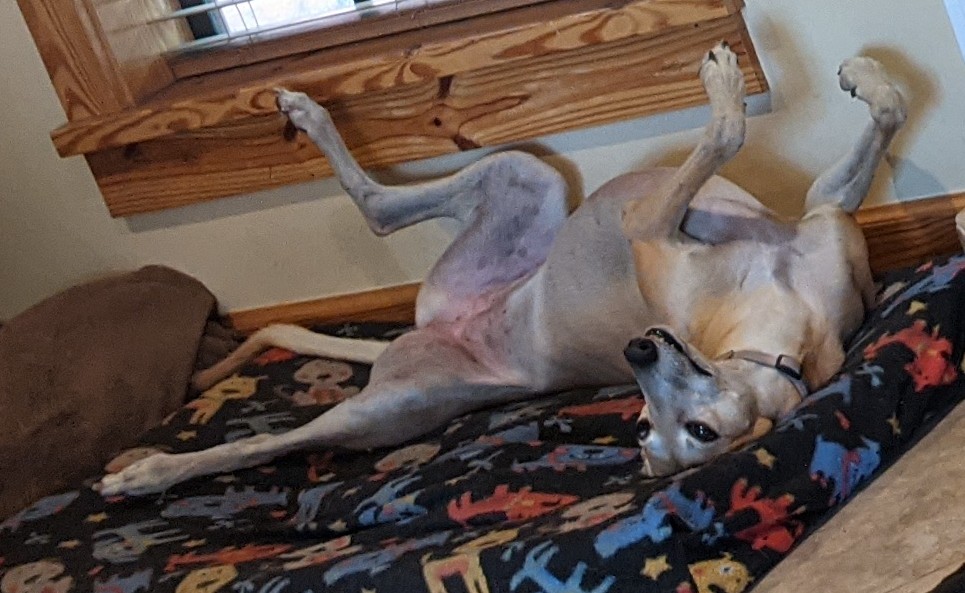
It is finally raining here, and in typical gardener fashion, I am going to complain – just a little too much. The weeds are going crazy and it is supposed to rain for the next several days. Fiona, the hurricane, not the greyhound. is supposed to meander by next week, undoubtedly bringing more rain. Fiona the greyhound is not terribly worried.

Back to plants and SOS. I am joining the SOS meme, hosted by Jon at http://www.thepropagatorblog.wordpress.com. To see more posts, follow the link.

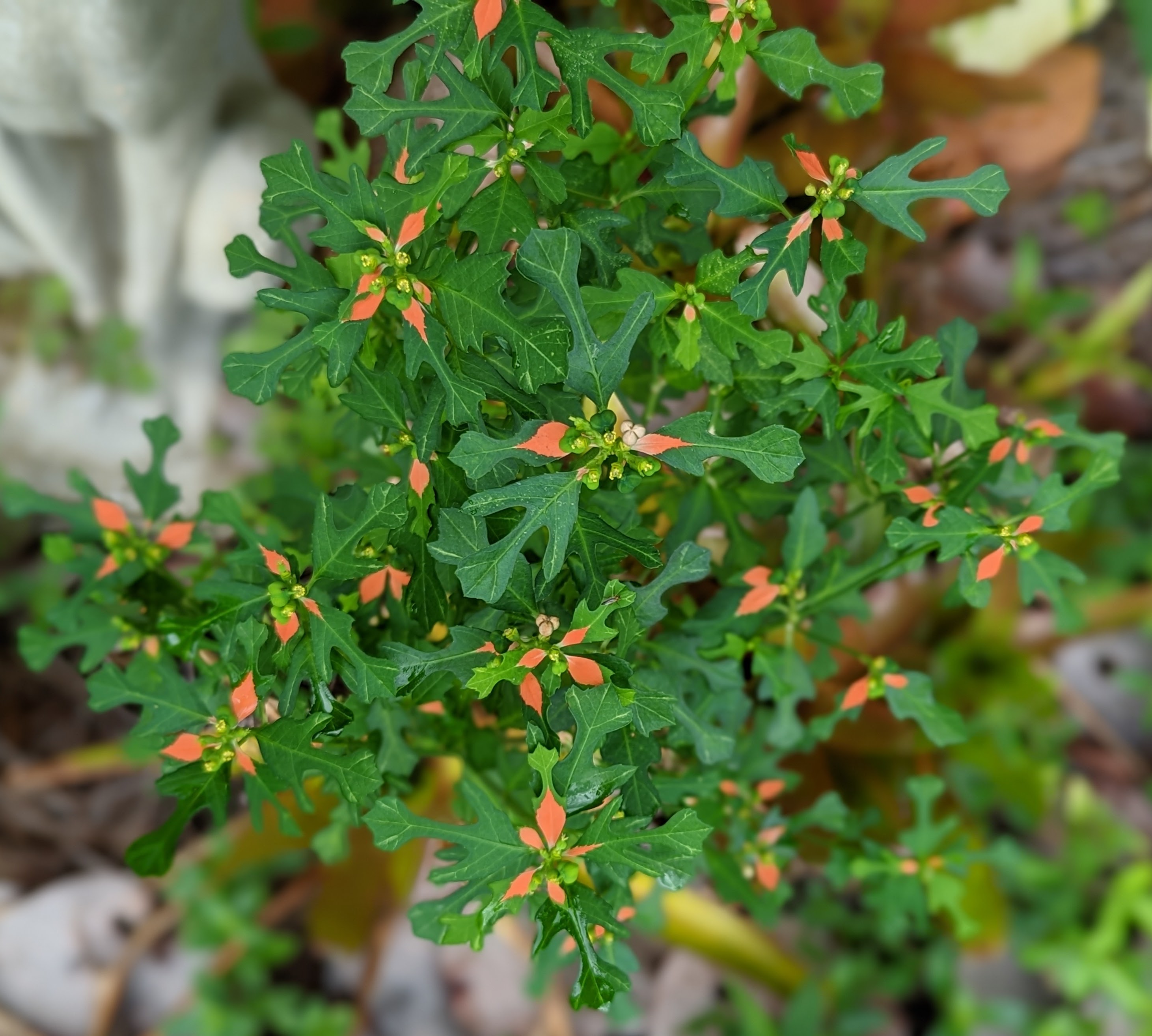
This is a native Poinsettia (Euphorbia cynathophora). These pop up here and there and do not reseed much, so I enjoy the little pop of red in the garden.

Native Dayflower (Commelina erecta). Another one that just pops up in the garden and behaves nicely.

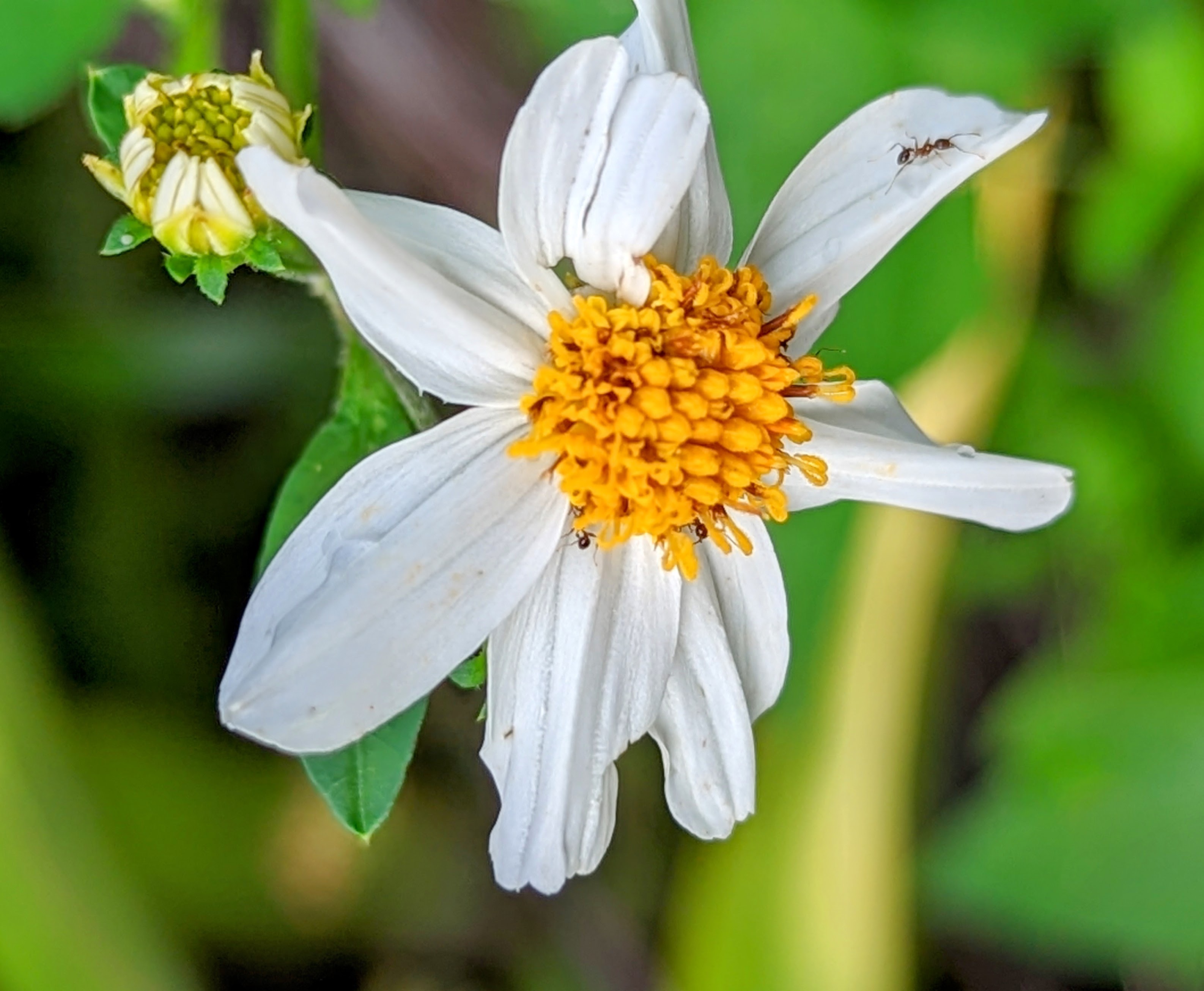
Native Bidens alba. One of the many common names is Spanish Needles, which leaves me wondering if the Spanish explorers of the Florida peninsula used the seeds for sewing. Not sure how, they are sharp, but maybe a half inch long. The one I love to hate. Reseeds madly, but so cute and the pollinators love it.

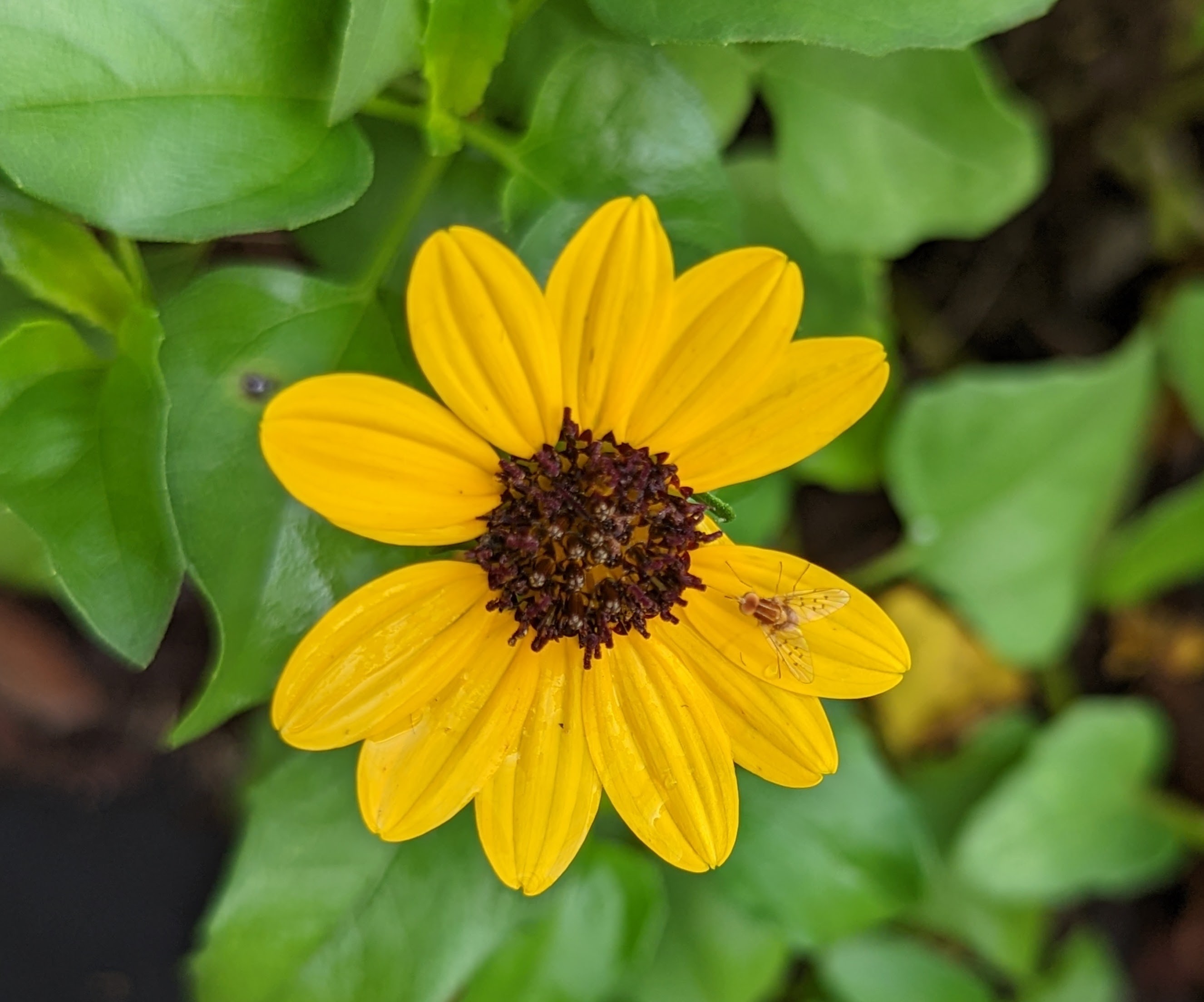
Another great native for pollinators, the Beach Daisy (Helianthus debilis). I am not sure what that bug is. These go mad during a rainy summer and once you have them in the garden (I planted them) they never go away.

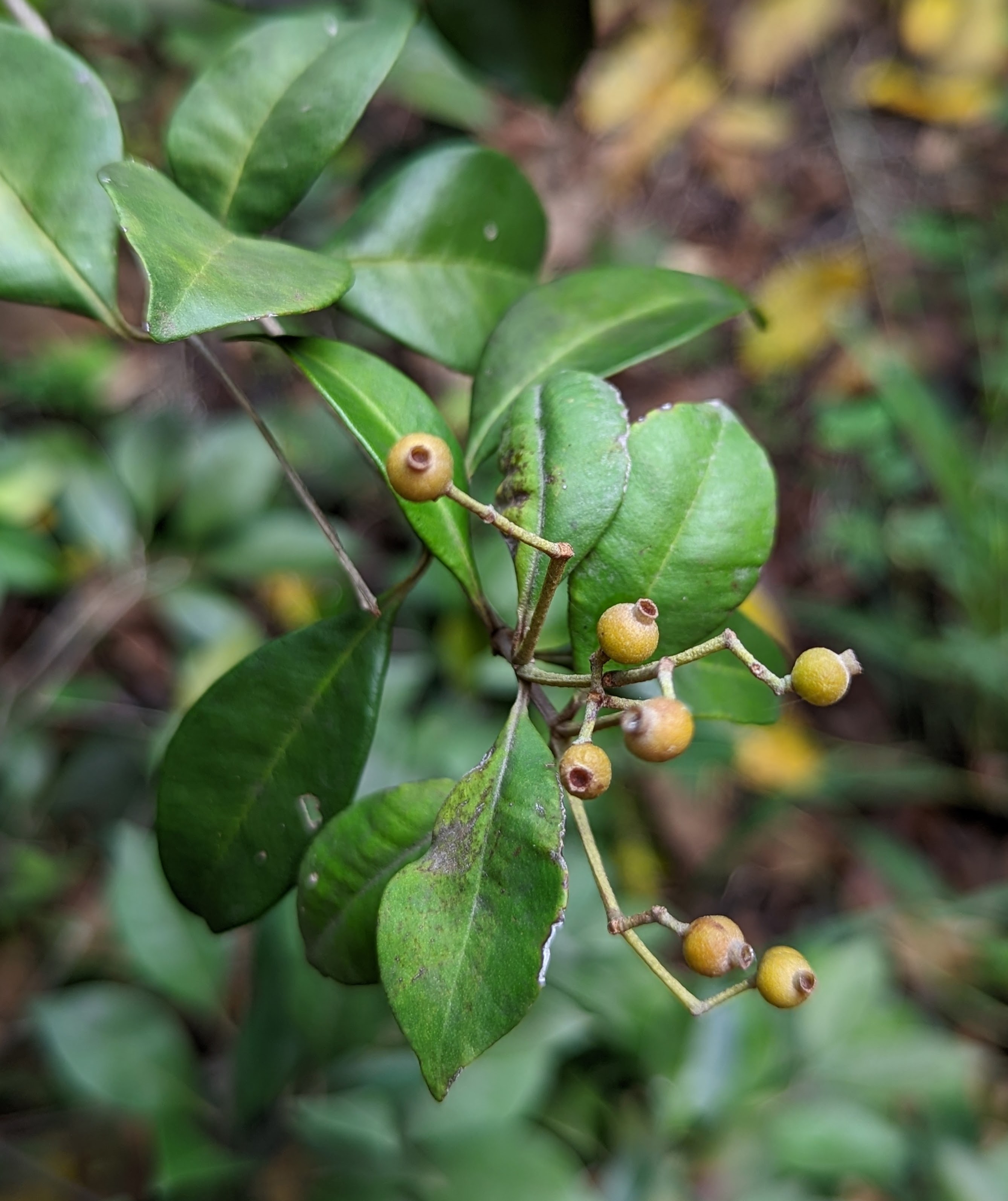
The fruits of a native Spicewood (Calyptranthes pallens) Something about this is supposed to have a spice fragrance. I have yet to find it and have had this in the garden for seven years or so. Birds like the berries.

A nice, and not native to Florida, Saturday morning surprise. This is an unnamed Cattleya orchid that regularly flowers in early September. I thought it wouldn’t flower because of the dry summer – but here it is after getting some rain and a little fertilizer.

That’s my Six for this Saturday….Happy Gardening!!!!!

In a Vase on Monday – Tecoma Trials

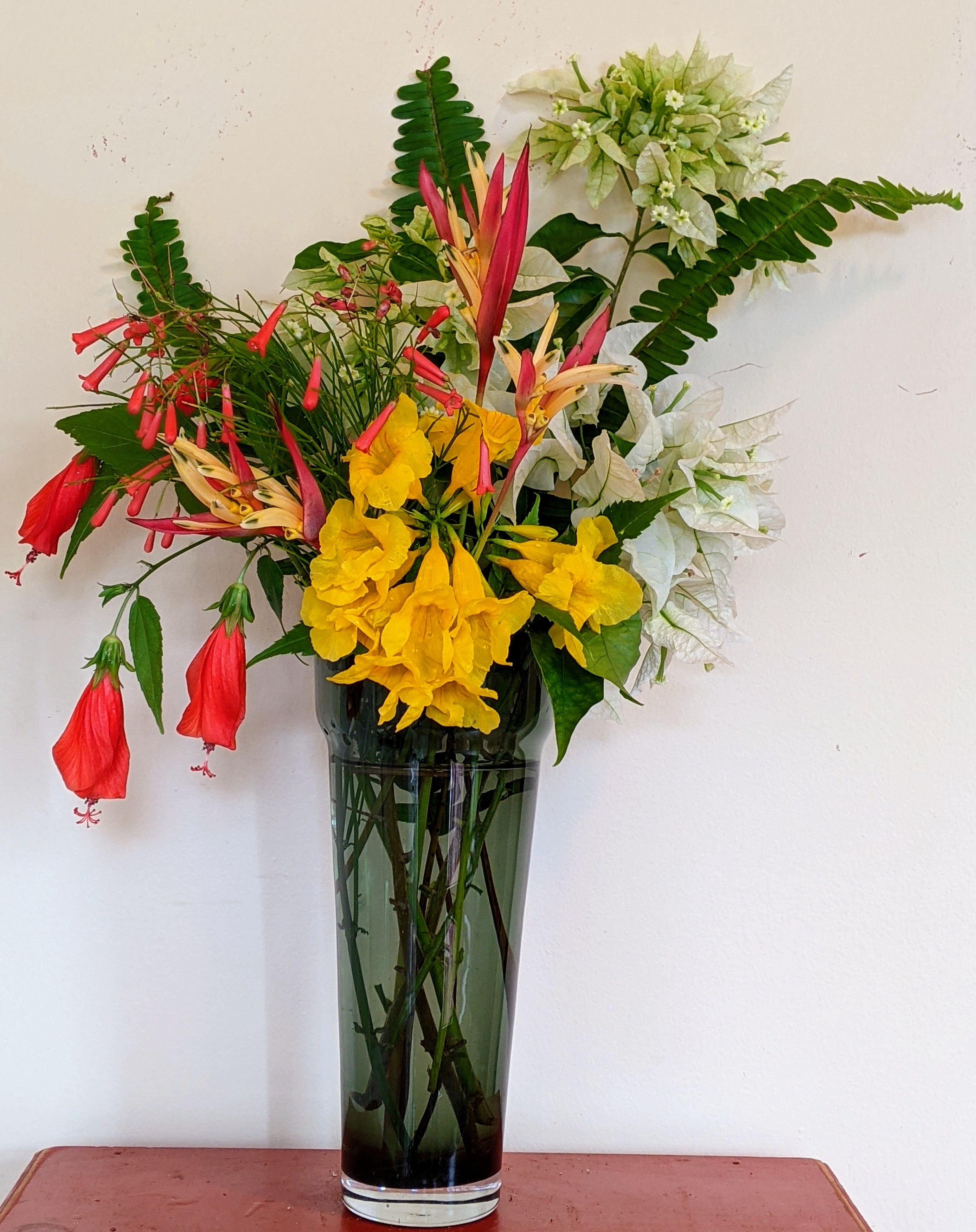
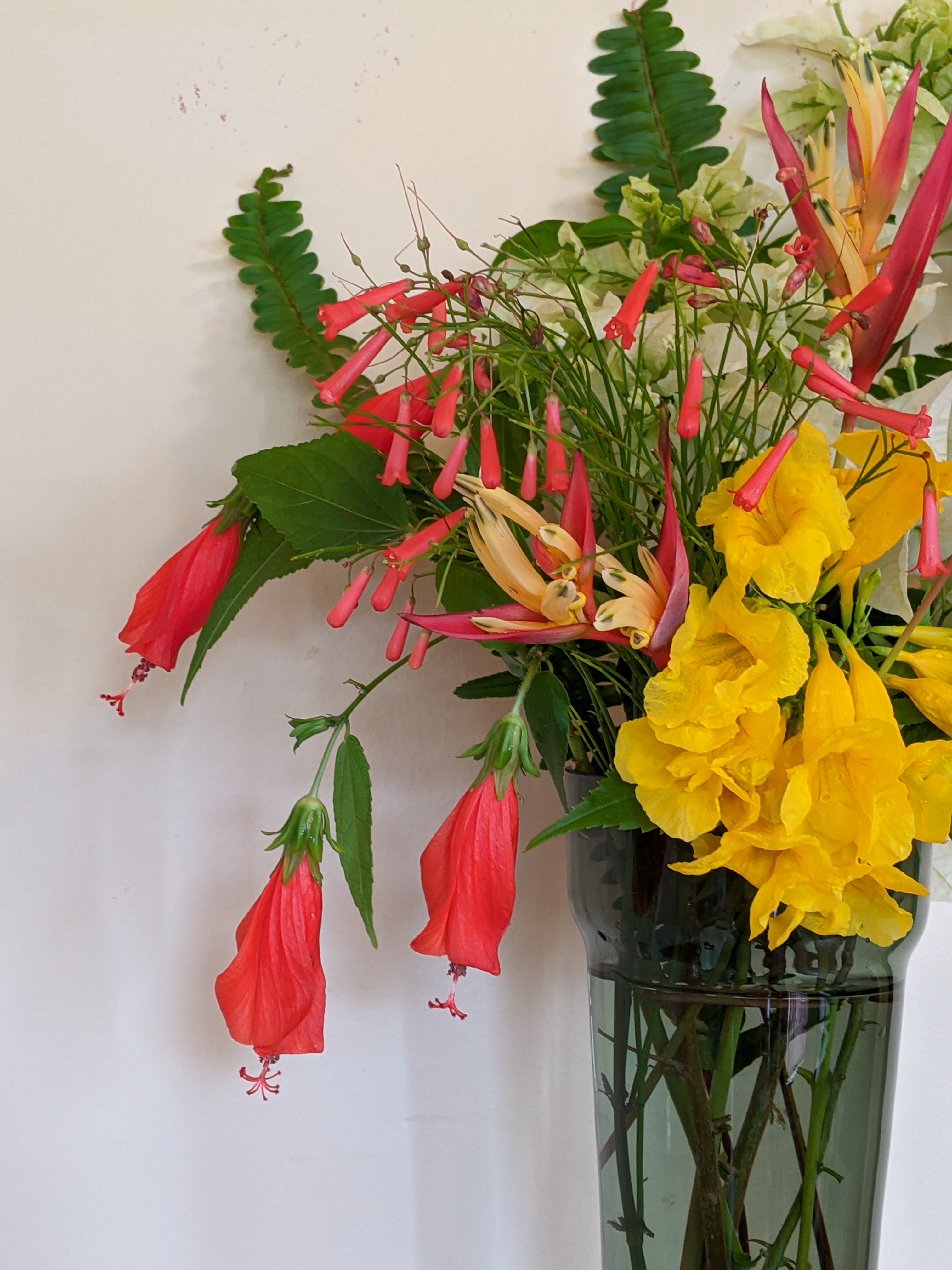
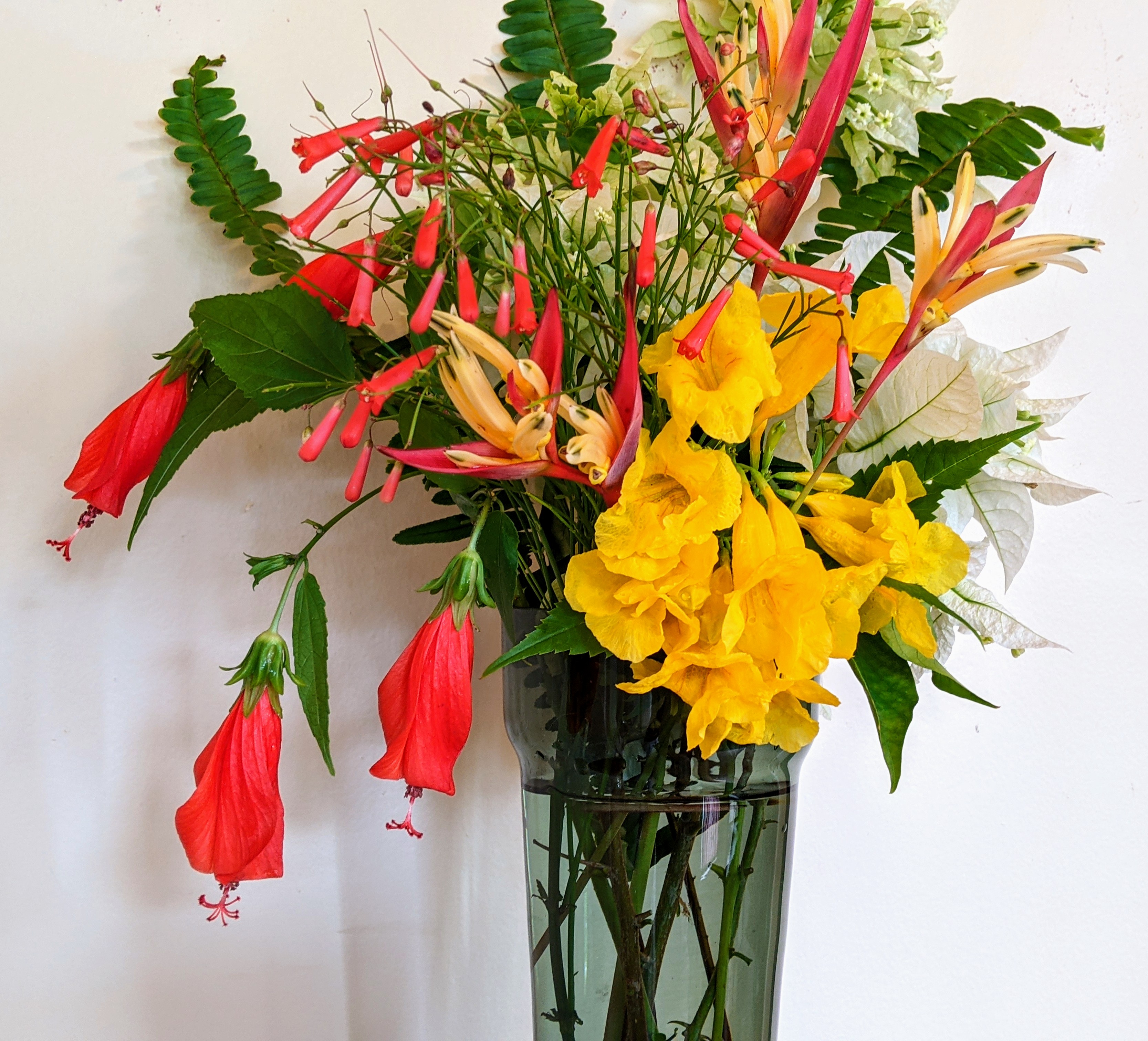
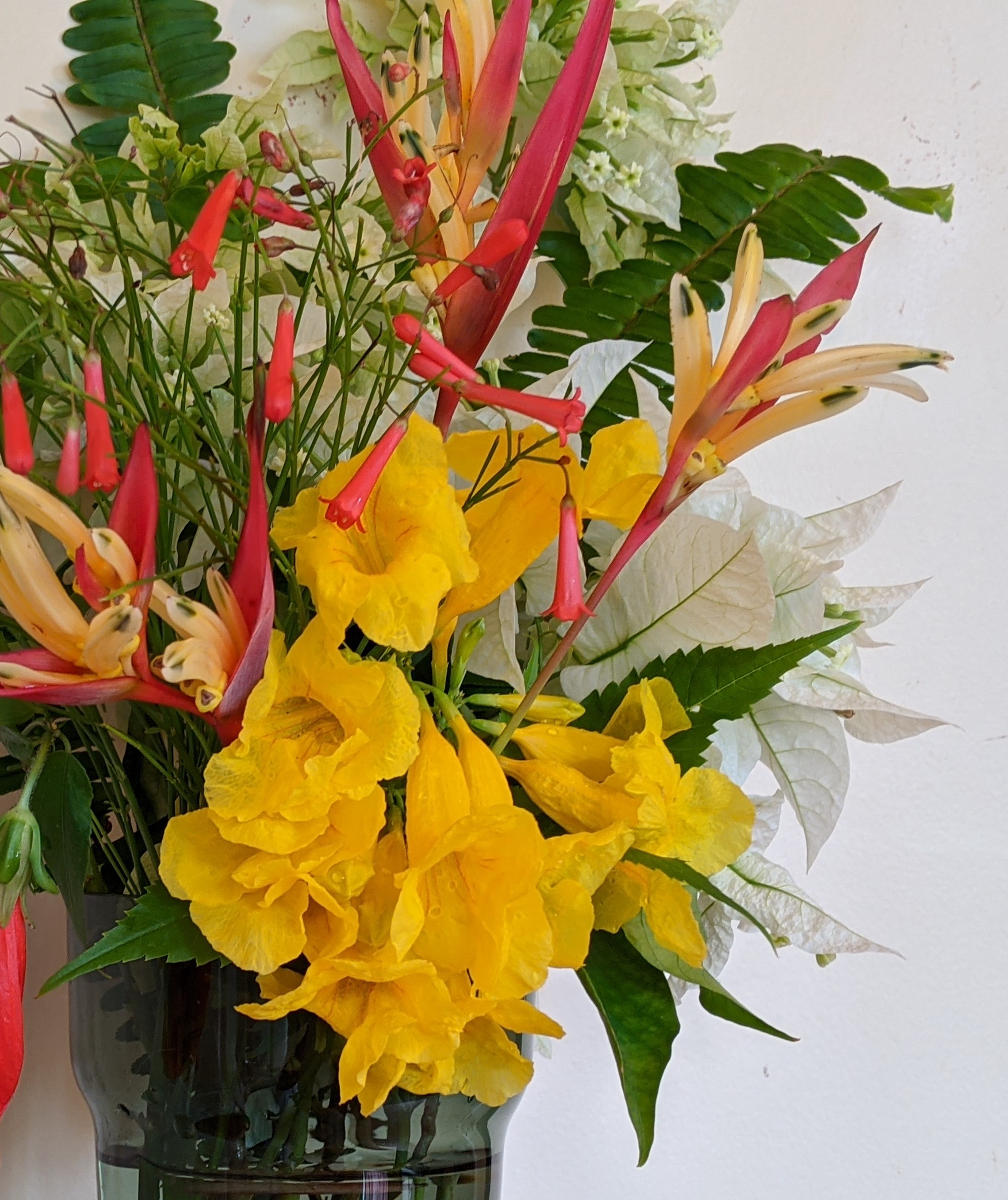
The yellow flowers in the center of the vase are Tecoma stans, sometimes called Esperanza (hope in Spanish). I have been looking for one of these to add to the garden for butterflies, they are the larval host plant for the Southern Dogface Butterfly, which is prettier than it sounds, much like a Sulphur Butterfly. I found one locally, totally rootbound, then forgot about it during the stormy fall weather. One clear morning a couple of weeks ago I planted it in the edges of the garden. It responded by flowering and promptly flopping over in another of the endless rain showers – so here it is in the vase and I esperanza (hope) it will last.

A side view: the red flowers draping over the side are Nodding Hibiscus (Malvaviscus penduliflorus); smaller red flowers are Firecracker Plant (Russelia equisetiformis); red and yellow flowers are Parrotflowers (Heliconia psittacorum); green foliage is Asian Sword Fern.

Two images..the white flowers in back of the arrangement are ‘Miss Alice’ Bougainvillea. I have been writing a short feature about Bougainvilleas for The American Gardener magazine and learned these flower in cycles – especially in winter when day and night lengths are even…it is November and I have flowers, so life is good..

Thanks to Cathy at ramblinginthegarden.wordpress.com for hosting IAVOM and Happy Gardening!!

Six on Saturday – Shrubbery Lurking

00100lrportrait_00100_burst20200604121654529_cover

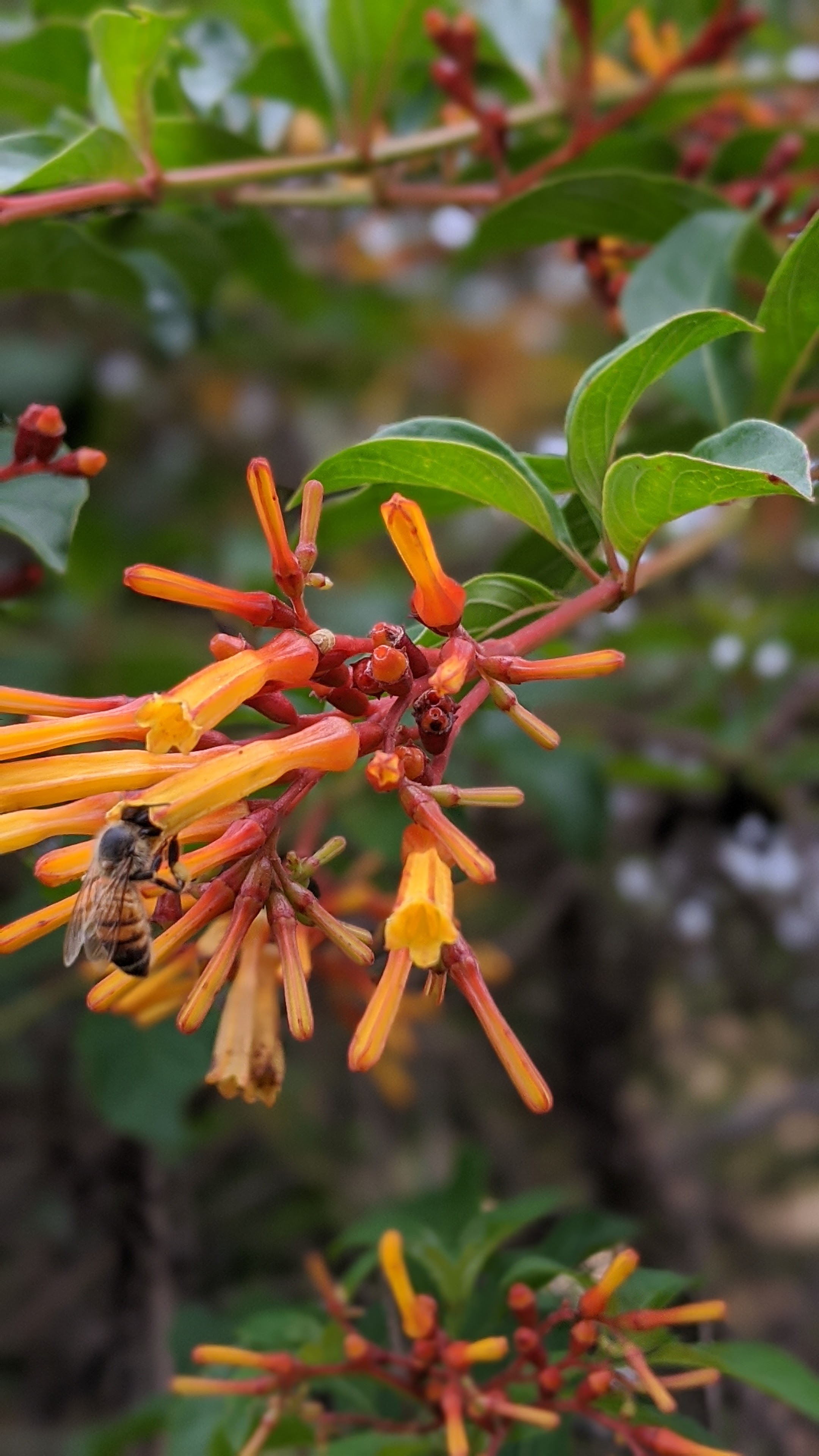
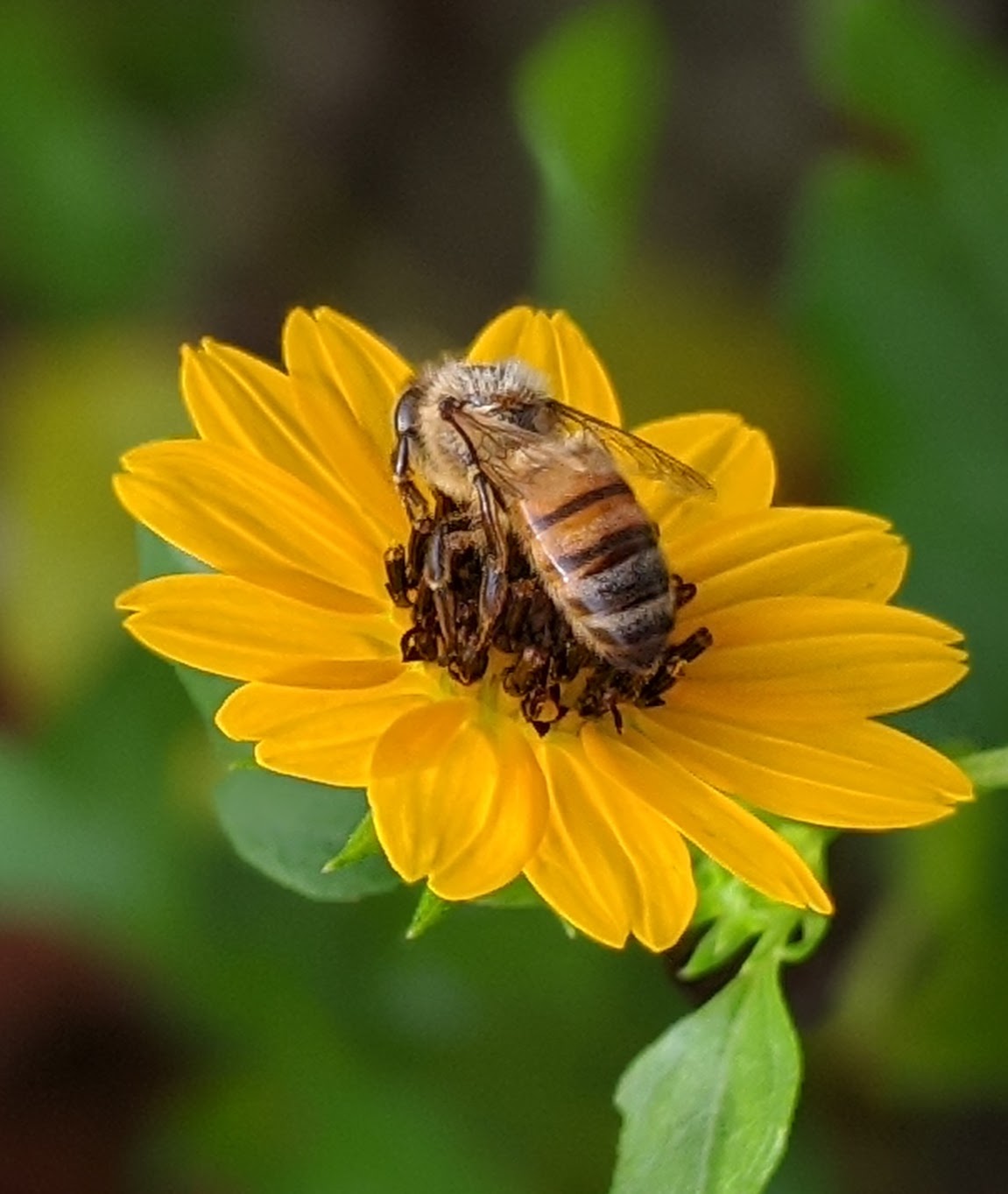
I am taking a native pollinators class online. I completed the bee section and was instructed to take photos of three different bees in my backyard. Little did I know how much time I was going to spend lurking in the shrubbery taking blurry pictures of  bugs. I did find it interesting to see how much was going on in the shrubbery. Above is a honey bee, the only identification I am certain of. The bee is collecting pollen from a Firebush (Hamelia patens)

00100lrportrait_00100_burst20200605103349134_cover

Another  bee, I think it is a Carpenter Bee. Bees, unfortunately are identified by the amount of hair and differences in stripes on their bodies – and most are striped and hairy. This bee is collecting pollen from a Dune Sunflower (Helianthus debilis)

img_20200605_134800

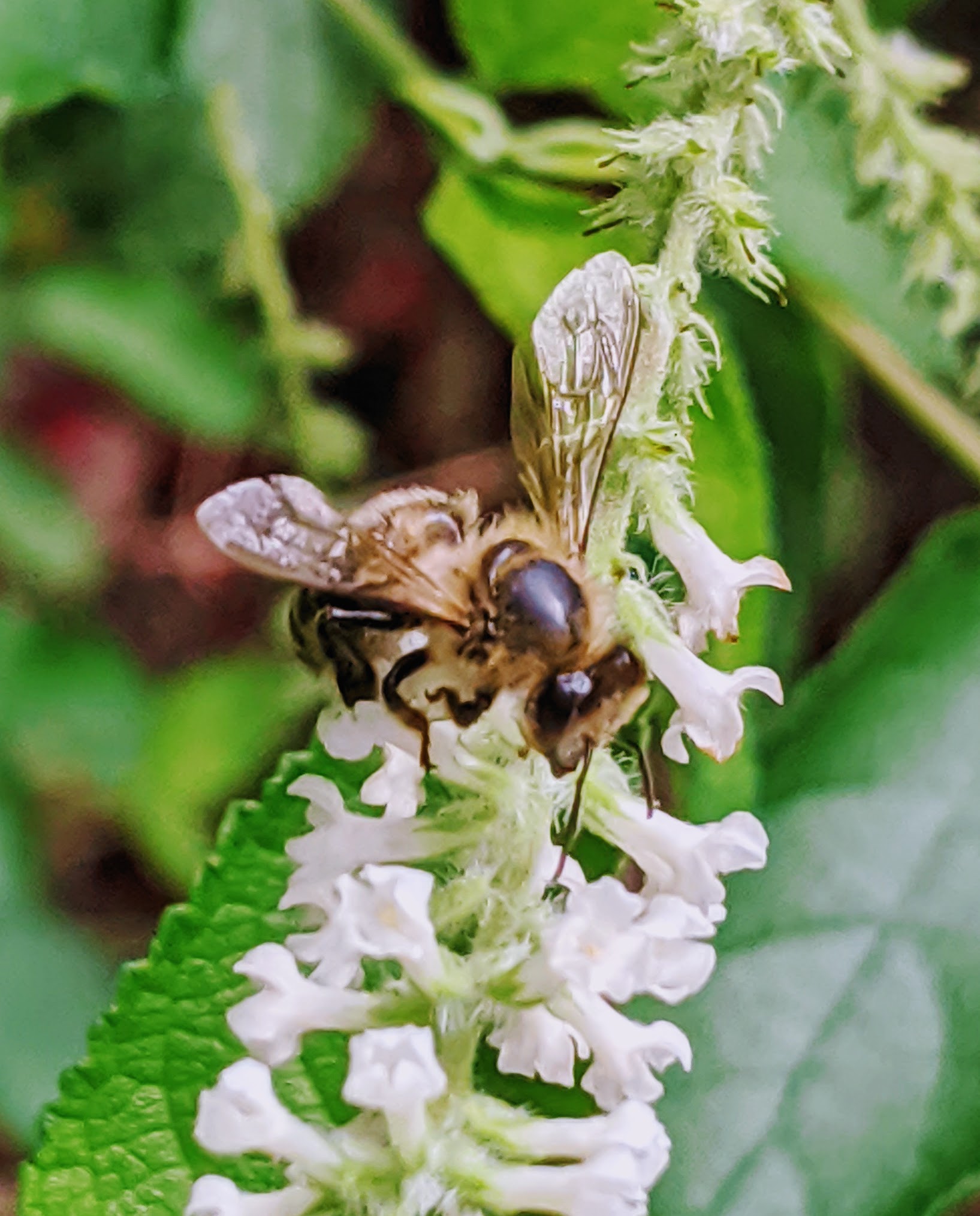
This bee is perhaps a Longhorned bee, because of its long antennae. But, I am not sure. It is however, striped and hairy. Mr. (or Miss) Longhorn here is collecting pollen from a Sweet Almond flower (Aloysia virgata)

00100lrportrait_00100_burst20200605091025315_cover


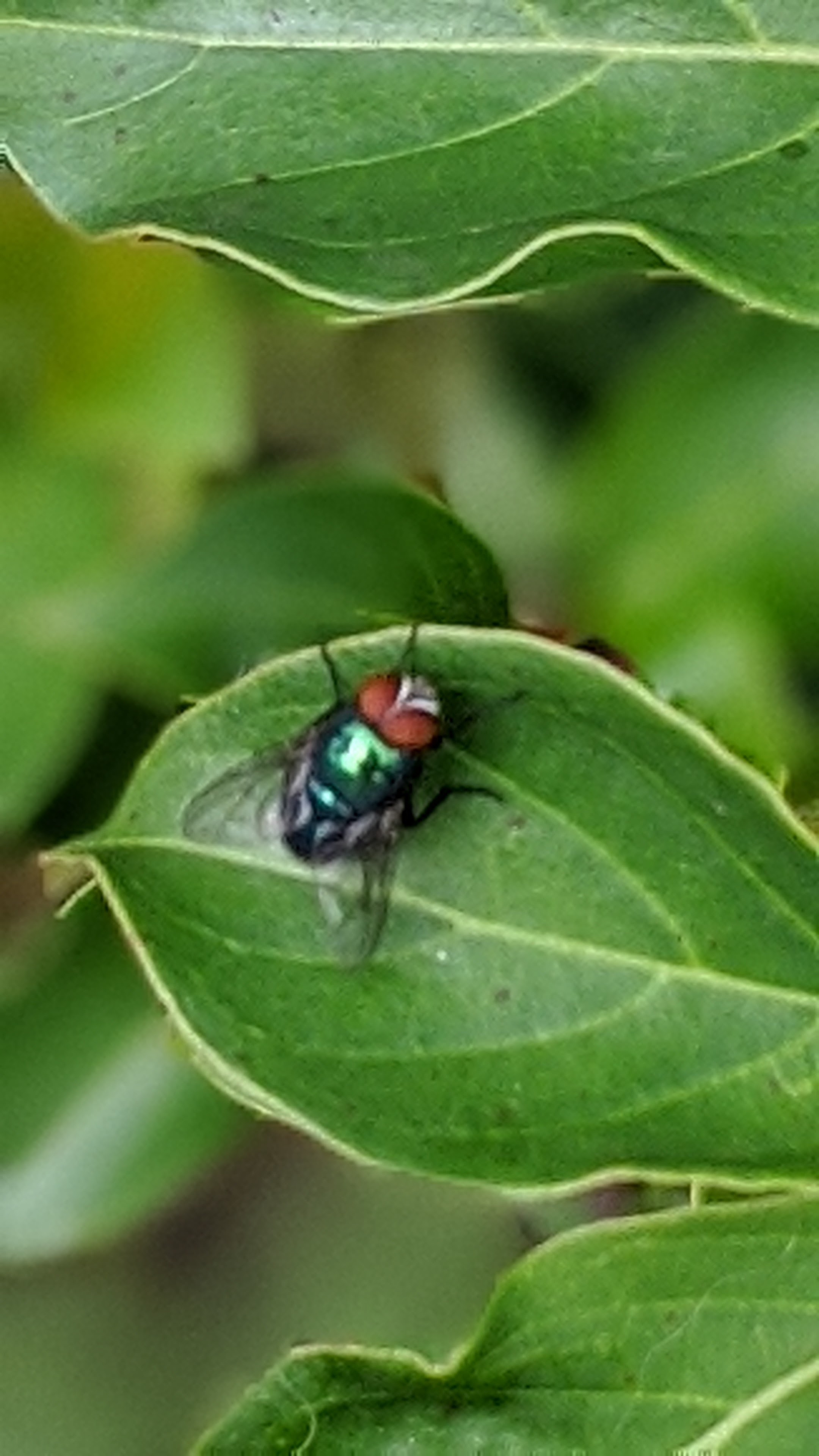
A fly I mistook for a green metallic bee. There are green metallics bees in Florida and they are nearly impossible to photograph.

00100lrportrait_00100_burst20200605104026330_cover

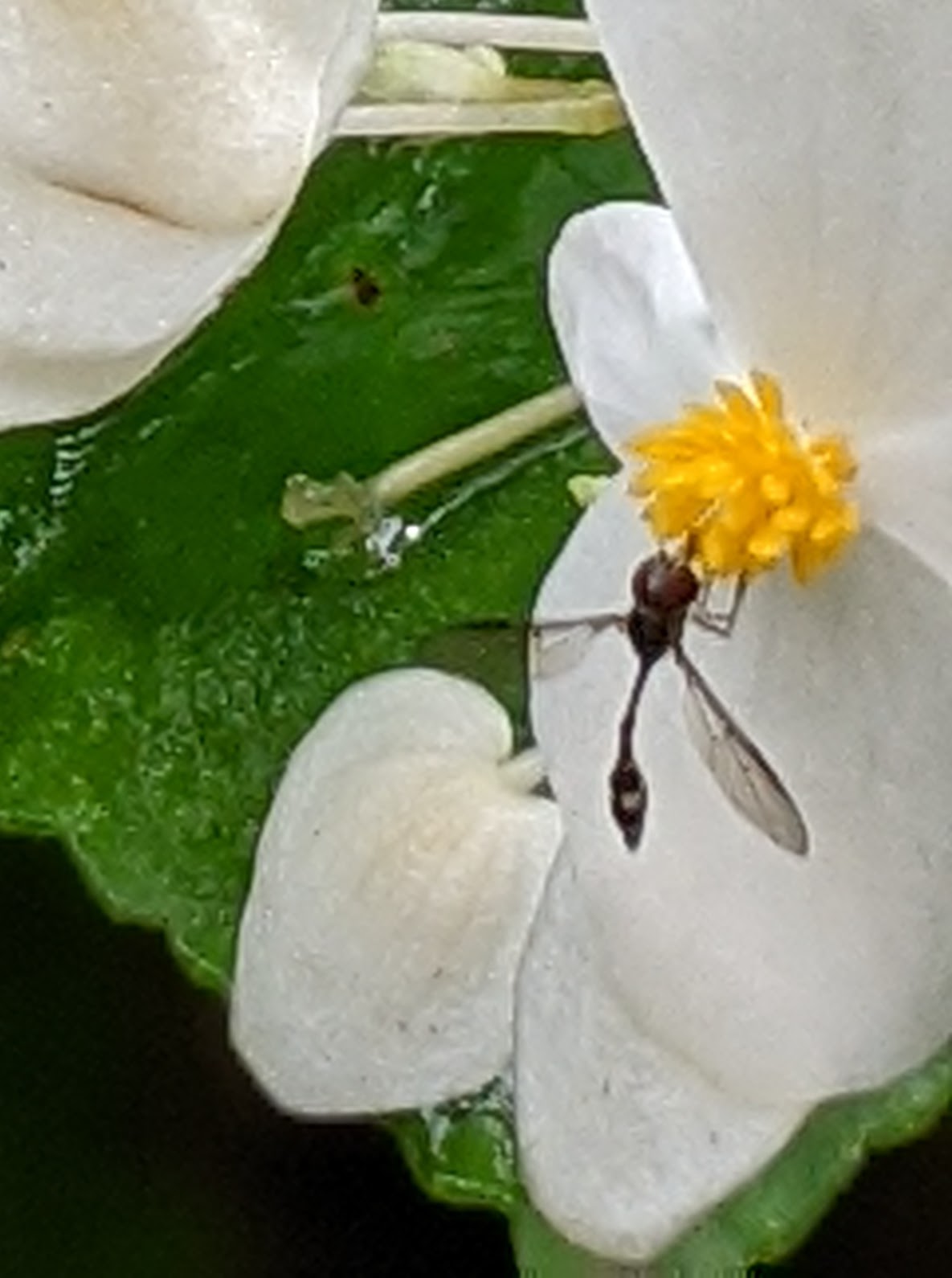
A tiny wasp on a Sweet Begonia flower.

00100lrportrait_00100_burst20200605113320837_cover

A garden spider waiting on a Gallardia flower for an unsuspecting pollinator.

As for the rest of the garden, we have had 9 inches of rain this week and it is soggy and  green.

To see more Six on Saturday posts, visit http://www.thepropagatorblog.wordpress.com