Strange Fruits

Passionflower

Passionflower

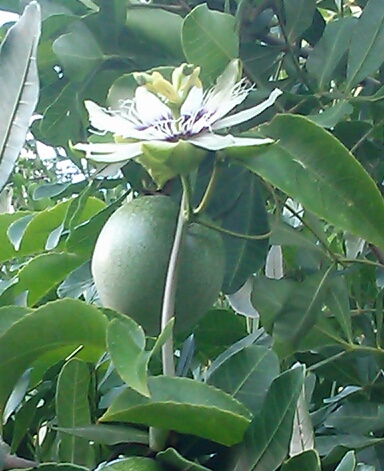
Here it is almost December and I walked out into my backyard to find a Passionflower in full bloom and fruiting. Very nice and so typical of the landscape in South Florida. Just when you are wrapping your brain around the fact that the holidays are here and the temperature outside is around 80 degrees – there is a Passionflower.

I was wondering if this was a culinary Passionfruit and apparently it is not. This is called a May Pop in northern climes. My father in law was from Northern Ohio and one of his favorite childhood memories was stomping May Pops on the way home from school. Probably in May and not December.

Passionfruit comes from Passiflora edulis, which is native to South America. The North American version is Passiflora incarnata, the May Pop. There are an additional eight varieties native to North America, the culinary variety is tropical and may be grown in South Florida.

Ponciana Pods

Poinciana Pods

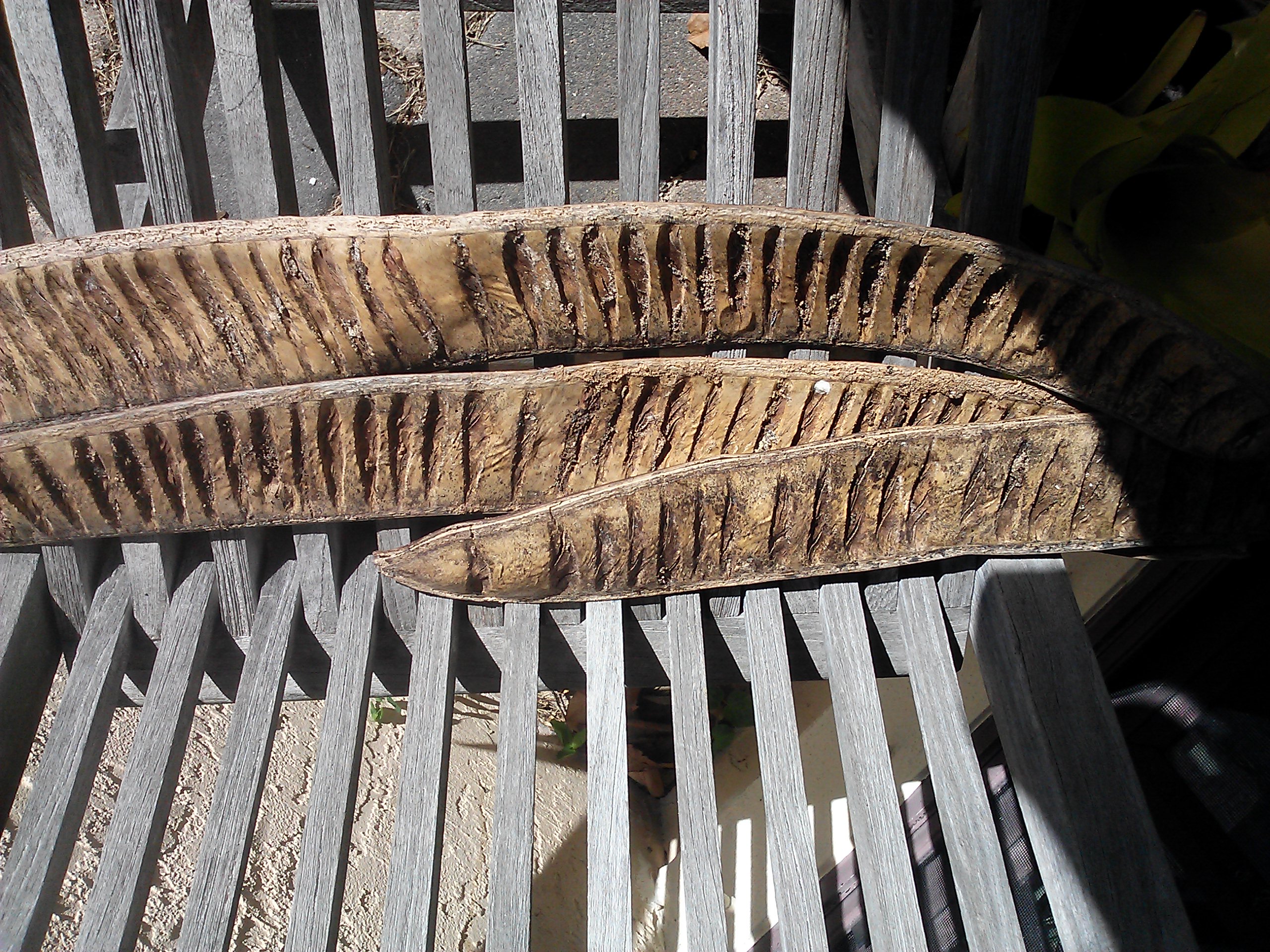
Here is some more interesting fruit. These are the dried pods of the Royal Poinciana tree, a member of the bean family. The pods are about two feet long and I enjoy spray painting them a metallic color and using them in Holiday decorations. I am truly getting in touch with my inner Martha Stewart.

The last bit of strange fruit I spotted at my local library. I have watched these trees bloom for the past couple of years, but had not noticed the fruit (it is strange that I did not notice this fruit)

Golden Shower Fruit

Golden Shower Fruit

My husband was snickering when I showed him this photo. It is pretty strange fruit, the whole thing is around 3 feet long and looks like someone has been making green sausages and hanging them on the tree. The tree is a Golden Shower (Cassia fistula) – in the spring and summer it has chains of yellow flowers that resemble Hawaiian leis hanging down from the branches. Beautiful and kind of peculiar. Like many things in South Florida.

My Former Japanese Maple (s)

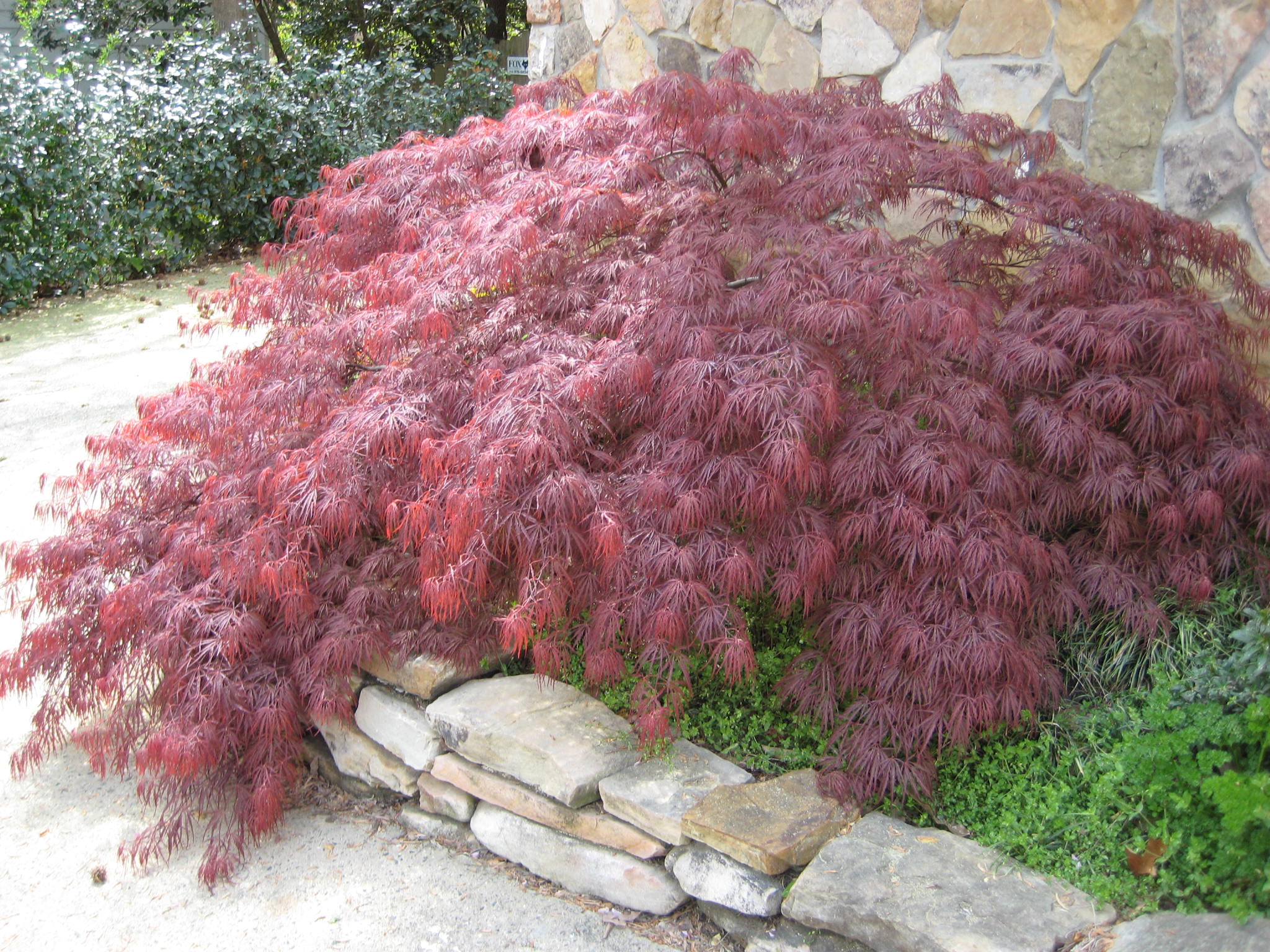
Best Red Dissectum Maple

Having moved to South Florida a few years back there are some things I miss about living in a more temperate climate. Spring flowers, for example. The thing, I think that is so enticing about spring flowers is the living proof winter is ending. Now, truthfully, I don’t miss winter at all and there are really a lot of flowers year round here that are so interesting it makes up for the lack of Yoshino Cherries (my all time favorite)

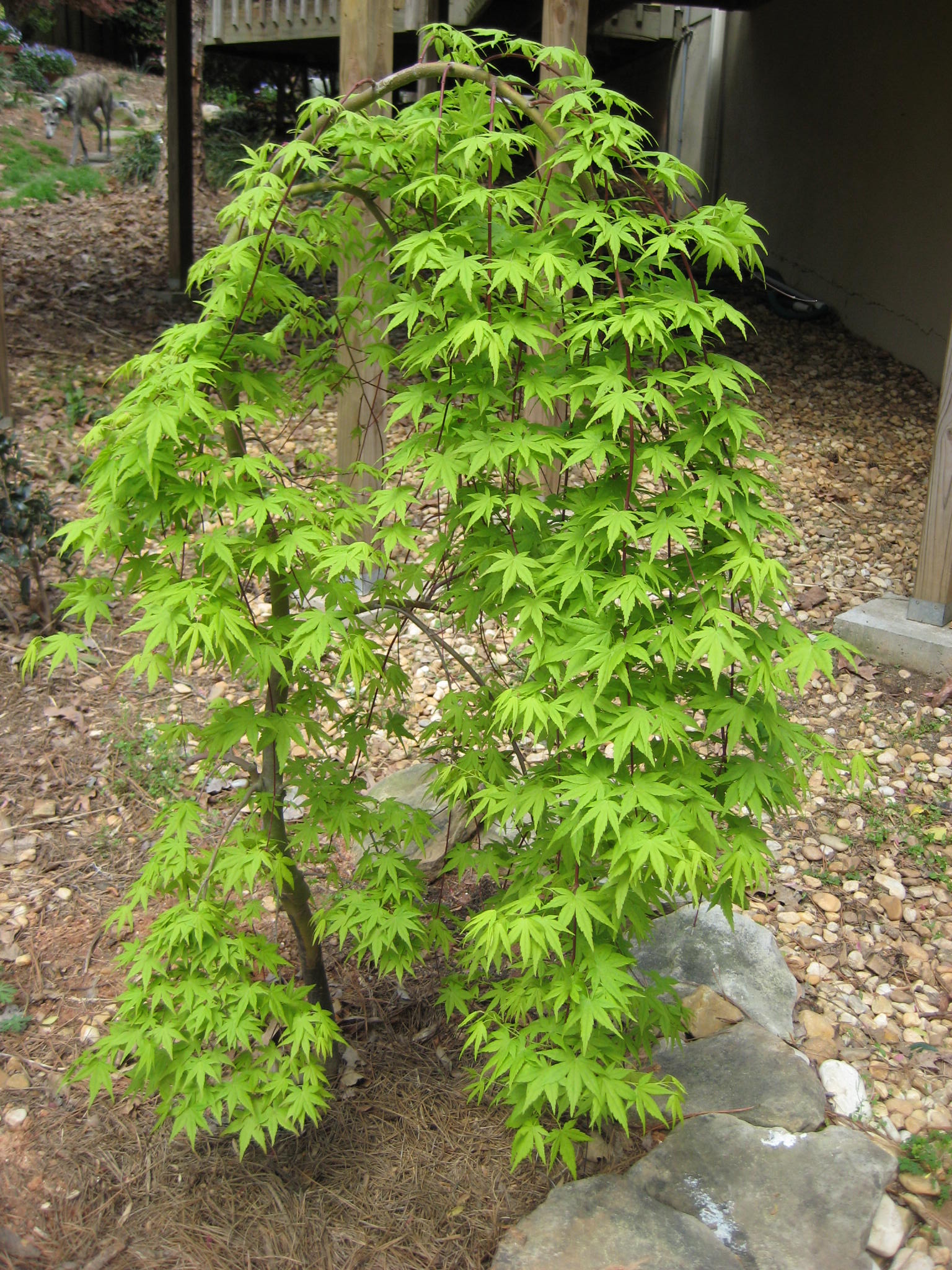
Ryusen Japanese Maple


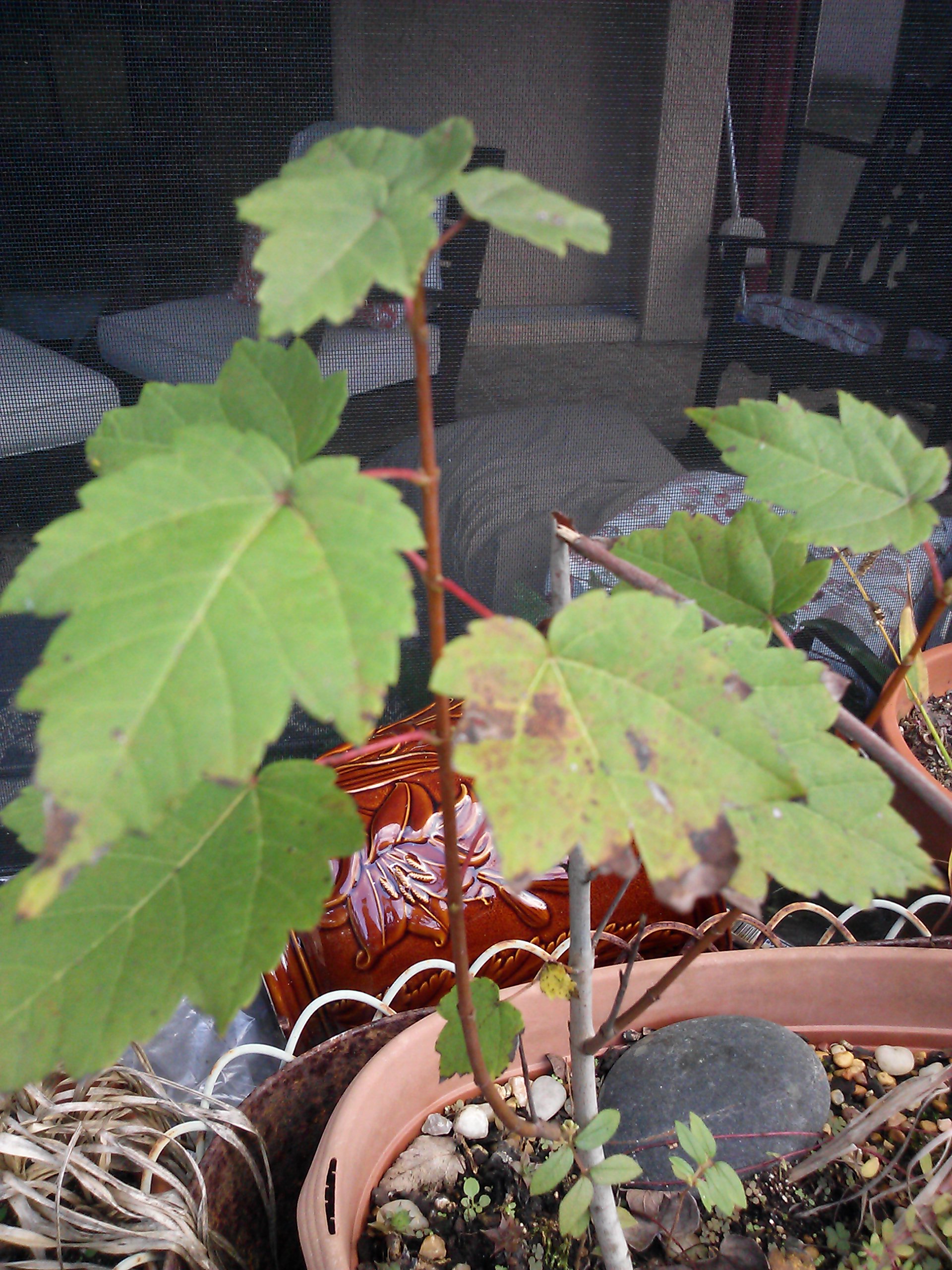
The thing I can’t come to terms with is the lack of Japanese Maples. When I first married, we lived in urban townhouse, there was a seedling Japanese Maple in a weasley back garden. Weasley is the operative word. This Maple had a spectacular fall color and when we moved to a bigger house I took a seedling with me. This Maple grew to 10 or 12 feet tall over a period of 17 years and is one of my all time favorite trees. The above Japanese Maples are from my former garden, a ‘Best Red’ and the Green is ‘Ryusen’. When we moved to South Florida I decided to chance it and dug up a seedling and carted it down here only to find out it was a Red Maple!

The Red Maple

The Red Maple

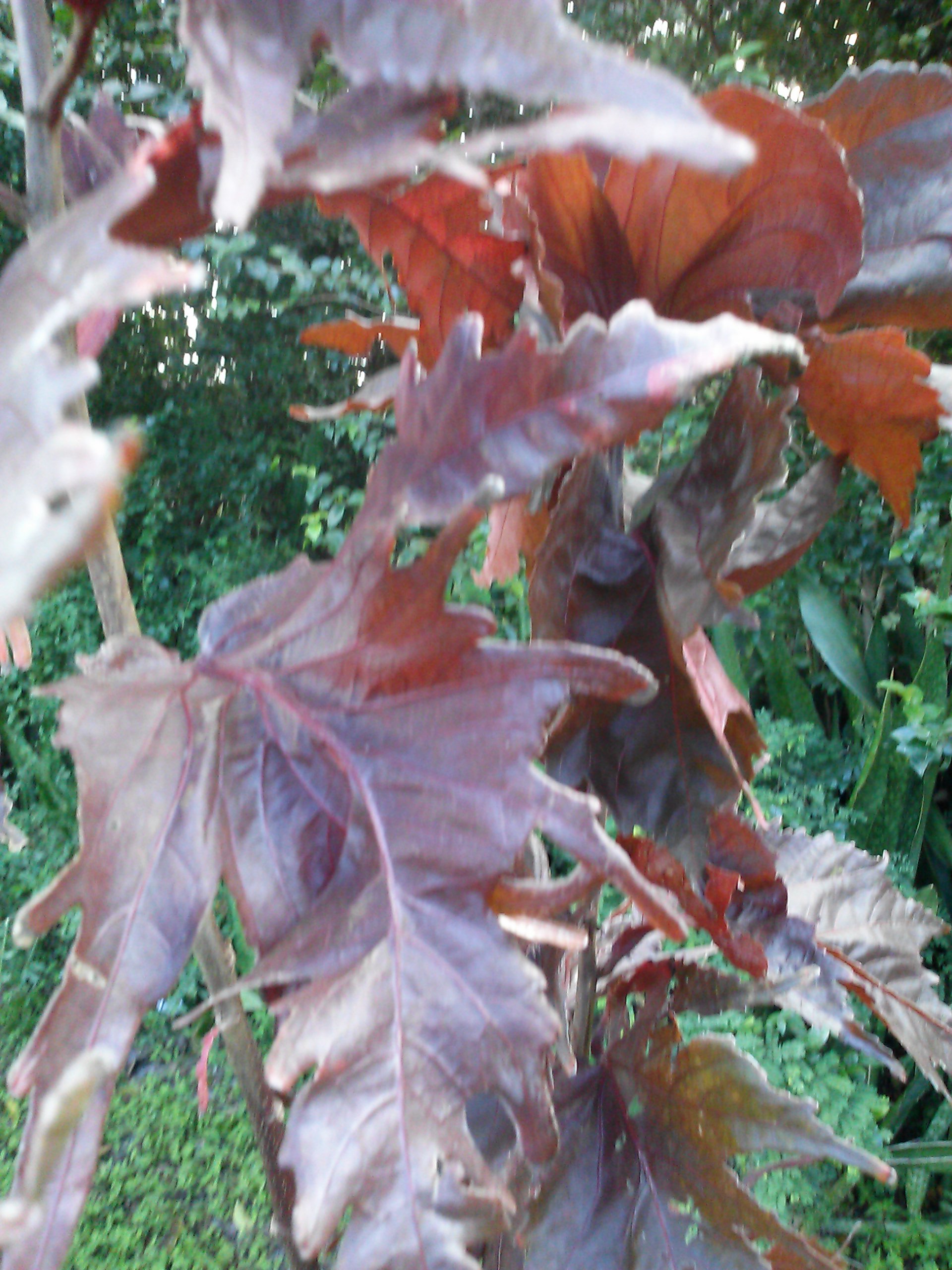
Bah! Undeterred by my lack of Japanese Maple I decided to buy and prune into tree form a ‘Raggedy Ann’ Copperleaf. This is a burgundy and red tropical shrub with raggedy edged foliage kind of like a Dissectum Maple.

Raggedy Ann

Raggedy Ann

Raggedy Ann turns out to be uncooperative and less than graceful. The tree form pruning attempt produced an ungainly shrub 5 feet tall with 5 stems,  with perhaps a width of 10 inches. However, the color is pretty good.

Some things just cannot be replaced.


Another Bromeliad for South Florida – Aechmea blanchetiana

The Whole Plant

The Whole Plant

I found this on my doorstep earlier today and it is my birthday, so this was a great present. It is a Blanchetiana Bromeliad – another beauty from the rainforests of Brazil. The flower spike on this plant looks to be about 4 feet tall. These are fairly common on the Treasure Coast and they start blooming around Labor Day, I consider this a Fall color plant!

I know it seems weird thinking of a Rainforest plant as a Fall indicator, but, hey, they have fall in the tropics. The days shorten and things that are red and orange flower. Not much in the way of leaves changing color, but other things do.

The Flower

The Flower

The Flower is a funky thing that makes me think of crustaceans, King Crab legs or something like that. Now I just need to decide where to plant this…..

Fall Color in South Florida – Bolivian Sunflowers

The Sunflower Hedge

The Sunflower Hedge

I have been noticing these plants for the past few years and it always seems weird to me to associate Sunflowers with November. Gigantic Sunflower Shrubs, at that. I also assumed incorrectly they were some sort of Helianthus. Not the case, this is a Tithonia, Tithonia diversifolia – the Bolivian Sunflower. In another perversity of plant naming, the Bolivian Sunflower is native to Mexico and Central America. I am fairly certain Bolivia is in South America.The name Mexican Sunflower is already taken for a smaller perennial.

One of my neighbors has a hedge of Bolivian Sunflowers screening the yard. This Sunflower hedge is at least 12 tall and in full bloom right now. This plant grows Spring and Summer and blooms all Fall and Winter. It has just really started blooming in earnest and should continue for a couple of months. Another one of those kooky benefits of living in South Florida, Sunflowers all winter.

Since the possible 16′ tall shrub bears 6″ flowers profusely, I am imagining it can put out quite a few seeds and become a problem. I am not sure I would try a hedge, but maybe one or two to screen a view where the lawnmower will run over any nearby seedlings. One has to practice selective lawn mower placement of plants here if there is any question of overabundance. No frost means nothing ever dies. Or anything you want gone refuses to die.

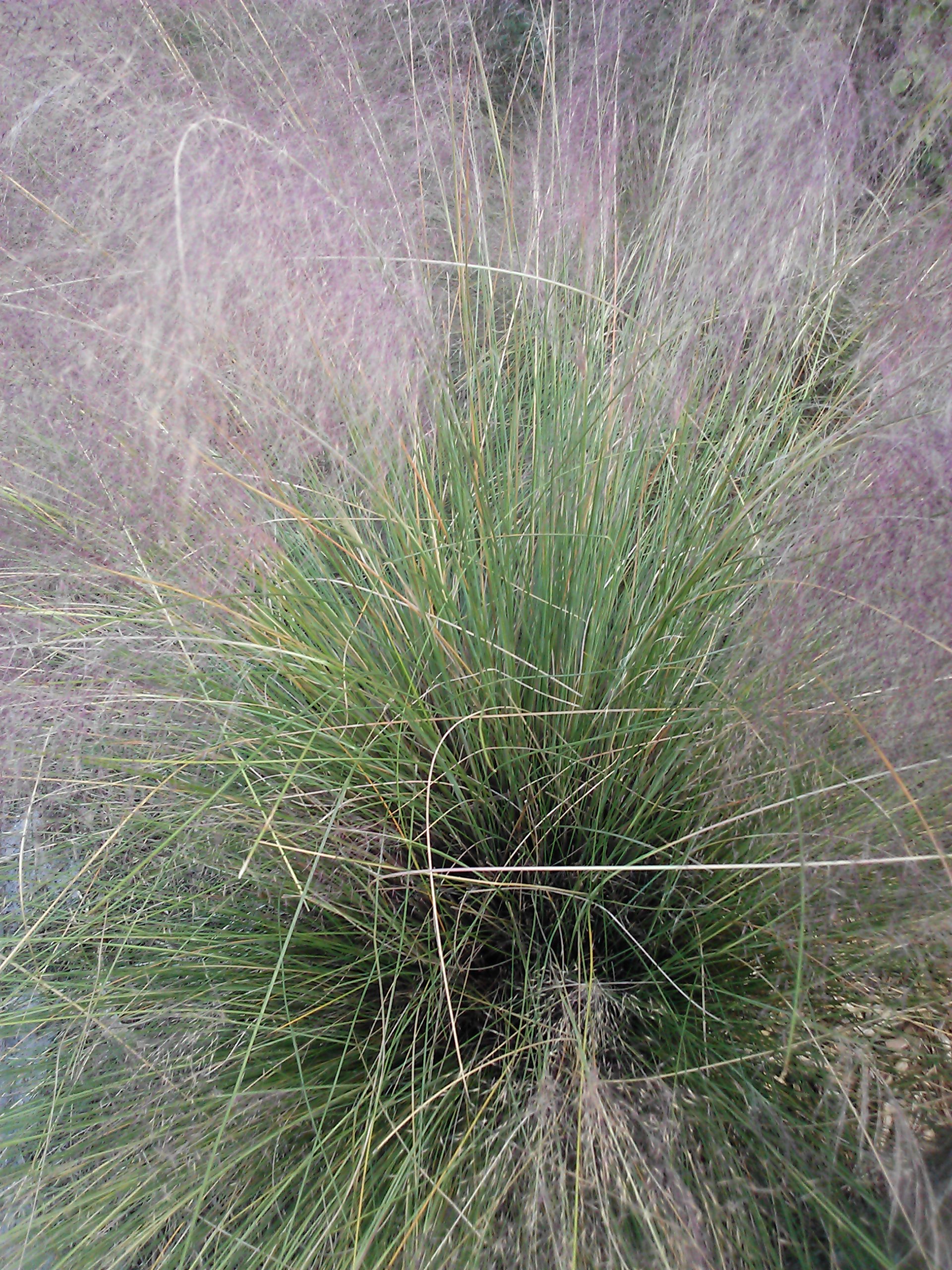
Muhly Grass – Muhlenbergia capillaris or filipes

Muhly Grass

Muhly Grass

I planted Muhly Grass recently for its interesting pink mist fall flowers and reputation for indestructibility. The Grass started blooming nearly as soon as I planted it in September and has been slowly filling out with misty pink plumes. This is an interesting grass – it grows as far north as Massachusetts west to Kansas and south to Florida. A huge range, at least 5 USDA hardiness zones, apparently with a native habitat on the edges of marshes. I found in previous attempts that it is virtually impossible to grow in heavy clay soil. So, it should be really happy in my front yard atop a sand dune.

I am getting a feeling I might have to water it a bit. Plants that are designated drought tolerant with conditions usually are not as drought tolerant as you would like.

Another common name for this is Sweetgrass, supposedly when dried it has a sweet fragrance like hay. I haven’t noticed the smell, but I haven’t dried any either. I think I prefer the Sweetgrass name to Muhly Grass. Muhly sounds like beer or something. Muhly Ale?!

This grass is the source of material for basketry by the Seminole Indians in Florida and the famous Sweetgrass baskets of the Low Country of South Carolina. The Low Country basketry tradition was started by slaves from West Africa imported to the American South to work in the rice plantations in the 1800s. The tradition continues and to this day sweetgrass baskets are made and sold in the Low Country. The grass is sewn in ropes, then coiled to make a basket – a time consuming task that produces a beautiful basket.

According to the Seminole tribe website they started making sweetgrass baskets 60 years ago. Their baskets are based on grass from the Everglades, which is dried and constructed in a similar way to the Low Country baskets.

Given that I now possess a mass of Muhly I might try a basket. I suspect this is a lot harder than I think it is.. and my backyard has been blessed with an overabundance of Muscadines (a native grape) – the local wildlife population eats all the fruit, but I have such a large amount of grapevine I may take up basketweaving or wreathmaking..

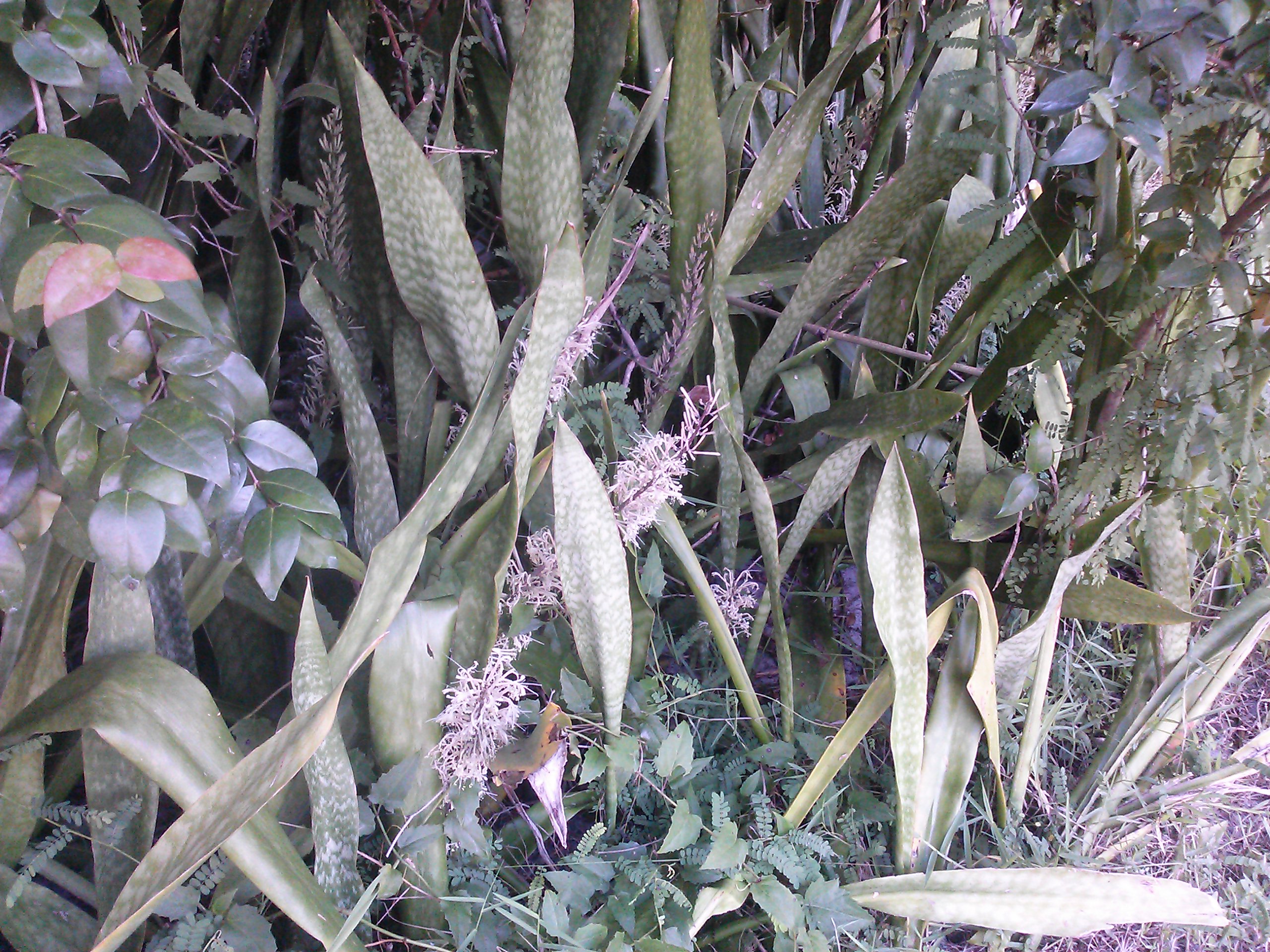
Mother in Laws Tongue – Sansevieria

Mother In Laws Tongue Flower

Mother In Laws Tongue Flower

My mother in law didn’t have a a particularly sharp tongue. Well, maybe a little sharp. My Florida yard is blessed with an abundance of these plants. It still seems unreal to me to be nearly overrun by- well, houseplants.

The only way to describe the Mother In Law’s Tongue in my yard is a plethora. Or a Boatload. I am suspicious someone brought a houseplant from Michigan in 1964 and unleashed this unholy plant on my garden. The Florida gardening books consider this plant escaped and invasive.

I am certain I cannot rid my yard of this without total annihilation of everything so I have decided to live with it. I was surprised over the weekend to see that these plants flower. And are kind of pretty. On the flip side, this flower probably produces a quarter of a million seeds per stalk. I have ended up with at least 100 linear feet of edging of MILT about 5 feet deep. The only thing that keeps it in bounds is frequent mowing with the lawn mower.

The Mass of Mother In Law Tongues

The Mass of Mother In Law Tongues

If I step back and squint the plants have an interesting texture and a nice green color. An added bonus-extreme drought resistance. I just have to keep reminding myself of these good features.

More fun from the tropics…

Garden Paradise

6-24-08 017

I think the ancient Persians were the original purveyors of the term paradise. It translates to something along the lines of walled enclosure. I agree that a walled enclosure can be a garden paradise, but I find my idea of garden paradise has changed over time.

My first garden was about 100 square feet behind an urban townhouse my husband and I had when we first married. My husband had bought the townhouse when he was single. The garden consisted of a 8 x 8 foot slab of concrete with a telephone pole in the middle and dirt around the sides; he used it as motorcycle parking. There were french doors that looked out on this not very scenic view.

I built a garage for the motorcycle incorporating the telephone pole, bricked the slab of concrete and put 2 tree form roses in big pots at the back of the spaceparadise found. Unfortunately, the tree roses only looked beautiful maybe two months out of the year. But those two months were spectacular. This also cured my desire to grow roses for the most part. The townhouse was sold and we moved to the suburbs for space and quiet.

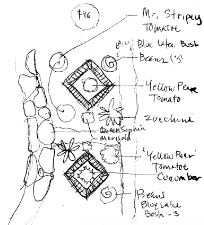
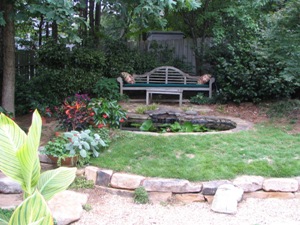
My next garden was more ambitious a – 1/3 acre suburban lot with a vegetable parterre, water garden, a waterfall and perennial beds. I enjoyed creating the garden, but, after 17 years, it was just too much work. The couple who bought the house were 10 or 15 years younger, had 5 kids were excited about the garden and planned to add a pizza oven.  Paradise found and lost again..

The Vegetable Parterre

The Vegetable Parterre

The Vegetable Parterre was another one of those things that looked great two months out of the year – but had the added bonus of providing vegetables and herbs. Eventually the parterre disappeared and it was mostly a kitchen garden with herbs.

The Fish Pond

The Fish Pond

I enjoyed the fish pond for a number of years, but it leaked, and leaked and I fixed it and fixed itthis cured me of water features, in the ground anyway.

My current garden paradise is a work in progress. My goal is more hardscape, more perennials and less maintenance. Still working on it…

CAM00134