My Saturday morning garden stroll revealed that spring comes early in South Florida. The scents and sights are promising tropical fruits and flowers later this year. To participate in the blog phenomena Six on Saturday and tour gardens around the world, visit Jim’s blog and follow the links in the comments.
A new arrival in the mail greeted me yesterday – a nice rooted cutting of ‘Gardenmeister’ Fuchsia. This will have to be a sort of a reverse house plant. Outside in winter and indoors for summer. Summer heat and humidity will kill this outside. Should be an interesting experiment.
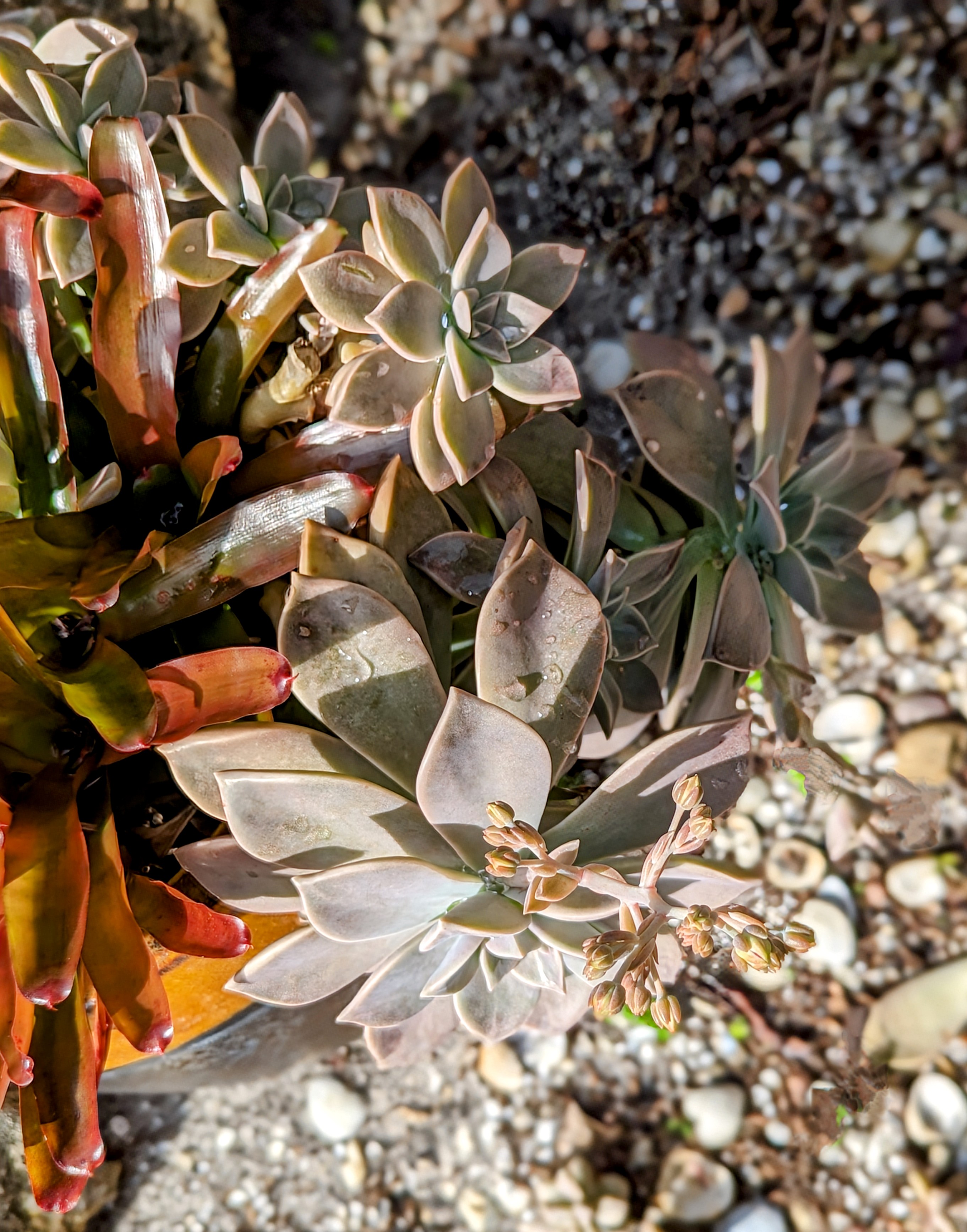
Buds on the Graptosedum.
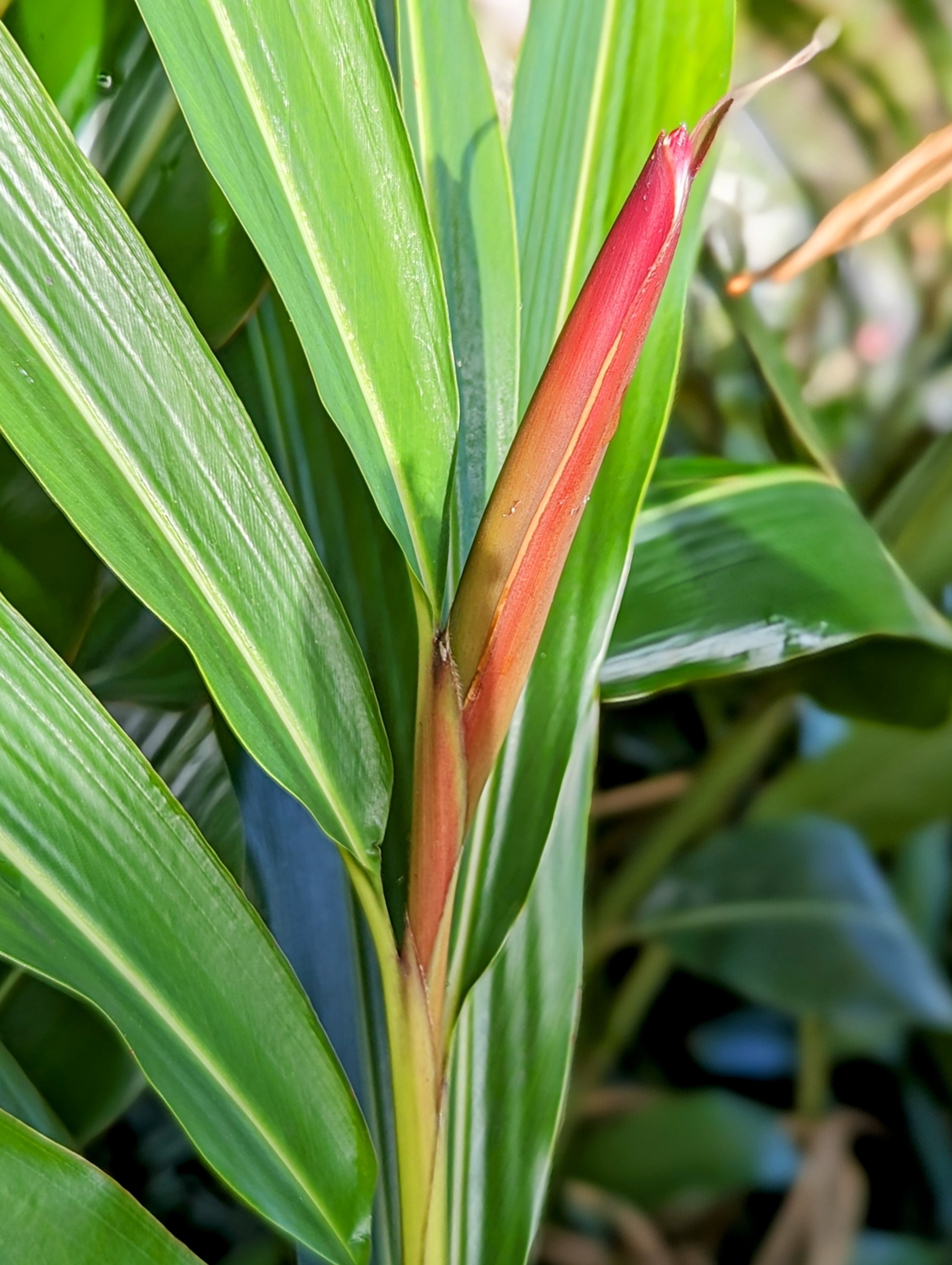
Buds on the Shell Ginger (Alpinia zerumbet). I am hoping for flowers next week. This is the only ginger I have any luck with. It is over five feet tall.
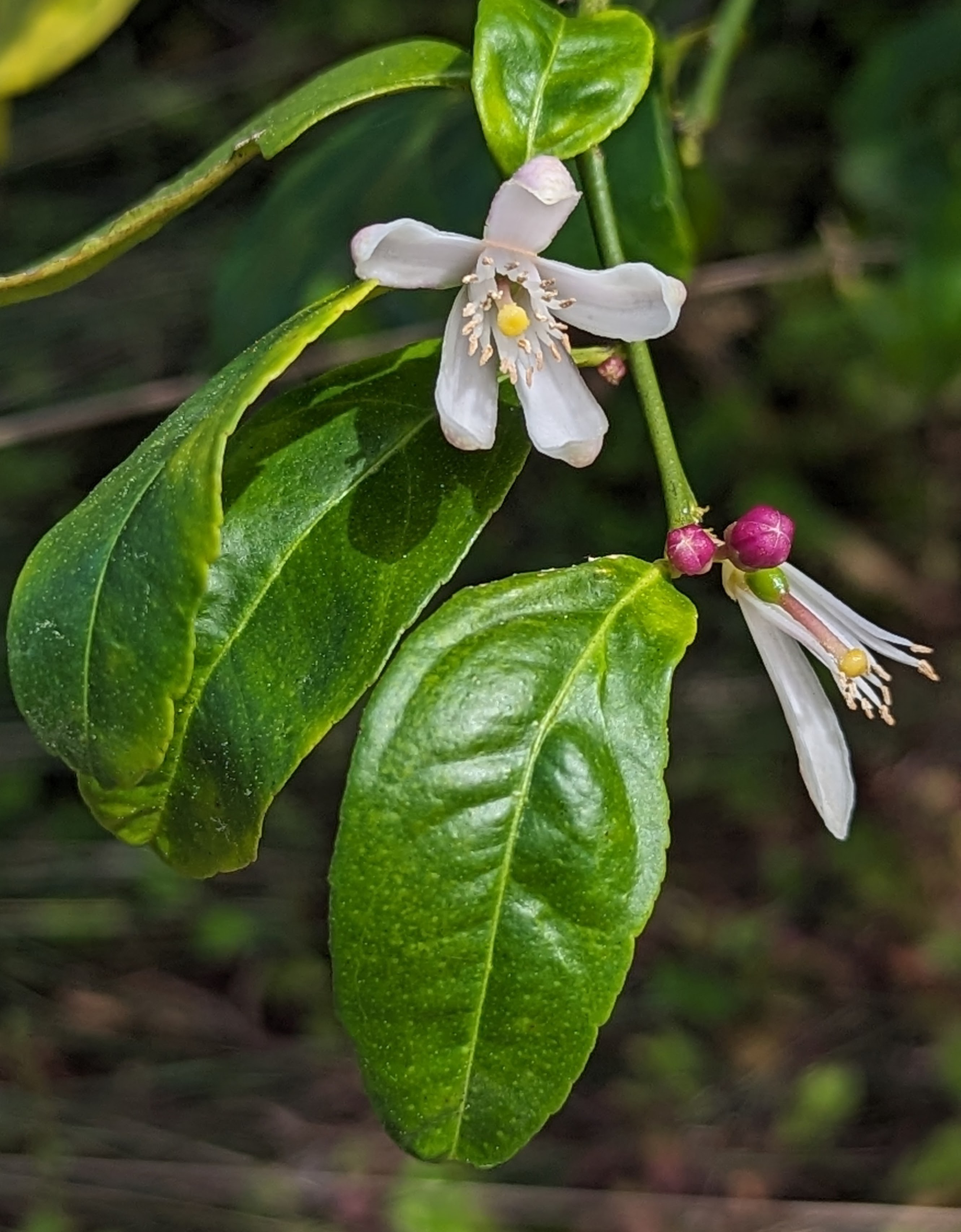
The back garden smells wonderful. The scent is from the Rangpur lime tree flowering more prolifically than it ever has.
Thai dessert mangos (Nam Doc Mai) setting lots of fruit.
That’s all from South Florida. I hope everyone is seeing signs of spring.
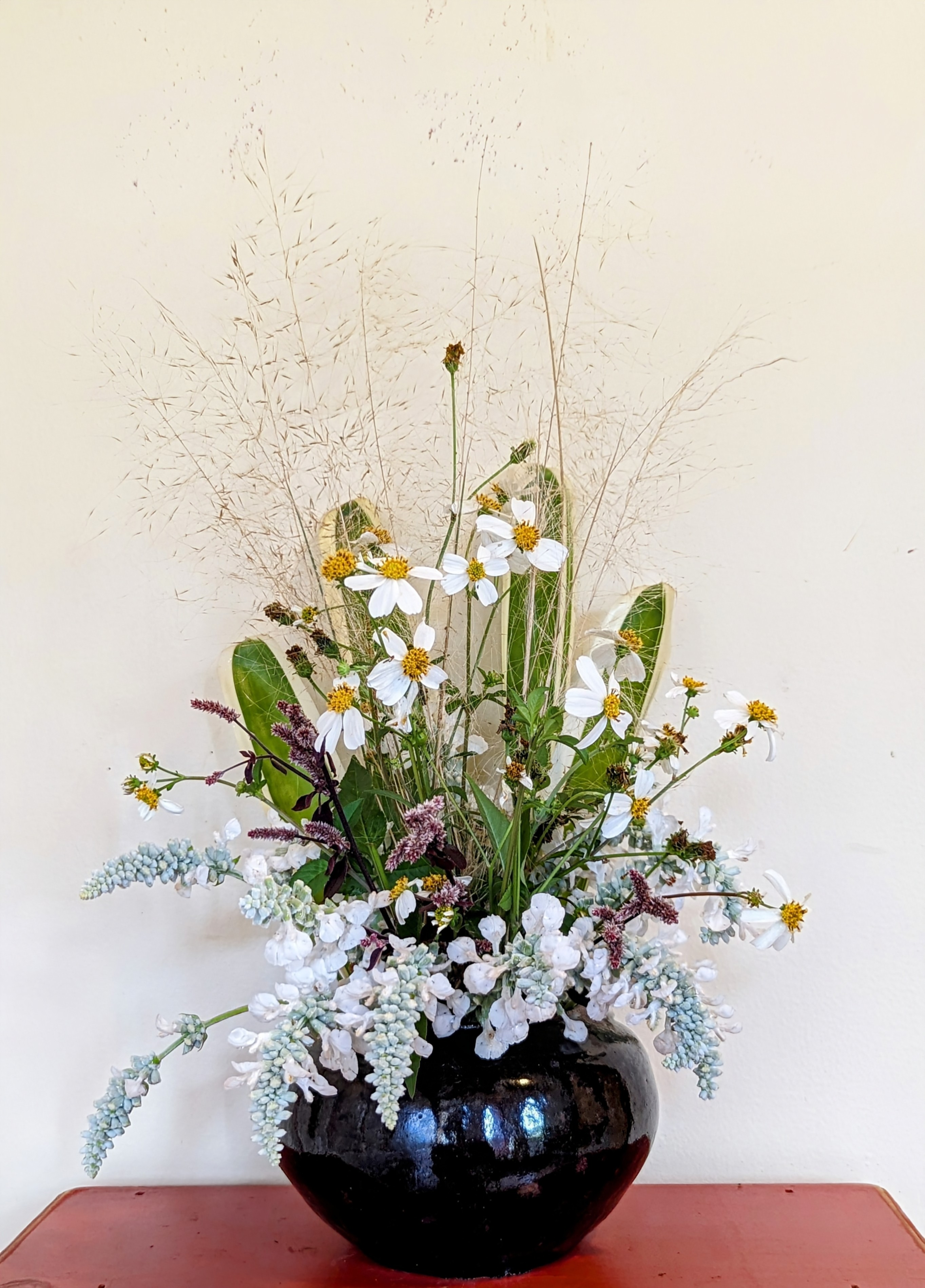
Sometimes I like a little reminder of winter, something that doesn’t involve actually being cold. With temperatures hovering around 80F/26C and the air conditioning running it is not very wintry in my garden. I decided to concentrate on frosty white flowers in a vase for this Monday.
It has been very pleasant outside this week, so I have been clearing things out and moving things around. I planted a couple of packages of seed ahead of a predicted day long deluge (Sunday) hoping to get some different cutting flowers going (Bupleurum and White Finch Orlaya). I decided to plant these in a bed instead of pots as I have this magnificent vegetable bed I prepared a couple of years ago lying fallow since it became infested with nematodes almost immediately after completion. The reseeding salvia is very happy there so I’m hoping for more flowers. Upon returning to the house I read the packages – both said they need to be chilled for two weeks prior to planting. Oops. I hope the deluge helps.
The vase is a thrift store find. Flowers in frosty tones:
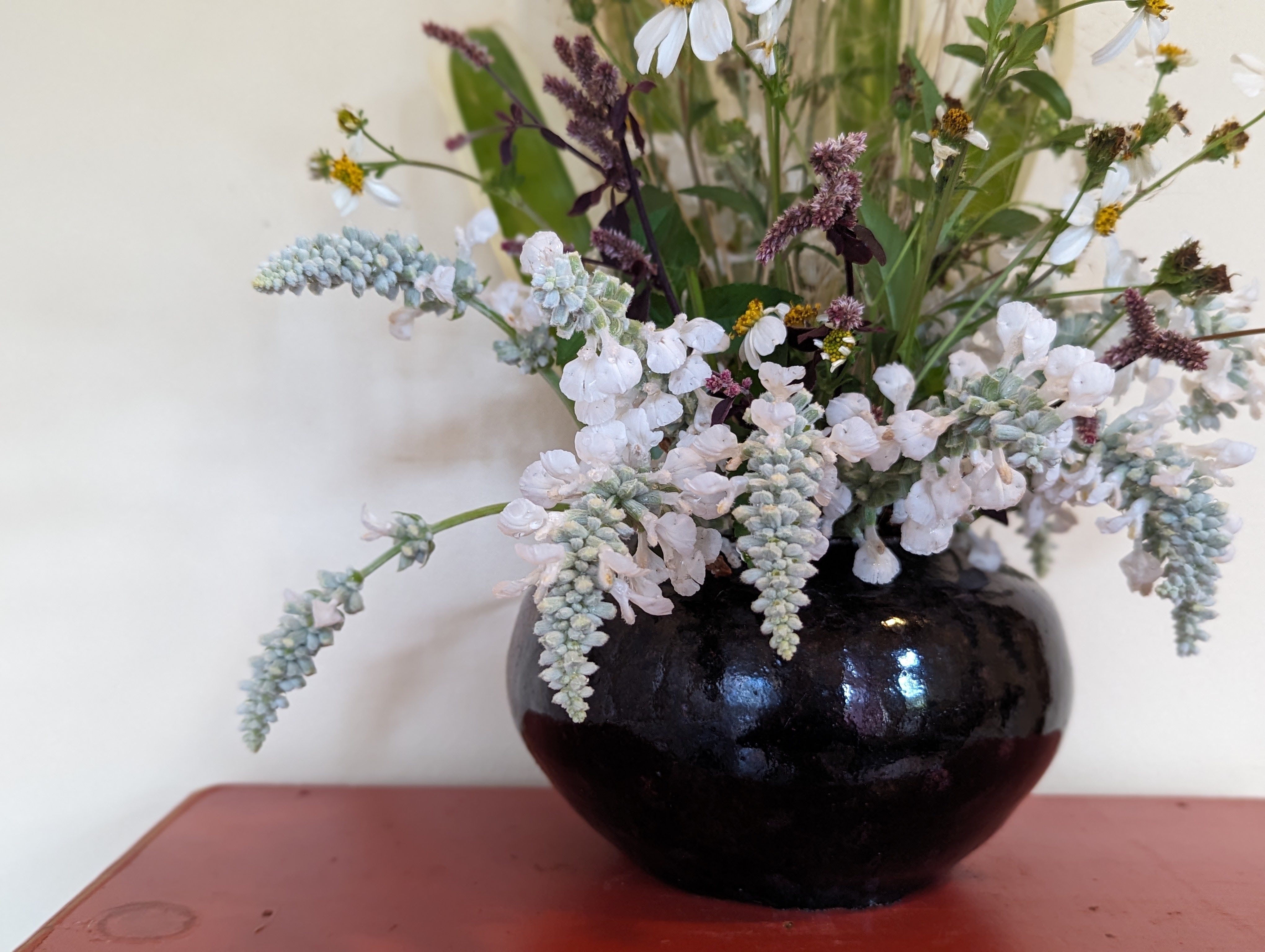
White Flame Salvia is cascading over the edges. The purple stemmed fuzzy flowers are Red Velvet Aerva.
White daisies are Bidens alba. Varigated foliage is ‘Bossa Nova’ Neoregelia Bromeliad. The airy grasses are dried seedheads from Muhly Grass (Muhlbergia capillaris).
That’s all from not so wintry South Florida this Monday. Visit our hostess, Cathy, at her blog to see vases from other gardeners around the world.
On my weekly garden tour this morning I realized my thinking that cold weather caused color changes in the garden might not be what actually happens. The weather has warmed considerably and now I am seeing the Blushing Bromeliads really looking embarrassed. The garden continues to educate me.
I am joining the group of SOS’ers sharing their garden tours with six items of interest. To join the crowd or visit the other gardens, follow this link to Jim’s blog.
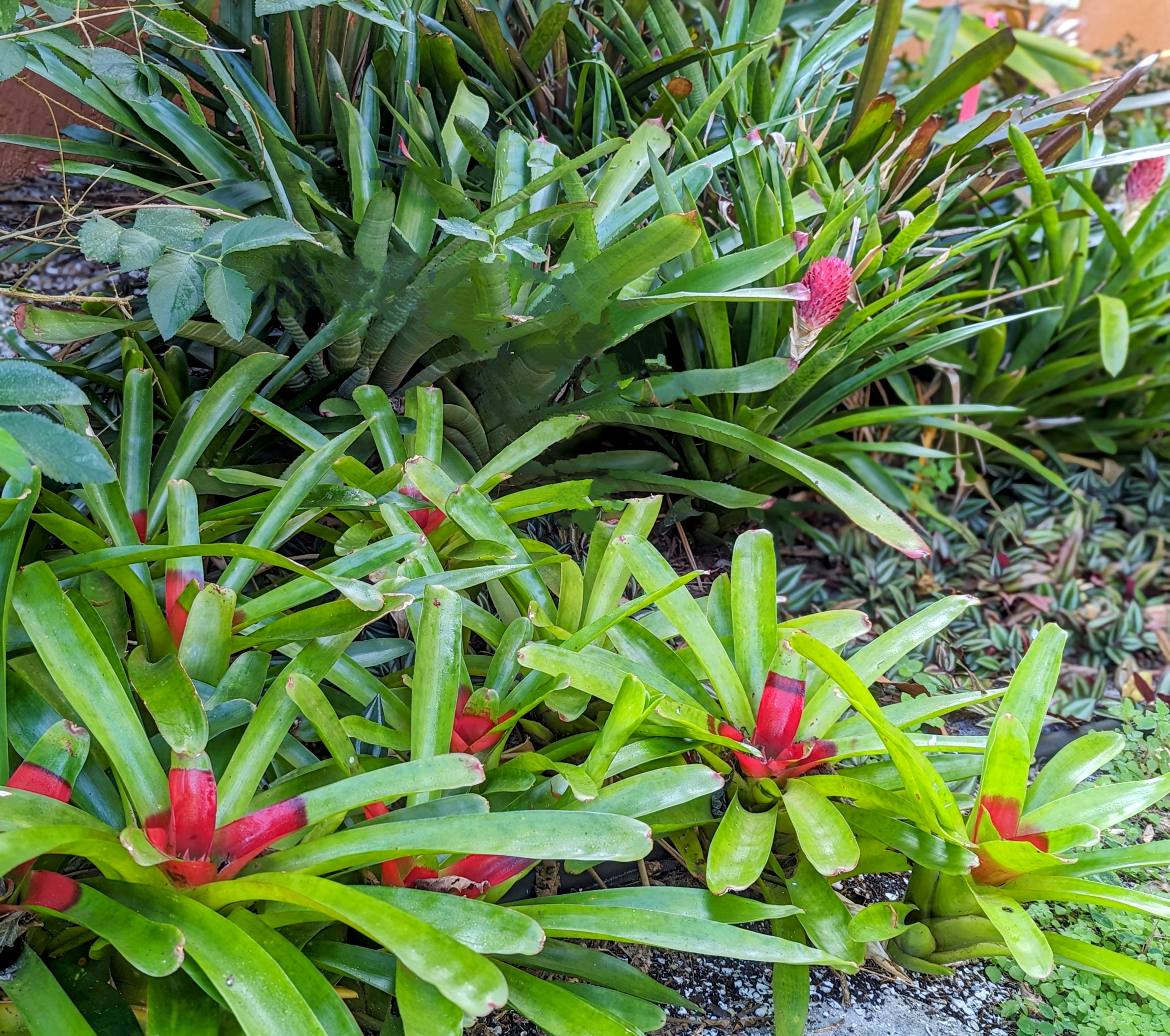
Blushing Bromeliad (Neoregelia carolinae) in full blush, backed up with Quesnelia testudo bromeliads in pink.
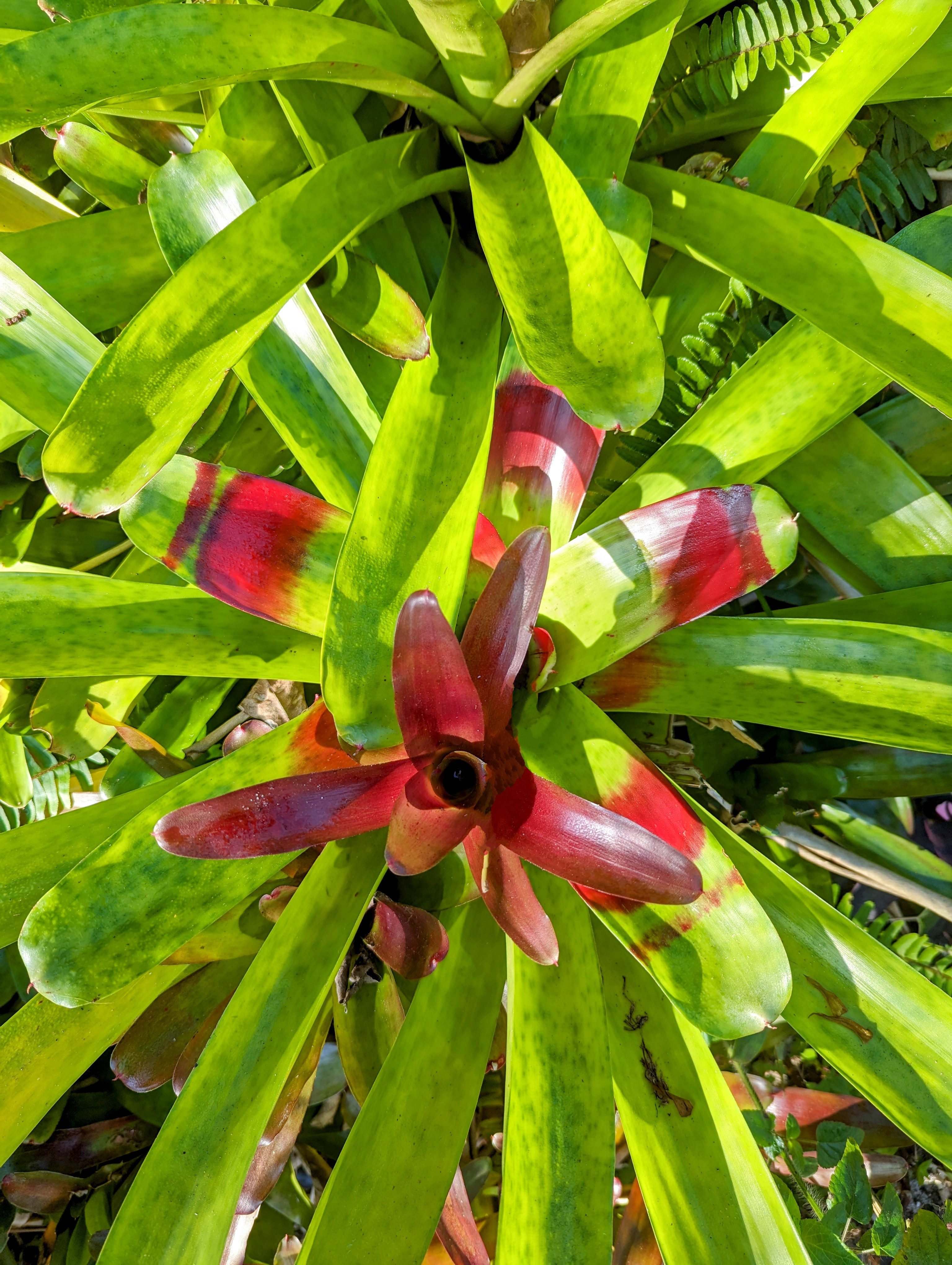
Another blusher, Neoregelia ‘MacWilliamsii’, quickly becoming another garden favorite. These are not sharp and like a little or a lot of sun. They are completely green in summer.
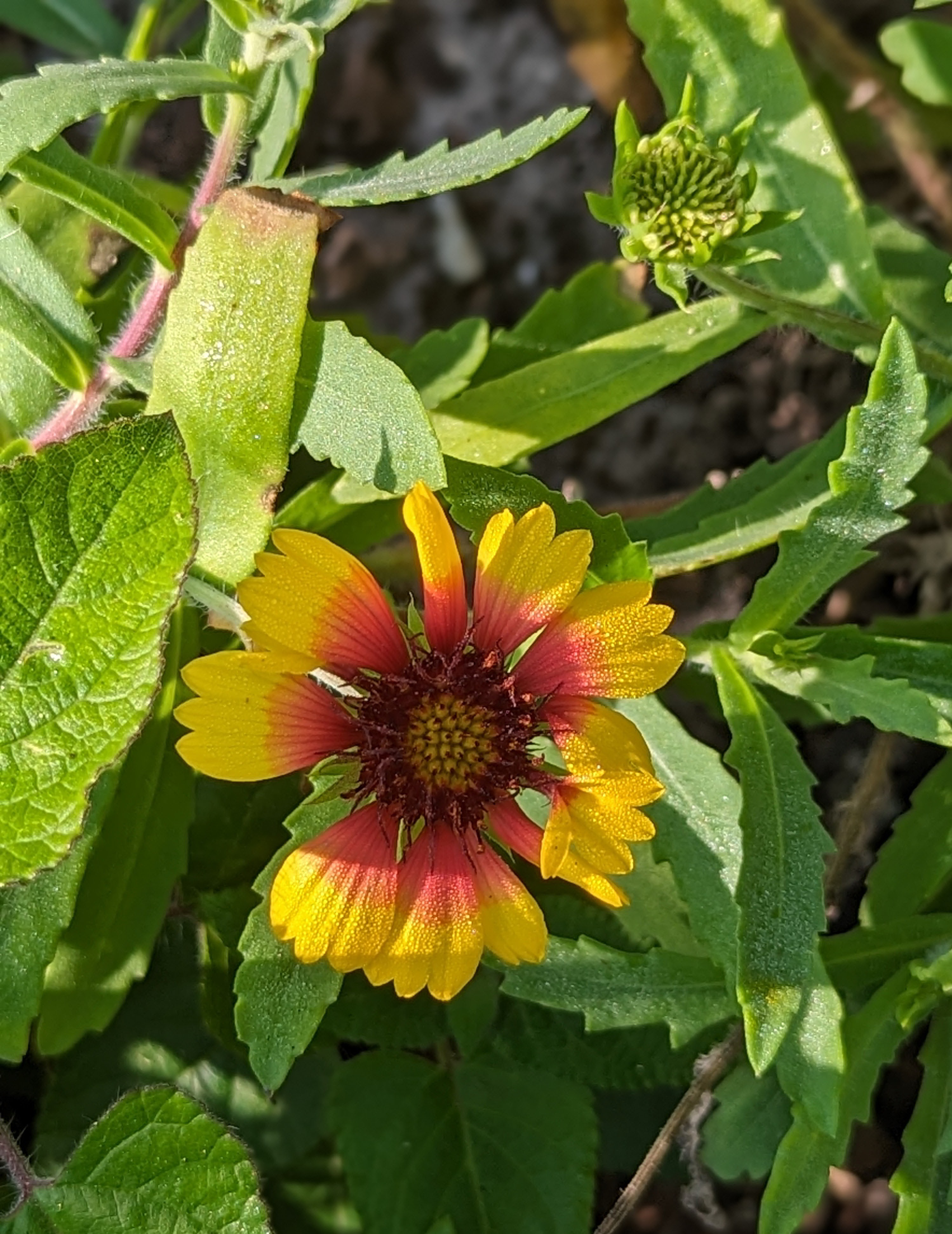
I love finding Gallardia flowers in February.
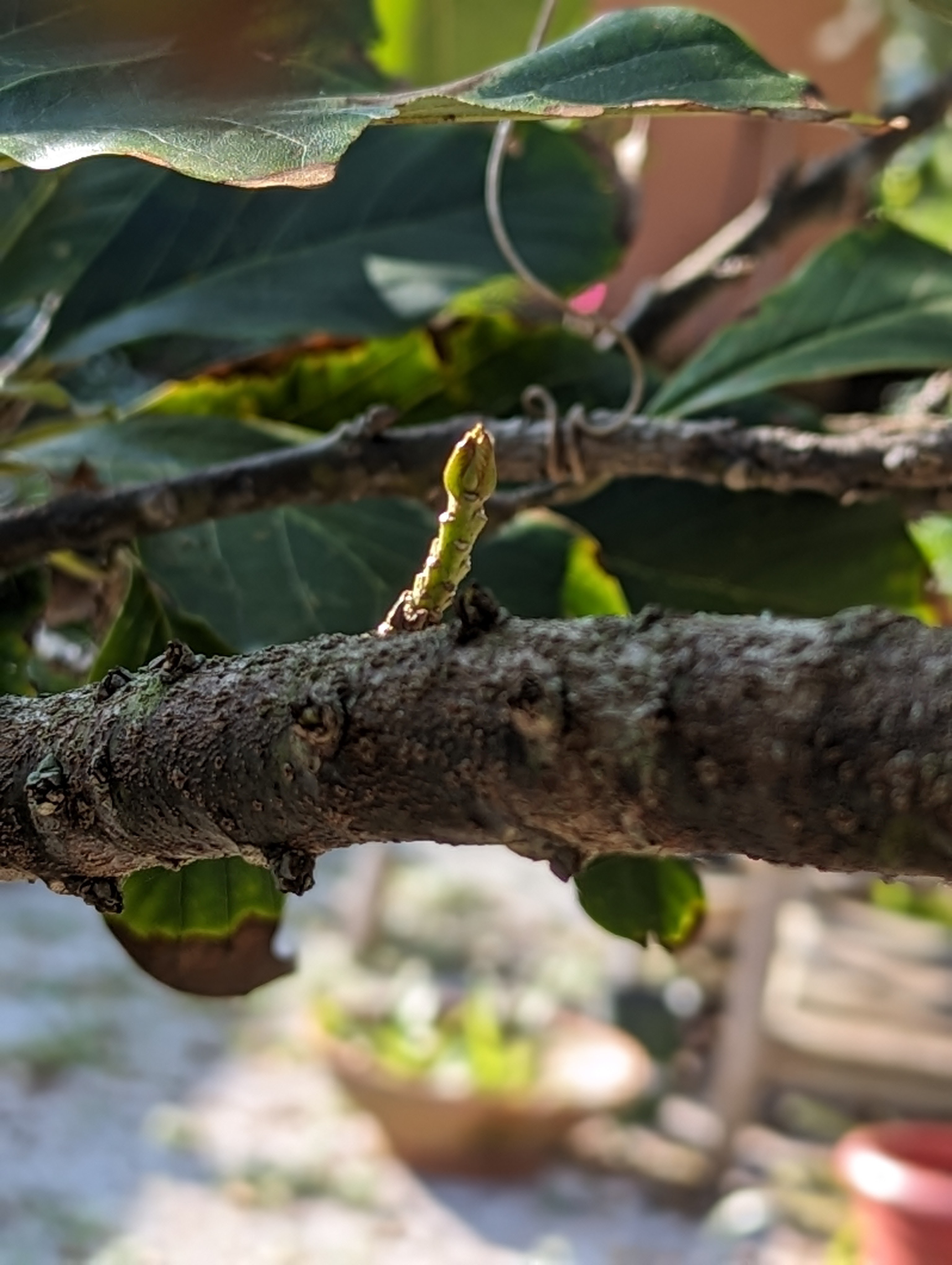
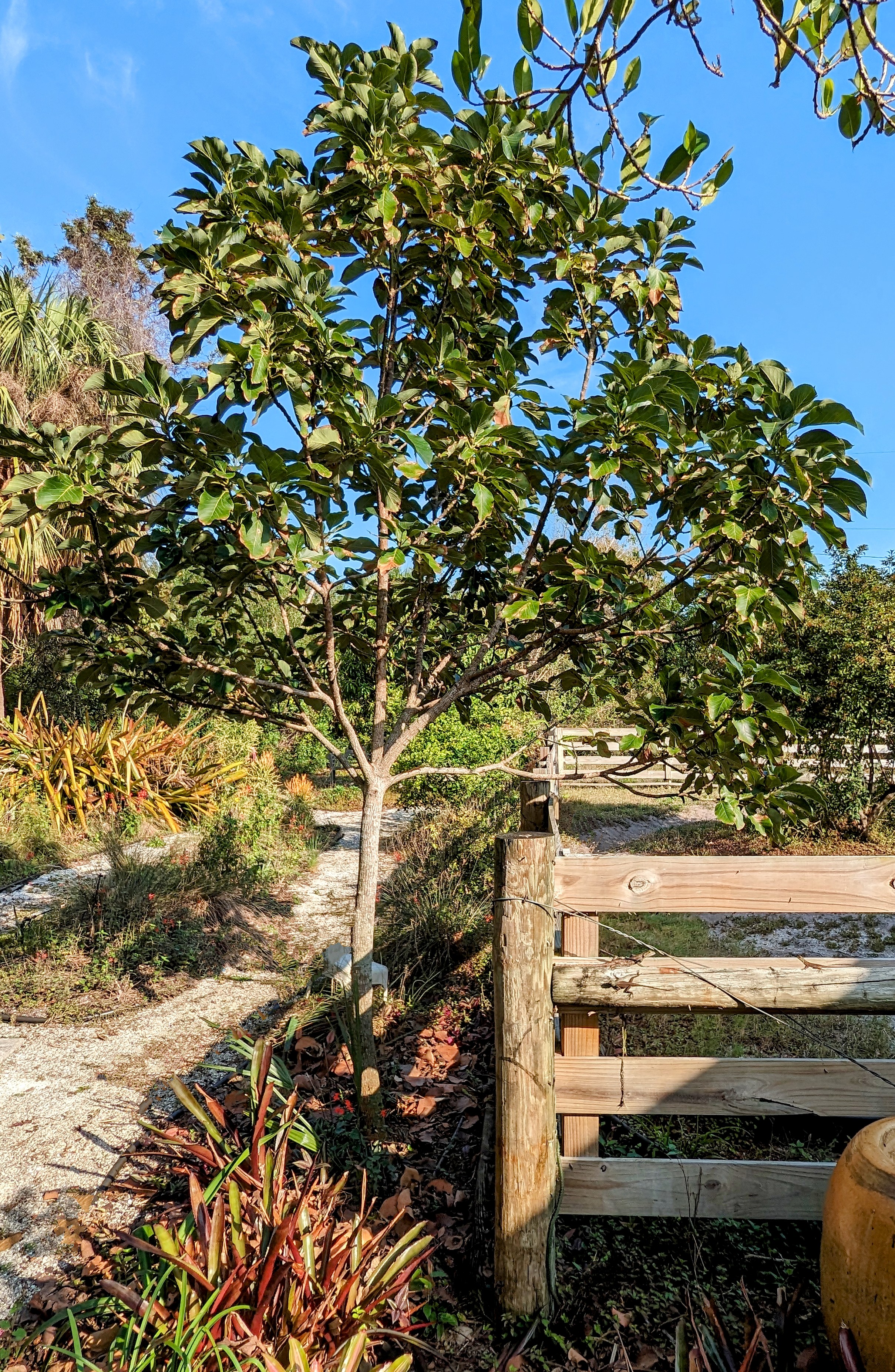
I am hoping this is a future avocado. This is a Cuban Avocado, an unusual variety I had not seen prior to moving to South Florida. A rare one that is true to seed. A friend grew this from seed and brought a small tree to me about seven years ago. The avocados are the size of footballs. Fingers crossed.
The Cuban Avocado tree, about 15 feet tall.
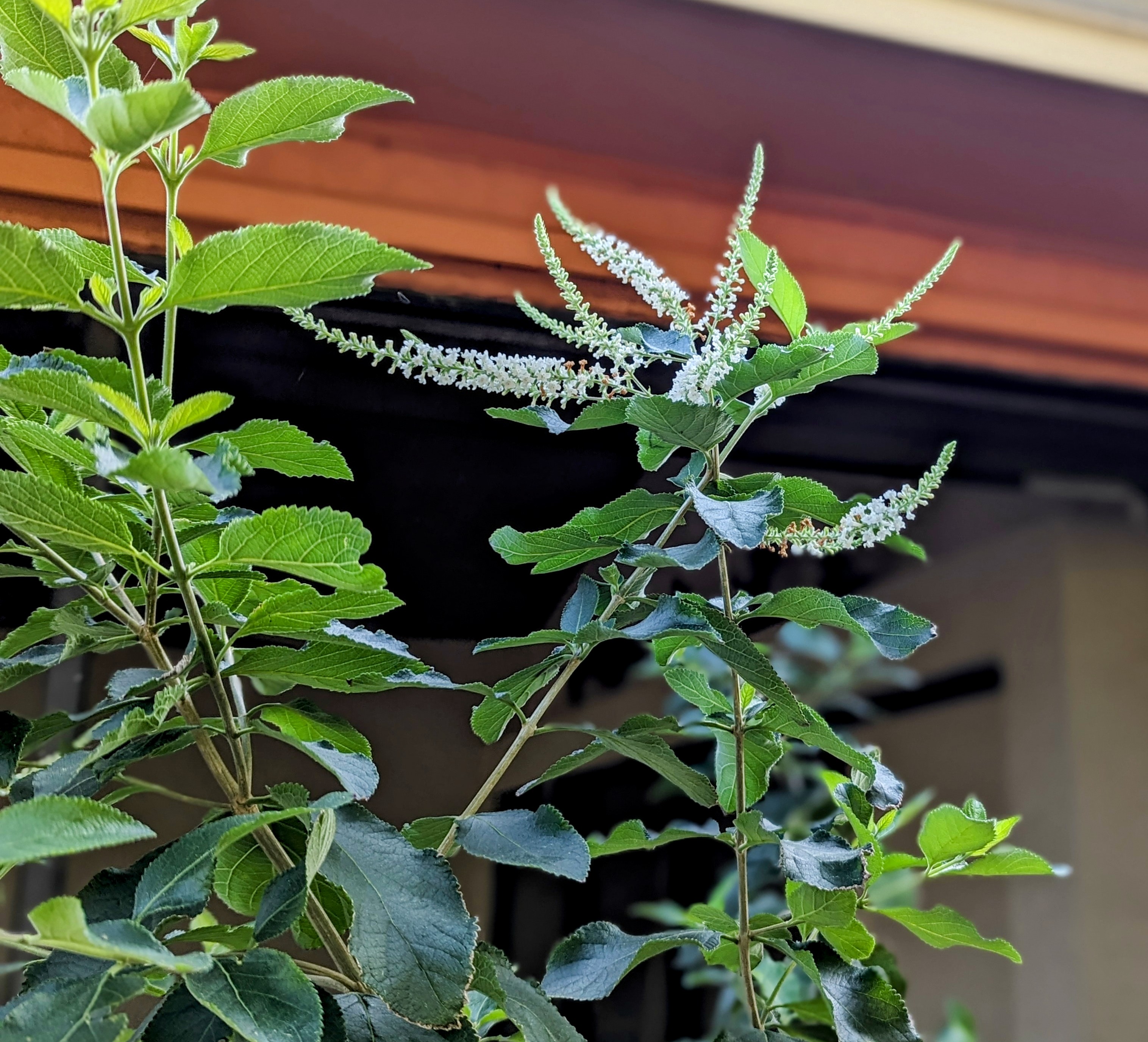
The Sweet Almond (Aloysia virgata) has started flowering again – adding fragrance to the garden.
That completes my weekly tour. Happy Gardening wherever you are.
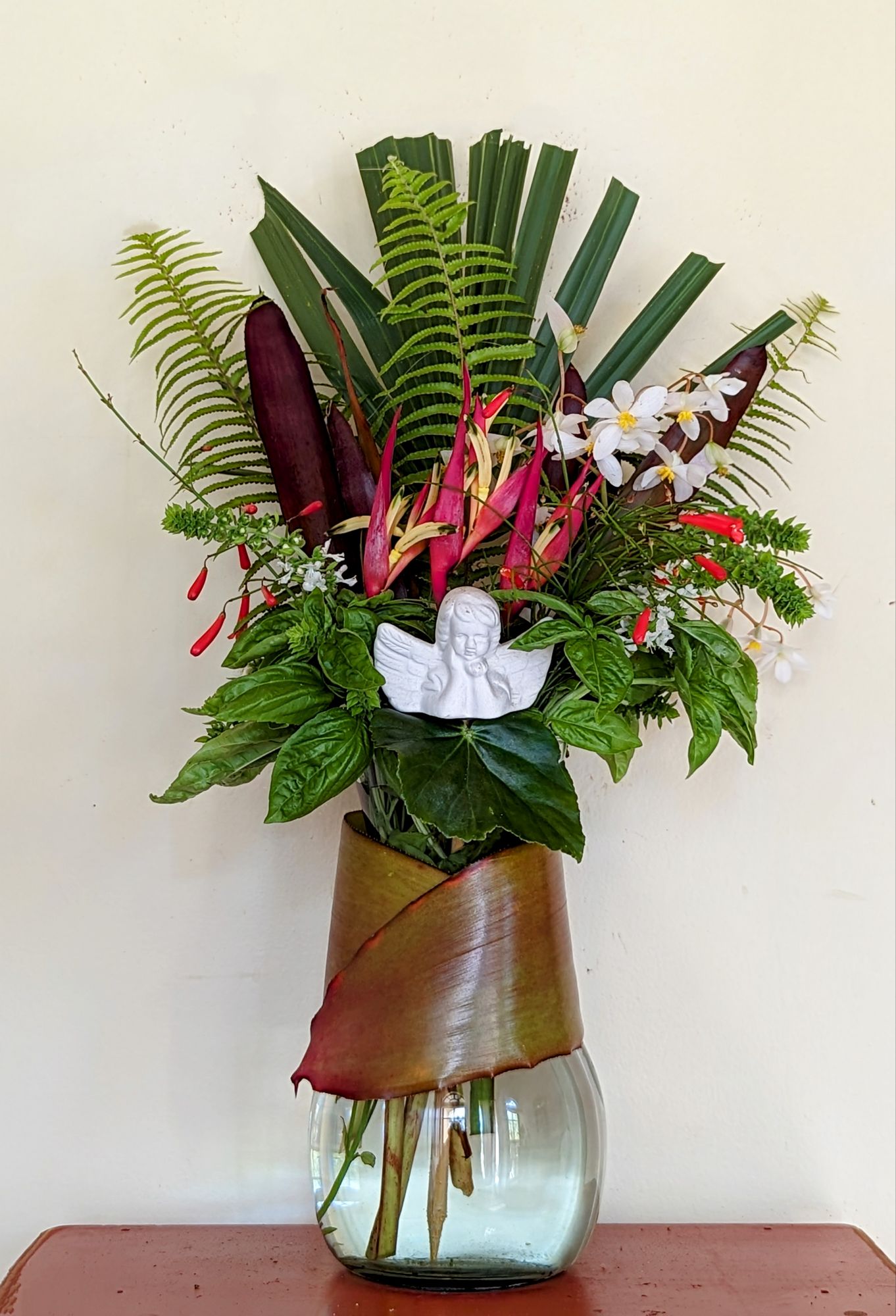
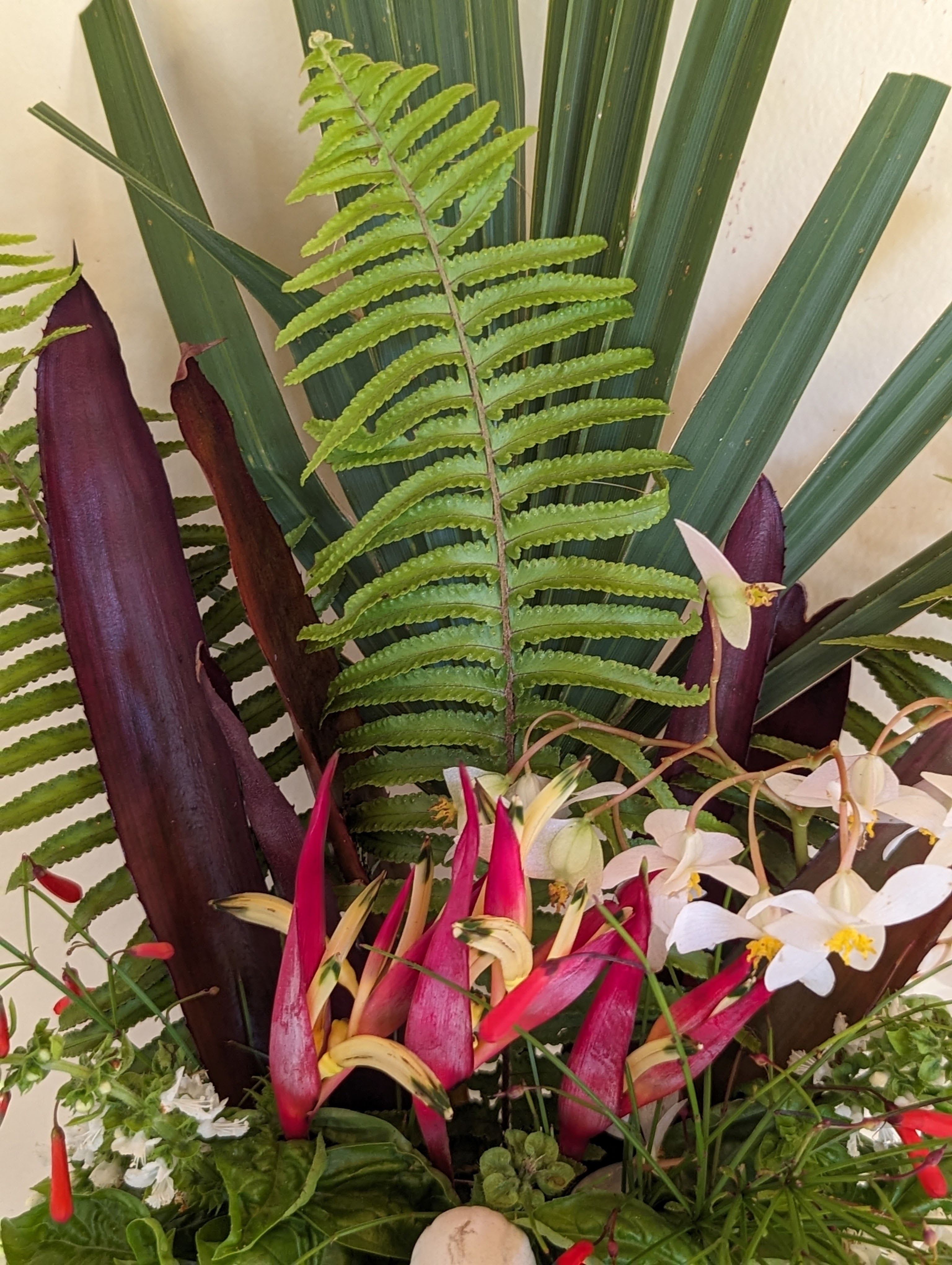
Putto sounds a bit like an Italian curse for a Valentine’s vase. I decided I needed a putto for a proper holiday vase, found one after searching around the house and read up on them. Here is the scoop, naked winged male babies in art are Cupid if they have arrows, cherubs if they have religious connotations and they are all putto in the singular and putti is plural.
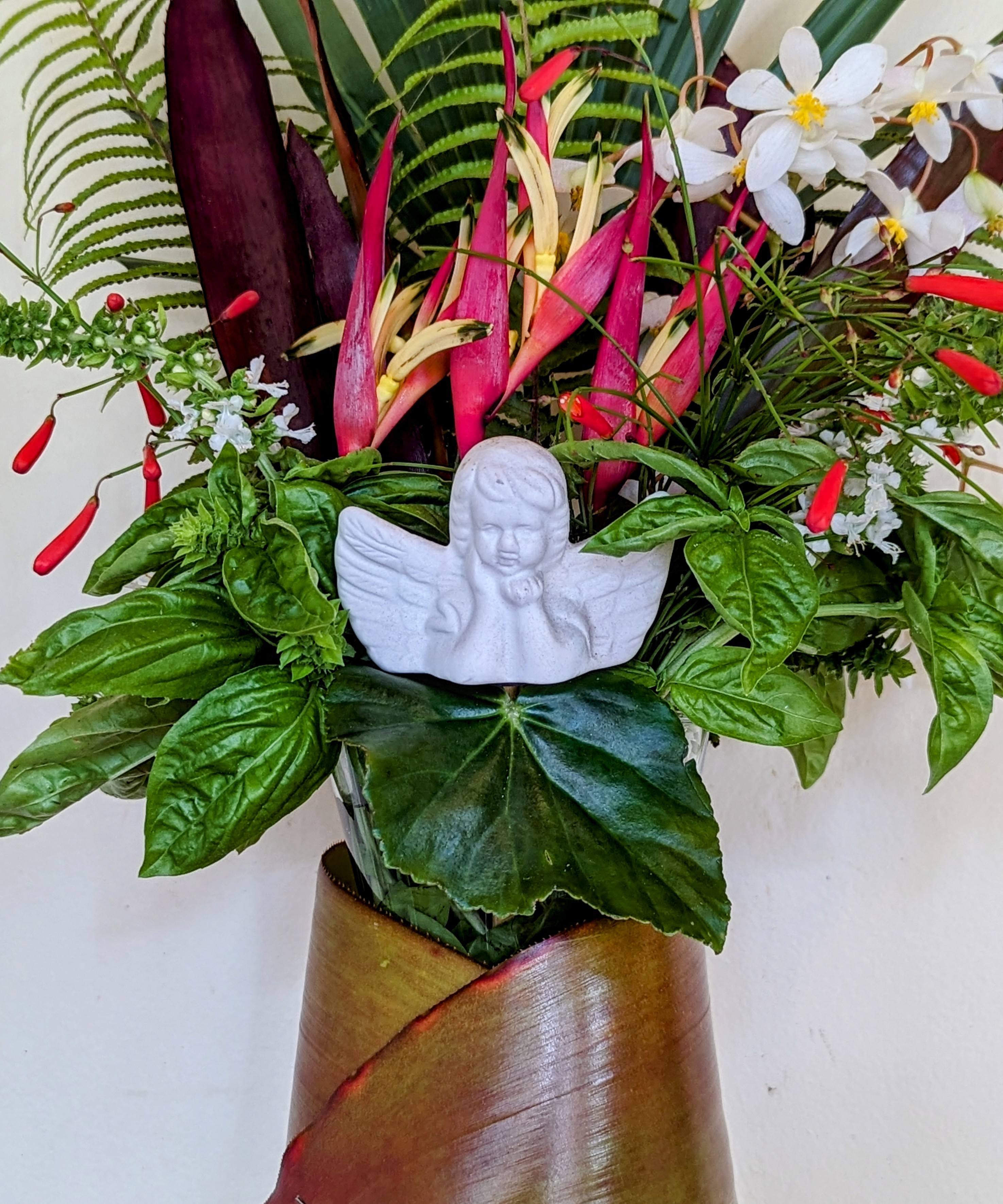
So, I have figured out that the putto is presiding over the Valentine’s vase. He looks a bit contemplative. The vase is another old florist’s vase (I think they are multiplying) I wrapped this one with a Blanchetiana bromeliad leaf for another touch of color.
The rest of the players:
Surrounding the putto are the foliage and flowers of Genovese Basil, my favorite. I have this year round and eat a few leaves almost every day. It needed to be cut back, so the timing was ideal and the scent is wonderful. Red and yellow flowers are ‘Lady Di’ Heliconias (Heliconia pssitacorum); red bell shaped flowers are Firecracker Plants (Russelia equisetiformis).
The back of the vase has, in white, Sweet Begonia (Begonia odorata); Boston Fern (Nephrolepis exaltata) in green; the burgundy foliage is Aechmea ‘Burgundy’ Bromeliad, and the gray green leaf is a cut down palm frond from a seedling Sabal Palm.
Everyone around here celebrated a few days of dry, warm weather and I spent some time tidying and planting a few things in the garden. Ahh.
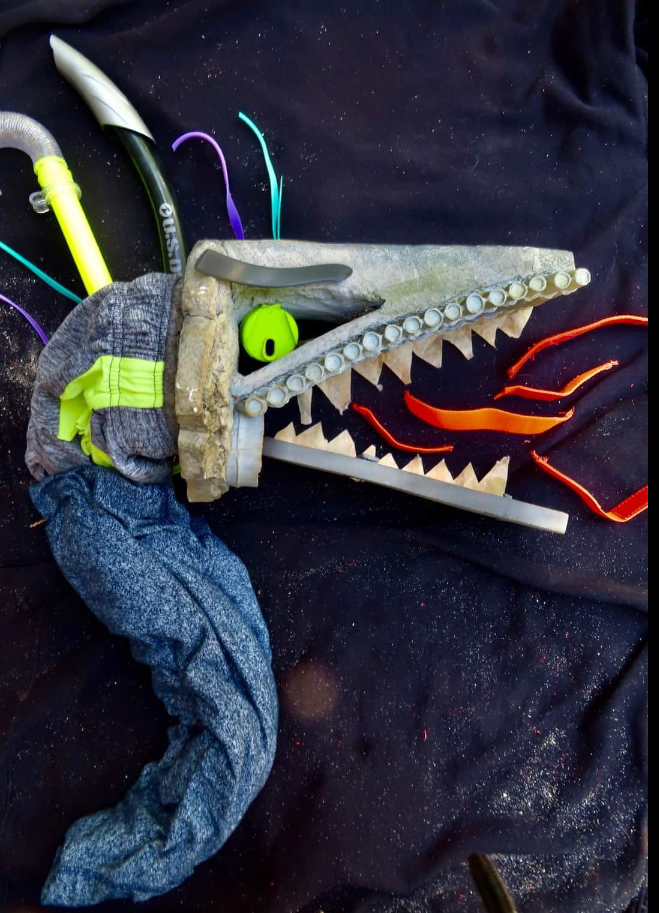
Welcome to The Year of the Dragon. Chinese New Year is today and what will the Dragon bring to my garden? Above, in celebration of this event I have shared a piece of art created by two local ladies who are responsible for the creation of https://www.facebook.com/tctrashart, A Facebook page dedicated to raising awareness and getting rid of garbage on the beach by creating and sharing art they make from their finds.
I went looking in my garden this morning to find six new possibilities for the Dragon. Fruits and flowers are budding and sprouting, it’s looking promising for the New Year! To tour other garden possibilities, visit the host of this weekly meme, Jim, at his blog.
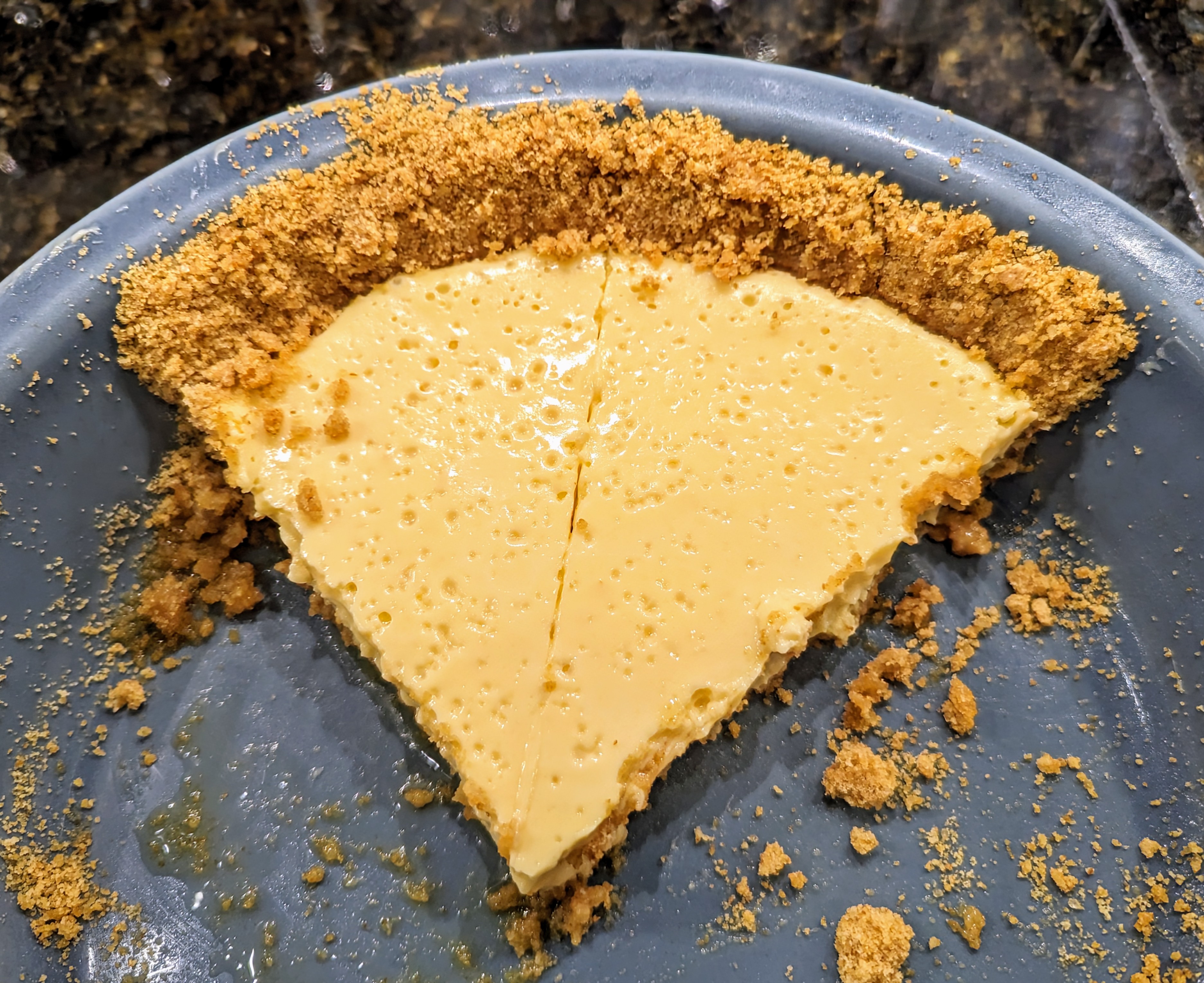
The Rangpur lime is flowering and has set fruit for next winter. I managed to collect enough fruit and made a pie with the juice and zest this week. We ate it!
Rangpur limes are considered sour oranges as it is a mandarin/lemon cross. So – in Old Florida this would be considered a sour orange pie.
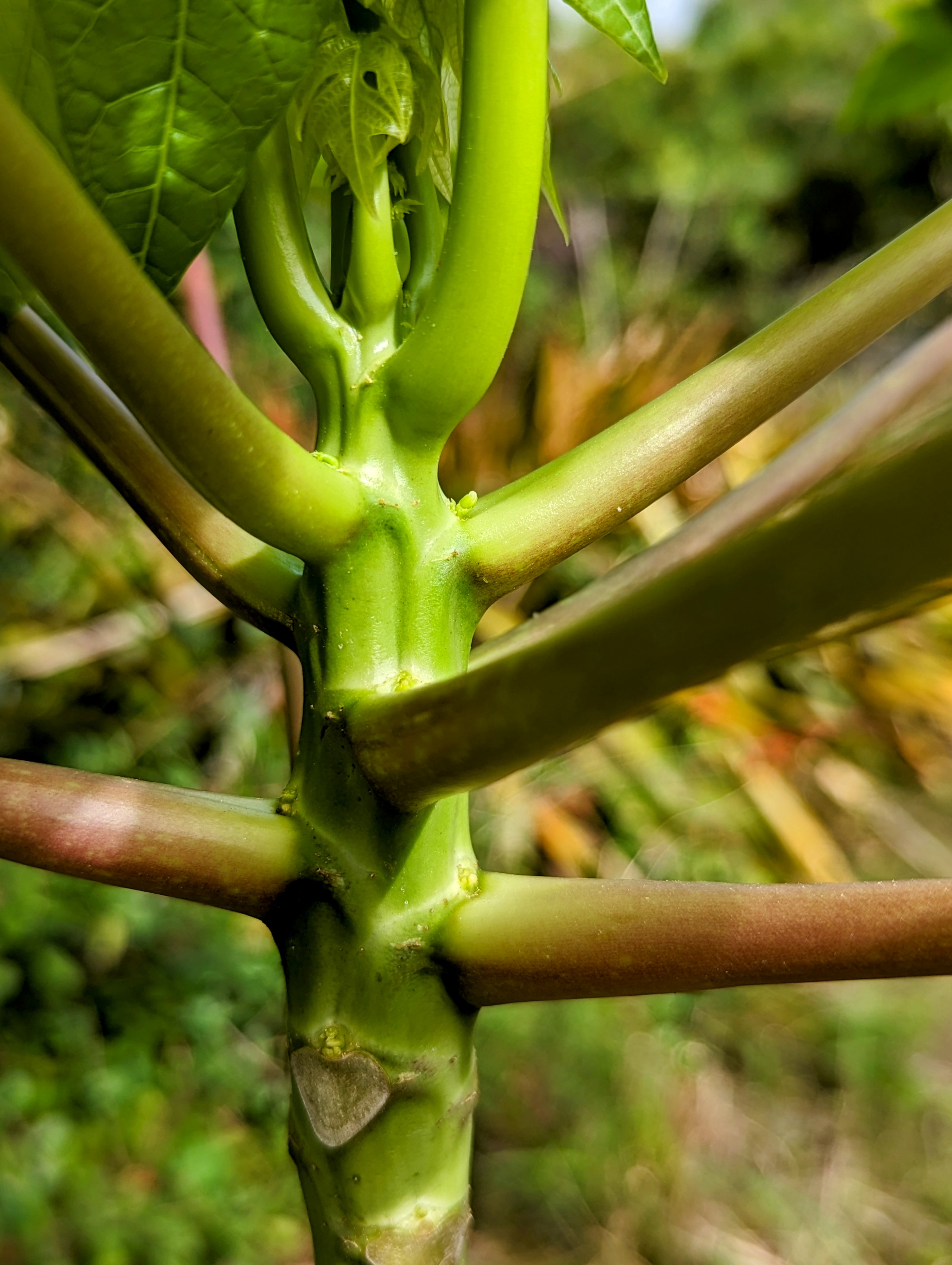
The Mexican papayas I planted from seed last year are now five feet tall and setting buds. Upper right side of photo. Papayas are not true to seed and are either male, female or hermaphrodite. I planted two trees, the other one is looking male, so I hope this one will be female or hermaphrodite.
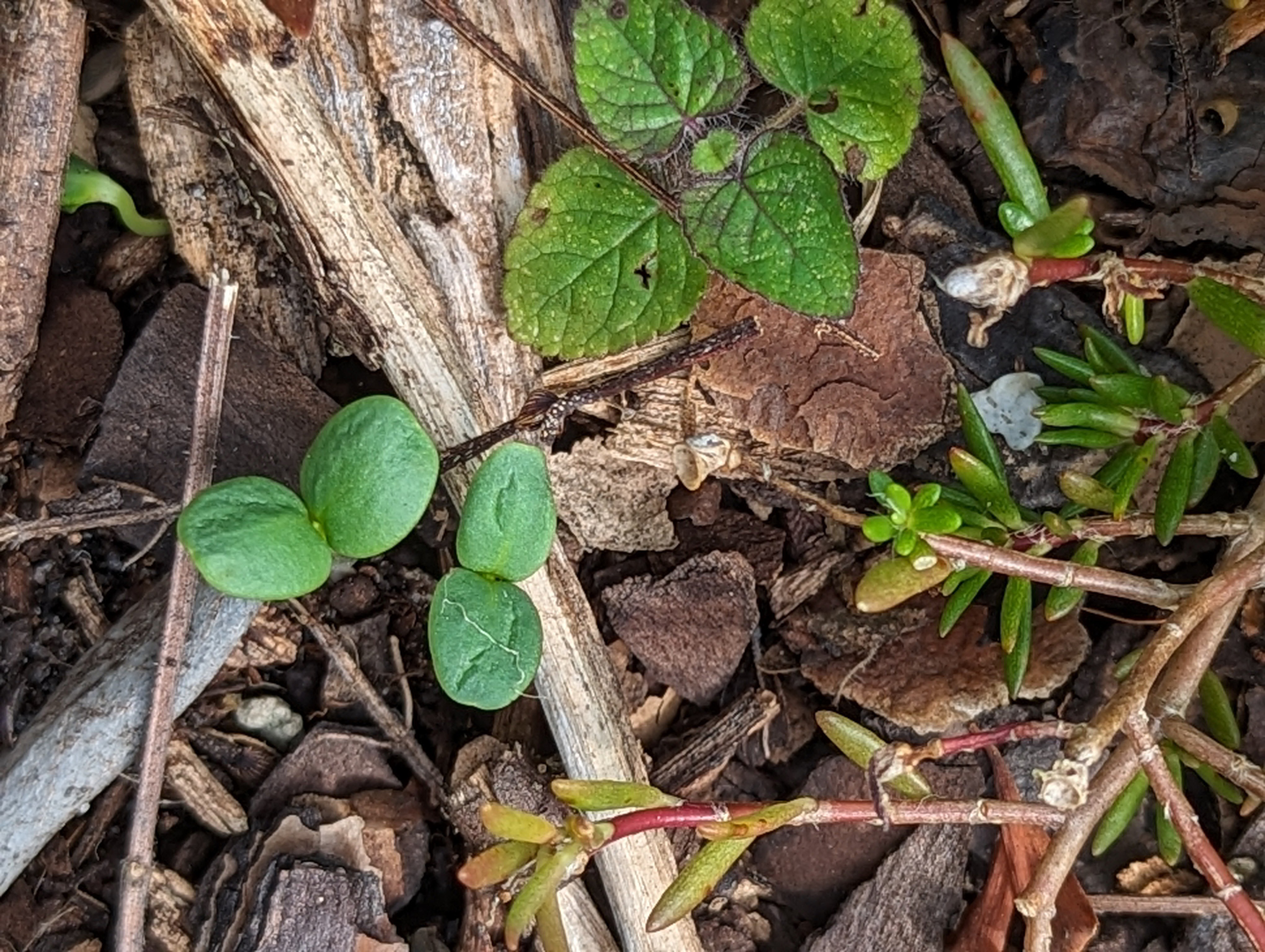
Zinnias or sunflowers sprouting. I haven’t planted anything in this bed for a couple of years, it was infested with nematodes and has been “lying fallow” to get rid of the buggers. Fingers crossed.
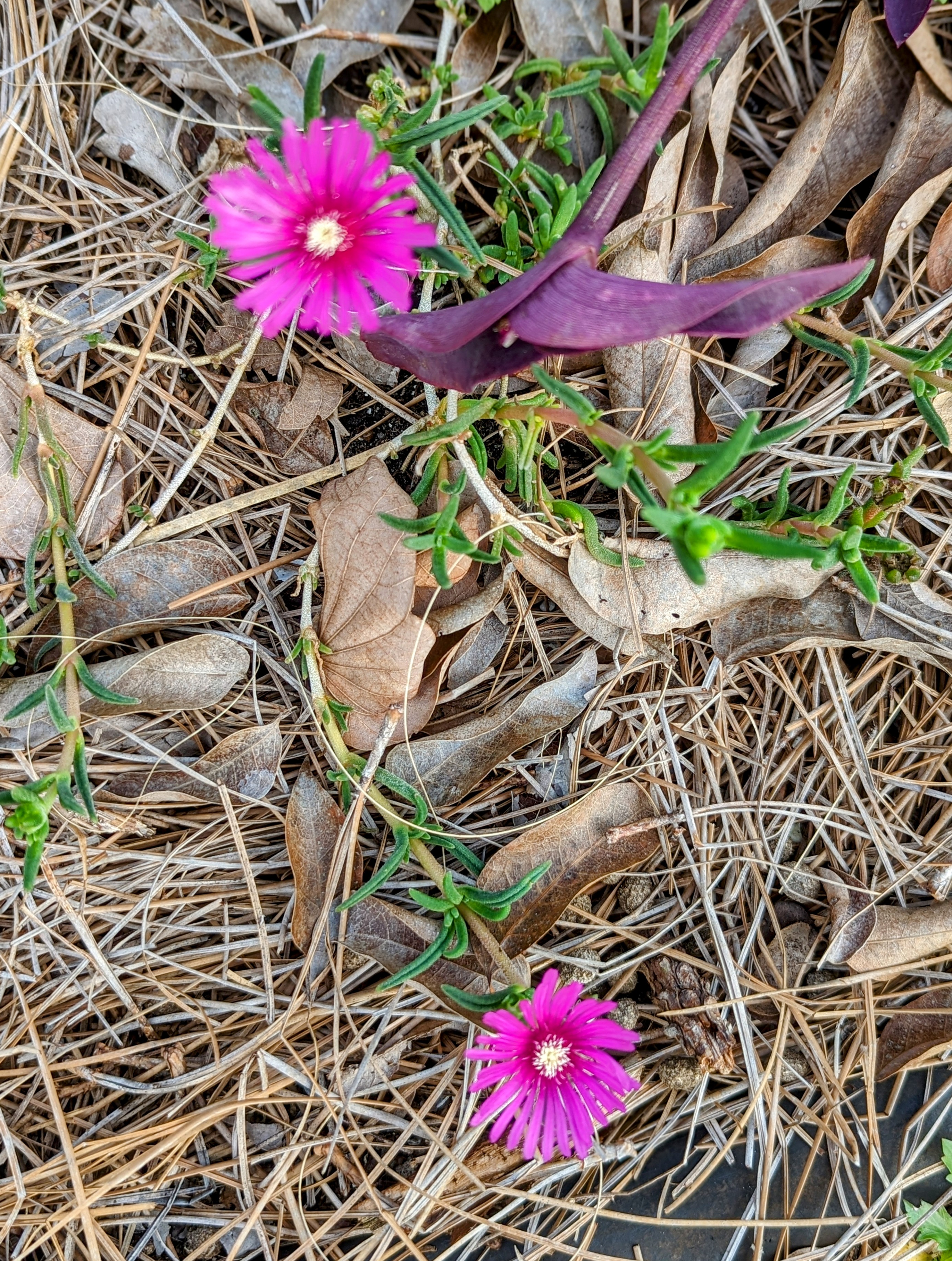
Ice plants, they used to be called Delosperma cooperii in latin. I think the botanists have changed the name again. There are two schools of thought about these growing in South Florida – yes and no. I found some very low priced plants and am trying them. They are looking good so far, August will be the true test.
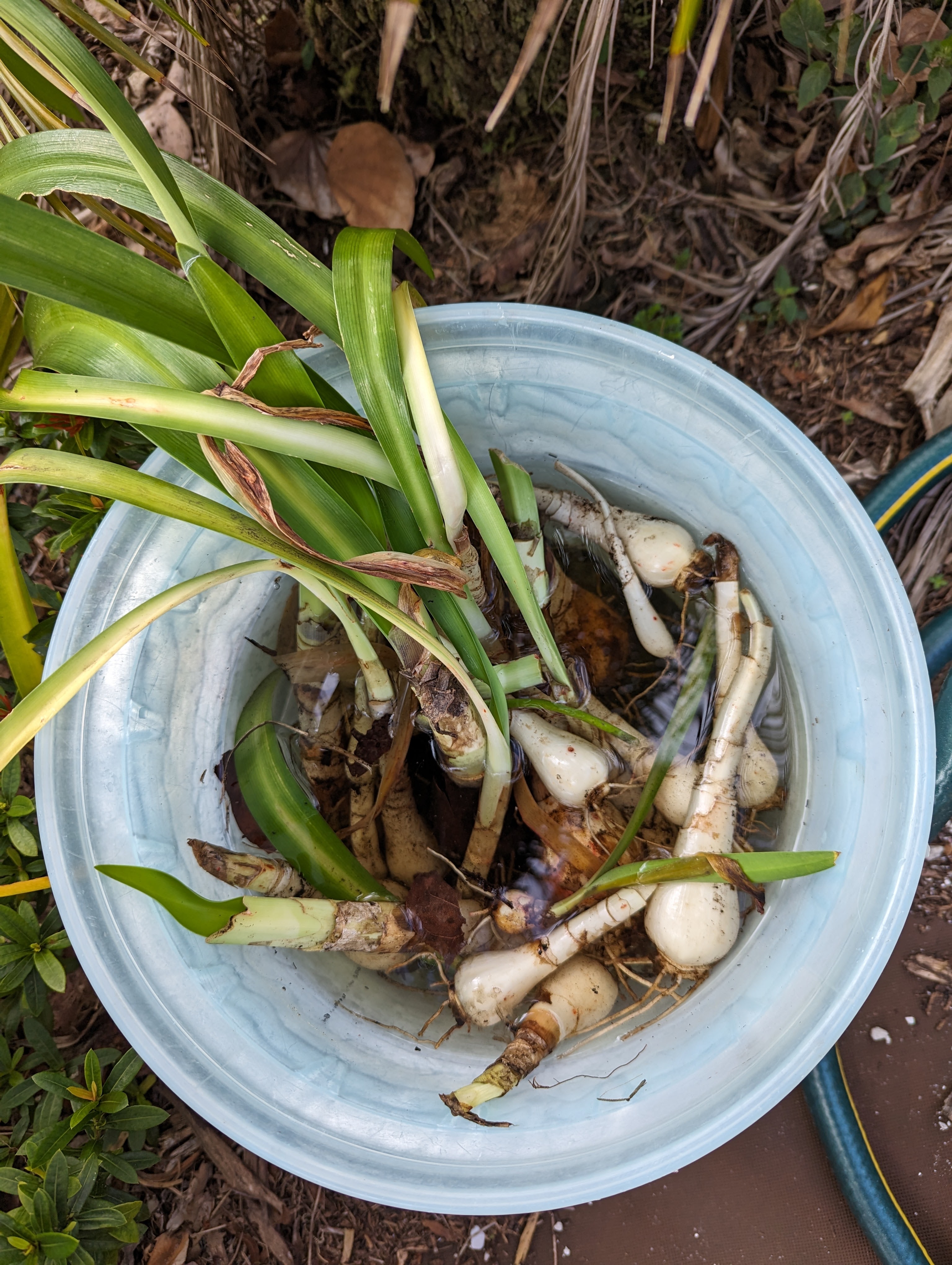
Alligator Lilies (Hymenocallis latifolia) waiting to find a new home. They are a very pretty native lily, but they are difficult to site in the garden. They are looking for moist, well drained dappled sun and they only make foliage if not in their preferred location. I move them around sometimes, contemplating their next location.
‘Burgundy’ Aechmea bromeliad showing new spring color. These have finally found their happy place. And I don’t want to move them as they are sharp.
That is all from my garden this Saturday. Happy New Year!
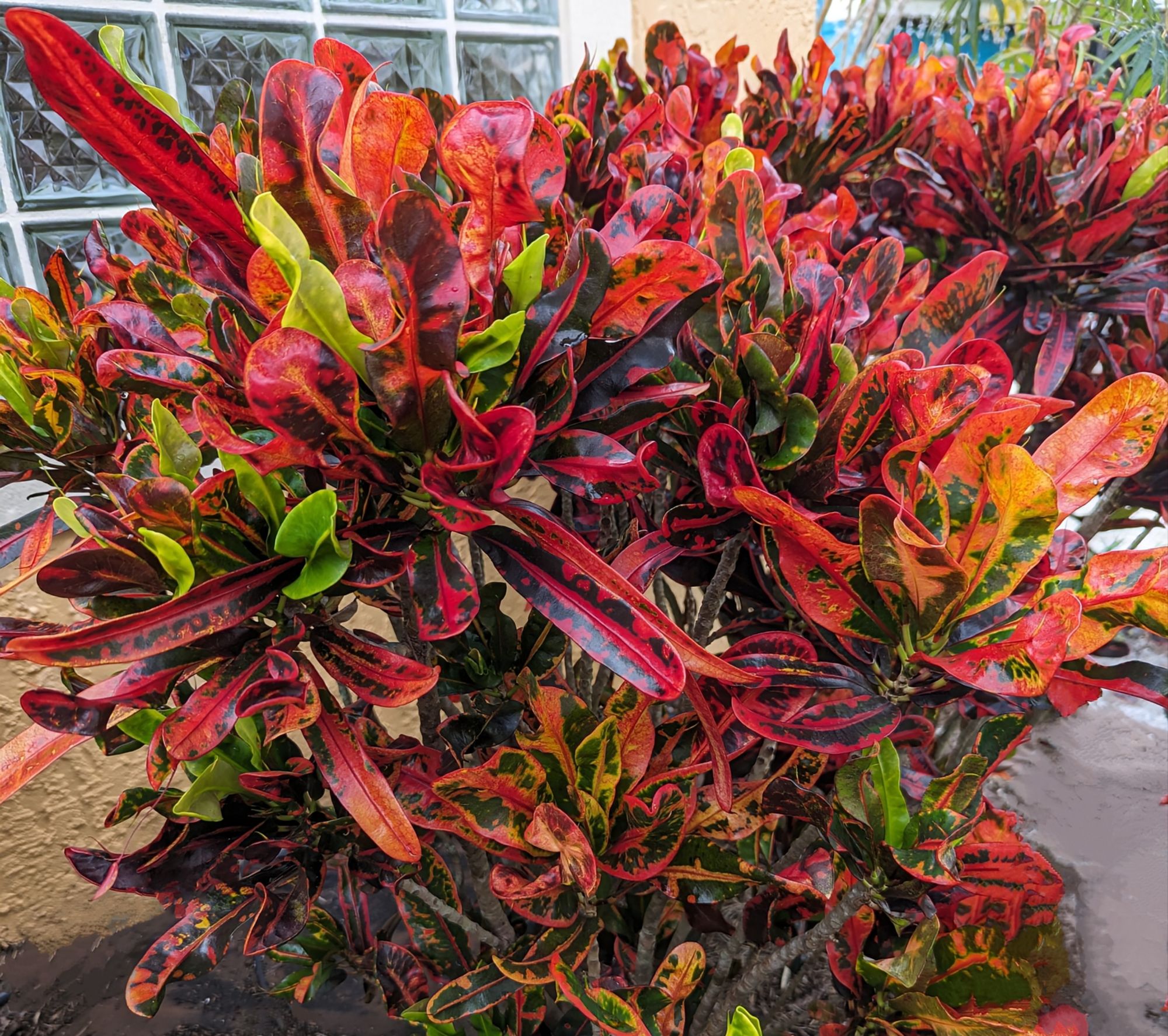
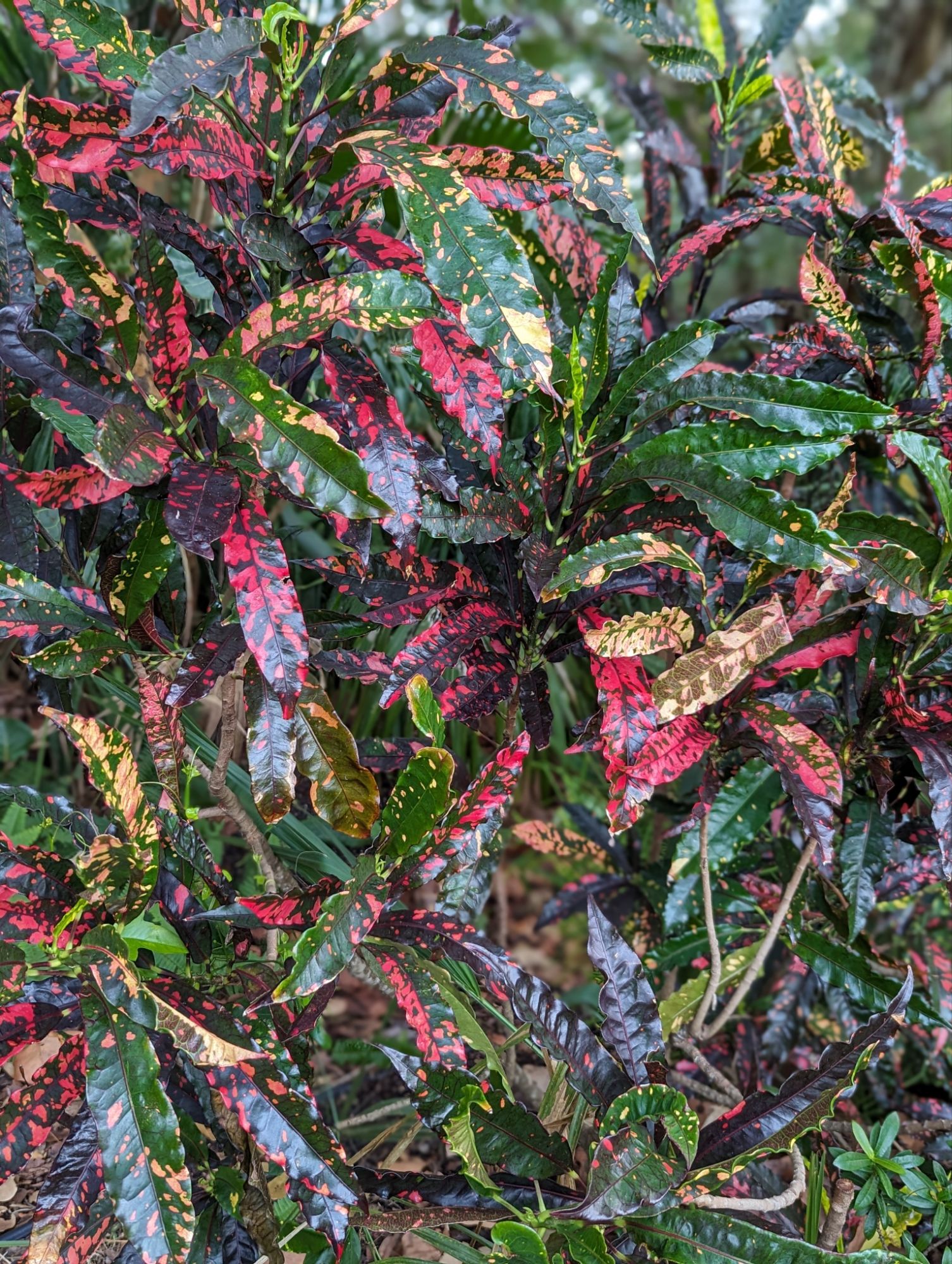
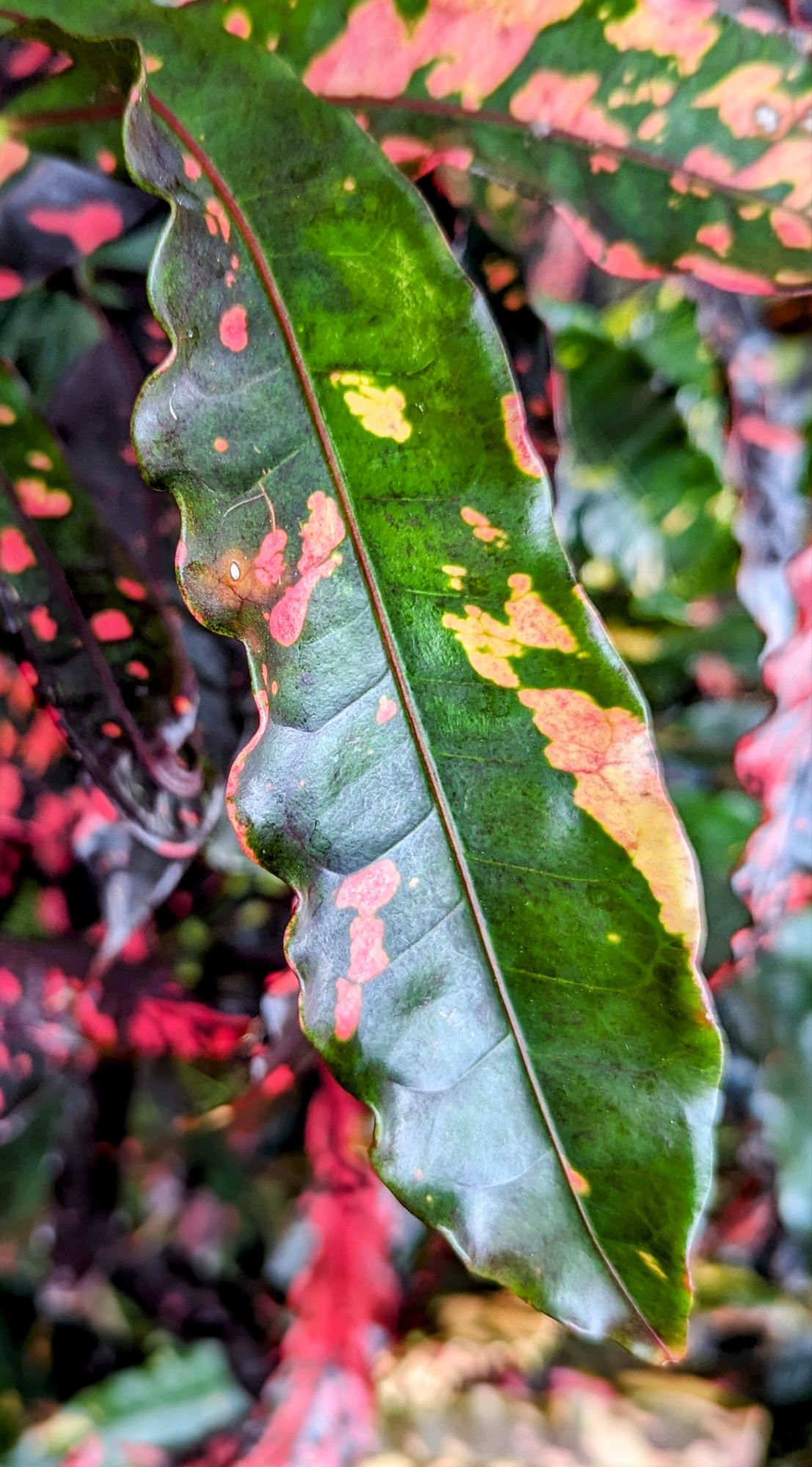
Seeking an addition to your garden that provides constant color? Look no further than the Croton (Codiaem variegatum). Crotons are accent shrubs, featuring foliage wildly varigated in splashes of red, green, yellow and orange. They can be so colorful it becomes overwhelming to plant more than a few of them together. These shrubs are available in an array of sizes and colors to suit your taste and your space. Here are a few of my favorites.
Above is a Mammey Croton. These are great for smaller spaces, staying 3-4 feet tall.
Meet the Pie Crust Croton, planted in honor of my husband, the pie baker. The one in my garden is 5-6 feet tall. The name for this shrub was inspired by the edge of the leaves – like pie crust!
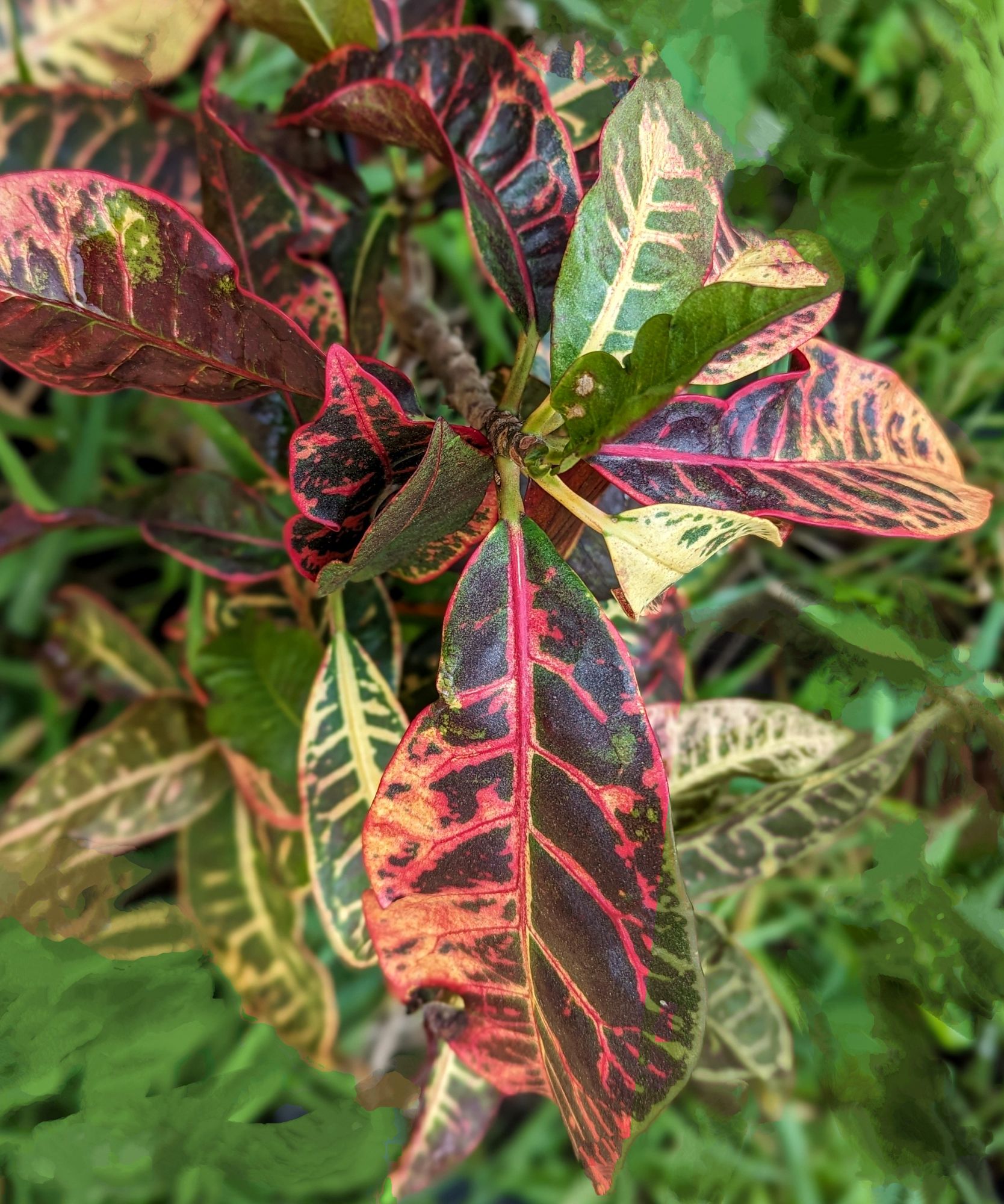
Below is a favorite Croton of Treasure Coast gardeners. Petra Croton. Petras get big, about 10 feet tall and 6 feet wide. They need some room.
Placing and Growing Crotons
Crotons are originally from the South Pacific and not considered cold hardy. This means they will suffer cold damage from freezing temperatures. Mine dropped their foliage at 38 degrees last year, but came back. North of Ft. Pierce and inland these shrubs need to be protected if cold weather threatens. Plants can be grown in a container, covered or placed out of the wind. These shrubs should be placed in a part sun to shade location, dappled light is ideal. The foliage on some varieties can burn if placed in full sun (Mammy Croton and some others will tolerate full sun). Also worthy of noting, the Croton is somewhat toxic if eaten, so if anyone (pet or human) has plant eating tendencies place the Croton out of reach.
Plant combinations to consider with Crotons
Given their cool, colorful vibe I like to use these with other tropical looking plants – Boston Ferns, Split Leaf Philodendrons, Bromeliads and Ground Orchids are good companions and like the same type of growing conditions.
Crotons are easy to grow if placed properly, watered and fertilized regularly. The only problem I have encountered growing these is scale insects and sometimes aphids find them really tasty. The solution to this is insecticidal soap and diligence.
Add a few Crotons to your garden for a dollop of tropical fun. I am currently searching for a Sloppy Painter Croton to add to my collection.
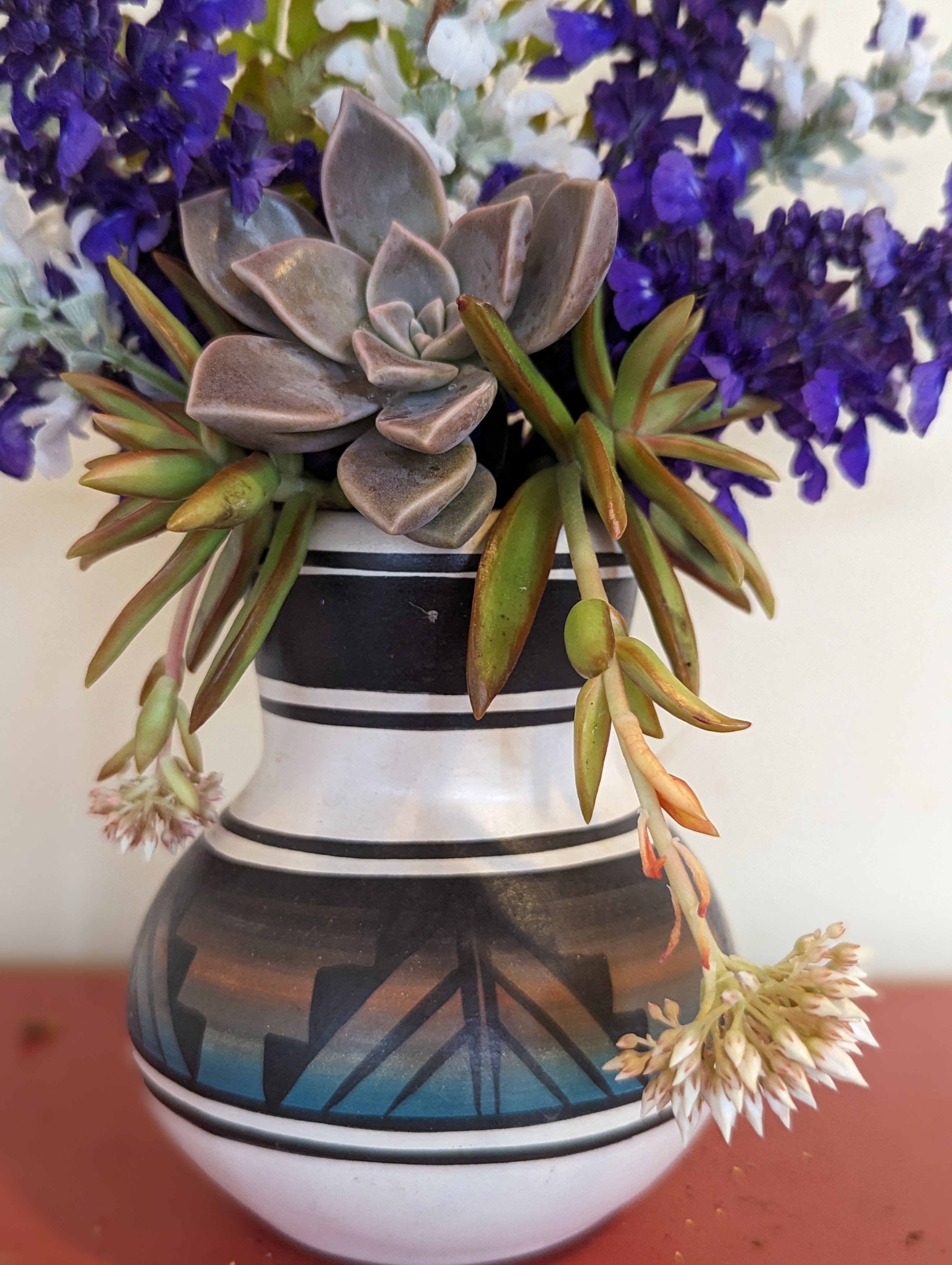
I decided on a Southwest theme for my vase this week. I live surrounded by bits of the desert aesthetic. The architectural style of our house might be called Pseudo Southwestern Florida as it has some elements of all three. My husband and I fell in love with the sort of funky Adobe style of the house. I have succulents and some desert palms in the garden, but it is difficult to get past the humidity and make a true desert garden, though I do love the look.
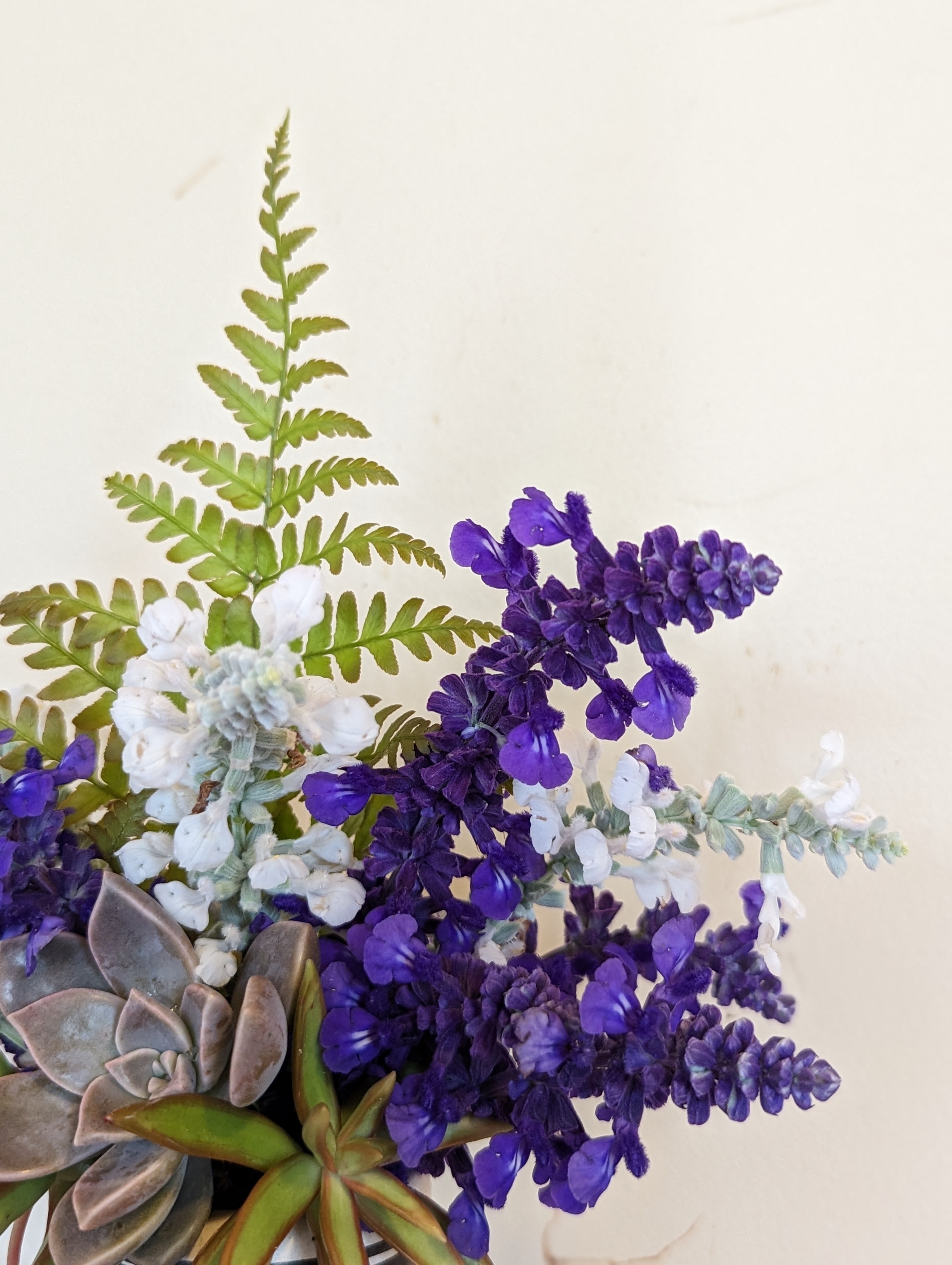
The vase is an heirloom from my mother made by the Ute tribe in Arizona. Succulents and salvia would likely grow in a desert garden. The fern is an unlikely survivor of desert conditions. I’m thinking of it as a nice bronze accent.
The palette:
The fern is a Autumn Fern (Dryopteris erythrosara). This is probably my favorite fern with bronze new foliage and is realistically not likely to survive in my garden. I have it on my front porch in a pot surrounded by small bromeliads. The fern should be growing much further north and is probably wondering what happened and how it ended up in such an odd place. My salvias are making a repeat appearance this week, White Flame and Mystic Spires. I am finding these love to be cut and it makes them flower more.
The succulents:
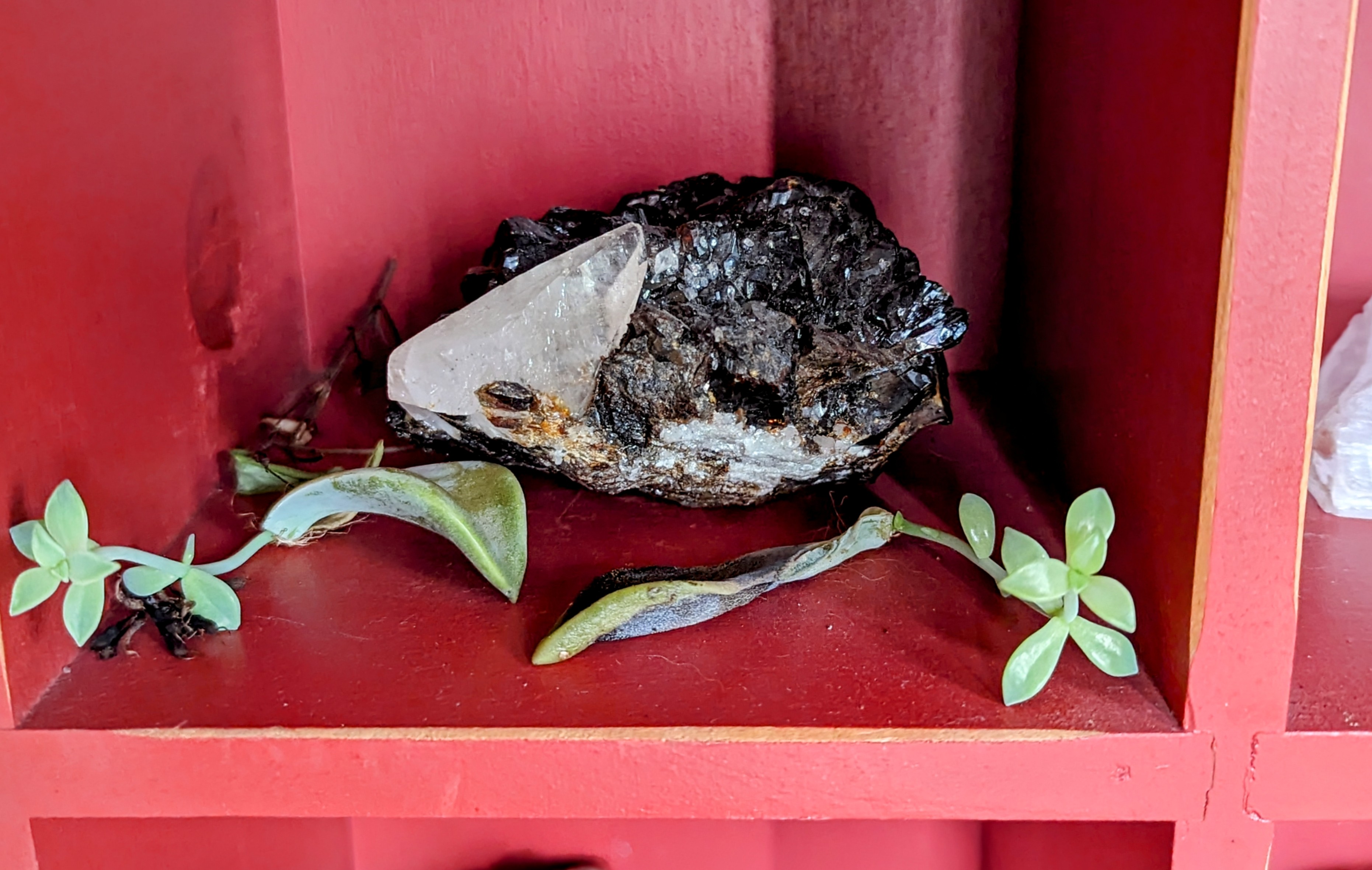
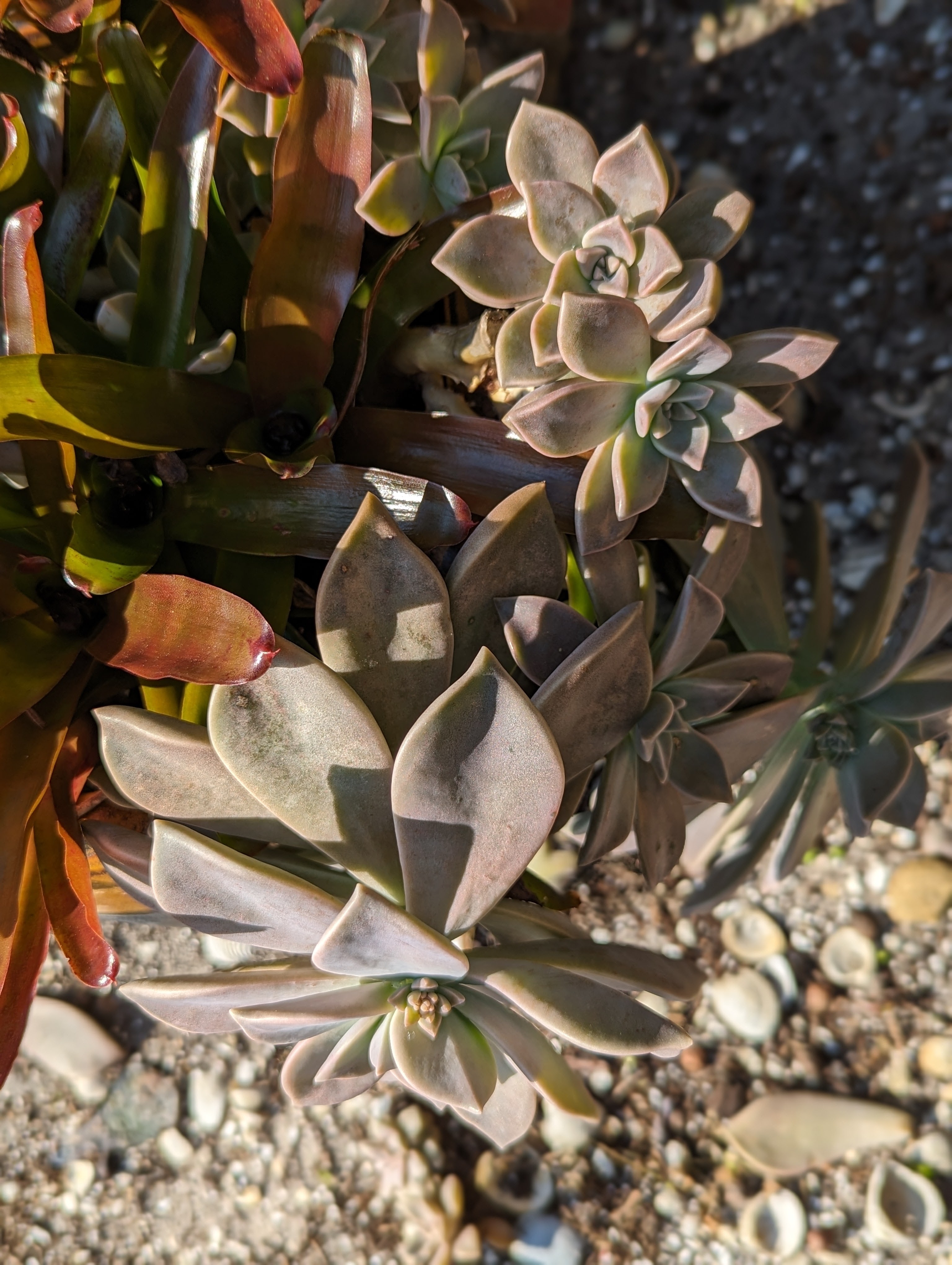
Hanging over the edge of the vase is a Sedum – S. adolphii, I think, though it seems there is a new botanical name for Sedum. The grey rosette was a gift from a friend who calls it Graptosedum. Having attempted to figure out what it is, I am not sure at all! This will grow just about anywhere a bit gets dropped and is kind of crunchy, they fall off here and there in the garden so I am constantly finding them. Here are two I lost track of while arranging a vase not too long ago.
I think this means Graptosedum (or whatever it is) will grow on rock dust in my foyer. More surprises from the garden.
That is all from my garden this Monday. To see more vases drop by Cathy’s blog and say hello.
It’s finally a sunny, warm blue sky Saturday morning in South Florida. Not to worry about perfect weather, tomorrow’s forecast predicts a 90 percent chance of thunderstorms. So today, I planted sunflower and zinnia seeds. I discovered on my weekly tour my succulent plants are doing well and fruit growing in the garden looks promising for succulent treats. Join other garden tours by visiting Jim’s blog and following the links in the comments section.
I cut my first Rangpur lime this week. It was very juicy, but I did not get quite enough juice for a pie so I froze it until the other lime was ripe and picked it this week. There is a lime pie in my future.
The next lime and my first tomato of the season! I think it is a Lost Marbles tomato.
The mango trees are loaded with flowers and setting fruit. This is a Glenn Mango and the fruit is delicious. This is early for mangoes to set fruit, so I am hoping it all works out.
Baby mangoes are visible on the Thai dessert mango, Nam Doc Mai. This variety reportedly can set fruit four times a year. It has been in the garden for about 8 years and I have never seen more than one crop, last year being the best ever. I was vigilant about fertilizing and we had a lot of rain, so this may be the result of water and food.
Senecio barbertonicus is starting to flower. This is about all you get for flowers, soon there will be dandelion like seedheads.
The indestructible Graptosedum. I dropped a leaf in my bookcase and it sprouted. I use these as pseudoroses in flower arrangements. This one lives in a pot with Fireball Neoregelia Bromeliads and a Desert Rose. Never watered and rarely fertilized.
That’s all from my garden this Saturday. Happy February to everyone.
Mid-winter in Florida brings its share of garden surprises. I never know what I might find and decided to clip a little bit of treasure here and there and plonk my plunder into an old florist vase that was hanging around. My husband informed me this is similar to the way I cook, which is true. I look in the fridge and freezer and make a dish from whatever I find. It usually works out. I have never thought of creating food as a plunder and plonk before!
My garden treasures this Monday:
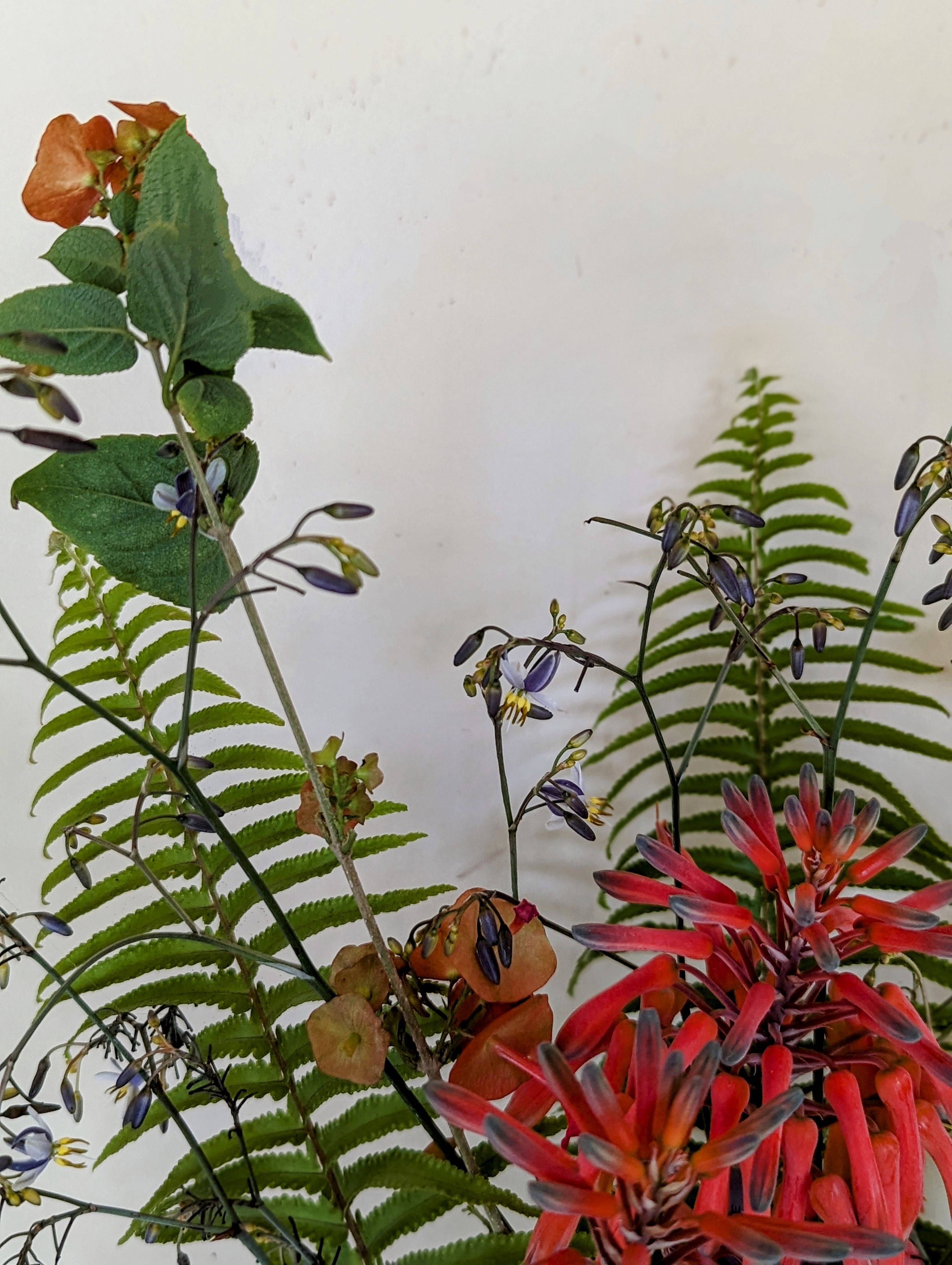
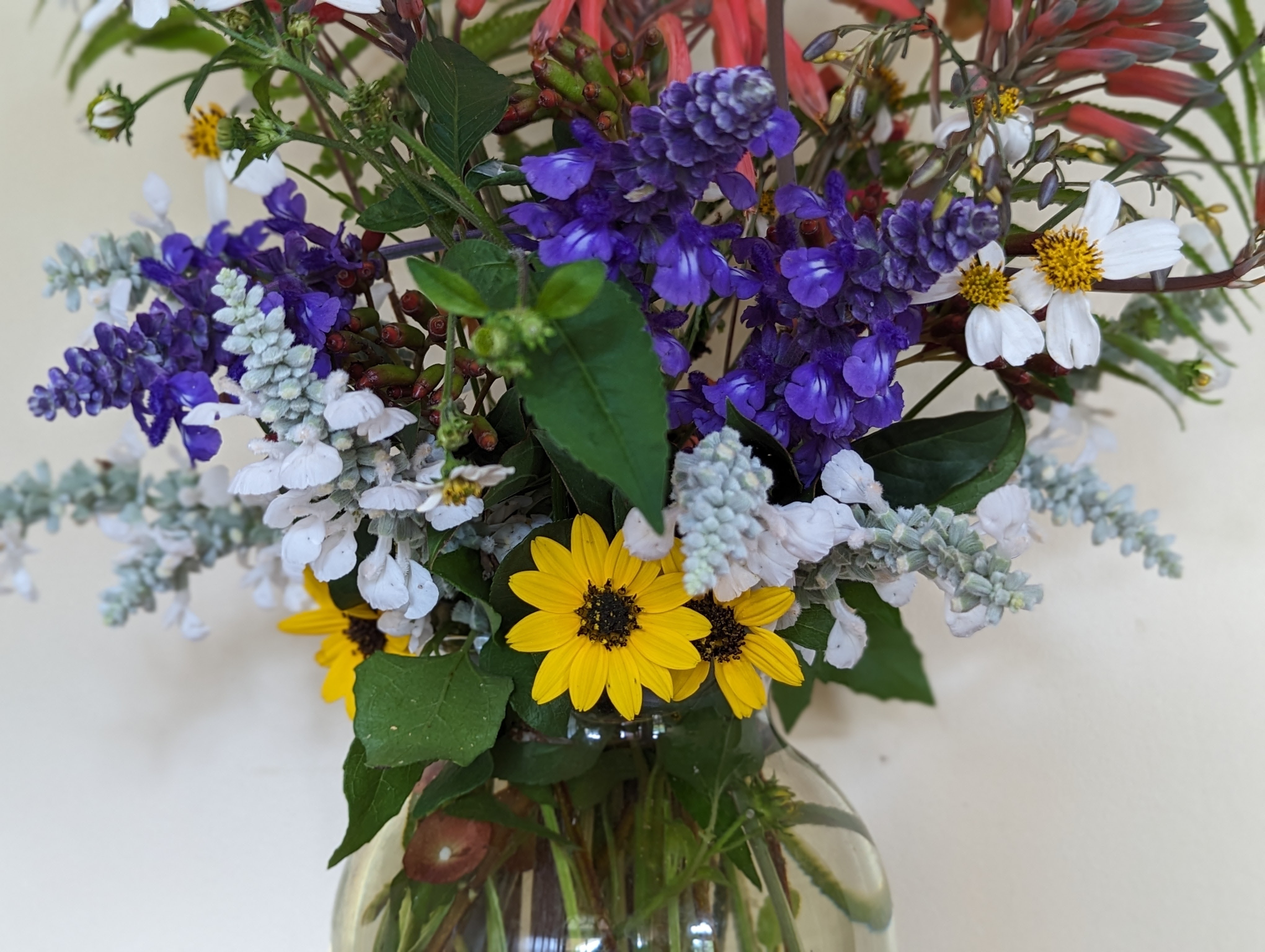
The top of the vase is sporting, in orange with green tips, Soap Aloe (Aloe saponaria). These do too well in my garden and I need to thin them. The reddish flowers next to them are China Hat (Holmskioldia sanguinea). Small blue flowers are Variegated Flax Lilies (Dianella tasmanica), an unbelievably hardy plant – I just unearthed it from overgrown vines and it was so happy it flowered luxuriously. Boston Fern (Nephrolepis exaltata) is in the background.
The salvias continue to thrive, in blue, Mystic Spires and the white is White Flame. Yellow daisies are from Beach Sunflowers (Helianthus debilis), the white ones are Bidens alba, both are natives.
Visit the blog of our weekly meme hostess Cathy to see more garden treasures in vases.
Since it has been an unusually rainy winter I have been baking a lot of winter treats. Now that the weather has (sort of) cleared up I am finding treats in the garden. I’m joining fellow SOS’s sharing my garden treats this Saturday, to see other treasures, visit Jim’s blog and follow the links.
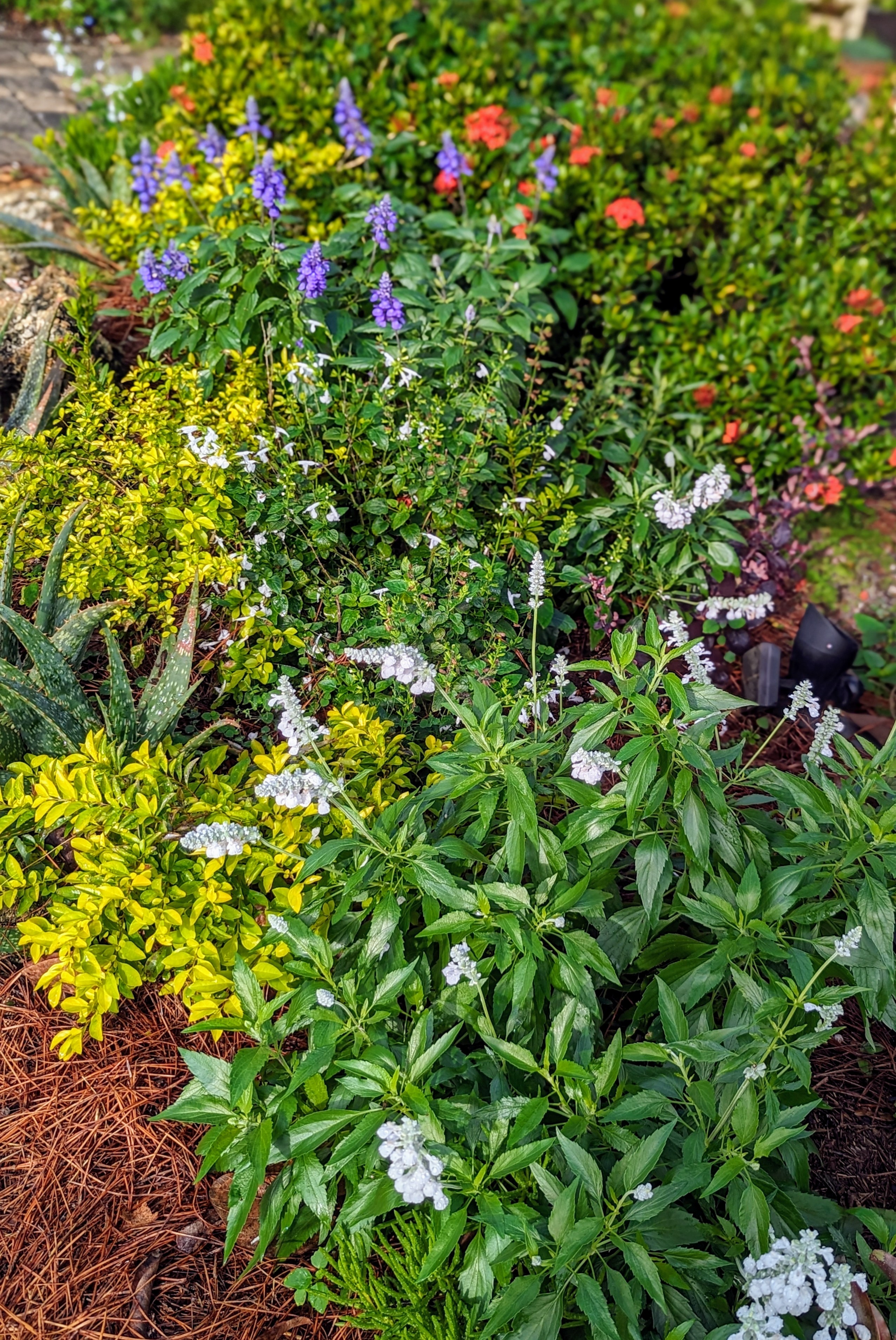
The salvias have been relishing the rain and are showing their appreciation. This bed has ‘White Flame’ Salvia, Golden Dewdrop Duranta (Duranta repens), Soap Aloe (Aloe saponaria), ‘Mystic Spires’ Salvia, and Dwarf Red Ixora (Ixora ‘Maui Red’) in background. These salvias are short lived perennials here.
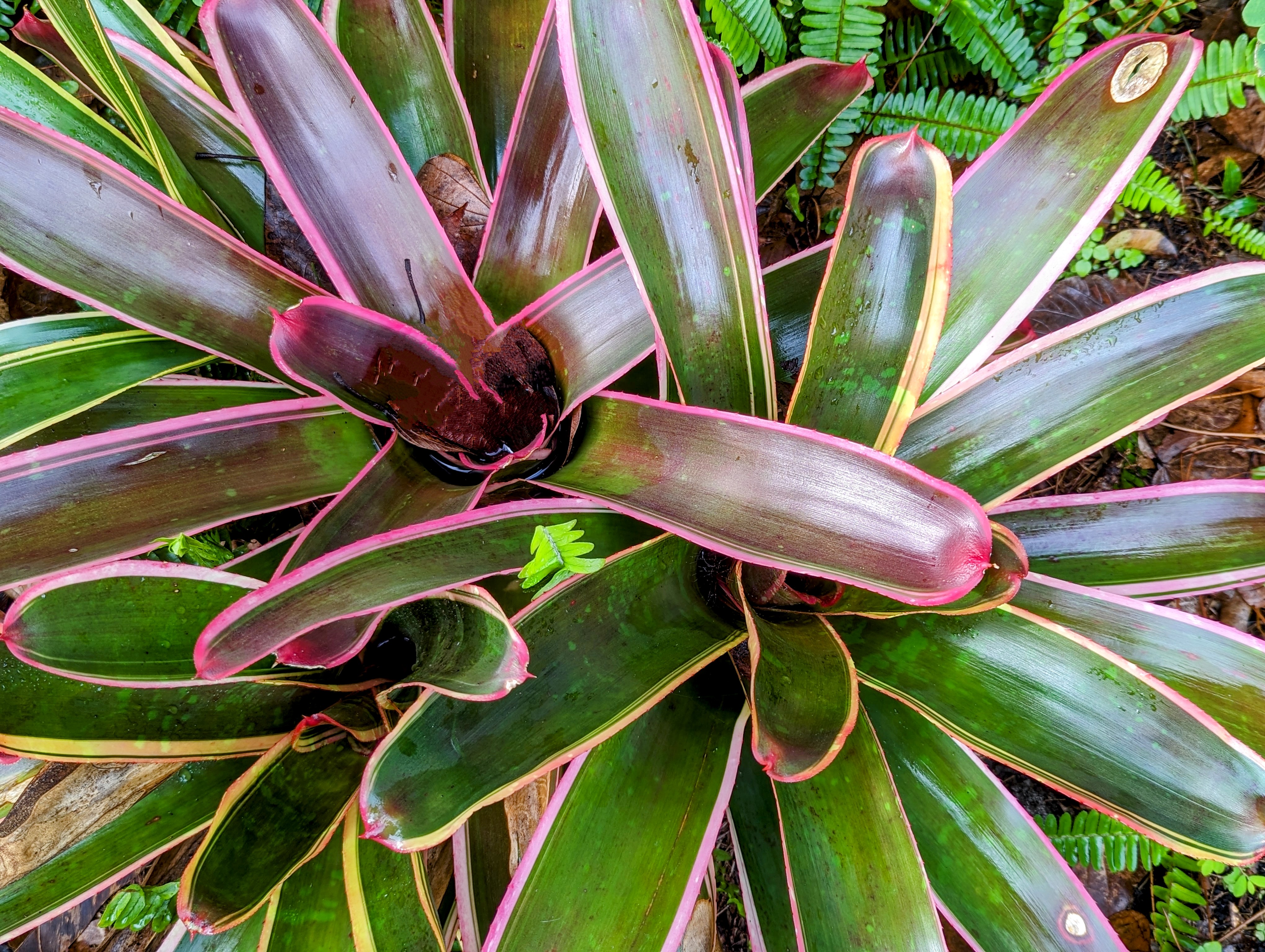
An unnamed Neoregelia Bromeliad variety showing winter color. These are green and white in summer.
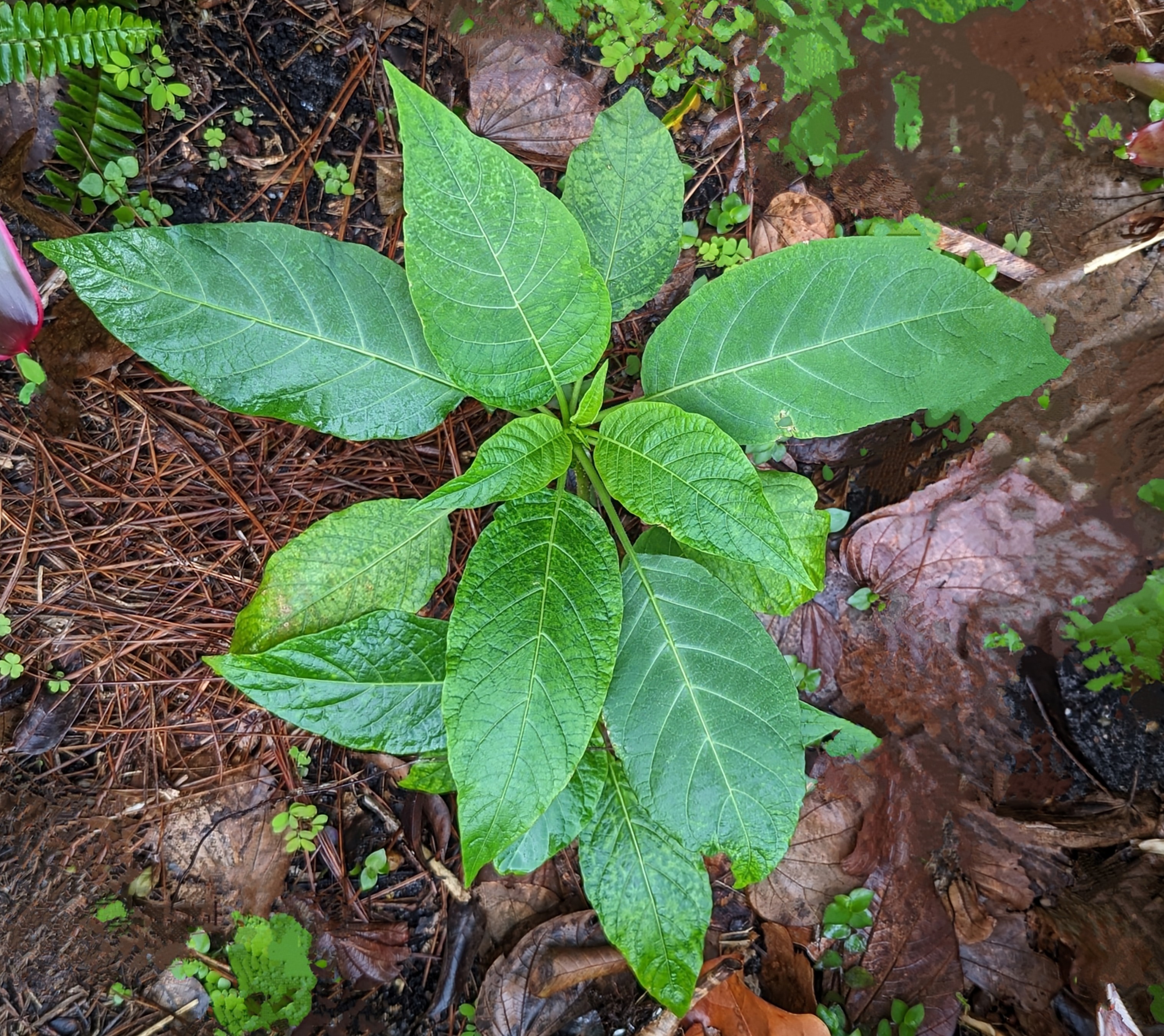
New to me and the garden – ‘Apricot Queen’ Angel Trumpet. This is a rooted cutting I planted in December. It is taking very well and has already produced a side shoot. I have never seen an Angel Trumpet in my neighborhood, so I am wondering about this one and keeping my fingers crossed.
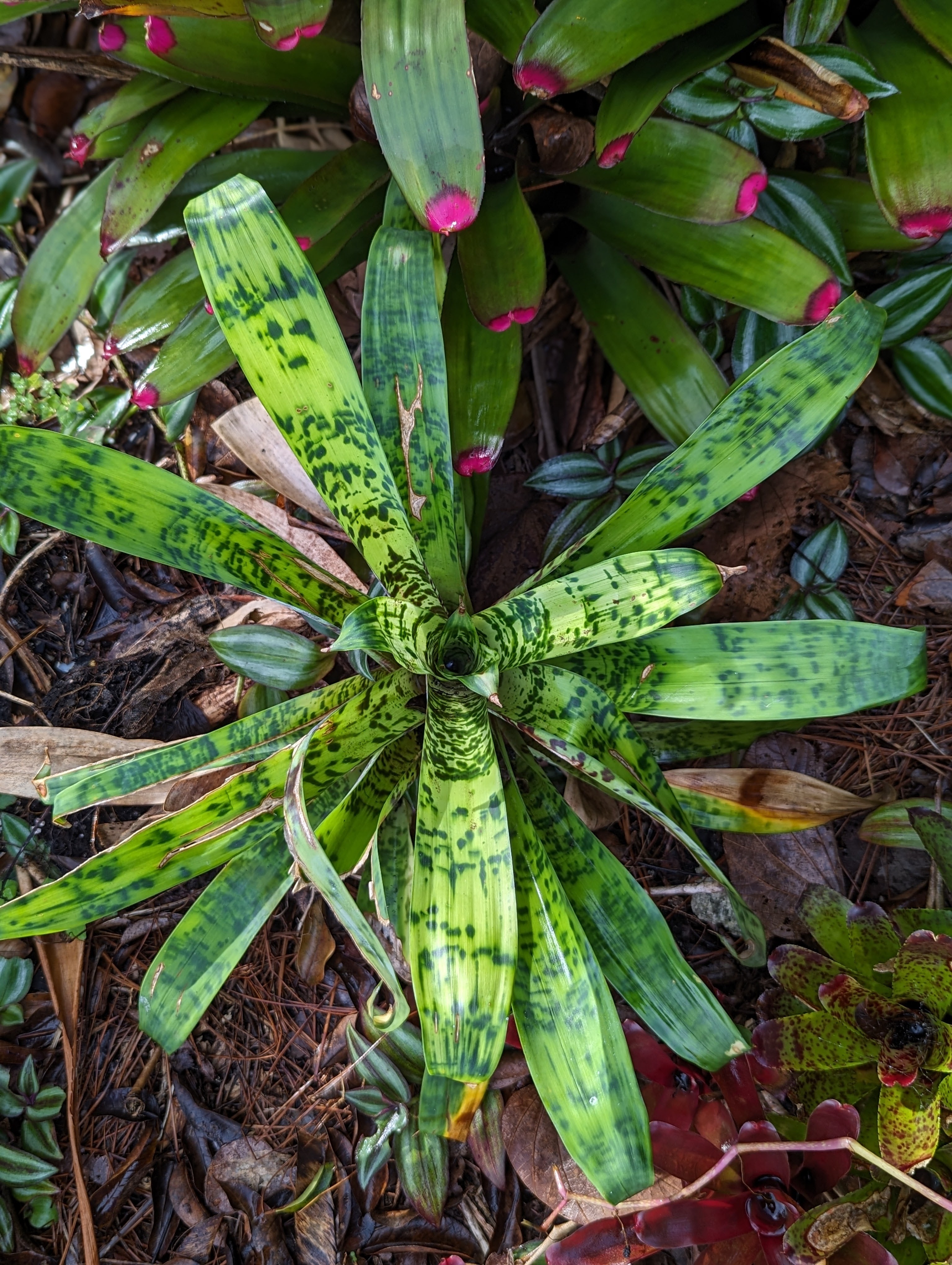
Another treat unearthed when clearing out the garden. A Vriesea ospinae ‘Gruberii’ Bromeliad. Something has been trying to eat the leaves (notice the shredding). It is a rare animal that can eat these.
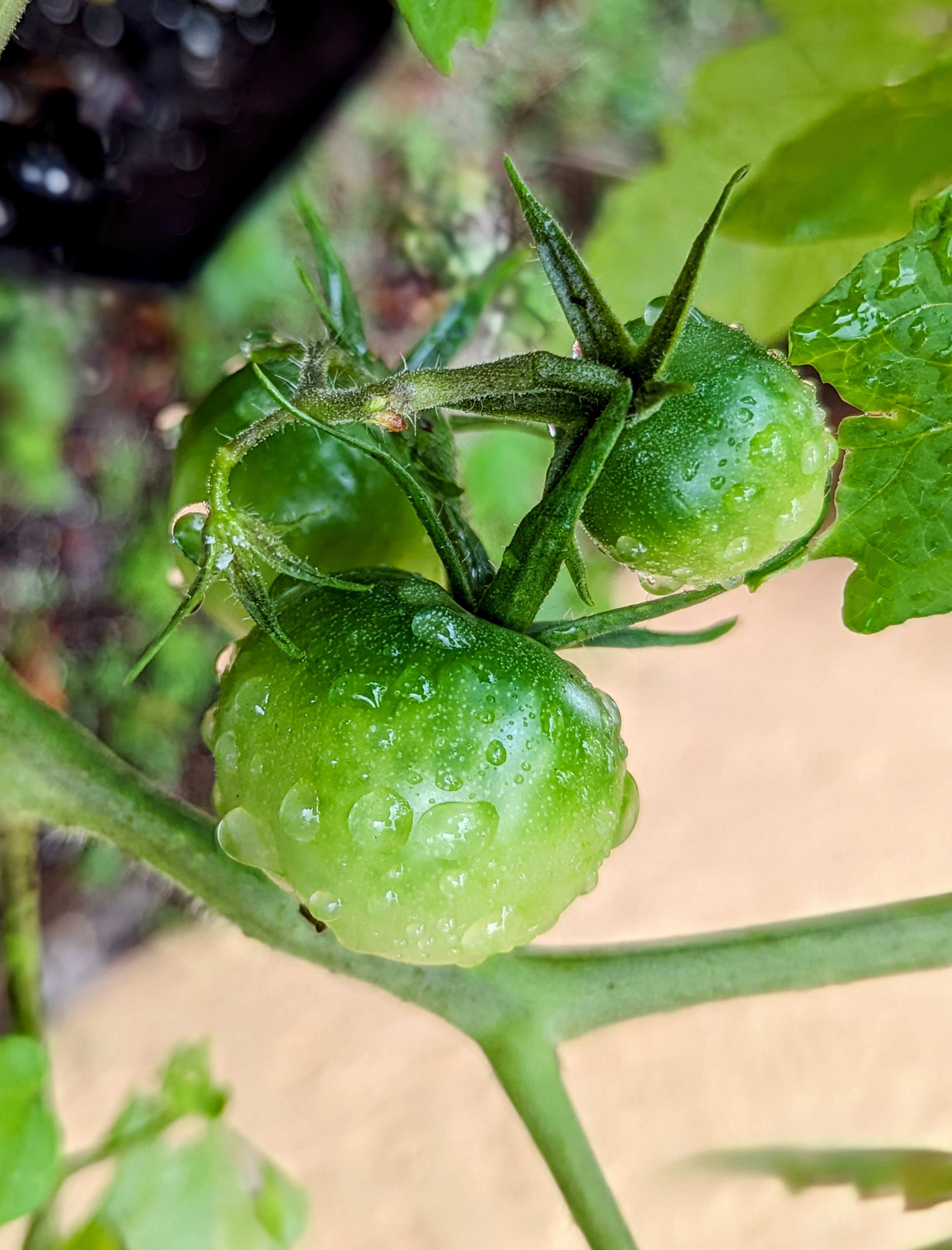
The tomatoes are finally making some progress. I planted all the cherry varieties as I have no luck with big tomatoes. Oddly, these are the biggest cherry tomatoes I have ever seen. Kind of wondering about the seeds!
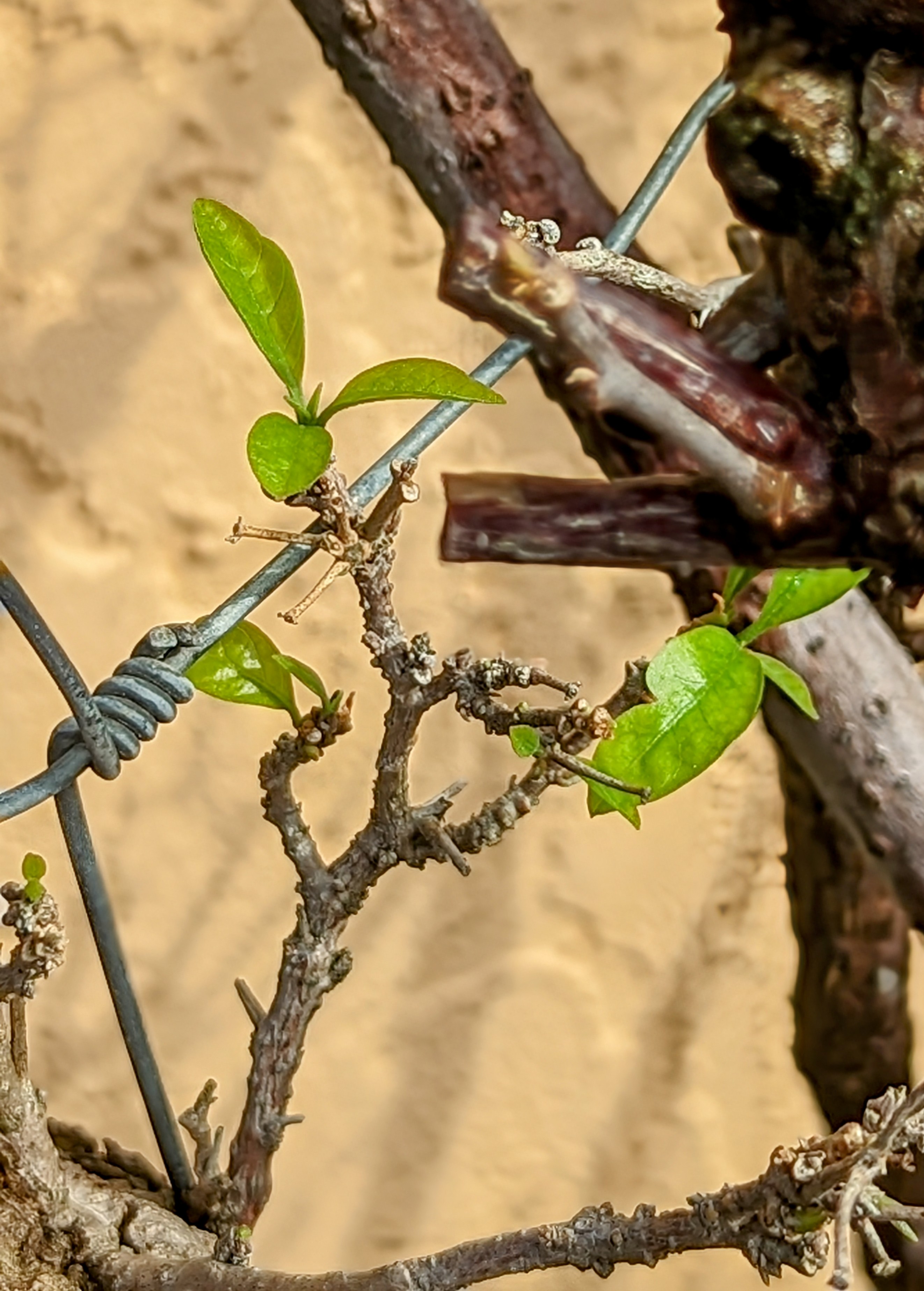
The first sign of recovery on what I suppose was a tactical error. This is Miss Alice Bougainvillea. Apparently, she resents being cut back hard and left out in the cold. Usually, the Bougs are indestructible. Alice has been naked for at least a month and I was fearing her prognosis. I’m planning on buying some special Bougainvillea fertilizer now that the leaves are reappearing.
That’s all from my garden. Wishing everyone Happy Gardening, armchair or otherwise.

















 The Shrub Queen