In a Vase on Monday – Summer Brew

I put this vase together on Father’s Day, so it was very appropriate to use one of my parents wedding gifts as a vase this week. My parents married in 1950, I think these teapots must have been popular at the time. I remember this teapot sitting on the kitchen counter very frequently as my mother used it to brew tea for iced tea year round. A pink plastic pitcher of iced tea was a constant presence in my childhood. If you grew up in the Deep South, iced tea is the beverage of choice for lunch and dinner (or if you are really Southern, lunch is called dinner and dinner is supper)

The flowers in this vase wouldn’t make a tasty brew. I am fairly certain the Tropical Gardenias are toxic, but it might smell pretty good.

A closer view:

I have accepted a few (guffaw) wild grape vines as a fact of life in my garden. These are muscadines (Vitis rotundifolia) I think it would take a small thermonuclear device to get rid of all of them and then I would have to start over. Not happening. So I cut a few here and there, add some to a vase, make a wreath and feed wildlife. The Gardenias are Tropical or Florida Gardenias (Tabernaemontana diviricata); our massive rain event this week produced a wonderful flush of flowers.
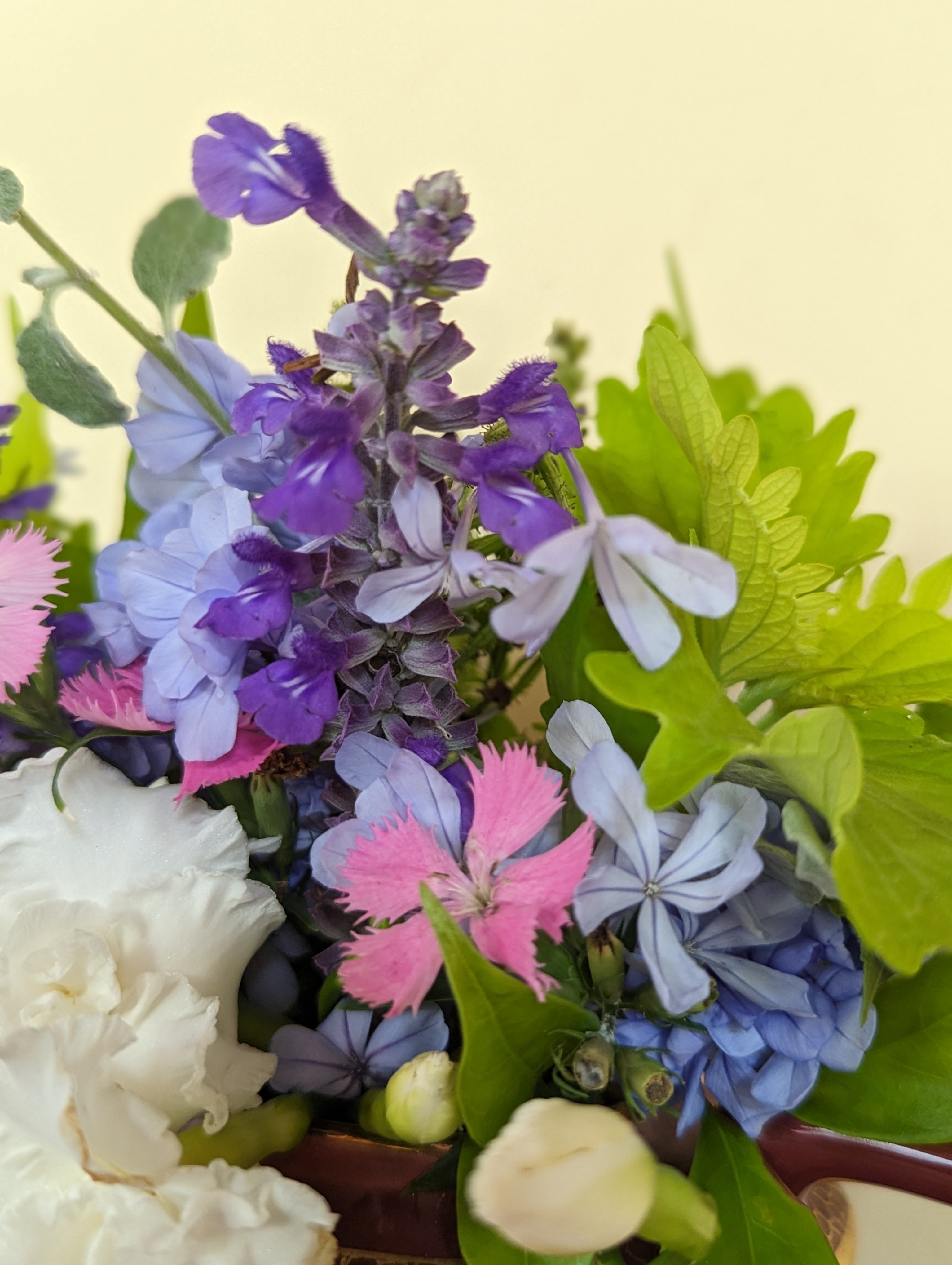
Pink flowers in the vase are the bitter end of the winter annual Giant Dianthus. I am puzzling over what to do with it. Put it in a shady place and hope for a miracle or consign it to the compost heap? It is a dilemma. Light blue flowers are Blue Plumbago (Plumbago auriculata); deep blue spikes are Mystic Blue Salvia, the spikes are oddly shorter due to dry weather earlier in the summer. A few sprigs of chartreuse coleus and fuzzy grey Licorice Plant (Helichrysum) add color.

Thanks to Cathy at RamblingintheGarden for hosting this weekly event. Follow the link and find more vase enthusiasts from around the world.

Happy Gardening!!

Six on Saturday – After the Deluge

South Florida has been featured in the news this week for its first tropical weather of the season. Miami and environs received 20 inches of rain in some areas and are still drying out. More rain is expected this weekend. I live in the far north of South Florida and realized I had left a bucket out in the front garden before the deluge started. After checking it out I found we had almost nine inches of rain this week. The first thing to pop are the weeds and mosquitoes!

The garden greedily gobbled up the water and the plants are a new shade of green this Saturday, some of the more tropical plants started flowering and setting buds. We have had a very dry spring so the rain was welcome. It is too bad there is no means to adjust the water flow from above.

Coontie Palms (Zamia integrifolia) recovering from butterfly hosting duties. The rare Atala butterfly lays eggs and grows caterpillars on this plant almost exclusively. These were eaten to the ground during the spring and have recovered nicely. Super Fireball Neoregelias in front of the photo are a bit scorched from the dry spring, they are usually red or green. I hope they recover. Fortunately, there are a zillion of these lurking in the back garden. The varigated shrubs in the background are Java White Copper leaf (Acalphya wilkesiana). Grassy plants are Rain Lilies.

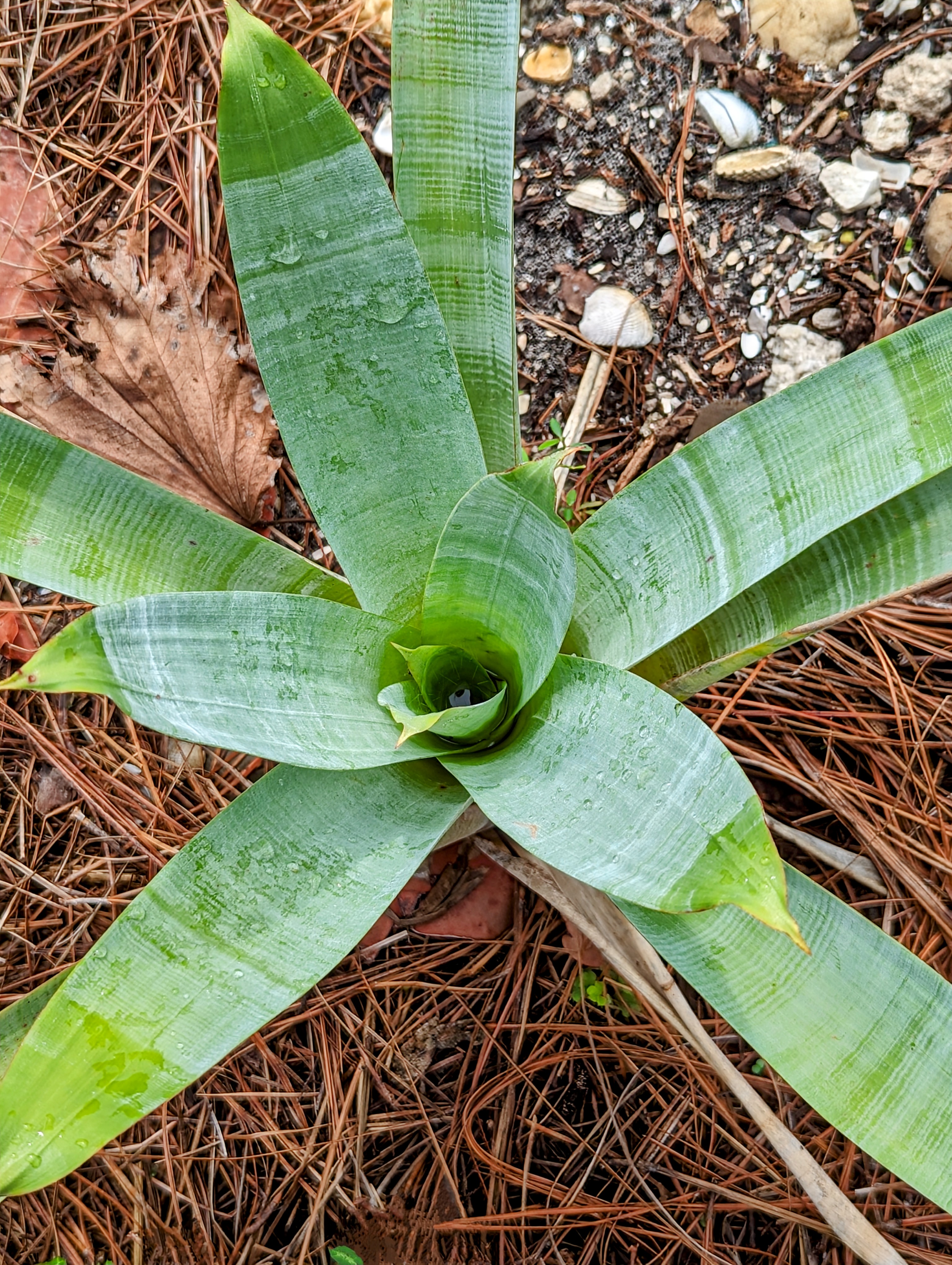
Alcantarea odorata bromeliad gaining its glaucous foliage. This is a big, full sun bromeliad that eventually reaches 3 feet wide and tall, they are sage green and look like they have been dusted in confectioners sugar. A statement plant if you are into that lingo. I am trying to decide about underplanting it with purple verbena or orange groundcover orchids. A friend sent me an offset two or three years ago and it is finally taking off.

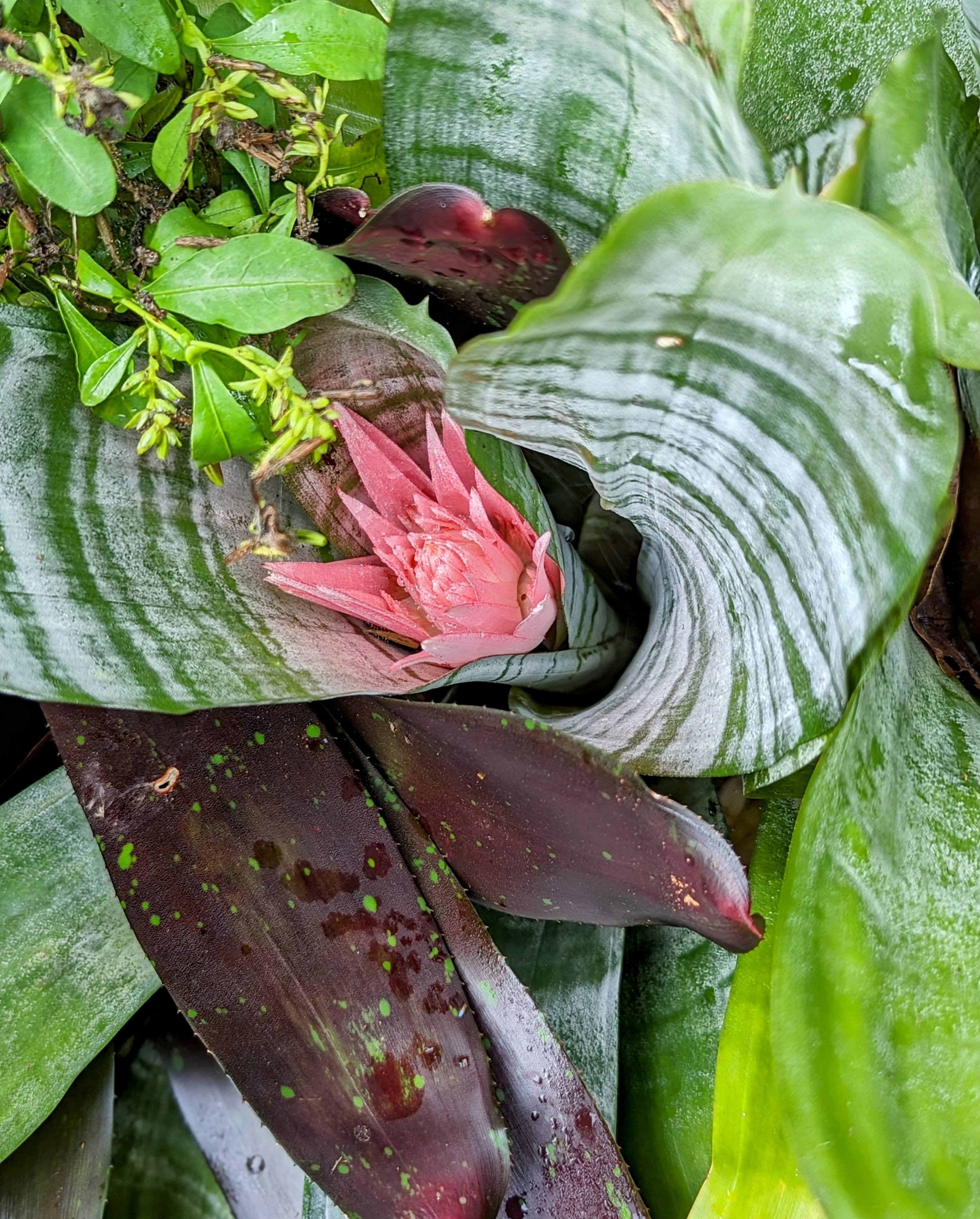
More bromeliads, this is a big mixed container. The purple foliage is Neoregelia ‘Luca’; the grey foliage with a bud coming on is Silver Urn (Aechmea fasciata)

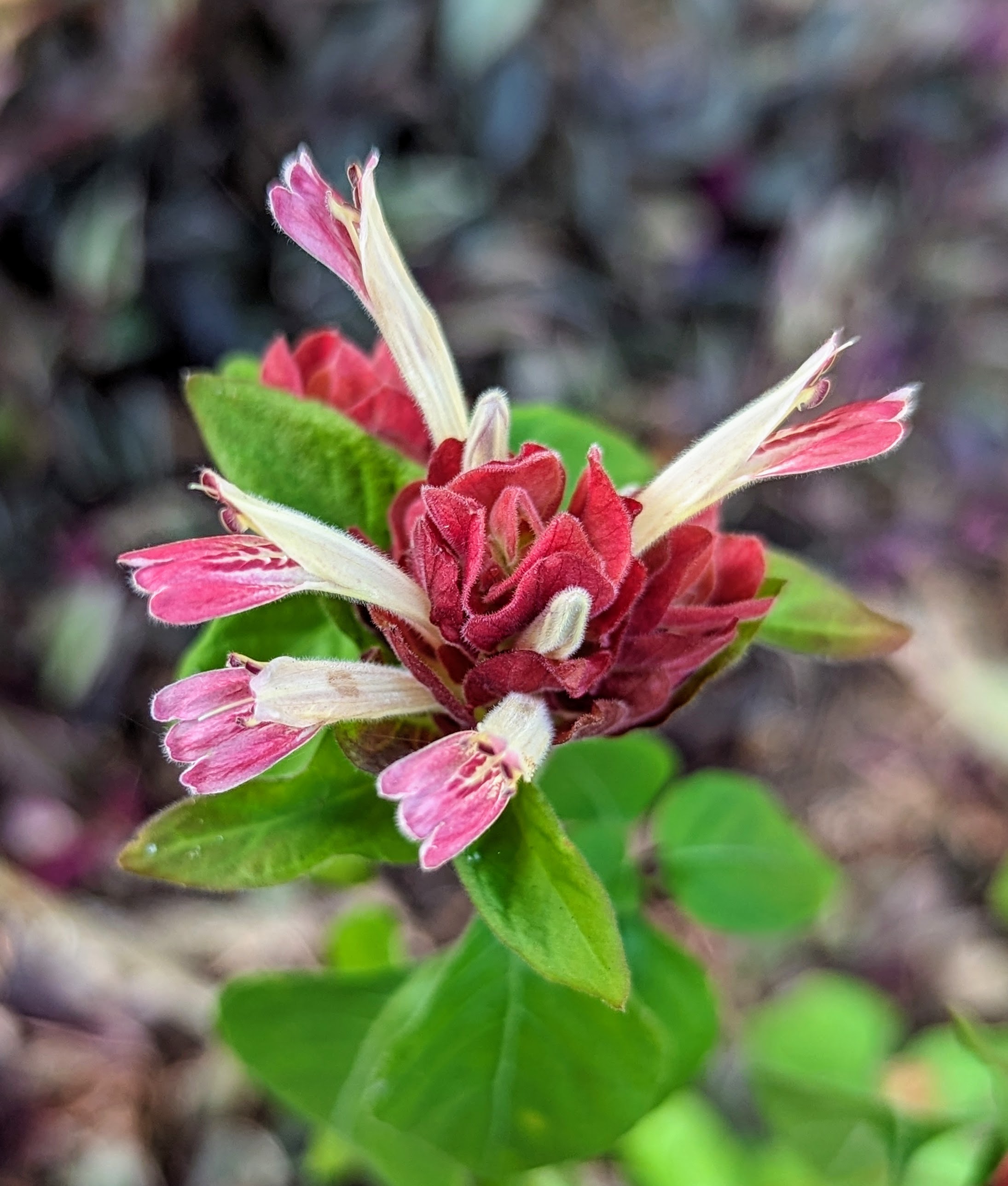
Mexican Bush Honeysuckle (Justicia spicigera) is a reliable summer bloomer. This is the first flush.

Coral Plant (Jatropha multifida) starting its summer season.

Gopher tortoise visiting my front porch for a vegetarian snack. Any plant that hangs over the side is fair game. It took me a while to figure out what was eating the basil. This guy must not be Italian as he leaves the oregano alone.

That is all from South Florida this Saturday. For a worldwide SOS garden tour follow this link http://garden ruminations.co.uk to visit Jim’s blog.

Happy Gardening!!!

Six on Saturday – June Things

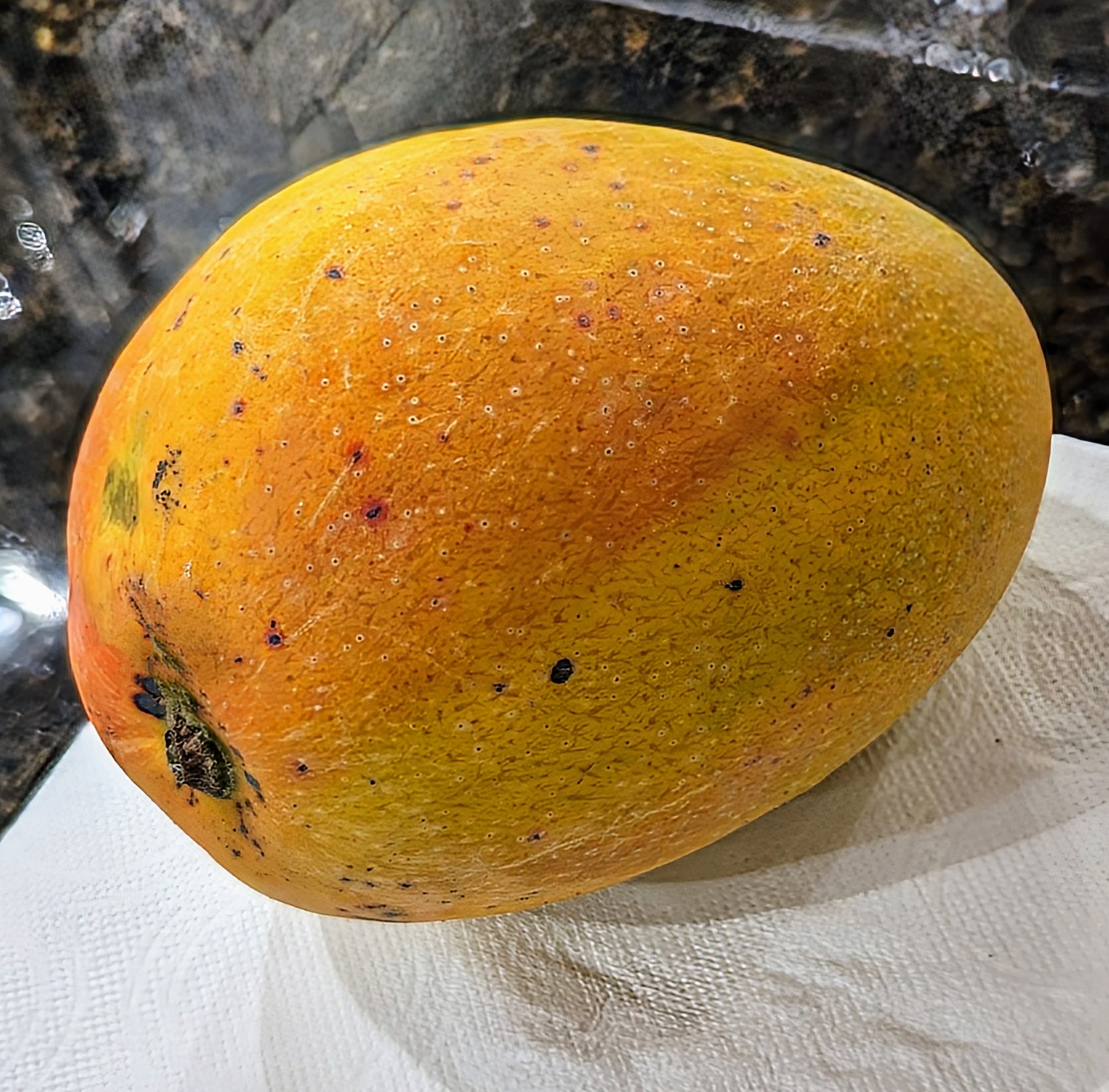
I looked back to last year and noted my first mango! was picked on June 2. We are a few days behind this year, but I am thrilled to introduce the first victim of my serrate knife – to be chopped, pureed and made into a Mango Key Lime pie this afternoon! This is a Glenn mango, flavor profile sweet and peachy with hints of citrus. Ha! just like wine speak, I think they taste coconutty.

The indestructible Red Shrimp Plant (Justicia brandegeana) is starting back up. This is another amazing plant, dump it in sugar sand, forget about it, and it still keeps going.

Another great summer red (not wine again) is the Petunia exserta. These are sort of viney and meandering through the White Flame Salvia.

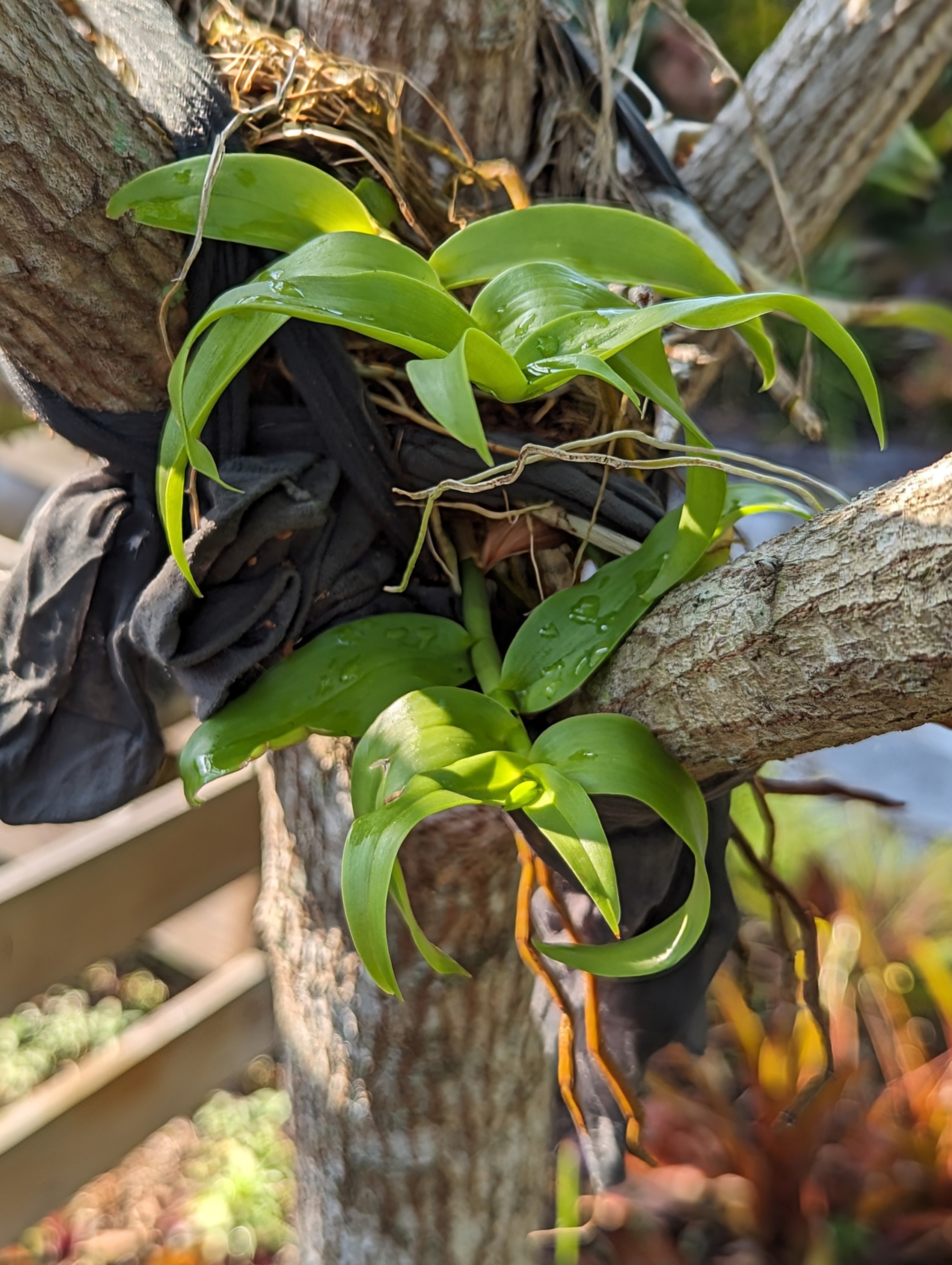
The orchids I placed in trees are establishing nicely and loving the humidity (unlike me). This is an unnamed Dendrobium in a Catalina (or Cuban) Avocado.

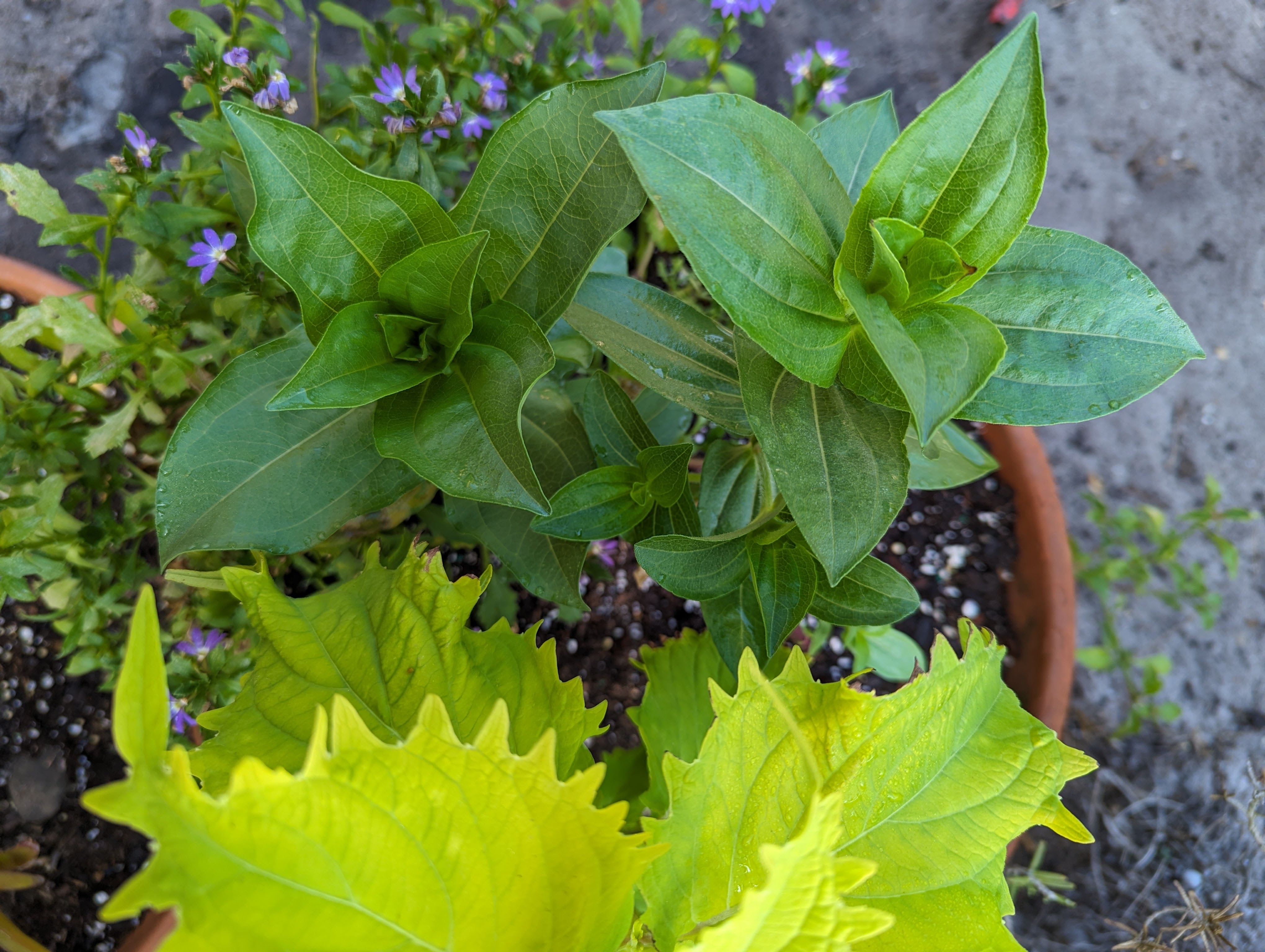
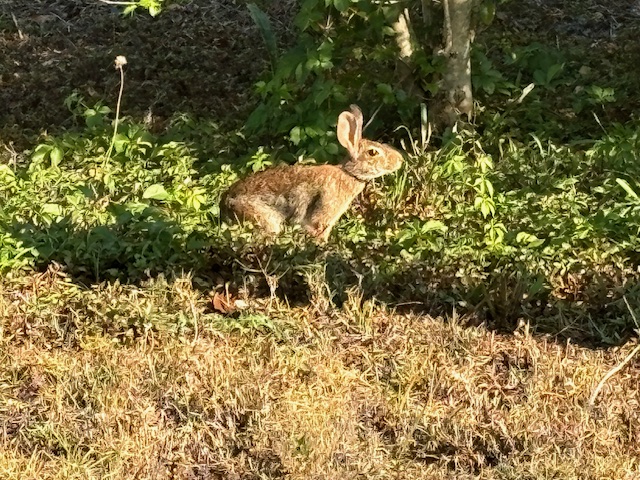
I tried a new mix of open pollinated Zinnia seeds for summer. These are called Zin Master Mix and I am more than curious about what I am going to get here. The plants are gorgeous (I thought they were going to die) I have a bunch of these plants and was planning to try some in the ground, but we have been overrun by Marsh Rabbits this year and they find the Zinnias to be an extreme delicacy. Another gardening dilemma. These rabbits are so confident they build nests inside the fence with a greyhound! These are in a big pot with a chartreuse Coleus and under planted with Blue Scaveola. No idea what color Zinnias are. Hope it works.

The Marsh Rabbit – looking for Zinnias in all the wrong places.

That is all from my garden this Saturday morning. To tour other SOS gardens, visit Jim’s blog, GardenRuminations and follow the links in the comments. I will be hopping into the kitchen to bake.

In a Vase on Monday – In a Pickle

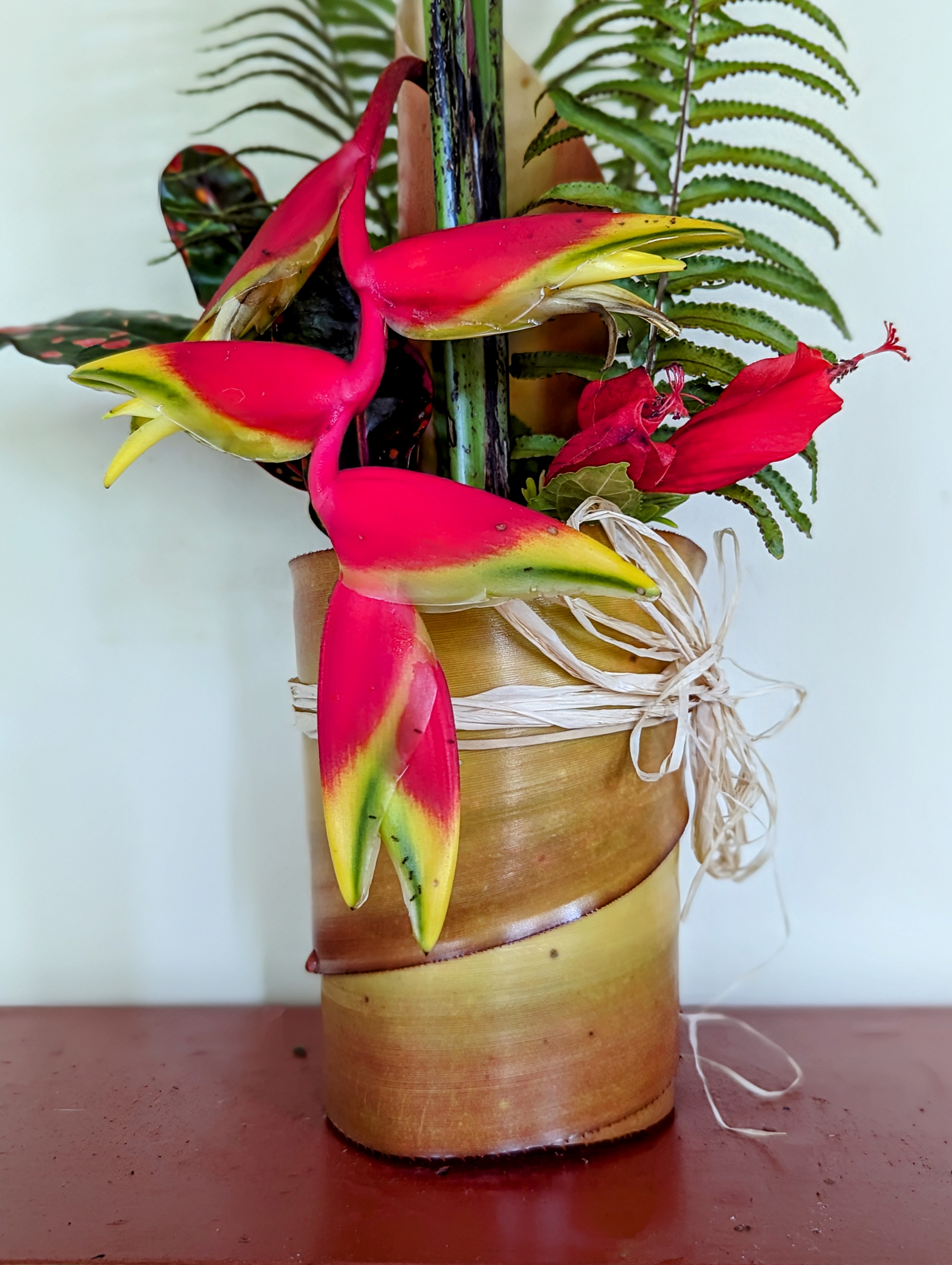
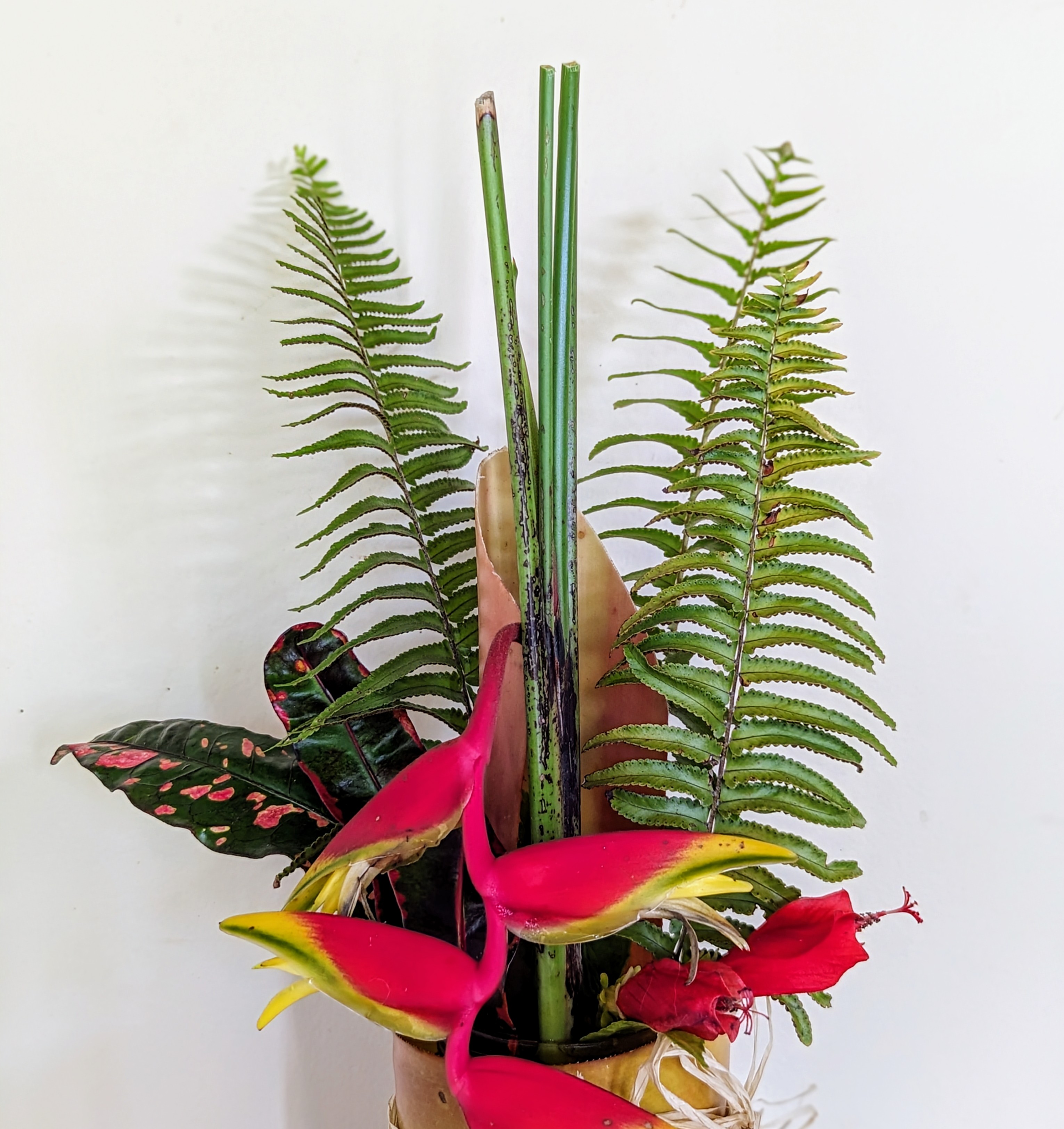
I had my heart set on a linear arrangement to display my first Lobsterclaw Heliconia of the season. The problem – my linear vase broke in the dishwasher. I was in a Pickle, until my dilemma was solved by, of all things, a Pickle jar. My husband is a compulsive jar saver so the perfect vase was soon in hand and fortunately covered in label glue. This made it very easy to roll a bromeliad leaf around it and tie it up with raffia.

The Lobsterclaw Heliconia is definitely a harbinger of summer. We have had some very hot alternating with very pleasant days and no rain. I finished mulching the gardens this morning as it seemed like possibly the last cool morning for a while. My cool and everyone else’s are probably entirely different things!

The Lobsterclaw Heliconia (Heliconia rostrata) is hanging around with two red Nodding Hibiscus (Malvaviscus arboreus) and a few leaves from Mammey Croton (Codieum varigatum)

The linear aspect of this arrangement is enhanced with foliage from Blanchetiana Bromeliad (Aechmea blanchetiana) – this is wrapped around the pickle jar and leaf leftovers I decided to pop in to hold the Heliconia upright. The ferns are Boston Fern (Nephrolepis exaltata)

Hoping for rain in my garden this week! To see more vases, visit Cathy at ramblinginthegarden.

Happy Gardening!!

Six on Saturday – Summer Solstice Shortly

Summer flowers are budding and blooming in the garden this Saturday. I know this seems picky but the days seem too long now; but I know the Summer Solstice is just around the corner and they will soon be shorter. In December I am certain to be complaining that the days are too short. Follow the link to Jim’s blog gardenruminations to see more SOS garden tours.

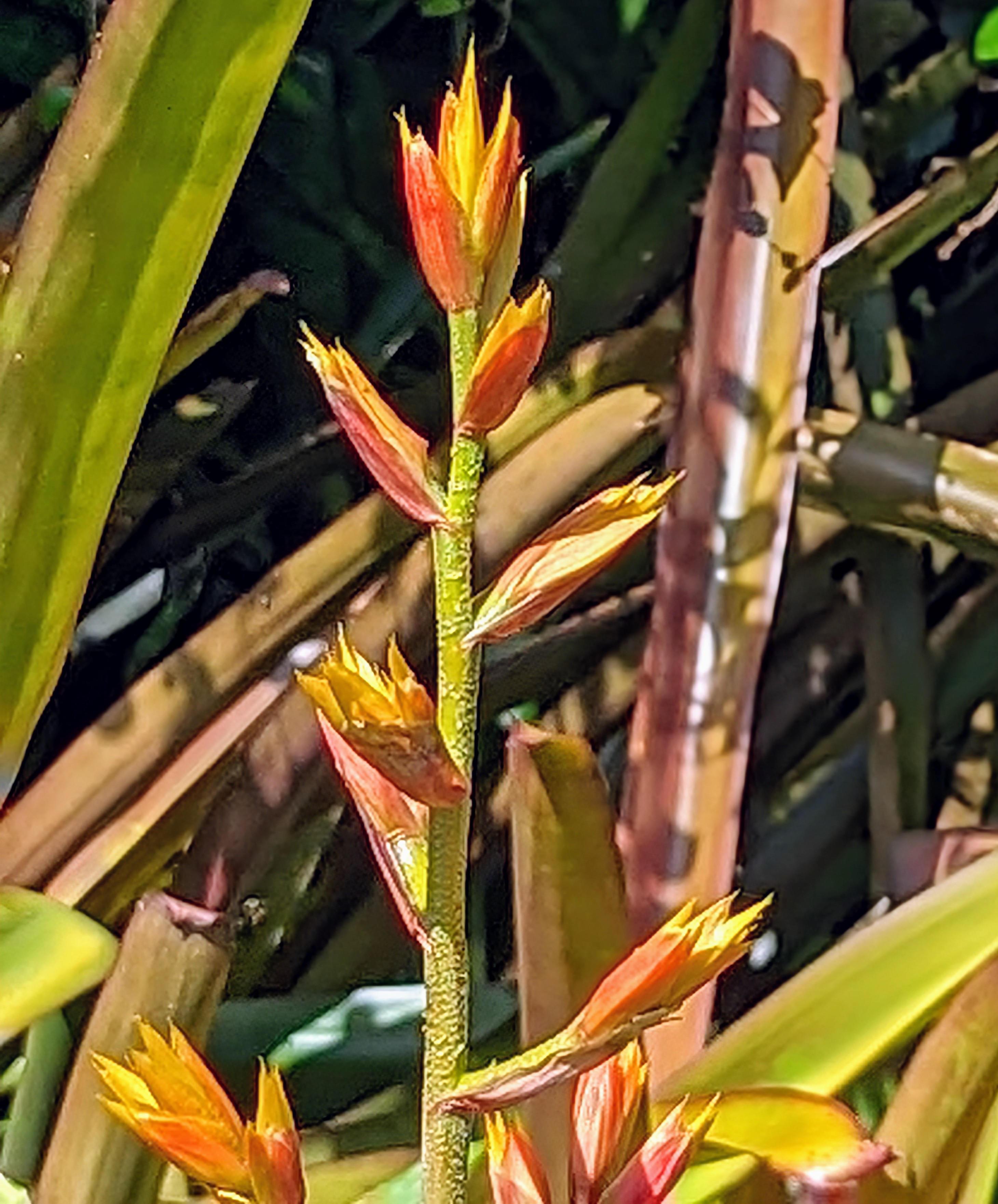
Aechmea rubens Bromeliad buds. Once this blooms, the flowers last for months and then dry into red straw. They are big and sharp.

Buds on Billbergia pyramidalis, the flowers are pyramid shaped once they open and many people call this Hurricane Lilies (?) as they flower during hurricane season, which starts today.

Pineland Lantana (Lantana depressa) flowering for the first time. It seems very strange to me that I cannot grow New Gold Lantana, so I decided to try this native Lantana and it seems to be thriving. Go figure.

Miss Alice Bougainvillea has finally recovered from whatever was ailing her and is dressed for summer.

Another garden first, a Day lily photo bombed by a White Flame Salvia. This is a Purple Stella Daylily (Hemerocallis) it is reported to bloom all summer long.

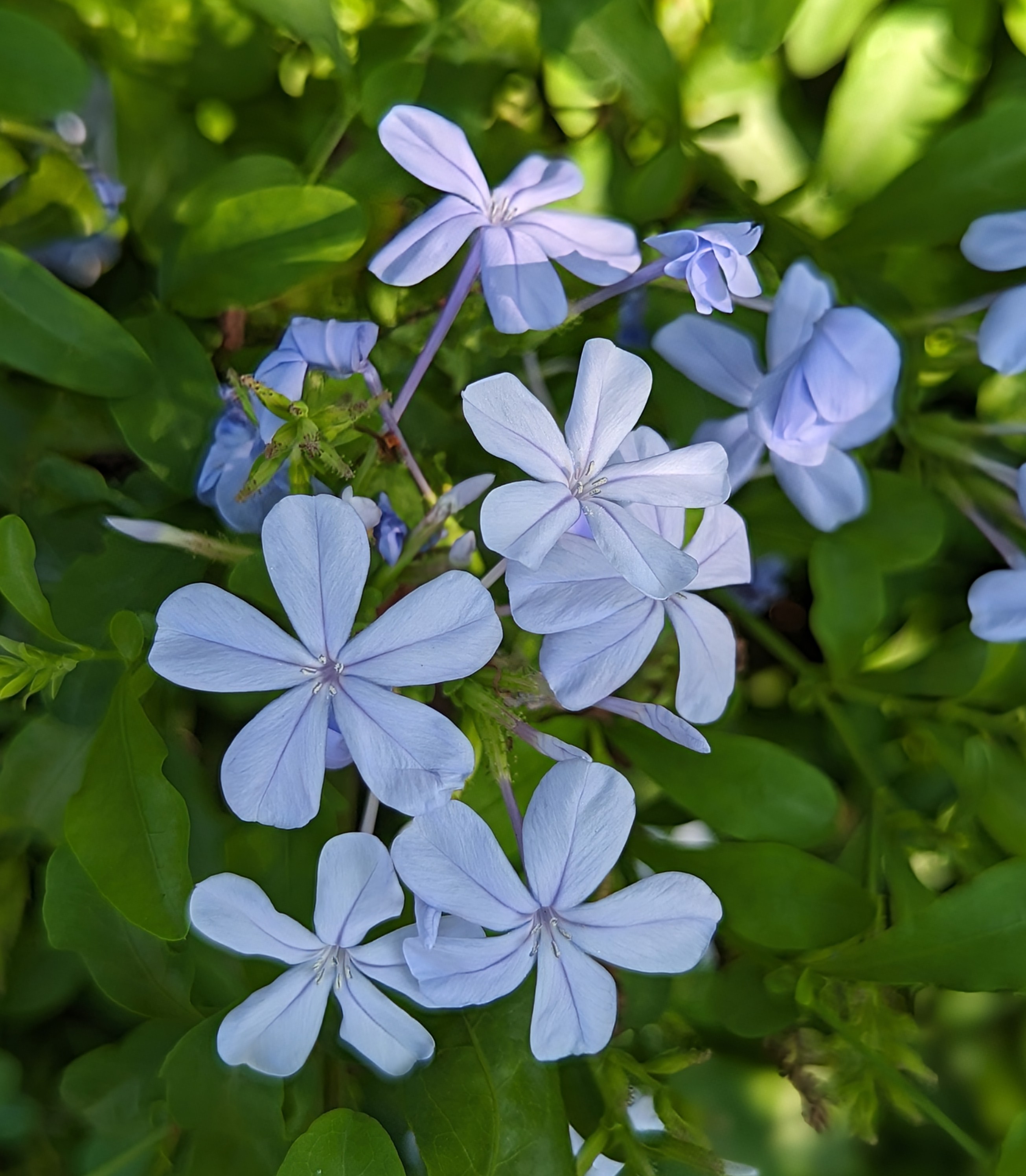
The Mophead Hydrangea of the tropics, Blue Plumbago (Plumbago auriculata) is in full bloom in my garden. I enjoy these so much and never water, fertilize or even think about them. A summer favorite.

That is all from my garden this Saturday. I am hoping for rain, but currently enjoying a nice, cooling breeze off the ocean.

Happy Gardening!!

In a Vase on Monday – L’ Estate

Decades ago (no need to discuss how many) I spent the summer in Cortona, Italy with an Arts Studies Abroad Program. This time of year usually causes me to reminisce about riding around on a bus listening to Vivaldi’s Four Seasons and eating pasta. For the life of me I could not remember the Italian word for summer – L’ Estate.

Summer has dropped its full load on South Florida this week. The skies are black with thunderstorms this afternoon and we have had ‘feels like’ temperatures over 100 F this week. No need to discuss humidity, my husband refers to this as ‘Africa hot’.

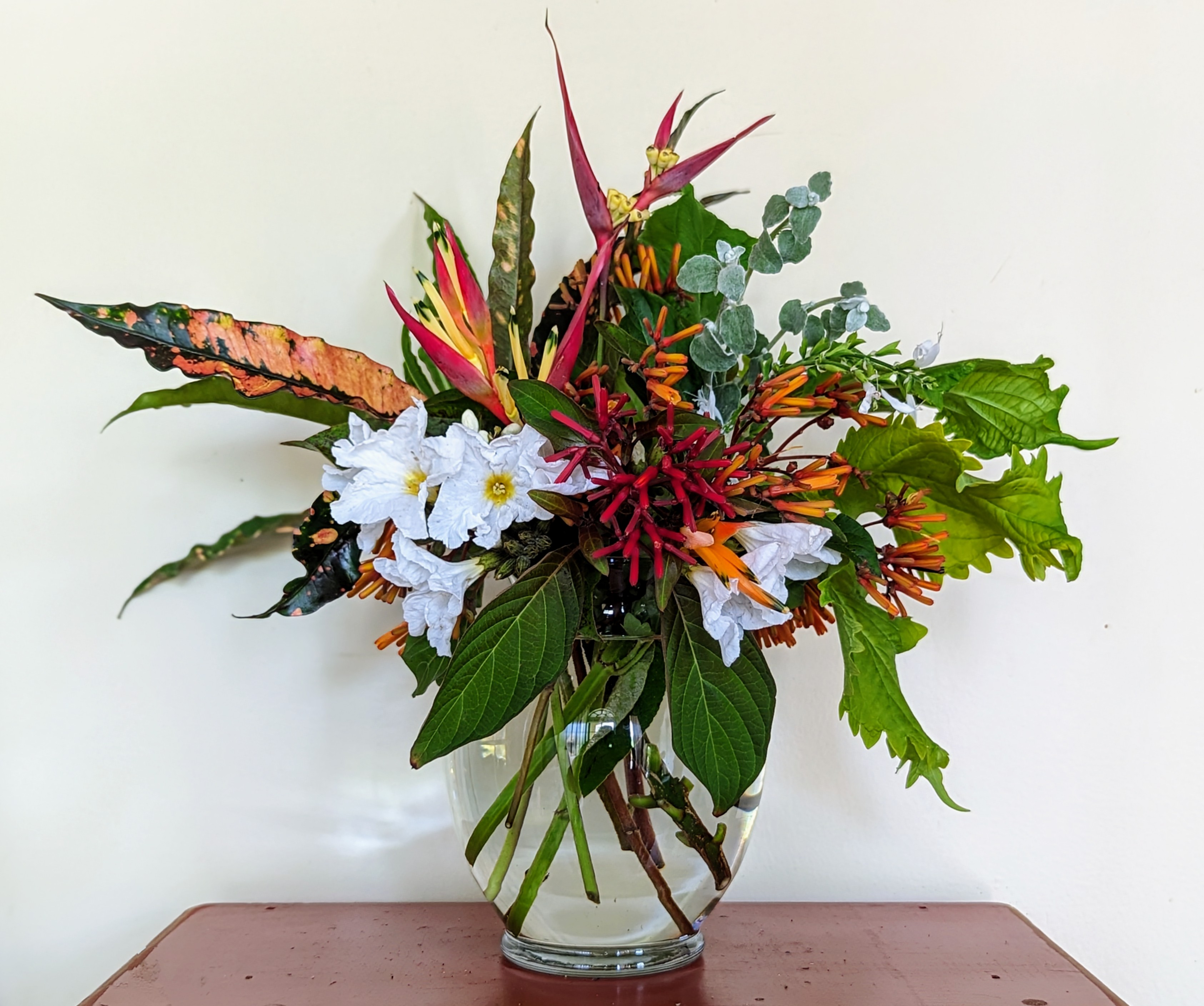
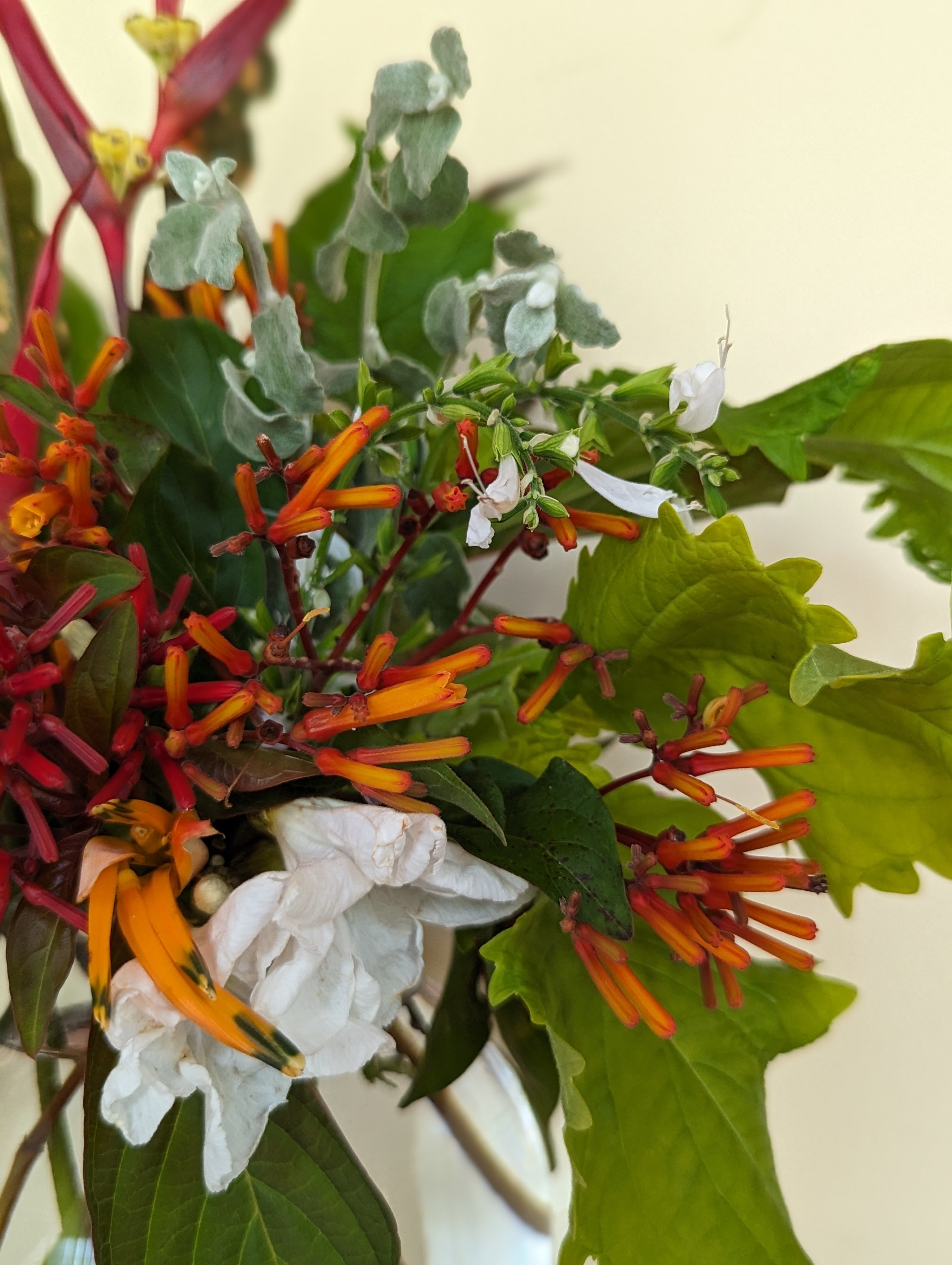
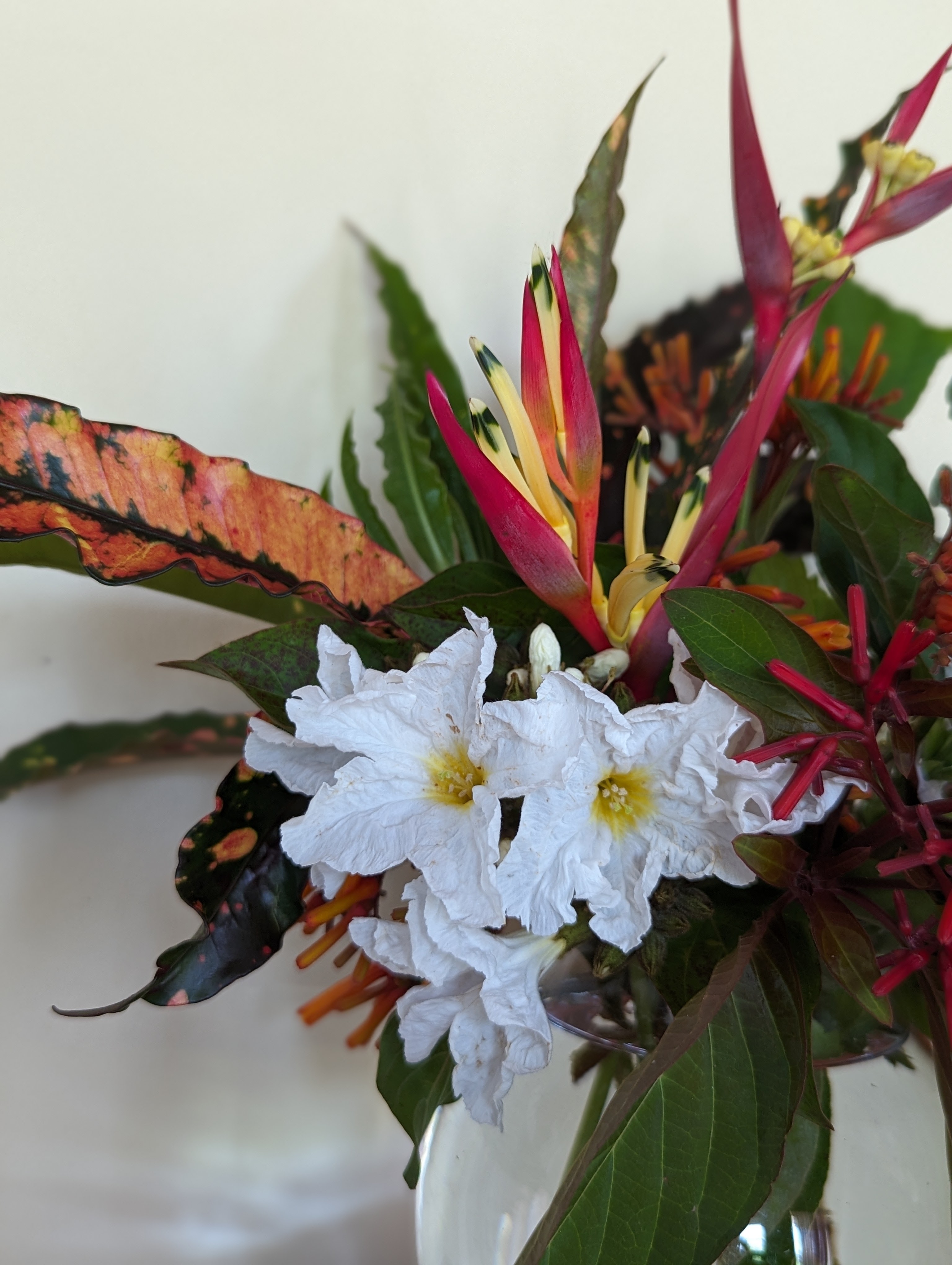
The vase was done in all hot colors in honor of the arrival of L’ Estate.

The close up:

In orange, Firebush (Hamelia patens) sets the tone for the vase. A few bits of Licorice Plants are the grey, fuzzy foliage. Chartreuse foliage is from an unnamed coleus, the gift that keeps on giving.

White flowers to cool things down are from the White Geiger tree (Cordia boisseri); varigated foliage is from Piecrust Croton (Codieum varigatum) and a few Lady Di Heliconias (Heliconia psittacorum) are in red and yellow. The vase is a florist orphan.

Sitting in an air conditioned space listening to Vivaldi seems like a really good idea right about now. Maybe for several months.

Visit Cathy at ramblinginthegarden to see what other gardeners are popping into their vases.

Happy Gardening!

Six on Saturday – Not Hogwarts

Some Six on Saturday garden tours make me feel like there should be a garden wizard around the corner or behind the shrubbery. It has started raining again and the tropical creeping has started. I was contemplating my Strangler Fig and the cactus that produces Dragonfruit (there must be a wizard here somewhere!) winding its way around my fence. To see more magical SOS garden tours, visit Jim’s blog by following this link – garden ruminations.

The Dragon fruit (Hylocereus megalanthus). This is a night blooming cactus, a yellow flowered variety that is supposed to produce a fruit that is lemon sorbet flavored. It flowered last year, but produced no fruit. I am finding the fruit producing plants here will often flower for the first time and not produce and then the next year flower and produce fruit. Fingers crossed! It has been so long since I bought this I had forgotten about the lemon sorbet flavor. Thai dessert mango tree in background.

We had our rather magnificent Strangler Fig (Ficus aurea) pruned. Talk about a Harry Potter tree! These are quite interesting and don’t really strangle anything. It is amazing how quickly they can grow – 15-20 foot long branches (4-6 inch diameter) were trimmed back to the trunk from our roof line. I think it has been a year and a half since it was last pruned.

Fruit from the Strangler Fig. These are edible, but only wildlife enjoy them. And I think about a million of them fall to the ground. This is followed by fruit flies who are followed by birds. Wildlife enjoys this tree. It is also larval host to the Ruddy Daggerwing butterfly.

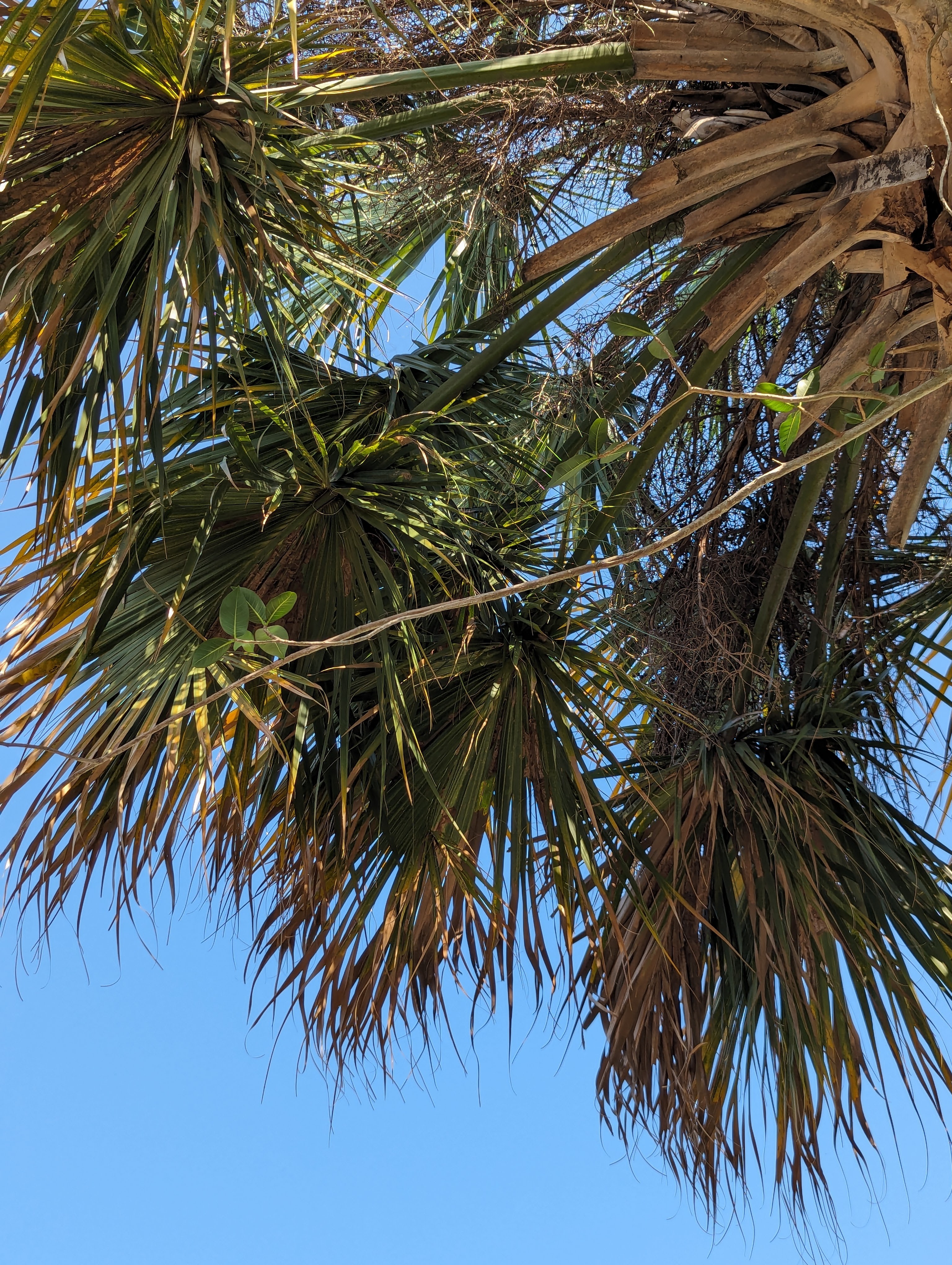
The birds take the figs up into other trees, commonly Sabal Palms and deposit them in the crown of the tree. The figs germinate, take root followed by a small branch growing out of the side of the palm. These branches eventually get long enough to reach the ground and a new Strangler Fig puts roots down and grows up right beside the palm. It is common to see a palm engulfed in a Strangler Fig. Maybe it should be called an Engulfing Fig.

The leafy branch is from the Strangler Fig seedling growing out of the palm trunk.

These trees also make buttress trunks. They are growing in a bed of Snake plants, an impossible to get rid of weed here that I have embraced rather than argue with.

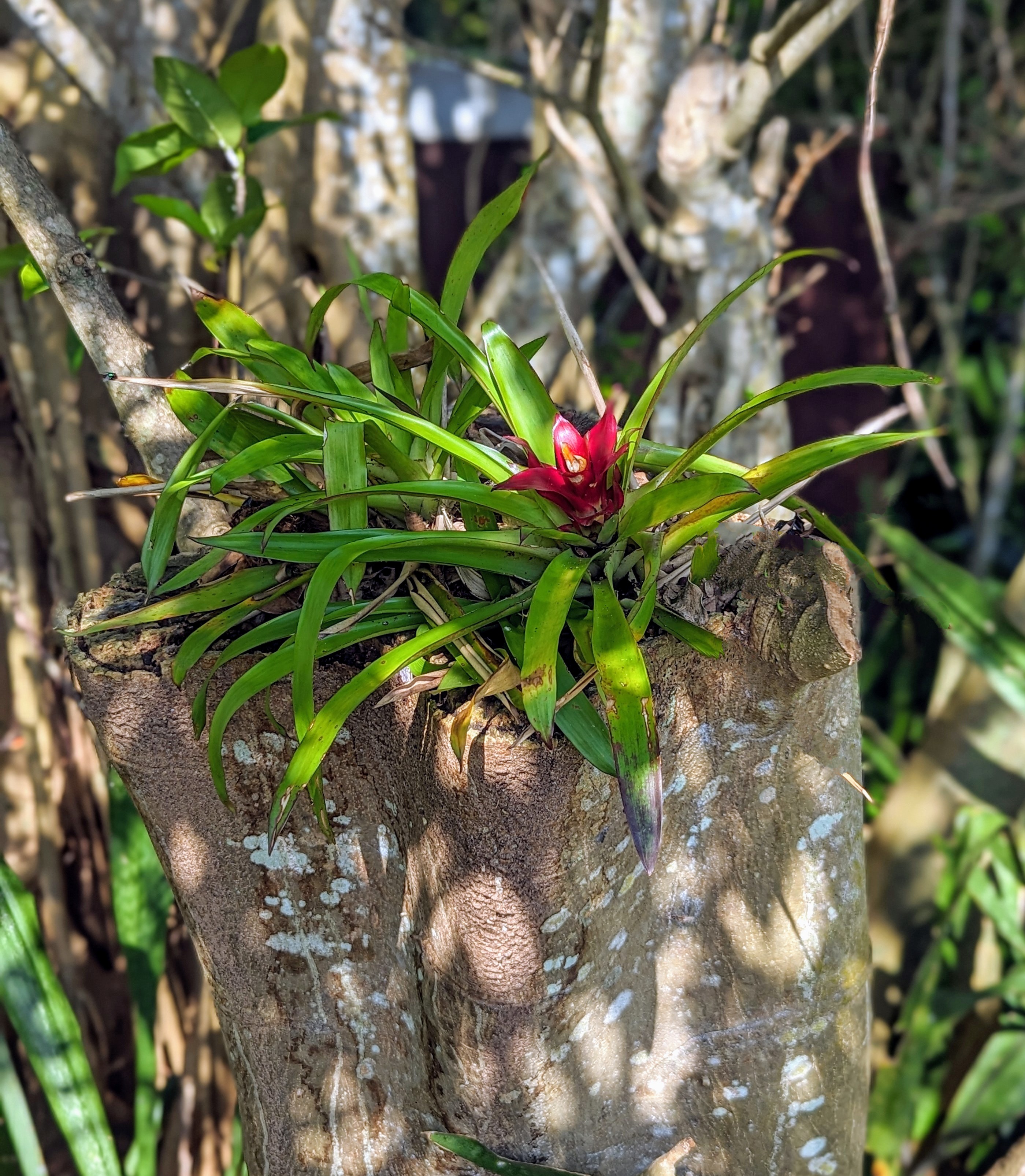
I have just added some Guzmania bromeliads to some pruning made planters. These trees are known for hosting epiphytic plants, so I will add more.

That’s all from my magical tropical garden this Saturday. Wishing everyone Happy Gardening.

In a Vase on Monday – Tropical Nights

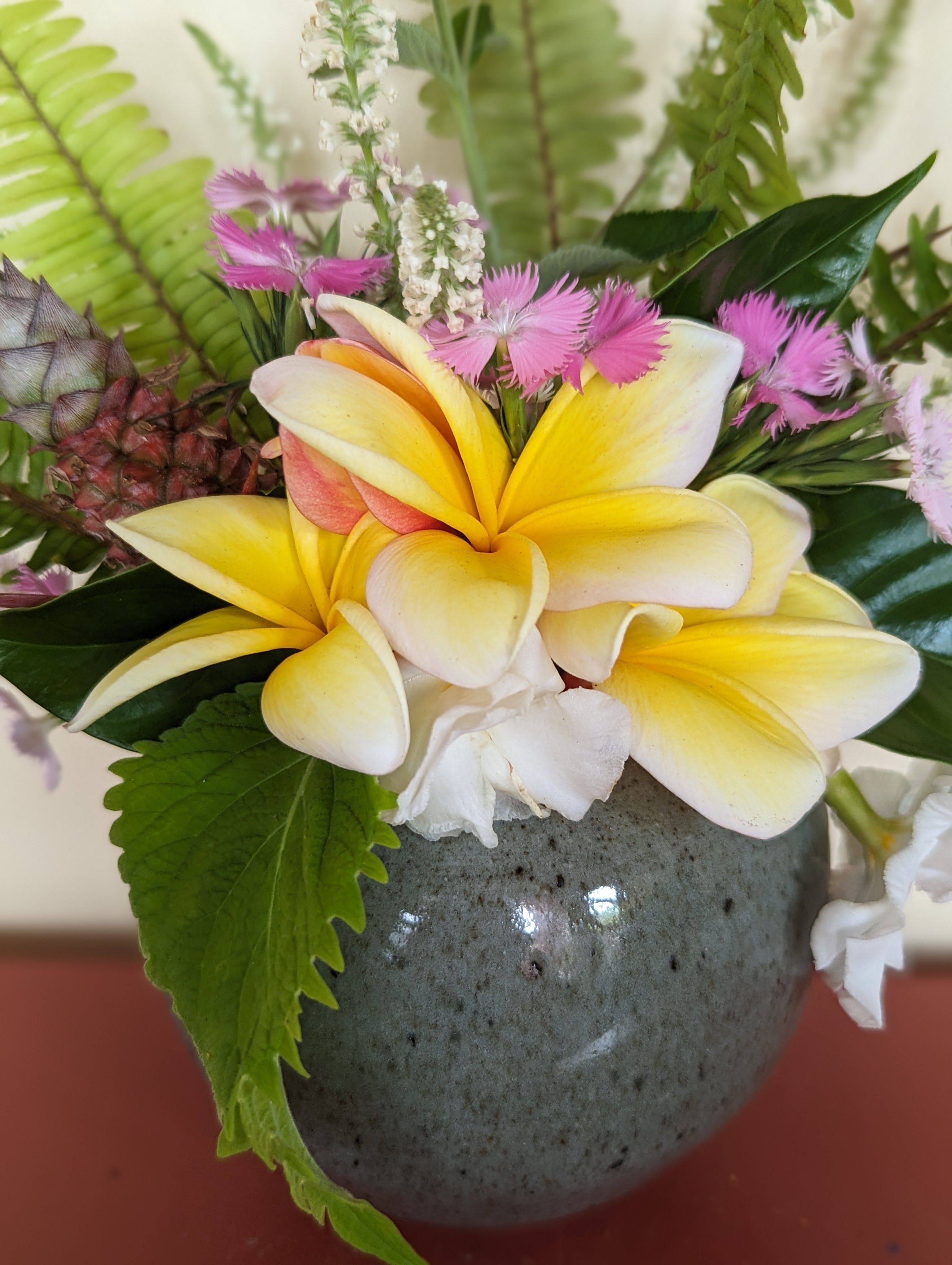
Summer nights in South Florida can be wonderfully fragranced in the garden. I collected a vase of fragrant flowers to scent my house. Frangipani and Gardenia are two of the most popular and have been in my garden for years. I am thinking of adding a night blooming Jasmine.

I learned recently about the origin of the name Frangipani, the yellow flower above. It seems there was an Italian nobleman named Frangipani who made gloves. One of the features of his gloves was their scent, bitter almond. The gloves scent reminded many people of the scent of the Plumeria (Frangipani) and that became its common name. The botanical name, Plumeria, is in honor of King Louis XIV’s botanist, Charles Plumier. Plumier was a monk who traveled the Caribbean collecting tropical plants. Plumerias are native to Central America and the Caribbean. I always thought they were from the South Pacific and Frangipani was a Hawaiian word, not so much.

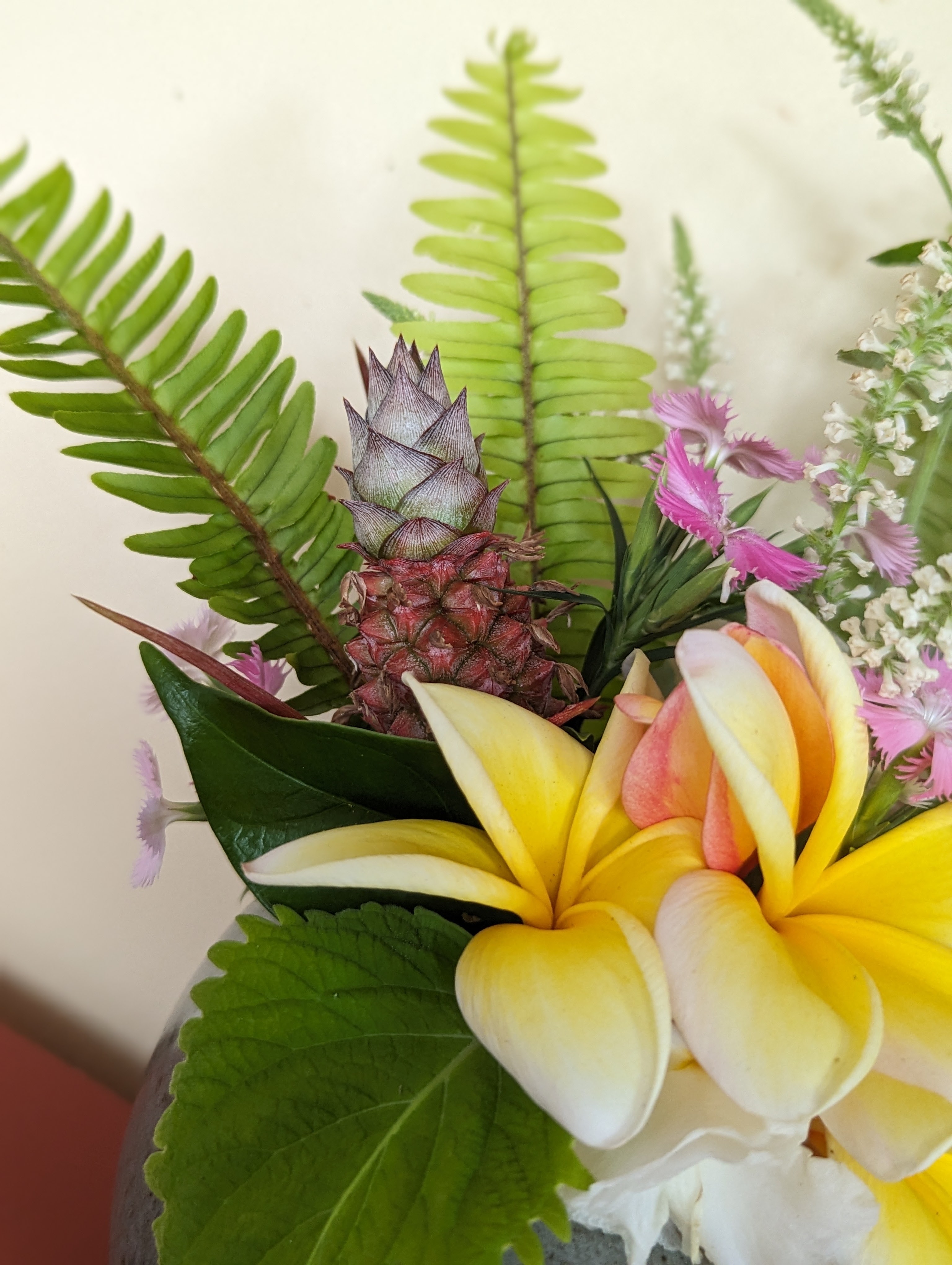
A closer view:

The yellow flower is Frangipani (Plumeria spp), I wish I knew the variety name, this one is very common around here as a pass along plant and develops into a nice small tree – if you know how to prune them, and I haven’t quite figured that out. Pink flowers are Giant Dianthus, I am expecting these to rollover and die any day now from the heat, but until then I will enjoy them. A chartreuse coleus leaf drapes over the edge of the vase along with Tropical Gardenias (Tabenaemontana diviricata).

A miniature pineapple adds a tropical punch; the white spikes are Sweet Almond Bush (Aloysia virgata), adding more fragrance to the vase. Asian Sword Ferns provide greenery.

No more fun facts from my wonderfully scented house. I actually picked the scented plants because I was cleaning the oven and things were getting smoky. The oven is beautifully clean now and all is well. Visit Cathy at ramblinginthegarden to see more vases.

Six on Saturday – The Advent of Humidity

It’s Saturday morning yet again. My morning tour found the more tropical members of my garden mob basking in humidity and unlike me, embracing it. The weather app on my phone had the audacity to state it was going to be six degrees colder today and 90 F. This is not colder.

Mother’s Day is tomorrow in the US. In South Florida, this is the bitter end of snowbird season and generally the advent of humidity. Coincidental? I think not. Join the international Six on Saturday garden tour at Jim’s blog, Garden Ruminations by following the link.

Dendrobium orchids installed in my Cuban avocado tree are putting out new growth after suffering with spider mites when the humidity was lower.

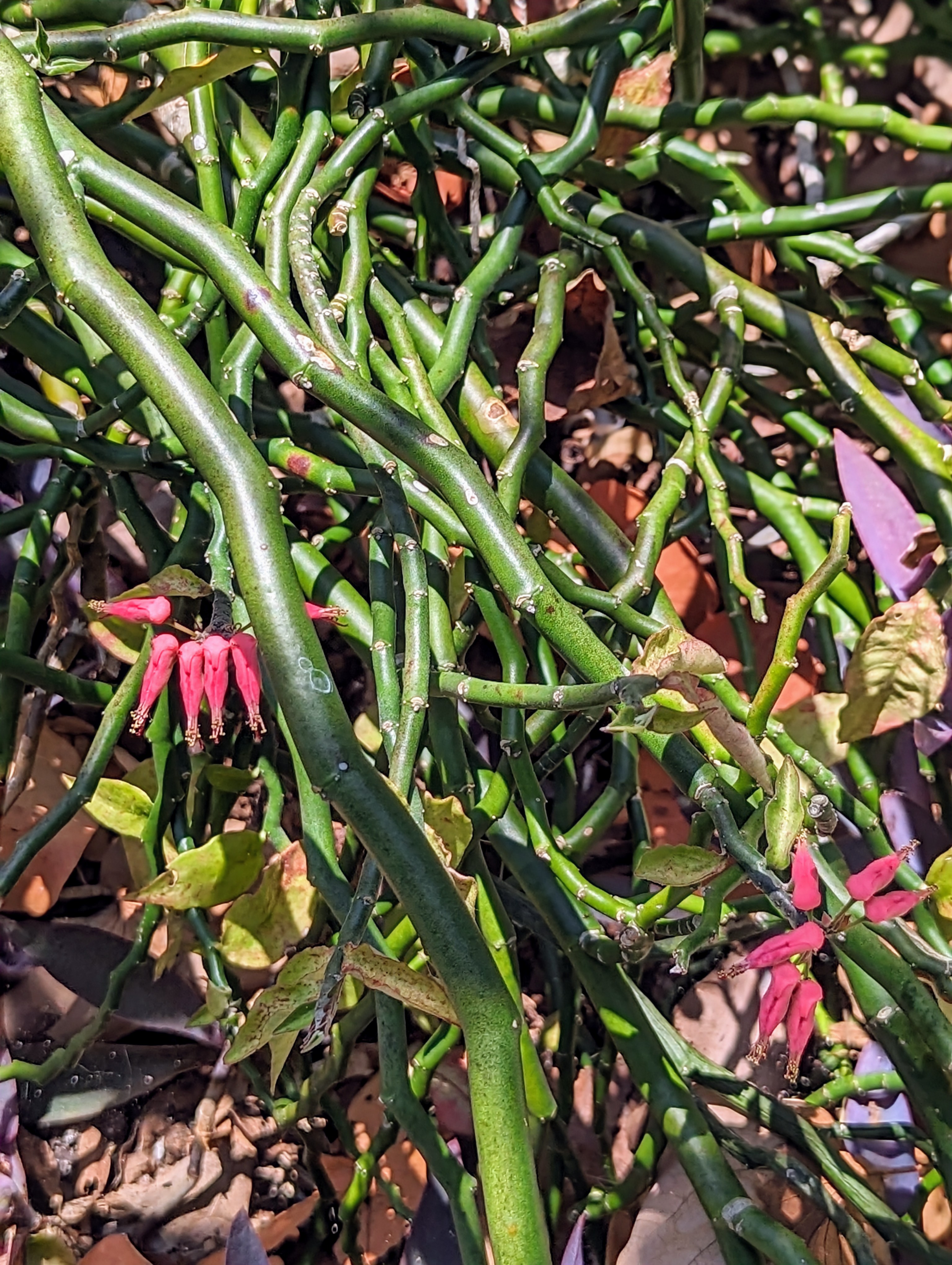
Flowers on the succulent shrub, Devil’s Backbone (Euphorbia tithymaloides). A native of Florida and indestructible in the right place, this one lives in partial shade and unirrigated sugar sand. It was a surprise to me that people keep these as houseplants.

Angel’s Trumpet (Brugsmania). I planted this about six months ago, not certain it would grow in my garden, but here it is! The plant has tripled in size and I am hoping for flowers. I did see the mealy bugs and they were dispatched to the great beyond after I took the picture.

Blue Daze Evolvulus. I have been wondering forever what inspires these to bloom. Possibly trimming, fertilizer and the onset of humidity? This is a sulky evergreen groundcover here.

I decided to tree form this massive coleus as it had overrun its under plantings. Has anyone else tried this?

Maybe the trunk needs to be a bit longer? I am thinking of letting the trunk gain some size and then pinching the new growth on top to make it fuller. And I have a lot of cuttings. I could start a tree form coleus farm.

That is all from my garden this Saturday. Thunderstorms are forecast and I am hoping for some rain. We are still not in the rainy season even though there is plenty of moisture in the air!

Happy Gardening!!

In a Vase on Monday – Interlude

It was a stormy Sunday morning, I dodged rain showers while collecting flowers in the garden. April is frequently the driest month of the year in my garden, desertlike this year. I was happy to see the rain and noted the change in flowers, the spring flowers are slowing down and the summer blues are appearing. This seasonal interlude is reflected in the vase.

This is another nicely fragrant vase. I have learned to appreciate basil flowers in arrangements this winter. Cutting the flowers adds a nice touch to vases and invigorates the plants to produce more foliage. I read recently that it is a good idea to cook with the flowers, but have not tried it. Dill flowers add another herbal note blending with spicy Dianthus and Agastache fragrance.

A closer view. The purple flowers are Agastache, which surprises me by growing here and seemingly in everyone else’s garden. This is my first year with them and they are in a container happily flowering. The smaller pink flowers are Heirloom Pentas (Penta lanceolata), which are common here and are a short lived perennial, usually available in pink, white and red and an excellent butterfly plant. The bigger pink flowers are Giant Dianthus, a cool season annual, beginning to bow out. Blue flowers are Plumbago (Plumbago auriculata) a very common trailing shrub that just keeps creeping along and will grow up into trees. White spikes are basil flowers and chartreuse flowers are dill flowers. The silver goblet vase (with ample patina) is another odd heirloom from my mother. It leaks like a sieve and has to have a repurposed yogurt container inside to hold water.

I’m hoping for more rain this week and the outlook is promising. Unfortunately, rain brings humidity. On the bright side, the orchids will love it even if I don’t.

Visit our intrepid hostess, Cathy at ramblinginthegarden to see more vases.