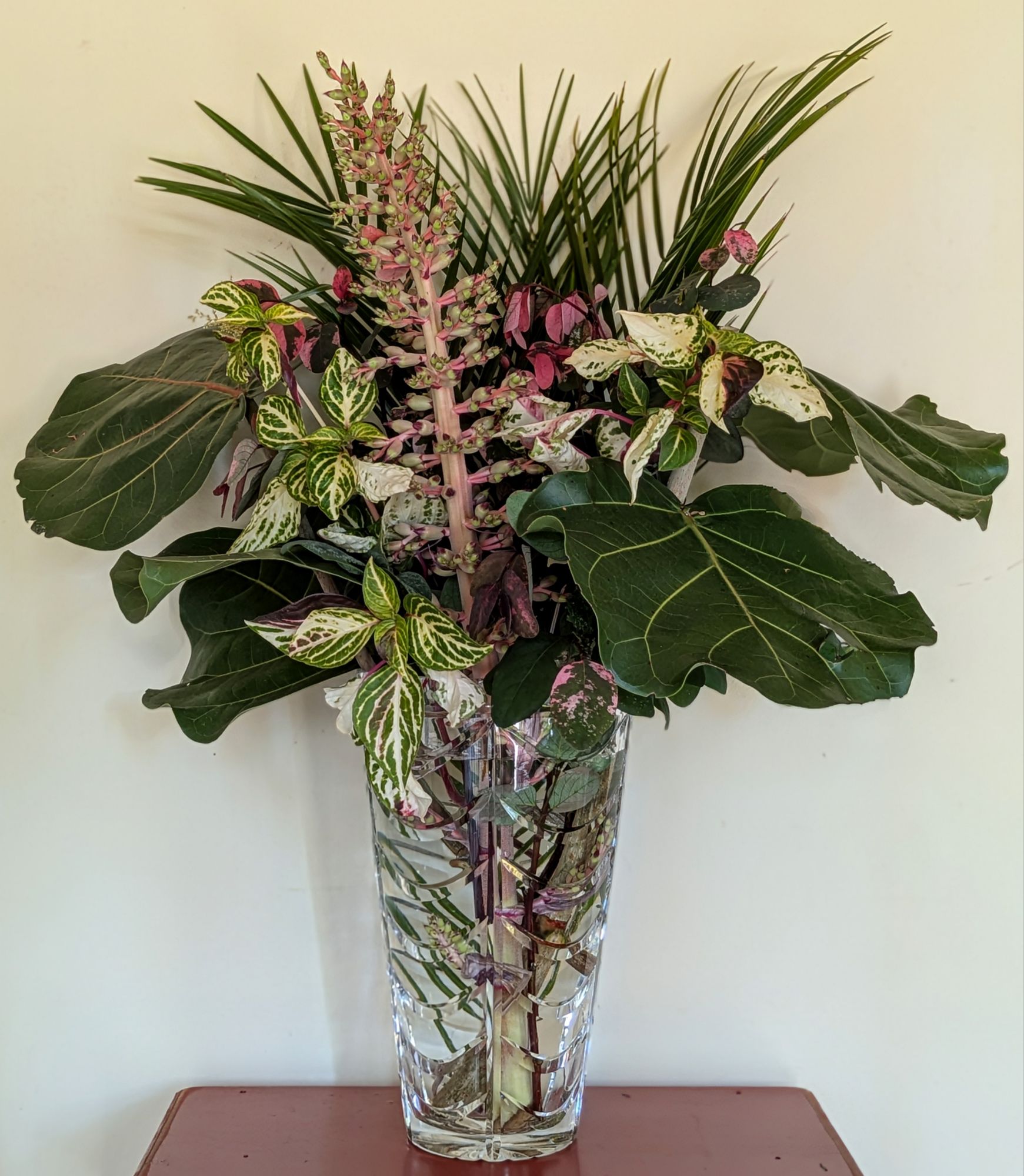
February has proved to be highly superior to January in terms of my environs. This month is forecast to be warmer and drier than normal. Currently (Sunday afternoon) it is 80 F, warm and sunny outside. I like it and have been enjoying chasing the winter doldrums away in the garden. This called for the most tropical vase possible.
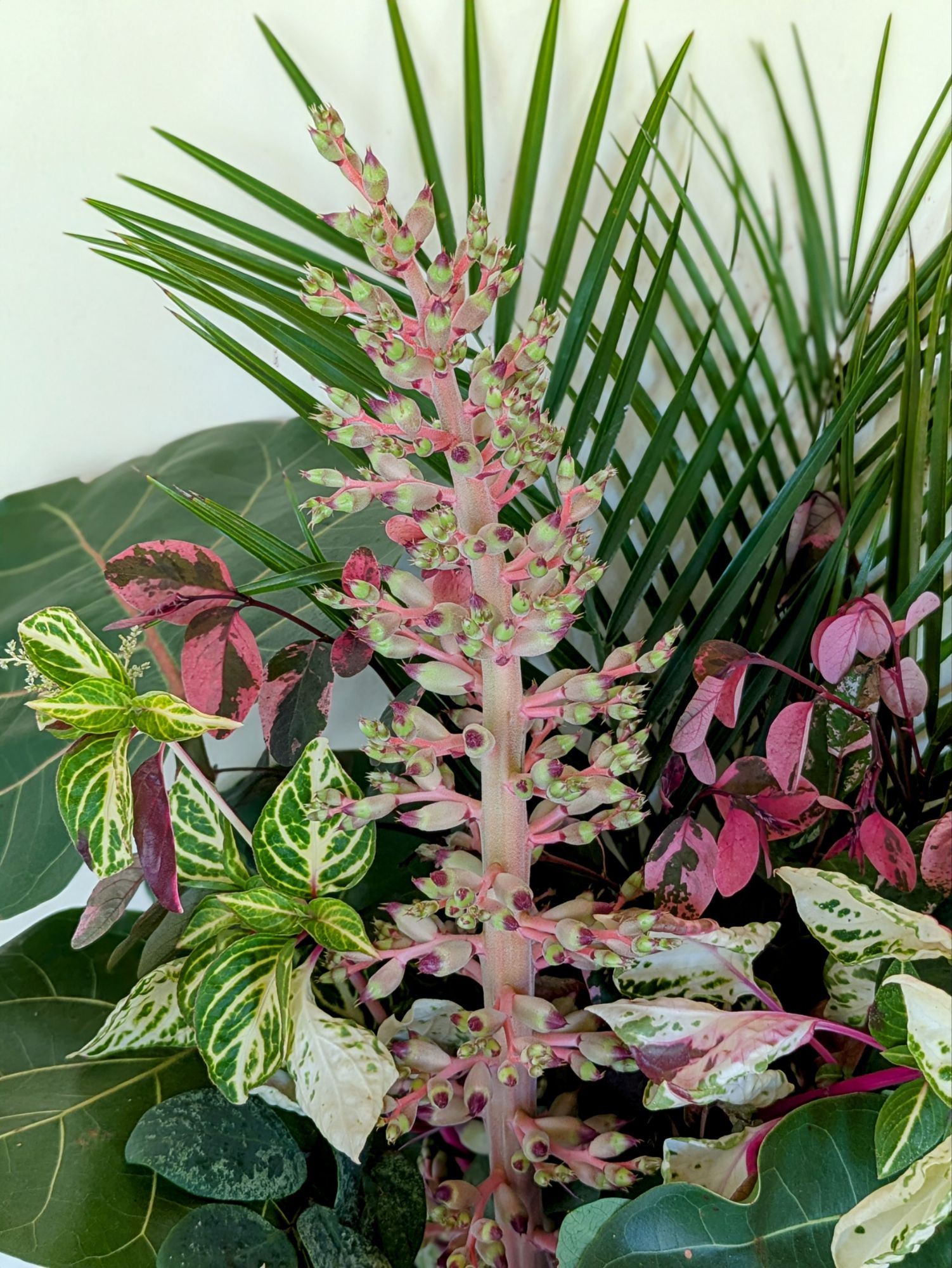
I started the search for tropical foliage and flowers and was rewarded with an odd and large bromeliad flower. I recently discovered the name of this plant, after having it in the garden for years. Drum roll, please. x Androlaechmea ‘O’Rourke’ Discoveries like this leave me wondering who O’Rourke is? No clue.
A closer view:
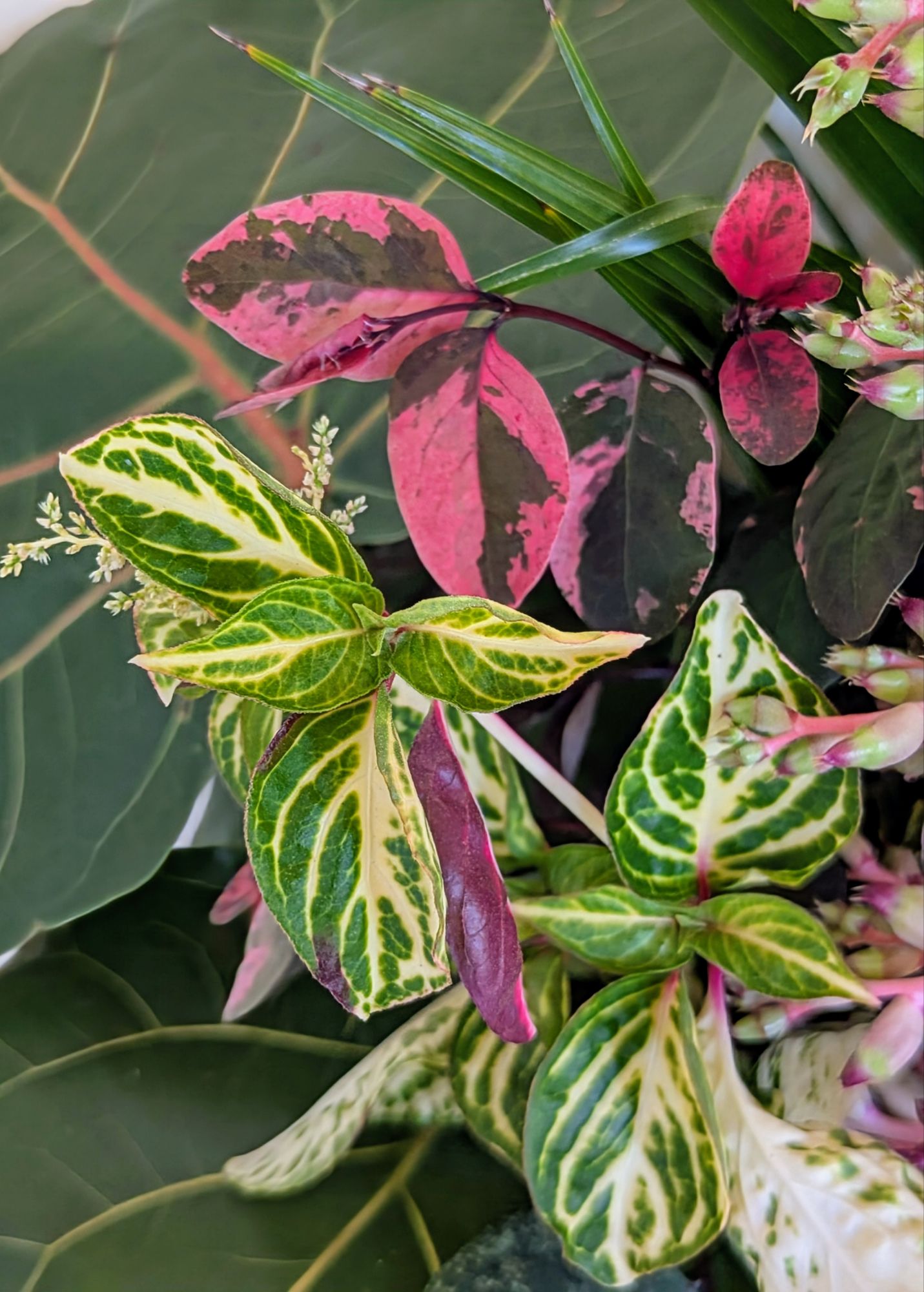
Foliage accompanying O’ Rourke include: in yellow variegation, Chicken Gizzard plant (Iresine herbstii). Pink varigated foliage is Hawaiian Snow Bush (Breynia disticha). Large, leaves are from Sea Grapes (Coccoloba uvifera). Palm foliage is Dwarf Pygmy Date Palm (Phoenix roebellini)
A closer view of the tropical foliage.
That’s all from sunny Florida. I hope this helps chase the winter away in colder places. To see more vases, follow this link to visit Cathy at RamblingintheGarden.
Fall is slowly finding its way to South Florida. October is a month of contrasts – one of the most active months for tropical weather, witnessed last week by the havoc wreaked by Hurricane Milton, it also ushers in welcome cooler temperatures. Sometime around October 15 usually brings the first cold front of the season and it was right on time. Temperatures in the 70s (F) have been experienced for the first time in months. Ahh.
Hurricane Milton passed about 100 miles north of my garden. The havoc wreaked here was by a series of tornadoes spawned by the outer bands of the storm the day before landfall. My area was peppered with these storms packing winds in the 150 mph range. A great deal of destruction ensued and lives and many properties were lost. The hurricane was a snooze compared to the tornadoes. We are unscathed and grateful.
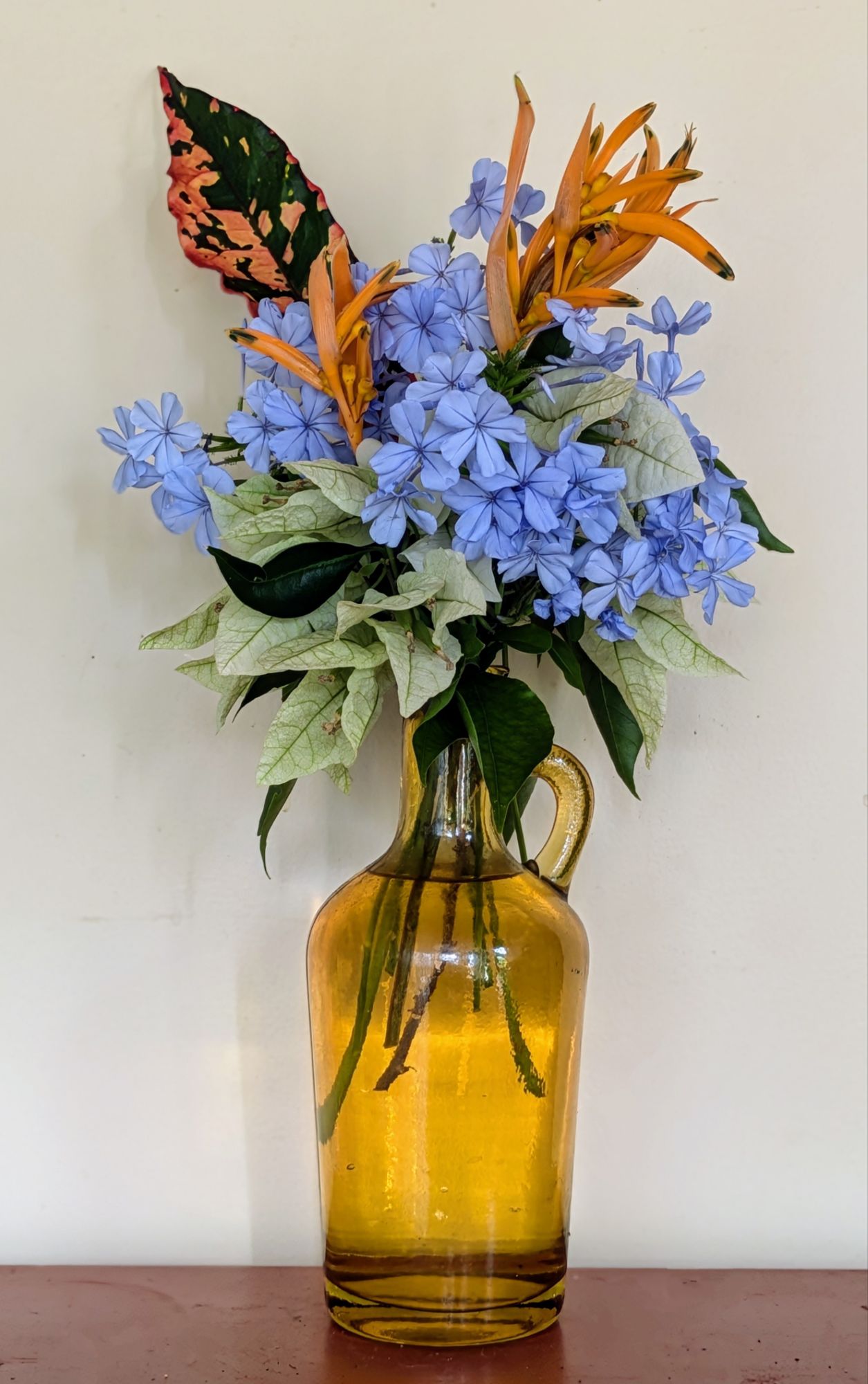
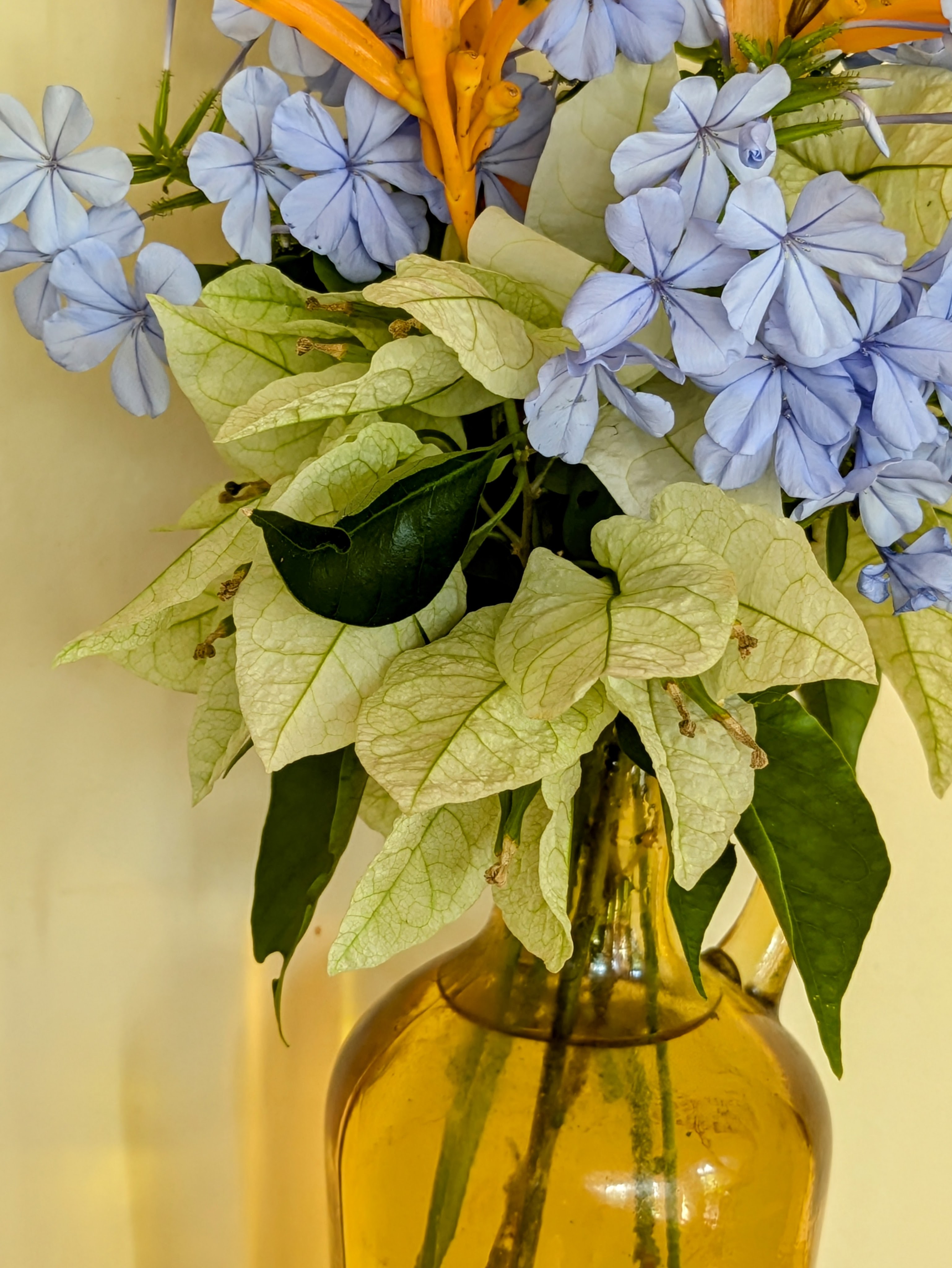
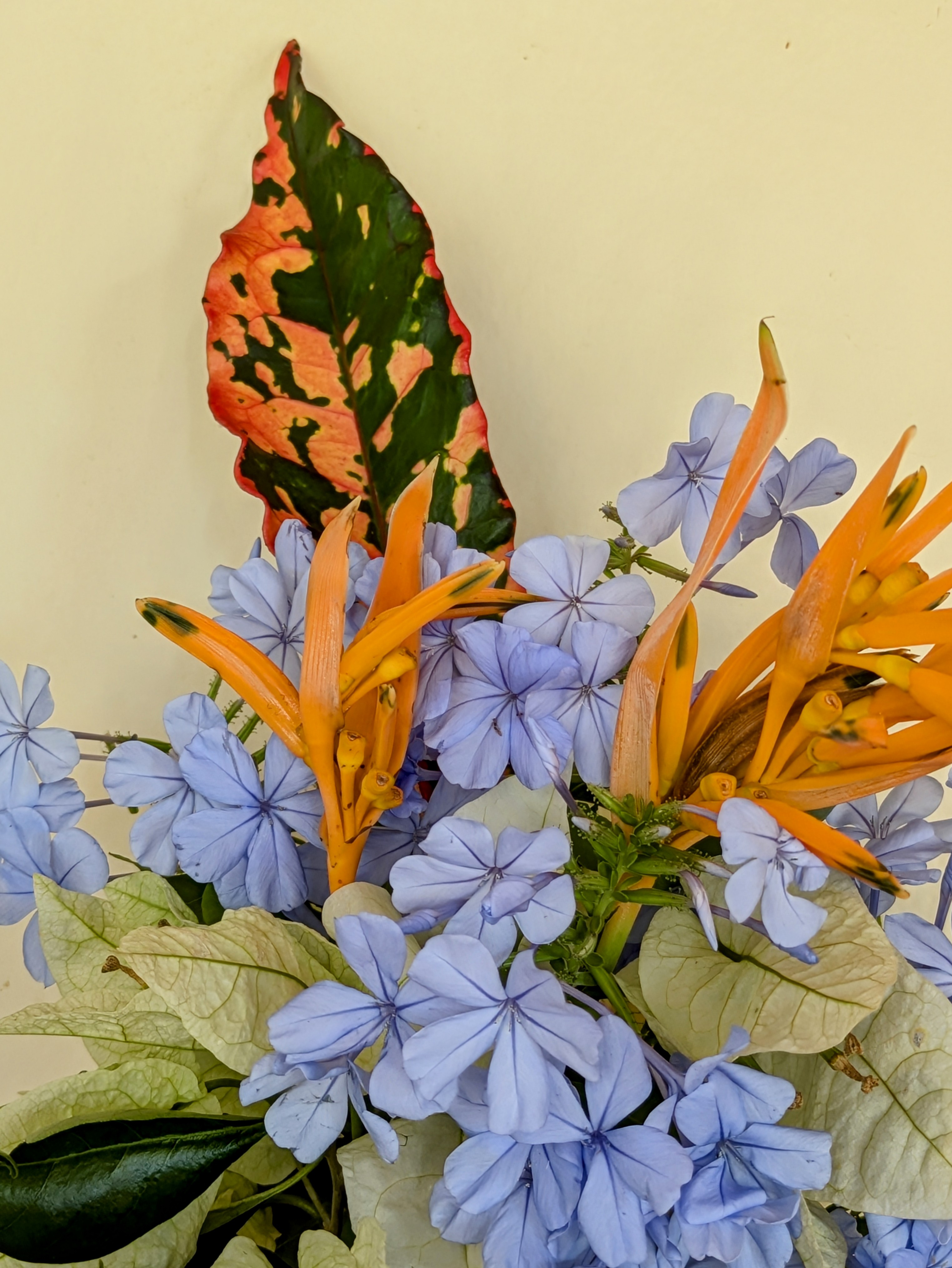
I plucked some cooler colors, fall tones and pseudo fall leaf color for my vase this Monday:
The off white flowers are ‘Miss Alice’ Bougainvillea’, she is leaning a bit towards green having fallen off her trellis in the storm. Blue flowers are Blue Plumbago (Plumbago auriculata) the tropical rains seem to have inspired a new flush of flowers for October. The gold glass container is an olive oil cruet.
Faux fall color is provided by peachy Choconiana Heliconia (H. psittacorum) and the leaf of a Piecrust Croton (Codieum varigatum).
I guess I can pretend I am raking up fall leaves instead of hurricane debris since its October!
Visit our hostess, Cathy, at RamblingintheGarden and follow the links in the comments section to see more vases.
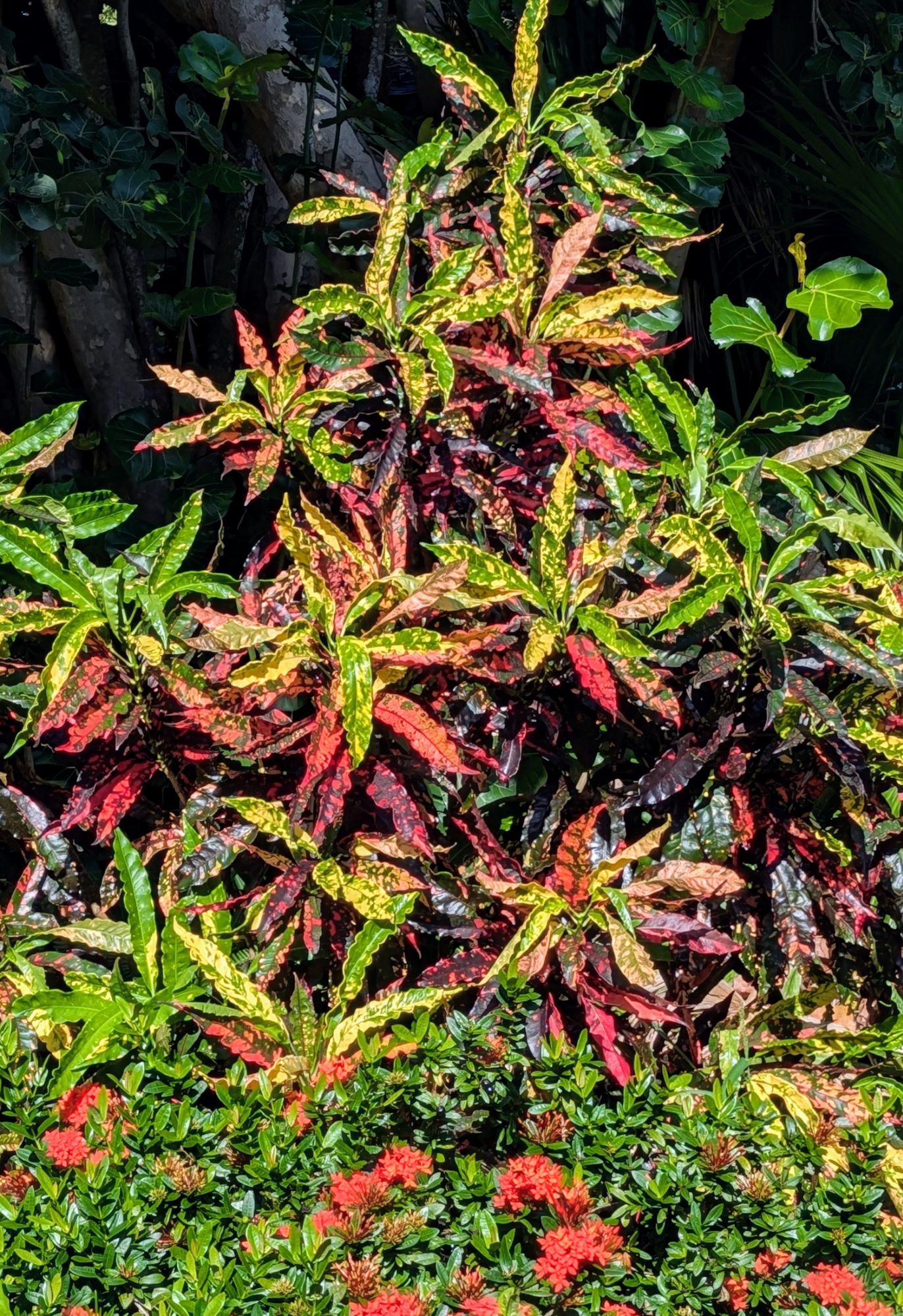
The title sounds like a Monty Python skit! It’s not. I walked into the garden this morning and realized I had become accustomed to the wild, colorful shrubs common in South Florida. I decided to share a few. To see more SOS garden posts follow this link to Jim’s blog.
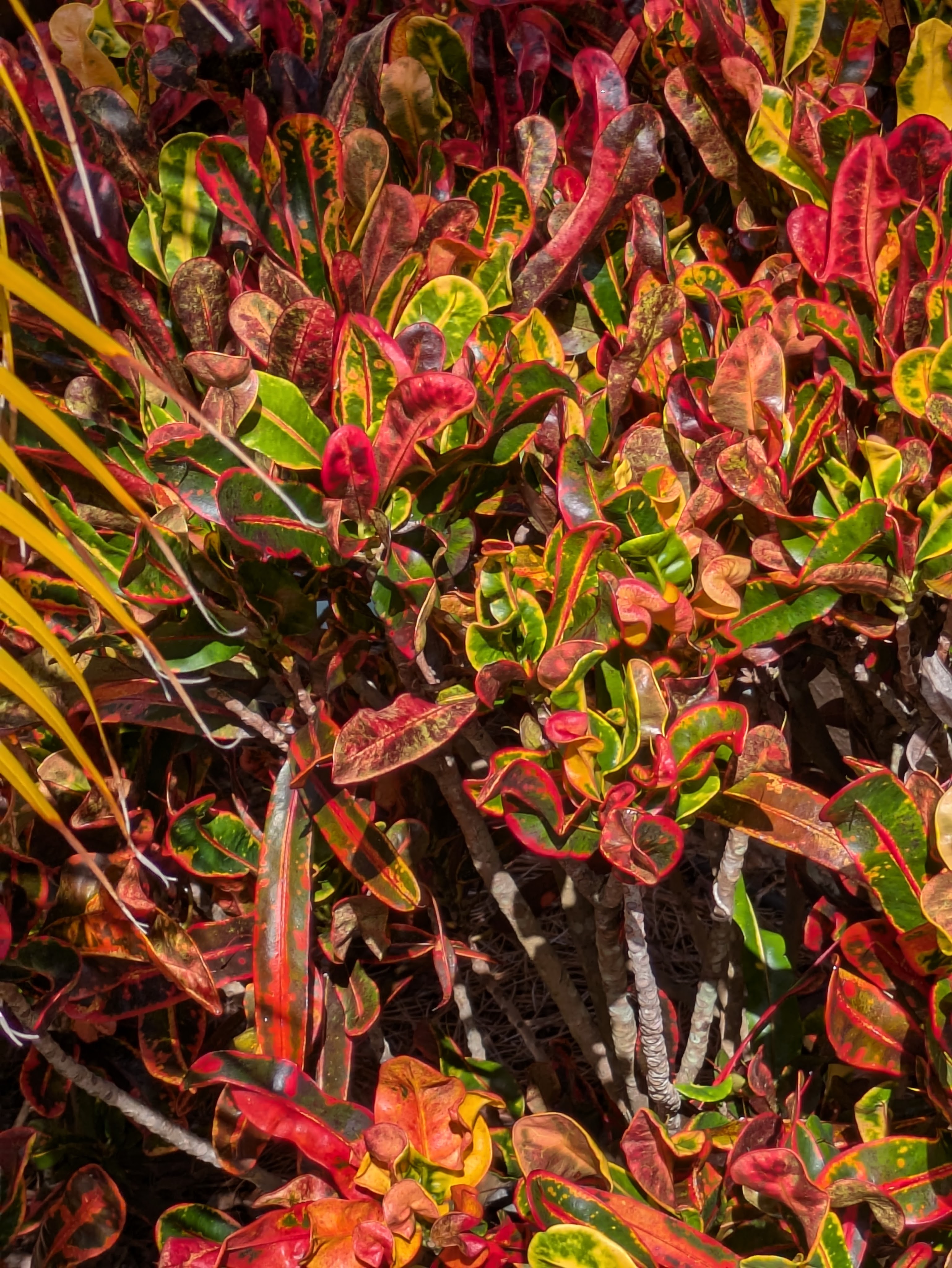
The larger, very colorful shrub is ‘Piecrust’ Croton (Codiaeum variegatum). The edges of the leaves look like a crimped pie crust. The flowering shrub in the foreground is Dwarf Red Ixora, butterflies love this plant and it blooms frequently to the point I almost get tired of it. Almost.
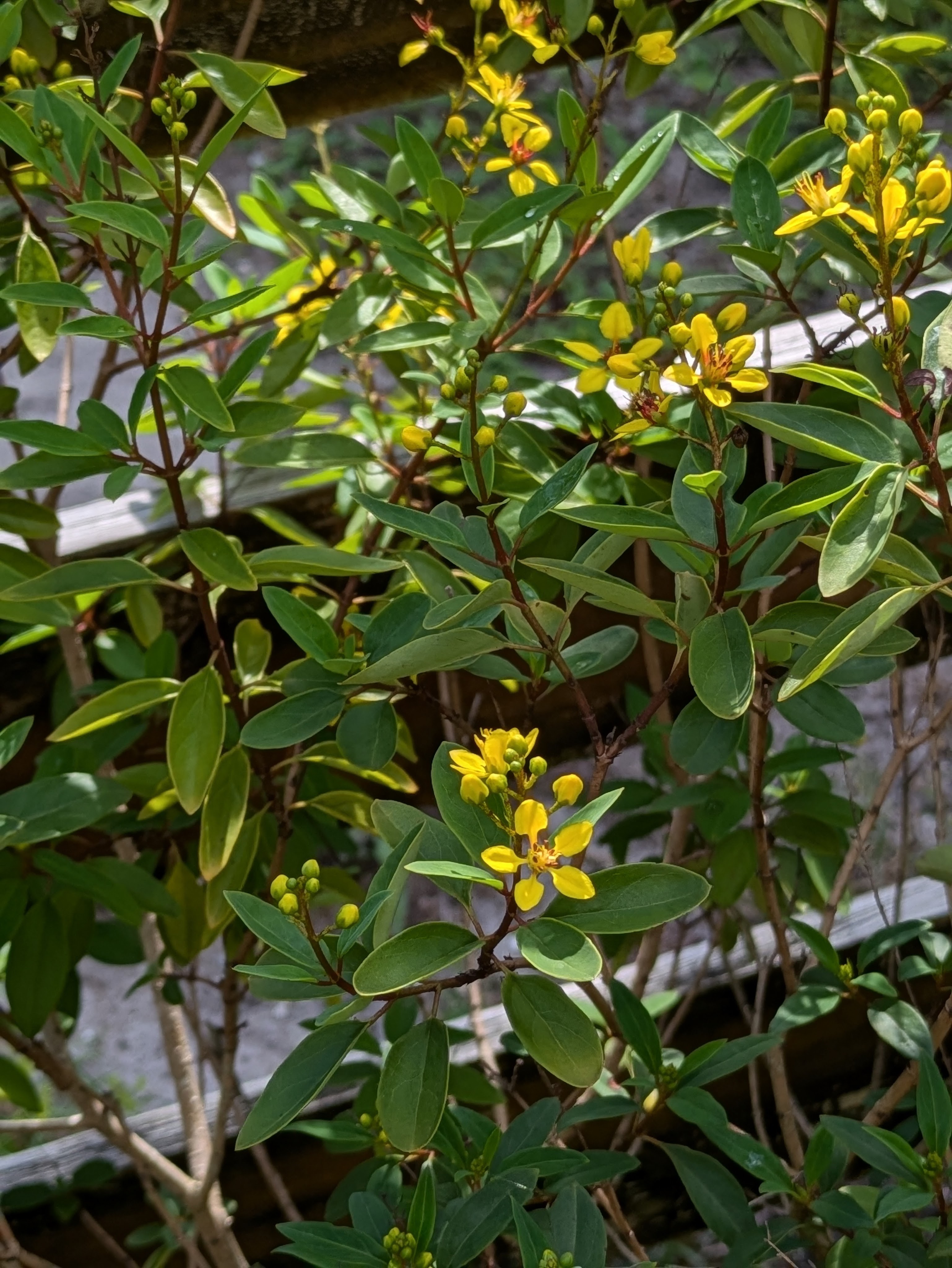
A stalwart shrub in the garden, Thyrallis (Galphimia glauca). I have wondered what Thyrallis means, it seems such a strange thing to call a plant. The only reference I could find said it is Greek for wick. Further confusing me. It is a bulletproof shrub in my garden, living in an unirrigated area and living off of mostly rainwater. It blooms late summer to fall.
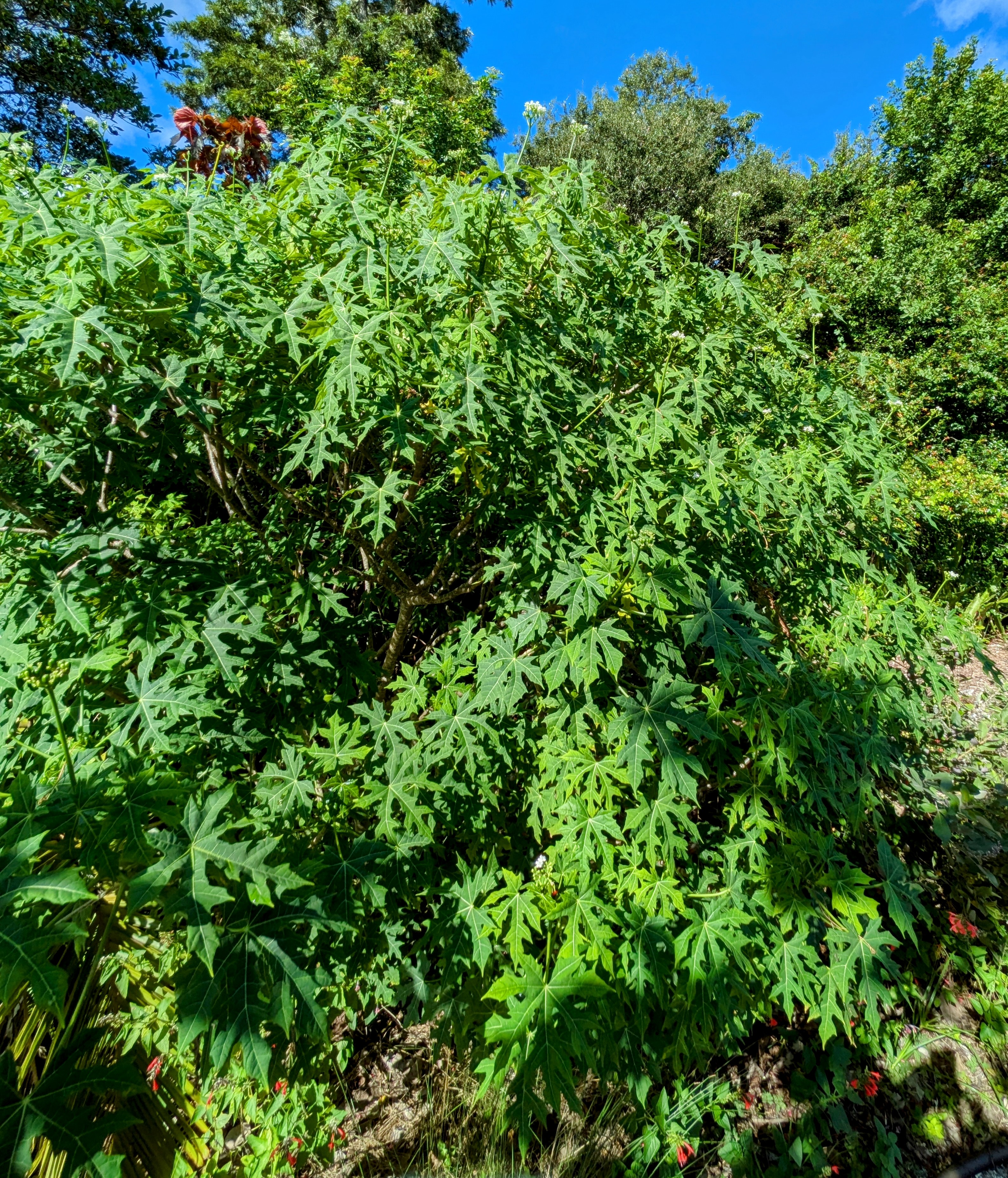
This is a Spinach Tree, also called Chaya (Cnidoscolus aconitifolius) A tree full of spinach! Only in South Florida. Actually, it is from Mexico and a tropical vegetable. It is poisonous unless you know how to cook it. I am told it tastes like spinach and reacts badly (toxic badly) with copper bottomed pans (like I use) so I have never tried it. I planted it for butterflies and they love the flowers.
Another Croton. This one is called ‘Mammey’ and is reliably dwarf at about three feet. Making it great for foundation planting. I have seen this planted in front of a house painted orange. It was a bit much.
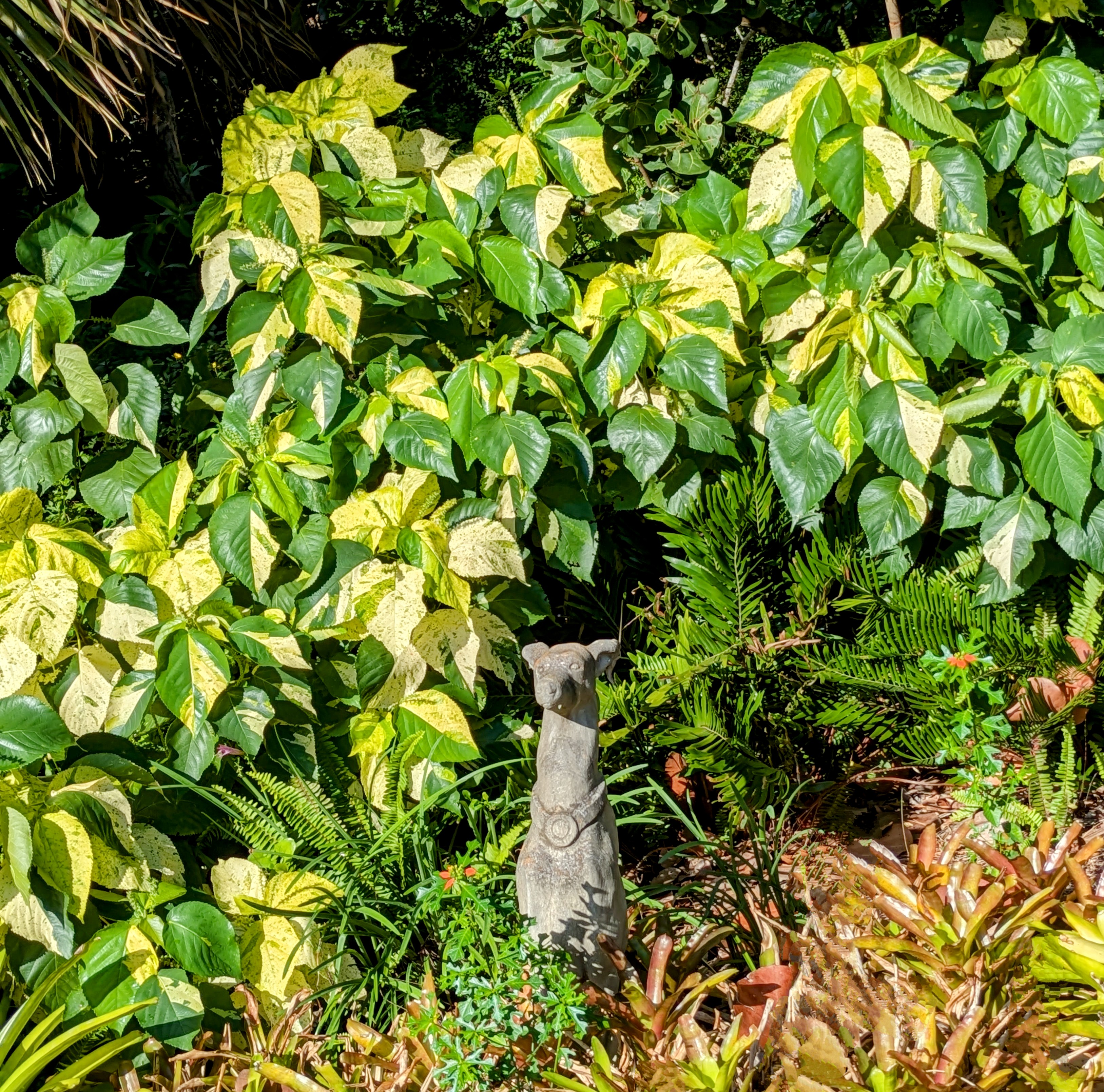
The very tasteful ‘Java White’ Copperleaf (Acalphya wilkesiana) backdrop for my concrete greyhound. This shrub grows like mad. I would estimate I cut about eight feet a year off. How tall it would get without pruning is anyone’s guess.
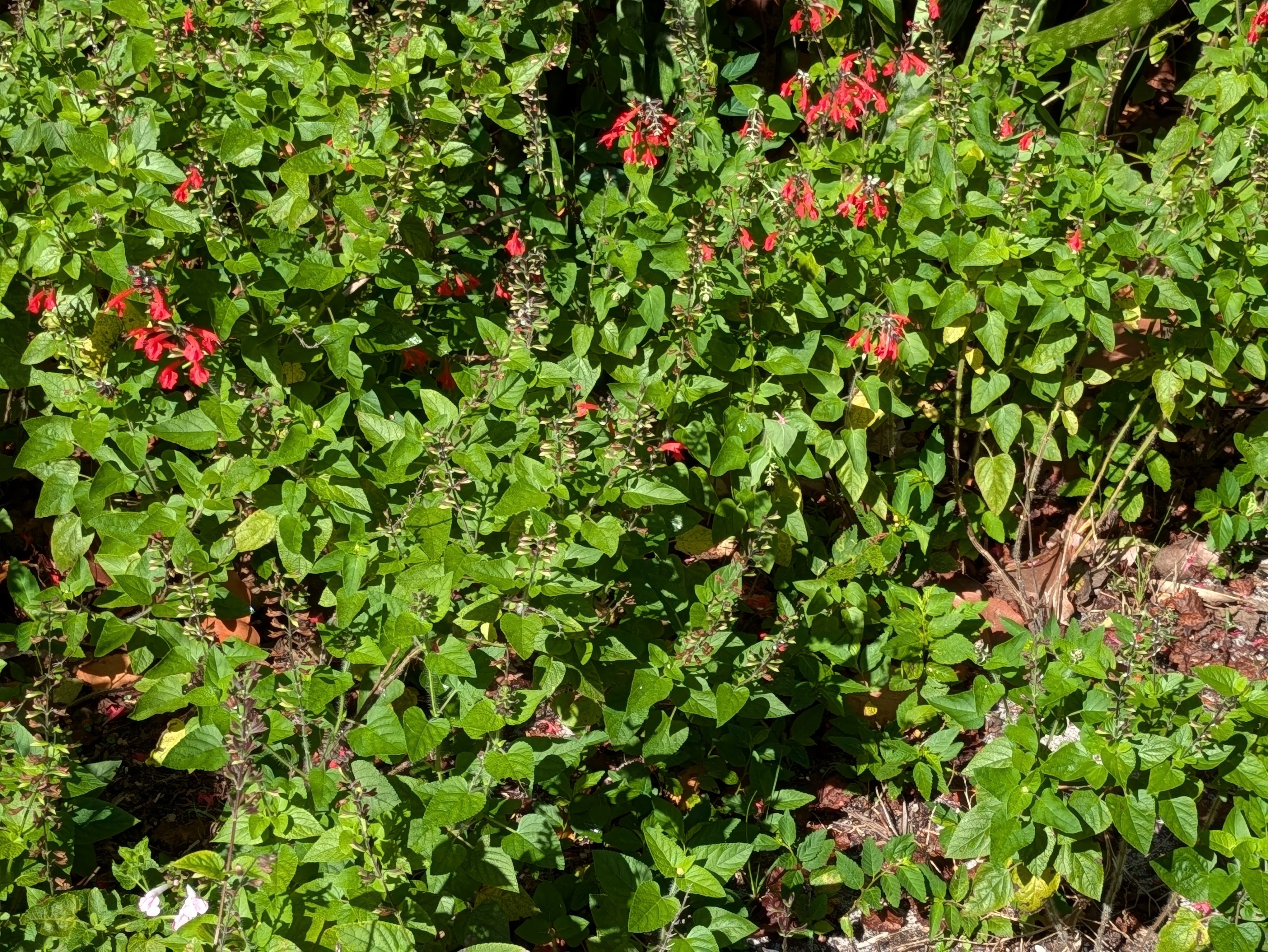
Last, but not least, the ‘no gardening’ zone next to my compost heap. Ironically, probably the prettiest grouping of reseeded Tropical Red Salvia (Salvia coccinea) in the garden.
That’s all from my garden this Saturday. Happy Gardening !!!
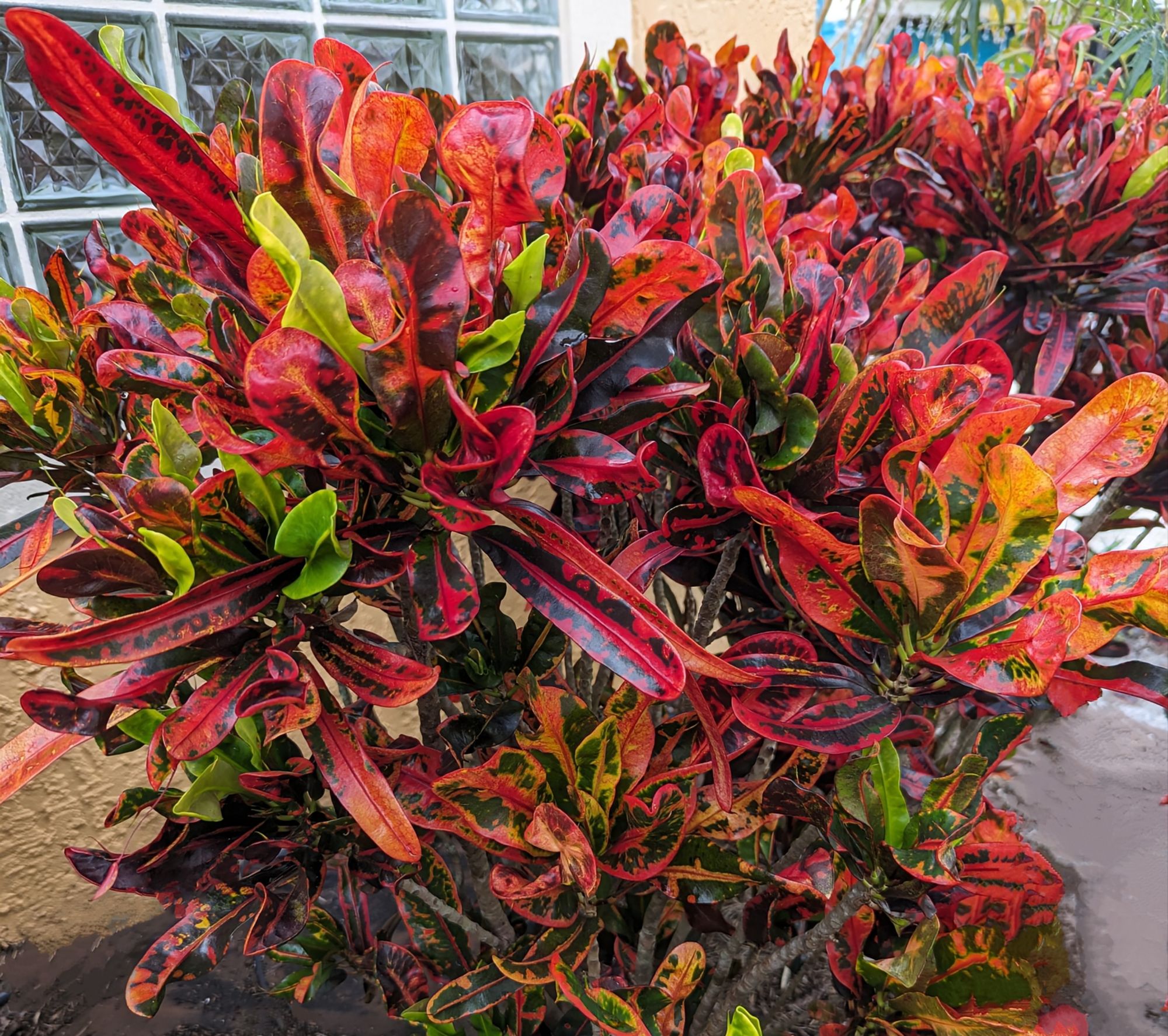
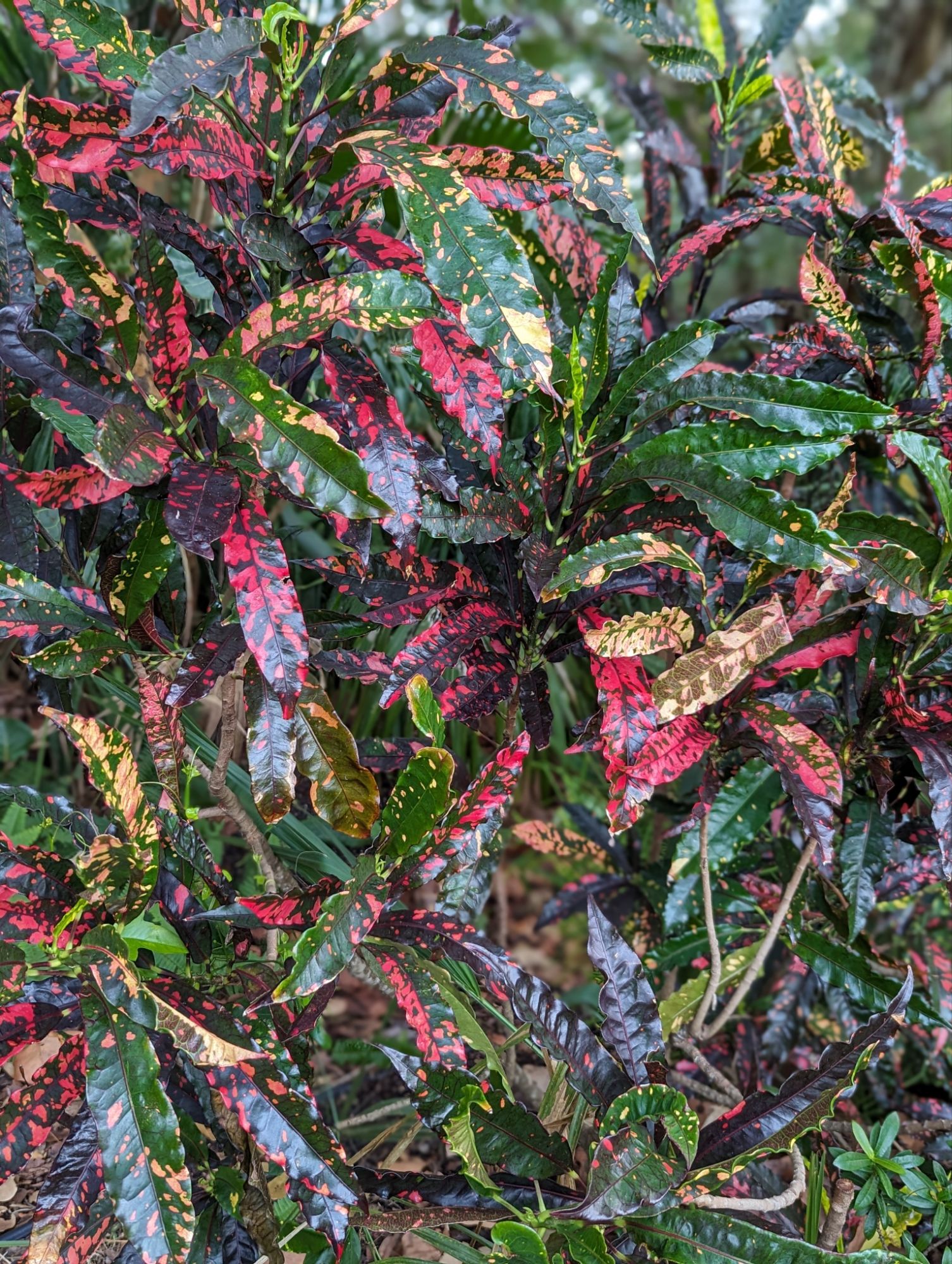
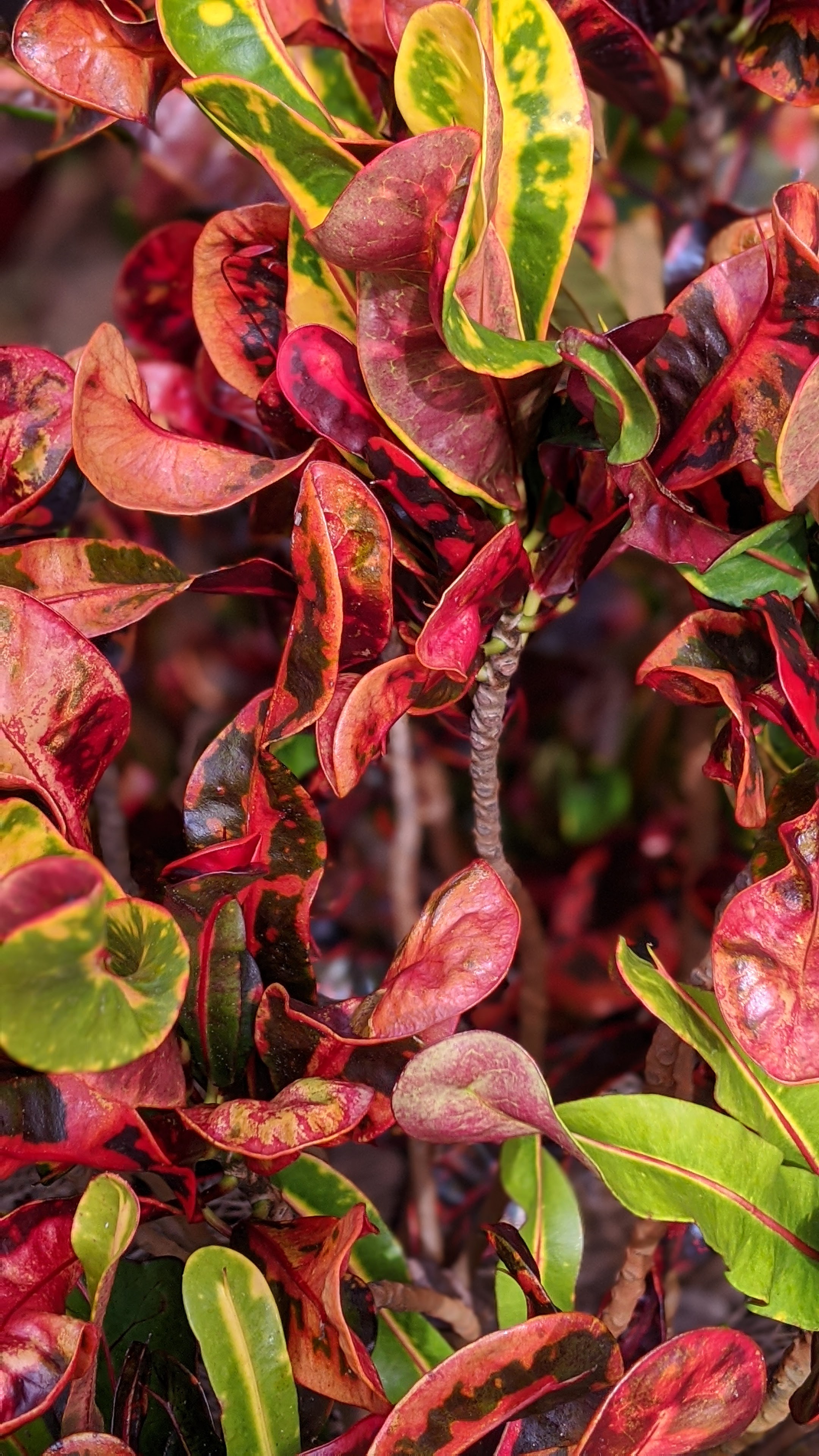
Seeking an addition to your garden that provides constant color? Look no further than the Croton (Codiaem variegatum). Crotons are accent shrubs, featuring foliage wildly varigated in splashes of red, green, yellow and orange. They can be so colorful it becomes overwhelming to plant more than a few of them together. These shrubs are available in an array of sizes and colors to suit your taste and your space. Here are a few of my favorites.
Above is a Mammey Croton. These are great for smaller spaces, staying 3-4 feet tall.
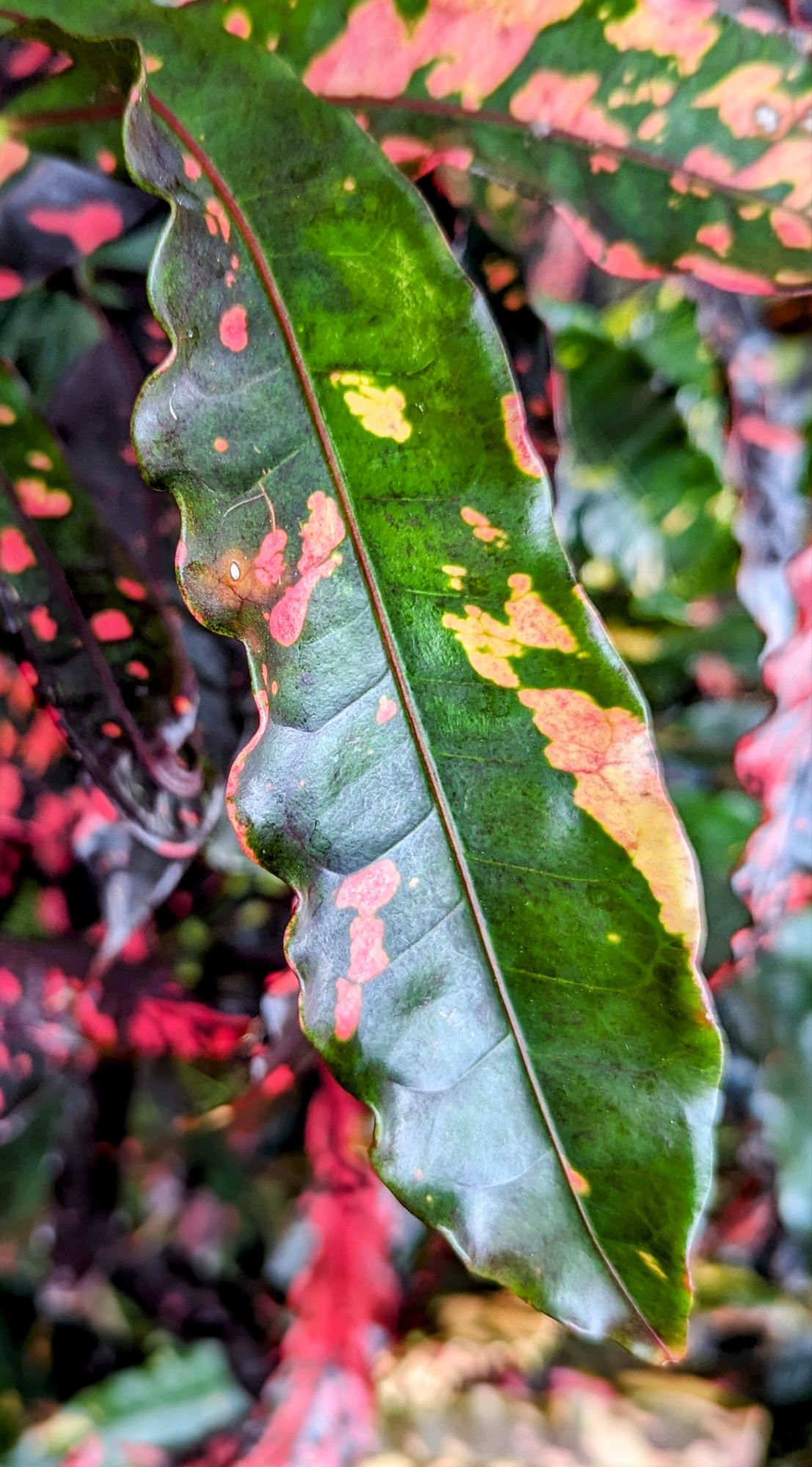
Meet the Pie Crust Croton, planted in honor of my husband, the pie baker. The one in my garden is 5-6 feet tall. The name for this shrub was inspired by the edge of the leaves – like pie crust!
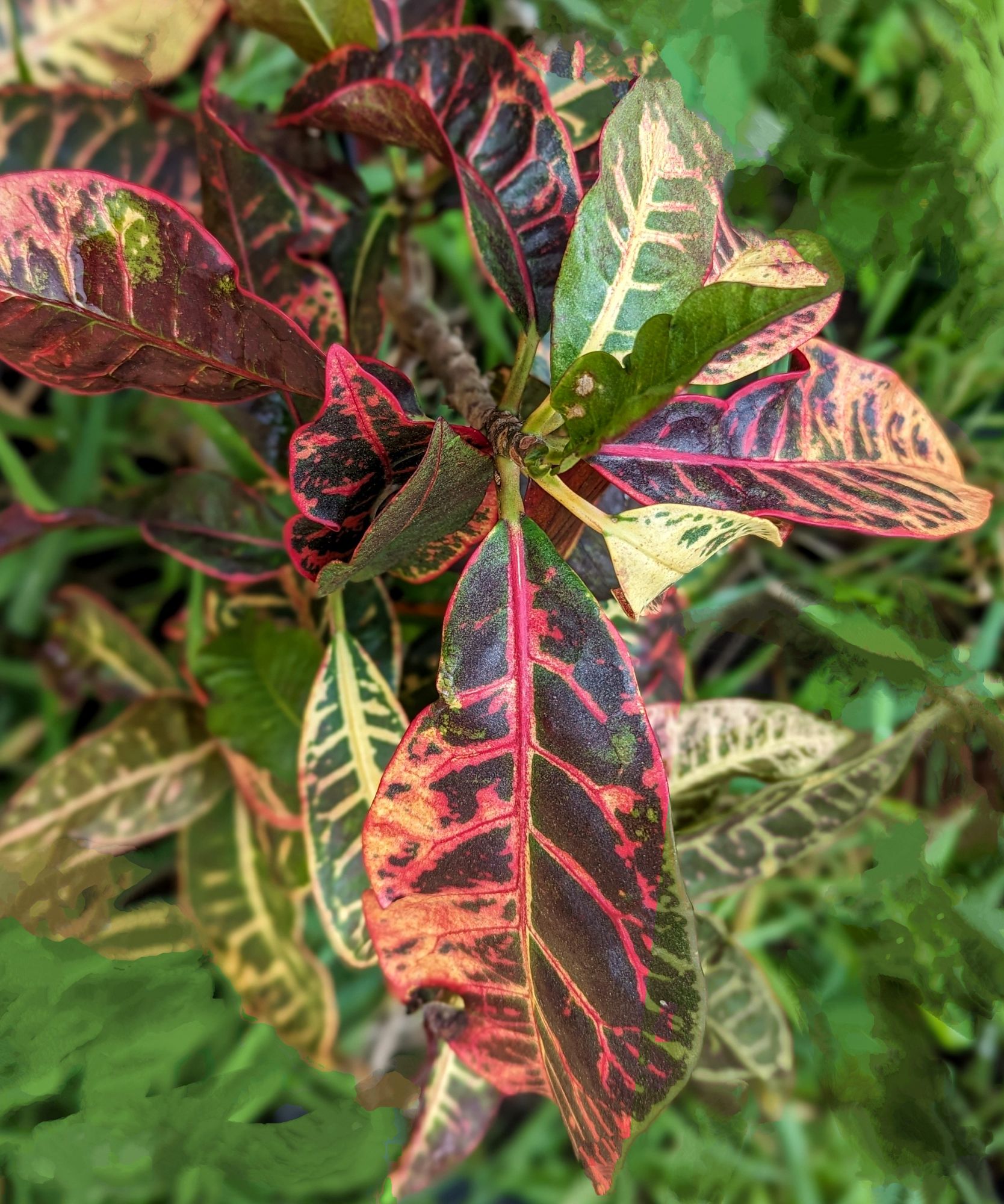
Below is a favorite Croton of Treasure Coast gardeners. Petra Croton. Petras get big, about 10 feet tall and 6 feet wide. They need some room.
Placing and Growing Crotons
Crotons are originally from the South Pacific and not considered cold hardy. This means they will suffer cold damage from freezing temperatures. Mine dropped their foliage at 38 degrees last year, but came back. North of Ft. Pierce and inland these shrubs need to be protected if cold weather threatens. Plants can be grown in a container, covered or placed out of the wind. These shrubs should be placed in a part sun to shade location, dappled light is ideal. The foliage on some varieties can burn if placed in full sun (Mammy Croton and some others will tolerate full sun). Also worthy of noting, the Croton is somewhat toxic if eaten, so if anyone (pet or human) has plant eating tendencies place the Croton out of reach.
Plant combinations to consider with Crotons
Given their cool, colorful vibe I like to use these with other tropical looking plants – Boston Ferns, Split Leaf Philodendrons, Bromeliads and Ground Orchids are good companions and like the same type of growing conditions.
Crotons are easy to grow if placed properly, watered and fertilized regularly. The only problem I have encountered growing these is scale insects and sometimes aphids find them really tasty. The solution to this is insecticidal soap and diligence.
Add a few Crotons to your garden for a dollop of tropical fun. I am currently searching for a Sloppy Painter Croton to add to my collection.
Well, it is time for another garden tour. We are having the rainiest El Nino winter I have ever experienced in Florida. I was in the garden for an hour or so this morning and now it is pouring down rain yet again. We are molding slowly. To join the worldwide tour visit Jim at gardenruminations.co.uk and follow the links posted in the comments section to other gardens.
The green bee! This is a green orchid bee, they arrived in Florida about 20 years ago from Central America. I don’t think these are especially bad in terms of non native insects and enjoy seeing them around the garden. This one is enjoying a sip of Mystic Spires Salvia nectar. This was a lucky shot. These bees are difficult to photograph.
This is a nice surprise. I think it is Senecio vitalis. I did not think this succulent would grow out in the garden due to too much moisture from rain. They have been in a pot on a covered porch for a few years and have gotten too big. I rooted a few cuttings over the summer and planted them in the garden a few months ago. They are thriving and getting a lot of moisture, I suppose the sugar sand is so well drained they like it. Time will tell.
A white oxalis in flower. A friend’s grandmother filched this from a garden in Ireland in the 1950s. It must grow everywhere.
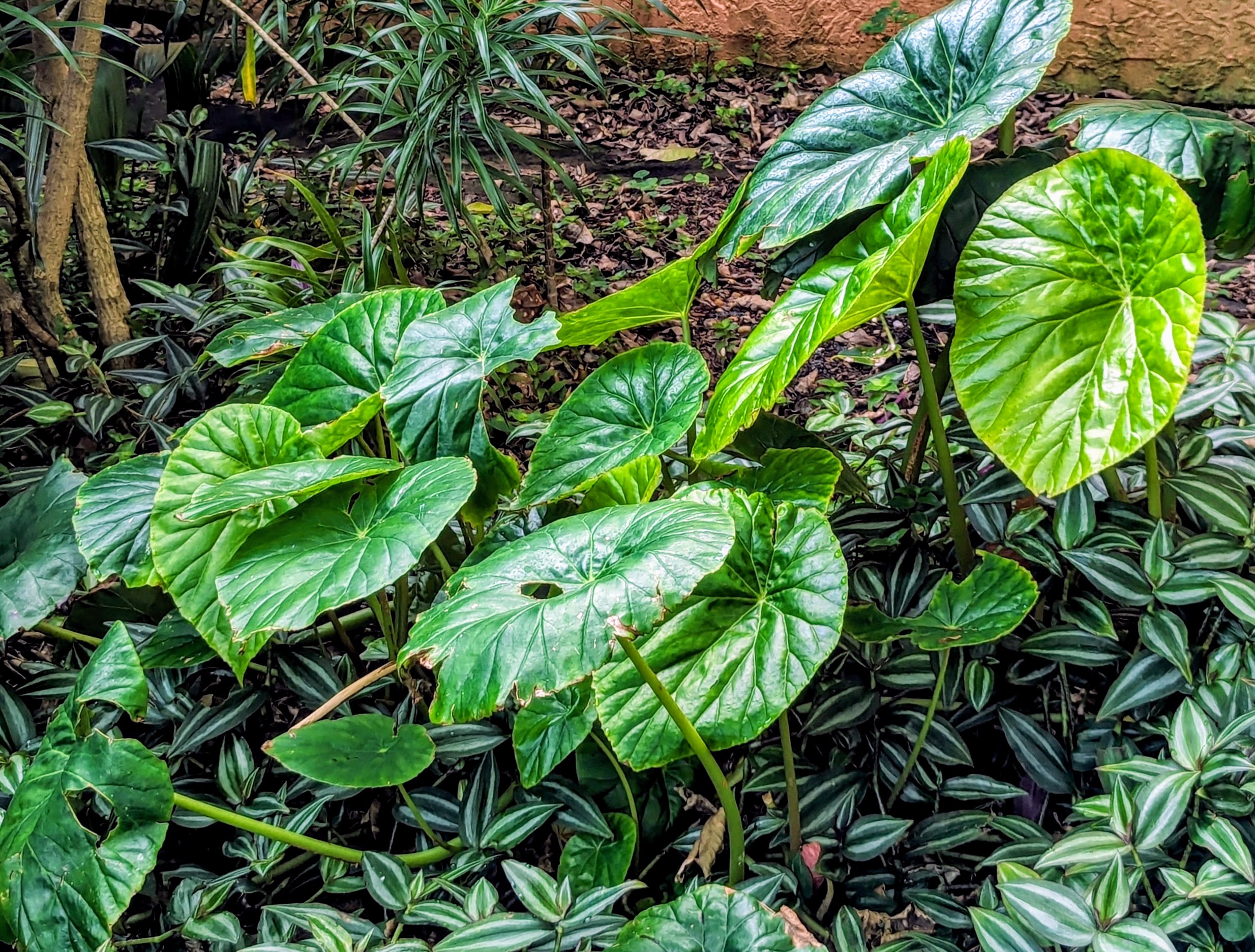
Lotusleaf Begonias (Begonia nelumbiifolia) are enjoying the abundant moisture. I am not sure what is eating the leaves. I have never seen a slug here but we do have snails.
Ti Plant (Cordyline fruticosa) It has taken a few years for this plant to develop the hot pink coloration. It was solid green for a long time. I thought I had a cheesy cultivar. Maybe not. Patience rewards the gardener.
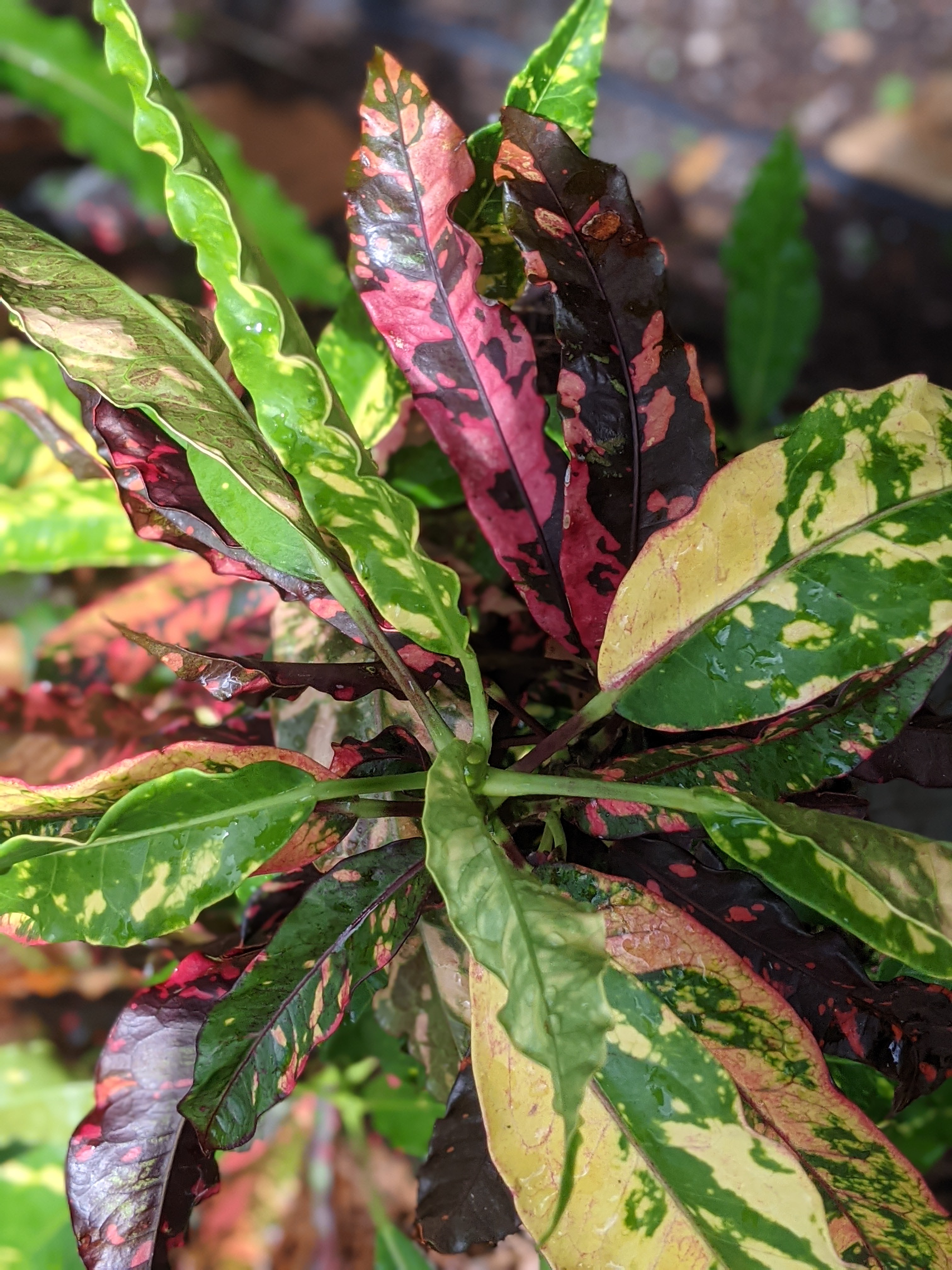
Foliage detail on a Pie Crust Croton (Codieum variegatum) leaf. One of my favorites and a real splash of color in the garden.
That’s all from my garden this Saturday. Wishing everyone Happy Gardening or Happy Seed Catalog Reading. It is a good afternoon for that here.
Meet “Bossa Nova” Bromeliad. Bossa nova means new music in Portuguese and is a style of music that originated in Brazil in the late 1950s, a mixture of jazz and samba. “The Girl from Ipanema” is probably the most famous bossa nova tune, and a prodigious ear worm producer.
True Brazilians, these plants were brought to America from Brazil in 1988. This one does make me dance, just a little. It will grow in a full sun southern exposure in an area with great amounts of reflected light and no irrigation, a bit of a miracle in my world. I had not realized until last year these would grow in full sun, they had been sulking for a few years in full shade and were moved into the light during the proper season – fast approaching, November through March is bromeliad relocation time!
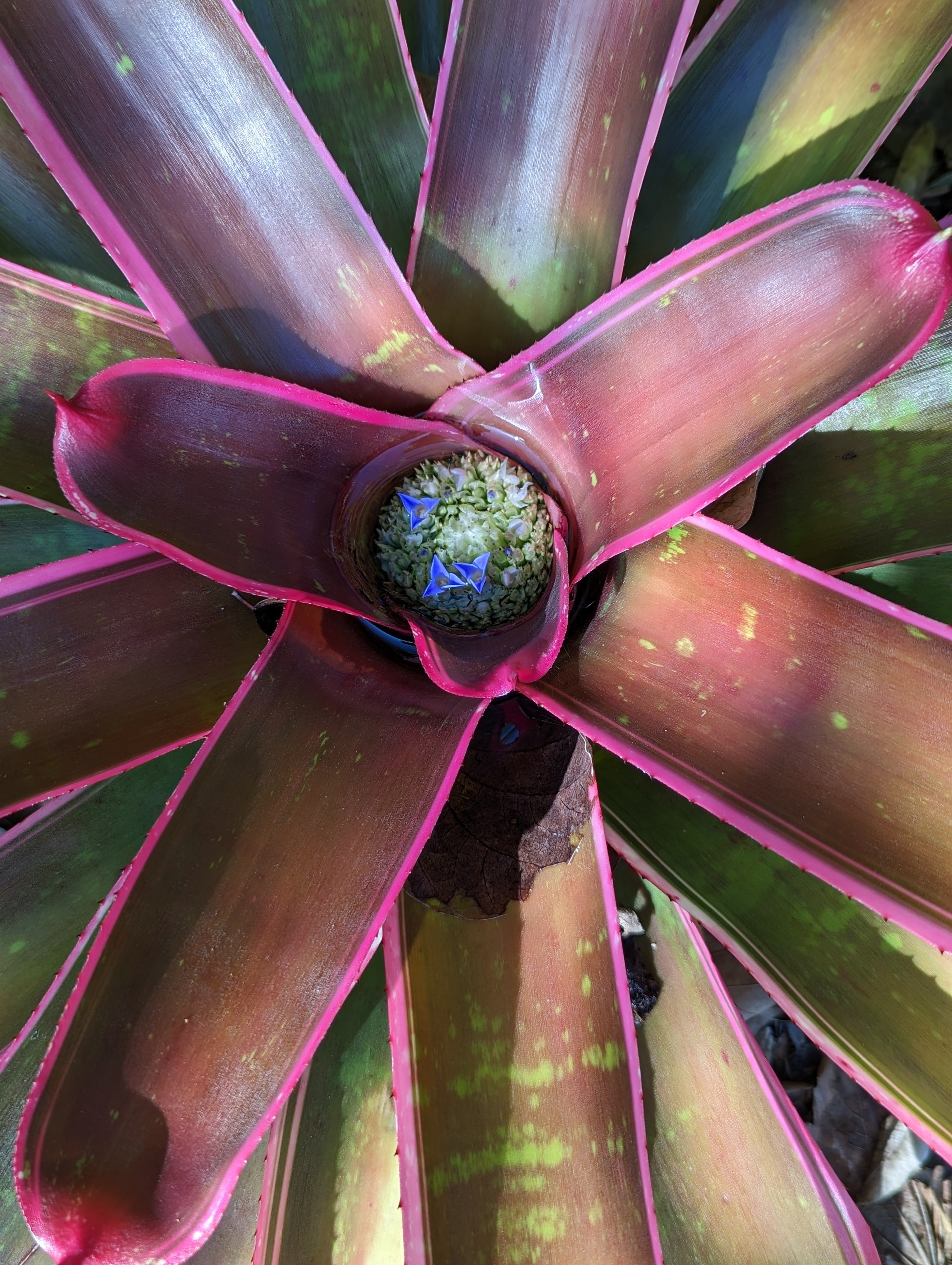
Botanically speaking these are Neoregelia “Bossa Nova”. A stoloniferous groundcover, they reach 12-18″ height and 24″ spread. Neoregelia bromeliads typically flower inside the cup and are planted for their foliage as the flowers are not particularly showy. It is reported to turn red around the cup before flowering. I have not noted this in my garden. Maybe this winter I will see some red coloration.
It’s time for the weekly visit with other SOS gardeners. My South Florida garden received plentiful rain this week, the plants enjoyed it and are starting to show their summer colors. Bromeliads in the garden change colors with the seasons. Some in the winter and others in summer. The color change I notice most is from green to red (and back). Markings on the foliage that change vary from spots to streaks to bands of color.
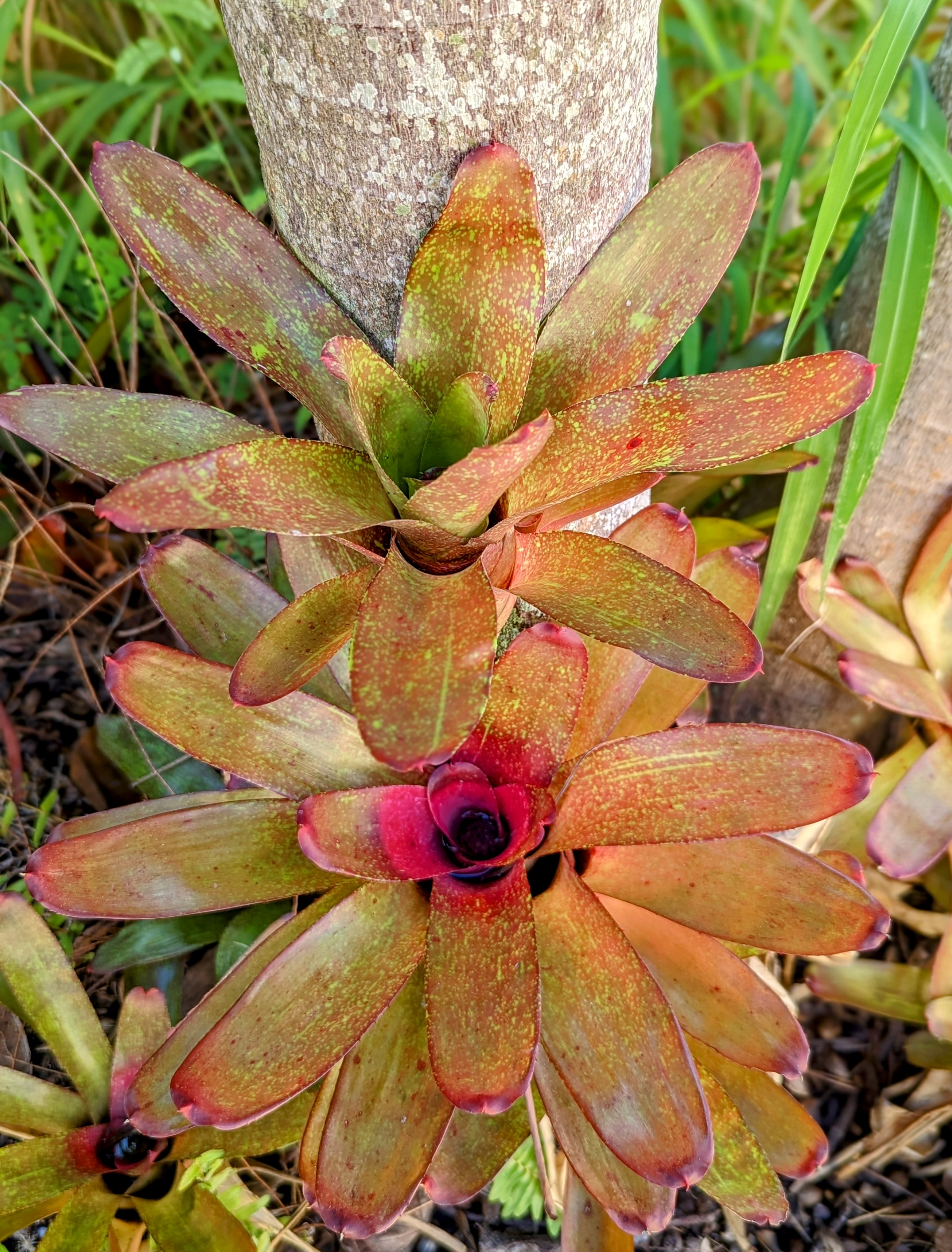
‘Jill’ Neoregelia climbing a palm trunk. The foliage tips and cups on this one deepen in color in the summer.
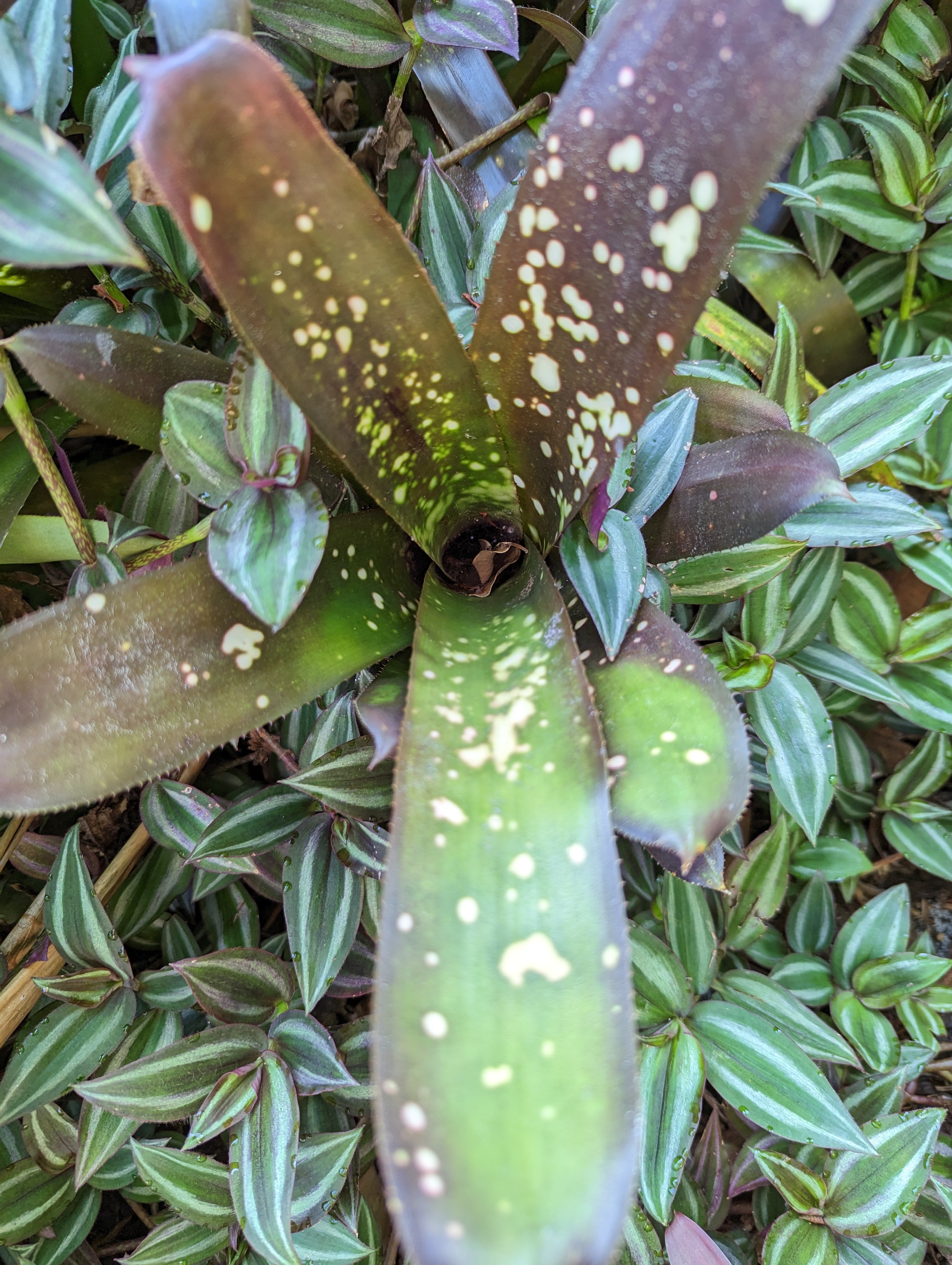
‘Hallelujah’ Billbergia. These tend to go a bit green in the summer. The purple color deepens in winter.
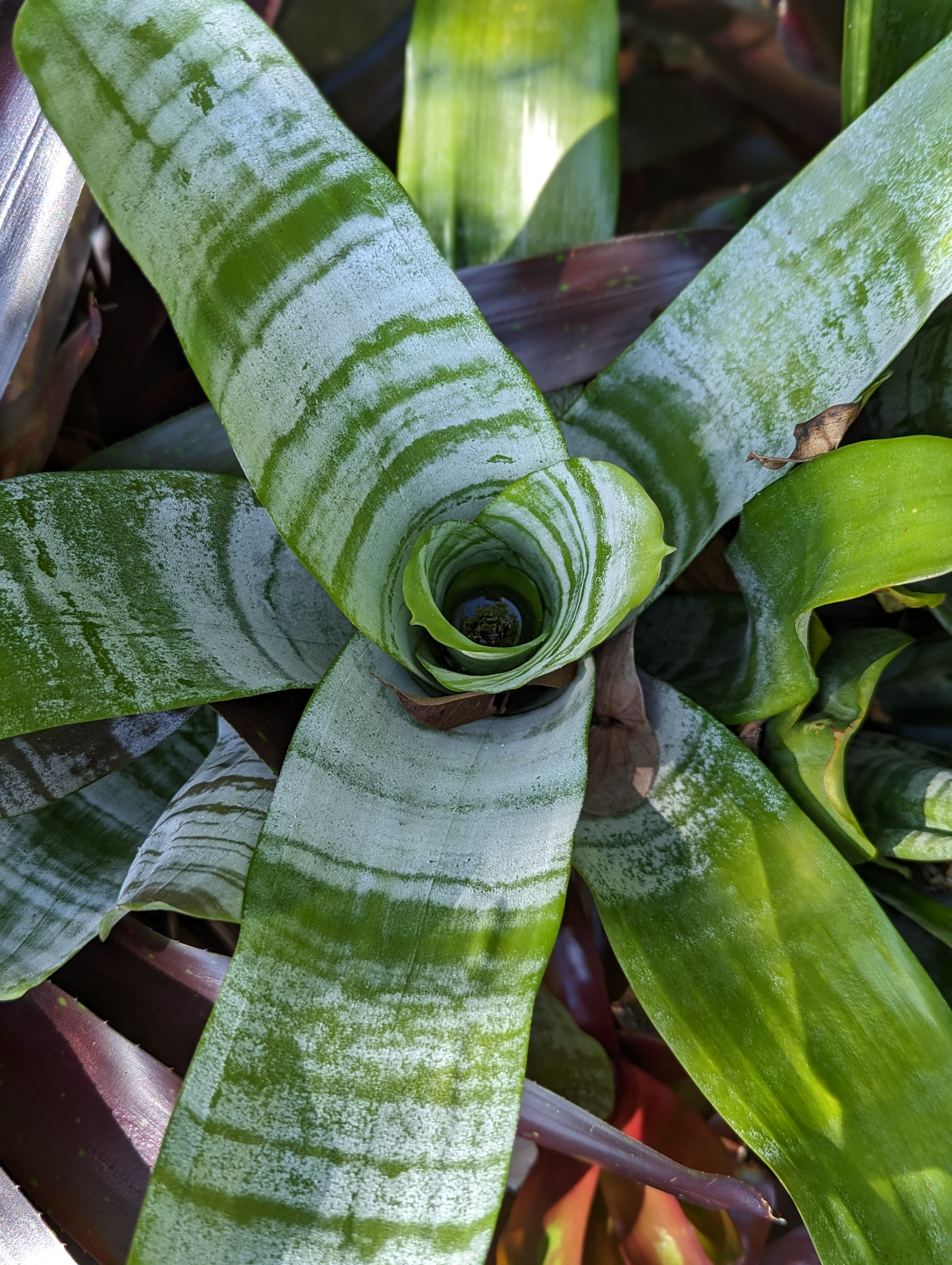
Aechmea ‘fasciata’. The bands of grey coloration sharpen with warm weather, these produce big pink flowers every other summer. Also known as the Silver Urn Bromeliad.
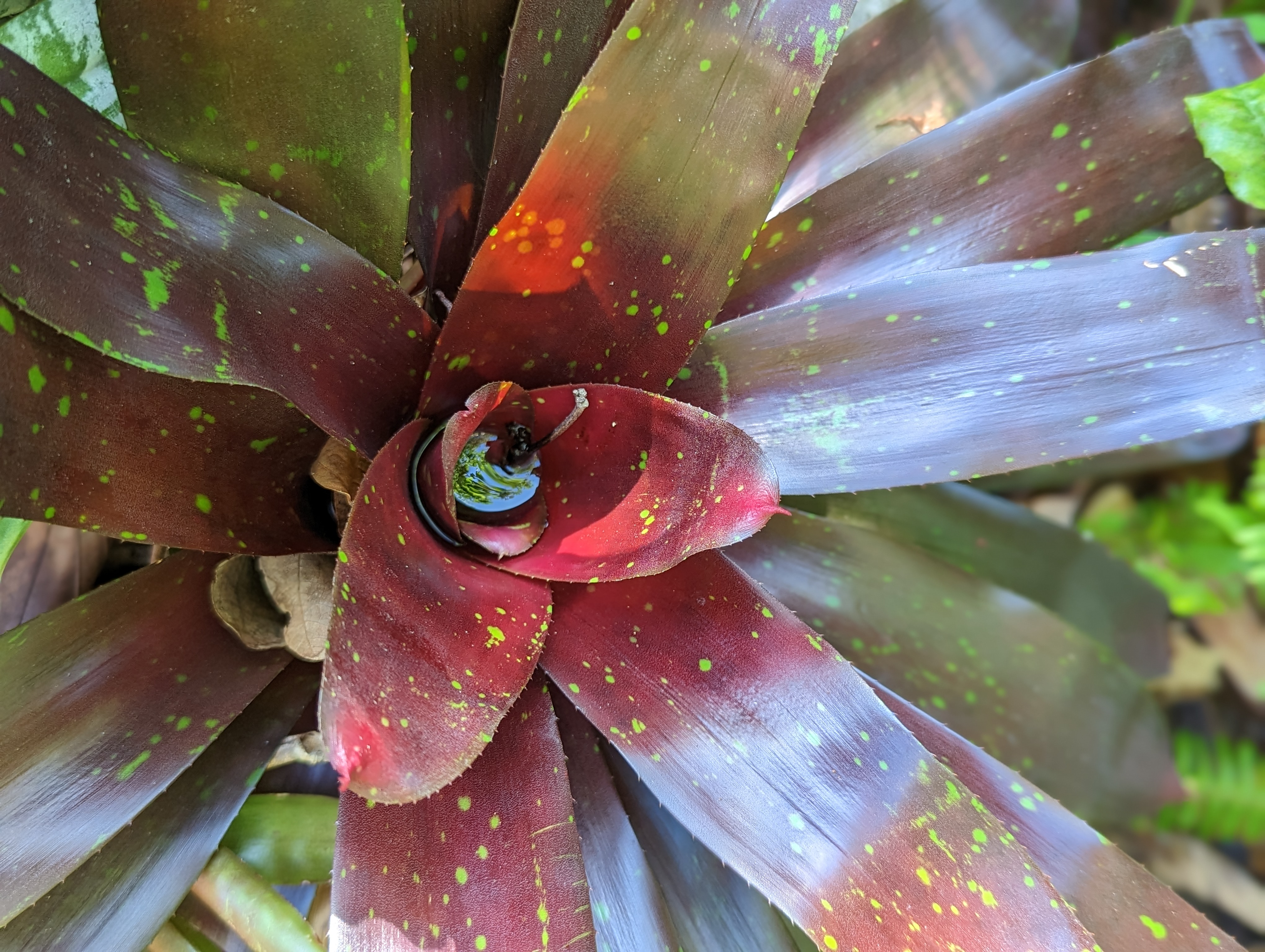
‘Luca’ Neoregelia, one of my favorites, is almost too dark but the chartreuse spots lighten things up.
An unknown Neoregelia in flower. This one has pink stripes in sunny areas and white in shady areas.
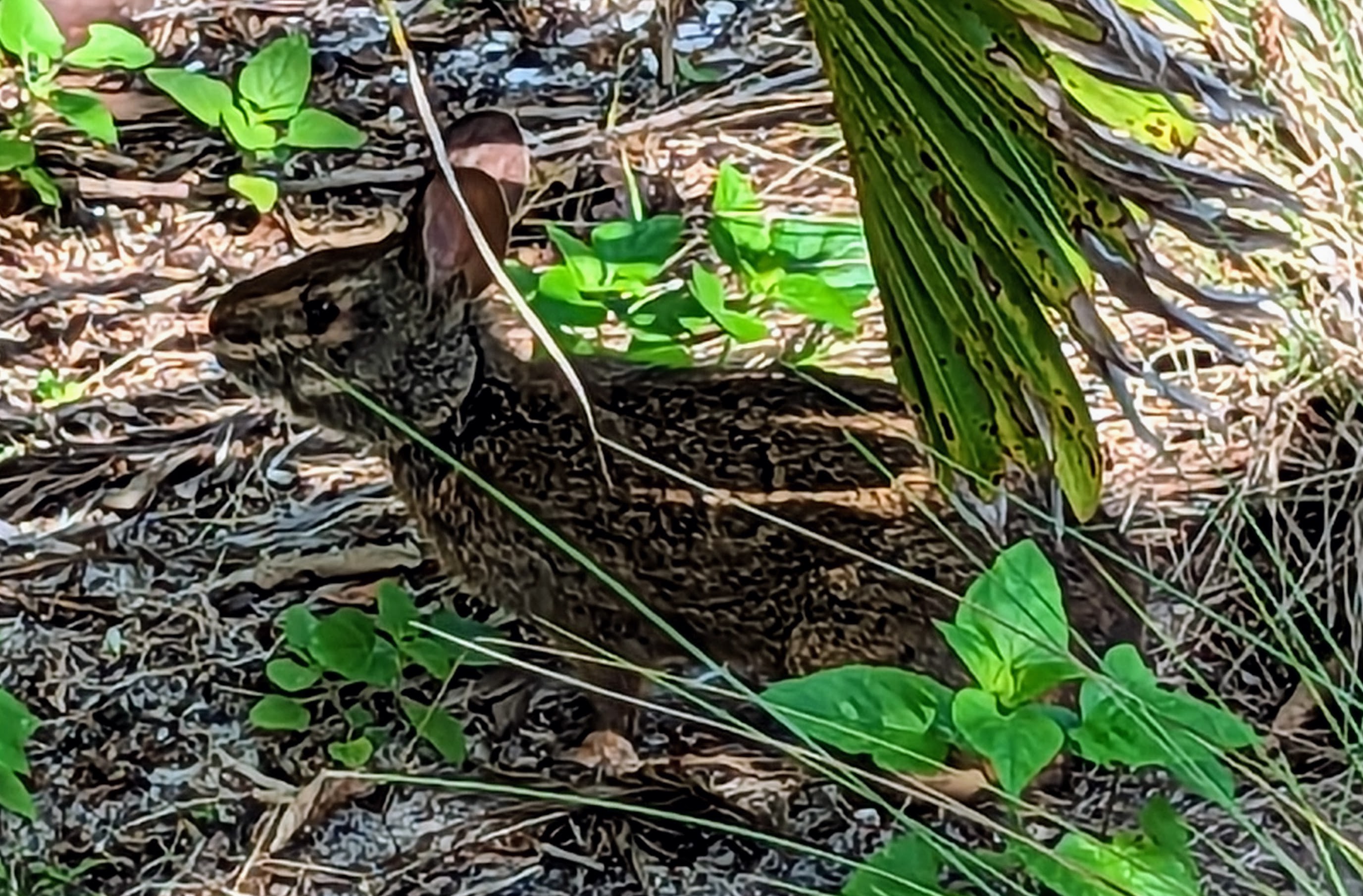
The bunny, we have had a banner year for bunnies. Fortunately, they like weeds and are eating something in the so called lawn while tormenting Fiona the Greyhound. This is a Marsh Rabbit. I am impressed with the camouflage, I could not see the rabbit as I was taking a picture of it.
That is my Six for this Memorial Day weekend Saturday. Thanks to Jim for hosting.
I like plants that are a bit off the beaten path. Something that make you wonder “what on earth is that?” It occurred to me as I was arranging this vase I had most likely never seen any of these plants prior to moving to Florida almost 10 years ago. I would have said “Whatizzit?” about this one.
The vase is a thrift store find I have enjoyed for years, simple enough to set off a group of mad tropical flowers and foliage. Here are some closer views of the flowers:
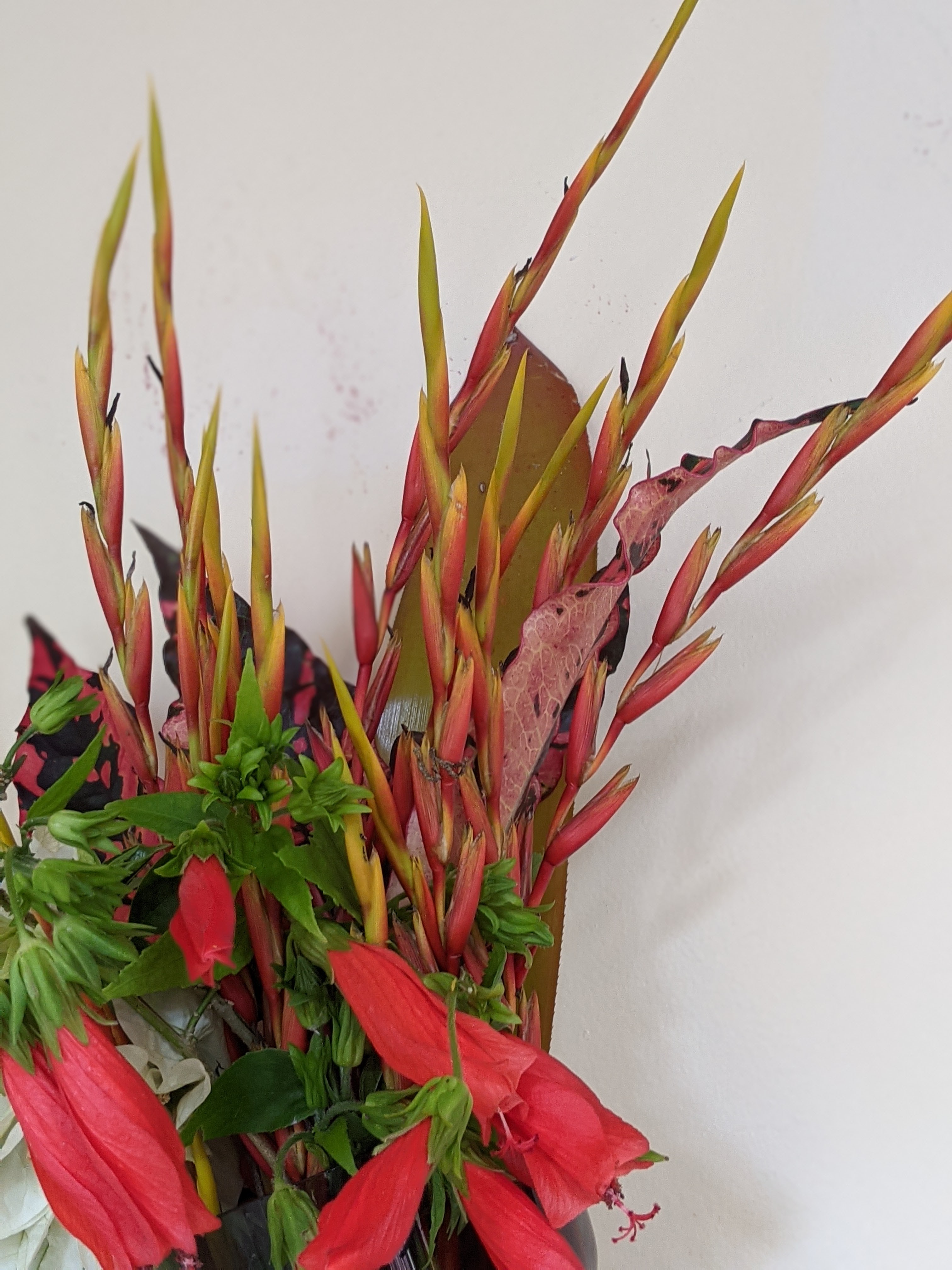
The white flowers are ‘Miss Alice’ Bougainvillea; red flowers are Nodding or Sleeping or Turks Cap Hibiscus (Malvaviscus arboreus) – so many names, I am not sure which one is right. Red and black foliage is from Piecrust Croton (Codiuem varigatum)
Here is the other side. The Lobsterclaws and the big gold leat are from, yes, the Lobsterclaw Bromeliad (Aechmea blanchetiana). These are a very common landscape Bromeliad around here. I cut some stems of the lower part of the flower. The flowers are a bit difficult to imagine and about four feet tall.
The heat and humidity have gone into hyperdrive here. Highs over 90 (F) / 32 (C) for the next few days. The dog days of summer are here and my dogs have the right idea, reclining in air conditioned comfort. Not a good time to be in the garden, though I am thankful for the shade trees.
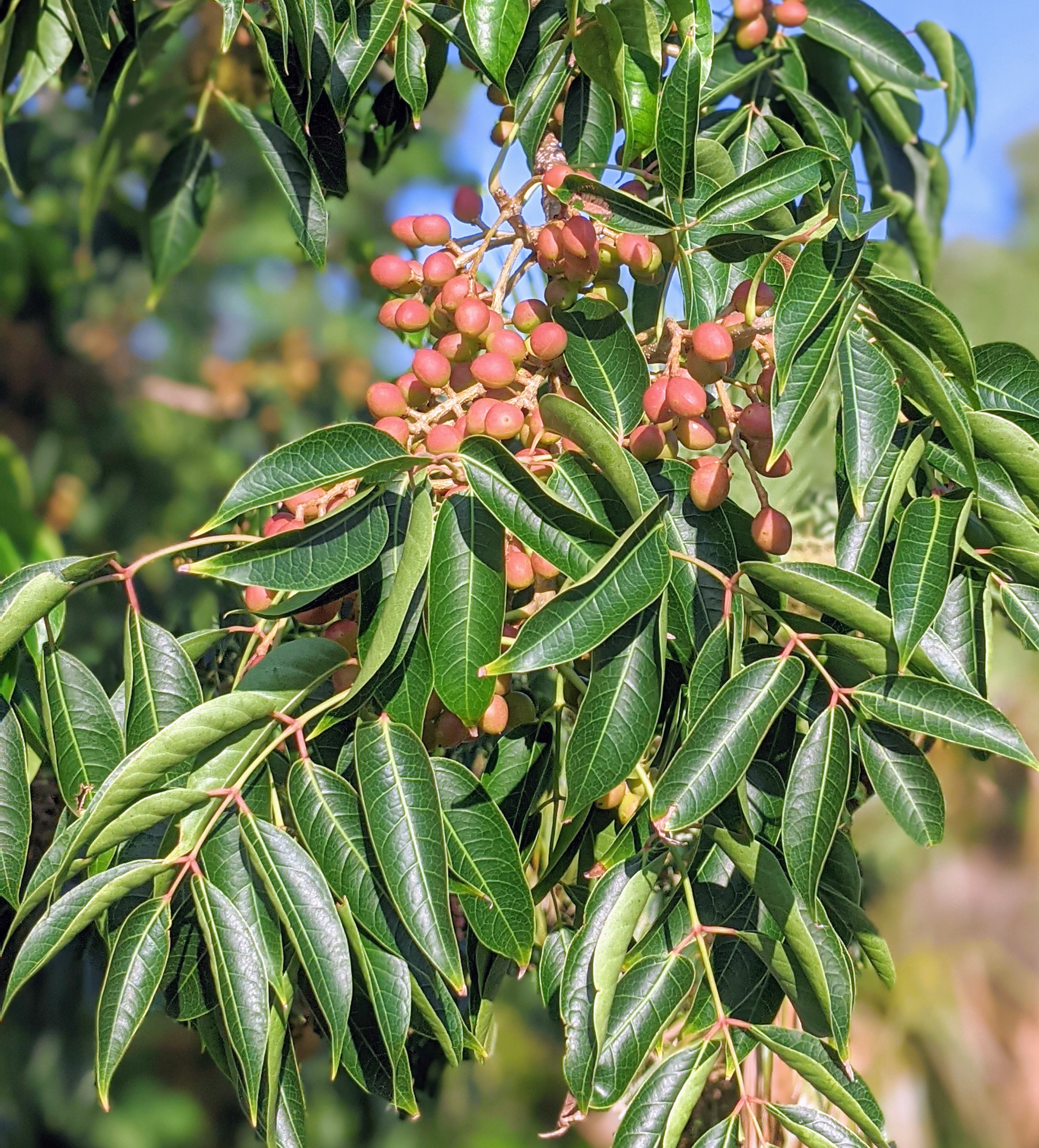
My first image today is a tree planted to shade my driveway about seven years ago, starting to really take over now. This is the fruit and foliage of Gumbo Limbo (Bursea simaruba)
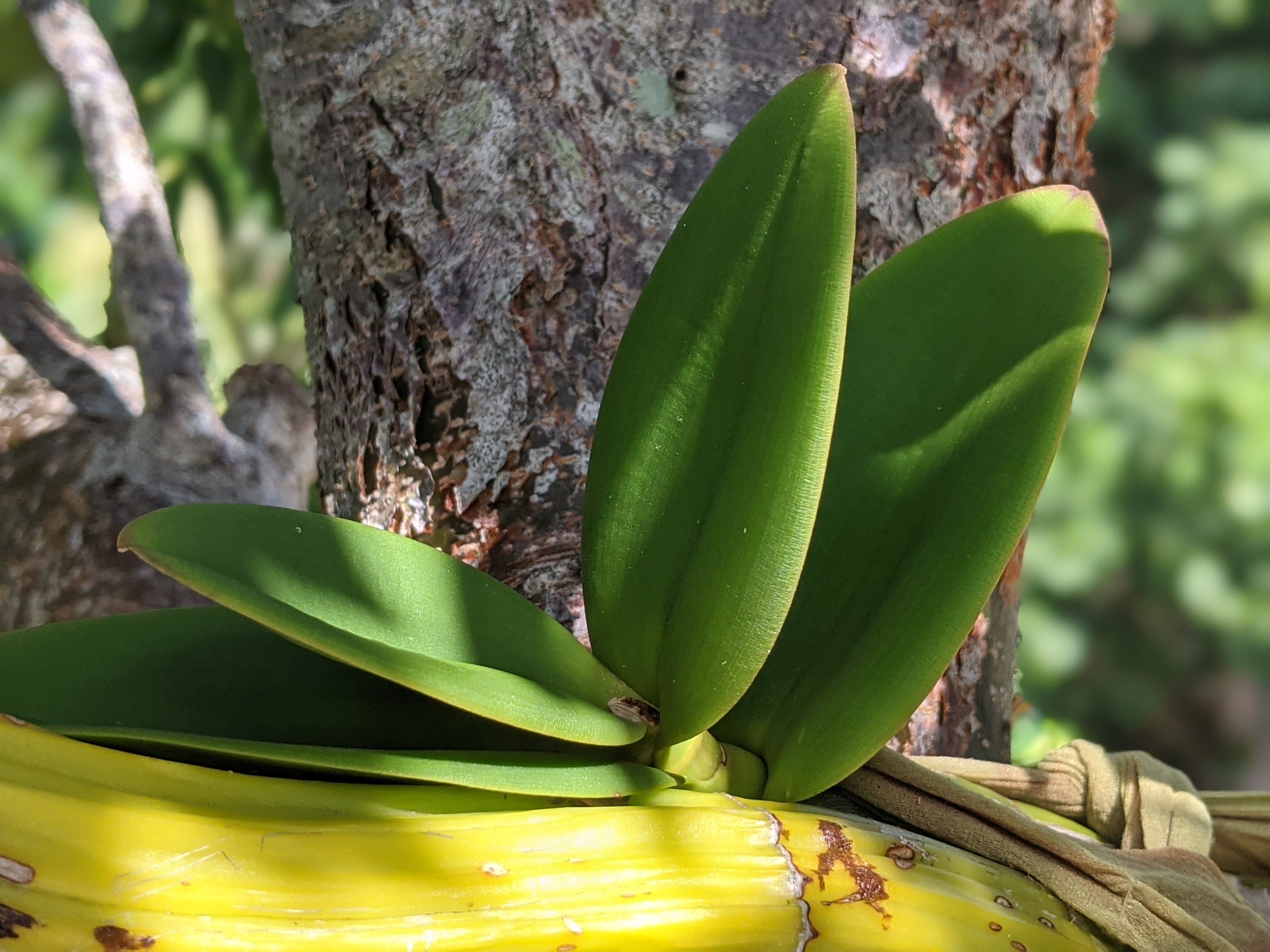
The Gumbo Limbo has a hard cane Dendrobium orchid growing on its trunk. My neighbor brought this to me and it is just starting to root into the trunk. It should bloom in the winter with 4 or 5 foot long sprays of flowers. I am really looking forward to seeing this! The tree is sometimes called the Tourist Tree – because the bark looks like peeling, sunburned skin. I tied in onto the tree with pantyhose, you can see these on the right side of the image.
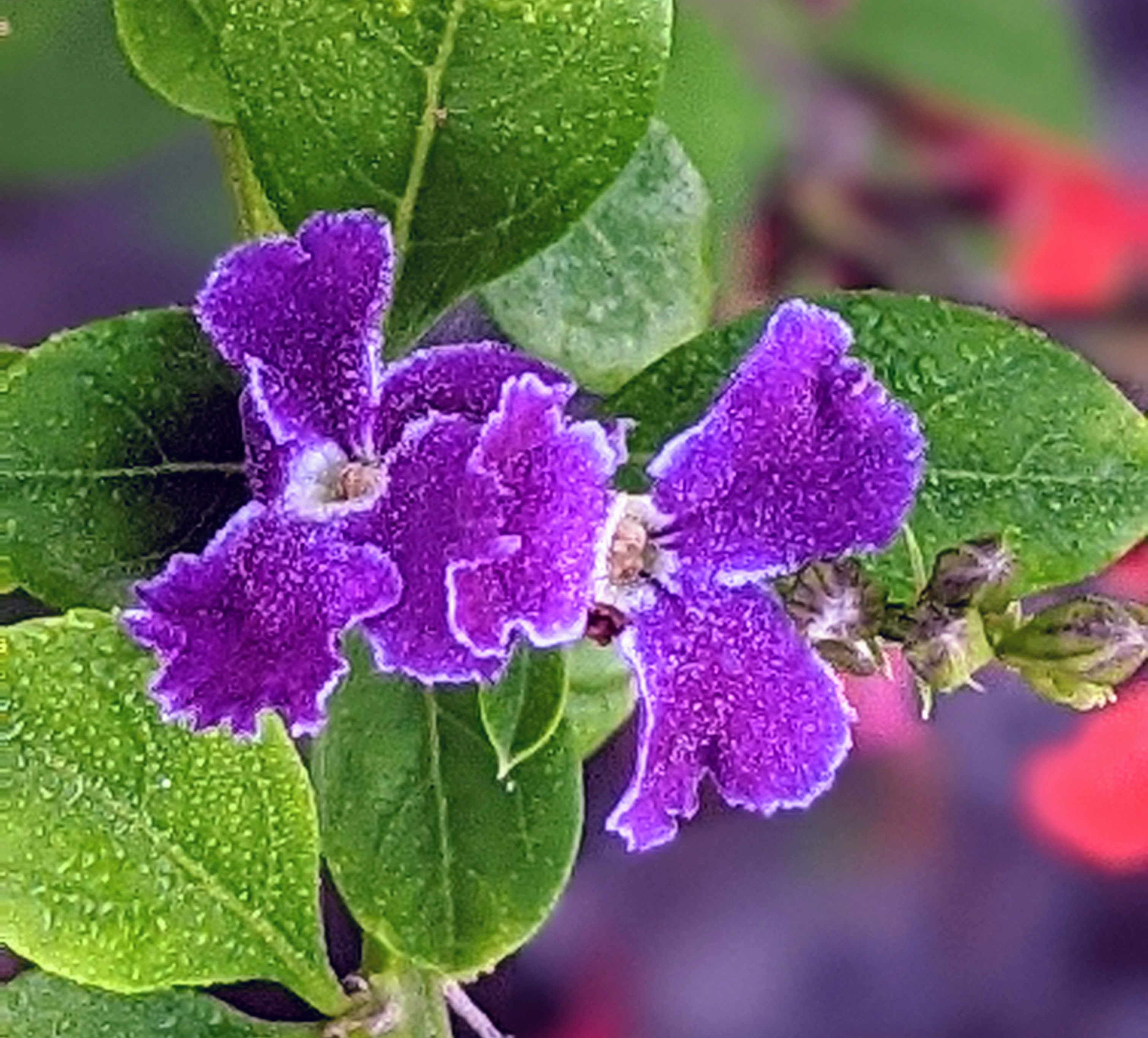
Duranta “Sapphire Showers” is a reliable summer bloomer. I planted this for butterflies, they love the nectar.
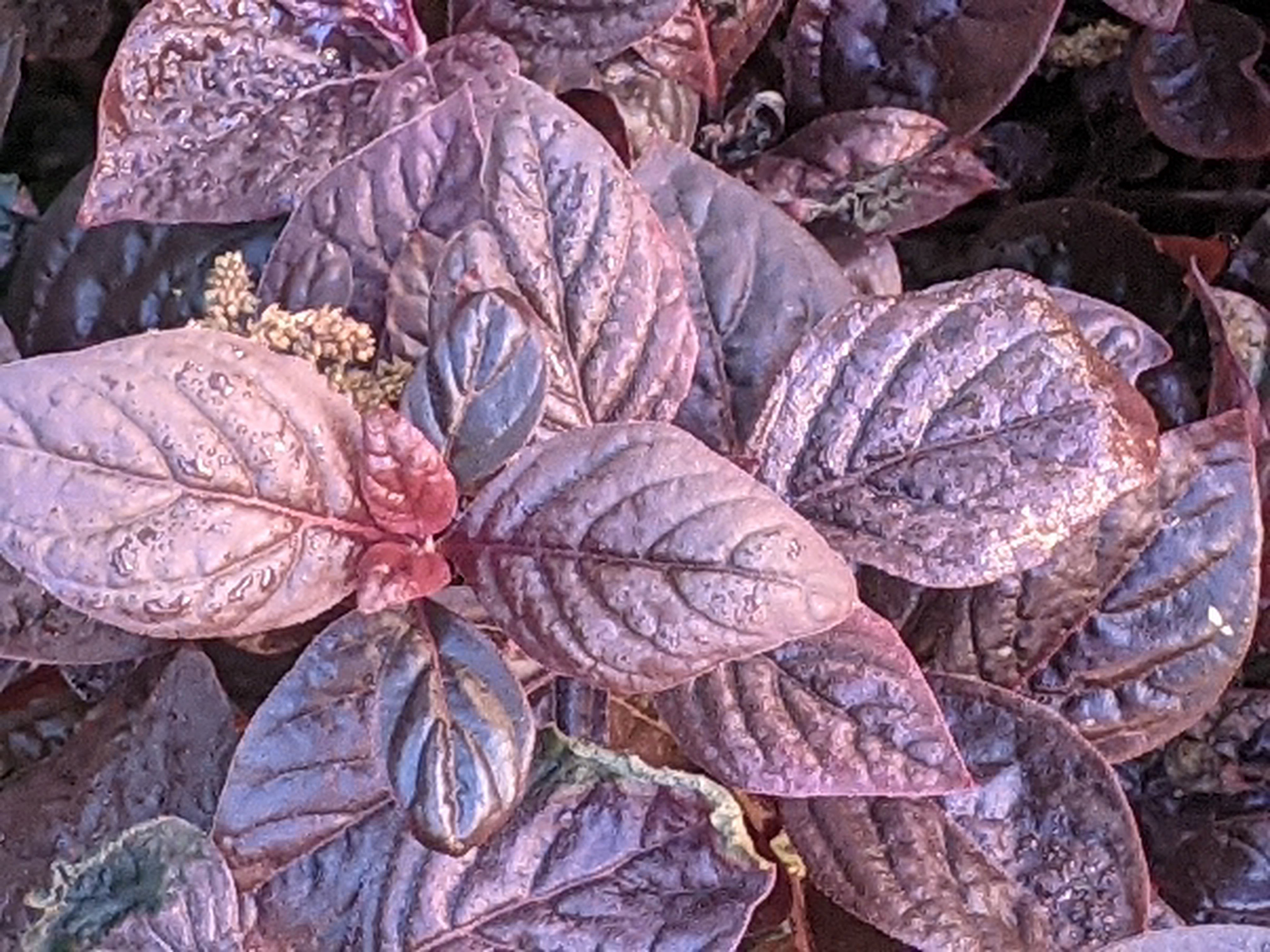
A new plant in the garden. Meet Aerva ‘Red Velvet’. I like a bit of burgundy foliage in the garden and it is a difficult plant to find that will grow in frying sugar sand. This is a ‘native’ of gravelly sand from India and a medicinal herb there. I am not going to eat any, but have taken several cuttings to propagate and spread throughout the garden.
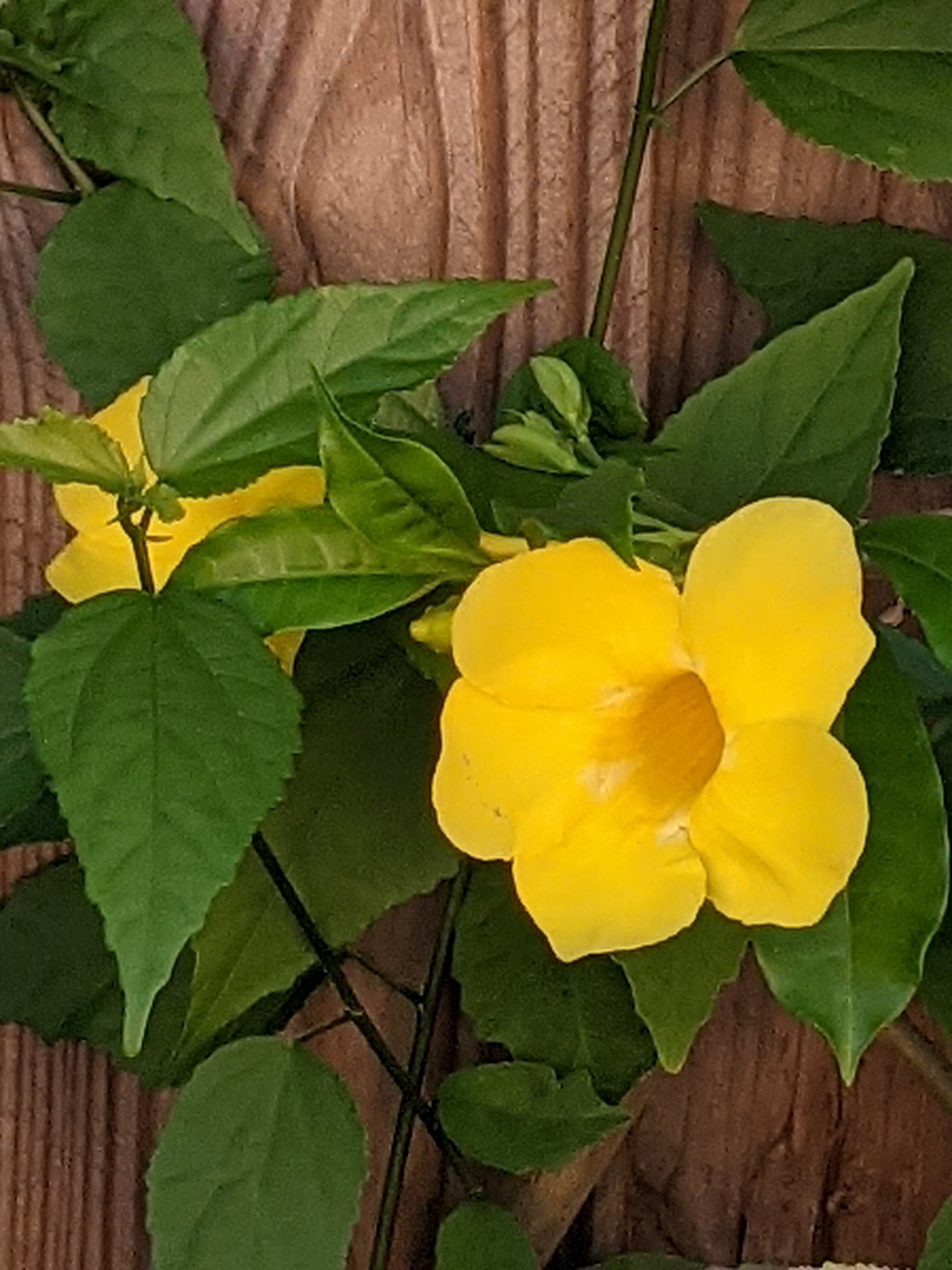
This is Allamanda, creeping over from my neighbor. These are pretty – and very hard to get rid of. The sap from the vine is supposedly used by tribes in the rainforest for poison darts.
Interesting foliage today is the new growth on a Piecrust Croton (Codiaeum variegatum) The older foliage eventually is black with green, yellow and red varigation.
There is some marvelously funky foliage that can be grown in Florida. I have succumbed to more that one plant for its foliage alone. The flowers, for the most part, are less than inspiring. Above is a Mammey Croton (Codieaum varigegatum ‘Mammey’). These are dwarf and grow to about 3 feet. They are a foundation planting next to my peach painted house. It’s tropical fun.
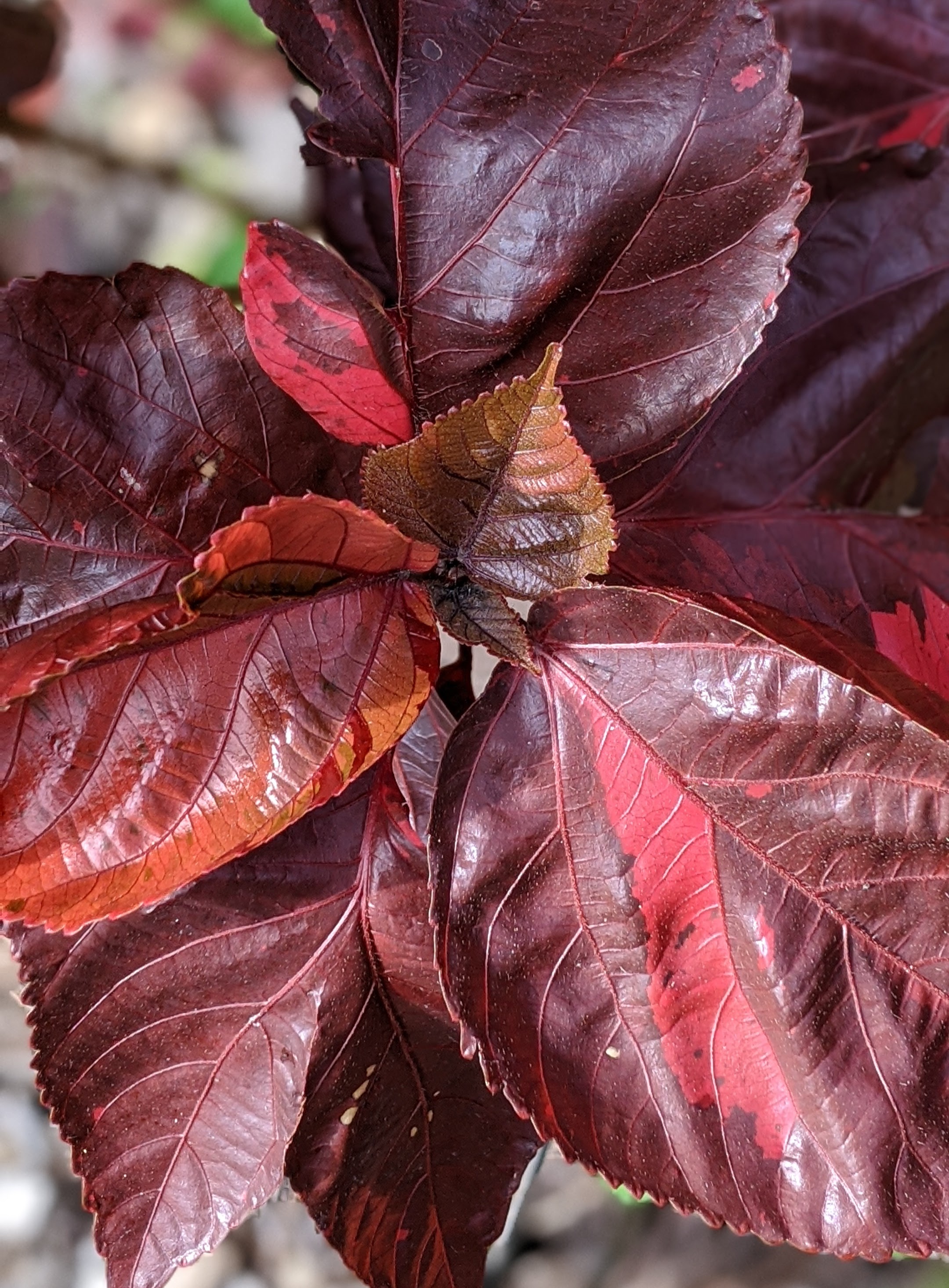
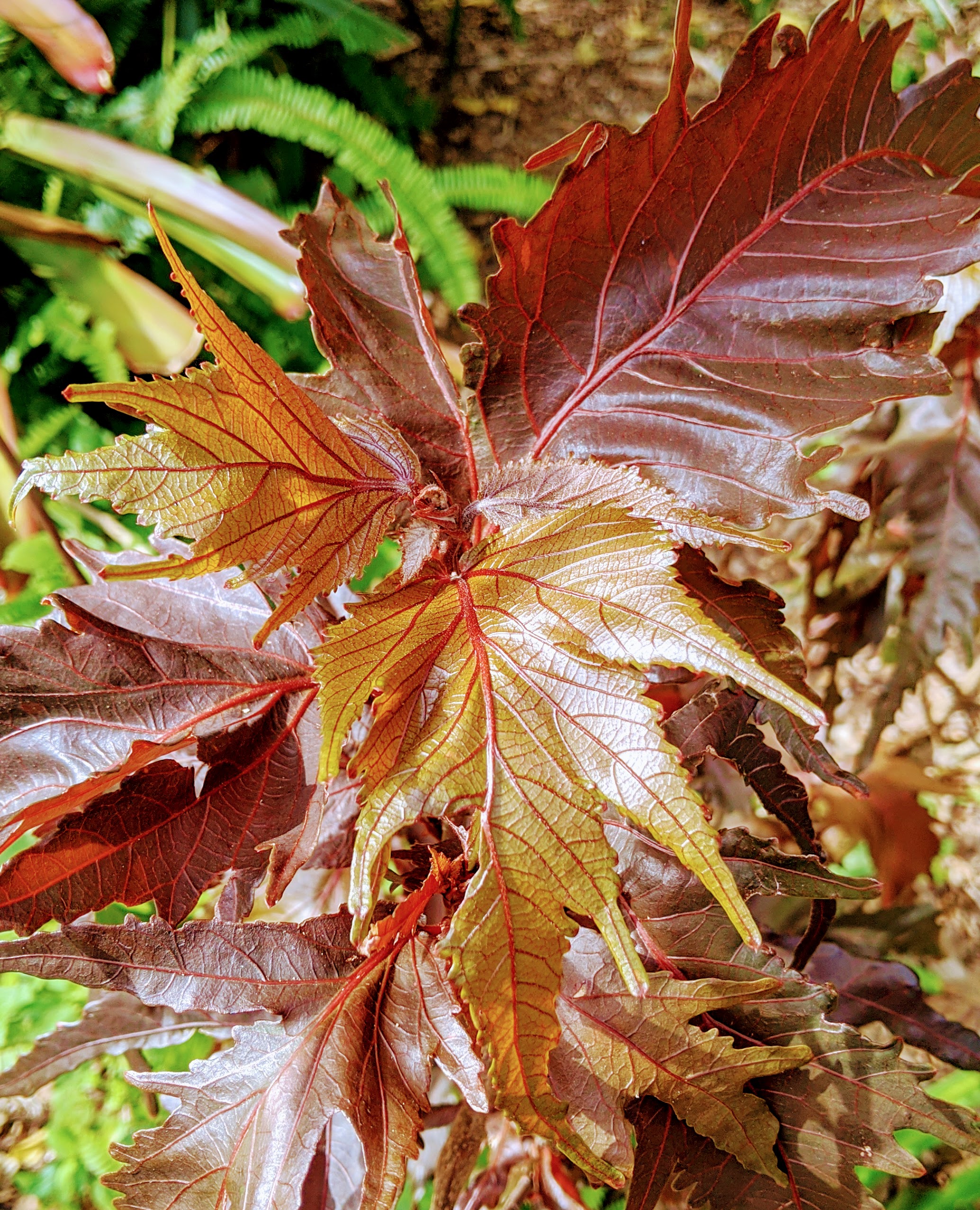
The leaves of a Louisiana Red Copperleaf (Acalphya wilkesiana ‘Louisiana Red’) These are new to my garden, six feet is the mature height, I hope. They are at the back of the butterfly garden.
This is a ‘Raggedy Ann’ Copperleaf, it wasn’t big enough as a mass of color and not being able to find another I put the Louisiana Red beside it. I think this will work out.
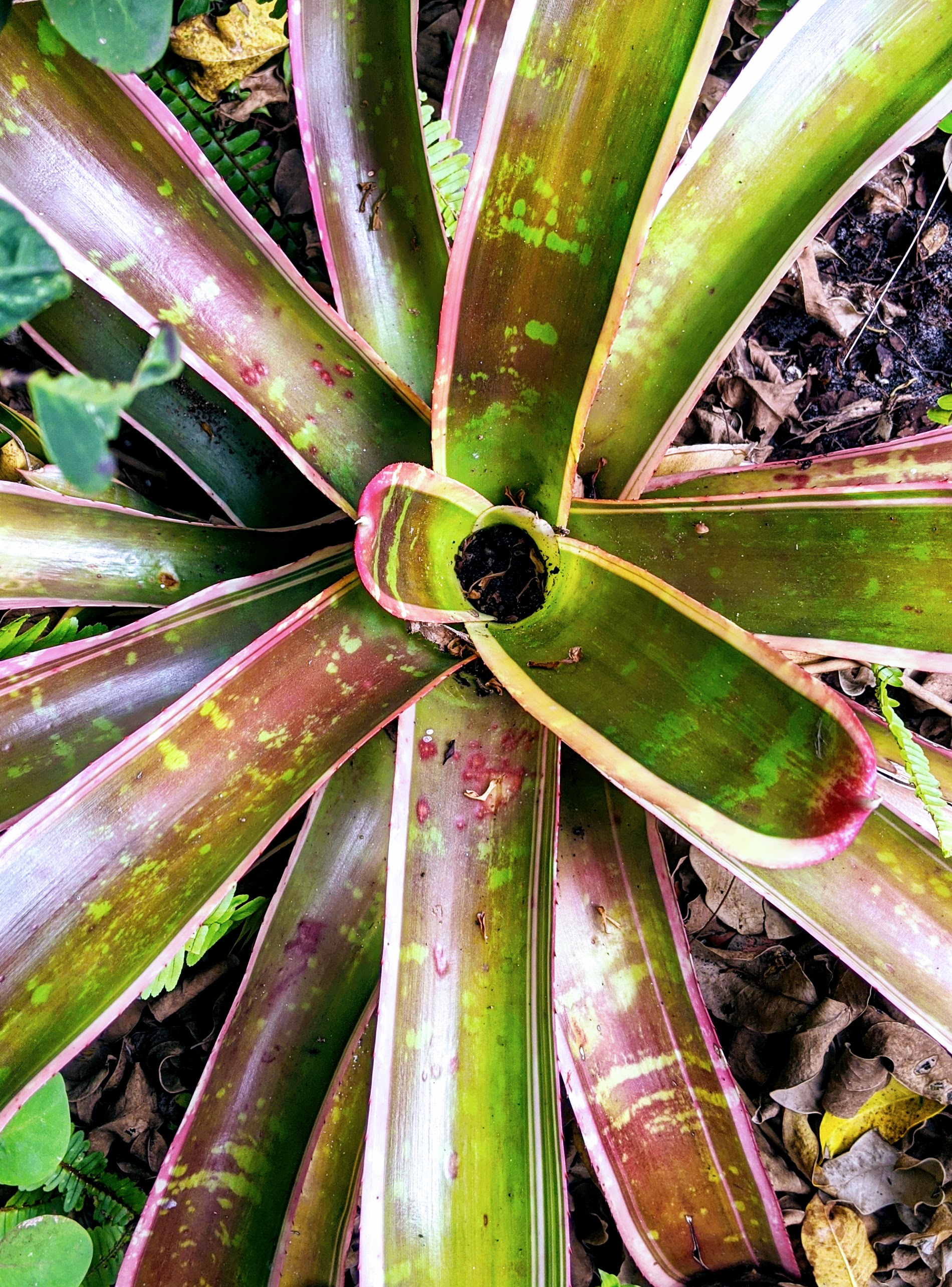
Six on Saturday would not be complete without including a Bromeliad. This is a unnamed Neoregelia I enjoy for its color and size, it is about 2 feet wide.
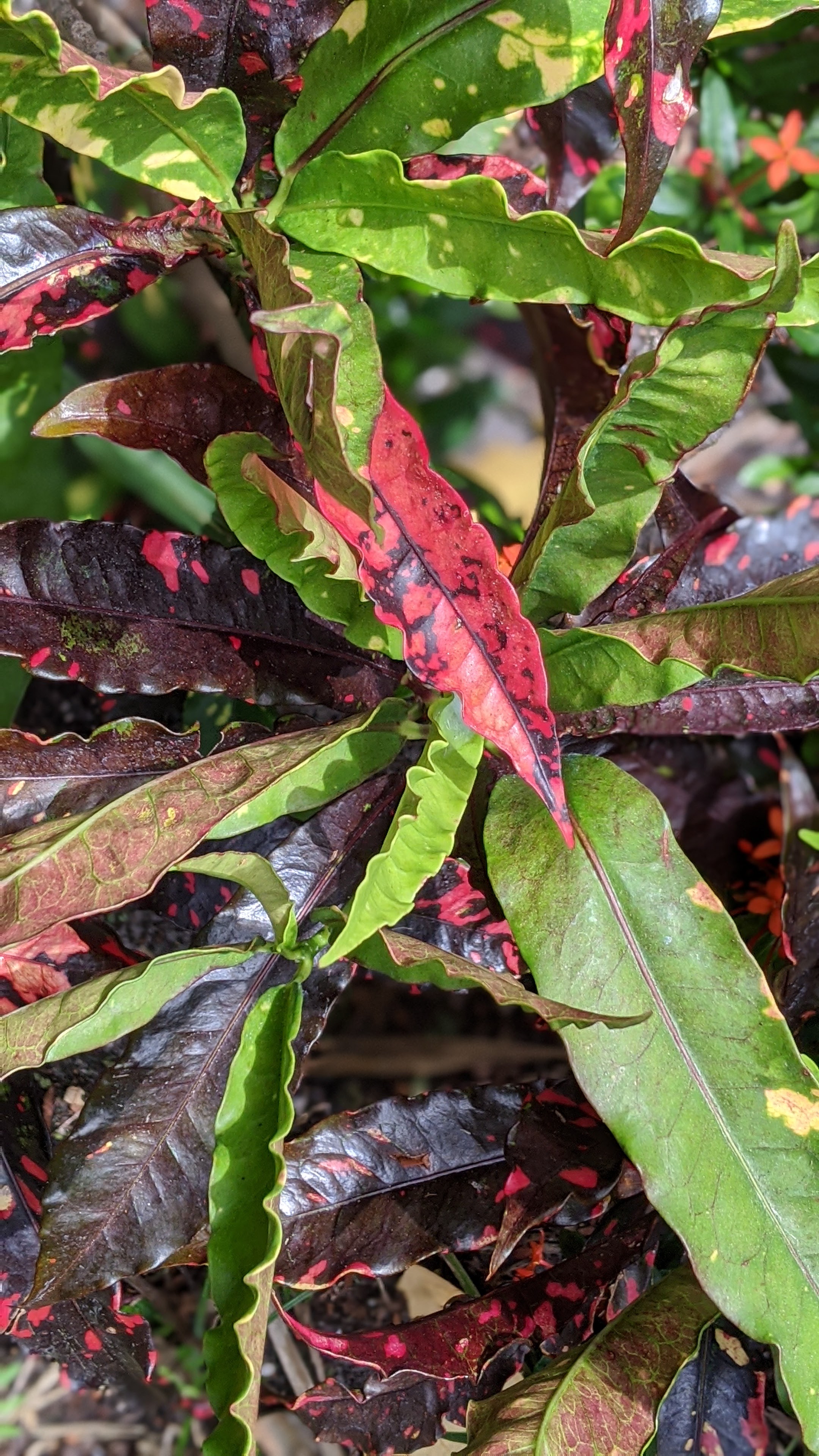
Another Croton, the Piecrust Croton. Planted in honor of my husband, the piemaker. The leaf edges are crimped like a piecrust.
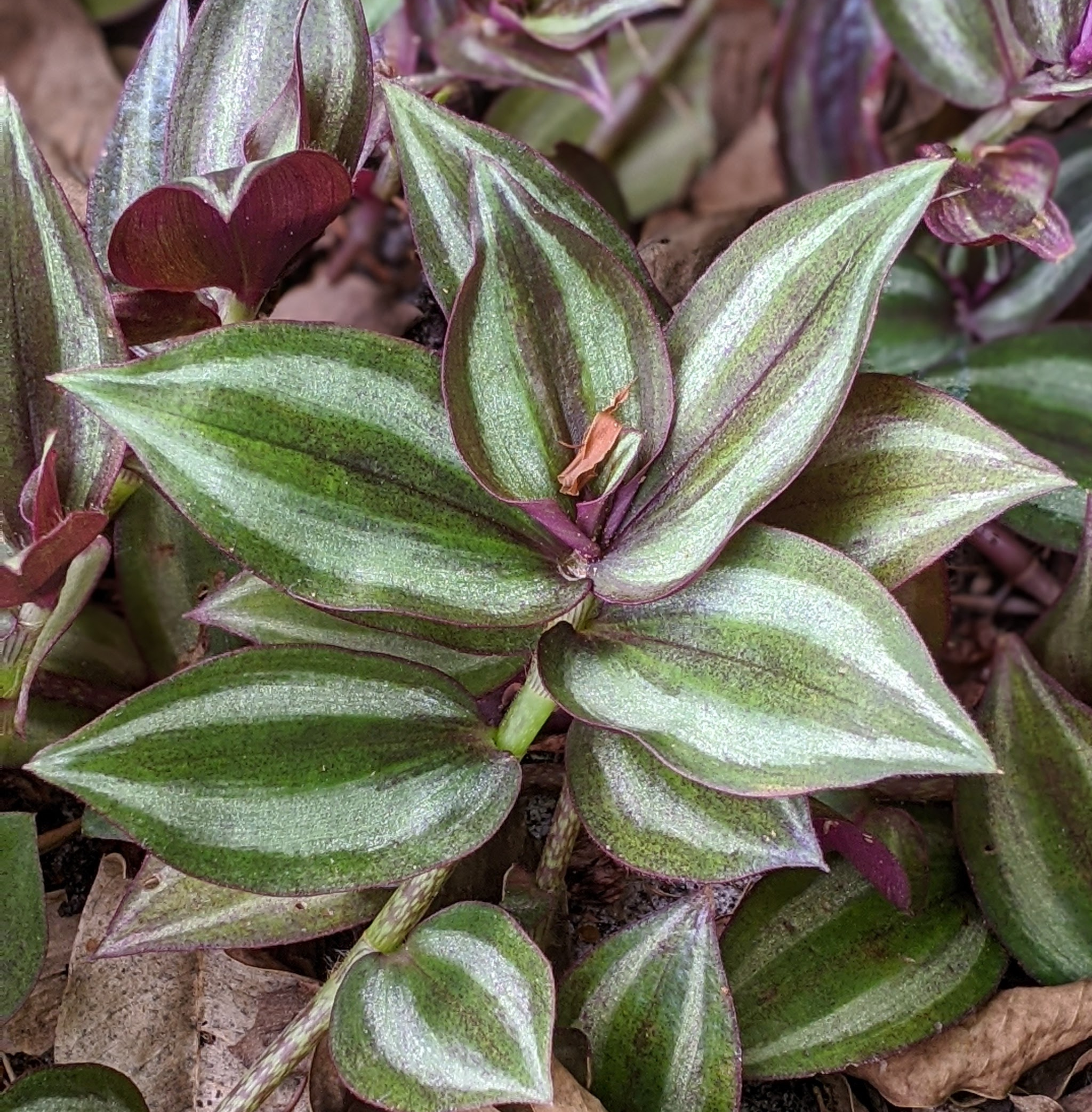
The groundcover in my Rainforest garden is Zebrina Wandering Jew (Transcandentia zebrina) a common interior hanging basket plant. This is nearly indestructible and thrives in sugar sand.















 The Shrub Queen