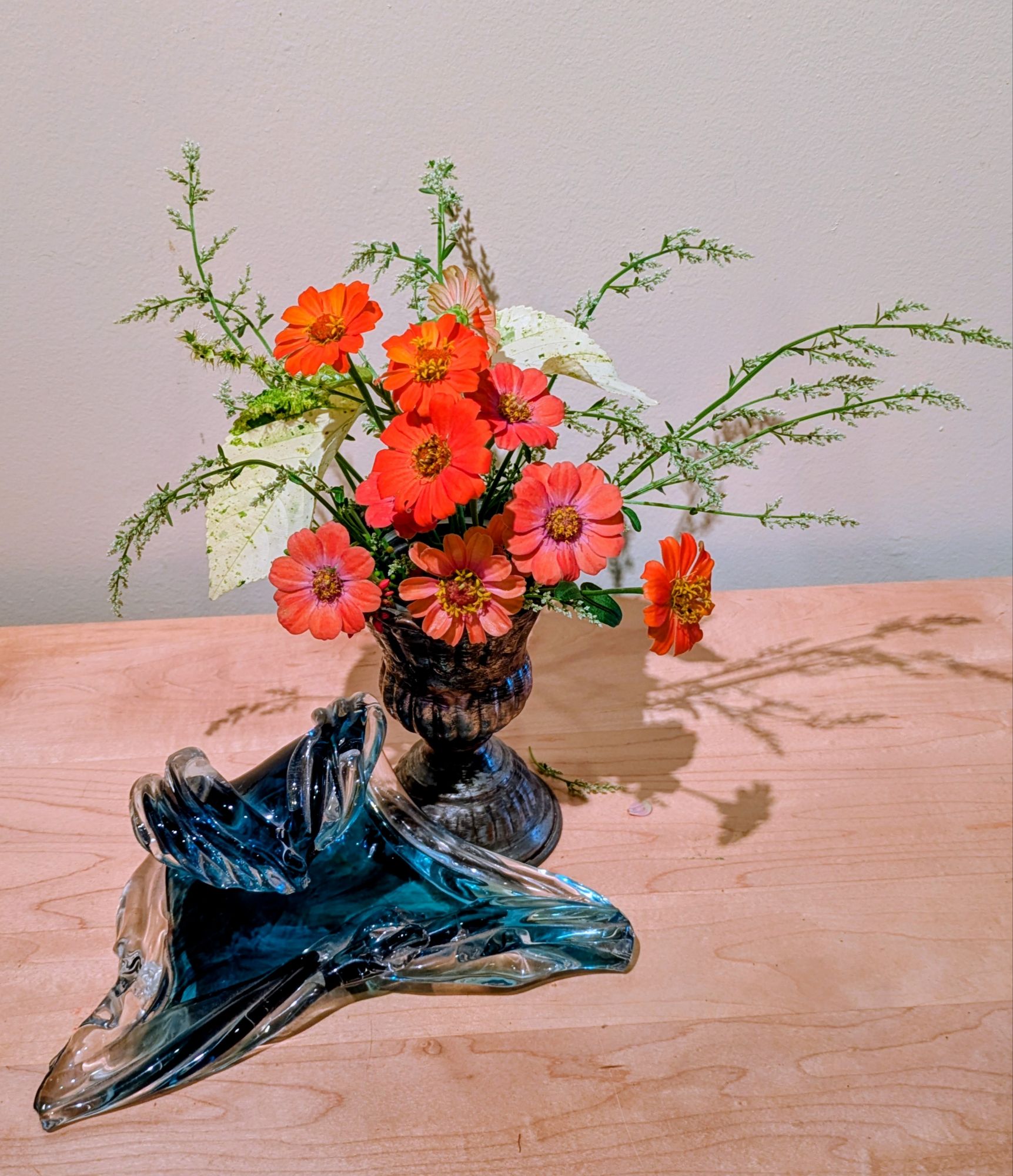
Tropical Storm Imelda formed off the east coast of Florida on Sunday, about 175 miles away from my garden. We may get a brush of tropical storm winds on Monday, so we will see how that goes. My vase this Monday is wishing Imelda a speedy exit from my vicinity.
The flowers were cut from near the house as we have been having downpours from the outer bands of the storm off and on. It made me realize how much Rob the Greyhound dislikes rain…Nope, not going out in that. Well, I went out in it and cut flowers!
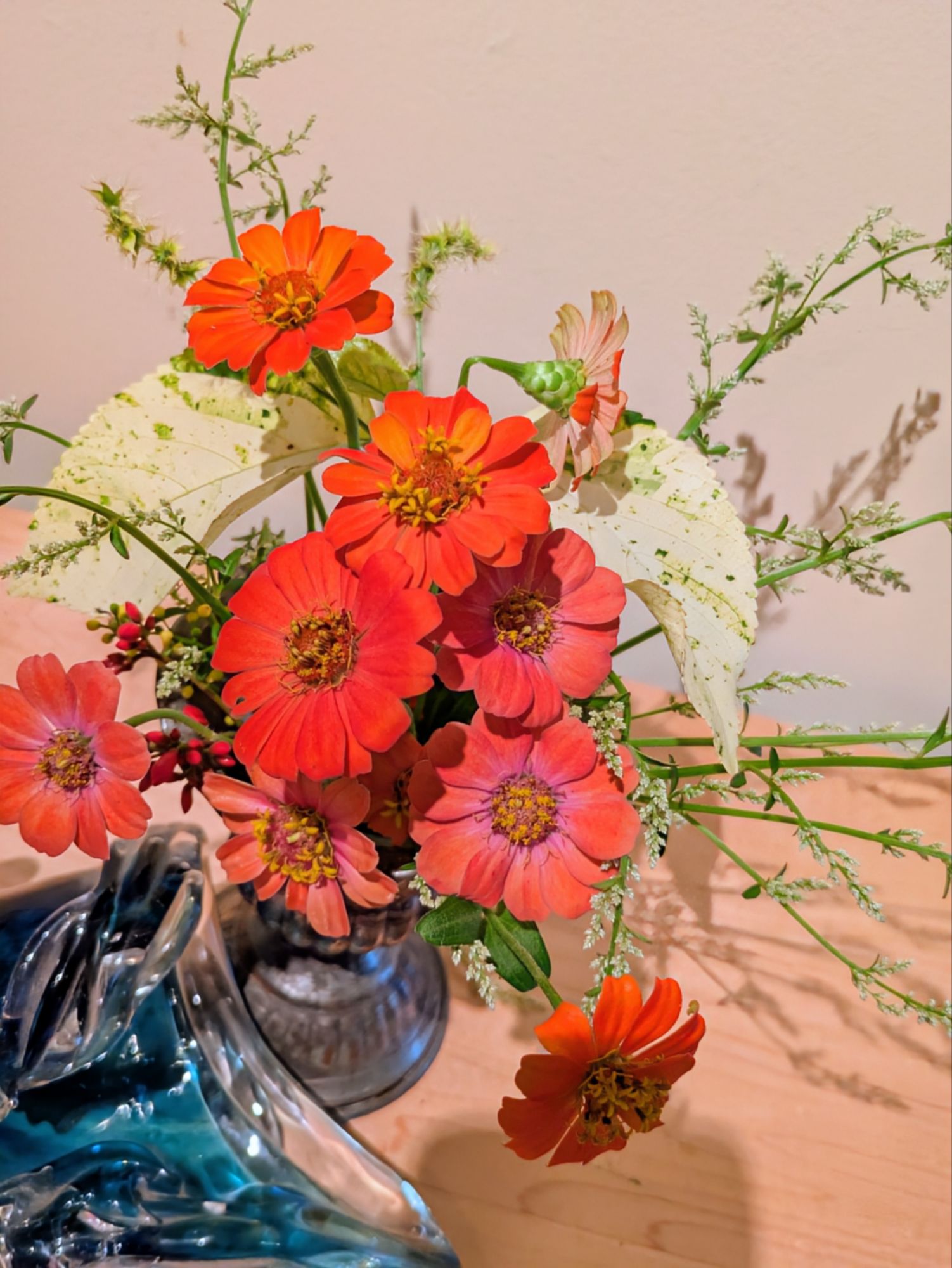
The Benary Giant Zinnias are fading away as something eats the foliage..oddly, these are the longest stems of the year. White flowers are from Juba Bush (Iresine diffusa) a native wildflower. I think this emphasizes a windy look with the blue wave. Yellow foliage is from Java White Copperleaf. The blue wave is a piece of art glass from Maui, Hawaii.
Happy Monday from my garden. Catch up with Cathy at RamblingintheGarden to see more vases.
Saturday morning finds me in the garden taking pictures to share with the SOS gang that meets at Jim’s Blog Garden Ruminations on a weekly basis. Follow the link to tour other gardens.
I have been planting fruit trees this week. It is hard not to want to grow tropical fruit if you live in South Florida. My collection continues to grow.
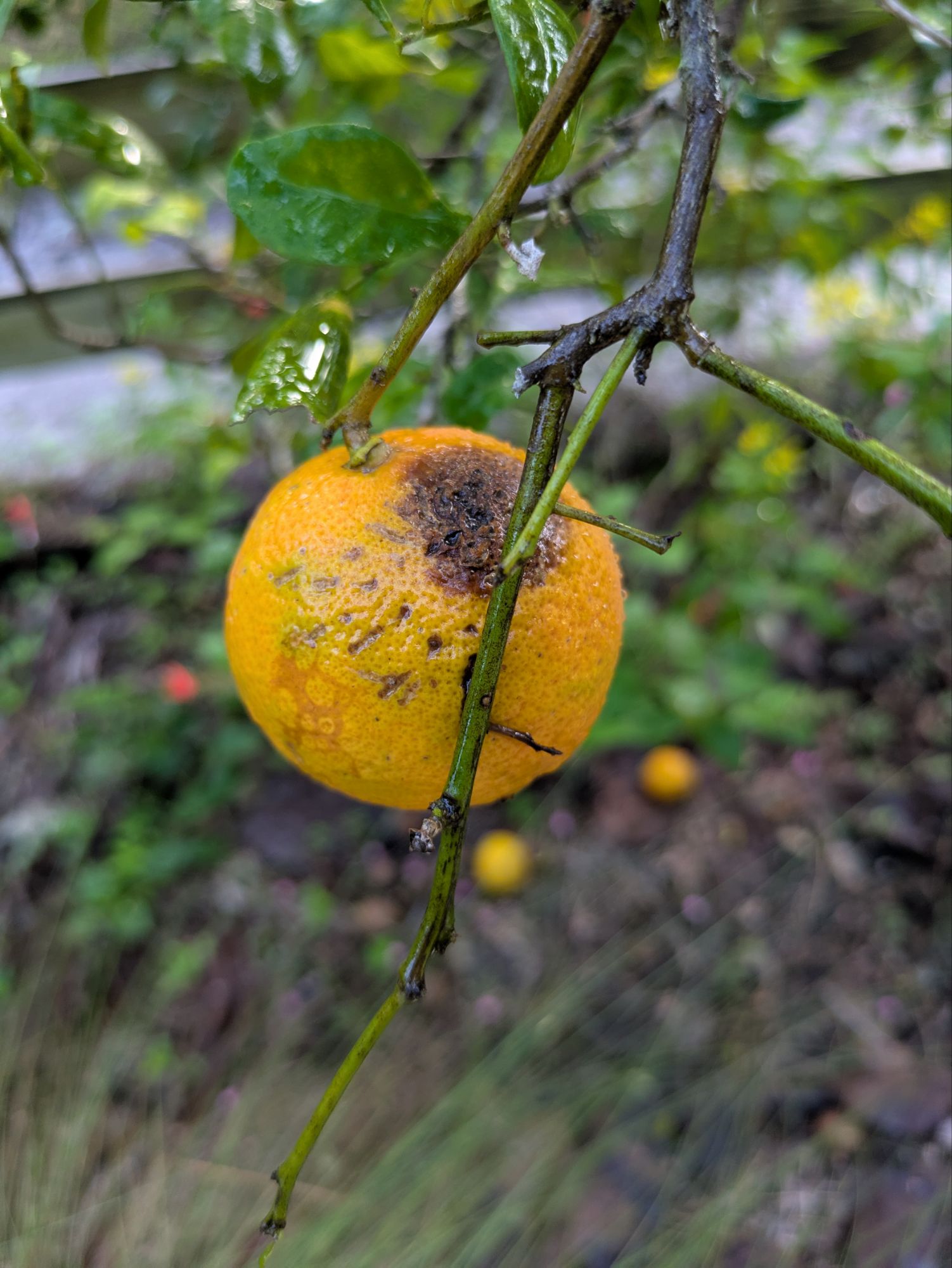
Citrus fruit, especially oranges, has taken a beating from the Asian citrus psyllid. This insect carries the citrus greening disease. This disease basically makes the fruit inedible and then causes the tree to die, affecting the phloem.
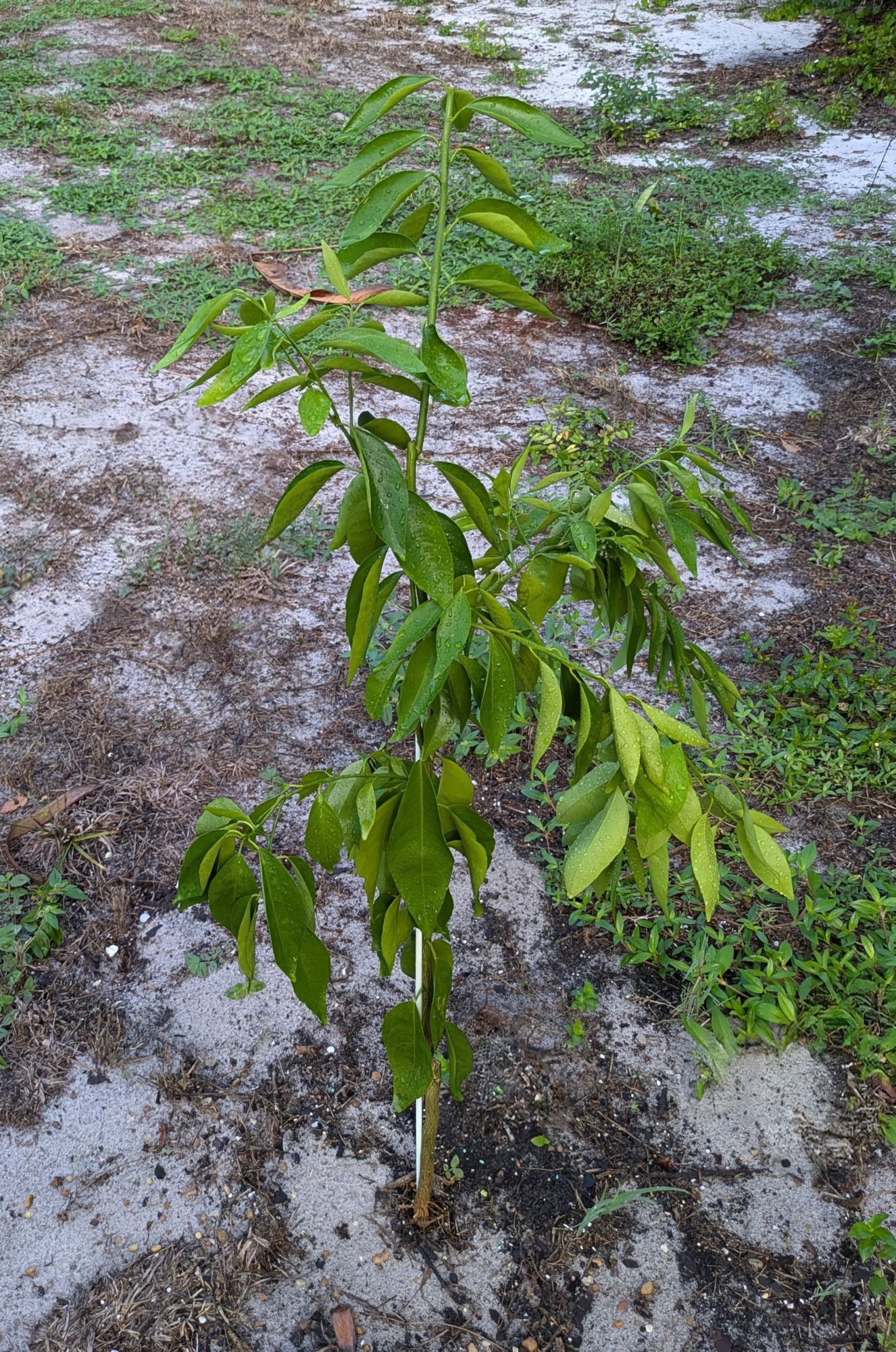
I attended a lecture that included a new variety of mandarin orange, Sugar Belle and a protective device to keep the insects off the tree until it was six feet tall. This variety of citrus is resistant to the psyllid. Here is the tree just planted. I have not installed the cover yet.
I was directed to plant the tree directly in the sand, then water and fertilize the heck out of it. It took a while to get the tree hydrated, but it looks pretty good now so I am going to install the cover.
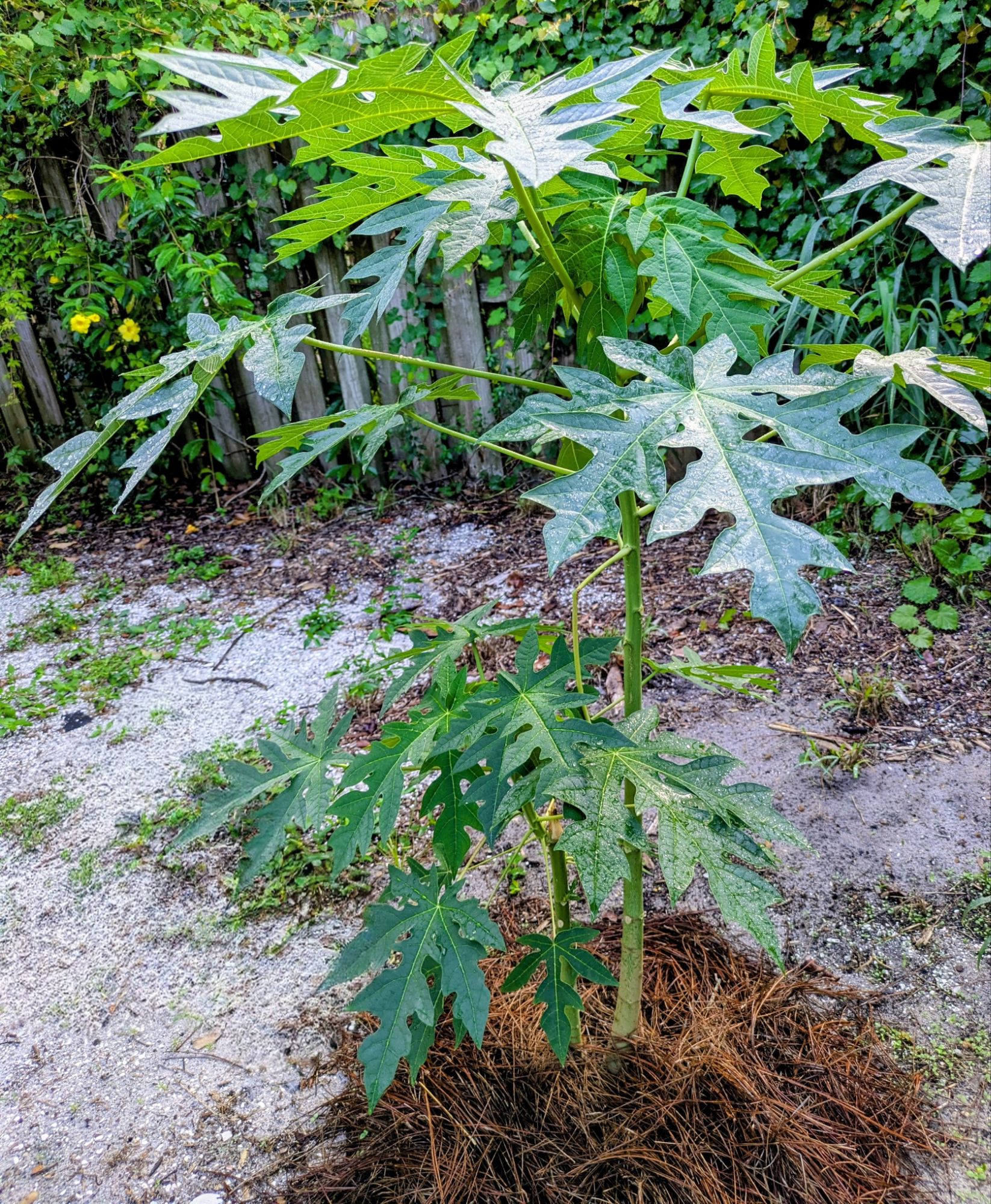
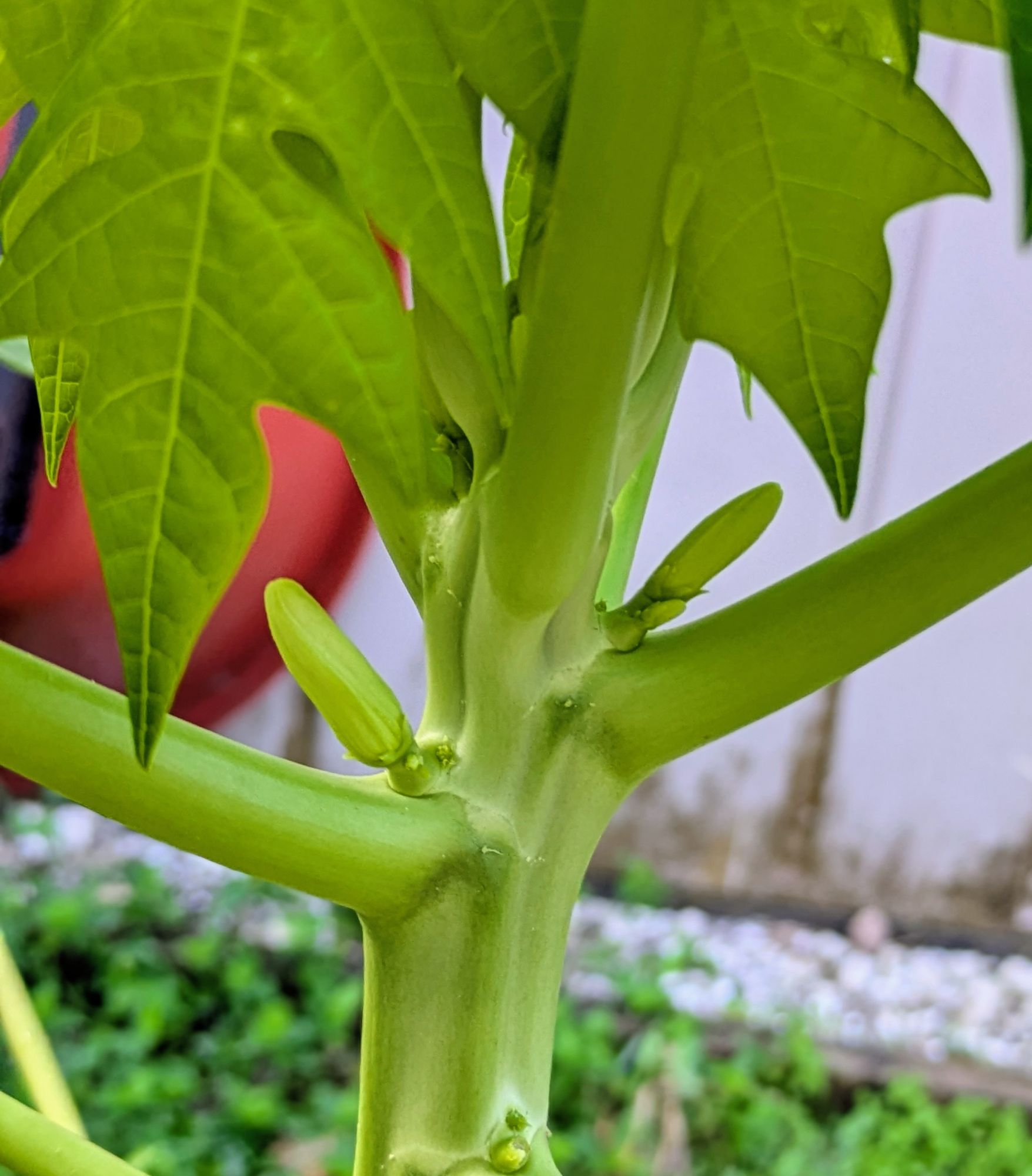
This is a Nemesis Papaya, the name sounds a bit scary. I think it is resistant to nematodes and that is the reason for the name. Papayas bear fruit quickly and the trees don’t last but a few years. I have had several and the fruit is worth it. It already has buds and it takes about four months to get fruit. I am hoping it will self pollinate. This is a hermaphrodite variety, most Papayas are male or female and it can be a trial to get the right two from seed.
Papaya buds. Fingers crossed.
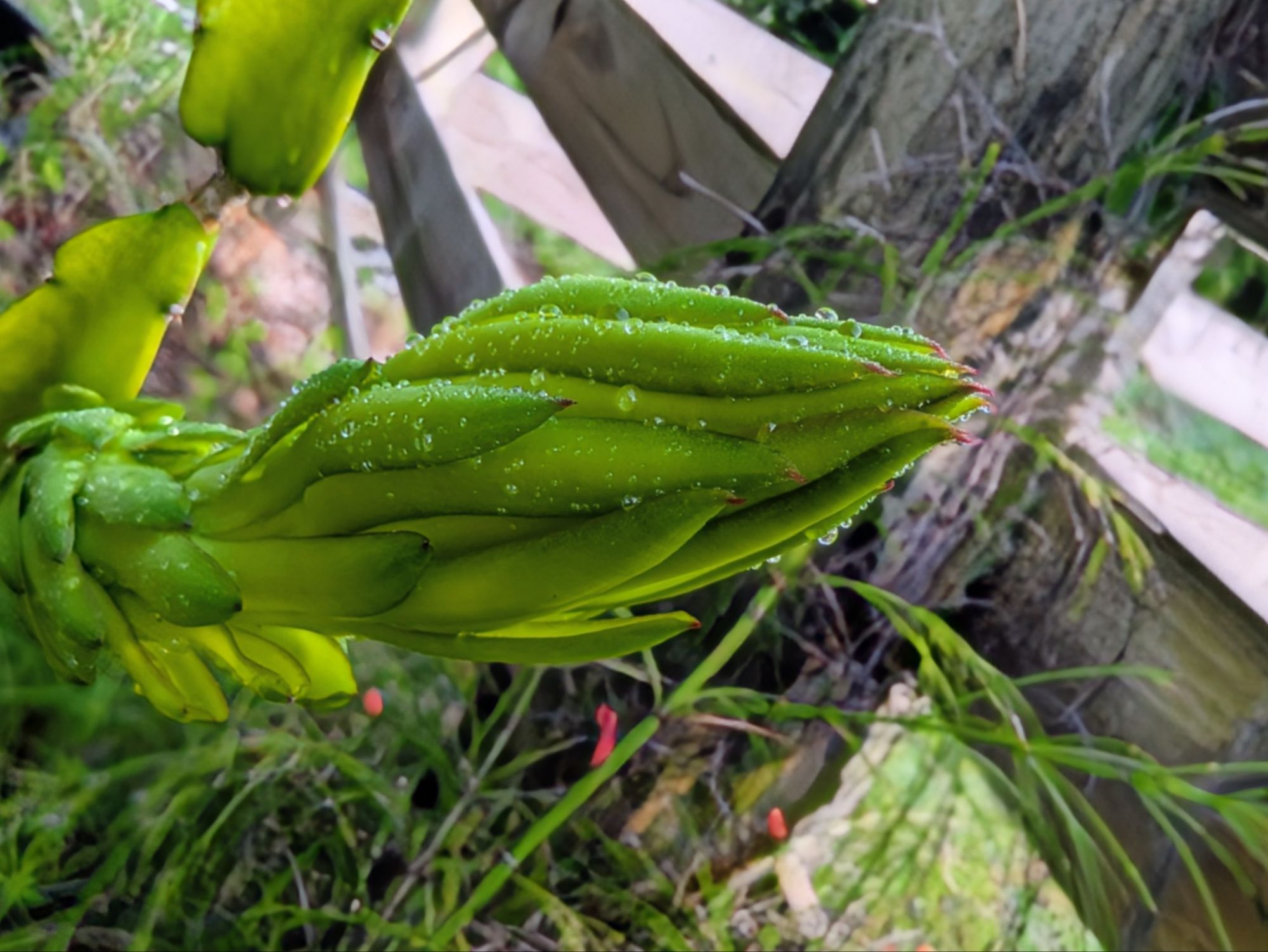
A very nice surprise. The yellow dragonfruit actually set fruit! I have had this for years and many flowers but this is the first fruit. Fingers crossed again.
The Rangpur lime was plagued by lizards trying to suck the juice out of the fruit during our hot and very dry month of August. I had about 50 limes and am down to 10. Still hoping for pies in December.
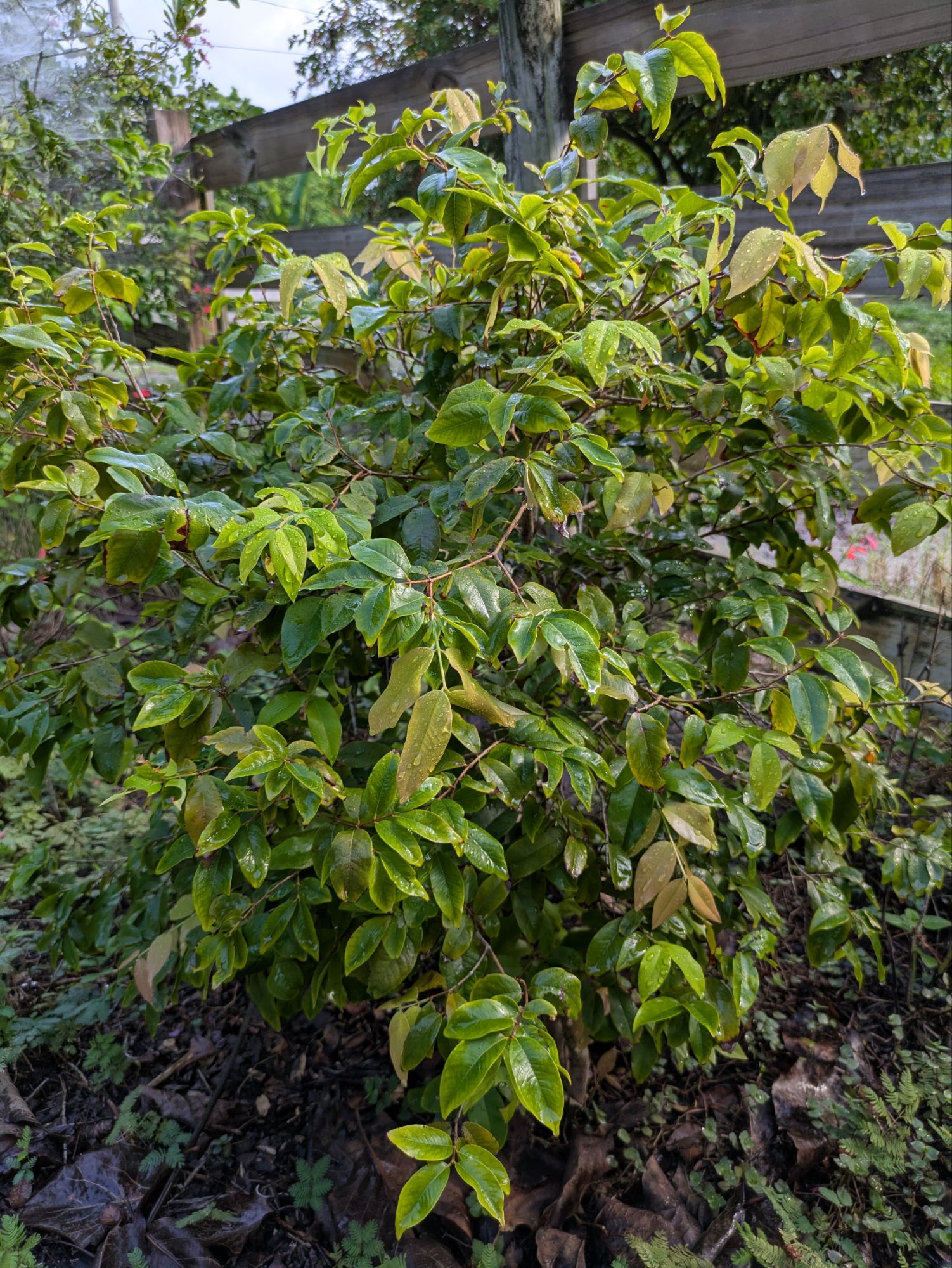
This is a Red Jaboticaba, a nice little shrub from Brazil. These produce a grape like fruit on the trunk. I am not sure how long I have had this, but am still waiting for the fruit! These also are available in tree form and are quite a sight. Clusters of grapes attached to the trunk in swirling patterns. Brazilians make wine from this fruit.
That’s all from my garden this morning. Be advised I am shopping for late season mango trees..Kent or Keitt, any opinions?
The official time for the Fall Equinox is 1:19 PM today. I am waiting for the axial shift to cool our temperatures. I can already tell the sun is lower in the sky and the shadows on the north side of our house are deepening. The sun angles in South Florida are so different from winter to summer it still throws me off. On a due north exposure, the garden goes from full sun in summer to full shade in winter. Selecting plants is a conundrum. I have gone to pots in these areas.
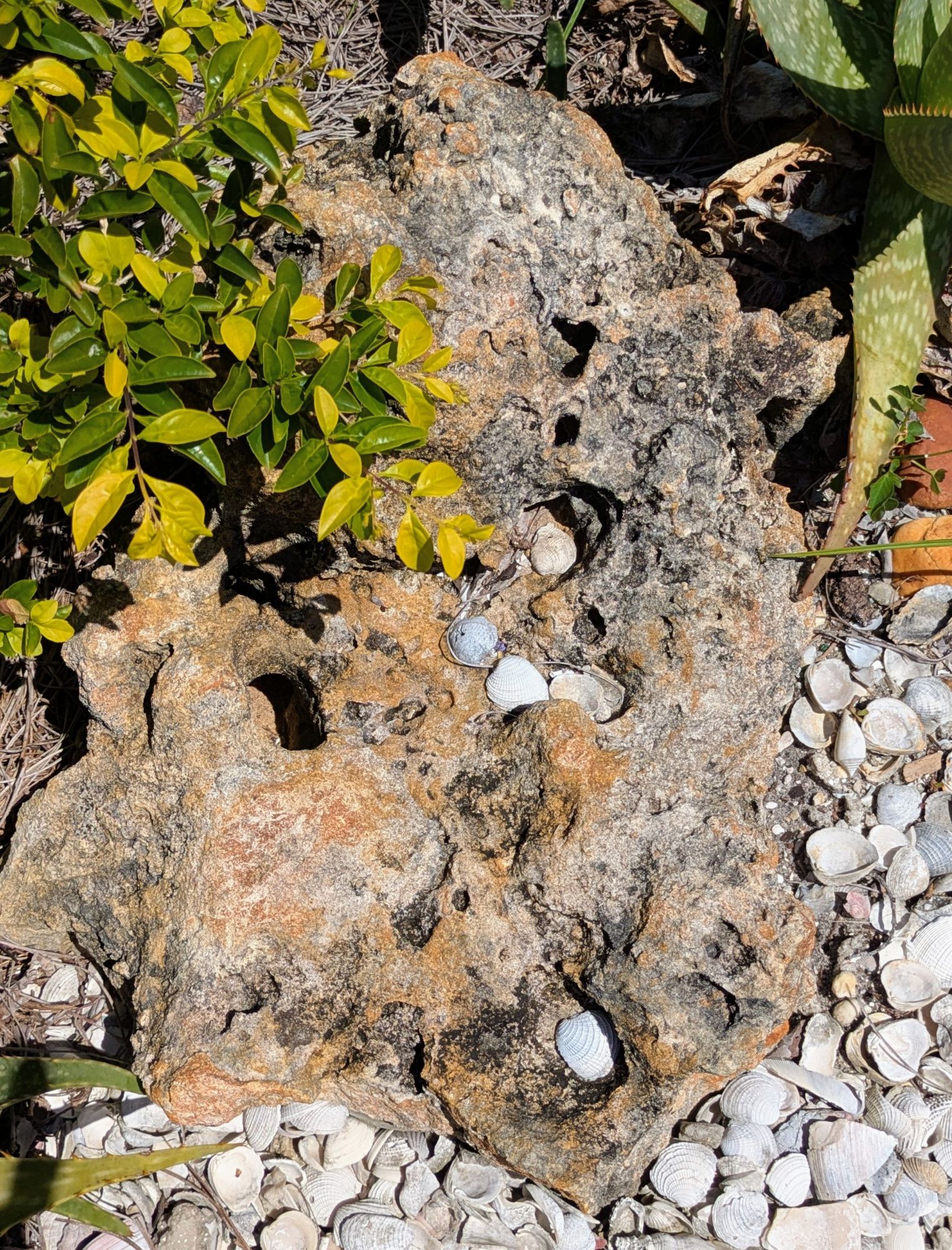
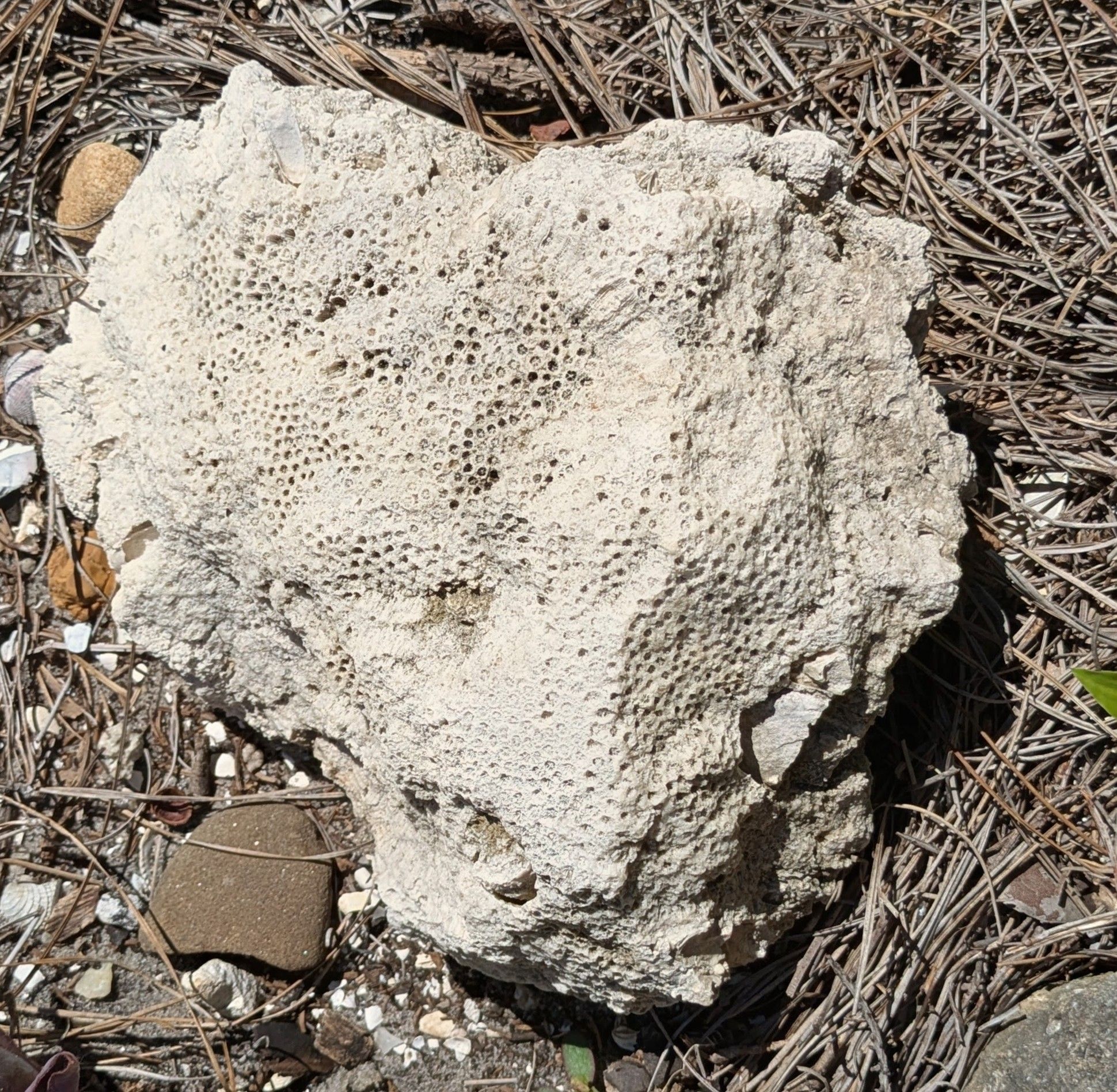
The garden is celebrating the equinox with coral flowers sprinkled through the beds. I also have coral rocks used as accents as I like local stone incorporated into gardens. Coral rocks are limestone boulders with deposits of shells and other sea life visible on the surface.
The flowers:
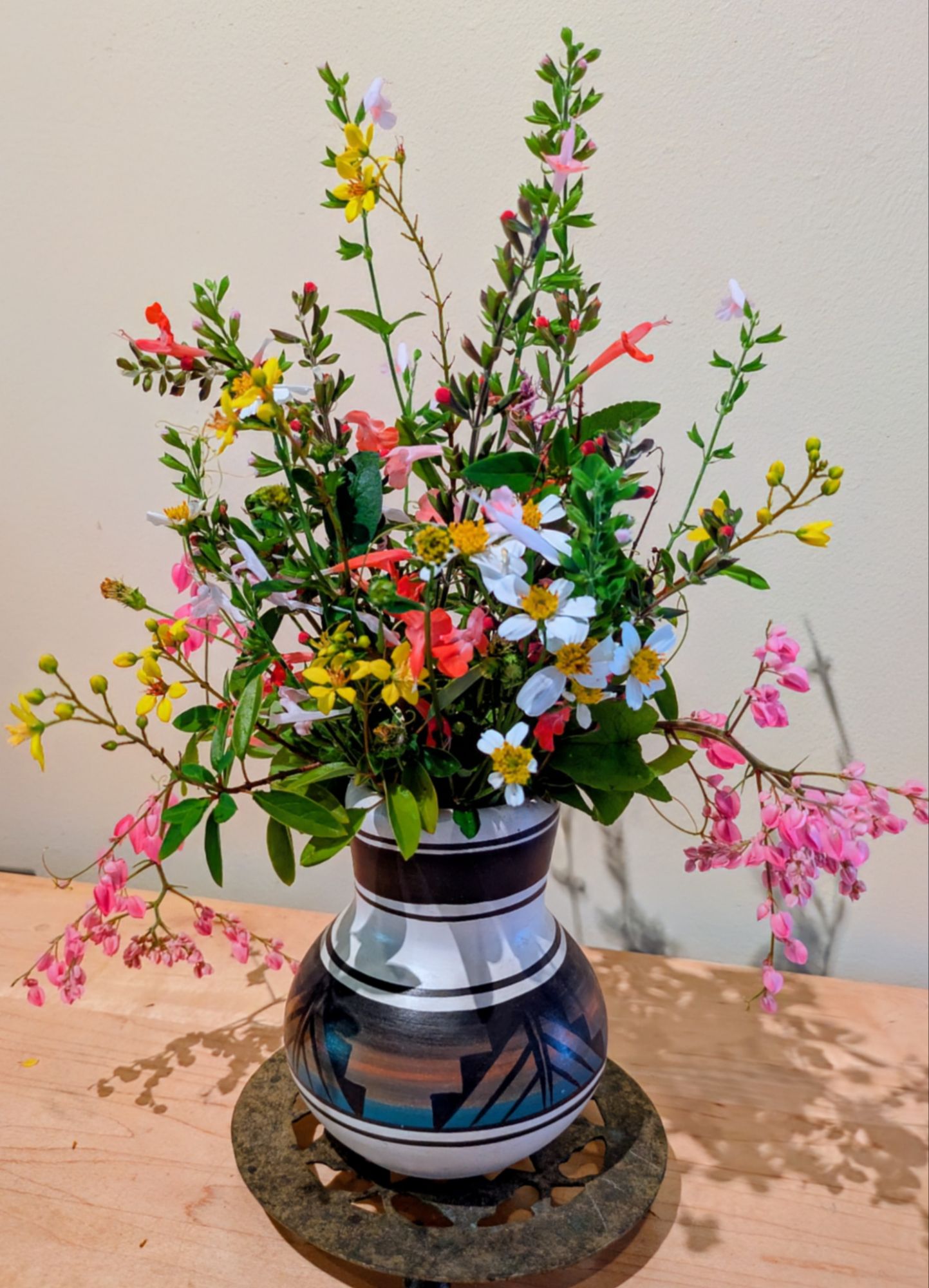
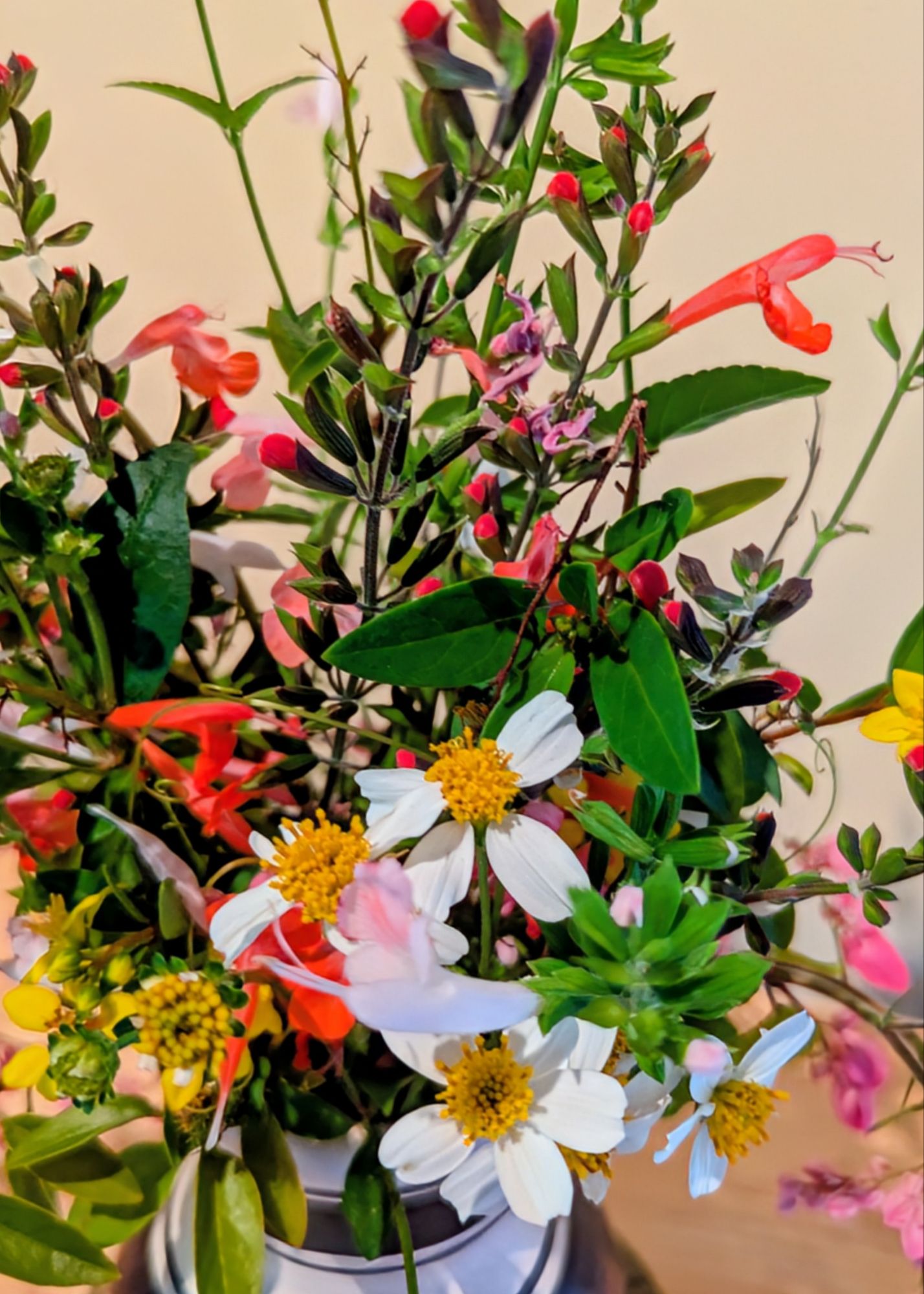
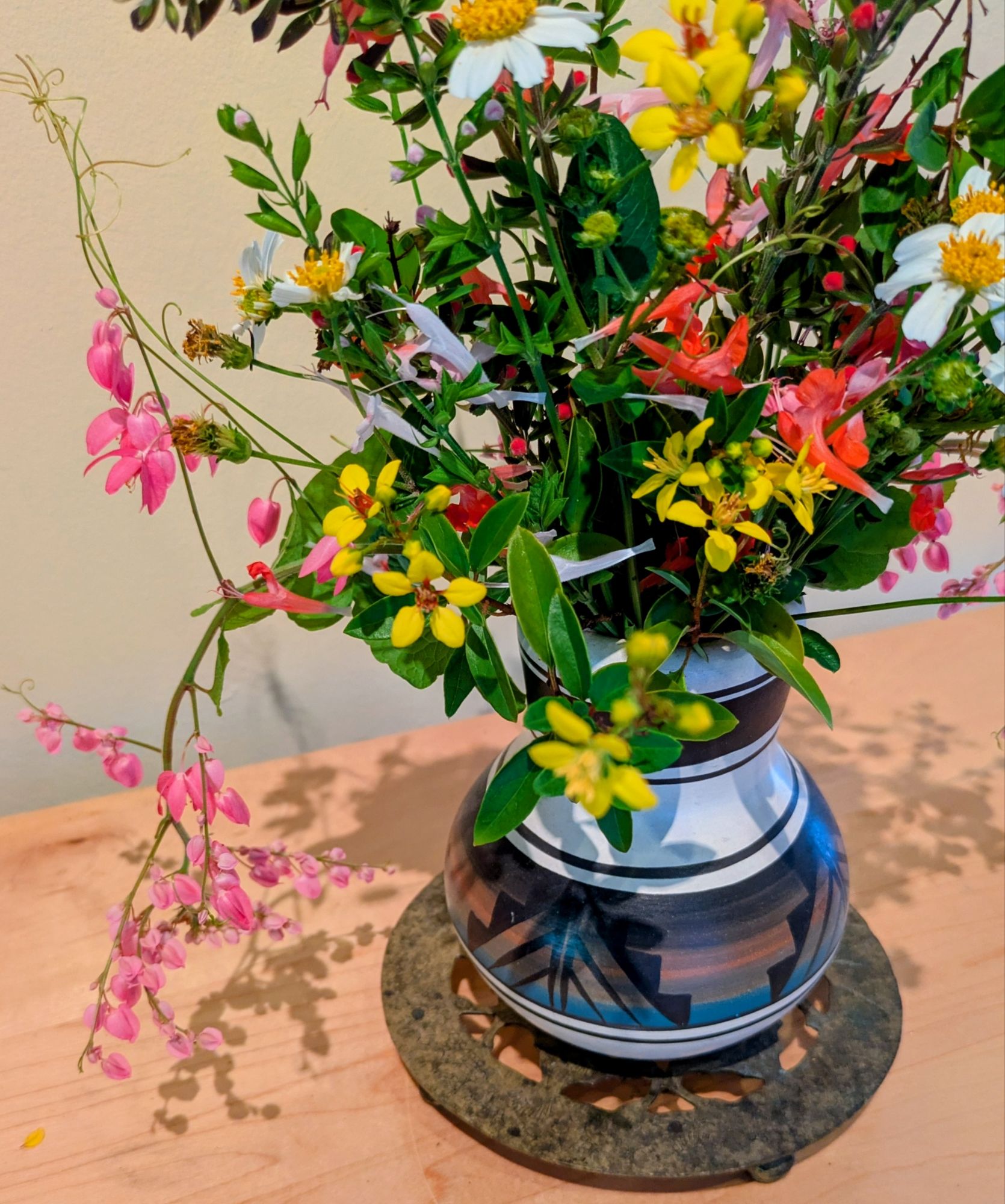
Tropical Red Salvia (Salvia coccinea) is showing up in shades of Coral this week. White daisies are Bidens alba.
Yellow flowers are Thyrallis (Galpinia glauca). The inspiration plant, hanging over the side, is Coral Vine (Antigogon leptopus). The vase was made by the Ute people in the Southwestern US.
And here are the rocks.
I enjoy my rock collection in the garden. I have some heirloom rocks from my Father the Geologist and other interesting stones rocking the garden with the coral.
Follow this link to visit Cathy’s blog RamblingintheGarden to see what she and other gardeners are rocking in their vases.
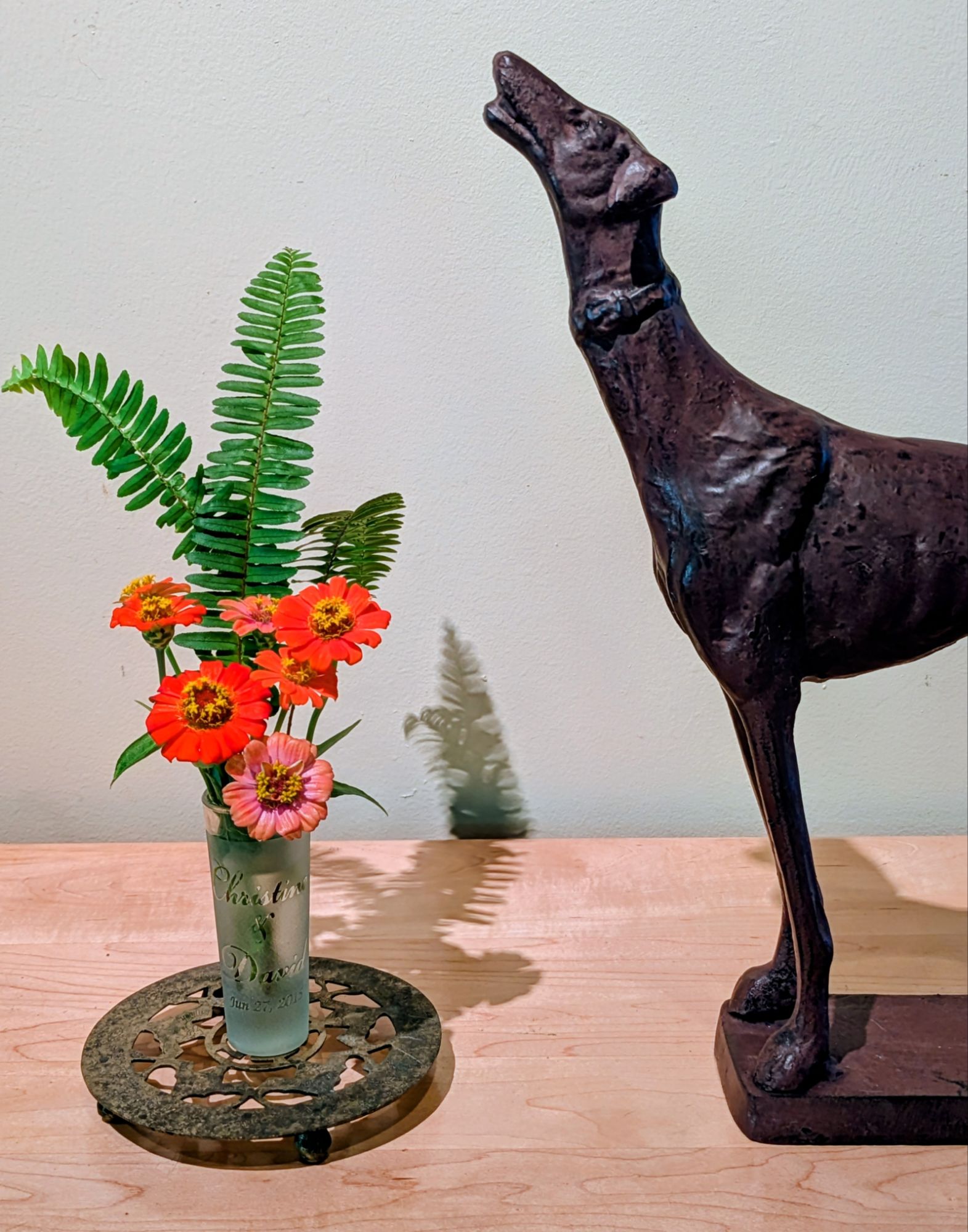
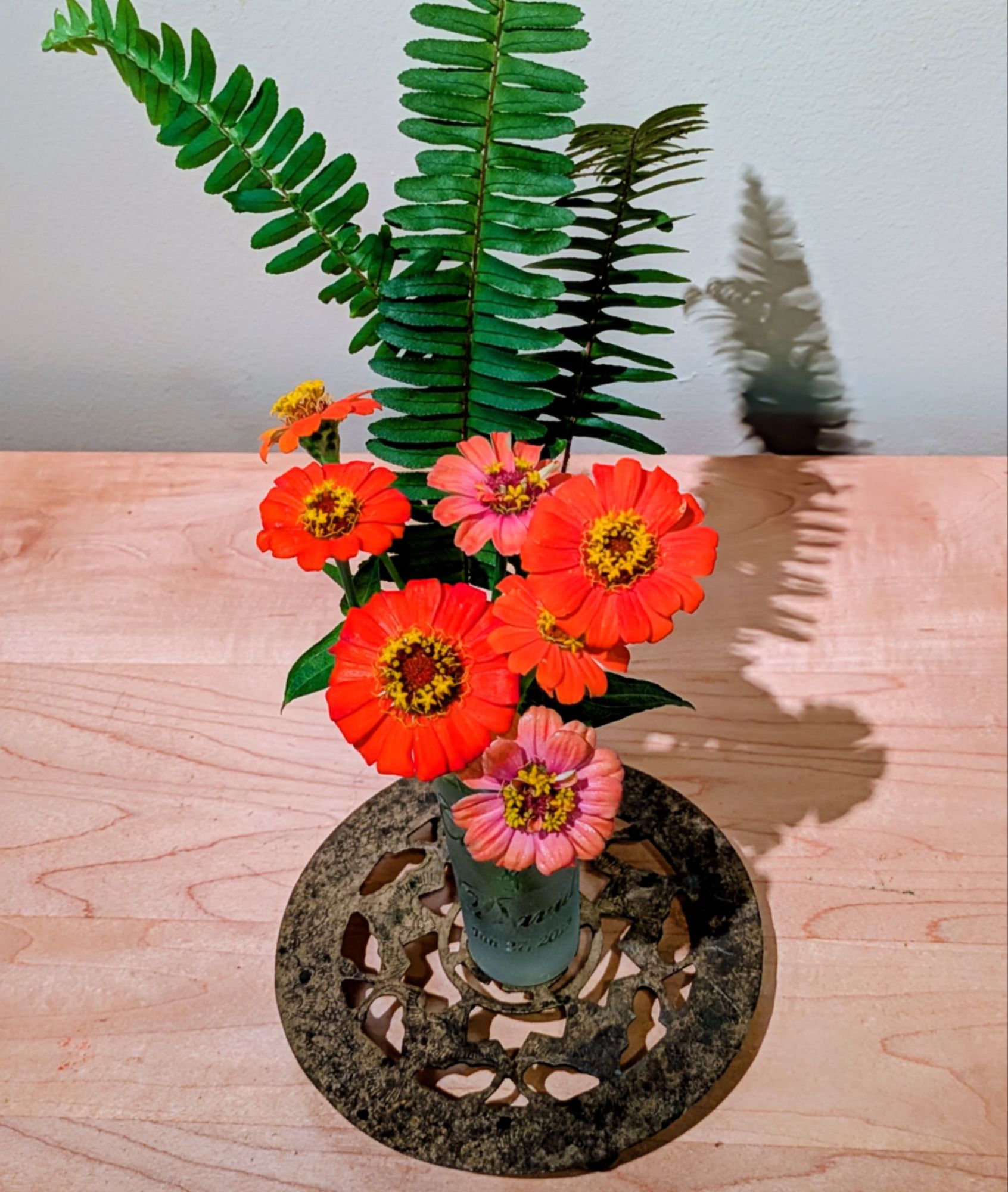
I am thankful for Zinnias every summer. This time my greyhound statue is singing their praises along with me. The Zinnias flowered throughout August, the hottest and driest summer month I can recall. The flowers were only half size and have now gone back to full size with the addition of a little fertilizer, some nice rain showers and cooling temperatures.
The flowers are in my favorite container to use beside the kitchen sink, a tequila shot glass from my niece’s wedding. A few Asian Sword Ferns were added. The brass trivet is a family heirloom from somewhere in New England, I should polish it someday. The Greyhound is a recent addition my husband was unable to resist. I saved the seeds from last years ‘Benary Giant’ mix and shall plant more soon for some winter cut flowers.
That is all from my garden this Monday. To see more vases, visit Cathy and RamblingintheGarden and follow the links.
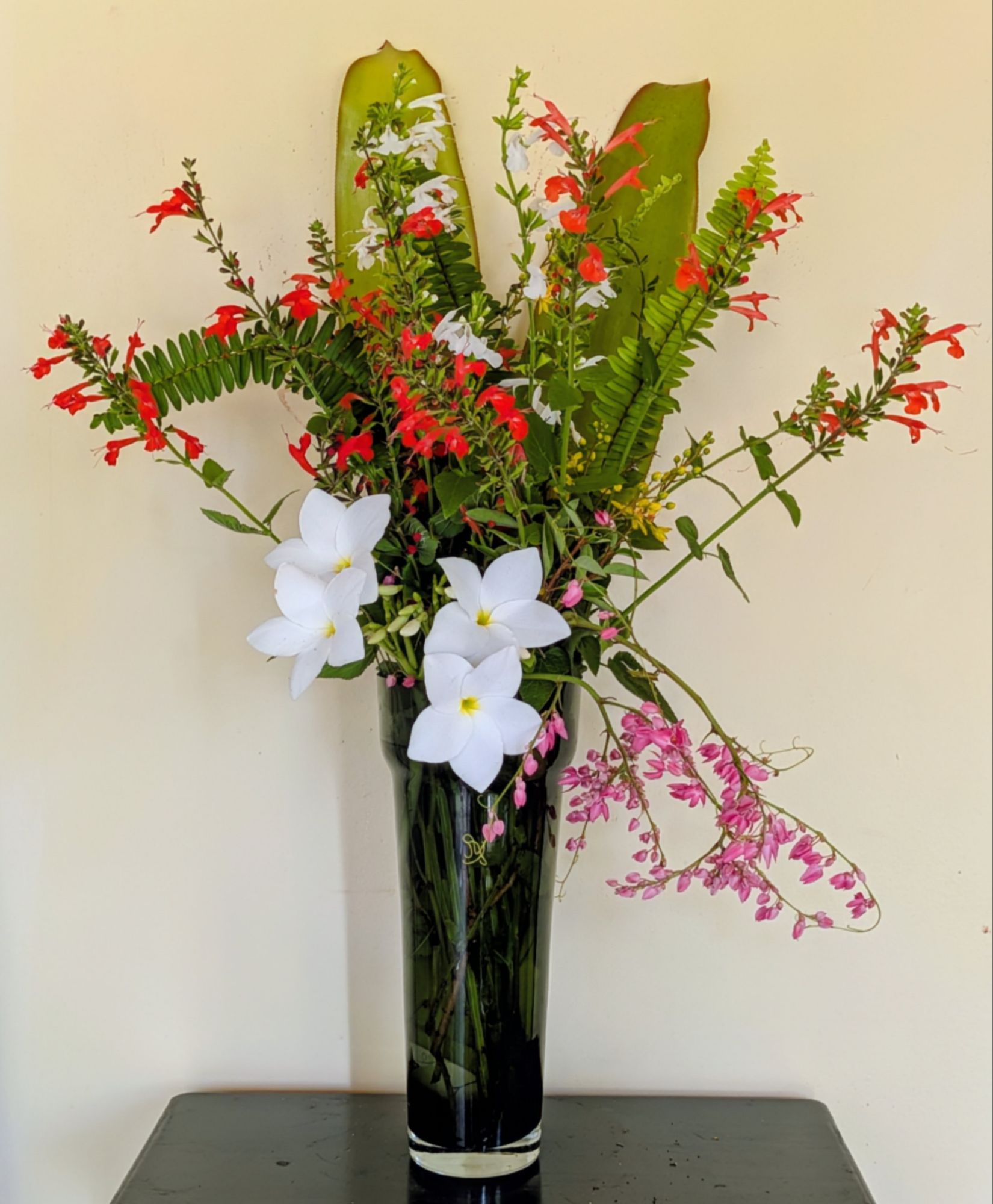
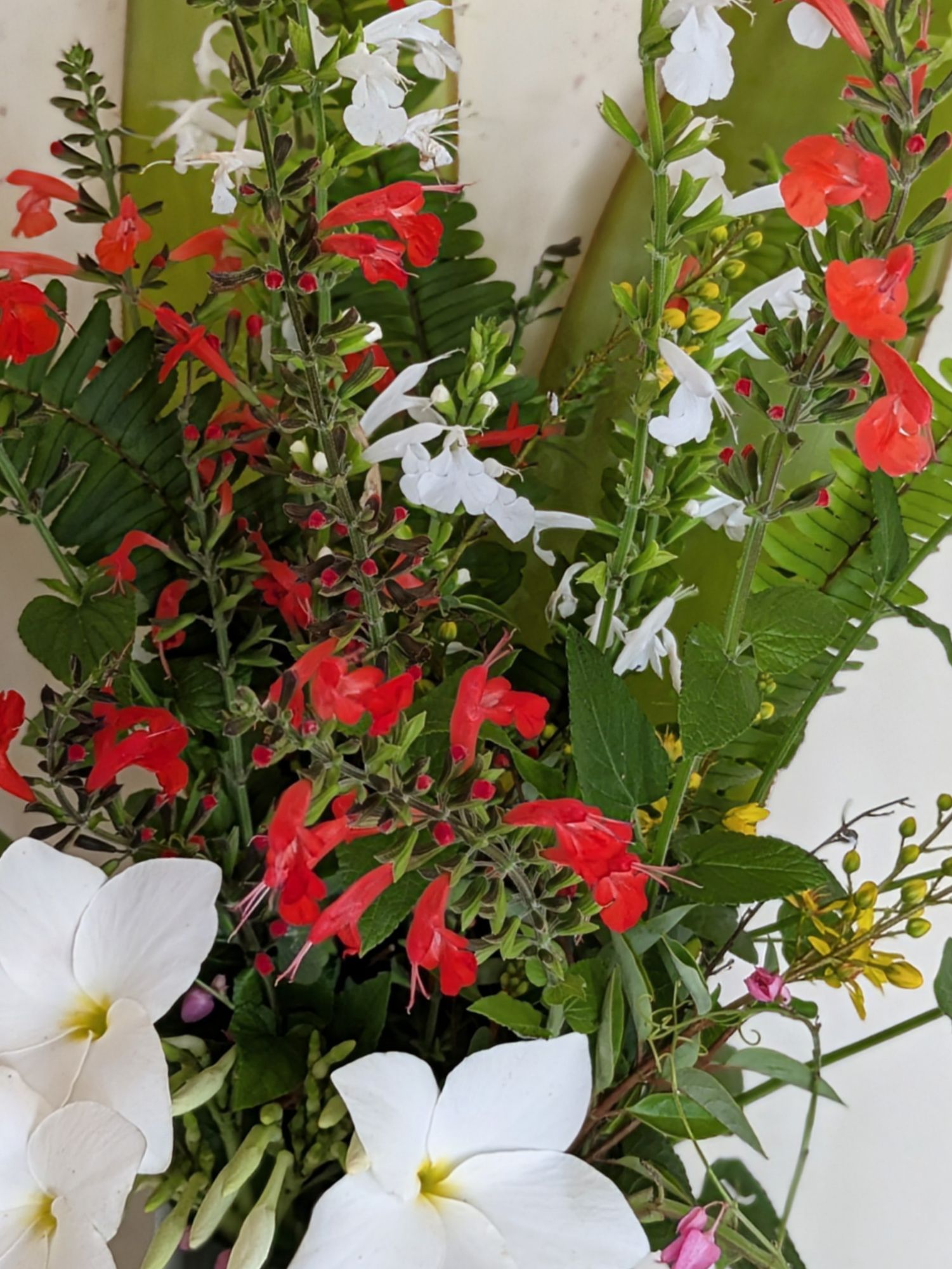
It’s no secret I love Salvia. I was delighted to see a bevy of blossoms after a few intense rain showers last week. I cut a large handful of mostly red, with a little off red and white. The Tropical Red Salvia (Salvia coccinea) is not really true to seed and color ranges from neon orange to coral, pink and pure red. This off red is a new color, surprising me by flourishing in nearly full shade.
I think I created a Freudian flower arrangement. Does it look like it is shooting a peace sign or is it just me? I fear for my country and am hoping for peace.
A close up of the Tropical Red Salvia (Salva coccinea). The background plants are Lemon Blanchetiana Bromeliad foliage and Asian Sword Ferns. A sprig of Bridal Bouquet Frangipani (Plumeria pudica) was added for fragrance.
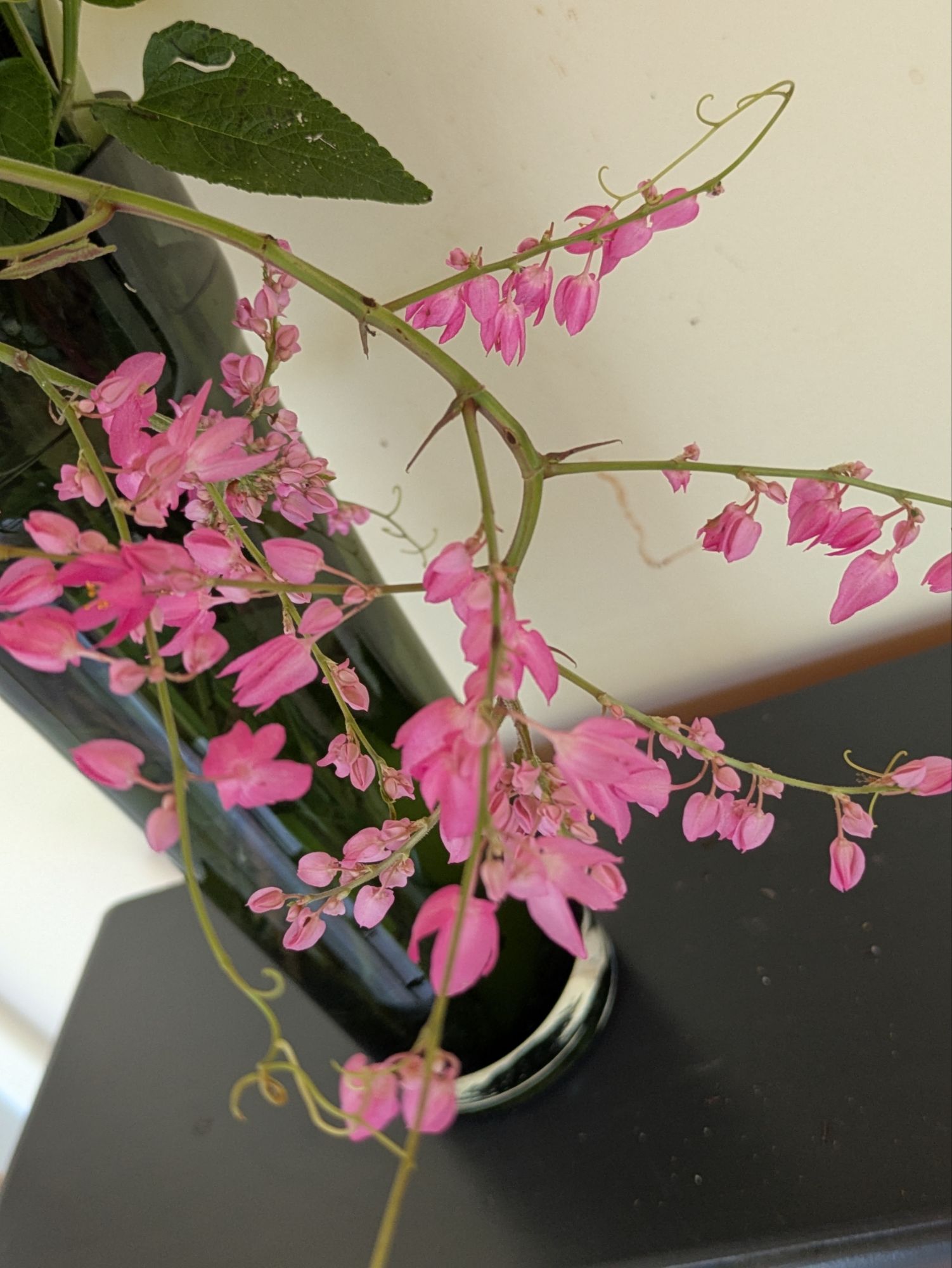
A twining stem of Coral Vine graces the edge of the vase. This vine (Antigonon leptopus) refuses to grow on the fence it was planted beside and prefers to climb the very thorny lime tree. I pick a piece out now and then and usually manage to get stabbed.
Peace be with you all.
Visit Cathy’s blog RamblingintheGarden and follow the links to see more vases.
I haven’t been sixing lately as August was a frying, hot and dry month and the garden was looking dismal. Things are looking up in September. For whatever reason, our late afternoon showers have returned, temperatures are moderating and the plants are much happier. I even went plant shopping!
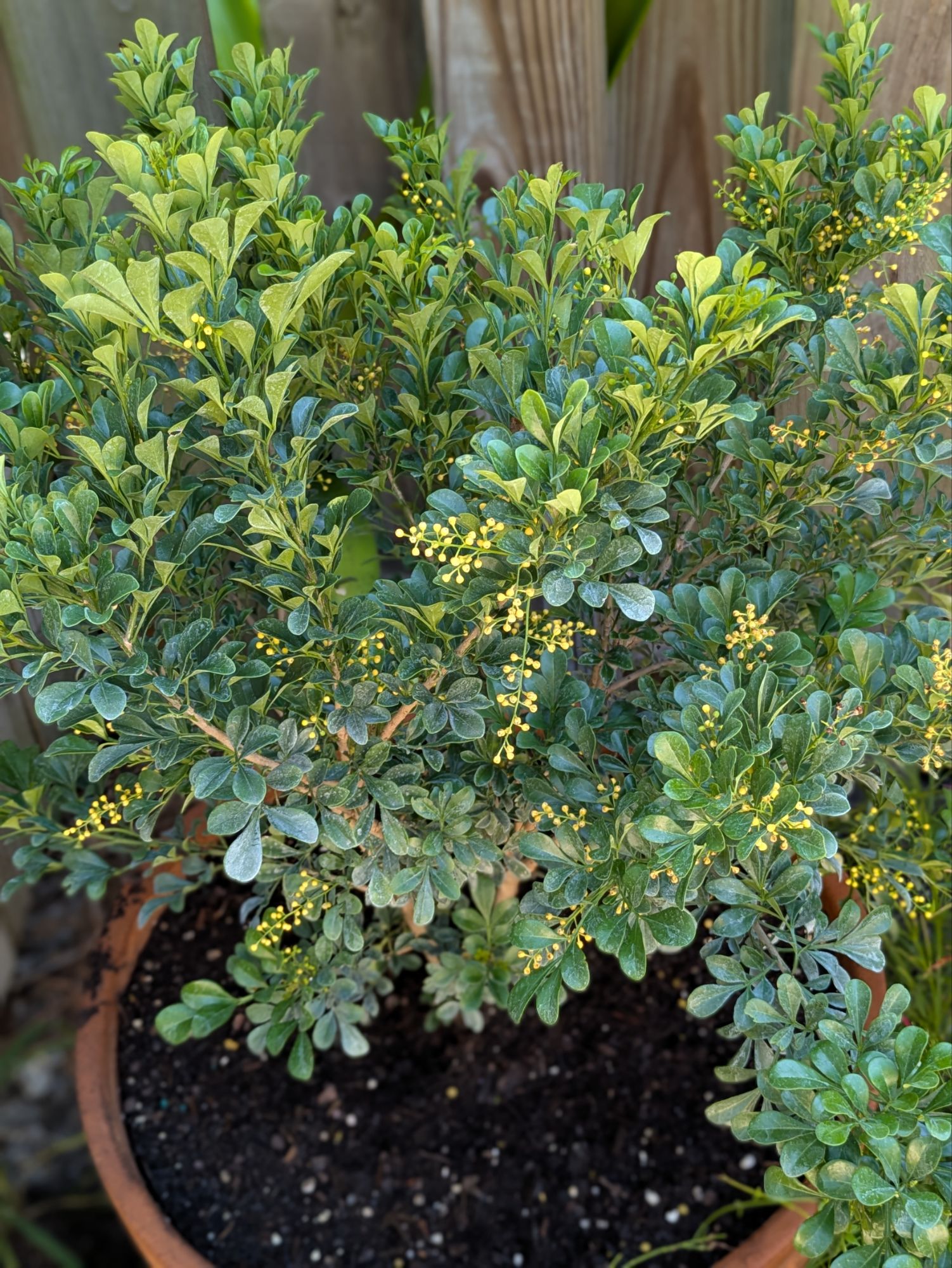
One of my purchases, a Chinese Perfume Tree (Aglaia odorata). These are the flowers. I love the scent. The nursery did an excellent job of marketing, having the shrubs here and there so you wondered ‘what is that lovely fragrance’? It’s lemony and reminds me of Southern Magnolias (Magnolia grandiflora)
Here is the Chinese Perfume Tree. I planted it in a big terracotta pot as it seems they like some moisture. I am very hopeful this works and the shrub thrives. The soil in the garden is probably too well drained to sustain this plant.
New growth in the succulent containers. The Haworthias, now green, were brown through August. Grey plants are Graptosedums.
Rejuvenated Tropical Red Salvia (Salvia coccinea) This reseeds freely in the garden to the point of needing to be thinned.
‘Little Harv’ Aechmea Bromeliad in full bloom.
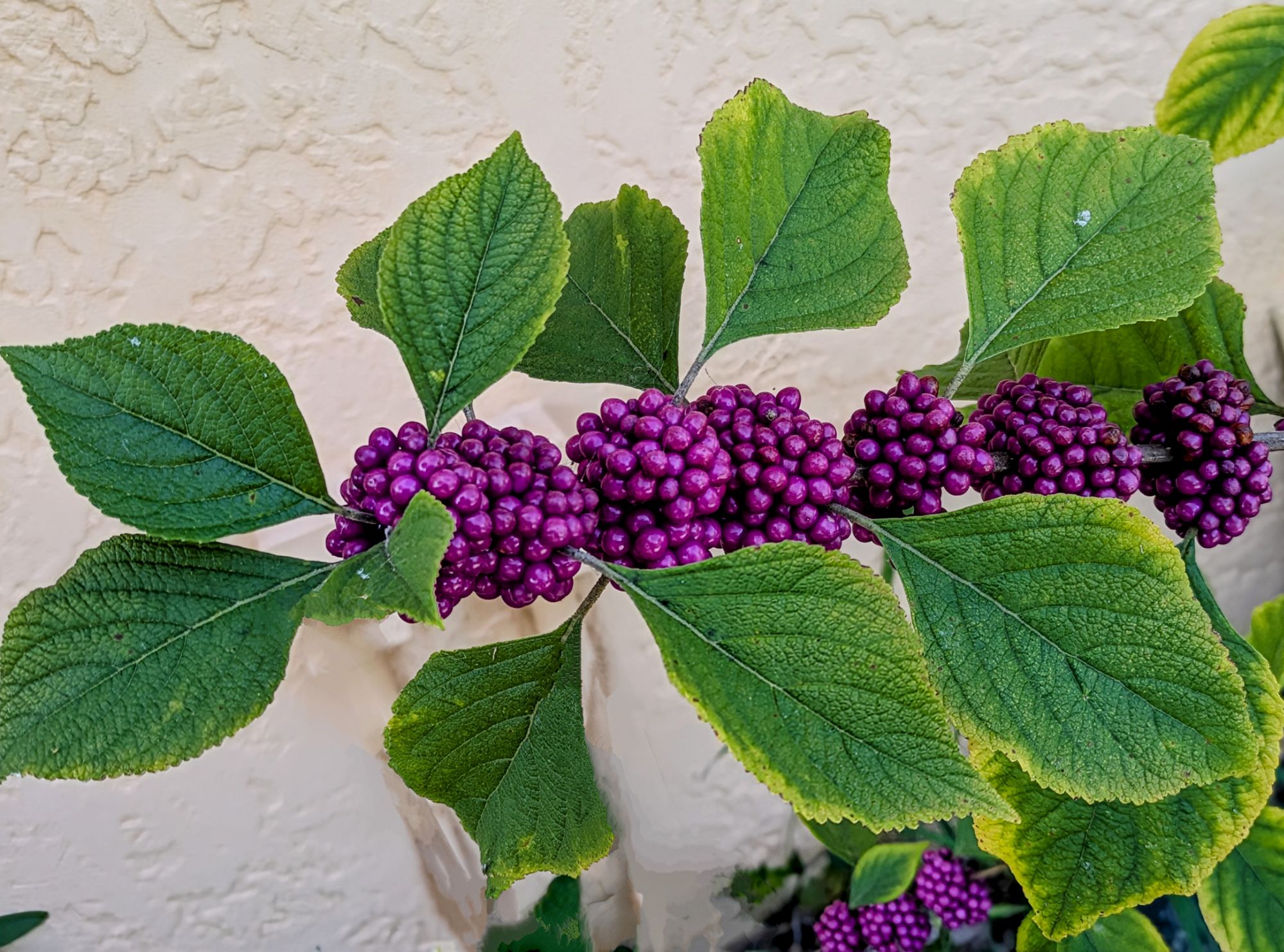
A little fall color and masses of purple berries on the Beautyberry (Calliocarpa americana)
That’s all from my garden this week. Visit Jim’s blog GardenRuminations to see more SOS posts.
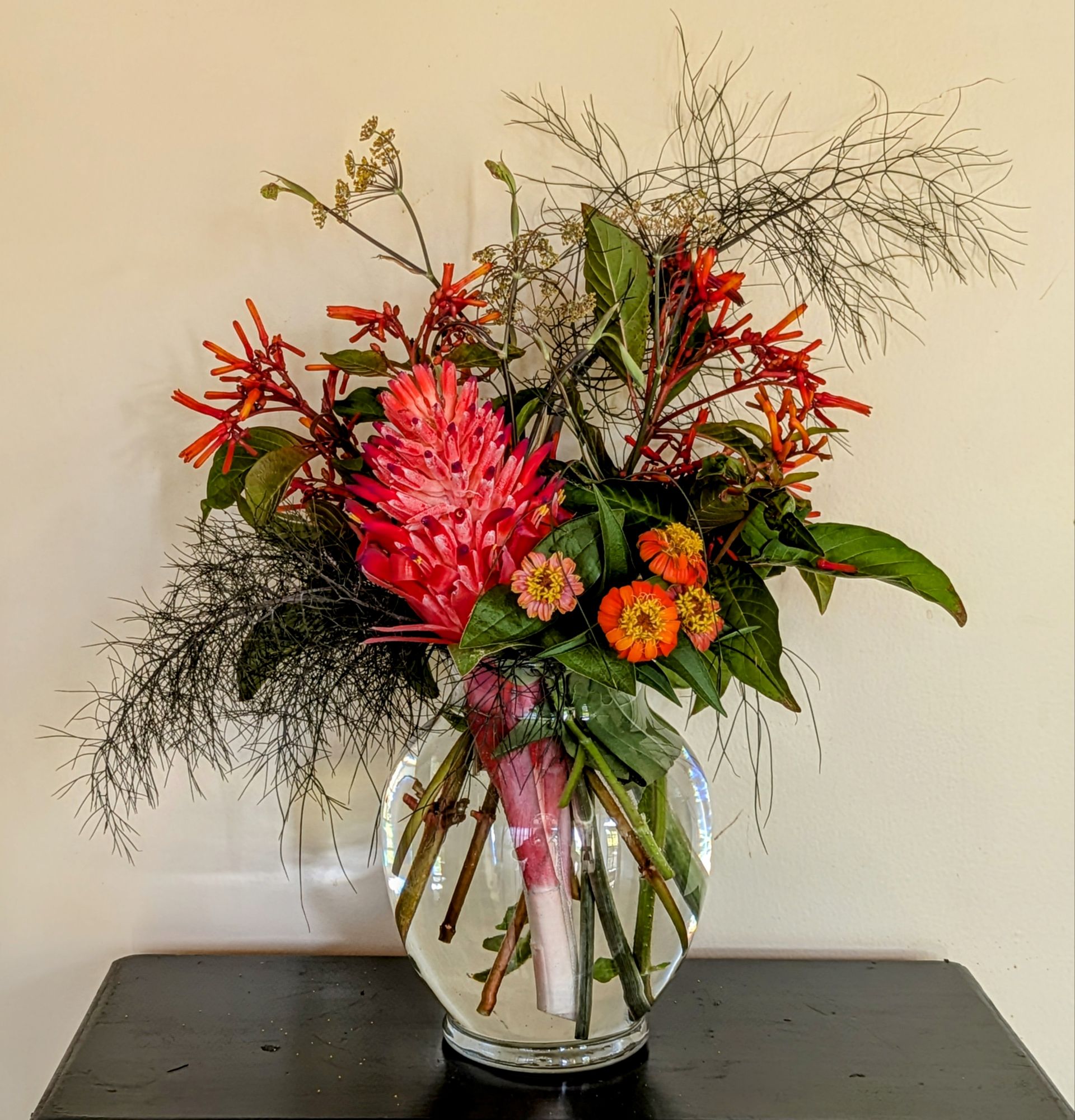
At long last our dry spell was broken last week. Locals swear that those of us who live on the limestone ridge (the highest point on the East Coast of Florida) are in the doughnut hole – a place where rain goes around us. Sometimes I believe this. This summer it has been true, the rain just wasn’t quite getting here. The garden gratefully soaked up all the moisture from the sky and promptly asked for more. This afternoon is looking quite promising for a rain shower. Things are looking a bit torched around here, so it seems a perfect time to introduce the Flaming Torch Bromeliad.
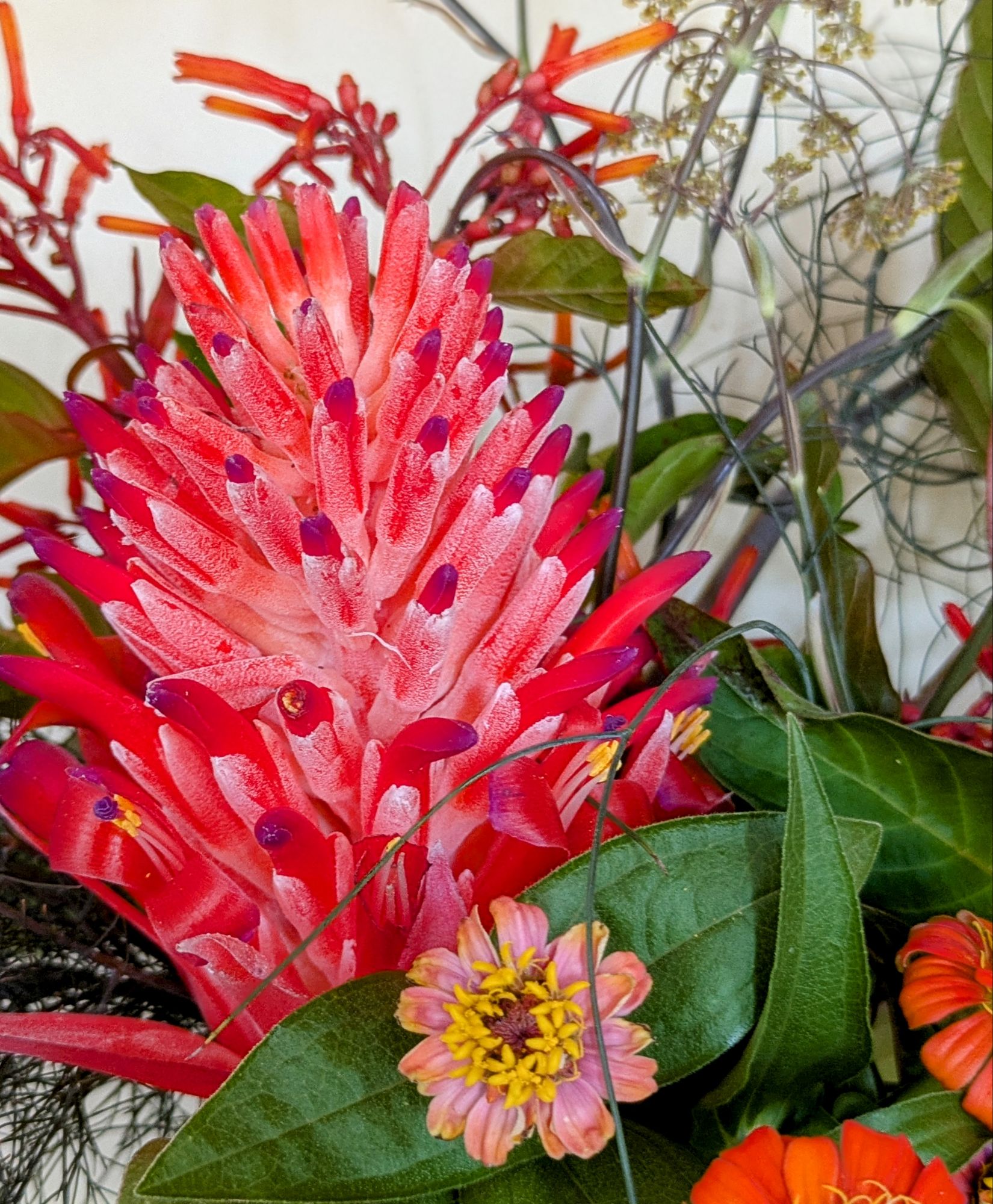
Meet the Flaming Torch (Billbergia pyramidalis). These are very aptly named, when the sun hits them just right, they look exactly like that. Another common name is Hurricane or Foolproof plant. The peak of hurricane season is September 6th, so I can get that. As far as being foolproof, I have killed a number of these following directions that they grow in full sun. This is not true. Those planted in full sun were torched!
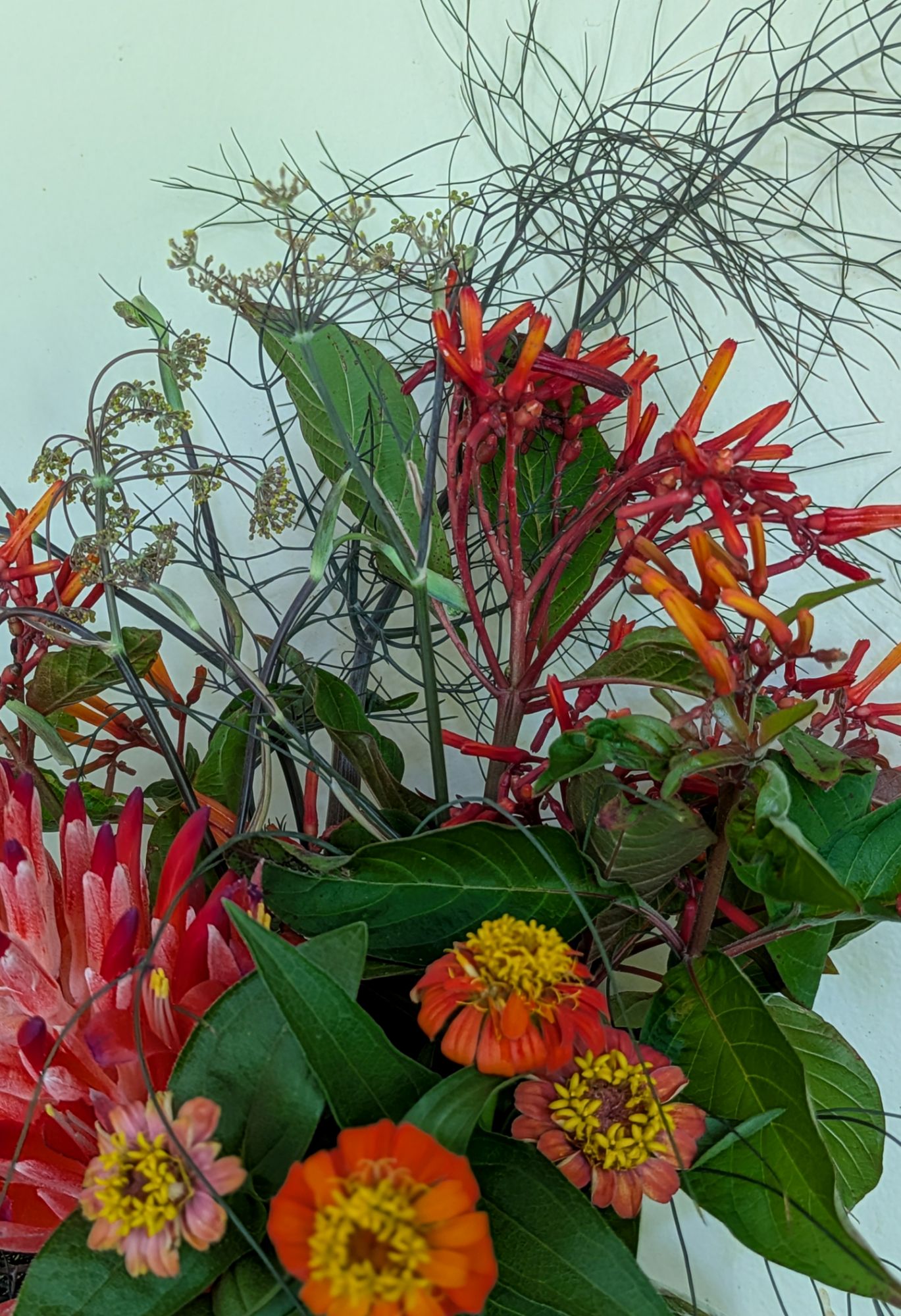
The rest of the arrangement has Zinnias, in pink and orange. Firebush (Hamelia patens) is orange tubular flowers. Dark foliage and pale yellow flowers are from Bronze or Copper Fennel (Foeniculum vulgare). The vase is a non heirloom florist vessel from somewhere..
That is all from my garden this morning. To see more vases, visit Cathy at RamblingintheGarden
It is still dry and scorching in my garden. Even the enormous Hurricane Erin seems to be keeping the precipitation to herself. She is forecast to pass about 550 miles away from me, the further the better. Fall berries have been forming in the garden. I have been baking, watching the birds enjoy it and cut a few sprigs for my Monday vase.
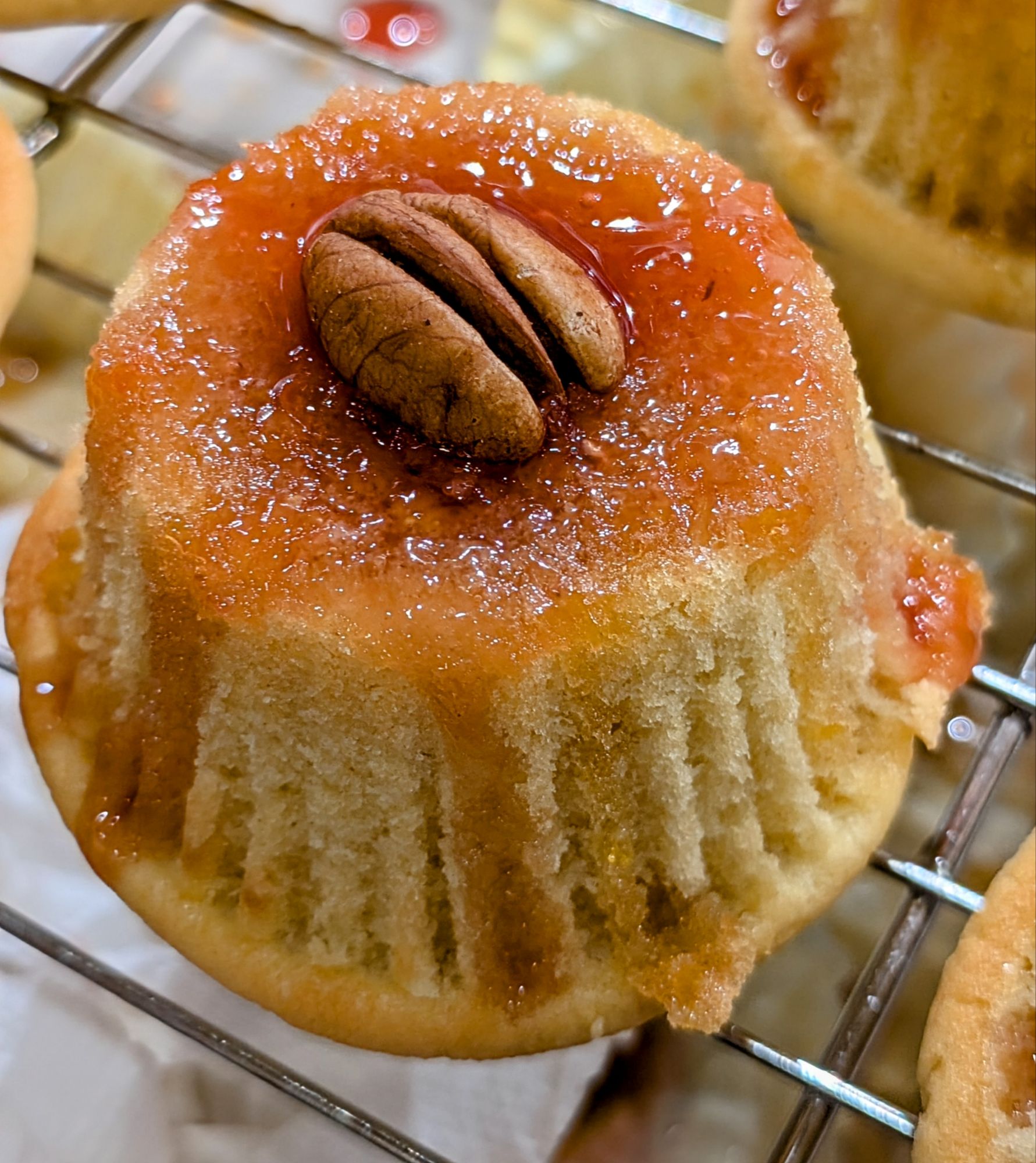
Last week I had Beautyberries in my vase. Native Floridians tend to be the only people who really enjoy the fruit, using it in desserts and for jam and jelly. I have been told many times the berries don’t taste like much, so I finally nibbled a few. It’s true, an astringent, peppery flavor emerged when I tried it. Then I cooked some down to juice, added sugar and a very nice berry flavor emerged. Voila! Lemon Beautyberry cupcakes:
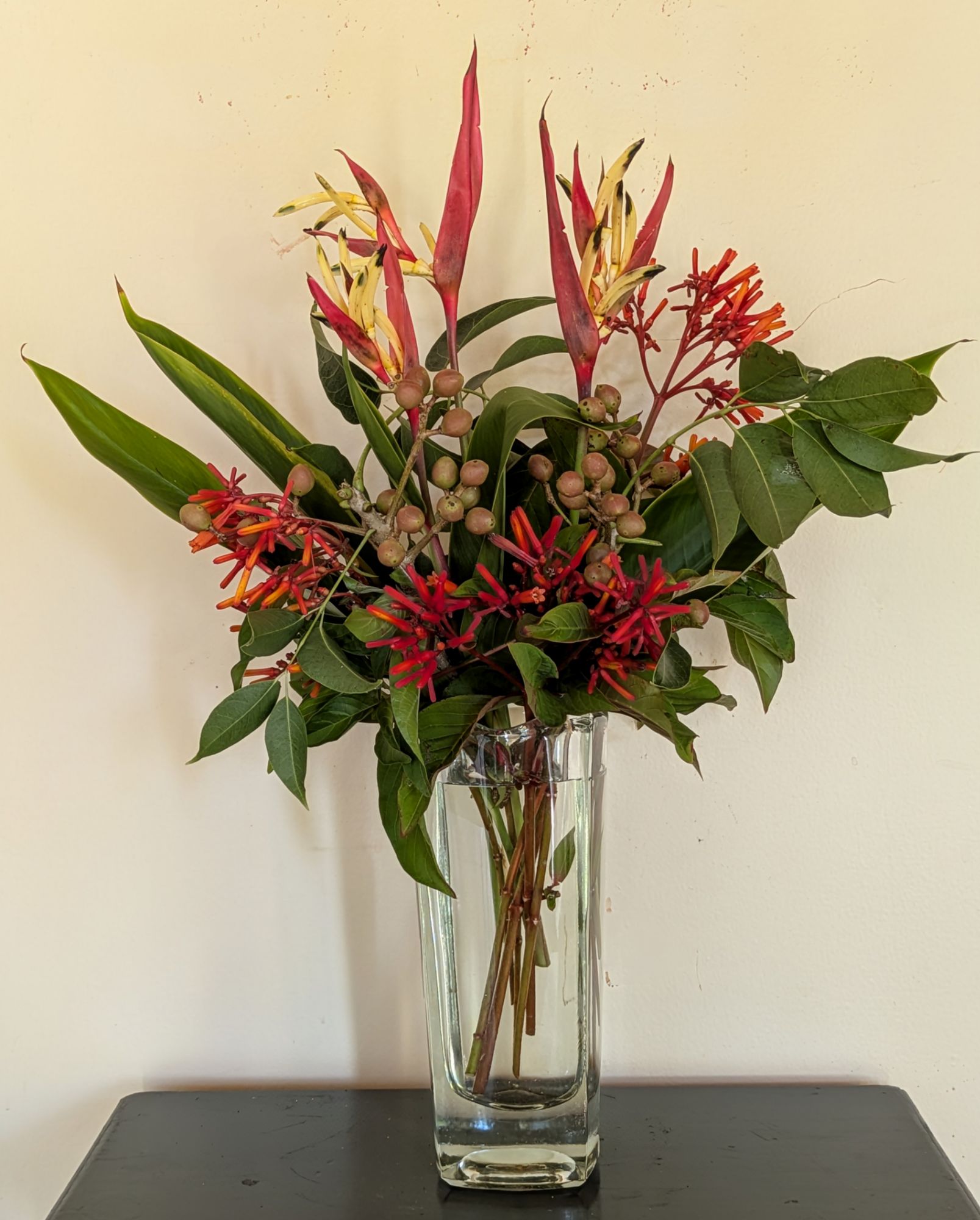
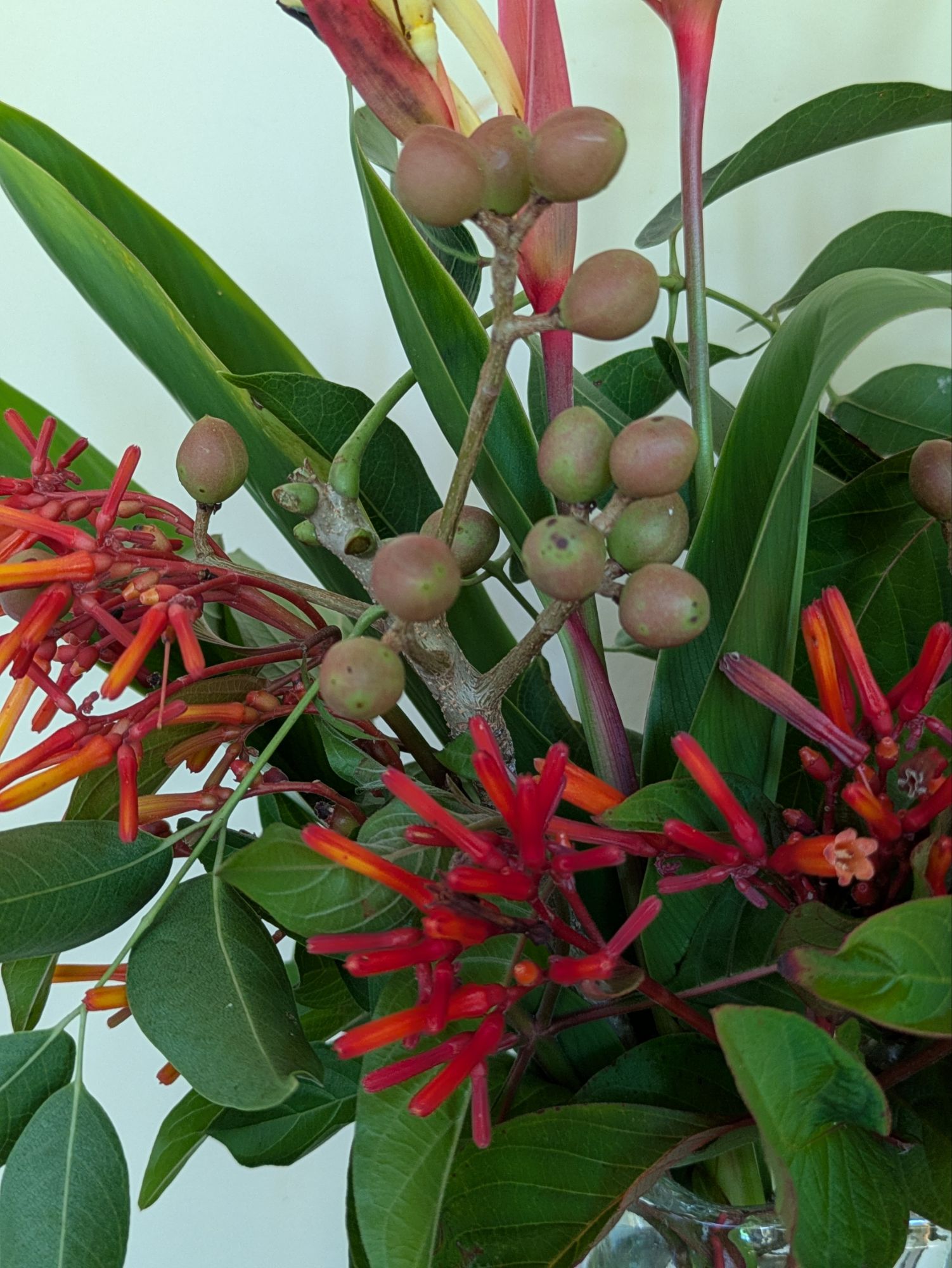
The berries in my vase this week are from the Gumbo Limbo tree (Bursera simaruba). These berries are best left for the birds, who love them. The numerous seedlings around my garden will attest to that.
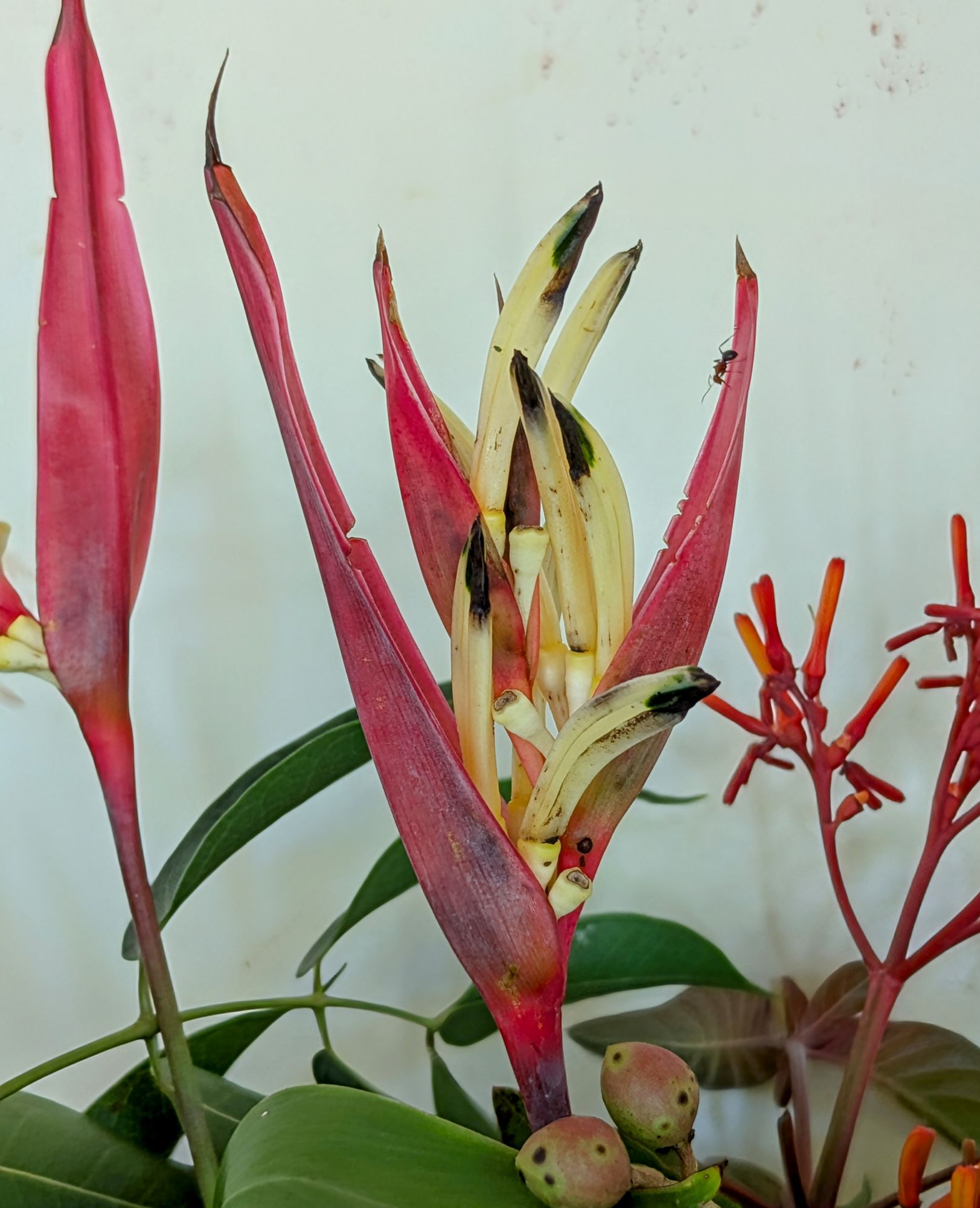
Firebush (Hamelia patens) in orange tubular flowers and red and yellow “Lady Di” Heliconias (Heliconia psittacorum) round out the plant palette.
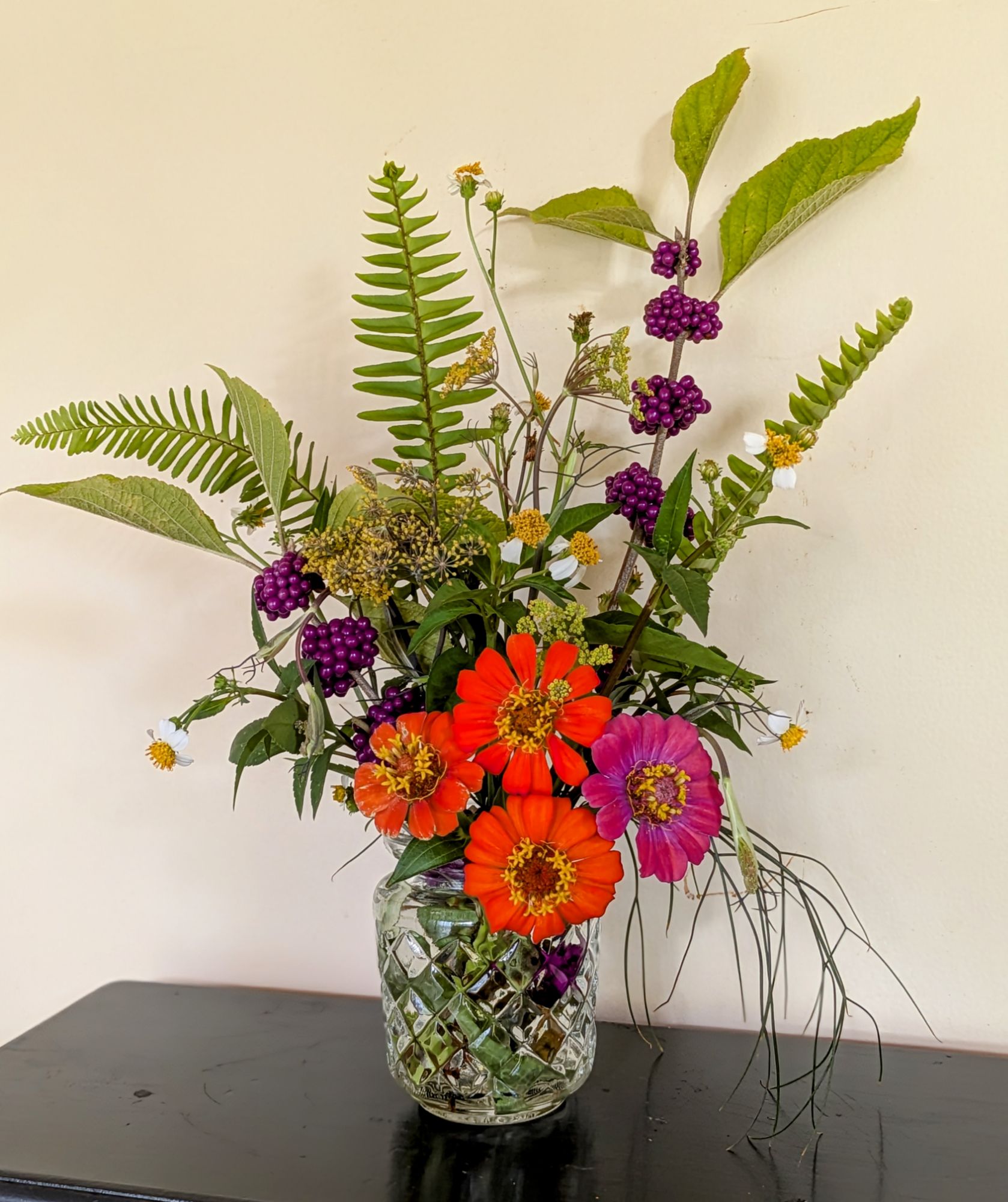
I was in the mood for a cottagey vase this week and set out to find some less tropically mad flowers. Spell check seems to think cottagey is not a word. While roses are out of the question (I choose not to torment myself) I like cottage garden flowers and always have some zinnias going. The heat dome frying my garden finally dissipated and it actually rained!! Hopes were high for some new flowers. I found some beauties and some beasts.
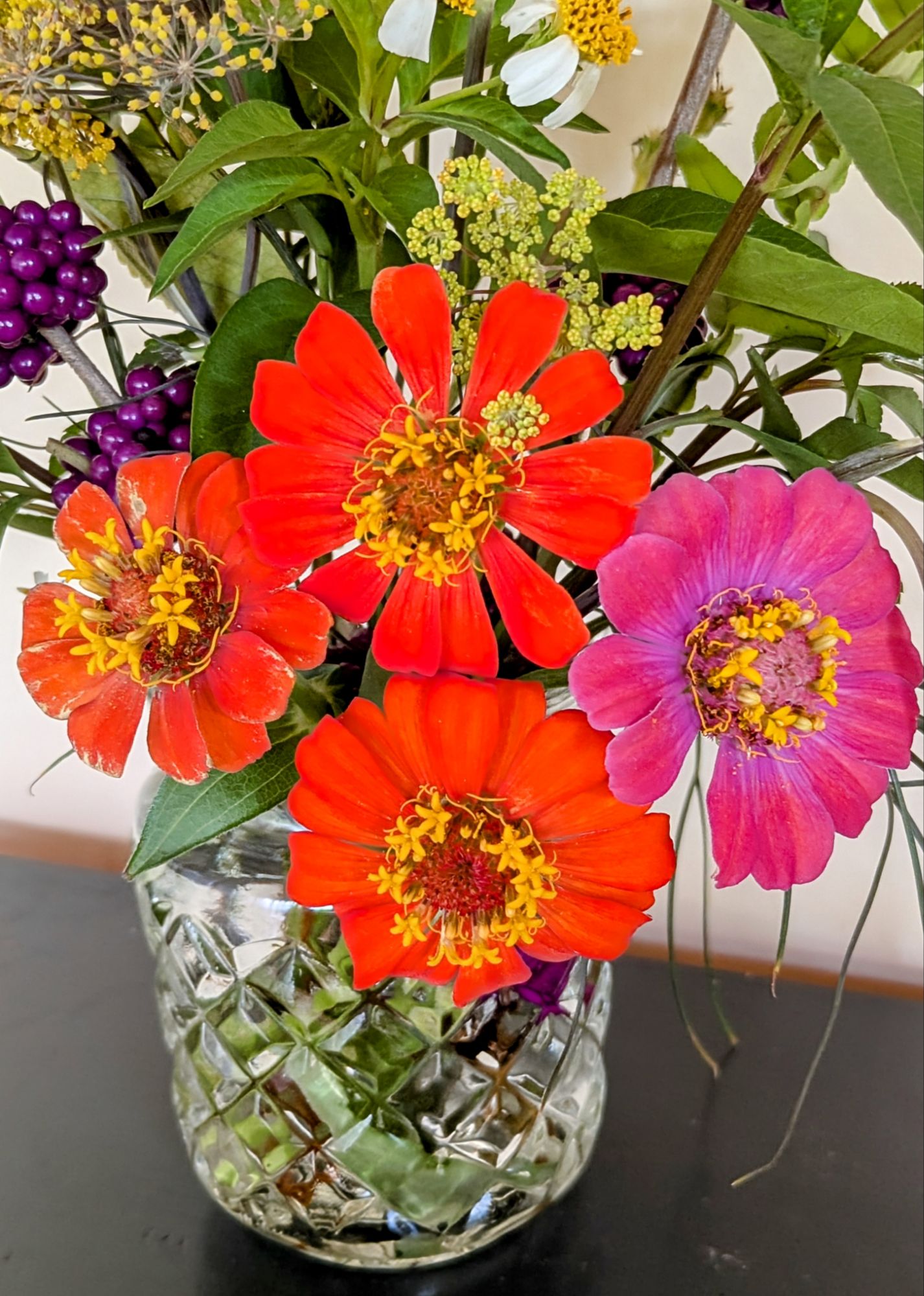
The beauties in the vase are the Zinnias and Beautyberry. I selected seeds last year hoping to get orange and pink Zinnias and here they are! The Beautyberry (Calliocarpa americana) intrigues me. I had this shrub in my garden 600 miles north of here and it refused to grow in the sun and did not produce berries until November. In Florida, I have berries in August, it thrives in full sun and happily lives in sugar sand. It is a head scratcher. Oh, Copper Fennel is also a beauty. This one lives through July (a major accomplishment) and is flowering in August!
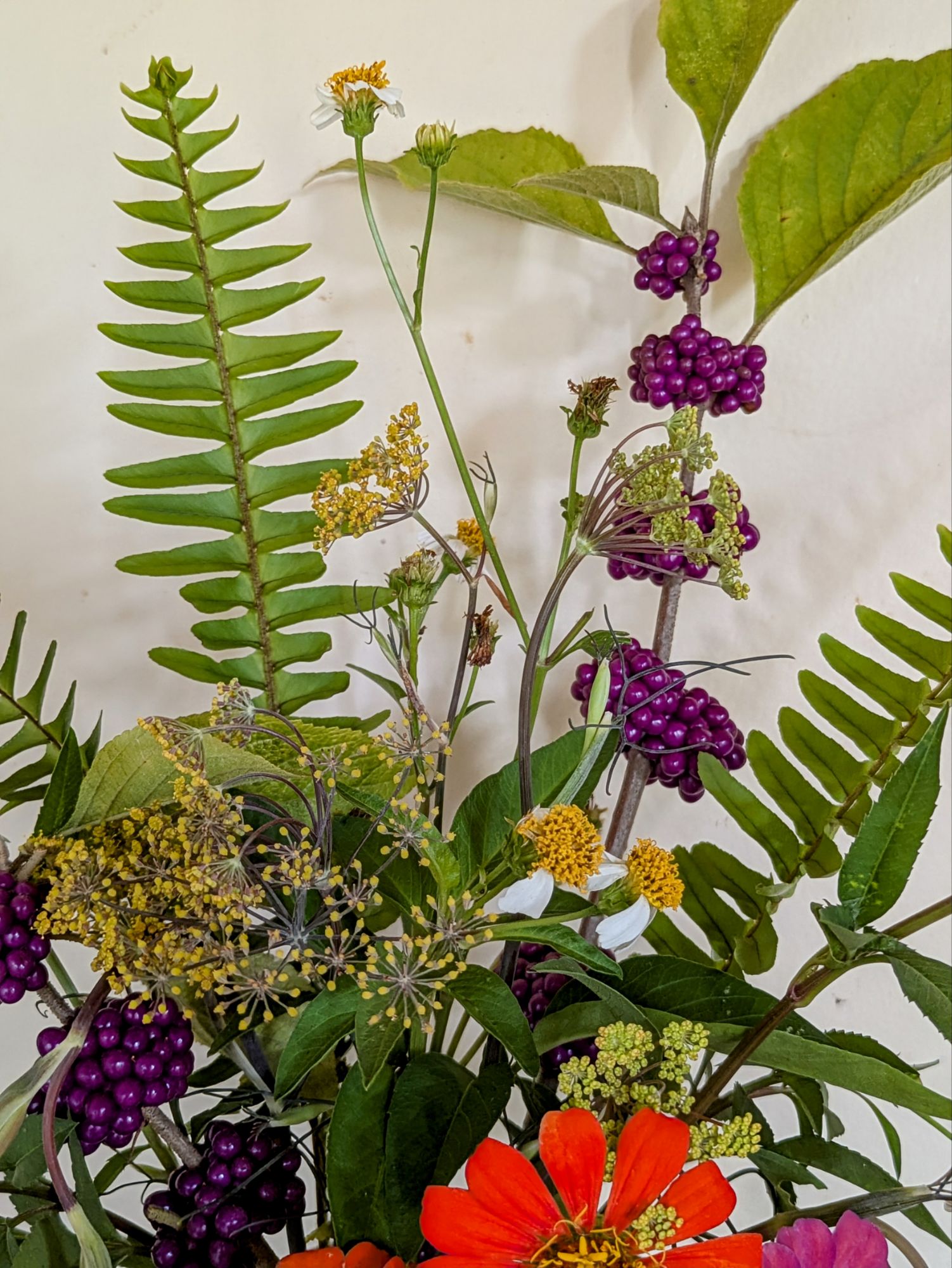
The beasts are the ferns and the daisies. The ferns are the invasive Asian Sword Ferns (Nephrolepis brownii) I’ll admit to liking these, pulling them out by the bag and enjoying a few swords in vases from time to time. They aren’t too beastly in the sugar sand, but I can imagine with unlimited water things could get ugly. The other beast is Bidens alba, ironically a valued native pollinator flower – it produces so many seeds it is difficult to keep in one place. The butterflies do love it.
The Zinnias with a bit of purple Beautyberry and chartruese Fennel flowers.
The beastly Asian Sword Ferns and white Bidens alba.
I am dreaming of cooler weather and some more rain.
Visit Cathy at Ramblinginthegarden by following the link where more vases full of weekly garden treasures can be found.
We are deeply entrenched in the dog days of summer in my garden. Some Saharan dust meandered in and shut down our cooling clouds and showers. Every time I look at the weather it says “feels like 108 F” Surprisingly, it is much warmer further north. I feel fortunate to live close enough to the Atlantic Ocean to catch a breeze. The breezes make it less hot, not cooler!
The dog star, Sirius, rises during the hottest part of the summer. Modern definitions of the dog days of summer have them occurring from July 11-August 3. The scope must be greatly expanded for South Florida! In ancient times the dog days lasted longer. I agree with the ancient philosophers. It is hot in my garden well past the first of September.
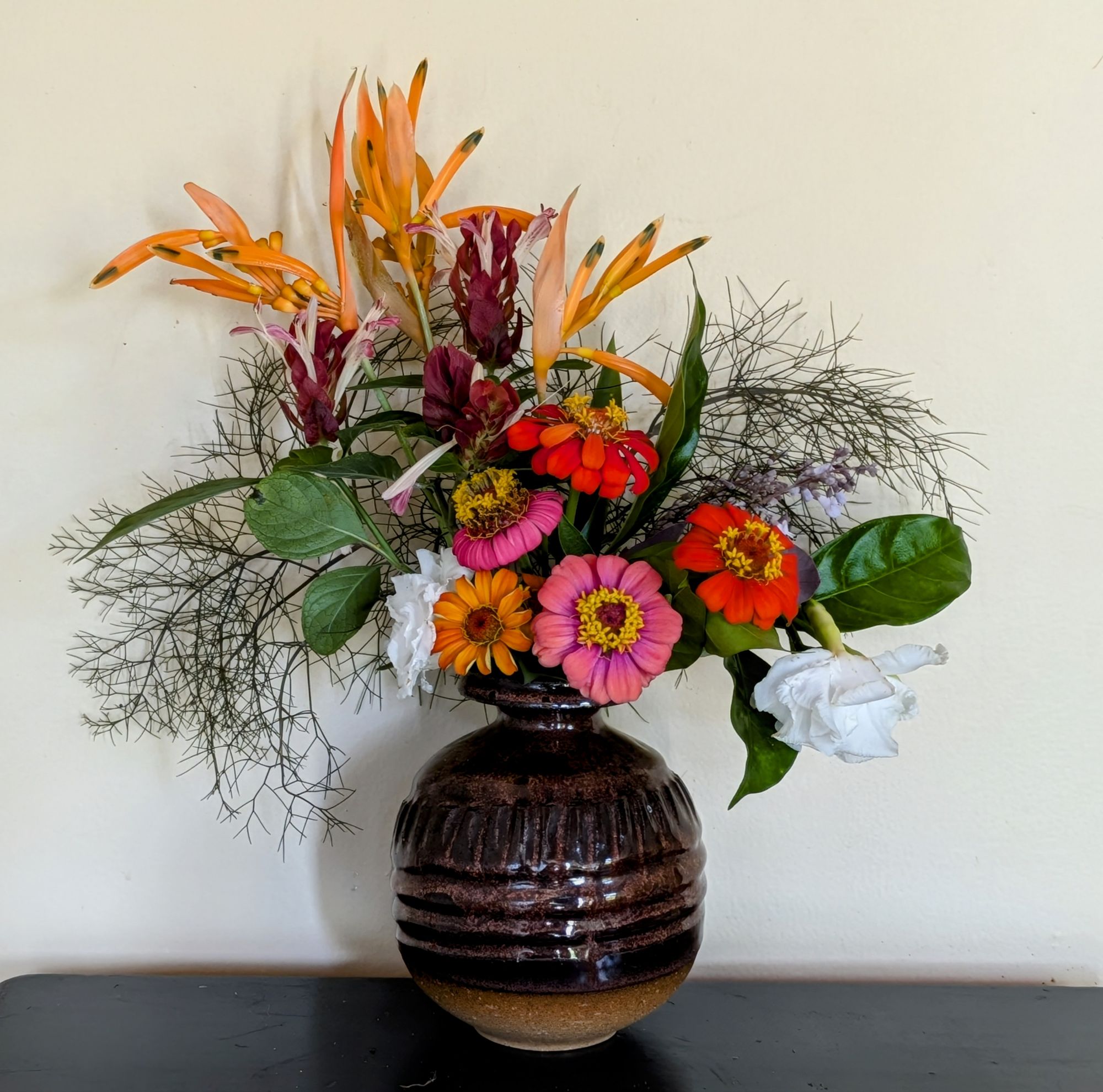
The flowers in this vase are Sirius or even serious survivors. Thriving in sun and heat and going with or without hand watering by the fickle gardener they still shine.
The fittest:
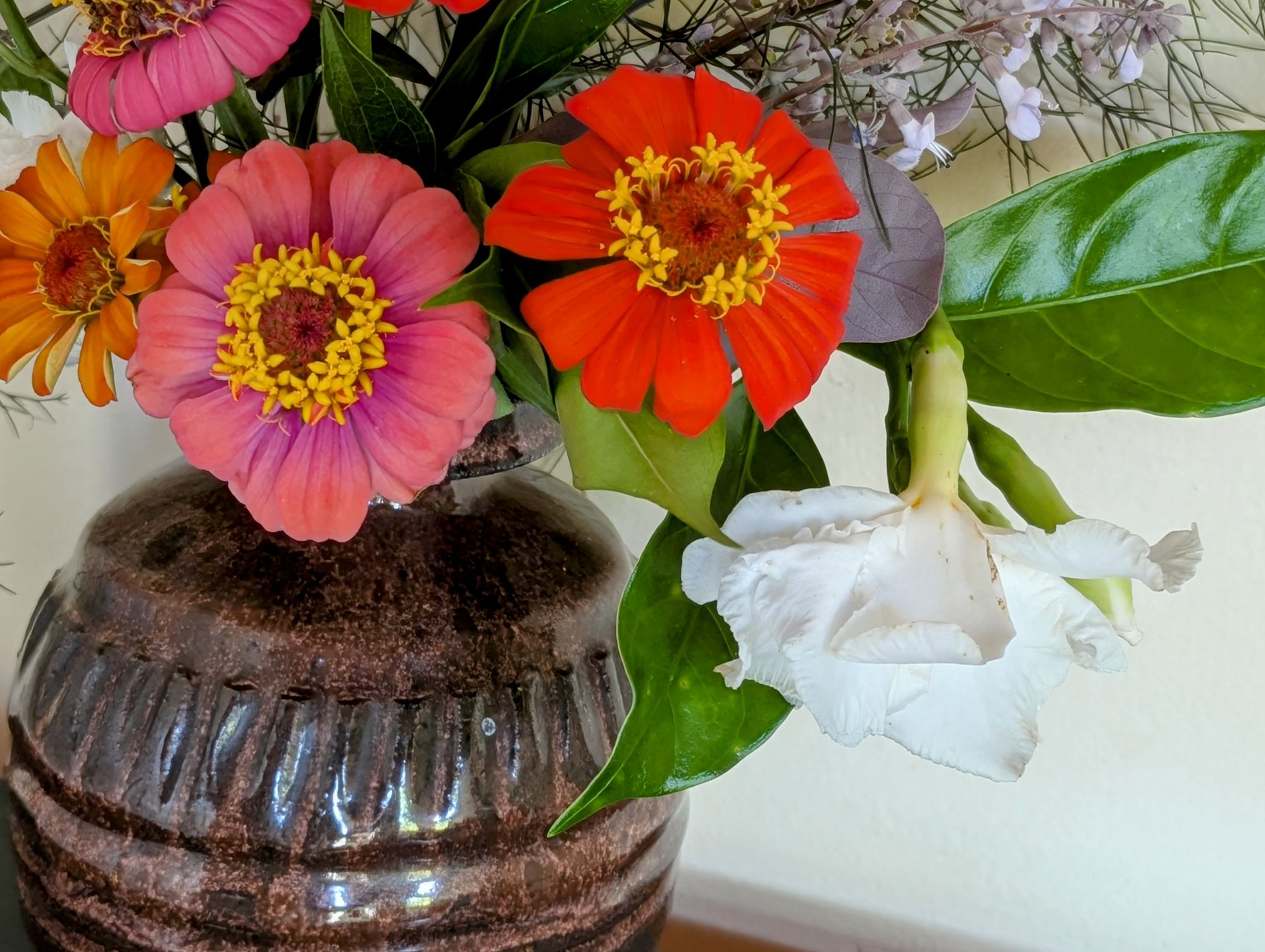
Some tried and true summer favorites, Gardenias and Zinnias. Gardenias are the Tropical variety that is deciduous here, Tabernaemontana diviricata. Zinnias are grown from seed I saved last year hoping for pink and orange flowers.
The tropical part:
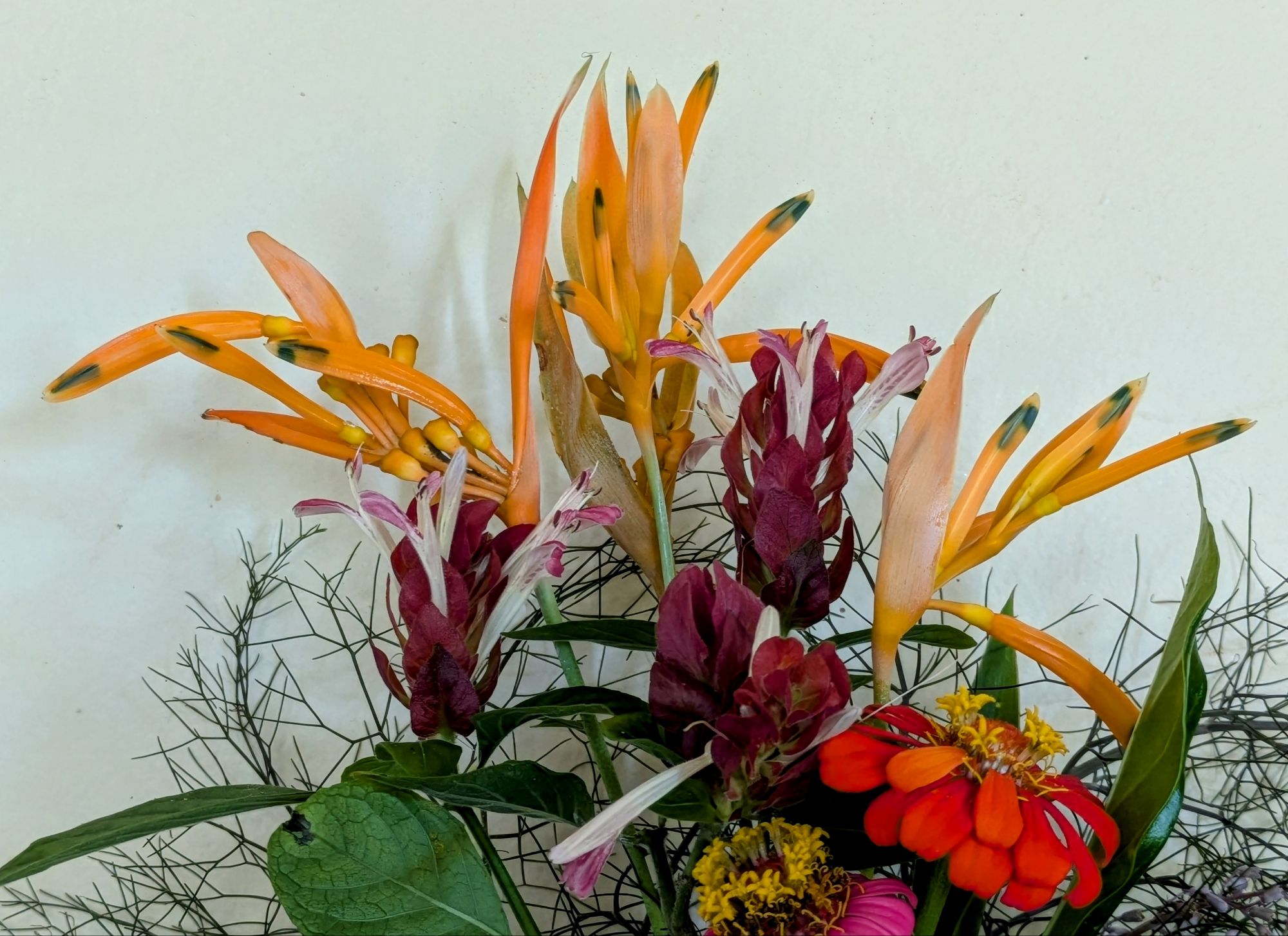
Orange flowers are Parrotflowers (Heliconia psittacorum Choconiana) Red flowers are Red Shrimp Plant (Justicia brandegeana). Dark ferny foliage is Copper Fennel (Foeniculum vulgare) Maybe that is not so tropical.
I inherited the vase from my mother and have enjoyed using it for years.
For those wondering about Gopher Tortoises mentioned in last week’s vase post, here is one ambling up the walk to my front porch. Once he or she arrives near the potted herbs any basil hanging over the edge of the pot will be trimmed to turtle height. This turtle also enjoys charteuse Coleus and melons. A bit of an odd salad!