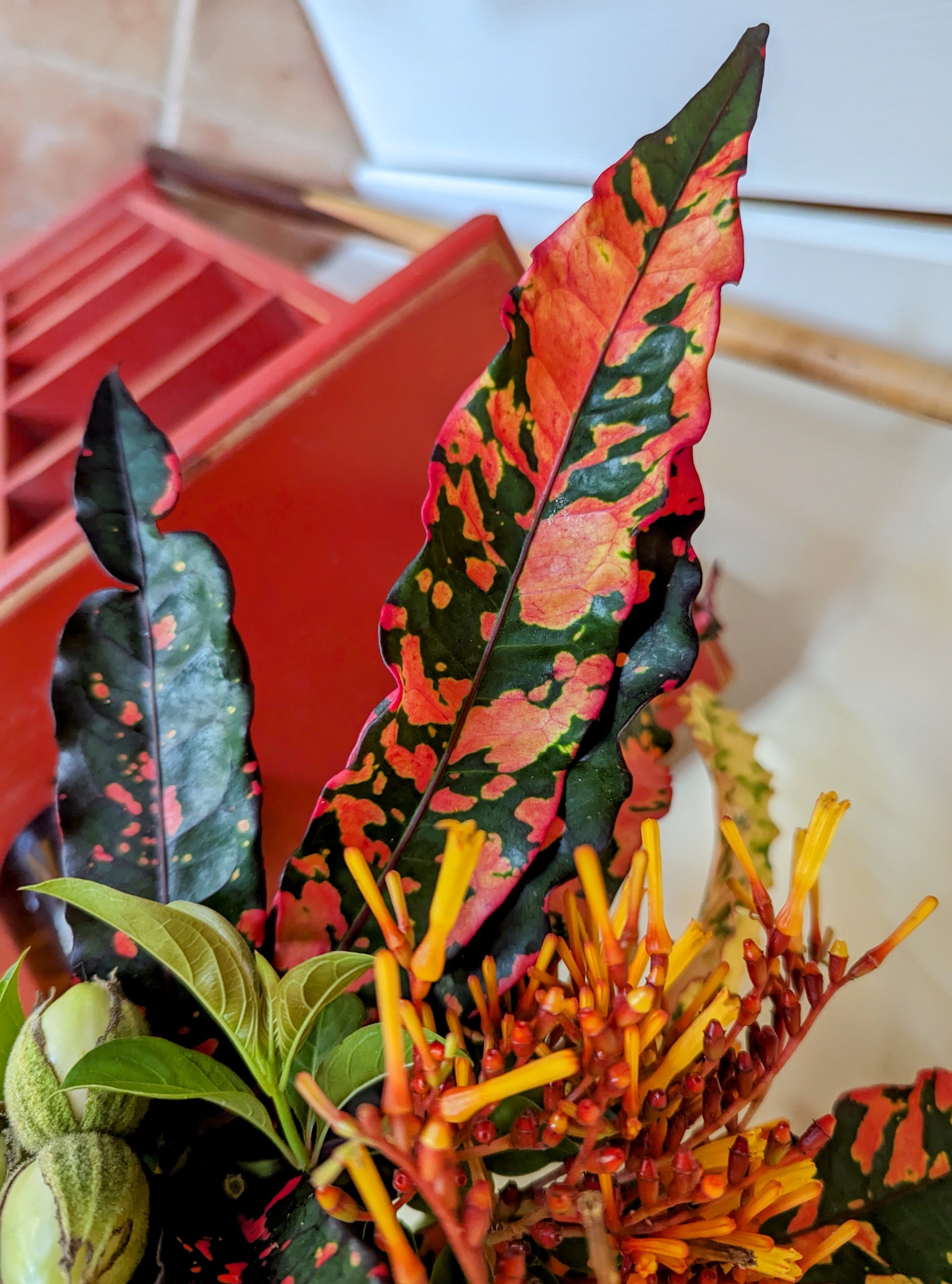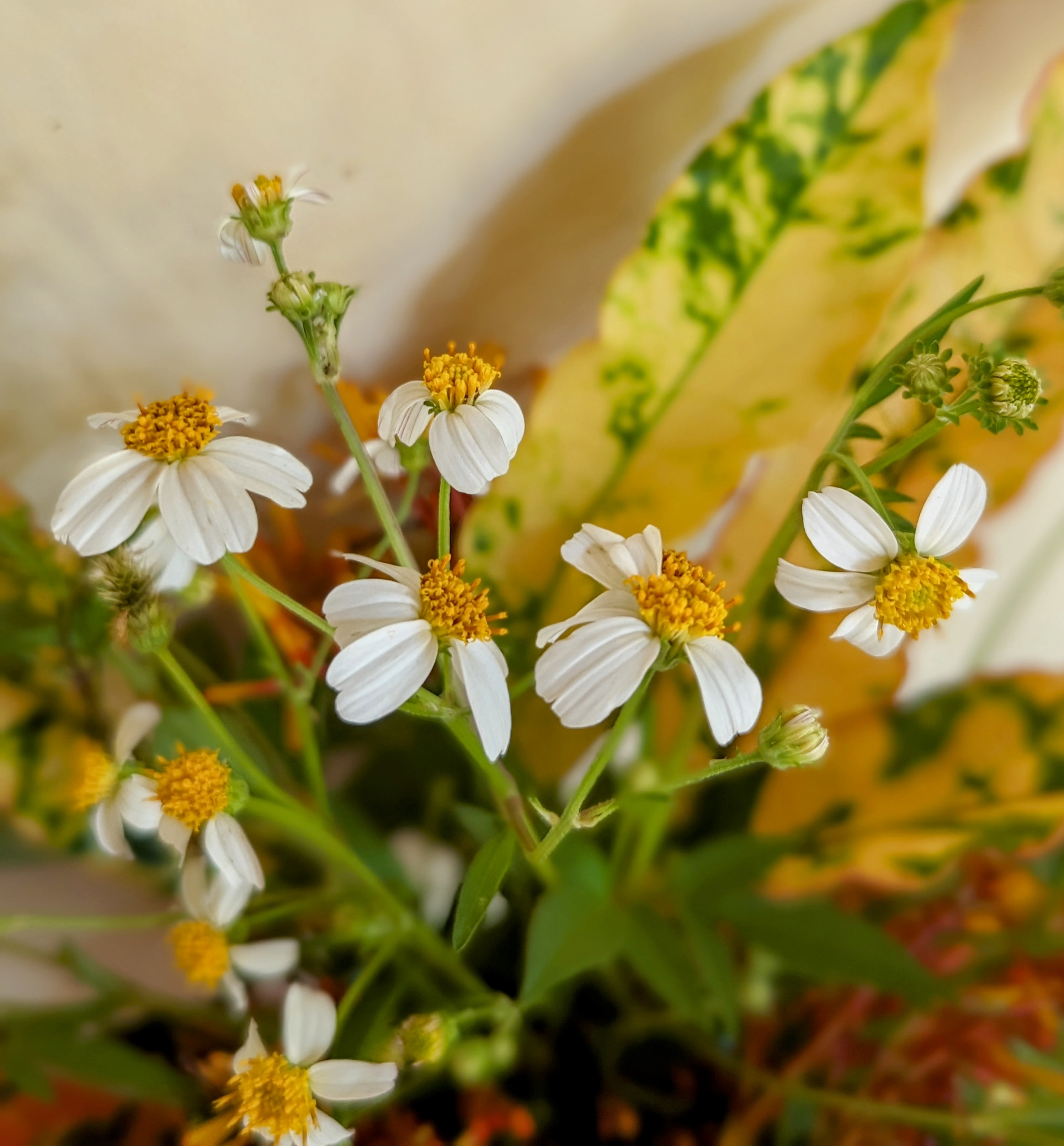
In a Vase on Monday – Simple Summer S’s

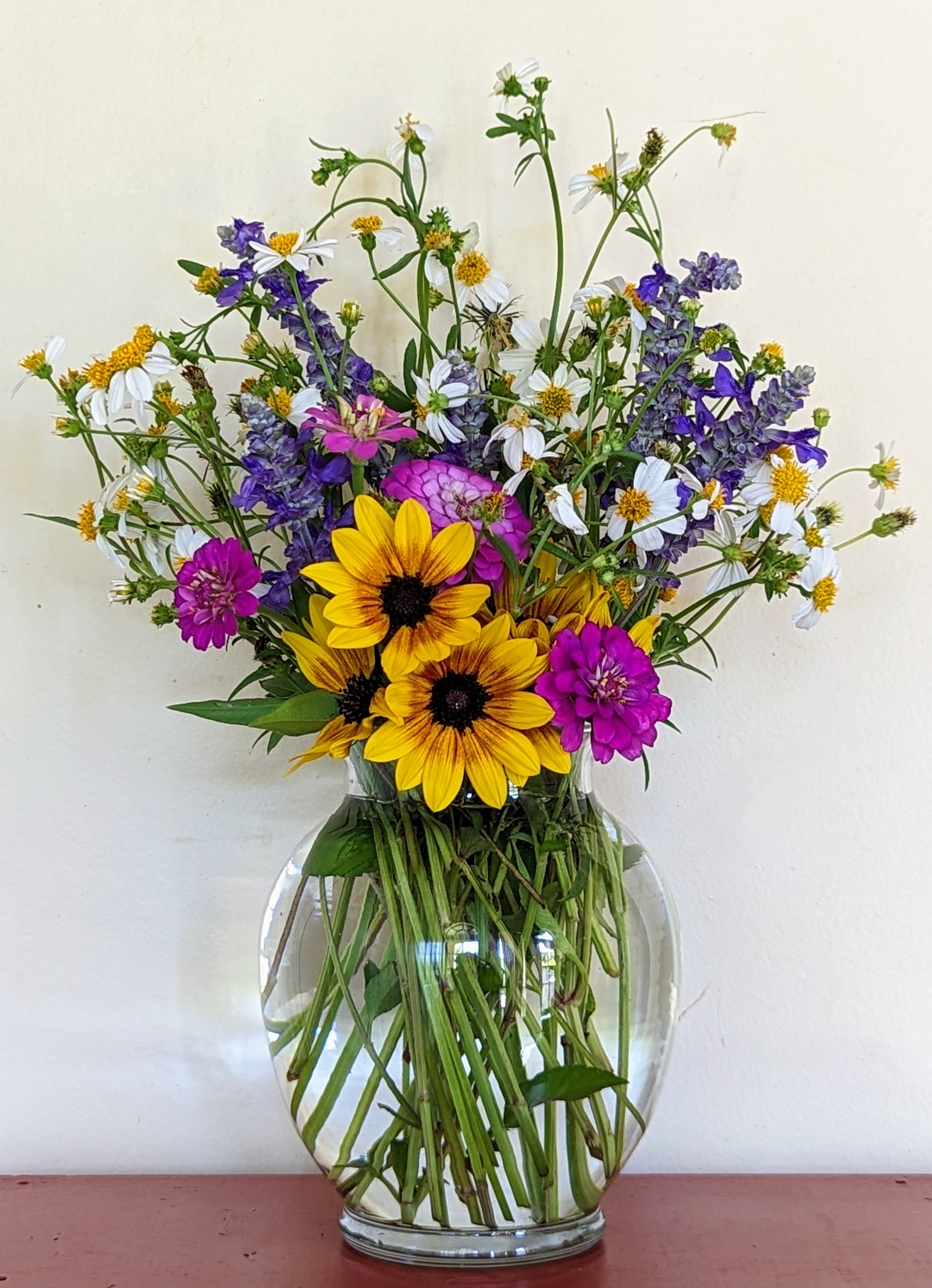
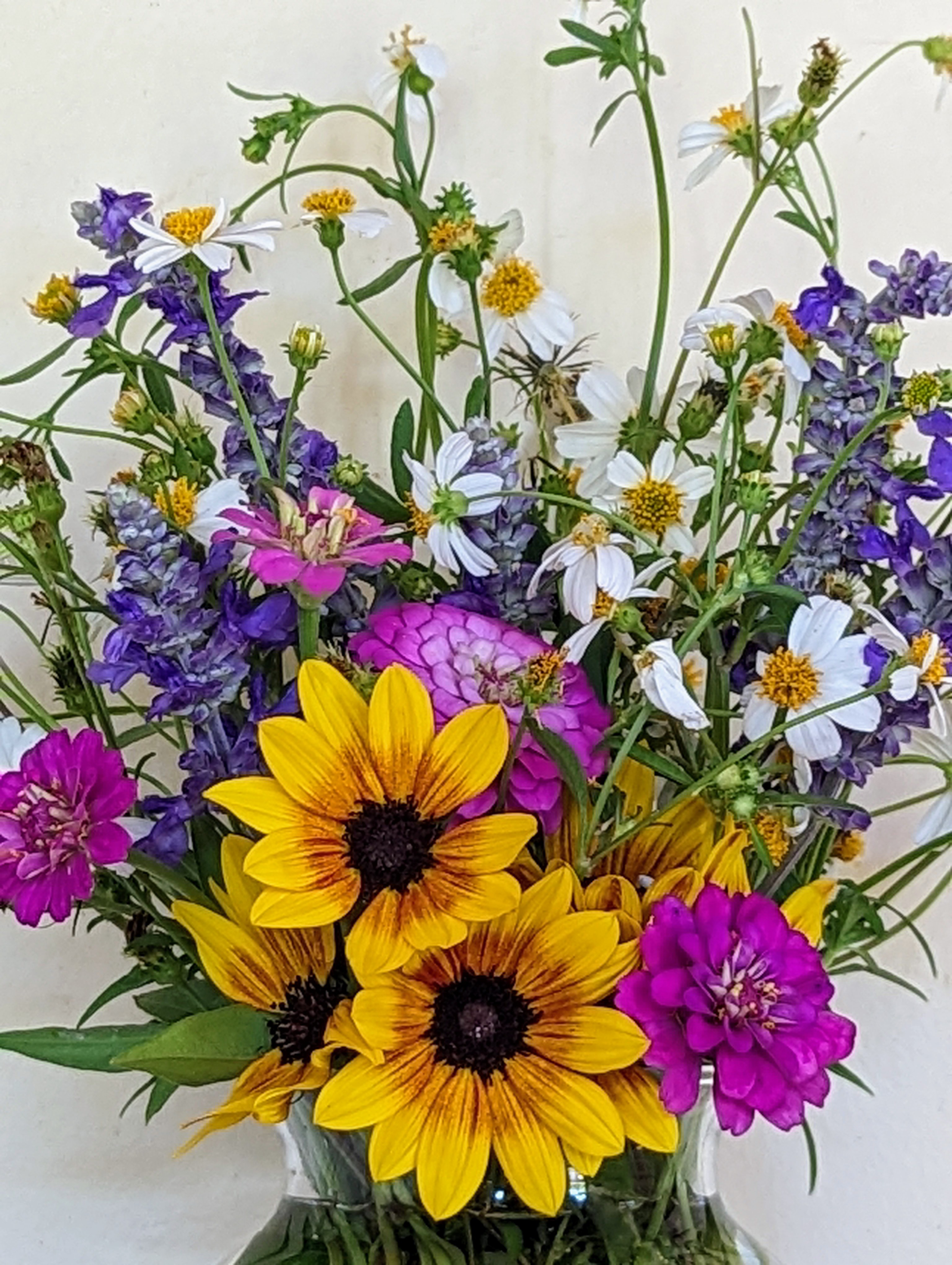
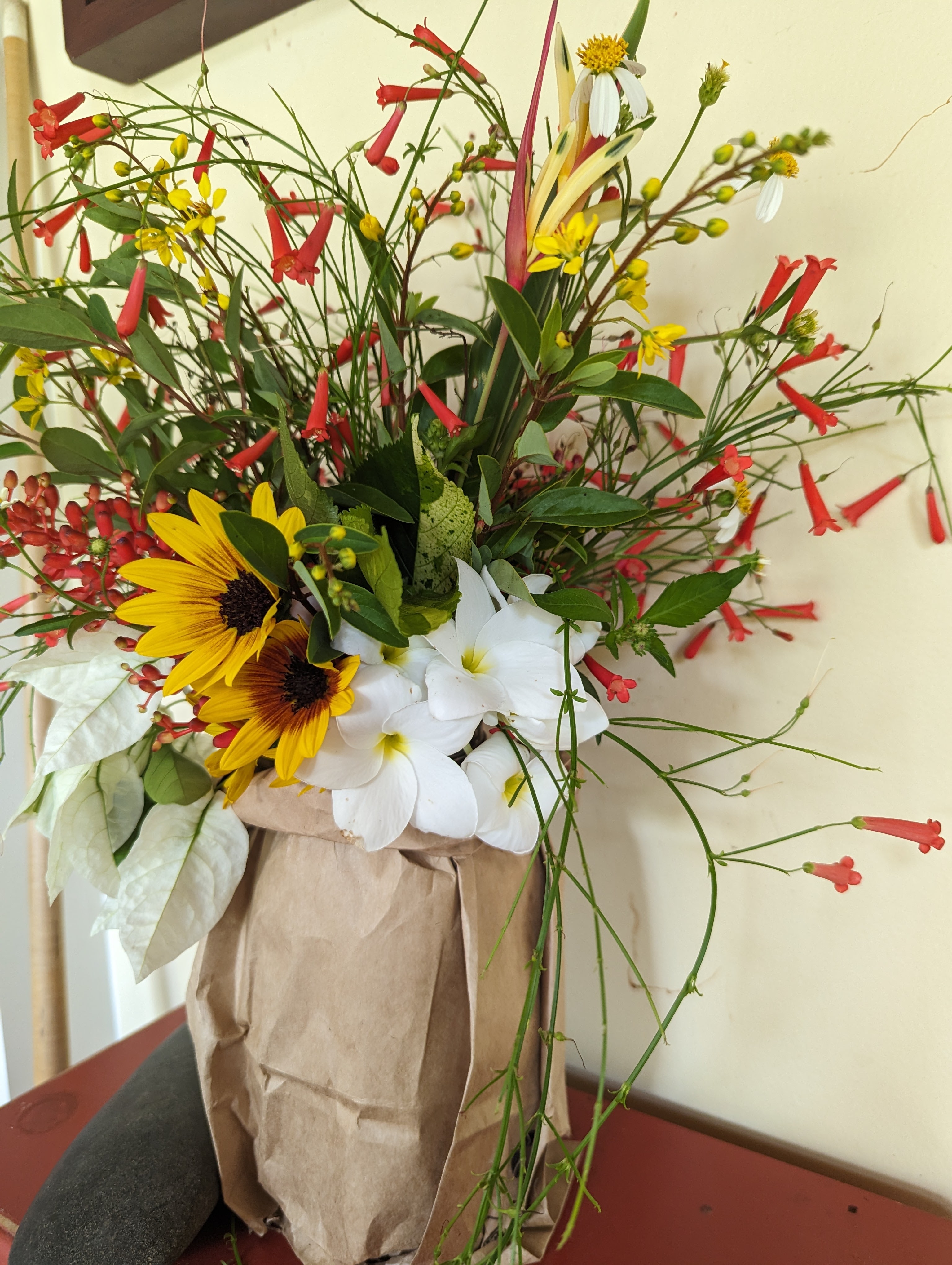
I have been enjoying my “S” plants this summer. I noticed how big the Salvia flowers have grown with all the rain as I walking the dog this morning. The resiliency of plants continually amazes me, last summer it was very dry – I had the same flowers, they were just half the size.

The Brown Eyed Girl Sunflowers are still blooming and have been since February. They are in a container in the sunniest part of the garden; seemingly not enjoying quite that much sun. They have grown over the side of the container into a shrub to get out the heat. The container features stems underplanted with groundcover bromeliads, a bit odd at this point, but I hate to disturb anything in July. Even the Lantana is taking a rest from flowering.

The vase reflects my simple scheme. The glass I drank my orange juice from was sitting on the counter when I came in with the flowers. It was rinsed and repurposed. I figured the flowers might enjoy a little OJ. I think this qualifies as a plonk.

Close ups:

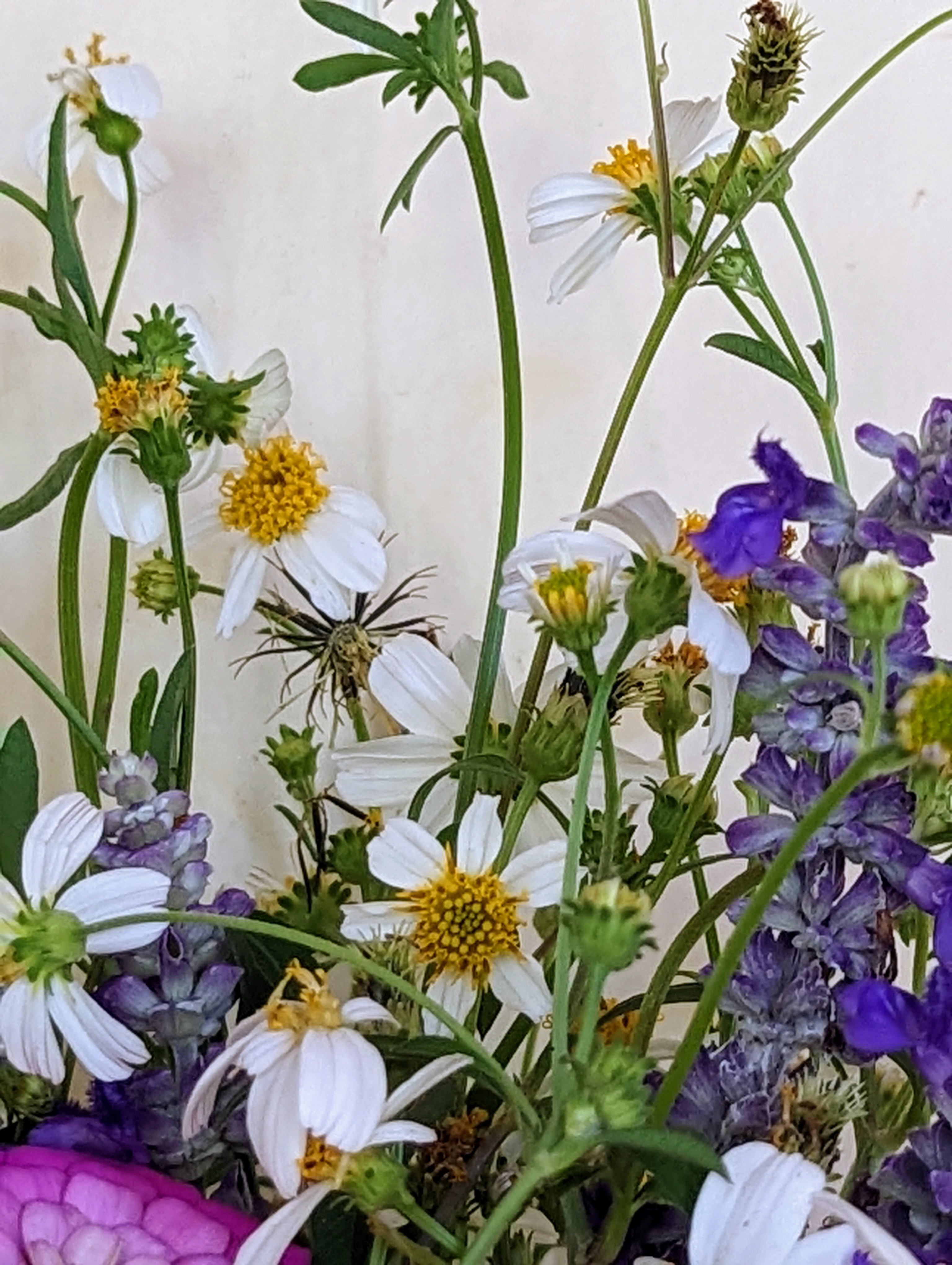
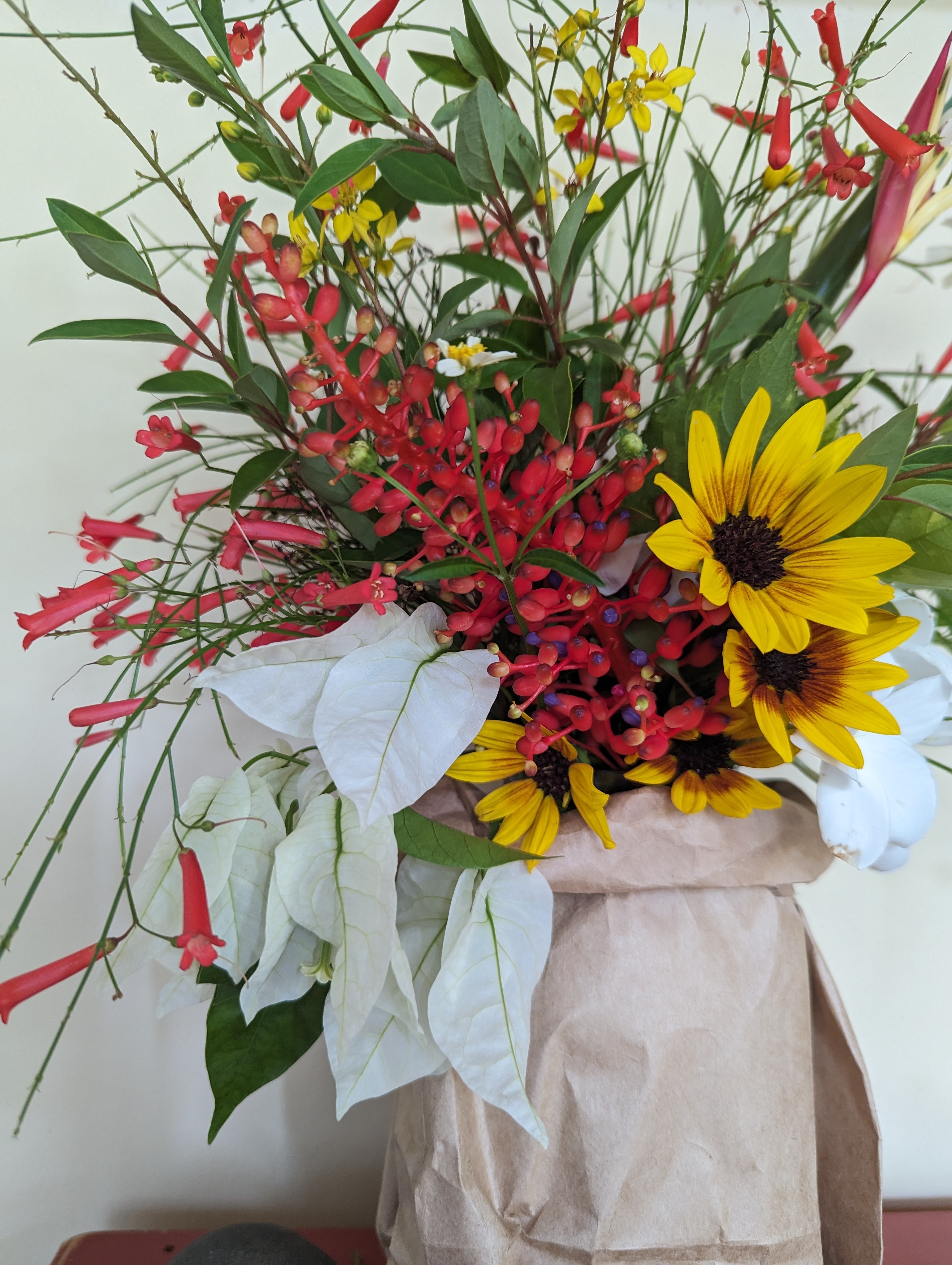
The Brown Eyed Girl Sunflowers and seedheads. I saw several vases with seedheads last week, loved them and went looking for a few for my vase.

The Salvias: in red with long flowers, ‘Roman Red’, shorter red flowers are Tropical Red Salvia (Salvia coccinea). The ‘Roman Red’ is definitely not as hardy as the native Tropical Red, it has stopped flowering and appears to be shrinking. Oddly, the armadillos are attracted to it and dug both up, that may explain their unhappiness! In blue, “Mystic Spires’ Salvia; in white, Tropical Red Salvia that reseeded white.

I am thankful July is half over, it is the hottest month of the year in my garden. Adding insult to injury are the bugs this year. I am swarmed by no see ums after about 15 minutes outside and have to retreat. There will be loads of prunings and errant weeds in a few months.

Thanks to Cathy for hosting IAVOM. Visit her blog at ramblinginthegarden.wordpress.com

Happy Gardening!!

Six on Saturday – Jungly July

I am joining the SOS garden tour again this Saturday. In South Florida, July has settled around us with a wet blanket of humidity, regular temperatures over 90 F (32C) and nearly daily downpours. The garden is turning into a jungle, overrun by happy plants, weeds and everything green. To see less jungly gardens, visit Jim at http://gardenruminations.co.uk and take a virtual tour via posts from gardeners from less sodden climes.

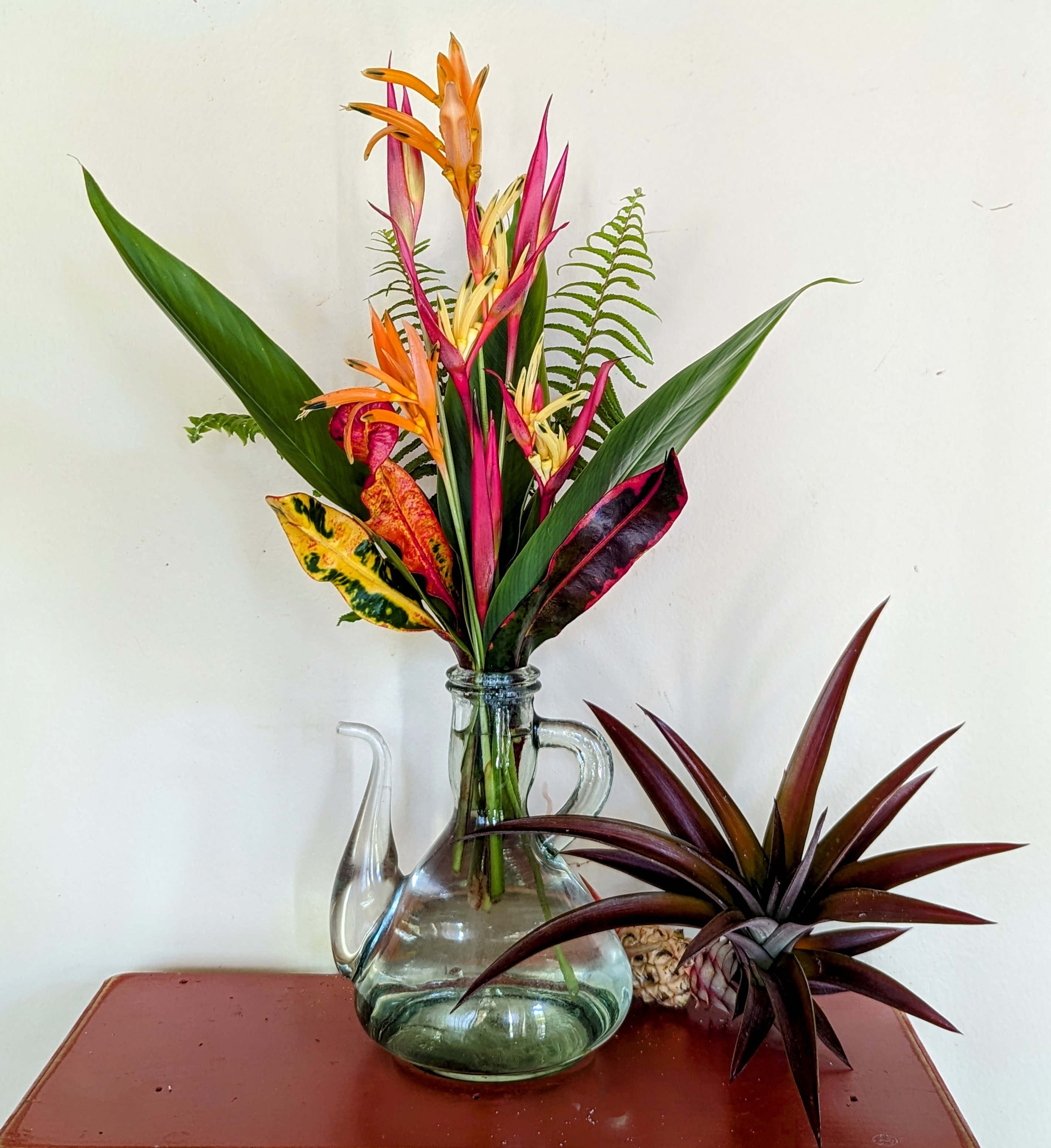
This is about as tropical as it gets. A Lobsterclaw Heliconia (Heliconia rostrata) in full bloom. They turn black if cut and don’t stretch the smaller yellow petals(?) out.

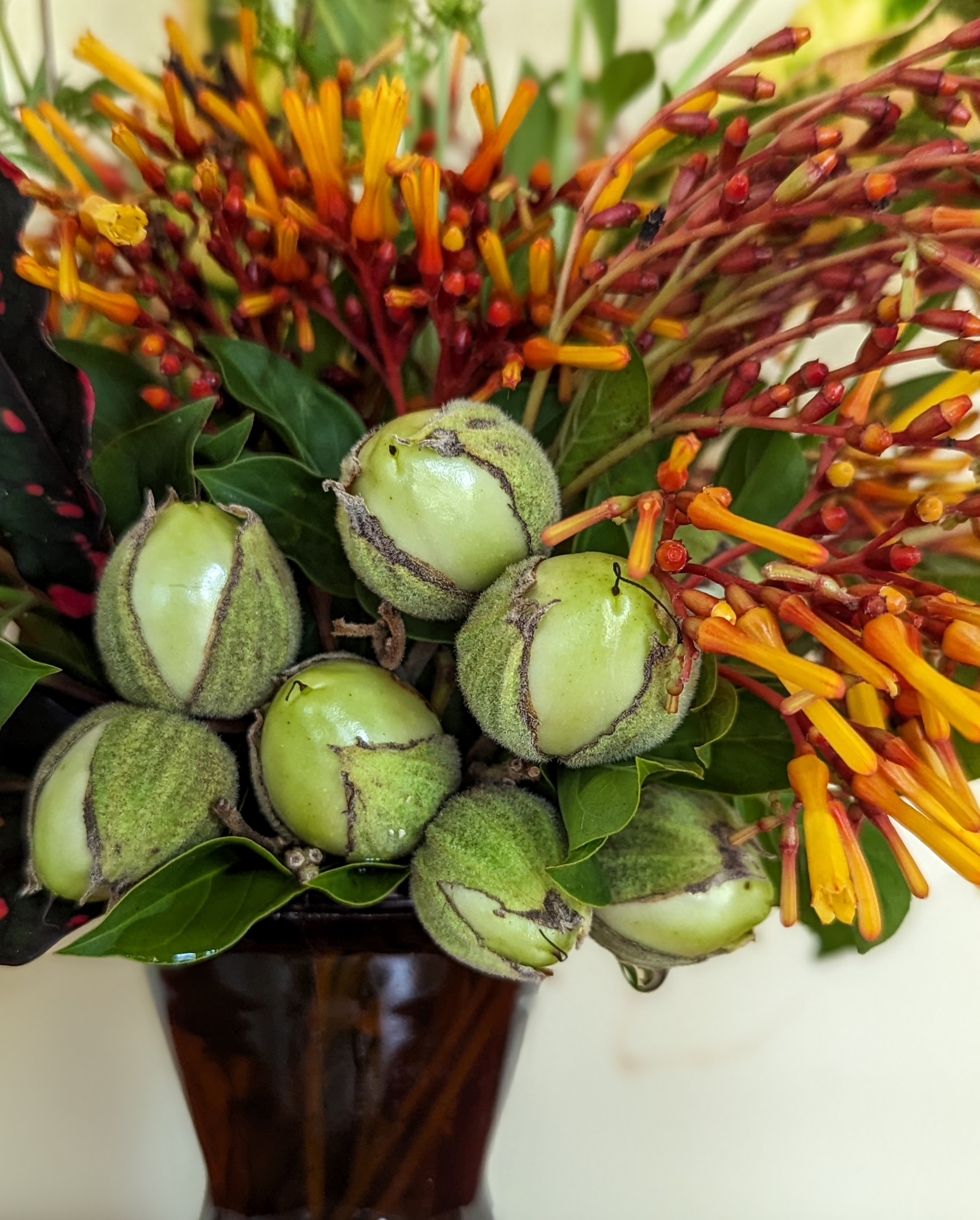
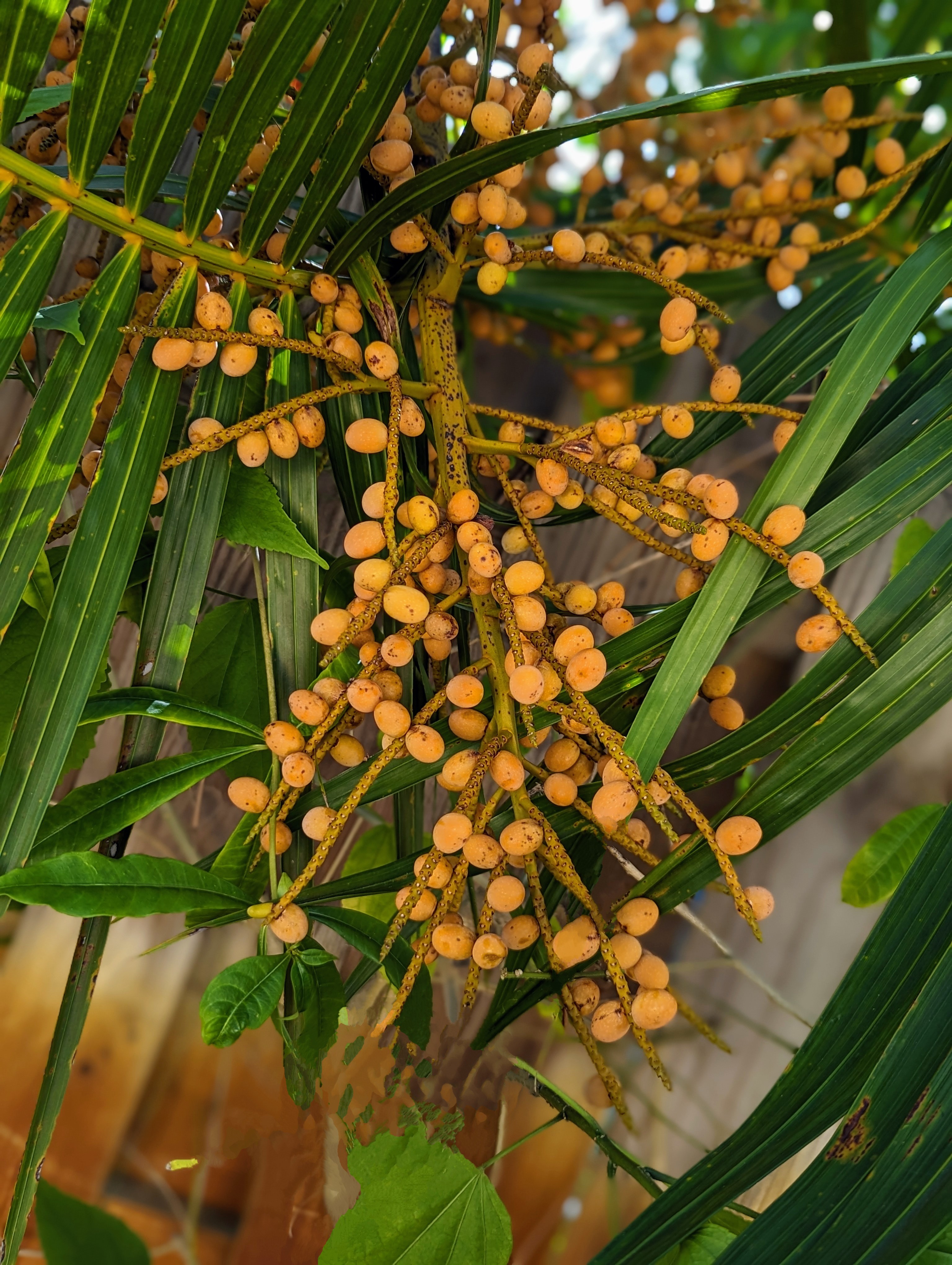
The fruit of Seagrapes (Coccolobo uvifera). These grow on shorelines and are a very hardy native tree. Native Floridians will eat the fruit as have some of my greyhounds. The flavor is somewhere between a fig and a grape but mostly seed that requires gnawing to get a taste. I am told it makes a good jam. I find it makes a big mess.

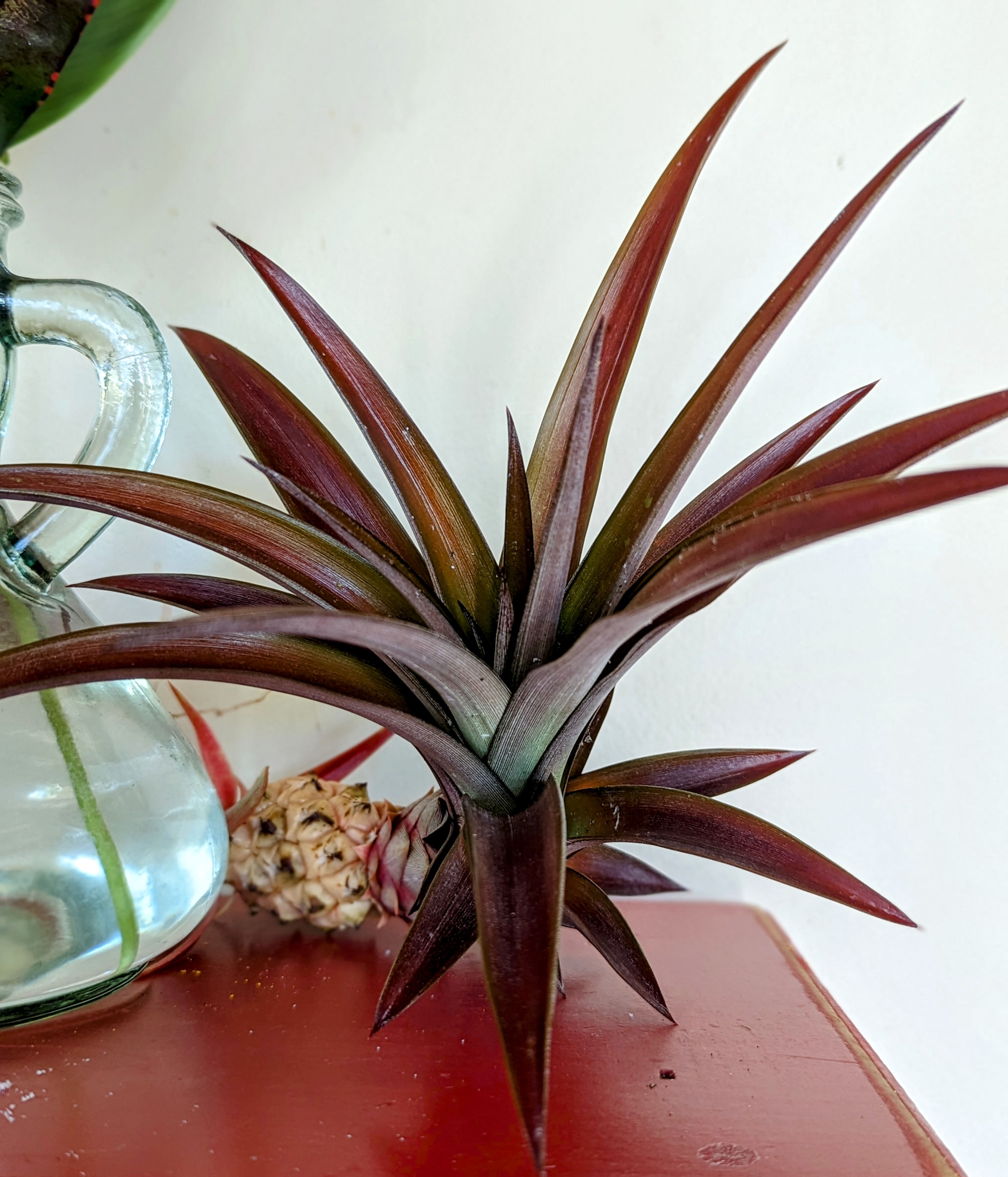
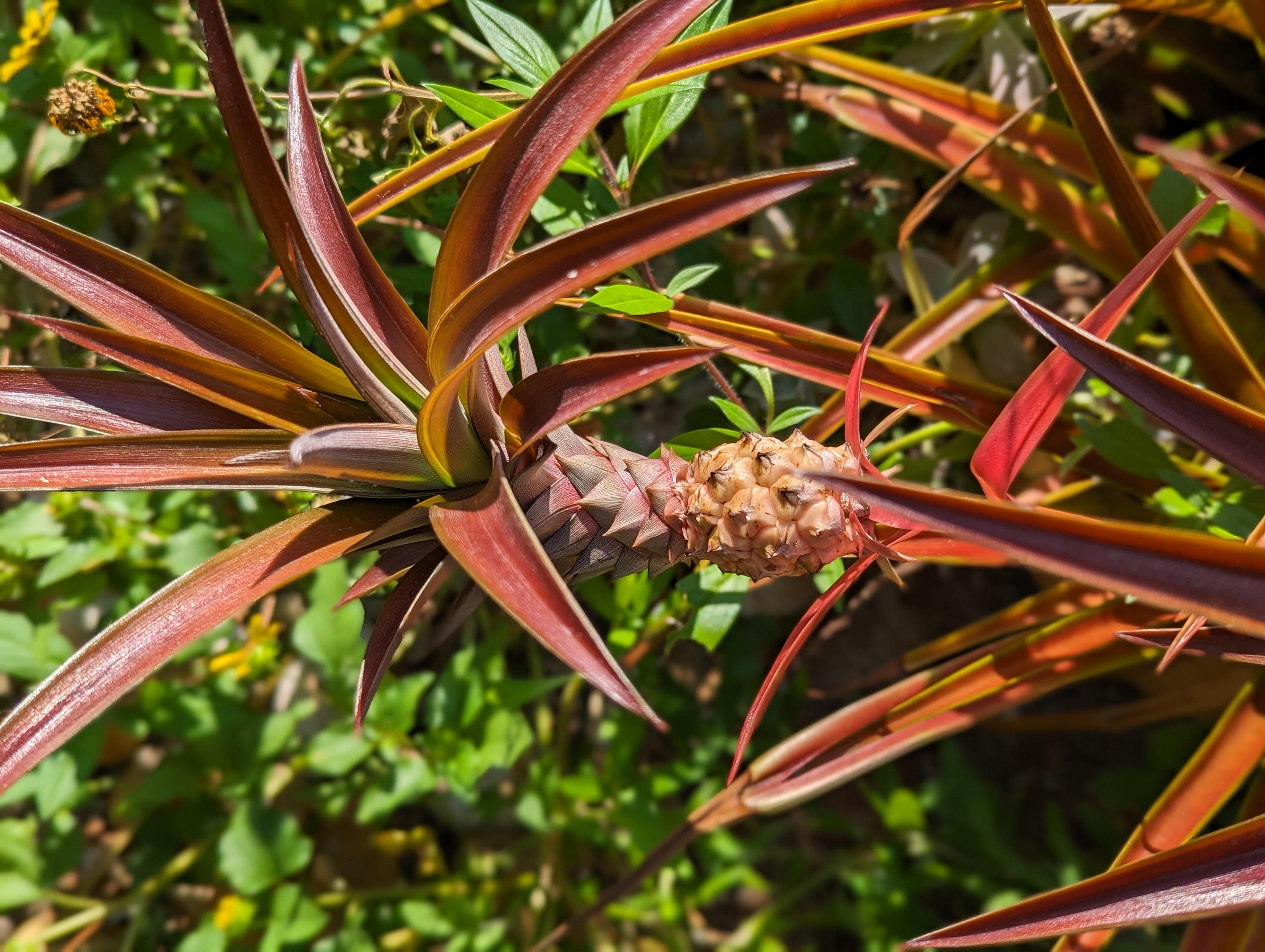
The fruit from my garden I do like. This is the end of the mangoes. These are Nam Doc Mai. There were too many for us to eat so I have been freezing them. They actually freeze quite well. I found fresh local swordfish at the market this morning – we are looking forward to grilled fish with mango salsa for dinner. The little pineapple was grown from the top of a grocery store fruit. I think I got to it just in time, before the critters caught the fragrance.

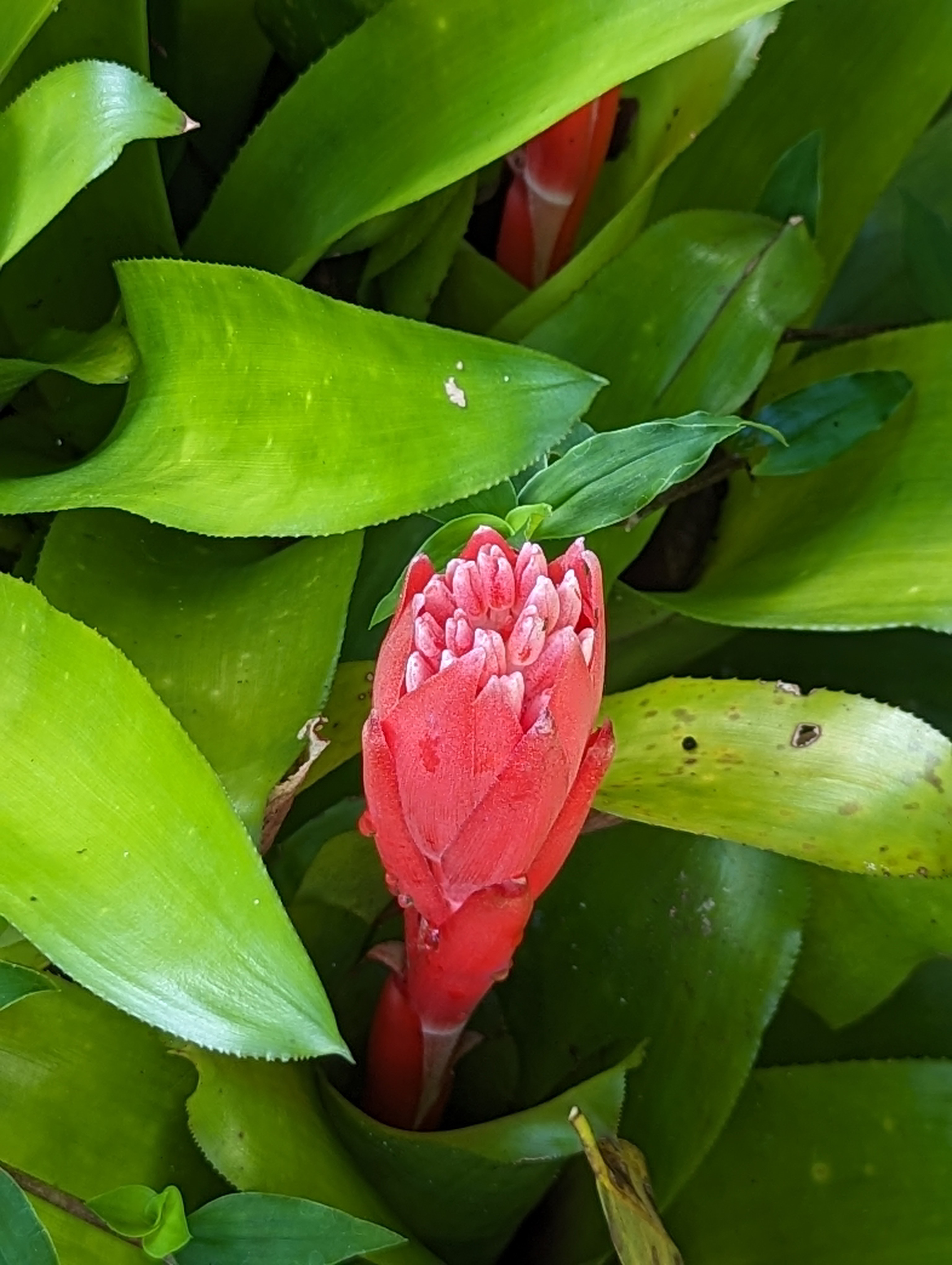
Welcome to the jungle. The Transcandentia zebrina is draping over a lot of things with all the rain. I am not regretting this yet as I planted it so I wouldn’t have to mulch. Now I have to pull out the T. zebrina. The red flower pops up like clockwork in July. It is Aechmea miniata bromeliad, a great garden flower.

An interesting Gallardia pulchella from plants crossing in the back garden. I like the seedling varieties better than the named cultivars.

Firebush (Hamelia patens var patens) in full flower. Another favorite, this shrub sneaks up on you by growing a few feet a year if conditions suit. The conditions are evidently perfect and they need a trim.

That is all from the heat zone.

Happy Gardening

In a Vase on Monday – Parrots and Poinsettias

Here’s another set of strange bedfellows from my garden. I would consider this an unlikely combination anywhere but South Florida. The parrots are Parrotflowers (Heliconia psittacorum) and the poinsettias are a native Floridian Euphorbia called Florida Poinsettia (Euphorbia cyathophora). I like the little bits of red on the foliage accenting the colors of the flowers.

I have tried growing the usual Christmas poinsettia in the garden and failed. The Florida version is a wildflower that appears from time to time. Having read up on it a bit I should probably pull them out. It seems they are one of those perverse plants that is hard to grow from seed if you want it – but a prolific reseeder if you don’t. If I don’t act soon the next thing could be a mowed poinsettia lawn for the holidays. Not a festive look.

A closer view:

The Parrotflowers are orange and red and yellow. The orange ones are Heliconia psittacorum “Choconiana”; the reds H. psittacorum “Lady Di”. These are very tropical and did not appreciate the 30 degree temperatures in January and are just recovering. The flowers are smaller than usual for some reason. Yellow spikes are from the Thyrallis (Galphimia gracilis) shrub.

The Florida Poinsettia foliage. Another common name for this is Fire on the Mountain. Where they found the mountains in Florida we will never know.

That is all from sweltering South Florida.

Many thanks to Cathy at http://ramblinginthegarden.wordpress.com for hosting this weekly meme. Follow the link to see more vases from gardens around the world.

Happy Gardening!!

Six on Saturday – Summer Beginnings

Saturday has rolled around once again. Time to take a stroll around the garden to see what is new and compare notes with other SOS gardeners. To take a virtual stroll through gardens around the world visit Jim at http://gardenruminations.co.uk

After a dry week (I had to get out the hose!) it started raining again yesterday. This morning I took some photos and then a thunderstorm blew up offshore and it is now pouring down rain. When researching recommendations for when to plant in South Florida you often see at the start of the rainy season – June 1 as a good date. This works if it is indeed rainy, otherwise, the plants fry. I try to get everything in the ground in March. I am seeing some mad growth in the garden and other plants rescued by the rain.

Purple Haze Billbergia bromeliad pups emerging from a mother plant on its way out.

Coontie cycad (Zamia integrefolia) rescued from annihilation. I am not sure what happened here, these are usually very hardy. This one lost all its foliage last summer when it was droughty and was not recovering. I potted the caudex, put it in the shade and watered it – much to my surprise, it came back. The cycads are notorious for not liking disturbance.

Native Florida Poinsettia (Euphorbia cyathophora) hugging my garden greyhound. These appear when rain is plentiful and add a little color.

My first Rangpur lime, ever! My neighbor grew this tree from seed and it has been in my garden for six years or so. I am excited! These are hard to see right now, hopefully there are more on the tree. This type of lime is orange when ripe and considered a sour orange in Florida. We make ‘key lime’ pies with the fruit or use it like lemons. It is also used in Cuban cuisine for mojo marinade.

One of my summer favorites, Thyrallis (Galphimia gracilis) is finally flowering.

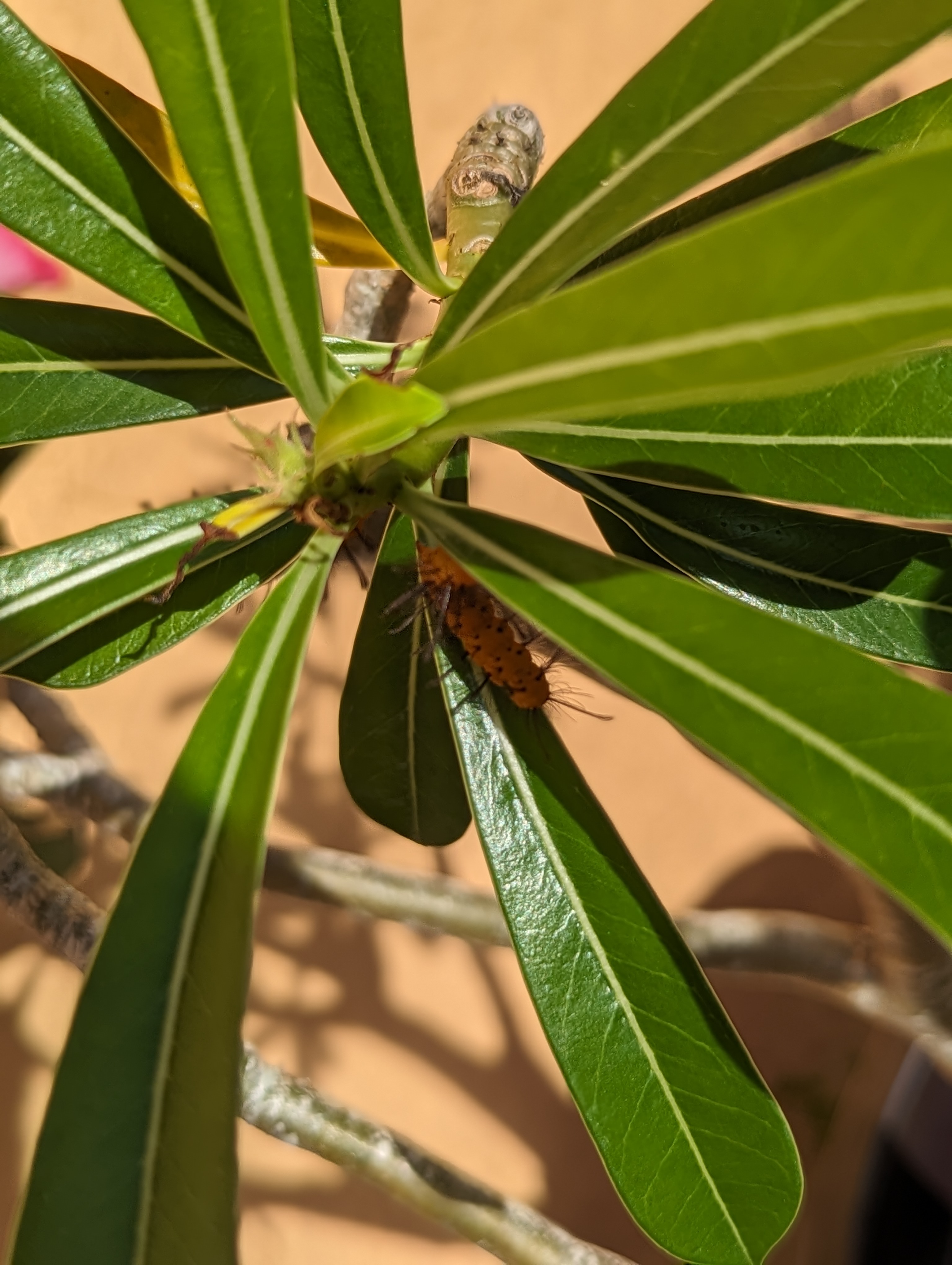
Tree Spinach (Cnidoscolus aconitifolius) is one of the best nectar plants for butterflies in the garden. There were three different butterflies feeding on the flowers when I took the picture. This is a Gulf Fritillary. I have never seen as many flowers on this plant, the butterflies are having a smorgasbord.

That is all from my now very damp garden.

Happy Gardening!!
In a Vase on Monday – Mystic Muscadines

It is somewhat of a mystery where all the @#! muscadines came from behind my house. The grapes are bitter, have huge seeds and the vines can grow 10 or 15 feet during the summer and once you start pulling it is impossible to find the end of them. I had these at my house in Atlanta and it took a few years to find them all but – I won. This time I am not so sure. So, every summer I have grapes in a vase or two. I love the chartreuse color of the unripe grapes. The vases have not reduced the vines, though it would be wonderful if they did! I need a large grapevine basket or wreath making business.

The Mystic here is the blue spike in the back of the arrangement. I love these. Mystic Spires Salvia. Amazingly long lived for South Florida, one has been flowering since March 2021. I realized I needed one more and then pulled myself back from planting anything in July.

Closer views:

The unripe grapes of the Muscadine (Vitis rotundifolia). This is a native grape to a large portion of the southern and eastern US, there are some varieties that are good to eat or used in making wine. The white bracts are Miss Alice Bougainvillea flowers. Orange and sage green flowers are from Soap Aloe (Aloe saponaria).

The spires of the Mystic Spires Salvia accented with foliage from Varigated Flax Lilies (Dianella tasmanica)

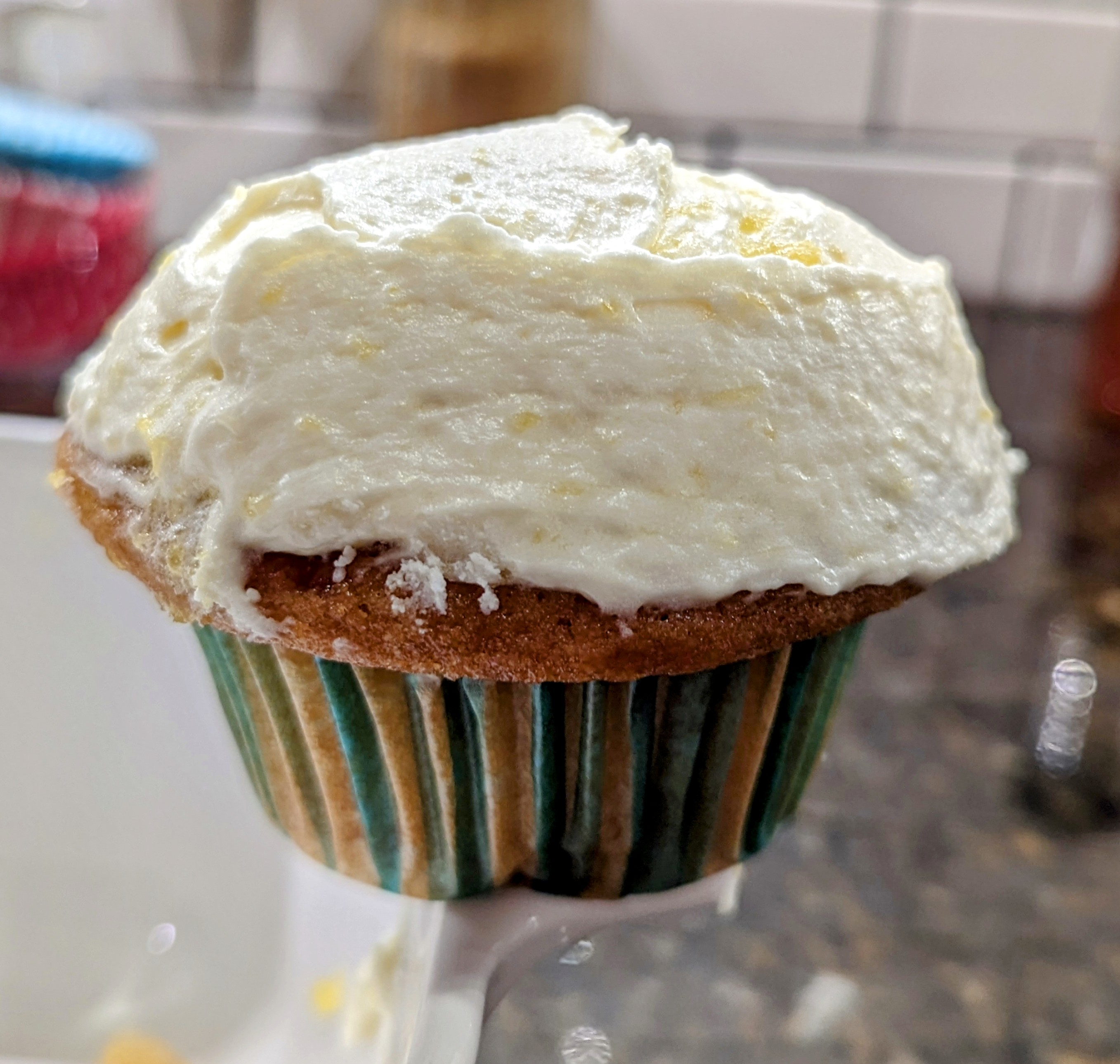
I have been baking with Thai dessert mangoes harvested from my tree this afternoon. I ended up with four ripe mangoes and decided to make vanilla cupcakes with mango filling topped with mango buttercream. Not to worry, these are actually vegan, not terribly unhealthy in the scheme of life and very good.

That is all from South Florida this week. No, I am not considering cake decorating classes.

Thanks to Cathy at http://ramblinginthegarden.wordpress.com for hosting. Follow the link to see more vases…

Six on Saturday – Post Solstice

Summer has set in with a moist thump here. The weather forecast is humid all week long with a chance of thunderstorms. The weeds have had a joyful fiesta celebrating June’s prodigious precipitation. The tended flowers are also happy and more prolific than last year. It is nice to see old friends and meet some new ones in the garden.

Tropical Gardenias (Tabernaemontana diviricata) soaking up all the moisture and producing lush flowers and leaves.

My magnificent Mystic Spires Salvia, grown from a cutting last fall.

Best year ever for Soap Aloe (Aloe saponaria). These usually flower one at a time. Firebush is in the background.

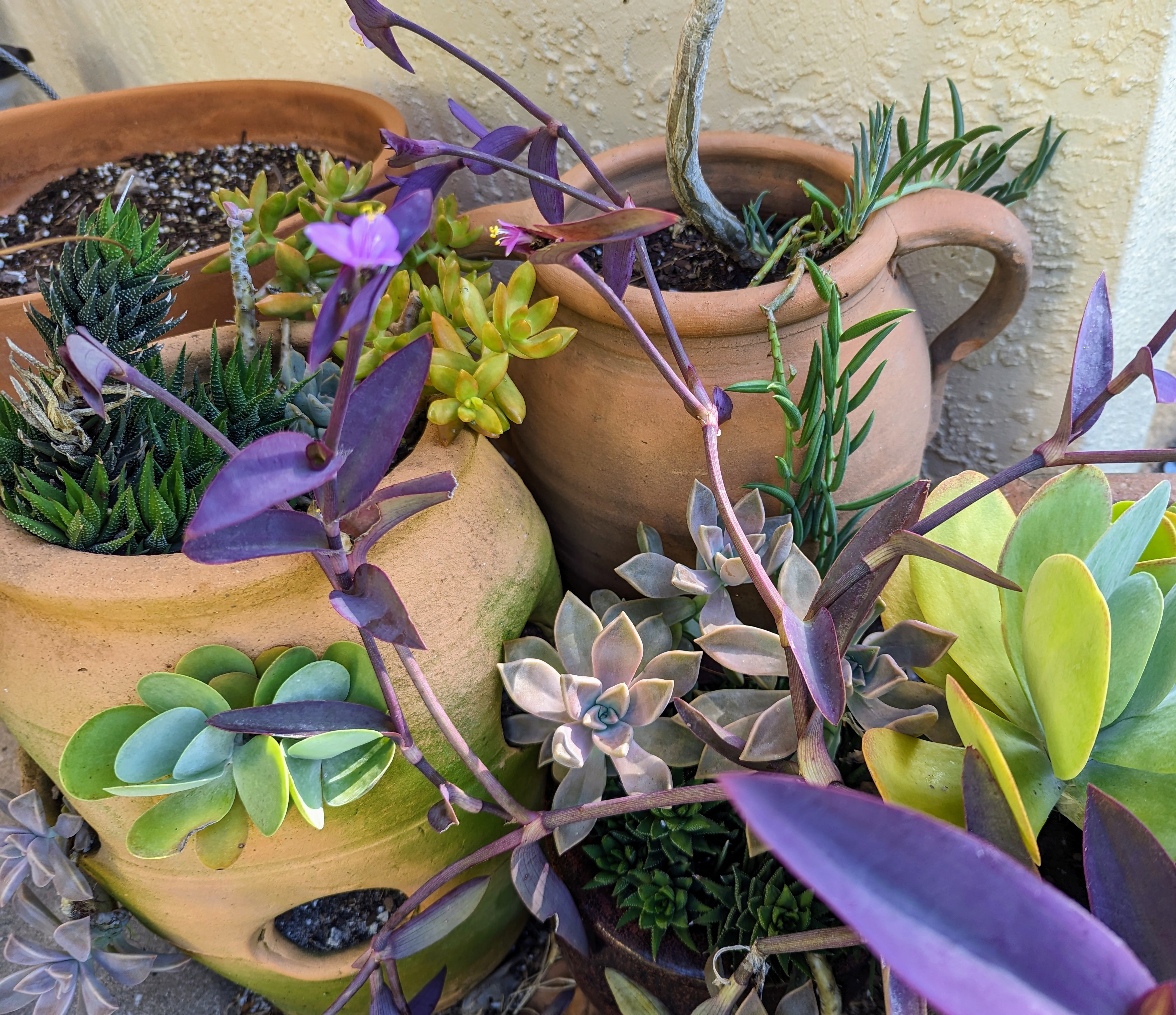
Only in Florida, Purple Queen (Setcreasea or whatever they call it now). This is used as groundcover here and is basically indestructible once established.

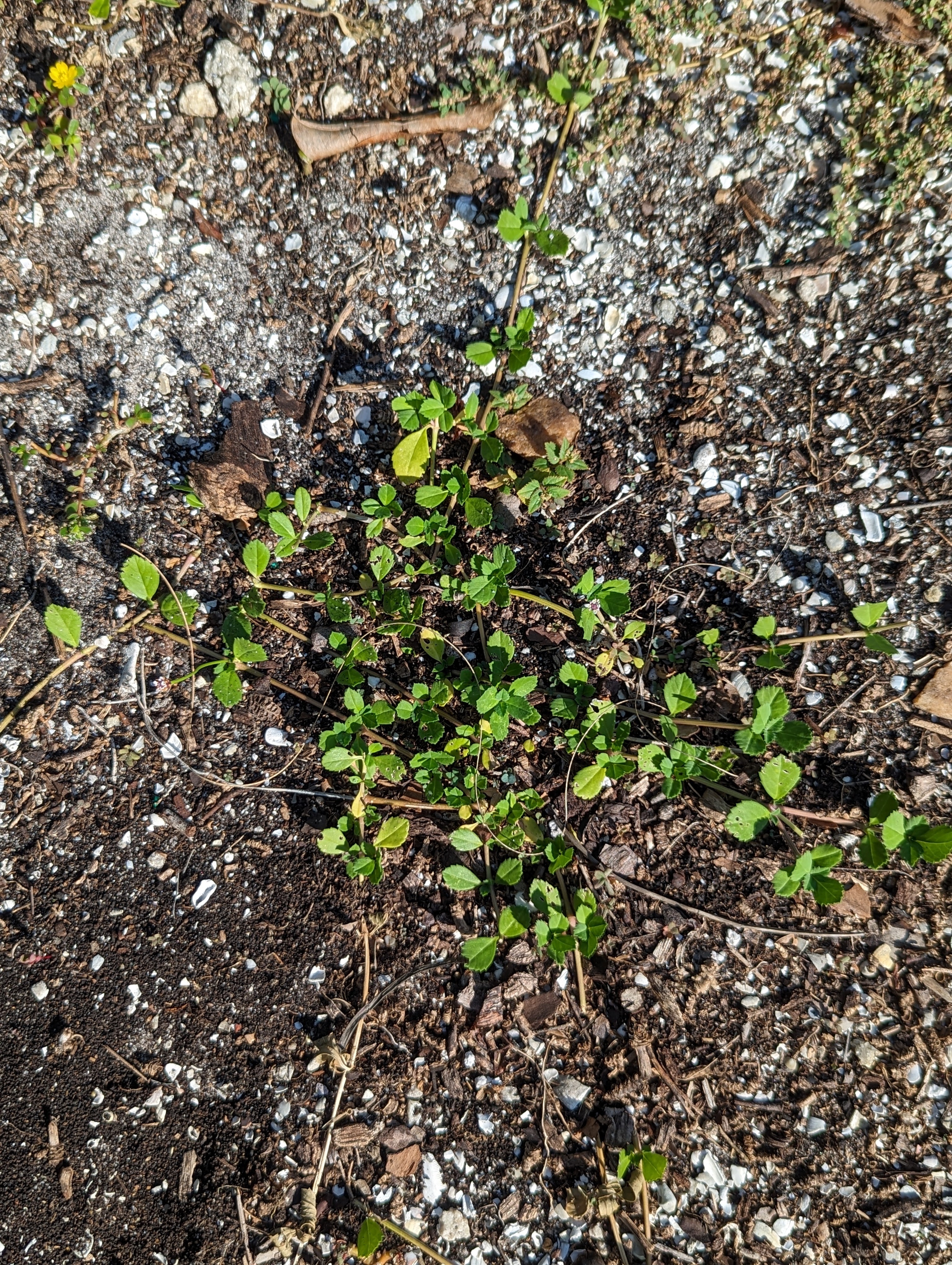
This is the wildflower I am attempting to replace the lawn with. The Turkey Tangle Frogfruit (Phyla nodiflora). I knew it flowered and was looking forward to seeing them. However, this is one of those things always shown magnified several times. I was surprised to see that the flowers are the size of a match. Explaining the common name Matchweed!

The Gallardias (Gallardia pulchella) stubbornly refuse to grow in the beds and infest the shell pathways. My plan to outwit them is – when they go to seed pull them up and throw them back in the bed… This is one of those rare plants all of us seem to grow.

A bonus seven! This is the Corkystem Passionflower vine (Passiflora suberosa) from last week; several people asked about it. The butterfly larval host plant. The caterpillars have been eating this one at the base.

That is my six plus for this Saturday. To see more SOS posts visit Jim at http://gardenruminations.co.uk

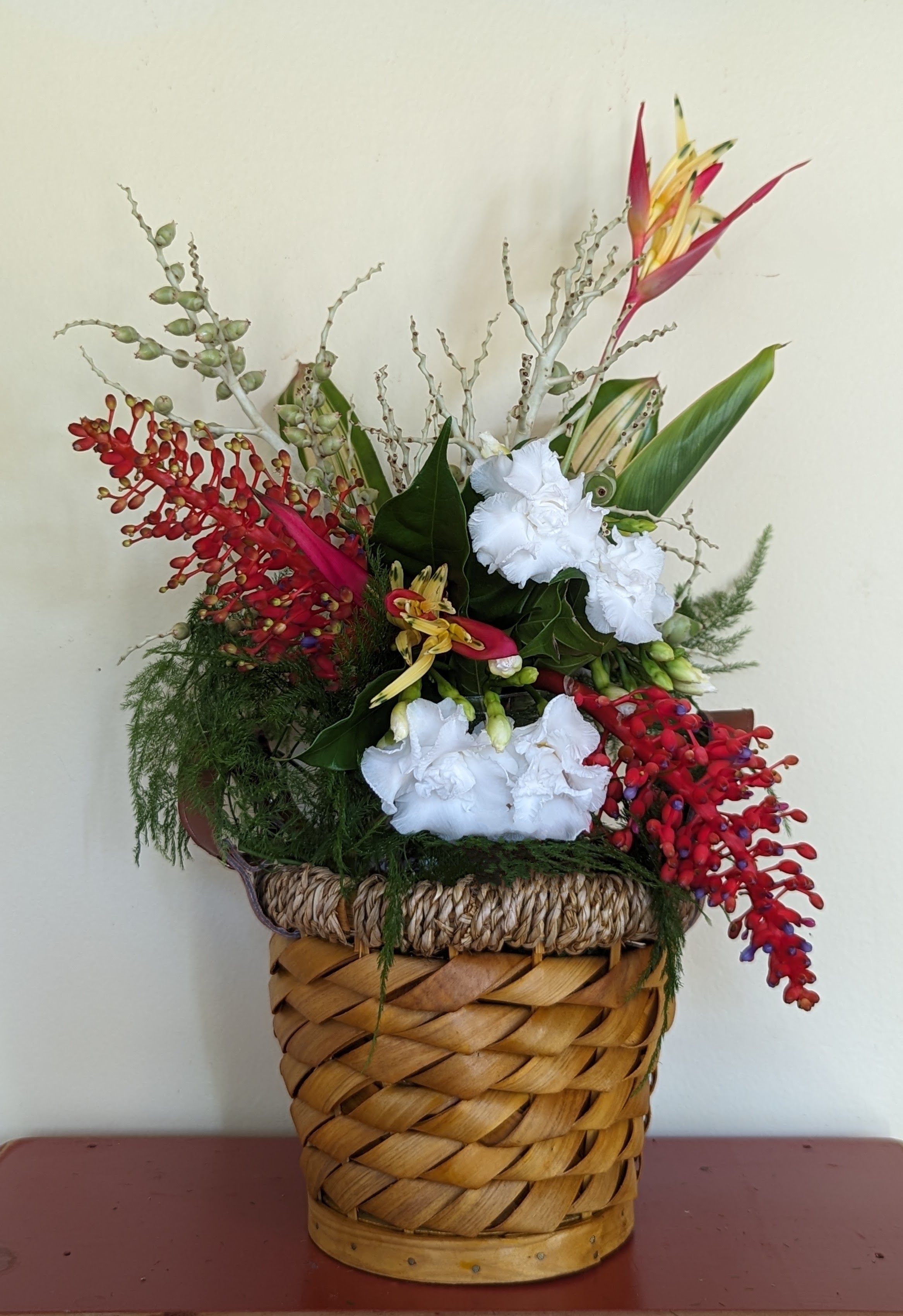
In a Vase on Monday – Lobster, Asparagus & Rose`

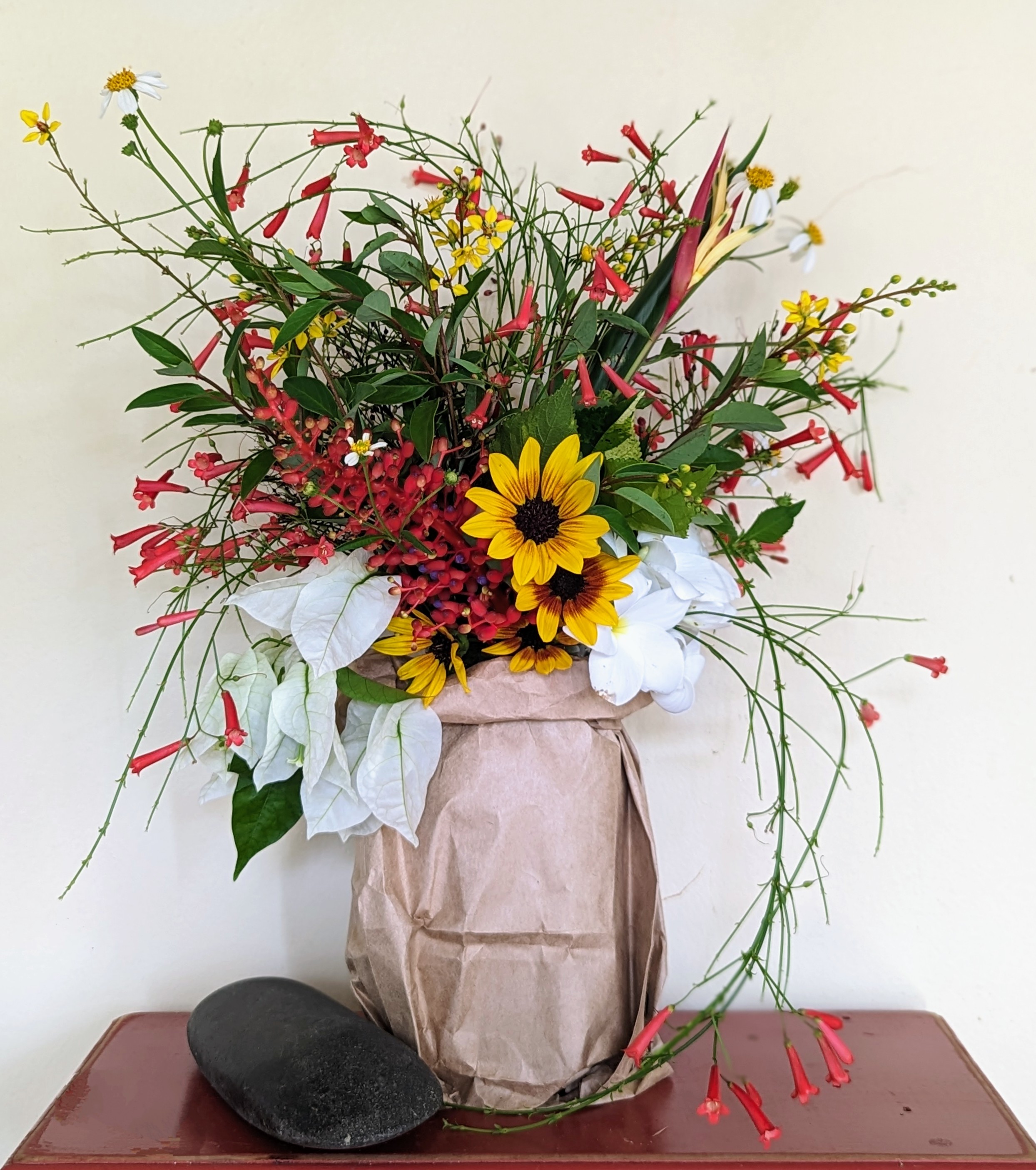
Lobster with a side of asparagus and a glass of rose` sounds like a rocking dinner. A large quantity of melted butter would be necessary for this gastronomic delight and another side dish, roasted potatoes, I think. Hmmm. Well, this vase is not for dinner, though the conceptual components are there and the rock was necessary to hold the plants in place.

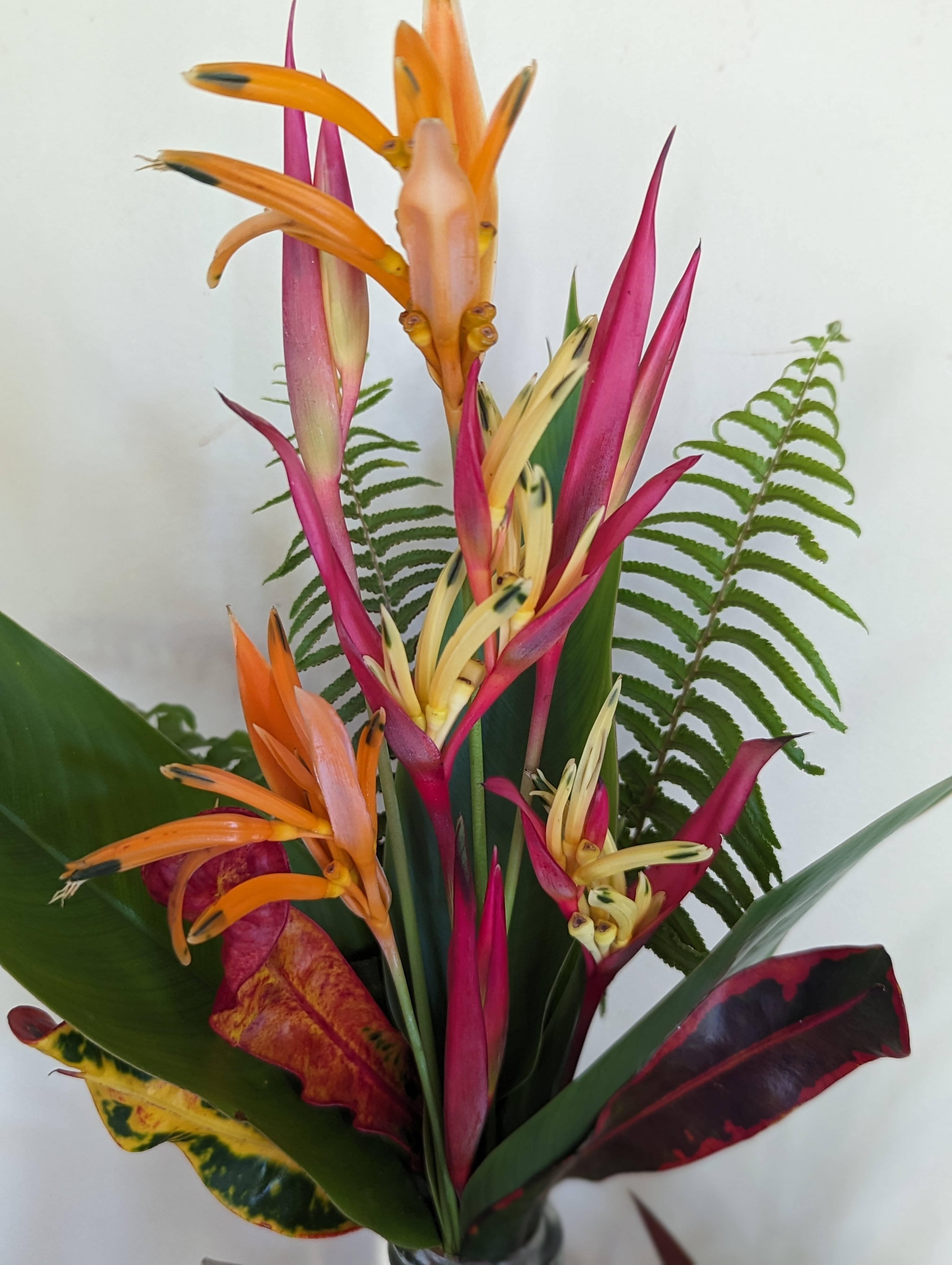
I know summer is in full force when the Heliconias start to flower and the solstice was their day. There are flowers still opening and this is really the best Heliconia year to date. I am guessing the vast rain fall helped. These flowers are so dramatic they need little embellishment, kind of like lobster.

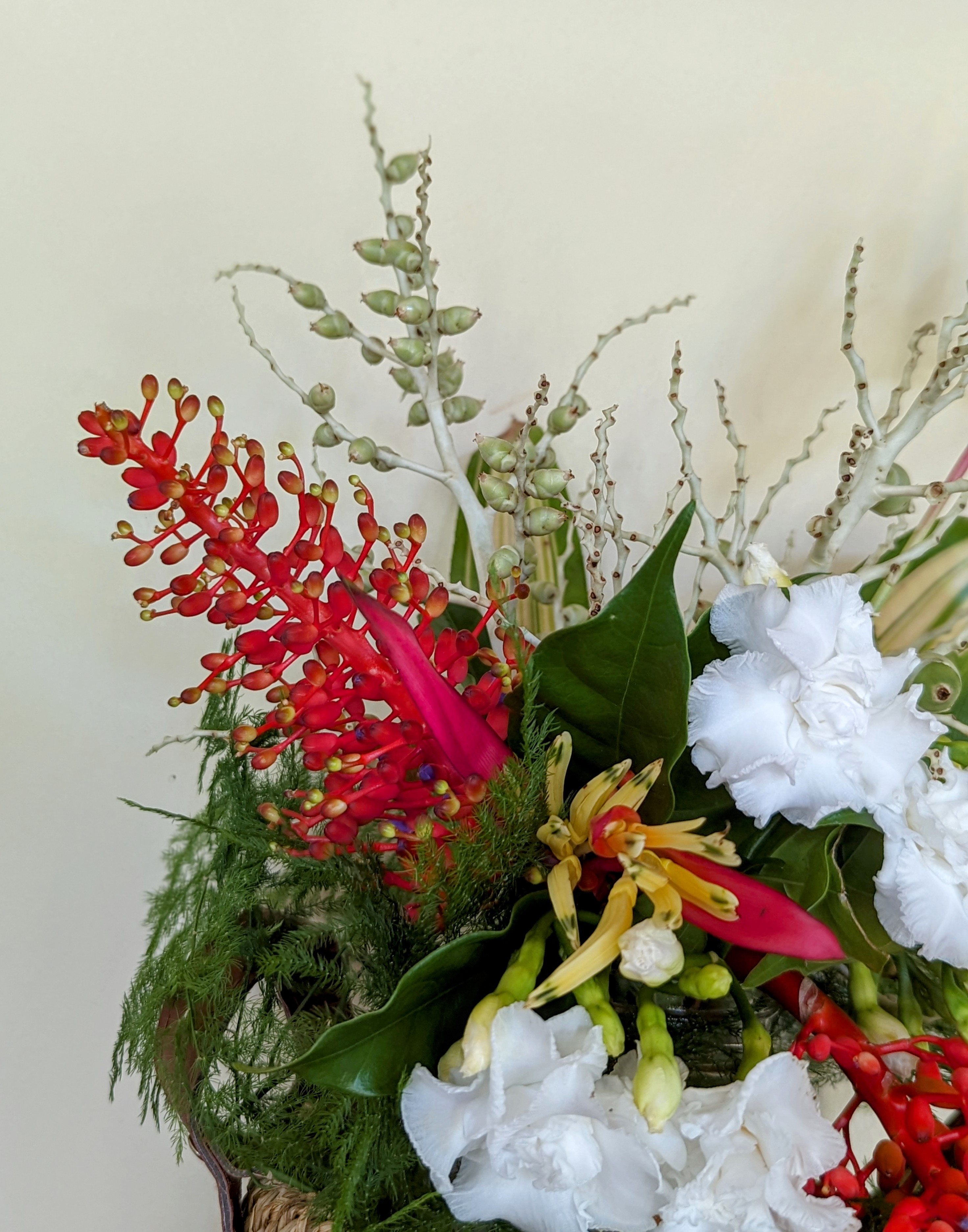
The flowers:

The Lobsterclaw Heliconia (Heliconia rostrata). These are planted outside my Living Room windows to give a rainforest vibe to the view. This is sort of a large, leafy plant but very linear and easy to see through so I have enjoyed the view.

The Asparagus Fern accents the Heliconia and is held in place by the rock. The vase is a rose` bottle from a dreadful bottle of rose` I bought from Aldi based on an internet rave review. The last rave review I ever bought wine from, though I have enjoyed the bottle as a vase.

The rock:

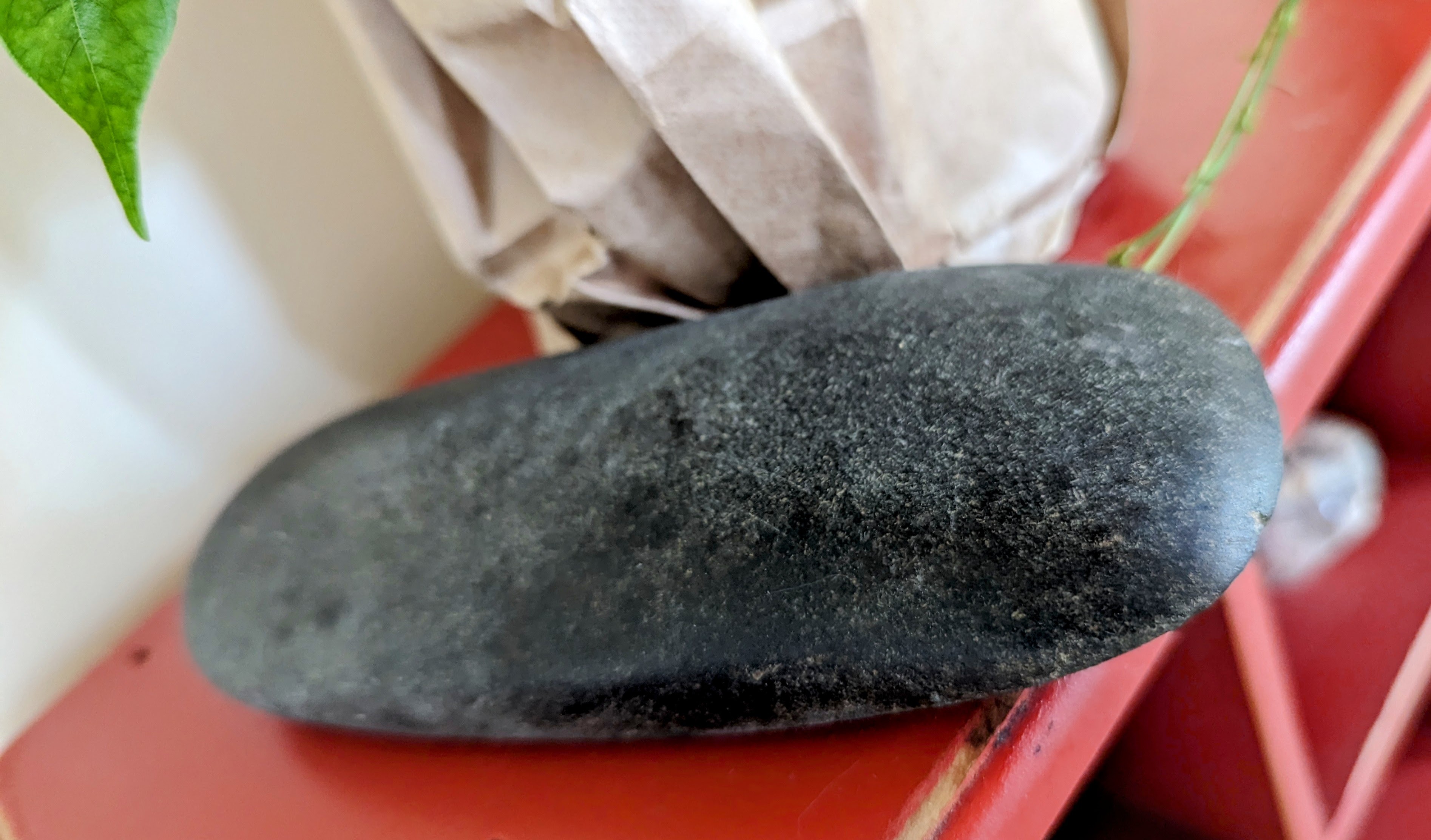
The rock. My father was a geology professor who loved crystals and especially tourmaline and quartz. This is black tourmaline and a quartz crystal likely found somewhere in North Georgia where I am from.

It is closing in on dinnertime in South Florida and I am wishing for the above ingredients! No such luck this week

Thanks to Cathy for hosting IAVOM, to see more vases follow this link http://ramblinginthegarden.wordpress.com

Happy Gardening!!
Six on Saturday – Caterpillar Condo

It’s time for the weekly world garden tour. My South Florida garden has a wealth of butterflies and tropical flowers loving the heat and humidity more than I do. I let some native passionflower vine (larval host plant for butterflies) ramble through a mixture of flowering nectar plants and I have some astounding butterfly action going on in the front garden. Pairs of Gulf fritillary butterflies circle each other and then land on the passionvine where the ladies lay eggs. Caterpillars from both species of butterflies (Gulf fritillary and Zebra Longwing) that host on the vine are currently in residence. The caterpillars moved off the vines and now there are chrysalis hanging on the front porch. I am watching day by day hoping to see new butterflies emerge.

The Gulf fritillary looking for nectar.

Zebra Longwing doing the same thing.

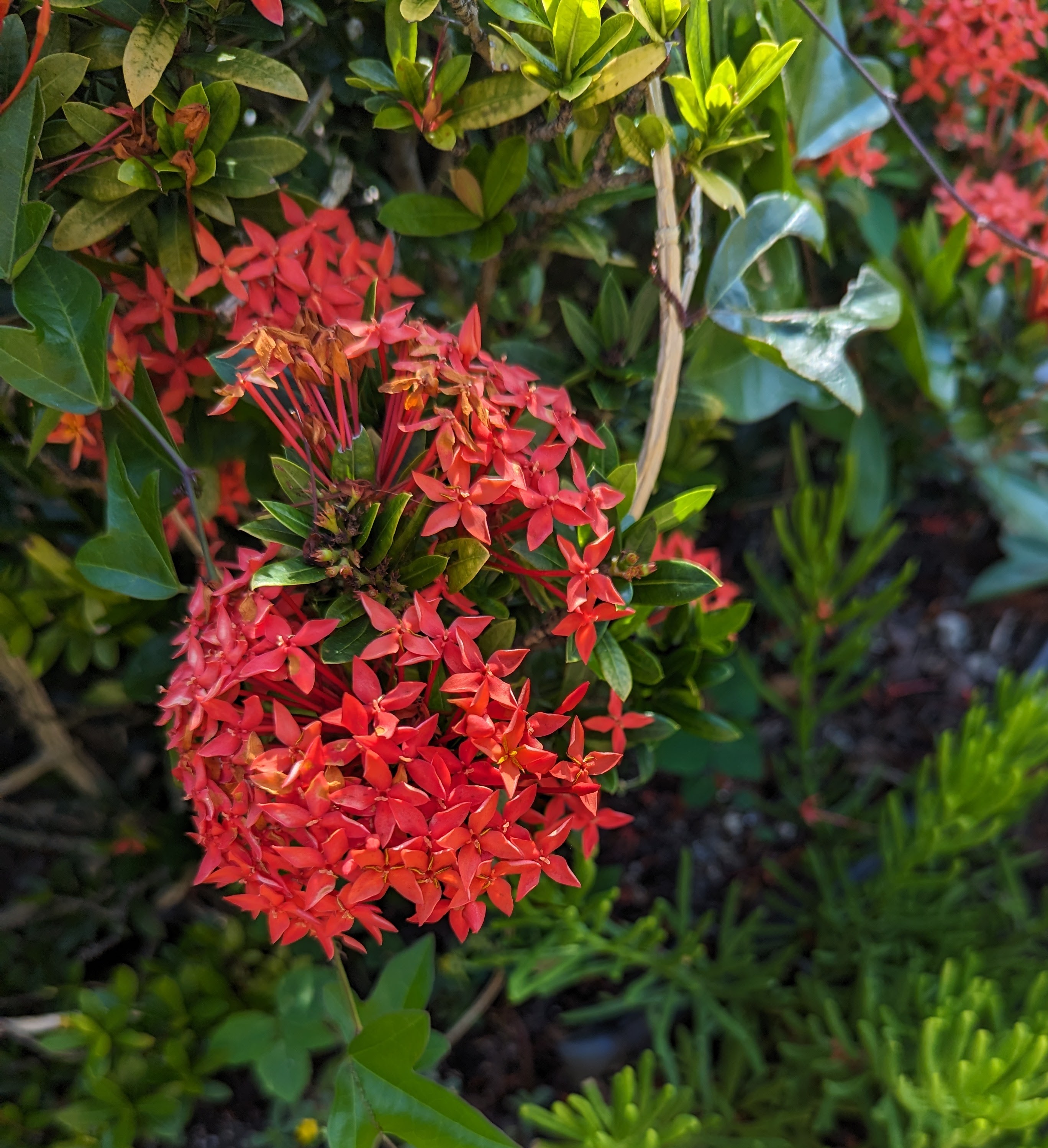
Gulf fritillary caterpillars on the passionvine. The passionvine is Florida native Passiflora suberosa. It is not a particularly attractive vine and bears small flowers and blueberry sized fruit. I did not plant this, it came up from the garden gods and I let it go to ramble through the Dwarf Red Ixora shrubs creating a caterpillar condo with a full service restaurant.

The much less colorful chrysalis of the Gulf fritillary.

And we have to have some tropical flowers and fruit. The flowers today are Lobsterclaw Heliconia (Heliconia rostrata)

Fruit of the week – Papaya. This is the Papaya tree started from seed last fall. I planted the seedlings in the garden in May. They are almost three feet tall now and looking a little spindly. I have read it is possible to have fruit in nine months. At this point, the trees won’t be able to support it.

That is all from sultry South Florida this Saturday. To enjoy the world garden tour visit Jim at http://gardenruminations.co.uk

Happy Gardening!!

In a Vase on Monday – Tropical Depression or not

Among my vases this one is not particularly exotic, though it has some tropical elements. I have been meaning to use this green cream pitcher as a vase for a while. It belonged to my mother, who got it from her mother. My mother was always miffed with me that I could not tell the difference between depression glass and pressed glass. I have an inkling this is pressed glass, though I could be remembering my mother pressing her lips together in frustration as I misidentified another piece of glass!
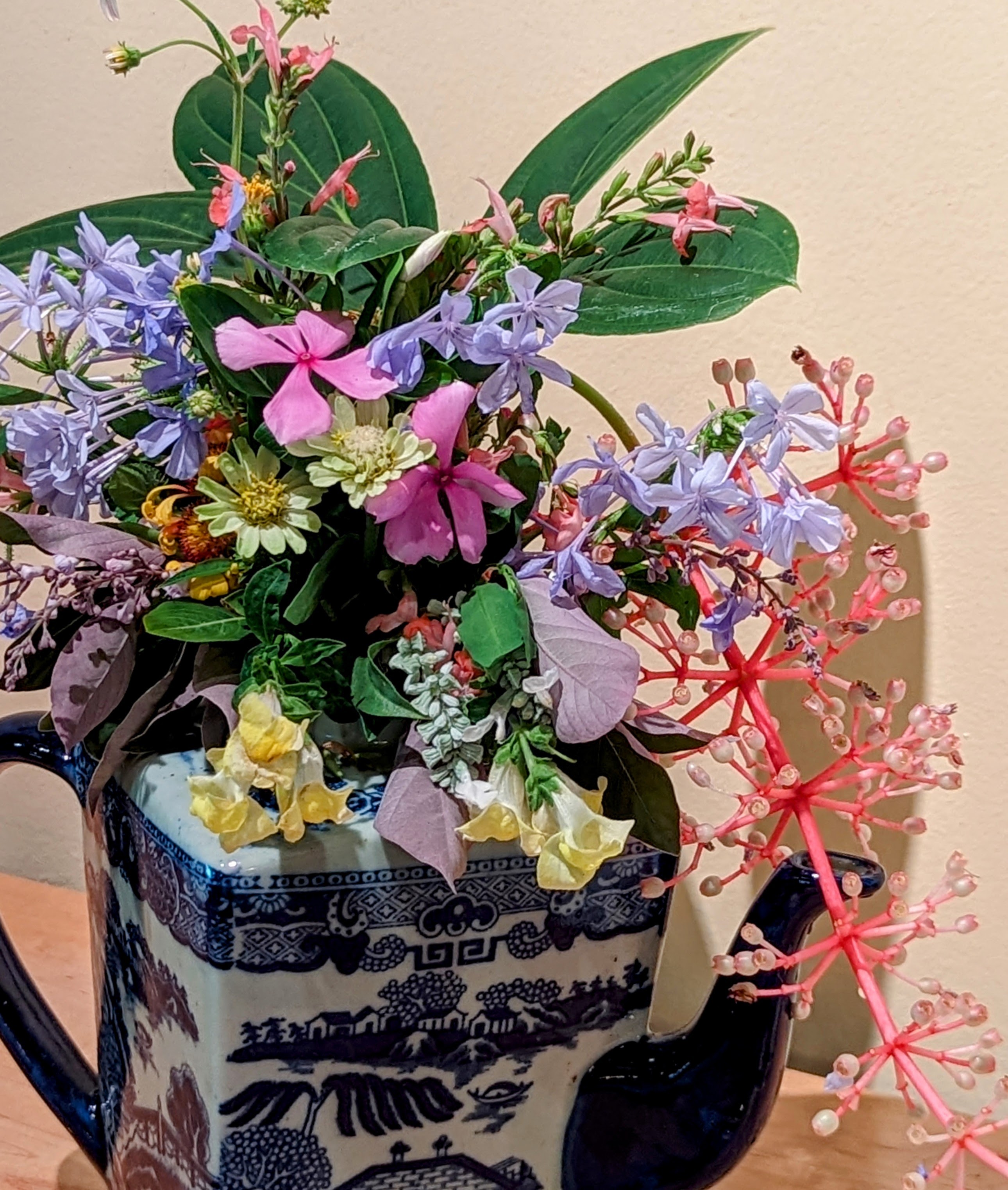
There is a 90 percent chance of a tropical depression forming in the Atlantic this week. Of course, it is headed my way. I am going to hope for rain and continue to enjoy the flowers, with or without depression glass.

The flowers:

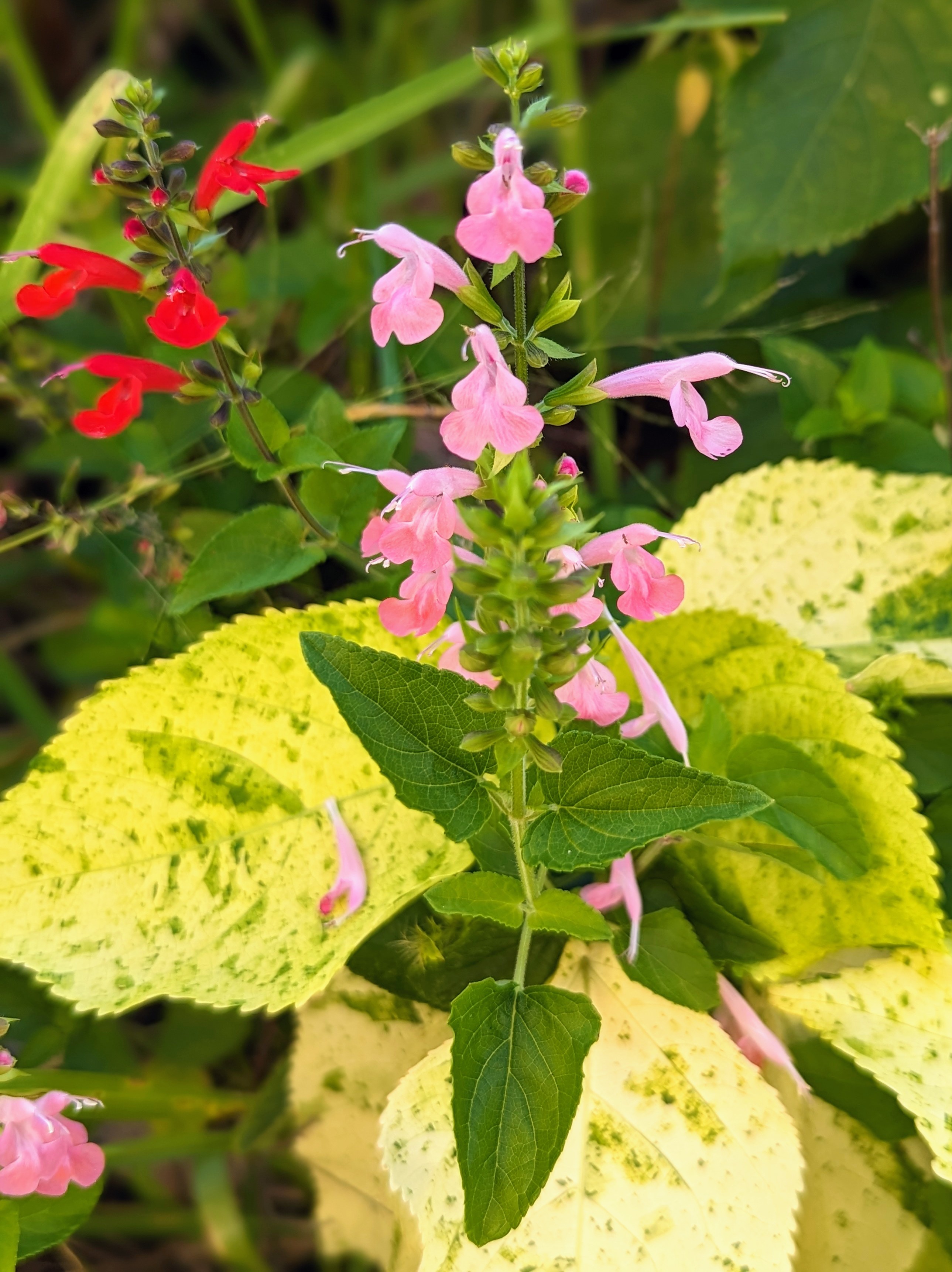
Tropical Red Salvia (Salvia coccinea) in pinks; ‘White Flame’ Salvia in white, and ‘Mystic Spires’ Salvia in blue. The purple spikes are Arabian Lilac (Vitex trifolia). I like the Arabian Lilac though it is growing into an odd flat shrub. More pruning fun for me.

Brown Eyed Girl Sunflowers are still going, though they are seeking some shade by growing over the edge of the container.This seems strange, sunflowers avoiding the sun? The small yellow spikes are flowers of Java White Copperleaf (Acalypha wilkesiana ‘Java White’). More garden mysteries to contemplate.

That is all from my garden this Monday. Thank you to Cathy for hosting IAVOM. To see more vases visit Cathy at http://ramblinginthegarden.wordpress.com.

Happy Gardening!!