Six on Saturday – Indian Summer

I am joining the SOS crowd celebrating Indian Summer in South Florida. I did not realize it was possible to have Indian Summer in my garden, yet here we are. It is dry (not raining), humid and a high of 86 F (30 C) is predicted today. This weather brings on a mix of summer and fall colors. To visit gardeners around the world with less humidity – follow this link to Jim’s blog http://gardenruminations.co.uk

I finally saw and captured an image of the rare Atala butterfly that has been hosting on my Coontie cycads. This butterfly is listed as endangered due to loss of habitat. It is native to the Caribbean, the Bahamas and South Florida. I am at the northern end of its range.

I was excited to see some actual fall color. This is Virginia Creeper (Parthenocissus quinquefolia). I think this vine grows everywhere and some people actually buy it!

Fall berries do happen in my garden. These are on the native Firebush (Hamelia – now I am not sure of the last name!, the botanists have been at it again) These eventually turn into a juicy black fruit that the birds covet.

Fruit on the White Geiger tree (Cordia boissieri) I like these and use them in flower arrangements sometimes.

A native Portulaca pilosa, common name Kiss Me Quick. No idea why. I like these, but they are stubborn and will only grow where they want to grow.

Another November flowering plant, the Esperanza (Tecoma stans). These were once considered native and now they have been vilified as invasive?! It seems someone discovered a sea captain brought these from the Caribbean to Key West a few hundred years ago. I like them and have had no seeds germinating from the plant.

That’s all for this Saturday. I’m hoping for some precipitation and cooler days.

Happy Gardening!!

In a Vase on Monday – Tropinative.

Tropinative is a word I invented (I think) to describe what plants inhabit my garden. I like tropicals and native plants, a lot of color and texture and plants that appeal to pollinators. I dislike anything that requires a lot of water, lawn, pesticides, herbicides and I really like plants that live without too much drama. This is how my front garden ended up with a native Turkeytangle Frogfruit (lawn) and a Bromeliad border on one side with an English cottage style perennial border on the other side. Kind of mind boggling.

This vase accurately reflects what easily grows here. I haven’t made much effort to water any of it – I think it has been two weeks since it rained. I water herbs and other touchy flowers. The amount of water necessary for a decent lawn in South Florida is appalling.

The vase is a thrift store find I have enjoyed. Here’s what is in the vase – the tropicals.

Purple flower with pink stems is a Portea ‘Candy’ Bromeliad; the white flowers are Tropical Gardenias (Tabernaemontana diviricata); rough textured stems and foliage with little blue flowers are Blue Porterweed (Stachytarpeta jamaicaensis)

Mostly natives are in the top of the vase:

The natives in the vase are: in pink clouds, Muhly Grass (Muhlenbergia capillaris); off white spikes are Juba Bush (Iresine diffusa); ferns are Boston Fern (Nephrolepis exaltata). Non native, varigated foliage is Tasmanian Flax Lily (Dianella tasmanica).

The Gardenia and Juba Bush have scented the foyer with a lovely floral fragrance. It makes traversing through the front door more enjoyable.

That is all from South Florida this Monday. I was on GardenRant last year, this is my rant for this year! Use less water.

Thanks to Cathy for hosting. Follow this link to see more vases from gardeners around the world. ramblinginthegarden.wordpress.com

Six on Saturday – Experimental Fall Greens

I am joining the SOS gang once again this Saturday. My morning discoveries on my garden tour are mostly green. No vegetables, although the tomatoes I grew from seed are ready to be transplanted. Follow this link gardenruminations.co.uk to visit Jim and connect with more gardeners worldwide in the comments zone.

South Florida’s gardening season is the flip side of most of the Northern Hemisphere. We grow summer vegetables in winter and many summer perennials thrive here during the cooler weather that would wilt in the heat during their “normal” flowering season. I am thrilled to find my first Dahlia tuber emerging from the ground. Nine tubers were planted in the garden, three in pots, I know one was eaten, so the rest???? I bought the tubers at an end of season sale, then wrapped and refrigerated them until October, planting time here. All Dahlias were red, for what reason I have no clue.

It is strange to me that Rudbeckias are difficult to grow here. The summer humidity molds them, quite literally. These are Goldstrum Rudbeckias taking hold in the garden.

Another garden stalwart further north, Moonbeam Coreopsis, is bravely making a stand.

The ultimate experiment, a mass of Ice Plants (Delospermum cooperii). I am fairly certain these will melt next summer, though I have run across gardeners who have success with them in South Florida.

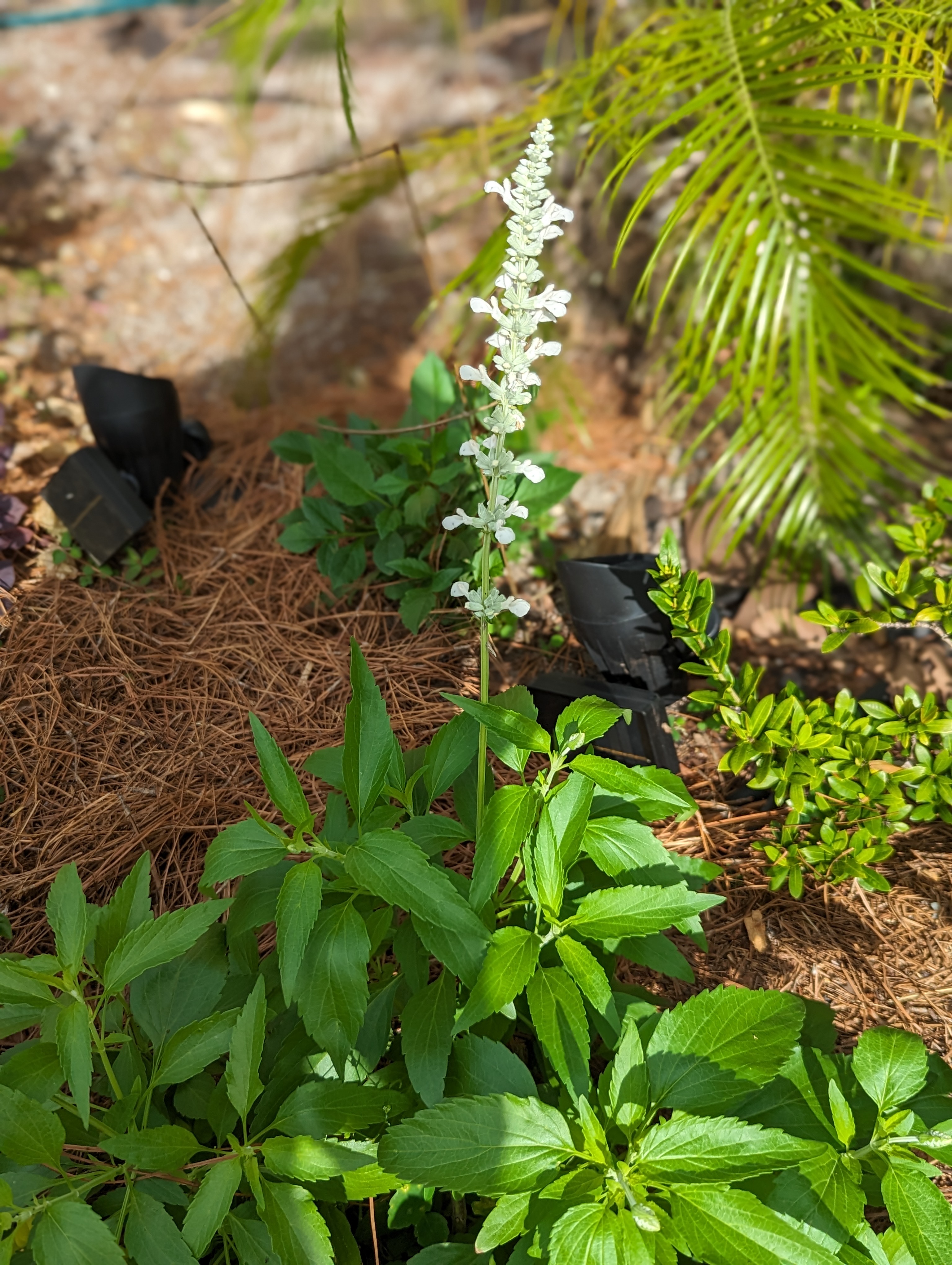
Another experiment, seemingly successful. I decided to try the Chelsea chop on Tropical Red Salvia (Salvia coccinea) – a reseeding annual. It seems to have worked.

I have not tried any of these plants in winter previously. In the great words of Tom Petty “the waiting is the hardest part”

Will they flower??? Time will tell.

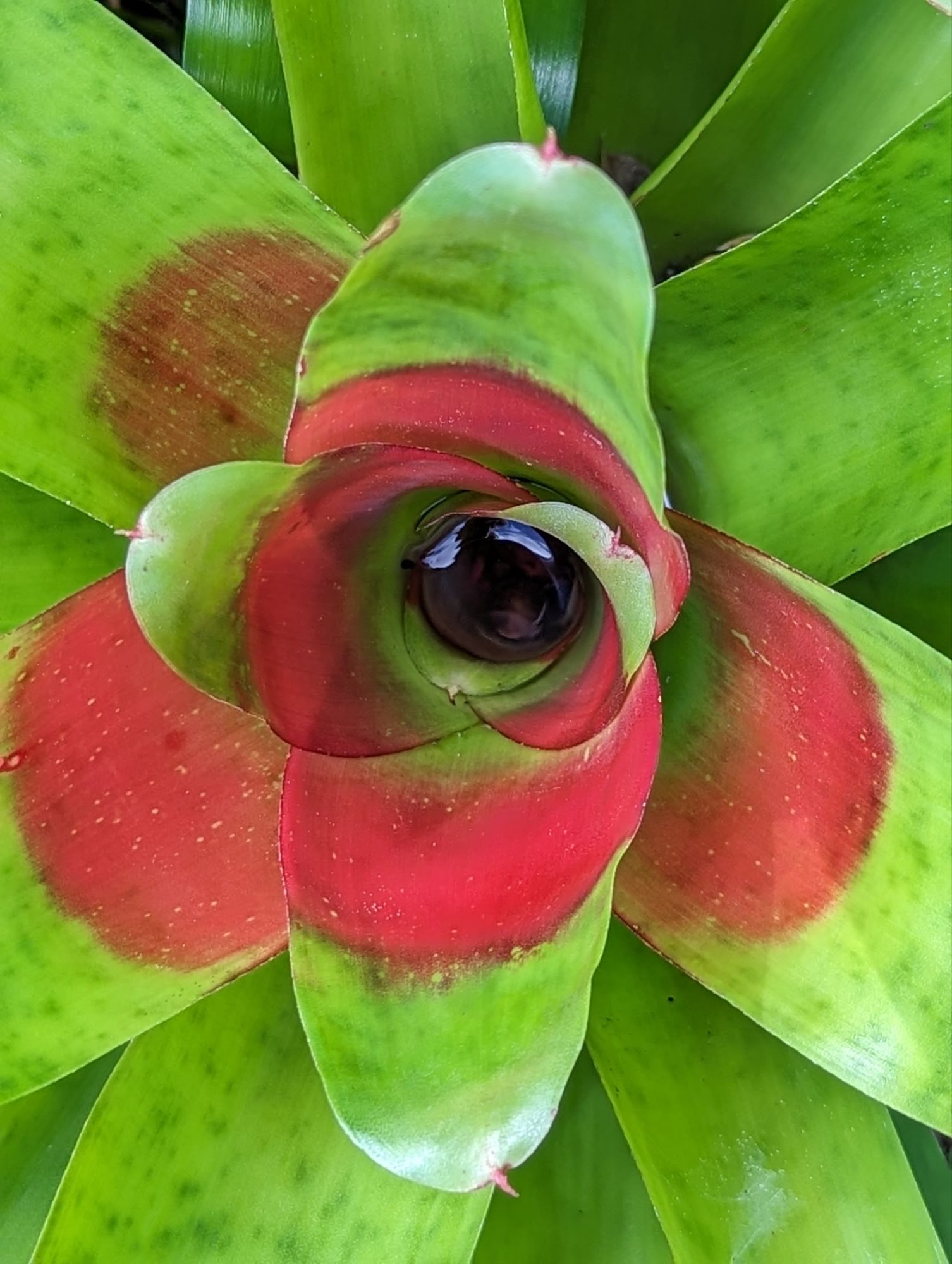
A more typical green from me. The greys are Aechmea fasciata Bromeliads, the dark one is ‘Luca’ Neoregelia. Smaller red broms are ‘Fireball’ Neoregelia. Bromeliad moving and propagating season runs November through March. There is usually movement in the garden this time of year.

Happy Gardening!

In a Vase on Monday – Old School

My old school, The University of Georgia, is currently topping the US college football rankings and has been for the past 19 weeks. I decided it was time to do a vase in the team colors, red and black. My husband describes the level of dedication to the sport at UGA as “Football as Religion” It is quite an experience to be in a stadium filled with 92,000 barking fans decked out in school colors. Despite being married to me for over 30 years, my husband has not yet learned to bark properly.

The reason for all the barking? Bulldogs are the team mascot, there is always a white bulldog on the sidelines (he has his own air conditioned dog house) The current one is named ‘Boom’ and they are named in order. Boom is UGA XI, when I was in school UGA IV was in charge. Follow the link for more bulldog mascot info https://georgiadogs.com/sports/2017/6/16/uga Note the vase disguises the year on the diploma.

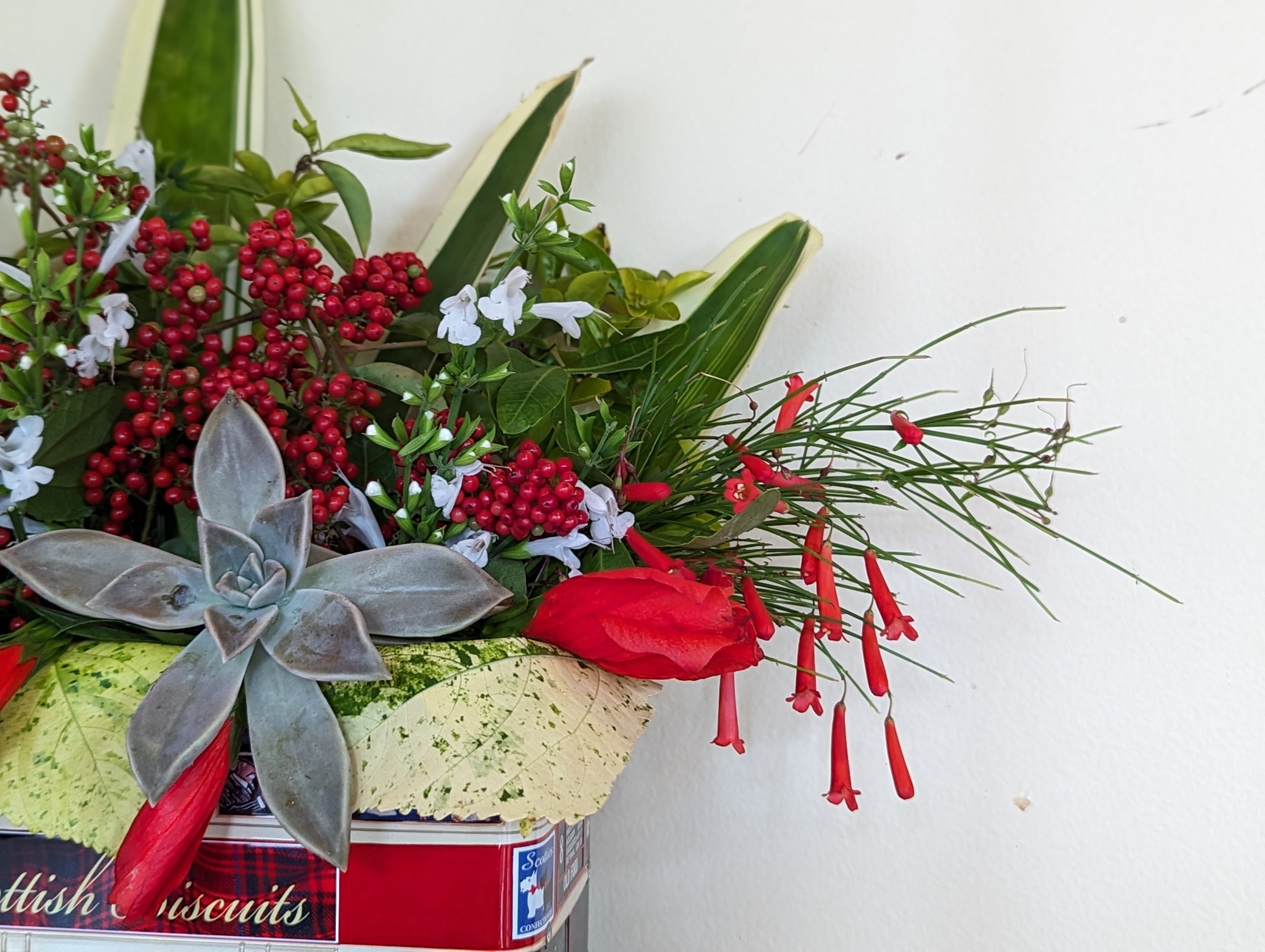
There are probably few gardens in temperate areas that have plants with red and black foliage, but I do! The foliage is from the Piecrust Croton (Codieum varigatum), other leaves have yellows, greens and pink splashes, it is quite a colorful plant. The white flowers are ‘Miss Alice’ Bougainvillea; larger red flowers are Nodding Hibiscus (Malvaviscus arboreus); bell shaped red flowers are Firecracker Plant (Russelia equisetafolium).

Another view. The black vase was a thrift store find and is one of my favorites for its versatility and contrast to the flowers it holds…and it is perfect for this “Go Dawgs” vase.

That is all from South Florida this Monday. I guess everyone now knows what I have been doing on Saturday afternoons (if we can conquer the where it is streaming on TV challenge) Visit Cathy at http://ramblinginthegarden.wordpress.com to see more vases.

In a Vase on Monday – Muhly & Juba Dance

I love a little Muhly Grass (Muhlenbergia capillaris) in the fall. The mix of Juba Bush (Iresine diffusa) and Muhly swaying in the ocean breeze gives me gardening goosebumps. Our very rainy September gave all the wildflowers a boost and the garden is enjoying a late season extravaganza with very happy pollinators cruising the flowers. As these things go we are having a very dry October and now I am hoping for rain!

The Muhly and Juba:

Muhly Grass is in pink in the background joined by off white Juba Bush. The word Juba is a dance move in the Caribbean that involves swaying hips. The Juba Bush is a native wildflower that appears and plants itself where happy. I have found it impossible to propagate, and am happy to find it when it decides to make an appearance. It is perennial and can grow 3 or 4 feet tall. I suppose birds are responsible for the Juba. Another gardening mystery to ponder. The Muhly has a similar modus operandi and I have some odd drifts in the garden.

Other flowers in the photo:

The deep blue flowers with coarse stems are Porterweed (Stachytarpheta jamaicaensis); the pale blue spikes with lavendar foliage are Vitex trifolia, some call this California Lilac. It is remarkably hardy. Darker purple foliage is Purple Queen (Transcandentia pallida) another great indestructible.

The lower level:

The lower levels in this vase are the wallflowers, the kind that don’t dance. Front and center is the last Purple Prince Zinnia of the season; viney pink flowers are from the Coral Love Vine (Antigonon leptopus); white spikes are Tropical Red Salvia (Salvia coccinea). The vase is a family heirloom made by the Ute Indian tribe.

I am hoping to dance a lot of weeds out of the garden this week. The rains provided nourishment for a tangle of Muscandines and Inch Plants. I am not sure we have ever had as much rain in late summer and was surprised by the volume of unwelcome growth in the garden. I have determined Muscandines are offensive!

Thanks to Cathy for hosting, visit her at ramblinginthegarden.wordpress.com to visit other gardens via vase.

Happy Gardening!!

Six on Saturday – Clear Sunny Days

My garden tour this Saturday morning was punctuated with an overgrowth of weeds, some plants attaining a size I did not know was possible, fall fruits and wild flowers …and, at long last, clear blue sunny skies with low humidity. Ahh. To join other SOSers on garden tours around the world visit our host, Jim at this link http://gardenruminations.co.uk

One of my fall favorites, Muhly Grass (Muhlenbergia capillaris) is just starting to flower. These usually bloom around the first week of September, so they are late this year. The flowering schedule for a lot of plants was off this year, some sooner than normal, some later.
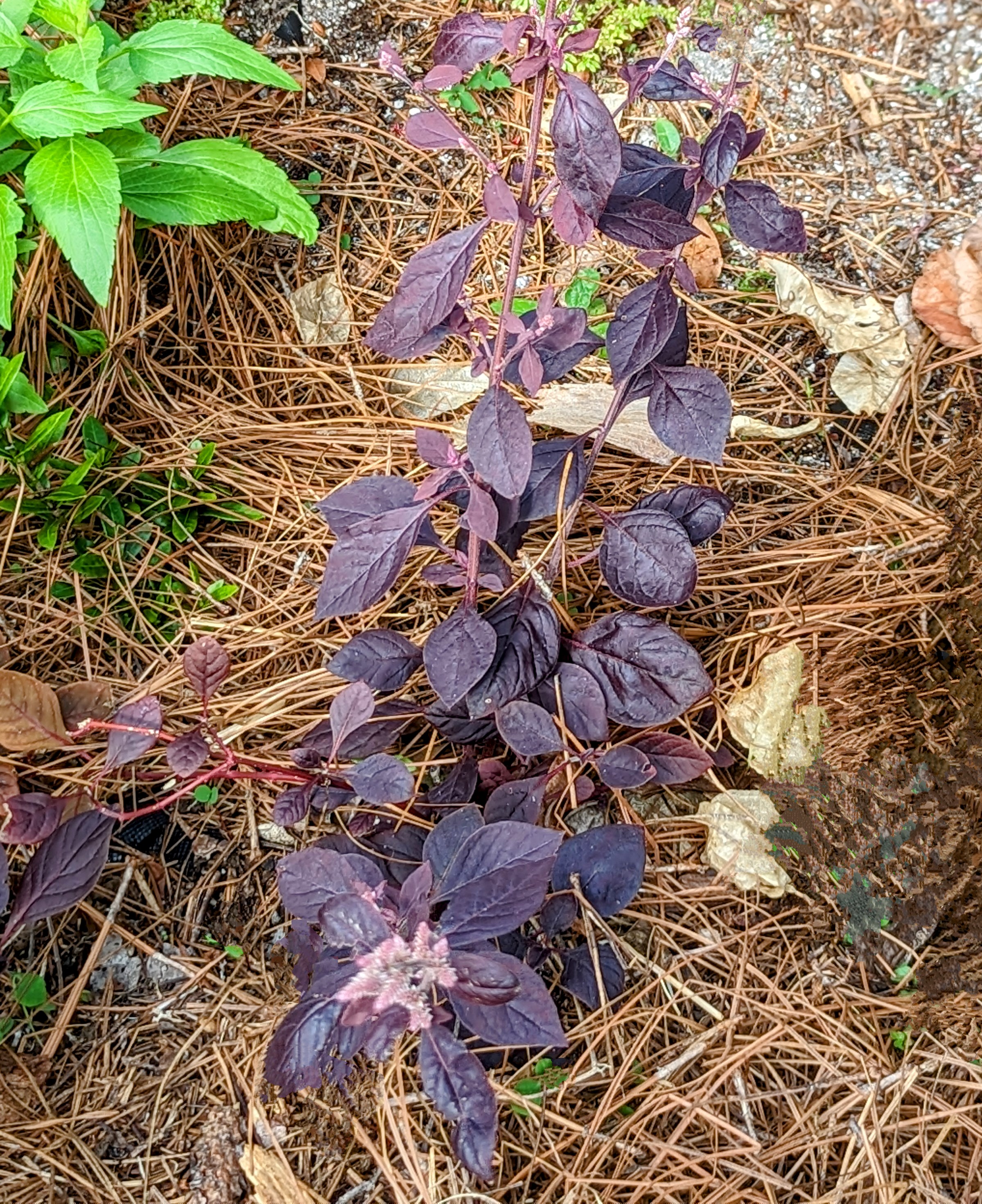
Another fall fav is the Juba Bush (Iresine diffusa). This wildflower is named after a Caribbean dance called the Juba because of the way they sway in the wind.
The birds are enjoying the berries in the garden. This is called Wild Coffee (Psychotria nervosa) – it is a Florida native shrub, great for butterflies and pollinators. The berries look like coffee, but do not have caffeine.

More late color in the garden. I usually have Beautyberry (Calliocarpa americana) by the first week of September and here it is finally showing some purple.

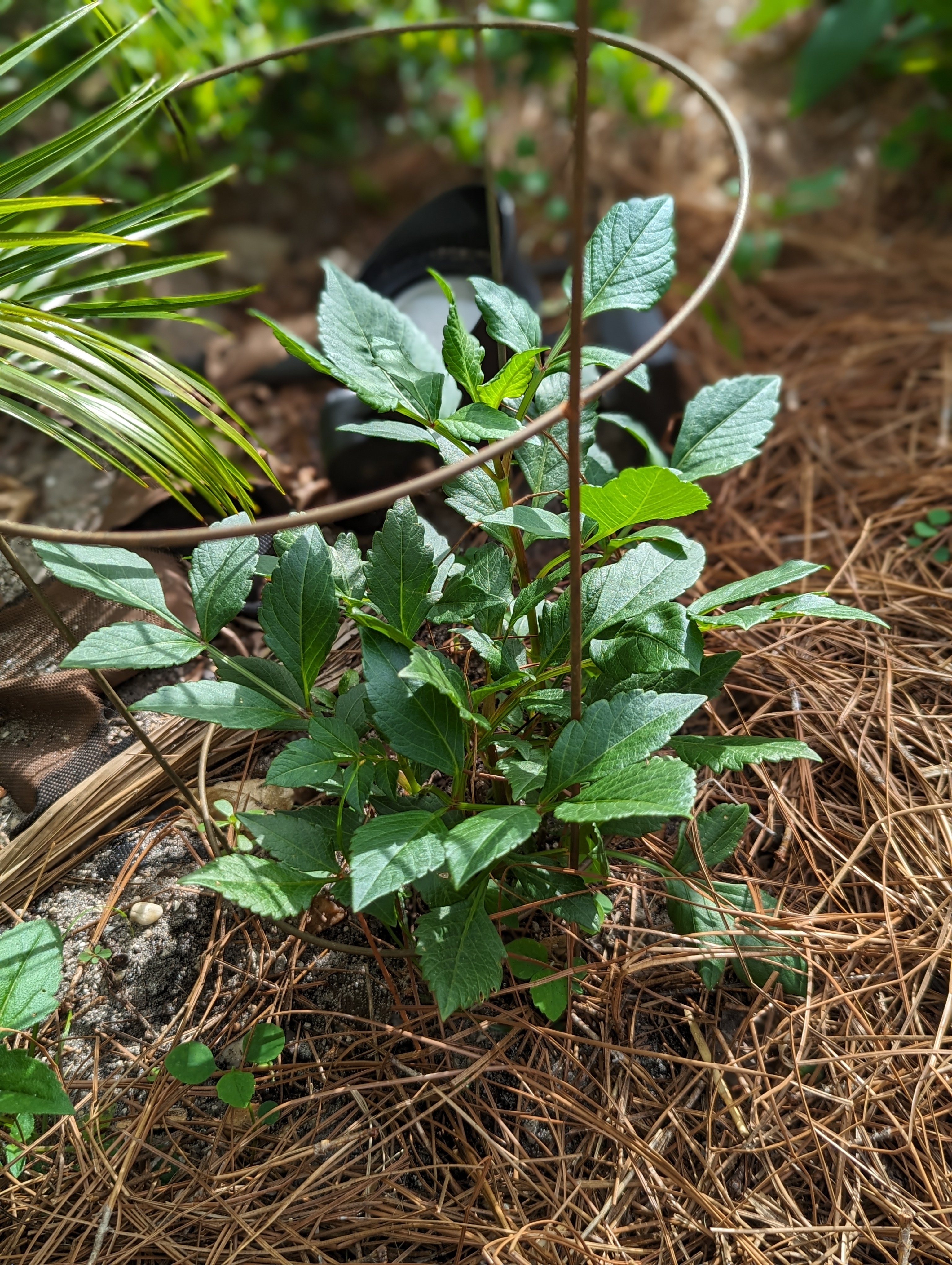
October is optimal Dahlia planting season in South Florida. For fun, I bought some end of season, cheap tubers, having had virtually no luck with Dahlias in the past. The tubers were wrapped in plastic and kept in the refrigerator for a couple of months and released into the garden this week. I planted the tubers and went out the following morning to find a varmint had dug them up, ate one, and left the others beside the holes they were planted in?! A gourmet, Dahlia intolerant varmint?

I replanted the tubers and added another found slung in front of bed (I am not sure if I forgot to plant it, or the varmints were at it again). Then, I covered the whole thing with a hardware cloth barrier. Take that, varmints!

The experiment continues. I found a bit of tuber on the front porch this morning. I am sure this time it was not me.

That is all from South Florida this sunny Saturday. The Dahlia adventure will be updated. I am now dithering about watering the tubers, though rot is unlikely in the sand.

Happy Gardening!!!

In a Vase on Monday – Household Roos

We have a few roos around the house. The vase this week is a Fitz and Floyd coffee cup I found irresistible in the 80s. I found it on a fantastic sale and decided it would be my cute work coffee cup. The kangaroo looks a bit demented, so this was a perfect desk accessory for a design office. I soon realized the reason it was on sale – the kangaroo hits you in the face when you drink out of the cup. It was reassigned to pencil holding duties.

The other rooing around the house is from Fiona the greyhound. Rooing is a peculiar greyhound tradition. Fiona is a dog with a schedule. Every afternoon around 4:30, we all roo (sing with the dog)

Fiona in action:

Vase details:

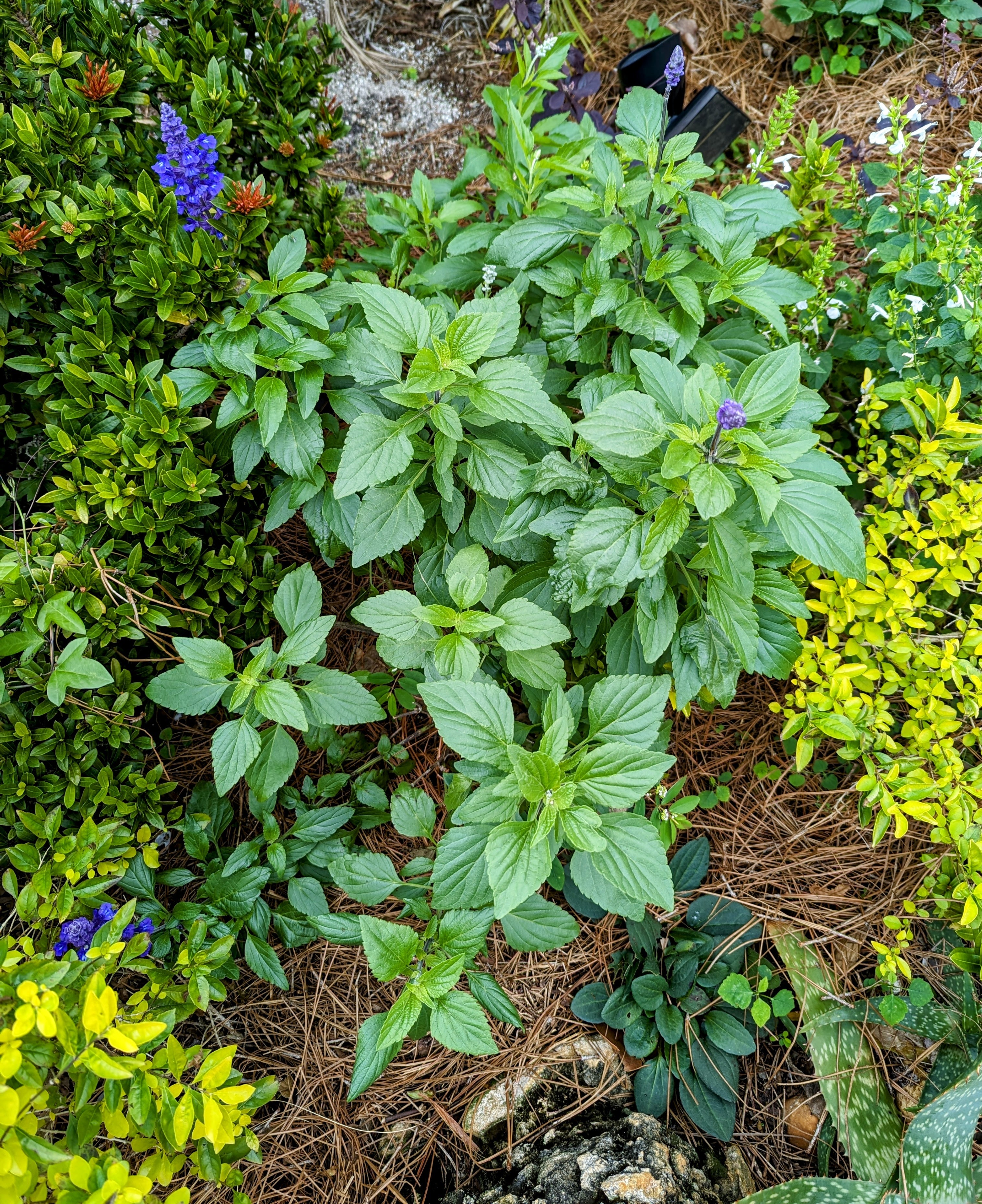
Blue flowers in the foreground are ‘Blue Daze’ Evolvulus; yellow spikes are Thyrallis (Galphimia glauca); pink and white spikes are Tropical Red Salvia (Salvia coccinea); blue spikes are ‘Mystic Blue’ Salvia.

Another view:

Background spikes are Sabal Palm (Palmetto sabal) seedling bits and the off white bendys are Juba Bush (Iresine diffusa), a native wildflower with a nice fragrance. One of those things that has to choose where it will live.

Thanks to Cathy at http://ramblinginthegarden.wordpress.com for hosting this weekly event. Follow the link to see more vases.

Six on Saturday – Hoomid

The most outstanding feature of my weekly garden tour – extreme humidity. The plants, house and even the doors and windows are dripping rivulets of water. Not a good gardening day. Next week is predicted to bring blessed relief from the soggy environment I keep finding myself in. To see other, less sweaty garden tours visit Jim at http://gardenruminations.co.uk

Reflections and the view outside this morning. The humidity was 80%, it is creeping downward through as the day goes on.

Some plants are enjoying the onslaught. This is a ‘Jill’ Neoregelia Bromeliad pup climbing a palm trunk.

‘Bridal Bouquet’ Frangipani (Plumeria pudica) is soaking up the moisture and still flowering. These are unusual in that they are considered semi evergreen and the shape of the foliage is different from other Frangipani.

Yellow Allamanda (Allamanda catharitica) is running rampant. Vines can be a little scary in South Florida.

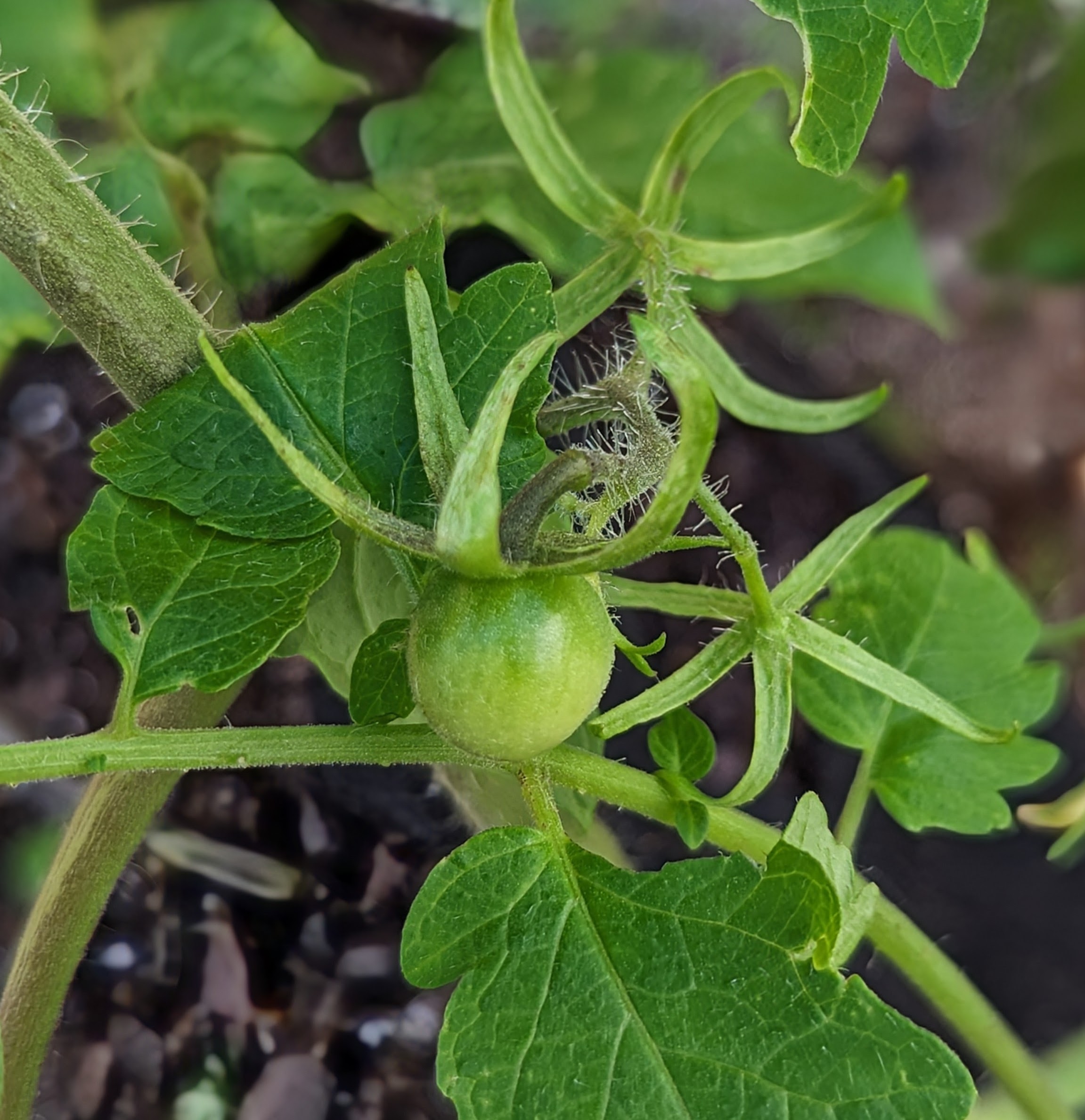
My first tomato seedling. The weather has been good for seed germination, although I did get a bit of dog vomit fungus in some of the pots.

Buds on the Soap Aloe (Aloe saponaria). These succulents seem almost architectural to me. One would think they would rot with all the moisture, but they are reveling in it and flowering like mad. I think this shows how sharp the drainage is in sugar sand.

That’s all from the swamp this Saturday. Wishing everyone some crisp Autumnal days. I am awaiting the end of soggy.

Happy Gardening!!

In a Vase on Monday – Lady Di was a Firecracker

My mother used to refer to spirited women she admired as “Firecrackers”. This is probably some sort of weirdness from the Deep South, but an apt description of many women who capture the imagination of the world. I think Diana, Princess of Wales qualifies.

What does this have to do with my vase this Monday? Well, we have Lady Di Heliconias and Firecracker plants together in the vase. The flowers have a kind of spirited pow going on as well.

The seemingly perpetual rain the last week of September inspired some serious late season flowering on most of the Salvia in the garden. I am waiting for a bumper crop of seedlings. The pure white Tropical Red Salvia was too luxuriant to resist and I cut quite a bit to add to the vase.

A closer view:

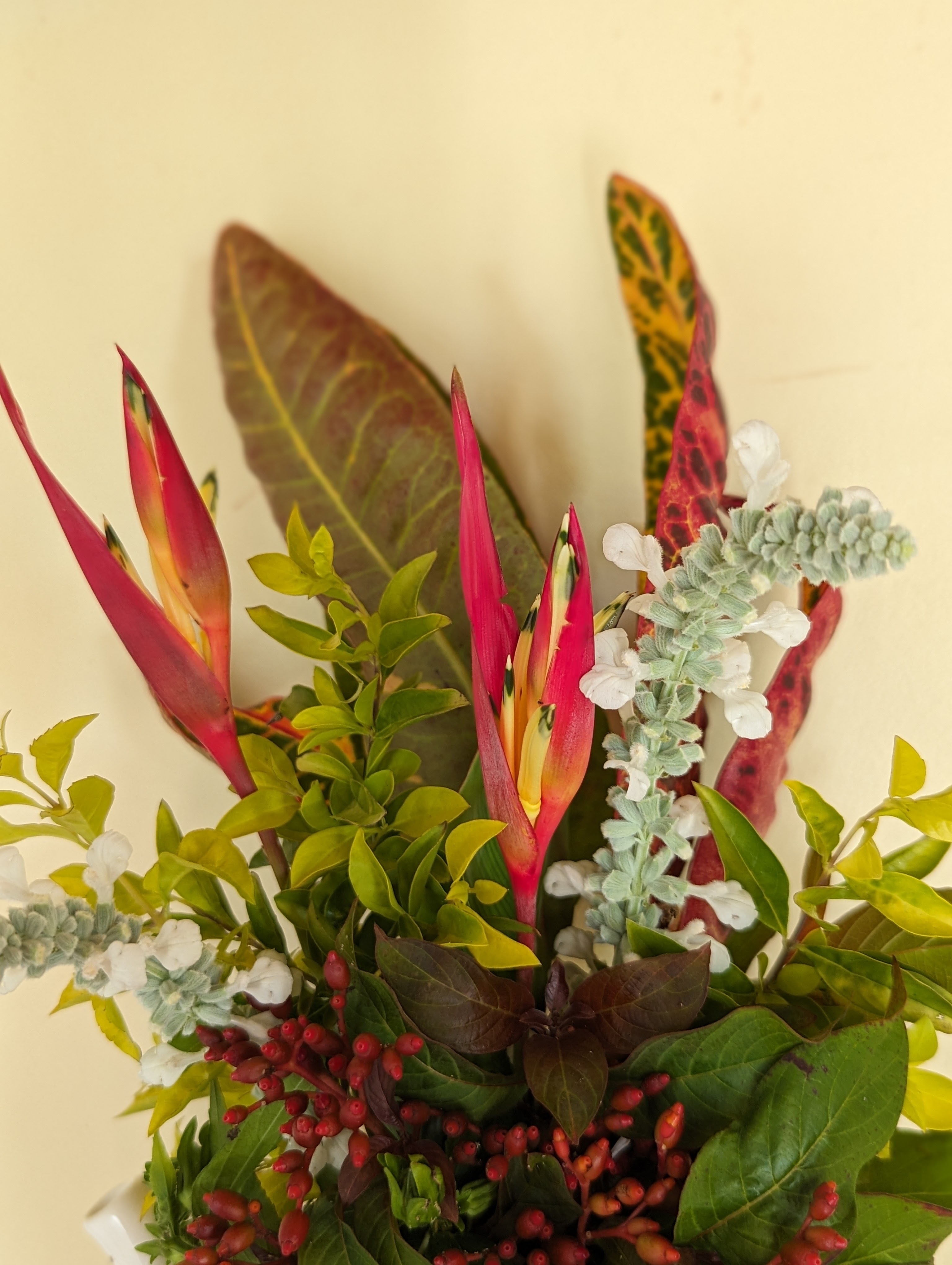
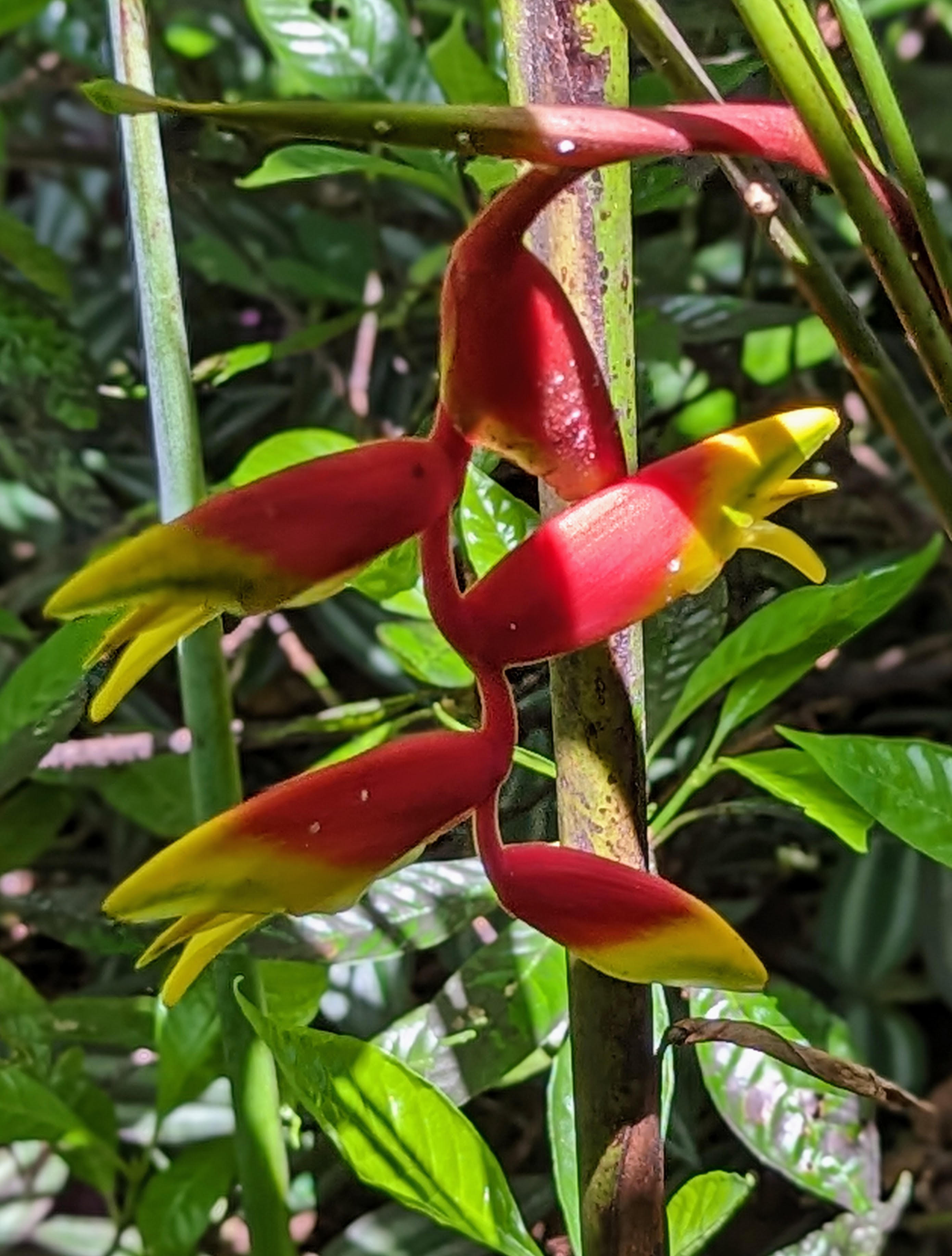
The “Lady Di” Heliconia (Heliconia psittacorum) in red and yellow; the red bells are Firecracker Plant (Russelia equisetiformis). The Russelia is amazingly drought tolerant and I love the unusual foliage texture. The rain seems to have encouraged the flowering, I have never seen quite a show like this.

Tropical Red Salvia (Salvia coccinea) occurs in several colors; surprising to me is that pure white is my favorite. The spike foliage is from the fronds of Sabal Palm (Palmetto sabal). Russelia foliage is in the background. The vase is a thrift store find.

The precipitation onslaught has finally slowed. We are getting some nice rains for growing new plants and I hope to get the rest of them out and established before the inevitable dry season sets in a month or so.

Thanks to Cathy for hosting IAVOM for weeks and weeks and years now! Follow this link to her blog to see creations from other gardeners – http://ramblinginthegarden.wordpress.com

Six on Saturday – Floridian Fall

It’s Saturday again and time to join the worldwide garden blogging community to share six items of interest from the garden. Follow this link to Jim’s blog http://gardenruminiations.co.uk to check out what fall fun other gardeners are sharing.

South Florida does not have what I would consider normal signs of fall, just symptoms. The air is cooler in the morning and a few plants produce colorful berries. The most significant sign is it is comfortable to work outside again, but only early or late in the day. It has finally stopped raining constantly ! I have been able to plant some of the perennials I bought and replant those little pots with seeds and cuttings for more plants.

The berries. These are the fruits of the Christmas Palm (Adonidia merrilli) By Christmas they will be completely red and resemble ornaments for the tree.

Another sign of cooler weather. Turk’s cap Hibiscus (Malvaviscus penduliflorus). These just seem to appear in the garden. I enjoy the flowers and cut them to hang over the edge of vases. Floridians call these Nodding Hibiscus. I guess there are hats like this in Turkey?

Atala butterflies are back in garden. These are the caterpillars consuming their only host plant, the Coontie cycad (Zamia integrifolia). I hope to get some butterfly pictures, Atalas have a fluorescent orange body with black wings streaked with turquoise.

Mulching the bromeliad beds with the leaning greyhound standing guard. Straightening the statuary is next on the list. The bromeliads were moved last spring and have been established over the summer.

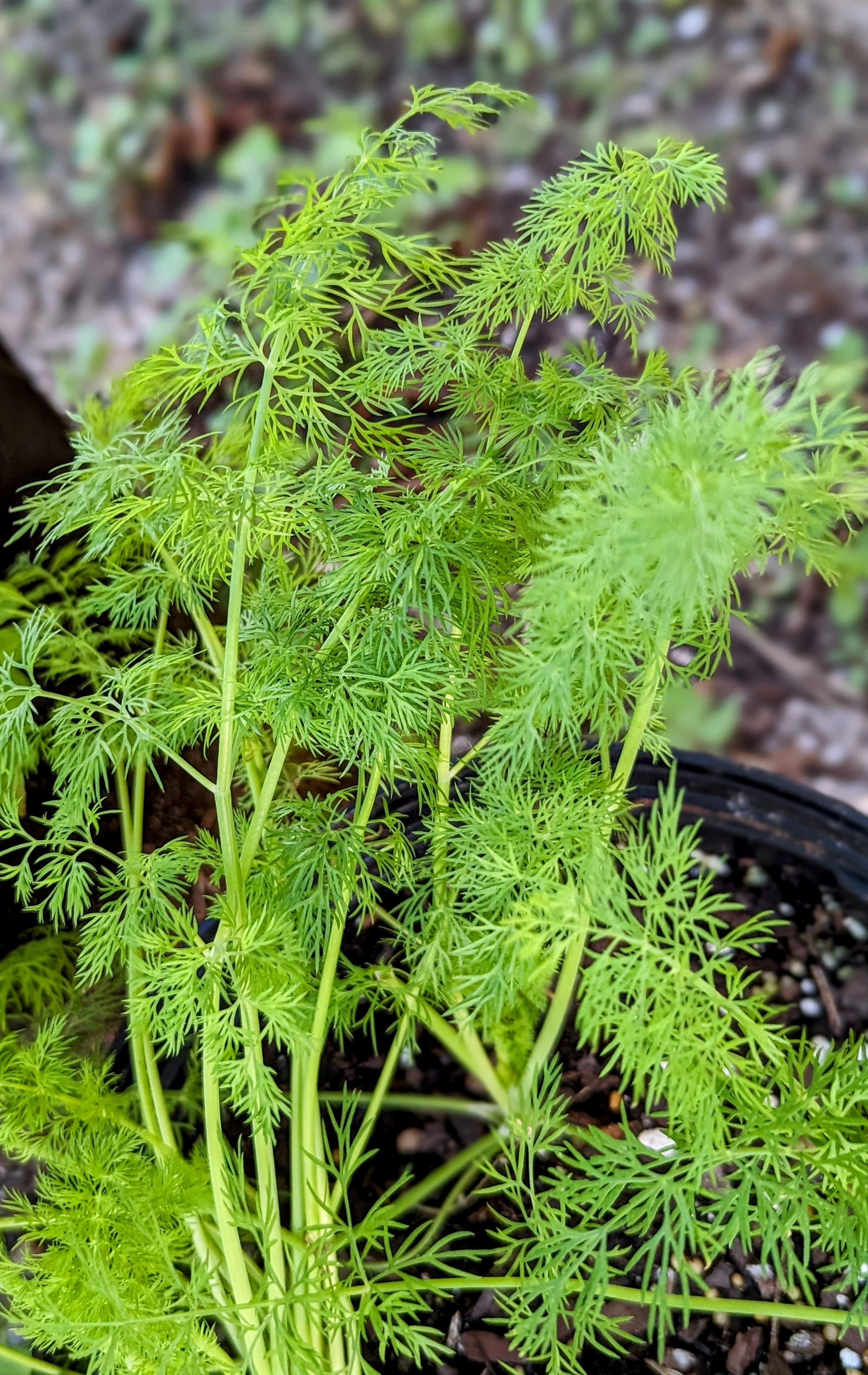
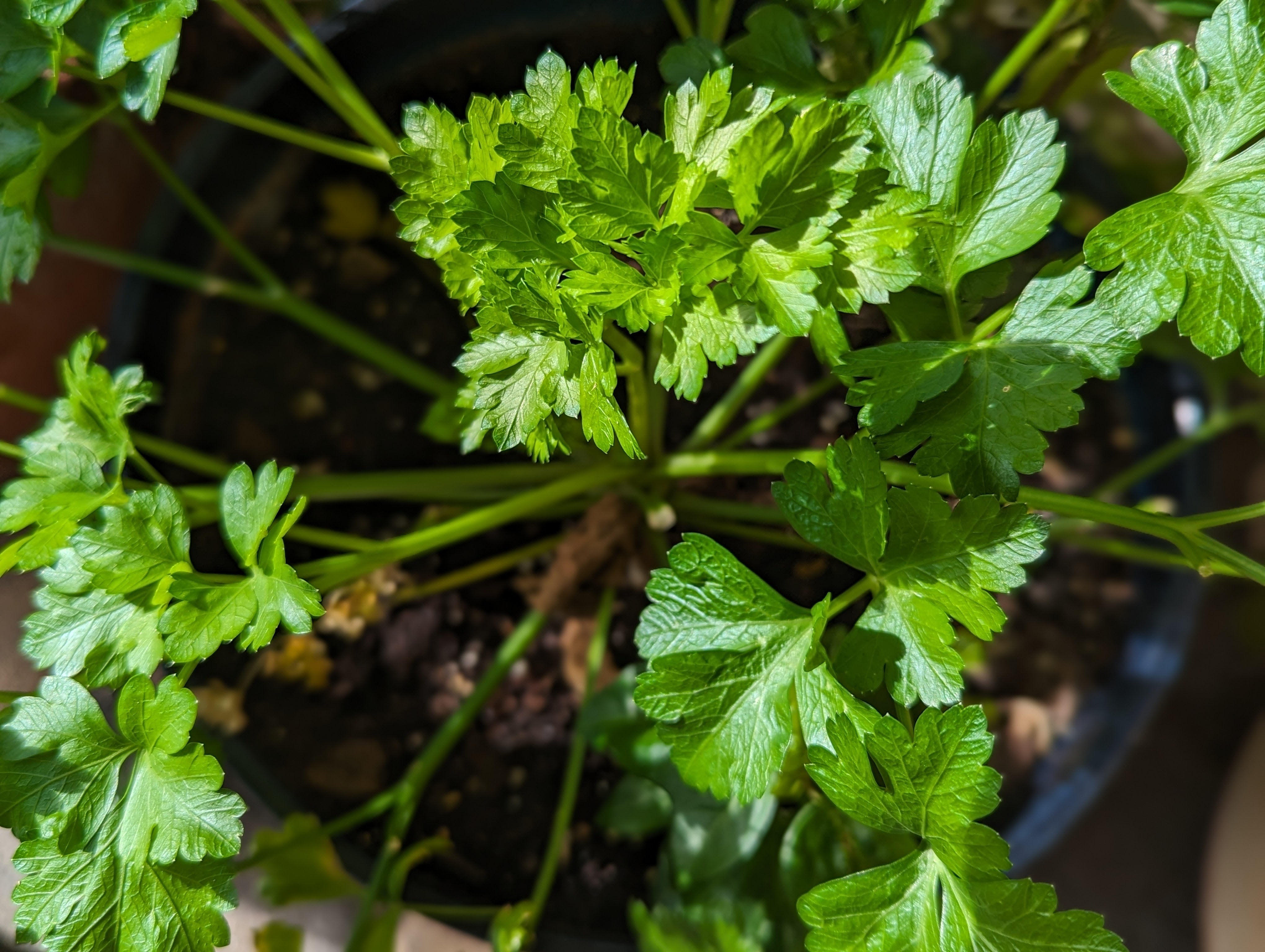
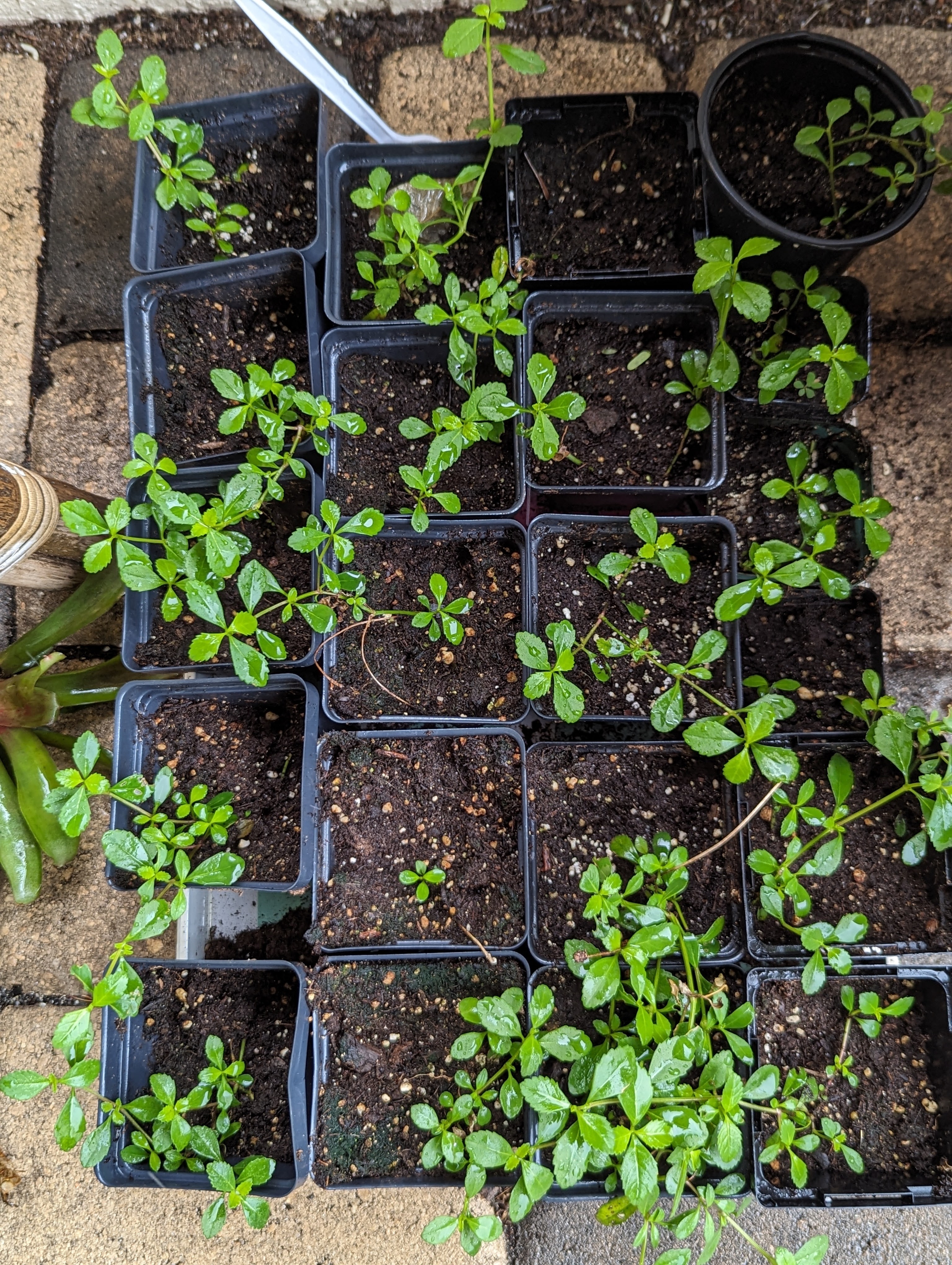
The box of perennials I planted last week has been refilled with fresh soil and planted with Senecio and Turkeytangle Frogfruit cuttings. Senecio is the succulent. The Frogfruit is to fill in my slowly growing lawn replacement. Seeds for dill, basil and tomatoes were planted. I bought some thyme seed, but did not realize how long it takes to germinate (28 days) and decided to buy a plant.

This is not a regular fall event, a fairly rare sight actually. One misty afternoon this week I walked outside and spied a double rainbow.

Still looking for that pot of gold to buy more plants.

Happy Gardening.