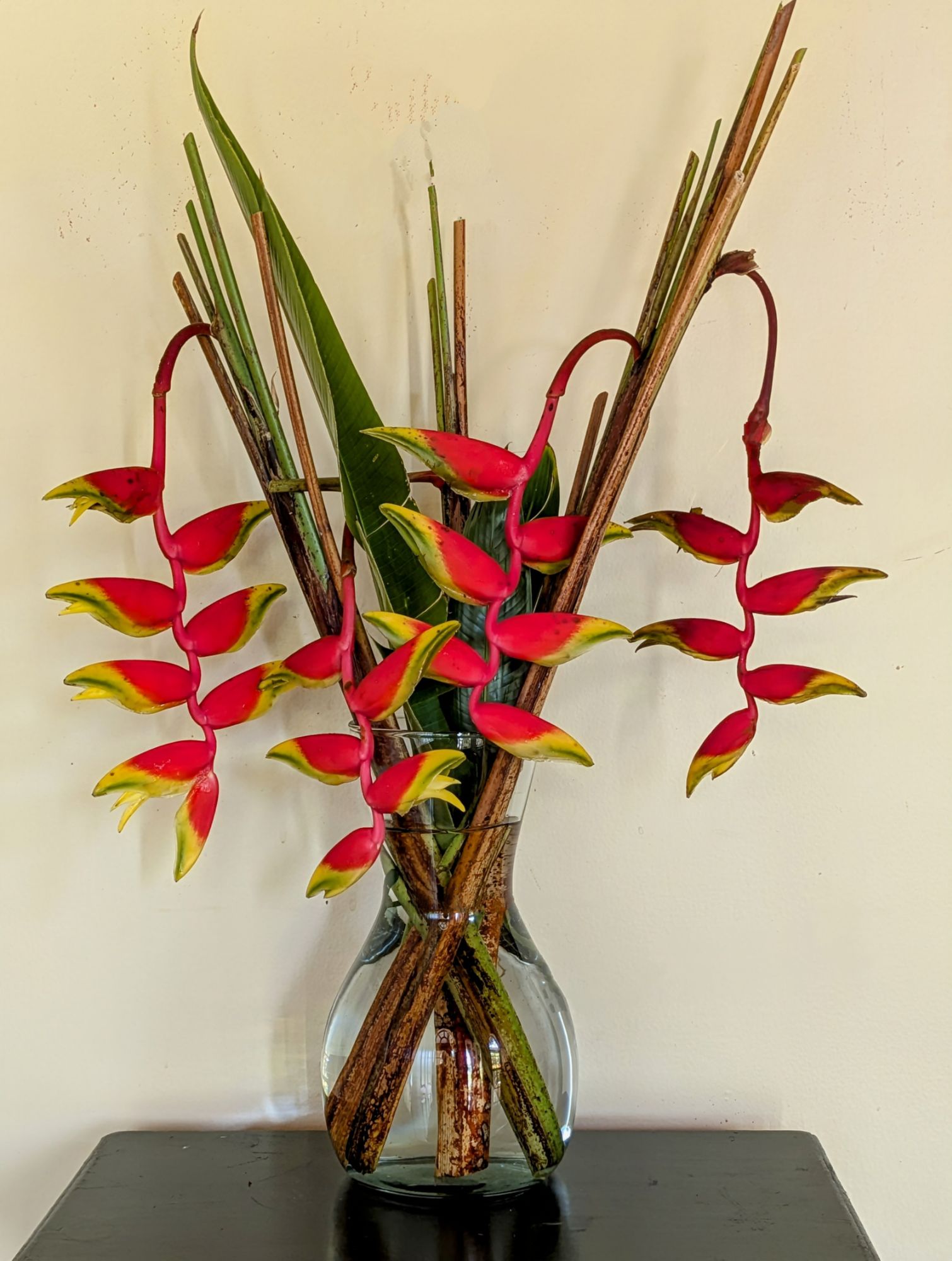
The Lobsterclaw Heliconia (Heliconia rostrata) are having a banner year. I suspect the addition of food, water and acidic mulch has a lot to do with it. Maintenance! What a concept. I have had a flower or two in previous years; but this year a bevy of flowers burst forth followed by new green shoots with buds. The decision was made to dead head the flowers, a task never undertaken before. Hence Dead Lob. As a joke, my siblings and I called my parents favorite restaurant, Red Lobster, by that name. Red Lobster is sort of an American institution, known for serving massive quantities of frozen seafood for low prices.
Heliconias are a single genus and have some unusual habits. This one produces green leaves (at least two feet long) above the flower buds, then the leaves die off leaving curled brown blobs over the bright flowers. I have trimmed the dead leaves off, leaving the stems and flowers. The green leaves remaining are in the vase. As the stems age they take on a bronze, spotted coloration. I like this and will enjoy watching the senescence.
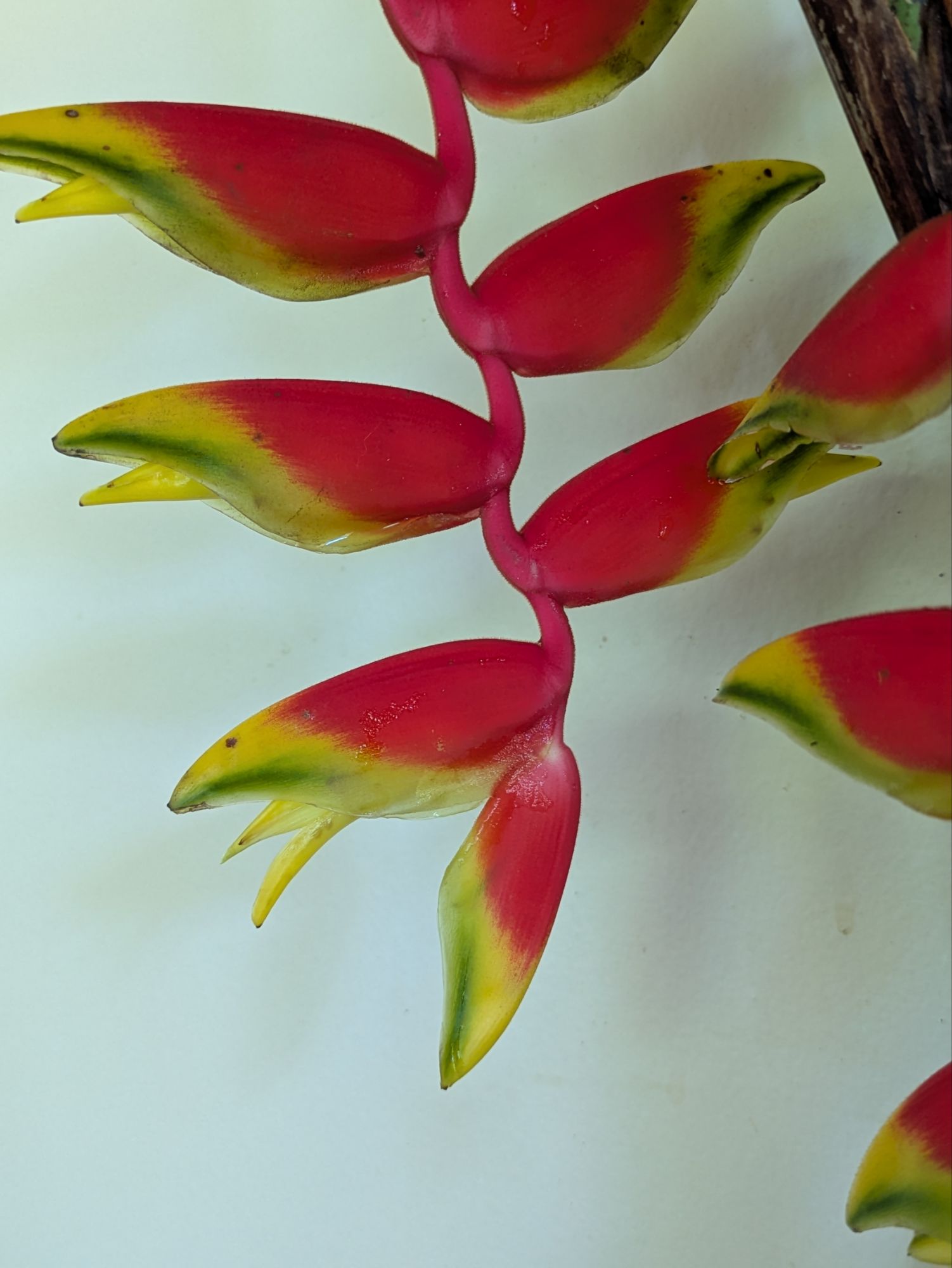
A close up of the flower. There must be seeds in there somewhere? I wonder if my garden has a pollinator that is capable of working with these flowers. The Orange Bird of Paradise rarely produces seed here because the Sunbird (native to South Africa where the plants originate) is one of the few animals capable of the gymnastics necessary to pollinate the flowers. I must look into what pollinates Heliconias. More garden mysteries to ponder.
To see more vases, follow this link RamblingintheGarden to Cathy’s blog.

 The Shrub Queen
That is more information than I need about lobster claw heliconia; although it explains why I never saw their foliage. I remember them in old floral design of the late 1980s, with stubbed petioles.
LikeLiked by 1 person
I enjoyed reading the story behind the Dead Lob title! 😂The way you have arranged the various stems is so artistic, making the vase a real success
LikeLiked by 1 person
Thanks, Cathy. It was more of a Plonk..
LikeLiked by 1 person
They are really interesting flowers. Imagine seeing them in the wild. I wonder if you could pollinate them?
LikeLiked by 1 person
I have seen them in Maui fantastic and huge!! It seems hummingbirds are the pollinators which makes sense if you look at the flowers.
LikeLiked by 1 person
Your Lobsterclaw Heliconia are always stunning! I wish I could grow them but ample water and acidic conditions isn’t easy to provide here.
https://krispgarden.blogspot.com/
LikeLiked by 1 person
Thanks, Kris. I would say the same about my garden. They are under a roof drain and I put Hollytone on them.
LikeLike
Did you hear my squeal of delight all the way down there? 😉 I LOVE these!
LikeLiked by 1 person
Lol I am almost to Boston.
LikeLiked by 1 person
It’s a gorgeous day here, 70s, sunny, breezy and low humidity. Enjoy it… Wish you could come out for a visit… only two hours by car! 💕
LikeLiked by 1 person
Well, I blew through Beantown. That was like a winter day to me! I love seeing all the evergreens. Sooner or later I will get out your way!
LikeLiked by 1 person
I hope you do!
LikeLike
Oh Wow! Aptly named but I also see little beaks squawking, ‘Look at me’! or little fish swimming. They are amazing! Beautiful.
LikeLiked by 1 person
Thank you. I enjoy these.
LikeLike
These flowers are amazing Amelia. How tall do they actually grow?
LikeLiked by 1 person
Hi Cathy. The plants are 4-5 feet tall. I have seen them in Hawaii twice that size.
LikeLiked by 1 person
Perfect! I love the simplicity of it, and I appreciate the Heliconias even more after seeing them frequently during travels to warmer climates. I’m glad yours are having a banner year. 🙂
LikeLiked by 1 person
Thanks, Beth.
LikeLike
Fabulous, I can’t imagine being able to grow something as surreal as these heliconas. Wouldn’t it be fun to grow some from seed? Couldn’t you replicate a sunbird with a stick or a brush or something? I don’t know what sunbirds look like, do they have long beaks?
LikeLiked by 1 person
Thank you, Liz. These are pollinated by very specific hummingbirds I have found. Not the ones that fly through here. I am not sure what gets pollinated?! The bulbs multiply so they are easy to propagate that way.
LikeLike
I love the rather abstract structure of this design. Pretty awesome those heliconias. Enjoyed reading this and glad the plant itself hadn’t died, which is what I first thought from the title.
LikeLiked by 1 person
The flowers arrange themselves and look like Halloween now, they keep the same shape but turn black.
LikeLiked by 1 person