I am joining the SOS gang to share the discovery of my first ripe Rangpur lime this Saturday. I shall be heading to the grocery store soon to buy ingredients for a pie. Gardening is Good! Eventually I end up with a pastel orange “Key Lime” pie.
To see more SOS posts, follow this link Garden Ruminations to visit our host, Jim and travel the world of gardening through the comments section.
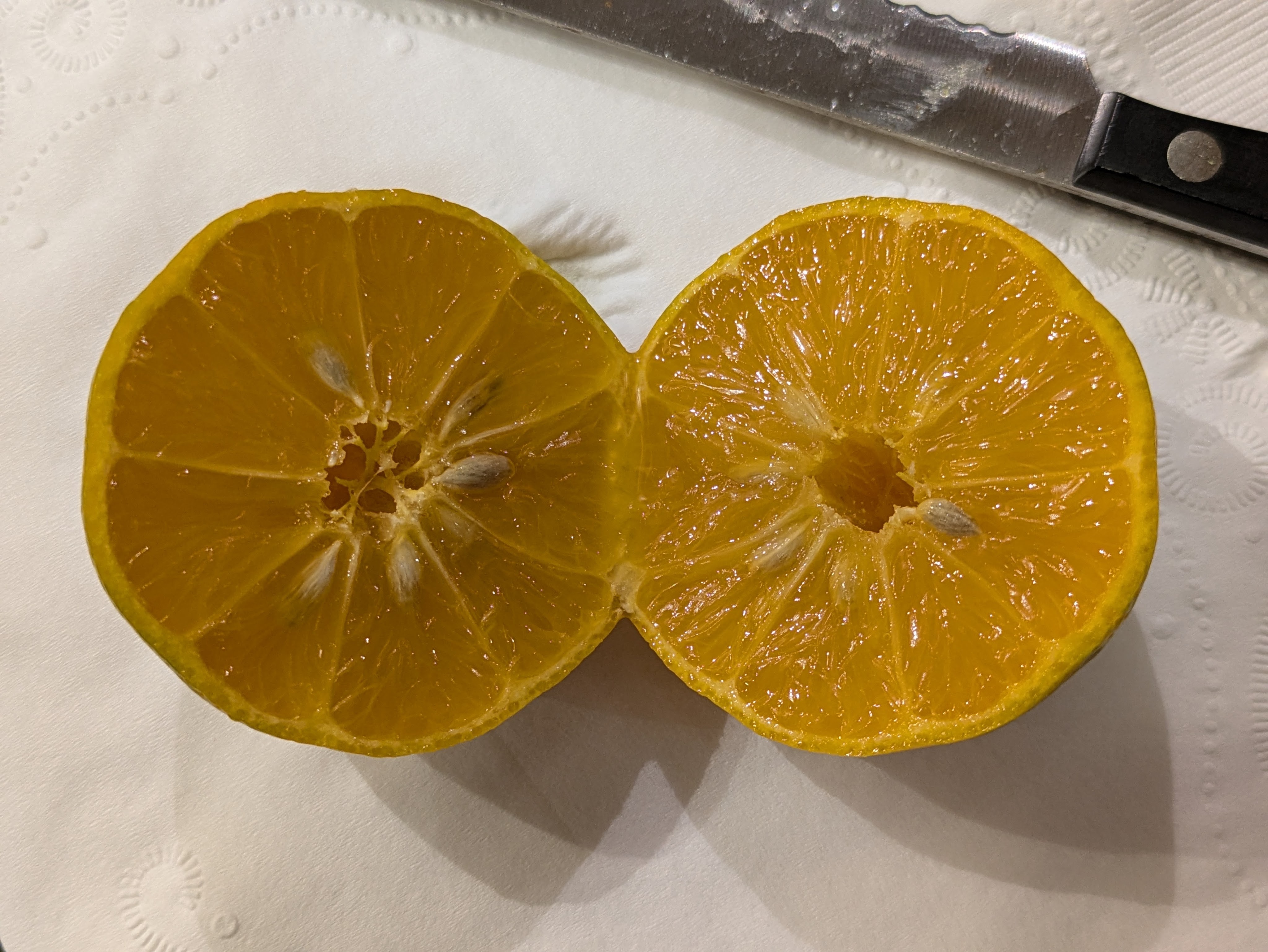
The Rangpur lime. This fruit is a cross between a lemon and a mandarin orange. Why it is called a lime I am not sure.
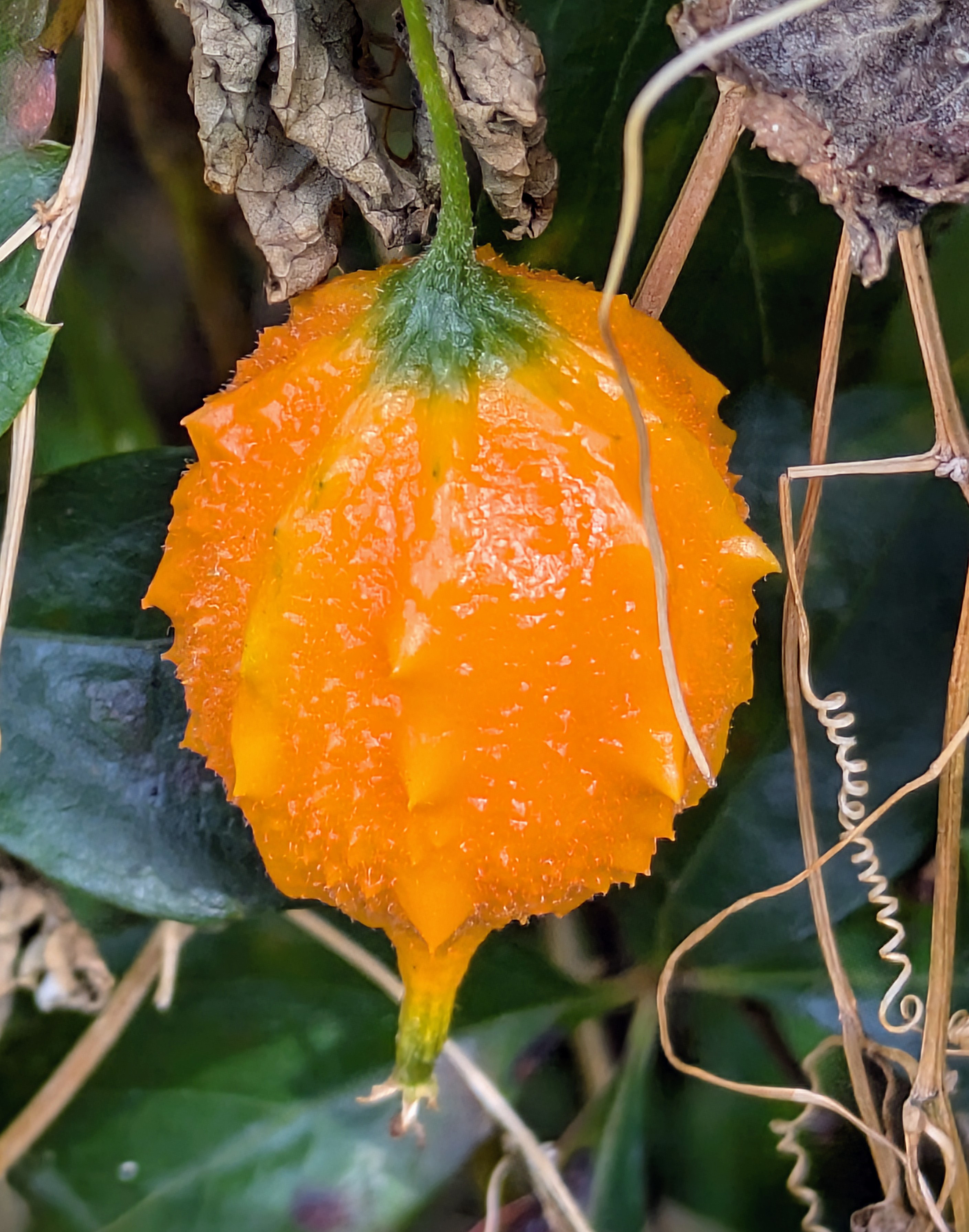
More unusual fruit. This is a Bitter Melon (Monmordica) These grow wild here and are very prolific. Some call them Stinkweed due to the smell of the foliage. They are considered health food for some – I stick with the Rangpur pie.
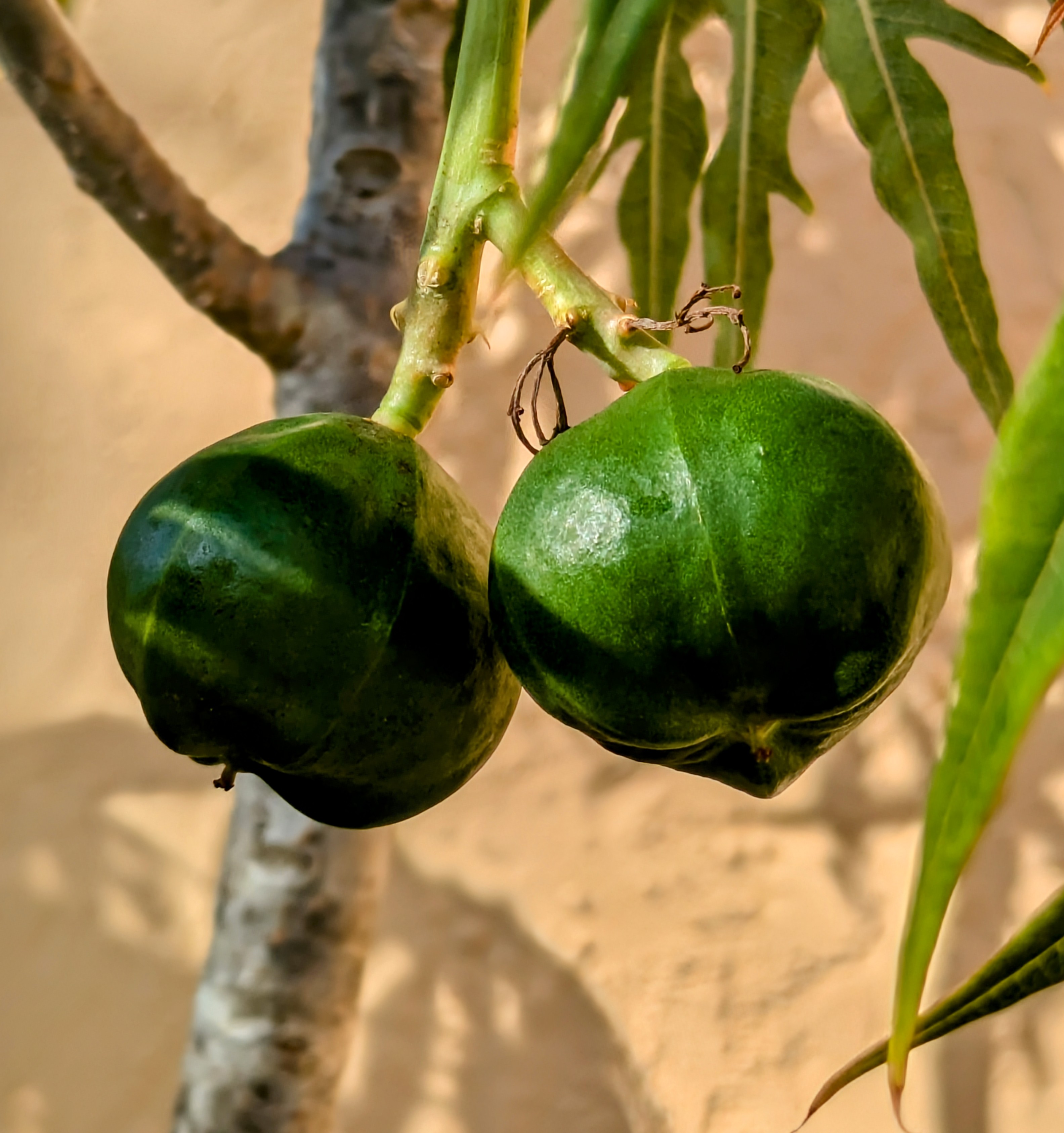
Fruit of the Jatropha multifida, called physic nut. It is supposedly medicinal, but known to cause mild gastrointestinal distress, I am not sure why you would eat it.
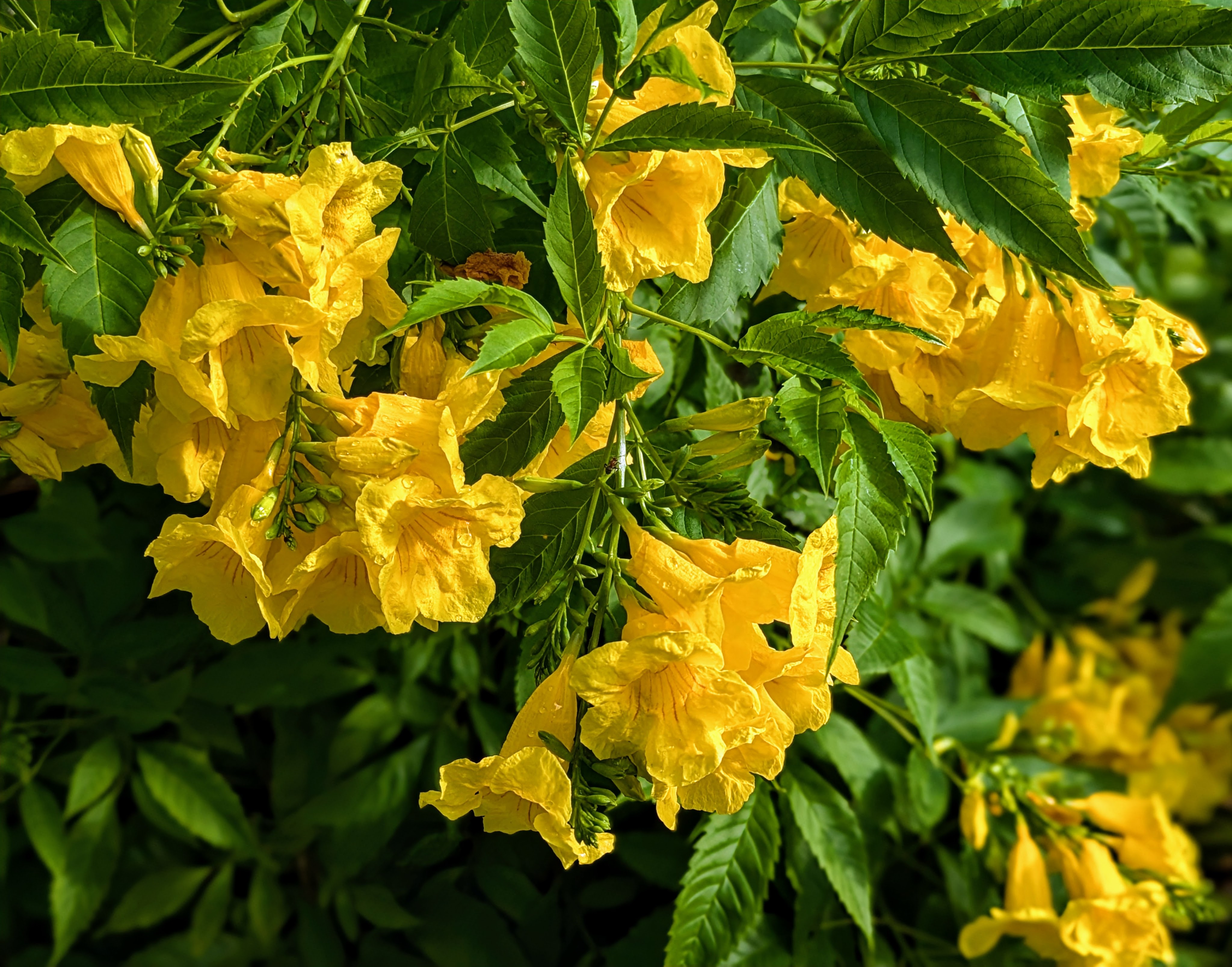
Yellow Elder (Tecoma stans) starting its show.
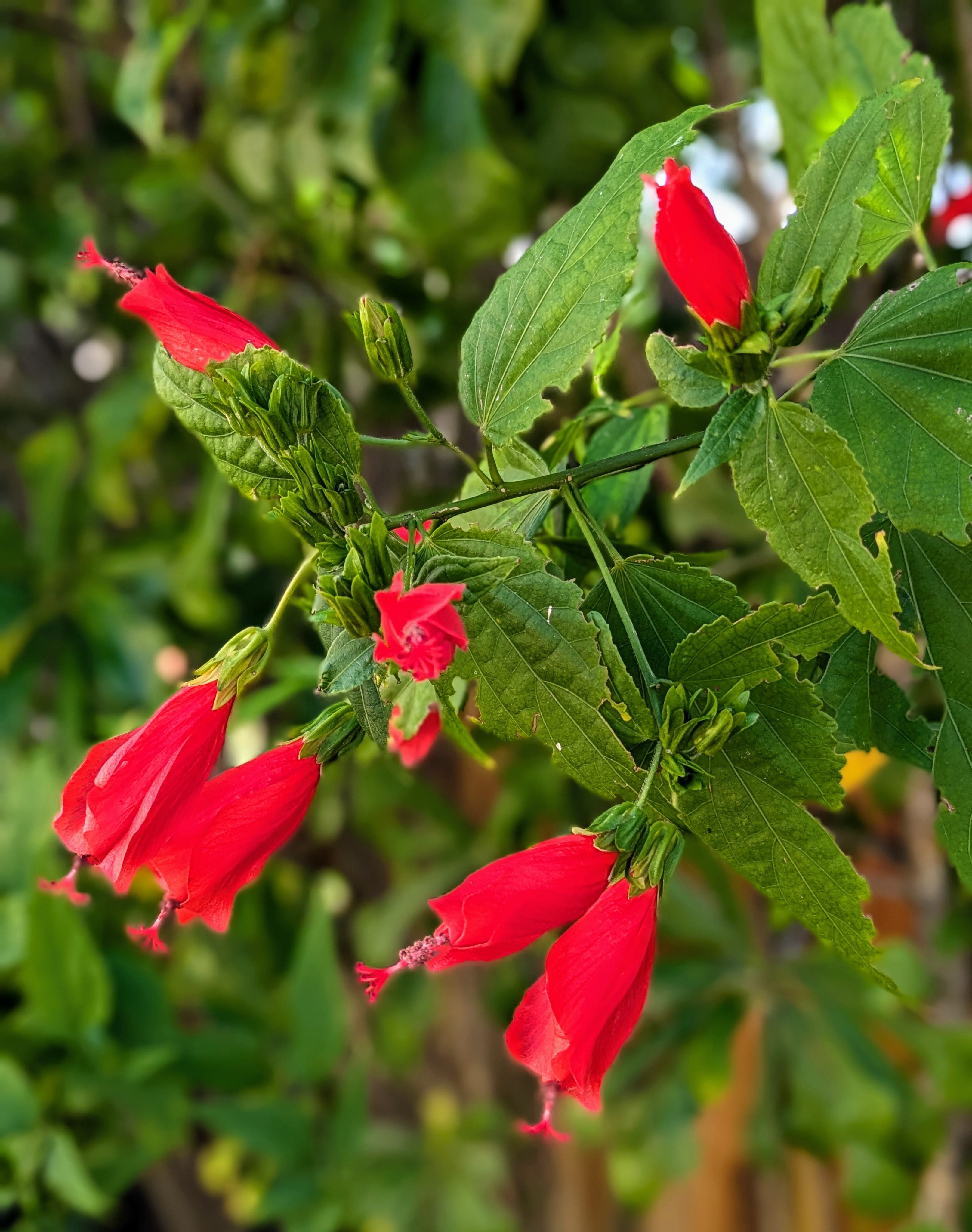
Nodding Hibiscus (Malvaviscus arboreum) waking up.
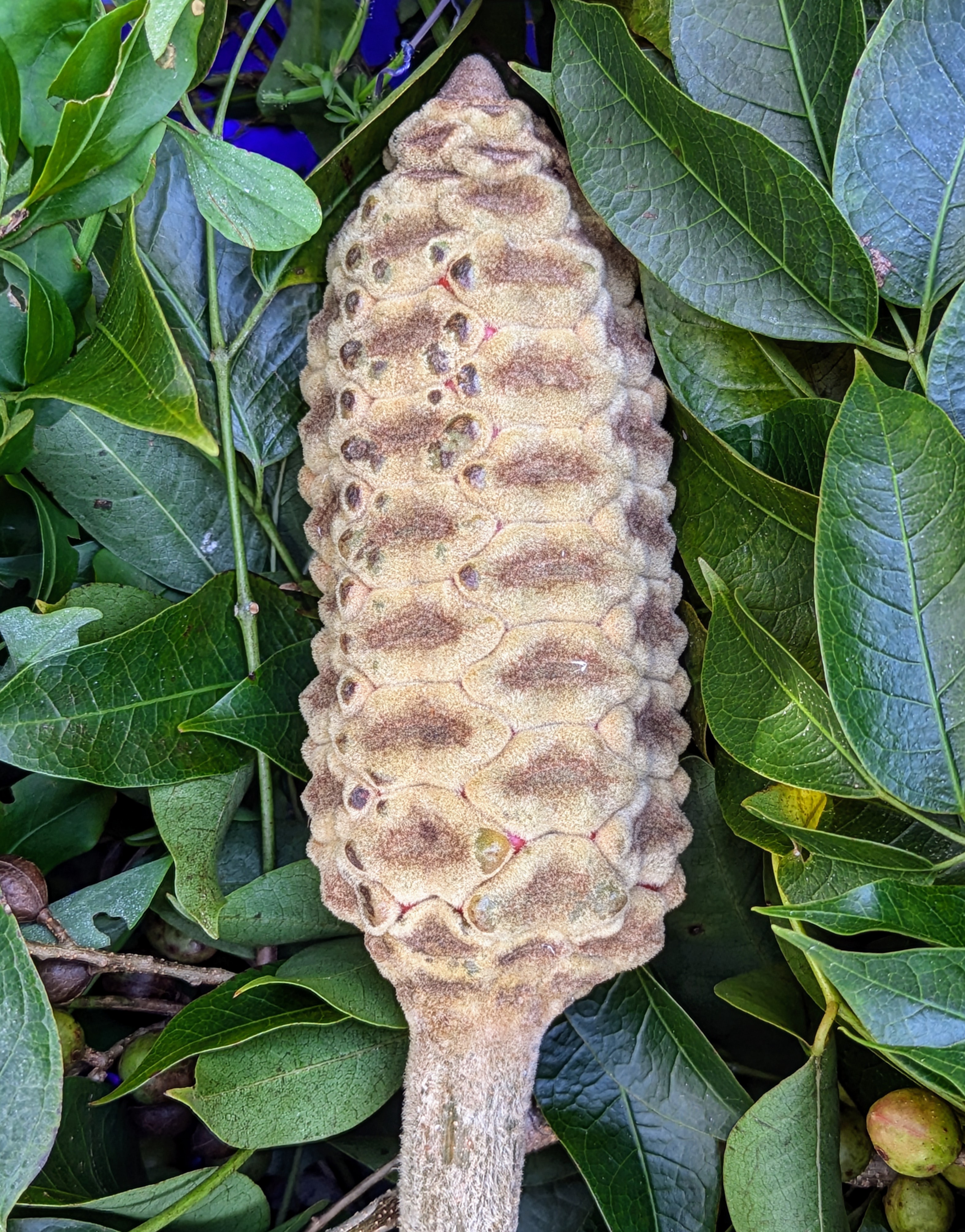
Another fall find, the cone of a Cardboard Palm (Zamia furfuracea) – this one has been trimmed off and is nestled in trimmings from a Gumbo Limbo (Bursera simaruba). These are prolific reseeders and not a good thing to get loose in the garden.
That’s all from South Florida this morning. Off to find baking ingredients.


I always learn about something new from your posts, interesting fruits!
LikeLiked by 1 person
Strange fruit, indeed. 😉 The pie sounds wonderful!
LikeLiked by 1 person
Lots of strange fruit around here.
LikeLiked by 1 person
Yes I learned something today with the existence of the very pretty Malvaviscus arboreum that I did not know. Good choice Amelia as usual. 2 questions please: is the Rangpur lime pleasantly sweet or rather too acidic? And how did you grow bitter melon? From seeds? I have a few and I have never managed to germinate them: some tips perhaps because of the hard shell (scarification was not a success here)
LikeLiked by 1 person
The lime is not sweet it’s like orange scented lemon juice. Maybe a bit less acid. The bitter melon comes up wild, I have to get rid of it! The fruit on this pops open, red berries like Euonymous.
LikeLiked by 1 person
Wow, lots of plants that I know nothing about, although I was reading about the medicinal use of bitter melons just this week. I now know what they are!
LikeLiked by 1 person
Love seeing the Rangpur limes growing rather than just in the shops.
LikeLiked by 1 person
I have never seen one in a shop.
LikeLike
One shop here has them in season but not common at all.
LikeLiked by 1 person
Glad your fruit has ripened. Pie sounds good. My yellow bells have stopped ringing awhile back.
LikeLiked by 1 person
It seems late for the yellow bells?
LikeLiked by 1 person
Maybe…mine have not bloomed in years.
LikeLiked by 1 person
Weird
LikeLike
Fascinating six. You certainly have unusual autumn plants.. I love all your fruit or are any of them drupes? I am never sure of the difference. Your Rangpur lime interests me, I have never heard of such a thing, is it sweet? Lovely to make a pie with your own fruit. And the Malvaviscus is such a gorgeous red.
LikeLiked by 1 person
Thanks, Liz. I think Mangoes are drupes. Maybe Jaboticabas, not sure. The lime is not sweet and tastes very lemony.
LikeLike
I love that yellow Tecoma and all those delicious fruit! 🍋
LikeLike
Lots of interesting tropical plants to share. Do you not want Cardboard Palms in your garden because of their large size?
LikeLiked by 1 person
No. After a while they tend to take over and are difficult to pull out.
LikeLiked by 1 person
Do people eat the bitter melon? I have never seen an orange one – very pretty! Good on you with the lime too. Does it taste of lime, or more mandarin?
LikeLiked by 1 person
yes, people eat them for medicinal purposes. The lime tastes more like a lemon to me.
LikeLike
Tecoma stans! Oh, the ungerminated seed that you sent are still out there in a flat. They did nothing, and I suspect that is because I did not sow them into the flat until after the last frost. I did not want them to germinate and then succumb to frost. However, I now suspect that they needed to be vernalized by a bit of chill in order to germinate. If any are still viable, they can get vernialized this winter, and hopefully germinate at the end of winter. If any germinate early, I can move them out of frost. (We do not get much frost here, but it is enough to do a bit of damage to new seedlings.) I still can not believe that I have been unable to grow any from two batches of seed!
LikeLiked by 1 person
Actually they are supposed to be invasive here and I have not seen one germinate..?
LikeLiked by 1 person
Some of the first batch of seed that you sent me germinated, but was then damaged by a late frost. I left them out to get some chill, but neglected to protect them when they actually germinated.
LikeLiked by 1 person
That is interesting. I wonder if they need cooler weather than I have to germinate?
LikeLiked by 1 person
Are they naturalized or native nearby? Perhaps they get the minimum of what they need to perpetuate, even if it only happens every few years or so.
LikeLiked by 1 person
No, I rarely see these. They claim they are from the Florida Keys but not really native.
LikeLiked by 1 person
If they are not really native, they are not from there. (I figured that they were native but rare there.) It is impossible to know how species move around. Even here on the coast of California, the Carpobrotus chilensis, which was supposedly brought by Spanish explorers a very long time ago, could have been native all along. The Spanish brought only species that were useful. This one is technically edible, but probably would not have been a priority for them. Sapindus saponaria, which is native from Florida to Arizona is also native to Hawaii! I can not imagine how it got out there!
LikeLiked by 1 person
I guess that’s the question. There was a big hullabaloo when they were declared not native. I think it’s native to Mexico or the Caribbean. How did anything get to Hawaii?
LikeLiked by 1 person
I have no idea. Nor do I know if it got to Hawaii, or to North America from Hawaii.
California has many overly zealous (so-called) ‘environmentalists’. Like politics, they are extreme in opposing directions. Some are overly protective of native vegetation, regardless of how it is responding to former clear cut timber harvesting (which is a long story), or how hazardous its combustibility is to those of us who live here now. Some are overly protective of aggressively invasive naturalized species merely because they are so happy to be here now. They want blue gum eucalyptus, which has been very detrimental to the ecosystems that it invades, to be classified as native.
LikeLiked by 1 person
Same here. The native plant people drive me crazy..
LikeLiked by 1 person
An interesting six this week Amelia. Wish I could pop by to try some key lime pie, which I have never had. Hope you enjoy yours!
LikeLiked by 1 person
Thanks, Cathy. Key lime pie must be an American thing. Key limes are a tiny lime that grows in the Florida keys. I rarely use them in a pie because you have to squeeze about 20!
LikeLiked by 1 person
So many interesting and unknown to me plants. Great Six
LikeLiked by 1 person