Martin the Bromeliad

Image

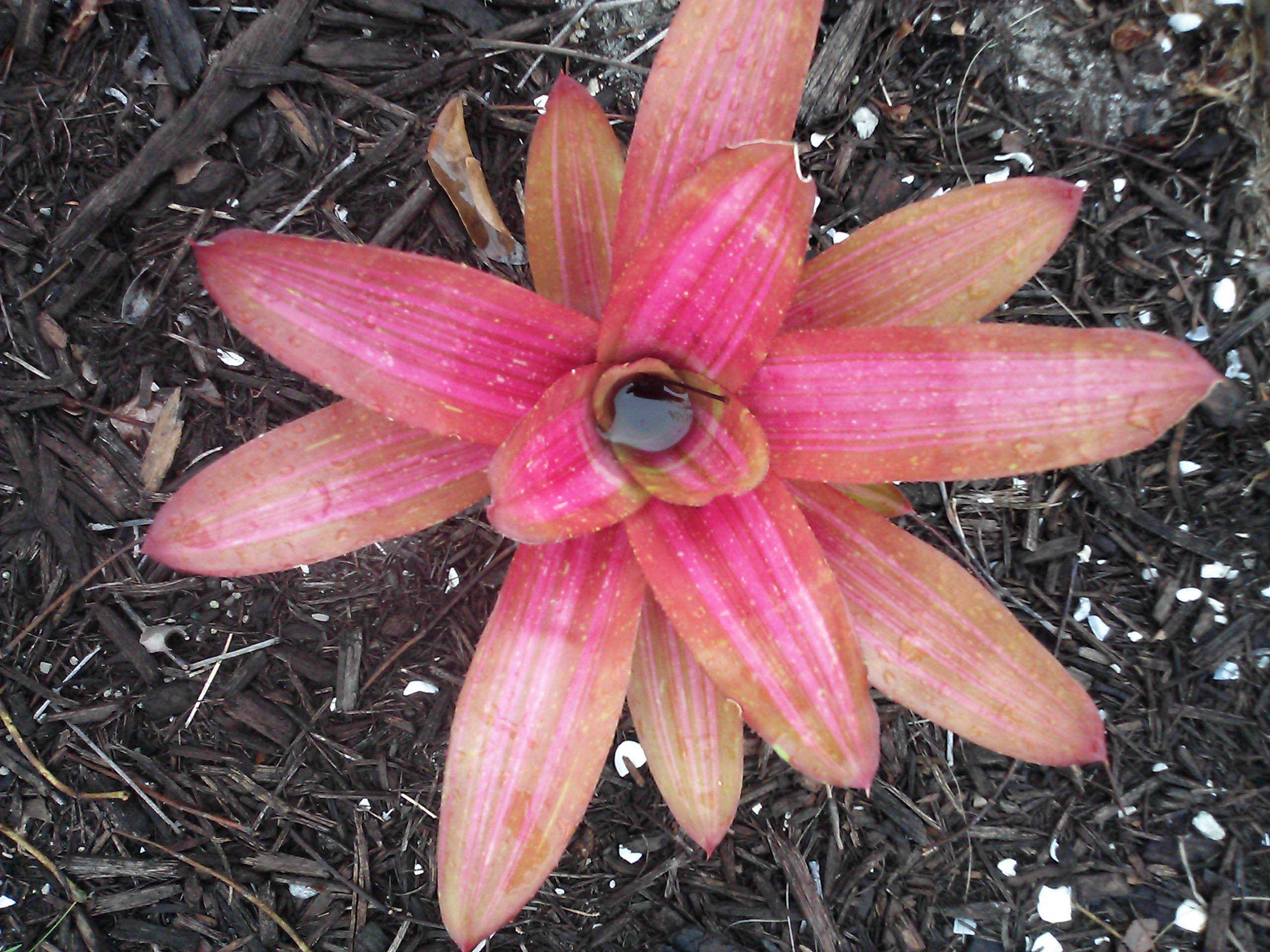
I am not prone to naming plants. However, I think this is kind of funny. I have had these little red Bromeliads for a while. The lady I bought them from did not know the name and said they would tolerate full sun. I have to admit I did not quite believe her, but I went ahead and planted them in the sun. Soon thereafter they started to reproduce, my stock has doubled and I think they have been out there for about six months. Well, they are flourishing and she was right.

Last week, I met the primo bromeliad gardener around here and she identified these as Martin Bromeliads.

No one is exactly sure who Martin is but I think he is living in my front yard.

Allo Aloes – Aloe saponaria

Our Soapy Friend

Our Soapy Friend

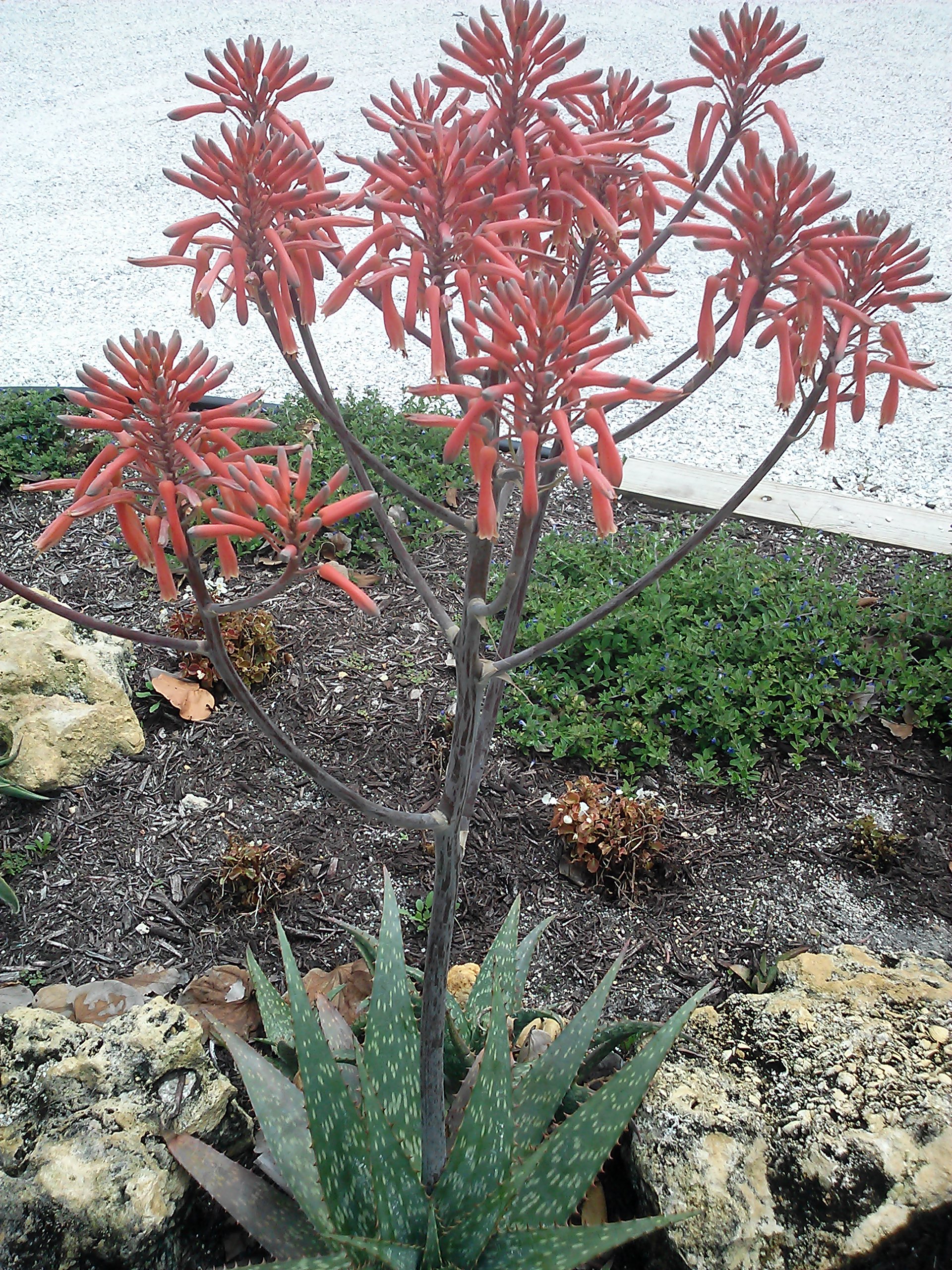
This is an Aloe an old friend of mine grew and gave me. It is a Soap Aloe, botanically identified as Aloe saponaria by the The University of Florida. Other sources call it Aloe maculatasaponaria makes more sense to me. Saponia being the usual latin word associated with soapy plants. This particular plant is nearly 2 and a half feet wide and the bloom stalk is 4 feet tall. Pretty interesting.

A fine drought tolerant succulent its original home was South Africa. It is adapting nicely to South Florida. I find that mine blooms quarterly just like paying estimated taxes. It somehow knows it is April 15th and someone at the IRS is feeling happy because of its orange flowers.

I have noticed it has a bubbly juice when trimming off the old leaves. Theoretically, this can be used as a soap substitute. However, upon doing a bit of research I found that the soapy substance also causes contact dermatitis in some people. For the time being I am going to stay with the store bought soap.

In my searching I also found that this can be used as a groundcover; I will have to say this stretches my concept of groundcover. It is spreading in my Rock Garden and I have seen quite a few large clumps of its relative Candelabra Aloe  (Aloe arborescens) in my neighborhood. The Candelabra is similar but only has one spike for a flower as opposed to more of a chandelier effect from the Soap Aloe. The Candelabras foliage is narrower as well. It should be noted that these Aloes are all decorated with sharp spines, so don’t plant them near a walkway or under the swing set. Unless you want to keep people away.

Tibouchina – Tibouchina urvilleana

The Glory of the Princess Flower

The Glory of the Princess Flower

I have had Tibouchinas around for years. Until we moved to Florida they had to stay in pots or be prayed over to live through the winter. I found out the hard way they really don’t live through the winter on the north side of Atlanta. Supposedly 37 degrees Farenheit are their limit. But my mother could keep them twenty miles further south; I would be hard pressed to say hers flourished, but we did admire the flowers once in a while.

One of the first things I bought after my driveway was complete was the Tibouchina. Another good import from South America, to the best of my knowledge, Brazil, the common name for this plant is the Glory Bush. Other sources call it the Princess Flower. I think that there are several varieties of these available the size range varies from 3 feet tall up to a small tree. This one supposes to be 6-8′ height and spread.  I will wait and see. Some of the plants we used as annuals further north had fuzzy leaves and grape like flower heads (panicles) but were still Tibouchinas.  If you believe what you read they bloom once a year. Mine must be really happy or something.. This one bloomed off and on since I planted it – probably 9 months ago. I will confess to watering it by hand, it is in a Rain Garden with a strong Eastern exposure. The leaves seem to turn red as they are regenerating which actually adds to the ornamental value of this plant.

Tibouchinas are another tropical import being investigated for medicinal use. The plant may possess antibacterial properties. I hope so, until they figure that part out the rest of us can enjoy the flowers.

Moses in A Cradle

Flowers of Oyster Plant

Flowers of Oyster Plant

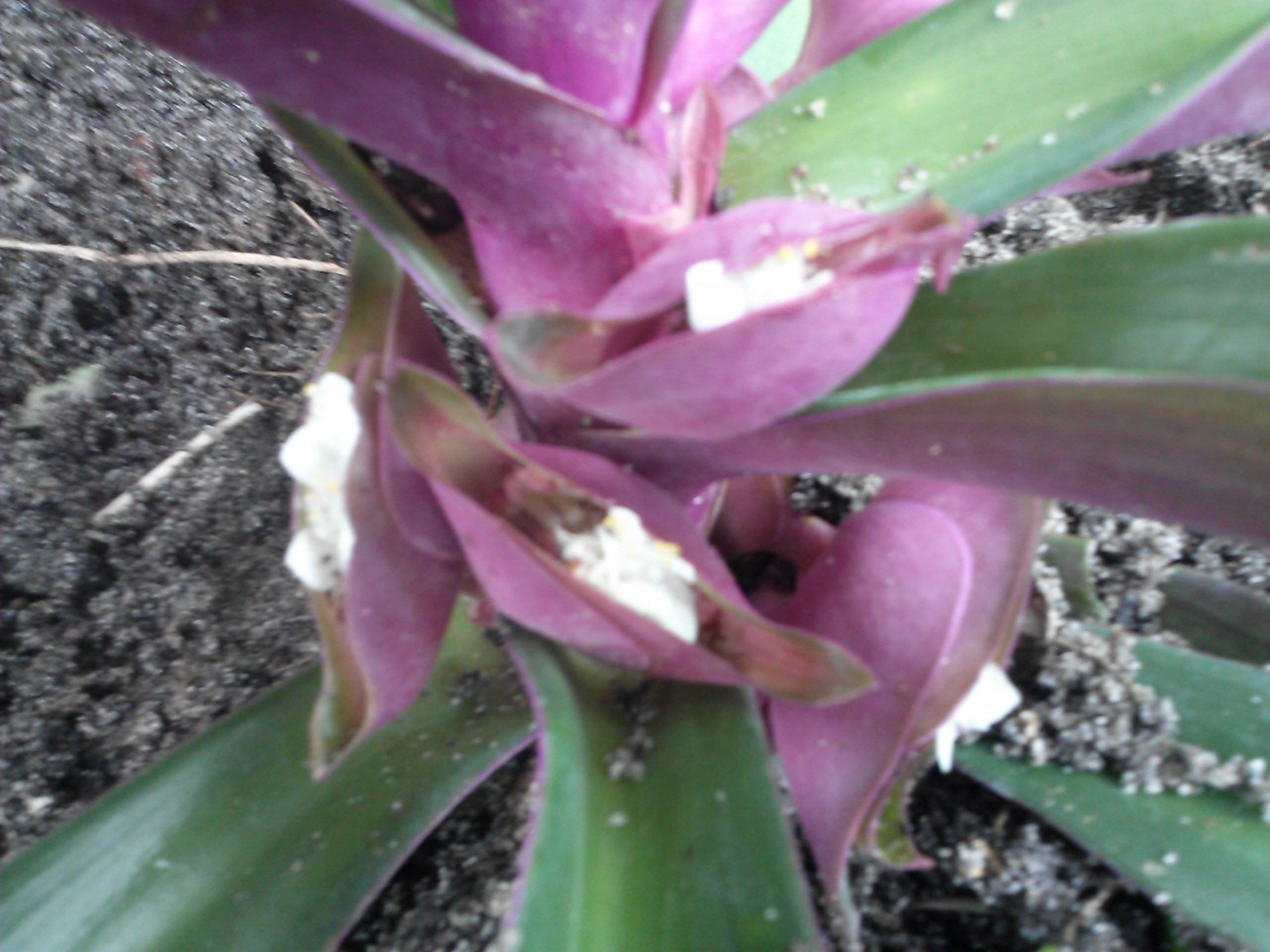
I have always wondered why this plant was called Moses in A Cradle until I found this growing in the roots of my Banyan Tree this morning. The flowers do look like a cradle, I am not so sure about Moses or why he is involved. This is also called Boat Lily, which makes a bit more sense.  Yet another common name is Oyster Plant, Hmmm, maybe it looks like a purple oyster? Then there is the botanical name dilemma, I learned this as Rhoeo, now they seem to have decided it is a Transcandentia. Whatever. Plant taxonomy is not my forte.

The state of Florida lists this as a Category II Invasive. Which sounds scary, but if you do some research it seems this plant has the potential to do damage in certain environments but it hasn’t quite done it yet. The environment this flourishes in is a Tropical Hammock. I live on top of a gigantic Sand Dune, so I think I am safe from the Oyster Plant. As I am somewhat overrun with some invasive plants (the evil Brazilian Pepper and Mother in Law’s Tongues) I am leery of this one, but I think I will just keep an eye on it.

The Garden Club of Stuart Tour

Last Saturday as I was riding in the car with my husband, I noticed a sign for A Garden Tour. This peaked my interest. So I went home to see what it was all about. After a few moments on the computer I found that The Garden Club of Stuart holds a biannual event that includes touring 7 Private Gardens in Stuart and Palm City. The Gardens are open over the weekend and you tour at your leisure.

As I have been around here a while I am not sure how I have missed this event; but I will likely do it again and the next time visit all the gardens. I made it to a little more than half, but they were quite enjoyable. I toured three estates on the St. Lucie River and a Tropical Bromeliad Garden in Palm City.

My favorite was the Tropical Bromeliad Garden, an amazing array of bromeliads and tropical plants arranged in sinuous beds set into lawn. Most were labeled which made it more enjoyable for me as I am turning into a bromeliad collector. Snapshots follow:ImageImage

There were probably 100 different varieties in this garden. Beautifully maintained by the homeowner, who must spend hours out in the garden clipping off excess foliage and mulching.

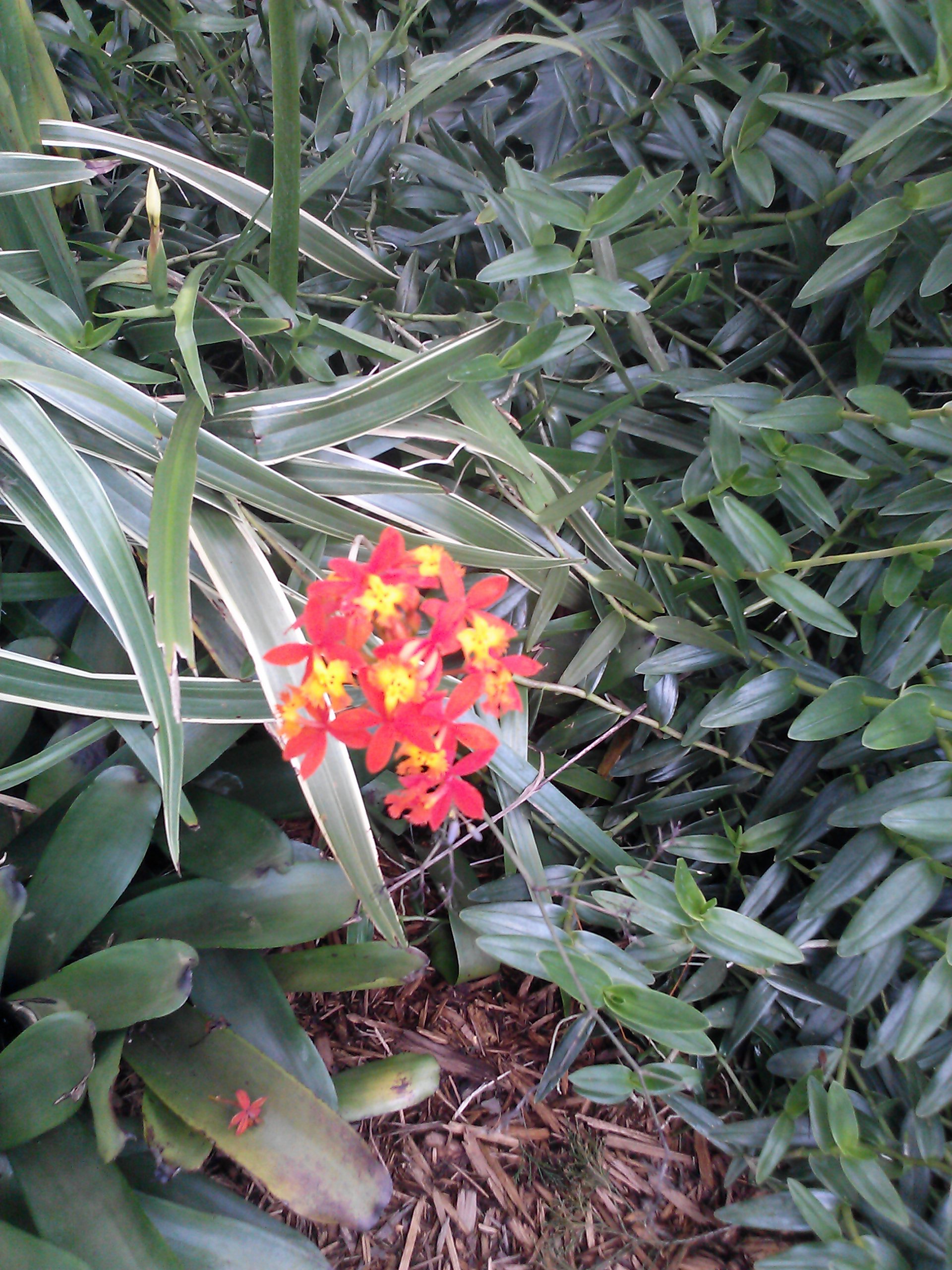
I also found a new plant I must have; a Fire Orchid..

Image

I definitely need to find out more about these. They were beautiful.

The Garden Club has something called the Ramble at the beginning or the end of the tour. At the Ramble they had Bar B Que and a plant and gardening accessories sale. Guess what I bought..some Bromeliads.
Rose Apple – Syzygium jambos

Rose Apple Flowers

Rose Apple Flowers

This is a picture of my neighbors Rose Apple tree in bloom. The tree is about 25 by 25 feet and to the best of my knowledge was planted in the 1960 or 70’s. It has beautiful evergreen foliage reminiscent of Ficus Alii, long thin leaves. The flowers are followed by golf ball sized fruit that no one is very excited about eating. My husband is a famous pie baker and there are some recipes around so maybe we will try a pie later this year. Apparently there is a great deal of differentiation in the quality of fruit from seeds of these trees, meaning some fruit is better than another.

Native to the West Indies, I see these here and there in South Florida, but they are more common in South America and naturalized in parts of India. It is a common dooryard fruit in parts of Peru.

Beautiful when swaying in the wind; in my opinion, this tree could be planted for aesthetic value alone.

Update: We ate some fruit, I can only say it must be an acquired taste or something you have to grow up eating. Kind of perfumy tasting, the fruit is a fibrous shell around a pit. Larry refused to bake a pie after tasting the fruit.

Winter Starburst Clerodendrum – Clerodendrum quadriloculare

Lo and behold I discovered yet another source of color for the winter garden.  The Winter Starburst Clerodendrum is a large shrub to small tree (8-12’ ht.) sporting beautiful pink flowers in winter with the added bonus of foliage that is attractive throughout the year. Belonging to a group of plants sometimes called Glory Bower, this certainly lives up to that name. It is glorious when in full bloom.

The first one of these I saw stopped me in my car.. what is that and blooming in the middle of Winter? Fabulous.  After a bit of detective work I found out what it is. I have seen a few scary examples of Clerodendrums around my neighborhood. Gone wild and not in a good way. I think one needs to be prepared to do some maintenance pruning or pay the price. On the other hand, you could say you were going for the cottage garden look. Problem solved with little or no work.

There are many different types of Clerodendrum – most native to tropical south Asia;  the plant types range from vines to perennials, shrubs up to small trees.  These plants have some invasive tendencies so be careful who you invite into the garden. This one grows in partial shade and prefers moist soil. Clerodendrum is a good addition to the butterfly garden.  Another similar variety that is not quite so big is ‘Pink Diamond’ Clerodendrum, this is also called Cashmere Bouquet for its fragrance (my grandmother used a soap by that name – the smell of the soap would not motivate me to use this plant!) ‘Pink Diamond’ grows 48” high and some have variegated foliage. An additional  identifying feature is the back of the leaves are purple year round, this is another good quality of this plant.

A Seashell Driveway

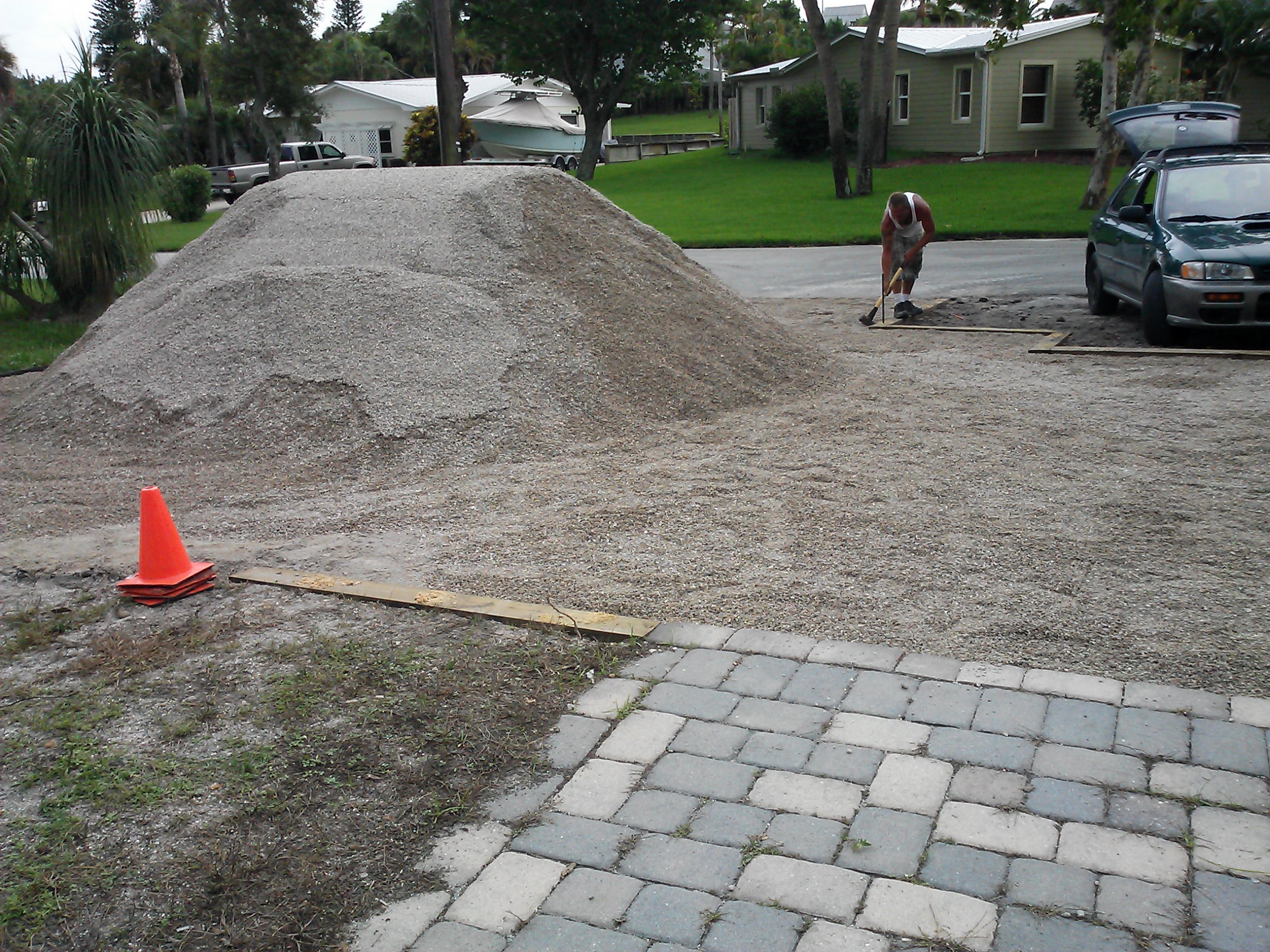
The driveway is in and it is a beauty. I am so excited after all those months of living with the weed pit as my front yard. The existing driveway was pea gravel overrun with weeds. The entire thing had to be scraped away and hauled to the dump.Image After the scraping and removal of the foul pea gravel a gigantic pile of shell and base material appeared. The driveway is constructed by scraping off enough material to have 4-6″ depth to backfill. The base area is graded for water to drain off properly then a base material is placed. The base is crushed shell about 2″ thick followed by 2-3″ layer of the shell for the driving surface. The crushed shell base looks like coarse sand and the shell topping looks like thousands of tiny shells. Because that is what it is. Theoretically,the crushed shell base course tamps down over time and forms a permeable stable layer for the driving surface.

Pile of Shell

Pile of Shell

Shell used for driveways is quarried for the most part on the West Coast of Florida. I believe the shell in my front yard comes from the South side of Lake Okeechobee. This is to a certain extent a word of mouth bit of info. The shell is from a broker who bought it from somebody who bought it from somebody else. Interestingly enough the shell is cheaper than pea gravel because it doesn’t have to be shipped as far from its source. Shell is not supposed to sink into the ground as gravel does, I am going to be interested to see how it holds up… TA DA, the driveway:

The Shell Driveway

The Shell Driveway

Now, onto the green part, Landscaping. Note the repulsive grass/weed groundcover..Ugly. Soon to be gone.

Christmas Palm – Veitchia merrillii

The Christmas Palm on Christmas Day.  This particular Palm I learned as the Adonidia. I think Christmas is a much better name; especially with the red mass of berries resembling ornaments during the holiday season.  These are also called Manila Palms as they are from the Philippines. Not an exceptionally cold tolerant plant they will grow in South Florida in coastal areas south of the magical State Highway 60 line. Many of these palms were lost during the unusually cold winter of 2010.

Christmas Palms can be used as single or multi trunk trees and grow to about 20 feet tall, this makes them excellent for residential use near buildings in the one to two story range. These are not a self cleaning Palm so fronds past their prime must be trimmed. They also add a tropical flair to pools and near spas, I have planted a multi trunk near my lanai to provide shade in the summer. And I am just waiting for some Christmas berries.href=”https://theshrubqueen.com/wp-content/uploads/2013/12/cam00183.jpg”>Image

Wild Coffee- Pschotria nervosa

Wild Coffee- Pschotria nervosa

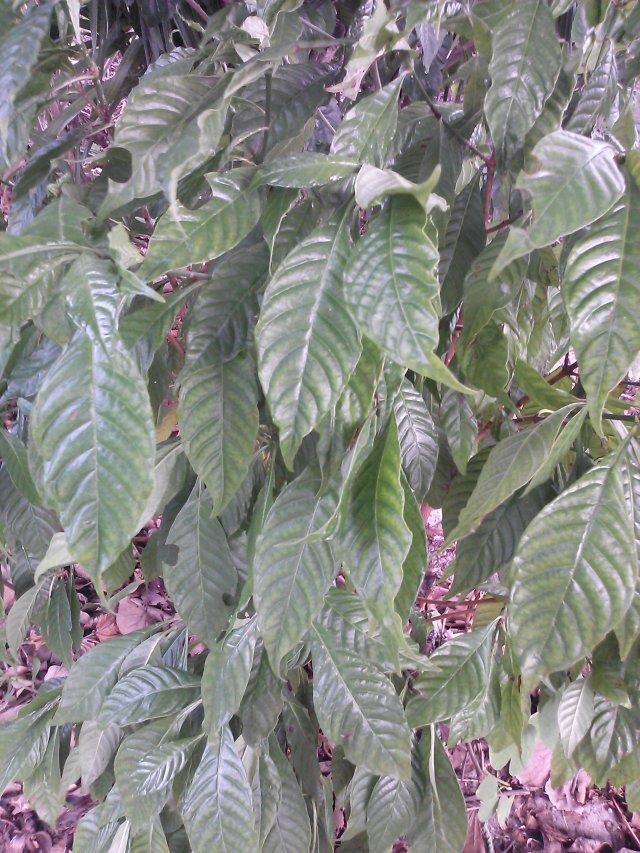
This Wild Coffee is in my neighbor’s yard. A native shrub well suited to high shade with attractive dark green foliage reminiscent of Gardenia without the flowers or insect problems.
A good butterfly plant with flowers and small (coffee-like!) berries.