Fall Color in South Florida?


Golden Raintree

Golden Raintree

Fall colorin South Florida. This is a seek and ye shall find situation. I have found some signs of the Autumn season here in the tropical Zone 10A hinterlands. The Golden Raintrees started blooming in late September which kind of freaks me out as I associate these trees strongly with Summer. The above pictured Fall color is actually seed pods – which are kind of cool and are fall color as far as I am concerned.

This is a Koelreuteria bipinnata, some call it a Chinese Flame Tree, some call it K. elegans. People in Florida seem to think this tree will grow as far north as Zone 7, this is not true. I am guessing maybe Zone 8. It’s friend Koelreuteria paniculata grows further north (to Zone 5 – I seem to remember these while in Chicago) and has brown much less attractive seed pods. Both are sort of weedy, rambling trees, but the flowers and pods make it worth having. I think well drained soil is key with these trees; my mother killed these trying to grow them on what she referred to as “road bed” yellow, impenetrable clay.

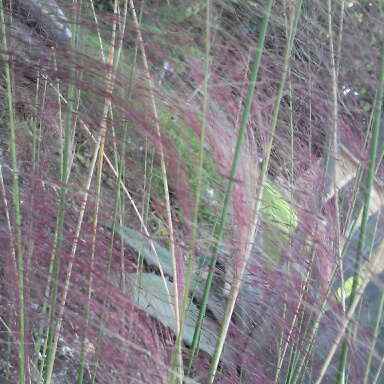
I planted some Muhly grass, for its pink clouds of flowers blowing in the wind during Fall. Mine are just starting to bloom and I am hopeful they don’t reseed everywhere and overrun me..always a concern in a no frost environment. More touches of Fall include the Pennisetums, which are in full bloom here as well, but apparently Miscanthus doesn’t grow this far south.

Muhly Grass

Muhly Grass

I thought Miscanthus grew everywhere! Oh, well. I have Bromeliads..

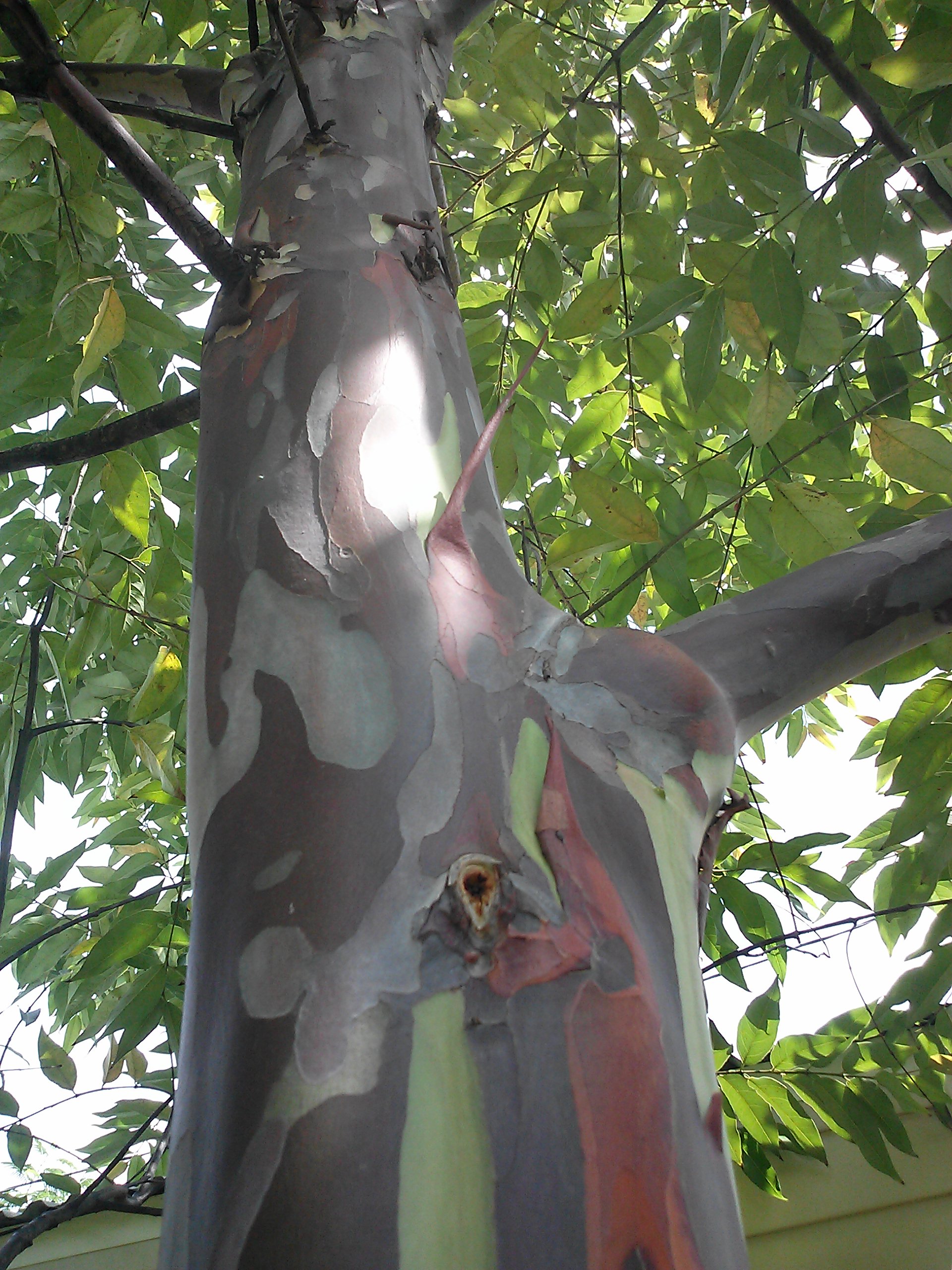
Rainbow Eucalyptus – Eucalyptus deglupta

Rainbow Eucalyptus

Rainbow Eucalyptus

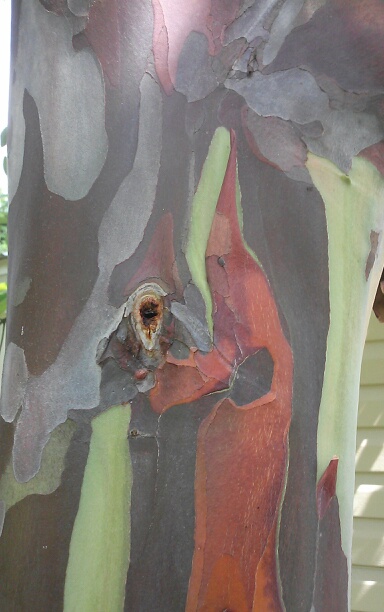
This is my husband’s favorite tree; possibly the only tree he ever really focused on. The ornamental, exfoliating bark is the main feature of this tree. Native to the Phillipines and surrounding islands, it is sometimes called the Mindanao Gum tree. The tree provides most of the pulpwood for paper and is grown on plantations in the Phillipines.

We first ran across this tree and its spectacular bark on the road to Hana in Maui, Hawaii. Intrigued by the tree, I researched it and was interested to find that it can be grown in South Florida. The tree is not tolerant of frost and our average low is 40 degrees. It is sited in a protected area, but is getting pretty tall.

Bark

Bark

And grow it does. I bought this tree in November 2012 at a plant sale in West Palm Beach at Mounts Botanical Garden. It was run over with a Riding lawn mower shortly after being planted and smashed flat. This resulted in two scrapes down the entire length of the trunk. Eschewing arboricultural reason, I decided to try and save the tree rather than buy another one. I went to Home Depot and bought a tree staking kit, cleaned its wounds, took out the damaged bark and wrapped the trunk with tree wrap and staked  the tree until it healed. A few months later the bark had calloused and the tree was off to the races.

Currently, nearly two years later and overwhelmingly robust I would estimate the tree is 30 feet tall. It doubled in size in one year (it was 5-6 feet tall when I bought it!) and has grown 18 feet in the past year. Now I am a little afraid.

The bark is currently not showing any purple or blue, but I believe it will. The new growth is red and it flowers in summer, not terribly exciting flowers, little white panicles – fortunately, no fruit thus far. The bark is the star of the show.

Not Summer is almost here

Fall, Not Summer

Fall, Not Summer

Snowbird season is fast approaching; the first cold front of the year has not made it this far south. (Snowbirds are people who leave their northern homes to spend the winter in the gentler Florida climate) It seems October 15 is the typical cool down date. Snowbird season is fall everywhere else. I used to hate fall because I knew winter followed and the leaf color was rarely spectacular enough to make me happy about it. South Florida is pretty well-known for its lack of seasons. That said, I have come to think that there are actually two seasons here, Summer and Not Summer.

My Girl, at the beach in Summer

My Girl, at the beach in Summer

Summer is defined by the potential for development of Hurricanes, rain and general tropical sogginess. It is considered an emergency if your air conditioning breaks. People are nervous about the weather. On the other hand, I have read that summer in Florida is a great secret not to be shared. That is also true.  The crowds thin, it doesn’t take very long to get a sandwich at the deli and you can take your dogs to the beach after dinner for a walk.

The Flamboyant Tree

The Flamboyant Tree

For a gardener Summer features some of our gaudiest flowers, Ponciana trees sport sprays of bright red orchids to announce the season. Brightly colored Hibiscus burst out as do the Crinums and Copperpod trees. Frangipani and the Big Bromeliads flower spikes give us a taste of the Rainforest.

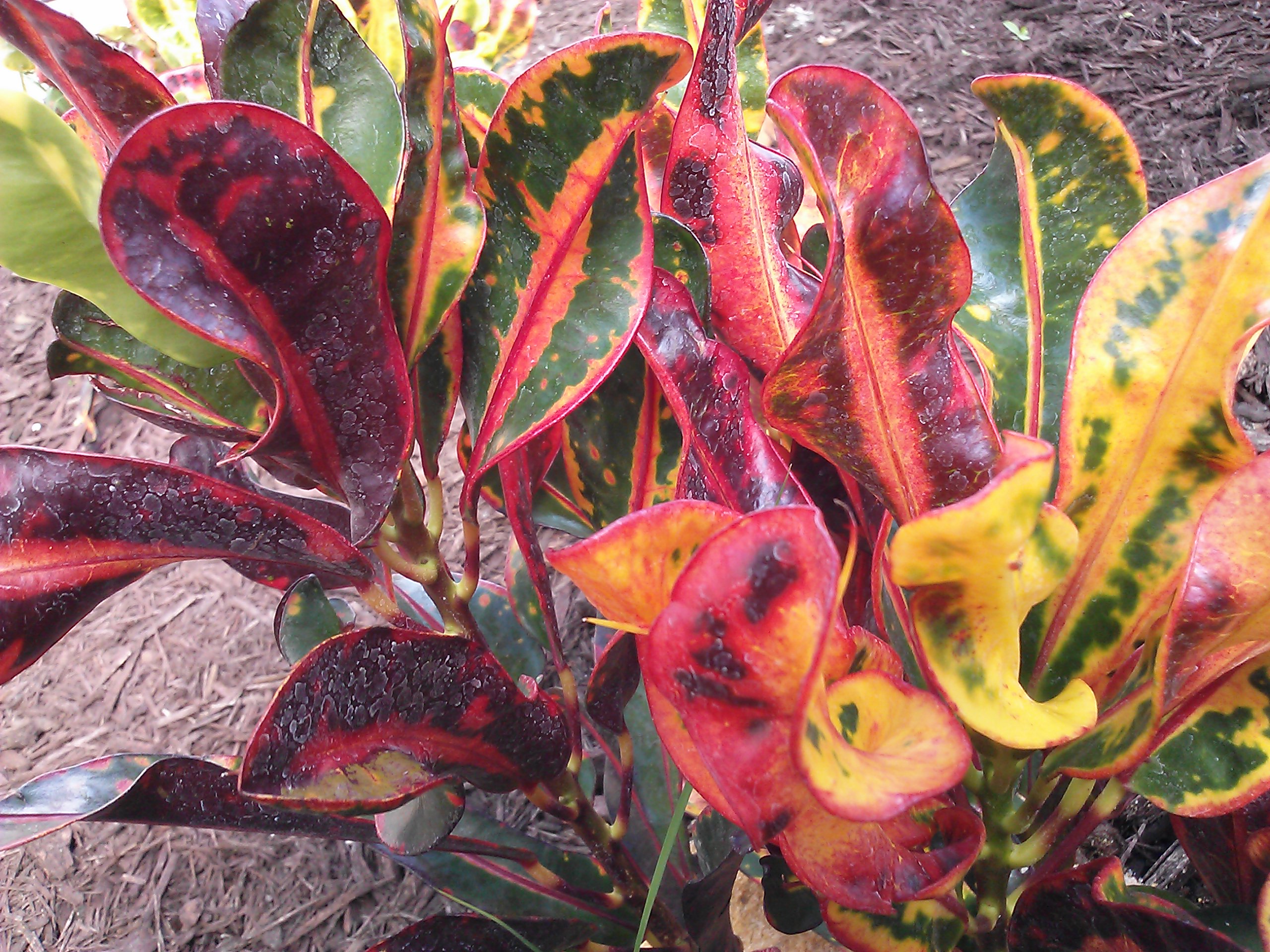
Crotons for Winter Color

Crotons for Winter Color

Not Summer has its advantages as well. The first being, of course, you are not in New Jersey. Go to any liquor store in late October and you can feel the party in the air. People asking “Does Grandma have any Vodka?, well, let’s get some anyway.” Getting a sandwich at the deli now means that you must wait behind what appears to be most of the cast from the Sopranos before you can eat.

Not Summer is the gardening season here. Walk into any Garden Center and the plants displayed look like late Spring most everywhere else. But it is Halloween, kind of spooky. I planted my summer vegetable garden Christmas week last year. We had fabulous tomatoes until the Summer Solstice. Deeply meaningful if you are a hater of frozen precipitation and faux winter tomatoes, as I am.

Our Not Summer Garden features, of all things, Winter Starburst, a magnificent plant. Then, we have “good snowbird” plants. Some are year round  reliable shrubs; Firebush, Hibiscus, and Jatropha.  Trees include Tabebuia and the Silk Floss Tree (beautiful, but weird, covered in pink flowers in December or so and covered in humongous sticker thorn things on the trunk – I have mixed feelings about this tree)

Summer or Not Summer; the plant life here in South Florida is outstanding. If you are looking for Winter you are in the wrong place.


Rain Gardens on the Treasure Coast

We have a local environmental blogger here on the Treasure Coast who posted  about Rain Gardens and inspired this.

I have been designing Rain Gardens for about 10 years. It is a great idea for the environment, but aesthetically it is difficult to cope with the fact that unless carefully planned it looks like a big drainage ditch in your front yard. Not a good look.

I decided to put some Rain Gardens around our house after discovering that the areas right around the house were not irrigated and the house had no gutters so the rain collected on the ground around the house and was not really concentrated by gutters into 4 or 5 spots.

The lack of gutters on the roof is relatively common here, this is new to me. I am not quite sure why – maybe Hurricanes blow them off. Anyway, we bought the house without gutters and I always, always hated dealing with getting the gutters cleaned, etc. on our house in Atlanta. I was happy not to have gutters.

Then it rained, like seven inches. Wow, there were pits in the areas under the valleys of the roof where the water came off the roof. Luckily the yard was so gruesome there was no question about redoing the driveway and landscaping. And we live on a Sugar Sand Dune, highly pervious no water stands anywhere. A big ditch was not really necessary.

My father taught Geology at Emory University. He passed on and I inherited his love of rocks, but in a more decorative way. I love stone, boulders and natural materials incorporated into the garden. I brought his rocks to Florida and planned to use them in my gardens. In Florida, I have added seashells and cap rocks in an effort to be more sustainable by using locally available material.

My Rain Gardens are in my front yard in a planter:
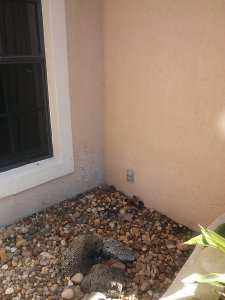
Rocks for Splashing

Rocks for Splashing

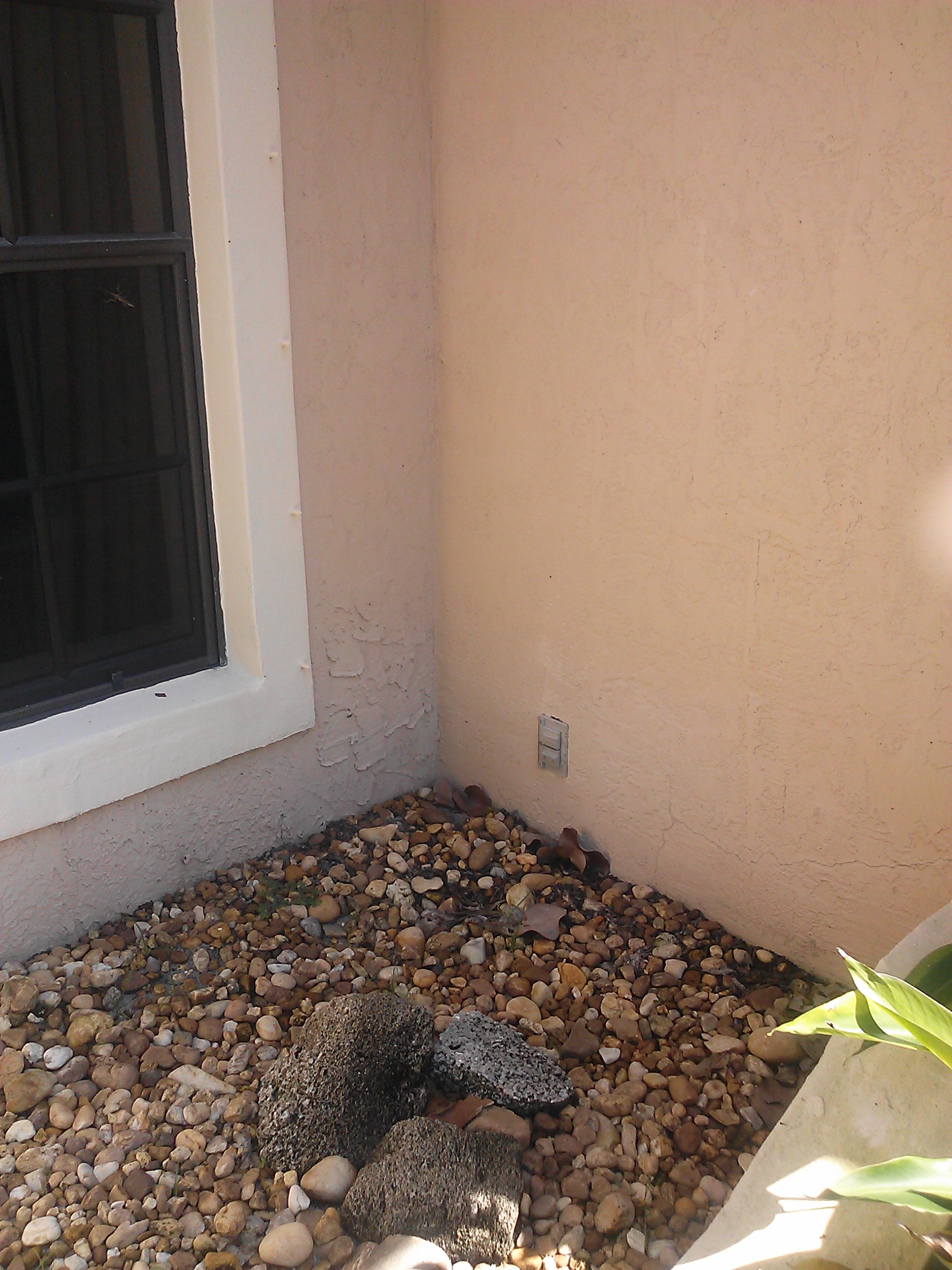
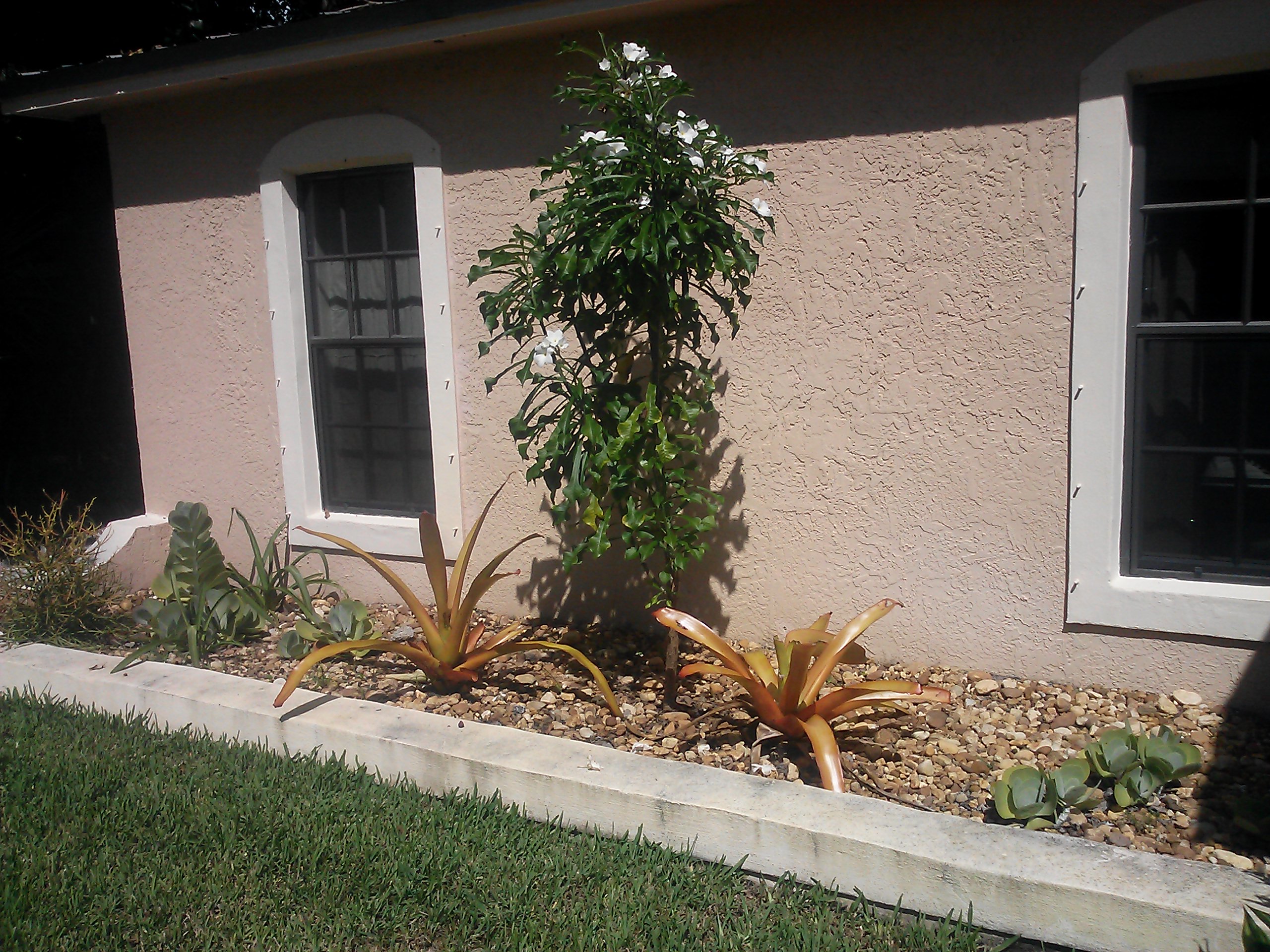
The valley of the roof drains onto these rocks, the rocks break the speed of water and then it splashes on down the Egg Rock, waters my plants and drains back into the sand. This planter is not irrigated, a bit of a sin in South Florida – it is maintained for the most part by rain. I occasionally water the Plumeria in  winter. The plants are placed out from under the edge of the roof  so they get watered and not beaten by a big rainstorm.
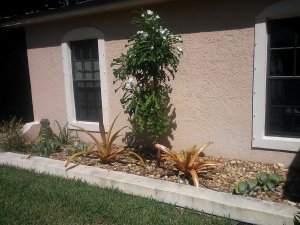
Rain Garden Planter

Rain Garden Planter

This is the whole garden. A Bridal Veil Plumeria is centered on the house flanked by Lemon Blanchiata Bromeliads then FlapJack plants. A Pencil Cactus anchors the corner. The plant selection is mostly succulents or low water tolerant plants. I had to have the Plumeria for aesthetic reasons and suffer through the watering.
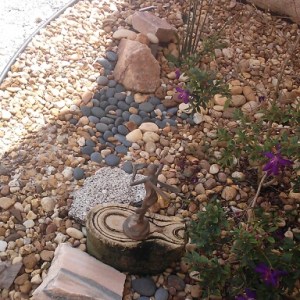
Rockcentric Rain Garden

Rockcentric Rain Garden

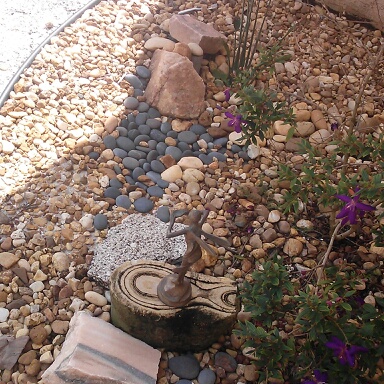
This is my other Rain Garden. Again the water comes off the corner valley and lands on the large sized Egg Rock and flows over the Black Mexican Pebbles and drains to the driveway. The driveway is made from pervious shell and drains onto a turf area with a french drain beneath it.

The Rocks are from my father’s collection and one piece of coral rock from Jensen Beach. Plants are newly planted -a Tibouchina and a Leafless Bird of Paradise. I am watering these plants to establish them.

Bromeliads in the Hood

Dr. Seuss

Dr. Seuss

I did my weekend garden touring at the McKee Botanical Garden in Port St Lucie, Florida. This is a surprising gem of a garden located on 20 acres in a suburban neighborhood setting. One of the interesting things about this garden, it is maintained almost exclusively by volunteers and  is beautiful. And they have lots of Bromeliads. I have no clue what that is above but Dr. Seuss almost certainly would have loved it.

McKee Botanical Garden

McKee Botanical Garden

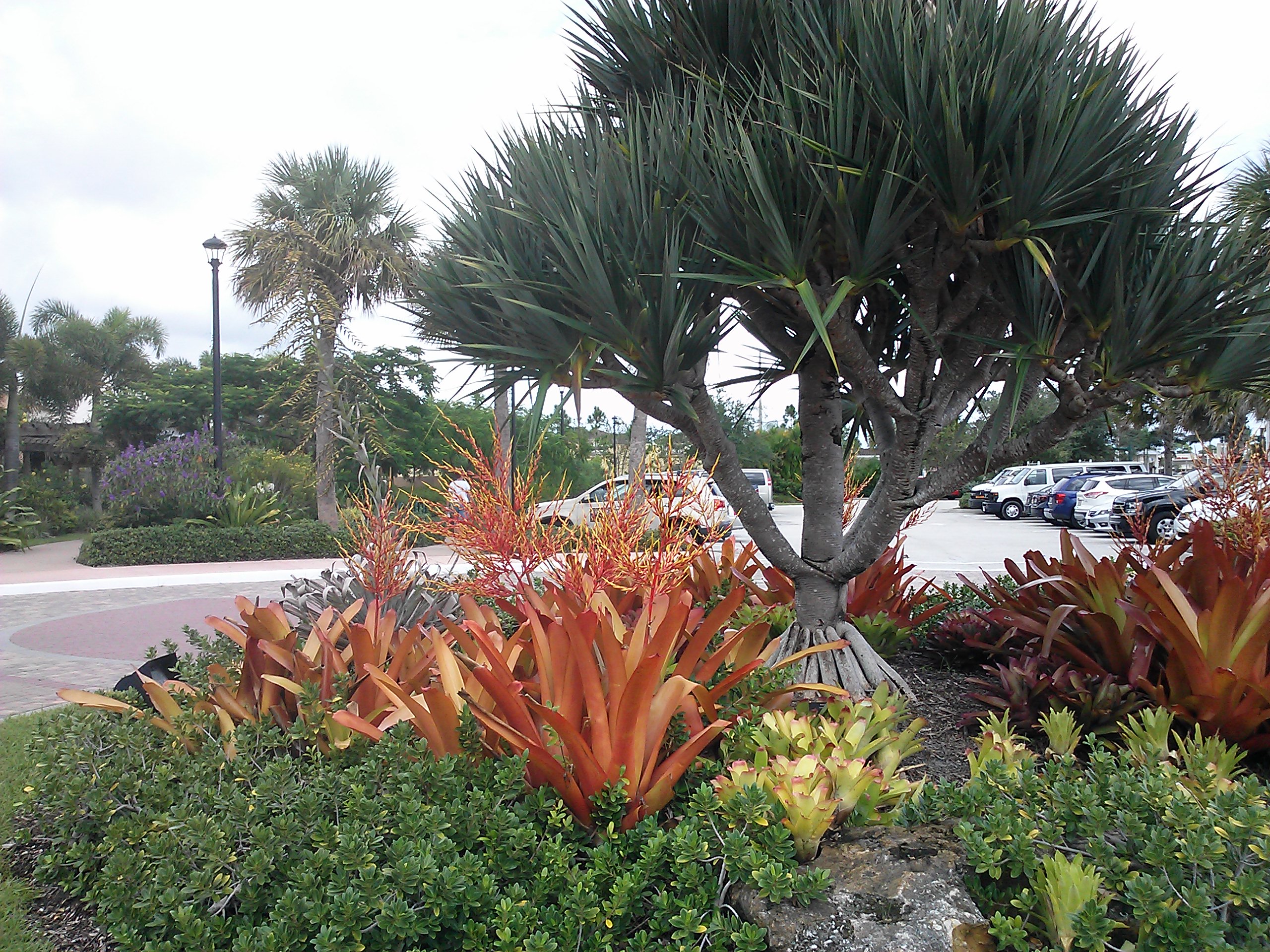
This is an island in the driveway at the  McKee Botanical Garden, the tree is a ScrewPine underplanted with Blanchiata Bromeliads and Green Island Ficus. Pretty cool.

More Bromeliad pictures from my travels:

Burgundy Bromeliad

Burgundy Bromeliad

I have seen numerous Burgundy Bromeliads around here. Guess what, the foliage is Burgundy and people will tell you they need some sun. Some being the operative word. These are, as far as I am concerned, in nearly full shade and flowering. I have some slowly frying in my front yard, am going to move them.
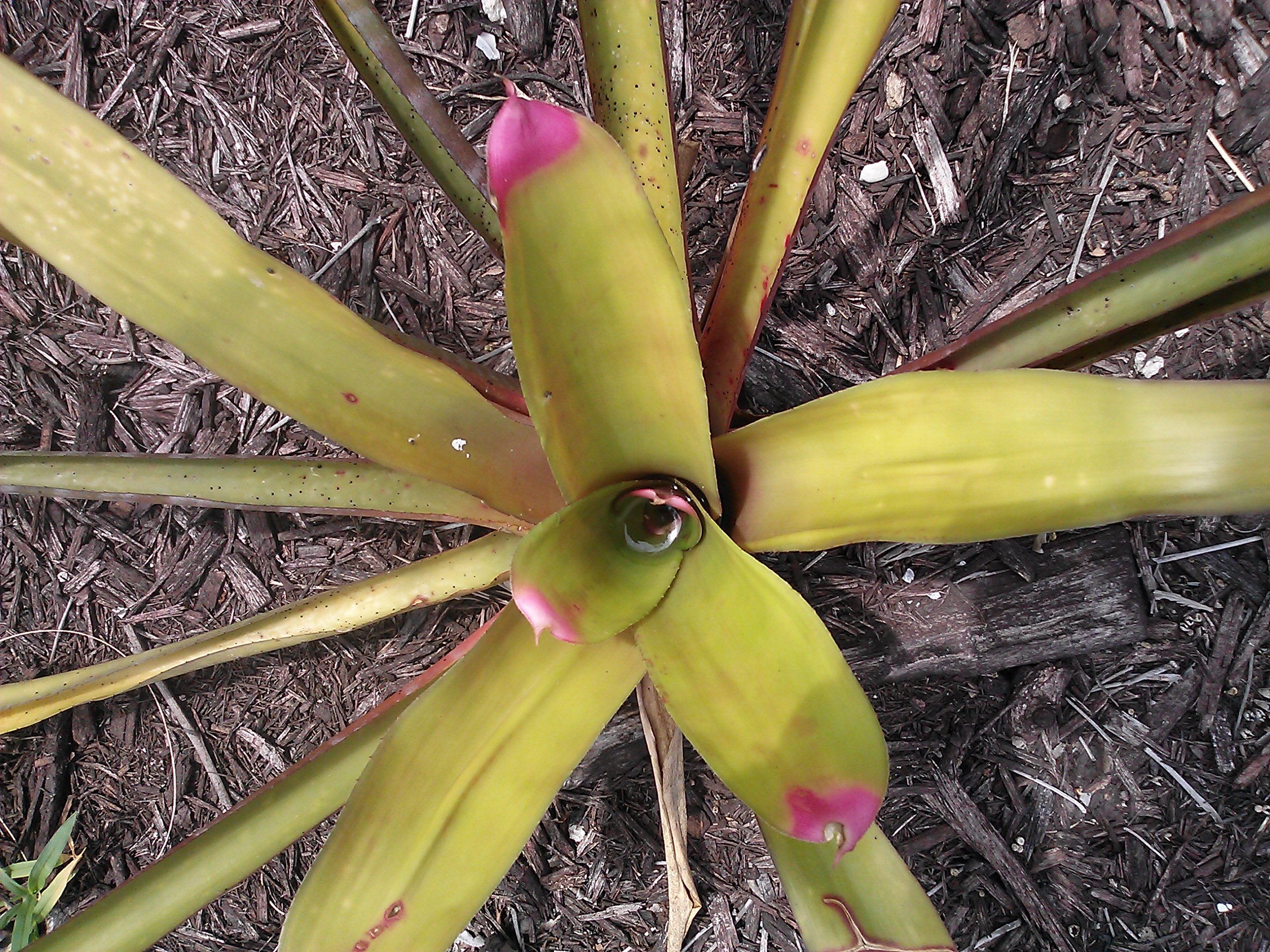
 

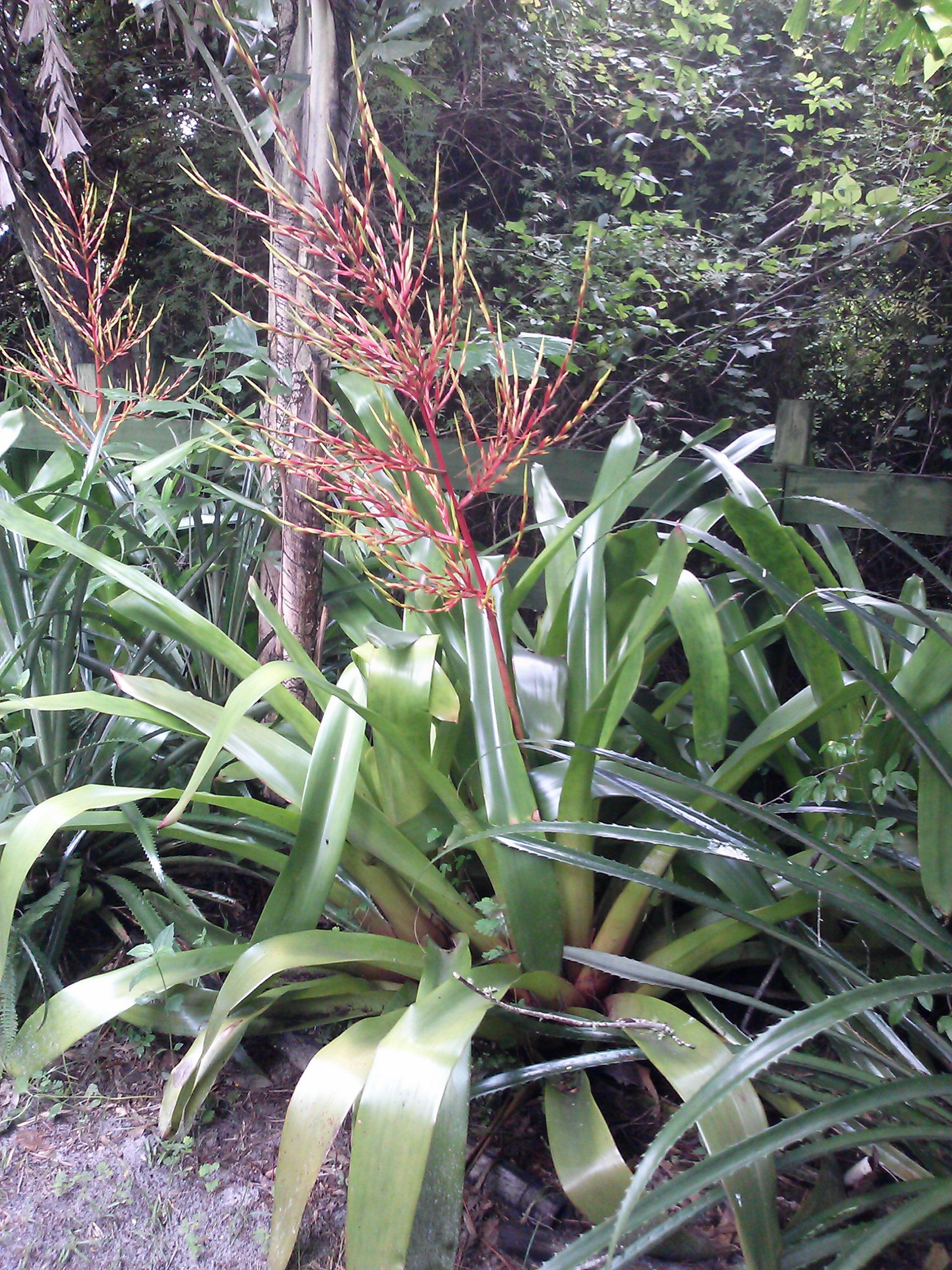
This is a bromeliad currently blooming in my neighbor’s yard. I think it is a Quesnelia-please comment if you know? I keep calling these Quesadillas and it is making me crave Mexican food…

Quesnilla?

Quesnelia?

Tropical Ranch

I went on a mini garden tour yesterday to the Tropical Ranch Botanical Garden in nearby Stuart, Florida. This is a two acre garden owned by a local couple who are Master Gardeners; they live in the garden and open it every month or so.

The garden is beautifully maintained and available for events. Here are a few plants from my meander through the garden:

'Queen Emma' Crinum

This is a ‘Queen Emma’ Crinum – this plant is 5 or 6 feet tall.

Blanchietta Aechmea Bromeliad

Blanchetiana Aechmea Bromeliad

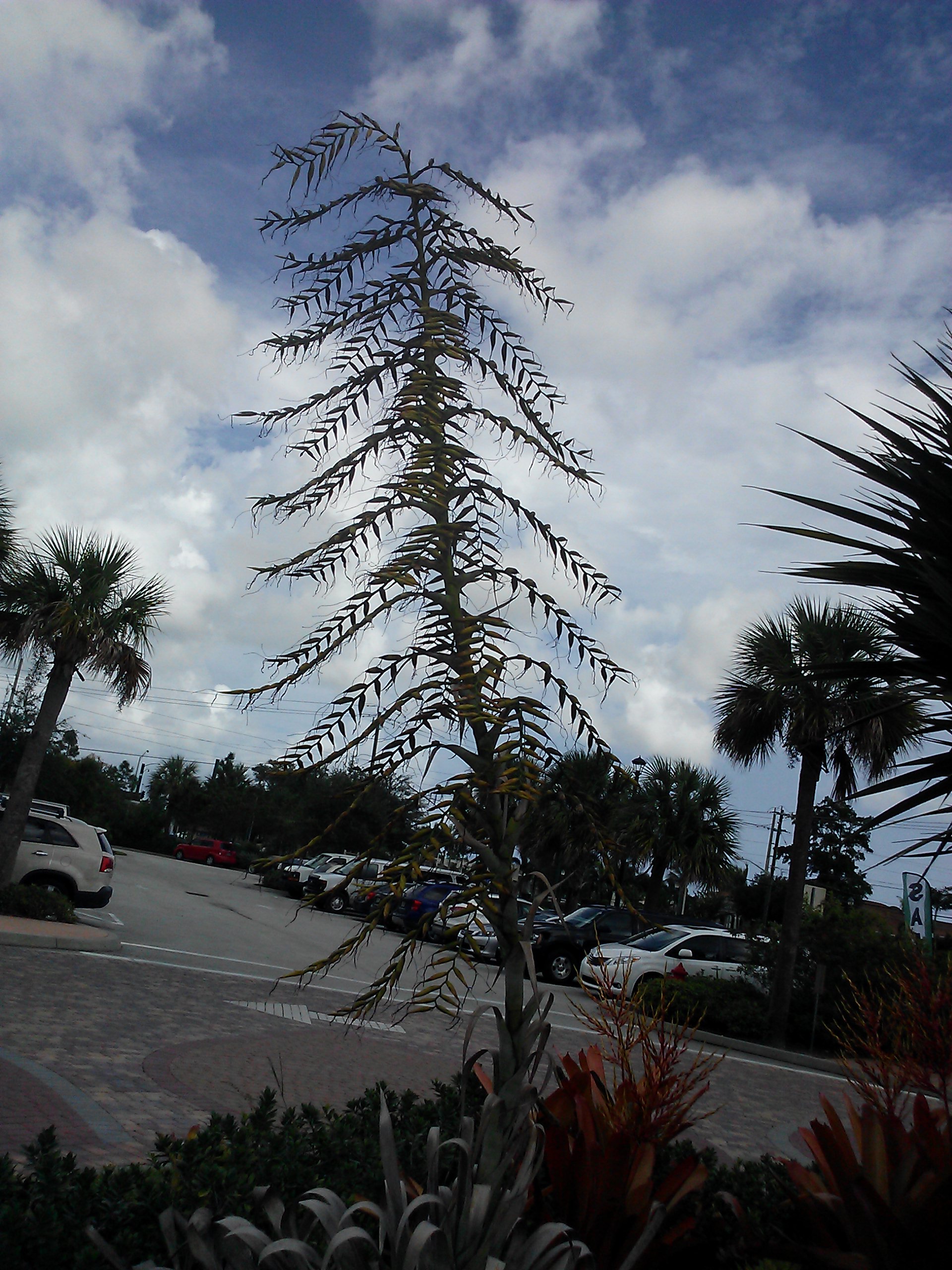
Another enormous tropical in bloom,  these are very popular around town and are available in Lemon, Orange and Raspberry. I am not sure which one this is but, I am guessing Lemon as the leaves have a yellow cast. The flower is almost 5 feet tall and out of this world. I have had these for a couple of years and mine refuse to bloom. One of the owners told me they used to have cows – maybe that is the secret.


Hala

Hala 

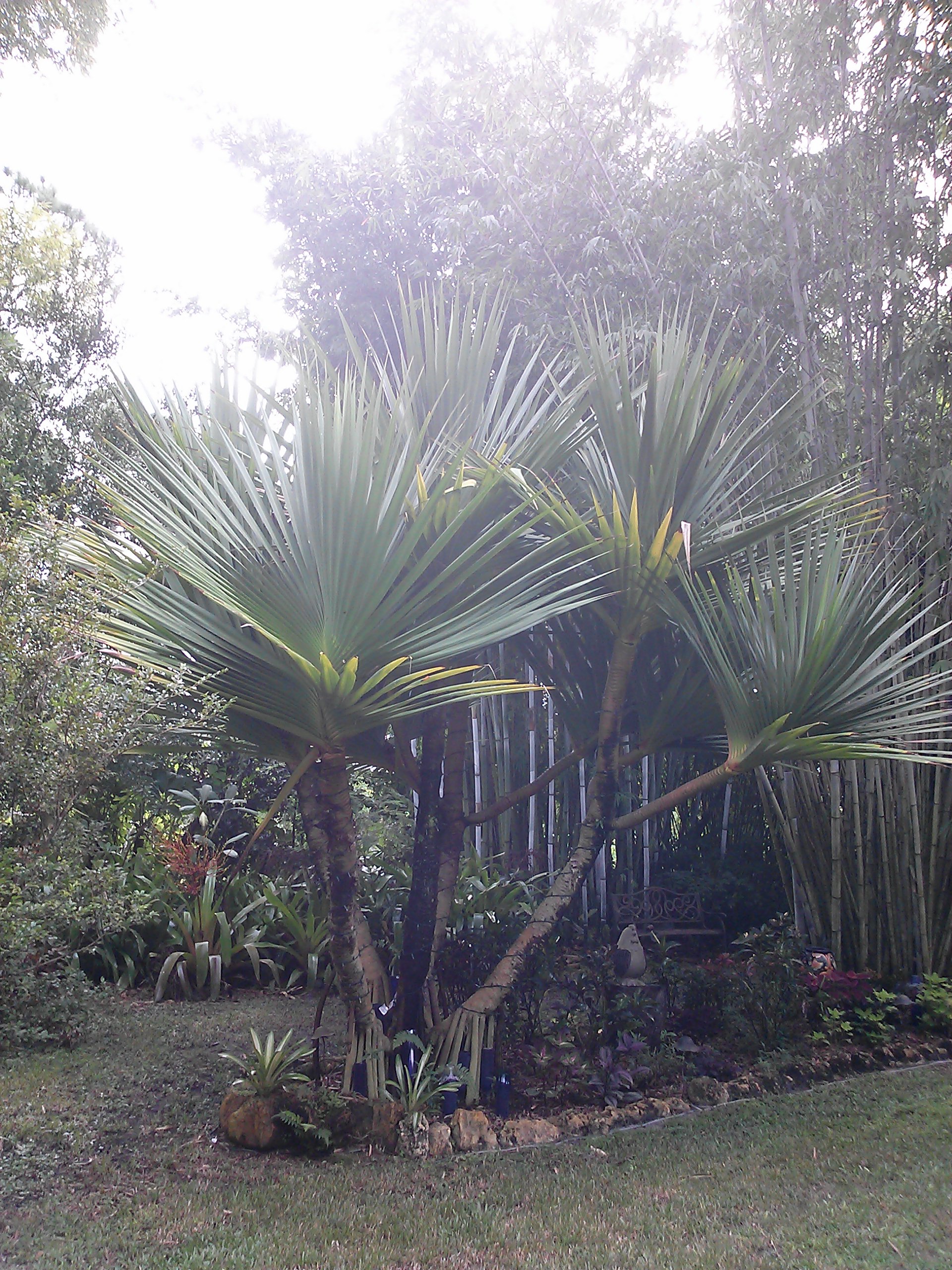
Hawaiians call this Hala, it is used for everything from hats to huts, not native to Florida it will grow here. Floridians tend to call this Screw Pine, not sure why, it seems odd – when I first heard the term I thought it was some weird tropical version of a Japanese Black Pine, not so. I have one in my garden, it is about 12″ tall, unlike this beauty.

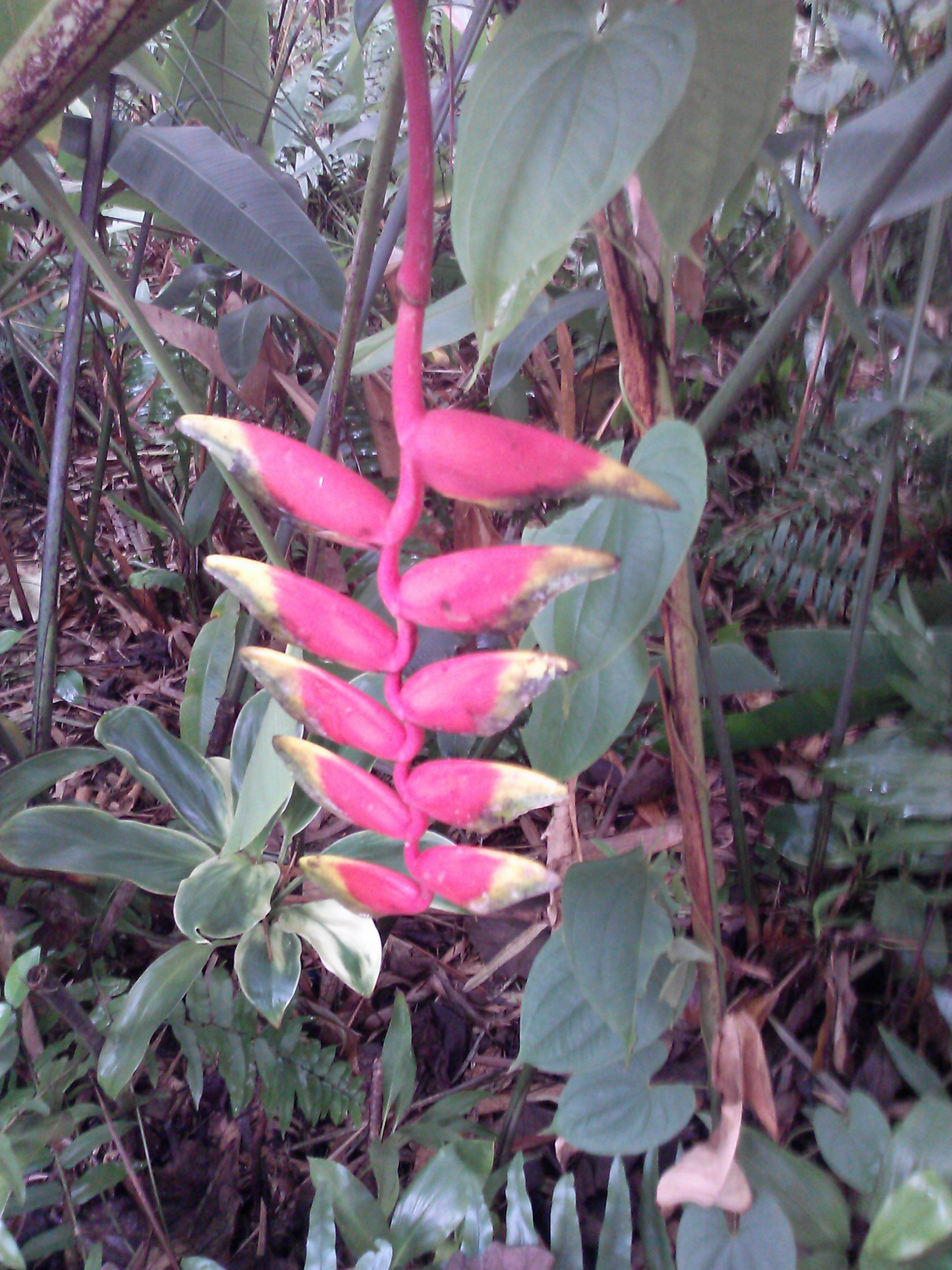
And last but not least, another favorite, the Heliconia. I think it is some variety of Lobsterclaw. Another thing I am waiting for a flower from; I read the other day these shouldn’t be pruned or you cut the flowers off. That could be my problem – excessive pruning. But, the plant is seven feet tall. Gardening teaches patience, right?

Heliconia

Heliconia

Bromeliad update – Matchstick and Aechmea idon’tknowwhatitis

Pink Bromeliad

Pink Bromeliad

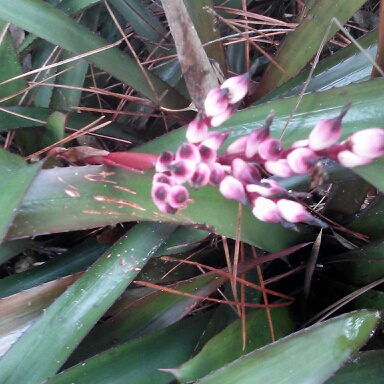
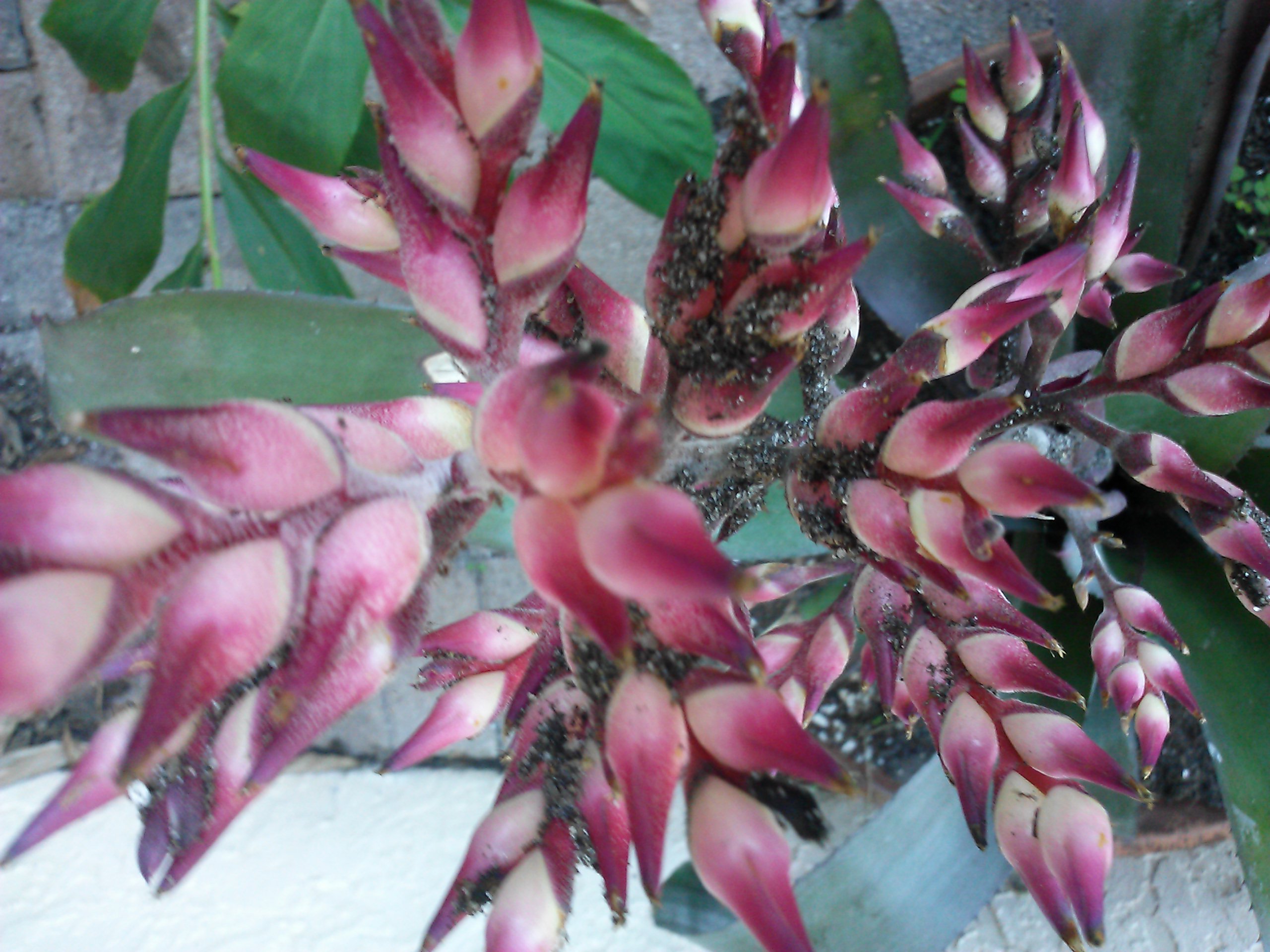
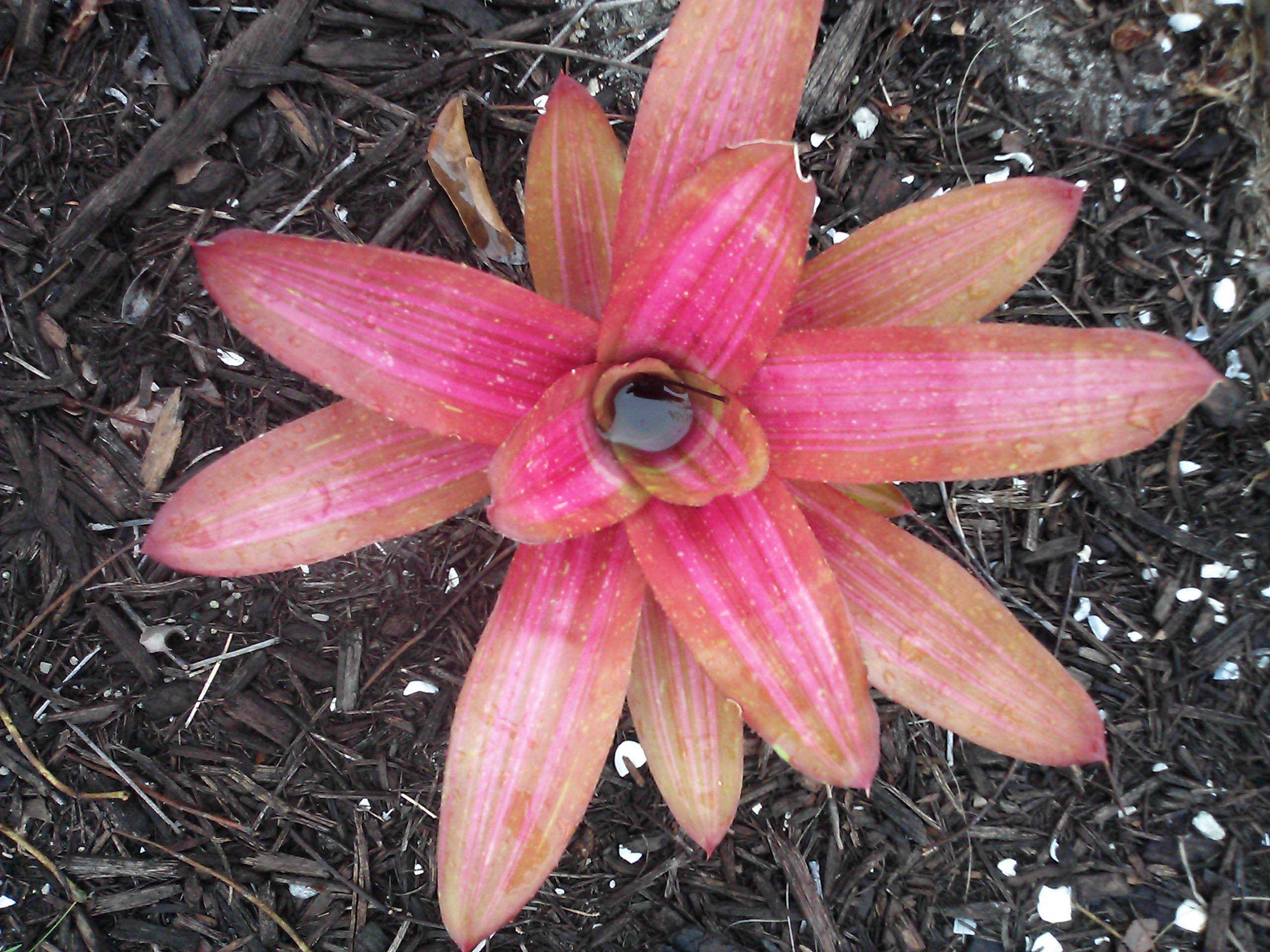
This is a close up of an Aechmea Bromeliad I bought two years ago. Totally pink and as weird looking as these things are sometimes. I used this in a an article that never got published. Being a cooperative plant it put out a pup and the mother plant died after hanging around for a while. I waited for the thing to bloom again and set in the ground in a relatively shady, sandy bed with some Bromeliad friends.

A month or so ago,  it started sending up a stalk -yes, it looked like a girl power corn cob.

Second Generation Pink Bromeliad

Second Generation Pink Bromeliad

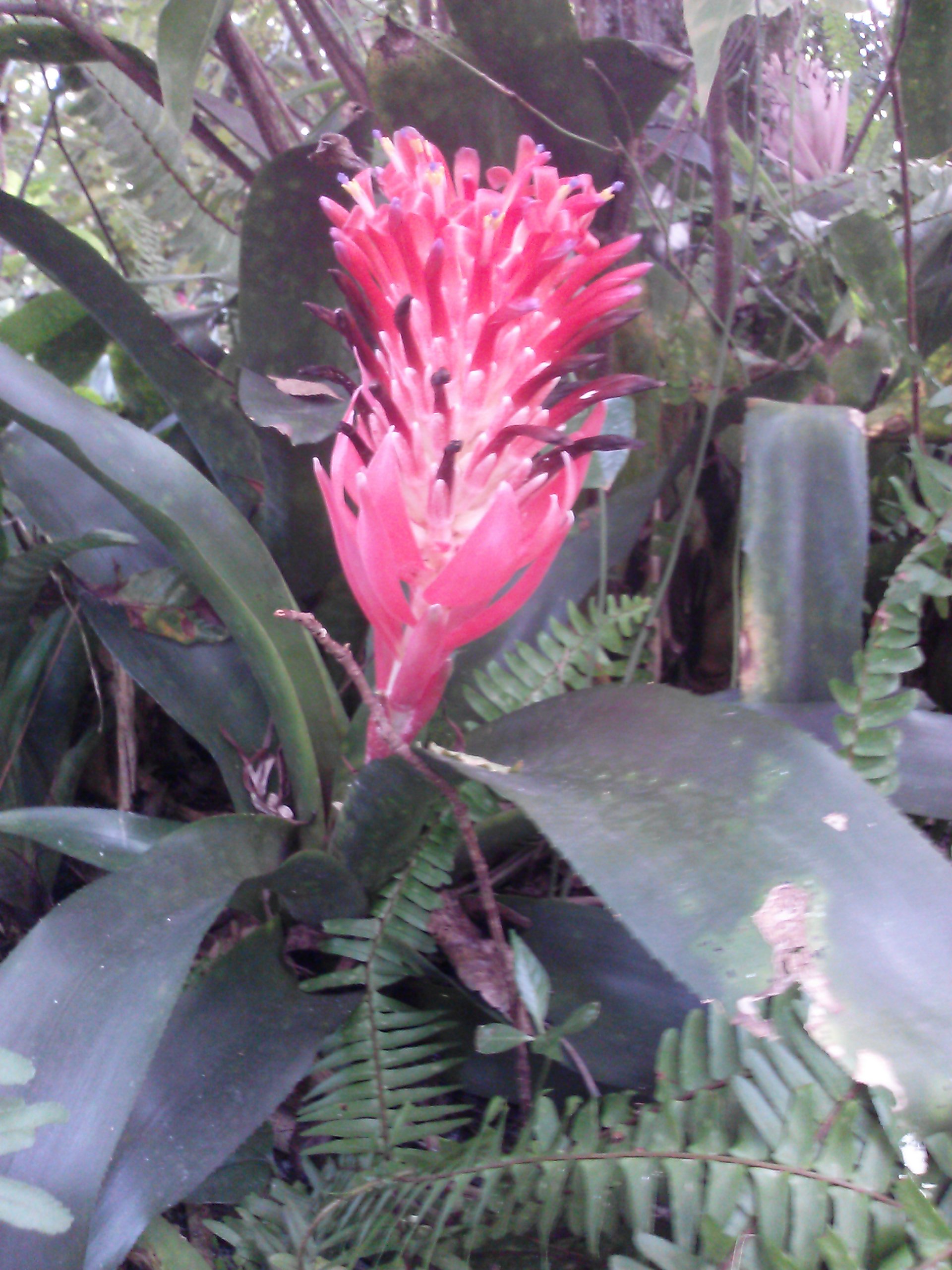
I am calling this Aechmea idon’tknowwhatitis because the guy I bought it from did not know either. And there are a zillion of these things and from this I guess that they are not clones from the mother plant.

Here is a close up of the flower from Second Generation

Pink and Yellow Bromeliad

Pink and Yellow Bromeliad

Curiouser and curiouser, this flower just stays pink and yellow and has been around for a couple of weeks now.

An additional Bromeliad note, the Matchstick Bromeliads I planted in nearly full sun have all burned up with the exception of one that looks great. So, take the ‘this one likes the sun’ advice with a grain of salt and try a little shade.

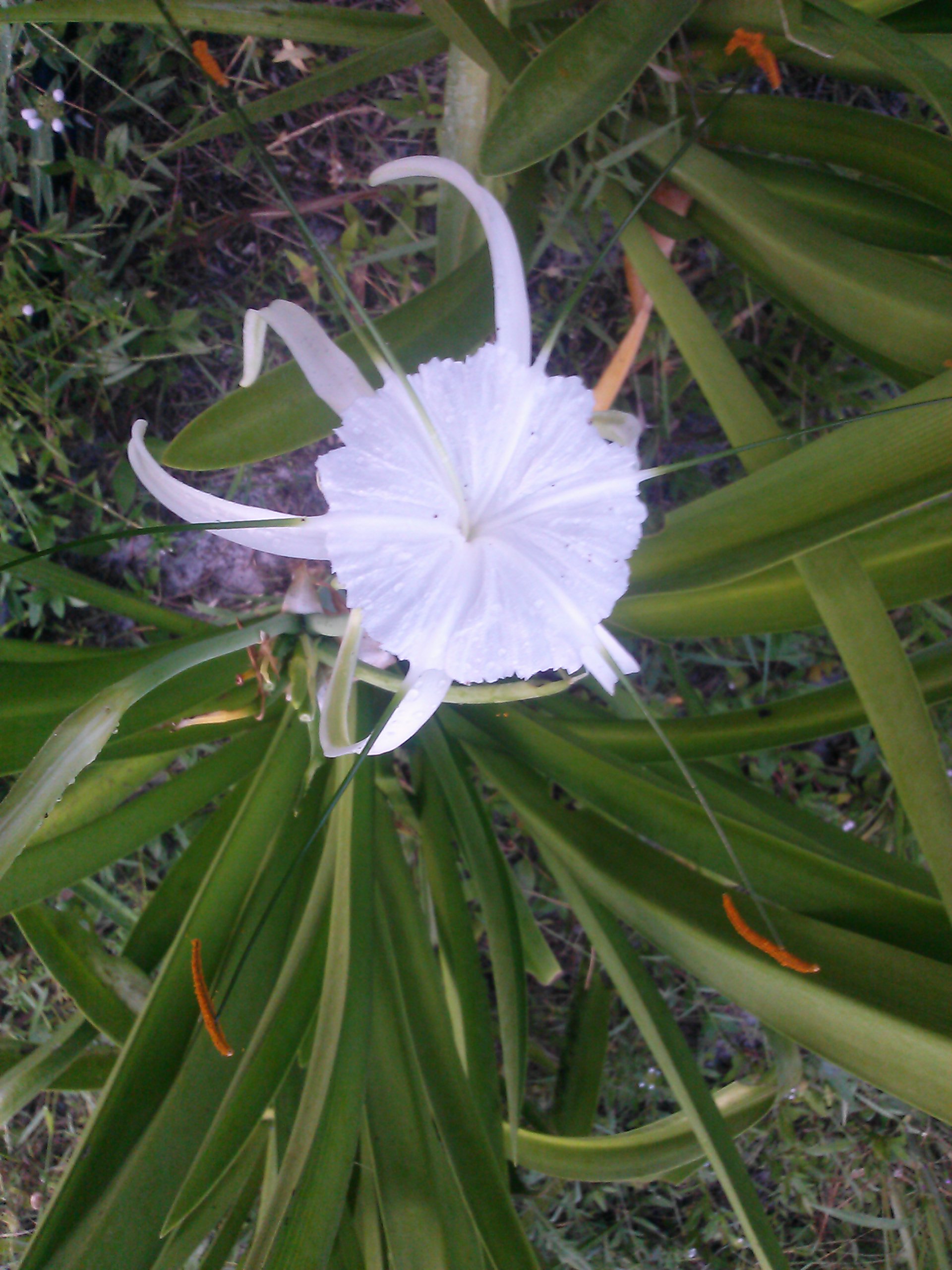
Spider Lilies – Hymenocallis latifolia

CAM00329

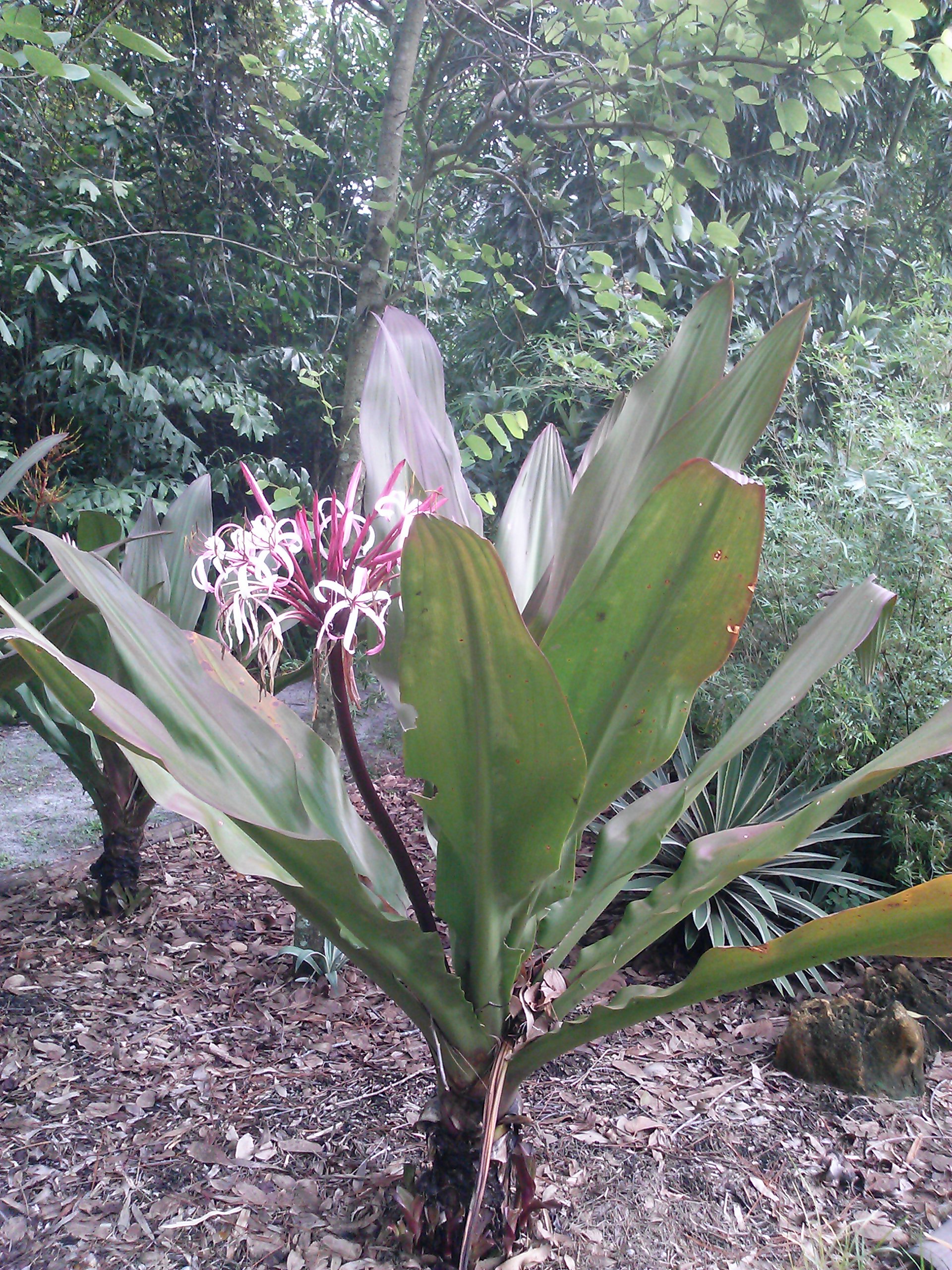
There was this clump of what I thought was overcrowded Amaryllis in a planter in my front yard that the landscaper dug up for me. The bulbs were so crammed in I couldn’t dig them out. So after Jon gave me a bucket full of bulbs, I separated them and spaced them out at 2′ on center in the front of a long bed in my backyard sometime last summer. There are probably at least 50 of these now.

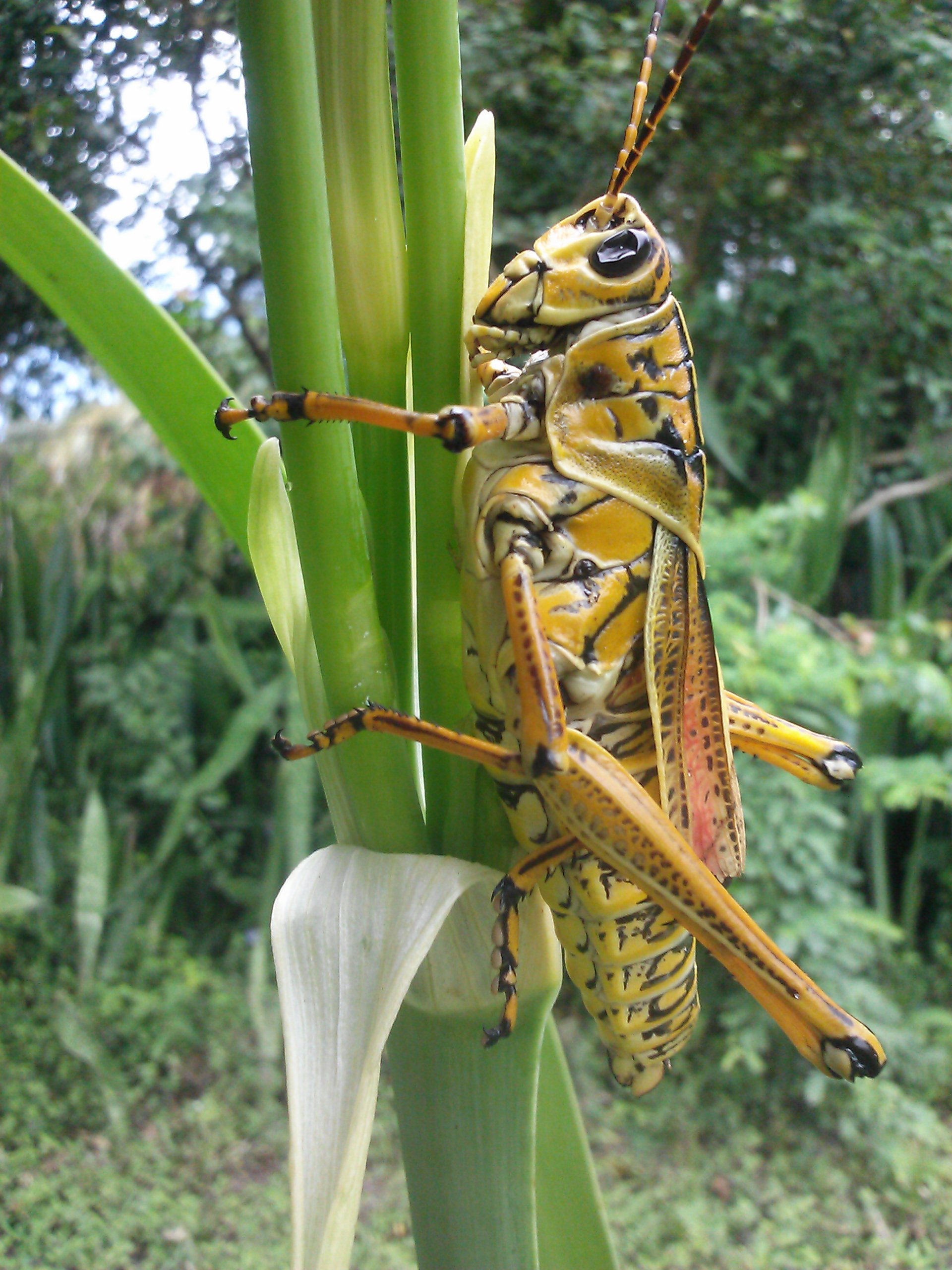
I have been waiting for two years to see what kind of Amaryllis I had found in my front yard; come to find out it is not an Amaryllis at all! This spring I kept going out to check because I was waiting for a gigantic mass of color from the Amaryllis. Then June came around and I decided maybe the bulbs hadn’t been in the ground long enough. When I spotted this flower in my backyard, I recognized the genus from having Peruvian Daffodils in Atlanta. They were not quite cold hardy there, but similar to this with a creamy yellow color. Not quite sure what I had blooming, research was started on the plant, I found that this is a Florida native hardy in Zone 10 and 11. The advice was given to plant a single bulb 3 or even 5 feet apart so the clump would grow together. The next bit of advice I encountered was that the Dreaded Lubber Grasshoppers loved to eat them:

CAM00333

The Lubber was dispatched shortly after the picture was taken – 5 of his friends had been in the Lilies before and had eaten the first flowers..I may be having a Spider Lily sale soon as I planted at least twice as many as I should have.

The Sustainable Garden: Perennial Thoughts

I perennially have thoughts about flowers. In terms of sustainability I am not sure the native ones are always best. Many of the natives are simply weeds with attractive flowers or characteristics we like. I have a deep respect for Black Eyed Susan from a previous experience – as in being nearly overrun by them. I used to live in their native habitat and had bought some “improved” Goldstrum Variety and they bolted back to their native selves and then ran amok on a well drained sunny hill. A recipe for landscape disaster. As beautiful as they were in full bloom, it took a long time to get rid of the Black Eyed Susans. I could not cope with their joyful abundance anymore. So easy on the natives and seek those that do well in your climate without too much water and too much abundance. Easier to take care of and maintain.
In South Florida irrigation is a big deal. We have a rainy season and a dry season. While there are many native plants this is a tropical climate and some of them can go wild. I have found some escaped houseplants in my yard going wild. Mother in Laws tongues is an invasive species. Many plants commonly grown here will not survive without irrigation. I chose not to irrigate my entire yard to save water and to save my sanity. The areas in lawn and vegetables are irrigated; areas with lower water perennials are drip irrigated and I have some unirrigated low maintenance areas that I still want to plant with beautiful perennials. I am just looking at things a bit differently. So, I am paying close attention to who I am inviting to live in my garden.

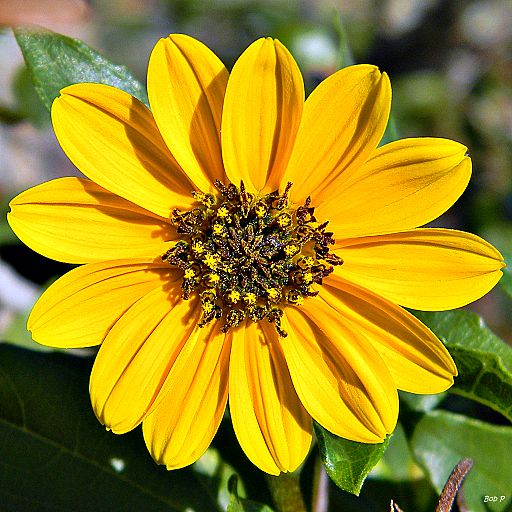
Beach Sunflower

The Beach Sunflower from Wikipedia

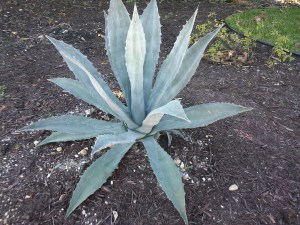
I am about to plant some Beach Sunflower in an unirrigated portion of my garden, I live on a sand hill and these are native to our area – I believe if I planted them in an irrigated area I would be overrun in short order. So, it is time for some more garden experimentation. The Beach Sunflower is going to look great with the existing Blue Agave, Red Martin Bromeliad and Painted Fingernail Bromeliad. Eventually providing shade is a native Gumbo Limbo tree; if that doesn’t get you in the mood for a Margarita nothing will. All these plants are extremely drought tolerant and will survive without regular irrigation. The Gumbo Limbo and Beach Sunflower are native, the Blue Agave is from Mexico, and the Martin and Painted Fingernail Bromeliads are Neoregelia type Bromeliads that originated in South America.

Painted Fingernail Bromeliad

Painted Fingernail Bromeliad


Martin Bromeliad

Martin Bromeliad

Blue Agave

Blue Agave

It seems strange to me that Bromeliads, in my mind a rainforest plant, would thrive in the sun with little supplemental water, but they do. The Painted Fingernail Bromeliad is a passalong plant around here and I have seen large masses of it planted around mailboxes on the side of the road. A great example of a not native plant working in a sustainable way. The result of my selection of plant material is an evergreen perennial bed that blooms or provides year round color while being very drought tolerant and using very little fertilizer or maintenance.

Sustainability is about more than native plants – it is about selecting the right plants.


The Sustainable Garden: Lawn Thoughts


CAM00298

The View Over my Septic Tank

Lawn thoughts:

I am as guilty as many on lack of sustainability. In regards to the lawn it is guilt by association. My husband feels that his masculinity is at stake if there is not a perfect sweep of golfable, manicured lawn in front of our house. From a design standpoint, there are few things that set off flowering plants of any kind better than lawn. I think it goes back to England, where beautiful green turf is a natural component. The English have an abundance of rain and a more natural habitat for lawn. They even play tennis on it!

While I am clearly a WASP American mutt; most of my DNA originated in the British Isles. Perhaps I have a genetic predisposition to turf grass? My suspicion is this is more nurture than nature. Neither of my parents cared what the lawn was as long as it was cut. Clover, Bermuda,  fine.. whatever. I would be surprised if my father knew what type of grass grew in our area. My mother referred to it as Southern Groundcover; which is really clipped Red Clover with a little rabbit tobacco. I attended a Landscape Architecture program 30 years ago when a sweeping lawn was a requirement. To my knowledge over use of chemicals and pesticides was a small concern. Silent Spring had been published but the lawn as a design element was more important.

It became clear over the years that Americans still love their lawns (myself included). Lawns are the biggest user of water and chemicals in our landscapes. Perhaps it is time to moderate our usage of lawn by using the most drought tolerant turf in your area. There are many types of drought tolerant, warm season grasses that thrive throughout our country.

In the desert, I do agree that lawns should not be used. However, substituting Bermuda for Fescue in many areas is the right thing to do. Yes, it turns brown in the winter, but it requires less mowing, less water and less chemicals. And you can have a smaller lawn and select a type that can go dormant with drought and still survive. For example, Bahia grass versus St. Augustine. The Bahia can turn brown in times of drought and come back with rain. Once St. Augustine is brown, it is history.

Lawn Chemicals:

Atrazine is one of the most commonly used herbicides in the world. Banned by the European Union about 10 years ago. It is in groundwater almost everywhere. We have got to stop using this stuff. The only more common herbicide is RoundUp. And nobody really knows how long that stays around in the environment.

Non toxic weedkillers and pesticides work, use these instead. I have used nothing toxic on my husbands golf hole in the front yard and it is the only lawn in our neighborhood without Dollar Weed in it. I have a Dollar Weed phobia, if I see one leaf I mix a batch of vinegar weedkiller and apply with a paintbrush. The Dollar Weed is satisfyingly dead.

So, use the lawn, just cut back on the size and chemical

The damn thing is it looks great. And it lives over the septic tank. Nothing toxic has been applied.