Nom de Plume-Brazilian Plume

Brazilian Plume

Brazilian Plume – Justicia carnea

The truth is, I guess I have a Nom de Plume, not relative to how recently I learned to spell the word. I am, after all, from Tucker, Georgia, USA, and for the most part we do not speak French. Or Italian, for that matter. I foolishly took Italian in college, not realizing that my Southern accent would render it, for me, near impossible to trill R’s. Think Scarlett O’Hara in Gone With the Wind.. With an Italian accent, if you are not laughing now, you should be. Maybe not, Vivien Leigh was indeed English and I don’t really sound like that, at all. Fortunately, my mother did, kind of. Italians just laughed at me and said “we do not understand your southern dialetto” or something like that. Eventually I successfully ordered a glass of white wine.

Brazilian Plume

Brazilian Plume

My Nom de Plume is The Shrub Queen, but today I am writing about a different plume, one in my garden, The Brazilian Plume, nope, not the wax, not the butt, the plant. I had seen these on the internet and was in search of one. Living in South Florida and the time was winter (All the disposable income in North America is Here) I found one at a garden show a bit north of here and grabbed it.

As these things sometimes go, I left it in the yard, for a while, sporadically watering it..hmm, hmm, hmm, then noticed it had a really, really terrible case of scale and whitefly (i.e. nearly dead) Well, that just wouldn’t do, so I cut it back, treated it, and miraculously cured it. After spending a month in the Garden ICU, the Plume is ready to go in the garden. These supposedly grow to be 7 feet tall and wide. I think that is a little more than 2 meters for metric users. I just need to decide where to put it.

Here are the other things blooming in the garden:

This slideshow requires JavaScript.

We have a bit of fragrance going now and while I am enjoying the Florida Gardenia, it is about 10 feet tall and is never so covered in flowers the smell knocks you over – I am glad the romantic sounding Arabian Jasmine is a fair distance away, it’s like that guy you know who uses so much aftershave he can’t tell it is too much anymore.

The Blue Plumbago is the Hydrangea of the tropics and so much easier to grow. That Hibiscus is an old fashioned variety planted by my neighbor’s grandmother on the edge of the property. If I knew what it was I would search for another.

Installing Orchids in the Strangler Fig

This is a story I started last year, when I was gifted some Orchids.

One of the joys of living in South Florida is growing things outside that are houseplants almost anywhere else in North America. My neighbor showed up with a box of Cattleya Orchids yesterday. She grows these in her trees mounted on the branches; it is a beautiful sight when the clouds of purple orchids are blooming in the summer. Some are fragrant and cast sweet scents through the garden.

Orchids Ready for Banyan Tree

Orchids Ready for  Tree

These Orchids were declared unkillable. If this is true these will be the first Orchids I have ever not killed. I think of Orchids more as a floral arrangement; not something that actually is perennialSo, I followed directions:

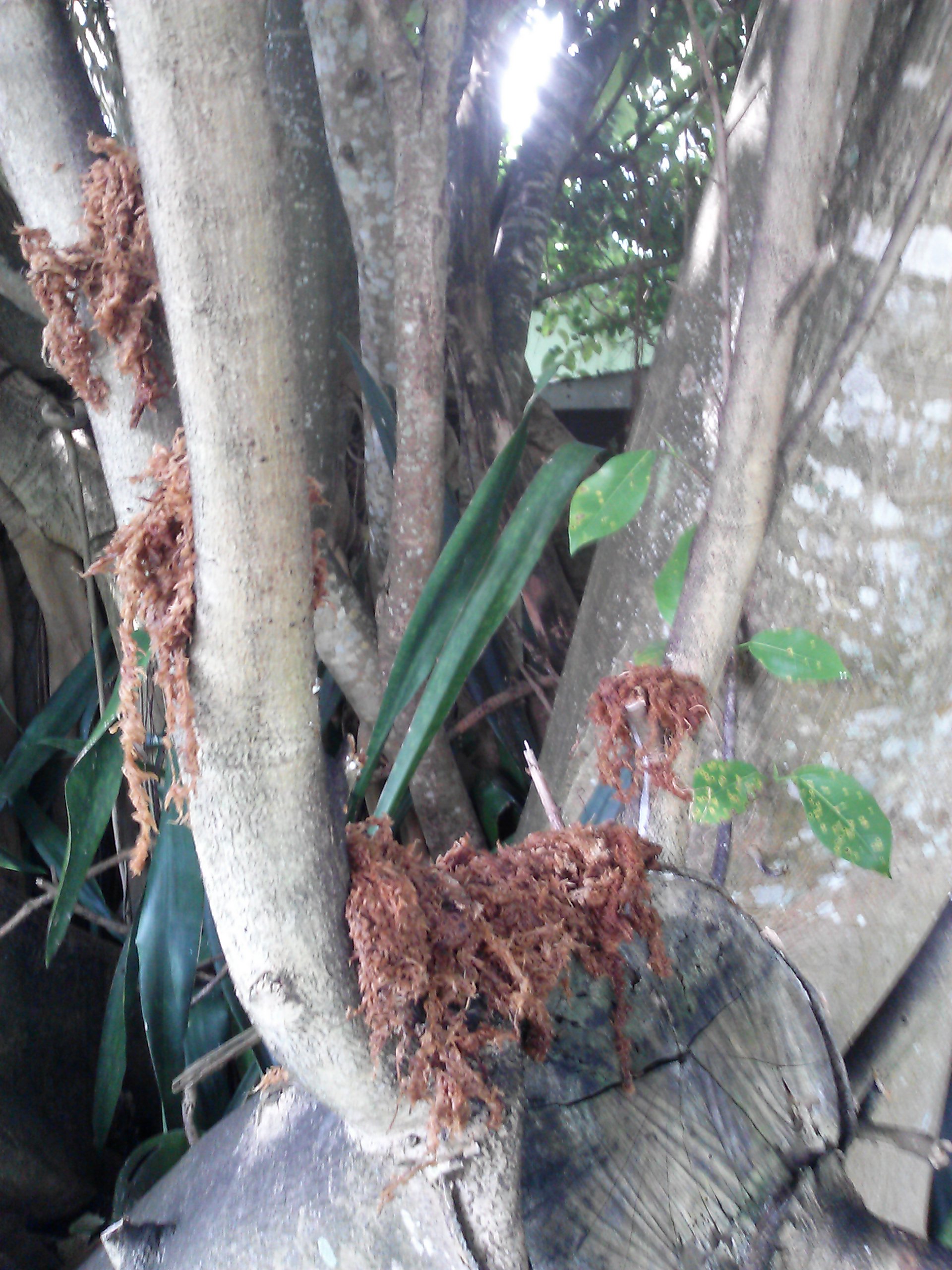
Cleared a slightly sunny spot in the base of a big Strangler Fig tree in my side yard. There are unfortunately some very poorly trained arborists (?!) around here who left this bad pruning job on my tree. A few orchids will spice things up here and cover the bald spot..

Banyan Tree Trunk

Fig Tree Trunk

I added some dampened Sphagnum Moss; trying to place the moss so it would drain and not cause any rot on the bark of the tree.

Spaghnum Moss

Spaghnum Moss

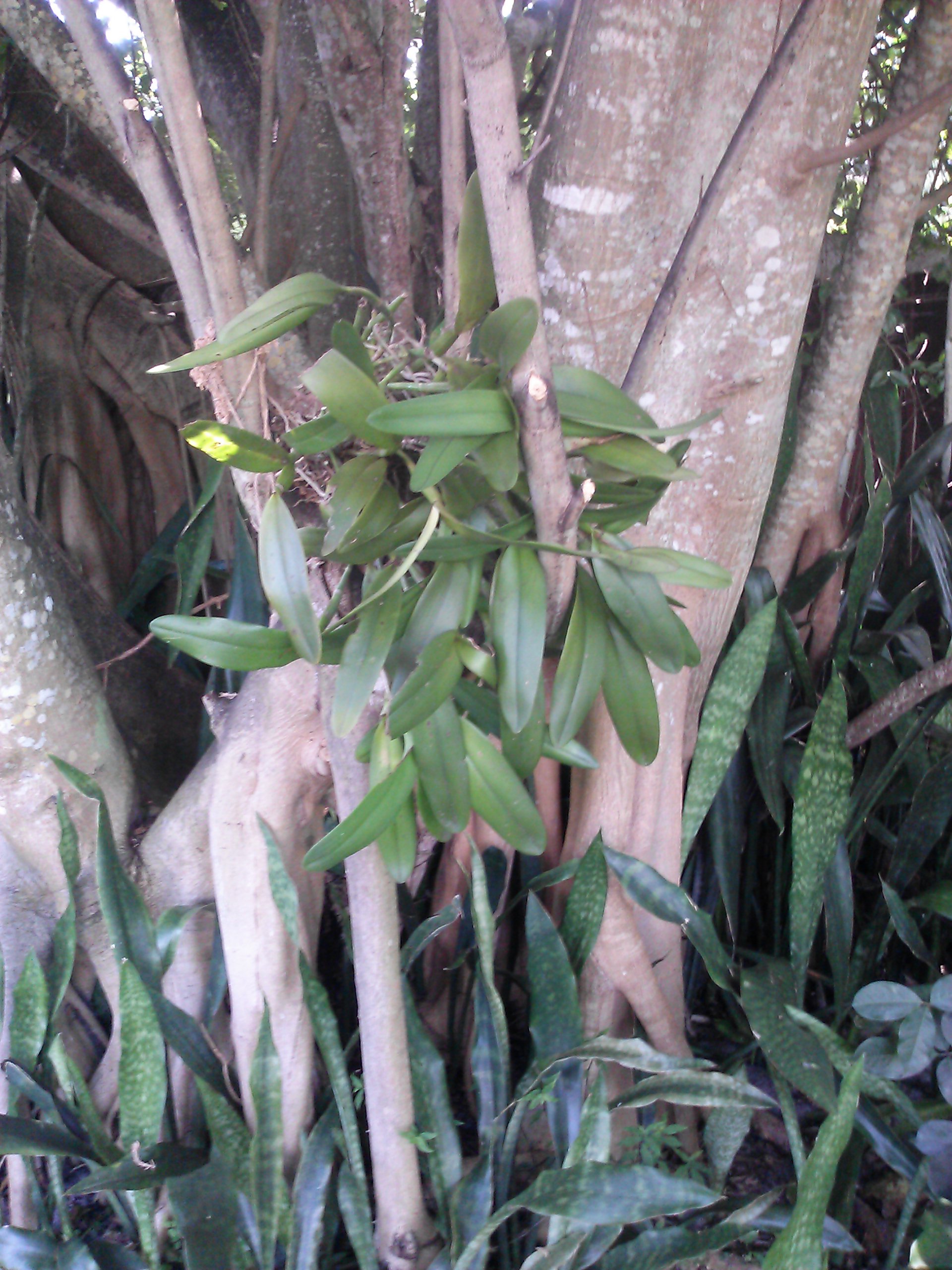
Then I hoisted the Orchids into the trunk and tied them to the tree with sisal twine. This takes a bit of jiggling and looping to make things secure, but I think they will stay in place.

The Finished Product

The Finished Product

Here are the Orchids in place. The idea is you water them (not too much) until establishment in the tree. Then maybe water every week during the dry season. Voila! Hopefully, I will get some of these next year; if these are truly unkillable!

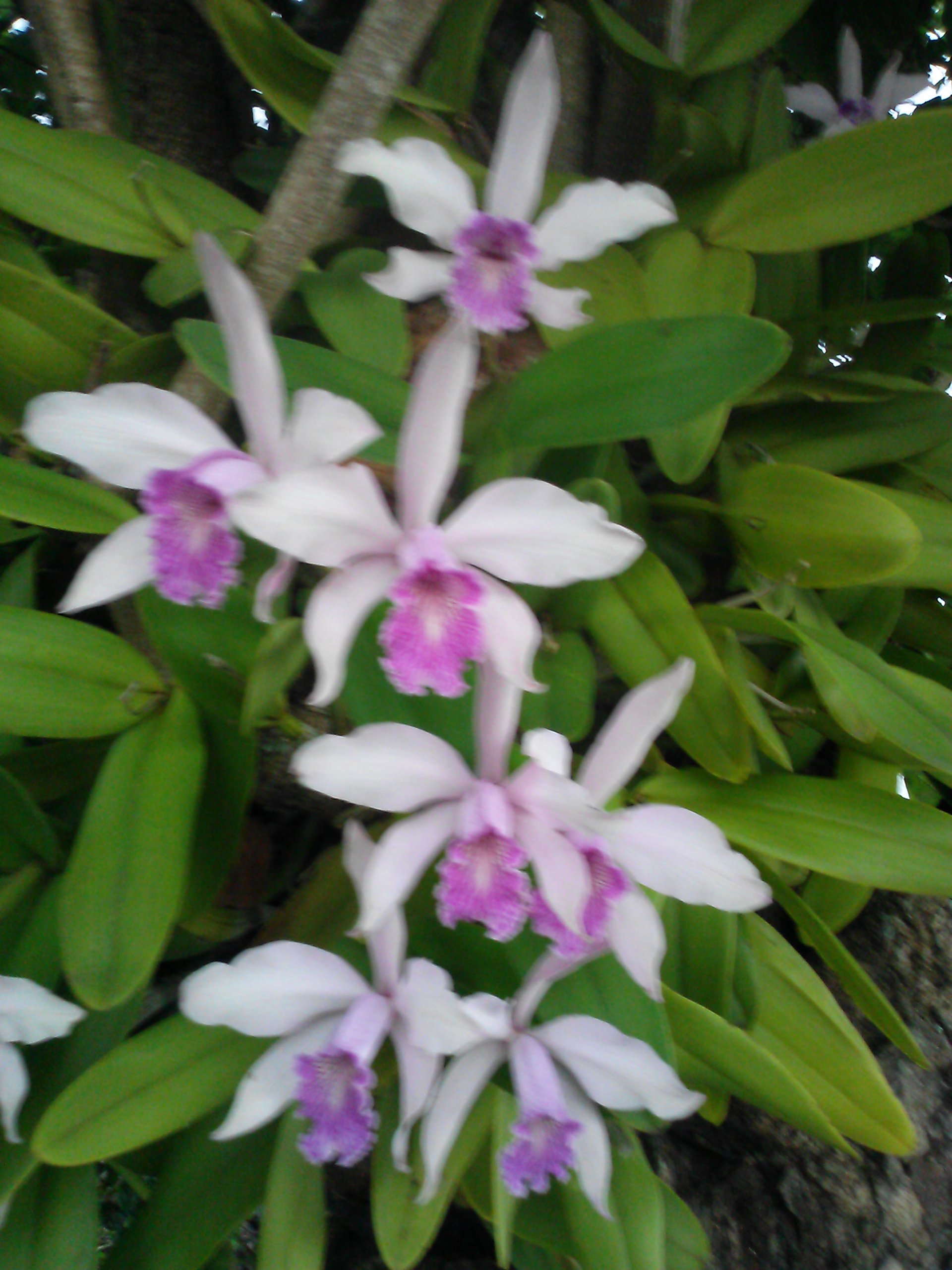
The update here is the Orchids are alive and well and are teasing me with new shoots – hopefully I get some flowers like the ones below. The good news is they do appear to be unkillable!

Cattleyas

Cattleyas

Mango, Tango – no Rain, Though

It is Mango season here in South Florida and eventually someone with a tree finds me, to my giddy delight. One of my neighbors is a Chef and has a tree. We have discussed what kind it is – he thinks a Haden – I think it might be a type locals call Peach Mango, it has the slightest aftertaste of peach. Whatever it is, it’s peachy  Maybe that is a Haden anyway. The locals call one of these a Strawberry Mango..

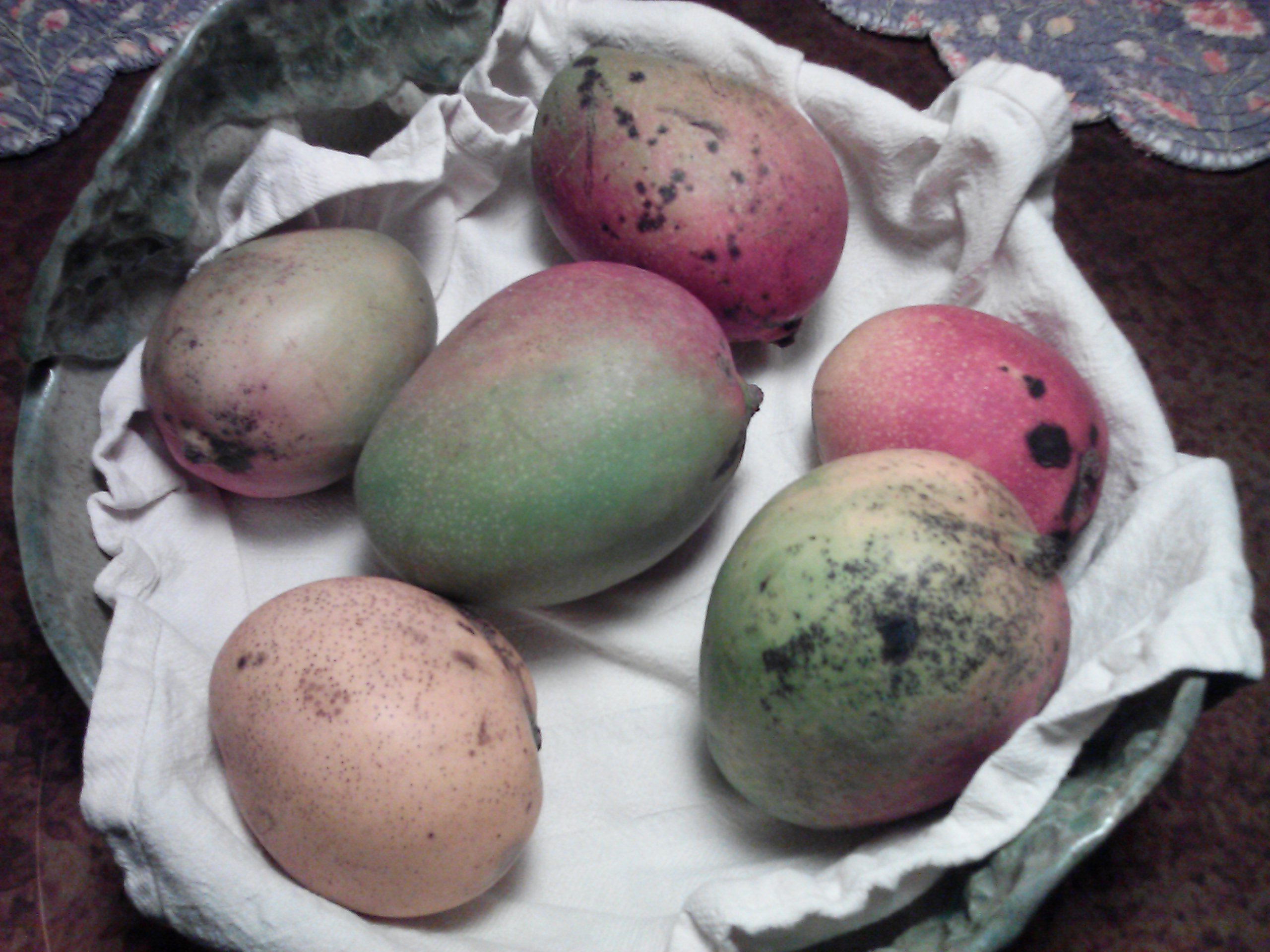
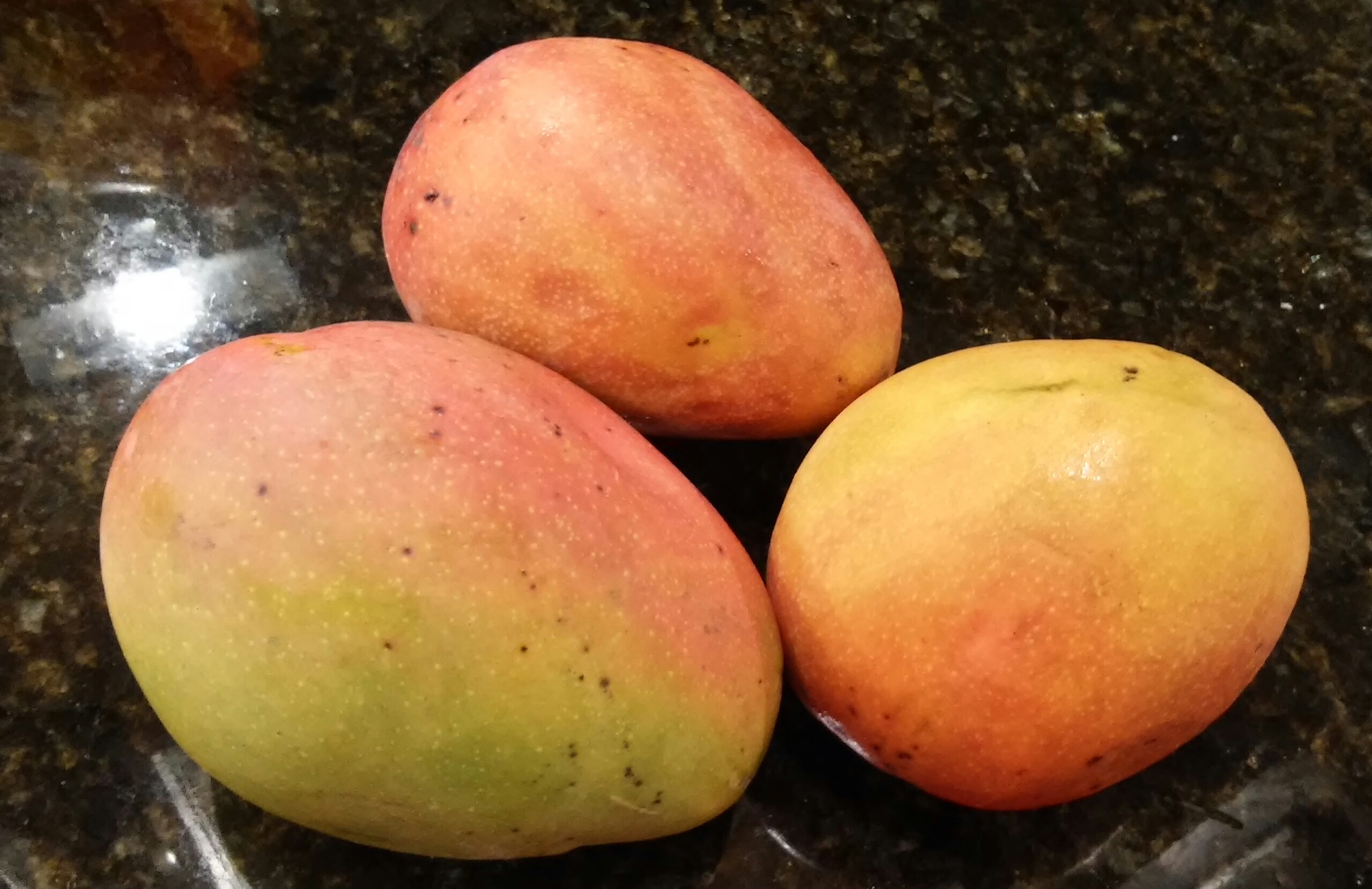
Here is a bowl of Mangoes from a guy down the street:

Assorted Mangoes

Assorted Mangoes

This included the Strawberry and Peach Mangoes – Peach I could tell, Strawberry not so much, although one had a redder colored interior. All were good and I devoured them, my husband had a bite, maybe two.

Chef Mangoes

Chef Mangoes              

These are the Mangoes from the Chef, Peach, maybe..Haden variety. Divine, yes, after all the other Mangoes were devoured, I made Granita from two and a half of these. Granita is made by taking 3 and 1/2  cups chopped Mango, simple syrup made from raw Hawaiian Cane Sugar and the juice of one lime – put this in a blender, blend until smooth, then put it in the freezer in a shallow container and stir every half hour or so until the mixture is slushy. I keep mine in a Ziploc bag in the freezer and mush it up as I eat it.

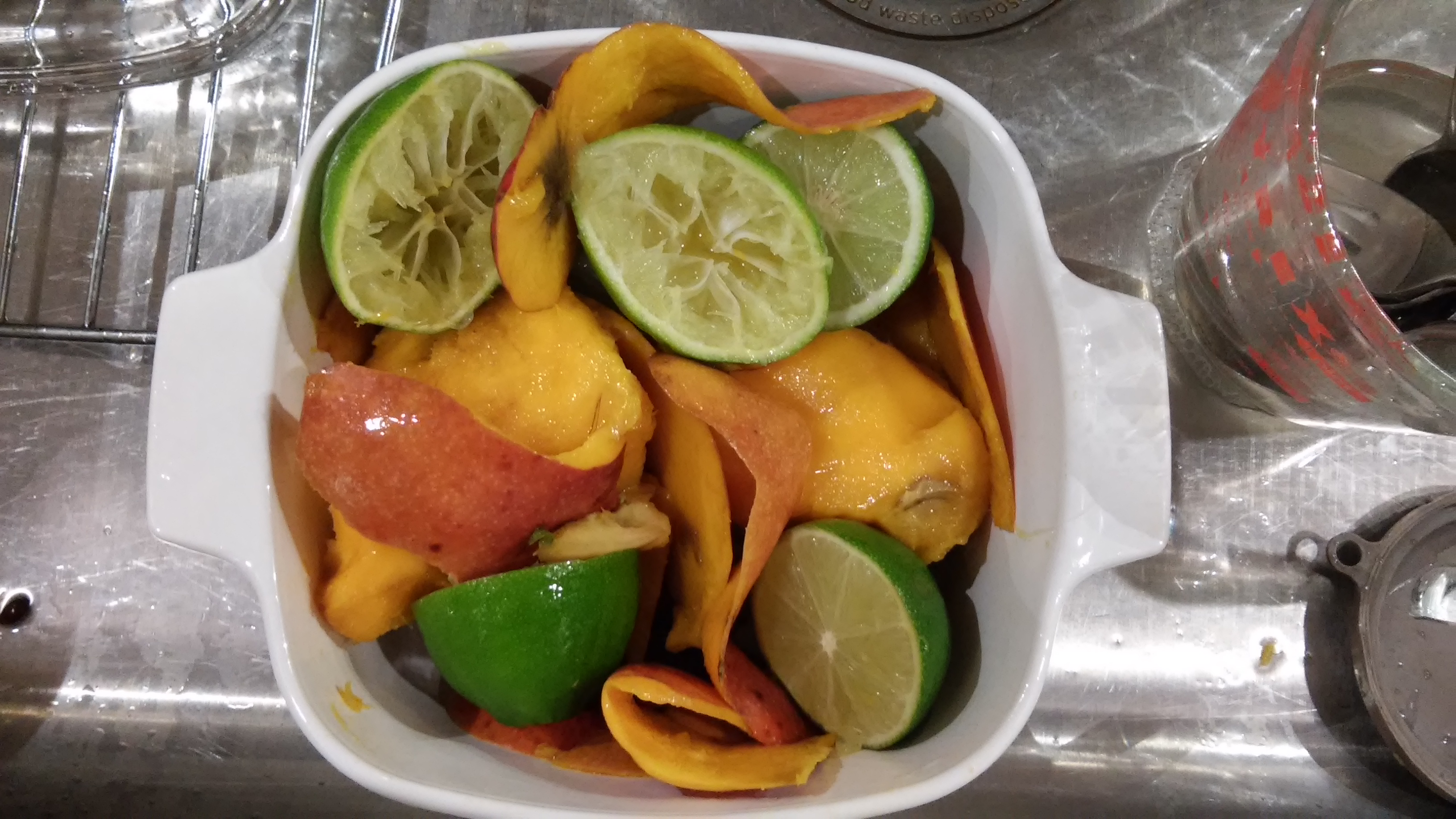
Even the scraps for the compost heap were pretty:

Compost

Compost

It hasn’t rained here since June 30. Things were getting pretty dry and then our well (Irrigation water comes from a well) motor just died, on Saturday morning, of course. Murphy’s Law for gardeners at work here in South Florida. The well repair people aren’t bothered much if you have city water. So, they showed up Tuesday and took the motor away – we found not having water at all doesn’t bother these people much either. So, I have been running around with a pitcher, watering things. Ugh, I am however hearing thunder in the distance..
Think I will just have a little of that Mango Granita, the Chef says it is good with Rum..

Tropical Texture

One of my pet peeves is seeing a nicely planted landscape bed that is uninteresting because of lack of consideration of plant textures, colors and contrasts. Before I go off on a landscape design rant about textures and contrast and why people place their plants wrong; I should post this picture I took recently because I thought it was a great representation of tropical texture finely utilized in the placement of the plants. They teach in design school it is all about texture and contrast, I think this is leaf shape, texture and flower contrast. The lowest plant is a Monstera deliciosa, the Swiss Cheese plant. Coarse textured, yes, but a uniquely tropical leaf shape, the next plant also coarse is a Heliconia caribaea, Red Flowering Lobsterclaw. Same texture, different leaf shape and a cool flower. The highest plant in this composition is a Frangipani or Plumeria. Might be a medium textured leaf, but the fragrance when in flower is worth any unattractiveness in the plant (these are naked stumps all winter) I am pretty sure the gardener here never darkened the door of design school but this is a beautiful planting design.

Tropical Texture

Tropical Texture

Here is some more tropical texture:

Bamboo Trunks

Bamboo Trunks

This is Buddha’s Belly Bamboo, Bambusa ventricosa ‘Buddha Belly” A tropical bamboo that clumps. I have not gotten over my fear of being overrun enough to try any bamboo.

This led me to think of the tropical succulents I have planted many from drier climates, but they certainly have a tropical texture: Interesting plants all but specifically the Pencil Cactus which is a Euphorbia – yes related to Poinsettias, seems so weird to me.

I think I have completed my rant, please don’t plant all the fine textures together, it freaks me out…

The Heat is On

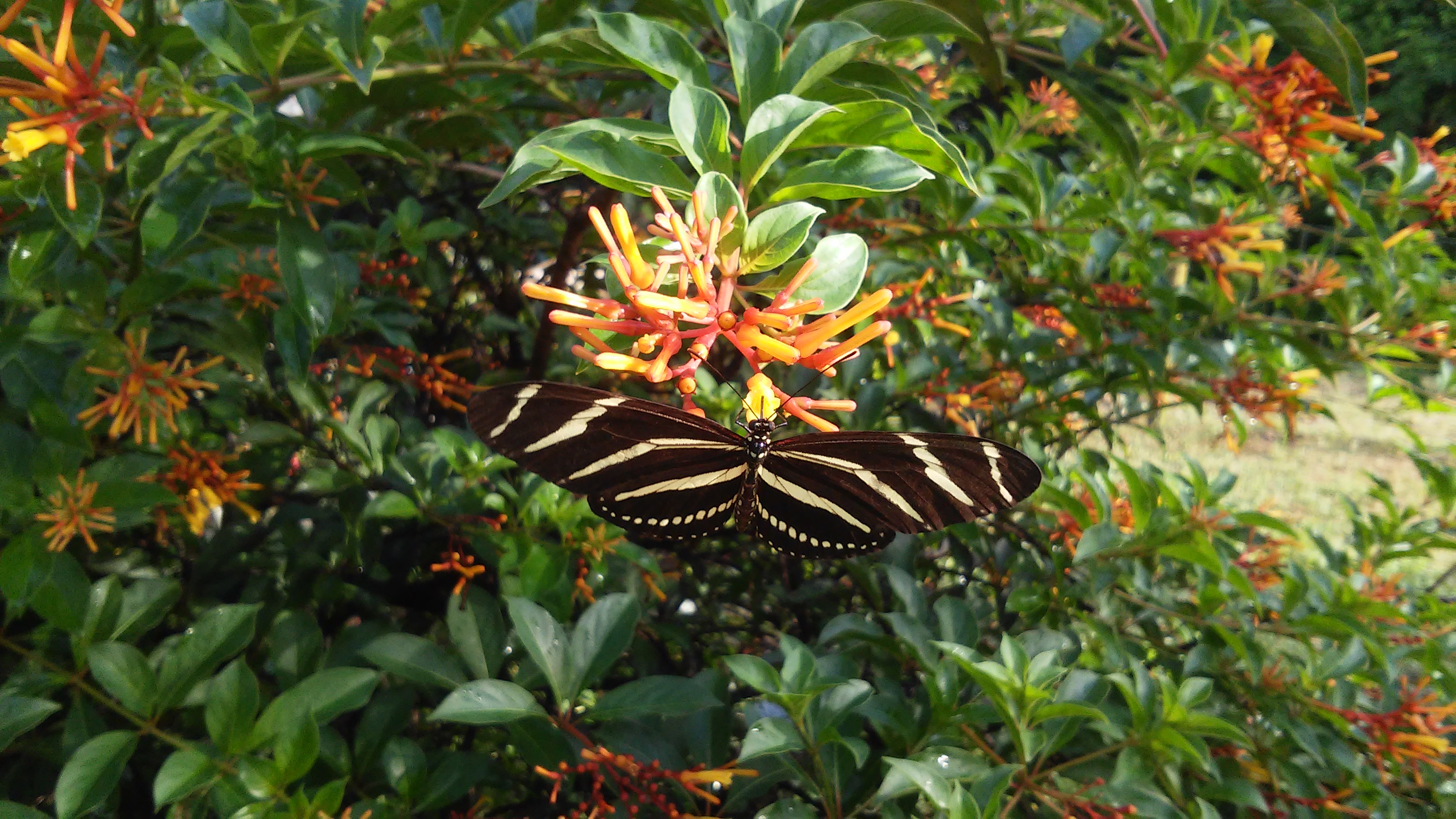
The rainy season officially started about a month ago here on the Treasure Coast in South Florida. It just didn’t start raining until the past week. Plants were getting crispy and I was having to provide supplemental water, even in the irrigated areas. My appreciation for the native plants has gone up. Here is the native shrub, Firebush, Hamelia patens, not missing a beat and attracting butterflies and a large selection of bees.

Firebush and Friend

Firebush and Friend

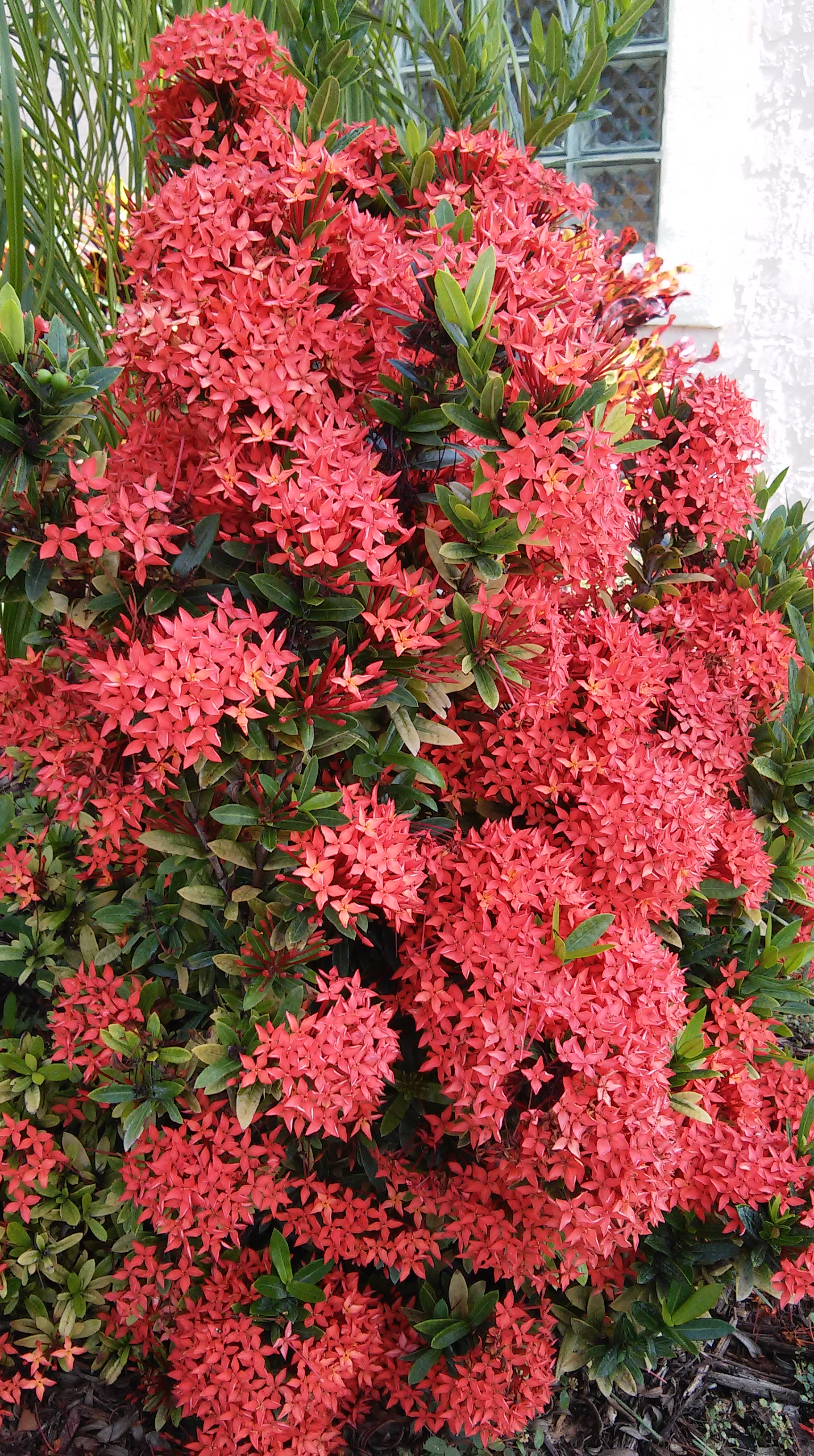
I have been waiting for precipitation to move plants around in the garden. Now the dilemma is the humidity – it has hit 100 percent several times already., not pleasant gardening weather. Some of the plants are enjoying the heat and humidity more than me. The Ixora burst forth as soon as the rain started, I take back all my grumbling about the special Ixora fertilizer I had been faithfully applying – it clearly works. I can’t recall having a shrub with more flowers, ever.
Dwarf Red Ixora

Dwarf Red Ixora

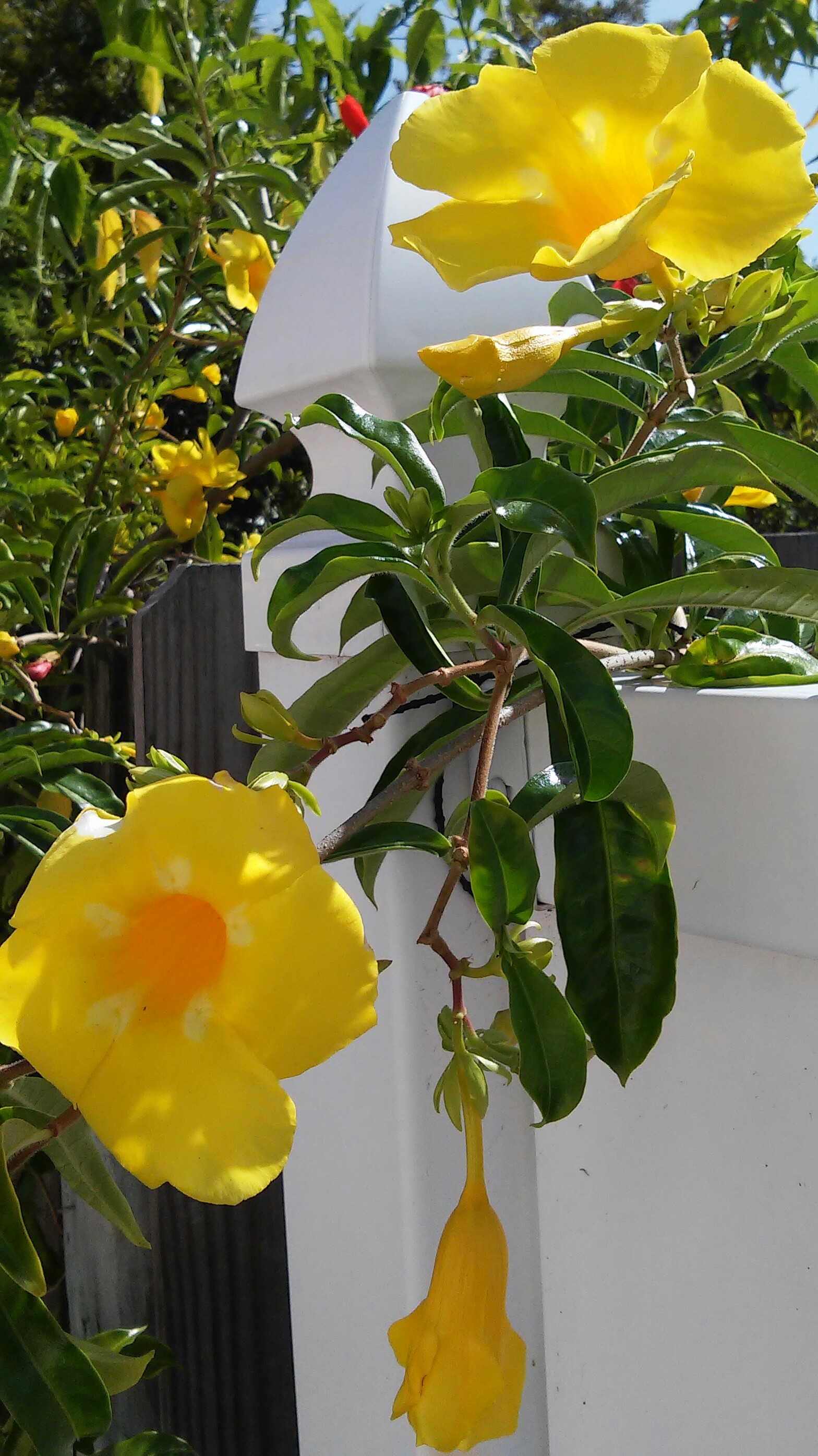
The Yellow Allamanda I trained to the fence liked the rain as well. Interestingly enough, the native version of this Allamanda was completely eaten by caterpillars! I think it hosts a good butterfly, so caterpillars were probably good.

Yellow Allamanda

Yellow Allamanda

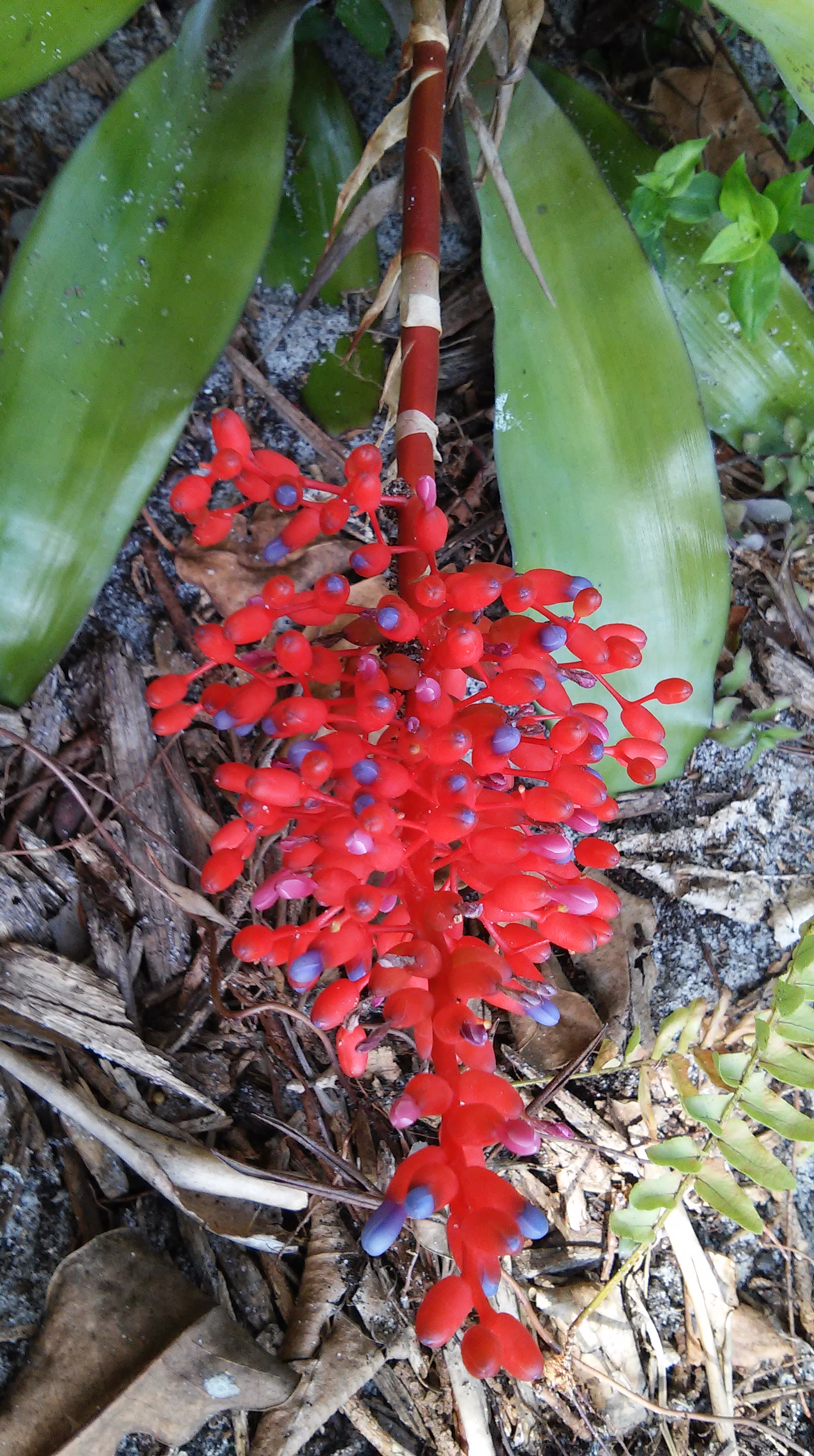
The rainforest Bromeliads also enjoy the summer. This is a Miniata Aechmea, it reminds me of red hots and is painfully easy to grow.
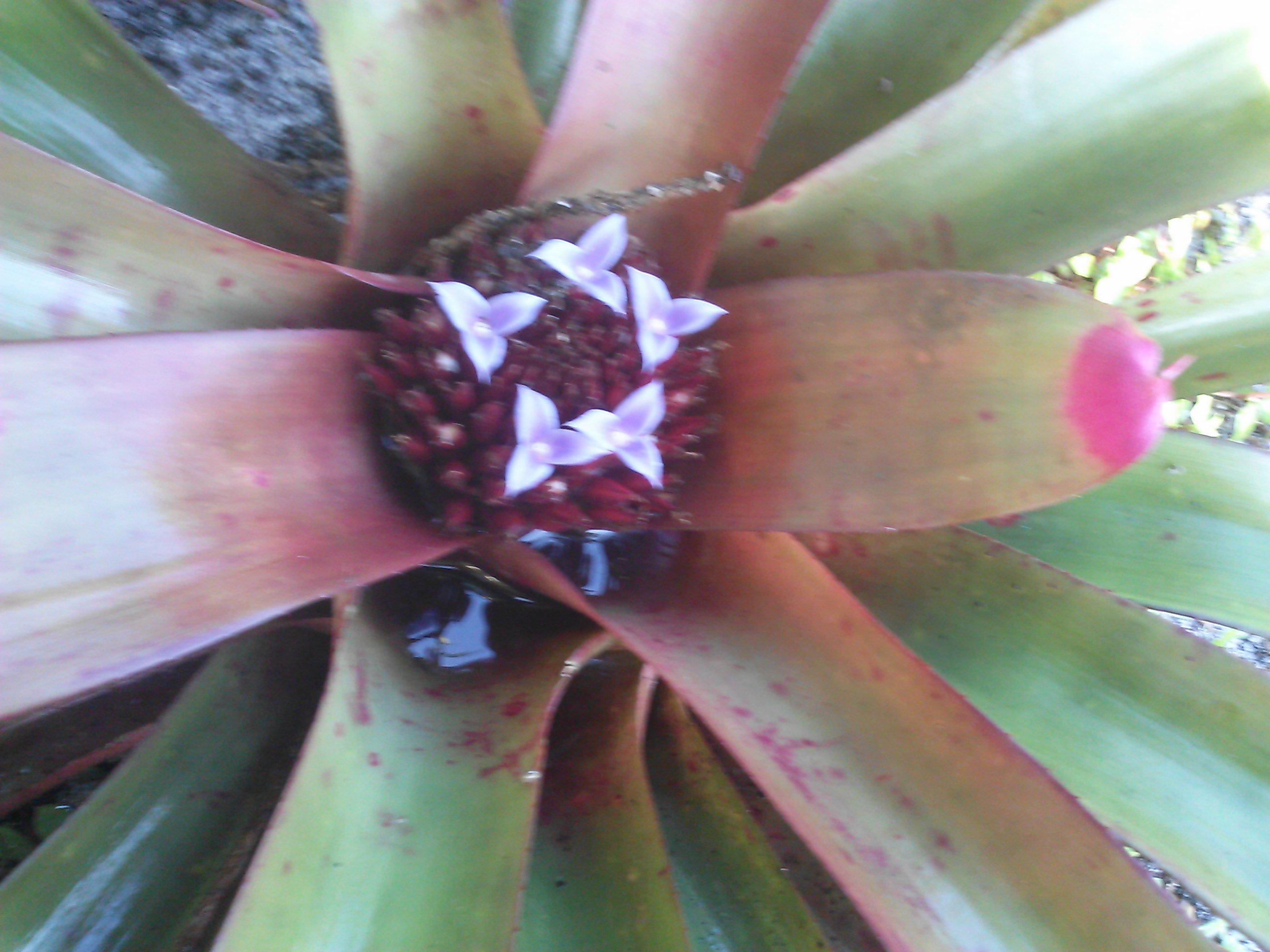
Miniata Bromeliad

Miniata Bromeliad

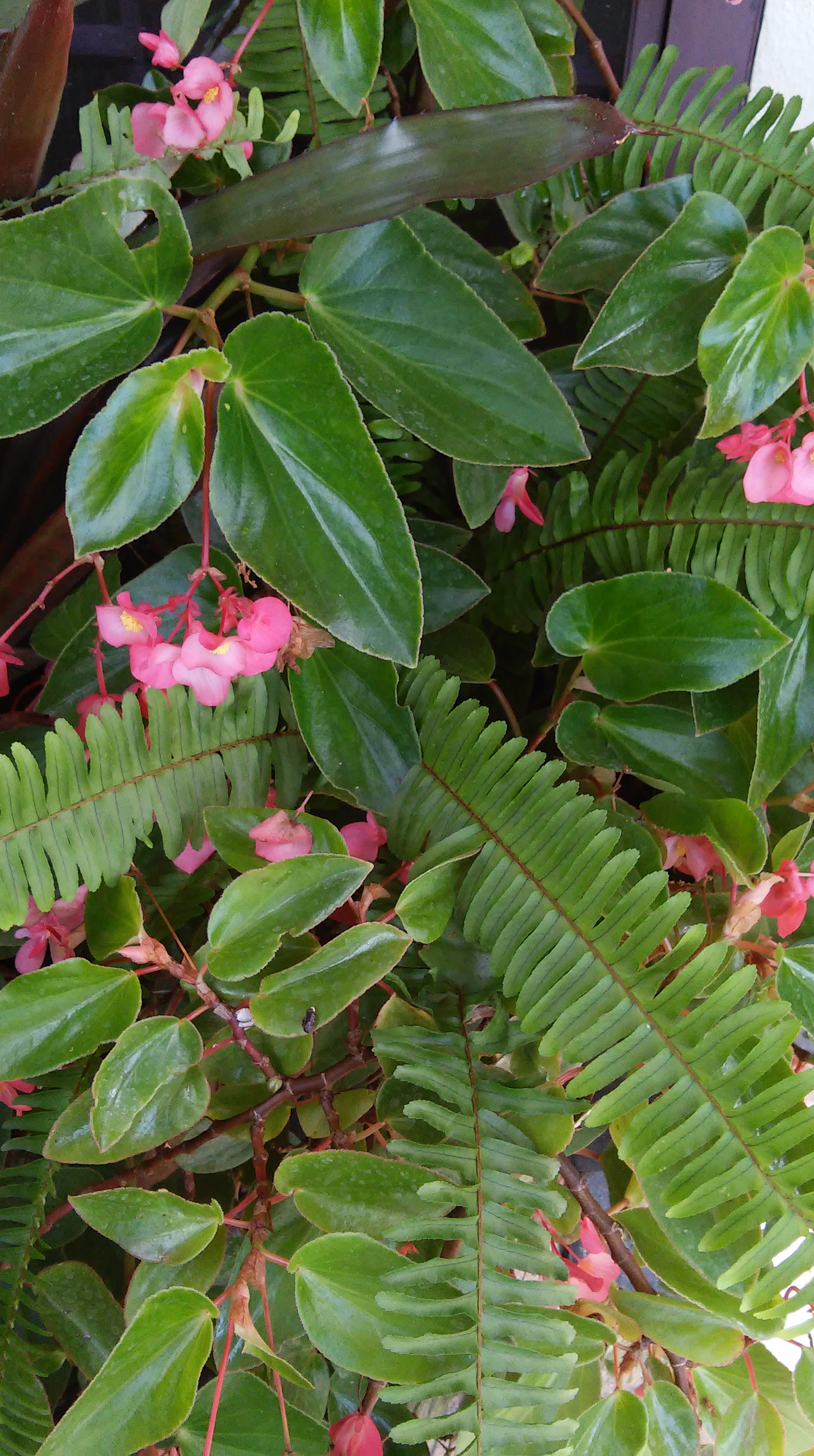
My final happy plant is a container garden actually. I have had this Dragonwing Begonia around for a couple of years, it was getting puny so I cut it back, found some Boston Fern in the yard (another wonderful native plant, it just comes up!) and put it on my front porch in part shade.

Dragon Wing Begonia and  Boston Fern.

Dragon Wing Begonia and Boston Fern.

Dragon Wings are a long time favorite of mine and I am happy I can grow them here, where they are apparently a perennial. I rooted some cuttings and they are quite happy as well. Heat and humidity are good for something!

I just looked at the weather app on my phone, it said 88 degrees but it feels like 108! I am going to stay inside and perhaps join my dogs on the cool tile floor. Although there is a promising looking group of clouds forming to the south.

Royal Ponciana – Delonix regia

The Flamboyant Tree

The Flamboyant Tree

If Tabebuia is the harbinger of spring in South Florida, then The Royal Ponciana (or Flamboyant Tree) is the harbinger of summer and the rainy season. I prefer not to use the H word in regards to seasons.

I have heard people refer to these trees as Flamboyants, and I always have to stop and think about what that is for a minute. They are pretty flamboyant. I think the trees look as if they are covered in sprays of red orchids. Ponciana starts blooming in May and then continue  into Summer the leaves seem to follow the flowers and are ferny, deep green and eventually cover the tree with a fine textured foliage providing shade for the sun weary Floridian. The floral display is followed by large pods like beans (this is a member of the bean family) In some Caribbean countries, Poncianas are called “Woman’s Tongue” because the pods rattle in the wind.

A native of Madagascar and India these trees are planted the world  over in the tropics for their fine floral display. Named for  M. DePoinci, a governor of the French West Indies in the 1700’s, the Ponciana is celebrated with a Fiesta and a Festival in Miami around the first week of June.

These trees lend a tropical flair to any landscape and eventually take on an umbrella form reminiscent of trees in the African savanna. There are numerous Poncianas in my area. Of course, most of the horticultural literature I have seen says they shouldn’t grow here. Generally, I see 10B as the hardiness zone limit, I am pretty sure this is 10A – the coastal area of Martin County. Gardening friends in Vero Beach report Ponciana do not do as well there and I have heard that Ft. Pierce is their northern limit.  The lady down the street who is a great gardener advised throwing all the books away and just giving things a try. A reasonable suggestion.

These trees should be placed in the sun and are not for the faint of heart. Fast growing and with the potential of attaining a size of 40 by 40 feet, they need some room to spread and also produce a deep shade that it is difficult to grow anything under. They are semi-deciduous; so if you are a Snowbird tired of raking leaves this tree is not for you. The pods also are pretty messy. I got in touch with my inner Southern Belle at Christmas by spray painting some Ponciana pods silver and using them as a front door decoration along with preserved Cabbage Palm fronds..

Throw the books away

The sunsets and the dogs on the beach are great reasons to live in South Florida. Trying to figure out how to garden here might be another story. Having spent most of my life 600 miles north of here, I thought I would be able to buy some books about what grows here and figure it out. Come to find out there really aren’t any good books.

The title sounds like something Hitler might have done. Actually, it was a bit of advice given to me by a longtime Treasure Coast gardener a few years ago. I had been lamenting the lack of good gardening information for our area and frustrated by what I had been reading in the Florida Gardening books. She said ‘throw the books away, they have no meaning here’.

Mondo that has seen better days

Mondo that has seen better days

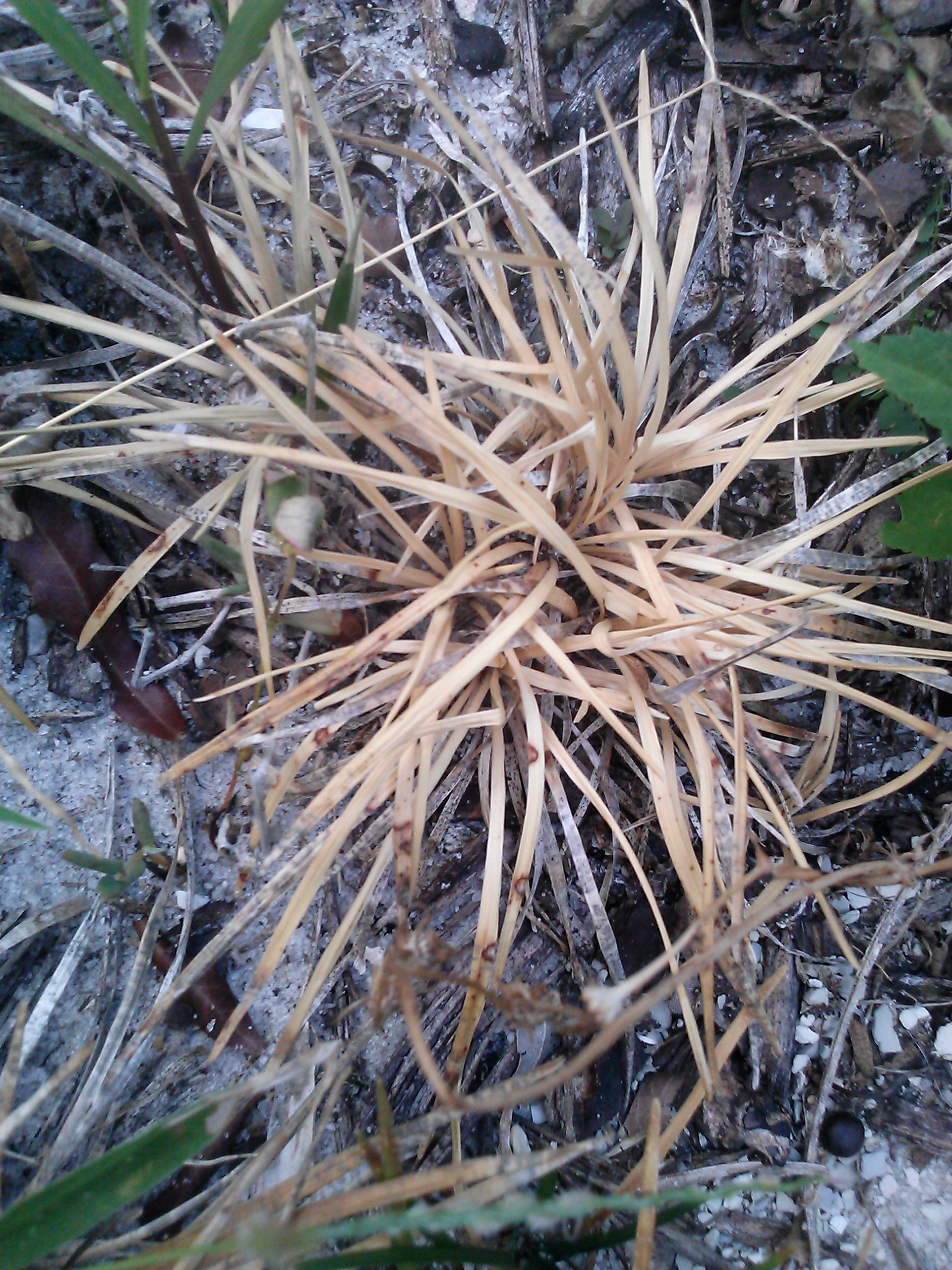
This kernel of knowledge proved correct and popped into my brain this morning as I was looking at the charred remains of my Mondo Grass (that supposedly grows in Zone 10 – where I live) My suspicion is Mondo Grass will grow in Zone 10 if you import soil and water for it and keep an umbrella over it at all times, otherwise, forget about it. I had Mondo Grass further north and it was a reliable nearly indestructible groundcover. It was used as lawn in places too shady for turfgrass.

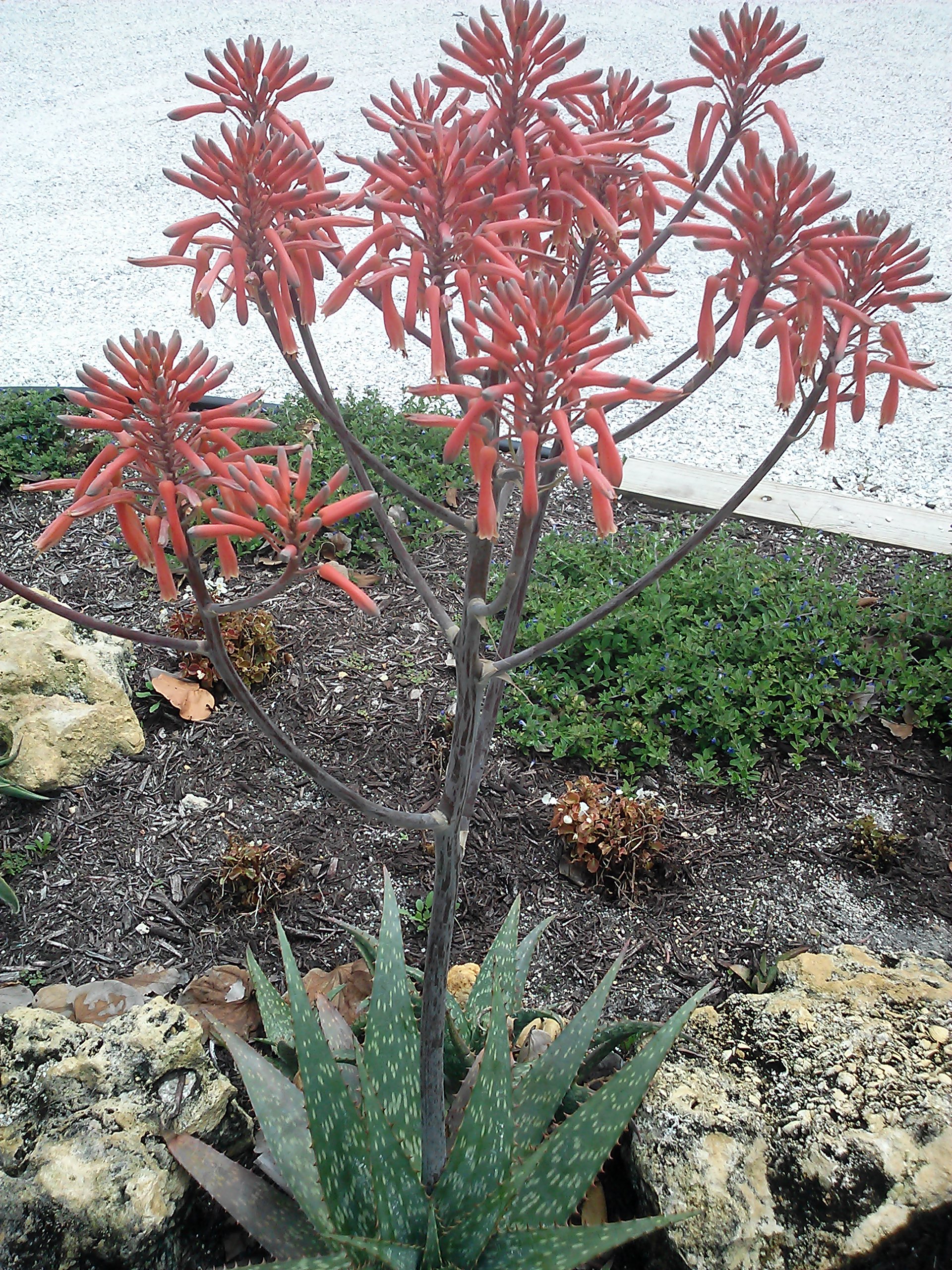
The Mondo Grass was my last rely on the books installation. My other major char broil was Bronzeleaf Begonias, which I did not even know could be burned up. I planted them in front of my Soap Aloe in my South facing front yard. Once the summer started they curled, browned, withered and unceremoniously died. The Aloe looked and still looks great. I feel bad about throwing away the offshoots sometimes, but not everybody wants a Soap Aloe. Instead of gaining sea legs on a ship, I am gaining sand legs in gardening. And usually end up covered in it.

Our Soapy Friend

Our Soapy Friend

This had left me wondering if it is really possible to write a useful gardening book with plant selection advice for a wide geographical area. I think not.

Weirdness Wednesday – Tree Cattle

Tree Cattle

Tree Cattle

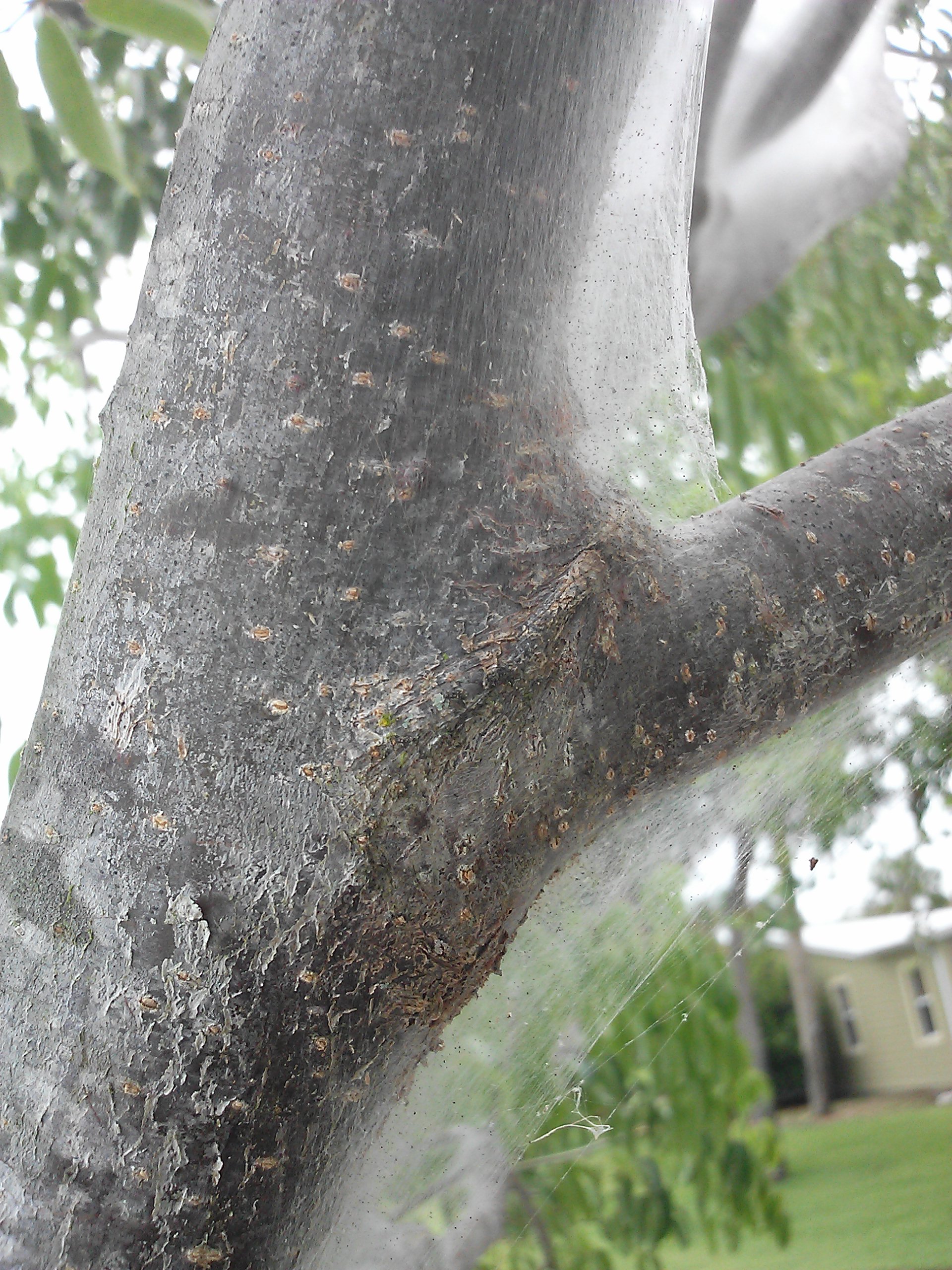
Here is another example of weird coastal animal life. The webby things on the trunks and branches of my Gumbo Limbo tree seem startling and might make you run for a can of bug spray. I try to avoid using pesticides in the garden.  I happened upon an article about tree cattle at some point, so I knew what these were and I actually showed them to our bugman (bugs in the house are fair game) We were both fascinated.

These are actually beneficial insects. Archipsocus nomas to be exact. Barklice is the common name. The beneficial aspect of these bugs is they clean fungi, dirt, algae and dead bark from the trunk of the tree. Bark maids cleaning up tree trunks for you. The lice are called tree cattle because once they are disturbed they move en masse. Like a herd of cattle.

I wish they would come and do the floors in my house.

Slideshow from Treasure Coast Wetlands

This slideshow requires JavaScript.

I recently completed a class in Native Plants associated with Palm Beach State College. Here are some of the plants from our nearby wetlands. Most of the pictures are from Hawks Bluff in Jensen Beach.

Hopefully we will be able to save all these plants for our future generations to enjoy. For now I will take a hike in my neighborhood to visit.

Collecting Treasure Coast Passalongs

It is entirely possible the term “Passalongs” is Southern American slang. In the Deep South gardeners typically pass along their favorite plants to friends and neighbors by seed, cutting or division. Once I was the happy recipient of an air layered old fashioned Gardenia. Hence the term Passalong Plants.

There are varying superstitions about proper receipt of these plants. One is you never say ‘Thank you’ because this will result in the plant’s immediate demise – this seems so strange to me as Southerns are, if anything, polite.

Many of these plants might be considered ‘Roadsidea’ as they are superhardy and likely to have been collected by an intrepid gardener for their outstanding flower or other characteristics.

Everglades Tomatoes

Everglades Tomatoes

Here in South Florida, contrary to most of the Northern Hemisphere, the gardening season is winding down and gardeners are sharing plants for installation before the rainy season begins. In the case of the Everglades tomatoes, the seeds will be saved for planting next fall.

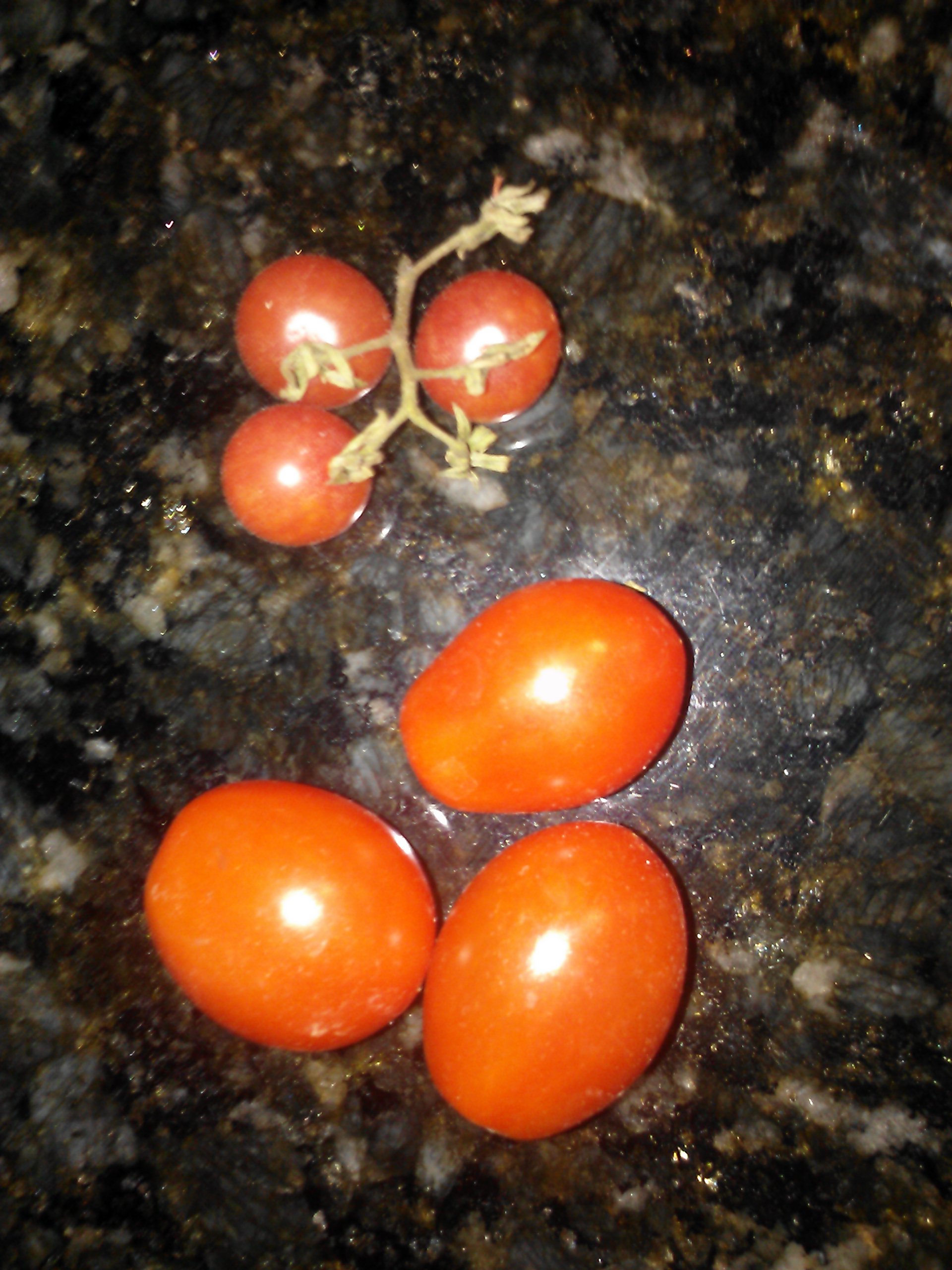
I am not so sure about the Everglades Tomato. They are the small tomato at the top of the picture, the bigger ones are Grape Tomatoes. These are native to the Everglades, hence the name, some people grow them year round. To me, they have a beefy taste and are too small to get the full tomato experience. I want a burst of sunshine when I bite into a tomato. I may have to stick with my favorite Sweet 100s.

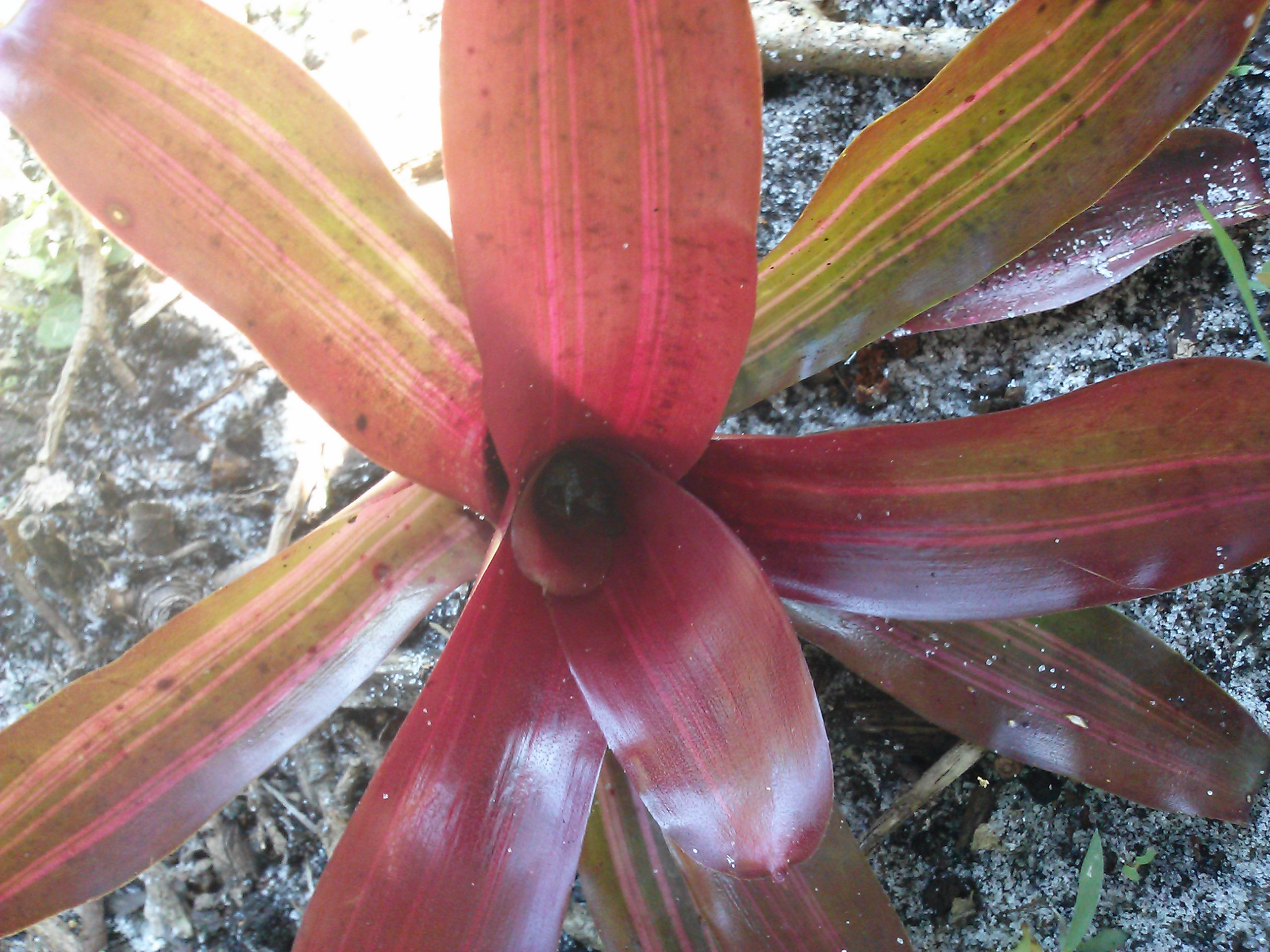
I call these Groundcover Bromeliads, they are some type of Fireball Neoregelia, maybe Atomic. Commonly sold at Garage Sales and passed along by division. I have striped, spotted and red. They spread and form a groundcover. I find that I am not worried as many gardeners about botanical nomenclature when I find a great deal at a garage sale. Please forgive me for spreading ambiguity.

Groundcover Bromeliad

Groundcover Bromeliad

Groundcover Bromeliad

Groundcover Bromeliad

Painted Fingernail Bromeliad

Painted Fingernail Bromeliad

This is the aptly named Painted Fingernail Bromeliad, an Aechmea variety. My neighbor gave me a few pups from her plants. I saw these growing by the side of the road for a long time before I managed to find out what they were. Like many passalong plants, these prove to be pretty indestructible and will grow in sun or shade.

Succulents are another excellent passalong as they reproduce quickly with side shoots. Just break one off and replant in hot sun and infertile soil. They may need water once or twice. The Agave and Soap Aloe are from my friend, Eddie.

To a certain extent all of these plants are a double edged sword. Yes, they thrive in our difficult environment. Maybe a little too well. If not maintained through careful sharing, the garden could be at risk of being overrun. I wouldn’t mind with the Bromeliads, except they are pretty sharp as are the succulents. So, mine are kept at bay and cleared from the edges of walkways.

Now that I have collected all these plants, I have some ready to pass along, should anyone need a new plant or two t try. I do hate to throw plants away.