The Sustainable Garden: Perennial Thoughts

I perennially have thoughts about flowers. In terms of sustainability I am not sure the native ones are always best. Many of the natives are simply weeds with attractive flowers or characteristics we like. I have a deep respect for Black Eyed Susan from a previous experience – as in being nearly overrun by them. I used to live in their native habitat and had bought some “improved” Goldstrum Variety and they bolted back to their native selves and then ran amok on a well drained sunny hill. A recipe for landscape disaster. As beautiful as they were in full bloom, it took a long time to get rid of the Black Eyed Susans. I could not cope with their joyful abundance anymore. So easy on the natives and seek those that do well in your climate without too much water and too much abundance. Easier to take care of and maintain.

In South Florida irrigation is a big deal. We have a rainy season and a dry season. While there are many native plants this is a tropical climate and some of them can go wild. I have found some escaped houseplants in my yard going wild. Mother in Laws tongues is an invasive species. Many plants commonly grown here will not survive without irrigation. I chose not to irrigate my entire yard to save water and to save my sanity. The areas in lawn and vegetables are irrigated; areas with lower water perennials are drip irrigated and I have some unirrigated low maintenance areas that I still want to plant with beautiful perennials. I am just looking at things a bit differently. So, I am paying close attention to who I am inviting to live in my garden.
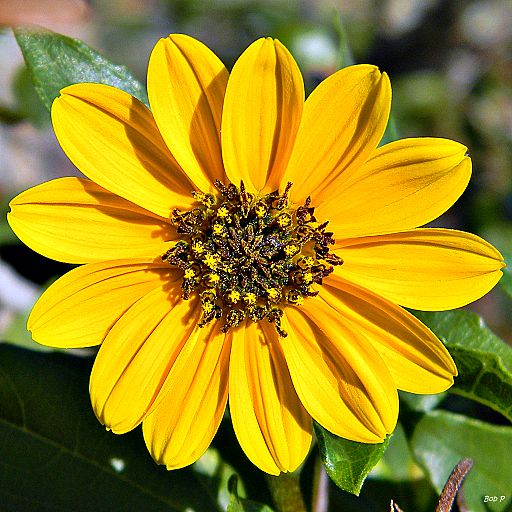
Beach Sunflower

The Beach Sunflower from Wikipedia

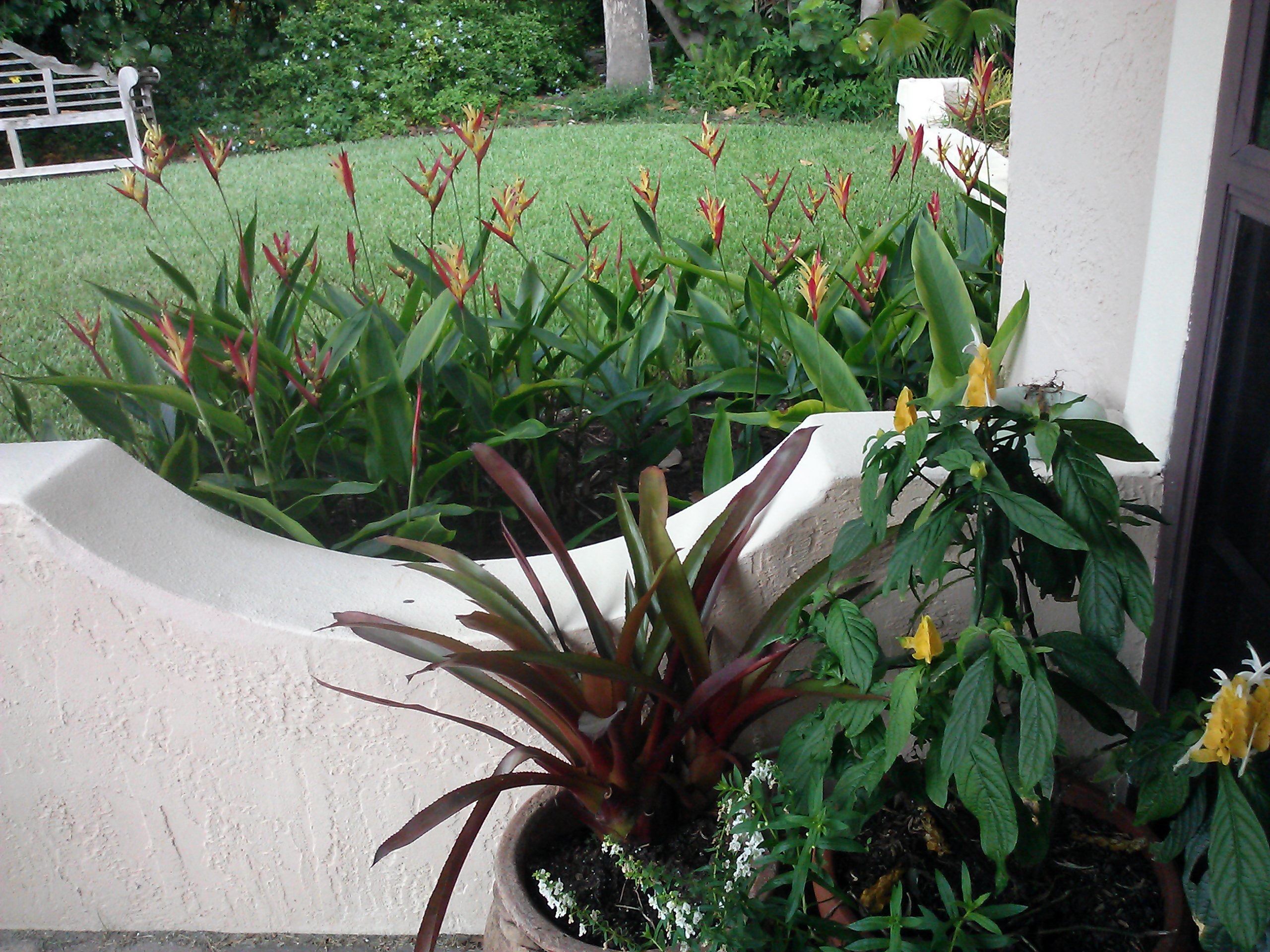
I am about to plant some Beach Sunflower in an unirrigated portion of my garden, I live on a sand hill and these are native to our area – I believe if I planted them in an irrigated area I would be overrun in short order. So, it is time for some more garden experimentation. The Beach Sunflower is going to look great with the existing Blue Agave, Red Martin Bromeliad and Painted Fingernail Bromeliad. Eventually providing shade is a native Gumbo Limbo tree; if that doesn’t get you in the mood for a Margarita nothing will. All these plants are extremely drought tolerant and will survive without regular irrigation. The Gumbo Limbo and Beach Sunflower are native, the Blue Agave is from Mexico, and the Martin and Painted Fingernail Bromeliads are Neoregelia type Bromeliads that originated in South America.
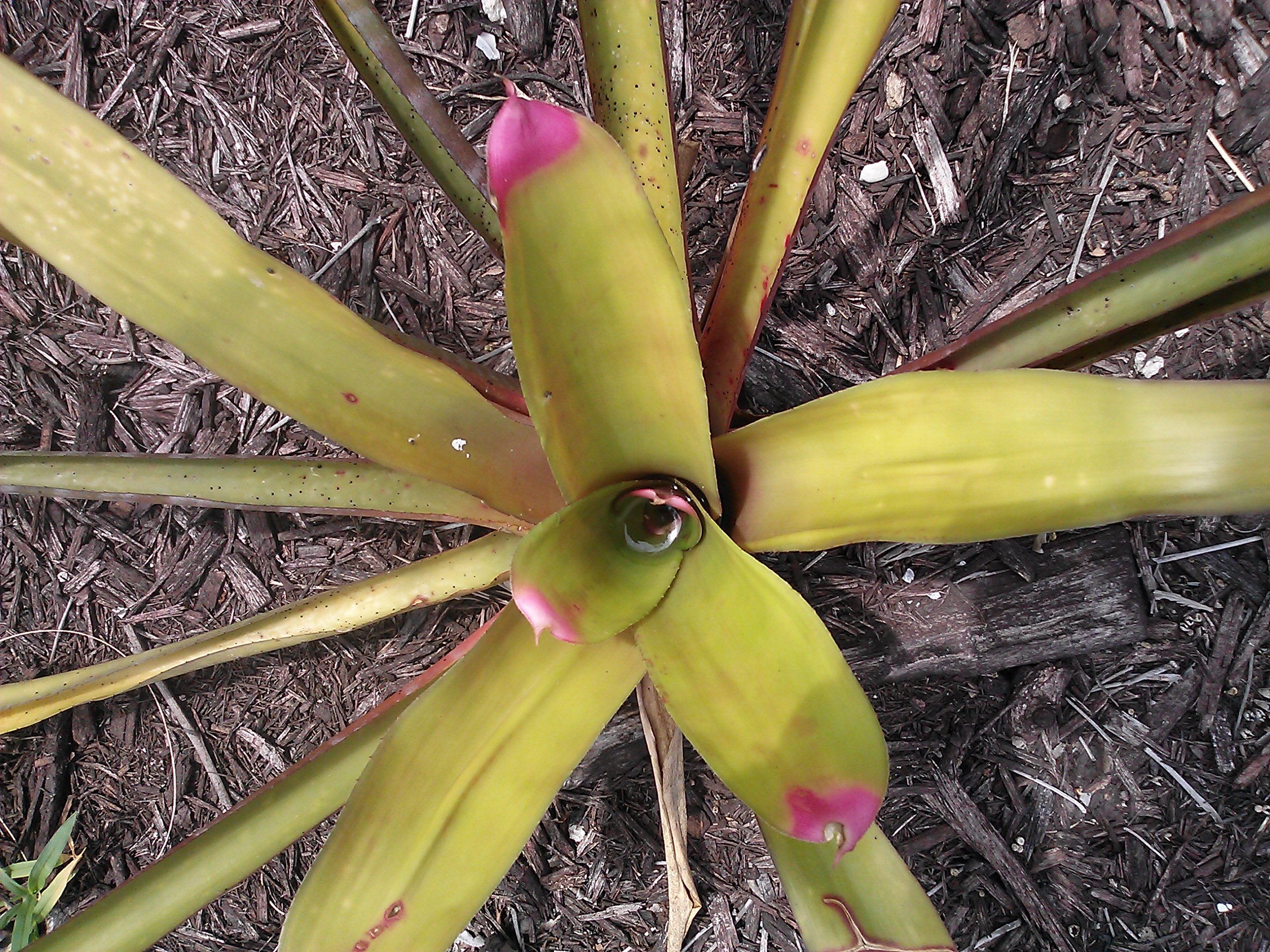
Painted Fingernail Bromeliad
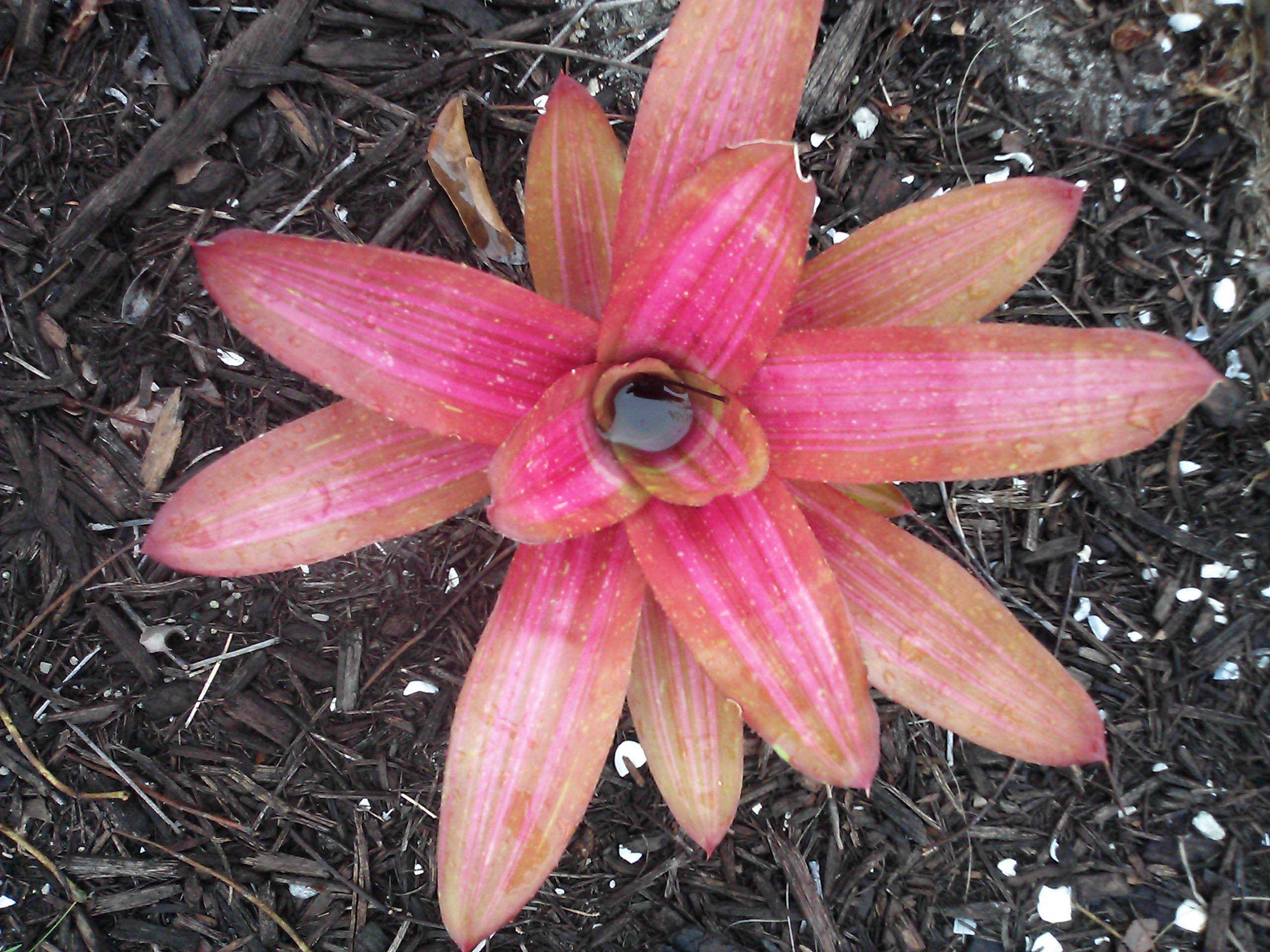
Painted Fingernail Bromeliad


Martin Bromeliad
Martin Bromeliad

Blue Agave

Blue Agave

It seems strange to me that Bromeliads, in my mind a rainforest plant, would thrive in the sun with little supplemental water, but they do. The Painted Fingernail Bromeliad is a passalong plant around here and I have seen large masses of it planted around mailboxes on the side of the road. A great example of a not native plant working in a sustainable way. The result of my selection of plant material is an evergreen perennial bed that blooms or provides year round color while being very drought tolerant and using very little fertilizer or maintenance.

Sustainability is about more than native plants – it is about selecting the right plants.


The Sustainable Garden: Lawn Thoughts


CAM00298

The View Over my Septic Tank

Lawn thoughts:

I am as guilty as many on lack of sustainability. In regards to the lawn it is guilt by association. My husband feels that his masculinity is at stake if there is not a perfect sweep of golfable, manicured lawn in front of our house. From a design standpoint, there are few things that set off flowering plants of any kind better than lawn. I think it goes back to England, where beautiful green turf is a natural component. The English have an abundance of rain and a more natural habitat for lawn. They even play tennis on it!

While I am clearly a WASP American mutt; most of my DNA originated in the British Isles. Perhaps I have a genetic predisposition to turf grass? My suspicion is this is more nurture than nature. Neither of my parents cared what the lawn was as long as it was cut. Clover, Bermuda,  fine.. whatever. I would be surprised if my father knew what type of grass grew in our area. My mother referred to it as Southern Groundcover; which is really clipped Red Clover with a little rabbit tobacco. I attended a Landscape Architecture program 30 years ago when a sweeping lawn was a requirement. To my knowledge over use of chemicals and pesticides was a small concern. Silent Spring had been published but the lawn as a design element was more important.

It became clear over the years that Americans still love their lawns (myself included). Lawns are the biggest user of water and chemicals in our landscapes. Perhaps it is time to moderate our usage of lawn by using the most drought tolerant turf in your area. There are many types of drought tolerant, warm season grasses that thrive throughout our country.

In the desert, I do agree that lawns should not be used. However, substituting Bermuda for Fescue in many areas is the right thing to do. Yes, it turns brown in the winter, but it requires less mowing, less water and less chemicals. And you can have a smaller lawn and select a type that can go dormant with drought and still survive. For example, Bahia grass versus St. Augustine. The Bahia can turn brown in times of drought and come back with rain. Once St. Augustine is brown, it is history.

Lawn Chemicals:

Atrazine is one of the most commonly used herbicides in the world. Banned by the European Union about 10 years ago. It is in groundwater almost everywhere. We have got to stop using this stuff. The only more common herbicide is RoundUp. And nobody really knows how long that stays around in the environment.

Non toxic weedkillers and pesticides work, use these instead. I have used nothing toxic on my husbands golf hole in the front yard and it is the only lawn in our neighborhood without Dollar Weed in it. I have a Dollar Weed phobia, if I see one leaf I mix a batch of vinegar weedkiller and apply with a paintbrush. The Dollar Weed is satisfyingly dead.

So, use the lawn, just cut back on the size and chemical

The damn thing is it looks great. And it lives over the septic tank. Nothing toxic has been applied.

Sisal Agave – Agave sisalana

I always enjoy learning a new plant. Especially an interesting one.

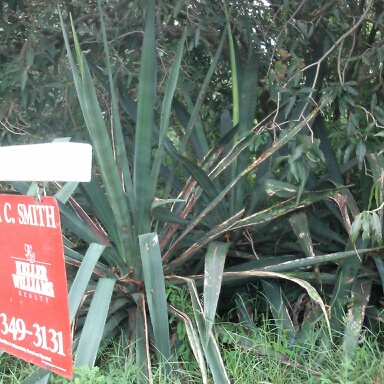
Sisal Agave
I see these huge, somewhat unattractive Agaves around and had been wondering what they were. While searching for an ID of another Agave a friend gave me, this one popped up. The Sisal Agave. The photo above is taken on an undeveloped lot. The Agave in nearly 5′ tall and wide and not very sharp, aesthetically or needle wise.

I learned this is the source of sisal; a common fiber used to make rope, twine, rugs, textiles and even dart boards. Sisal is named for the Port of Sisal on the Yucatan peninsula in Mexico. Botanists seem at odds over the origins of the Sisal Agave but Mexico seems the most likely place to me.

Reading further on the Sisal Agave I found that it was brought to the Florida Keys for cultivation in the 1800’s and like many other horticultural oops we have here it escaped and became an invasive plant. Hence its appearance on a vacant lot.

Sisal is picked a leaf at a time stacked and then processed with a device called a raspador, a rotating wheel of knives that beat the fiber out of the plant. This device seems like something that would be used in the plot of a James Bond movie. I can image Goldfinger with the raspador over James Bonds’ head, threatening him at a Sisal plantation hiding a secret Soviet installation.

Of course, James Bond would use the rope to kill Goldfinger and then escape by swinging over the river while saving a nearly naked glamourous nuclear scientist. 

I guess everybody needs a little Sisal.

Cure for the Summertime Blues

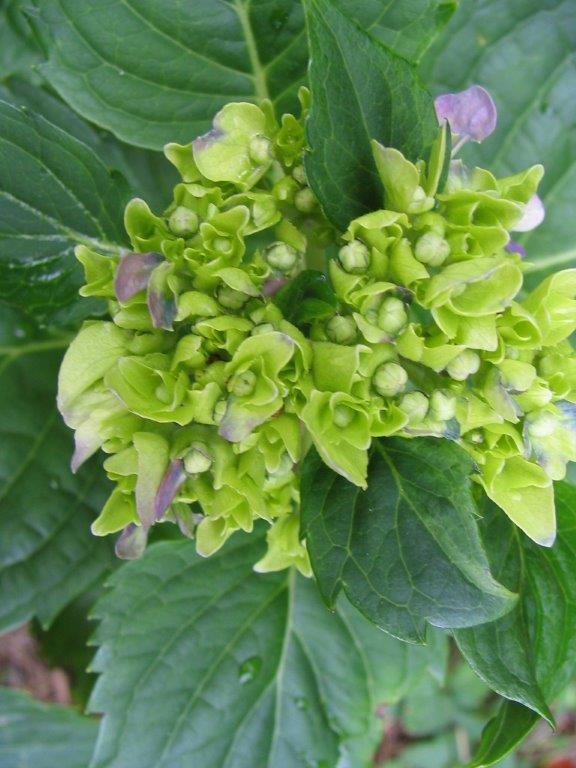
My cure for the Summertime Blues are the Tropical Blues. I have seen loads of photos of Blue Hydrangeas from further north; while I miss the Hydrangeas, I never had tremendous luck with them because I gardened in dry shade – which is only conducive to Oakleaf Hydrangeas. I do miss those Oakleafs. Here is my best Blue Hydrangea ever. Not very impressive.

Blue Hydrangea Bud

Blue Hydrangea Bud

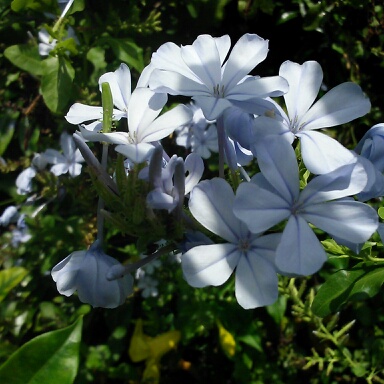
Down here in the hinterlands, I have Tropical Plumbago:

Blue Plumbago

Blue Plumbago

This is an interesting shrub; it arches to about 4 feet, then drops to the ground and roots so it is sort of a creeping shrub. I used these in pots as a summer annual further north and underplanted them with Blue Daze:

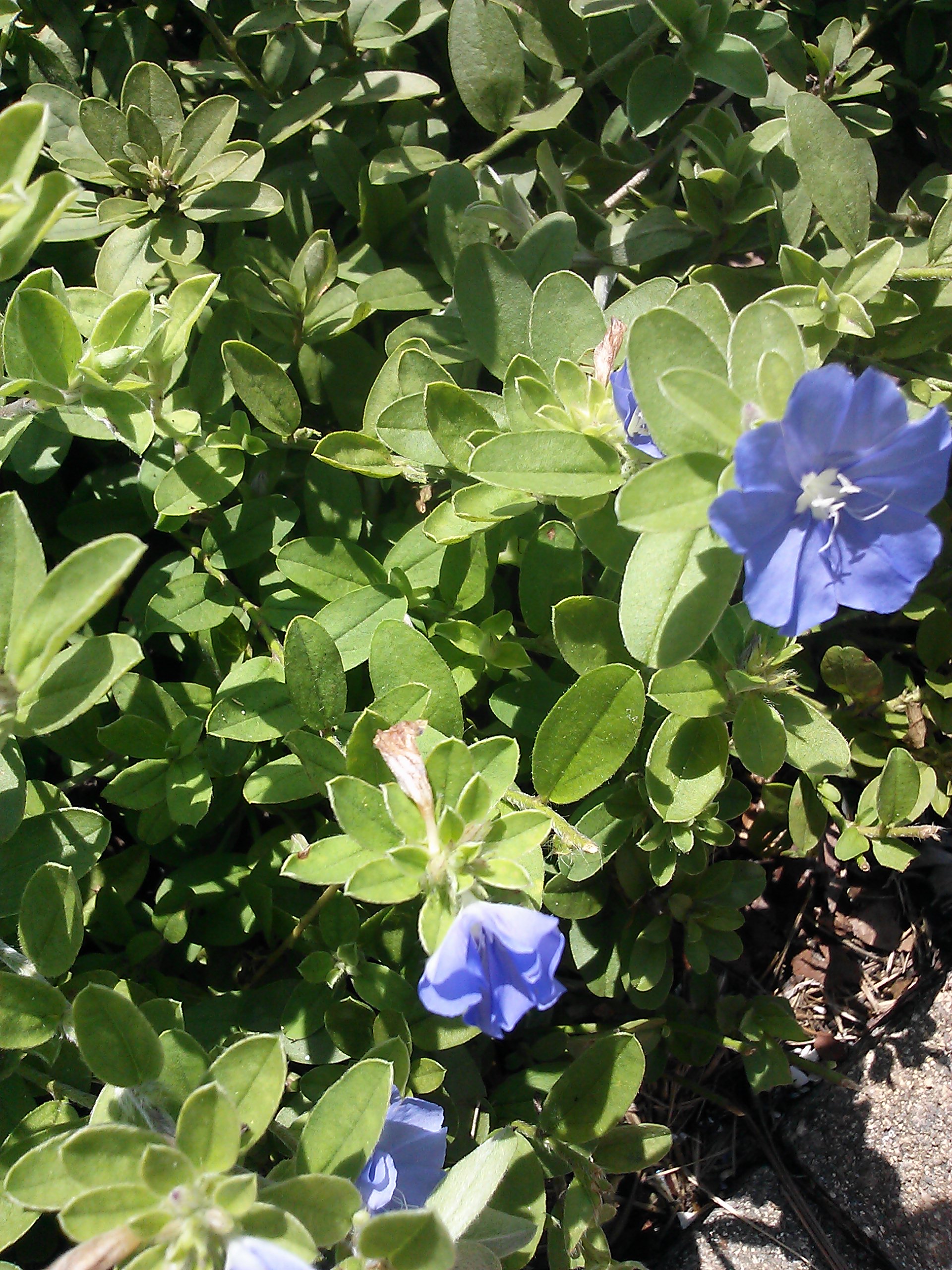
Blue Daze

Blue Daze

Blue Daze Evolvulus is a perennial here. Which still seems weird to me. I have a mass of this in my front yard that blooms nearly continuously, but only in the morning.

My final suggestion for curing the Summertime Blues, the Blue Agave:
Blue Agave

This looks like a Tequila Agave but is not. I think you could make tequila or perhaps, Mezcal out of this plant, but it is a long and involved process and it really has to be done in Mexico. So, have a Margarita and toast the last month of Summer.

Orchids in the Orchid Tree – Cattleyas and Bauhinia

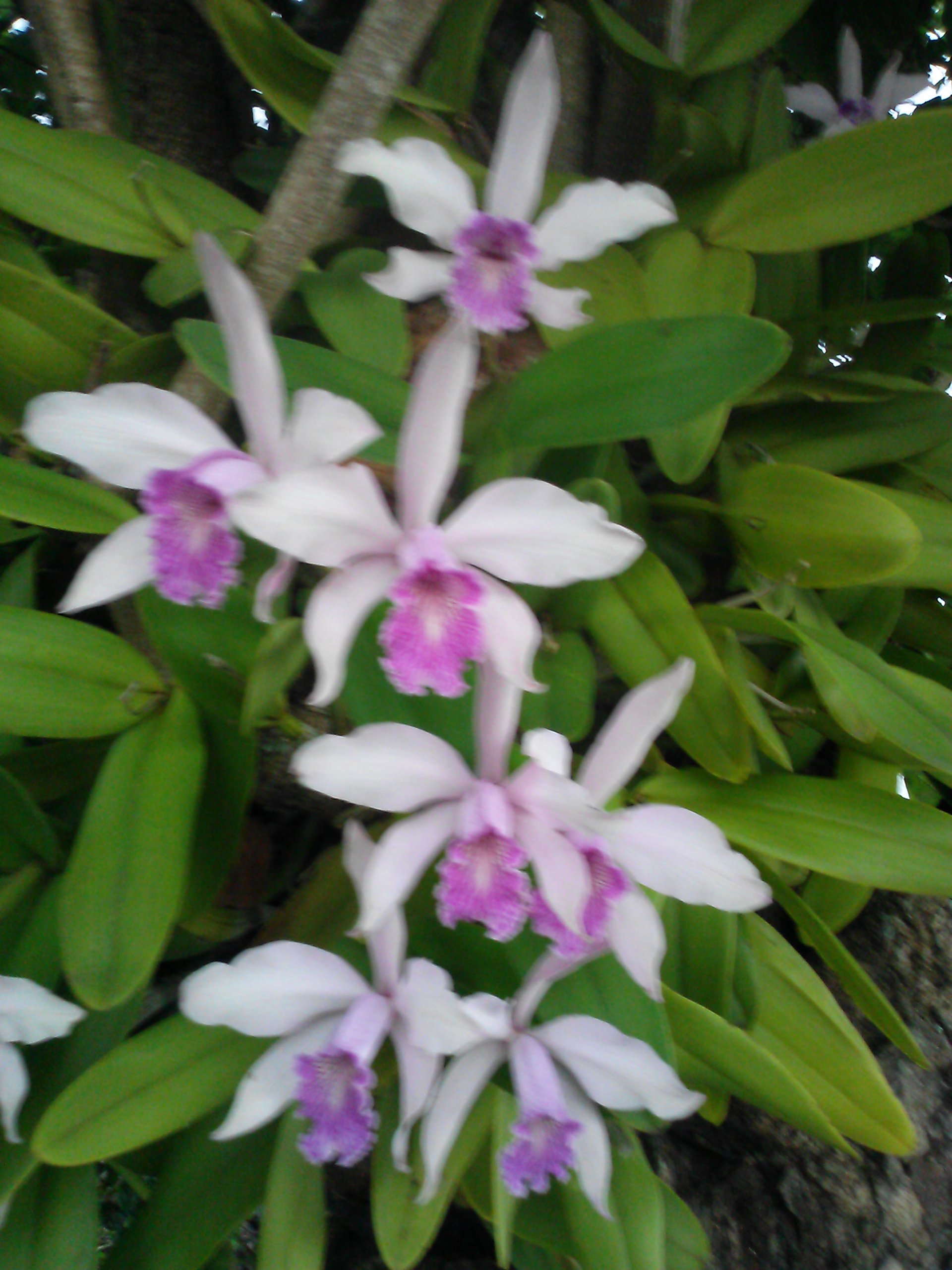
Cattleya Orchids in Hong Kong Orchid Tree

Cattleya Orchids in Hong Kong Orchid Tree

This is the current scene above my neighbor’s mailbox. A flowering Cattleya Orchid she installed in the crotch of a Hong Kong Orchid tree. A delightful welcome to the driveway or mailbox.

I would say the Cattleyas are probably 3 feet in circumference and nestled in the center of a semi multi trunked Hong Kong Orchid Tree. The flowers are pink and white, fabulous and slightly fragrant; it should be noted that there are some really fragrant Cattleyas that can be used in this way. The Hong Kong Orchid tree is looking as good as possible for a Bauhinia so the Cattleyas are the star of the show.

The iambic pentameter or whatever hadn’t occurred to me when I started this post – Orchids in the Orchid Tree. Where’s an English teacher when you need one?maybe it is alliteration? In my experience, English teachers were generally offended by my writing so somewhere, somebody is feeling unhappy about comma faults – my specialty. I was nearly kicked out of the University of Georgia for my comma faults; my solution to stay in college – semi-colons! And it worked! I have a college degree and am still here offending innocent people with my punctuation. I can only wonder how many good, interesting writers were sidelined by English teachers. Carl Sagan comes to mind:Billions and billions. Ms. Ford, if you are still out there, I am published and somebody paid me!!

I digress, my neighbor offered a start of these Cattleyas to me and I enthusiastically accepted. I have a good sized Banyan Tree asking for some Orchid company. Research (and my neighbor) tells me that you need a rough barked area, then apply some sphagnum moss, add the orchid and tie it to the tree with string. Water until established and …Voila.

Orchids in the Orchid Tree…

Cattleyas

Cattleyas

Yellow Butterfly Ginger – Hedychium flavum

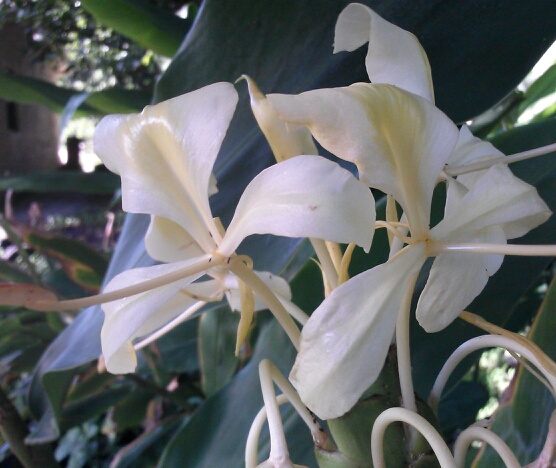
Yellow Butterfly Ginger


This is the Yellow Butterfly Ginger as opposed to Ginger Lilies or White Butterfly Ginger. I can’t recall exactly where this came from. I had some Ginger Lilies a very old lady gave me in Atlanta, but I was afraid of importing those to South Florida for fear of being overrun. So, I left the Ginger Lilies in my garden in Atlanta, I think the new owner built a pizza oven over top of them. This particular lady who gifted me the Ginger Lilies identified the plant by the fact that the root looked like an old shoe.

Back to Florida, this very fragrant plant started to bloom last week and to me it smells like a really intense Honeysuckle. Very pleasant. I had to search a bit to figure out what Ginger this is exactly. I finally decided it was Hedychium flavum based on the identifying feature of hairy leaves and yellow flowers. The flowers start out white with yellow centers, then the whole flower turns creamy yellow by the end of the day. I hadn’t realized the leaves were hairy until now.

The plant is about 4-5 feet tall and lives in the shade of a good sized Banyan Tree. Almost everything I have read about these says they require a moist site. I live on a gigantic sand dune so there is no really moist area here, this is the closest thing we have to moist and it is working fine so far. The Ginger has been in the garden for about a year and has probably doubled in size and was evergreen through the winter. The foliage is kind of grassy and makes a nice backdrop for Bromeliads or Ferns. The roots look like reddish culinary ginger, but I have not had the occasion to eat any – they do not remind me of old shoes at all.

Culinary Ginger is a Zingiber as opposed to a Hedychium. This can be grown from roots bought from the grocery store.  I have tried this and ended up with a plant about 18″ tall and enough ginger for my husband to use in a Pumpkin Pie. While I am a devoted herb grower, I find buying ginger at the grocery store is best.

Florida Gardenia – Tabernae montana divaricata

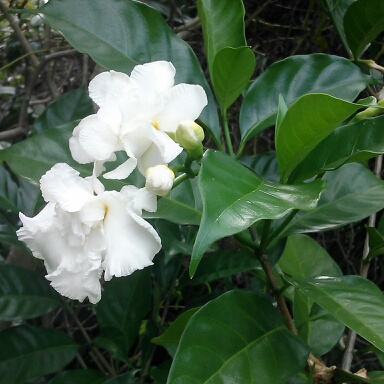
Florida Gardenia

Florida Gardenia

This is the first pleasant fragrance I noted after buying our house in South Florida. The existing landscape (I use that term very loosely) would (and had) sent most people running screaming from our neighborhood. The house had been vacant for 6 or 8 months and I doubt anyone had been in the backyard for several years.

The side and rear property lines were overrun with Brazilian Pepper. For you non-Floridians, this is the weed tree, the bane of South Florida. Cheerfully imported by someone who did not realize they had opened Pandora’s Box. This plant can grow 10 feet in a year and overruns nearly anything in its path.

One very late night I was in the back yard with my ancient greyhound and noticed a delightful smell. I knew it wasn’t the dog so I decided to investigate the next day. I found a plant that looked like a Gardenia with the foliage Xerox enlarged and the white flowers reduced in size a bit and in groups. Very nice dark foliage with a coarse texture and a very nice fragrance, especially at night. 

We have managed to get rid of most of the Pepper trees and I cut the Florida Gardenia back pretty hard after I unearthed it from the Pepper. It is (I think) going to be a 8 or so foot tall tree form shrub. 

It turns out this is not really a Gardenia at all but a member of the Dogbane family from India and a relative of Frangipani. True Gardenias are members of the Coffee family and relatives of the native Wild Coffee in Florida. More fun facts to know and tell.

Having suffered alongside Gardenias and Dwarf Gardenias in my garden in Atlanta, Death and puniness by cold, fungus, mold, flies and sheer perversity. I am doubtful I would have planted any on the Treasure Coast. Given the area this shrub is growing in (no irrigation and overrun with Pepper) and all I have done is cut this back; I am thinking this is a pretty tough shrub; I have decided to work on the pruning a bit, maybe feed it and see what happens

Miniata Bromeliad-Aechmea miniata

Miniata Bromeliad flowers

Flowers

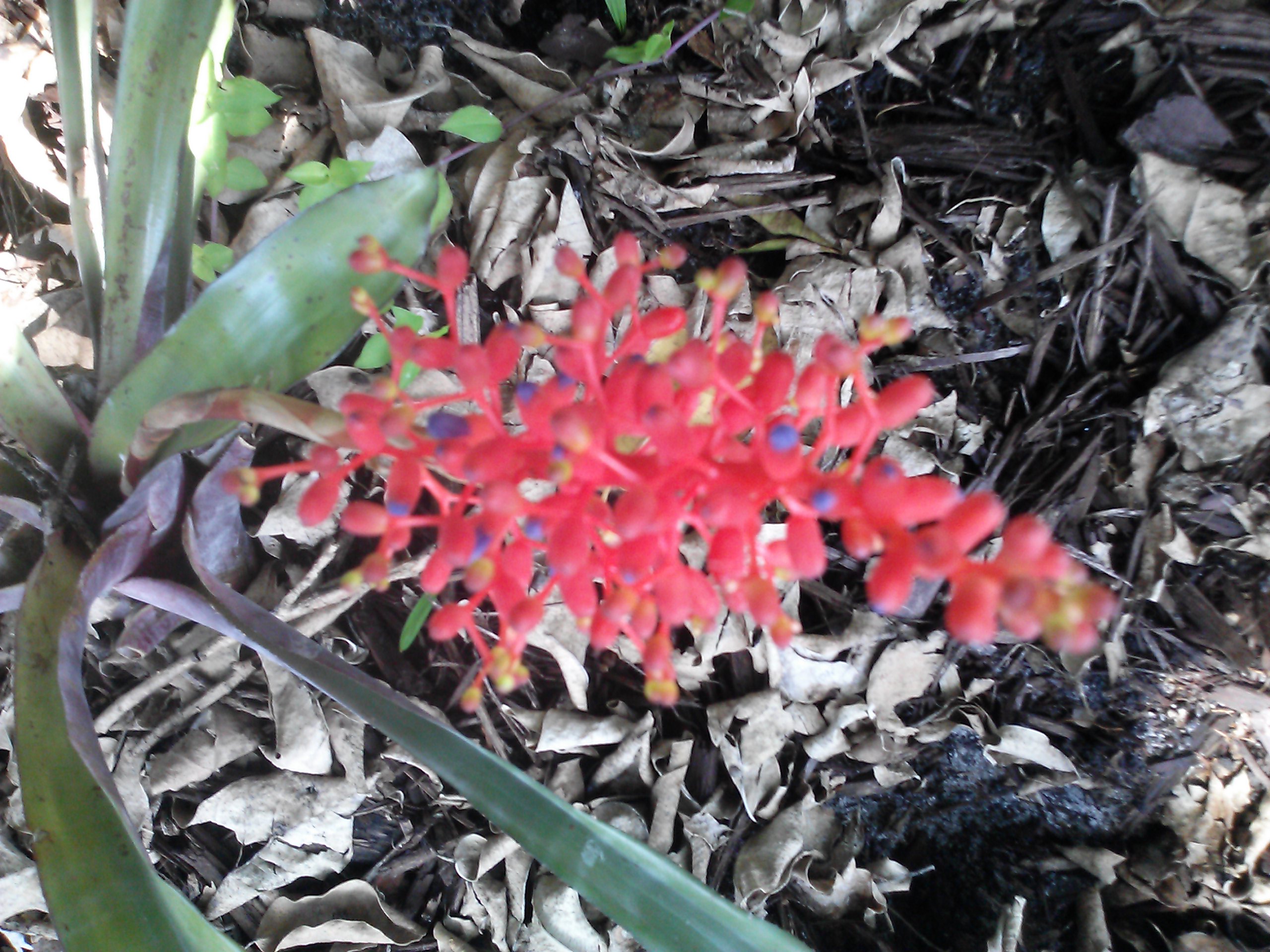
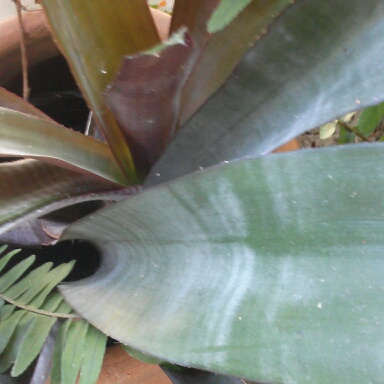
These are currently blooming in my garden and have been for a week or so. The flowers look a bit like a panicle of red hots with a few touches of periwinkle blue. In the realm of Bromeliads, these are terrestrial, which means they root in the soil, and they have tanks, botanically speaking, the leaves form a rosette creating a reservoir in the center of the plant that holds water and traps various insects and debris feeding the bromeliad. The image below is looking down into the tank. The foliage has a nice grey green variation and is attractive year round.

 Foliage and Tank

The tanks are a bit of a maintenance chore sometimes because they trap more junk than you would think. I have some tongs to fish debris out and then I usually put some BT granules in to discourage any mosquitoes from hatching out.

The plant itself ends up about 18 x 18″ , so it is a nice size for addition to a shady perennial bed. These have reliably reproduced one or two pups per year, so not really invasive, but they are living among friends now.

The Dreaded Lubber Grasshopper


Lubber on a Cross Tie

Lubber on a Cross Tie


Here is another joy of living on the peninsula known as Florida. The Lubber Grasshoppers. The first one of these I saw was another one of those “What the hell is that?” moments. Grasshoppers, in my experience were about maybe 3″ long. These things are biblical plague sized and seemingly armored with orange and yellow warpaint as well. Scary looking and they can eat an astonishing number of holes in your favorite plants to boot.

Eventually, even if you hate to, you will squish these things. I was walking my spotted hound, Charles, the other night and one of my neighbors was throwing things in the shrubbery whilst loudly apologizing to God. I knew what she was doing immediately. Squashing Lubbers, the crunch gives it away. Another neighbor’s theory is that karma gets you instantly when you squish one of the grasshoppers because of the smell they exude when crushed.

My curiosity aroused, I checked into this. It seems Lubbers have a gland that exudes a toxin that is poisonous to most things that might eat them. One bird, a Loggerhead Shrike, bites their heads off, (the poison is in the middle) impales them on something thorny or a fence, lets the poison dry out and then eats the grasshopper. This explained the decapitated grasshopper I found in my Pygmy Date Palm. Unfortunately, the bird never came back to finish his or her lunch.

To the misfortune of my Heliconias the Lubbers have found them apparently Heliconia leaves are a gourmet treat. When I first read about these bugs it was recommended to drown them in a bucket of soapy water. I tried that, but it seemed unnecessarily cruel and I ended up with a bucket of dead, soapy grasshoppers that I had to figure out what to do with. Ugh. A better solution is an old pair of tongs, crunch and throw them in the bushes. Maybe a Shrike will find them.


Rain Lilies – Zephyranthes rosea

Rain Lilies

Rain Lilies


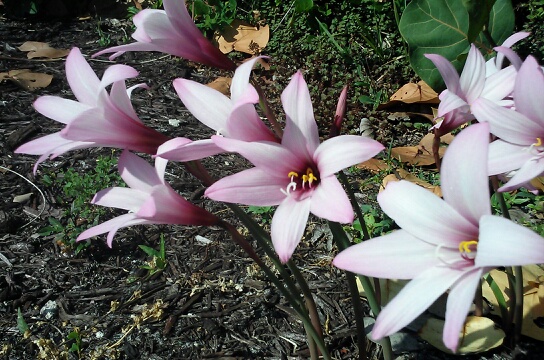
It rained here on Sunday. An inch or so. This morning I walked out in my front yard to find these blooming for the second time in a month. Rain Lilies, I had these in my garden in Atlanta and they bloomed maybe every five years. It was a real event. And actually a different kind of Rain Lily.

After a bit of research I find there are many kinds of Zephyranthes, 71 according to Wikipedia. I believe these are the rosea variety. Well, they are pink..I bought them at a garage sale nearby, so they could really be from anywhere. The native species in Florida is the Atamasco Lily; this lily has white flowers and occurs in low, swampy areas. As I live on a gigantic sand dune I don’t think I will be seeing any of those around here.

The latin for these plants is Zephyranthes, named after the Greek God of the West Wind. Interesting considering the rain is what makes them bloom.

These are about 12 inches tall and have grass like (really strap like) foliage my husband mistakenly weed whacked. After that it rained and they started blooming. This is my kind of a plant. Takes a licking and pops up with flowers. They will reseed in the garden but so far it has not been a problem but a nice surprise.