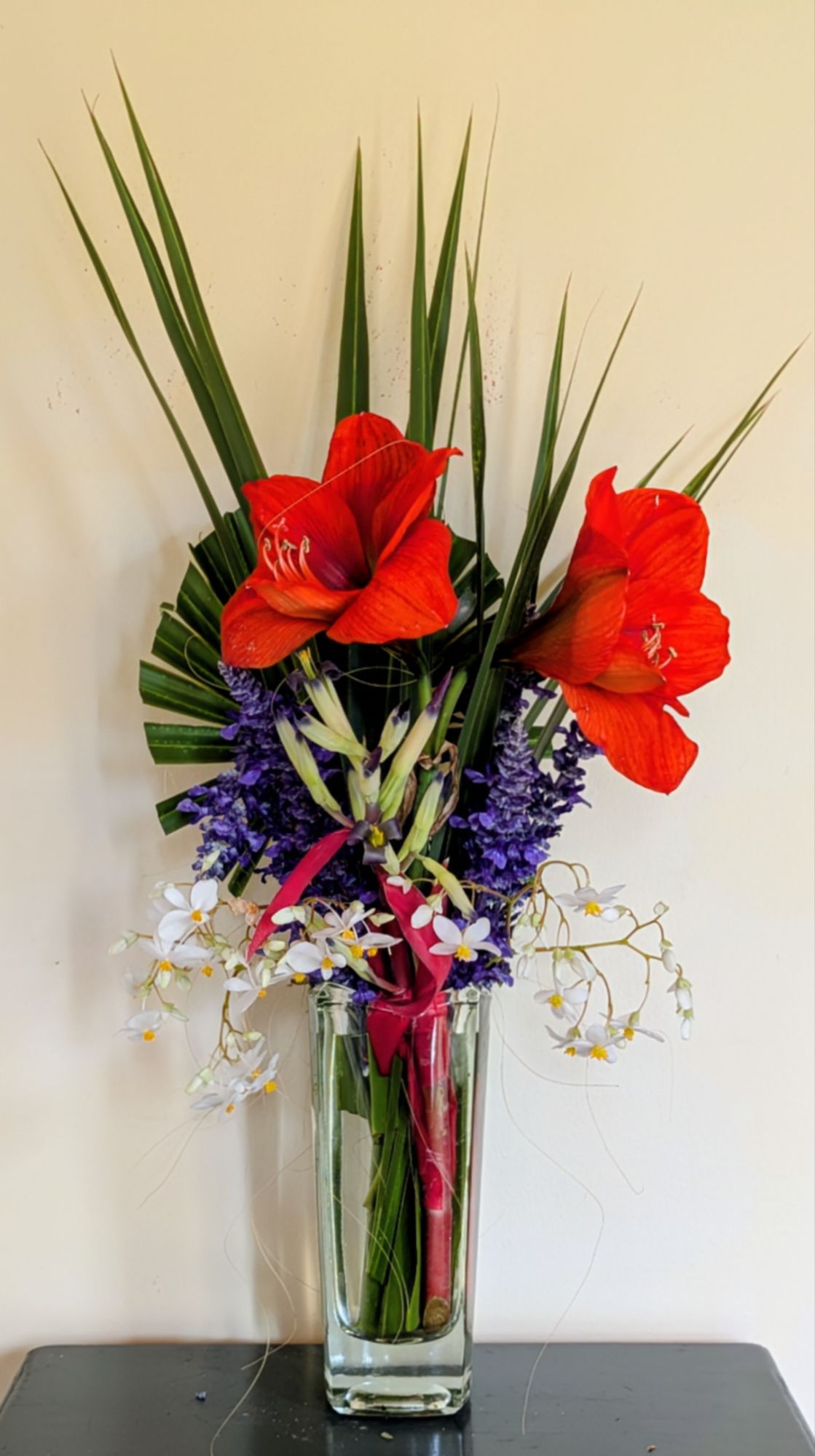
In a Vase on Monday – Harvest Cobbler

There are still some unresolved seasonal dilemmas I have to cope with living in South Florida. It’s Thanksgiving in the US this week and I need a harvest themed arrangement with berries and fall color. No funky tropicals, just some fall color. The hunt was on!

After rooting around in the garden I realized a little compromise was required. Fall color is not found in deciduous trees here, but other plants – and berries we have. The basket was located and snipping began.

A closer view:

wp-17639350389801580046385890601920

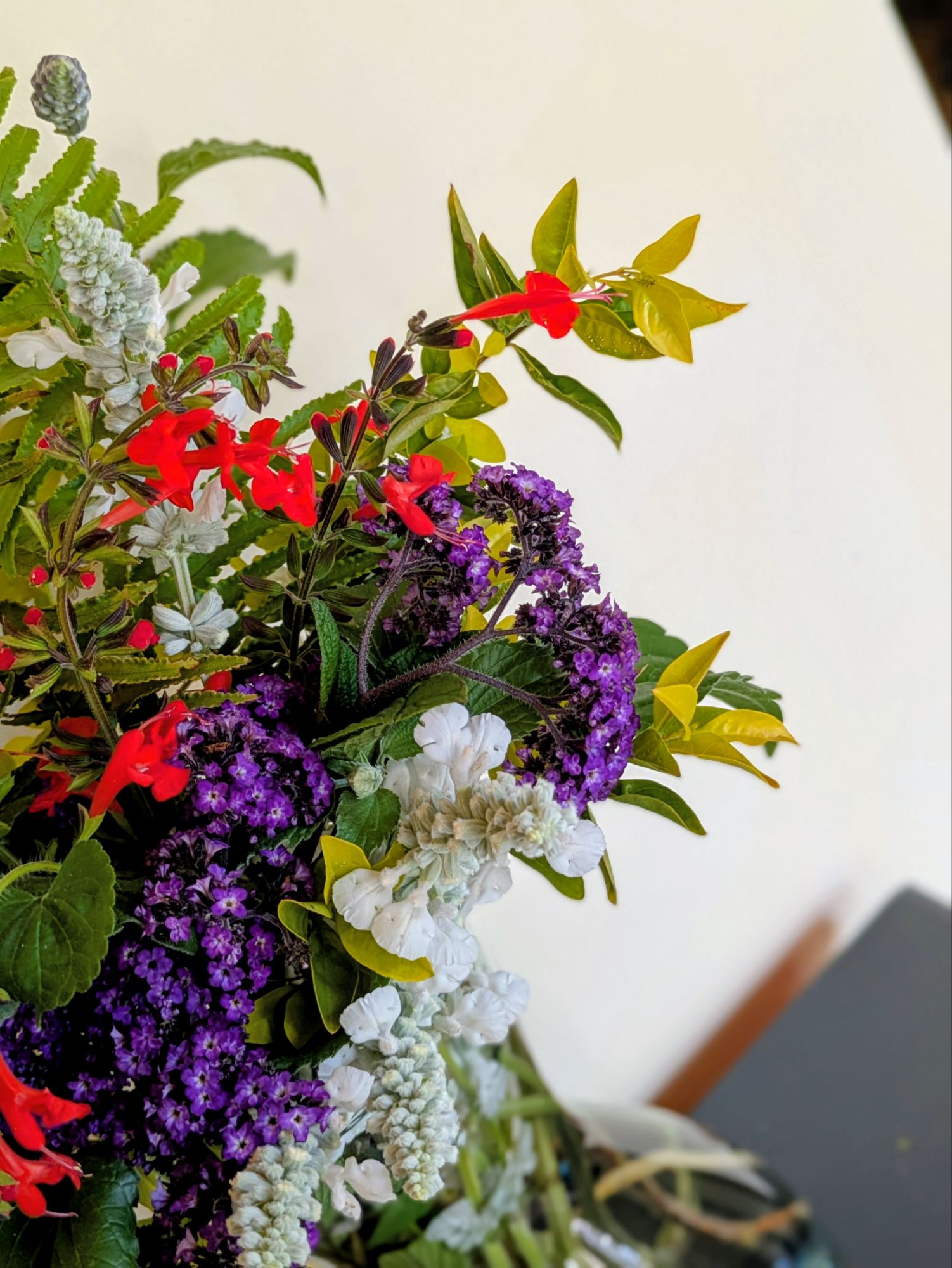
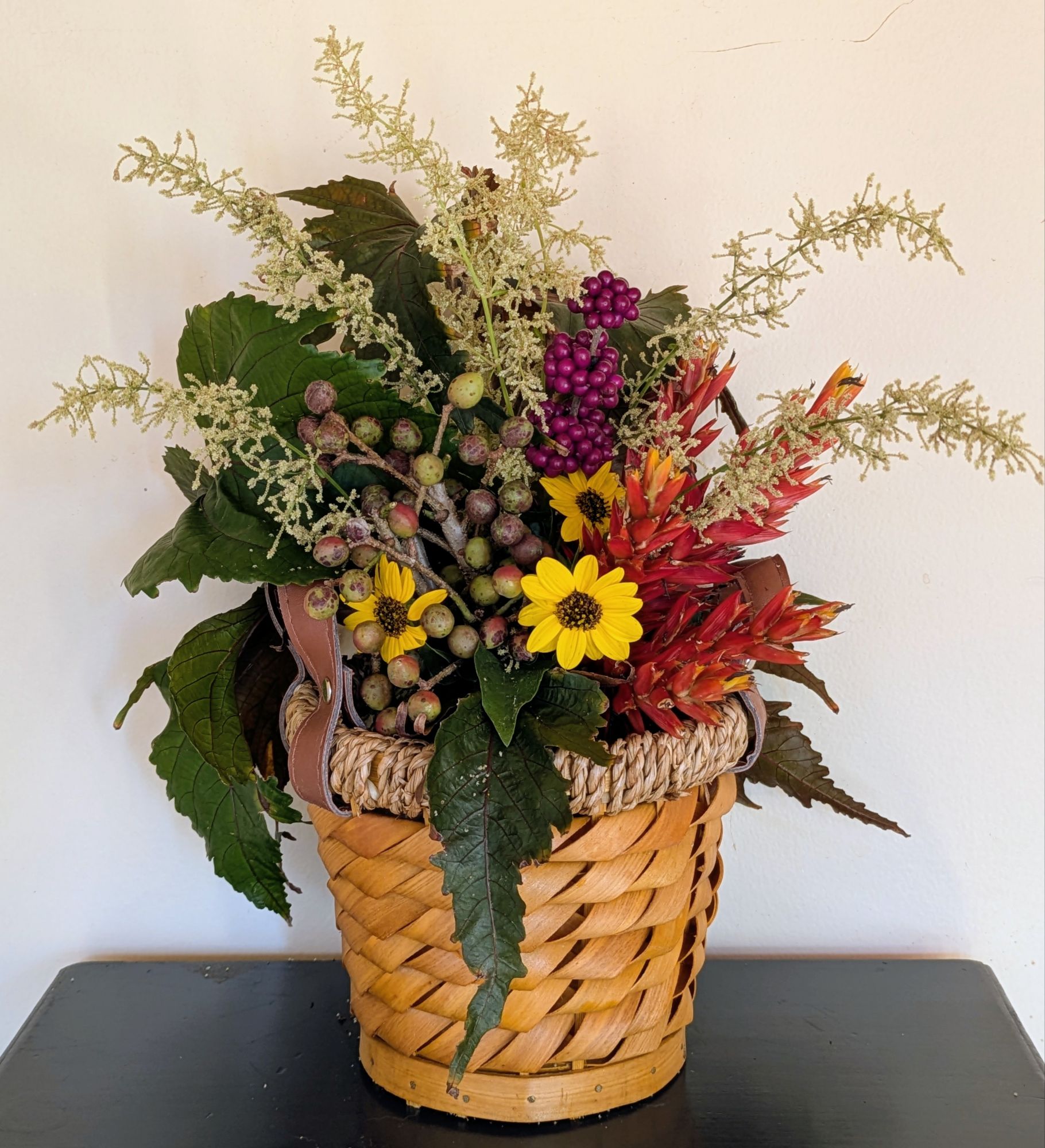
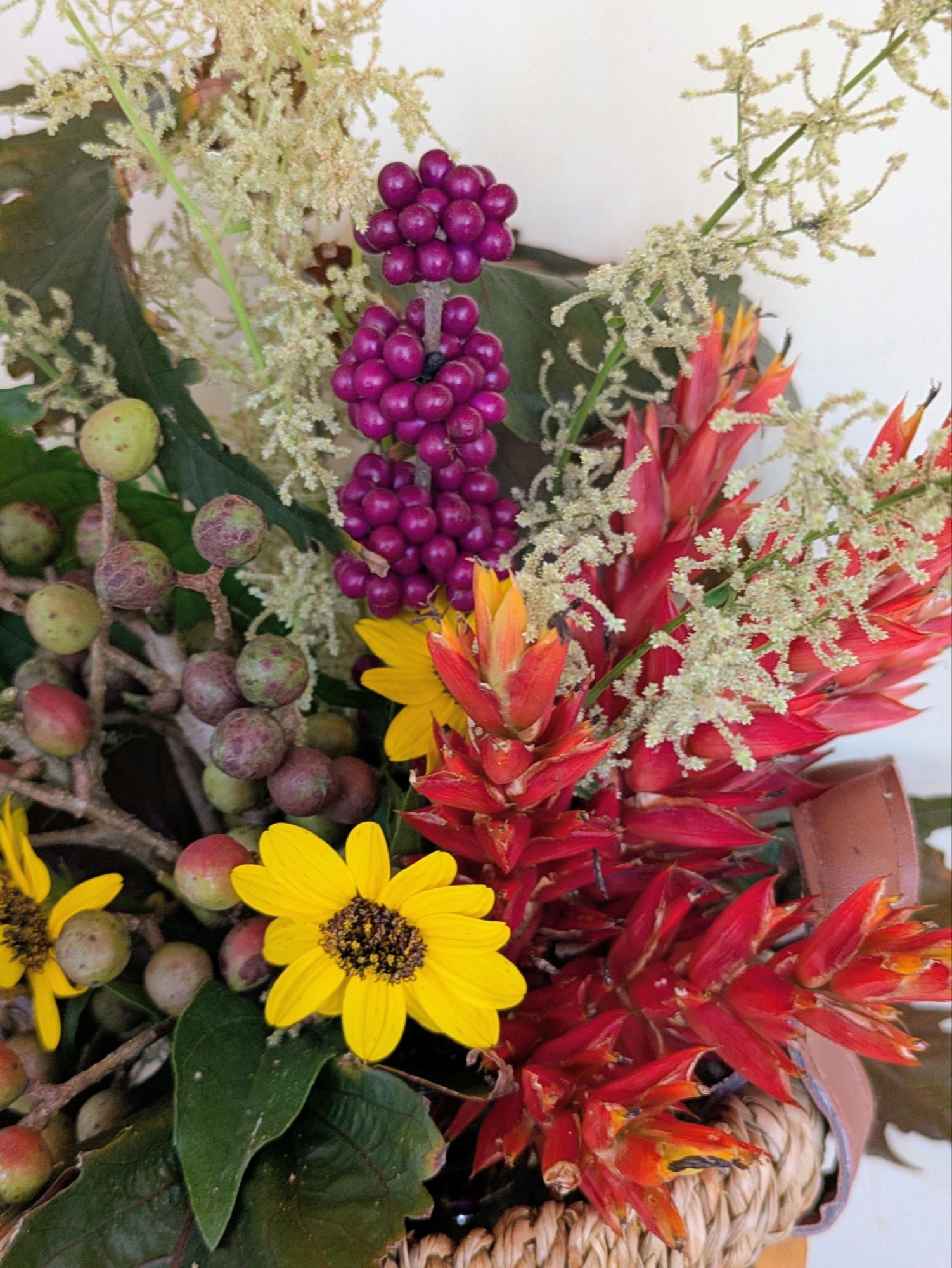
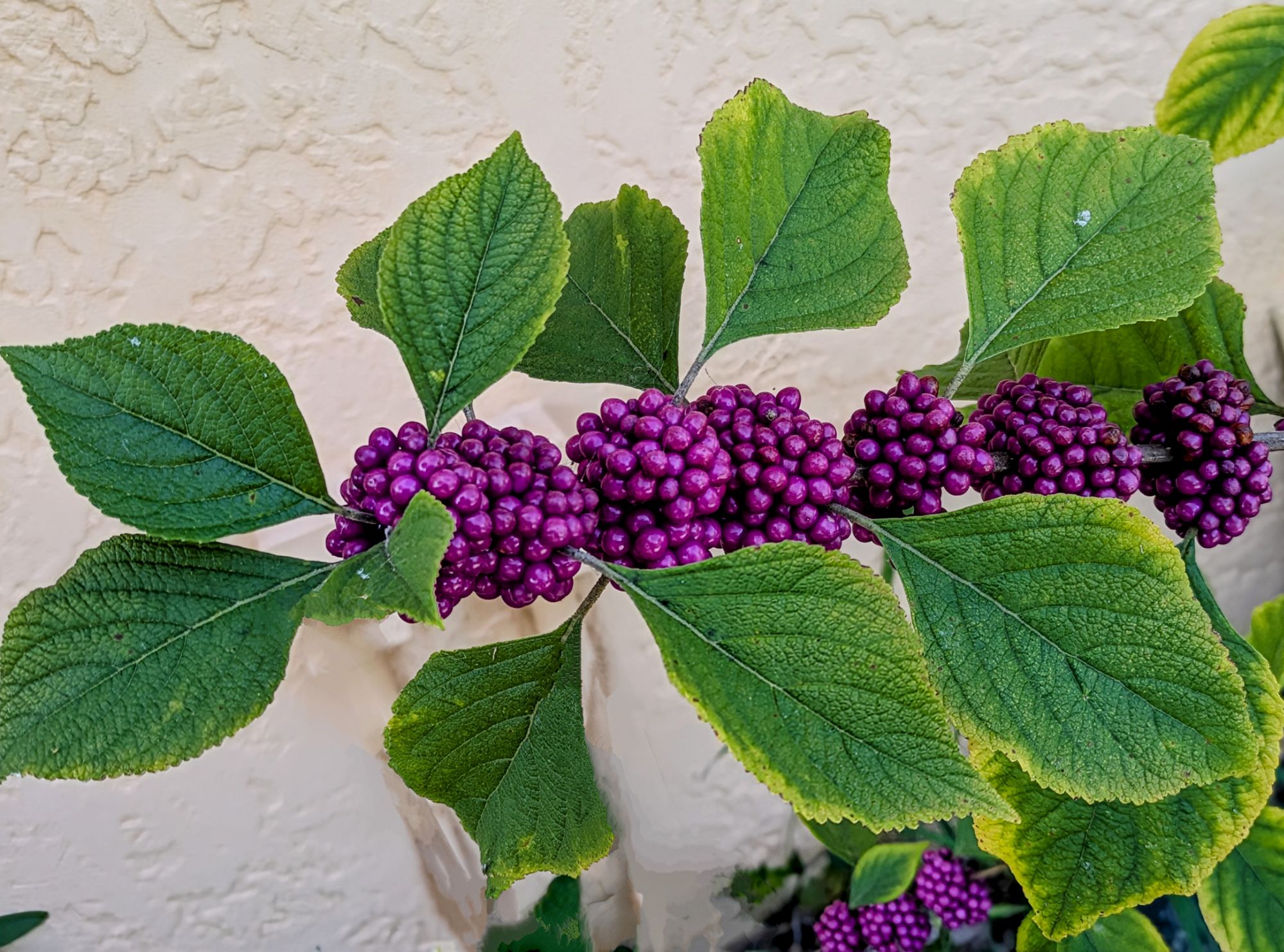
The fall color compromise is displayed in its full glory. The rusty red Aechmea rubens flower. Yellow flowers are Beach Sunflowers (Helianthus debilis). Purple berries are from the Beautyberry (Calliocarpa americana).

Another view:

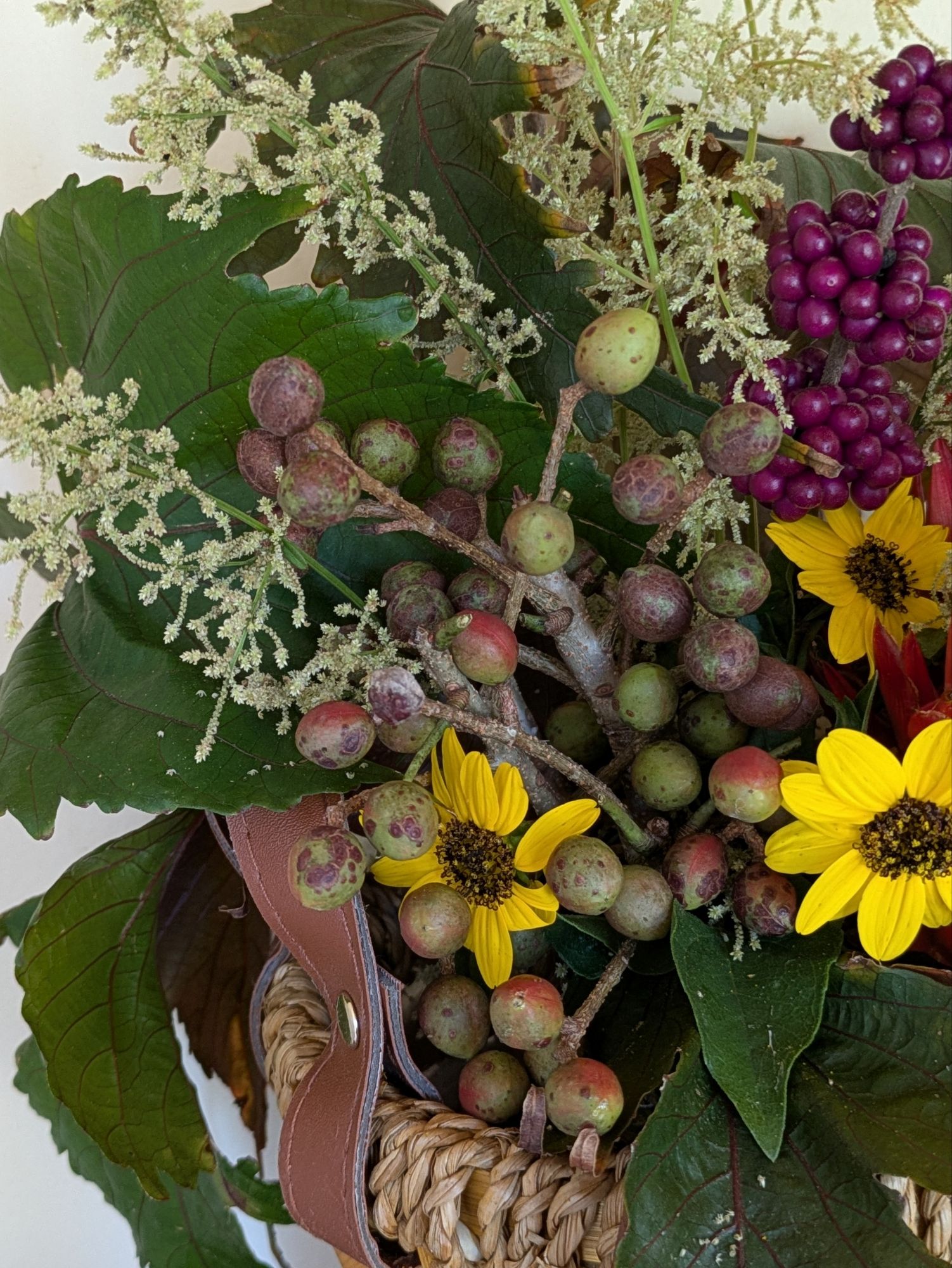
Berries are from the Gumbo Limbo (Bursea simaruba) you can’t get much more tropical than that. The (I use the term loosely) fall leaves are from a Raggedy Ann Copperleaf (Acalphya wilkesiana)

White filler flowers are Juba Bush (Iresine diffusa) my fall favorite.

I think my Thanksgiving arrangement has been cobbled together without tropical vibes. I can go forth and thaw my turkey and make cranberry relish in peace now. Happy Thanksgiving to my American counterparts.

In the United States, Thanksgiving is about expressing gratitude and thanking those who have helped us. Some of you know I have been arguing with Inflammatory Breast Cancer for the past four years and it is truly difficult for me to express my gratitude for having my blog community as an escape from the grind of the process. I detest the warrior/battle ethos. And pink for the most part.

Here is a link for more info. There are groups in the UK, Canada and Australia https://theibcnetwork.org/

So, Thank You.

And thanks to Cathy for hosting this sanity saving meme! (my sanity) Follow the link to her blog to see other vases. RamblingintheGarden

In a Vase on Monday – Tempest in a Teapot

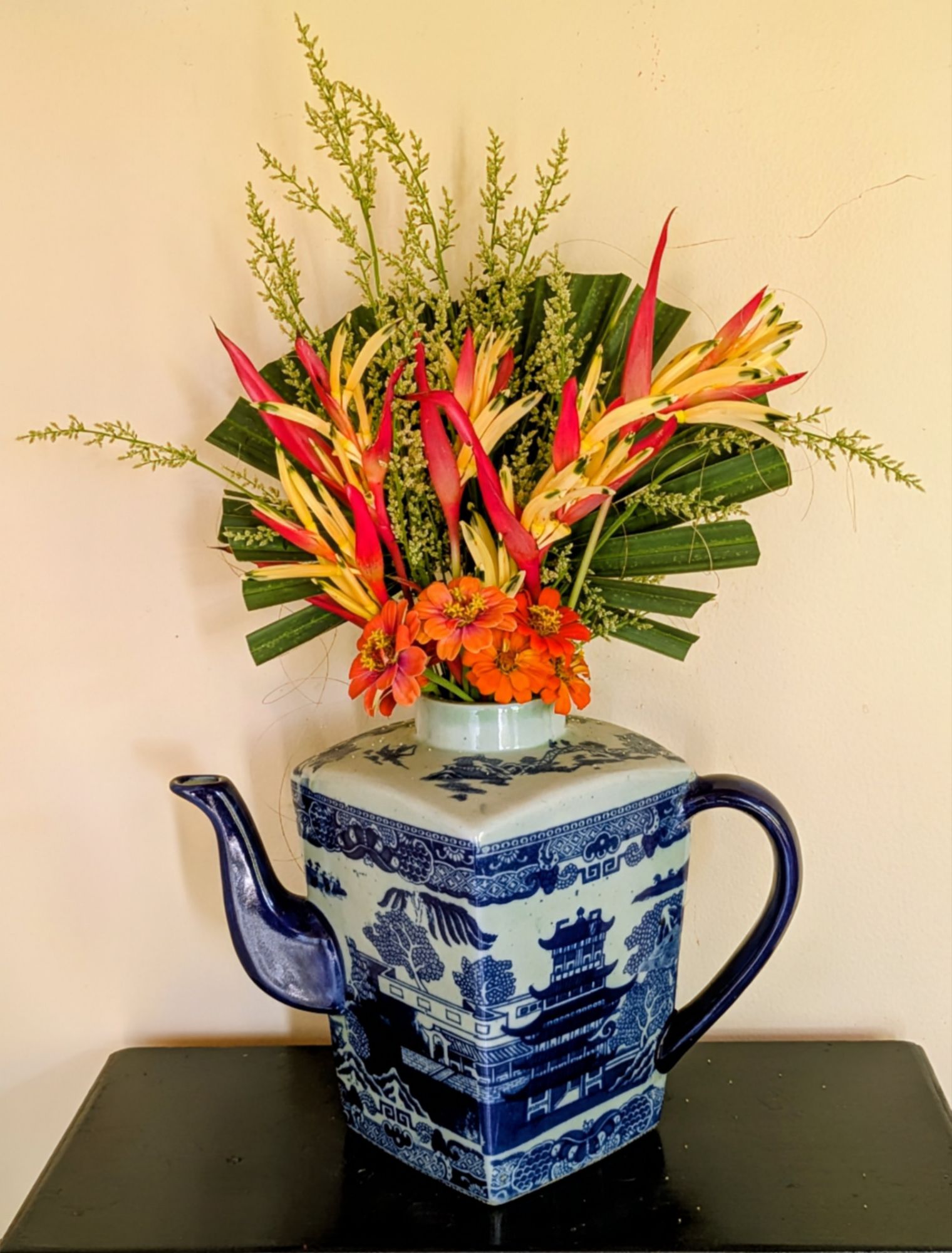
It seems like there is a lot going on in my Blue Willow teapot this Monday.The Parrotflowers are flying, the Juba Bush is swaying and the Zinnias are celebrating their escape from the leaf cutting bees. A lone palm frond holds it all together.

The height of hurricane season has passed, yay! It’s not time to celebrate quite yet as we still have the wind down until the end of November. October is usually more active in the Gulf of Mexico (yep, not changing the name on my blog) I usually start my sigh of relief in mid October and start cleaning the screen porch and setting up the outdoor furniture for winter. We had permanent accordion shutters put on our windows last week so we can be storm ready in a short period of time. That will probably prevent storms for a while!

wp-17596972977362091631263726107409

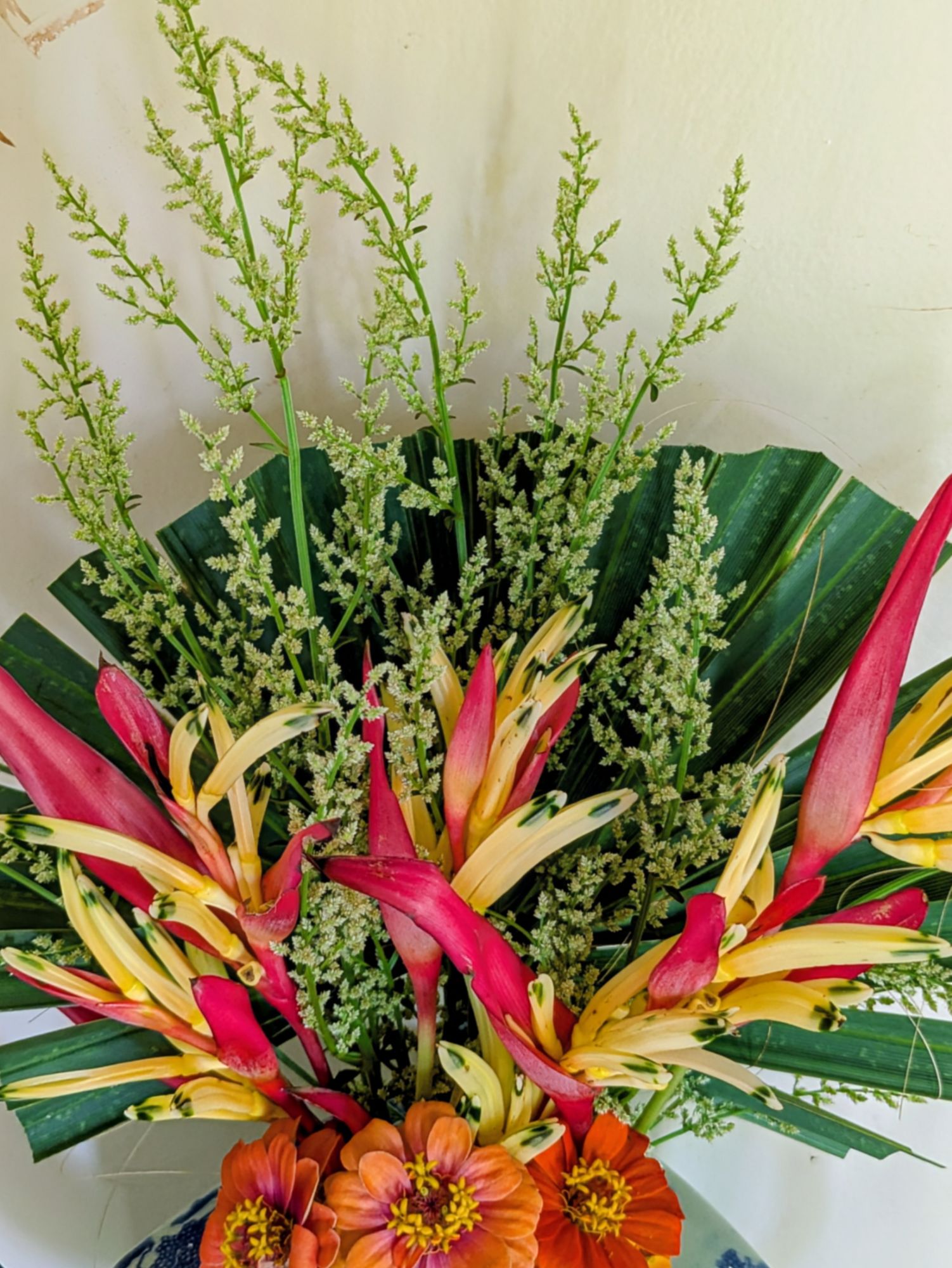
The cream colored flowers are from the Juba Bush (Iresine diffusa). This is a lightly fragrant native wildflower that has a mind of its own and shows up uninvited. I have no idea how to propagate it, but somehow ended up with a spectacular plant beside my porch. It’s named after a Caribbean dance – the Juba as the plant sways gracefully in the wind. The Parrotflower (Heliconia psittacorum) flower when it rains and I have difficulty resisting cutting them, so here they are. The trimmed palm frond is from a Sabal Palm (Palmetto Sabal)

wp-17596977136669080037109591014680

The stalwart Giant Benary Zinnias. We have leaf cutting bees here and they seem to love the zinnias, the bees are even eating the flowers. This is new to me, the flower eating. I’m going to keep watching to see what happens.

That is all from my garden this Monday. Visit Cathy at RamblinintheGarden to join in the fun or view more vases.

Six on Saturday – Future Fruit

Saturday morning finds me in the garden taking pictures to share with the SOS gang that meets at Jim’s Blog Garden Ruminations on a weekly basis. Follow the link to tour other gardens.

I have been planting fruit trees this week. It is hard not to want to grow tropical fruit if you live in South Florida. My collection continues to grow.

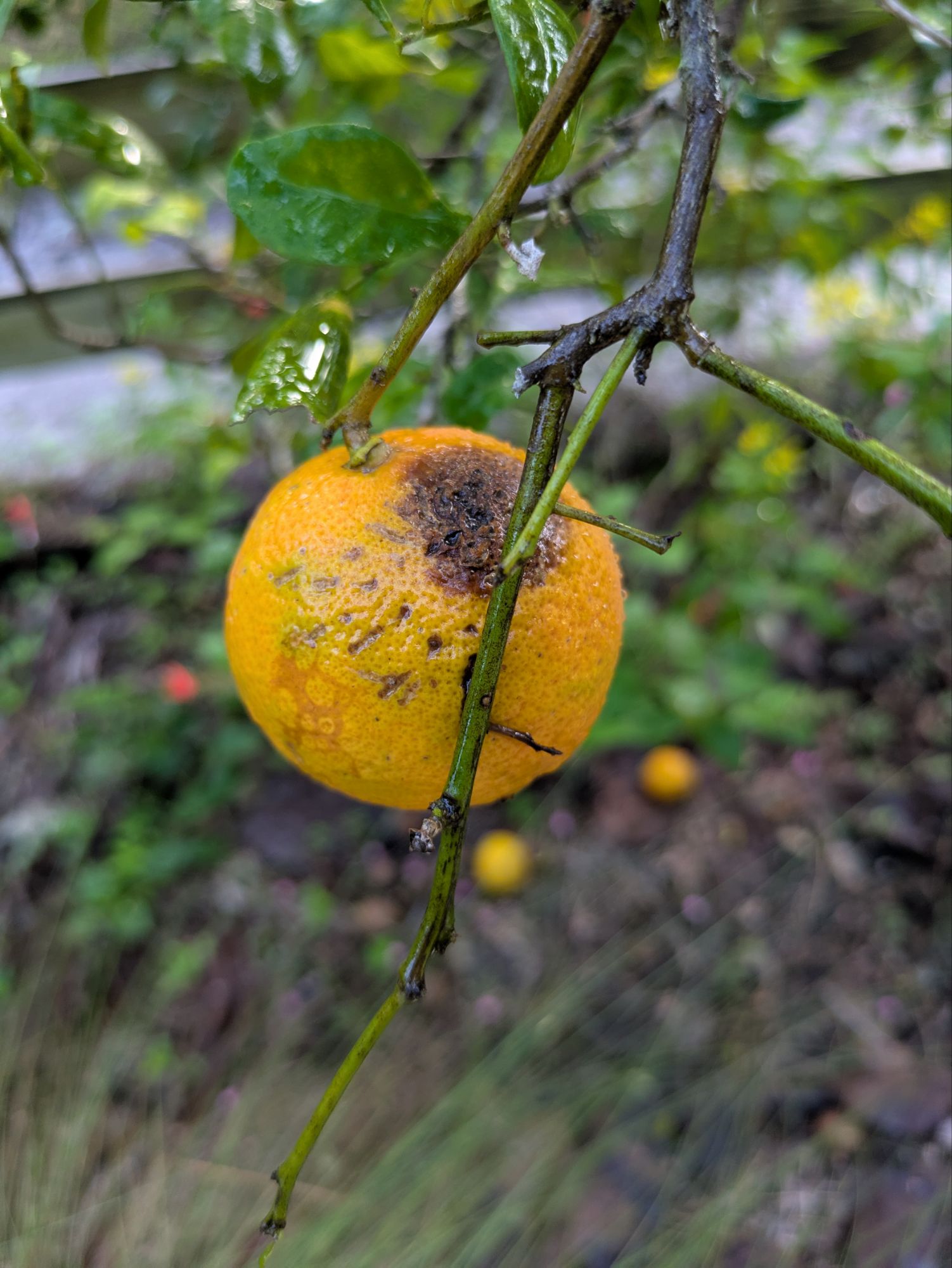
Citrus fruit, especially oranges, has taken a beating from the Asian citrus psyllid. This insect carries the citrus greening disease. This disease basically makes the fruit inedible and then causes the tree to die, affecting the phloem.

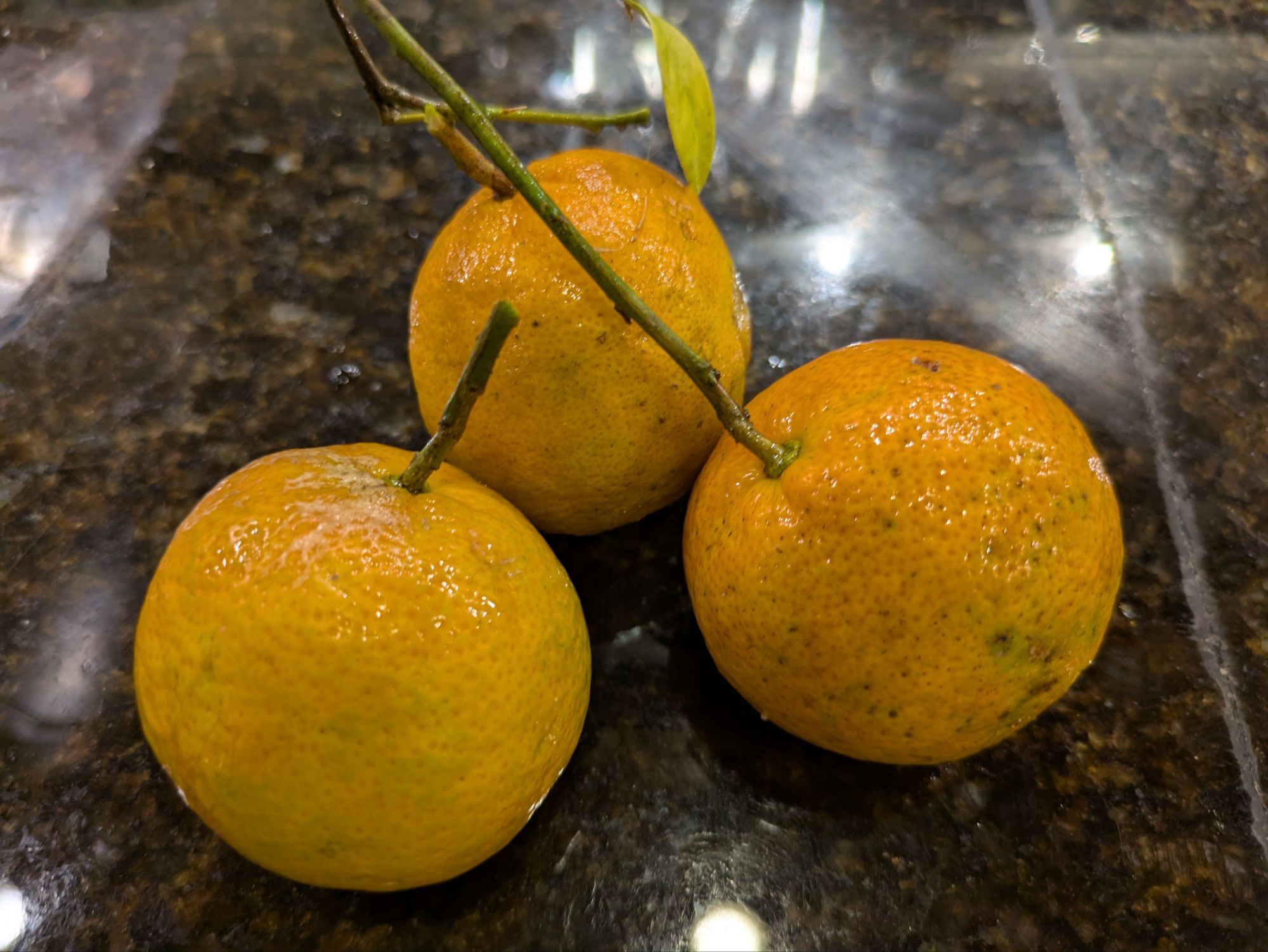
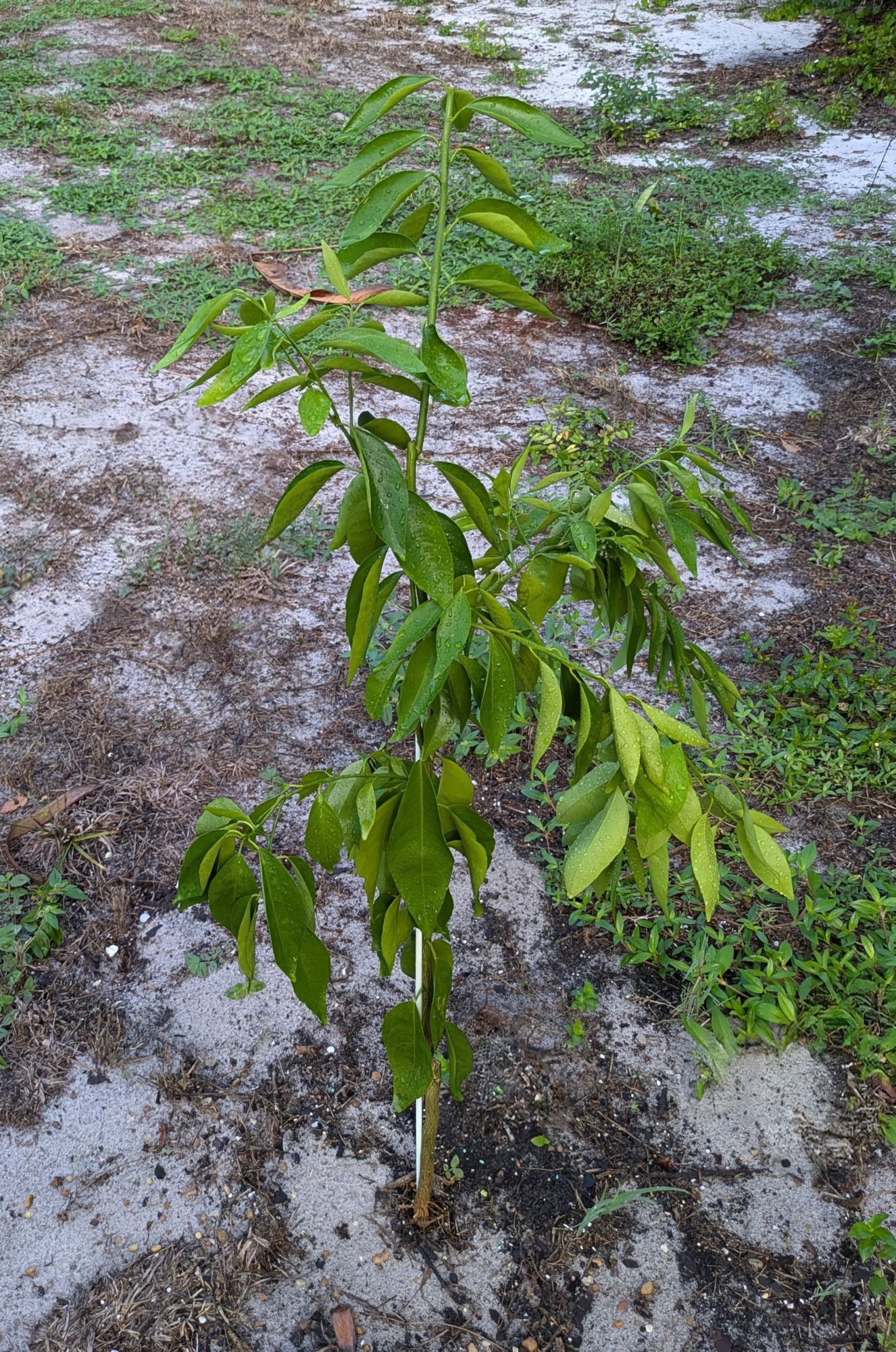
I attended a lecture that included a new variety of mandarin orange, Sugar Belle and a protective device to keep the insects off the tree until it was six feet tall. This variety of citrus is resistant to the psyllid. Here is the tree just planted. I have not installed the cover yet.

wp-1758982124471760248311509075297

I was directed to plant the tree directly in the sand, then water and fertilize the heck out of it. It took a while to get the tree hydrated, but it looks pretty good now so I am going to install the cover.

wp-17589823888492248553975152218485

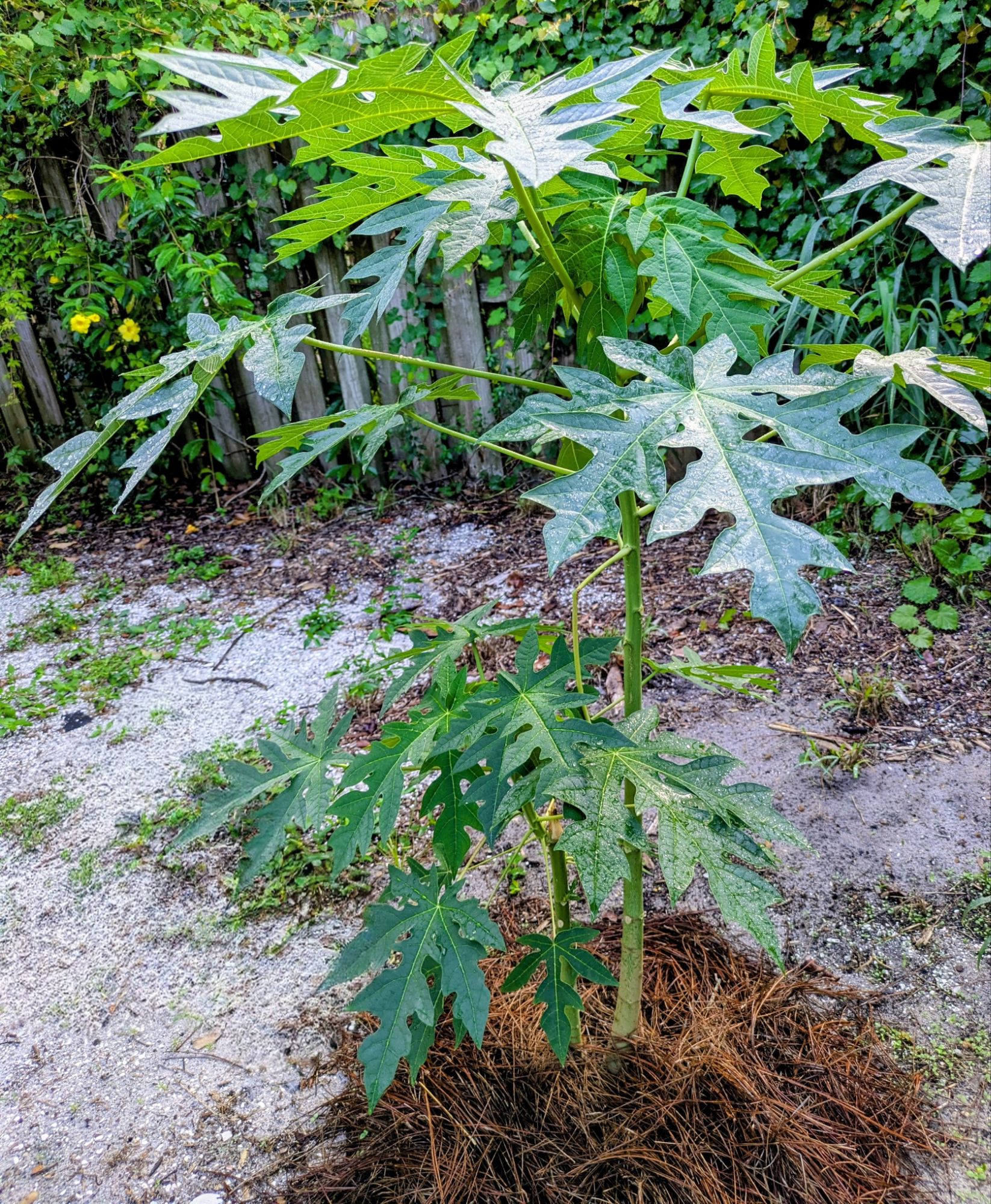
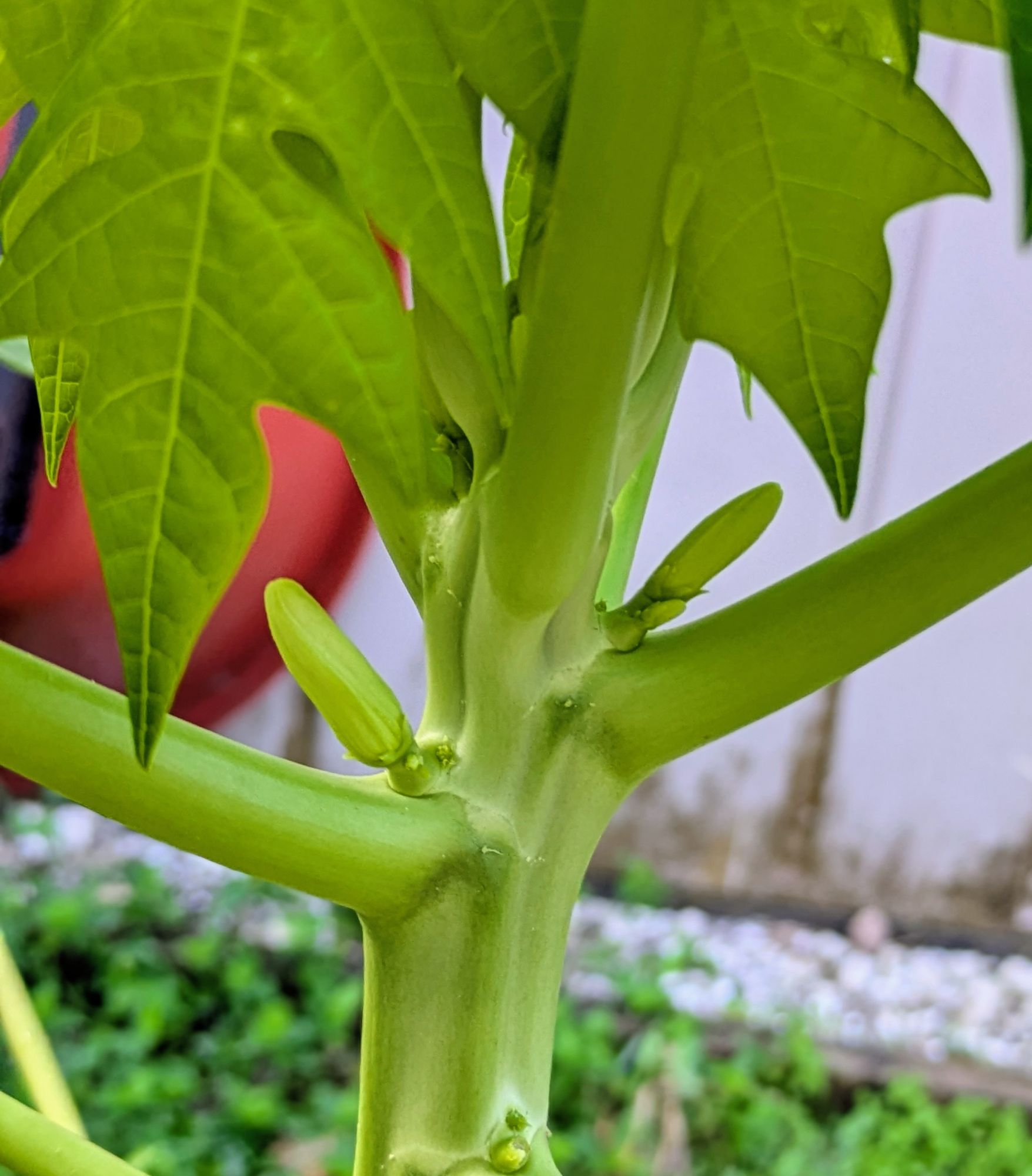
This is a Nemesis Papaya, the name sounds a bit scary. I think it is resistant to nematodes and that is the reason for the name. Papayas bear fruit quickly and the trees don’t last but a few years. I have had several and the fruit is worth it. It already has buds and it takes about four months to get fruit. I am hoping it will self pollinate. This is a hermaphrodite variety, most Papayas are male or female and it can be a trial to get the right two from seed.

wp-17589827220741511129590359674242

Papaya buds. Fingers crossed.

wp-17589828190641584582261013601675

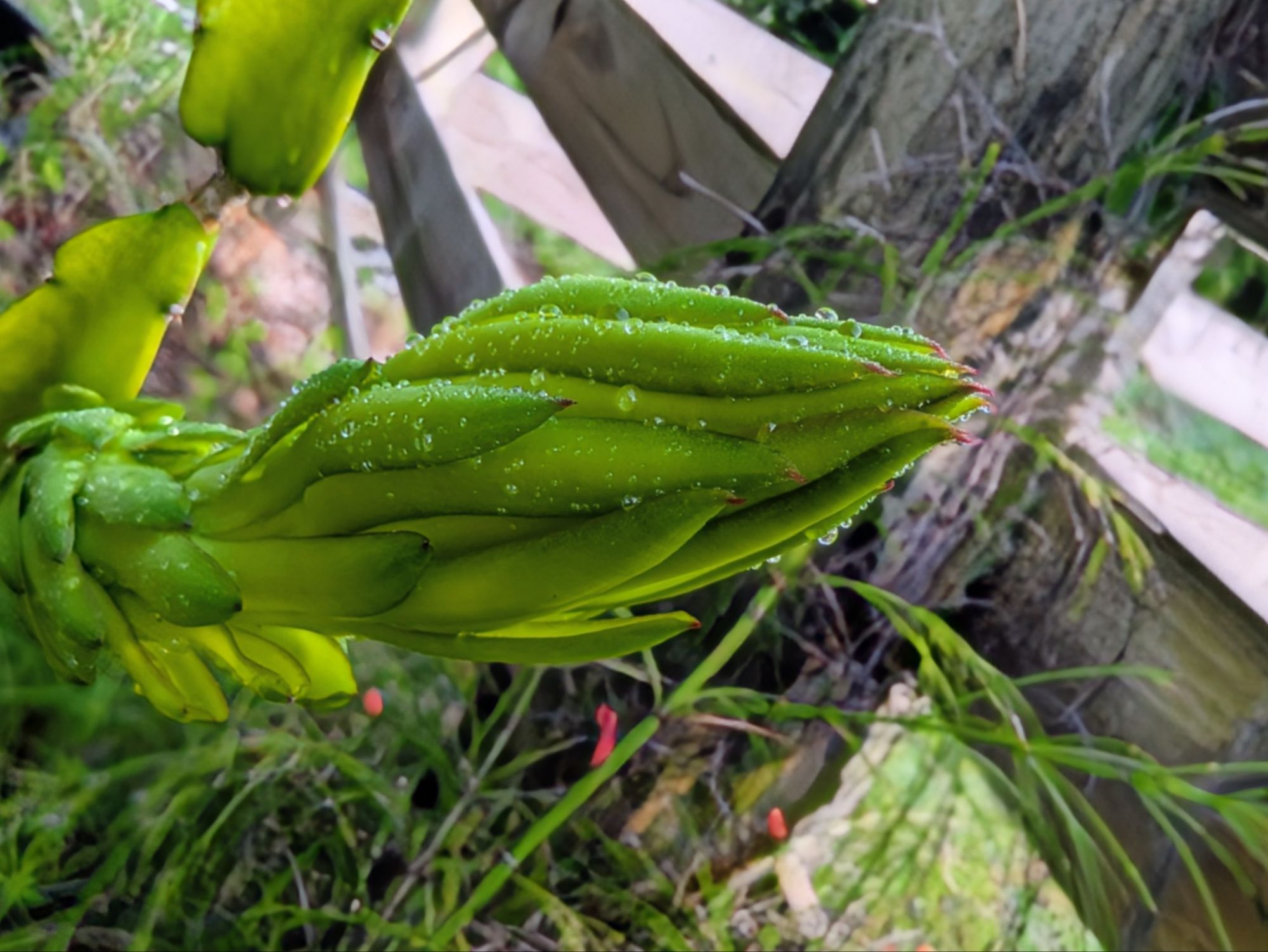
A very nice surprise. The yellow dragonfruit actually set fruit! I have had this for years and many flowers but this is the first fruit. Fingers crossed again.

wp-17589829391656474458373688605109

The Rangpur lime was plagued by lizards trying to suck the juice out of the fruit during our hot and very dry month of August. I had about 50 limes and am down to 10. Still hoping for pies in December.

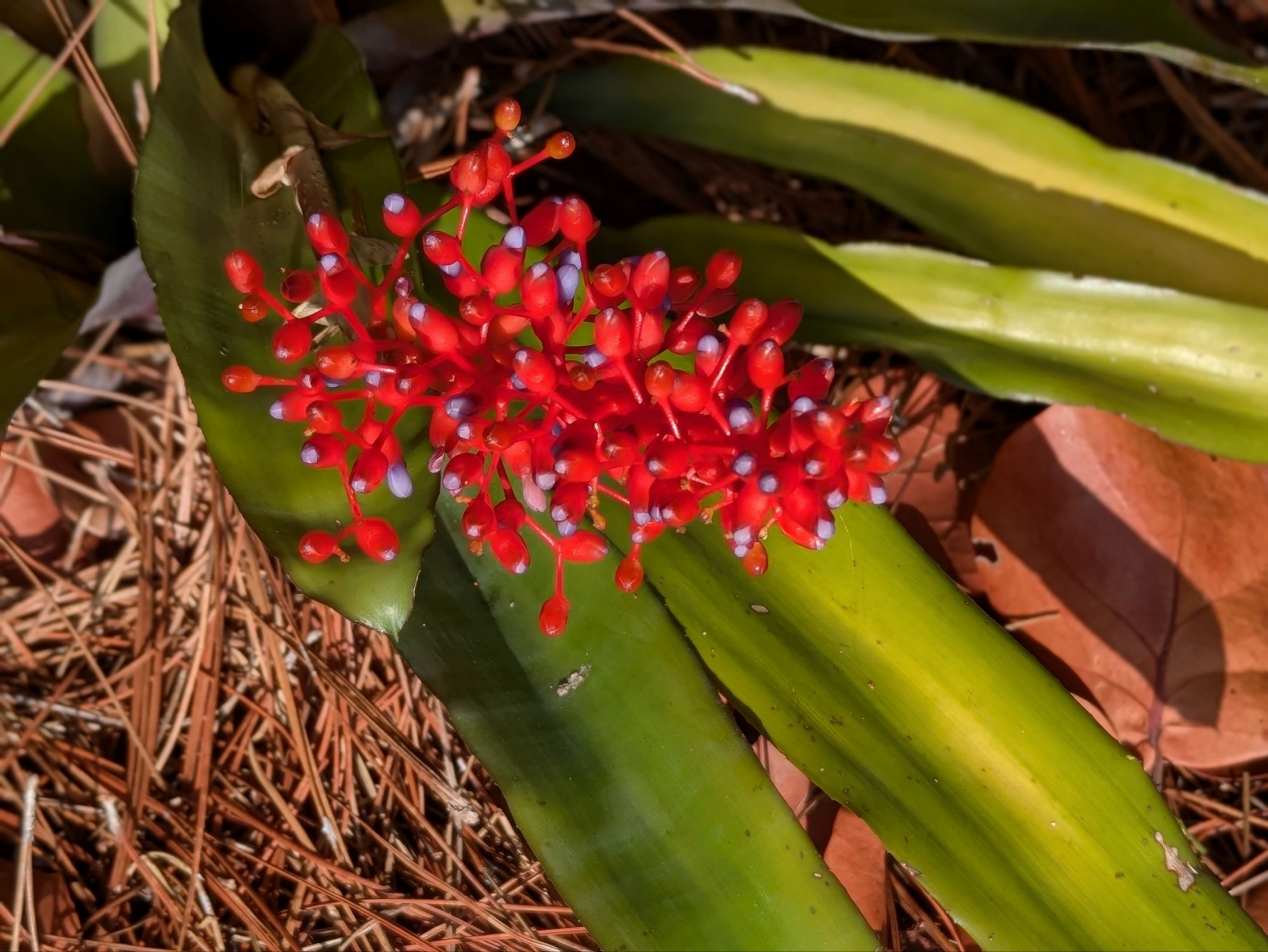
This is a Red Jaboticaba, a nice little shrub from Brazil. These produce a grape like fruit on the trunk. I am not sure how long I have had this, but am still waiting for the fruit! These also are available in tree form and are quite a sight. Clusters of grapes attached to the trunk in swirling patterns. Brazilians make wine from this fruit.

That’s all from my garden this morning. Be advised I am shopping for late season mango trees..Kent or Keitt, any opinions?

Six on Saturday – Return to 6

I haven’t been sixing lately as August was a frying, hot and dry month and the garden was looking dismal. Things are looking up in September. For whatever reason, our late afternoon showers have returned, temperatures are moderating and the plants are much happier. I even went plant shopping!

wp-17571685629035335346086708936076

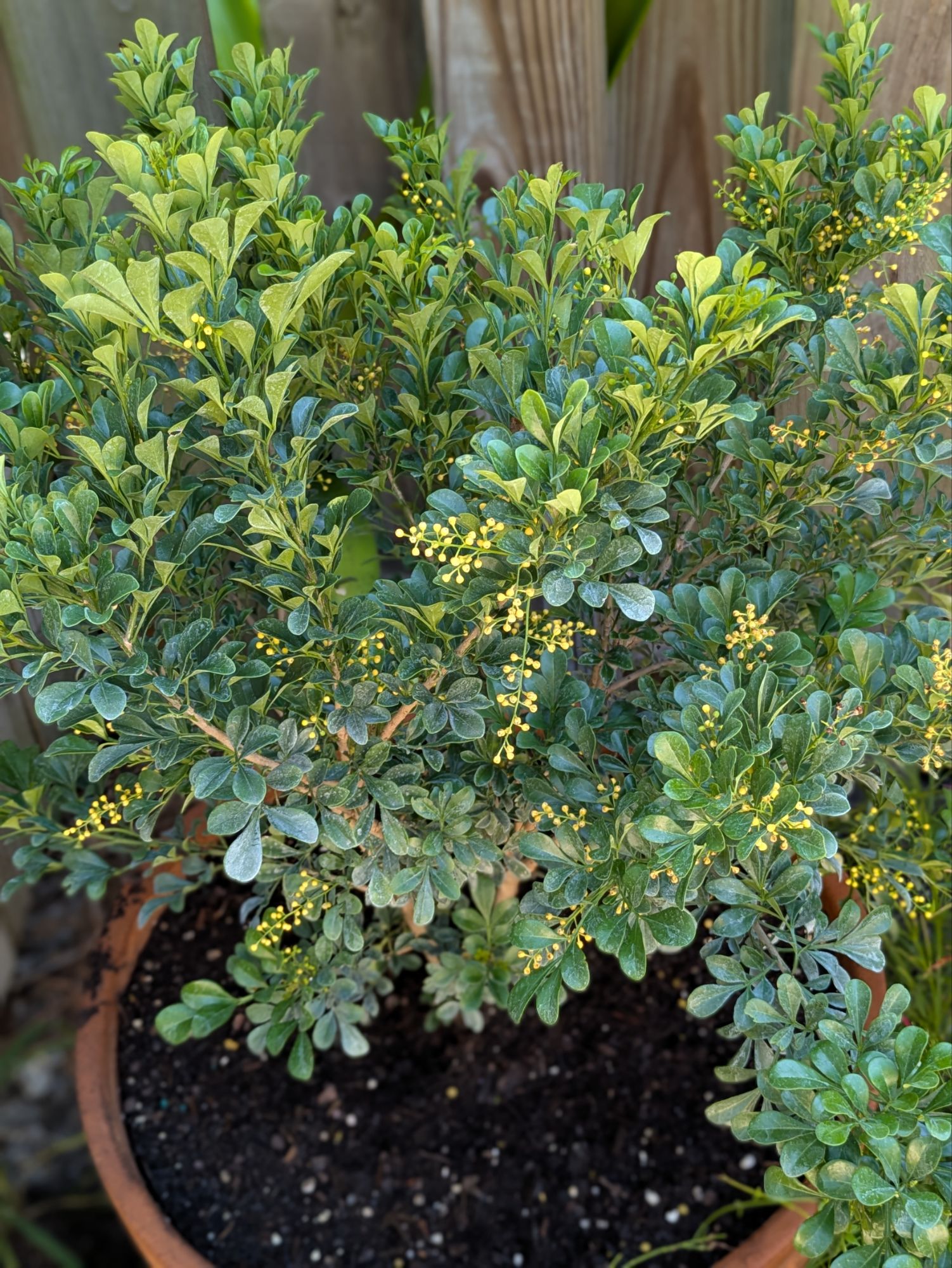
One of my purchases, a Chinese Perfume Tree (Aglaia odorata). These are the flowers. I love the scent. The nursery did an excellent job of marketing, having the shrubs here and there so you wondered ‘what is that lovely fragrance’? It’s lemony and reminds me of Southern Magnolias (Magnolia grandiflora)

wp-1757168770596903303947143791922

Here is the Chinese Perfume Tree. I planted it in a big terracotta pot as it seems they like some moisture. I am very hopeful this works and the shrub thrives. The soil in the garden is probably too well drained to sustain this plant.

New growth in the succulent containers. The Haworthias, now green, were brown through August. Grey plants are Graptosedums.

wp-17571692039337722063924598973516

Rejuvenated Tropical Red Salvia (Salvia coccinea) This reseeds freely in the garden to the point of needing to be thinned.

wp-17571694071354142211860547733724

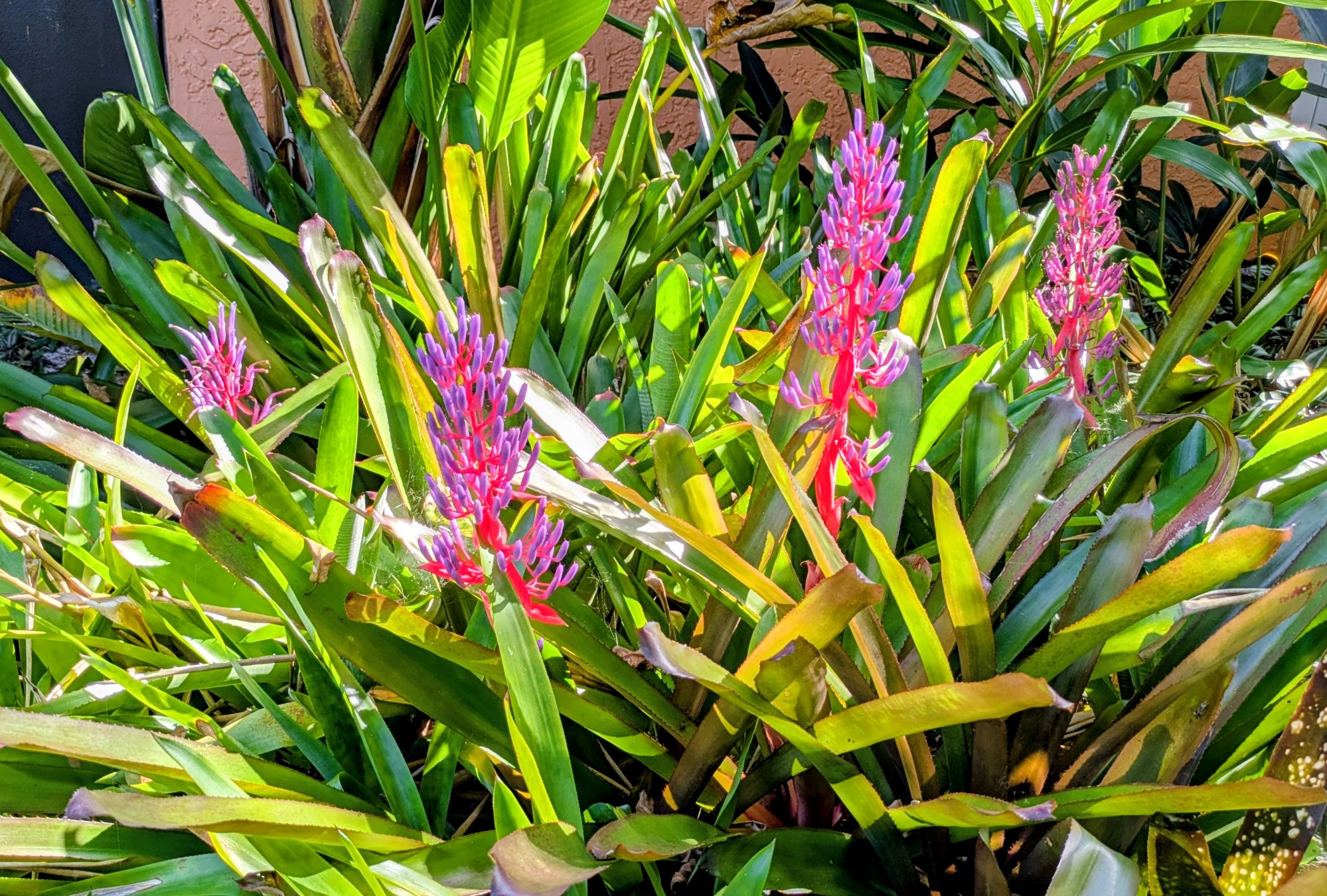
‘Little Harv’ Aechmea Bromeliad in full bloom.

wp-17571695069544801748625884847785

A little fall color and masses of purple berries on the Beautyberry (Calliocarpa americana)

That’s all from my garden this week. Visit Jim’s blog GardenRuminations to see more SOS posts.

Happy Fall Y’all!!

In a Vase on Monday – Sirius Survivors

wp-17536401381537041945189114663262

We are deeply entrenched in the dog days of summer in my garden. Some Saharan dust meandered in and shut down our cooling clouds and showers. Every time I look at the weather it says “feels like 108 F” Surprisingly, it is much warmer further north. I feel fortunate to live close enough to the Atlantic Ocean to catch a breeze. The breezes make it less hot, not cooler!

The dog star, Sirius, rises during the hottest part of the summer. Modern definitions of the dog days of summer have them occurring from July 11-August 3. The scope must be greatly expanded for South Florida! In ancient times the dog days lasted longer. I agree with the ancient philosophers. It is hot in my garden well past the first of September.

The flowers in this vase are Sirius or even serious survivors. Thriving in sun and heat and going with or without hand watering by the fickle gardener they still shine.

The fittest:

wp-17536435069965831624130163653886

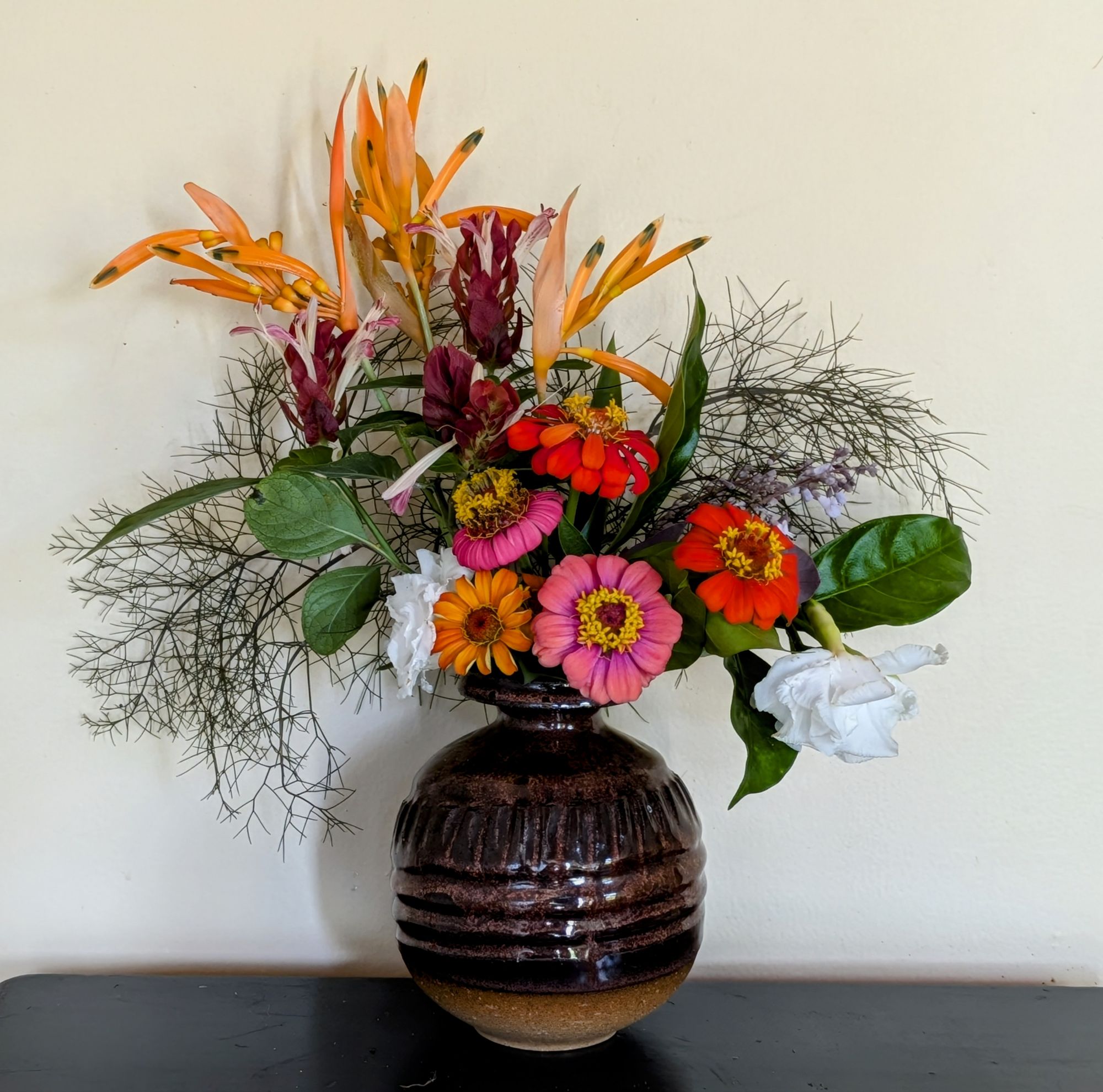
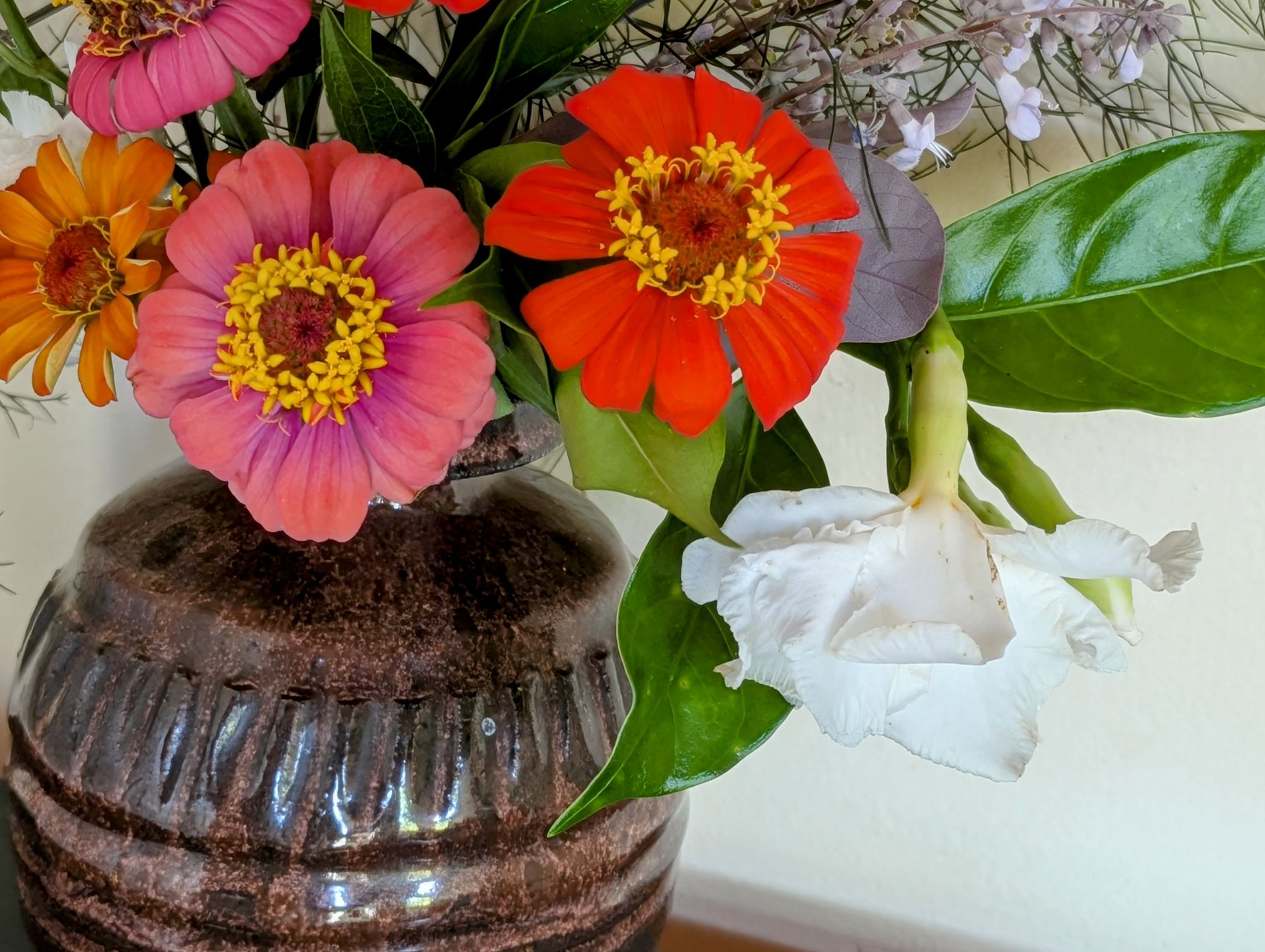
Some tried and true summer favorites, Gardenias and Zinnias. Gardenias are the Tropical variety that is deciduous here, Tabernaemontana diviricata. Zinnias are grown from seed I saved last year hoping for pink and orange flowers.

The tropical part:

wp-17536437549887614784228876706670

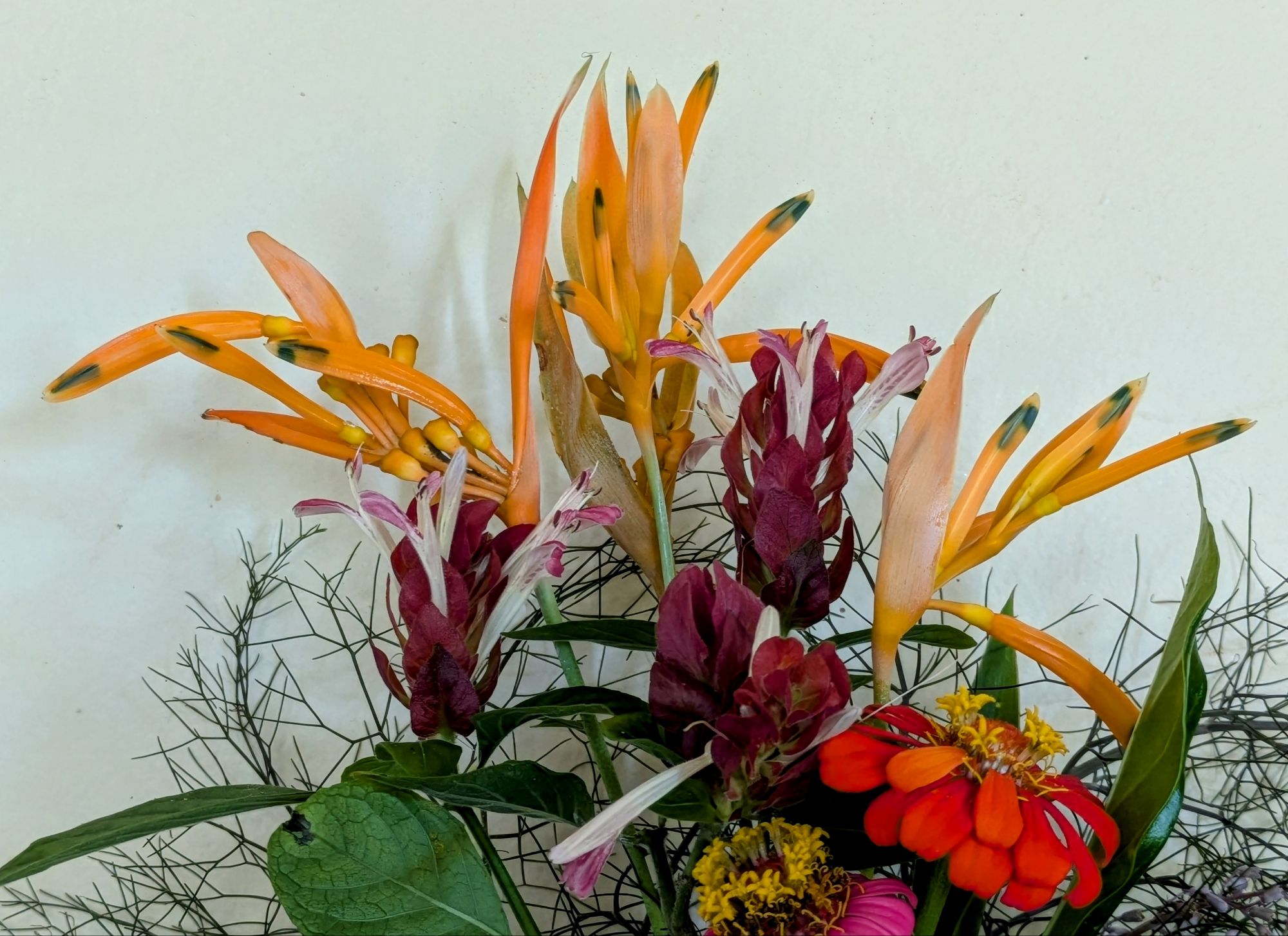
Orange flowers are Parrotflowers (Heliconia psittacorum Choconiana) Red flowers are Red Shrimp Plant (Justicia brandegeana). Dark ferny foliage is Copper Fennel (Foeniculum vulgare) Maybe that is not so tropical.

I inherited the vase from my mother and have enjoyed using it for years.

Visit Cathy at the link RamblingintheGarden to visit more gardens via vase.
For those wondering about Gopher Tortoises mentioned in last week’s vase post, here is one ambling up the walk to my front porch. Once he or she arrives near the potted herbs any basil hanging over the edge of the pot will be trimmed to turtle height. This turtle also enjoys charteuse Coleus and melons. A bit of an odd salad!

Six on Saturday – Summer Bromance

Saturday morning found me taking pictures in the garden yet again. I am joining in the SOS crowd flocking to Jim’s blog to share six items of interest from their gardens. Today I am featuring summer flowering bromeliads from my tropical oasis in South Florida.

wp-1753538833363223456956909020890

This is a Aechmea Rubens flower with a White Peacock butterfly sipping the nectar. It has been a good year for this butterfly. I have swarms of White Peacocks for some reason. I want to share what I just read on Google. Groups of butterflies can be called swarms, kaleidoscopes, or rabbles.

wp-17535391942883571526516485498791

Buds on a Aechmea ‘Little Harv’ bromeliad.

Another view of ‘Little Harv’. These get much taller and open, the stem is hot pink.

wp-17535393871223010843280119710937

This is Aechmea bracteata in full bloom. These last a long time and eventually dry to a straw color.

wp-17535395042042465180406415221559

Aechmea blanchetiana ‘Lemon’ shooting up flower spikes. These are three or four feet tall and will open up a bit. They remind me of crustaceans.

wp-17535399472897584396559835298763

Aechmea miniata bromeliad flowers. These are my favorites. Easy to grow and nice, low foliage that is not sharp.

That’s all from sweltering South Florida. We are just out of the heat dome in the Eastern US thankfully. It is much warmer further north.

Thanks to Jim for hosting.

Six on Saturday – Summer Additions

It seems I always find a few things I want to add to the garden – in July. Not a great time for shipping plants to South Florida. I managed to control myself (a little) and bought a few new plants shipped from nearby. July can be a good time to plant things due to copious rainfall.

My garden tour this morning revealed a few other new things in the garden – one has already been eaten! Please join other SOS bloggers and their six items of interest at Jim’s Blog (Garden Ruminations) for more summer fun.

wp-17529315198597705091409172315954

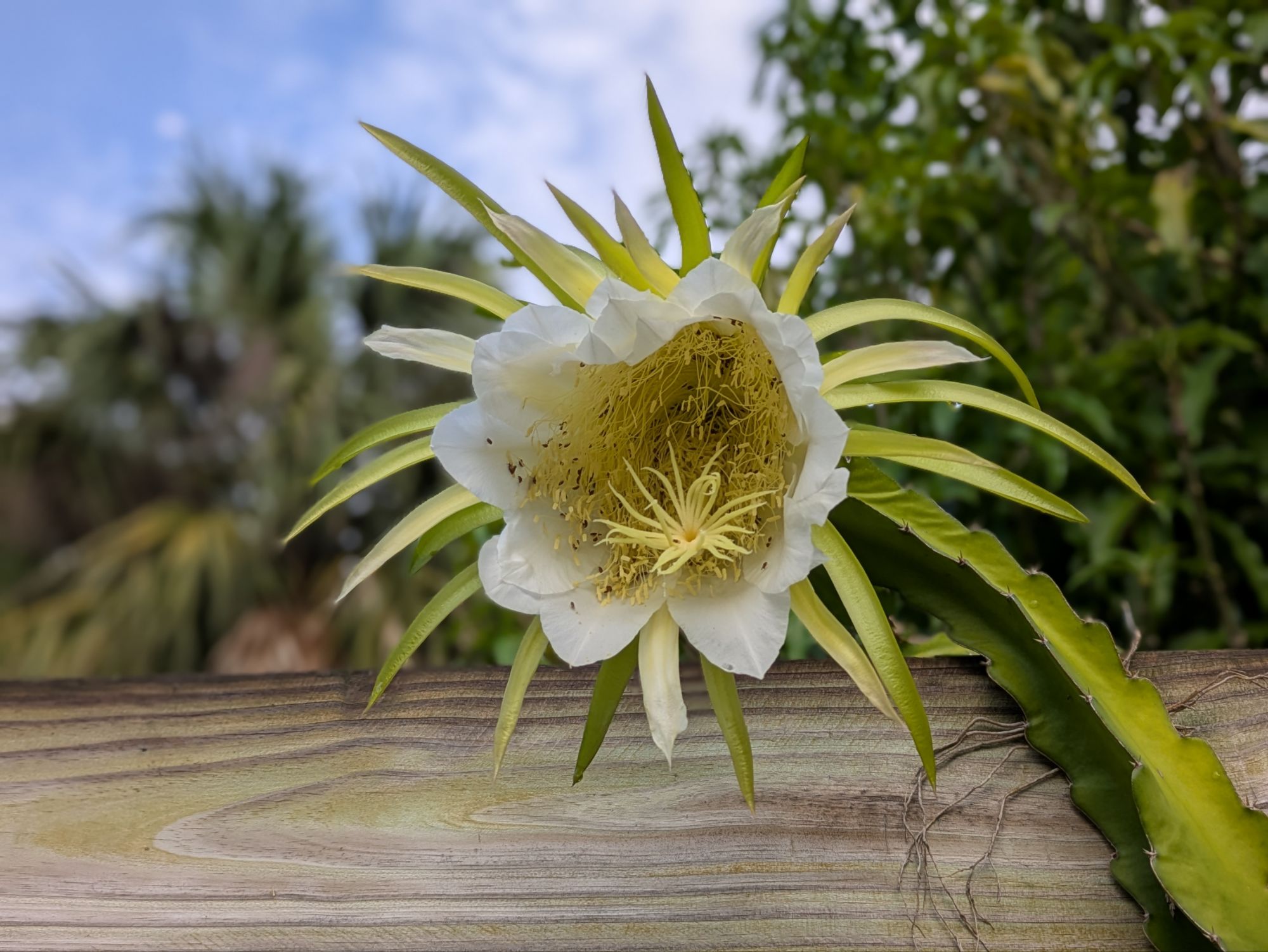
The Yellow Dragonfruit is once again teasing me with a flower. These are pollinated by night flying bats and moths. At this point I am not sure I have any of those in the garden. Usually I get some flowers for a short (hours long) period and they fall off. I thought I would try the paint brush around the inside of the flower and then looked inside.

wp-1752931724442535859892294947396

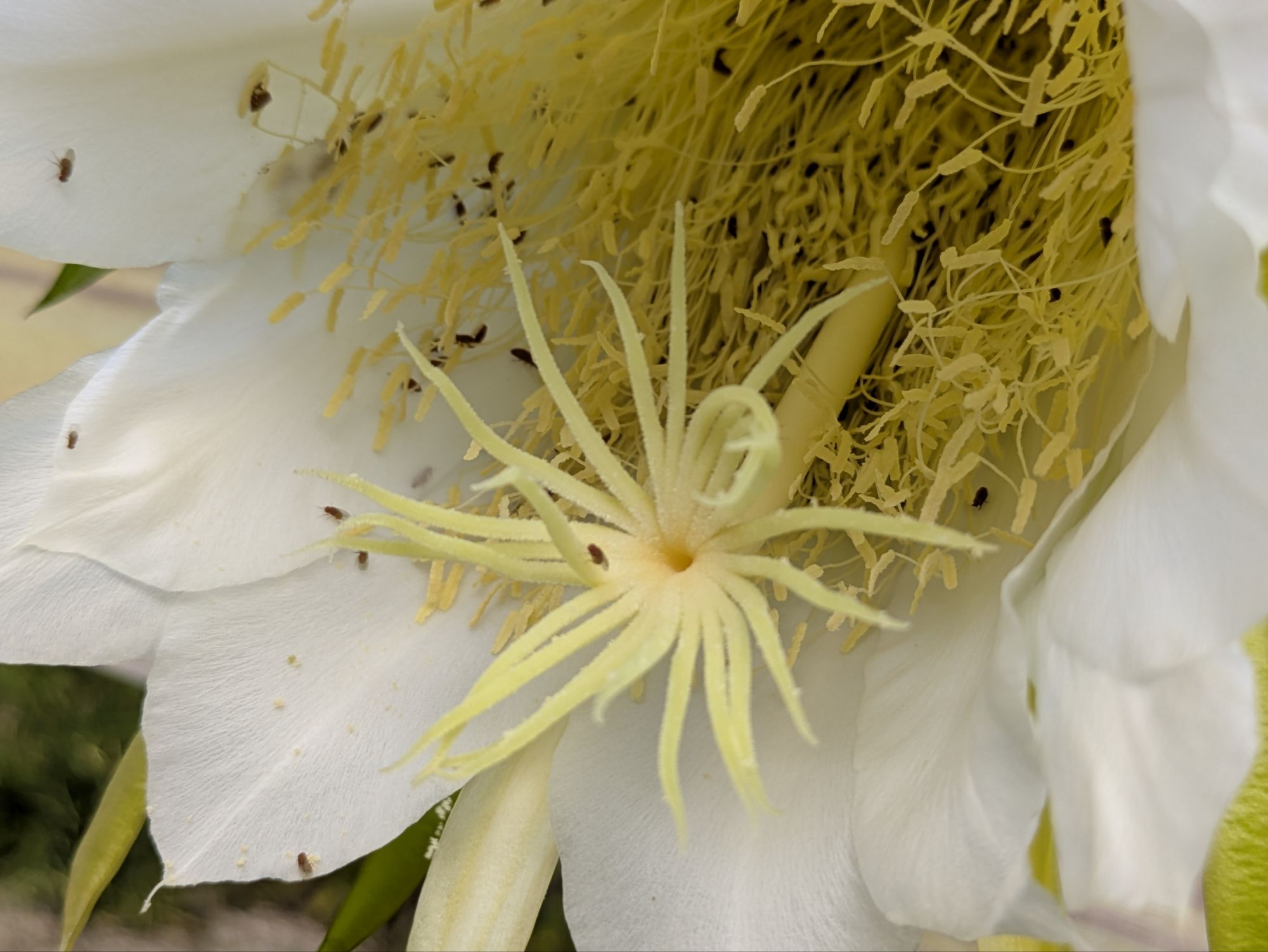
The flower was loaded with insects doing more than I could ever hope for with a paintbrush. I’ll know in a week or so if there will be fruit.

wp-175293185374352578541709673027

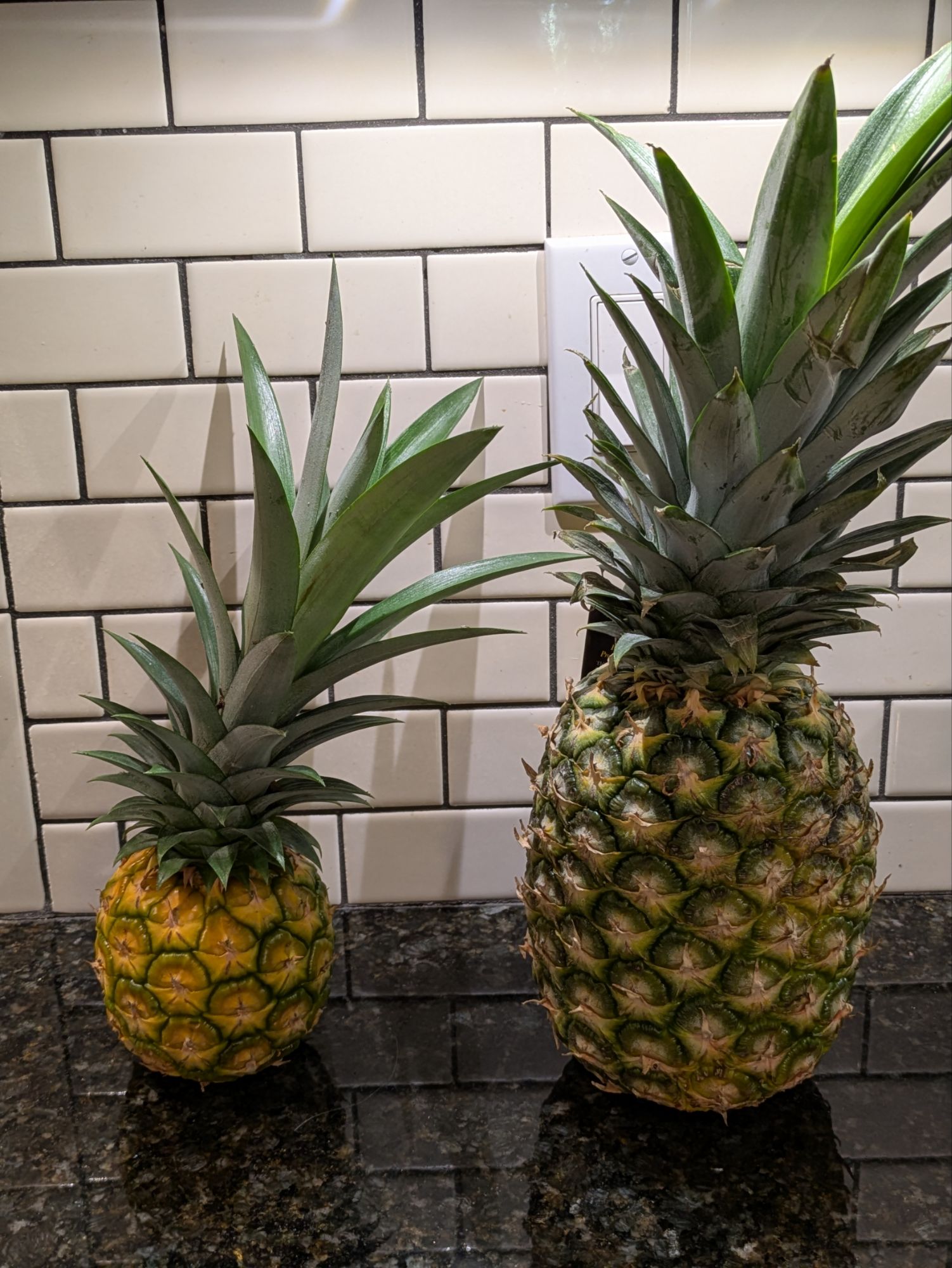
The homegrown pineapple (on the left) was harvested and devoured. These pineapples are usually much smaller than the grocery store varieties (on the right) I am not sure why because they are grown from the tops of grocery store pineapples? The fruit is sweeter and juicier than pineapples from the store. Delicious.

wp-17529321364538227745122649273337

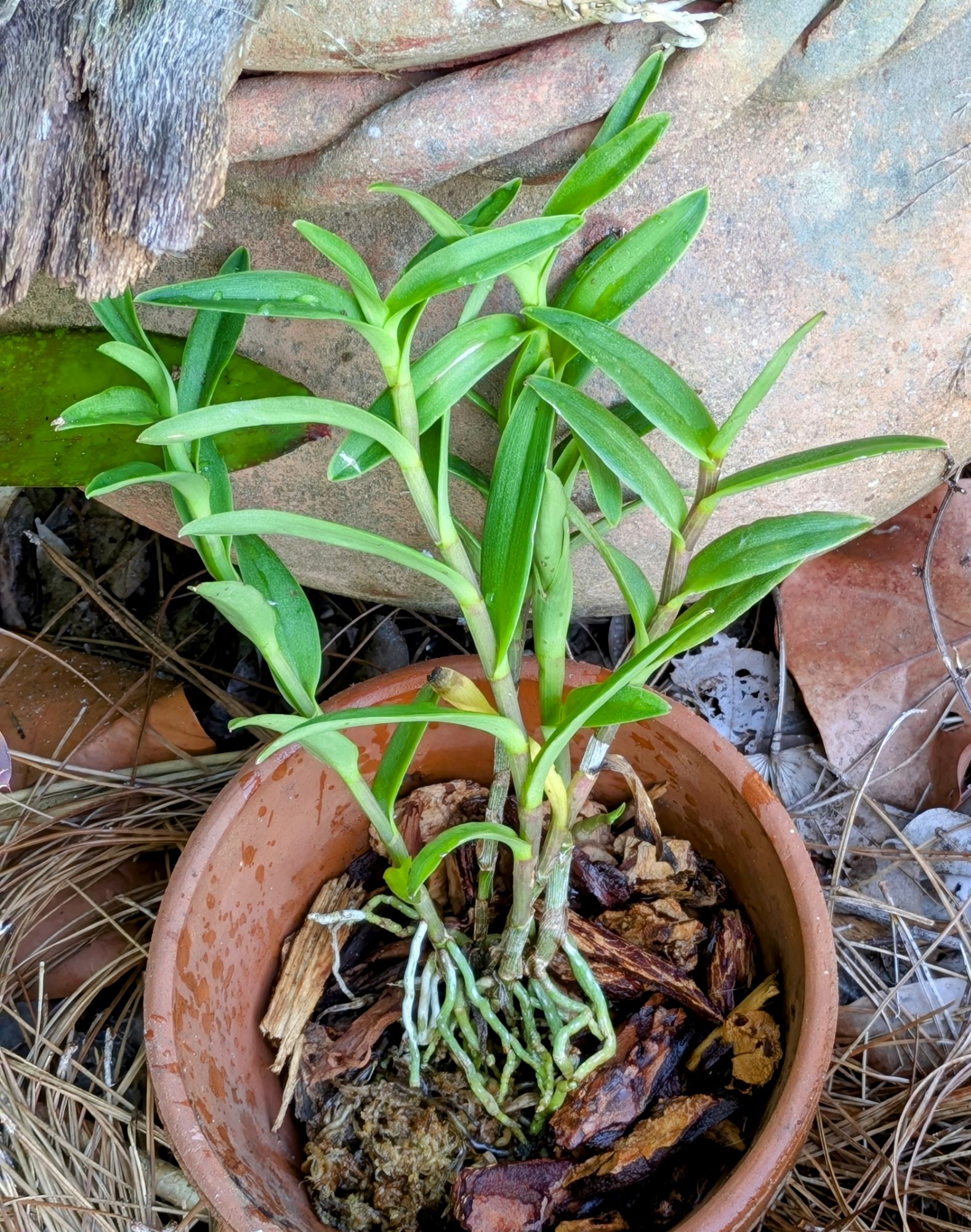
These are new to the garden. I bought the cuttings of Reed Orchid (Epiprenum radicans). These can be grown in the ground here and are used as a groundcover. This one has orange flowers that look like dendrobium clusters, but they come in many colors. I put it in a terracotta pot to keep the rabbits away. It should take and creep over the sides of the pot and fill in the bed.

wp-1752933876801874098418026020153

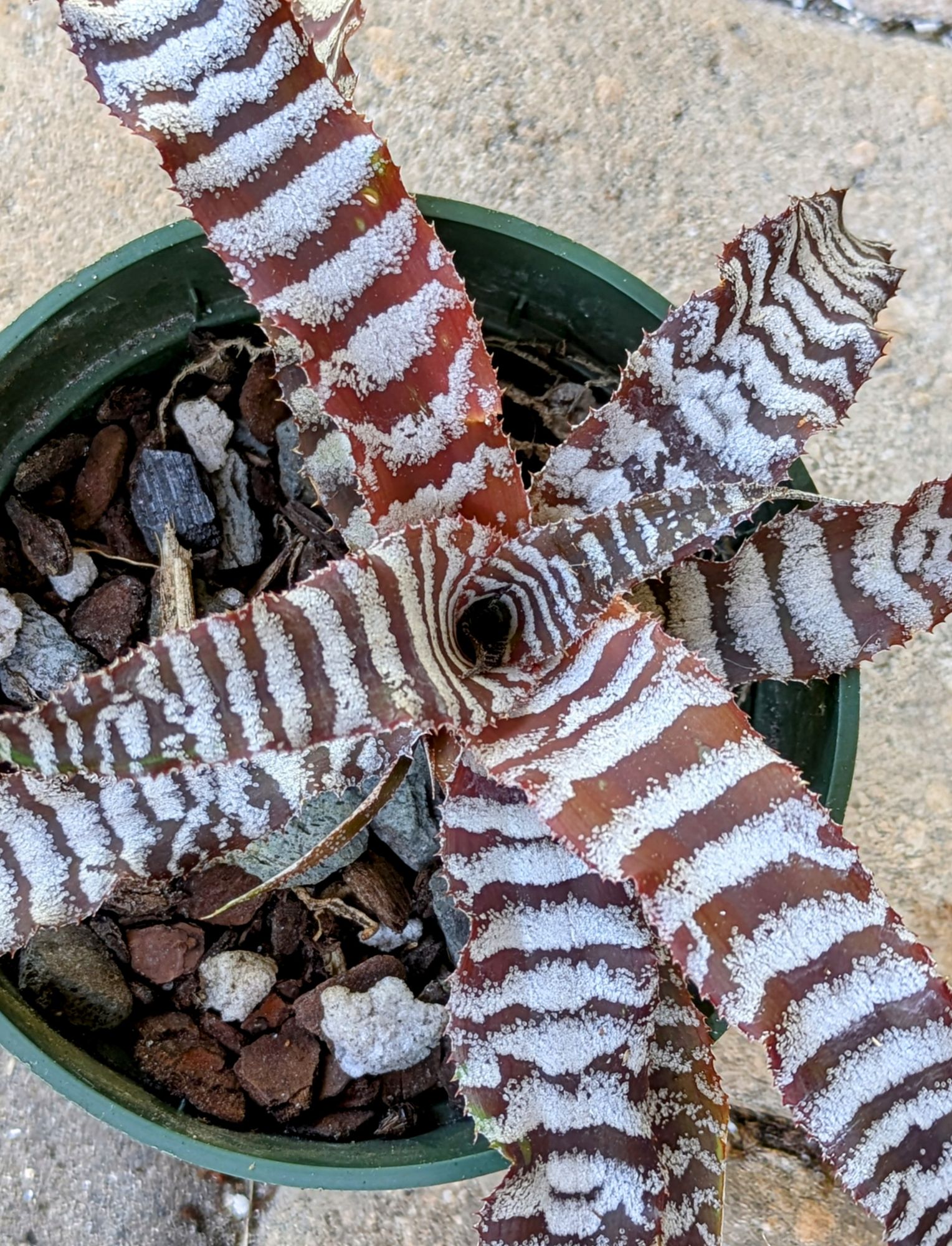
Meet ‘Absolute Zero’ Crypanthus bromeliad. These are shade lovers and should have pink flowers. The common name is Earth Star. I intend to put these in the ground near the Epiprenums. After receiving the plant I realized the sun needs to go down in the sky a bit before I plant them. A little too much afternoon sun currently.

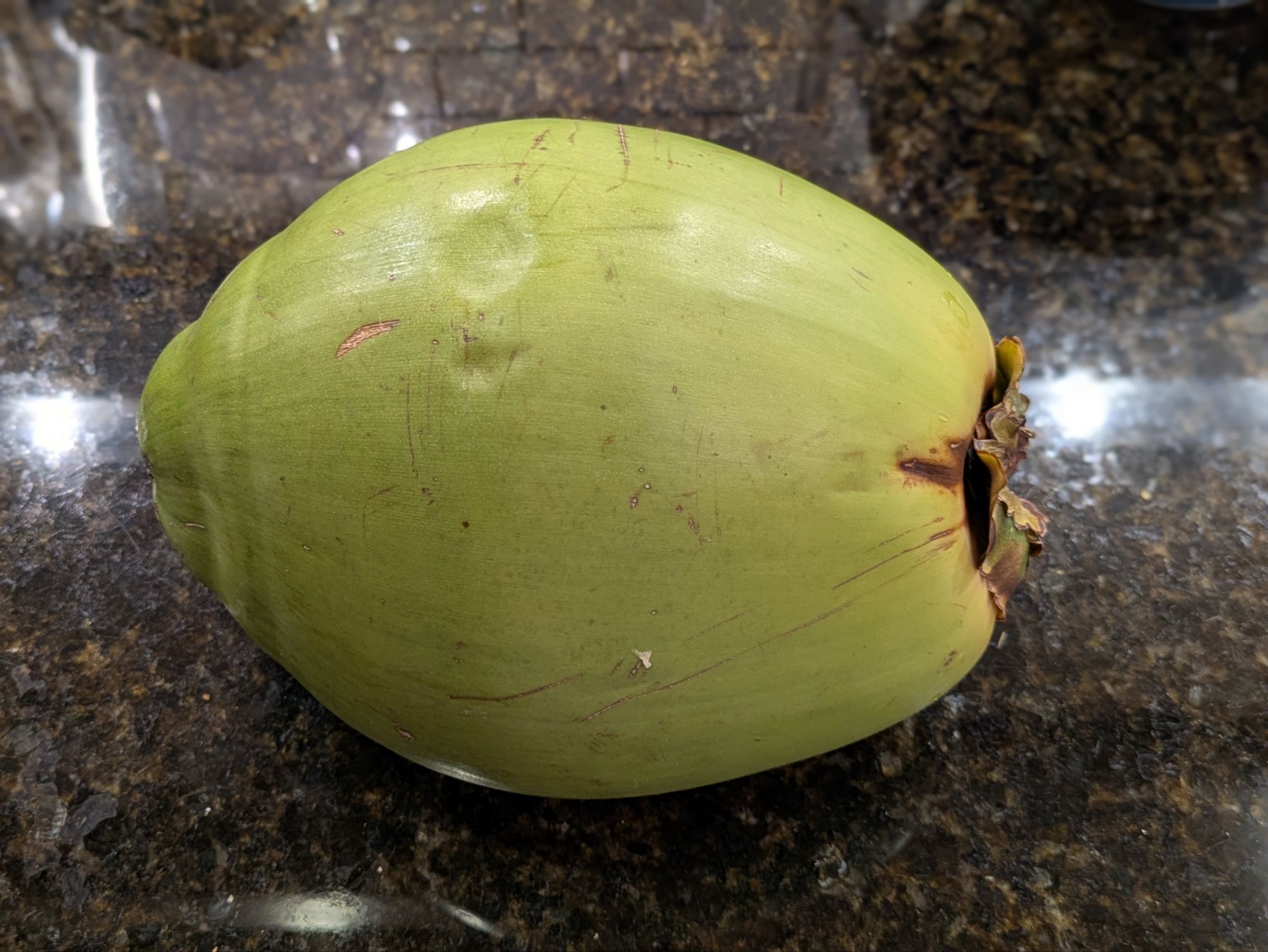
A locally grown coconut. I bought this to bake a pie, without thinking through the fact that power tools are probably needed to open it and it is the wrong kind for baking coconut. Green coconuts have coconut water and jelly. Brown coconuts have the grateable meat for pies. Sigh. Both involve screwdrivers and hammer prior to use. They can be sprouted and planted in the garden – but I am not sure which kind.

That’s all from South Florida. There is a heat advisory in effect for the next couple of days so all gardening has to be done before 9 am. I am done!

Happy Gardening

Six on Saturday – The Last Mango

wp-17517298955632381365051353700327

There it is. The final perfectly tree ripened Thai dessert mango of the summer. I am not sure who or what ate it, but it wasn’t me. I will count my blessings. We had a wonderful crop of three varieties of mangoes from May to July and I have learned to make a new dessert, Mango Coconut Cream pie. I will confess I have been shopping for a Keitt mango to extend the season through September…the pie.

wp-17517303133705245759681757529901

Now for some pretty garden images:

wp-17517304148766365959833773595542

This is a Vriesea bromeliad. The botanical name has been changed to Goudaea ospinae, it used to be V. ospinae cv. gruberi. Maybe it is not a Vriesea anymore. These are planted primarily for foliage, the color really lights up the shade garden. It is reported to have a yellow flower, but I have never seen one.

wp-17517308468974126009297813183793

This is a Buttercup Bush (Turnera ulmifolia) – I think. These grow wild here and it popped up to replace an Angel Trumpet that didn’t grow here at all.

wp-17517344283508642472794646558439

This is a Golden Dewdrop (Durant erecta). This rarely flowers in my garden and the butterflies are really enjoying it. I am wondering what inspired the flowers. The Dewdrop is a bit of a mystery to me. It is supposed to be a large shrub to a small tree sized plant. I would guess it has been in the garden for 8 or 10 years and might be two feet tall. More puzzles to ponder.

wp-17517347416372287417699683235350

A Royal Ponciana (Delonix regia); also called Flamboyant tree. My neighbor has one and a seedling popped up in the garden, so I potted it, coddled it and waited for the rainy season to plant it. In a few years it will be covered in flowers like this. Flamboyant is a good name! Hopefully.

That is all from South Florida. The rainy season continues….

To see more SOS posts, follow the link to visit Jim’s blog Garden Ruminationshttp://garden ruminations.co.uk.

In a Vase on Monday – Rubens Rebound

I am definitely getting in touch with my inner tropical garden lover this Monday. My rainforest garden is putting out funkier flowers by the day. Of course, the bromeliads are uncooperative about growing where I want them and need rearranging. A winter time chore in full armor is in my future.

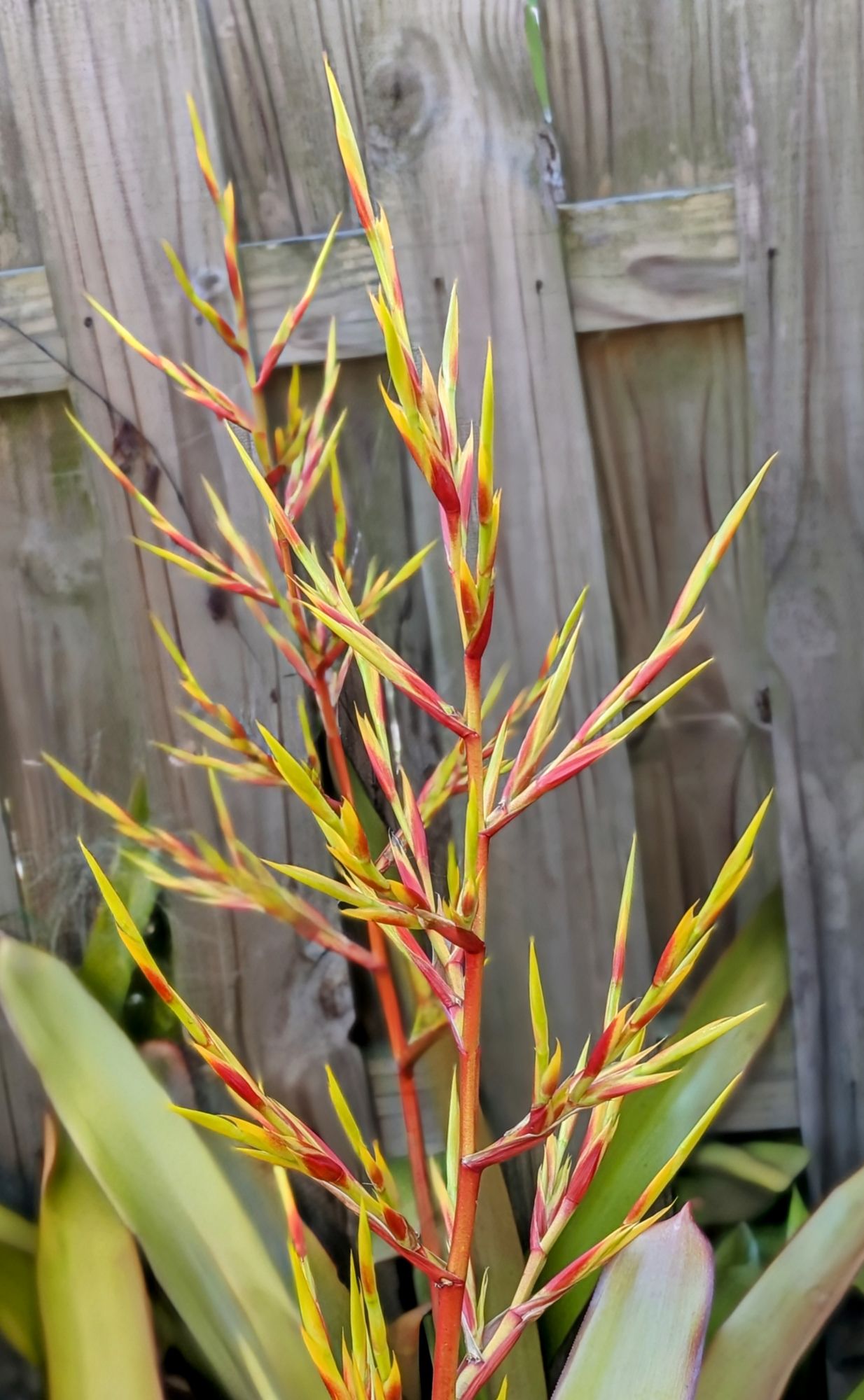
The flowers are Aechmea Rubens. I have never heard a common name for this plant. Apparently a botanical garden in Canada picked it up in Brazil and didn’t quite document it, so no one knows exactly where it came from. I am not sure where the one in my garden came from??! The rebound came when I couldn’t remember the name and put the picture in Google Lens and was referred to my own blog!

wp-17512275859795788150894066426688

A closer view. The flowers are very much like straw flowers. I have had them last until Thanksgiving in the garden. I am not sure about vase life, but I expect it will be a while. The background foliage is a Sabal Palm frond trimmed to fit. The vase and flowers are easily three feet tall. The plant in the garden is at least that tall.

Happy Monday from the tropics.

Thanks to Cathy for hosting. To visit other gardens via vase follow this link to RamblingintheGarden

In a Vase on Monday – Dead Lob

wp-17500162579881442951368990018354

The Lobsterclaw Heliconia (Heliconia rostrata) are having a banner year. I suspect the addition of food, water and acidic mulch has a lot to do with it. Maintenance! What a concept. I have had a flower or two in previous years; but this year a bevy of flowers burst forth followed by new green shoots with buds. The decision was made to dead head the flowers, a task never undertaken before. Hence Dead Lob. As a joke, my siblings and I called my parents favorite restaurant, Red Lobster, by that name. Red Lobster is sort of an American institution, known for serving massive quantities of frozen seafood for low prices.

Heliconias are a single genus and have some unusual habits. This one produces green leaves (at least two feet long) above the flower buds, then the leaves die off leaving curled brown blobs over the bright flowers. I have trimmed the dead leaves off, leaving the stems and flowers. The green leaves remaining are in the vase. As the stems age they take on a bronze, spotted coloration. I like this and will enjoy watching the senescence.

wp-17500191188297624008876455123885

A close up of the flower. There must be seeds in there somewhere? I wonder if my garden has a pollinator that is capable of working with these flowers. The Orange Bird of Paradise rarely produces seed here because the Sunbird (native to South Africa where the plants originate) is one of the few animals capable of the gymnastics necessary to pollinate the flowers. I must look into what pollinates Heliconias. More garden mysteries to ponder.

To see more vases, follow this link RamblingintheGarden to Cathy’s blog.