Six on Saturday – Seeds and Bulbs

This Saturday I photographed the new plants I have grown from seeds or bulbs this winter. As usual, my learning curve for Florida gardening extended into trial by fire to find the proper season or temperature for success with germination. It seems all seeds come with some instructions for planting times based on frost – we have no frost here so timing is a wild guess for me most times.
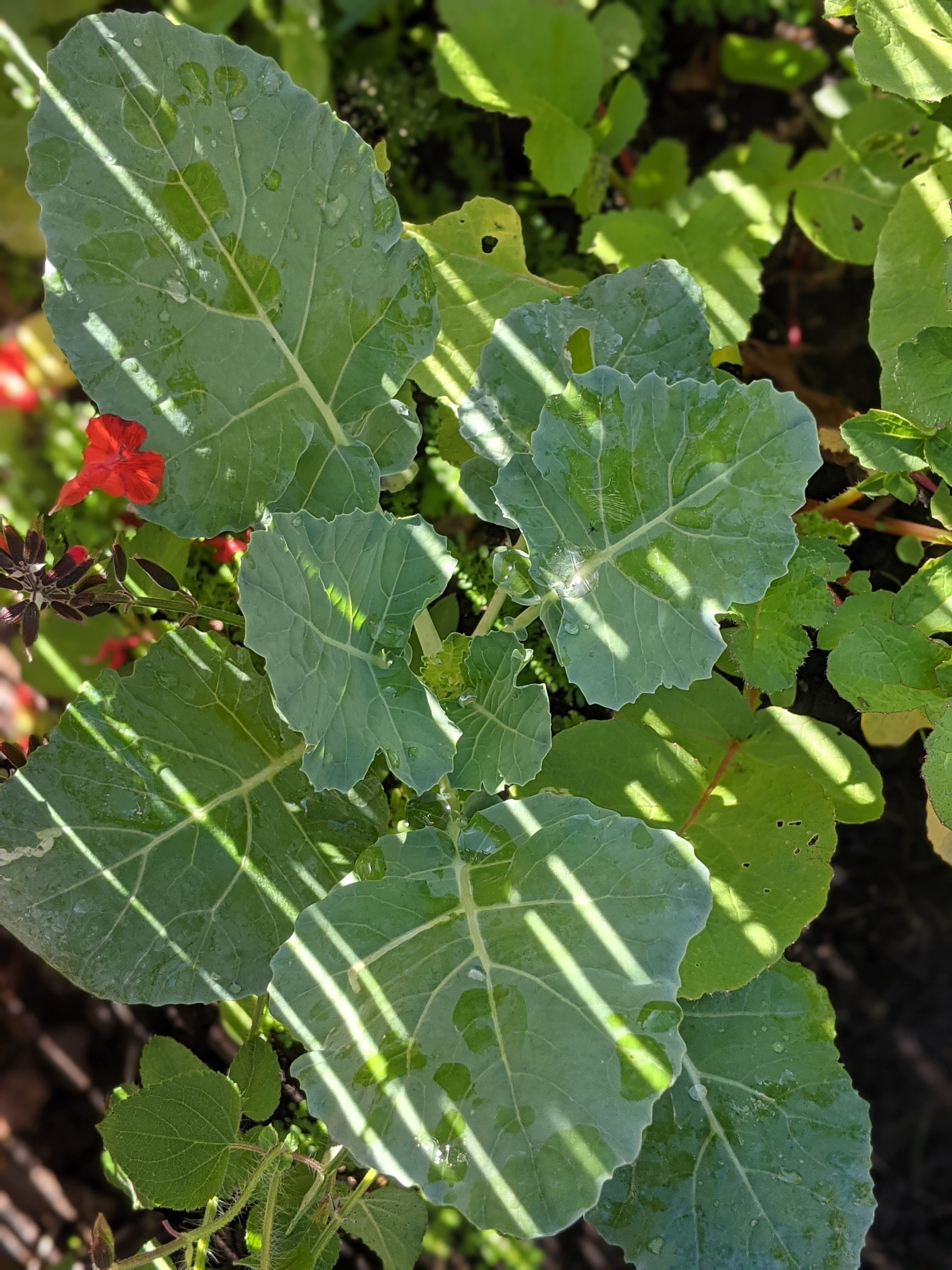
Waltham Broccoli, a cool weather crop everywhere is a winter crop in South Florida. I started seeds in November, the package says these take 50 days to harvest, I think not.
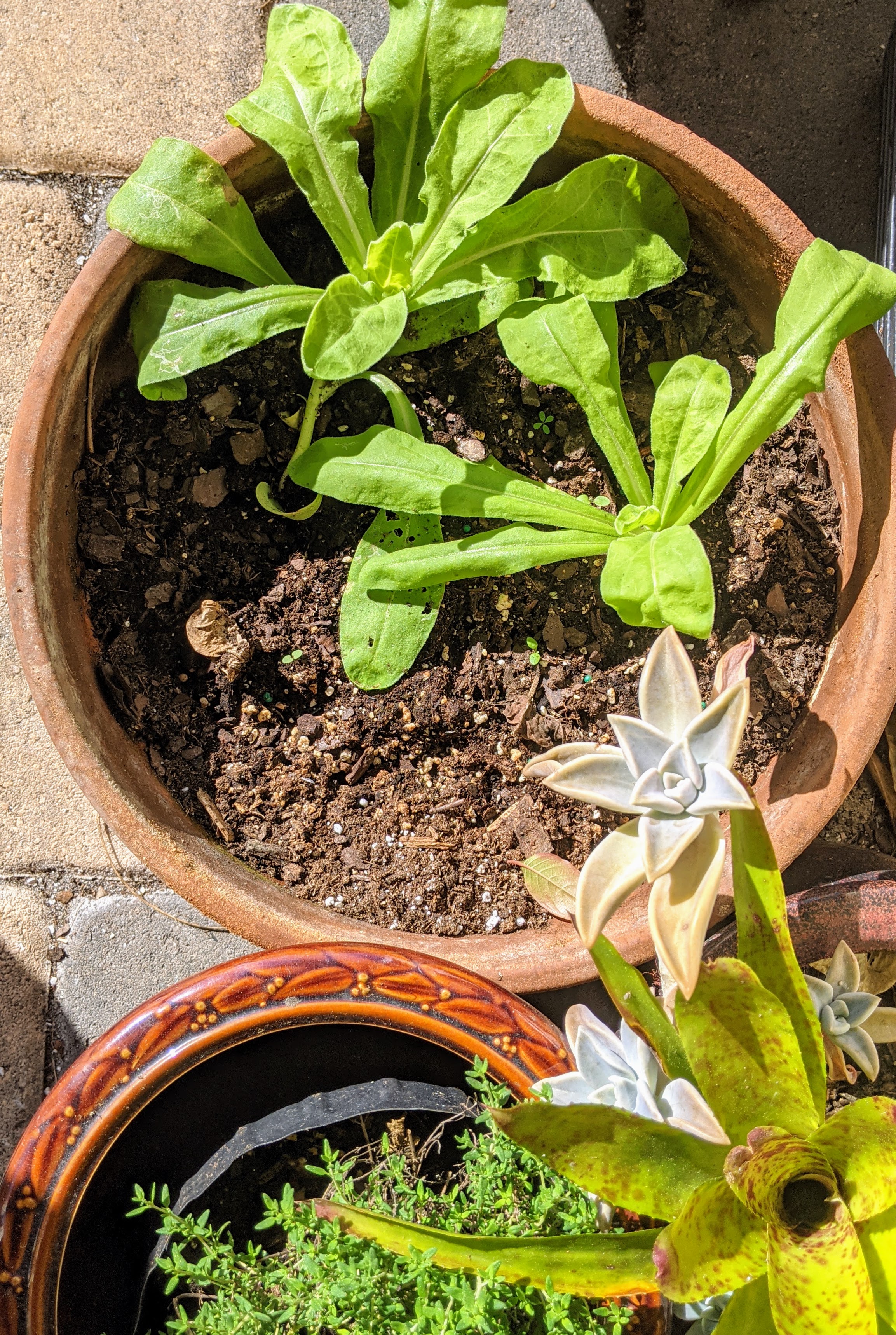
My first Calendulas ever! Planted in early January, the seed collected by my neighbor last year. I am looking forward to the flowers.

Fiona the Greyhound checking out the Nasturtiums. I found these will not come up at all if planted when the temperature is too high. After trying them in August, I forgot about them until January and they came up then. Later I read December 1 is the magical start date. Sigh, these haven’t flowered yet and maybe that is why.

Tropical Milkweed, the larval host plant for Monarch Butterflies. Seedlings started when too cool. These suffered through December and January, developing nice root systems for some reason, so I planted them. I recently found out the seeds should be planted now..since I had a lot of seeds I scattered them all over the butterfly garden. The seeds have a reputation for high germination rates, though the ones I planted earlier in pots 3 out of 12 came up. It will be interesting to see what happens in the garden.

Spinach, Basil and Cilantro seedlings on my front porch. The seeds were planted in January. I gave up growing herbs in the ground, these are my best herb seedlings so far.

Shamrocks were originally collected in Ireland by a friend’s grandmother decades ago. These had been thriving in her South Florida garden for years. I think these will grow almost anywhere.

My Six for this Saturday. For more SOS posts, visit Jon at http://www.thepropagatorblog.wordpress.com.

Happy Gardening!!

Six on Saturday – Different Blooms

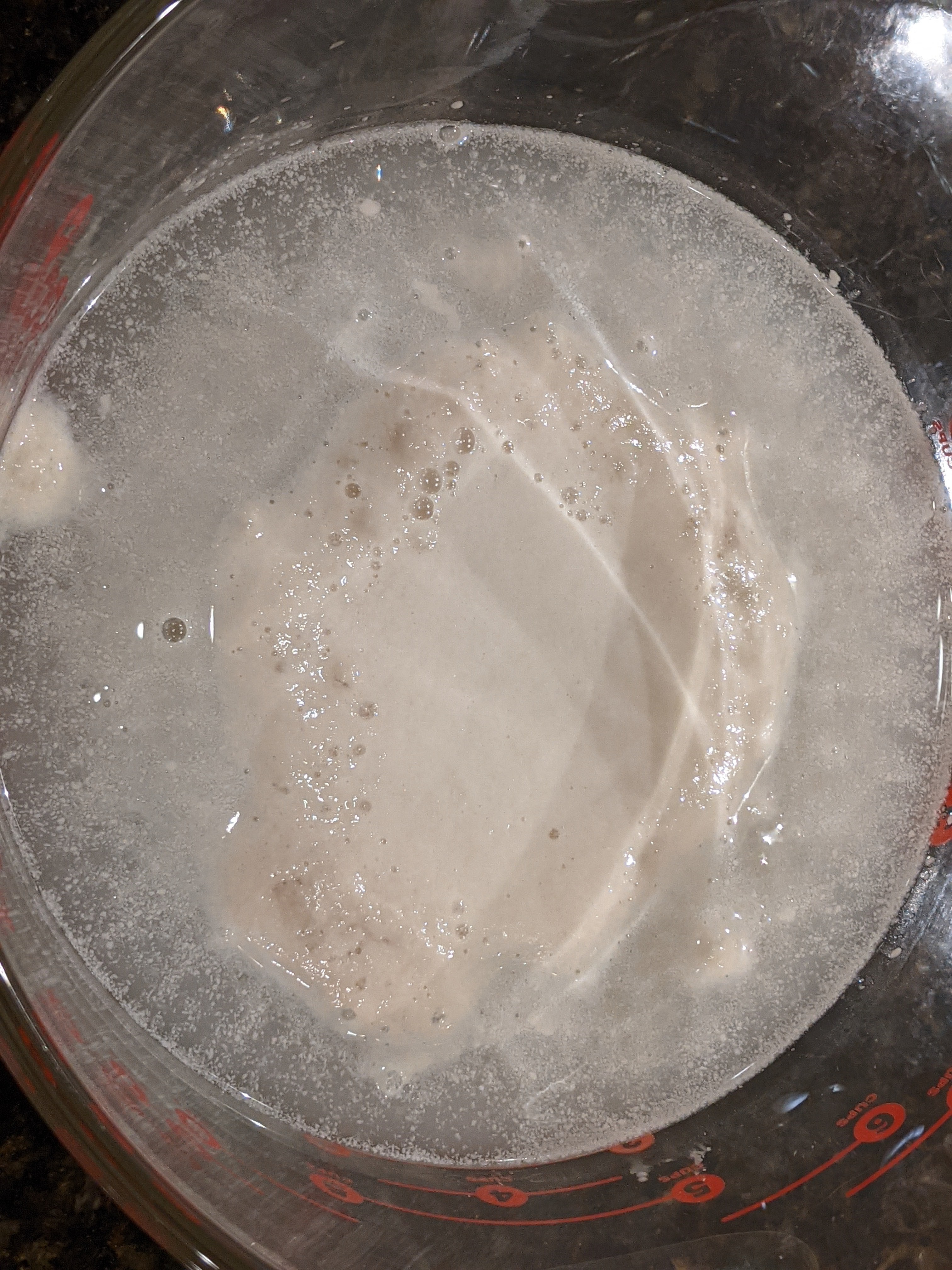
I was watching the yeast bloom while making Foccacia this morning (it is currently rising) when it occured to me I have a lot of different blooms. Here are some from the garden.

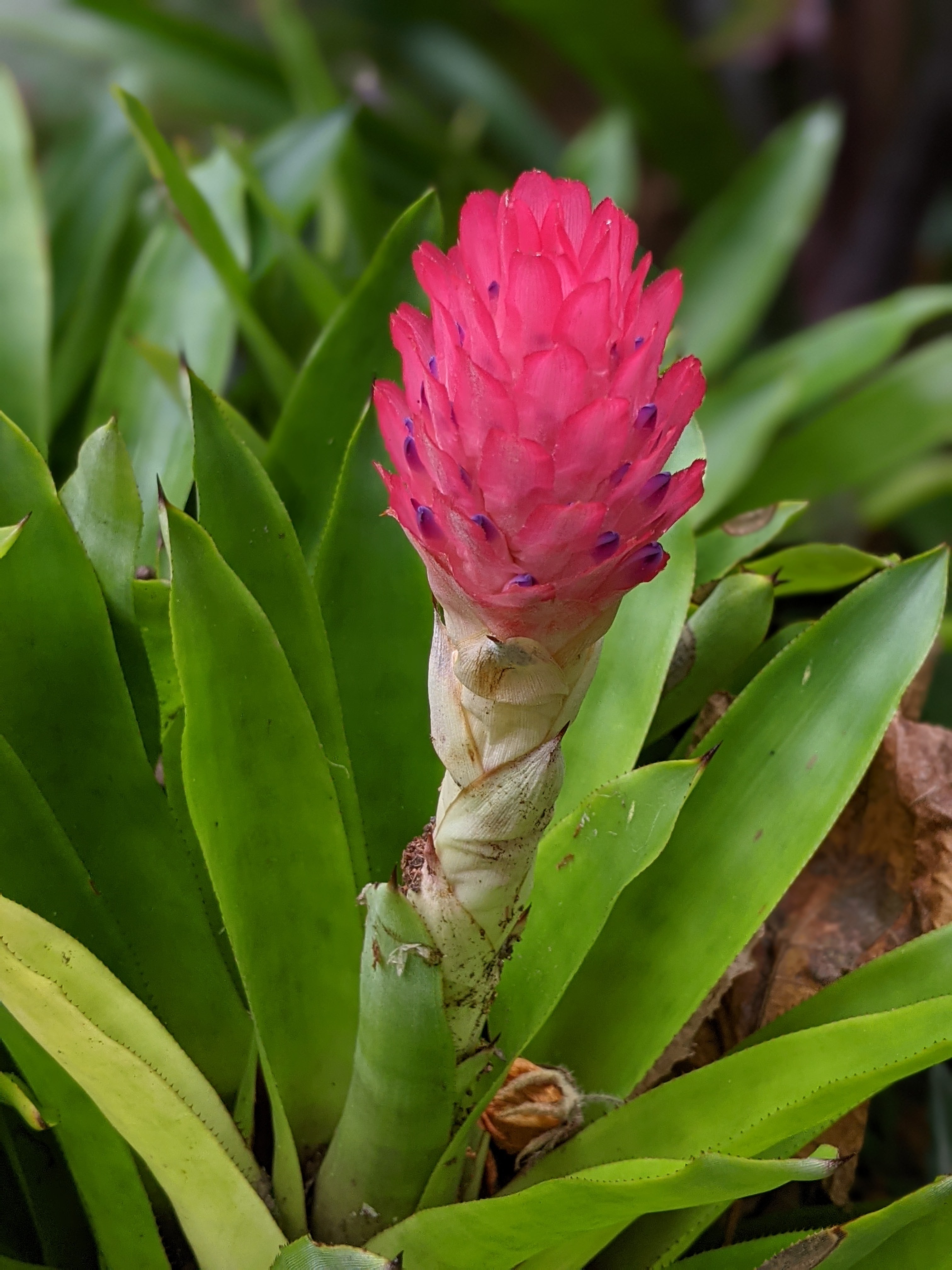
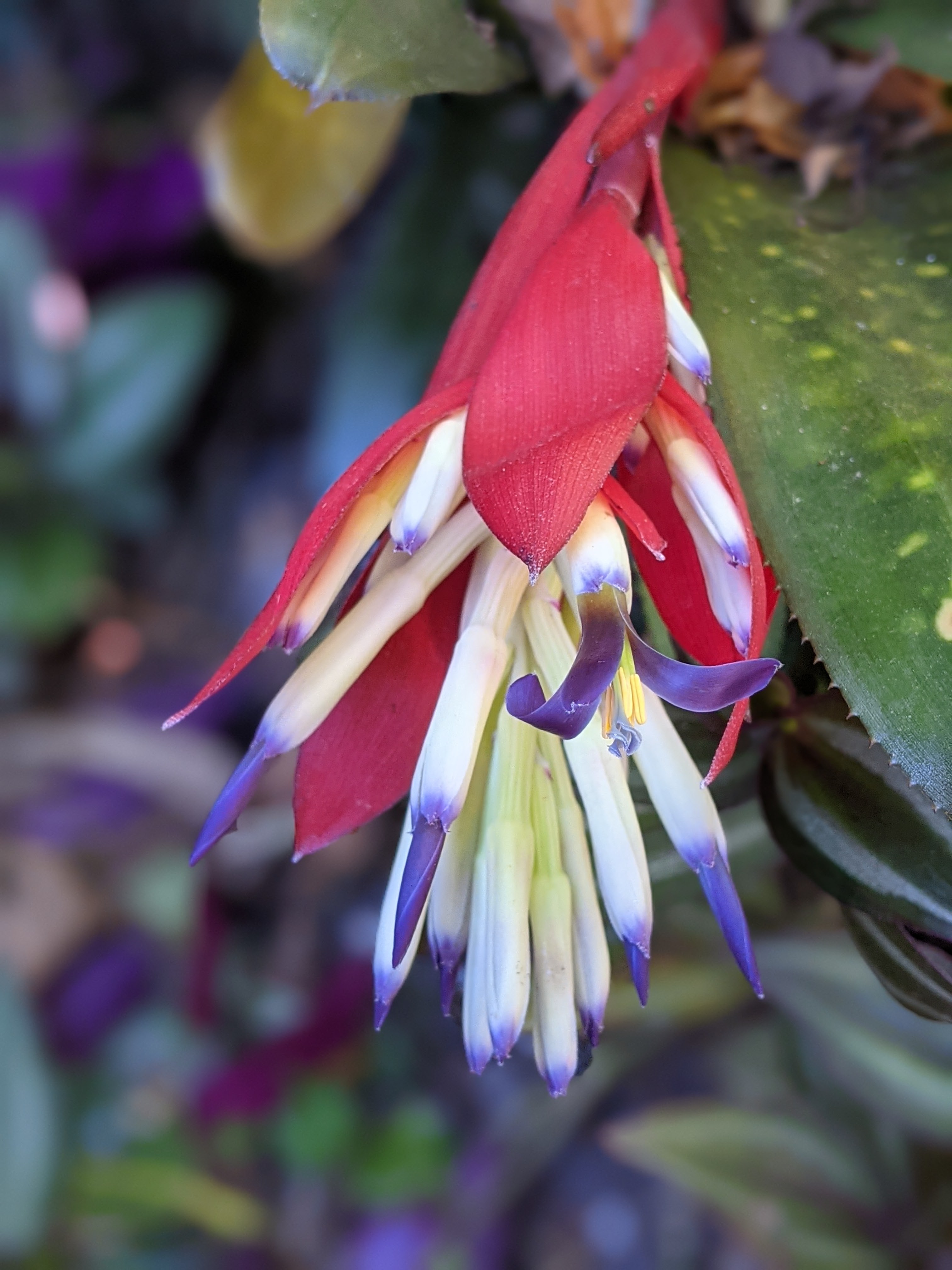
The buds from last week have opened with the warmer weather. This is a Quesnelia testudo Bromeliad.

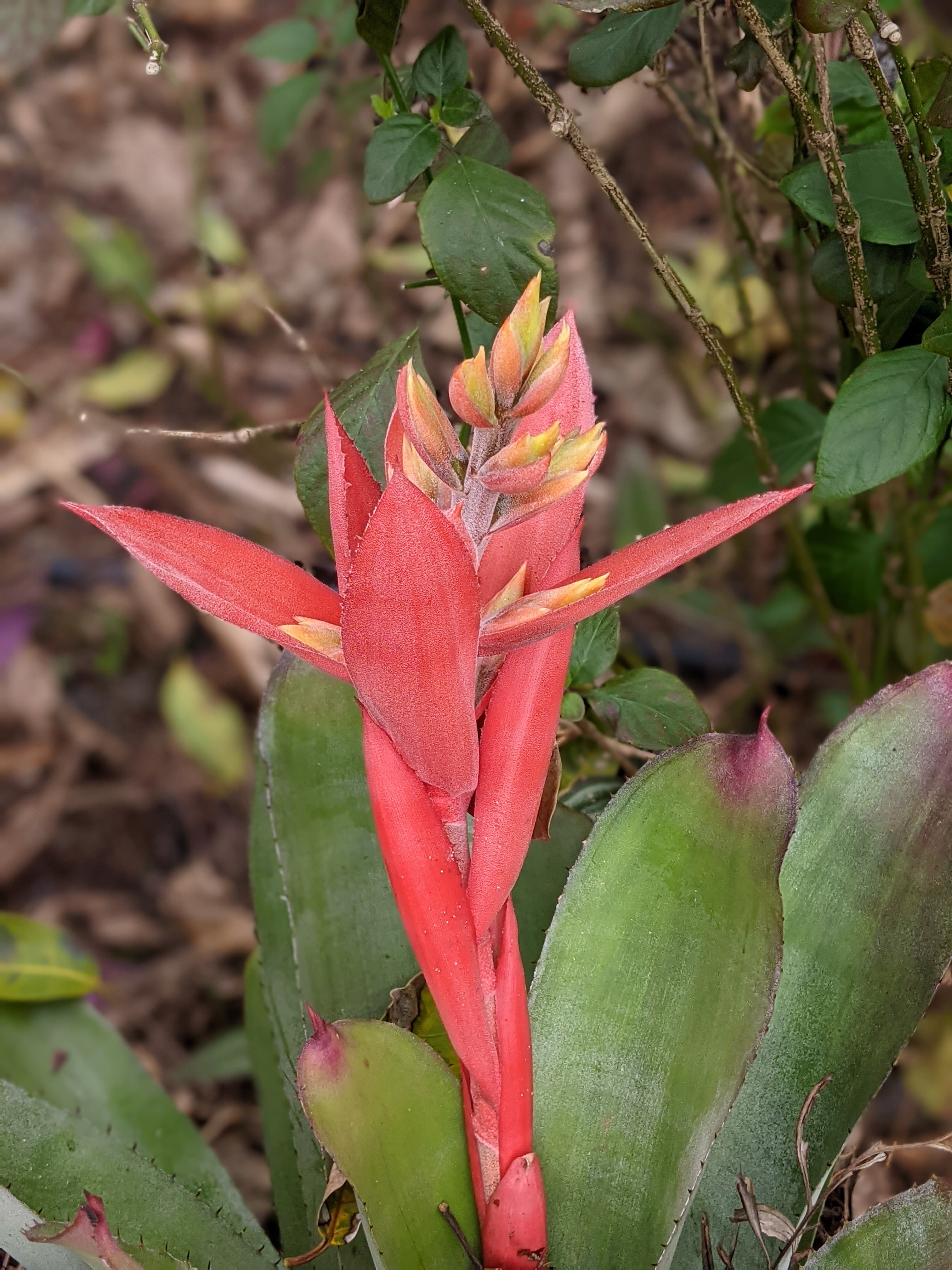
Little Harv Aechmea Bromeliad opened as well. This flower gets longer and more yellow as it ages.

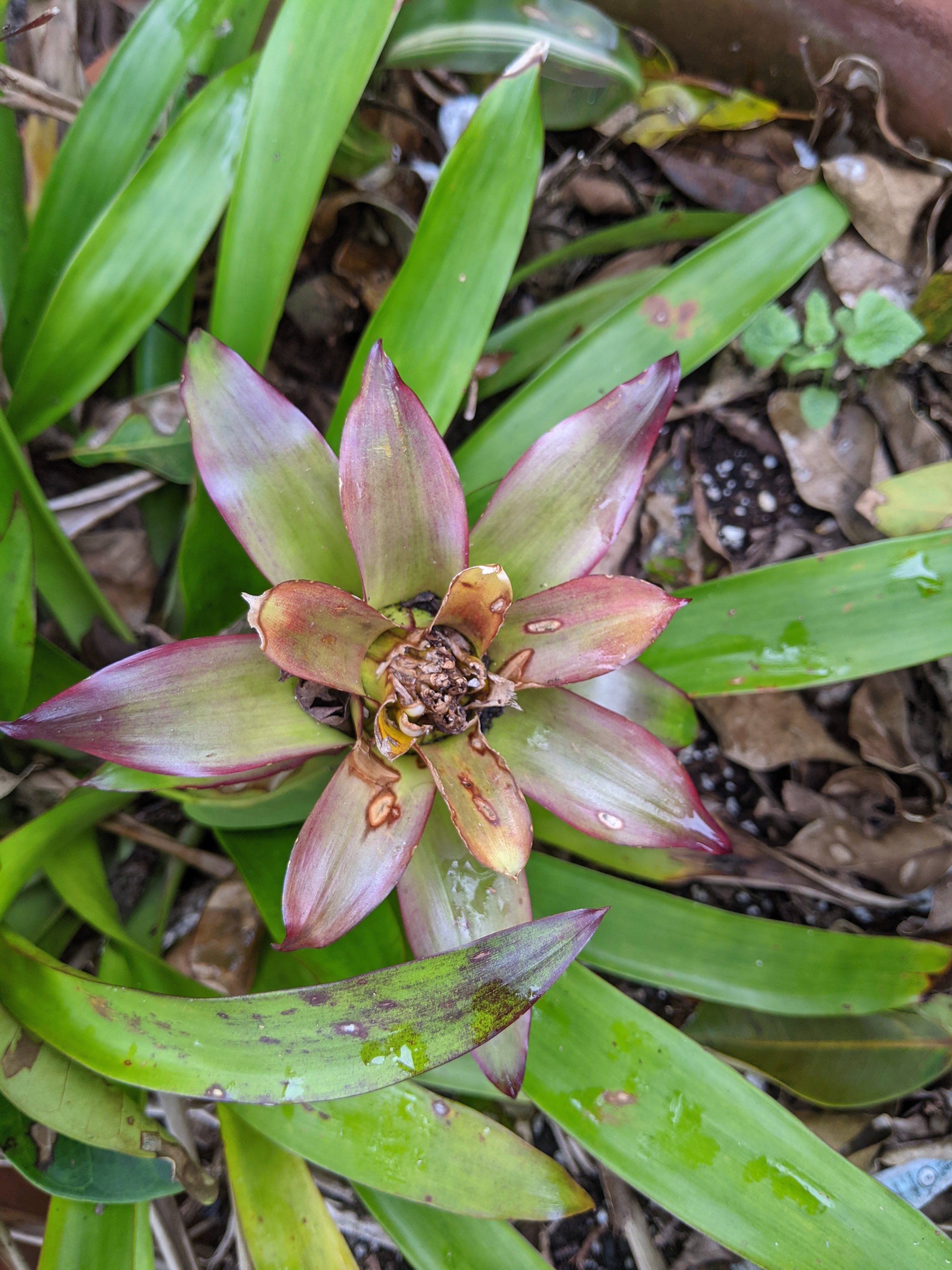
The Red Guzmania flowers age to bronze and then form really strange seedheads. I like the bronze and leave them on the plant.

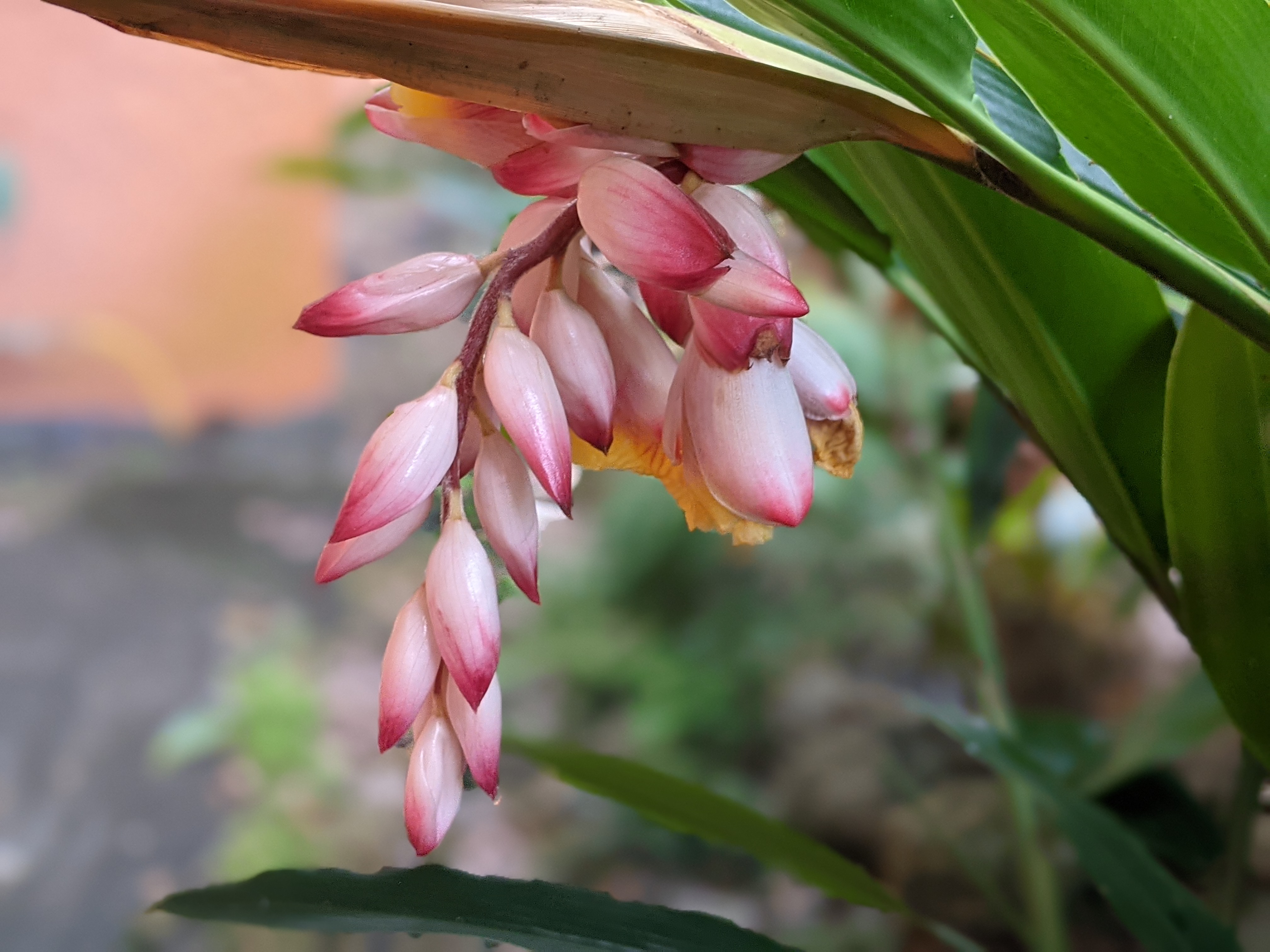
Shell Ginger (Alpinia zerumbet) usually flower in February and a few more times during the year.

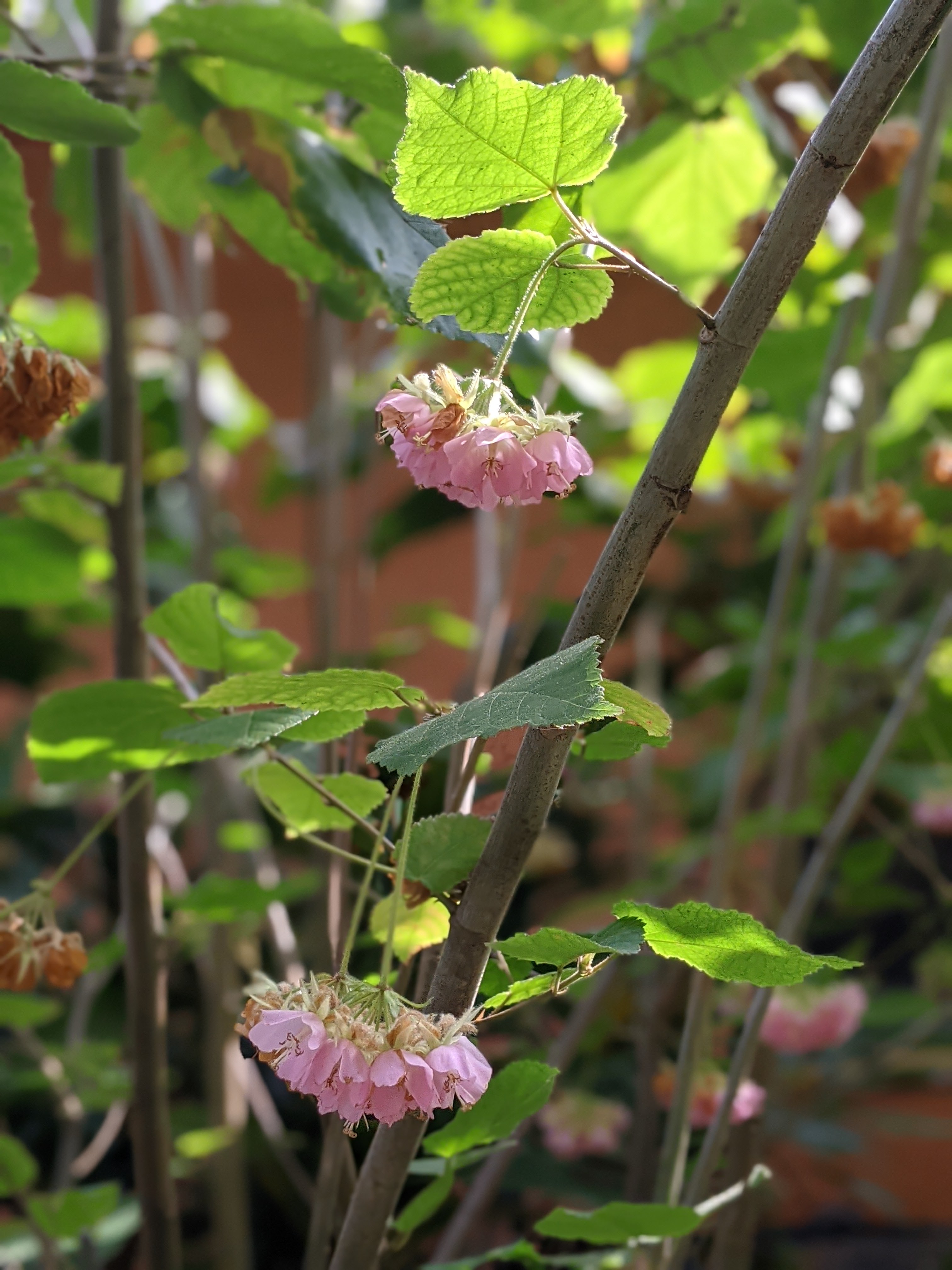
The Tropical Hydrangea (Dombeya wallachii) flowers are ending their show. Time for me to figure out how to prune the thing…

That my six different blooms for this Saturday. To see more, and different, blooms follow the link to http://www.thepropagatorblog.wordpress.com.

Happy Gardening…and Valentine’s Day.

Six on Saturday – Winter Fun

One morning this week I read the coldest temperature seen during my tenure in South Florida. 37 degrees Fahrenheit or 2.7 Celsius. Brrr. The best time of year to move Bromeliads is between November and March, I rarely make all the changes during the proper time.

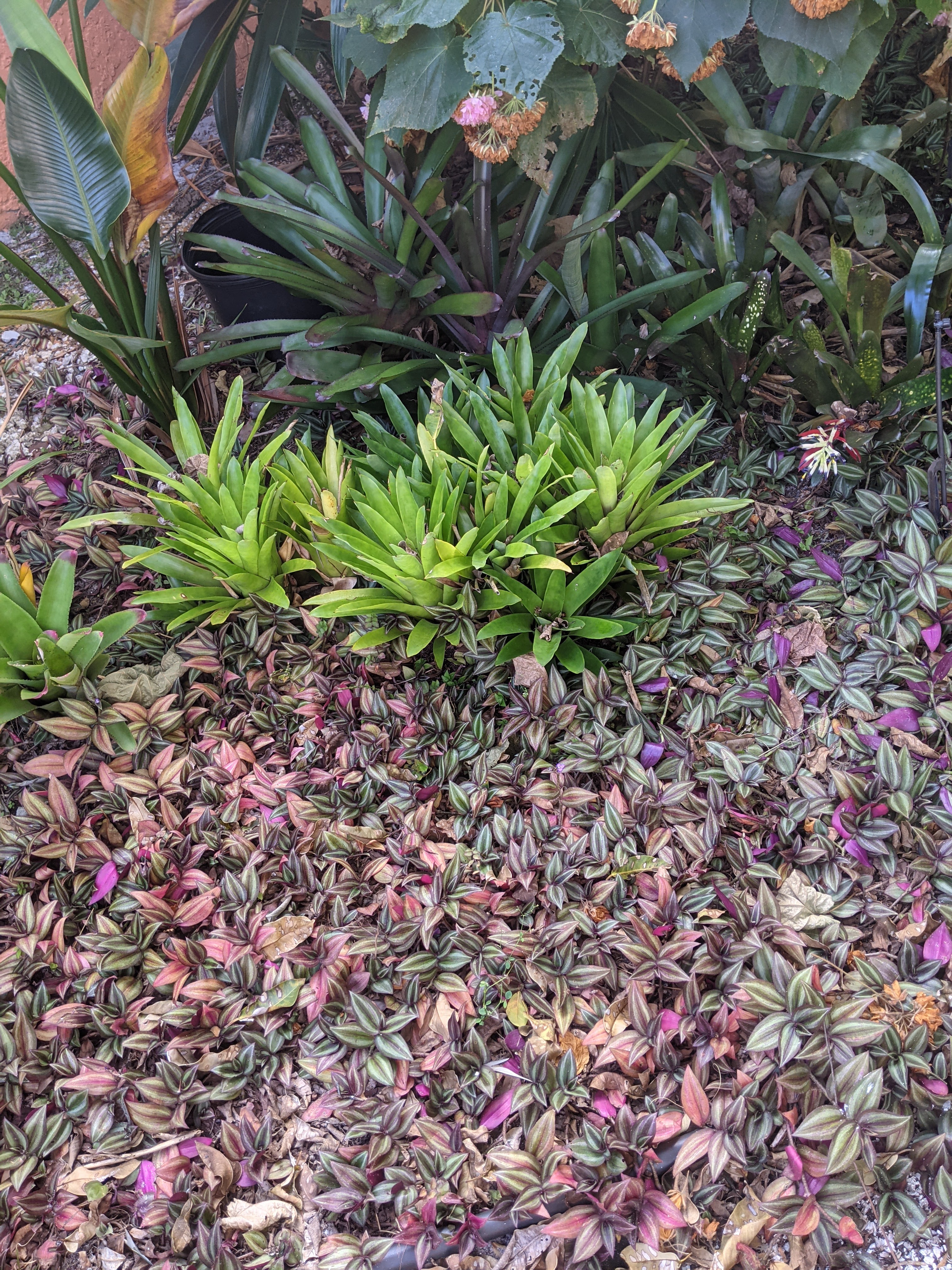
With the cool weather, it was a good time to don a sweatshirt and clear out the thorny Bromeliad beds. Asian Ferns have overrun the beds and require a bit of patience to pull out. I am usually wearing sandals and a tank and apprehensive about what is living in the jungle below, though the scariest thing so far has been a cockroach.

On the other side, the Zebrina groundcover has run amok, tumbling over the Bromeliads.

Things are looking better now and the plants have a bit more breathing room. I am eyeing a few to move to a sunnier place…need more cold weather.

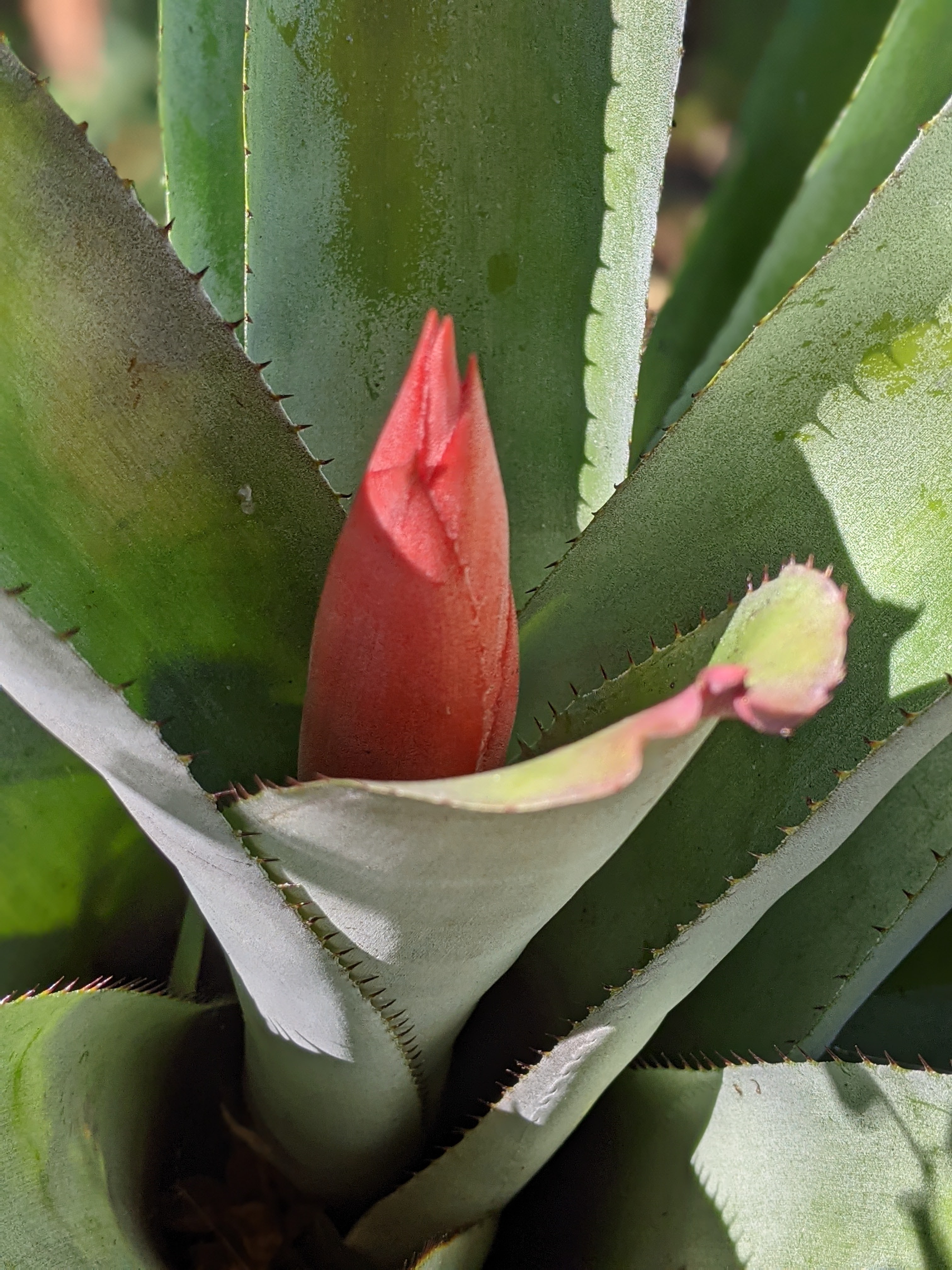
I found some Bromeliad buds and blooms during the course of my clearing. This is a Quesnelia testudo, a tropical tulip substitute. It should flower in a few weeks, usually in February.

This is a Little Harv Aechmea bud. A very sharp (in both ways) plant – this will be a yellow and pink flower resembling a sea creature. I moved Little Harv away from nearby walkways as he has stabbed me more than once.

This is a Hallelujah Billbergia Bromeliad flower. A very funky thing, the foliage is purple spotted with white and green – and then, the flower… Hallelujah!

There! my Six for this Saturday. To see more – visit http://www.thepropagatorblog.wordpress.com

Happy Gardening.

In a Vase on Monday – February Forage

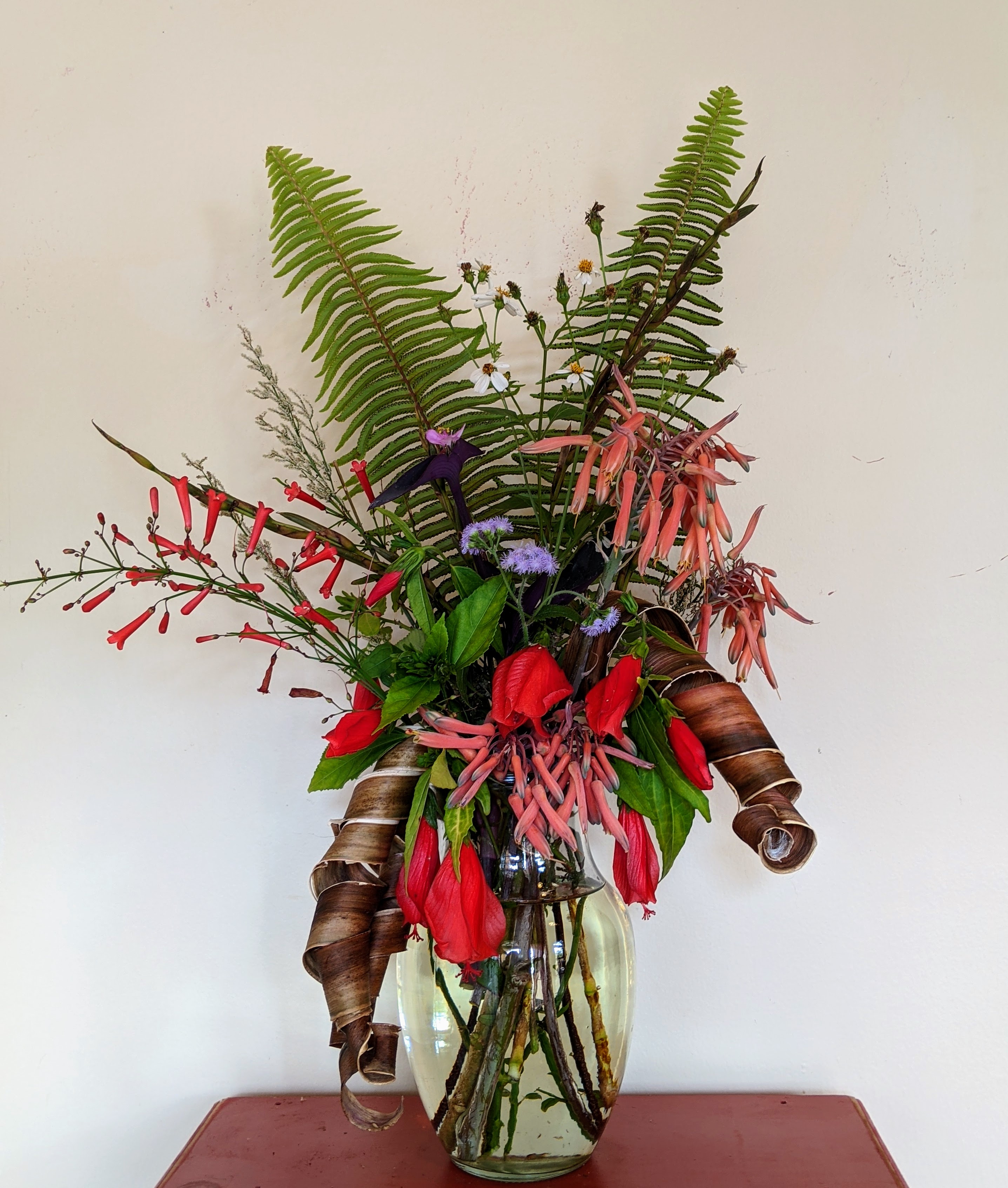
I decided to use my curly dried Bromeliad leaves one more time, just for fun. What in the world goes with burgundyish dried curled leaves?

The flower forage begins:

Many red flowers are in bloom and the orangey Aloe fell over in the wind, so the plant palette started there. The color scheme is a melange of one flower leading to another. The Soap Aloe (in orange) has purple tips, so I picked some blue purples then added the whites and stumbled on the spiky dark green Bromeliad flowers while wandering through the garden. Boston Ferns in back were turned to show the less green side and spores and accent the bronzey Bromeliad curls. This is turning into the Funky February Forage.

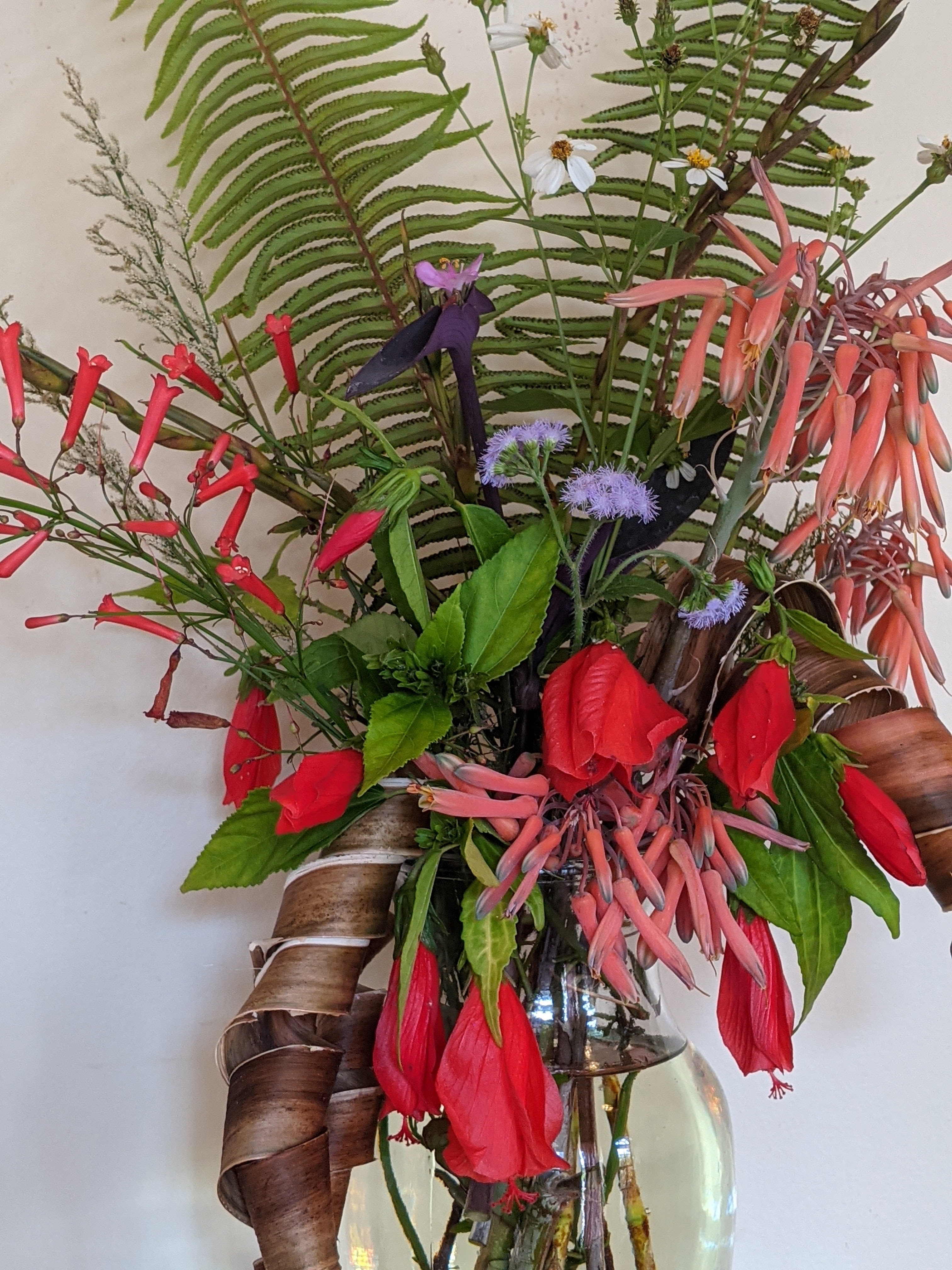
A closer view:

The larger red flowers hanging around the vase are Nodding Hibiscus (Malvaviscus arboreus); the smaller red flowers are Firecracker Plant (Russelia equisetiformis); orangey flower, the fallen Soap Aloe (Aloe saponaria); the blue flowers are from a Ageratum of some sort the botanists changed the name on – calling it Wild Ageratum and hoping I don’t regret leaving it in the garden. Purple foliage and flowers from Purple Queen or Setcreasea pallida, I think. White daisies are the dreadful Bidens alba or Spanish Needle, too cute to rip out all of them. Off white spikes are Juba Bush (Iresine diffusa) a charming native, more so than most of the human natives. Ferns are another charming native, Boston Fern (Nephrolepsis exaltata) hope I spelled that right. The darker green ‘lobster claws’ are flower stalks from a native Bromeliad.

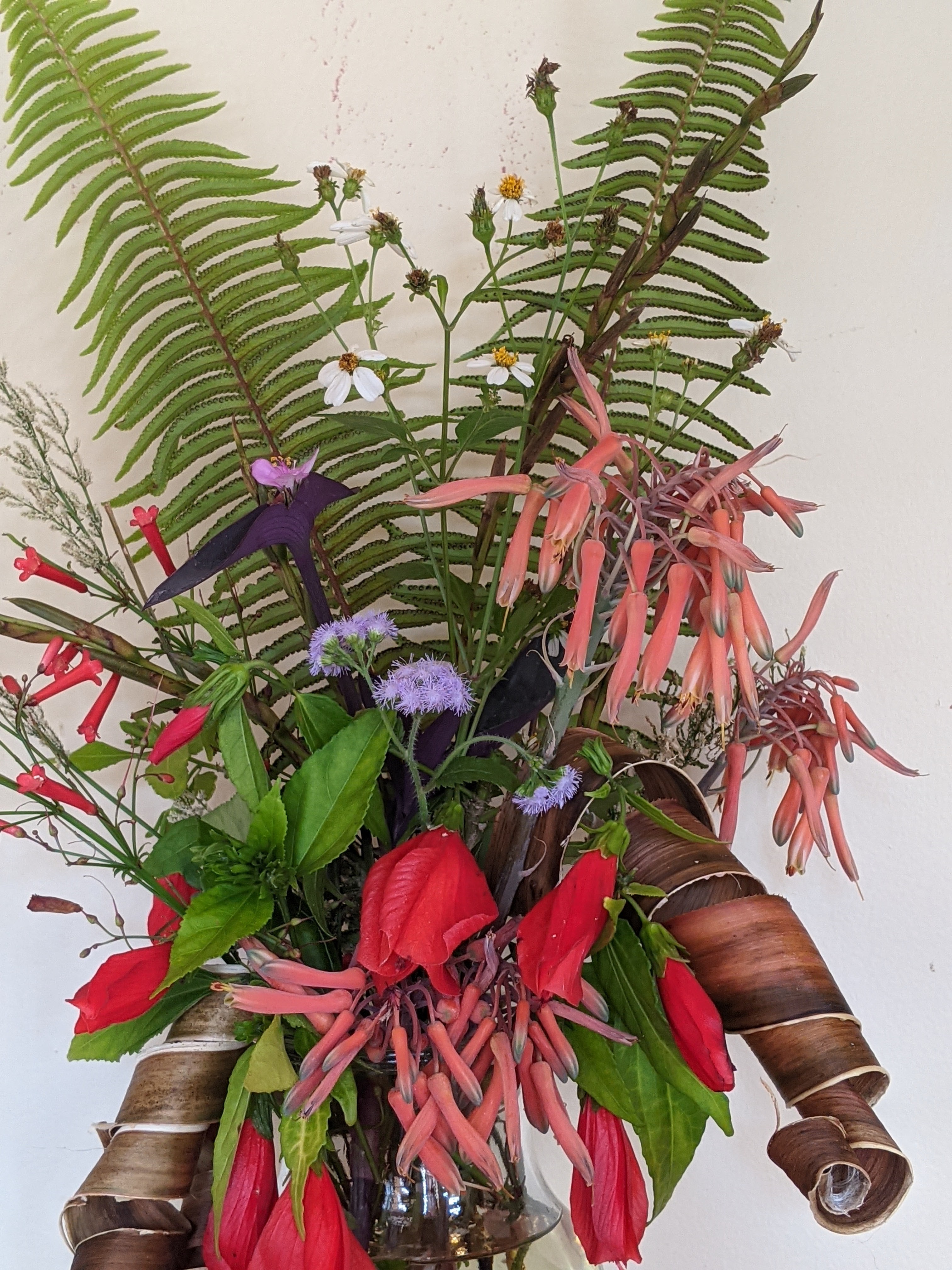
Another view:

Well, funky February foraging seems to be working.

Happy Gardening to all. Thanks to Cathy at http://www.ramblinginthegarden.wordpress.com for hosting and allowing me to share rambles in my Florida garden. Visit Cathy’s blog to see more vases.

Six on Saturday – Odds and Ends

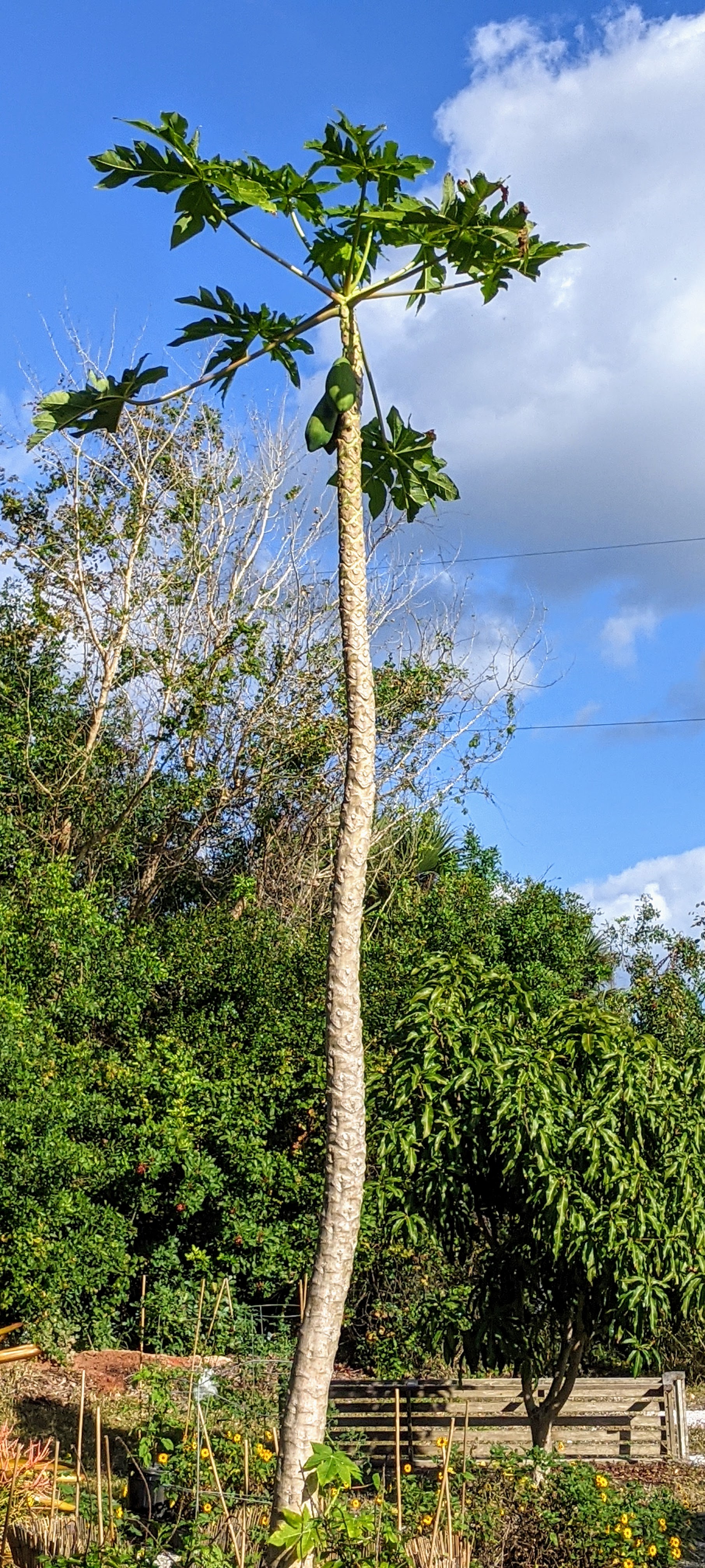
I had another Papaya for breakfast this morning. Several people commented about the size the Papaya tree attained in six years. Not sure everyone realized what a weird thing it is. It may be 20 feet tall, I am not sure. The tree in the background is a Thai Dessert Mango (Nam Doc Mai) it is about 10 feet tall.

I am told it is okay to chop the trunk of the Papaya off and it will grow another set of leaves and the fruit will be easier to reach. I am going to give this a try after the fruit is gone. The last crop of fruit was pulling the tree over with its weight.

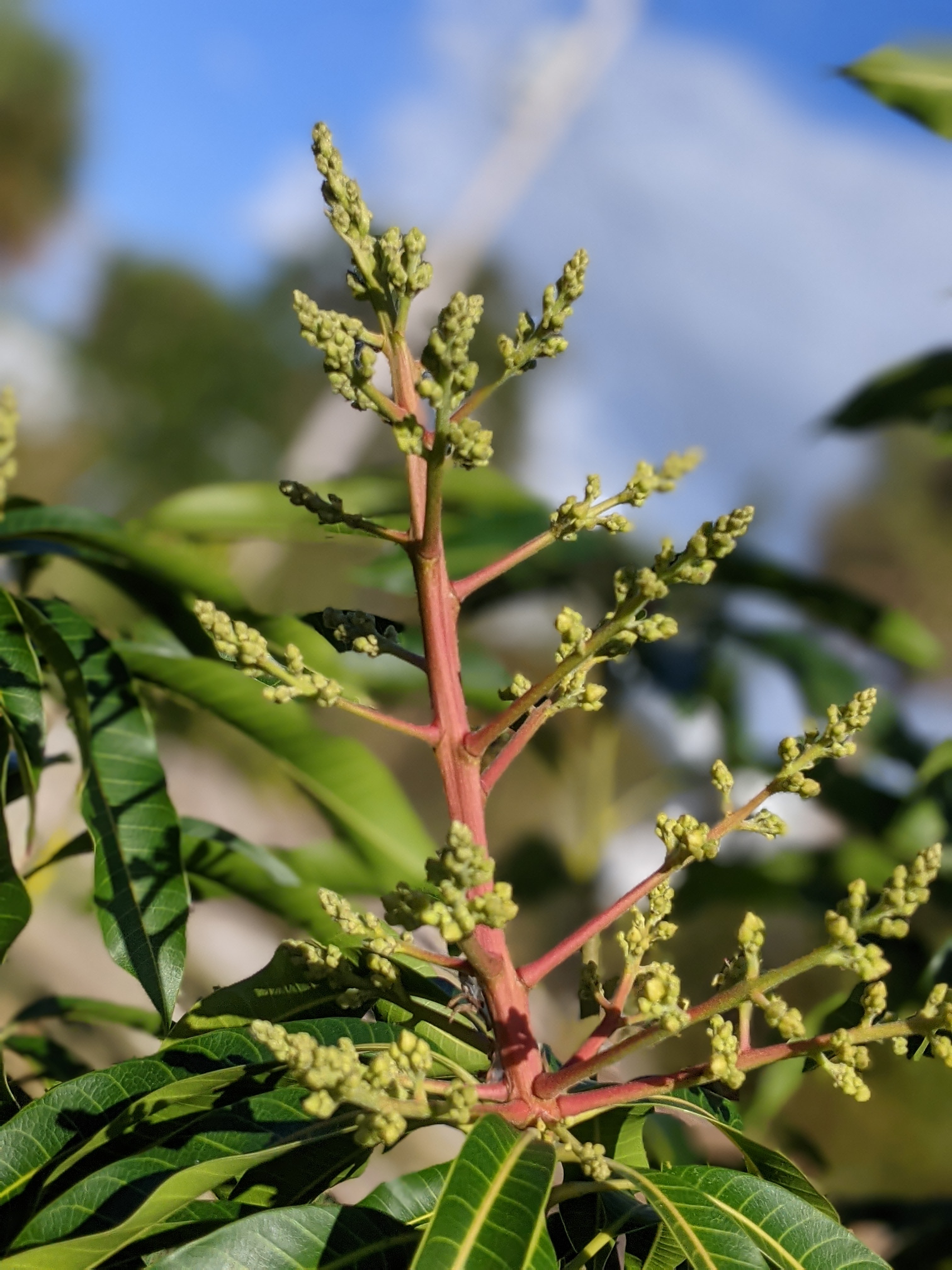
The Mangoes are flowering and setting fruit. This is a Glenn Mango flower.

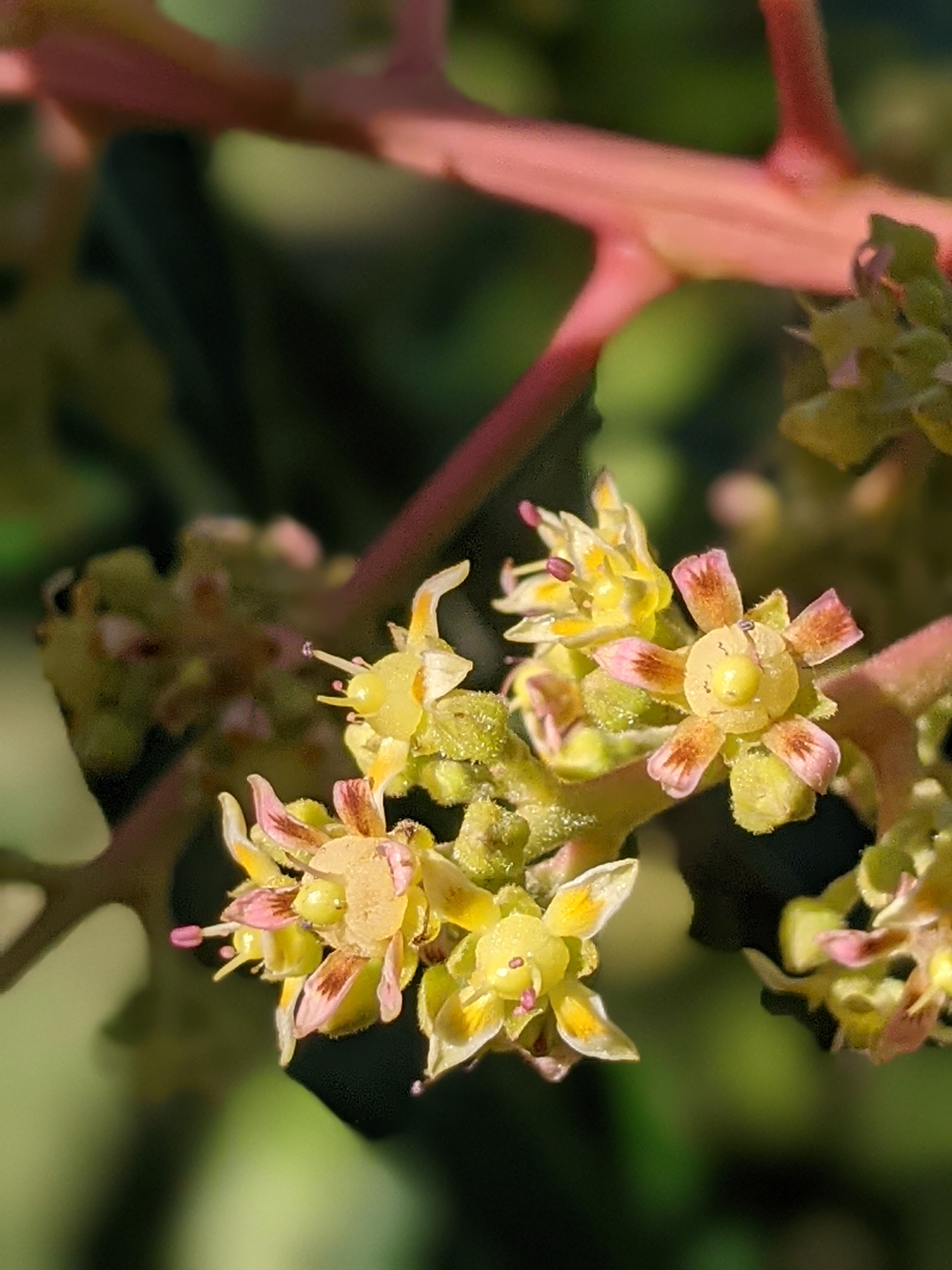
The fruit setting on the Glenn Mango.

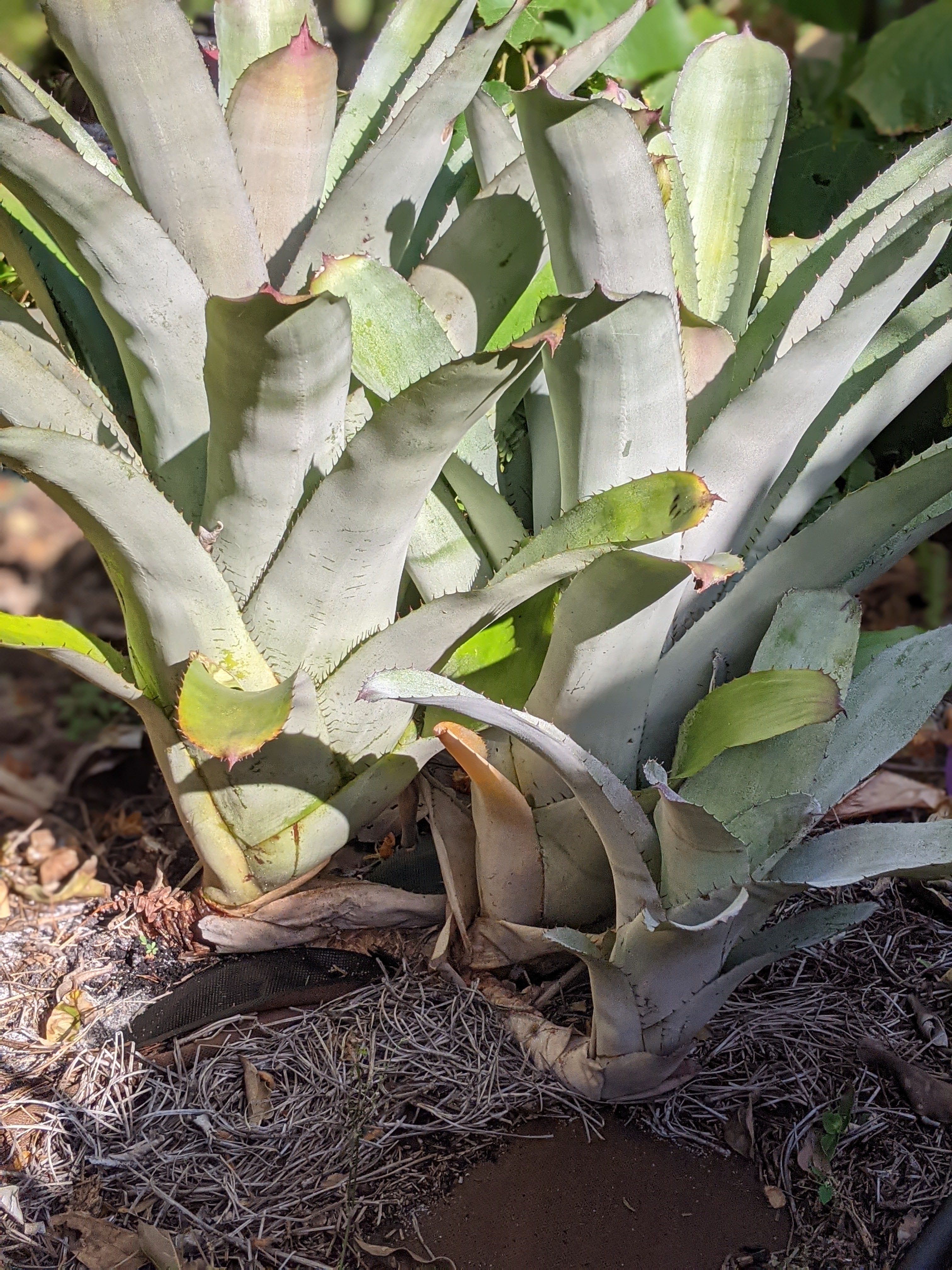
The Bromeliads are making pups. November through March is the optimum time to move them around. This is a Little Harv Aechmea. It is so sharp I am moving them to a place where I won’t walk by and get stabbed.

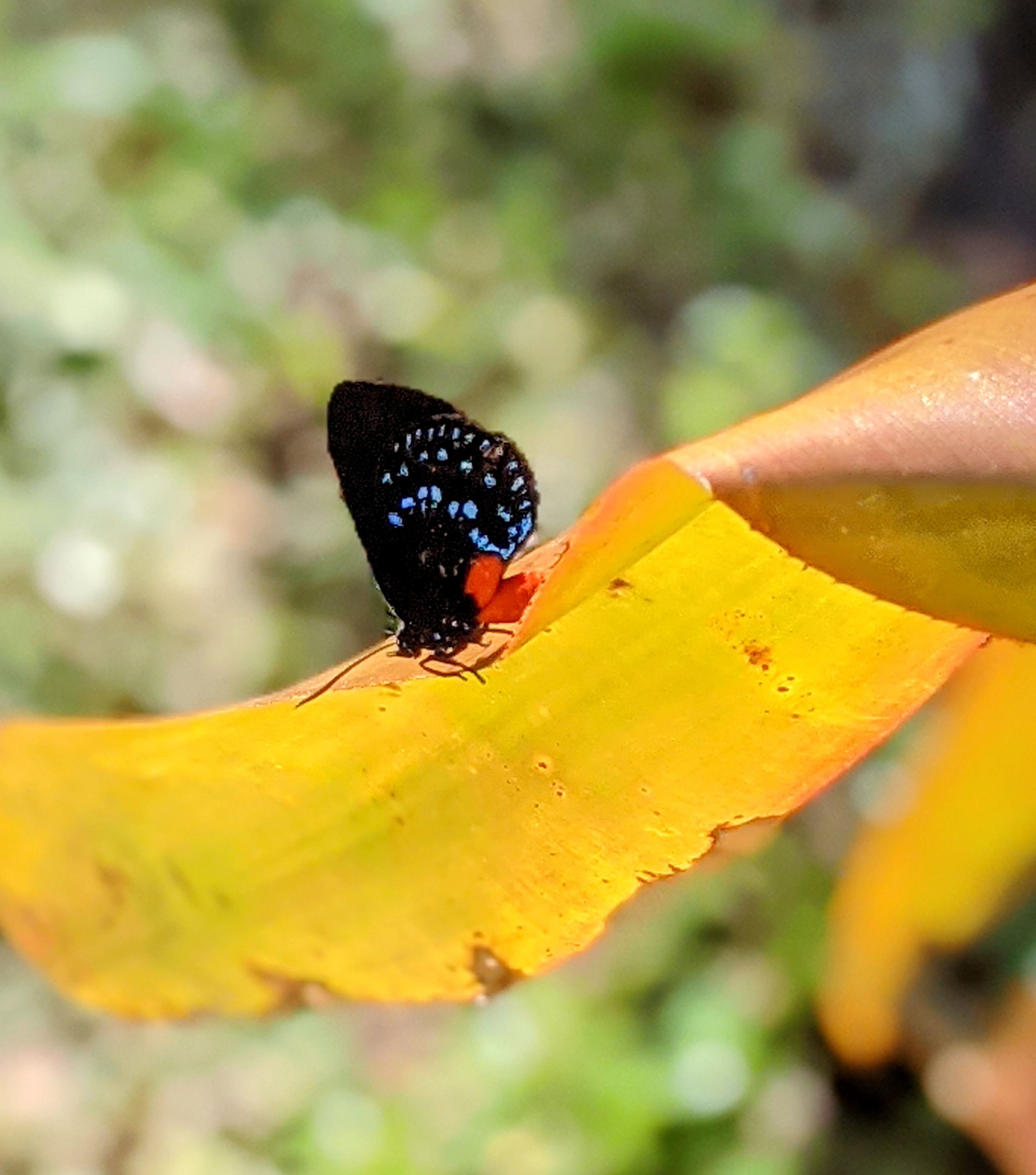
My first Atala Butterfly sighting this year. These butterflies appear in January and June. He or she was scouting my Coontie Cycads, their favorite host plant. Still looking for the eggs.

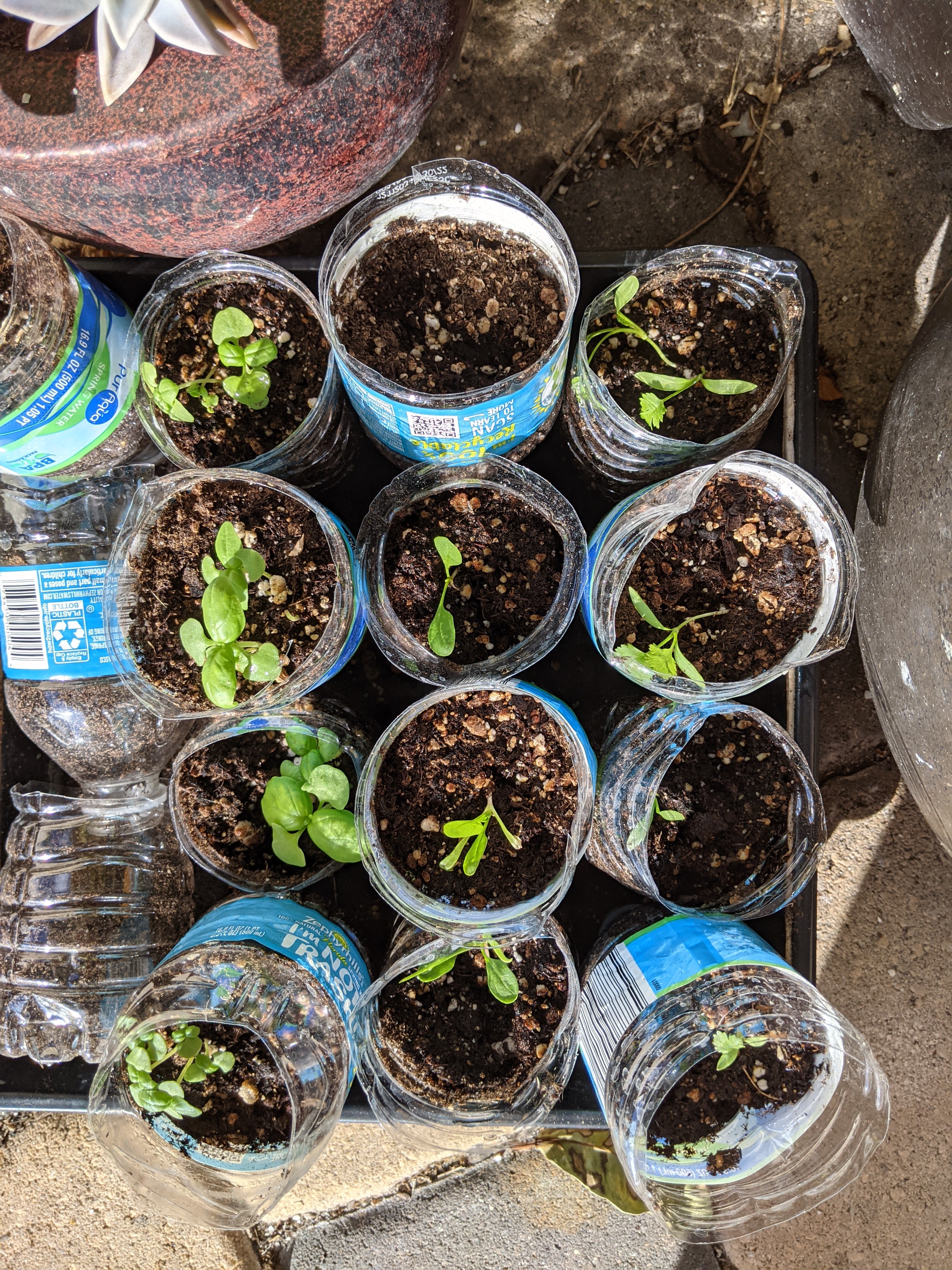
Gardening experiment number bazillion. I find the tiny seed starting trays too fiddly and decided to cut water bottles in half for pots. This has worked well, making mini greenhouses. I have Calendula, Basil, Spinach and Cilantro in these. I can cut the bottles to get the seedlings out and then recycle.

That’s my Six for this Saturday. Check out http://www.thepropagatorblog.wordpress.com for more fun from other gardeners.

Happy Gardening.

In a Vase on Monday – Go Big or Go Home

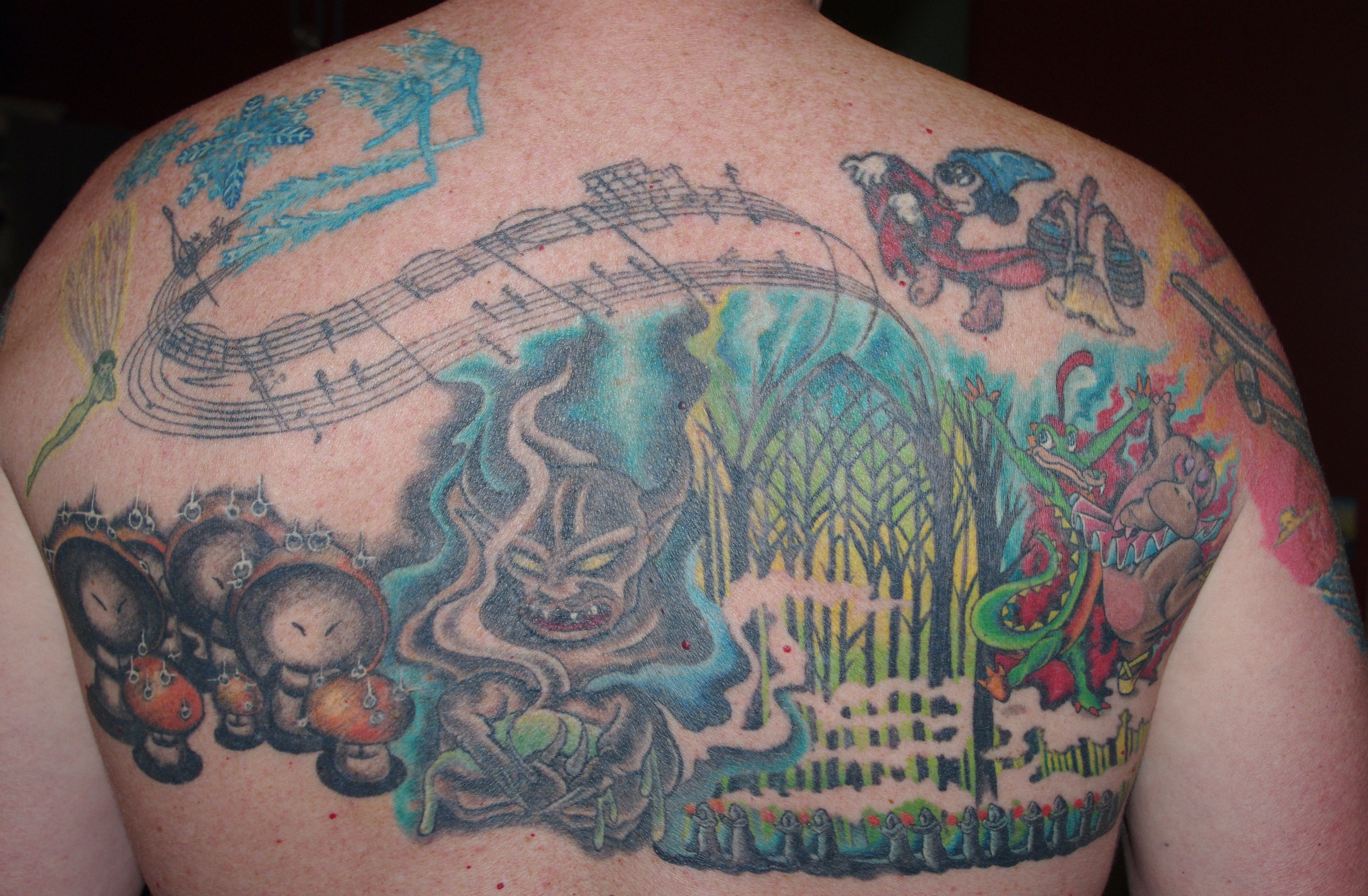
My husband went through a spell of getting tattoos, no idea what precipitated it, but he is known as “The Illustrated Man” and people tend to remember his artwork before they remember him. Anyway, the slogan from his favorite tattoo shop on Maui is “Go Big or Go Home.”

Here is his back, a tribute to the Disney movie, Fantasia.

I have taken the slogan to heart in the design of my tropical Rainforest Garden; big, coarse textured plants contrasted with ferns and smaller groundcovers, the colors almost reflect the rainbow. Yellow is missing. I plucked this vase there.

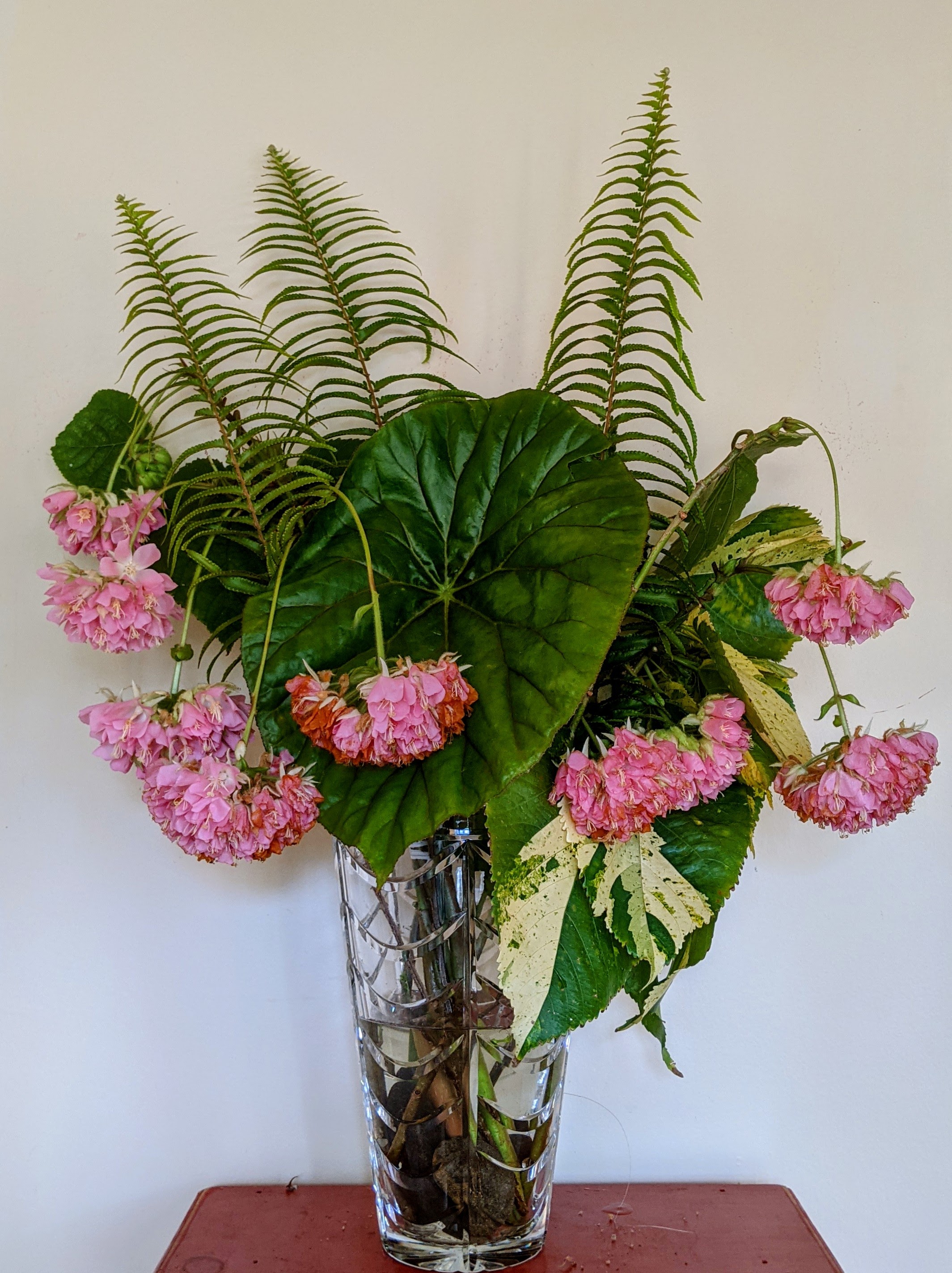
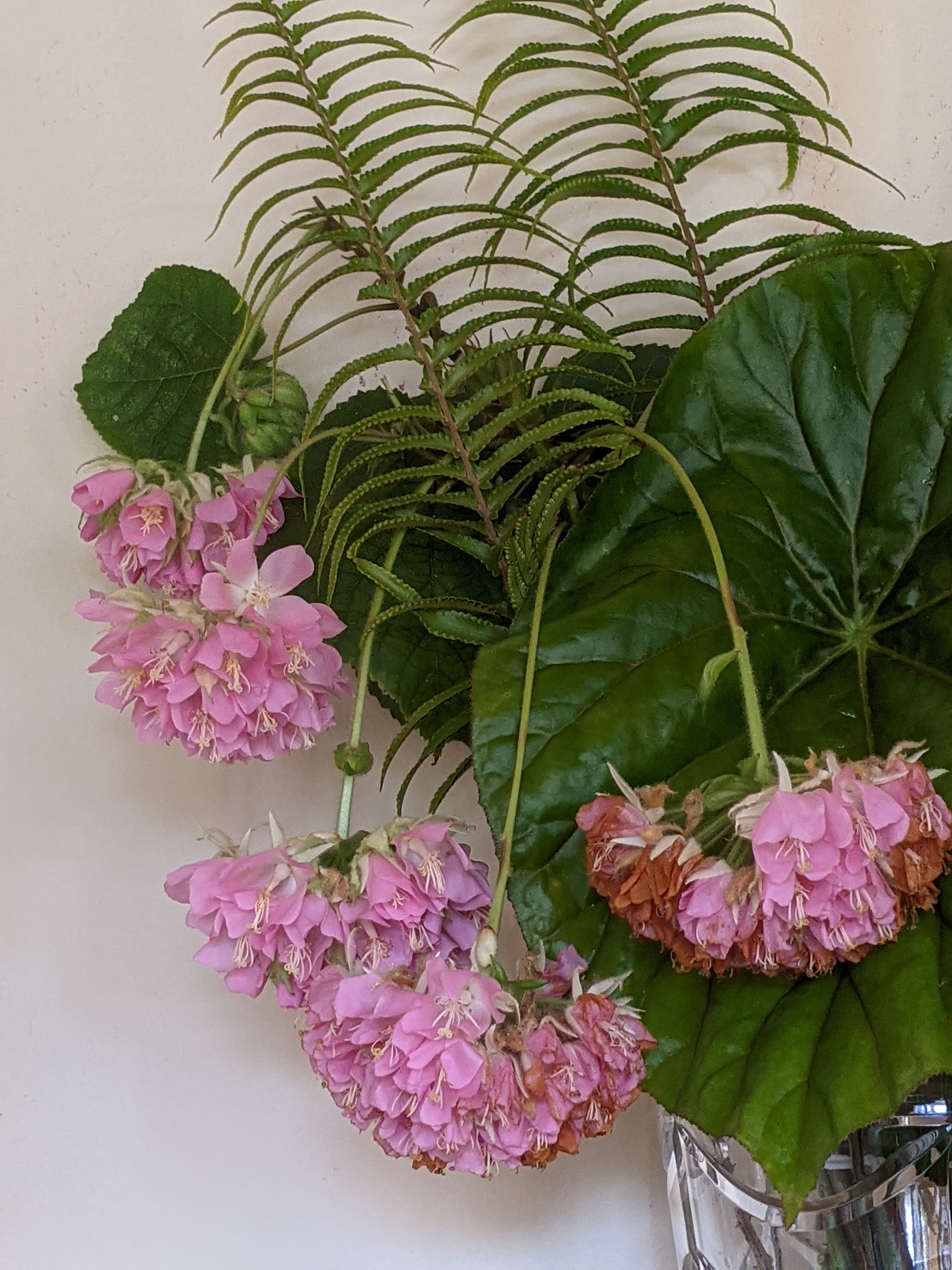
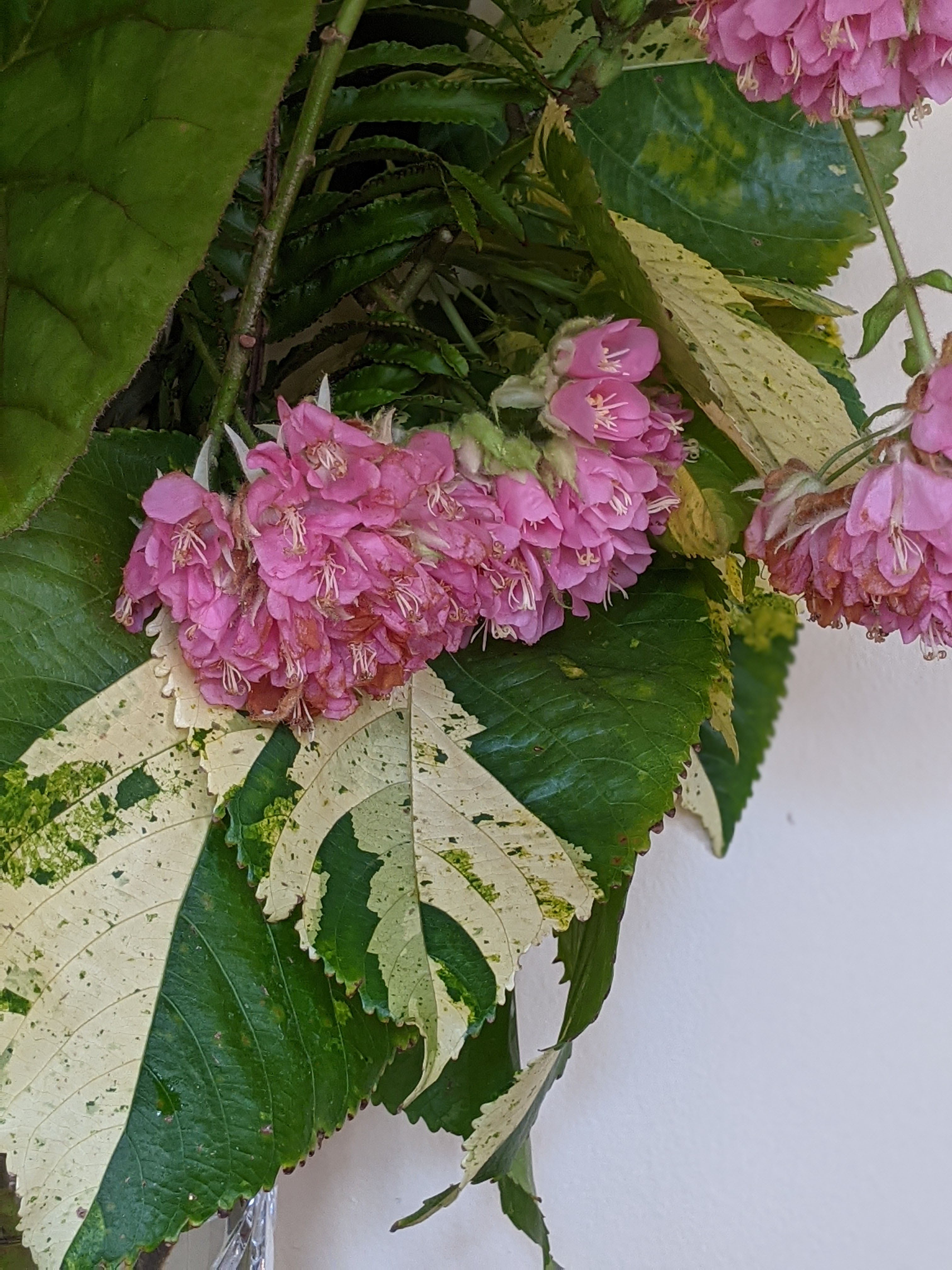
The big pink flowers are from the Tropical Hydrangea (Dombeya wallachii) – everything about this plant is big. The leaves average 9 by 9 inches, the plant itself is 12 by 12 feet after 3 years in the garden. The leaf in the middle is from Lotusleaf Begonia (Begonia nelumbiifolia) this anchors a corner in the garden. Everyone who walks through gasps and says, “what is that?” At least 4 feet tall and maybe 6 feet wide, it adds a Jurassic feel to the garden. The Ferns are Boston Ferns (yes, the famous porch fern) that grow huge in their native habitat and are easily three feet tall. I am pulling them out and throwing them away as they are out of hand.

The other side of the arrangement has “Java White” Copperleaf (Acalypha wilkesiana ‘Java White’). Another prolific grower, this turns green in shade, and is a bit of a trick to site properly…it may be moved further into the sun.

The container, a large crystal vase, a long ago wedding gift from a dear friend I treasure. The vase and the friend.

As always, thank you to Cathy, at http://www.ramblinginthegarden.com for hosting this addictive meme. I am sorry I missed last week’s tribute to Dorris. I will miss her posts and images from her garden.

In a Vase on Monday – Healing Energy

The events of the past week have left me non-plussed. A vocabulary word provided by an old friend’s ninety year old father. Non-plussed from the dictionary “surprised and confused so much they are unsure how to react.” My husband and I sat in our living room, open mouthed, watching events unfold in the United States of America I would have never dreamed possible. I decided a vase reflecting the colors of another crystal with healing energy from my father’s collection was in order. The vase is a Fostoria crystal container that belonged to my mother in law. My husband refers to them as butterscotch pudding bowls. I have no idea what they are really for, but they make a good vase.

My father, the geology professor, has been gone since 2003. I have family rocks. I think this is a Flourite crystal. They are known for their multi colored hues. This one is purple and coke bottle green with some greys and whites. They are know for their healing energy, I think that energy should be tapped wherever we can find it. Energymuse.com says this about Flourite – “The perfect prescription for a case of existential burnout, the purple color in the Fluorite crystal help you discover your divine purpose in life. It opens and stimulates the third eye chakra, clearing the way for spiritual expansion and a deeper sense of inner peace.” Existential burnout! Yep, you’re looking at it. The instructions go on to say carry the crystal with you.

The flowers in this vase are – in purple, Lantana of unknown origin; in white, Sweet Begonias (Begonia odorata ‘alba’); green and pink flowers are buds of Tropical Hydrangea (Dombeya wallachii); solid purple foliage is Purple Queen (Setcreasea pallida); varigated purple foliage is Transcandentia zebrina; green background foliage is Asparagus Fern.

Just for fun, I did another vase. I call this one the Pea shooter. The vase is a shot glass for tequila from my favorite niece’s wedding. The peas are the Bromeliad in the vase – this is an Aechmea Bromeliad, very weird flower that looked like canned peas to me. The curl is dried Blanchetiana Bromeliad foliage and the greenery is the other Asparagus fern that pops up in my garden.

Anybody else need a shot of tequila?

Thanks always to Cathy at http://www.ramblinginthegarden.wordpress.com for hosting In a Vase on Monday. To see more vases (likely without tequila) visit the link….

Happy Gardening!

In a Vase on Monday – Spring into 2021

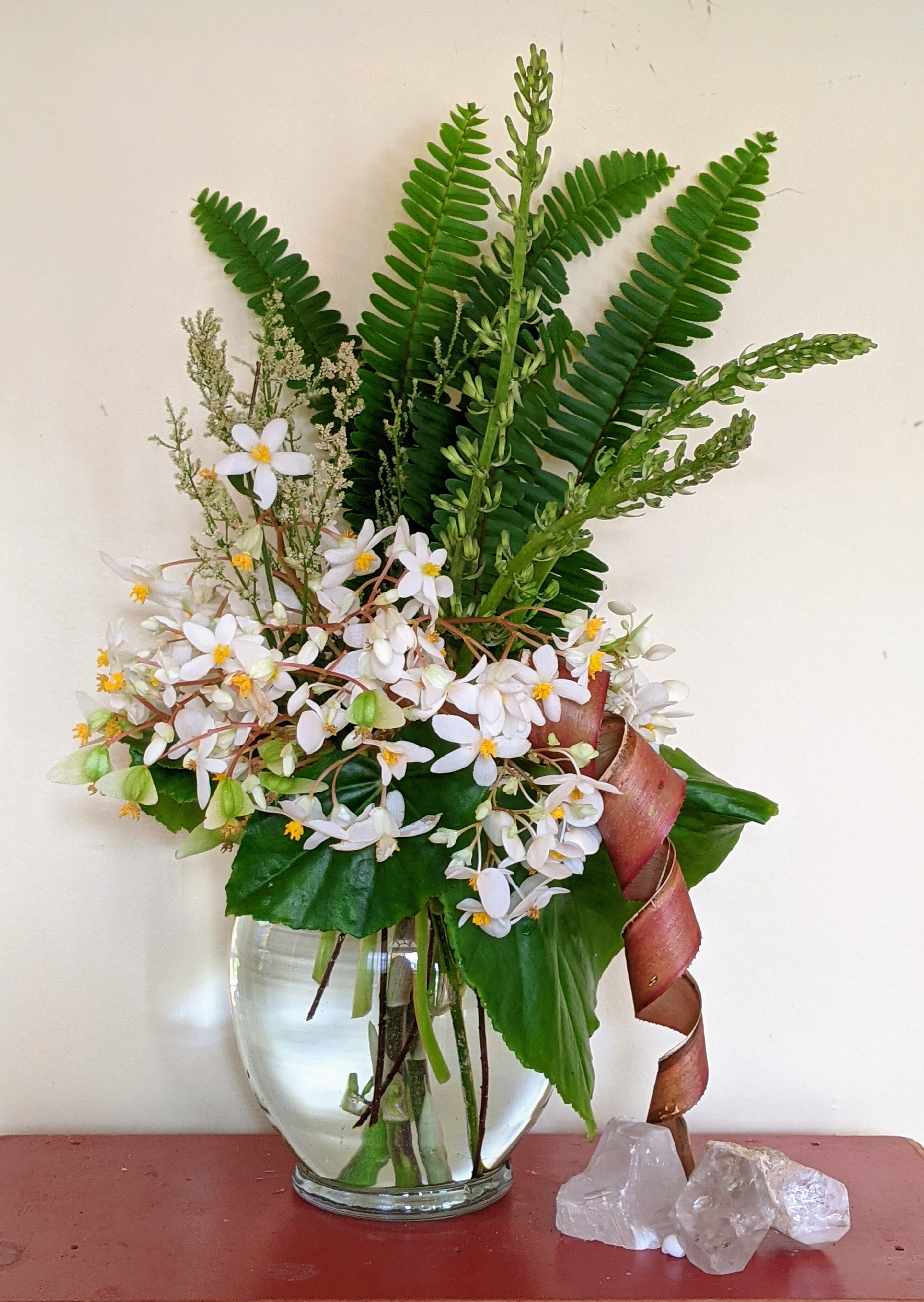
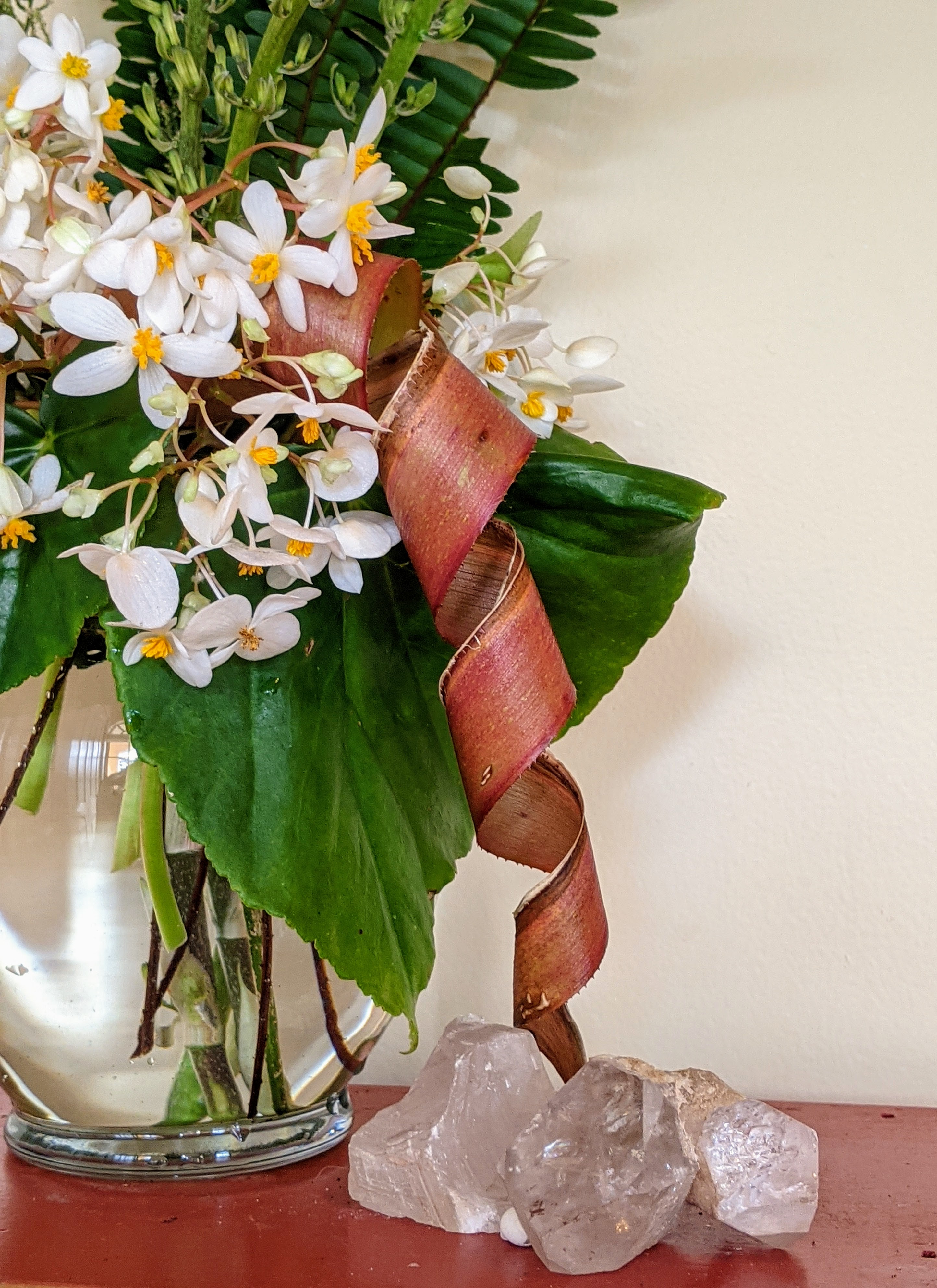
I dressed my vase in winter whites this Monday, adding a catapult of red dried Bromeliad foliage ribbon to sling purifying white crystal energy into this new year. The crystals are White Quartz; certainly collected in the field by my father, the geology professor. It seems White Quartz has the properties to purify negative energy and is recommended for spiritual healing. I am thinking of where to place these crystals for maximum effect. We have never needed the White Quartz more.

A closer view:

The white flowers and foliage are from Sweet Begonias, (Begonia odorata ‘alba’) a bulletproof perennial in my garden. These grow in sugar sand and near total shade, they are irrigated and flower off and on year round while lending coarse green texture to the garden. The Sweet Begonias amaze me, I would have wilted if left where they thrive. The red catapult is a remnant of my Christmas wreath. I wrapped the wreath with Bromeliad foliage and was left with some long dried curls – I thought they were kind of cool and saved them. The decorations would have lasted longer. Not wishing to tempt fate, I took everything down..is it only the American Deep South that thinks all decorations must be down before January 1st or bad luck will haunt you in the new year?? I am hoping for double good luck with the crystals!

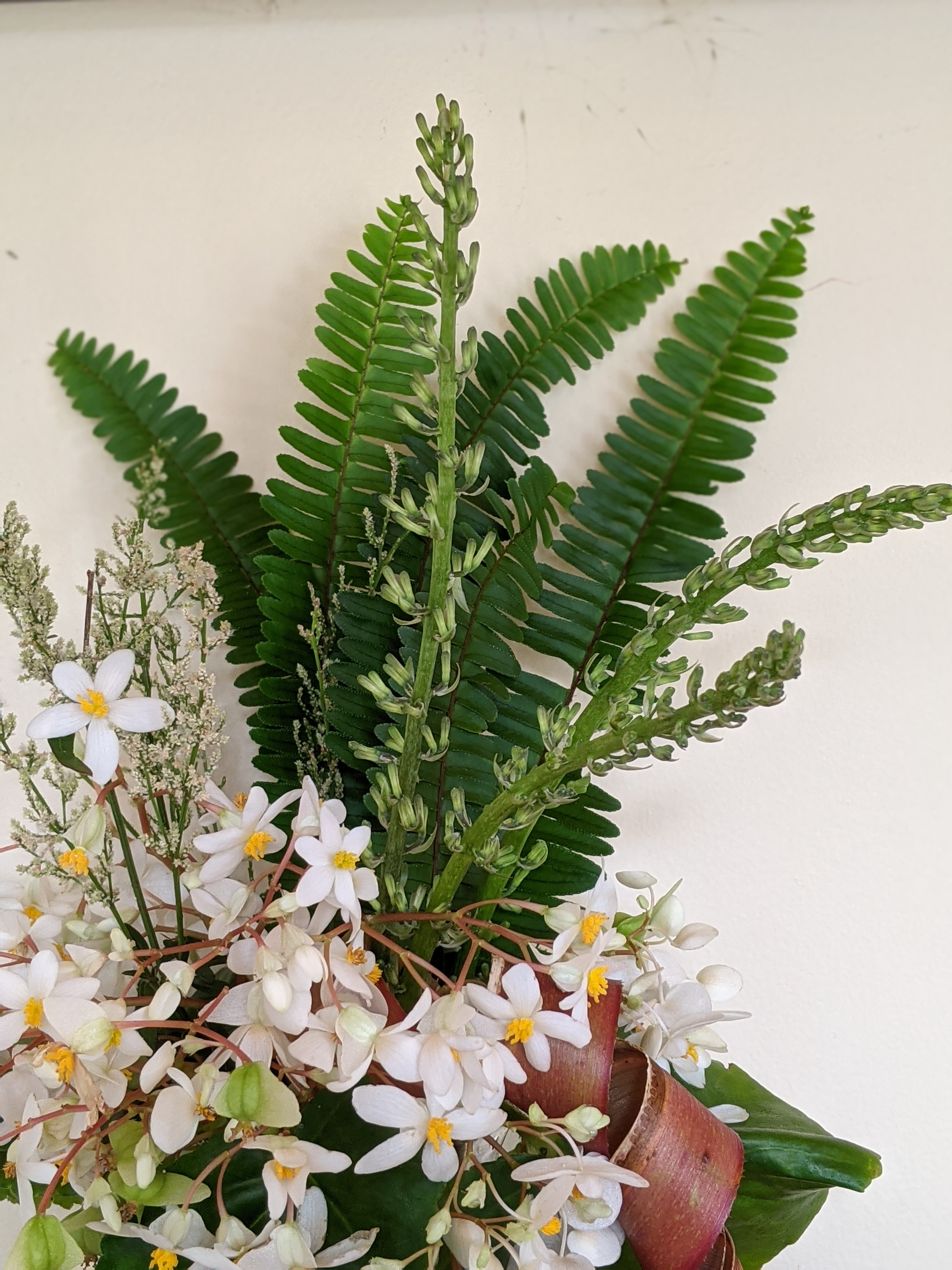
Another view:

More winter whites from my garden. The spikes on the right hand side of the image are buds for the flower stalk of Snake Plant, Mother In Laws Tongue..etc. Sansevieria, if you want the Latin. The Snake Plant infests my garden, and it literally takes a bulldozer to get rid of it. The off white spikes are from Juba Bush (Iresine diffusa) a Florida native that just appeared one day. Ferns are Asian Sword Ferns, another lovely interloper.

Maybe I should put the White Quartz in the garden?

Happy Gardening and Happy New Year to all and Thank You to Cathy at http://www.ramblinginthegarden.com for hosting another year of In A Vase on Monday. To see more vases visit Cathy at the above link.

Six on Saturday – Holiday Surprises

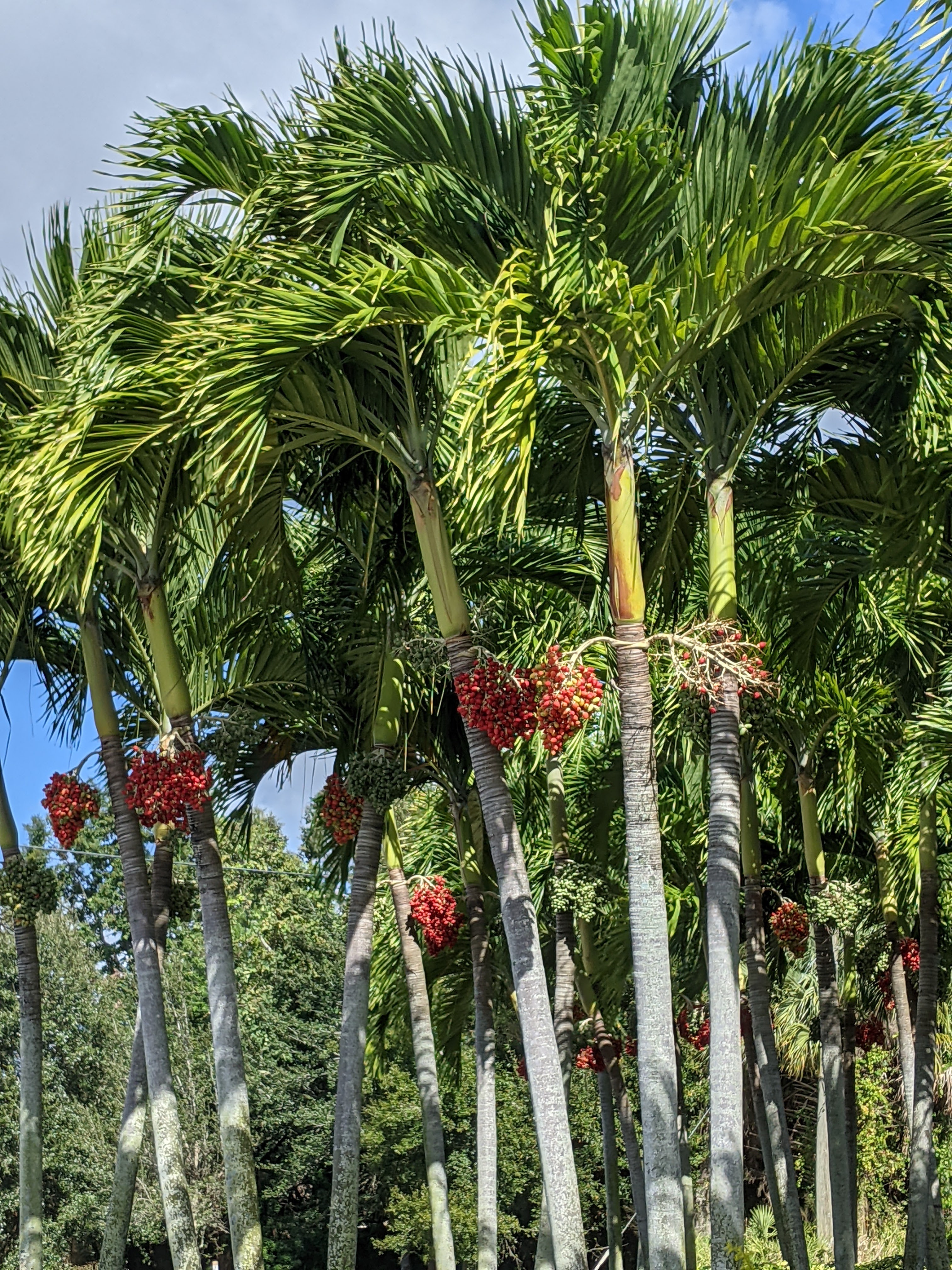
I am joining The Propagator’s gang this Saturday after Christmas to share some surprises the garden has granted me. Not all six are from my garden. These are Christmas Palms (Adonidia merrilli) doing their thing by the side of a nearby road.

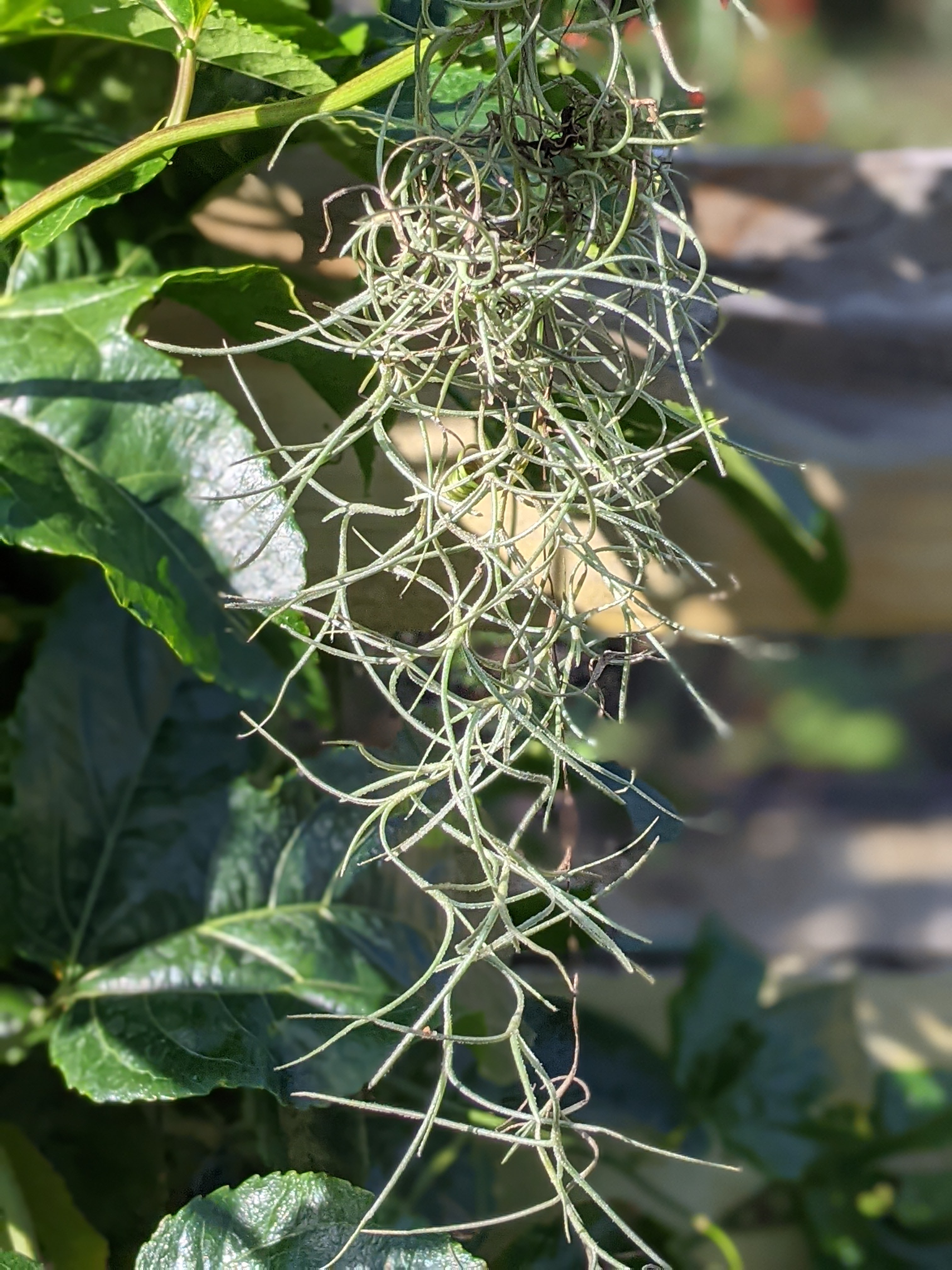
Next, we have some Spanish Moss, a native Tillandsia Bromeliad. Although common in Florida, I rarely see it in my garden. I pruned it out of a Firebush by accident.

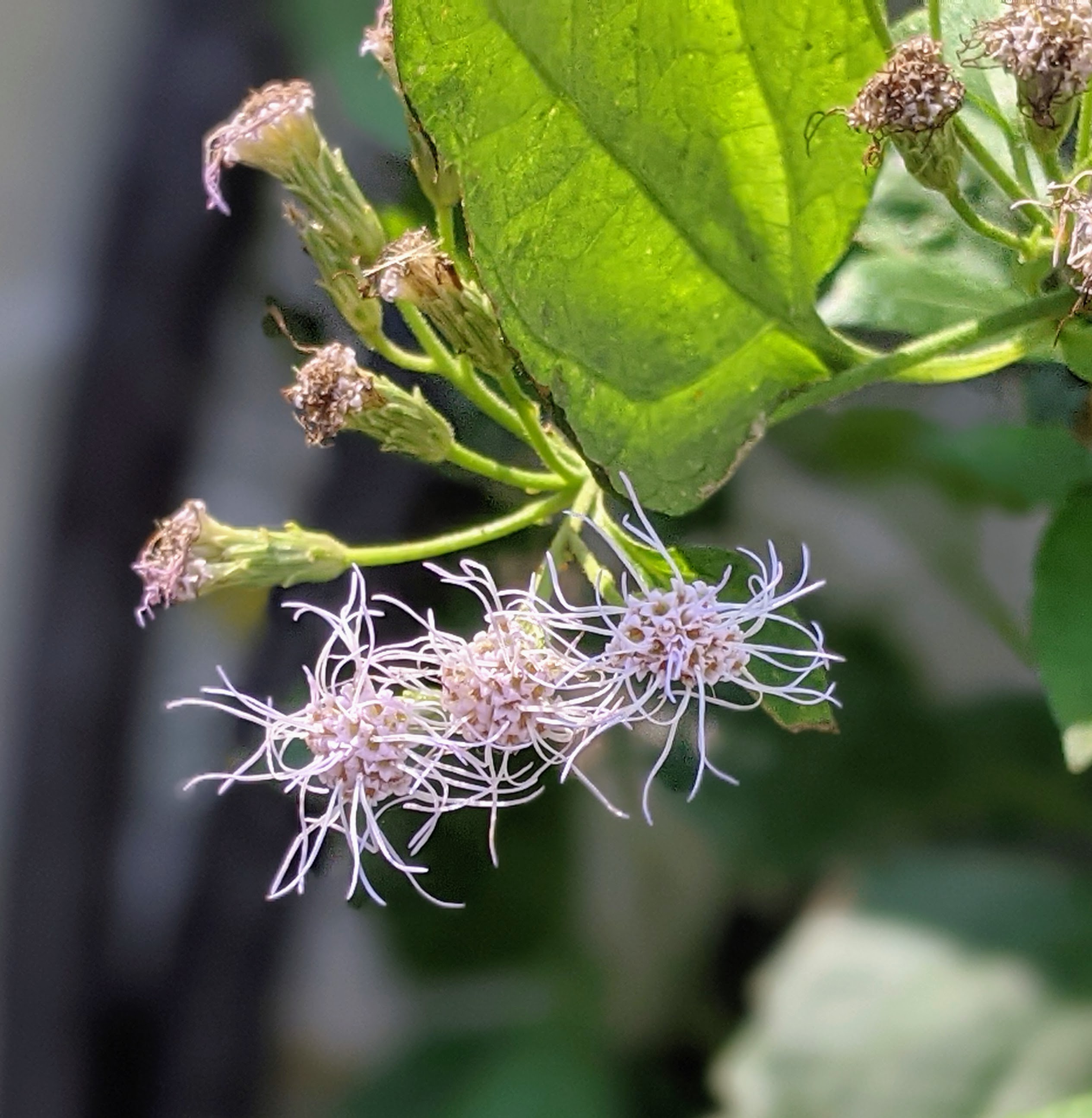
Another stringy surprise, a native Ageratum, Blue Mist Flower (Conoclinum coelestinum). It seems most native wildflowers in Florida like “moist meadows” – I have a desert like sandy soil, so this was a real surprise. Growing by the air conditioning condensor..

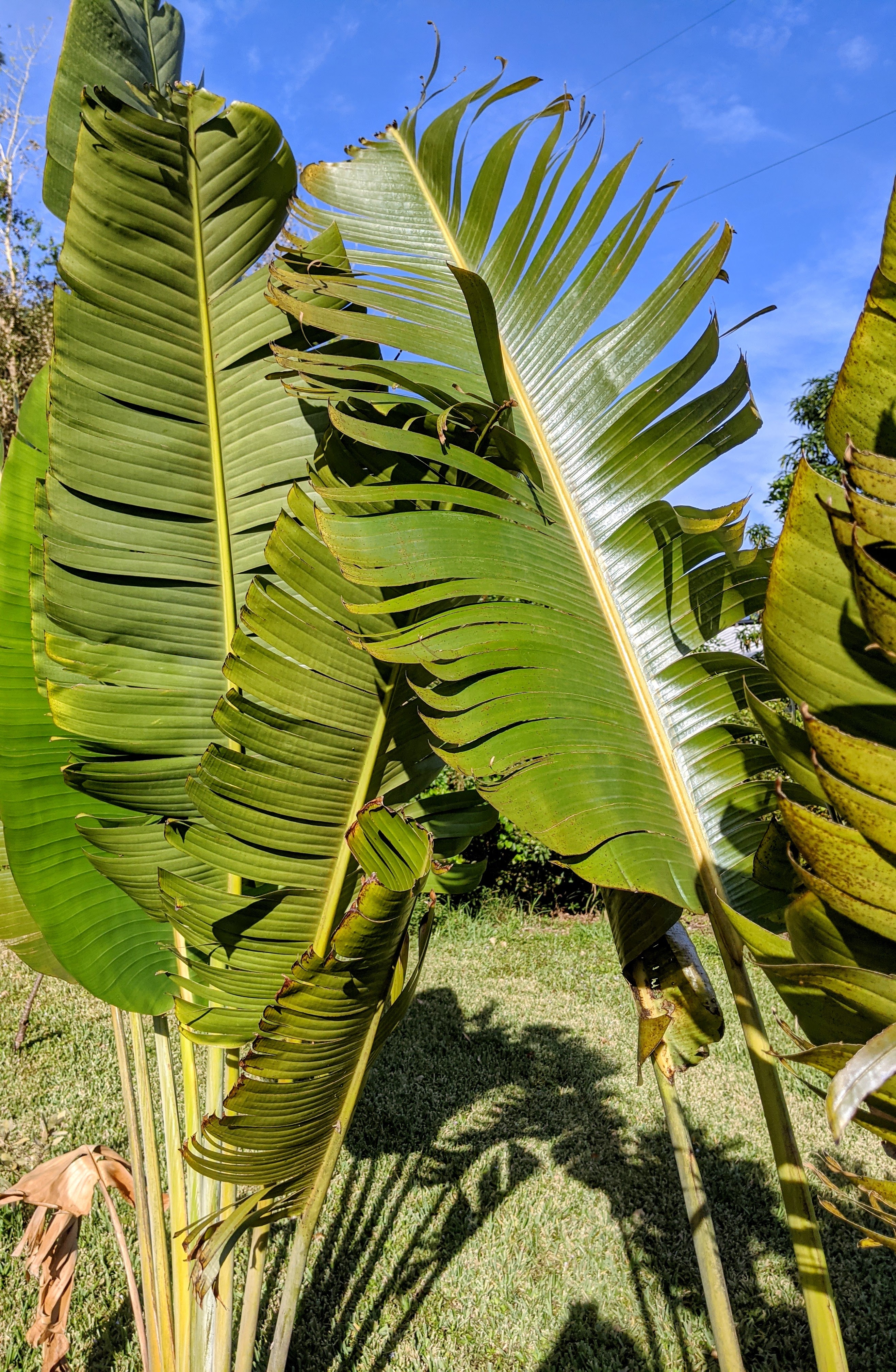
Yet another stringy surprise, the once solid leaves on the Traveler’s Palm, shredded by the wind.

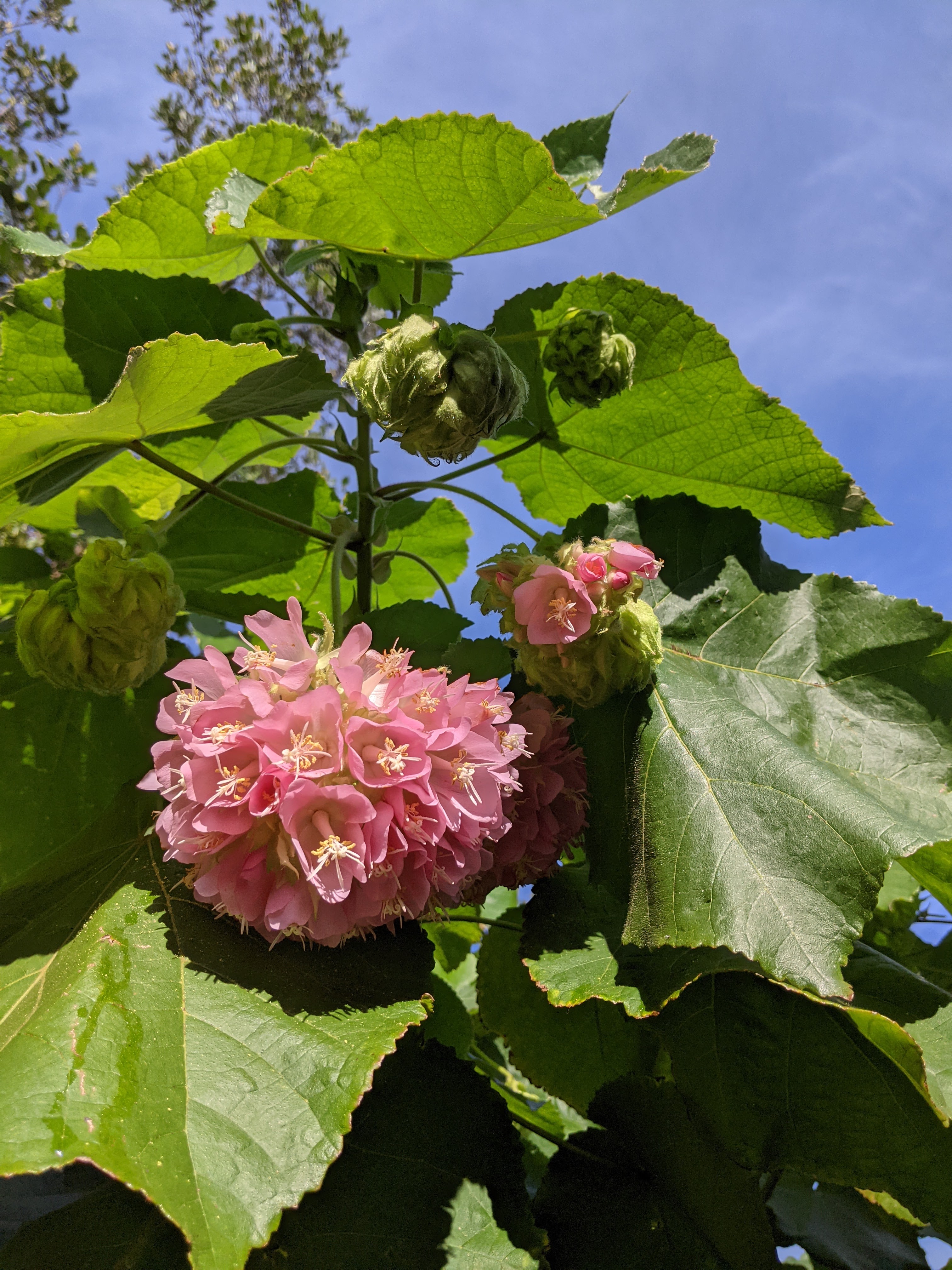
I am delighted by this surprise, despite cold weather, we are freezing with temperatures in the 40s – the Tropical Hydrangea (Dombeya wallachii) has started its show.

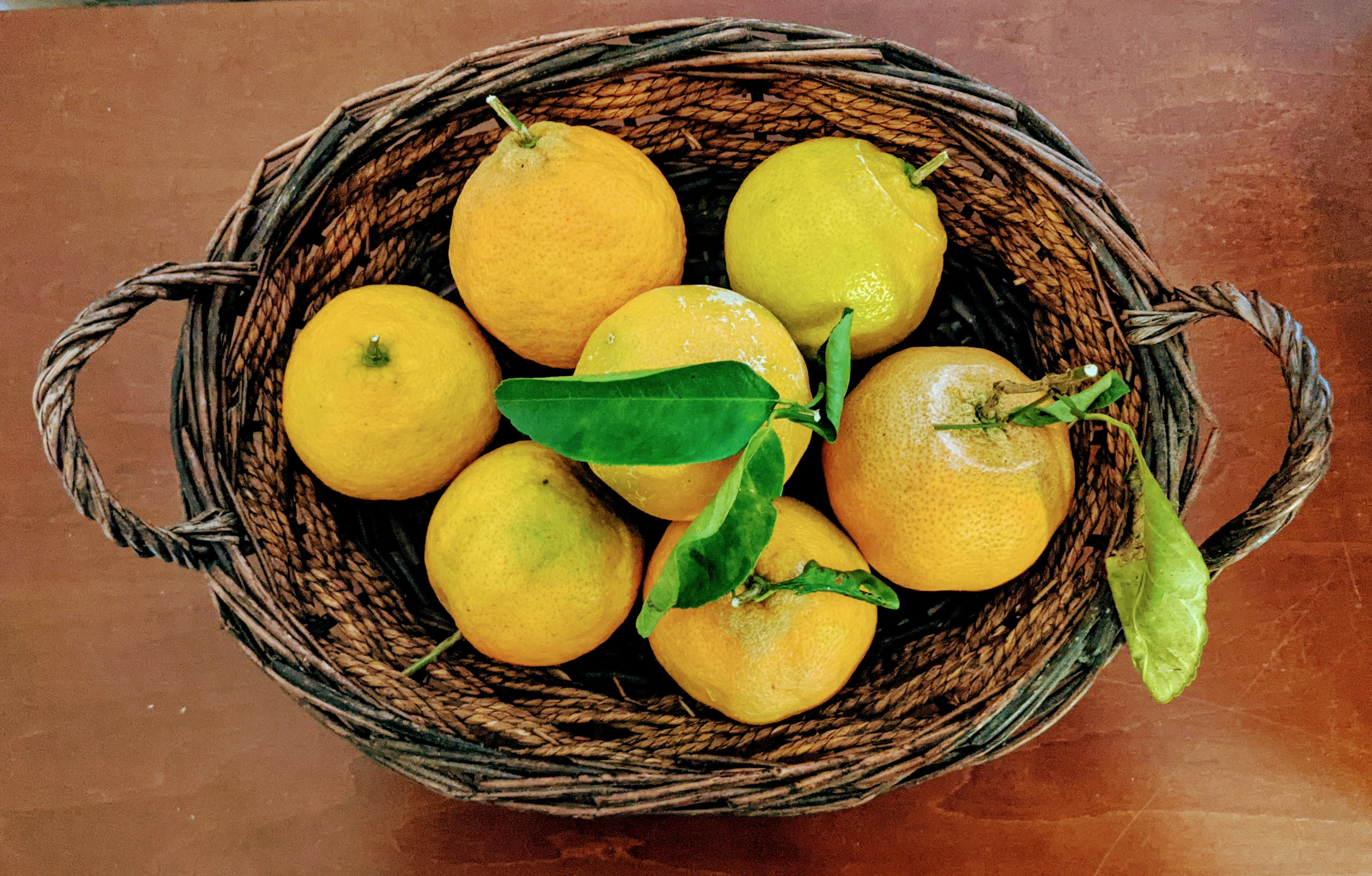
Another nice surprise from my neighbor, I found a basket of Rangpur Limes on my front porch Christmas morning.

That is my Six this Saturday, to see more posts from gardens around the world visit http://www.thepropagatorblog.wordpress.com.

In a Vase on Monday – More Summer

It is still a bit too warm for my taste in my garden (mid 80’s F), though cooler weather is on the way. November 30 is the end of hurricane season, hooray!! More good gardening news, my tomatoes have set fruit and we have eaten beans and radishes from the garden.
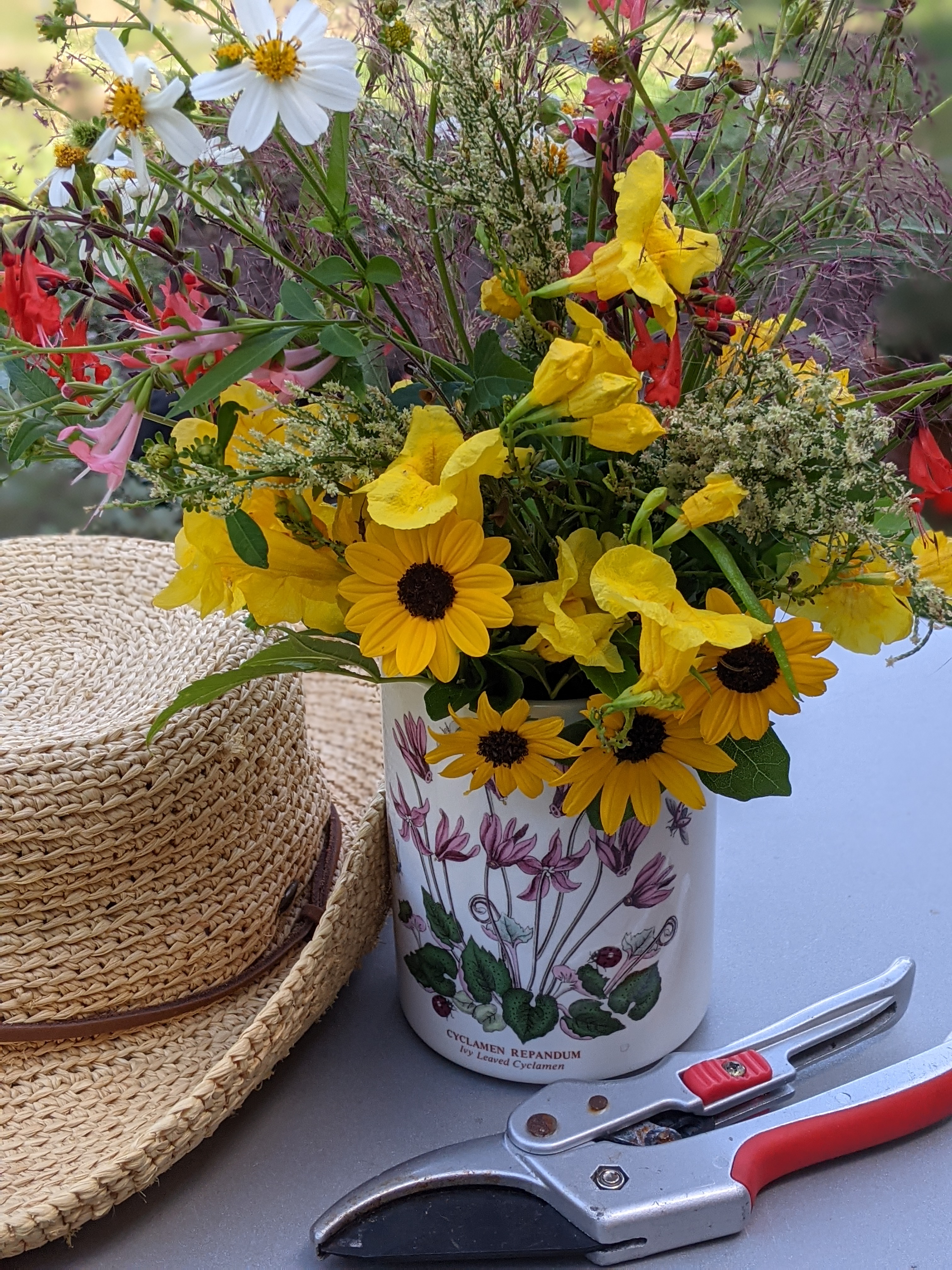
The flowers are reflecting summer to me, with the exception of the Muhly Grass, Muhly means fall in South Florida. The Portmerion canister is a wedding gift from long ago, never used to store anything – it occasionally serves as a vase.

A friend issued a challenge to use all native plants in the vase (it may be in a magazine) So, all the flowers are, unlike me, Florida natives. Here is another view.

White daisies are Spanish Needles (Bidens alba), a bit of an overzealous seed producer, I am only too happy to decapitate for vases. The yellow daisies are Beach Sunflowers (Helianthus debilis), cheerful year round but I asked most of them in the front to leave the garden, too much trouble, again a zillion seedlings. Yellow bell shaped flowers are Tecoma stans, a newcomer in my garden also called Esperanza, grace in Spanish. I think I am going to love this one and may add a few more. Pink, red and apricot spikes are all Tropical Red Salvia, colors vary with bees! Off white background flowers are Juba Bush (Iresine diffusa) and the fall defining Muhly Grass (Muhlenbergia capillaris) serve as a backdrop.
I hope everyone is surviving lockdown. The horizon is looking so positive now, we just have to put our heads down and get through this.

Happy Gardening!!