Six on Saturday – Summer Beginnings

Saturday has rolled around once again. Time to take a stroll around the garden to see what is new and compare notes with other SOS gardeners. To take a virtual stroll through gardens around the world visit Jim at http://gardenruminations.co.uk

After a dry week (I had to get out the hose!) it started raining again yesterday. This morning I took some photos and then a thunderstorm blew up offshore and it is now pouring down rain. When researching recommendations for when to plant in South Florida you often see at the start of the rainy season – June 1 as a good date. This works if it is indeed rainy, otherwise, the plants fry. I try to get everything in the ground in March. I am seeing some mad growth in the garden and other plants rescued by the rain.
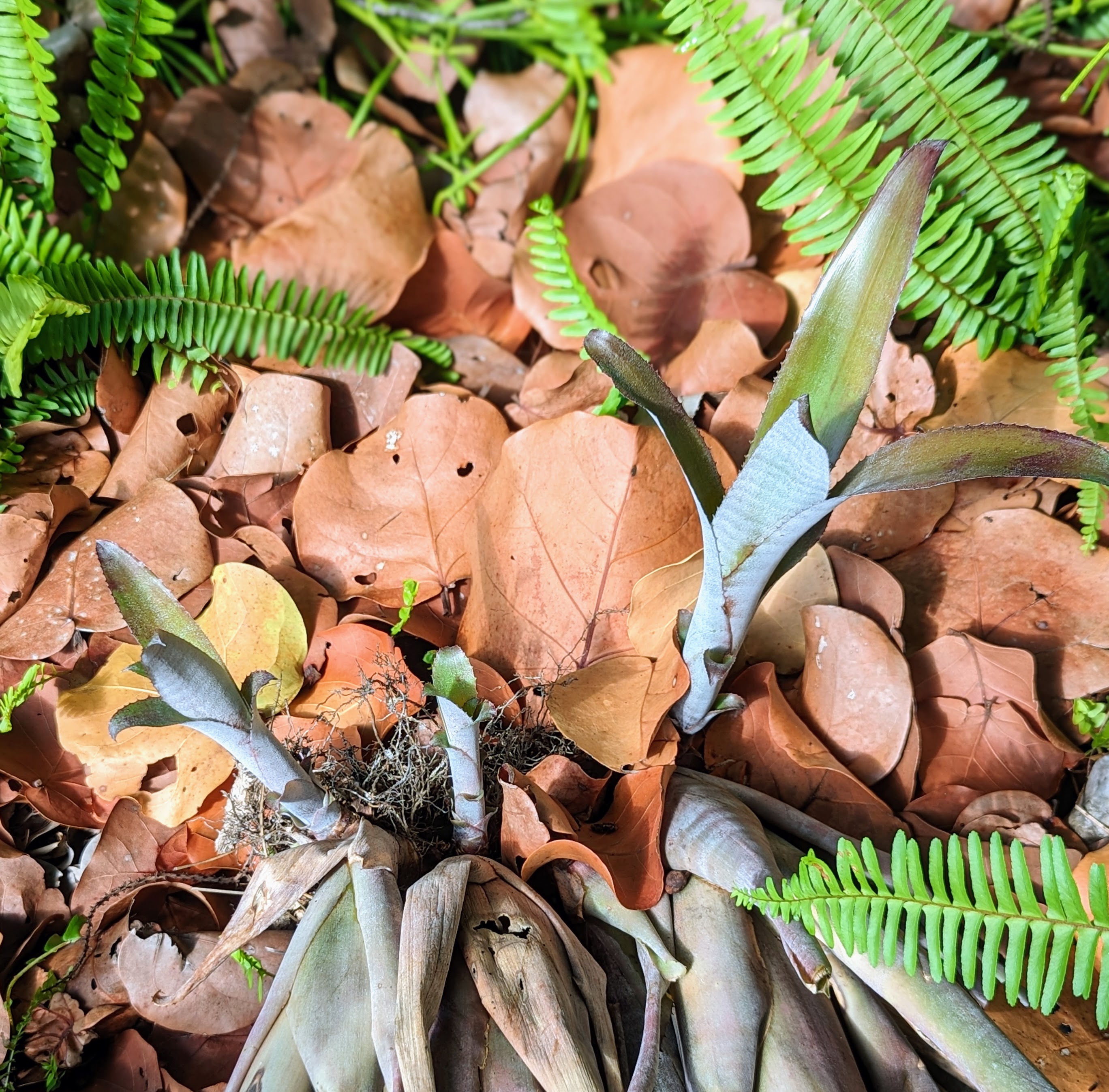
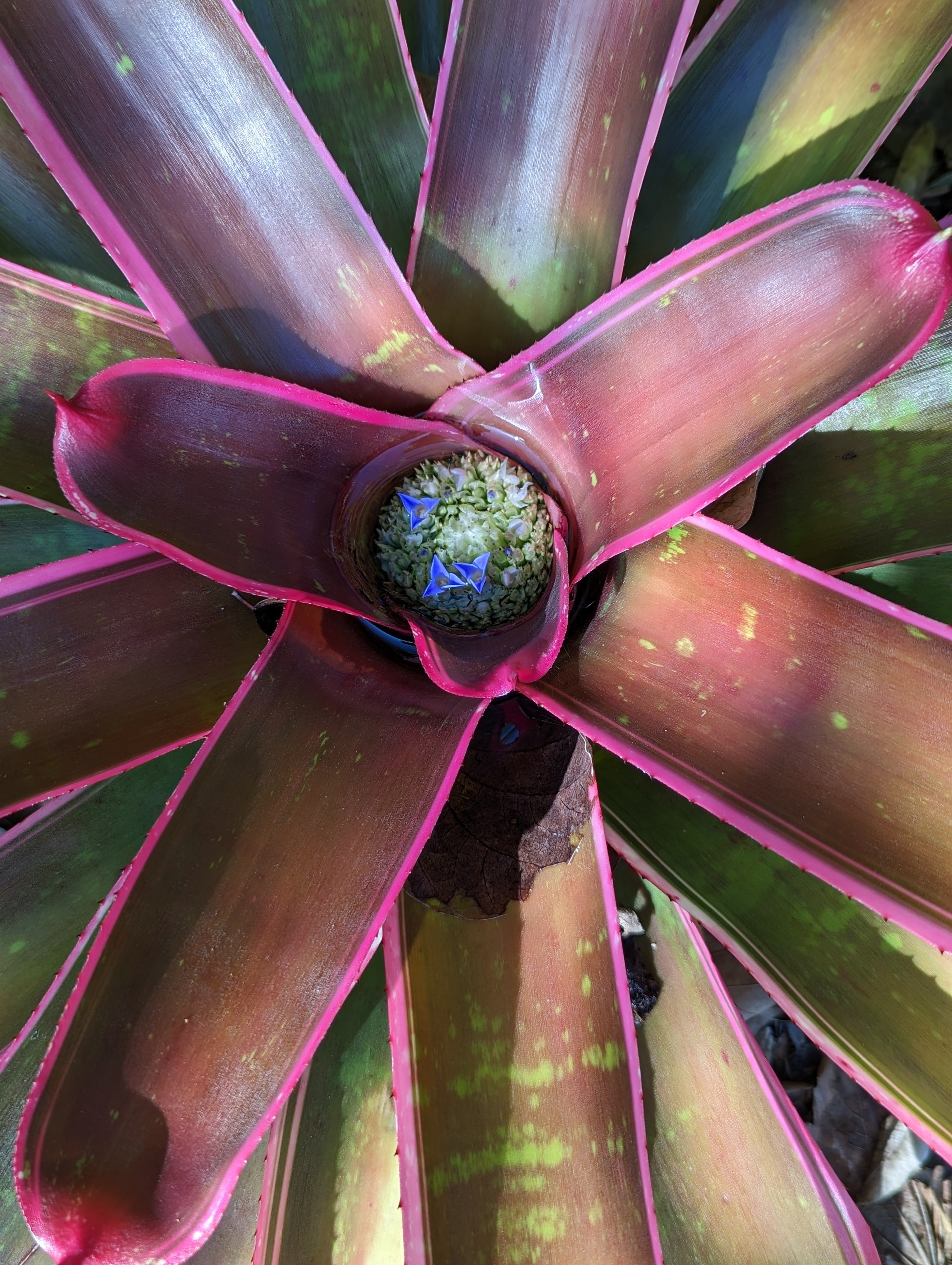
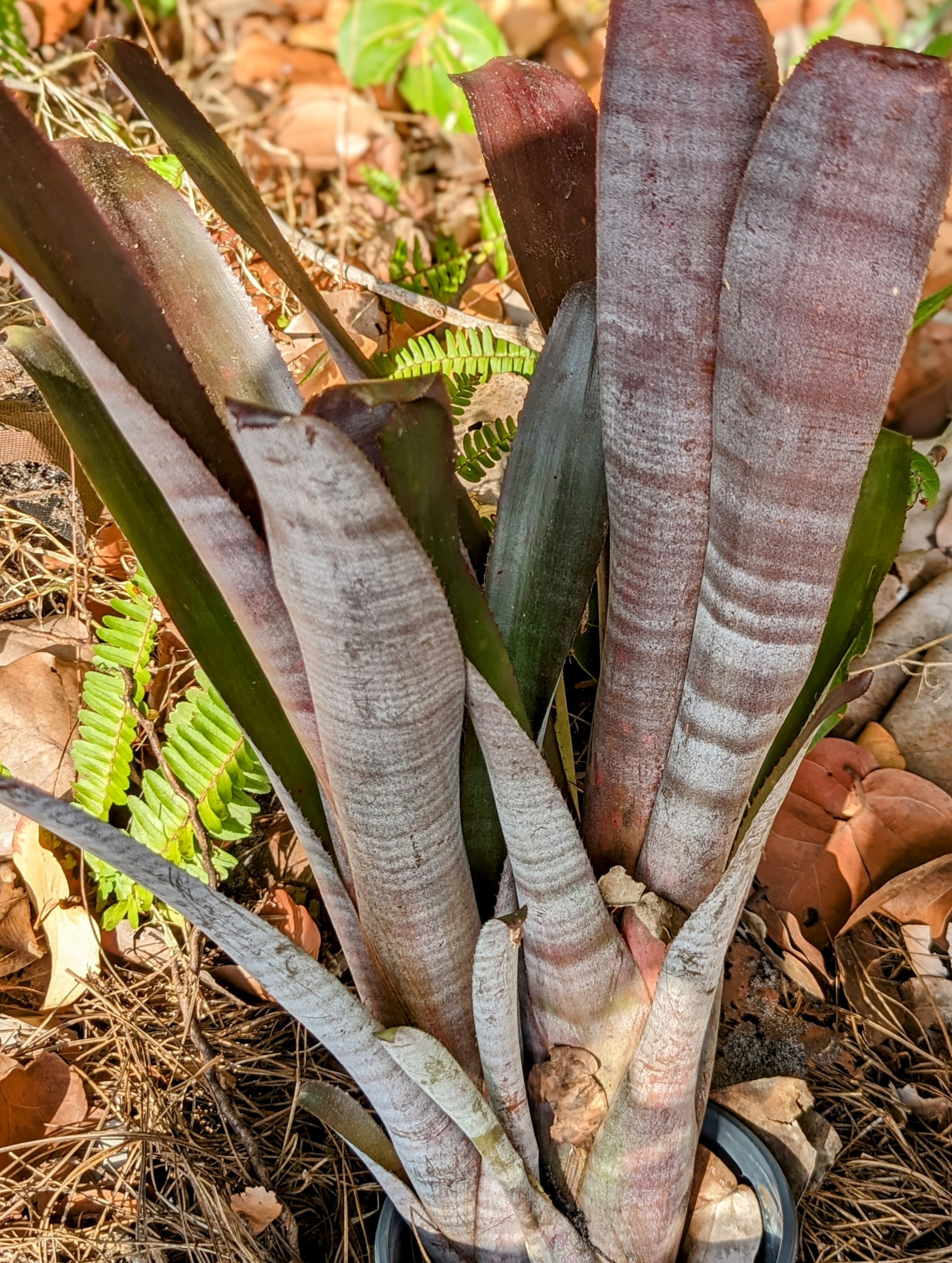
Purple Haze Billbergia bromeliad pups emerging from a mother plant on its way out.
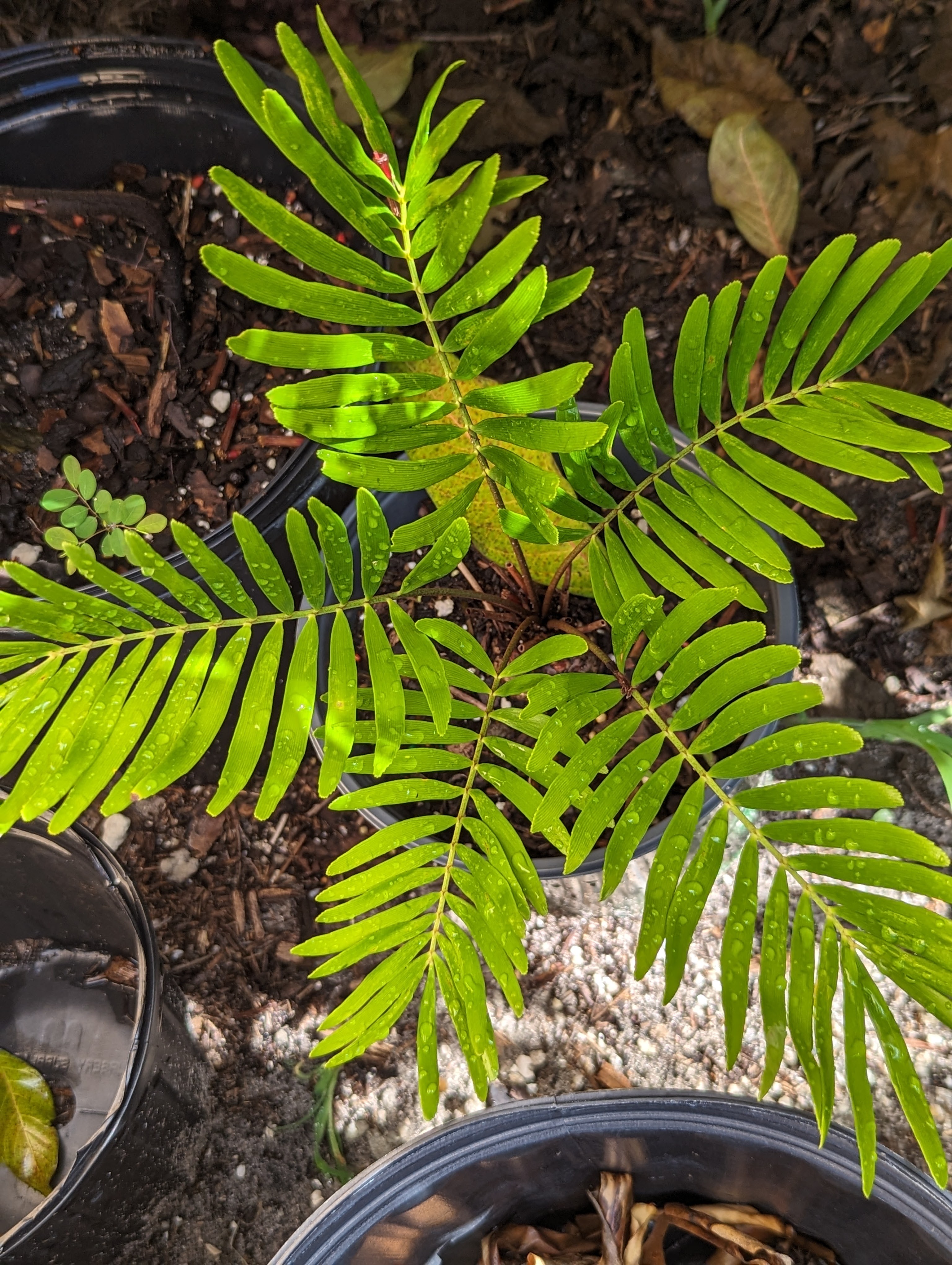
Coontie cycad (Zamia integrefolia) rescued from annihilation. I am not sure what happened here, these are usually very hardy. This one lost all its foliage last summer when it was droughty and was not recovering. I potted the caudex, put it in the shade and watered it – much to my surprise, it came back. The cycads are notorious for not liking disturbance.
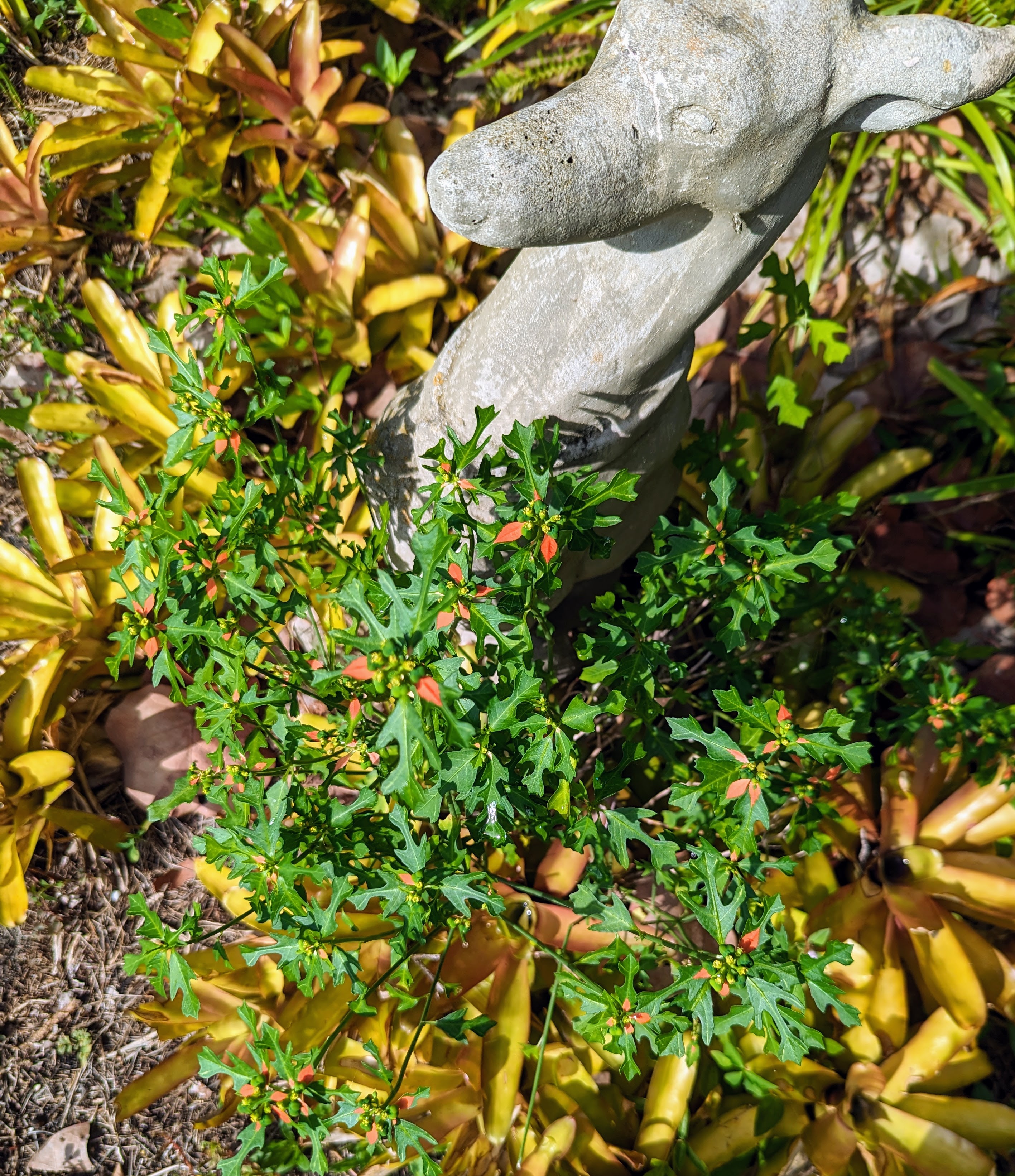
Native Florida Poinsettia (Euphorbia cyathophora) hugging my garden greyhound. These appear when rain is plentiful and add a little color.
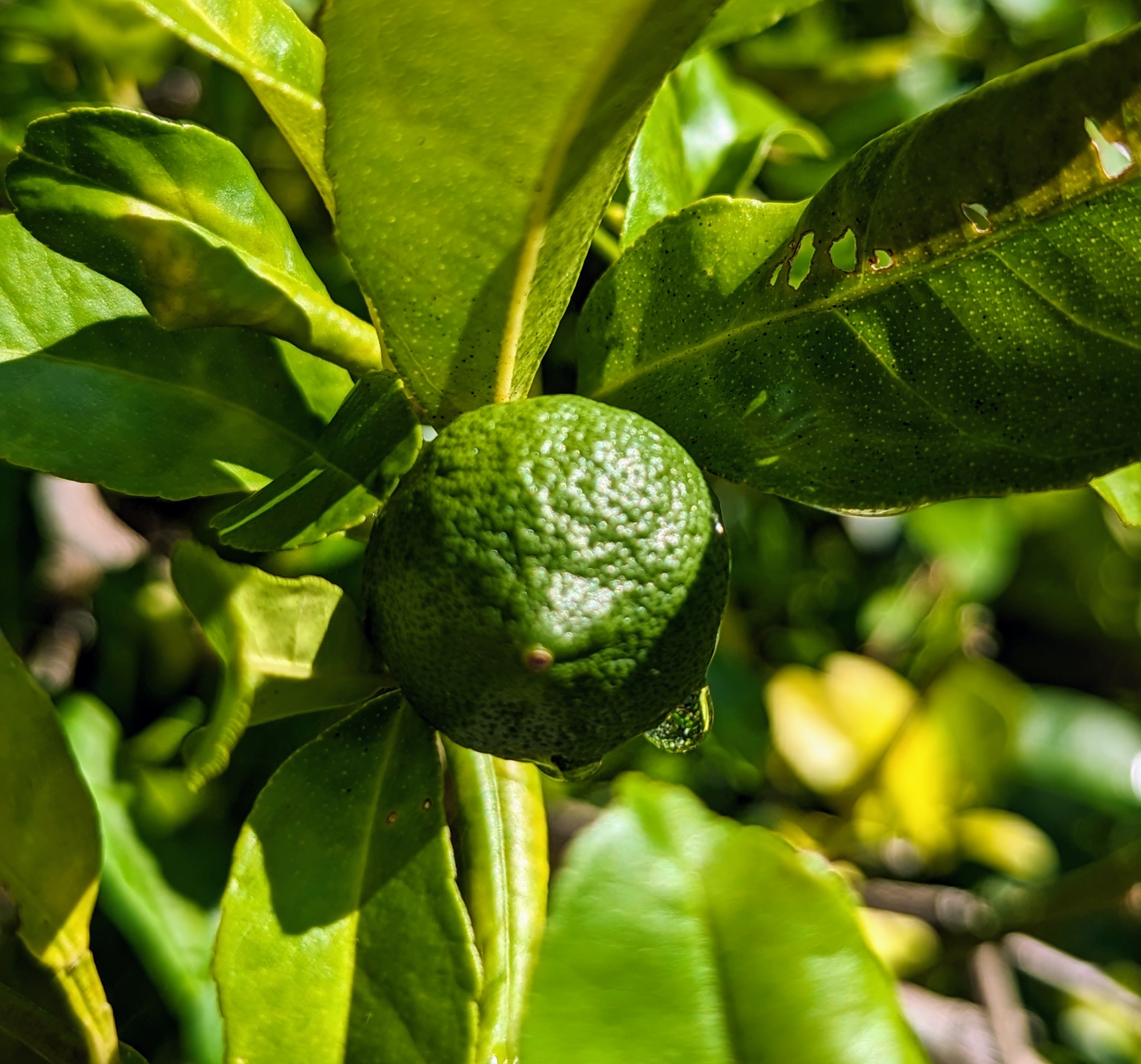
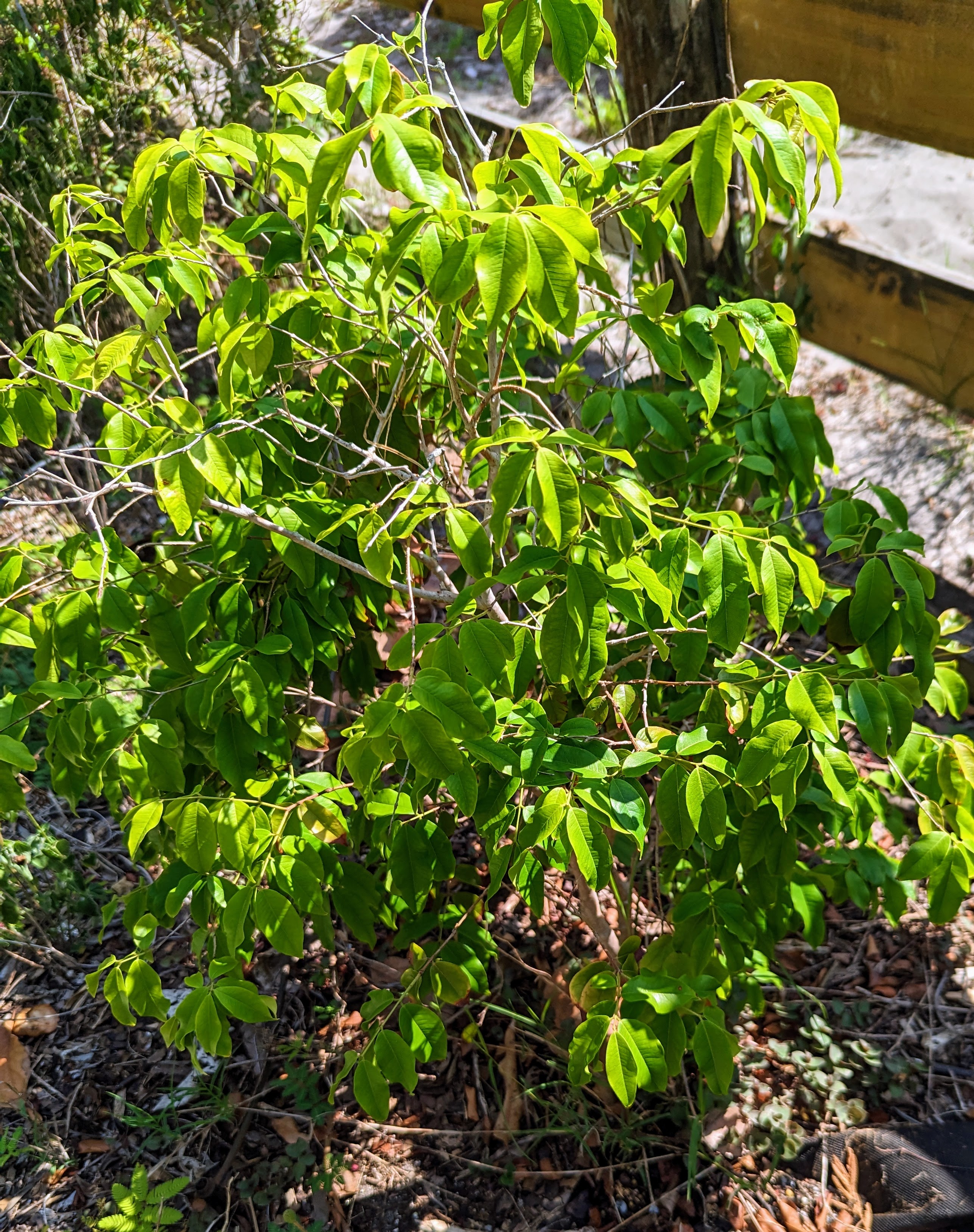
My first Rangpur lime, ever! My neighbor grew this tree from seed and it has been in my garden for six years or so. I am excited! These are hard to see right now, hopefully there are more on the tree. This type of lime is orange when ripe and considered a sour orange in Florida. We make ‘key lime’ pies with the fruit or use it like lemons. It is also used in Cuban cuisine for mojo marinade.
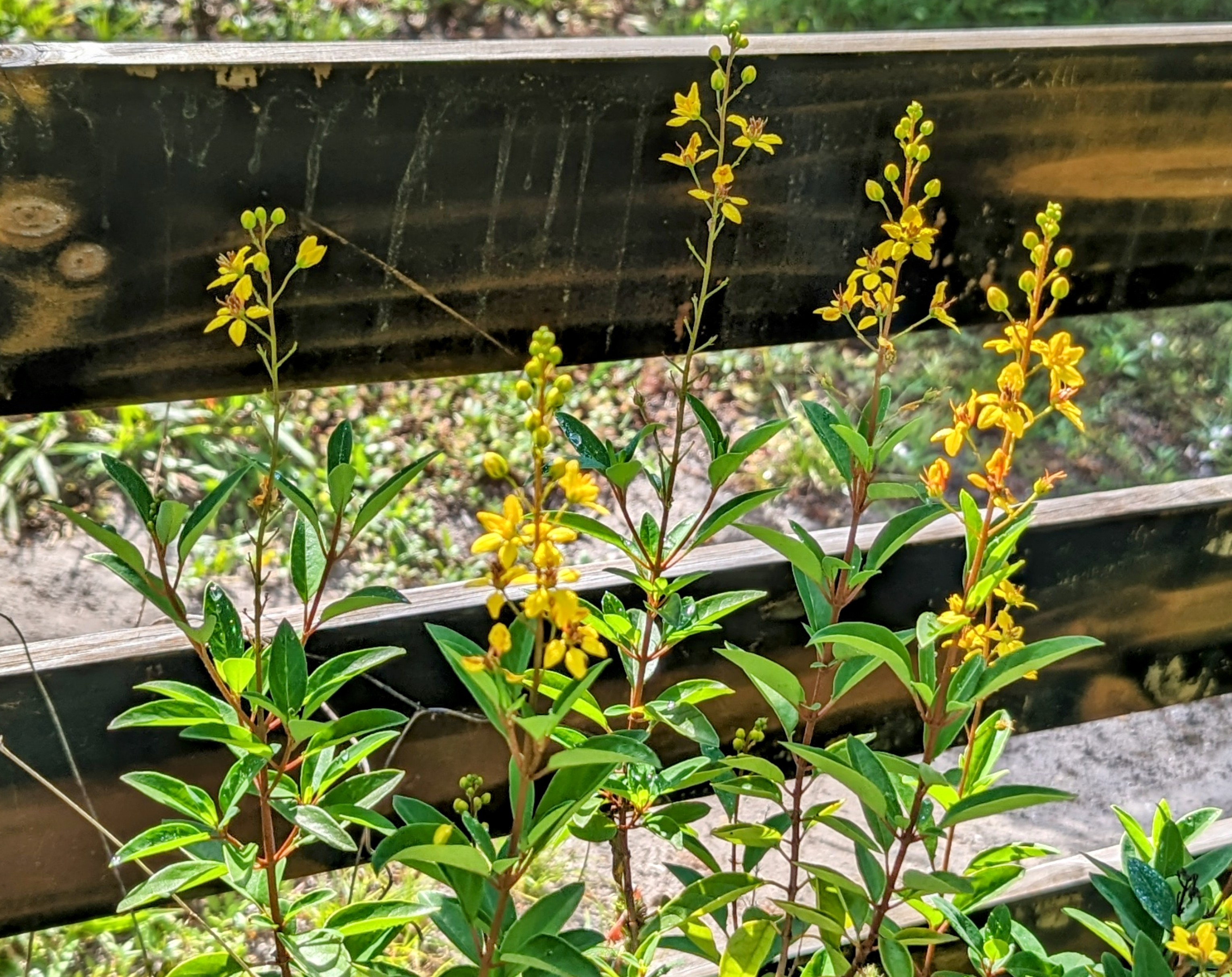
One of my summer favorites, Thyrallis (Galphimia gracilis) is finally flowering.
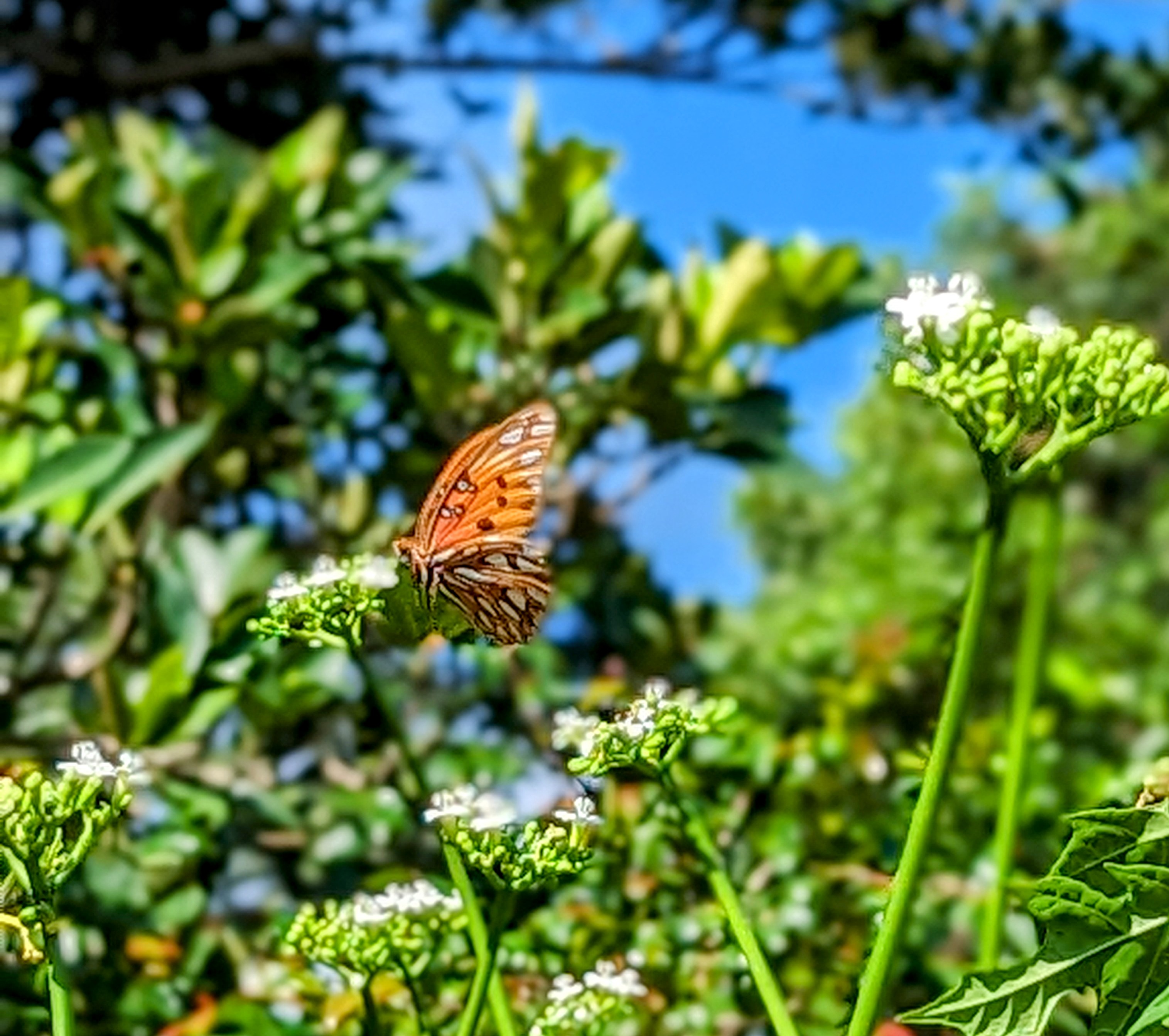
Tree Spinach (Cnidoscolus aconitifolius) is one of the best nectar plants for butterflies in the garden. There were three different butterflies feeding on the flowers when I took the picture. This is a Gulf Fritillary. I have never seen as many flowers on this plant, the butterflies are having a smorgasbord.

That is all from my now very damp garden.

Happy Gardening!!

Six on Saturday – Steamy

Ample moisture from seemingly everywhere has made June the wettest month in recent memory. The windows on my house are fogging up with the humidity in the air outside. The plants in the garden are enjoying long soaks and the tropical flowers are bursting with joy.

I am sharing my steamy, tropical joy with the SOS crowd today. To see Saturday tours from less steamy places, visit our host, Jim at http://gardenruminations.co.uk

Cattleya orchids growing on tree trunks opened their first flowers this week.

Aechmea rubens bromeliads opened this week as well. These flowers last several months and are very sharp.

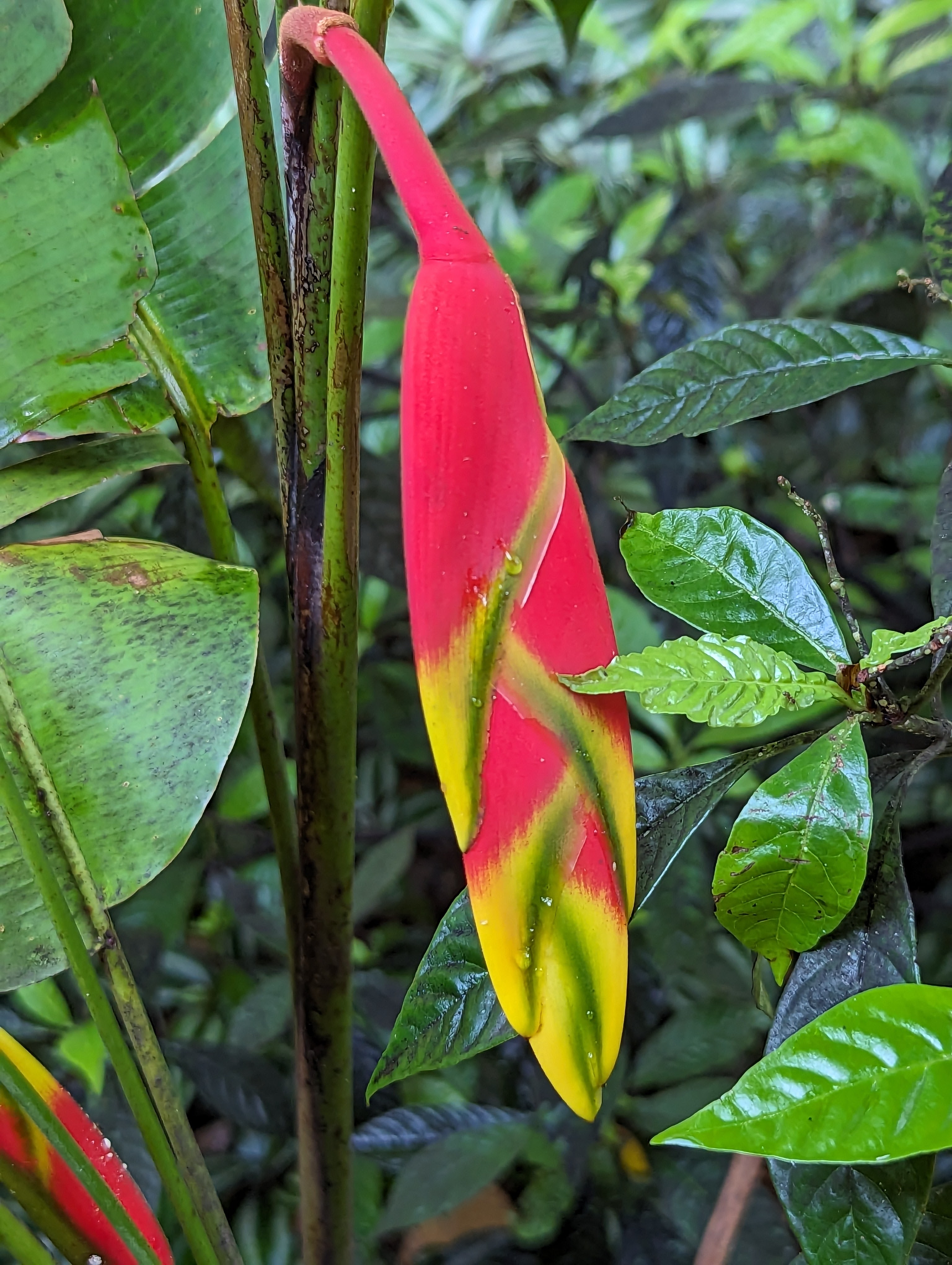
One of my summer favorites, the Lobsterclaw Heliconia (Heliconia rostrata) is slowly opening.

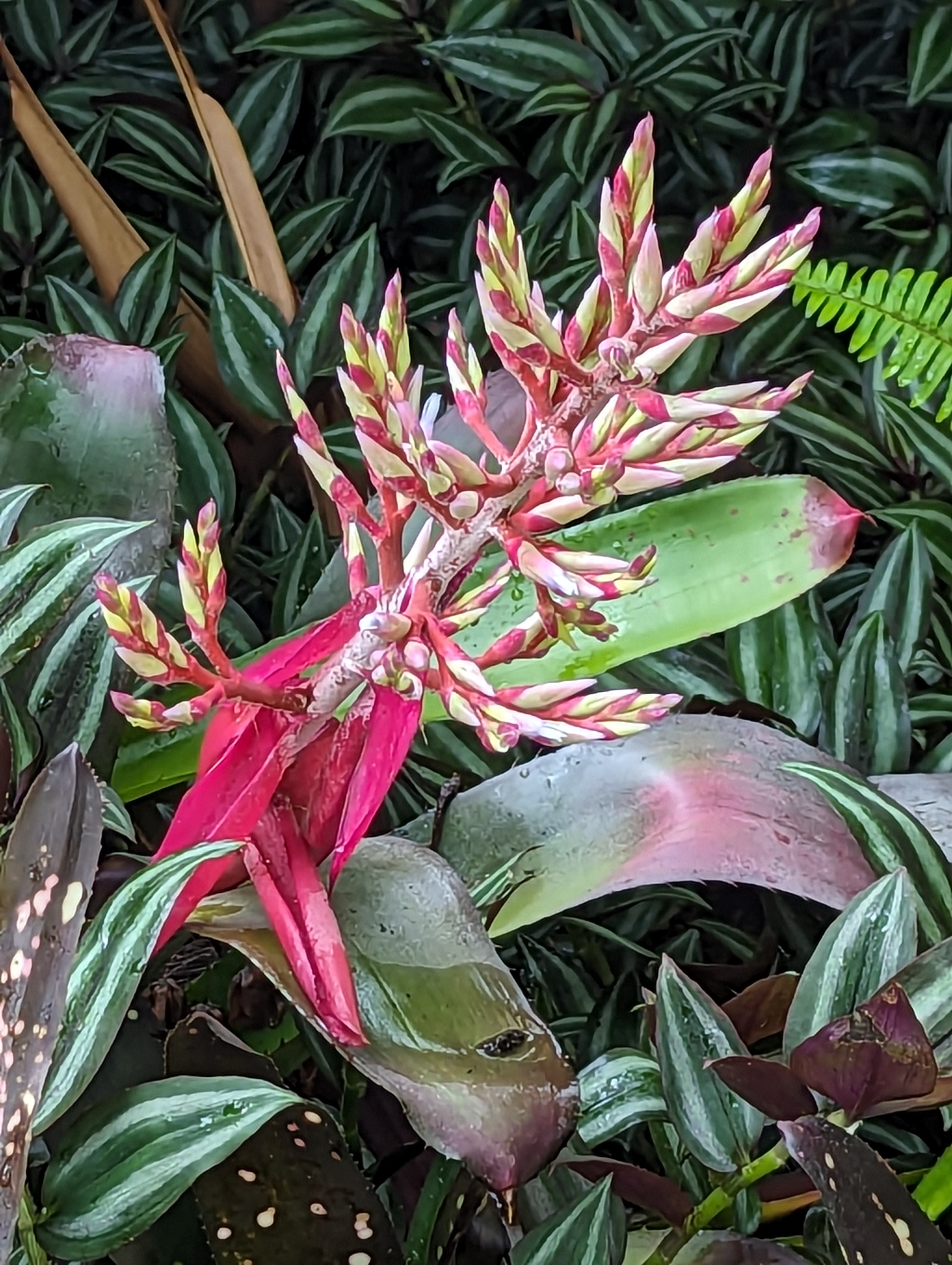
Another bromeliad, the name of this one escapes me. If I ever knew it.

Yet another bromeliad, the pineapple. This one is coming along – it was grown from the top of a grocery store pineapple, so I have no idea what it will be. These homegrown pineapples are usually very good.

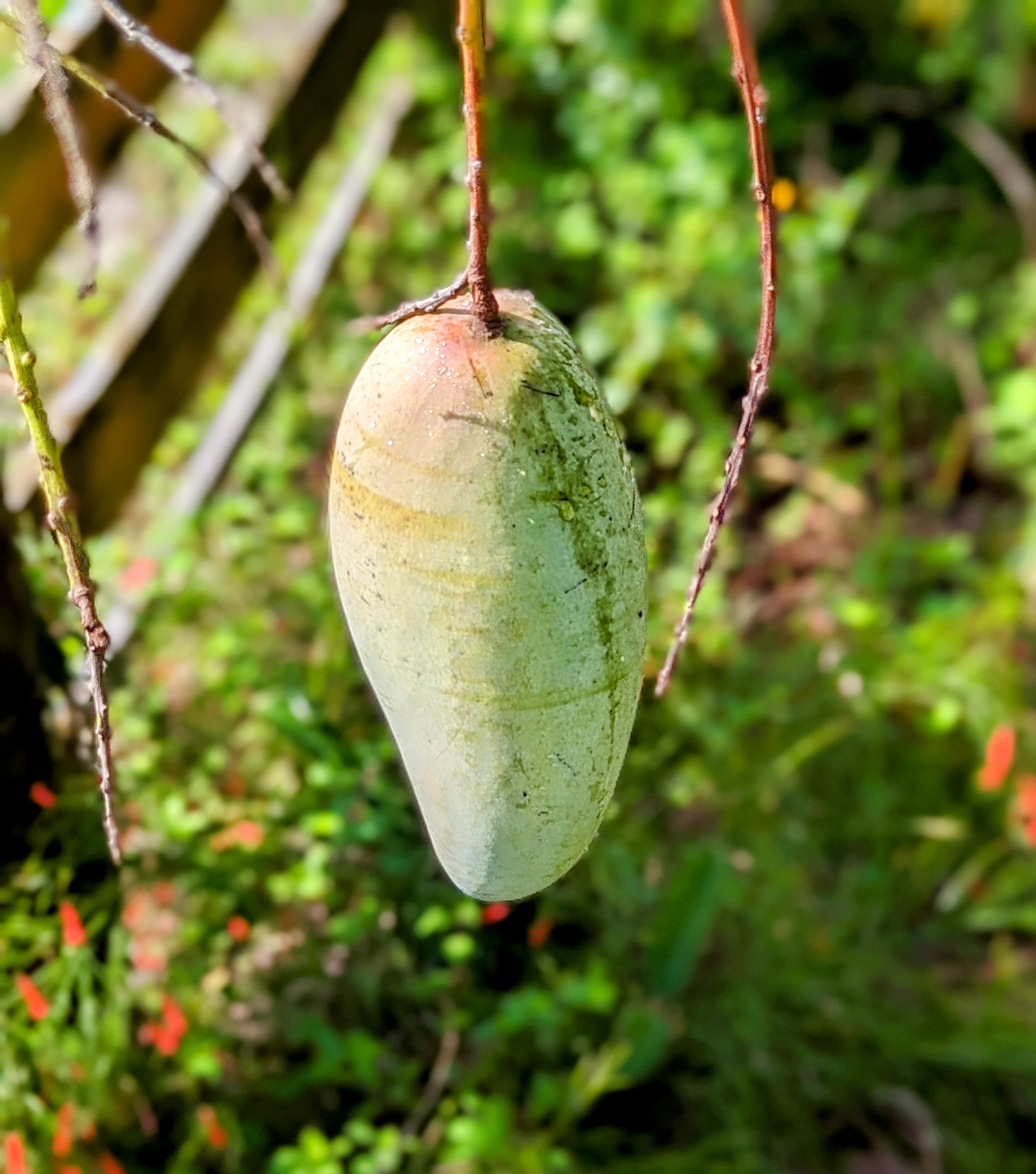
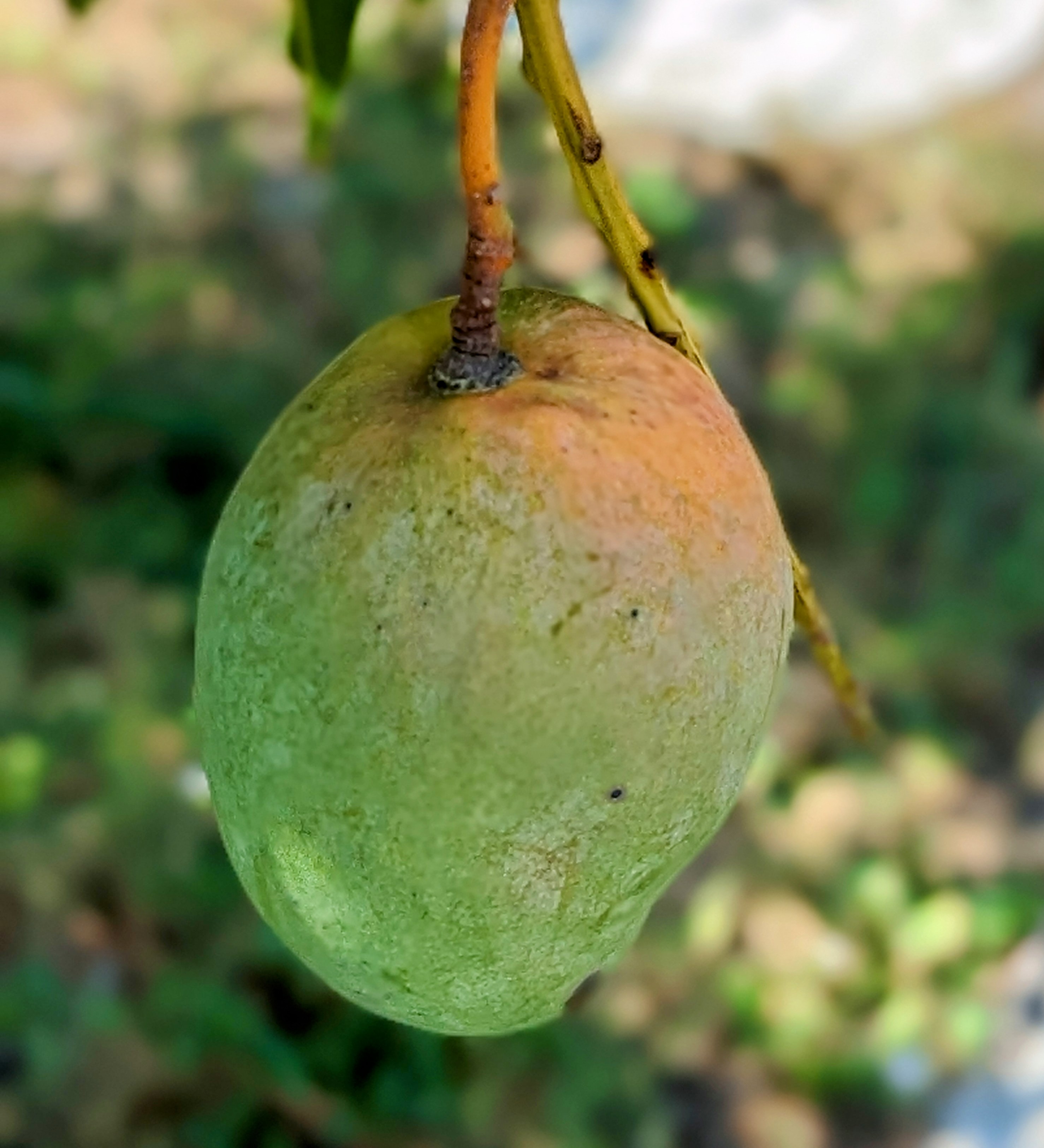
We have been eating Pickering and Glenn mangoes for a couple of weeks. This is the Thai dessert mango, Nam Doc Mai, finally showing some signs of ripening.

There, six from steamy South Florida.

Six on Saturday – Broms and Bunnies

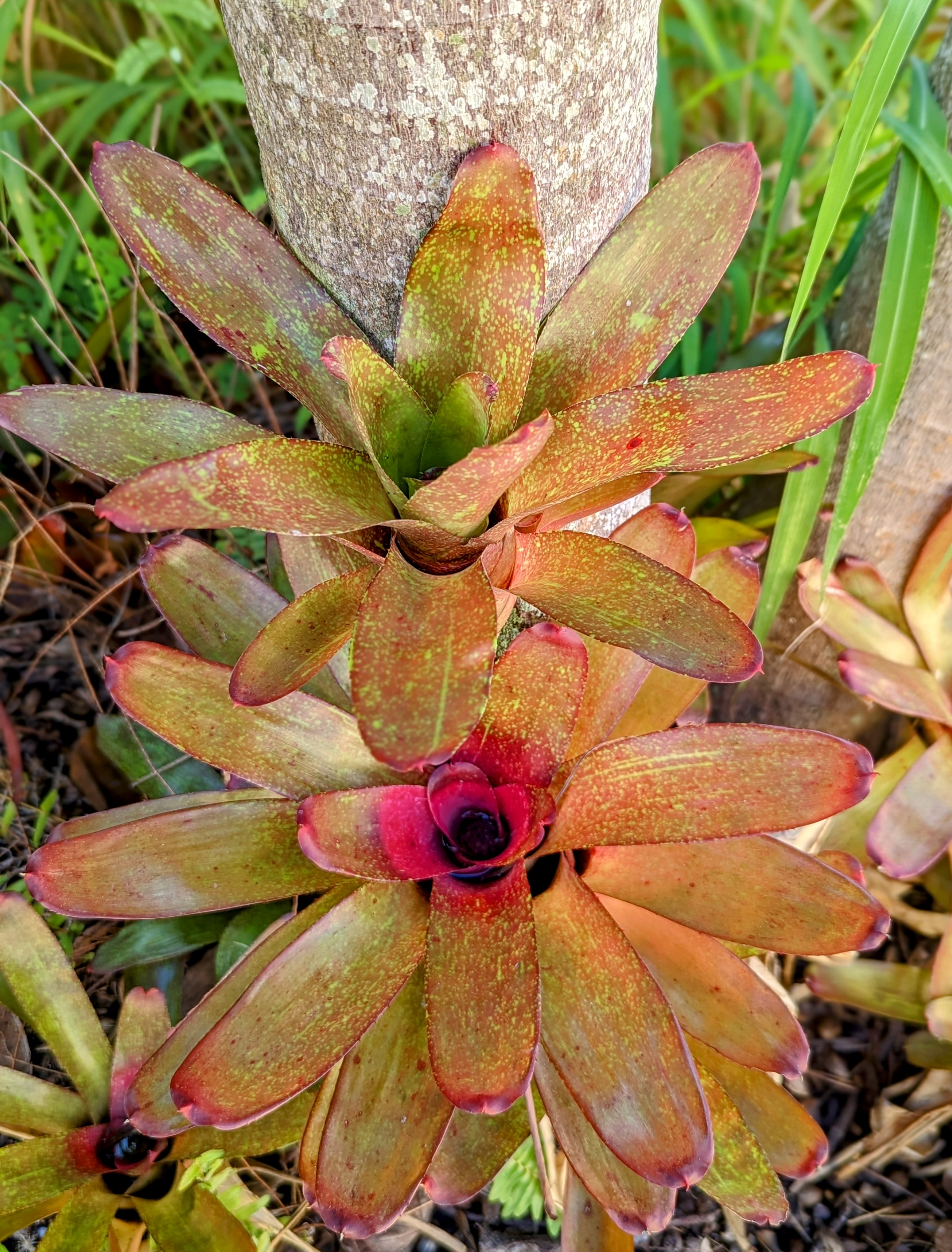
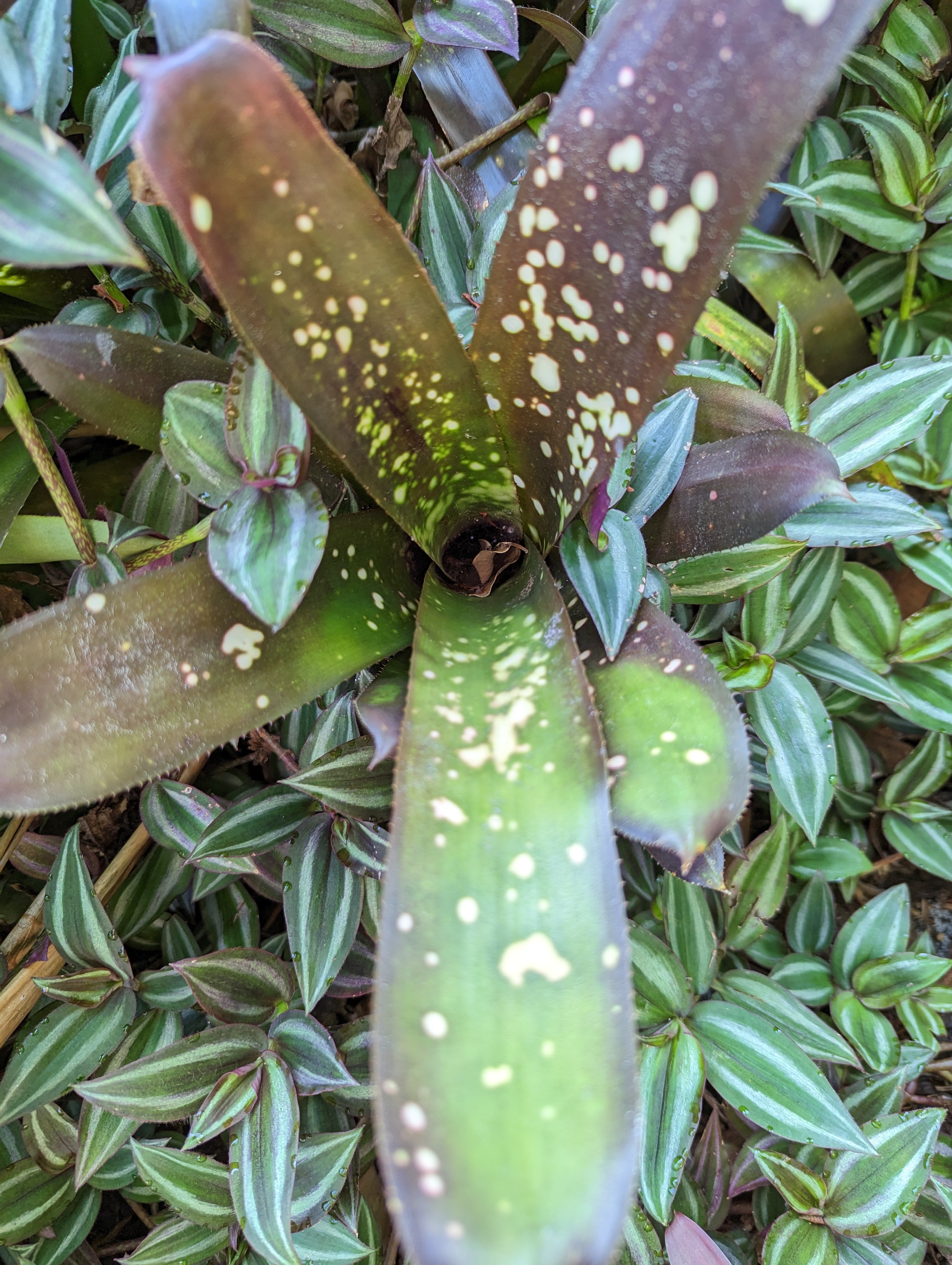
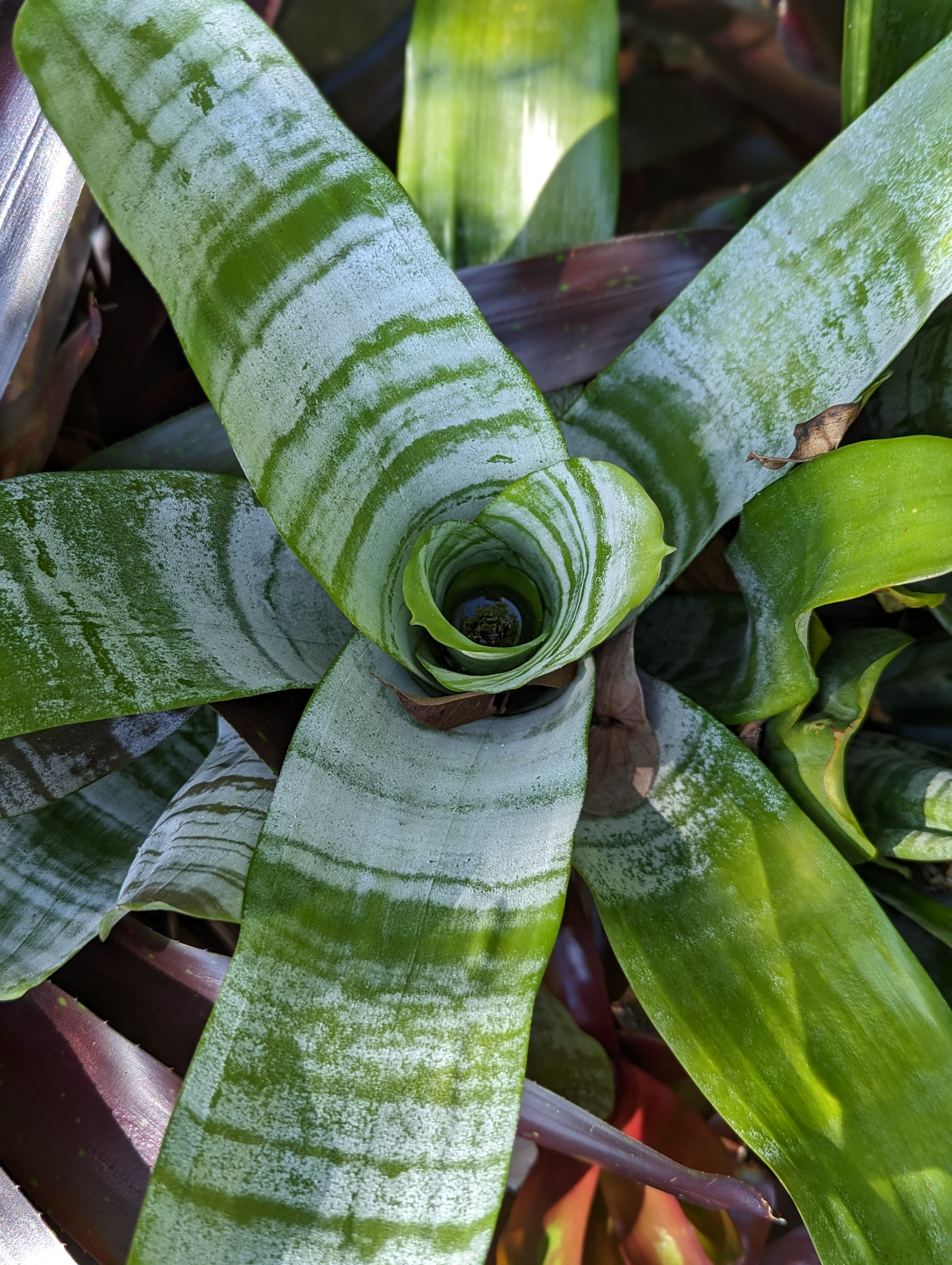
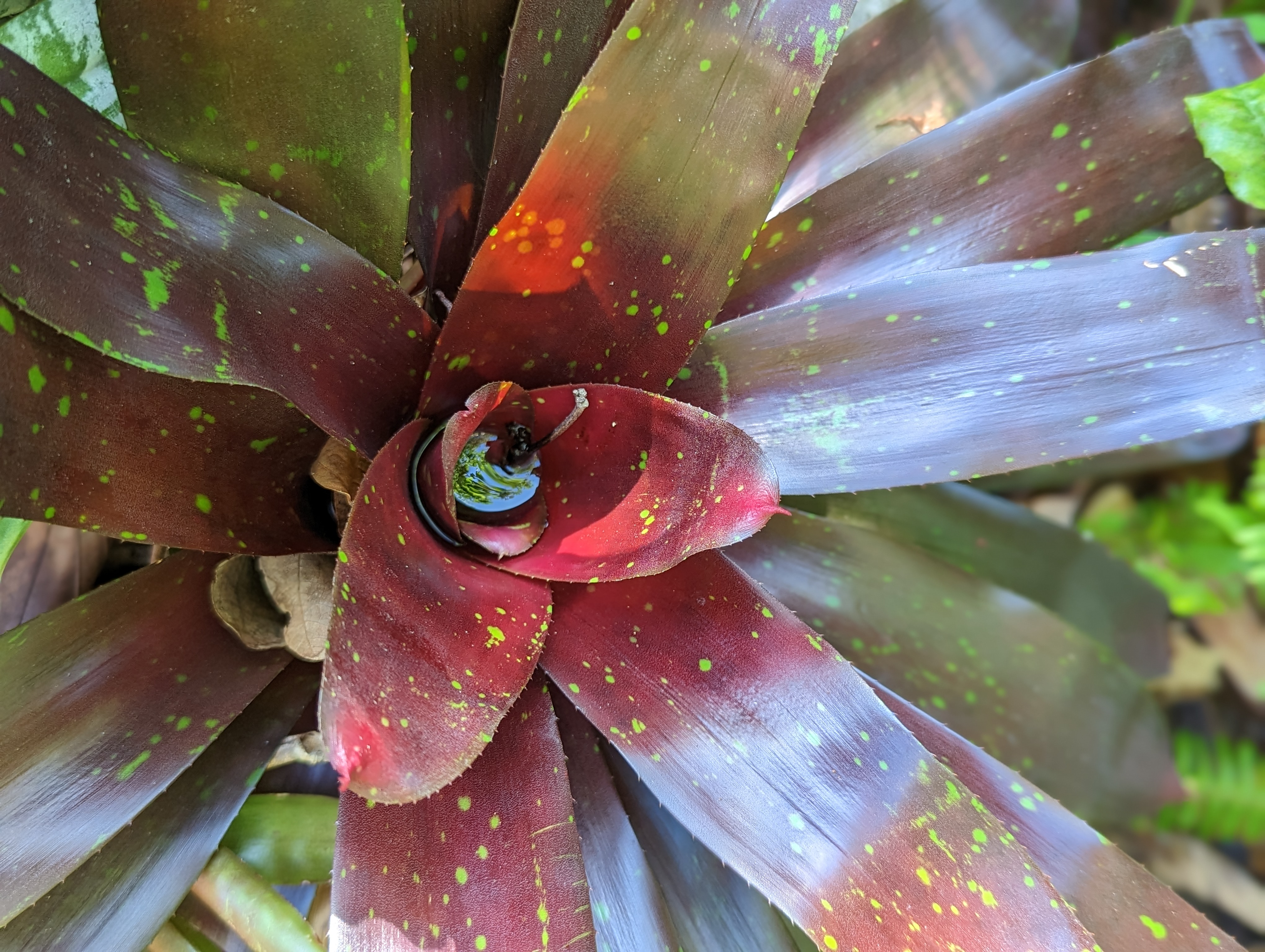
It’s time for the weekly visit with other SOS gardeners. My South Florida garden received plentiful rain this week, the plants enjoyed it and are starting to show their summer colors. Bromeliads in the garden change colors with the seasons. Some in the winter and others in summer. The color change I notice most is from green to red (and back). Markings on the foliage that change vary from spots to streaks to bands of color.

For the SOS garden tour follow this link to visit Jim: http://gardenruminations.co.uk

‘Jill’ Neoregelia climbing a palm trunk. The foliage tips and cups on this one deepen in color in the summer.

‘Hallelujah’ Billbergia. These tend to go a bit green in the summer. The purple color deepens in winter.

Aechmea ‘fasciata’. The bands of grey coloration sharpen with warm weather, these produce big pink flowers every other summer. Also known as the Silver Urn Bromeliad.

‘Luca’ Neoregelia, one of my favorites, is almost too dark but the chartreuse spots lighten things up.

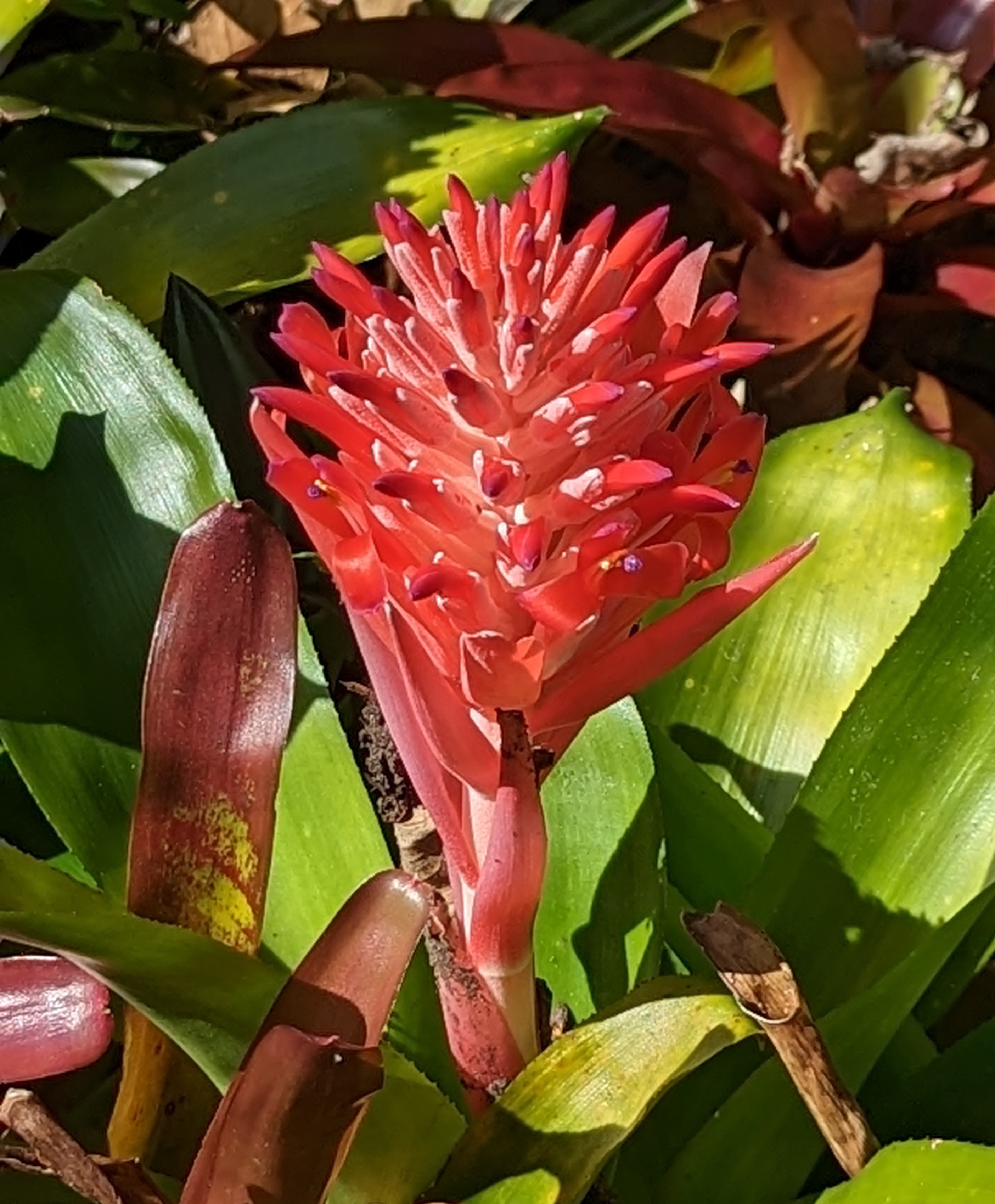
An unknown Neoregelia in flower. This one has pink stripes in sunny areas and white in shady areas.

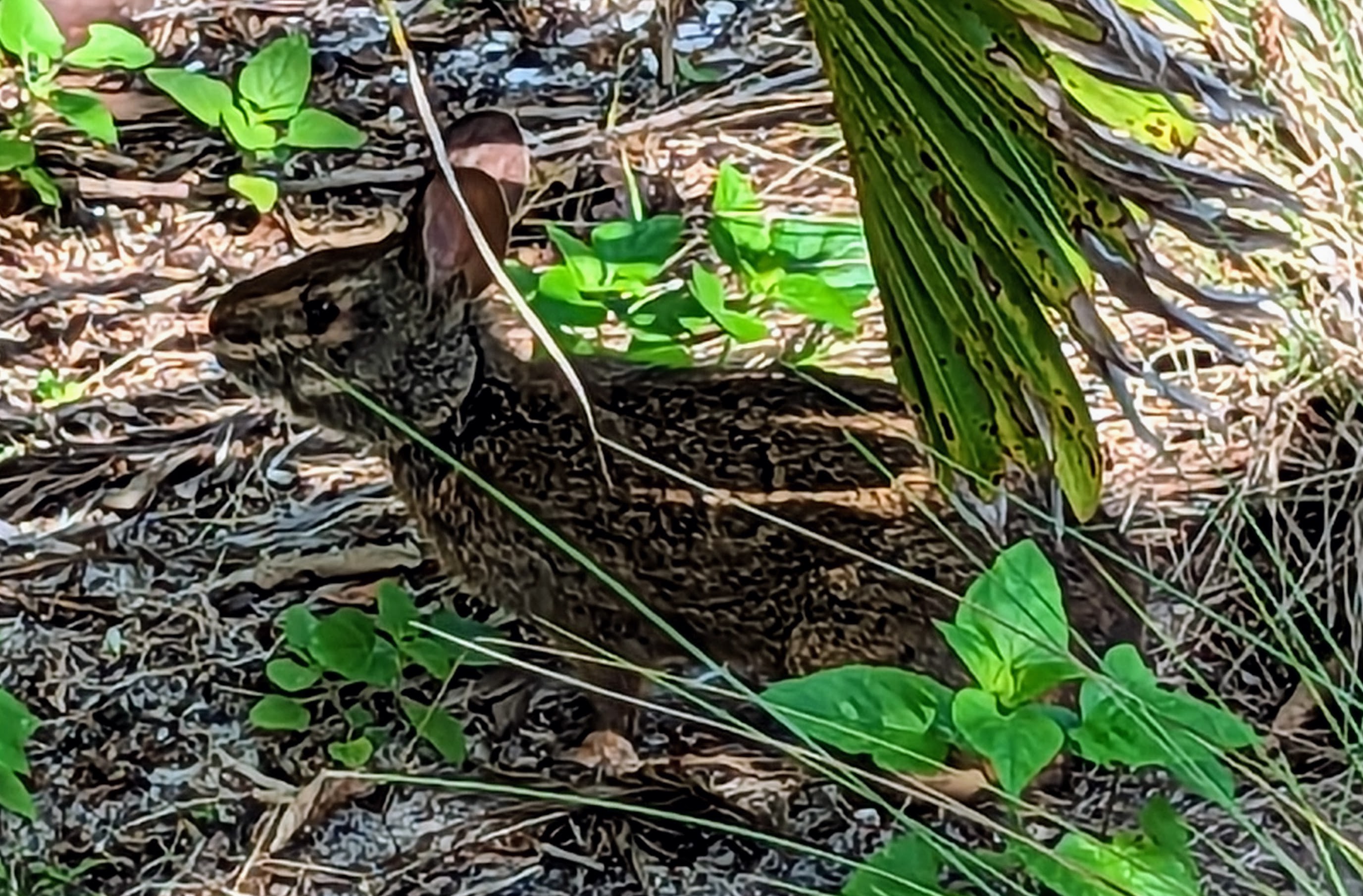
The bunny, we have had a banner year for bunnies. Fortunately, they like weeds and are eating something in the so called lawn while tormenting Fiona the Greyhound. This is a Marsh Rabbit. I am impressed with the camouflage, I could not see the rabbit as I was taking a picture of it.

That is my Six for this Memorial Day weekend Saturday. Thanks to Jim for hosting.

Happy Gardening!!

Six on Saturday – Early Summer

Memorial Day usually kicks off the summer season in the US. Memorial Day is next Monday, as usual Florida starts summer early. It has been pleasant here, mid 80s (F) daytime highs and thunderstorms breaking up our usual dry May weather and giving the garden a few good soakings.

For a global view of gardens in early summer, late spring everywhere else in the Northern Hemisphere, follow the link and see more SOS posts. http://gardenruminations.co.uk

The mangoes continue to mock me, almost ripe. We have eaten one. I shared a bowl of mango salsa with my husband, served as a side dish with roasted steelhead trout. It was delicious. These will be picked when the blush is covering most of the fruit. Several friends have advised they pick them when the squirrels start eating them.

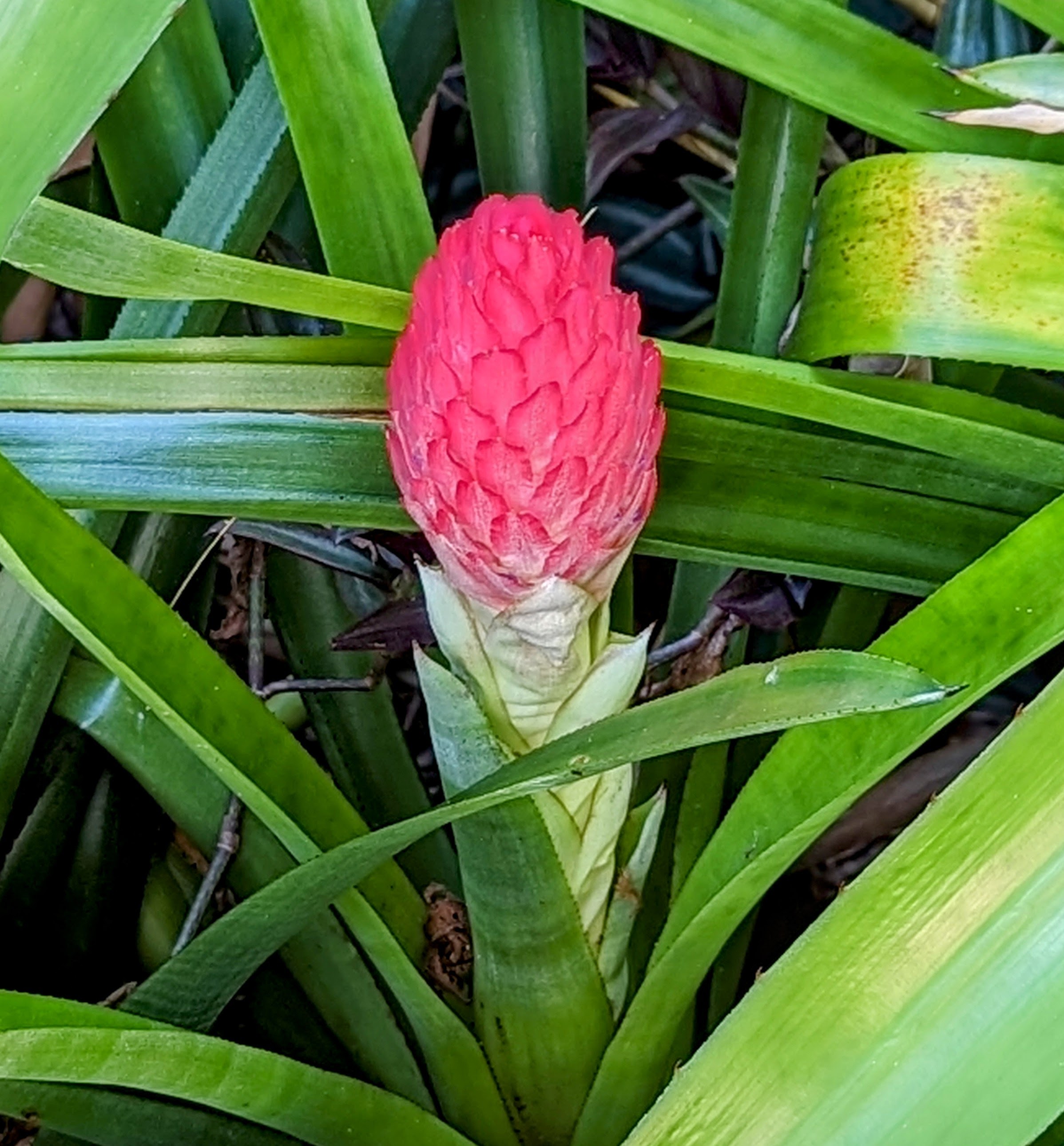
Another out of season bromeliad. This one, Quesnelia testudo, usually (and did) bloom in February. Last week the September broms were flowering. I don’t know what to think about this.

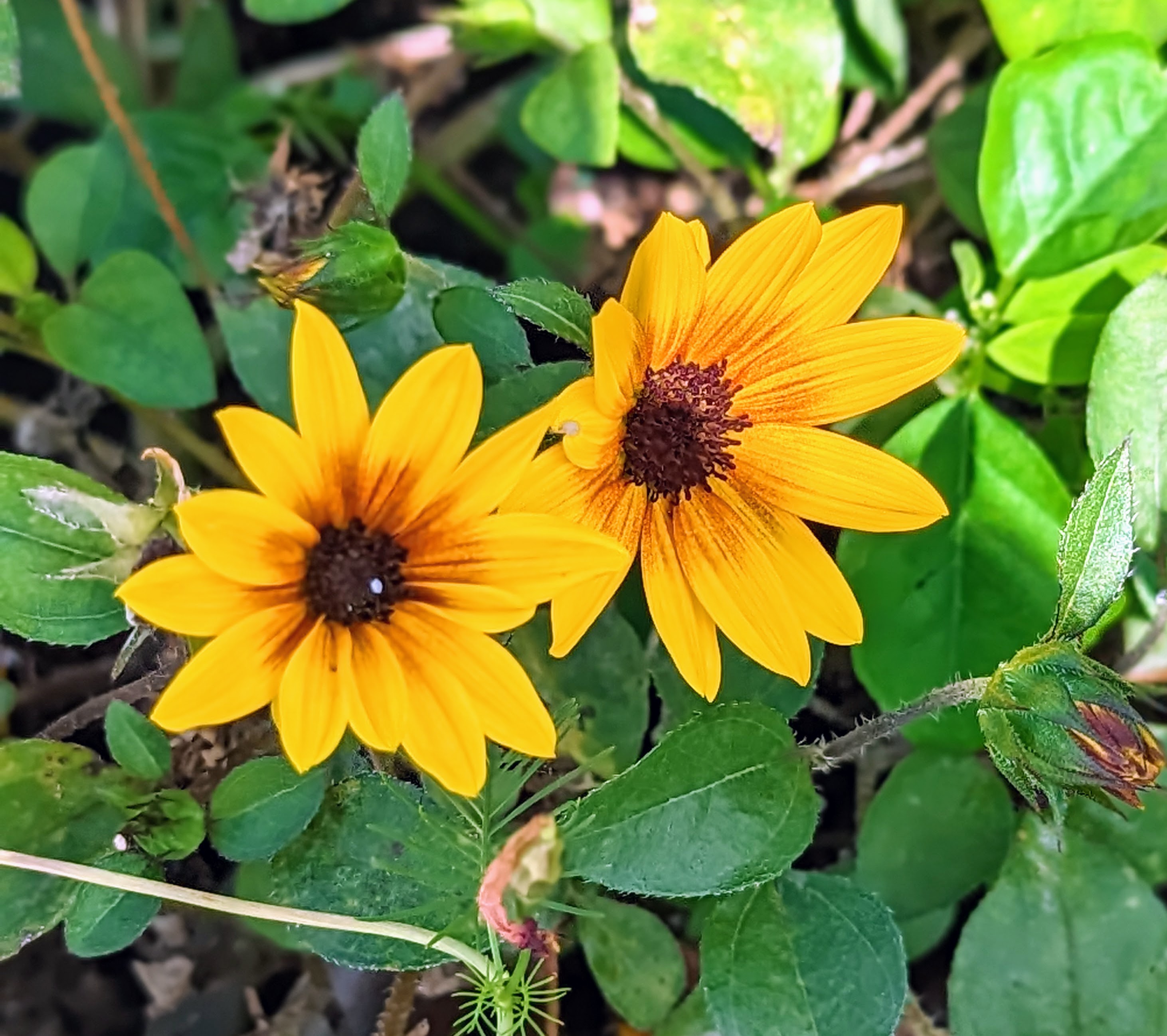
Brown Eyed Girl Sunflowers have given me a lot of flowers this year. They seem to be gearing up for summer with another flush.

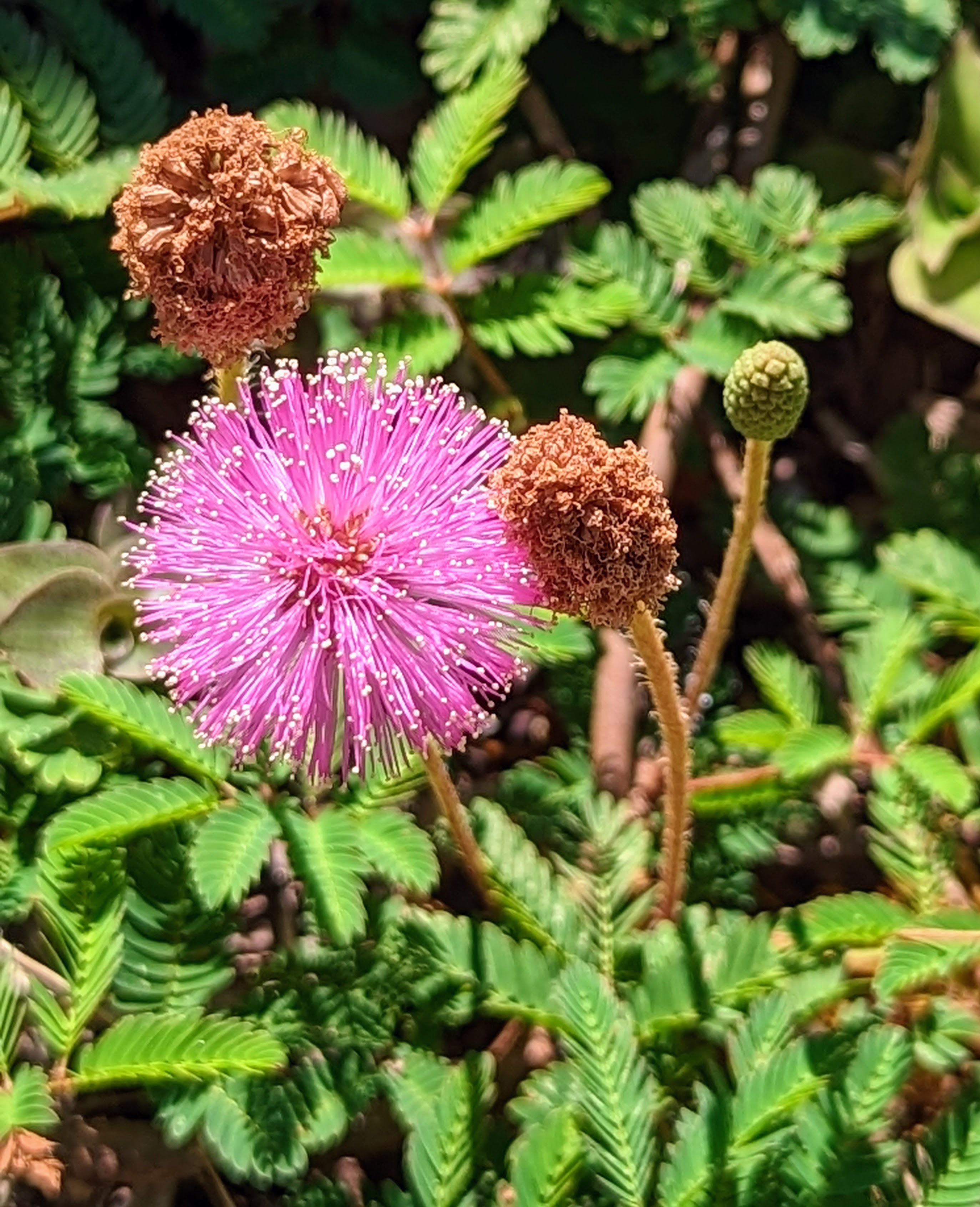
Another sure sign of summer. The Sunshine Mimosa (Mimosa strigillosa) is on the move and flowering. This is a low native groundcover pushed as a lawn alternative. Unfortunately it is not evergreen and looks dreadful for several months, now it looks great and is running amok in the garden.

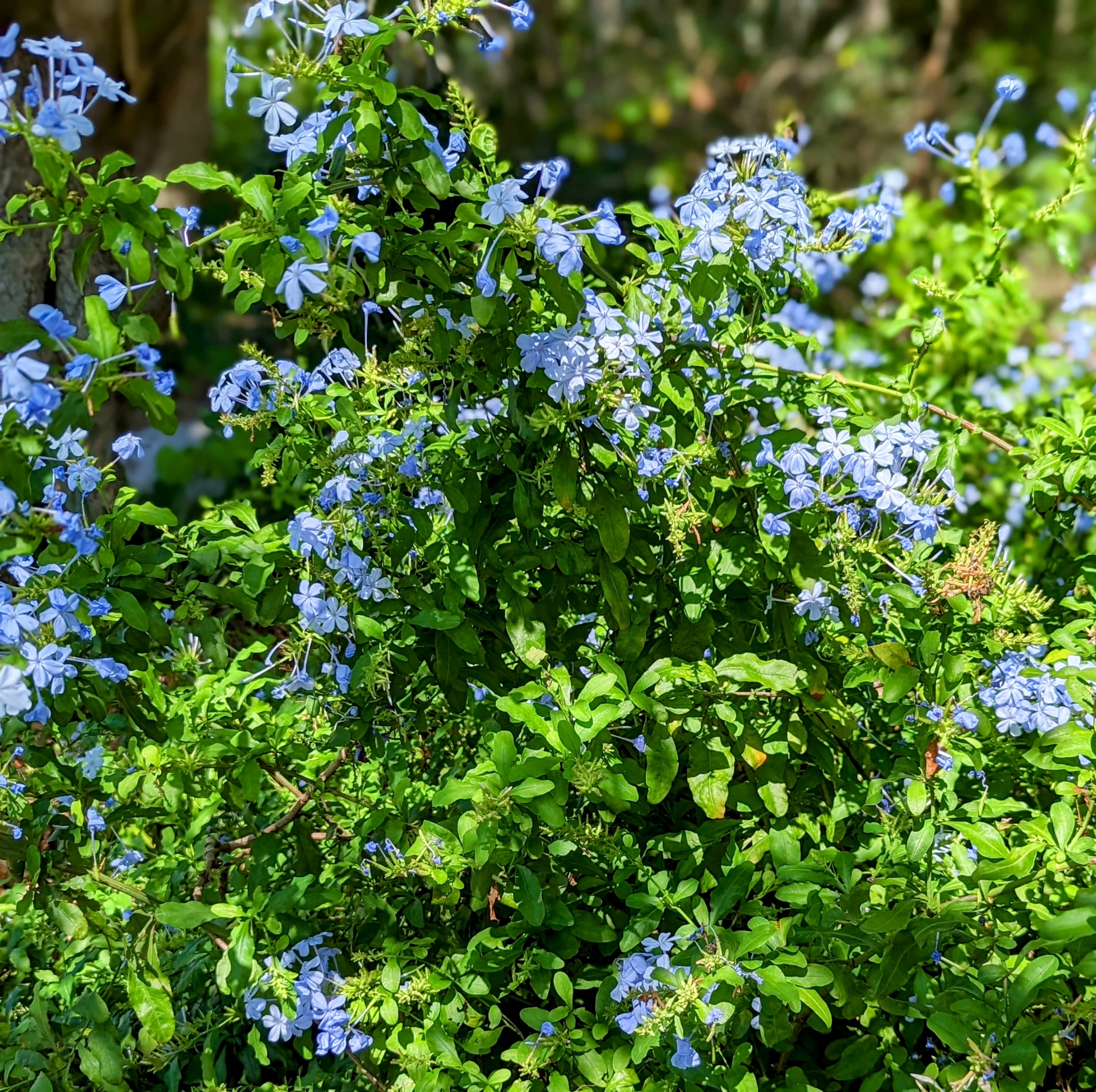
With the rain this week the Plumbago (Plumbago auriculata) has burst into flower. I have two varieties, this is the old fashioned pale blue.

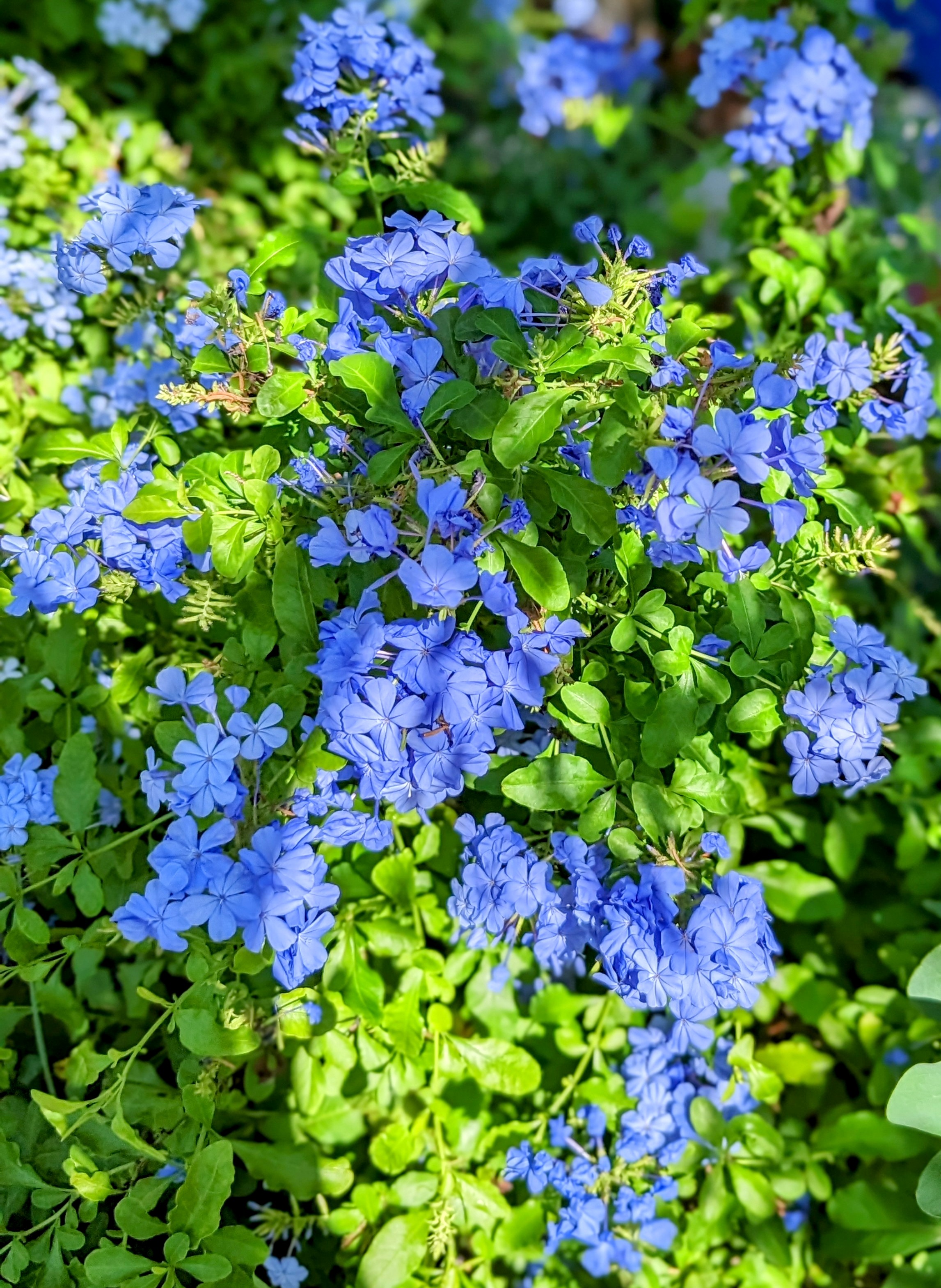
This is a newer variety of Plumbago. I am not sure of its name, or if it has one. This one is more reminiscent of hydrangeas to me. I am too far south to have much success with hydrangeas, so this is a good alternative.

That is all from the heat zone this Saturday.

HAPPY GARDENING!!

Six on Saturday – Prelude to Summer

I am joining Jim and the gang yet again for a Saturday garden update. South Florida is slowly working its way to summer and some plants are a little early this year. This makes me worry a bit about what the weather gods are planning for the rainy season. For a world tour of gardens on Saturday, follow this link to Jim’s blog. htpp://gardenrumininations.uk.co

Torch Bromeliad (Billbergia pyramidalis) blooming very early. These are sometimes called Hurricane Lilies as they usually flower at the peak of hurricane season, the first week of September.

Mangoes are mostly a summer fruit. These are Nam Doc Mai, Thai dessert mangoes. I bought the tree in 2016 because it can produce up to four crops a year and is coconut flavored with no fiber. This is the most fruit I have had and it has always been this time of year. They are almost ready, turning a solid apricot color when ripe.

This is a Red Jaboticaba. A tropical fruit from Brazil. This one is a shrub, reported to grow five feet tall. These are usually trees that take forever to produce fruit. Interesting fruit. The flowers are borne on the trunk and the fruit is like a Muscadine grape on the trunk. The tree looks like the trunk is covered in swirls of purple grapes. Tasty. It took a long time for this to establish, four or five years. Maybe some fruit, someday. The Red Jaboticaba is supposed to set fruit earlier than the trees. There is some cold damage I need to prune out.

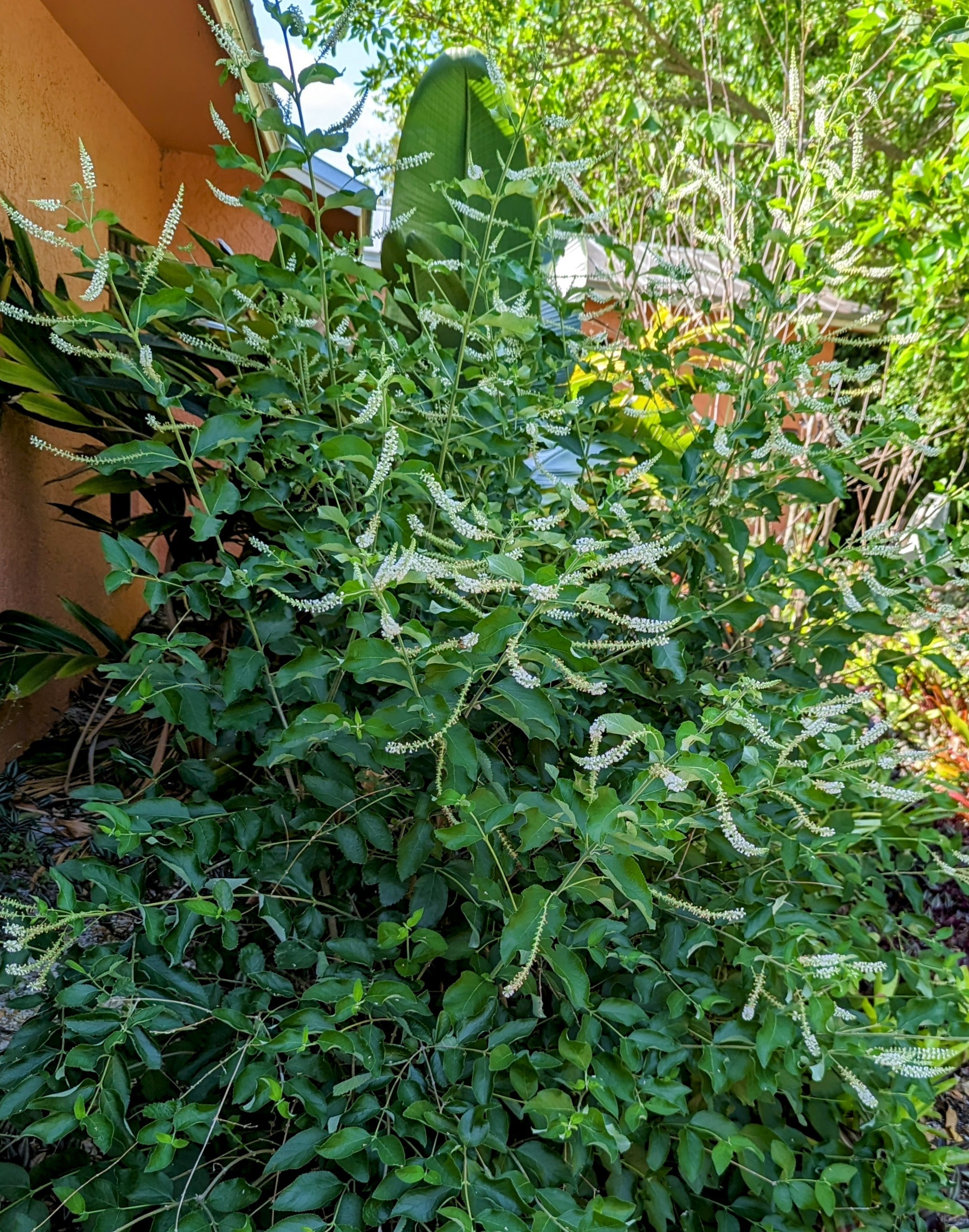
The Sweet Almond Bush (Aloysia virgata) blooming its heart out. This smells wonderful and is bouncing back from a severe prune.

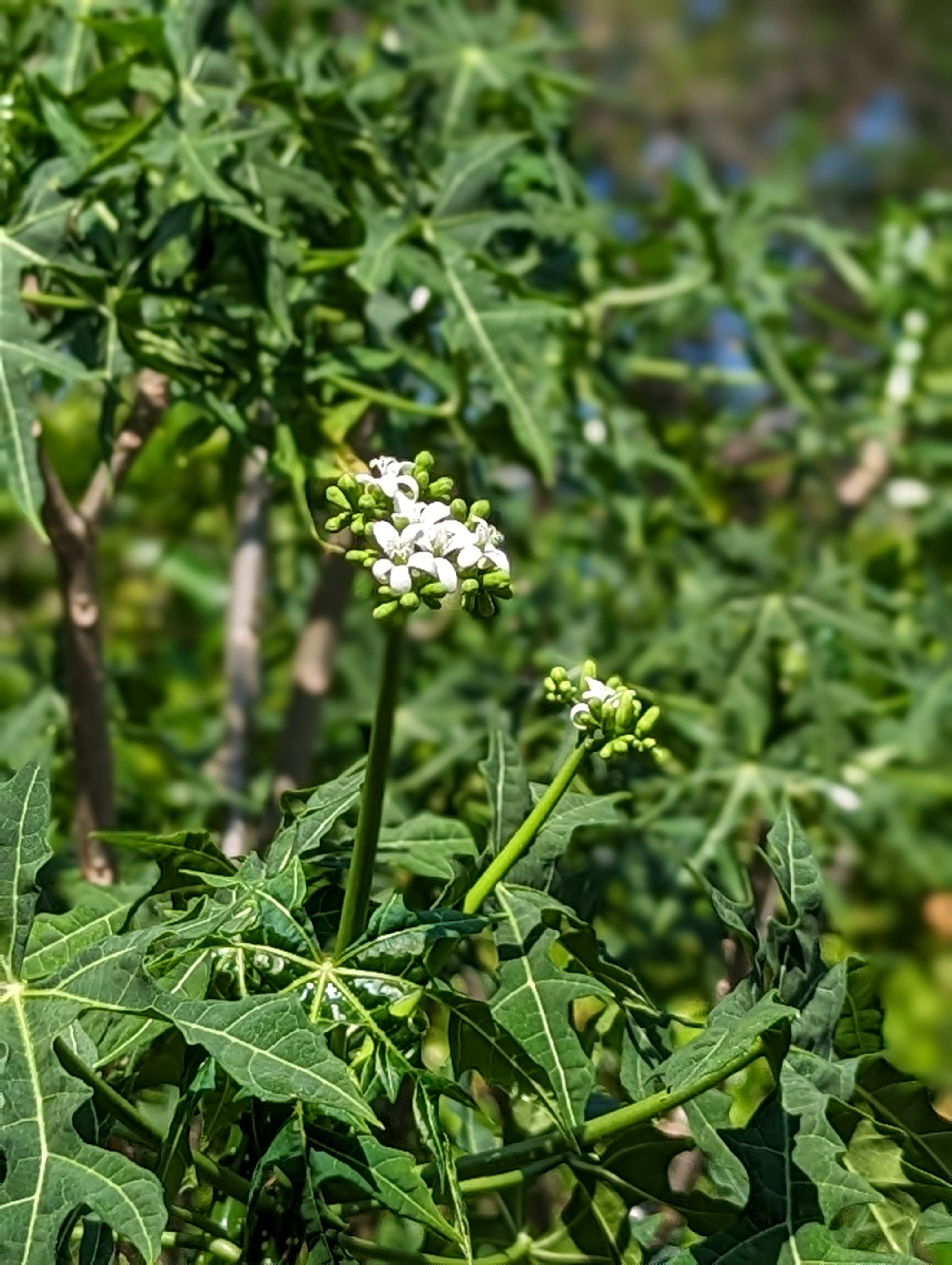
Tree spinach (Cnidoscolus aconitifolius) flowering for the first time this year. This is a subsistence vegetable for tropical climates, growing without supplemental water and providing nutrition to those who know how to cook it. Poisonous to those who don’t. I don’t eat the stuff and planted this for its flowers – they provide a nectar source for many tropical butterflies.

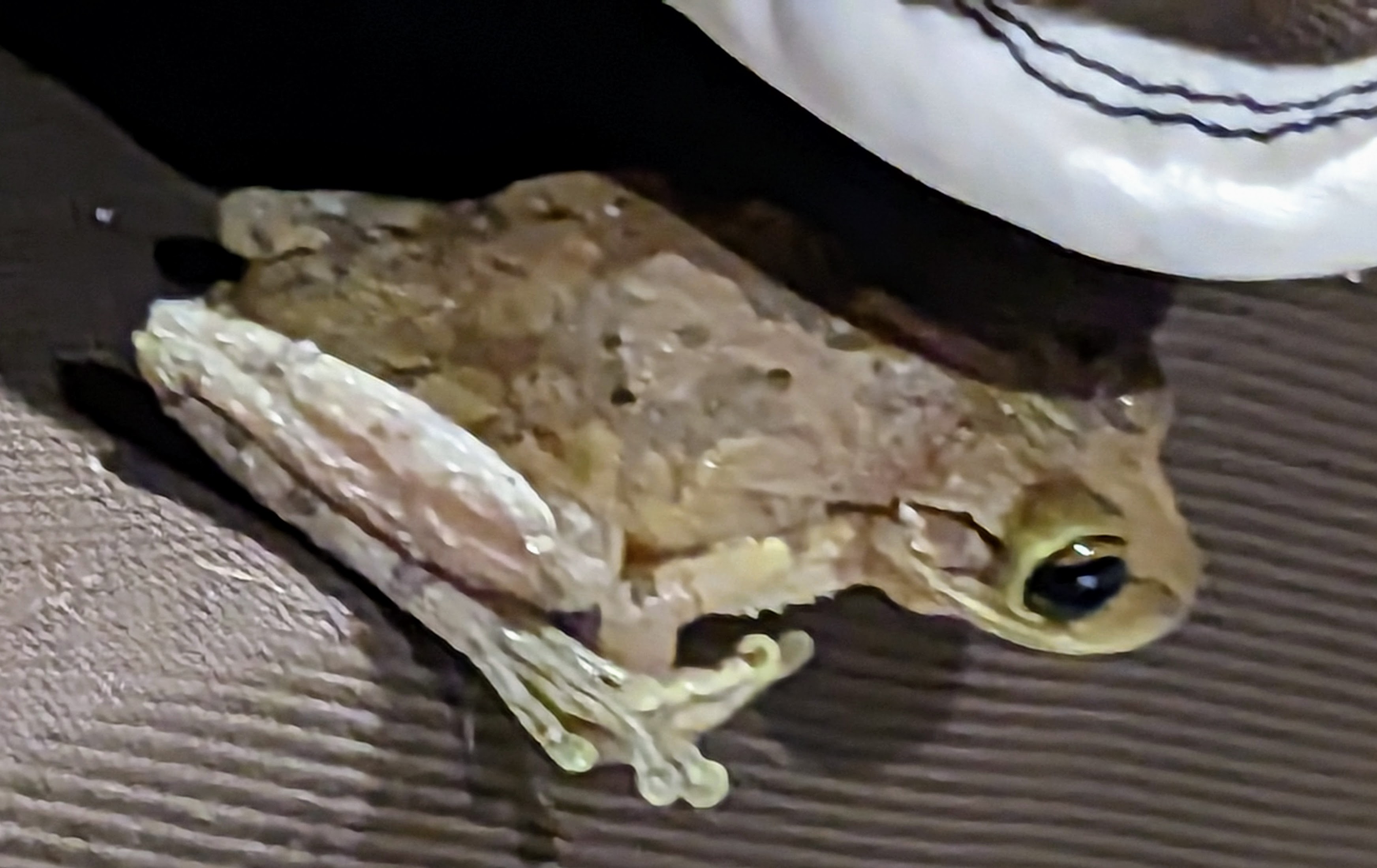
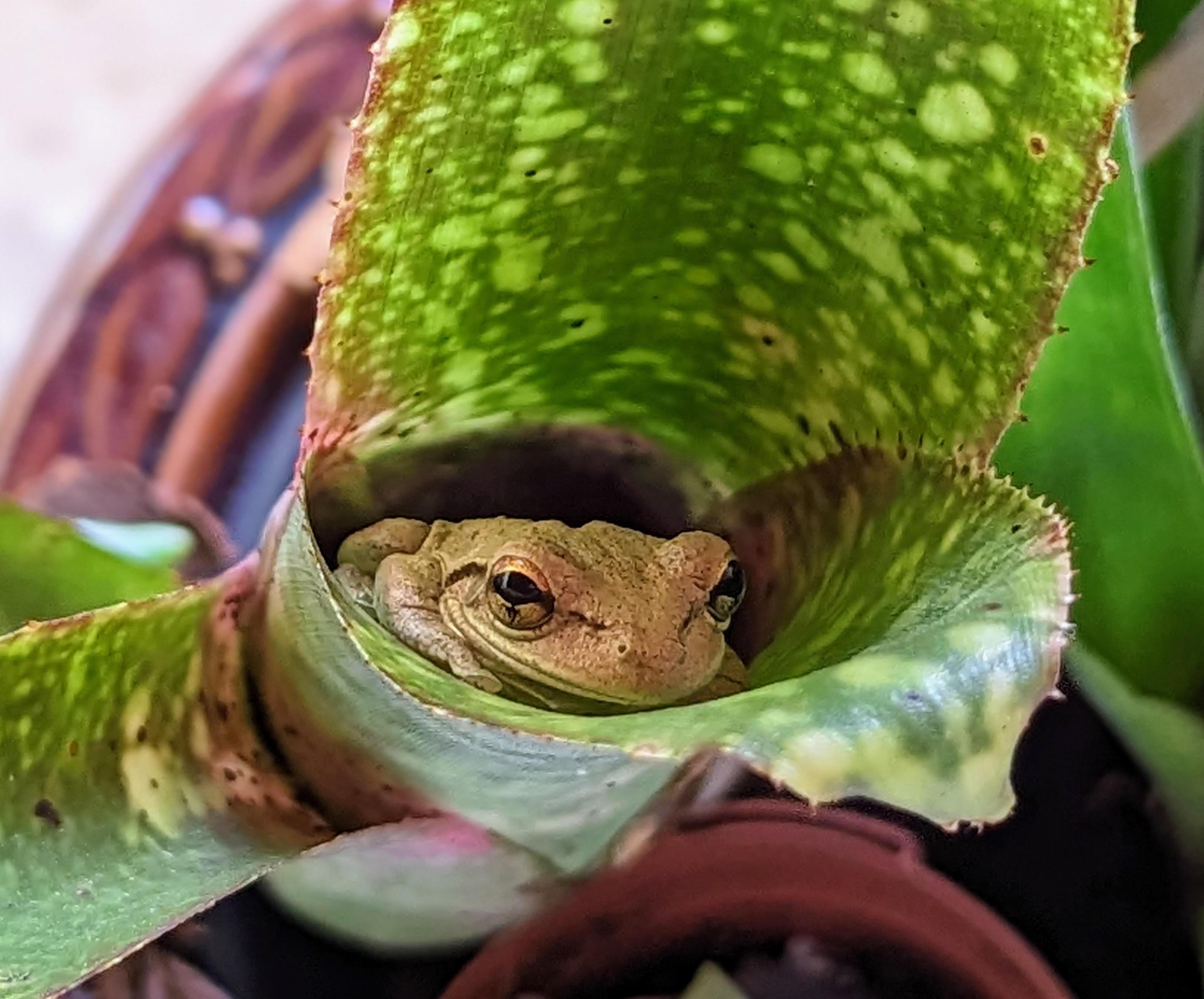
Frightened frog hiding from Fiona. I walked out with Fiona the greyhound the other night and found this native tree frog sitting on an ottoman on the porch. Fiona started barking and the startled frog hopped under a pillow.

That is all from SoFla. Happy Spring to everyone further north.

Six on Saturday – Stormy Benefits

SOS time again! Six items of interest to share with fellow gardeners from all over. To see other SOS posts, follow this link http://gardenruminations.co.uk

Warm and cold weather fronts crashing together from the Atlantic Ocean and elsewhere caused some mad weather in my South Florida garden this week. Neighbors were saying a mini hurricane hit our area, evidenced by 85 mph wind gusts and flying lawn furniture. The rain brought about some welcome changes to the garden.

Schomburgkia Orchids burst into flower and managed to stay attached to the Gumbo Limbo tree.

Blue Daze Evolvulus finally in full flower. These have been in the garden for years and rarely look like this. I have been wondering what to do with them and I am thinking lots of water is the answer.

Native Purslane popping up in the flower border. A weed I like, I am told it is edible – but haven’t tried it.

‘Bossa Nova’ Neoregelia enjoys the sunshine following the storms. I recently discovered these are supposed to grow in full sun. I moved them and we will see. I am not sure why it just seems odd to grow bromeliads in full sun. To me, anyway.

Another bromeliad basking in the sunshine. ‘Fireball’ Neoregeli; usually grown as groundcover for their foliage colors – varying from green to red depending on light conditions. These are in a container with Brown Eyed Girl Sunflowers.

‘White Flame’ Salvia with a Red Cypress Vine growing up the side. I suppose I should separate these two. Black and Bloom Salvia in the background. The butterflies are starting to enjoy all of these flowers.

That is it for this week. Next week’s weather is looking good for gardening. I am hoping the dragonflies show up soon to eat the mosquitoes that came along with the rain.

Happy Gardening!!
Six on Saturday – Turkey Tangle Frogfruit

I am joining the SOS gang this week with my latest garden adventure. Weather in South Florida is transitioning from Not Summer into Summer, rain showers have started back up, the humidity is up and a platoon of mosquitoes showed up this morning to interrupt my walk. I slathered myself in mosquito spray and braved the onslaught long enough to pot up the Frogfruit cuttings. Hoping for the dragonfly crew to show up soon and dispatch the mosquitoes.

To see more SOS posts, visit Jim at www.gardenruminations.co.uk.

The Frogfruit:

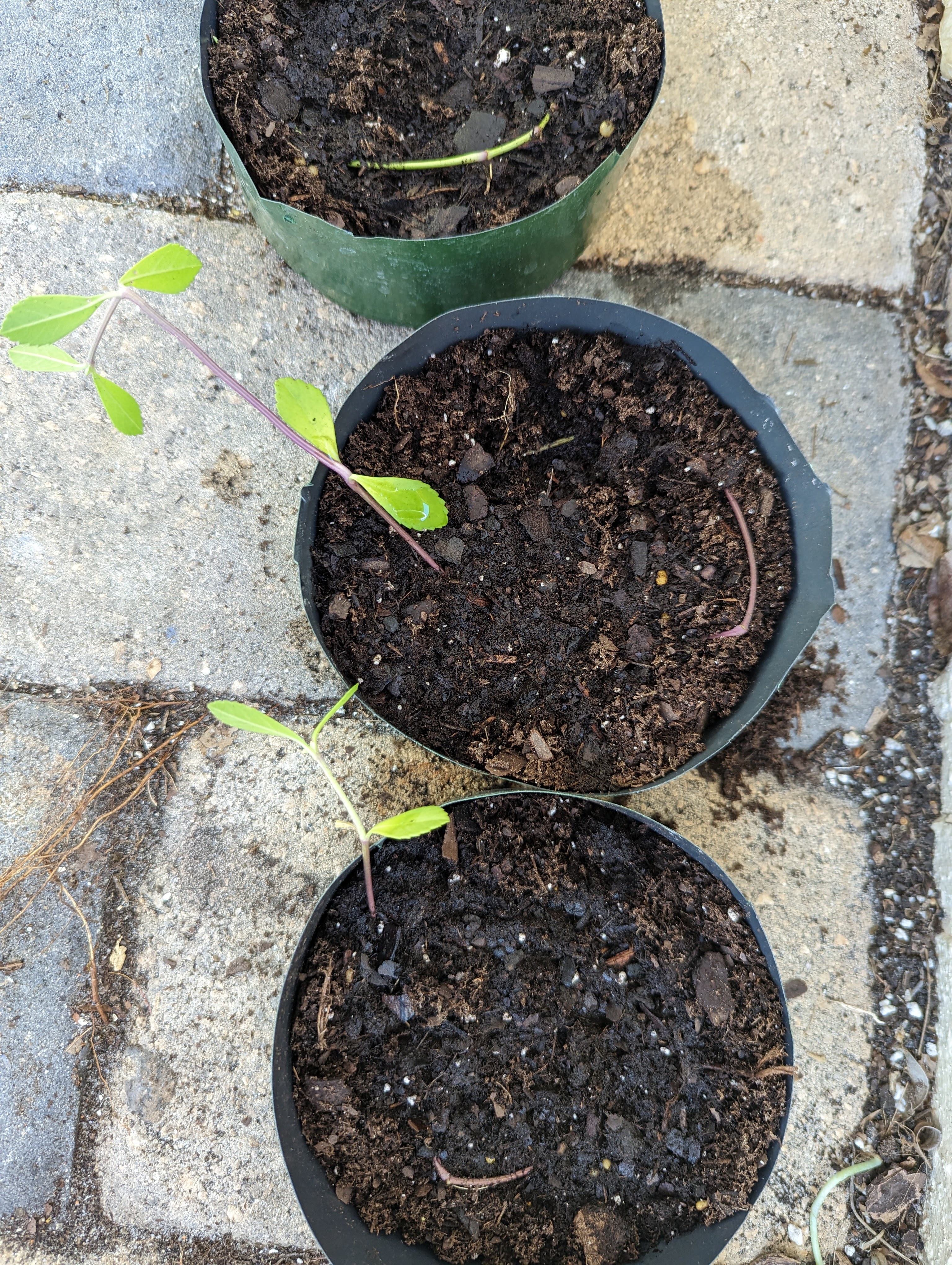
These don’t look like much right now. I want to get rid of the St. Augustine lawn in my garden. It needs too much of everything, water, sun, fertilizer and I refuse to put weed killers – especially Atrazine on my lawn. Florida, as a state, has mostly ruined their local waterways with lawn chemicals and sewage. And people wonder what happened to all the sea grass that the Manatees eat, duh. Put enough grassy weed killers on the zillions of acres of turf grass on sand and it’s going into the watershed to kill other things, especially the animals that rely on sea grass. The Manatees rely on sea grass and are starving, so the state is feeding them Romaine lettuce. I am so disgusted with these people. So, in my garden the lawn is mostly gone. And really ugly.

Rant is complete.

Turkey Tangle Frog Fruit (Phyla nodiflora) is an evergreen, low growing native wildflower – or weed, depending on who you ask. It is recommended as a lawn replacement in places other than Florida (Texas and California). It is also a host and nectar plant for many butterflies. For some reason, it is extremely difficult to source. I ordered cuttings in January and they just showed up in my mailbox. Now I have potted the rooted cuttings after several days of rehydration. Fingers crossed they grow. Who knew it would be so hard to grow weeds, uh, wildflowers.

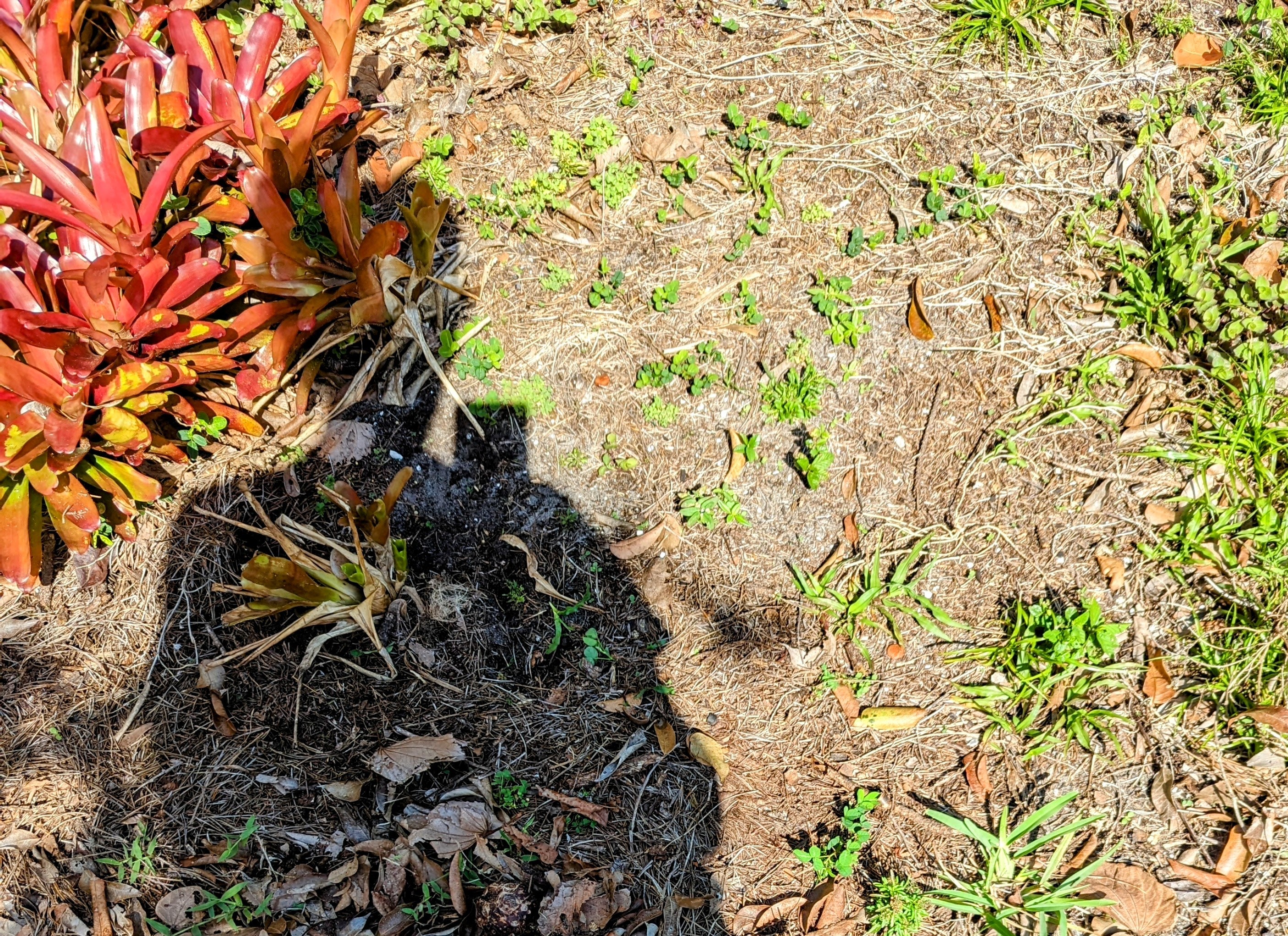
The “lawn” as it is. Ugly!

On to prettier things.

Three miniature pineapples and a lizard on a favorite bromeliad. The minature ones are more reliable about fruiting than the big ones, but you can’t really eat them. I have read they can be juiced, but how much juice could really be in there? I like to cut these and let them dry, they are fun additions to flower arrangements.

Another oddity, Coral Plant (Jatropha multifida) The leaves look like marijuana, though the whole plant is very toxic.

A plant combination I like. On the left, the foliage, Golden Duranta (Duranta erecta); grey foliage with yellow ball flowers ‘Golf Beauty’ Craspedia; ‘Mystic Blue’ Salvia and the small yellow flowering plant is a native purslane, I am not sure which one.

Flowers on a Lotusleaf Begonia (Begonia nelumbiifolia). The leaves on this begonia are easily 18 by 18 inches. It is a great coarse texture accent in the garden – considered a roadside weed in South America, where it inhabits ditches.

That is all from lawnless land in Florida. Thanks to Jim for hosting and..

Happy Gardening!!
Six on Saturday – The Jesus Lizard

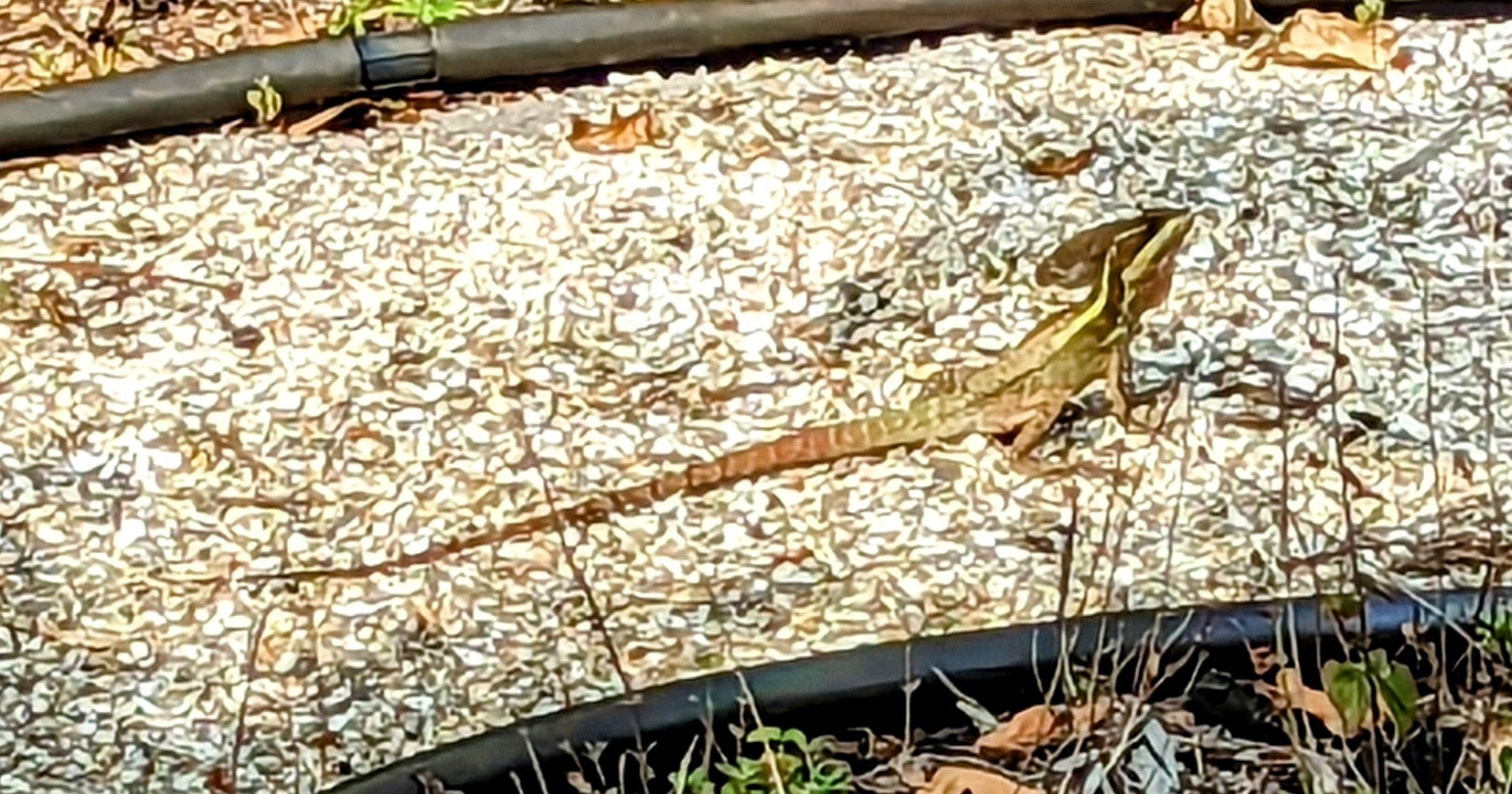
It’s Saturday again and time to share garden happenings. I suppose it is very appropriate to find a Jesus Lizard in the garden during Easter week. I had been seeing a fast moving animal in the garden for a couple of weeks, it appeared to be running on its back legs like a little T Rex dinosaur. I am beginning to think I am seeing things. Things that aren’t there. Finally, it stopped and I was close enough to get a picture.

Here is the lizard. Google was able to identify this as a Brown Basilisk or Jesus Lizard. It does run on its back legs and has paddle shaped feet that make it appear to walk on water if it runs into a lake at high speed, hence the name. These are not native to Florida and considered invasive. Mental health crisis averted. Additional information, if you need it. loridatoday.com/story/news/local/environment/2023/02/22/jesus-lizard-florida-what-to-know-brown-basilisks/69902695007/

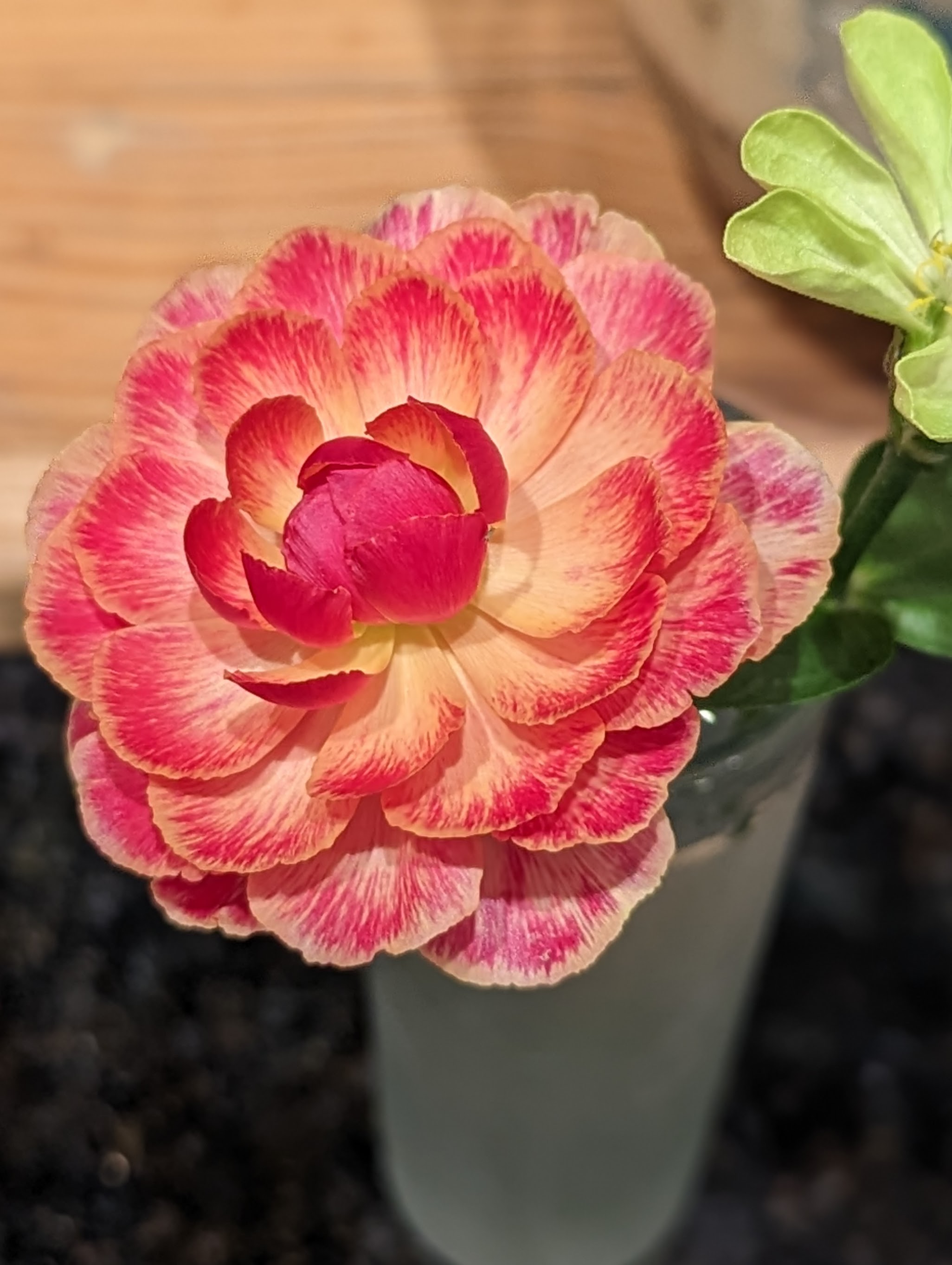
I was thrilled to get my second Ranunculus flower.

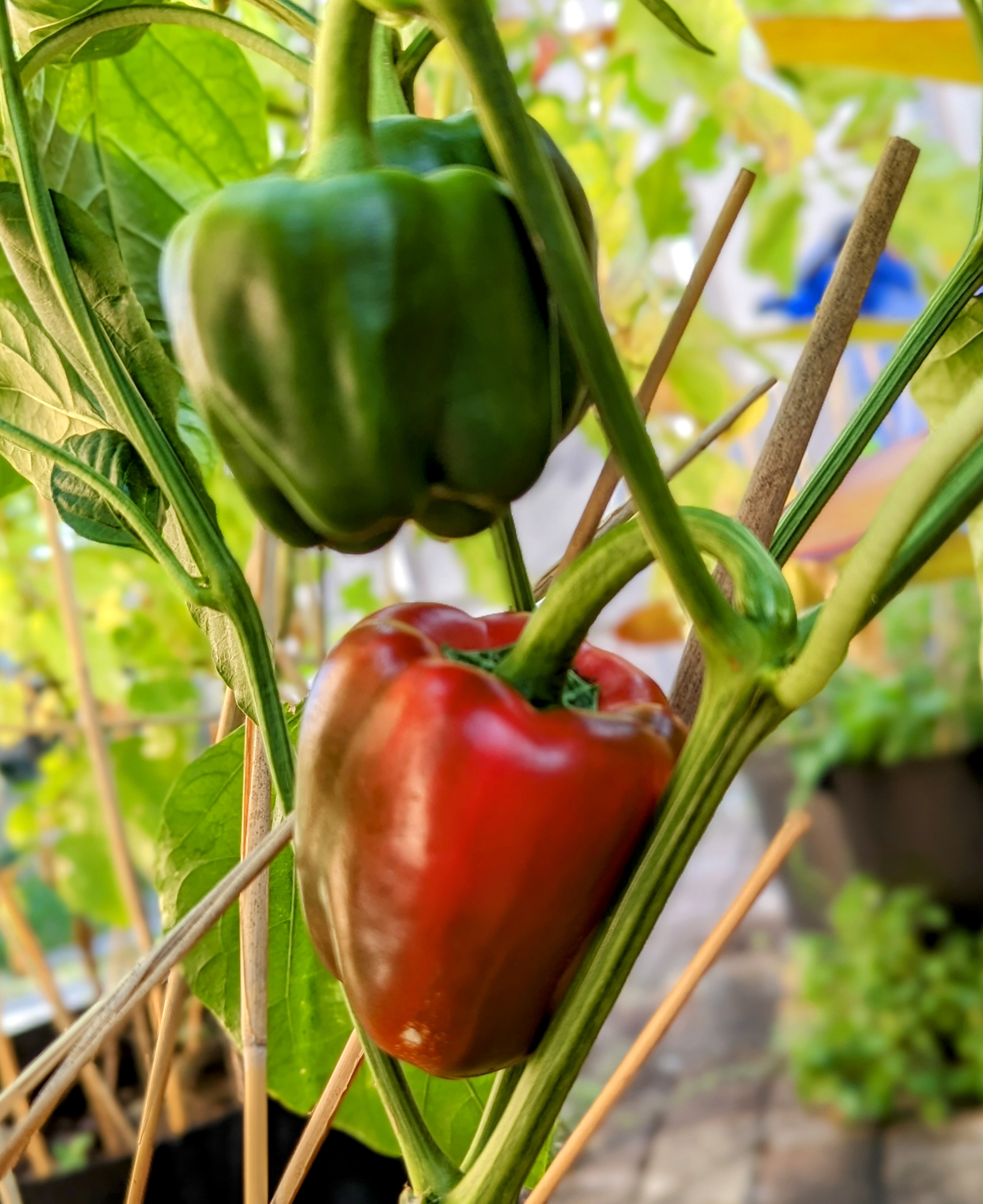
I am looking forward to eating this pepper. Tonight. My first successful red pepper.

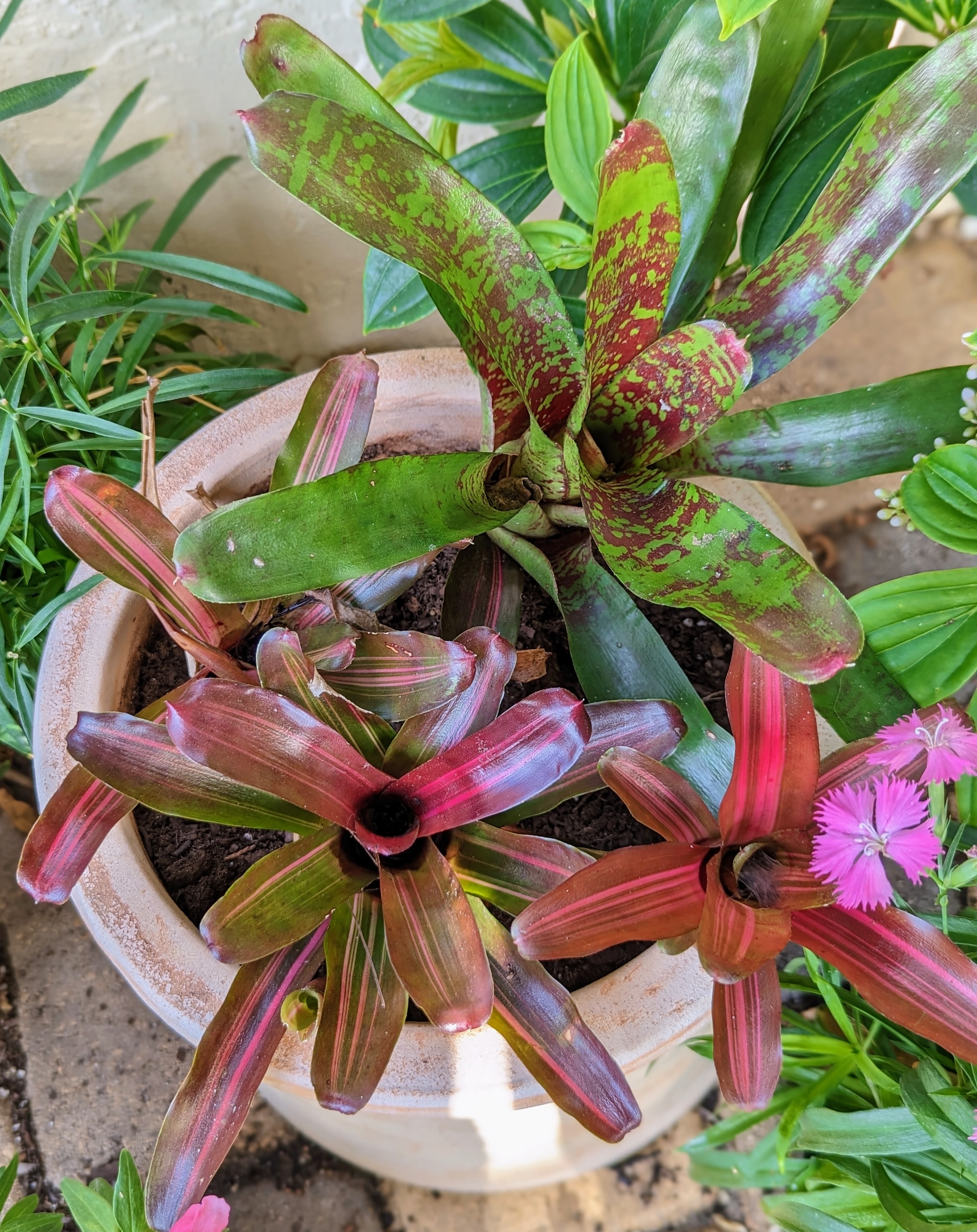
I have been moving bromeliads around this week. A new container of Neoregelia bromeliads was assembled for the porch from random plants in the back garden.

‘Purple Haze’ Billbergia bromeliad added to the front garden. A ring cut from a nursery container supports the plant as it roots into its new space.

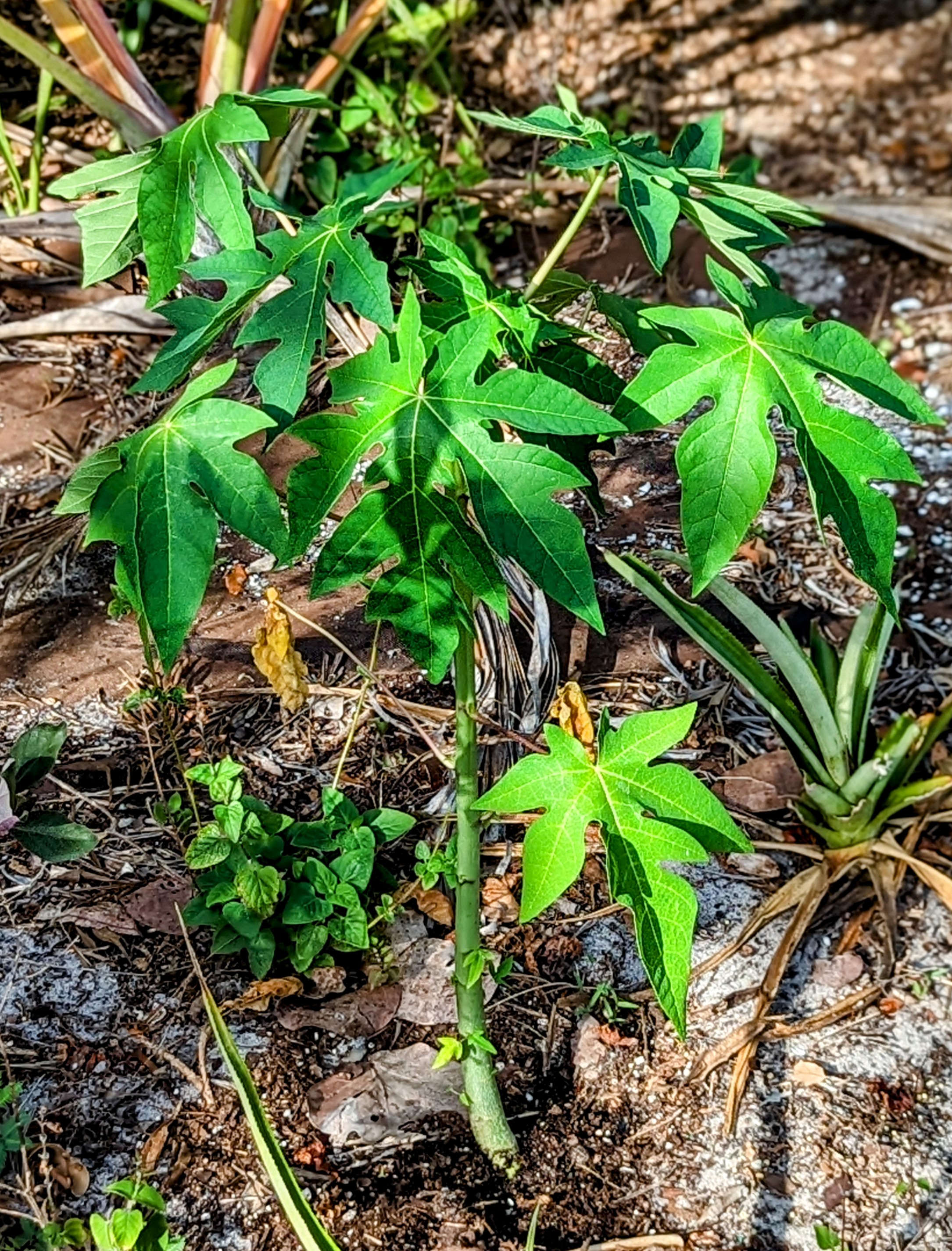
I planted three Papayas grown from seed in the back garden. Hopefully a male and female plant emerge from the trees and I get some fruit. These are Mexican Papayas. I have them amongst the pineapples that were gnawed by something. Maybe the Jesus Lizard.

Happy Easter and Happy Gardening!!

To see more SOS posts visit Jim at http://gardenruminations.co.uk

Six on Saturday – Tropical Fun

I am joining the SOS gang once again at Jim’s blog – http://gardenruminations.co.uk Follow the link to see more garden fun. This Saturday I am looking at the more tropical side of my South Florida garden.

Nothing says tropical like a big, tasty mango. These are Glenn Mangoes ripening on the tree. I am looking forward to a June day when I can eat one.

Spring brings bromeliad pups and these unusual rick rack shaped pups are growing up from a Macwilliamsii Neoregelia. These bromeliads are mottled green in summer and develop red coloration in winter, the red at the base of the pups is fading.

Shooting out some pups, Fireball Neoregelia are a famously tough groundcover bromeliad. Deep burgundy red in full sun and green in shade, these are underplanting a Brown Eyed Girl sunflower in a container.

Hippeastrum can stay outside year round in my garden. These are Red Lion inherited from my Father in Law years ago.

I installed some Cattleya Orchids in the Pygmy Date Palms (Phoenix roebellini) in my front garden this week. The orchids are wedged into the pruned part of the crown and secured with jute twine. The orchids are already putting out roots and should flower late summer, these are purple Cattleyas.

Schomburgkia orchids were mounted in the Gumbo Limbo (Bursera simaruba) tree last year. They have multiplied and are sending up buds (the brown stem looking like a bamboo shoot). These orchids are native to mangrove forests on the Gulf coast of Mexico; how they ended up here is anyone’s guess.

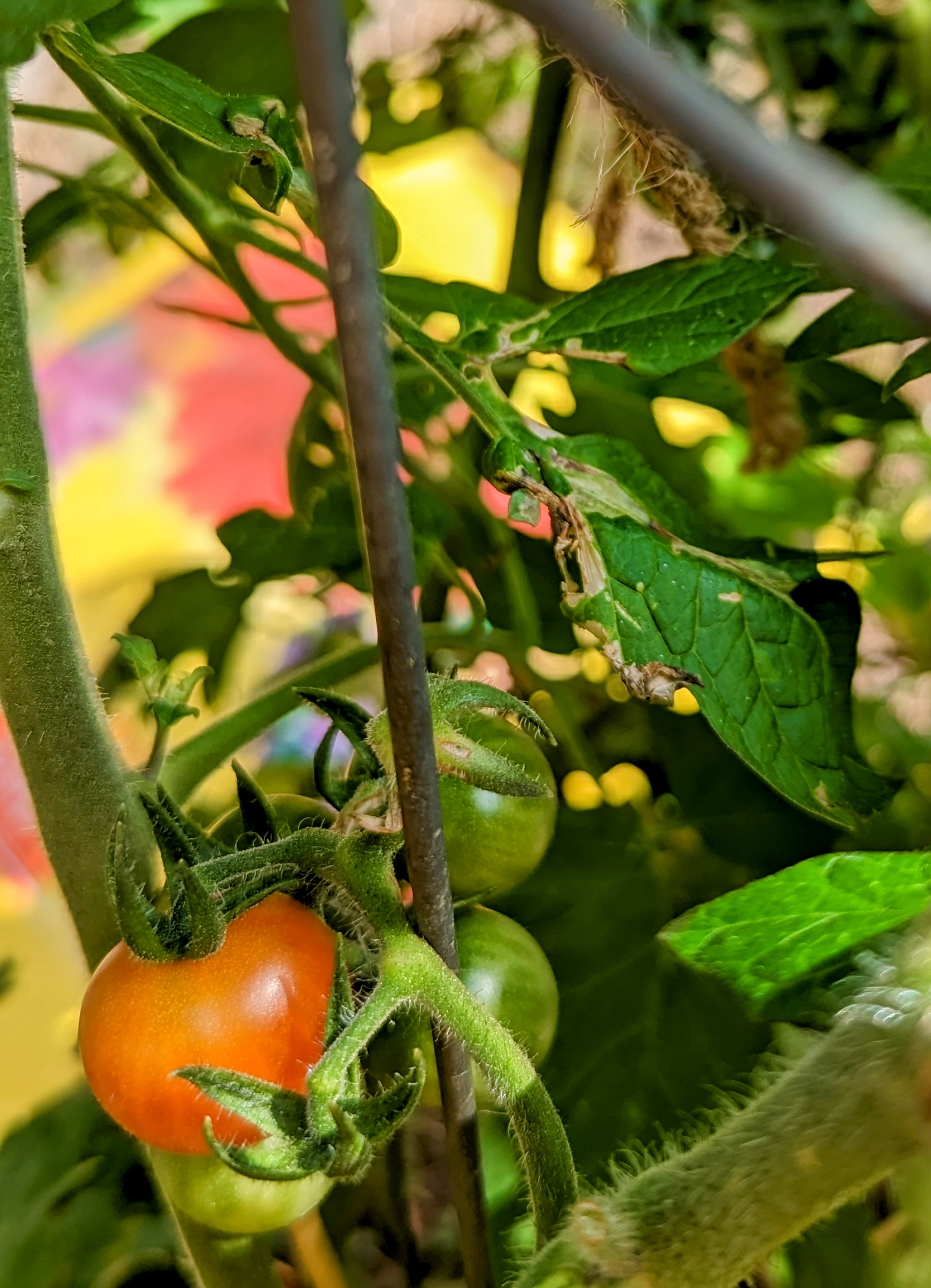
That’s all from my garden this week. I am breaking rules next week. Bromeliads are supposed to be divided and moved by March 31. Guess what I am still doing? I am enjoying the Lost Marbles tomatoes so much I am considering planting another batch – pushing the tomato envelope here. The last tomatoes should be planted in March. Oh, the dilemmas…

Happy Gardening!!
Six on Saturday – New Things.

I am joining SOS this Saturday with six new things from my South Florida garden. Below is a new addition to the ecosystem on my porch. This is a tree frog that has been sleeping inside a Billbergia bromeliad for the past several days. I am hopeful he or she is eating mosquitoes. Fiona the greyhound noticed the frog first. Fortunately, she dislikes amphibians, a squirrel would have been an entirely different story.

I have finally eaten a tomato! And there are more ripening, at long last. And yes, it was worth the wait. Delicious.

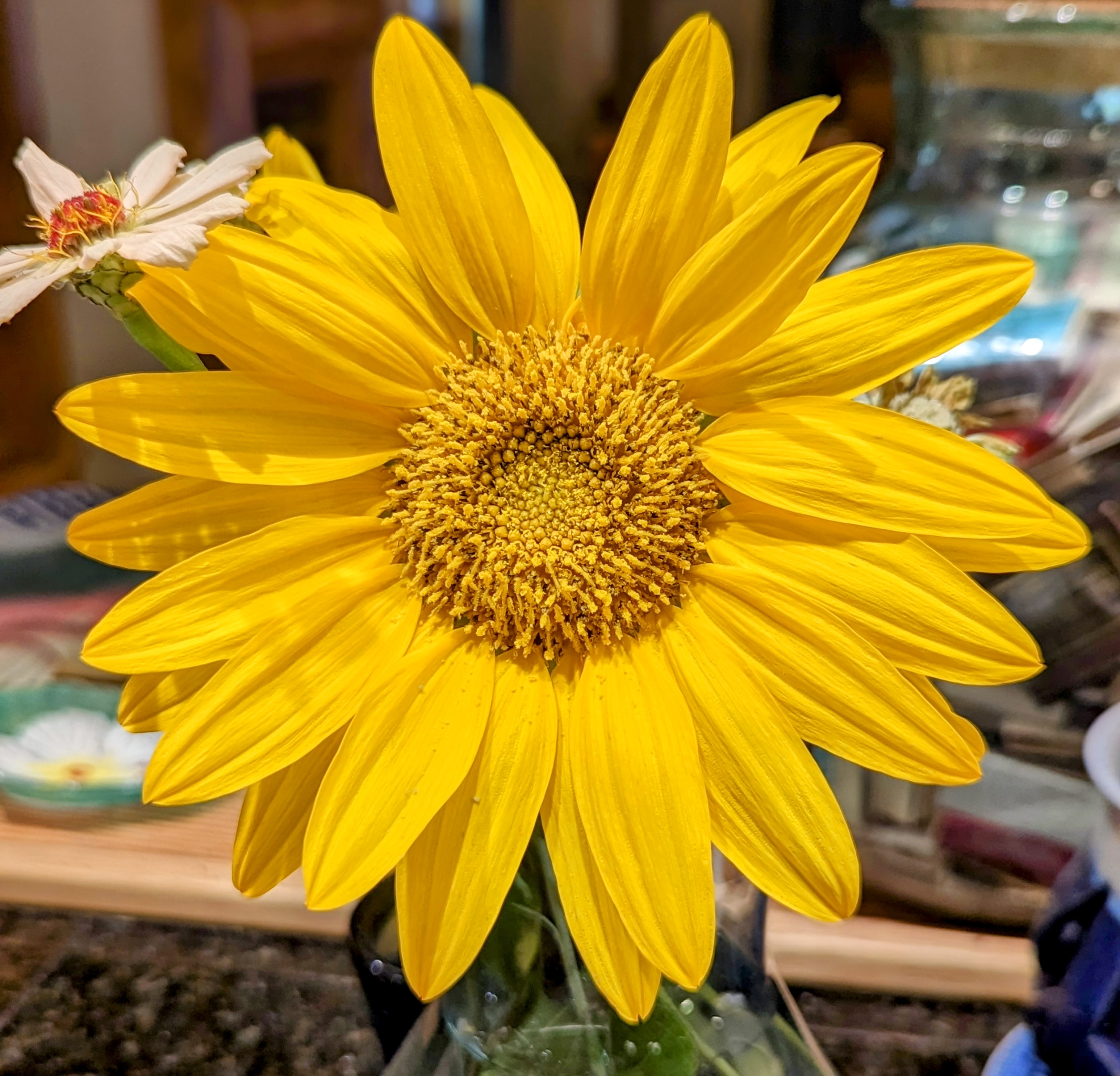
I cut the last of my Sunspot Sunflowers this week and have been enjoying them in a vase by the kitchen sink.

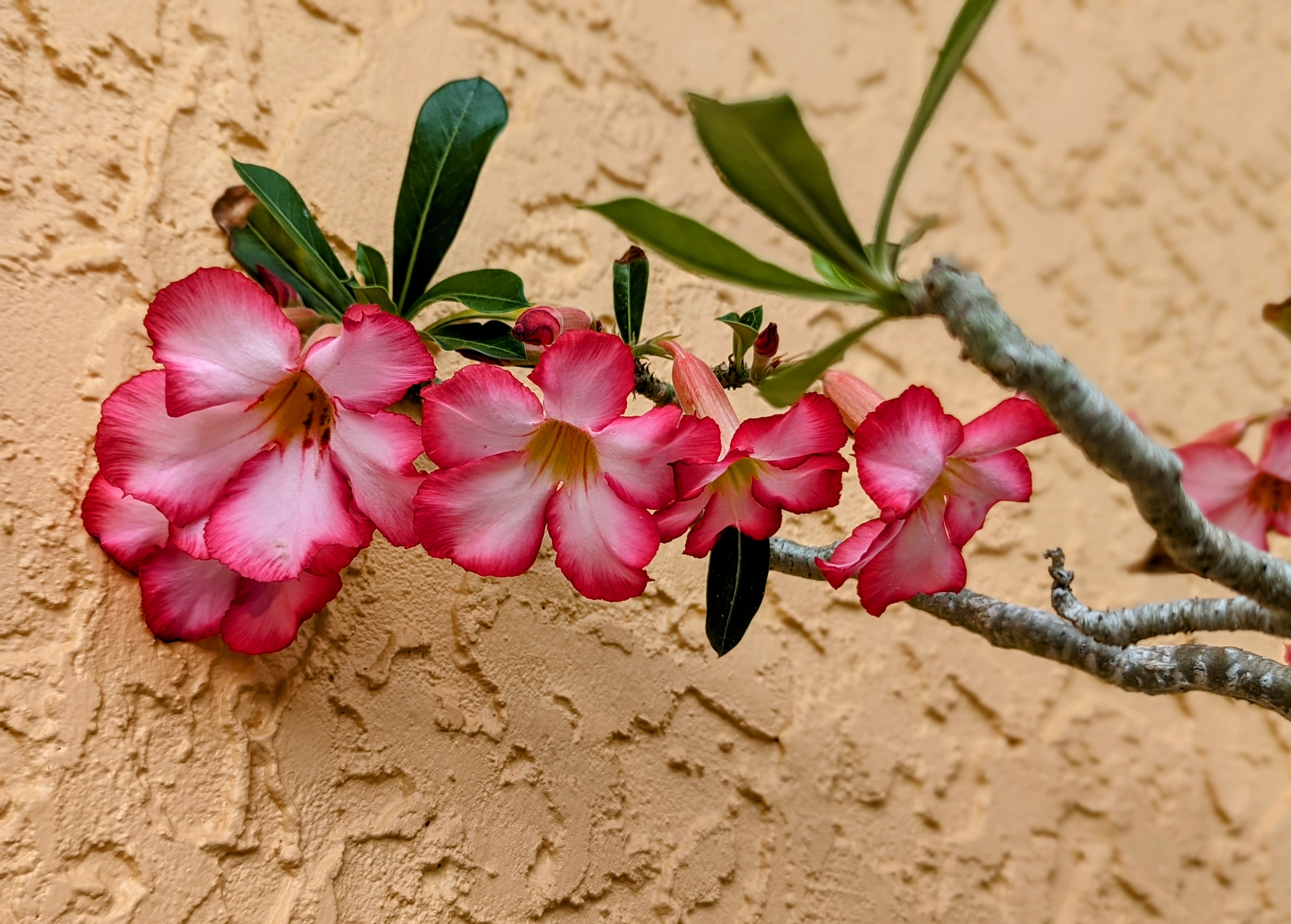
The sunny, warm weather inspired the Desert Rose (Adenium obesum) to flower. It caused me to realize I should thin the branches.

The red Desert Rose is budding and in desperate need of pruning. Maybe next week, I have been told to treat the pruning wounds with cinnamon to help them heal? Both of these plants were damaged by the cold in December and are bouncing back nicely.

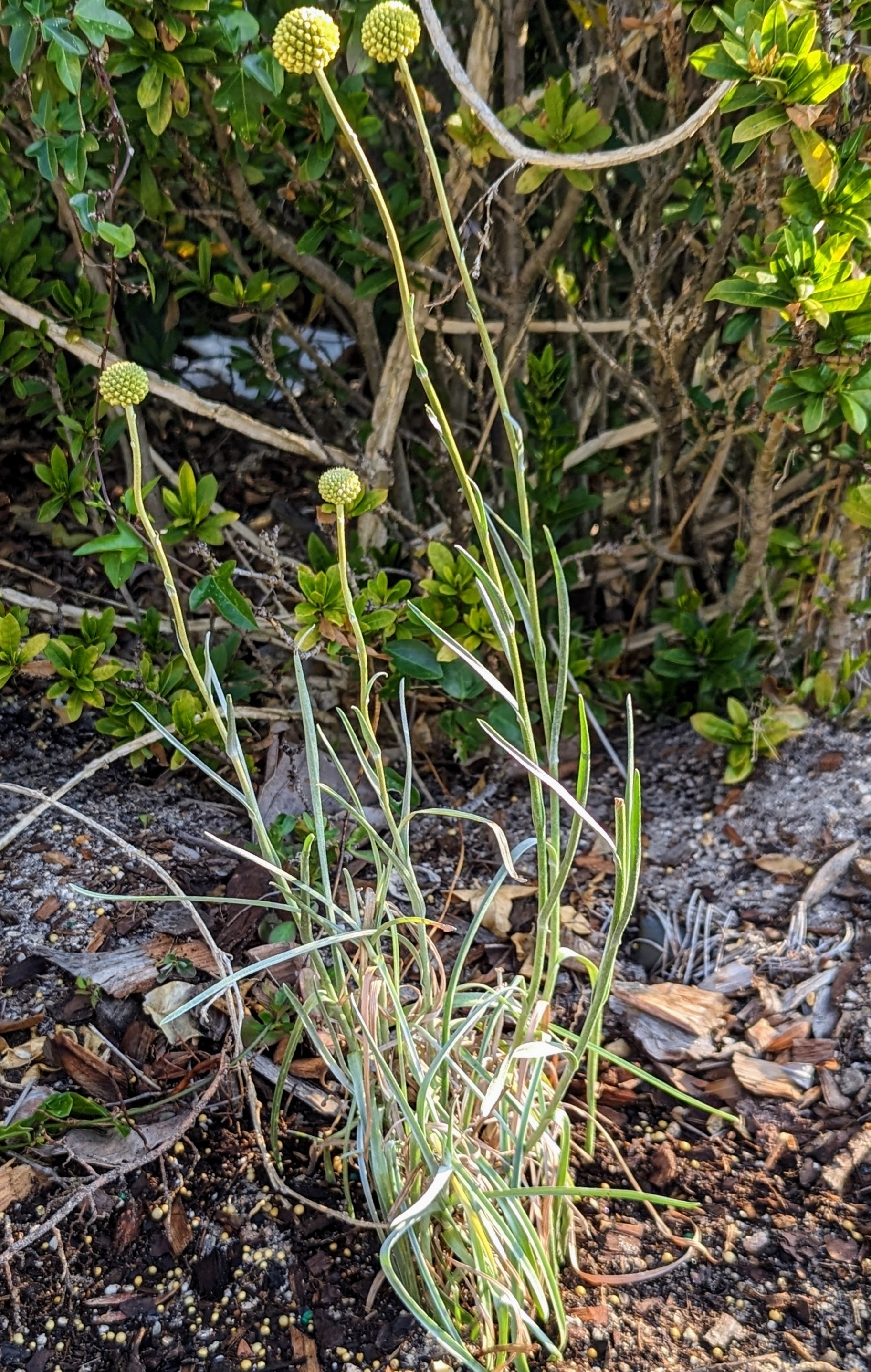
This is Craspedia ‘Golf Beauty’, a new addition to the cutting garden. I kept waiting for the flower to open, but this is it! I will say it looks great in flower arrangements and lasts for weeks.

That’s it from my garden this week. To see more SOS posts visit Jim at https://gardenruminations.co.uk

Happy Gardening!!