Garden Paradise

6-24-08 017

I think the ancient Persians were the original purveyors of the term paradise. It translates to something along the lines of walled enclosure. I agree that a walled enclosure can be a garden paradise, but I find my idea of garden paradise has changed over time.

My first garden was about 100 square feet behind an urban townhouse my husband and I had when we first married. My husband had bought the townhouse when he was single. The garden consisted of a 8 x 8 foot slab of concrete with a telephone pole in the middle and dirt around the sides; he used it as motorcycle parking. There were french doors that looked out on this not very scenic view.

I built a garage for the motorcycle incorporating the telephone pole, bricked the slab of concrete and put 2 tree form roses in big pots at the back of the spaceparadise found. Unfortunately, the tree roses only looked beautiful maybe two months out of the year. But those two months were spectacular. This also cured my desire to grow roses for the most part. The townhouse was sold and we moved to the suburbs for space and quiet.

My next garden was more ambitious a – 1/3 acre suburban lot with a vegetable parterre, water garden, a waterfall and perennial beds. I enjoyed creating the garden, but, after 17 years, it was just too much work. The couple who bought the house were 10 or 15 years younger, had 5 kids were excited about the garden and planned to add a pizza oven.  Paradise found and lost again..

The Vegetable Parterre

The Vegetable Parterre

The Vegetable Parterre was another one of those things that looked great two months out of the year – but had the added bonus of providing vegetables and herbs. Eventually the parterre disappeared and it was mostly a kitchen garden with herbs.

The Fish Pond

The Fish Pond

I enjoyed the fish pond for a number of years, but it leaked, and leaked and I fixed it and fixed itthis cured me of water features, in the ground anyway.

My current garden paradise is a work in progress. My goal is more hardscape, more perennials and less maintenance. Still working on it…

CAM00134


Winter Containers for South Florida

Here comes the Work Shop

Here comes the Work Shop

My husband likes to work with his hands, when we moved to South Florida there wasn’t enough room in our house for a workshop so we had one craned it. The picture is the shop being lifted over the house..I’ll get to the containers in a minute.

The shop ends up looking a bit like a trailer but with some landscaping and a porch it fits in. These sheds are fairly common in South Florida, I have never seen them before – they are even built and attached to the ground to resist hurricanes.

The whole adventure left me feeling a bit like Dorothy in The Wizard of Oz. Maybe in reverse.

After all this, my husband who has clearly been living with me too long decided he wanted some flower pots (containers if you are a landscape professional) on his shop porch. I put some containers together with the usual suspects last year sometime – yes, the annuals last that long here. It seems crazy to me as well. They last so long you get tired of them. When I lived further north I always did the containers twice a year, changed the colors with the seasons and enjoyed the variety.

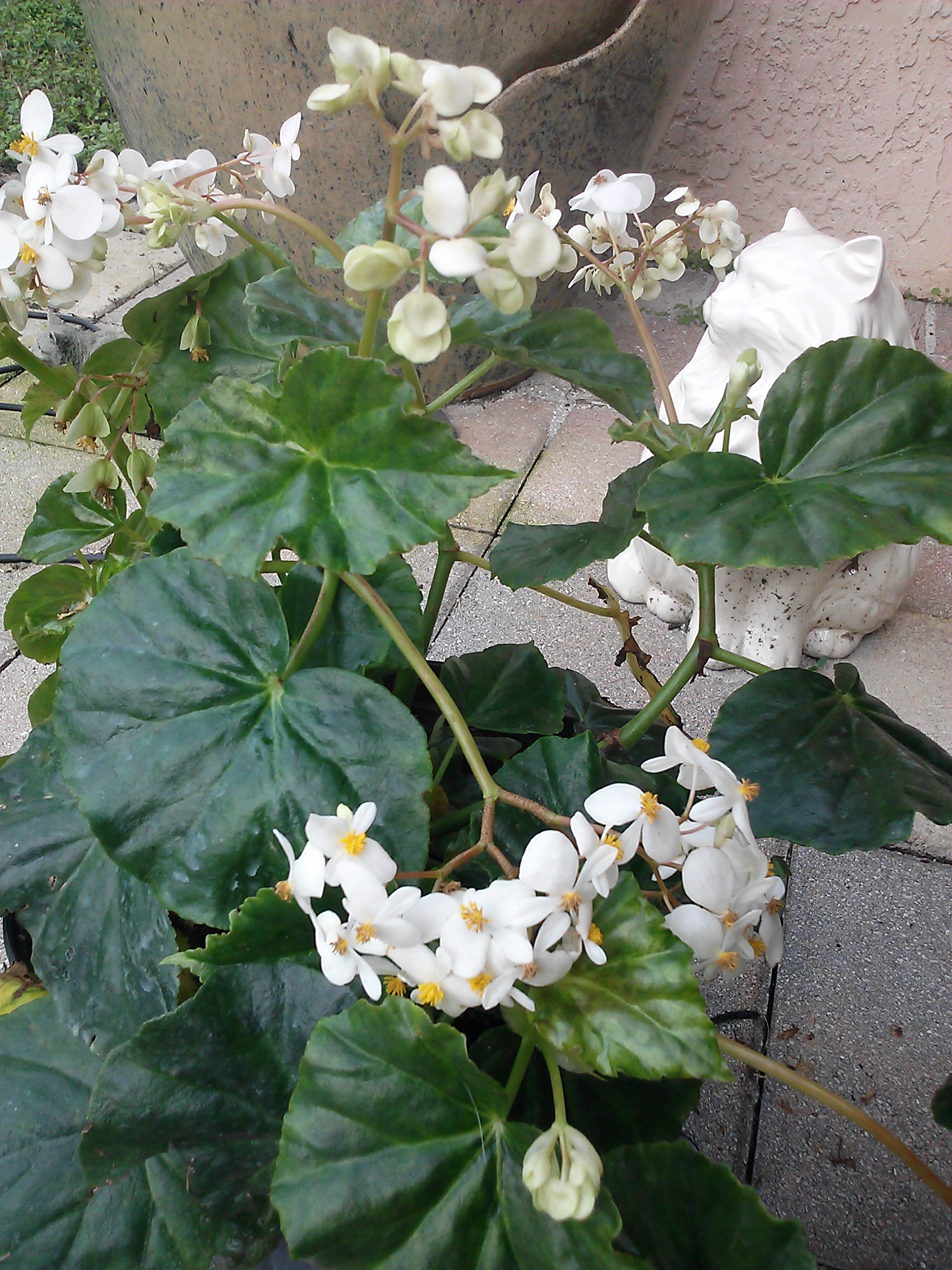
Imagine my surprise when the old summer reliables, Bronzeleaf Begonias, rolled over and died in the summer heat. Time to revise thinking to plants that live in say, the Sahara. Pentas and Lantanas. I had gotten bored with Lantanas in Atlanta and really still am, they just smell funny. If I want fragrance, that is so not it.

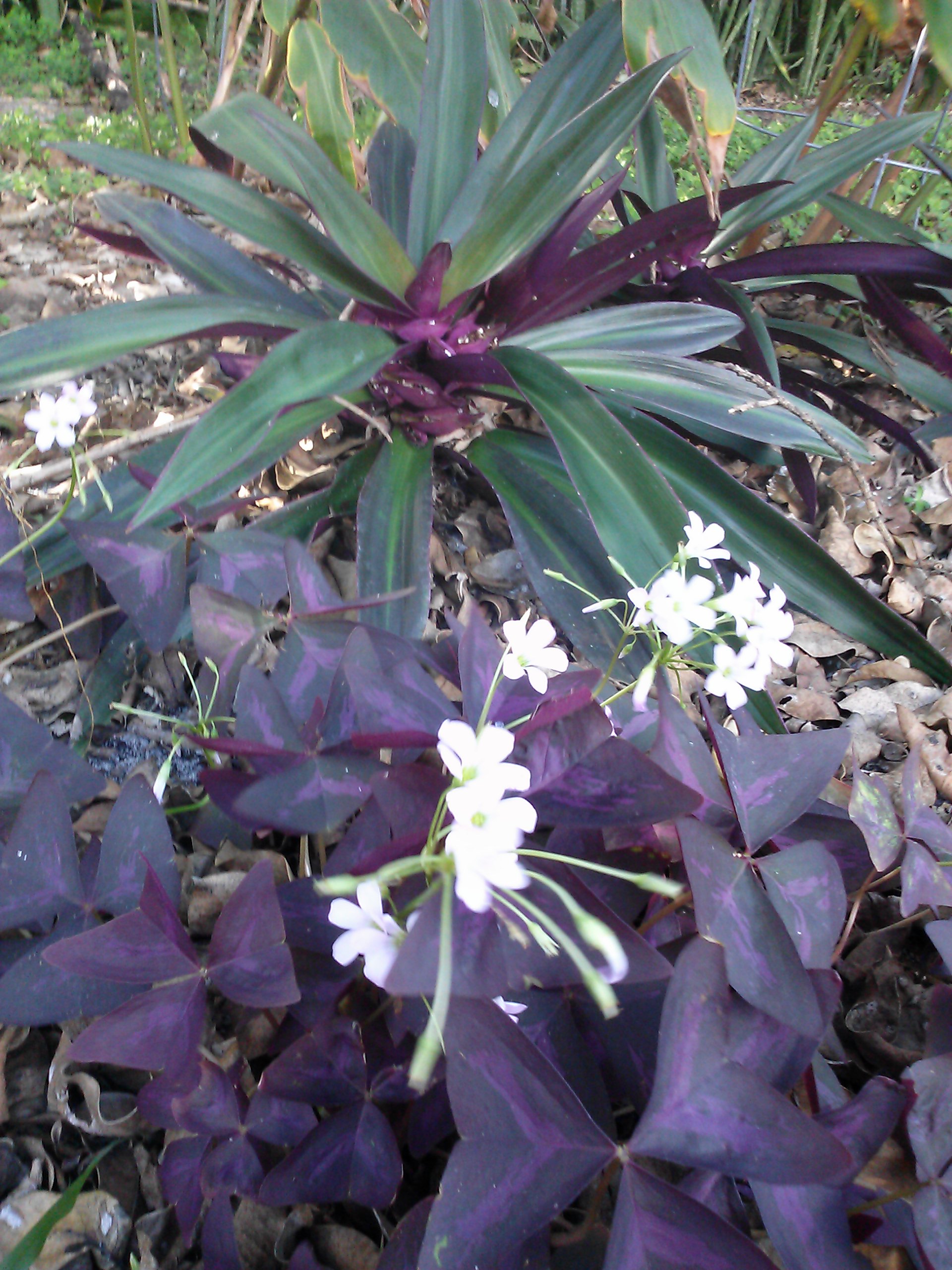
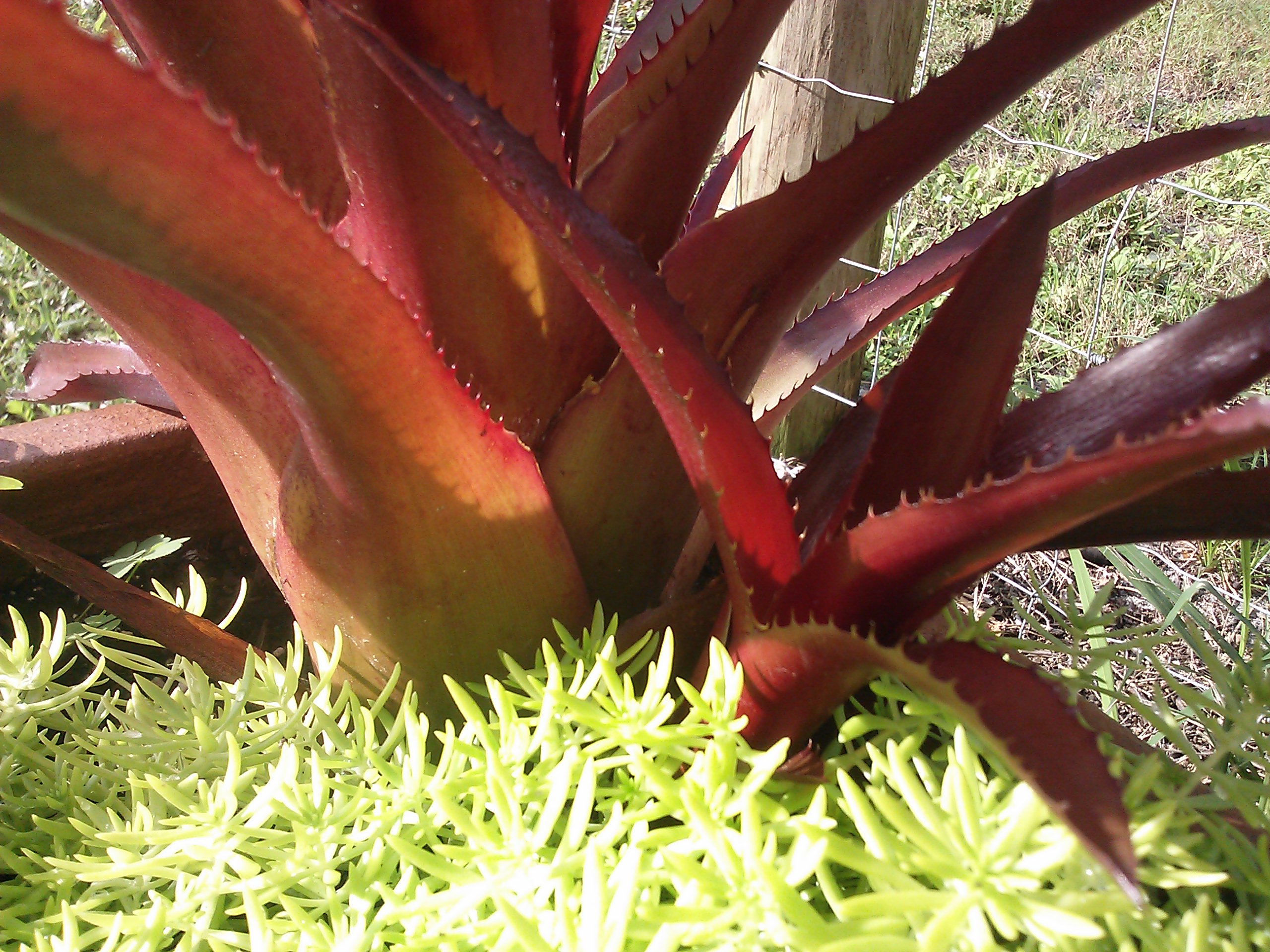
The Lantana and Pentas were pooping out so I was trolling around in our yard to see what I could find to replace the spent annuals. One of the fun things about living in Florida is you never know what you might find growing in the yard. Boston Fern grows wild in the side yard so I dug a start of that and then found some Purple Wandering Jew (Zebrina), a Burgundy Bromeliad and an unknown groundcover Bromeliad (from a garage sale) that needed to be divided  and added them to the ‘Florida Friendly’ (this is a Florida Extension Service sort of approved plant) chartreuse Sedum that was already in the pots. As an aside, who ever heard of a sedum that does well in partial shade – this does. Whatever it is.

Groundcover Bromeliad and Sedum

Groundcover Bromeliad and Sedum

Voila, a purple and chartreuse themed container garden. The Bromeliads seem to be perennial in containers – the big Burgundy one was divided from a container I have had on my front porch for a year or so – I started with one and now there are three in there. You just never know what you will find growing outside…

Newly planted containers

Newly planted containers


Fall Color in South Florida?


Golden Raintree

Golden Raintree

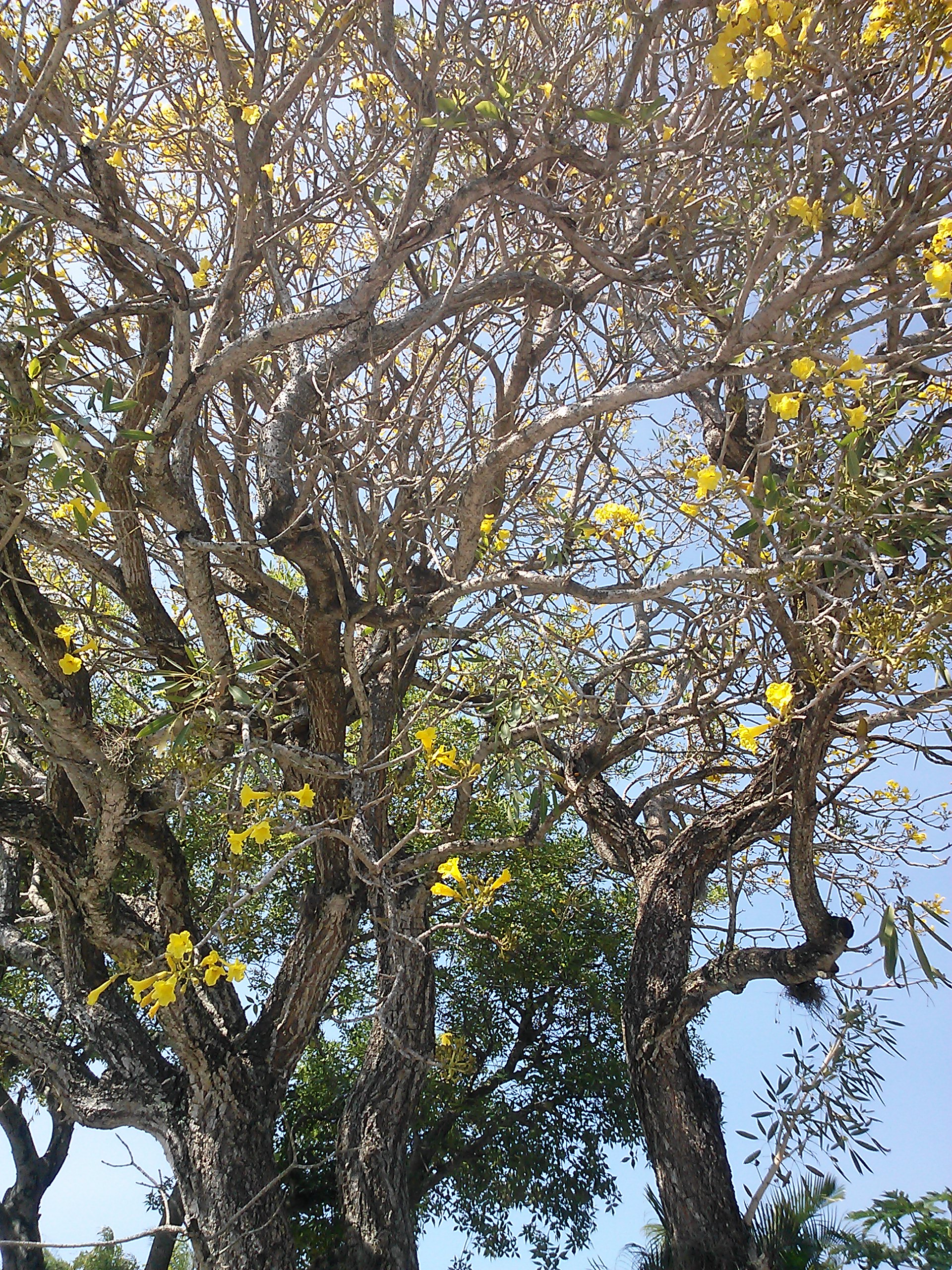
Fall colorin South Florida. This is a seek and ye shall find situation. I have found some signs of the Autumn season here in the tropical Zone 10A hinterlands. The Golden Raintrees started blooming in late September which kind of freaks me out as I associate these trees strongly with Summer. The above pictured Fall color is actually seed pods – which are kind of cool and are fall color as far as I am concerned.

This is a Koelreuteria bipinnata, some call it a Chinese Flame Tree, some call it K. elegans. People in Florida seem to think this tree will grow as far north as Zone 7, this is not true. I am guessing maybe Zone 8. It’s friend Koelreuteria paniculata grows further north (to Zone 5 – I seem to remember these while in Chicago) and has brown much less attractive seed pods. Both are sort of weedy, rambling trees, but the flowers and pods make it worth having. I think well drained soil is key with these trees; my mother killed these trying to grow them on what she referred to as “road bed” yellow, impenetrable clay.

I planted some Muhly grass, for its pink clouds of flowers blowing in the wind during Fall. Mine are just starting to bloom and I am hopeful they don’t reseed everywhere and overrun me..always a concern in a no frost environment. More touches of Fall include the Pennisetums, which are in full bloom here as well, but apparently Miscanthus doesn’t grow this far south.

Muhly Grass

Muhly Grass

I thought Miscanthus grew everywhere! Oh, well. I have Bromeliads..

Rainbow Eucalyptus – Eucalyptus deglupta

Rainbow Eucalyptus

Rainbow Eucalyptus

This is my husband’s favorite tree; possibly the only tree he ever really focused on. The ornamental, exfoliating bark is the main feature of this tree. Native to the Phillipines and surrounding islands, it is sometimes called the Mindanao Gum tree. The tree provides most of the pulpwood for paper and is grown on plantations in the Phillipines.

We first ran across this tree and its spectacular bark on the road to Hana in Maui, Hawaii. Intrigued by the tree, I researched it and was interested to find that it can be grown in South Florida. The tree is not tolerant of frost and our average low is 40 degrees. It is sited in a protected area, but is getting pretty tall.

Bark

Bark

And grow it does. I bought this tree in November 2012 at a plant sale in West Palm Beach at Mounts Botanical Garden. It was run over with a Riding lawn mower shortly after being planted and smashed flat. This resulted in two scrapes down the entire length of the trunk. Eschewing arboricultural reason, I decided to try and save the tree rather than buy another one. I went to Home Depot and bought a tree staking kit, cleaned its wounds, took out the damaged bark and wrapped the trunk with tree wrap and staked  the tree until it healed. A few months later the bark had calloused and the tree was off to the races.

Currently, nearly two years later and overwhelmingly robust I would estimate the tree is 30 feet tall. It doubled in size in one year (it was 5-6 feet tall when I bought it!) and has grown 18 feet in the past year. Now I am a little afraid.

The bark is currently not showing any purple or blue, but I believe it will. The new growth is red and it flowers in summer, not terribly exciting flowers, little white panicles – fortunately, no fruit thus far. The bark is the star of the show.

Regional sustainability

Cabbage Palm

There is a lot to read about sustainability these days, is it possible it is a local phenomena? It has to be. Given that the idea of sustainability is to save time, money and materials by using what is available locally – you have to find out what is around.

The LEED Initiative made popular by US Green Building Council (changing the way we think about building, they say) considers that any plant material grown within 500 miles of where you are building is locally sourced. I have to disagree with that 500 miles from where I am a greenhouse would be required to grow what grows outside here. I have learned a great number of new plants that I had never seen when I lived 500 miles north.

Florida may be different; but everywhere is different. Sunset Books made a great attempt to zonify America and came up with 36 named zones with added special zones for extreme climates?! The USDA seems to have 15 Zones. Who is right? Probably nobody.

So, I thought about what I can get here that is totally local and sustainable. Well, lots of things and these materials make my garden unique to my locale.

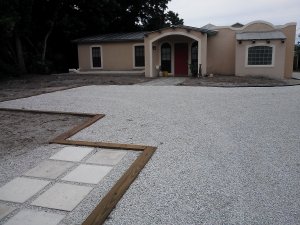
I can get great paving material from within 20 miles of my house, this is 3/8″ graded shell. Larger shell called white washed shell is available for more decorative uses.


Shell for surface of driveway

Shell for driveways, walkways, etc.

There is a place within walking distance of my house that makes stepping stones with shell in them:

Shell & Concrete Stepping Stone For Path to mailbox

Shell & Concrete Stepping Stones

Possibly a peculiarity of the area I live in; there are plant sales like garage sales almost every weekend. I rarely pay more than $5.00 for anything and talk about locally sourced. The downside to this is very few people know exactly what it is they are selling – its a Green Bromeliad. On the other hand, it is always a surprise when one of these treasures bloom. One of the joys of gardening.

The Mysterious Green Bromeliad

The Mysterious Green Bromeliad

Here is my latest purchase, a nice Chartruesy Green Bromeliad that supposedly takes full sun. That is the full extent of my knowledge, I can’t wait to see what it does. Gardening teaches patience.

Not Summer is almost here

Fall, Not Summer

Fall, Not Summer

Snowbird season is fast approaching; the first cold front of the year has not made it this far south. (Snowbirds are people who leave their northern homes to spend the winter in the gentler Florida climate) It seems October 15 is the typical cool down date. Snowbird season is fall everywhere else. I used to hate fall because I knew winter followed and the leaf color was rarely spectacular enough to make me happy about it. South Florida is pretty well-known for its lack of seasons. That said, I have come to think that there are actually two seasons here, Summer and Not Summer.

My Girl, at the beach in Summer

My Girl, at the beach in Summer

Summer is defined by the potential for development of Hurricanes, rain and general tropical sogginess. It is considered an emergency if your air conditioning breaks. People are nervous about the weather. On the other hand, I have read that summer in Florida is a great secret not to be shared. That is also true.  The crowds thin, it doesn’t take very long to get a sandwich at the deli and you can take your dogs to the beach after dinner for a walk.

The Flamboyant Tree

The Flamboyant Tree

For a gardener Summer features some of our gaudiest flowers, Ponciana trees sport sprays of bright red orchids to announce the season. Brightly colored Hibiscus burst out as do the Crinums and Copperpod trees. Frangipani and the Big Bromeliads flower spikes give us a taste of the Rainforest.

Crotons for Winter Color

Crotons for Winter Color

Not Summer has its advantages as well. The first being, of course, you are not in New Jersey. Go to any liquor store in late October and you can feel the party in the air. People asking “Does Grandma have any Vodka?, well, let’s get some anyway.” Getting a sandwich at the deli now means that you must wait behind what appears to be most of the cast from the Sopranos before you can eat.

Not Summer is the gardening season here. Walk into any Garden Center and the plants displayed look like late Spring most everywhere else. But it is Halloween, kind of spooky. I planted my summer vegetable garden Christmas week last year. We had fabulous tomatoes until the Summer Solstice. Deeply meaningful if you are a hater of frozen precipitation and faux winter tomatoes, as I am.

Our Not Summer Garden features, of all things, Winter Starburst, a magnificent plant. Then, we have “good snowbird” plants. Some are year round  reliable shrubs; Firebush, Hibiscus, and Jatropha.  Trees include Tabebuia and the Silk Floss Tree (beautiful, but weird, covered in pink flowers in December or so and covered in humongous sticker thorn things on the trunk – I have mixed feelings about this tree)

Summer or Not Summer; the plant life here in South Florida is outstanding. If you are looking for Winter you are in the wrong place.


Garden Writing- What are we doing?

6-24-08 017

I have been blogging for just about a year and I will have to say enjoying the experience. I have chatted with gardeners from around the world and learned that gardeners are interested in what grows well, everywhere. It always amazes me how the simple act of planting a seedling cuts through all socioeconomic, age and racial lines. Someone from all walks of life is interested in what actually comes up and flowers/fruits or whatever.

During the past year I managed to have one article published in a national magazine and have been disappointed and in some cases appalled by the comments I get from the Editors. I preface this by saying I have been in the design business for thirty years, which is populated by zealous critical people, and yes they can be very snooty.

I am shocked to find that magazine editors are much, much worse than designers.  Rude and snooty. Maybe I am just an old lady. And frankly, not really sure why the editors have this attitude. The major complaint they have with me is that I live in Florida. Ewww, think about it, though, this is the third most populous state in the USA – there are lots of ooky Floridians. My suspicion is they buy magazines.

Really, if you think about almost anywhere you live thirty miles (60km) up the road the gardeners are growing something you can’t. Gardens and design are gardens and design plant material is a tool.

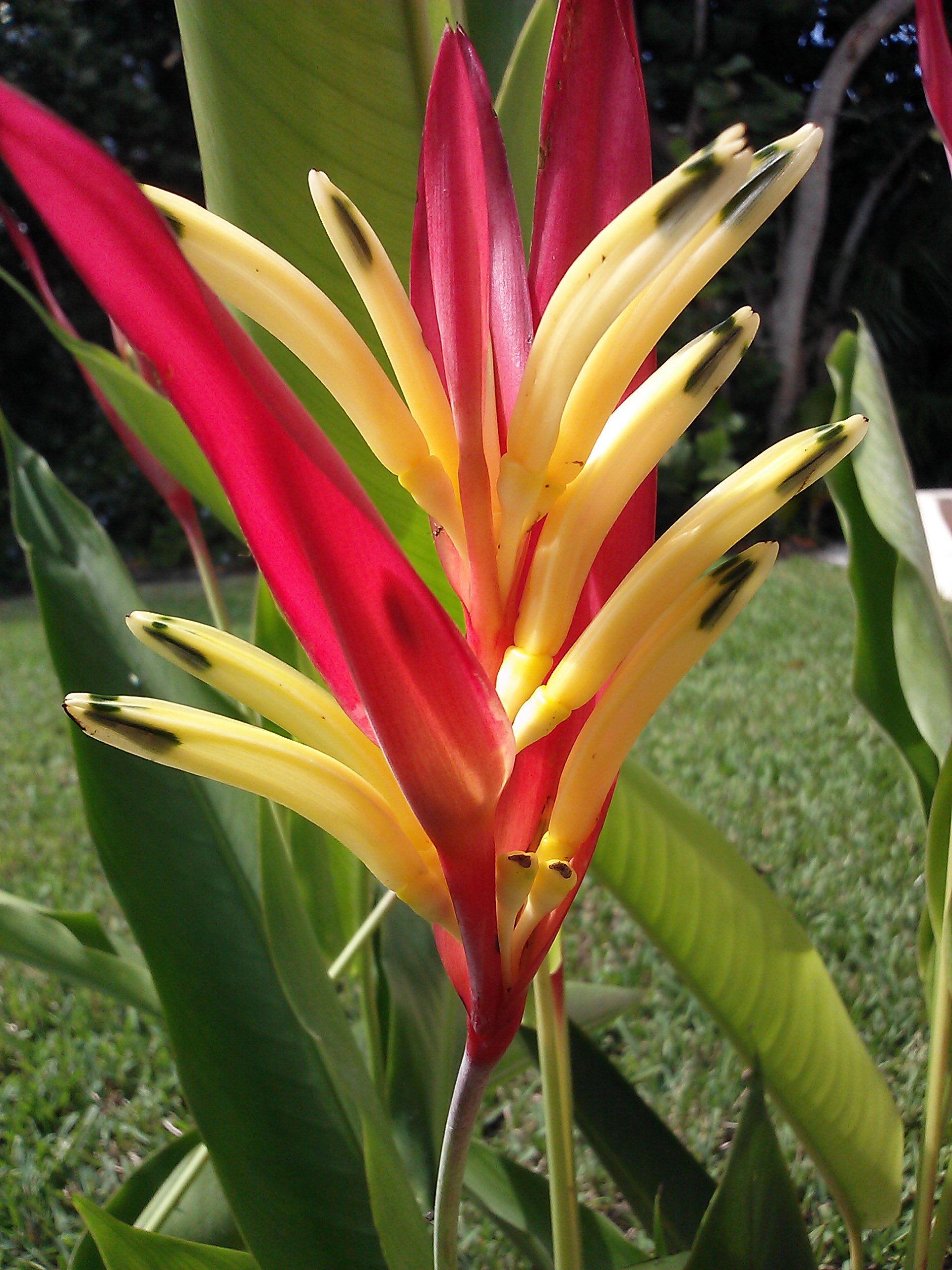
I think what I am writing about is my gardening experience, not that everyone in the world should be planting Heliconias in their front yard. Things are never that simple. I also like to read about what everyone else is growing everywhere else. I love to hear about people adding sustainable ideas to their gardens and sharing the ideas.  There are good ideas in every climate and really from every gardener.

Making gardens is a noble task. Wherever you might be.

i would really love some opinions on this…


Rain Gardens on the Treasure Coast

We have a local environmental blogger here on the Treasure Coast who posted  about Rain Gardens and inspired this.

I have been designing Rain Gardens for about 10 years. It is a great idea for the environment, but aesthetically it is difficult to cope with the fact that unless carefully planned it looks like a big drainage ditch in your front yard. Not a good look.

I decided to put some Rain Gardens around our house after discovering that the areas right around the house were not irrigated and the house had no gutters so the rain collected on the ground around the house and was not really concentrated by gutters into 4 or 5 spots.

The lack of gutters on the roof is relatively common here, this is new to me. I am not quite sure why – maybe Hurricanes blow them off. Anyway, we bought the house without gutters and I always, always hated dealing with getting the gutters cleaned, etc. on our house in Atlanta. I was happy not to have gutters.

Then it rained, like seven inches. Wow, there were pits in the areas under the valleys of the roof where the water came off the roof. Luckily the yard was so gruesome there was no question about redoing the driveway and landscaping. And we live on a Sugar Sand Dune, highly pervious no water stands anywhere. A big ditch was not really necessary.

My father taught Geology at Emory University. He passed on and I inherited his love of rocks, but in a more decorative way. I love stone, boulders and natural materials incorporated into the garden. I brought his rocks to Florida and planned to use them in my gardens. In Florida, I have added seashells and cap rocks in an effort to be more sustainable by using locally available material.

My Rain Gardens are in my front yard in a planter:

Rocks for Splashing

Rocks for Splashing

The valley of the roof drains onto these rocks, the rocks break the speed of water and then it splashes on down the Egg Rock, waters my plants and drains back into the sand. This planter is not irrigated, a bit of a sin in South Florida – it is maintained for the most part by rain. I occasionally water the Plumeria in  winter. The plants are placed out from under the edge of the roof  so they get watered and not beaten by a big rainstorm.

Rain Garden Planter

Rain Garden Planter

This is the whole garden. A Bridal Veil Plumeria is centered on the house flanked by Lemon Blanchiata Bromeliads then FlapJack plants. A Pencil Cactus anchors the corner. The plant selection is mostly succulents or low water tolerant plants. I had to have the Plumeria for aesthetic reasons and suffer through the watering.

Rockcentric Rain Garden

Rockcentric Rain Garden

This is my other Rain Garden. Again the water comes off the corner valley and lands on the large sized Egg Rock and flows over the Black Mexican Pebbles and drains to the driveway. The driveway is made from pervious shell and drains onto a turf area with a french drain beneath it.
The Rocks are from my father’s collection and one piece of coral rock from Jensen Beach. Plants are newly planted -a Tibouchina and a Leafless Bird of Paradise. I am watering these plants to establish them.

Bromeliads in the Hood

Dr. Seuss

Dr. Seuss

I did my weekend garden touring at the McKee Botanical Garden in Port St Lucie, Florida. This is a surprising gem of a garden located on 20 acres in a suburban neighborhood setting. One of the interesting things about this garden, it is maintained almost exclusively by volunteers and  is beautiful. And they have lots of Bromeliads. I have no clue what that is above but Dr. Seuss almost certainly would have loved it.

McKee Botanical Garden

McKee Botanical Garden

This is an island in the driveway at the  McKee Botanical Garden, the tree is a ScrewPine underplanted with Blanchiata Bromeliads and Green Island Ficus. Pretty cool.
More Bromeliad pictures from my travels:

Burgundy Bromeliad

Burgundy Bromeliad

I have seen numerous Burgundy Bromeliads around here. Guess what, the foliage is Burgundy and people will tell you they need some sun. Some being the operative word. These are, as far as I am concerned, in nearly full shade and flowering. I have some slowly frying in my front yard, am going to move them.


This is a bromeliad currently blooming in my neighbor’s yard. I think it is a Quesnelia-please comment if you know? I keep calling these Quesadillas and it is making me crave Mexican food…

Quesnilla?

Quesnelia?

The Good, the Bad and the Ugly of Southern Belledom

This post is called The Good, The Bad, and The Ugly of Southern Belledom:

bacon

bacon, a basic ingredient for green beans?

For those of you unfamiliar with Southern Belles, the prime example would be Scarlett O’ Hara from the movie Gone With The Wind. The book was written by a lady from Atlanta, Georgia, where I grew up and lived for 50 years. Scarlett was played by an English actress, Vivien Leigh, who I must say did  an amazing job at depicting the true Belle.

I have posted about Southern Belledom previously. I consider myself a recovering Southern Belle. The are many aspects of Belledom I just can’t cope with. Primarily shoes, I would rather not wear them. My mother used to tell me I was a half peach when I was little because we were from Georgia. I must be a whole peach by now and unfortunately I can’t pick a good peach out of a produce bin to save my life. This is one of life’s little mysteries.

It should also be noted I have an odd inability to digest fried food. This may be luck or possibly Yankee genes from my Connecticut born father. Who ate fried everything – even liver.

The Good: Things I have learned from being a Southern Belle:

My grandfather was a peach farmer who raised cattle and pigs as well. Farm to table food was what they ate before it was popular and there are few things better than homemade sausage, peaches right off the tree or radishes from the garden. I have a true appreciation for fresh food.

I have a deep appreciation for polite people. Southerners are generally polite to a fault, but may say anything behind your back. I now live in what might be considered northern South Florida and there are way too many people down here with bad manners. In the Miami area I have frequently heard the statement “the further north you go the nicer the people are” Well, I would hate to live down there.
There is nothing funnier than the southern sense of humor, self deprecating and wicked. It boggles many people, I get it and write it.

Craftsmanship. I love things made by hand and not with a computer. Artwork, lace, woodworking – just about anything.

A love and respect for animals that I am not sure all people share. Dogs and cows, especially.

An appreciation for native plants, in the current vernacular, and many other plants as well.

Rat Cheese Toast: this is peculiarly southern and perhaps a Greatest Generation thing that is dying out. French bread slices buttered and topped with a thick slice of Extra Sharp, Extra Cheap Grocery store Cheddar and broiled til bubbly and brown. Especially good with tomato soup.


The Bad: A Good Southern Belle should eat and read these things. I don’t.

I realize a lot of this is food based. The Southeastern United States is called “The Stroke Belt” for good reason.

I hate overcooked vegetables, especially with anything greasy in them, a very common side dish in the South, green beans with bacon, anyone?. I wonder how many true Southerners had their cholesterol ruined by eating vegetables. Truly a contradiction in food.

I hate Sweet tea. If I wanted to drink syrup, I would. How many Southerners were turned diabetic by this particular beverage? My grandmother (who was diabetic) made her tea with actual saccharin. Little pills that looked like mini aspirin.I just read up on saccharin, the dictionary says it is 300 times sweeter than sugar with a bitter aftertaste. That perfectly describes my grandmother’s sweet tea. I will only drink tea straight up.

I am not  fond of pimento cheese. Which is odd for someone raised in the South. Mayonnaise and grated cheese with pimentos, seriously considered a gourmet item and how many grams of fat ? Then flavorless white bread spread with margarine prior to the application of the mayo/cheese /pimento mixture. Greasy, yes. Skip that and give me some “rat cheese” toast. Seems crazy, but probably better for you.

Ever had a sweet potato casserole with marshmallow topping? If so, I don’t need to go any further. If you haven’t, imagine mashed sweet potatoes, sugar, maple syrup and pecans, possibly pineapple with stacked jet puffed marshmallow browned on top. To go with turkey. The concept is bizarre. And I would say you have to grow up with it, like grits, but I did, and Ewww.

Dark Southern Literature, did anything good ever happen in Mississippi? something must have.

The Ugly: Things I can’t deal with in good conscience.

Oh, the things Southerners will say behind your back. Truly ugly.

Be careful about the color of the roots of your hair, regardless of where you started.