It’s time for the weekly visit with other SOS gardeners. My South Florida garden received plentiful rain this week, the plants enjoyed it and are starting to show their summer colors. Bromeliads in the garden change colors with the seasons. Some in the winter and others in summer. The color change I notice most is from green to red (and back). Markings on the foliage that change vary from spots to streaks to bands of color.
For the SOS garden tour follow this link to visit Jim: http://gardenruminations.co.uk
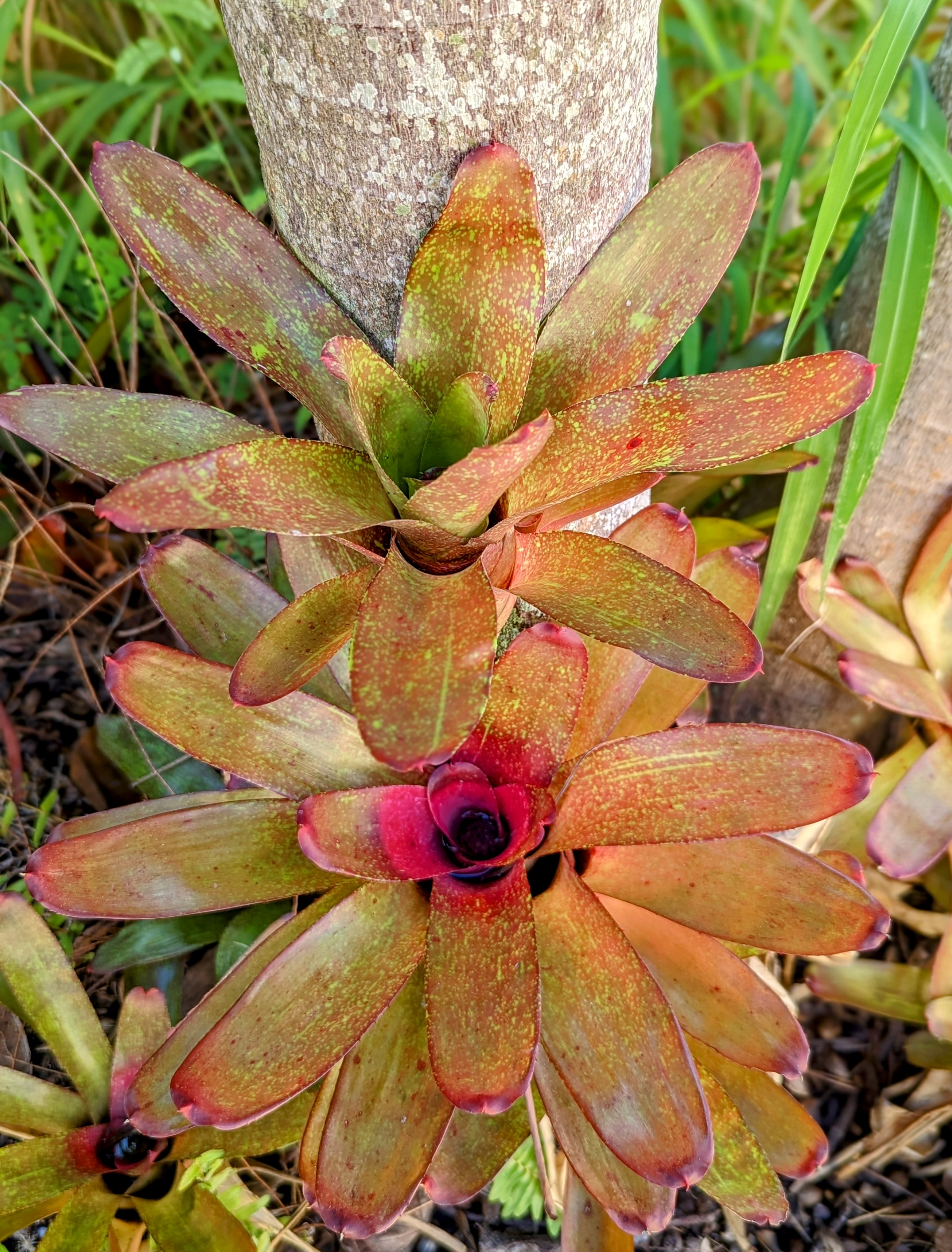
‘Jill’ Neoregelia climbing a palm trunk. The foliage tips and cups on this one deepen in color in the summer.
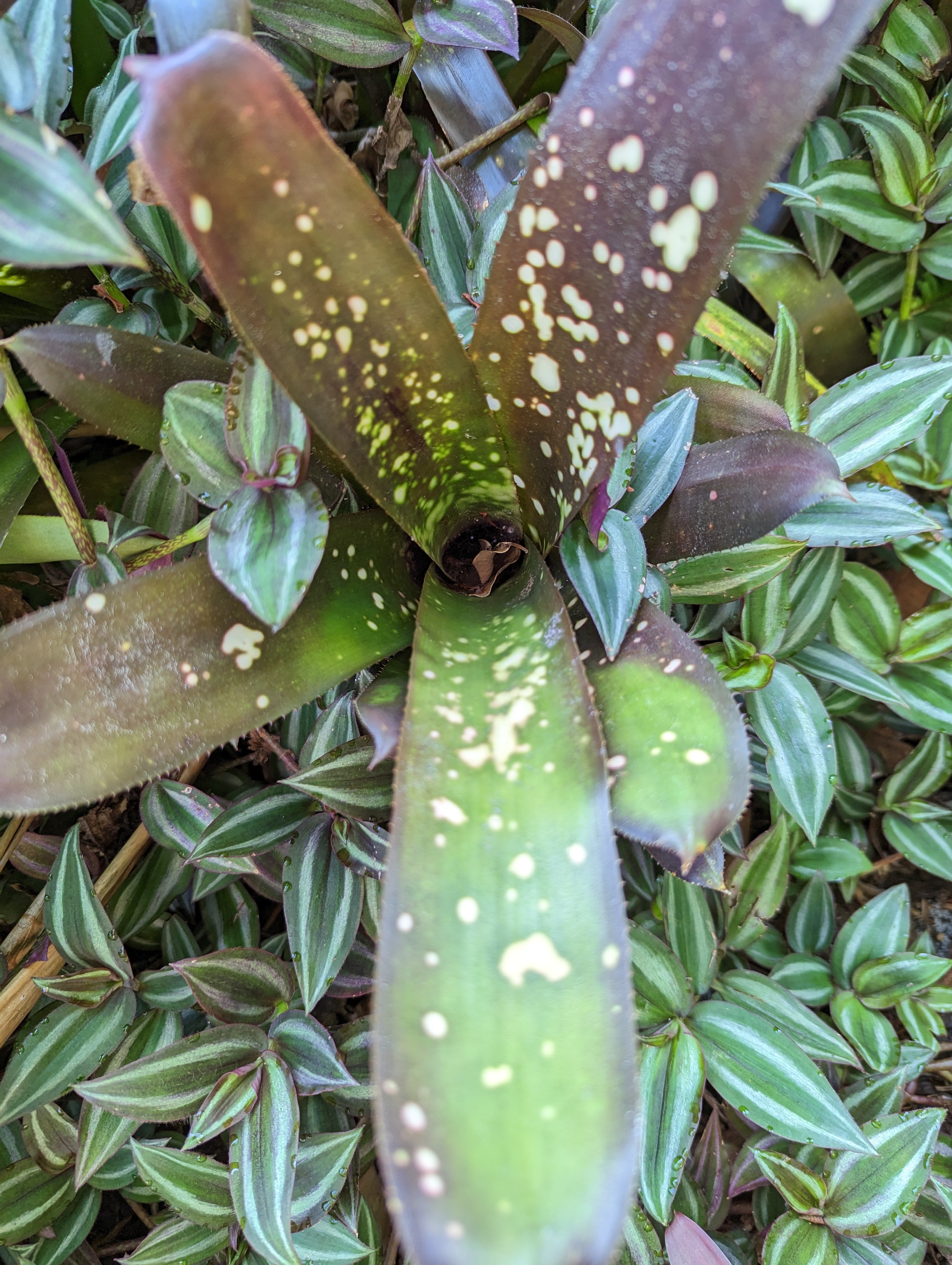
‘Hallelujah’ Billbergia. These tend to go a bit green in the summer. The purple color deepens in winter.
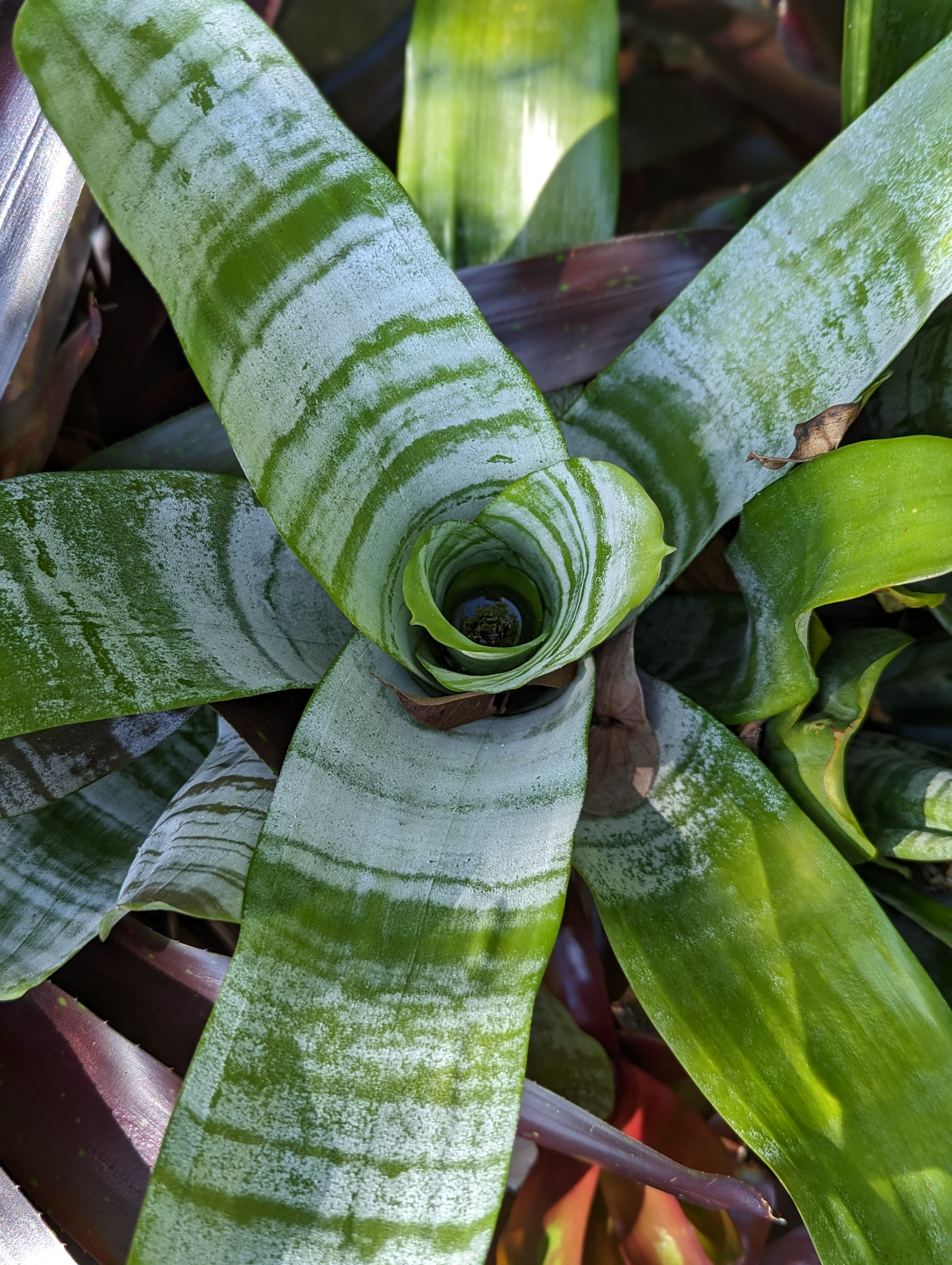
Aechmea ‘fasciata’. The bands of grey coloration sharpen with warm weather, these produce big pink flowers every other summer. Also known as the Silver Urn Bromeliad.
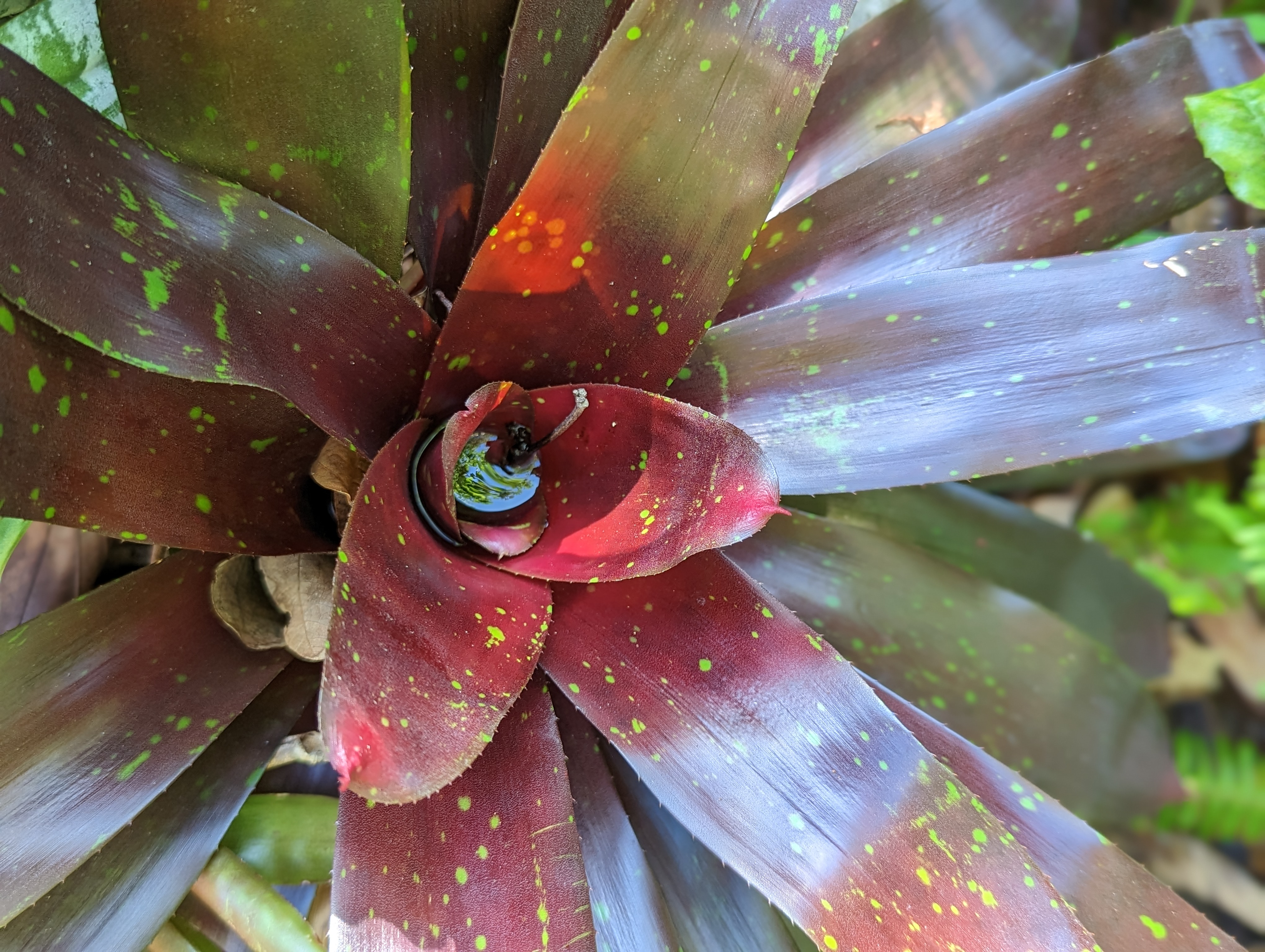
‘Luca’ Neoregelia, one of my favorites, is almost too dark but the chartreuse spots lighten things up.
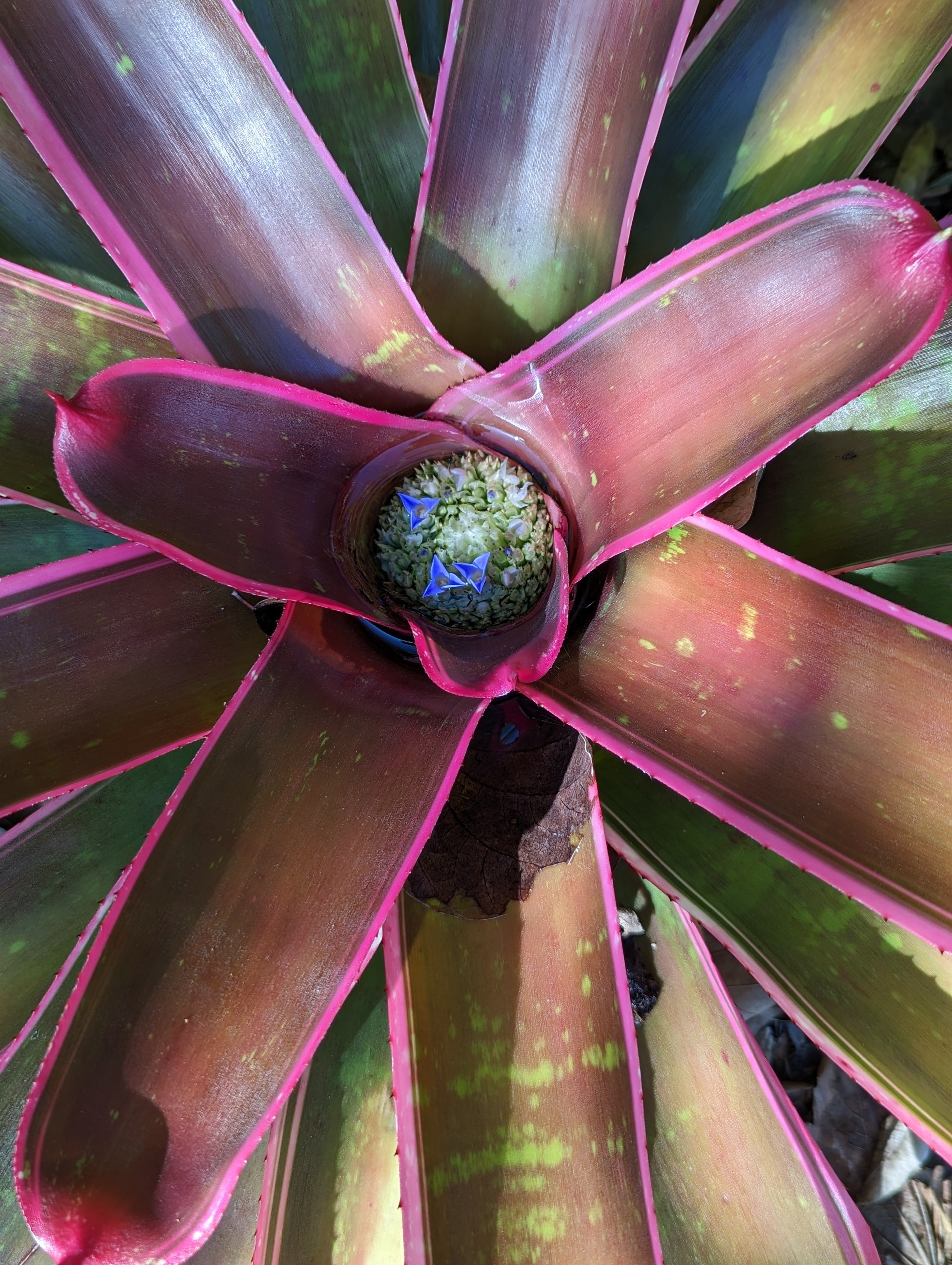
An unknown Neoregelia in flower. This one has pink stripes in sunny areas and white in shady areas.
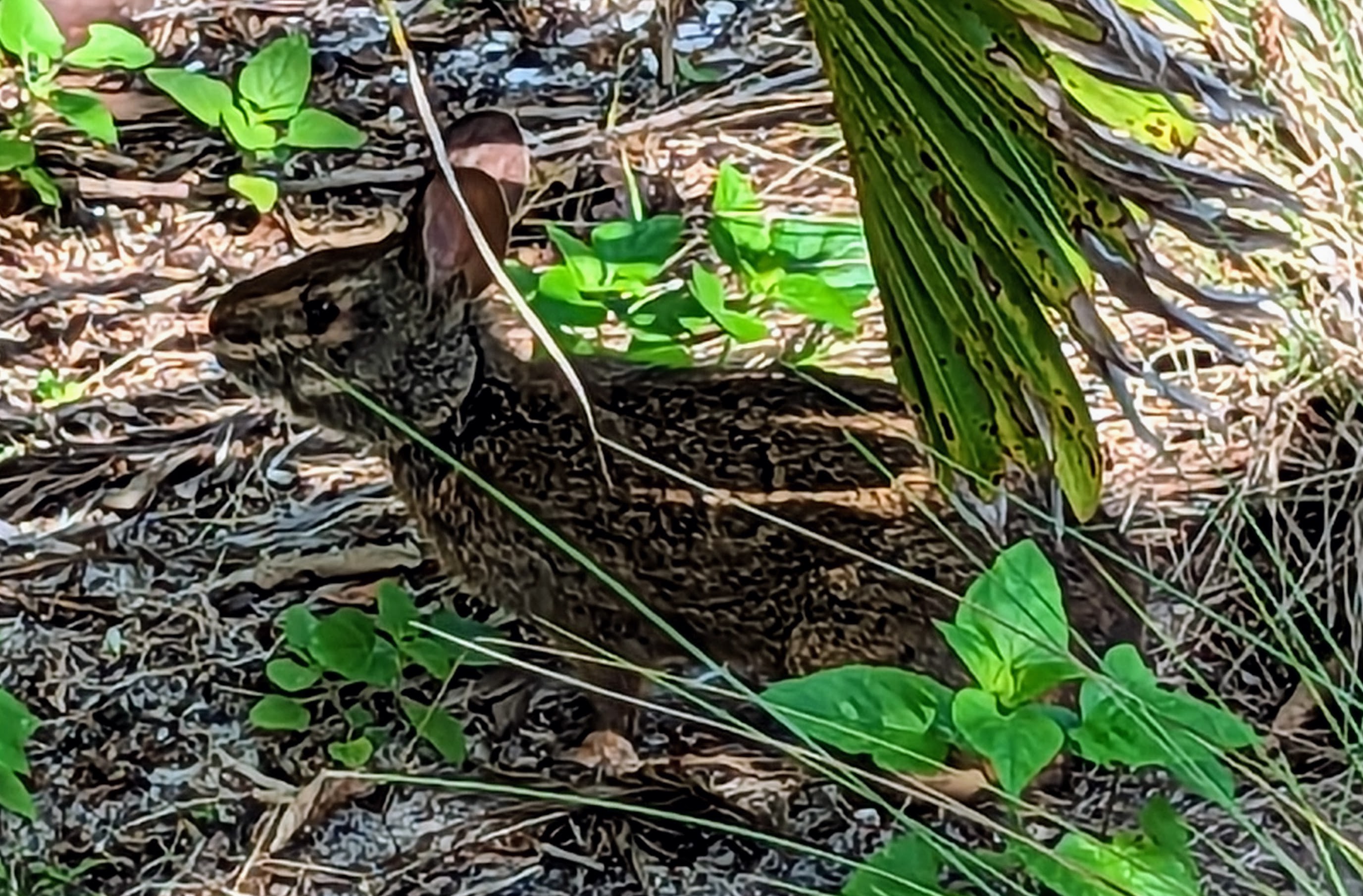
The bunny, we have had a banner year for bunnies. Fortunately, they like weeds and are eating something in the so called lawn while tormenting Fiona the Greyhound. This is a Marsh Rabbit. I am impressed with the camouflage, I could not see the rabbit as I was taking a picture of it.
That is my Six for this Memorial Day weekend Saturday. Thanks to Jim for hosting.
Happy Gardening!!


You’re right , the bunny would be difficult to see
LikeLiked by 1 person
The rabbit has really interesting coloring. The rabbits that used to visit ate my plant that was a bromeliad or something like it. I also noticed a plant I was struggling to grow had reseeded all over the yard. I guess the rabbits were eating the seedlings.
LikeLiked by 1 person
It does. The marsh is a fair distance away so I am not sure what these guys are doing in my garden. Something has been eating the pineapple foliage here, which must be hard on the teeth!
LikeLiked by 1 person
Impressive bunny! it doesn’t look like the ones we have here.
I can’t grow bromeliads outside but I noticed the carpet of tradescantias: I have those!
LikeLiked by 1 person
It is a very short eared bunny. The Transcandentia goes wild in summer here but is easy to get rid of.
LikeLiked by 1 person
I like picture 5, but they are all interesting. Funny bunny!
LikeLiked by 1 person
Bunnies were very common where I went to in Arizona. I suspect that they are sustained only by the home landscapes. They do not seem like the sort that lives wild out in the desert. Now that I think of it, I did not notice any jackrabbits.
LikeLiked by 1 person
We usually have a bobcat or another predator around and don’t see so many bunnies.
LikeLiked by 1 person
Those that are not seen are the survivors.
LikeLiked by 1 person
probably.
LikeLiked by 1 person
Your bunny really is well camouflaged! Loved seeing your Broms.
LikeLiked by 1 person
Thanks, Cathy the bunnies can be hard to find.
LikeLiked by 1 person