Rain Lilies – Zephyranthes rosea

Rain Lilies

Rain Lilies


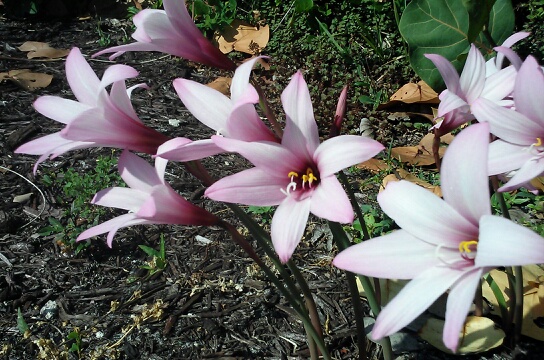
It rained here on Sunday. An inch or so. This morning I walked out in my front yard to find these blooming for the second time in a month. Rain Lilies, I had these in my garden in Atlanta and they bloomed maybe every five years. It was a real event. And actually a different kind of Rain Lily.

After a bit of research I find there are many kinds of Zephyranthes, 71 according to Wikipedia. I believe these are the rosea variety. Well, they are pink..I bought them at a garage sale nearby, so they could really be from anywhere. The native species in Florida is the Atamasco Lily; this lily has white flowers and occurs in low, swampy areas. As I live on a gigantic sand dune I don’t think I will be seeing any of those around here.

The latin for these plants is Zephyranthes, named after the Greek God of the West Wind. Interesting considering the rain is what makes them bloom.

These are about 12 inches tall and have grass like (really strap like) foliage my husband mistakenly weed whacked. After that it rained and they started blooming. This is my kind of a plant. Takes a licking and pops up with flowers. They will reseed in the garden but so far it has not been a problem but a nice surprise.

In Praise of Cabbage Palms

Looking up

Looking up to the Heart of the Palm

One of the pleasures of living in Florida is waking up almost any morning, walking out into my backyard to watch the soft yellow sunlight illuminate the canopy of the Cabbage Palm rendering its shadows almost russet. The much maligned but indestructible Cabbage Palm.  I have no idea how old this palm is but I am certain no one planted it. A native of the peninsula, the state tree of Florida and perhaps the most common Palm in the state it will always have a place in my heart.

I have always referred to these as Sabal Palms; because of their botanical name – Palmetto sabal. They are called Cabbage Palms in reference to Swamp Cabbage, which in culinary terms is Hearts of Palm. I love Hearts of Palm but rarely eat it as a Palm tree gave its life for my salad. Palms are monocots, more closely related to grass than trees and only have one growing point, the apical meristem, botanically speaking. If this is removed the entire tree dies. The growing point is in the middle of the fronds, hence the name Hearts of Palm. Have a heart, save a Palm tree’s life and go for the artichokes instead.

These Palms usually attain a height of 30 feet, but can grow up to 60 feet tall. Cabbage Palms are not self cleaning and need trimming to maintain a neat appearance. Or just leave it untrimmed and say it is a bat habitat to control the mosquito population. That would be true. Just stay in the house during high winds.

Native Americans used these Palms for many things, roof thatch from the fronds, brooms and brushes from the sisally parts of the boot, the trunks were used for pilings in the water and bread was made from the seeds.  However , they did not eat the hearts..until Europeans arrived with metal tools. If you had been eating palm seed bread, I am betting the Hearts of Palm seemed really tasty.

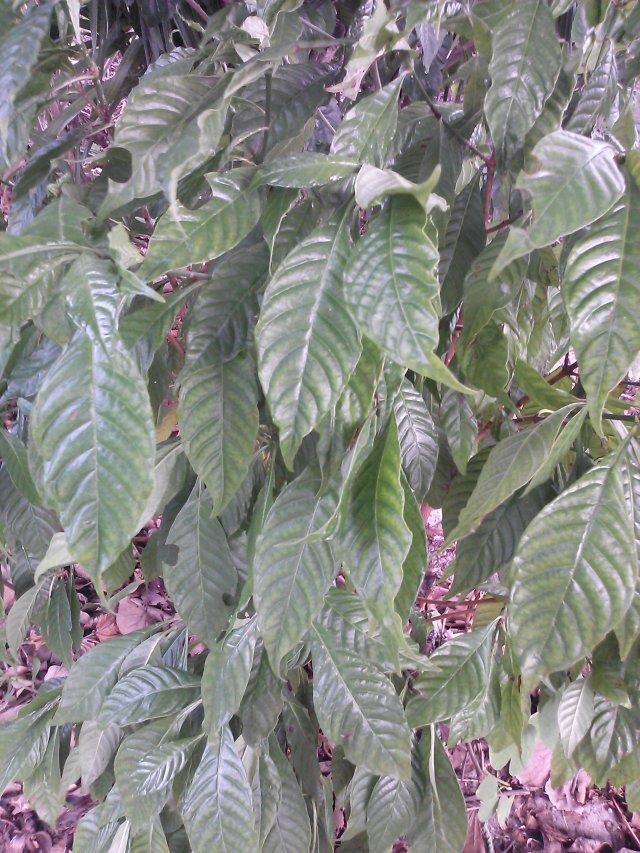
Wild Coffee- Pschotria nervosa

Wild Coffee- Pschotria nervosa

This Wild Coffee is in my neighbor’s yard. A native shrub well suited to high shade with attractive dark green foliage reminiscent of Gardenia without the flowers or insect problems.
A good butterfly plant with flowers and small (coffee-like!) berries.