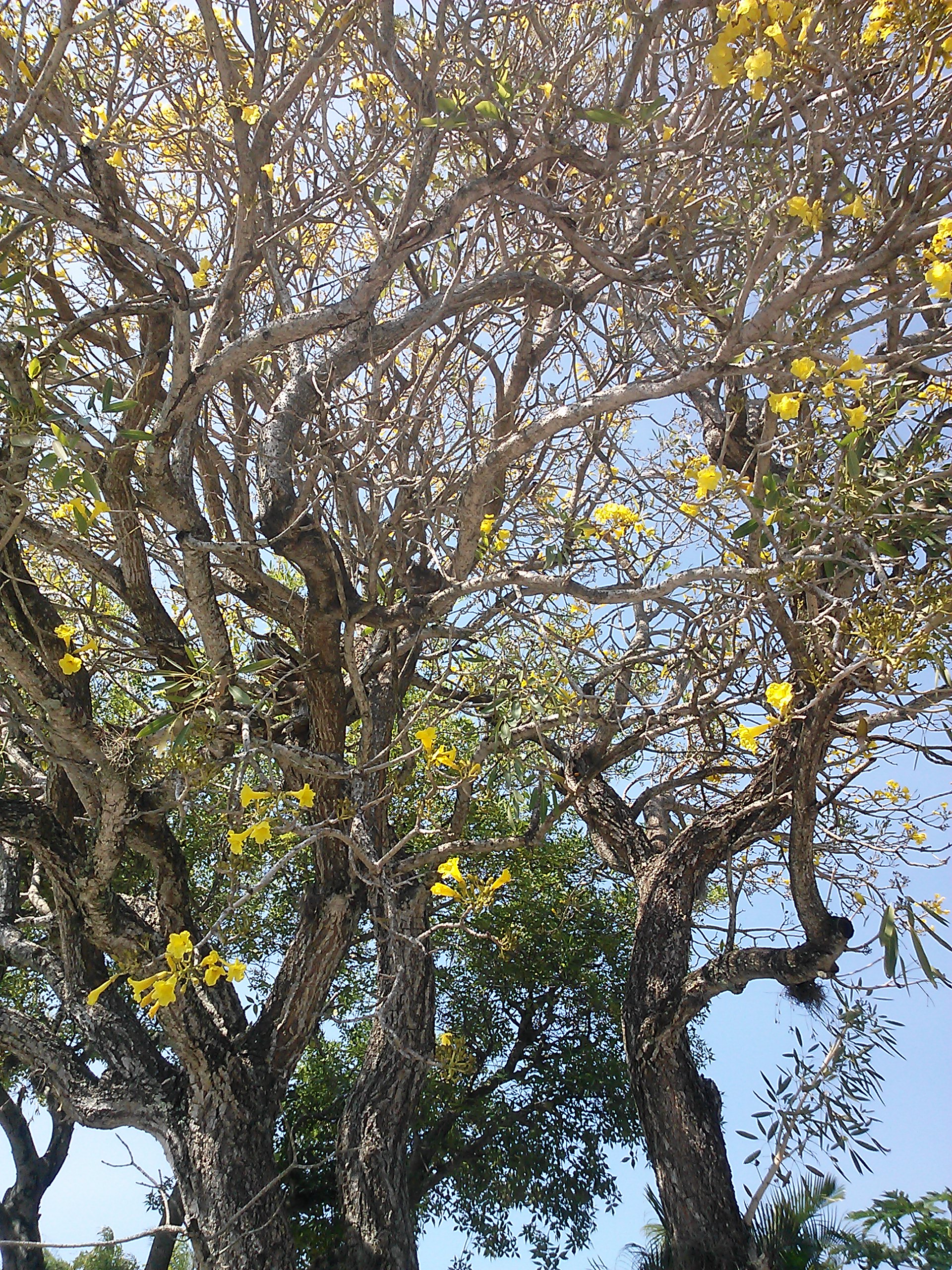
The harbinger of spring in South Florida is, in my opinion, the Golden Trumpet tree. Many people call this Tabebuia, formerly its botanical name. The powers that be in botany decided to rename them Handroanthus chrysotrichus, the new name sounding much like a dinosaur.
While there are several types of Trumpet trees, this is the one most associated with spring. It is reminiscent of Forsythia shrubs up north, which also blooms with a burst of yellow flowers in late March. Prior to blooming, the tree drops most of its foliage and then produces buds, letting you know the show is about to begin and will last about a month. Bright yellow tubular flowers unfurl on gnarly, corky branches when contrasted with the cerulean blue sky overhead it is an exhilarating sight. Ah, spring.
Golden Trumpet trees reach 25 -30 feet height and width and are a good small ornamental tree for homeowners. They are sometimes available in multi trunks, which is my favorite form. Drought tolerant once established and mostly evergreen this is a great addition to your sunny landscape. Their only drawback is they are not particularly wind resistant and produce fairly big pods as fruit.
Handroanthus have an interesting family history. The yellow version popular in South Florida is native to South America where it lives in the rainforest. A near relative, the Ipe or Brazilian Walnut (Handroanthus impetiginosa) is the source of Ipe lumber and the national tree of Paraguay. The lumber is a tropical hardwood that is extremely resistant to the elements and lasts a long, long time outside. The weather resistance of this wood has made it very popular and its harvest is one of the elements causing deforestation in the Amazon. The Ipe is also the source of Pau D’Arco, an herbal medicine used for many ailments by rainforest indigenous people and was once researched as a possible cure for cancer. The Ipe has pink flowers similar to the yellow version that will also grow in South Florida, but is somewhat less cold hardy and taller than the Golden Trumpet.

 The Shrub Queen