The Sustainable Garden: Lawn Thoughts


CAM00298

The View Over my Septic Tank

Lawn thoughts:

I am as guilty as many on lack of sustainability. In regards to the lawn it is guilt by association. My husband feels that his masculinity is at stake if there is not a perfect sweep of golfable, manicured lawn in front of our house. From a design standpoint, there are few things that set off flowering plants of any kind better than lawn. I think it goes back to England, where beautiful green turf is a natural component. The English have an abundance of rain and a more natural habitat for lawn. They even play tennis on it!

While I am clearly a WASP American mutt; most of my DNA originated in the British Isles. Perhaps I have a genetic predisposition to turf grass? My suspicion is this is more nurture than nature. Neither of my parents cared what the lawn was as long as it was cut. Clover, Bermuda,  fine.. whatever. I would be surprised if my father knew what type of grass grew in our area. My mother referred to it as Southern Groundcover; which is really clipped Red Clover with a little rabbit tobacco. I attended a Landscape Architecture program 30 years ago when a sweeping lawn was a requirement. To my knowledge over use of chemicals and pesticides was a small concern. Silent Spring had been published but the lawn as a design element was more important.

It became clear over the years that Americans still love their lawns (myself included). Lawns are the biggest user of water and chemicals in our landscapes. Perhaps it is time to moderate our usage of lawn by using the most drought tolerant turf in your area. There are many types of drought tolerant, warm season grasses that thrive throughout our country.

In the desert, I do agree that lawns should not be used. However, substituting Bermuda for Fescue in many areas is the right thing to do. Yes, it turns brown in the winter, but it requires less mowing, less water and less chemicals. And you can have a smaller lawn and select a type that can go dormant with drought and still survive. For example, Bahia grass versus St. Augustine. The Bahia can turn brown in times of drought and come back with rain. Once St. Augustine is brown, it is history.

Lawn Chemicals:

Atrazine is one of the most commonly used herbicides in the world. Banned by the European Union about 10 years ago. It is in groundwater almost everywhere. We have got to stop using this stuff. The only more common herbicide is RoundUp. And nobody really knows how long that stays around in the environment.

Non toxic weedkillers and pesticides work, use these instead. I have used nothing toxic on my husbands golf hole in the front yard and it is the only lawn in our neighborhood without Dollar Weed in it. I have a Dollar Weed phobia, if I see one leaf I mix a batch of vinegar weedkiller and apply with a paintbrush. The Dollar Weed is satisfyingly dead.

So, use the lawn, just cut back on the size and chemical

The damn thing is it looks great. And it lives over the septic tank. Nothing toxic has been applied.

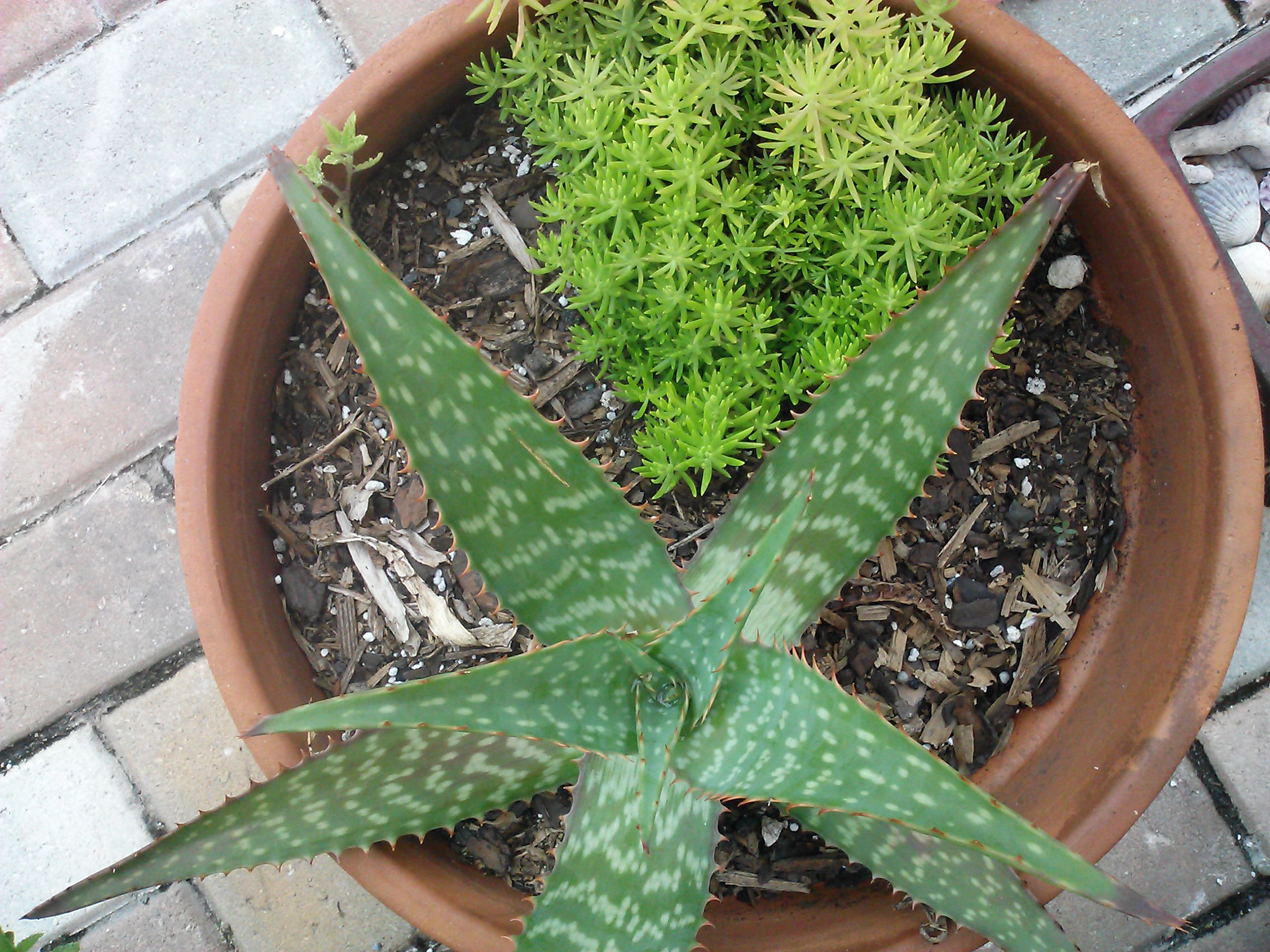
American Rustic

Extreme Low Maintenance Container  Soap Aloe and Sedum

Extreme Low Maintenance Container
Soap Aloe and Sedum

Is there a new style of gardening emerging in America?

I think so.

Based on what we have learned over the past forty years, our style and outlook on gardening are changing.

During the 1970’s, Oehme van Sweden, Landscape Architects in Washington, D.C. pioneered ‘The New American Garden’. Their gardens featured perennial grasses in large sweeps and largely ignored lawns. These guys were the original purveyors of the Miscanthus craze that continues to this day. I had Miscanthus strictus in my yard for about three years, as a striking accent plant it worked until it got big and flopped over; this grass once flopped was 10 feet around and not very striking. Unlike my southern mother, I am not a plant staker. Plants have to stand on their own in my garden or they asked to leave. Unceremoniously.

The term Xeriscaping was coined in the early 1980’s by a guy in Colorado. Since then the idea has caught on and is utilized in the United States and around the world. Permaculture is an Australian idea that expands and encourages permanent culture of the earth in the most sustainable ways. Basically the idea of Xeriscape is grouping plants by their watering and maintenance needs and only watering when necessary instead of just dousing everything. In permaculture the further away from the house you get, the less intensive the maintenance of the landscape. Intensively planted vegetable gardens near the house that fade away into the forest zone by zone. Of course, this is an oversimplification of both concepts.

While I appreciate the validity of both schools of thought, the difficulty begins with the fact that all this has to be figured out, zoned, designed and then implemented. I have yet to meet anyone who paid me to do a Master Landscape Plan for their house that did not change their mind about something.  Usually a significant something. Rare is the person who can make a plan, zone everything for water and maintenance and stick with the program. I certainly can’t. The older I get , the more I enjoy hardscape.

People seem to enjoy taking small bites of sustainability. A Rain Garden in a low spot in the yard. Using pervious gravel or mulch for pathways. Planting native plant material. Cutting out toxic pesticides and herbicides.

I have read of eco lawns becoming popular in the Western United States. This intrigued me until I saw what it was. More of the Wildflower Meadow romanticism that has been floating around for 30 years. I think Old fields look great weeds and all. However, I don’t want one in front of my house. I suspect the majority of gardeners like to have some lawn. I have a lawn, purposely sited over the septic tank. It does so well, we are afraid to fertilize it. It might overrun the house late at night.

Now there is talk of what is the Modern Garden. I am not sure Modern is the right word. Modern coming after New. It is all the same. Soon it will be the updated Modern Garden. All I (we?) really want is something we can plant and enjoy that is not too much work or a waste of resources! It seems like such a simple idea ? Here are some ideas to reach this goal:

Plant reliable, drought tolerant, non invasive perennials. In small doses.

Focus on natives with a soft lens. Some are great. Some are weeds. Do some research; plant the good ones.

Quit using Glyphosphate and anything with Atrazine in it. It is already in our groundwater and nobody knows how long it takes for the earth to metabolize it. Stop adding it. Non toxic weed killers and pesticides work. If you have a few bugs or weeds – get over it.

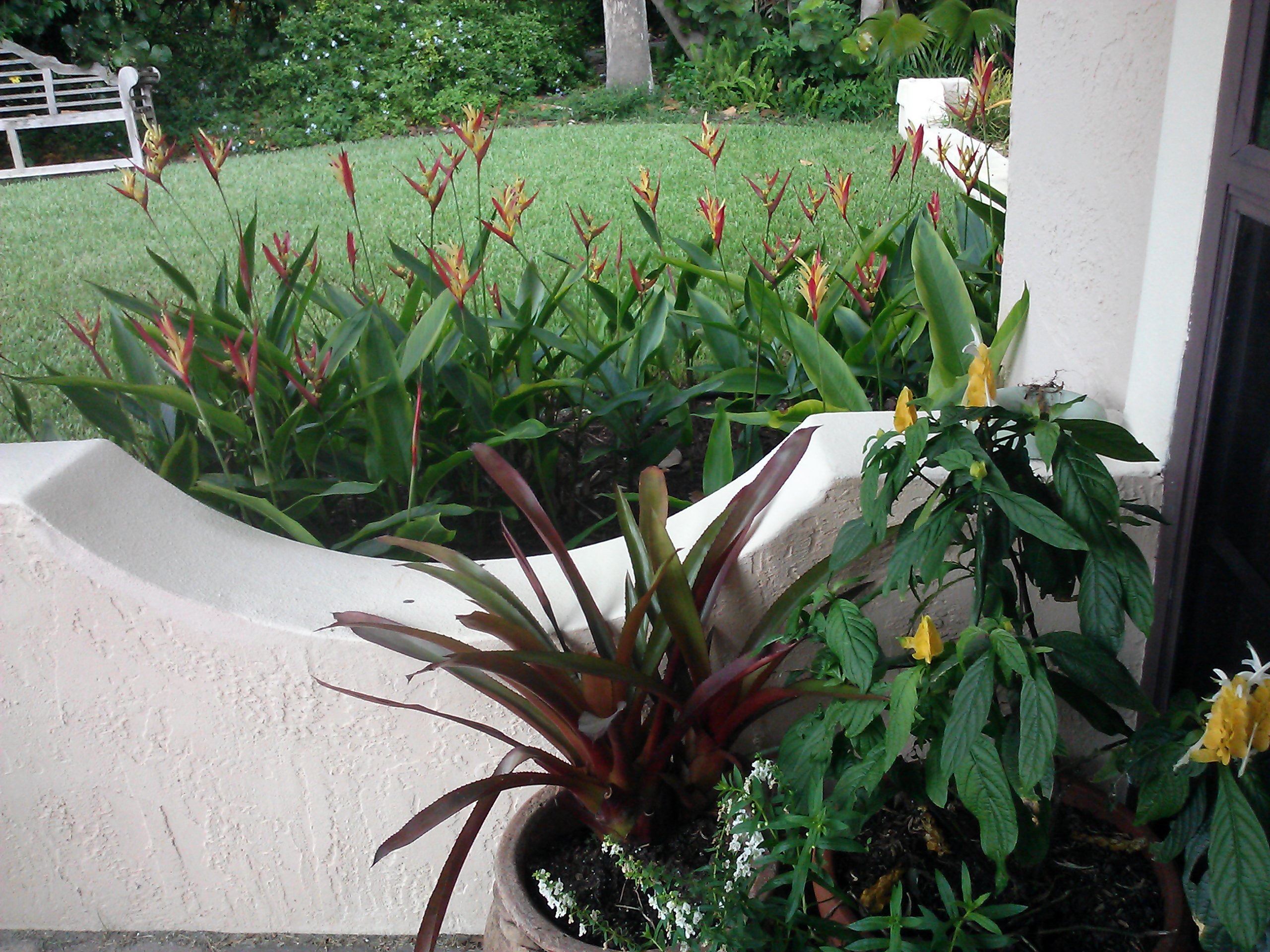
Support your local gardening community by planting seasonal containers, they are different everywhere. A pop of color near your favorite walkway is a pick me up every time you pass by. I like succulents for the summer.  My size limit is a 15″ wide container, if it is smaller, it takes too much maintenance, (watering). Buy a big pot, go to the local nursery, buy some flowers and hope for good advice. Embrace local..add some tropicals in the summer. Floridian growers need support too.

Use the most drought tolerant turfgrass possible. If it turns brown in winter, so be it. If there are a few weeds in it, so be it. The Golden Bear does not live at my house, I think he is retired..

I think people get overexcited about irrigation. I have never had separate zones because I am really frugal with water. The lawn has to need it badly before the water comes on, if I have a new  tree it gets a gator bag (this is a bag that can be filled with water, the water slowly leaks out onto the tree providing a few days worth of water). Irrigation does not abdicate anyone of the responsibility of paying attention. It will not establish anything but turf unless everything is wastefully watered.

I think the New Modern American Gardening Style is Rustic. The Rustic Style includes: Being mindful of water and its use, ceasing the use of toxic chemicals, a little brown and a few weeds are OK. Always have a nice container planting where it will be enjoyed. Add hardscape where you would like to hang out and relax, it is really less maintenance.

I think it was the Landscape Architect Dan Franklin, who said: “You should be able to take care of your garden in the time it takes to drink a cup of coffee in the morning or a glass of wine in the evening” I am striving for that.


A Seashell Driveway

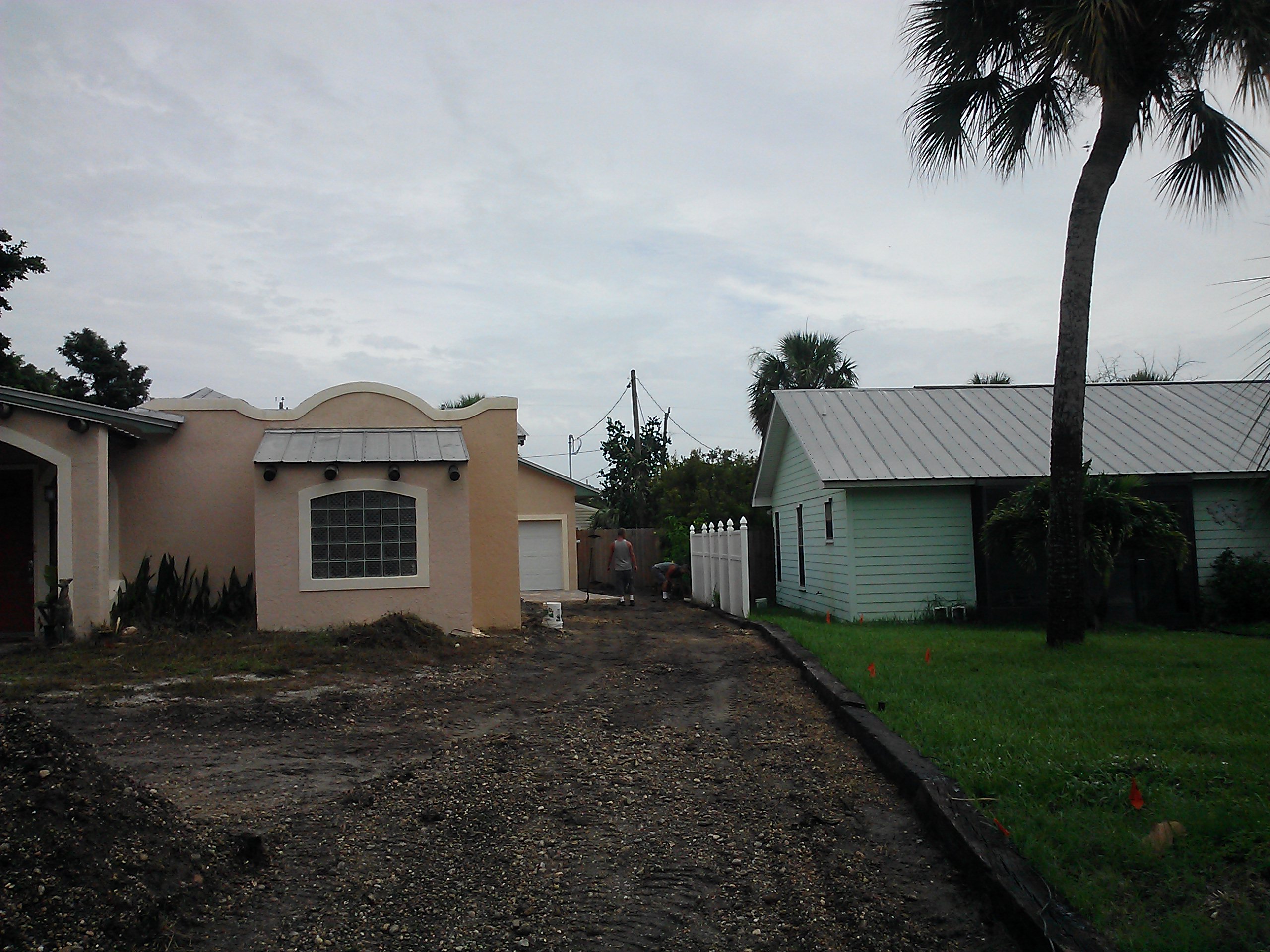
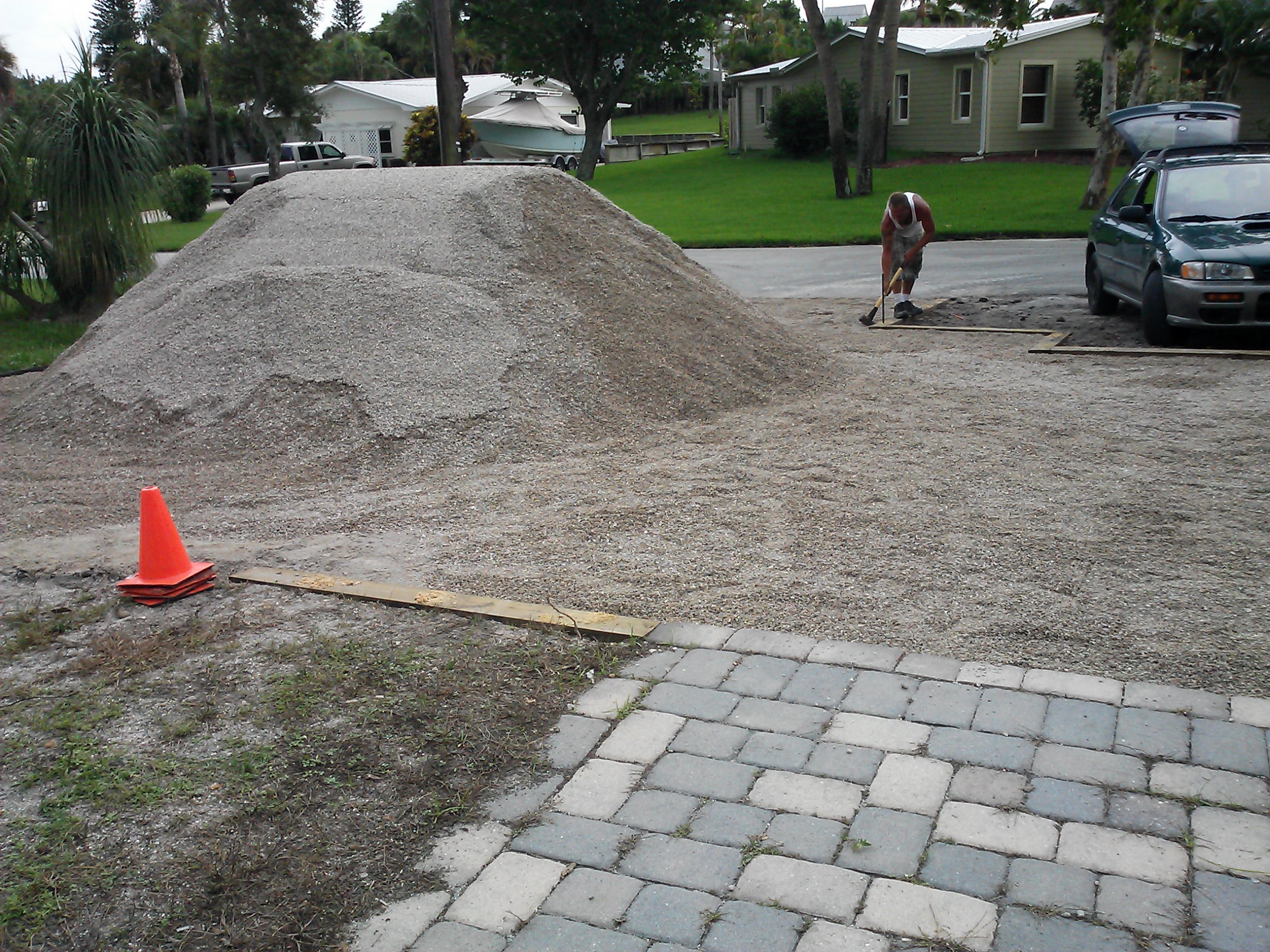
The driveway is in and it is a beauty. I am so excited after all those months of living with the weed pit as my front yard. The existing driveway was pea gravel overrun with weeds. The entire thing had to be scraped away and hauled to the dump.Image After the scraping and removal of the foul pea gravel a gigantic pile of shell and base material appeared. The driveway is constructed by scraping off enough material to have 4-6″ depth to backfill. The base area is graded for water to drain off properly then a base material is placed. The base is crushed shell about 2″ thick followed by 2-3″ layer of the shell for the driving surface. The crushed shell base looks like coarse sand and the shell topping looks like thousands of tiny shells. Because that is what it is. Theoretically,the crushed shell base course tamps down over time and forms a permeable stable layer for the driving surface.

Pile of Shell

Pile of Shell

Shell used for driveways is quarried for the most part on the West Coast of Florida. I believe the shell in my front yard comes from the South side of Lake Okeechobee. This is to a certain extent a word of mouth bit of info. The shell is from a broker who bought it from somebody who bought it from somebody else. Interestingly enough the shell is cheaper than pea gravel because it doesn’t have to be shipped as far from its source. Shell is not supposed to sink into the ground as gravel does, I am going to be interested to see how it holds up… TA DA, the driveway:

The Shell Driveway

The Shell Driveway

Now, onto the green part, Landscaping. Note the repulsive grass/weed groundcover..Ugly. Soon to be gone.

Christmas Palm – Veitchia merrillii

The Christmas Palm on Christmas Day.  This particular Palm I learned as the Adonidia. I think Christmas is a much better name; especially with the red mass of berries resembling ornaments during the holiday season.  These are also called Manila Palms as they are from the Philippines. Not an exceptionally cold tolerant plant they will grow in South Florida in coastal areas south of the magical State Highway 60 line. Many of these palms were lost during the unusually cold winter of 2010.

Christmas Palms can be used as single or multi trunk trees and grow to about 20 feet tall, this makes them excellent for residential use near buildings in the one to two story range. These are not a self cleaning Palm so fronds past their prime must be trimmed. They also add a tropical flair to pools and near spas, I have planted a multi trunk near my lanai to provide shade in the summer. And I am just waiting for some Christmas berries.href=”https://theshrubqueen.com/wp-content/uploads/2013/12/cam00183.jpg”>Image