American Rustic

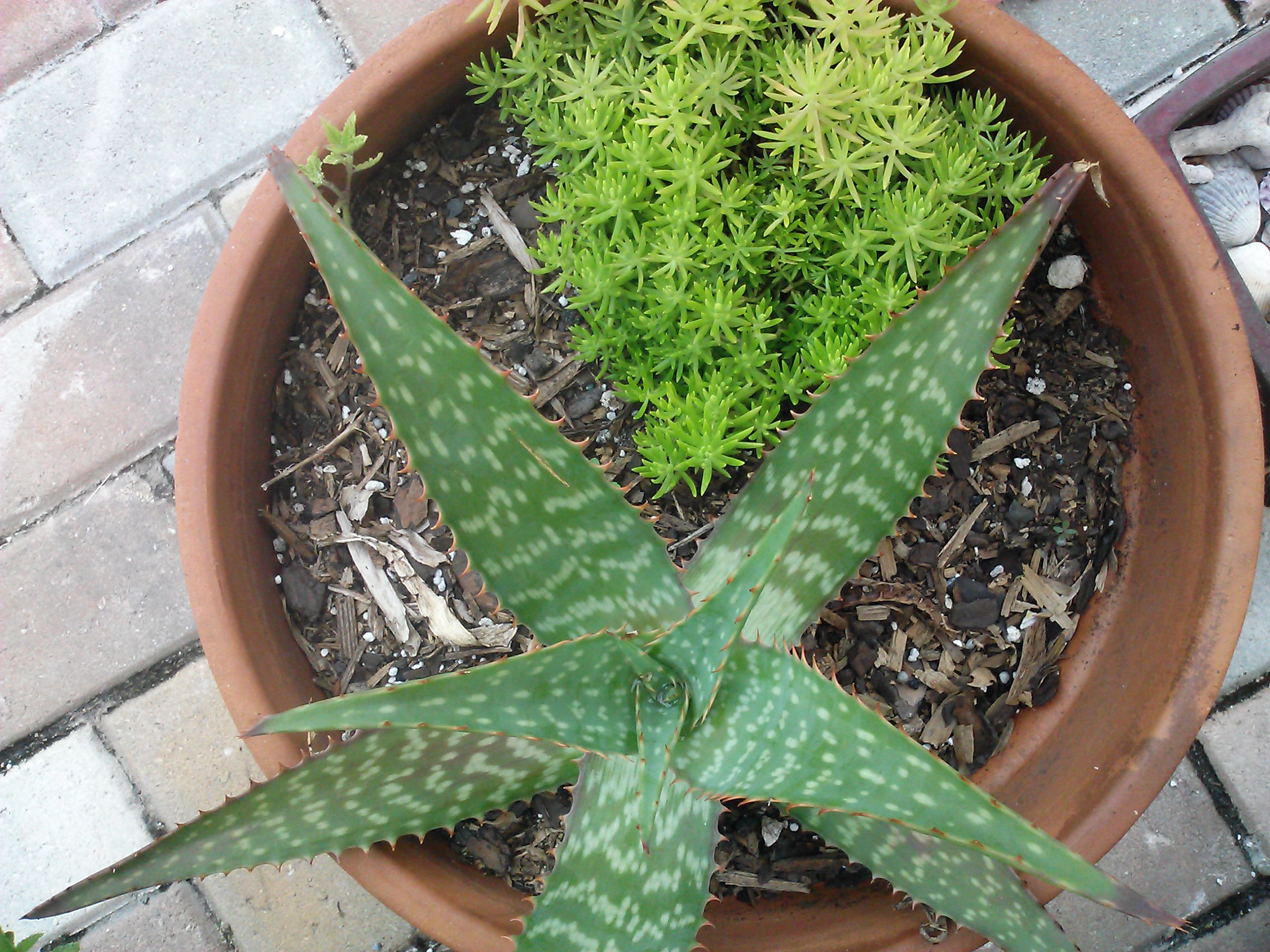
Extreme Low Maintenance Container  Soap Aloe and Sedum

Extreme Low Maintenance Container
Soap Aloe and Sedum

Is there a new style of gardening emerging in America?

I think so.

Based on what we have learned over the past forty years, our style and outlook on gardening are changing.

During the 1970’s, Oehme van Sweden, Landscape Architects in Washington, D.C. pioneered ‘The New American Garden’. Their gardens featured perennial grasses in large sweeps and largely ignored lawns. These guys were the original purveyors of the Miscanthus craze that continues to this day. I had Miscanthus strictus in my yard for about three years, as a striking accent plant it worked until it got big and flopped over; this grass once flopped was 10 feet around and not very striking. Unlike my southern mother, I am not a plant staker. Plants have to stand on their own in my garden or they asked to leave. Unceremoniously.

The term Xeriscaping was coined in the early 1980’s by a guy in Colorado. Since then the idea has caught on and is utilized in the United States and around the world. Permaculture is an Australian idea that expands and encourages permanent culture of the earth in the most sustainable ways. Basically the idea of Xeriscape is grouping plants by their watering and maintenance needs and only watering when necessary instead of just dousing everything. In permaculture the further away from the house you get, the less intensive the maintenance of the landscape. Intensively planted vegetable gardens near the house that fade away into the forest zone by zone. Of course, this is an oversimplification of both concepts.

While I appreciate the validity of both schools of thought, the difficulty begins with the fact that all this has to be figured out, zoned, designed and then implemented. I have yet to meet anyone who paid me to do a Master Landscape Plan for their house that did not change their mind about something.  Usually a significant something. Rare is the person who can make a plan, zone everything for water and maintenance and stick with the program. I certainly can’t. The older I get , the more I enjoy hardscape.

People seem to enjoy taking small bites of sustainability. A Rain Garden in a low spot in the yard. Using pervious gravel or mulch for pathways. Planting native plant material. Cutting out toxic pesticides and herbicides.

I have read of eco lawns becoming popular in the Western United States. This intrigued me until I saw what it was. More of the Wildflower Meadow romanticism that has been floating around for 30 years. I think Old fields look great weeds and all. However, I don’t want one in front of my house. I suspect the majority of gardeners like to have some lawn. I have a lawn, purposely sited over the septic tank. It does so well, we are afraid to fertilize it. It might overrun the house late at night.

Now there is talk of what is the Modern Garden. I am not sure Modern is the right word. Modern coming after New. It is all the same. Soon it will be the updated Modern Garden. All I (we?) really want is something we can plant and enjoy that is not too much work or a waste of resources! It seems like such a simple idea ? Here are some ideas to reach this goal:

Plant reliable, drought tolerant, non invasive perennials. In small doses.

Focus on natives with a soft lens. Some are great. Some are weeds. Do some research; plant the good ones.

Quit using Glyphosphate and anything with Atrazine in it. It is already in our groundwater and nobody knows how long it takes for the earth to metabolize it. Stop adding it. Non toxic weed killers and pesticides work. If you have a few bugs or weeds – get over it.

Support your local gardening community by planting seasonal containers, they are different everywhere. A pop of color near your favorite walkway is a pick me up every time you pass by. I like succulents for the summer.  My size limit is a 15″ wide container, if it is smaller, it takes too much maintenance, (watering). Buy a big pot, go to the local nursery, buy some flowers and hope for good advice. Embrace local..add some tropicals in the summer. Floridian growers need support too.

Use the most drought tolerant turfgrass possible. If it turns brown in winter, so be it. If there are a few weeds in it, so be it. The Golden Bear does not live at my house, I think he is retired..

I think people get overexcited about irrigation. I have never had separate zones because I am really frugal with water. The lawn has to need it badly before the water comes on, if I have a new  tree it gets a gator bag (this is a bag that can be filled with water, the water slowly leaks out onto the tree providing a few days worth of water). Irrigation does not abdicate anyone of the responsibility of paying attention. It will not establish anything but turf unless everything is wastefully watered.

I think the New Modern American Gardening Style is Rustic. The Rustic Style includes: Being mindful of water and its use, ceasing the use of toxic chemicals, a little brown and a few weeds are OK. Always have a nice container planting where it will be enjoyed. Add hardscape where you would like to hang out and relax, it is really less maintenance.

I think it was the Landscape Architect Dan Franklin, who said: “You should be able to take care of your garden in the time it takes to drink a cup of coffee in the morning or a glass of wine in the evening” I am striving for that.

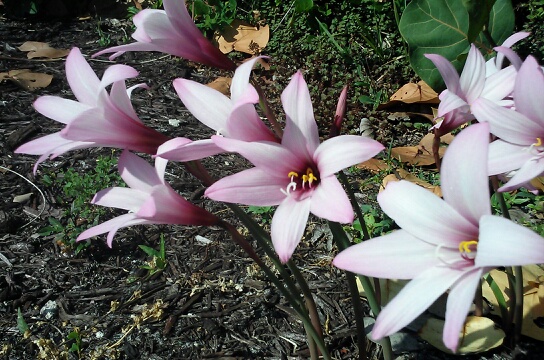
 

Rain Lilies – Zephyranthes rosea

Rain Lilies

Rain Lilies


It rained here on Sunday. An inch or so. This morning I walked out in my front yard to find these blooming for the second time in a month. Rain Lilies, I had these in my garden in Atlanta and they bloomed maybe every five years. It was a real event. And actually a different kind of Rain Lily.

After a bit of research I find there are many kinds of Zephyranthes, 71 according to Wikipedia. I believe these are the rosea variety. Well, they are pink..I bought them at a garage sale nearby, so they could really be from anywhere. The native species in Florida is the Atamasco Lily; this lily has white flowers and occurs in low, swampy areas. As I live on a gigantic sand dune I don’t think I will be seeing any of those around here.

The latin for these plants is Zephyranthes, named after the Greek God of the West Wind. Interesting considering the rain is what makes them bloom.

These are about 12 inches tall and have grass like (really strap like) foliage my husband mistakenly weed whacked. After that it rained and they started blooming. This is my kind of a plant. Takes a licking and pops up with flowers. They will reseed in the garden but so far it has not been a problem but a nice surprise.

Bridal Bouquet Plumeria – Plumeria pudica


Bridal Bouquet ready for a lei

Bridal Bouquet ready for a lei

A near requirement for living in South Florida, especially as a year round resident, is a Plumeria or a Frangipani in the yard. This is not a good ‘Snowbird’ plant as most Plumeria is naked in the winter and reasonably unattractive.  Summer is a different story, the Plumeria have just burst forth with flowers here on the Treasure Coast and the fragrance and color make it worth having a deciduous tree in the garden.

This is the tree that provides flowers for leis in Hawaii. I was always under the impression the Plumerias were native to the South Pacific. Research tells me the variety Plumeria alba, which is the more common, fragrant, and deciduous Plumeria come from Central and South America.  Sources seem to agree that Plumeria pudica is from Central America. To add to the confusion there is a type of Plumeria called ‘Singapore’ that is native to Columbia. I will leave it to someone else to explain the Hawaiian lei concept.

Enter the Bridal Bouquet Plumeria, I discovered this plant in Stuart, Florida never having seen one before and was told it was evergreen. This particular variety of Plumeria has a columnar habit and I was looking for a plant to place between two windows in an unirrigated planter in front of my house. It is a perfect selection thus far it is about six feet tall and maybe 2 feet wide. There is some disagreement amongst the experts as to the evergreeness of this plant; apparently if it gets cold enough it will drop its foliage.  I can believe it even if Wikipedia doesn’t.

So far the Bridal Bouquet has performed admirably remaining evergreen and blooming profusely. The extension service states it blooms six months out of the year, mine is not quite there. The only complaint I have is the plant is a bit crunchy and high winds tend to blow parts off. It must be noted that the trade off for evergreen foliage is no fragrance. My husband is not a plant guy and he was in the front planter sniffing the plant to no avail. I decided the solution to the crunchies is to root the bits and plant them in front of my neighbors ugly decaying wood fence. Perfect recycle.

There are many, many varieties of Plumeria, and even a society devoted to the plant, inauspiciously called the PSA. I am hopeful this acronym was coined prior to the medical test.

It’s Mother’s Day Week


Miss Betty and Mr. Tommy

Miss Betty and Mr. Tommy

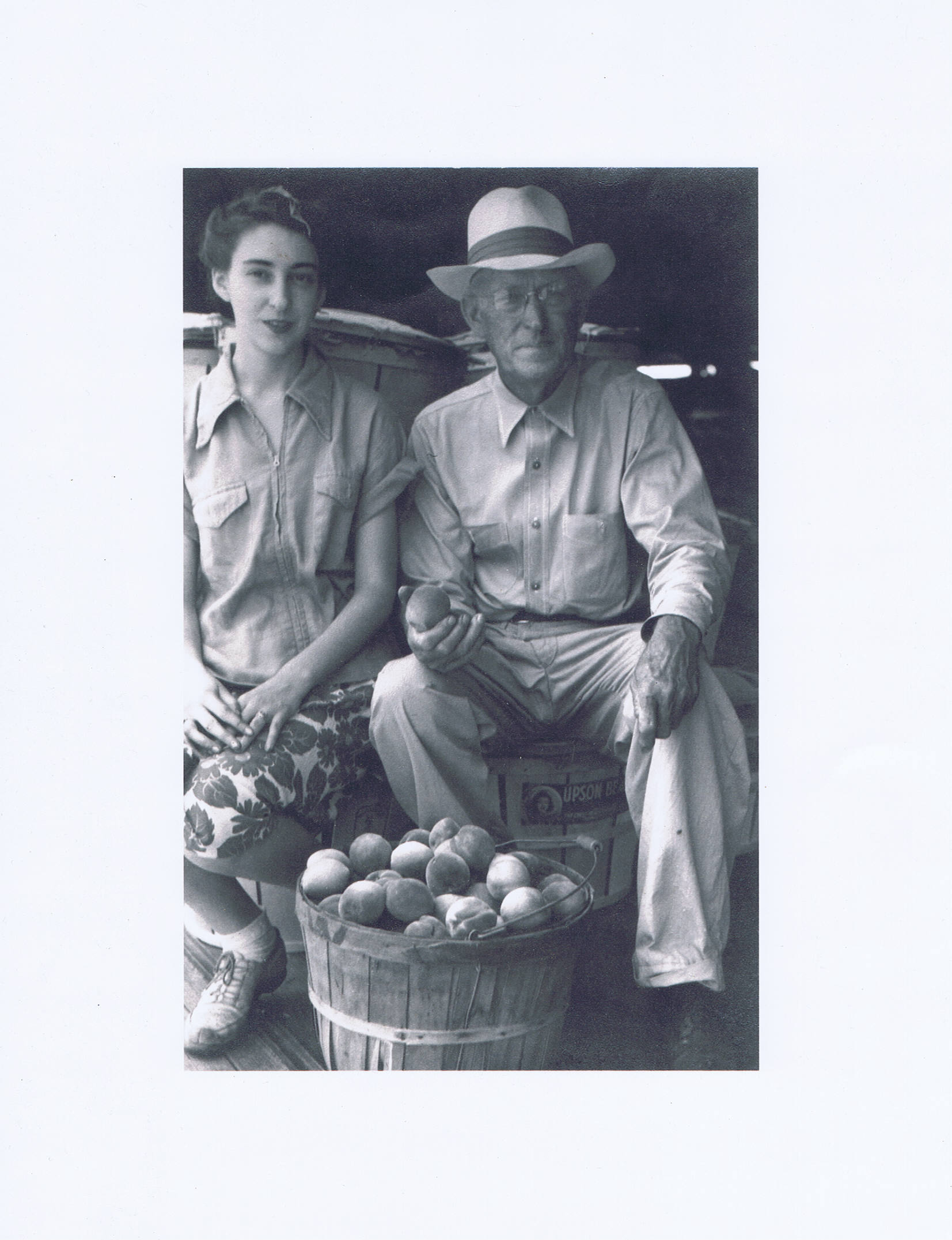
This picture is of my mother and her  Grandfather, Mr. Tommy, of course. Being properly raised Southerners; my mother was always referred to as Miss Betty. The picture was taken in the family’s peach packing house in the late 1940’s. I believe gardening is in my genetic makeup; if you untwine any strand of my DNA a trowel, hoe or seedling is likely to fall out. Some of my earliest memories are of picking flowers in the garden with my mother. My grandfather followed in his father’s footsteps and was a peach farmer. As I became more interested in plants and gardening my mother would say “well, you got the farmer gene”.

This week always makes me think of my mother. She passed away 5 years ago this month. A great gardener and general fan of all things in nature; I take after her in that regard. One of my mother’s favorite things to do on Mother’s Day weekend was to go on the Tour of Gardens hosted by the Botanical Garden. The range of gardens was always interesting from the truly small but beloved gardens to the trophy ‘Parsley around the Pig’ gardens surrounding the ‘French Country’ style Marshmallow Mansions of the newly wealthy. For some reason the Parsley/Pig gardens usually included a fabulous French Country kitchen garden and often a tropical courtyard as well.

The kitchen gardens morphed into vegetable parterres featuring custom built wood treillage supporting plants and patterns delineated by rows of Dwarf Boxwood forming squares and triangles. Really beautiful, but often mixed with poisonous plants and vegetables most people won’t eat. I would love to know if anybody ever ate all of the ‘Bright Lights’ Swiss Chard that was planted for its color. I am not sure I have met anyone who will eat Chard. I quit sending my husband out for herbs when he confused the Larkspur (poisonous) with the Rosemary.

The tropical gardens challenged those of us living north (at the time, we lived in Atlanta) of the tropics to grow plants where they weren’t supposed to grow. Palms and lush tender plants were coddled by gardeners in Courtyards surrounded by warm stucco walls. My mother latched on to this idea and took the challenge. Blessed with a slightly enclosed Eastern exposure and high shade provided by pine trees, it was possible to grow Fatsia, Agave and Tibouchina in her garden; just not for very long. Sometimes the tropicals would last for a couple of years, many times they were annuals or a short lived Event – the Tibouchina bloomed every few years until it finally succumbed either to heavy clay soil or cold. We had lunch a couple of times for Tibouchina flower viewings. Every time the cold got another plant she would say ‘Oh, well – I am a gardener and I try things”  There may have been a funeral for the Phormium, we both loved that. Tall, grassy and a rusty plum color it just couldn’t take life in the Deep South.

In a stroke of brilliance, I decided to plant a mini vegetable parterre in my suburban side yard. I had maybe 7 feet of width and probably 12 in length. I hate the smell of boxwood and once I found out how much it cost I decided to go with clipped Germander hedges (this is actually done in France) French Country had arrived in the ‘burbs.

I planted the Germander in diamond shapes and clipped it. The Germander mini hedges looked great. Then I added two varieties of tomatoes  for color. The tomatoes were staked on 4 sided bamboo teepees, surrounded by Germander diamonds. In the leftover triangular spaces, green beans, zucchini, and herbs grew.

This all looked great until summer kicked in and the plants really started to grow. I had never seen squash borers before and was so grossed out by them I pulled the Zucchini out before I  ate the first one. The Germander turned out to be pretty uncooperative and grows more rapidly than boxwood. I soon realized that is was impossible to clip the Germander while there were vegetables in the garden. If you are a reader of gardening books it seems you can have a cool season vegetable garden. So I thought, after the tomatoes are finished, I will clip the Germander, plant my lettuces and it will look fabulousHa. Being blessed with heavy clay soil, however well amended I found it grows bitter, inedible lettuce and actual cold weather turns the bitter lettuce to brown mush.

My foray into European fashion vegetable gardening ended one day when I could not cope with the Germander clipping anymore. I got my pitchfork and unceremoniously recycled the bedraggled remains of the two Germander diamonds. The pea gravel paths got some stepping stones installed and my Rustic style of gardening returned to my vegetable garden. The vegetables were none the wiser.

I have a feeling the Polar Vortex claimed whatever remained of my mother’s Tropical Garden.

Here’s the definition of Rustic from the Google dictionary:


rus·tic

  1. of or relating to the countryside; rural..
  2. constructed or made in a plain and simple fashion, in particular..
  3. synonyms:
  4. plain
  5. ,
  6. simple
  7. ,
  8. homely
  9. ,
  10. unsophisticated

Here is my current vegetable garden (still under construction)

The Rustic Vegetable Garden

The Rustic Vegetable Garden

Martin the Bromeliad

Image

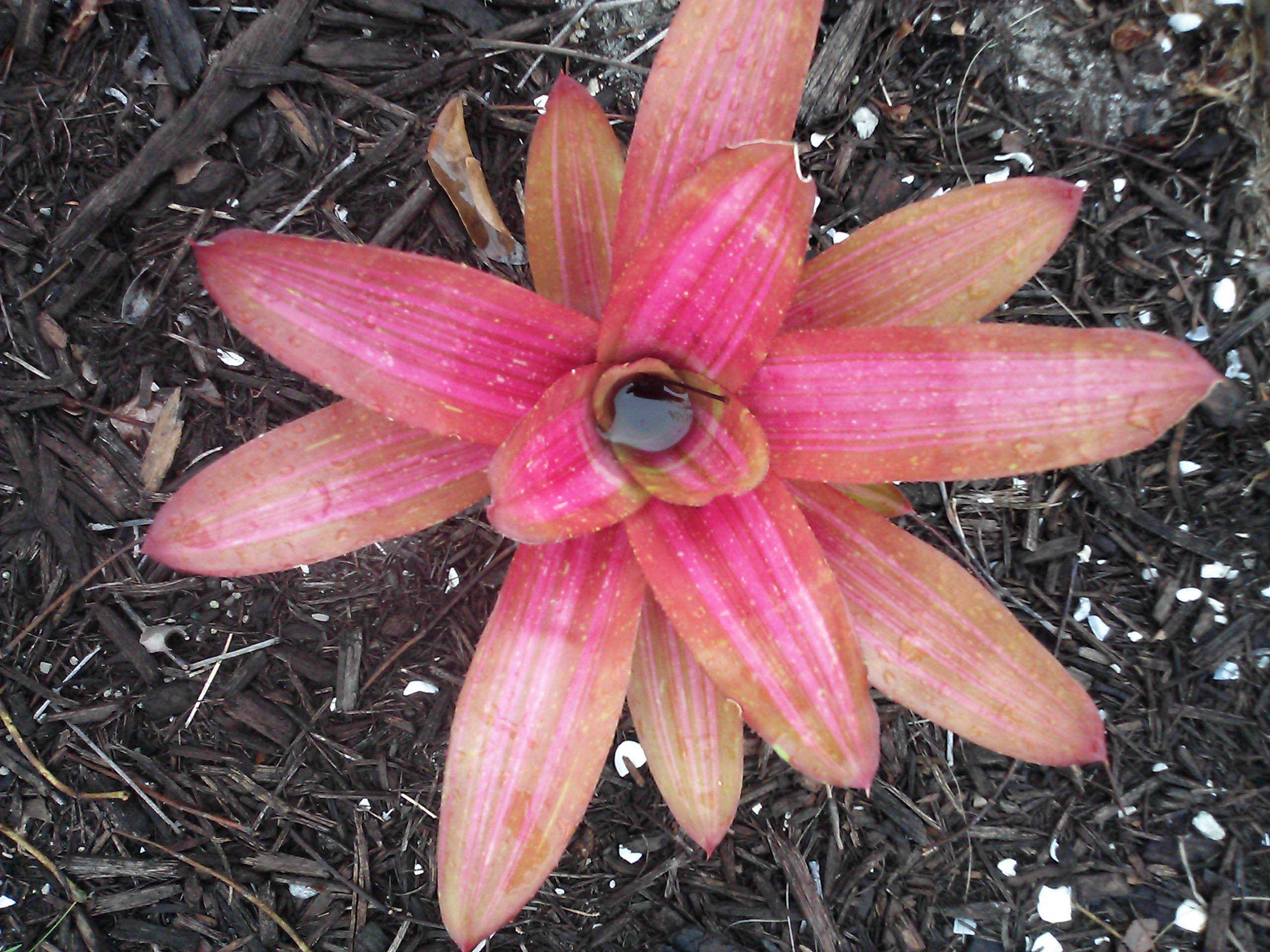
I am not prone to naming plants. However, I think this is kind of funny. I have had these little red Bromeliads for a while. The lady I bought them from did not know the name and said they would tolerate full sun. I have to admit I did not quite believe her, but I went ahead and planted them in the sun. Soon thereafter they started to reproduce, my stock has doubled and I think they have been out there for about six months. Well, they are flourishing and she was right.

Last week, I met the primo bromeliad gardener around here and she identified these as Martin Bromeliads.

No one is exactly sure who Martin is but I think he is living in my front yard.

Tropicality

If you are a Southern old lady then being coarse is comparable to being crude or, another favorite adjective, vulgar. I happen to like coarse plants, while I can say I have seen some plants I would consider vulgar, it is always fun to actually see one...the Sausage tree, anyone?  Click.  My husband and I saw a Sausage Tree in full fruit in Maui and couldn’t stop laughing. It is actually an interesting tree. Albeit, a bit vulgar.

A nurseryman I knew used to like to sell Dutchman’s Pipes Click and then he had to have some  Blue Pea Vine Click  to sell to counteract the Dutchman’s Pipes. These are all real plants, please follow the links and see what they are. I see Dutchman’s Pipe here and there in South Florida, but I have never seen a Blue Pea Vine around here. Too crude, I suppose.

The reason I came up with all of this is I was thinking the tropics must hold the lion’s share of the world’s coarsest textured plants.

Maybe I should back up, if you go to school and take a planting design class, one of the basic sources of creating interest in landscaping is contrasting different textures of plants. For example, if you are a South Floridian, you would plant Artillery Fern (small leaves/fine texture) to contrast with your Bromeliad (big leaves/coarse texture). If you are from further north, think Autumn Fern next to the Hosta. Contrast in texture and color of plants is what makes gardens interesting to look at.  The English call this contrasting ” plant combinations”; I have heard Americans use this term as well but I think the English coined it. 

Here in Florida there is a wealth of coarse textured plants. Not only coarse texture plants, but different colors of coarse as well.  It is difficult to find anything comparable to a Split Leaf Philodendron further north of well, here.

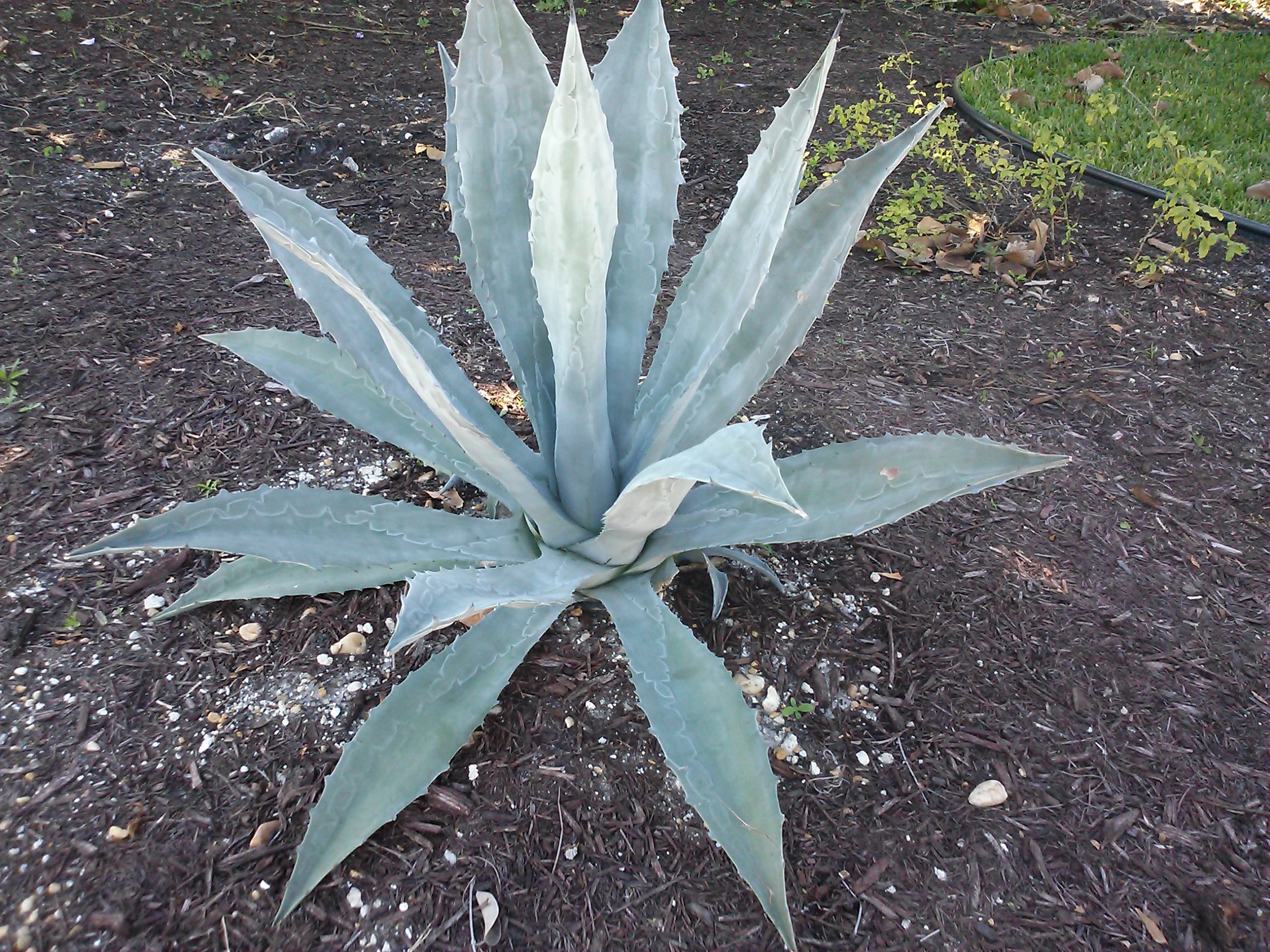
In South Florida we have our Bromeliads with orangey foliage and the Blue Agave and Burgundy Crinums as well. Then the uber coarse plant, the Heliconia with 4 foot long foliage. Can’t get much more tropical than that.

When I first started living here I noticed people combining different colors of these large leafed plants in shrub beds. And I thought it was weird. Where was the fine texture plant material for contrast.? My esoteric design sense was freaking out. I think I should say I have finally embraced this concept. I would love to know what the English gardeners think.

I have just recently planted a bed with Sun Bromeliads, a Screw Pine and a Blue Agave. There is also some Aloe used as groundcover. A fiesta of coarseness! I am finally getting into that South Florida landscape vibe. Maybe it is a little vulgar, but that is OK. People in South Florida have Pink Flamingos instead of Reindeer pulling Santa’s sleigh at Christmas..

Sun Bromeliad

Sun Bromeliad

Blue Agave

Blue Agave

Heliconia

Heliconia

Crinum

Crinum

Split Leaf Philodendron

Allo Aloes – Aloe saponaria

Our Soapy Friend

Our Soapy Friend

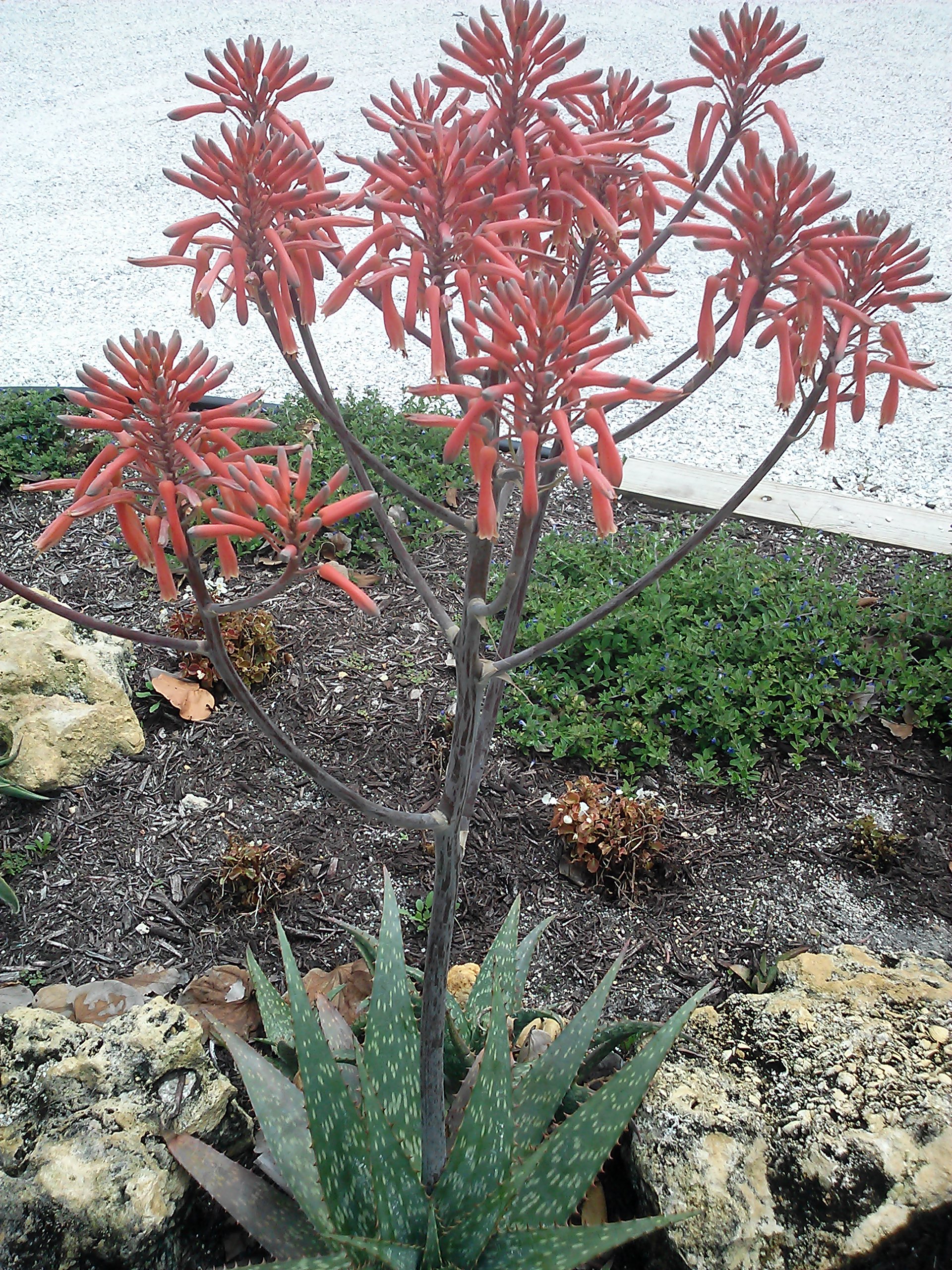
This is an Aloe an old friend of mine grew and gave me. It is a Soap Aloe, botanically identified as Aloe saponaria by the The University of Florida. Other sources call it Aloe maculatasaponaria makes more sense to me. Saponia being the usual latin word associated with soapy plants. This particular plant is nearly 2 and a half feet wide and the bloom stalk is 4 feet tall. Pretty interesting.

A fine drought tolerant succulent its original home was South Africa. It is adapting nicely to South Florida. I find that mine blooms quarterly just like paying estimated taxes. It somehow knows it is April 15th and someone at the IRS is feeling happy because of its orange flowers.

I have noticed it has a bubbly juice when trimming off the old leaves. Theoretically, this can be used as a soap substitute. However, upon doing a bit of research I found that the soapy substance also causes contact dermatitis in some people. For the time being I am going to stay with the store bought soap.

In my searching I also found that this can be used as a groundcover; I will have to say this stretches my concept of groundcover. It is spreading in my Rock Garden and I have seen quite a few large clumps of its relative Candelabra Aloe  (Aloe arborescens) in my neighborhood. The Candelabra is similar but only has one spike for a flower as opposed to more of a chandelier effect from the Soap Aloe. The Candelabras foliage is narrower as well. It should be noted that these Aloes are all decorated with sharp spines, so don’t plant them near a walkway or under the swing set. Unless you want to keep people away.

Tibouchina – Tibouchina urvilleana

The Glory of the Princess Flower

The Glory of the Princess Flower

I have had Tibouchinas around for years. Until we moved to Florida they had to stay in pots or be prayed over to live through the winter. I found out the hard way they really don’t live through the winter on the north side of Atlanta. Supposedly 37 degrees Farenheit are their limit. But my mother could keep them twenty miles further south; I would be hard pressed to say hers flourished, but we did admire the flowers once in a while.

One of the first things I bought after my driveway was complete was the Tibouchina. Another good import from South America, to the best of my knowledge, Brazil, the common name for this plant is the Glory Bush. Other sources call it the Princess Flower. I think that there are several varieties of these available the size range varies from 3 feet tall up to a small tree. This one supposes to be 6-8′ height and spread.  I will wait and see. Some of the plants we used as annuals further north had fuzzy leaves and grape like flower heads (panicles) but were still Tibouchinas.  If you believe what you read they bloom once a year. Mine must be really happy or something.. This one bloomed off and on since I planted it – probably 9 months ago. I will confess to watering it by hand, it is in a Rain Garden with a strong Eastern exposure. The leaves seem to turn red as they are regenerating which actually adds to the ornamental value of this plant.

Tibouchinas are another tropical import being investigated for medicinal use. The plant may possess antibacterial properties. I hope so, until they figure that part out the rest of us can enjoy the flowers.

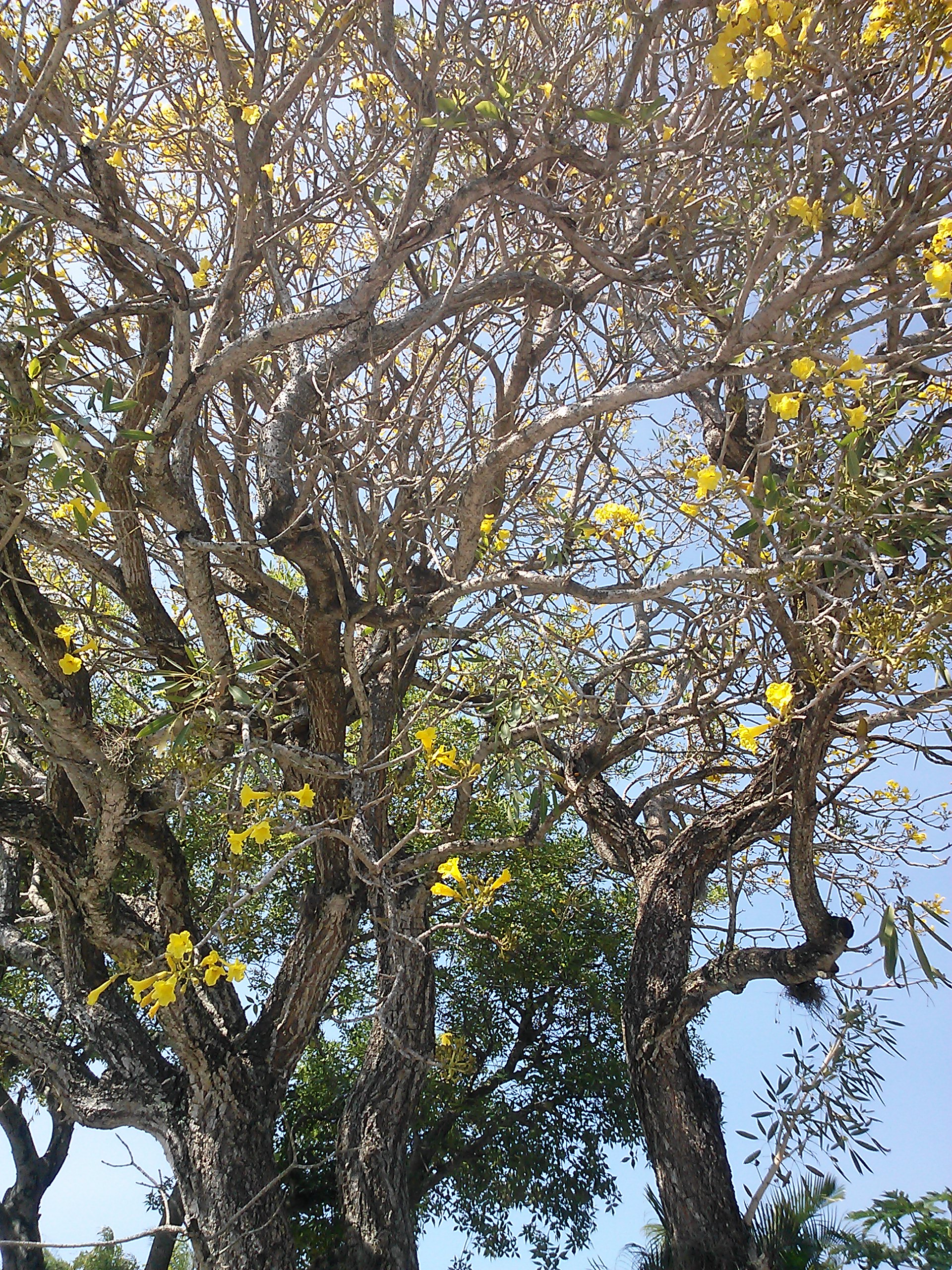
Golden Trumpet Tree – Handroanthus chrysotrichus

Image

The harbinger of spring in South Florida is, in my opinion, the Golden Trumpet tree. Many people call this Tabebuia, formerly its botanical name. The powers that be in botany decided to rename them Handroanthus chrysotrichus, the new name sounding much like a dinosaur.

While there are several types of Trumpet trees, this is the one most associated with spring. It is reminiscent of Forsythia shrubs up north, which also blooms with a burst of yellow flowers in late March. Prior to blooming, the tree drops most of its foliage and then produces buds, letting you know the show is about to begin and will last about a month.  Bright yellow tubular flowers unfurl on gnarly, corky branches when contrasted with the cerulean blue sky overhead it is an exhilarating sight. Ah, spring.

Golden Trumpet trees reach 25 -30 feet height and width and are a good small ornamental tree for homeowners. They are sometimes available in multi trunks, which is my favorite form. Drought tolerant once established and mostly evergreen this is a great addition to your sunny landscape. Their only drawback is they are not particularly wind resistant and produce fairly big pods as fruit.

Handroanthus have an interesting family history. The yellow version popular in South Florida is native to South America where it lives in the rainforest. A near relative, the Ipe or Brazilian Walnut (Handroanthus impetiginosa) is the source of Ipe lumber and the national tree of Paraguay. The lumber is a tropical hardwood that is extremely resistant to the elements and lasts a long, long time outside. The weather resistance of this wood has made it very popular and its harvest is one of the elements causing deforestation in the Amazon. The Ipe is also the source of Pau D’Arco, an herbal medicine used for many ailments by rainforest indigenous people and was once researched as a possible cure for cancer. The Ipe has pink flowers similar to the yellow version that will also grow in South Florida, but is somewhat less cold hardy and taller than the Golden Trumpet.

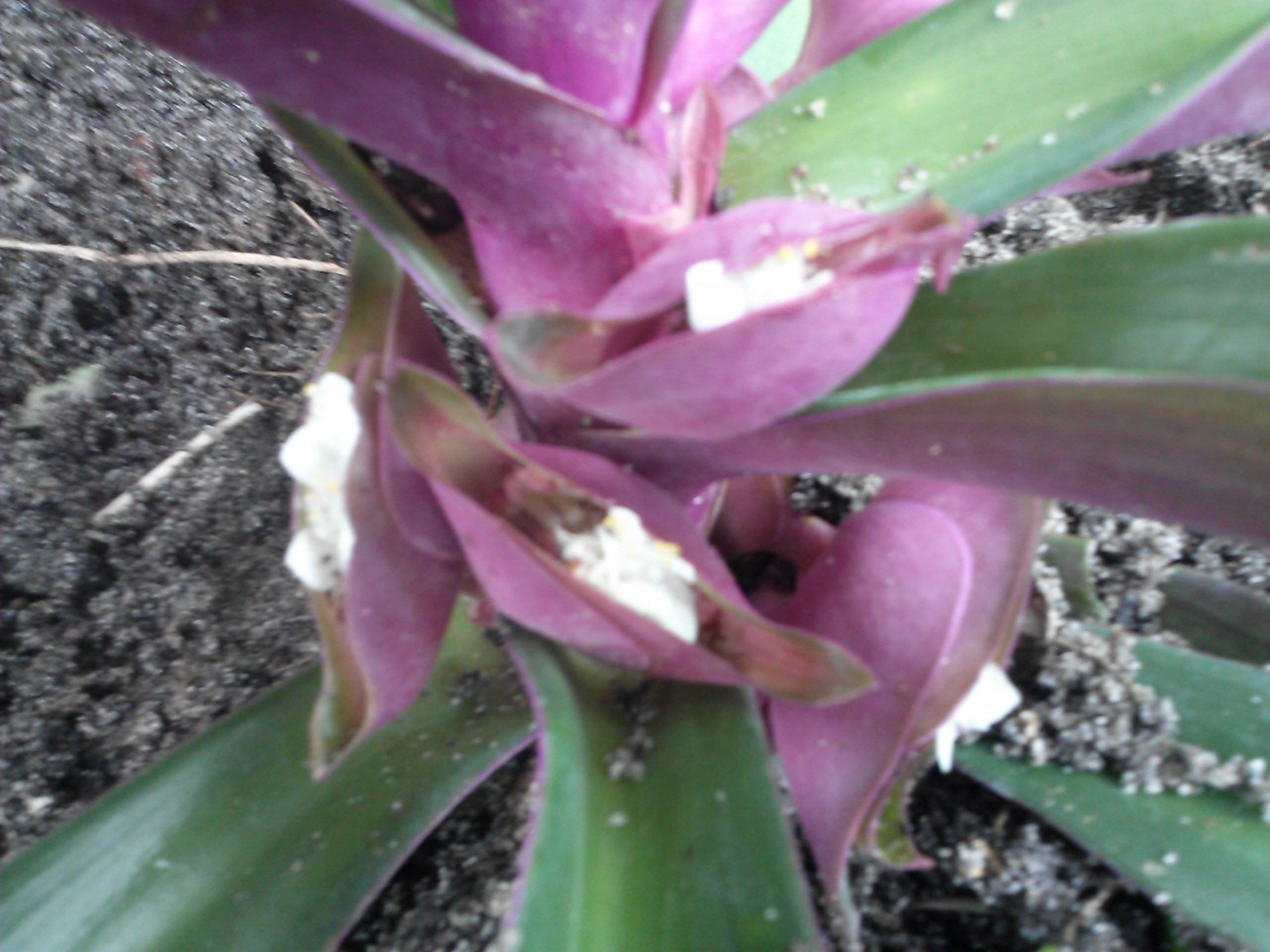
Moses in A Cradle

Flowers of Oyster Plant

Flowers of Oyster Plant

I have always wondered why this plant was called Moses in A Cradle until I found this growing in the roots of my Banyan Tree this morning. The flowers do look like a cradle, I am not so sure about Moses or why he is involved. This is also called Boat Lily, which makes a bit more sense.  Yet another common name is Oyster Plant, Hmmm, maybe it looks like a purple oyster? Then there is the botanical name dilemma, I learned this as Rhoeo, now they seem to have decided it is a Transcandentia. Whatever. Plant taxonomy is not my forte.

The state of Florida lists this as a Category II Invasive. Which sounds scary, but if you do some research it seems this plant has the potential to do damage in certain environments but it hasn’t quite done it yet. The environment this flourishes in is a Tropical Hammock. I live on top of a gigantic Sand Dune, so I think I am safe from the Oyster Plant. As I am somewhat overrun with some invasive plants (the evil Brazilian Pepper and Mother in Law’s Tongues) I am leery of this one, but I think I will just keep an eye on it.