In A Vase on Monday-Bromeliads Singing the Blues

20160717_104815-1

Here’s the collection of blues. The violin bottle belonged to my grandmother, she always kept unusual bottles on her windowsills, some filled with colored water. The footed glass was found in my in-laws house whilst cleaning it out to sell it. For some reason they collected one glass each time they went to an Arts Festival, so there was an odd collection of ones, many of them pottery wine glasses. The corked bottle holds dried rose petals I collected from bouquets my husband brought home.

20160717_100806-1

I started with this one, my husband came in and said, ‘It looks like the violin is playing music’ – maybe the blues! The flower in this bottle is from a Miniata Bromeliad (Aechmea miniata) These are very easy to grow and bloom regularly in July. A simple Heliconia leaf has been added to the bottle. Here are the Miniatas in the garden.

20160710_101839

The footed vase has a sprig of Frangipani and a few clippings of our native Firebush (Hamelia patens var patens)

20160717_105006

Here is what has me singing the Bromeliad Blues. I bought this grey foliaged Bromeliad this spring at a Master Gardeners plant sale. No one knew what it was, but I liked the shape and foliage (the leaves have a deep pink tip) and it was $6, so I bought it. Check out this flower, I think this is a Bilbergia ‘Soundwaves’, but I am not sure!

Mangoes in Mass Quantity

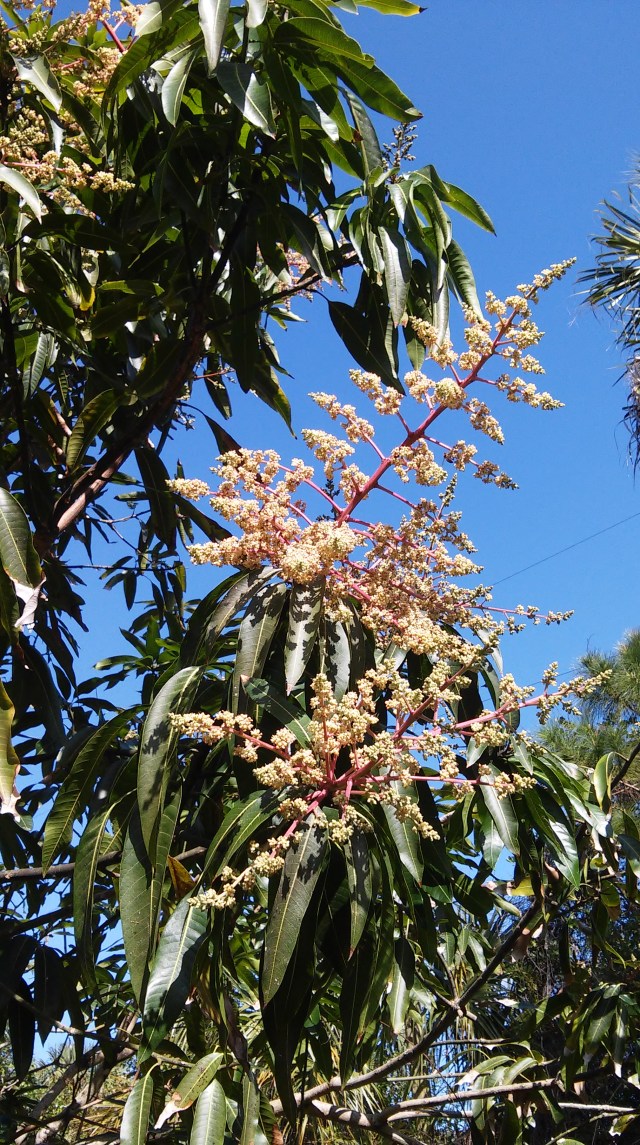
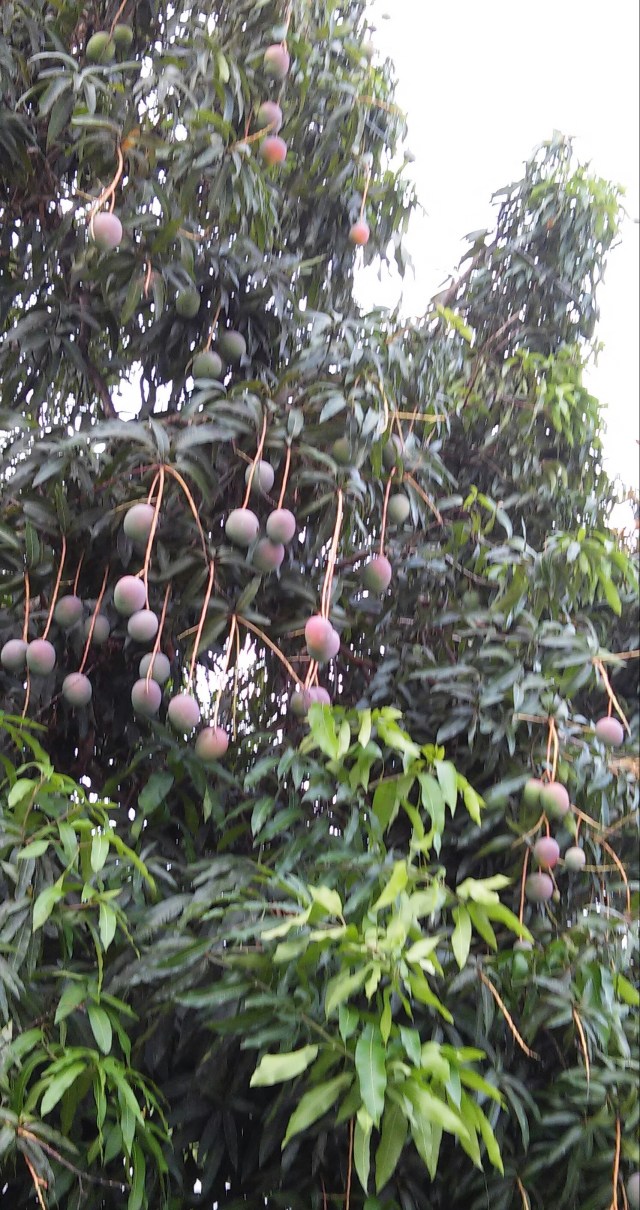
July in South Florida means a couple of different things, heat, humidity and Mangoes. Lots of Mangoes. This year is a bumper crop. I am philosophizing the rainy winter produced many flowers followed by many fruits.

20160315_10351020160617_184052-1

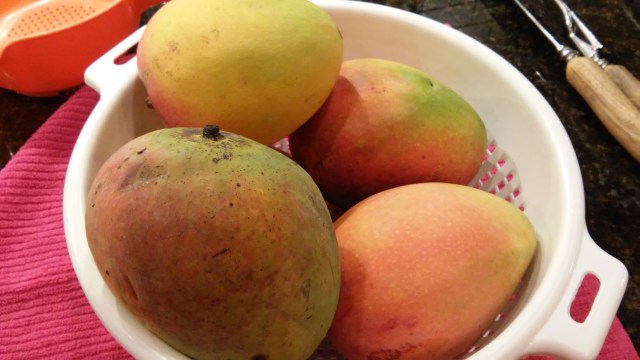
Followed by many baskets of Mangoes, which I find irresistible.

20160703_110747 (1)

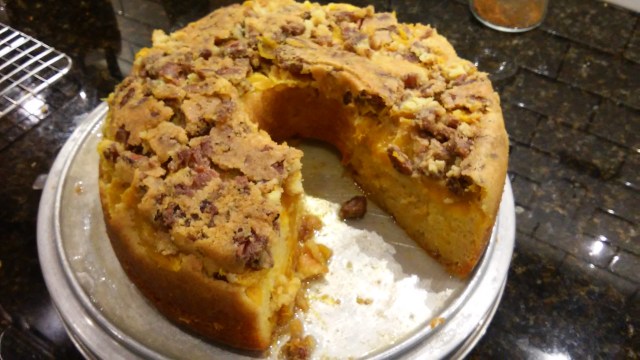
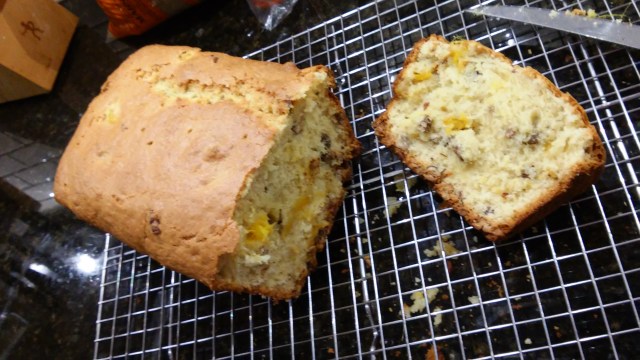
These are Haden Mangoes, from my neighbor the chef, who I suspect just eats his mangoes. I ate some of them, but my husband is not a big fan of plain and won’t eat them straight. So, I made a Mango Amaretto Cake. Not very pretty, but delicious. Last year my Mango effort included a Mango Rum Cake which I believe lasted longer due to its higher alcohol content. Something to consider if your household is not highly populated.

20160706_162433 (1)

After a few servings of the Mango Amaretto cake, I decided to take a more savory adventure with Mango Salsa for grilled fish (Pacific Swordfish in this case). The salsa is made with mango, red bell peppers, sliced green onions, cilantro, lime juice and honey.

20160706_174841

Great stuff, and I still had some leftover to have with my Blueberry Bread  from my lasr fruit overload and vanilla yogurt.

20160706_174850

Just when my Mango supply dwindled to this another basket was left on my front porch.

What to do? Bake some Mango Pecan Bread, of course.

20160714_172921

I used the same recipe as my Blueberry Pecan Bread and it turned out fine. This is not particularly sweet for a quick fruit bread but the resinous quality of the mango shines through.

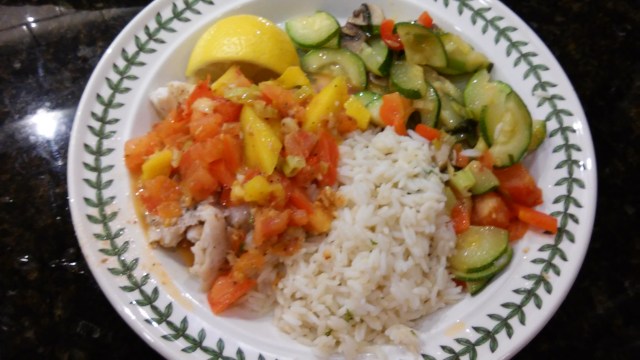
On to my next culinary adventure in mangoland. Another neighbor gave me some Speckled Perch, a local freshwater fish. So, here it is – pan sauteed Perch in lemon butter sauce with Mango Tomato Sauce served with Parmesan Herb Rice and Sauteed Mixed Veg.

20160714_193626

Still have Mangoes. The only thing left to do is make granita. It can be eaten straight up, with vanilla ice cream, yogurt or vodka if you are feeling frisky.

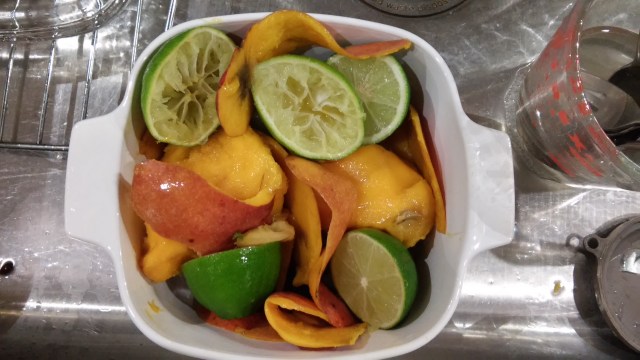
The remains of the day and this is all I have left!

20150715_171204

Compost

In A Vase on Monday-Ikebana Lite

20160710_114711-2

Given the challenge of Ikebana style vase this week, I decided to read up on Ikebana. A familiar disconnect in my brain popped up. The Japanese Zen design concepts. Very daunting to a Westerner like myself. My Ikebana should be considered the Lite version. Like Lite Beer. Having read bits and pieces of the theories and schools of Ikebana and most of this flying right over my head, I decided to look at pictures of Hawaiian Ikebana as I could probably find the right plants and voila! Ikebana Lite. My disconnect with Japanese design theory began long ago…during a trip to visit a friend living in Japan.

20160710_130600 (1)


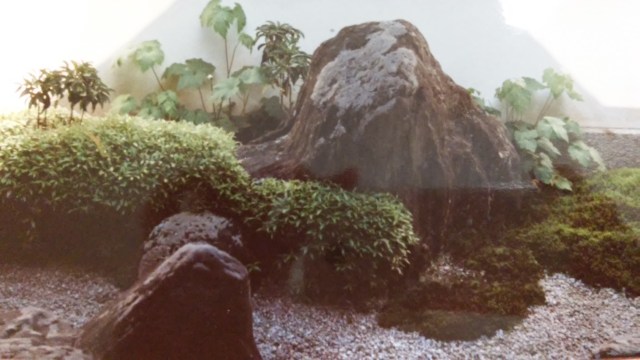
About 25 years ago, I found myself sitting on a wide set of ancient, worn wooden steps, unshod and somewhat hungover contemplating the famous Zen garden at The Temple of Ryoan-ji in Kyoto, Japan. This garden is the quintessential dry Japanese Garden consisting of stones, gravel and minimal greenery. The meaning of the garden has not been defined – at the time it was thought the stones in the garden represented ships going to the various islands. The photo may be the Ship Rock, I am not really sure.

I chewed antacids, contemplated the garden, then contemplated the garden some more. It was a drizzly, overcast, bonechilling day in early March. I had scheduled the trip hoping to experience Cherry Blossom time, but ended up missing the flowers. The English ladies behind me were exclaiming ‘we understand and see the ships’ Nowadays, of course, someone has made a computer model, claiming the Buddhist monks who built this garden were laying out the tracery of a tree.

I saw none of the above, appreciated the serenity of the space and went on to see if I could spy some Cherry Blossoms.

20160710_114822-1

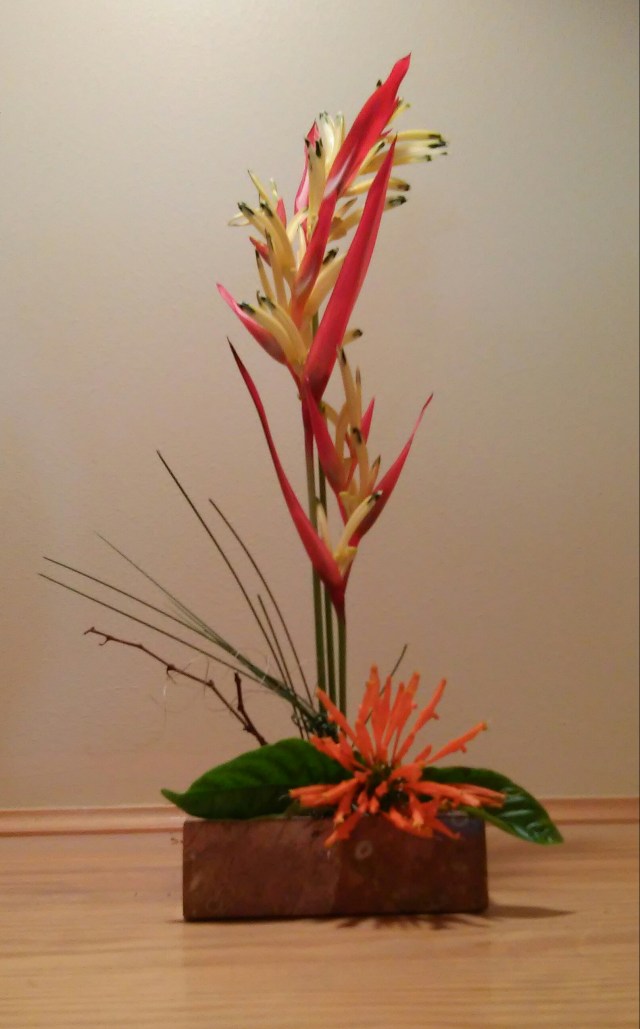
Back to Ikebana Lite. The vase is the base of a stone jewelry box with a flower frog tucked inside. The taller flowers are Parrot Flowers (Heliconia psittacorum), the orange flowers at the base, Mexican Honeysuckle (Justicia spicigera). The fine textured foliage accents are recycled grapevine from last week and foliage from Muhly Grass (Muhlenbergia capillaris).

It is entirely possible I have pioneered the use of Muhly Grass in Ikebana Lite.


Toxic Algae at My House

I feel as if I have been ranting about the Toxic Bluegreen Algae we have been inundated with here on the Treasure Coast of South Florida, but I think most of my ranting has been on Facebook. I like to keep the pretty things on my blog. I apologize in advance as this is about as not pretty as you can get.

DSCN4992

I live near the end of the St. Lucie River on the east coast of South Florida. It is entirely possible you have seen this on the news. For the first time, I am happy to not have a riverfront home. We have been overrun by a toxic, festering stew of algae from the center of our state. Our shores are fouled, wildlife is dying and for what reason?

Here is an oversimplification of the story:

About 90 years ago, in the name of flood control and agricultural interests two canals were dug to prevent overflow from Lake Okeechobee, the big hole seen in all maps in the center of Florida. A dike was added a few years later to hold the water back and named for Herbert Hoover. The dike is currently in questionable condition and thousands of people live below it. For drainage purposes the lake was connected by these canals to two rivers, the St Lucie (to the Atlantic) and the Caloosahatchee (to the Gulf of Mexico) Agricultural interests surround and (much of it cattle) drain surface water into Lake O. In the past year or so the state of Florida relaxed all of its formerly mandatory pollution surface water rules on agriculture and viola! We are now in the midst of a historic outbreak of Toxic Bluegreen Algae. This particular type of algae thrives on phosphorous and nutrient laden water from, yes, agriculture. The algae bloom in Lake O is currently 30 square miles.

DSCN5011

The toxic aspect of this algae is released into the air as it turns blue. It can contain neurotoxins and heptatoxins causing anything from sinus problems and rashes to liver failure if ingested. ALS (Lou Gehrig’s disease) has been associated with these toxins.

Local blogger/ River Warrior Cyndi Lenz famously said ‘it smells like death on a cracker’

Local firebrand /River Warrior Marjorie Shropshire famously said, I am paraphrasing ‘our river has been turned into the anus of Lake Okeechobee’. Marjorie braved the toxic stew to take all of these photos and graciously shared them.

In addition to all the excess nutrients in the lake, we have also had an extremely wet dry season, causing excess water in the lake and necessitating more nutrient/algae polluted water to be flushed down our estuaries. The old Herbert Hoover dike ain’t what it used to be and no one will own up to taking care of it. It should be noted the estuaries of both rivers are somewhat salty naturally, but by virtue of the vast quantities of water added the rivers are now fresh water. Decimating much of the plant and animal life that thrives in salty waters.

A state of emergency was declared in the county I live in, Martin. Nothing has happened that I have observed. This toxic algae event was featured in the media over the Fourth of July holiday weekend as most of the beaches were closed in the area due to the algae. I am personally not going in the water anytime soon.

The US has a governmental agency called the Environmental Protection Agency. The EPA is designed to protect, yes, our environment. So, I contacted them and was told this was not in their jurisdiction! Non point source pollution is a state issue and the state relaxed their rules. Oversimplified explanation:

EPA only has jurisdiction over point source polluters: Point pollution comes from one place. For example, if  Billy Bob’s sausage factory throws 10,000 dead pigs in the river the EPA busts them.
Florida has non point jurisdiction. Hypothetically, if, 10,000 people threw dead pigs in the river, it is OK because Florida really doesn’t care. This evidenced by no rules governing the tossage of dead pigs/toxic pollution/fertilizer into the water. Result we have 10,000 dead pigs in the river and the EPA won’t touch it.
Ironically, because all this polluted water comes out at one spot it is technically point source pollution. When I brought this up with Mr. EPA I was told they wouldn’t enforce water quality standards (even though they have them) because this was an emergency to save the dike.
I was left with the strong feeling the EPA hasn’t stumbled into our waters for quite a while and they won’t be here anytime soon. To say the least this is extremely disappointing as I believe these are the only people who could possibly help the overtaxed estuaries and the people and the wildlife overcome the algae.
Another point brought up by Mr. EPA was the plan for fixing this gigantic problem, called CERP.  CERP is a massive 16 Billion dollar public works project to de engineer what is causing this problem. CERP is a 35 year /16 Billion dollar project unlikely to be funded, in my opinion. Begun in 2000 and designed by several hulking bureaucracies and overseen by the ‘concrete it and paint it green’ generation of engineers. I think we can do better. In the past 10 years the practice of civil engineering has become much greener and I think a better, cheaper and greener solution can be found. We need new leadership or a leader. I would like to see this solved in my lifetime as I am really not sure how much more of this our estuaries can take.
In all fairness, I should mention I contacted the state of Florida and the sounds of crickets in the distance was all I heard from them.
Does the life safety of the people below the potentially/perpetually failing Herbert Hoover dike outweigh the life safety of all the people, fish and anything in the way of the 10,000 dead pigs Florida and the Federal Government just flushed down the river, potentially killing every living thing in two estuaries?
 I don’t have any qualms about safely managing a dike – but what about all those dead pigs in the water, Governmental Entities? And what about those of us breathing the toxic air?
More crickets.
I rashly wrote a letter to Barack Obama, still waiting and hoping the White House might help.
The governor of Florida came out swinging when he asked the Federal Government to declare a Federal state of emergency here, saying it was the personal fault of the President that this happened. The Herbert Hoover dike was feeling queasy again.
We’re just down here looking at a poisonous, festering pool of dead pigs. Unfortunately, none of them politicians.
DSCN5050

In A Vase on Monday -Grapes and Gardenias


20160703_105419

This idea germinated as I was surveying my new natives garden. My natives garden is currently a repulsive field of weedy grasses, sand and Indian Needles. The Indian Needles are a native that look like Coreopsis, reseeding like Crab Grass. Crab Grass averages a quarter million seeds per head. Dreadful stuff. The one weed I have not encountered in my garden. Thankfully.

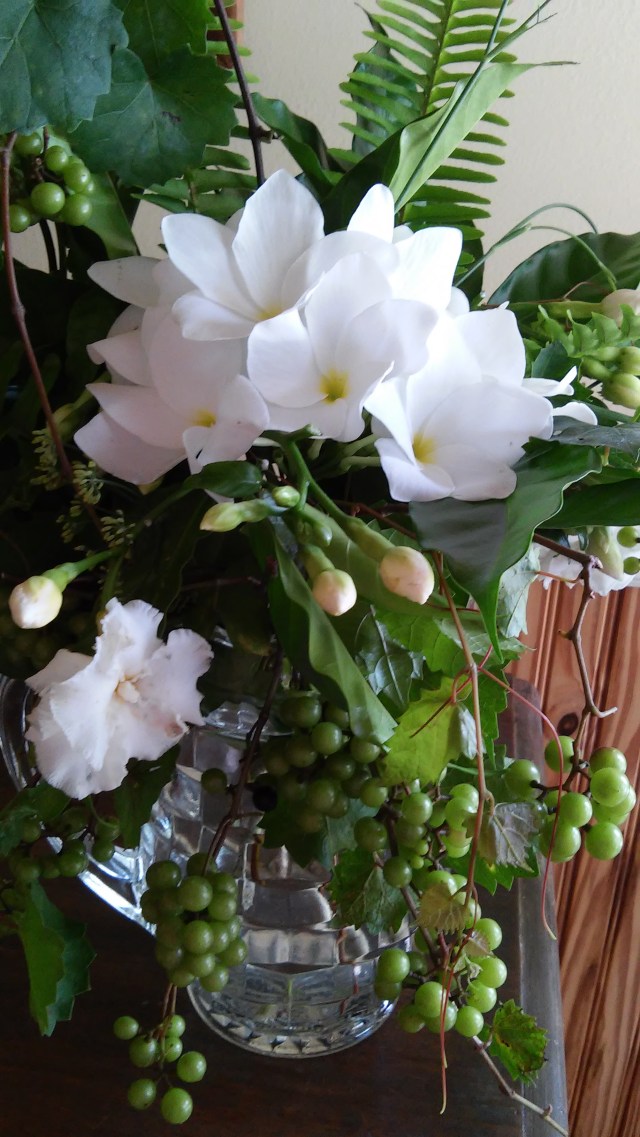
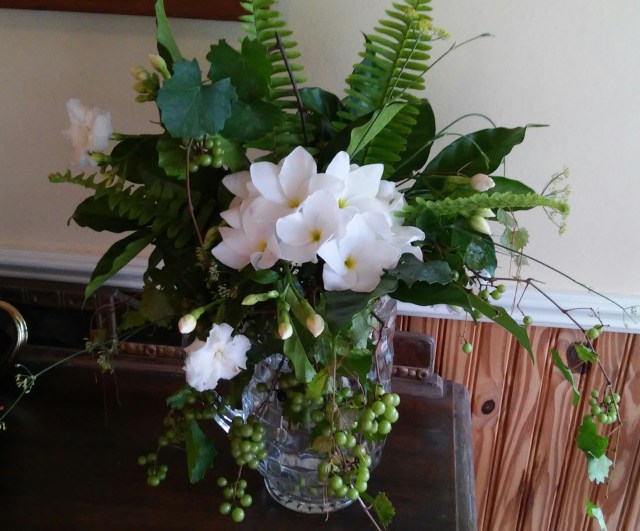
I digress. The grapes in the arrangement were noted on my survey as well as the Tropical Gardenias (they are the buds) The grapes are also native and frighteningly prolific. These are Muscadines (Vitis rotundifolia) I have been pulling them out for five years. The grapes, while attractive stay this size and turn purple. The wildlife usually eats them before they ripen. It took me a while to find out what these are, terribly seedy and bitter, they are male muscadines, the female grapes are larger and sweeter. My grandfather used to grow these and make wine with them, it is syrupy, treacly wine.

20160703_105739-1

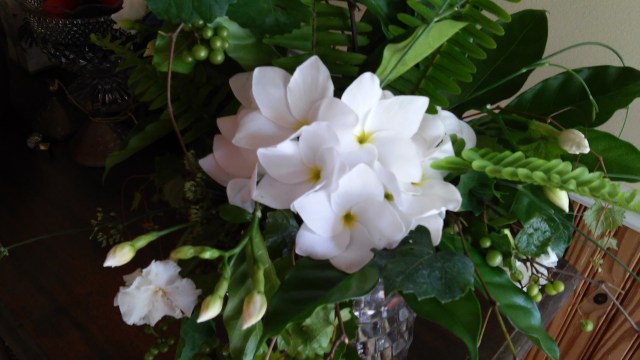
The Tropical Gardenias are the double white flowers with buds. Commonly called Florida Gardenia, the botanical name is Tabernaemontana divaricata, probably native to India and not tolerant of freezing, this Gardenia is from a different family than its more well known counterpart, Gardenia jasminoides. The foliage is a lovely dark green and the flowers are not quite as fragrant as G. jasminoides although the fragrance carries nicely on a breeze at night.

20160703_105433

In the center of the arrangement is a flower from my Frangipani, there are also a few flowers from the culinary Fennel and some Asian Sword Ferns. I have been calling these Boston Fern forever, but they are truly Asian. Tuberous Asian Sword Ferns, is the whole name, Boston Ferns have pointed tips.
I decided to stick with a white, chartreuse and green color scheme and the arrangement is held in a Fostoria pitcher from my mother’s collection of American pattern Fostoria. This pitcher graced the table filled with iced tea at many family gatherings. The arrangement is in my foyer as the fragrance from the Frangipani and Gardenia gets a bit thick!
Blueberry Madness

20150811_142604

The height of blueberry season is upon us here in the US. My husband is famous for his pies, see photo above for reason. I was tasked with blueberry procurement for pie production. Five cups were ordered, five pints were purchased. Oops. I was faced with an extreme overabundance of blueberries.

The pie was baked, tasted and deemed delicious. We still had a lot of blueberries, having recently read a blueberry feature in Better Homes and Garden, I decided to try Blueberry Corn Salad:

20160627_171057-1

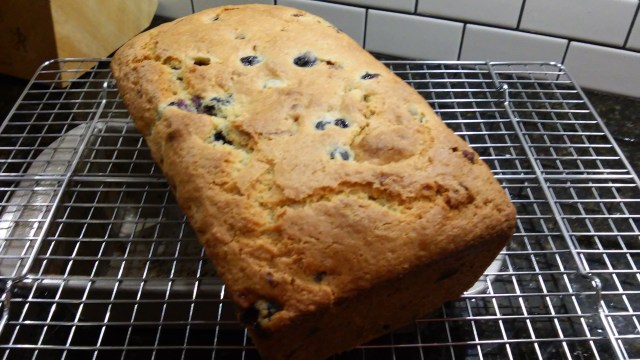
An interesting idea, corn with a garlic lemon vinaigrette and spices. A bit weird, but good. Still, blueberries speak of baked goods to me and I still had some left. I thought Blueberry Pecan bread sounded like a good idea and freezable. Found a recipe for just the thing with a pecan crust on top. Baked it up, this is good and freezes well, so I will have some for later:

20160627_171043

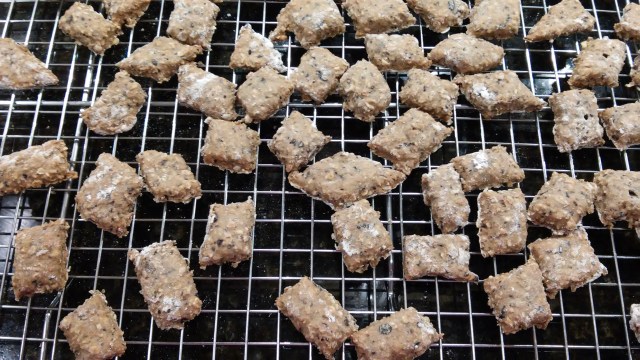
Then, the horrible truth revealed. I still had some of the blue things left. And didn’t want to eat anymore at the moment. Realizing dogs could eat blueberries and they are actually good for them, I whipped up some Oatmeal Peanut Butter Blueberry Dog Treats:

20160628_151739

The overabundance of blueberries, finally conquered. I walked the dogs and gave them a treat. Everyone was happy.

In A Vase on Monday – Brown Greyhounds

20160626_093959-1

I had a brown greyhound vase long before I had a brown greyhound. The vase came from my great grandmother, Miss Emma. I am fairly certain my gardening interest can be traced back to Miss Emma. She was a famous gardener in the small South Georgia town my mother grew up in.

20160626_094601

The vase is marked ‘Made in Occupied Japan’ and is made of some sort of plaster that won’t hold water. I had a pair but the other vase was squashed as I didn’t realize about the plaster. My grandmother kept winter wheat in these and there was still some sand in the bottom from wheat days. When I poured it out the first thing that popped into my head was “Oh no, Great Grandpa’s ashes”. Then I remembered seeing his headstone. Whew.

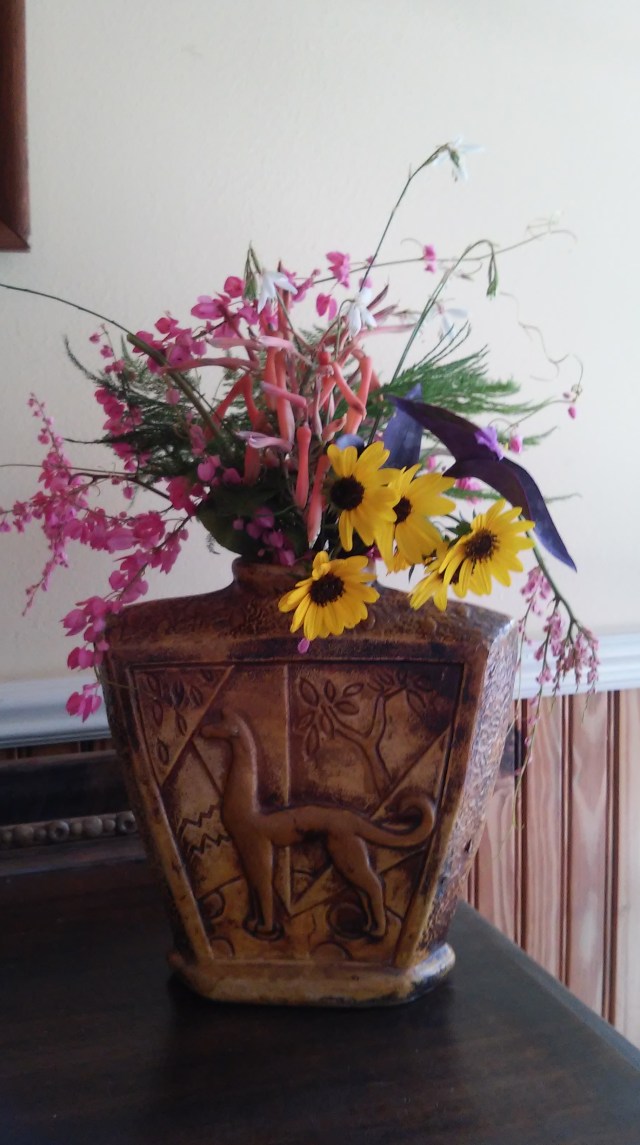
There is another vase inside with water. Plants in this vase include in orange, Soap Aloe (Aloe saponaria), in yellow, Beach Sunflowers (Helianthus debilis), White flowers are Gaura, the Bellezza variety, pink is Coral Vine (Antigonon leptopus), the purple is Purple Hearts (Setcreasea pallida) a bit of Asparagus Fern adds some fine green texture.

20160626_093950-1

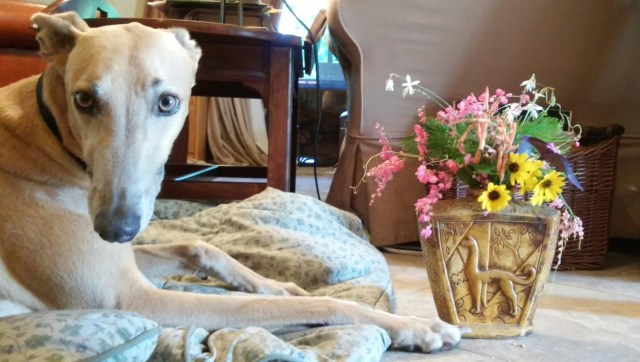
The real greyhound is Fuzzy’s Alan Alda (racing name) we call him Alan. His color is actually called Blue Fawn, the most wonderful and apt description of his coloring I have heard is it looks as if he has been painted with deep gray watercolors. He retired from racing at an early age because he lost nearly every race. I am deeply suspicious Alan is smarter than the people who were trying to race him as he is still extraordinarily quick and can easily outwit me! Alan and his toys, the “lawn” is a bit worse for wear.

20160307_164454(5)-1


Summer Color in Tropic Florida

The snowbirds are home cool and safe in their beds while visions of winter gardening in Florida dance in their heads. (not quite an original poem)

The rest of us are basking in the steamy weather post Summer Solstice in South Florida. Summer can be wonderful here, traffic slows as does time. Days are long and comfortable time spent outdoors occurs early in the morning or early in the evening.

Our plant life puts on a spectacular show during the summer. The show is a must see for any gardener.

Poincianas are in full flower and the Mango trees are filled with cascading boughs of fruit.

Many shrubs here flower year round, but once the rainy season kicks in the flowers go into overdrive. Especially on the Hibiscus, Ixora and Allamanda.

Our native Firebush (Hamelia patens var patens) and Beautyberry (Calliocarpa americana) are flourishing:

On the tropical side, Heliconias and Bromeliads are budding and blooming, I associate these with later in the season but some are going already. Yes, I cut most of my Parrot’ Flower (Heliconia psittacorum).

20160612_101512

Orchids are starting their summer season. My neighbors Ground Orchids (Epidendrum radicans) yes, groundcover Orchids! have been spectacular thus far, these are called Fire Orchids and there is a pink version

20160518_095121.

20160409_135218-1

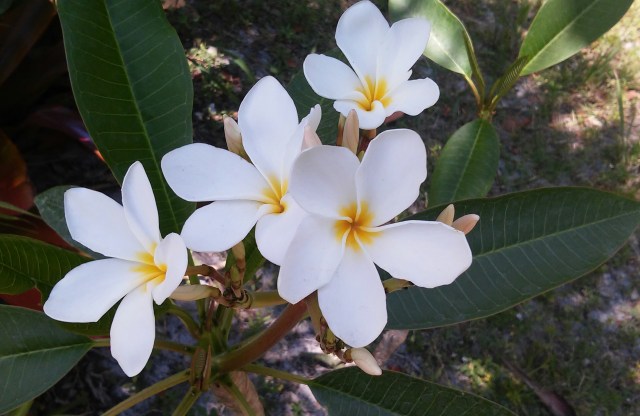
Of course,  one of the real pleasures of the tropics in Summer is the scent of Frangipani in the garden. This white one has started flowering with the onset of Summer and I have a new one from a gardening friend on the verge of flowering- rose pink on the outside opening to pale yellow. I sited it near my screened porch for maximum smellability.

20160511_125255-1.jpg

I love the term ‘Tropic Florida’. To the best of my knowledge, it was coined by Frederick Stresau, in his book Florida, My Eden. This book, while titled like a romance novel is actually a really good manual of landscape plants for Florida. The tropic part supersedes the ubiquitous and perhaps American zone phobia. I think I live in Zone 10A, I am not sure anyone else would agree, but we can agree it is tropic. We have seen freezing temperatures here 4 times since 1980. That is pretty tropic.

In A Vase on Monday – Fire and Ice in a Purple High Heel


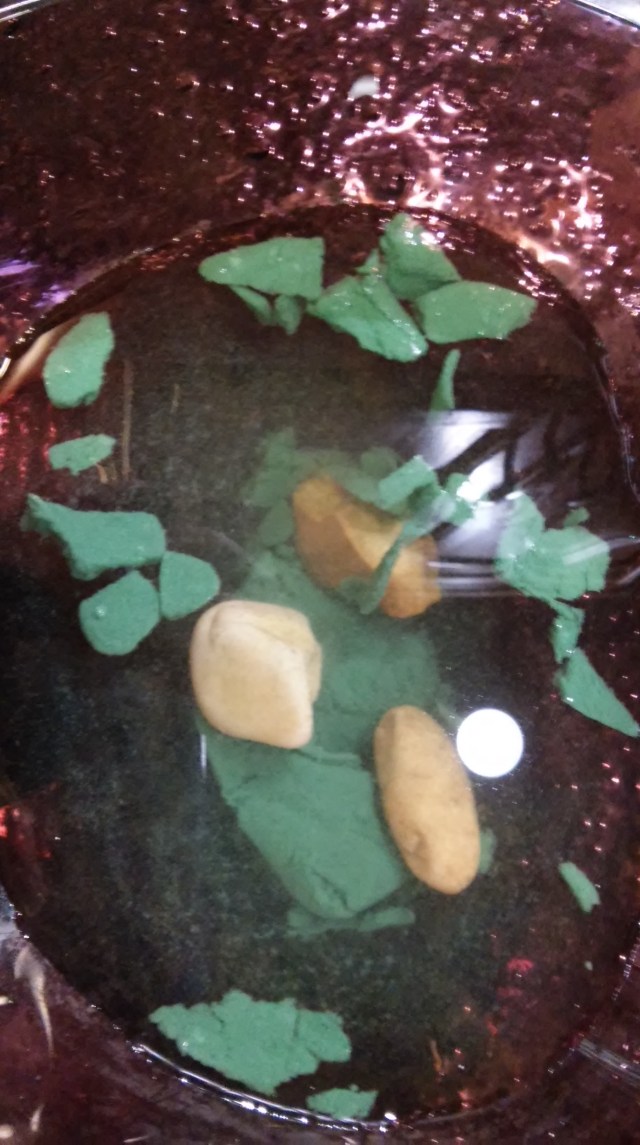
20160619_110417I have been looking at this vase for quite some time. The purple high heeI I believe is a Blenko Art Glass piece from the early 1950’s; likely a wedding gift to my parents and another vase from my mother. My issue with this vase is how to make an arrangement in it, the base is basically a trench, so no hopes of using a frog – I had some scraps of green floral foam and thought I could stuff the trench full of foam and stick the flowers in that, no such luck. The green foam floated up, so I added some pebbles to hold the foam down and proceeded.
20160619_100804

Eventually I added enough pebbles to keep the foam in the trench. Onto the Fire.

The Fire is Florida’s native Firebush (Hamelia patens var patens) which cooperatively pops up in my garden, the foliage has a lovely red tinge so I have included that in the arrangement. The other reds are Red Shrimp Plant (Justicia brandegeana) and some buds from the Parrot’s Flower (Heliconia psittacorum). The Ice elements are Bridal Bouquet Frangipani (Plumeria pudica) nearly bashed off by thunderstorms and saved by my vase. The Sweet Begonias (Begonia odorata ‘alba’) offer a different texture in white and add some coarse green foliage to the mix. A few culinary Fennel flowers and Boston Fern sprigs complete the arrangement.

20160619_110831

In A Vase on Monday – Heliconias, neat.


20160612_101732-1

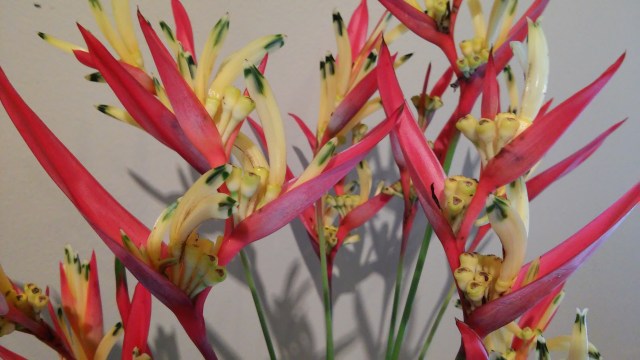
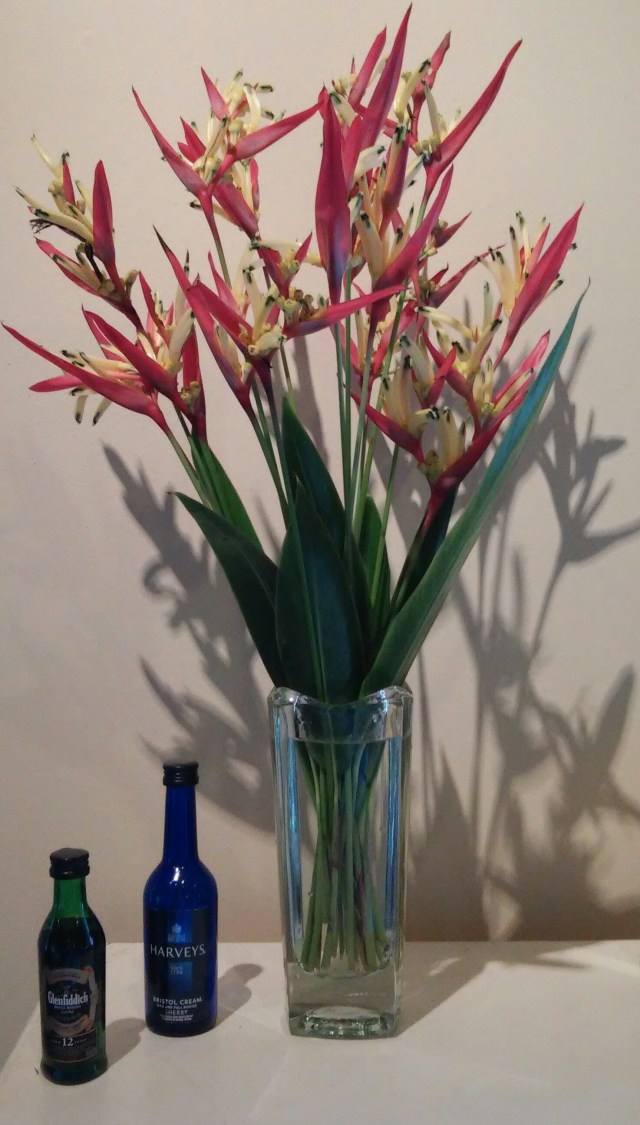
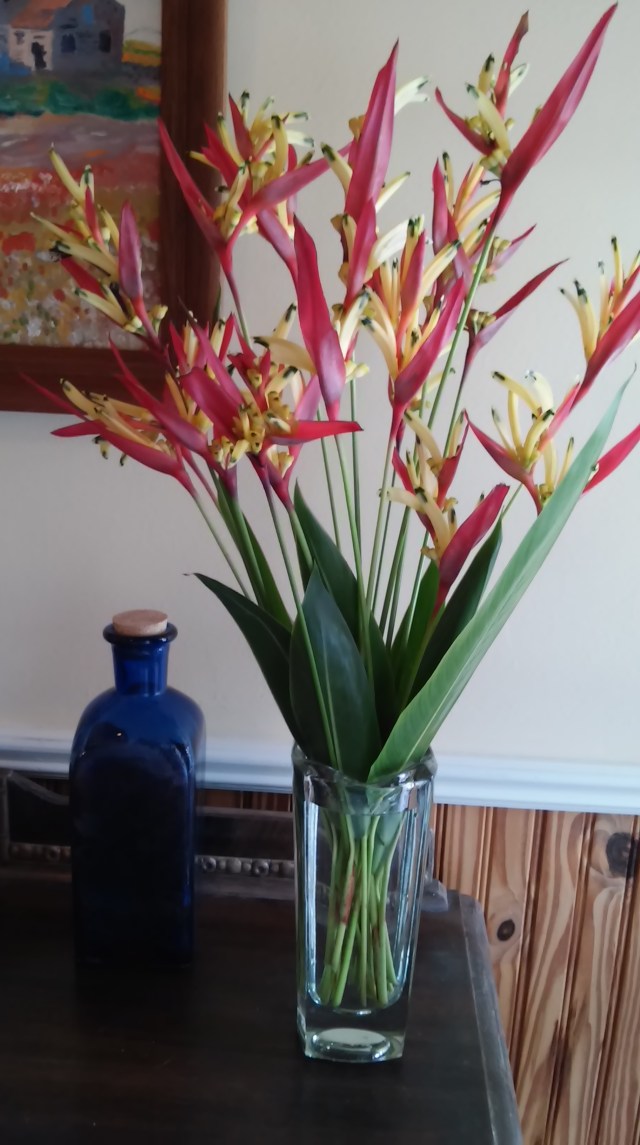
I think Heliconias are pretty neat. My collection has grown to four varieties. The super special ‘Splash’ Heliconia refuses to flower (purported to have a 3 foot long lobster claw type flower – orange splashed with red). Fortunately the humble Dwarf Jamacian (Heliconia stricta Dwarf) and Parrot’s Flower (Heliconia psittacorum) have been cheerfully flowering since I bought them. This vase is filled with Parrot’s Flower, neat.

20160612_102015

Neat in cocktail terminology means a serving of whiskey with nothing added then served at room temperature. I felt compelled to add the water. I found the seemingly simple arrangement to be a bit daunting to produce as many stems had to be trimmed a touch to make the arrangement even. Then my husband came in and said ‘I guess you are not finished?’ followed by ‘where’s the rest of it’! Then ‘Oh, that’s really simple’ Yes, neat.

20160612_101512


I can imagine why these are called Parrot’s Flower – however, if the three foot long Lobster Claw Splash Heliconia ever actually flowers it is going to be front and center on the next In A Vase on Monday post. Neat.